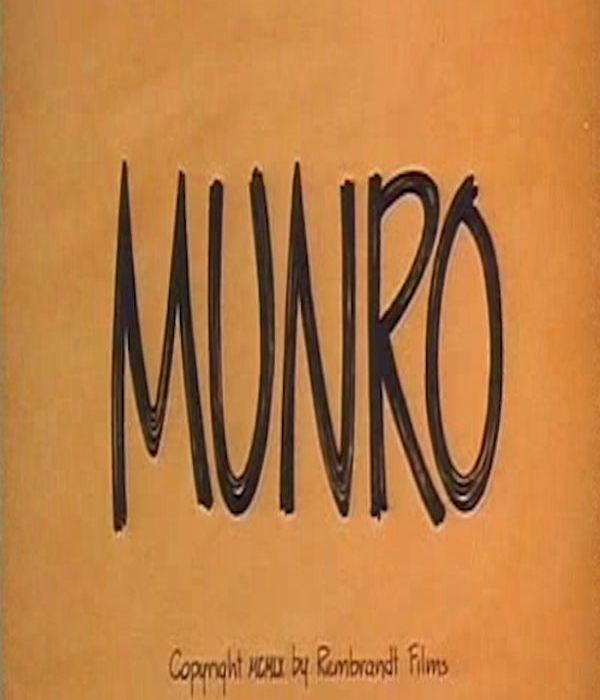
Short Film Saturday: Munro (1960)
The films I share in my 31 Days of Oscar posts tend to get lost in the shuffle, so I’ll be featuring them on Short Film Saturday to give them their due.
Munro (1960)
The films I share in my 31 Days of Oscar posts tend to get lost in the shuffle, so I’ll be featuring them on Short Film Saturday to give them their due.
Munro (1960)

Take a little over an hour to enjoy one of the greatest films ever made. Nicolas Cage’s feelings on this film in The Unbearable Weight of Massive Talent are completely justified.
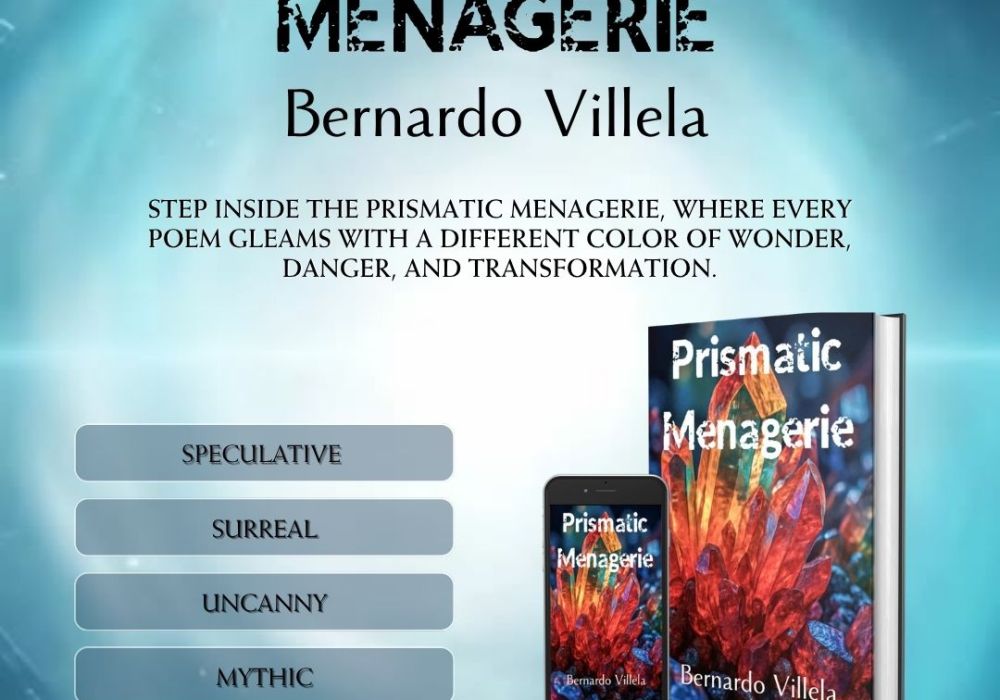
Four years ago, I posted implying that I’d no longer have Shameless Self-Promotion posts for individual story or poetry publications owing to the fact that I’d created a LinkTree. While subscribing to a LinkTree is a possibility I’m not sure how many people do that and this post isn’t about a single work. Therefore, I’ll share here that my first poetry collection, The Prismatic Menagerie will be published on August 15th by The Ravens Quoth Press. You can pre-order a digital copy here, physical editions will be announced soon.
For more information you can read the publisher’s blurb and my bio below.
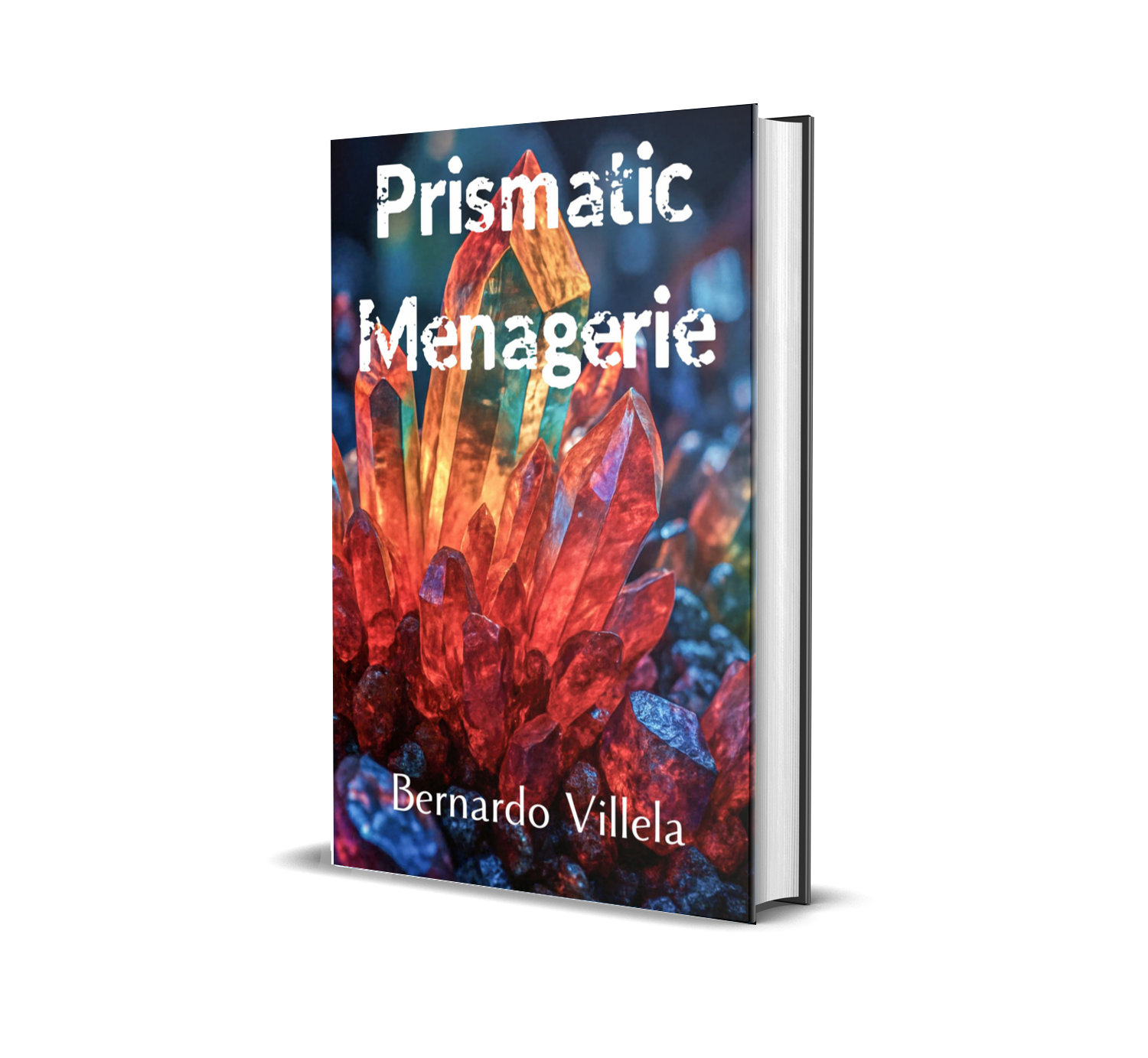
The Prismatic Menagerie is a dazzling collection of speculative fiction that invites readers into a world where imagination refracts into countless colors. Drawing together an array of distinctive perspectives, the collection explores the many shades of fantasy, science fiction, surrealism, and the uncanny. Each poem presents a new facet of possibility: strange creatures and shifting realities, quiet moments of magic, unsettling encounters with the unknown, and luminous glimpses of hope amid darkness.
The collection’s title reflects its central vision—a literary menagerie where every poem is a prism through which reality bends and transforms. Some poems lean toward mythic fantasy and folklore, others toward futuristic speculation or psychological unease. Yet all share a fascination with transformation: of identity, of world, and of the boundaries between the ordinary and the extraordinary.
From haunting atmospheres to bursts of wonder, The Prismatic Menagerie celebrates the boundless creativity of contemporary speculative writing. Readers who enjoy genre-blending fiction, imaginative world-building, and poems that challenge the limits of perception will find themselves captivated by this kaleidoscopic journey.
BERNARDO VILLELA lives in Wilmington, Delaware. He’s had short fiction included in periodicals such as LatineLit, Penumbra Online and Horror Tree and in anthologies such as We Deserve to Exist, Dismember the Coop and There’s More of Us Than You Know.
He’s published original poetry with the likes of Phantom Kangaroo, Straylight, Star*Line and Ravens Quoth Press and has had translations published by Mantis, AzonaL, Red Fern Review and others.
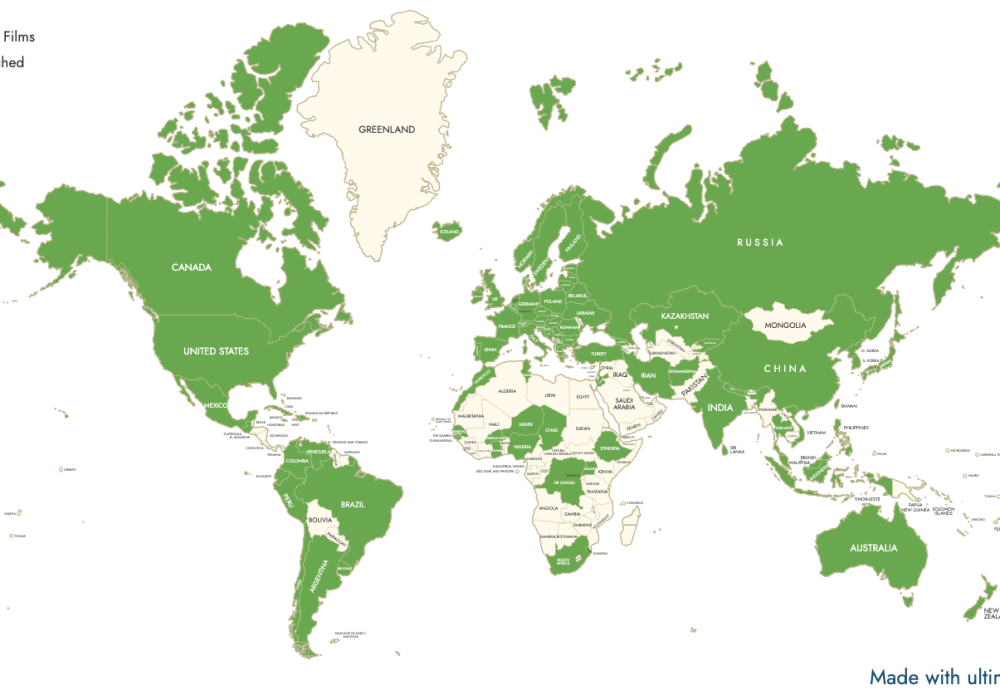
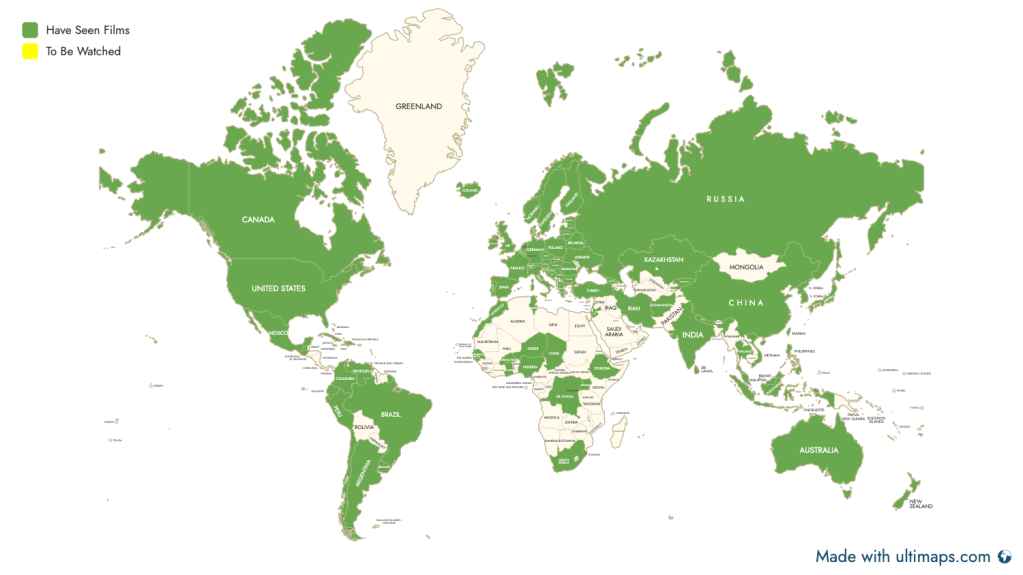
For a long time I’ve wanted to create a world map indicating what countries I have seen films from. Now I’ve done it as you can see above. Recently, I finally did it, it was a shorter process than I imagined but as painstaking. It’s also an imperfect map. There are places where I’ve had to make decisions that effected whether or not a country was highlighted in green or not.
I included countries on this list based its “cultural impact”on story this goes beyond the country of origin of the director but also considers the setting of the film (not merely a shooting location), the predominant language(s) spoken, the makeup of the cast and more.
Some examples would be:
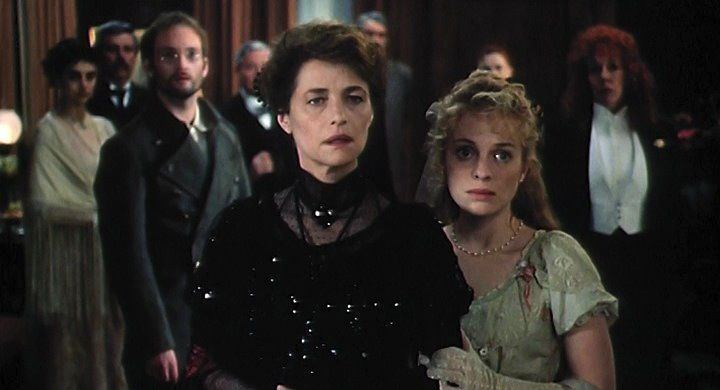
Cyprus is not included. I’ve seen a film directed by Greek Cypriot, Michael Cacoyannis, though it was also filmed in Cyprus it was an adaptation of Checkov’s The Cherry Orchard performed in English.
International co-productions are common and cooperative funding is crucial to film. However, that does not make a Hollywood film co-funded by Chinese, UAE, Arab or other nations not an American film. Therefore, at times when neighboring nations co-produced a film I erred to where the film was produced, who it represents, etc. I couldn’t mark off Panama thought they were a funding partner on a film called The Colors of the Mountain but that film wasn’t set in their nation or about Panamanian peoples. Also, some African and Western Asian nations might be omitted due to funding coming from neighboring countries.
The one yellow (To Be Watched) nation in the Pacific, that is Vanuatu. I hate it on DVD but haven’t screened it yet.
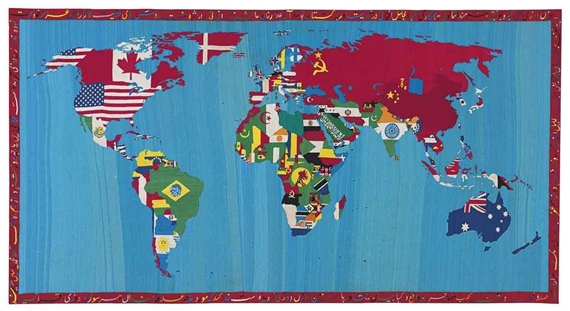
Another complication was the changing of borders over time. Some films produced before 1990 are now designated as being Estonian or Ukrainian in the case of the former Soviet Union. Typically, I’ve erred toward only marking off a nation when I was certain and didn’t have to attribute the film to said nation myself. Making that decision myself was to be avoided because in narrative features locations can be cheated. The exception is I was able to claim having seen a film from Bosnia & Herzegovina because the 1984 Winter Olympic film was in and about Sarajevo, which was Yugoslavia at the time.
If mistakes were made in terms of omitting countries off this list that should be included, it’ll only incentivize me to actively seek out works from that country.
The films I share in my 31 Days of Oscar posts tend to get lost in the shuffle, so I’ll be featuring them on Short Film Saturday to give them their due.
A Place in the Sun

The films I share in my 31 Days of Oscar posts tend to get lost in the shuffle, so I’ll be featuring them on Short Film Saturday to give them their due.
The Box (1967)

