Mini-Review: Day and Night

As has become standard with Pixar releases they whet the audience’s appetite for Toy Story 3 with its rendition of what is in danger of becoming a lost art form: the animated short. Pixar, however, does more than its share to preserve this artform by not only producing these shorts but proliferating them on television and on DVD.

The short that preceded Up, called Partly Cloudy was one of the best films of last year and Day & Night which precedes Toy Story 3 is even better.

What you get in this tale is an even more ingenious tale than offered previously but with execution that is of surpassing genius. Day and Night are represented in the tale by specter-like beings with sky-scenes appearing through their seemingly transparent person.

The fact that they are Day and Night is introduced wordlessly in a temporarily dislocating and fantastic pull out. In fact, the only words uttered in the film are picked up when they pass a radio station and highlights why these two, and thus we also, should get along.

This short is so good its worth the price of admission and obviously earned itself its own review. Do yourself a favor and show up early to watch Toy Story 3 so you don’t miss it.

10/10

31 Days of Oscar: Bad Day at Black Rock (1955)

Bad Day at Black Rock (1955)

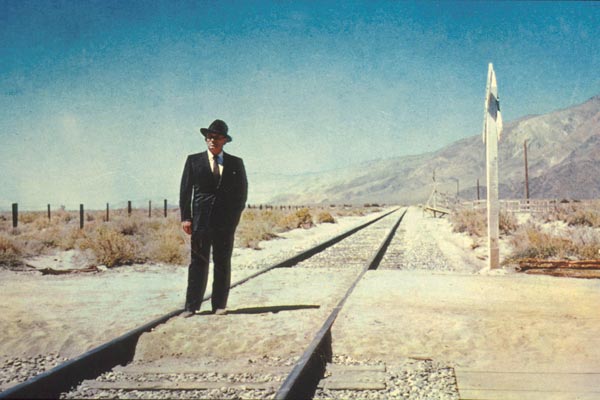
This film sets itself up so well and does things that work in its favor constantly. It deals with xenophobia, with regards to its ghost character; it deals with the stranger-in-a-strange-land trope brilliantly, with its protagonist; however, it also makes the paranoia felt in this town so palpable the lead is instantly on the defensive, such that you’re left unsure as to what his business in town is. It’s a cloistered and oddly claustrophobic tale, in what looks like an inhabited ghost town that’s well worth watching.

Score: 10/10
Oscar Nominations/Wins: 3/0

31 Days of Oscar: Seven Days in May (1965)

Seven Days in May (1965)

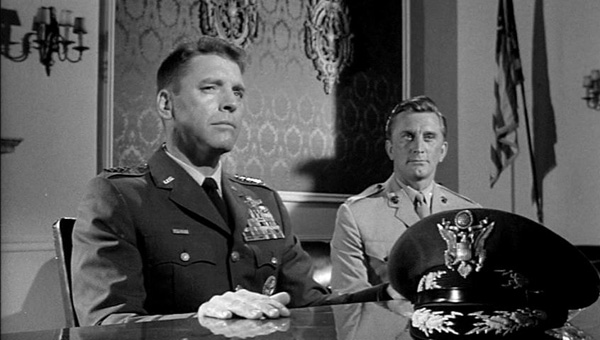
The old expression is that “The world will end with a whimper rather than a bang,” and this film treats a coup d’etat in much the same way, which is really what makes it so effective. This is a film written by Rod Serling, and if I wasn’t informed beforehand, I may have guessed. It certainly bears his indelible mark of great dialogue, taut situations and Twilight Zone brand eerieness, made even more effective by how plausible it all seems, especially set against the backdrop of the upheaval in the 60s and the cold war panic that resurged in the wake of the Cuban Missile Crisis. It’s a highly effective tale of political intrigue that is engaging precisely due to its restraint.

Score: 8/10
Oscar Nominations/Wins: 2/0

31 Days of Oscar: Way Down South (1939)

Way Down South (1939)

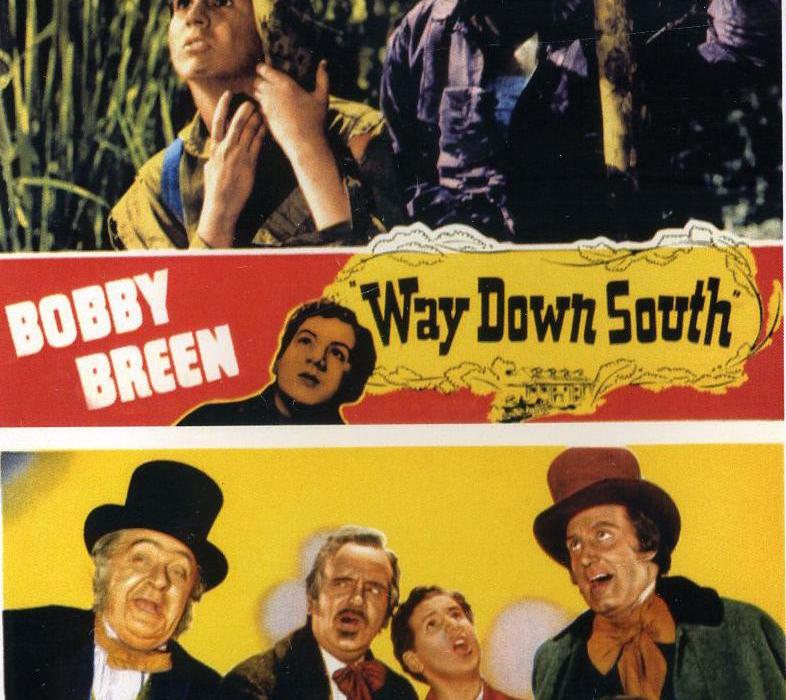
This is a film that’s another re-screening. I first saw this film as a rental, quite a while ago from Movies Unlimited when they were still in the brick-and-mortar rental game. I also believe it was the first Bobby Breen film I saw, and one of his last at that. Breen was one of those musical stars that had films custom made for him. How good or bad the films he was in usually hinged on how naturally the opportunities for him to unleash his voice were folded into the plot. In thematic terms, it may be the most dated of his films dealing with a boy who loses his father, a “benevolent” plantation owner, the executor of his father’s will is now to sell off all the families assets, slaves included. In this context the lead acts heroically, trying to save the first whose threatened with being sold, when they’re all threatened, and families will be split up; other remedies must be found. Perhaps what’s most surprising in this viewing was I had forgotten how chillingly amazing Breen’s rendition of this spiritual is. It may not be the best film he was in, I’d argue the melodrama Make a Wish was, but it may be the best showcase of his singing talent.

Score: 8/10
Oscar Nominations/Wins: 1/0

Rewind Review: Spellbound

Alfred Hitchcock’s film Spellbound is triumphant on many levels. Yet despite that it had disappeared from availability on DVD for a couple of years. As occasionally happens the Criterion Collection edition had gone out of print, but the film has now been rereleased by MGM’s Premiere Collection.

The film tells the tale of a man assumed to be Dr. Edwardes, played by Gregory Peck. It’s when it is discovered that the man is an impostor, and is wanted for questioning in Edwardes’s murder, that things really get rolling.

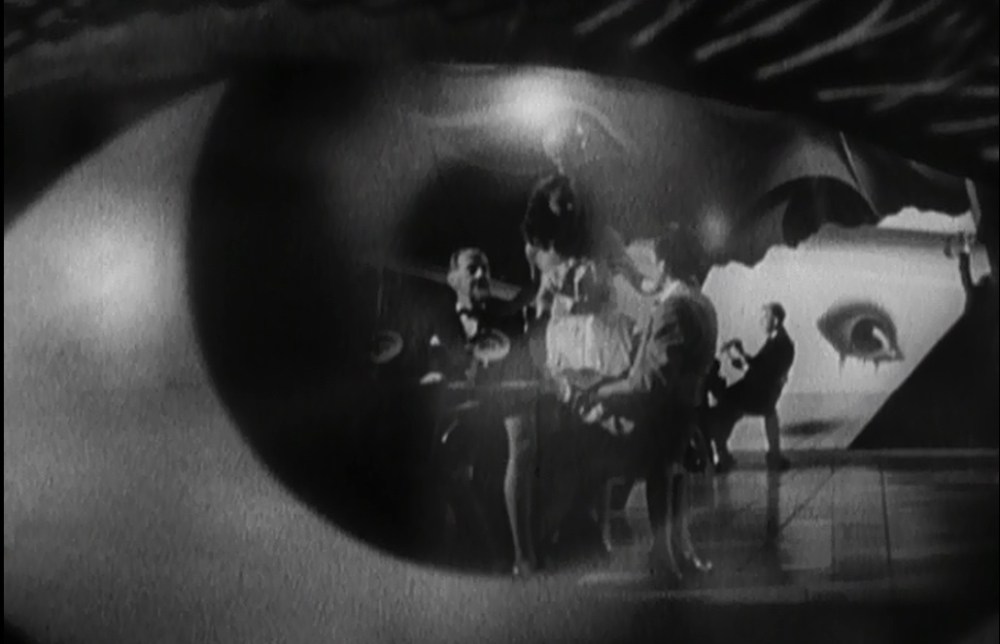
What sets this film apart is that its heavy use of psychoanalytic theory ultimately propels it into a different stratosphere in terms of film theory. The lynchpin of the mystery ends up being a dream had by Peck’s character. To find the killer the psychoanalysts must decode what the dream symbols mean and to create the film the cinematic, visual symbols needed to be chosen carefully especially the one the analysts fail to analyze.

spell15

This film is also a rare treat because the famous dream sequence told a little after two-thirds of the film has passed was conceptualized by Salvador Dali and it is apparent: eyes, a melted wheel, the obtuse architecture of the houses. This rare blend of genius alone should be enough to get anyone to want to watch this film.

That’s not all though. In this film you also have Gregory Peck and Ingrid Bergman, the former who is always solid but is pretty convincing in this part playing a tortured amnesiac with a guilt complex and the latter another of Hitchcock’s elegant blond ladies who is likely his most underrated leading lady, in terms of her work with Hitchcock.

This film has a very solid foundation built upon on a wonderful screenplay which is full of the fascinating nuance both of the human psyche and of situation. A scene where Bergman and the House Detective speak casually while she is trying to wait for Peck incognito at a hotel in New York is quite brilliantly constructed as is the scene where Peck and Bergman arrive at a friend’s house seeking refuge and find the police there waiting for the same friend.
spellbound2

The film also has an unexpected twist just when you think all is fine and dandy. The twist after resolution seemed to have been reached throws real peril back into the equation and makes you think maybe the happy ending is not destined in this story. Ultimately, I think the film is quite brilliant maybe not amongst Hitchcock’s best but certainly a cut or two above the rest in the genre. Despite his protestations in his interviews with Truffaut it is a terrific film even by his high standards.

9/10
31 Days of Oscar: The Lady Eve (1941)

The Lady Eve (1941)

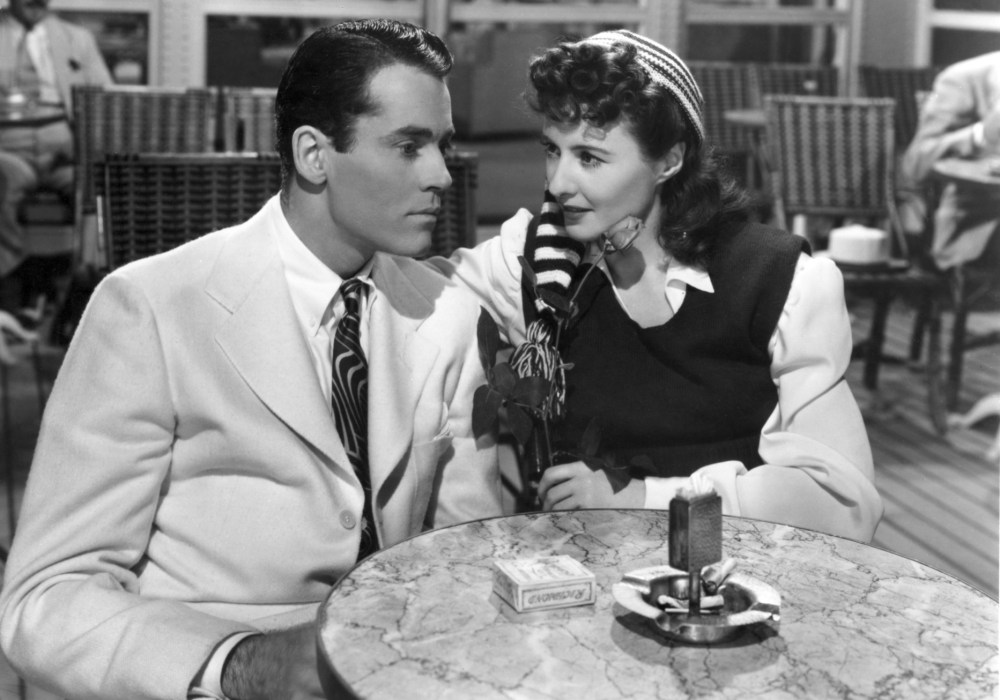
Maybe I just ran across this film at the wrong time, or maybe this particular story is just not for me. I’ve seen and appreciated other films that could be categorized as screwball comedies, however, even in that subgenre it is possible to get too ridiculous for its own good. The film was already dragging and losing me and then my ability to suspend disbelief was completely shot by a significant plot development. One so insane that it’d be hard to salvage, even if this film was very funny, which I really didn’t find it to be.

Score: 4/10
Oscar Nominations/Wins: 1/0

31 Days of Oscar: The Racket (1928)

The Racket (1928)

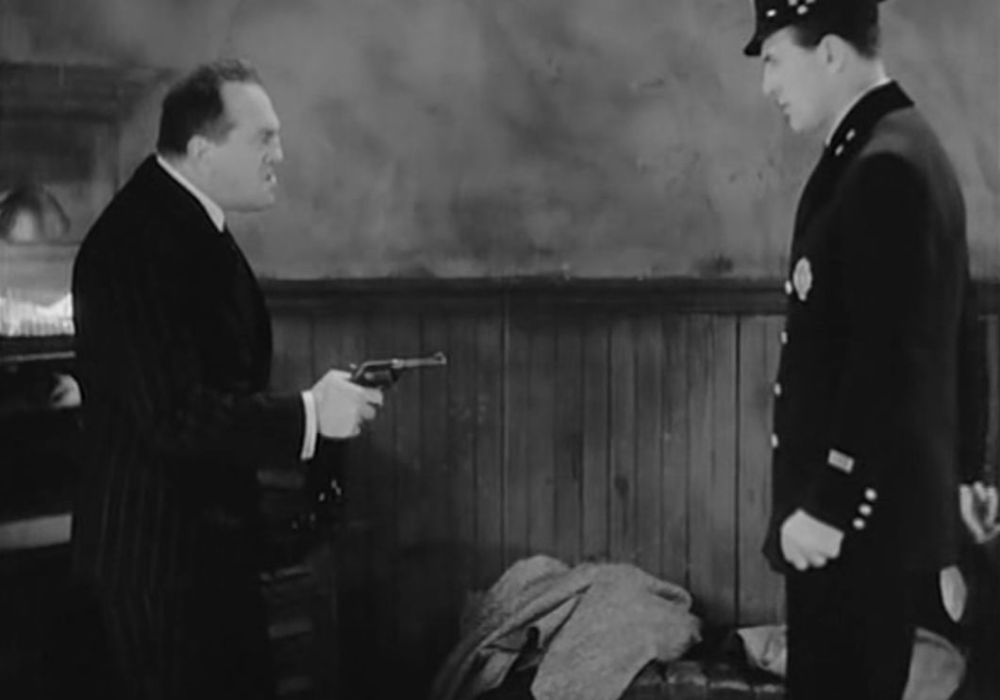
Here is one I was surprised to find was a silent. I didn’t pay attention to year on the TCM schedule and looked up the wrong information, rather I searched the remake’s synopsis. Regardless, it was a pleasant surprise that (seeing as how they were virtually identical) I chose by virtue of narrative a silent and took in stride. It was also reassuring to learn of the restoration efforts that had been made for this particular title. While it does play it coy with the nuances of the corruption at high levels of the police department and local government, this is a great treatment of a lone-cop-trying-to-take-down-a-kingpin story, which is very well done. Its also interesting to note this is one of the few films ever to be nominated for Best Picture (called “Most Outstanding” in 1928) alone.

Score: 8/10
Oscar Nominations/Wins: 1/0

31 Days of Oscar: Father of the Bride (1950)

Father of the Bride (1950)

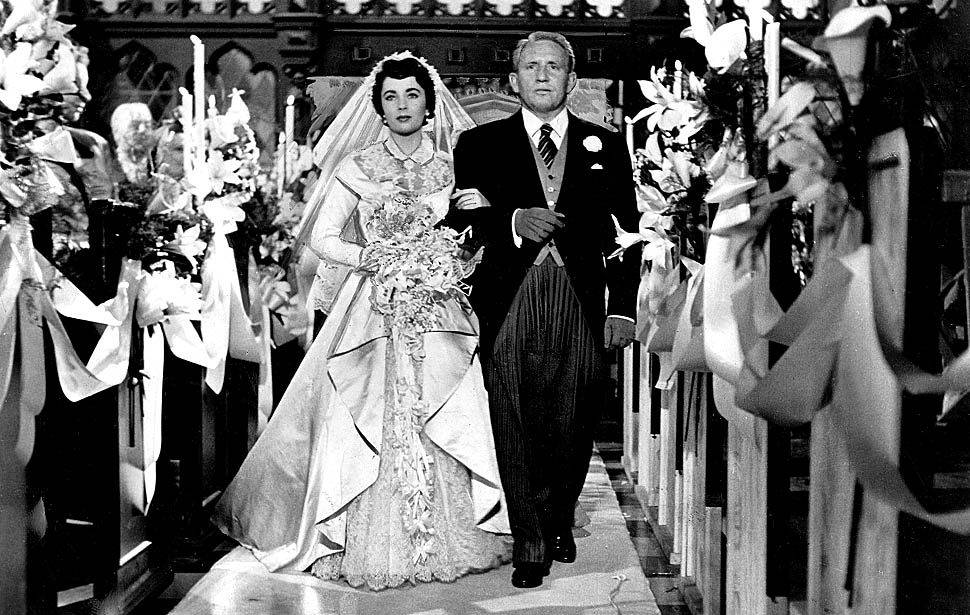
Having just seen Spencer Tracy I decided to make it a two-for. Now, this is a case where I saw the remake in theaters and still remember the experience. I expected this version to be different seeing as how they cast two very different leads, but I found this one so bogged down in the details and the humor usually was on the subtle side, save for the occasional loud, overlapping dialogue slapstick sequences with workers, that it just wasn’t very interesting at all. The table was set for this reaction right from the very awkward introduction of the topic of marriage. Were it not for the dream sequence, which is truly special and elevates the film, practically nothing about this film would’ve stood out at all.

Score: 5/10
Oscar Nominations/Wins: 3/0

31 Days of Oscar: Treasure of the Sierra Madre (1948)

Treasure of the Sierra Madre (1948)

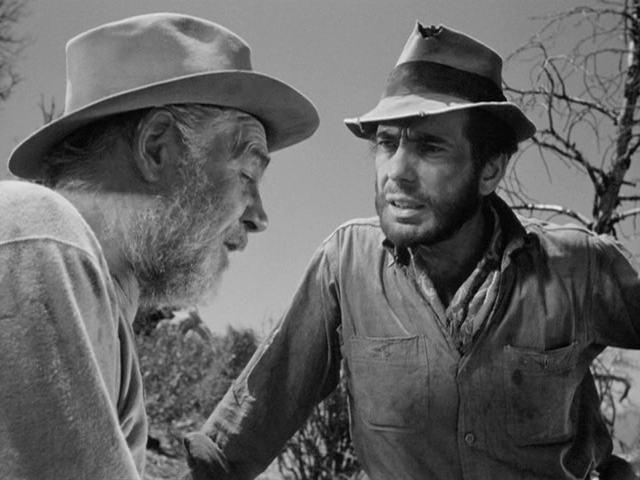
What’s best about this film is that it essentially tells you what’s going to happen to these characters early on, then you see it happen and it still manages to be very riveting because it becomes about the characters and stays that way. It’s a brilliantly rendered character study. I was not surprised in my guessing game that I was close to picking how many nominations this film was up for. What shocked me is that Humphrey Bogart wasn’t nominated, when he’s virtually unrecognizable by the end of the film in appearance and demeanor. I saw this on Blu-Ray and selected the Warner Night at the Movies presentation which plays a newsreel and two shorts before the film. I recommend that treatment for all film geeks so you get a taste of moviegoing in 1948.

Score: 9/10
Oscar Nominations/Wins: 4/3

31 Days of Oscar: Citizen Kane (1941)

Citizen Kane (1941)

Now before you go into a tizzy, yes, I have seen Citizen Kane. I have an old review of it I may post, but that’s not what I’m going to do here. Since I’ve seen it, and just saw it for the first time on Blu, I wanted to address some common talking points about the film.

1. I love Citizen Kane. It’s one of my favorite films. I viewed it on my own before I studied film formally and no one “made me like it.” I connect to it. I can distinguish between what I like and important and or well-crafted works and grudgingly acknowledge some films as important, or milestones, though I personally dislike them. That is not the case with me and this film.

2. It is not shocking to dislike this film, you won’t get a rise out of me if you say so. Aside from the fact that everyone’s taste is their own business, I can see how this one may not impress you, but save it.

3. Don’t hold Citizen Kane against How Green Was My Valley because it won Best Picture not Kane. How Green Was My Valley is a very good movie indeed. It is not Citizen Kane, because it has not desire to be so. Please try to gauge that film in a vacuum and don’t hold its Oscar win “against it.” The fact of the matter is Welles made a lot of enemies, which made the rest of his career a struggle and I’m sure there are myriad Oscar stats that will show you films that only won for Screenplay and who got a boatload of nominations and are virtually shutout. And in conspiratorial terms, Hollywood wasn’t about to crown Welles “king of the world.” In other words, something was gonna beat Kane that year, and in the estimation of many it was a loaded field.

Those are probably the three biggest ones. With regards to 31 Days, since I saw it before adding it to the total is kind of cheating but I’m on good pace and hope to be well clear of 31 films and 100 nominations, and I hadn’t see the blu-ray transfer yet. P.S. If you are a fan buy it, it’s a great box.

Score: 10/10
Oscar Nominations/Wins: 9/1