Bernardo Villela is like a mallrat except at the movies. He is a writer, director, editor and film enthusiast who seeks to continue to explore and learn about cinema, chronicle the journey and share his findings.
This is a post that is a repurposing of an old-school Mini-Review Round-Up post. As stated here I am essentially done with running multi-film review posts. Each film deserves its own review. Therefore I will repost, and at times add to, old reviews periodically. Enjoy!
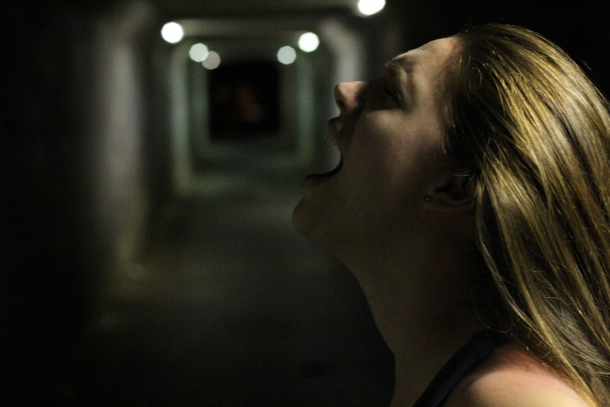
The Theatre Bizarre
Recently I’ve been seeing quite a few horror anthologies. Part of the reason behind that is just to familiarize myself with a few more of them and the voices involved in creating them. The second reason, to be perfectly honest, is that due to their episodic nature they are conducive to fractured viewing, which makes them easier to schedule. However, I did see The Theatre Bizarre all the way through in one sitting.
This one, like many horror anthologies, is a bit inconsistent in its quality, which is to be expected when different directors handle each segment. In my estimation, the highs are rather high and the lows are rather low. There are some interesting and at times daring attempts. It’s always hard to gauge them as a whole because this see-sawing in quality is not unusual at all. However, for fans of the genre I do think it’s one worth checking out, your feelings on the whole piece or a particular segment may be greatly different than my own. In the end, I really liked more of the installments than I disliked so it’s worth a watch.
This is a post that is a repurposing of an old-school Mini-Review Round-Up post. As stated here I am essentially done with running multi-film review posts. Each film deserves its own review. Therefore I will repost, and at times add to, old reviews periodically. Enjoy!
Absentia
As per usual, and as I say quite frequently, I went into Absentia knowing very little and that’s the way I prefer it. I knew it was a low-budget horror film and what the basic synopsis was from Netflix. That’s about it. Only later on did I learn more details like the budget was purportedly $70,000 and funded in part by a Kickstarter campaign.
All that stuff is great to know after the fact. Knowing it before you see something can be a double-edged sword. Essentially, either the movie works or it doesn’t. What the budget is, whether exorbitantly high or incredibly low, does not make it immune from, or more deserving of, criticism.
As for the film I really enjoyed it a great deal. It tells a tight-knit simple horror story that gives you just enough information to keep things going but never gets ahead of itself, and the idea is a low-concept production of a rather high-concept idea at the bottom of it. However, the curtain is only barely raised on the horrors being uncovered by these characters. I wouldn’t be surprised if the film was shot rather in continuity because it certainly was doable and the performances across the board got much stronger as the film progressed, and even rather impressive at times. The score is really good and there are good twists to it. This is definitely a Netflix gamble worth taking.
This is a post that is a repurposing of an old-school Mini-Review Round-Up post. As stated here I am essentially done with running multi-film review posts. Each film deserves its own review. Therefore I will repost, and at times add to, old reviews periodically. Enjoy!
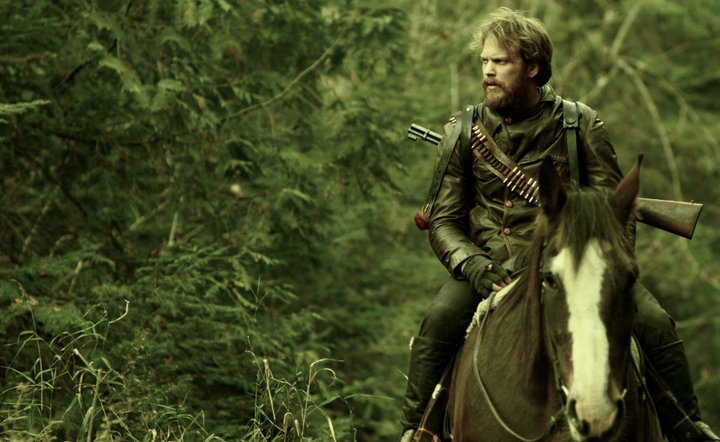
Exit Humanity
Exit Humanity is a horror film that has a rather interesting take on the zombie subgenre. With the proliferation of such a genre one must contend with both fatigue and differentiating one’s own story from the crowd. In these aspects is where the film is most successful, and that’s without including the fact that this is an alternate history tale of the postbellum south. The story is an introspective one that is more concerned about those left behind after a plague of zombism, and isn’t so concerned with making the walking dead of this tale a metaphor. Yes, there is a somewhat different spin to the cause and the history, but that ends up being more a narrative necessity than a focus.
With a fairly original take the film is setup to succeed and does, but only barely. Where the film struggles most is in terms of balance. The score is really good but at times only in isolation, at times it’s too intrusive and too intense. There is some wonderfully florid voice-over, but at times it’s too much, and at other times the scene would’ve been better demonstrated visually than through monologue. The film does have its twists and turns that are rather surprising, but after some of those unusual decisions some quickening of pace is needed so that it doesn’t feel aimless.
The film never really lost me as a viewer, however, it had me reeled in at times and let go just a little bit due to some of these inconsistencies. I don’t want to over-accentuate them because I do still like the film, but feel it easily could’ve been something truly special had certain edits been made. It’s worth watching for fans of the genre for sure. I wouldn’t raise an eyebrow if some professed greater admiration for it than I do, especially considering some of the touches it employs such as animation, colored shots and top-notch make-up effects.
A film like The Summer House truly make one examine what the borderline of exploitation and art is. The selfish utilization to capitalize on vulgar tastes is the cornerstone of all forms of exploitative cinema. The mark of art and craftsmanship is if the work in question can take that story element which may be considered to be depraved or base and render out of it a narrative with a greater purpose, one that could underscore common themes or concerns and be about more than just the shocking aspect that will invariably garner the film attention.
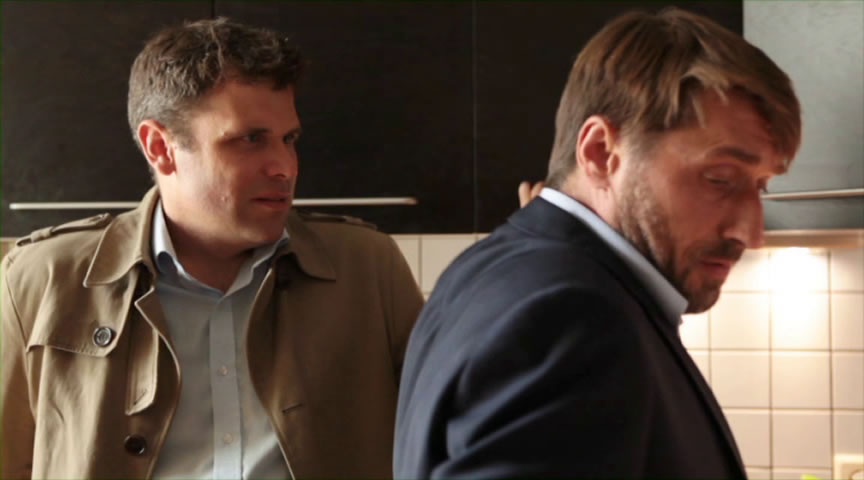
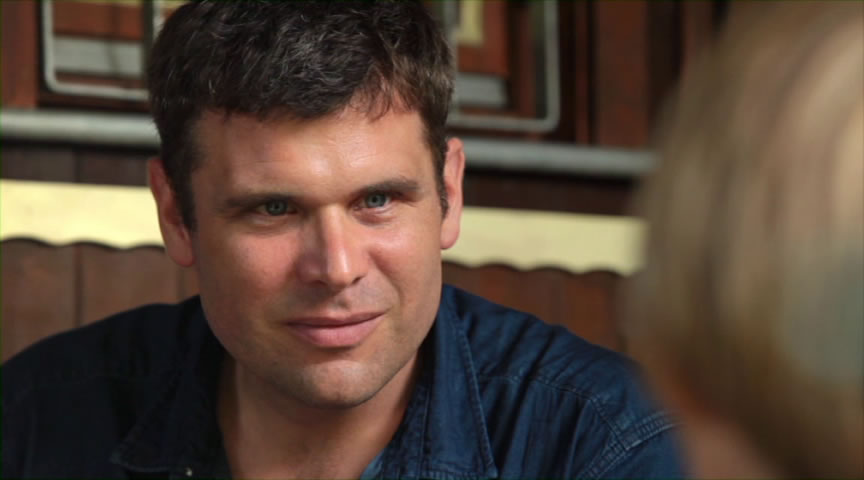
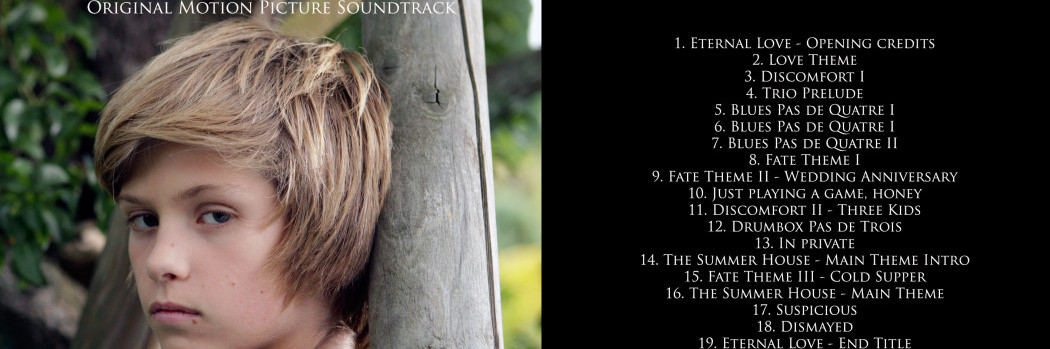
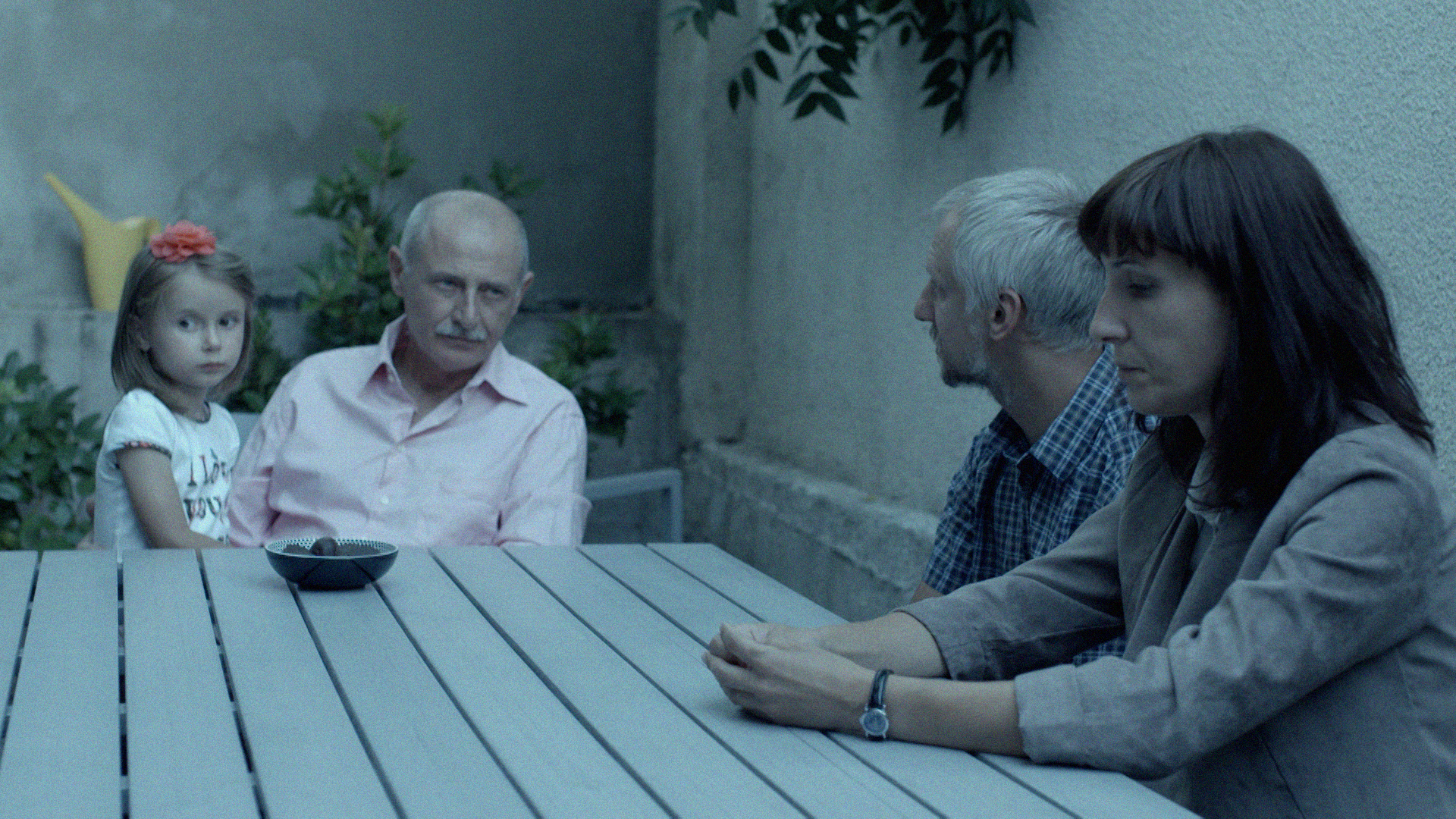
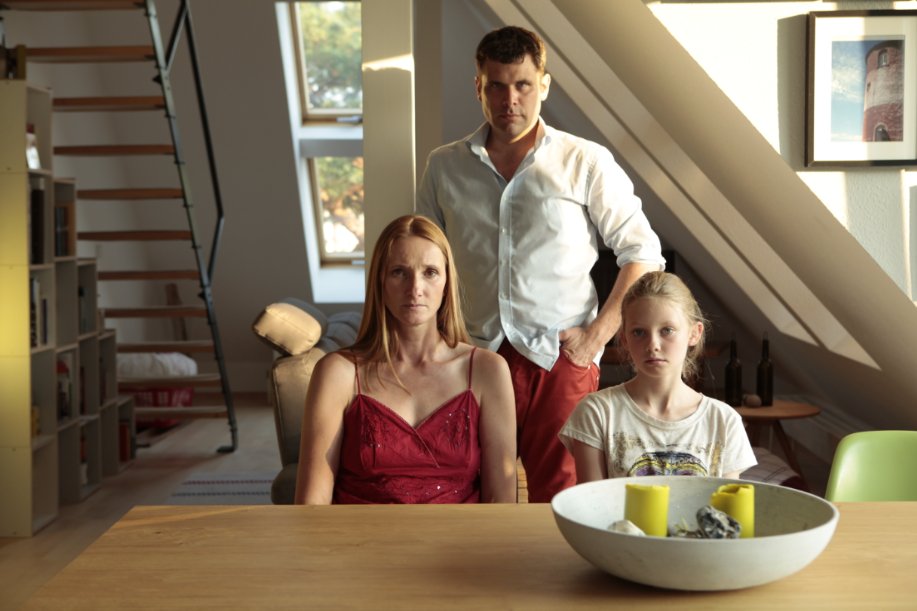
Over the course of a summer the Larsen family: Markus (Sten Jacobs), Christine (Anna Altmann), and Elisabeth (Nina Spletstoßer) are rocked to their very foundation by the pains they the carry. Their internalized struggles only externalize themselves in a vacuum and their convergence is combustible. Markus, whose commonplace appears to be indulging his bisexual tendencies on side (even these are rendered to a chilling effect) sees himself reach new depths of decadence. Acting as a catalyst for this pending familial implosion is Markus’ fascination with a friend’s twelve-year-old son Johannes (Jaspar Fuld).
This is not unprecedented subject matter. Lolita and Death in Venice deal with these themes also – and this film does have a less myopic, more diverse vantage point than Michael does. The concern with plots like these is not even so much how tastefully the distasteful can be rendered but rather to what greater purpose does it serve.
Here is a case where the distributor Artsploitation seems to have a rather keen eye. Before I saw Reckless I was fearful it’d be too much in the BTK school of things like Hostel with little other point than to make you squirm, but that was not the case there; and it certainly isn’t the case here.
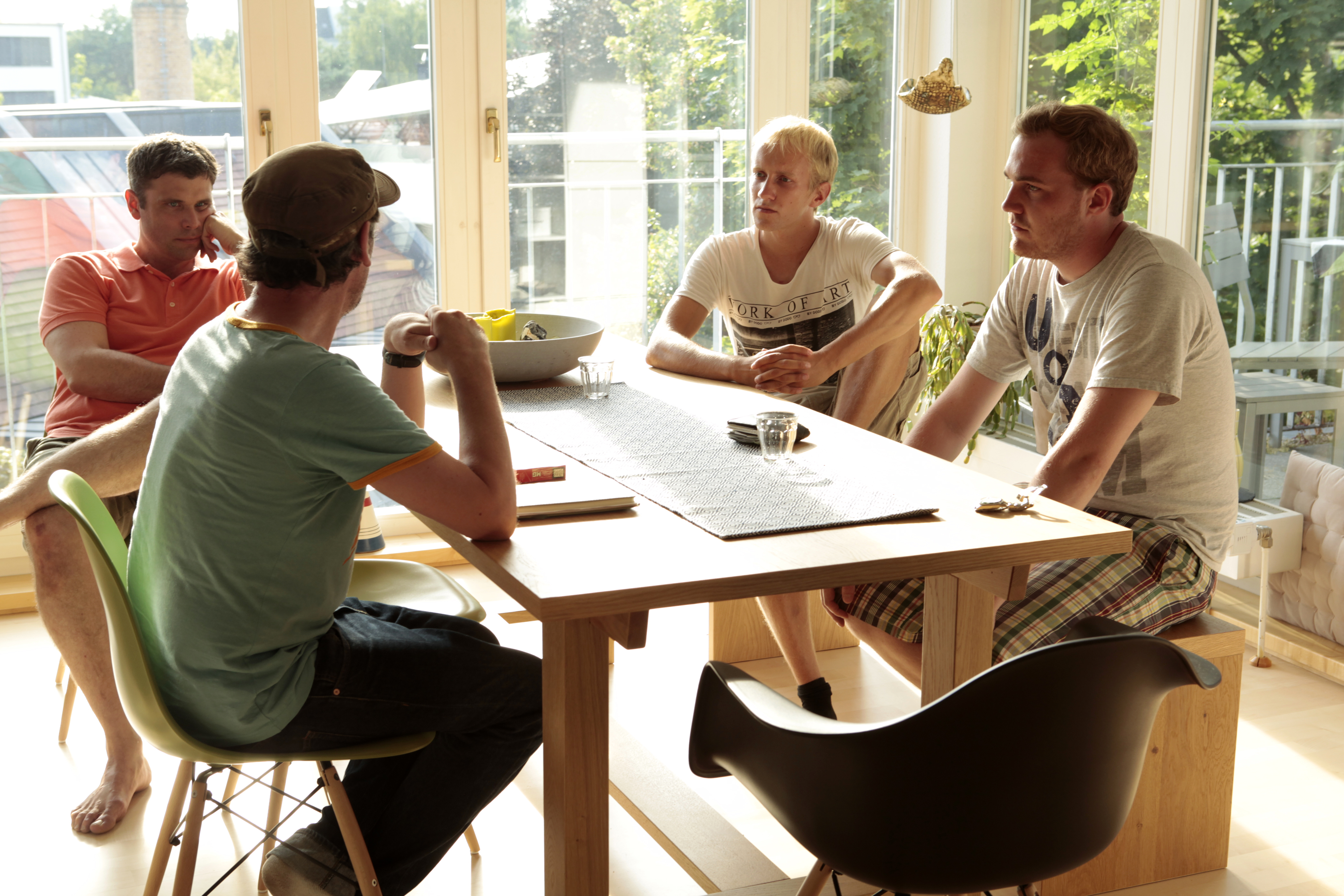
Each character in this claustrophobic drama has their own distinct arc, and for family members there is scarcely overlap as for many reasons they scantly communicate. One of the bonus features discussed below is a rehearsal of a virtually dialogue-free dinner scene that is the epitome of the state of this family unit for a majority of the film. Each has their own aims and desires which can seemingly be achieved without the others standing in their way. Things of staggering significance are debated and decided upon without consultation, not to spoil it, but some of these are things most couples would discuss.
And for all the attention the sensational aspect of this film will get nearly equal, if not greater, screentime is given to Markus’ escapades with men. This film does a great deal with circumstance and it makes scenes that would otherwise be fairly innocuous chilling because of their set-up and with its more delicate situations it shows restraint and tact while still being disturbing and provocative.
One of the more impressive things about this film is the way it builds itself in a less traditionally formulaic fashion, typical of European cinema throughout, then, after certain revelations, plays perfectly into a classical suspense formula at the drop of a hat. Furthermore, this late in the game shift makes things that seemed a bit too overt before work in hindsight as now subtextual motivations in the cut, edit and performances are clear.
In terms of performance, Jacobs’ excessive openness in glances is partially absolved by late-in the-game revelations. His ability to be distant and stern with his family, chillingly charming and human with Johannes, and calculating with his friends is impressive. Altmann has perhaps the most unenviable arch as much of her unhappiness is unspoken and enigmatic and yet communicates perfectly in some rather difficult solo scenes. Spletstoßer and Fuld have very different characters to play and in each different tones. Spletstoßer often needs to be distant but observing, and Fuld plays more subtext than at times we realize. It’s a triumph for the cast overall, a testament to their trust in Burz and his process.
The Summer House is most definitely an uncomfortable viewing experience that is not for the ill-prepared or faint of heart, for reasons in addition to the aforementioned ones that will remain a surprise. What’s most impressive about the apparent genre-shift is that it then brings out the universal genre reactions inherent to thrillers and had me rooting and reacting audibly to the turns whereas a majority of the film was cerebral and wandering in the gray areas of drama, at best. That is quite a feat in and of itself. In the special features (you can see my commentary on them below) Burz discusses how this is a departure for him in terms of genre and it not being autobiographical. It certainly made me curious about his work as his results here with his troupe on treacherous ground is highly impressive.
Special Features
As is the case with any home video release I review I like to take in all the features. Typically, just for ease, I view them in order. With this film it is actually the preferred method. As you scroll through the features one-by-one you get a more complete view of just how this film came into being conceived.
As is the ideal for this bonus content usually, in a way few releases do anymore, it’s giving you an inside and as complete a look as they can at the thought processes during the making-of and edit.
Having this be the first Burz film I’ve seen, and I believe the first one to come to the US, it was edifying to learn that he works in an improvisational fashion not different to Mike Leigh and others. It was also intriguing to learn how much of a skeleton crew they worked with and some of the restraints of the production making what was accomplished more impressive in a technical regard.
Here are the features specifically, which really make the disc a furthermore immersive experience.
Rehearsal
Master shot of a nearly silent dinner scene where the family’s disconnect is intensely illustrated.
Deleted Scenes
As tends to be the case, the scenes deleted from a film are better off having remained outside the cut. However, there is a curiosity sated here, and one can see how the pace of the film is aided in having excised them.
Extended Scenes
The extended scenes are a bit different and there is additional context added that otherwise is merely inferred rather than shown.
Alternate Ending
When completing the film one of things that will have you pondering it for some time is the ending. Seeing the alternate take will convince you that the way the film chose to go was indeed correct
Interviews
Where this release starts to downright Criterion-like in the amount of additional content it includes is in the extensive interviews with cast and crew, which gives tremendous insight into the creative process, and each member’s views on the myriad themes running through the film.
Curtis Burz (Director/Writer/Editor)
Thoughtfully shares stories on the making of the film in thematic and practical senses, and working with his familiar players.
Bastian Schick (Composer)
Discusses his musical philosophy in constructing the score, his joining the troupe and how he made Burz’ acquaintance.
Andreas Gockel and Peter Sebera (Directors of Photography)
In separate interviews Gockel and Sebera give technical insight on how the location, skeleton crew, and amount of equipment affected decisions. The insights on specs make some of the shots accomplished even more impressive.
Furthermore, it’s interesting to hear each speak separately about their working relationship in the unusual circumstance of co-DPs on a shoot, and their familiarity with one another making the hand-off from one to the other easier.
Sten Jacobs (Actor)
Both lead actors provide interesting insight on what it was like to work in an improvisational atmosphere, as well as one wherein the location made for an unusual production schedule.
Anna Altmann (Actress)
What Altmann adds that Jacob didn’t is insight on a far more enigmatic character. Furthermore, the unique insight of having her real-life daughter playing her daughter on the film and how she was very pleased with the results as mother and actress in allowing her the freedom to the work independently with minimal stage-parent style interference.
Trailer
After having seen all the other material it really is refreshing to finally see the trailer. Knowing the story and events therein one can see how much is concealed in the cut while still making it pique a potential audience member’s curiosity.
—
The Summer House is now available on DVD and digital video outlets.
This is a post that is a repurposing of an old-school Mini-Review Round-Up post. As stated here I am essentially done with running multi-film review posts. Each film deserves its own review. Therefore I will repost, and at times add to, old reviews periodically. Enjoy!
The Thompsons
Essentially part of the criteria for falling through the cracks in one year is cognizance. The release date on video for this film was 12/31, which made it a tough one to acquire and view before the end of the year.
This film reaches an honorable and rare duality of being a sequel that one could watch without having seen its predecessor (The Hamiltons) and that continues the trajectory of a series properly. This sequel builds upon its own vampire myth, which is one whose origin is genetic rather than viral. What this film does infinitely better than its predecessor is build mystery, and suspense but also has reveals and significant plot points at a persistent pace. The necessary information, both new and old, is relayed quickly enough such that the raising of stakes happens early and often. You also have here a rather unusual paradigm wherein humanity is the outside world and you’re purely in a vampiric world. What The Thompsons does is firmly establish a foothold for the Buthcer Brothers’ concept in the genre, one that should be supported by those who like seeing new takes on old creatures, and specifically, want vampires to be brutal.
One of the most challenging conundrums a film can face is documenting the activities of a voyeur. Whereas in a novel the author can decide how much of character’s thought processes to reveal, and to what end, even a film’s most earnest attempts to disseminate the desired amount of information may not reach an audience or be received.
This task becomes more difficult when it’s widely agreed that the novel the film is basing itself on is commonly agreed to have an enigmatic protagonist.
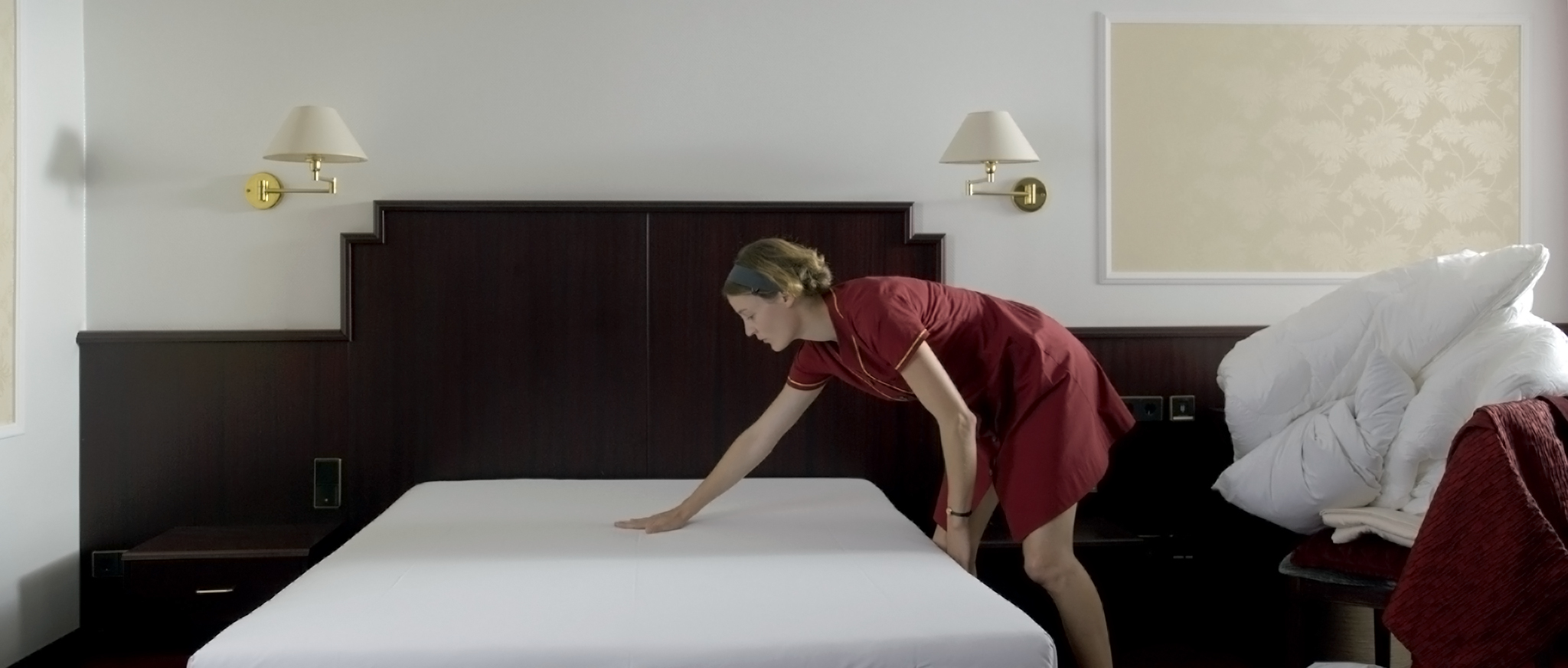
The Chambermaid tells the tale of Lynne, the most dedicated and proficient employee at her hotel. She gives the rooms immaculate care and attention. Unbeknownst to the guests she gives them equally clandestine attention looking through their things, hiding under the bed, listening to their conversations, and so forth.
Being placed in the role of observing the observer can be a distancing and disenchanting one particularly when not given sufficient illumination on the character’s motivations, wants, and needs. However, what occurs in this film as Lynne (Vicky Krieps) develops a relationship, both personal and physical with call-girl Chiara (Lena Lauzemis) she begins to emerge from her shell but we remain observers. Much like her psychologist, who remains unseen like Antoine Doinel’s, we’re left in many instances where we see only the surface she decides to reveal.
The film begins with Lynne sharing a story of how her whole philosophy on life was formed at a young age. The majority of the film is her exploring if there’s any truth, any genuine emotion behind the lie she believes life to be. Yet that morsel at the beginning is the only thing easily learned for the audience. And we have more real information than her psychologist ever does, and even we don’t really ever fully know what landed her in in-patient treatment.
In the most banal terms The Chambermaid can be reduced to a woman learning how she can about living life, while being an active participant rather than a passive spectator. Getting her to make that decision will be a process that will be imperfect and cause some pain but one that ultimately happens and it’s the one the audience is invited to see. The ebb-and-flow, the essential struggle underway to come to that conclusion is one that is a bit inundated by the set-pieces and the gorgeous mise-es-scène, which displays that not only can prisons be self-imposed, but they can also be brightly colored.
At the beginning Lynne ruminates on the story her mother told her about the waves being caught in a seashell. As a child, she bristled at this wondering how something so large could be contained in something so small. Yet that statement seems to define the philosophy of the whole film where a much bigger tale of Lynne’s whole life is reduced to this flashpoint where she finally spies something in one of her hotels room that prompts her to act rather than view.
Far too often the word mundane carries with it the connotation of a story that will induce ennui. However, the mundane when skillfully deployed and dramatically rendered even a seemingly simple morality tale can be so universal and inviting that things like language, currency, and location are no barriers.
Such is the case with the Bulgarian film The Lesson. It’s a film whose title is even simpler than its premise, as the title belies the fact that the financial, and moral, complications a school teacher Nade (Margita Gosheva) faces are intertwined and coming at her from several different directions.
The threads that run through this film from beginning to end are: she’d trying to discover which of her students stole a wallet, she’s trying to chase down payment for recent translation work she did for a small company, and then get out of a financial mess in her personal life.
Yet, as the case usually is, each of these issues feeds off the other and they are intermingle wondrously. That is not the only thing that’s awe-inspiring here; one nearly needs to be reminded of the fact that this is, in fact, a film that’s co-directed (Kristina Grozeva and Petar Valchanov). The result is such a singular vision you wish there’d be fewer roadblocks to co-directing. Regardless, in this film Grozeva and Valchanov clearly present a unified, powerful voice that is hynoptic to see.
The film becomes a further inspiration when reading the directors’ statement on the Film Movement release. A real bonus of their physical editions but I will preserve that surprise for those that get it, and also further tease that there’s a fascinating short documentary, Crooked Candy, about a man’s lifelong love affair with Kinder Eggs that must be seen by chocolate lovers and the young at heart.
The film’s neorealist qualities are an antidote not only to the ripped-from-headlines story but also to the overwhelming majority of films that seem to refuse to acknowledge that small stories can say big things and matter a great deal. It’s a drama that builds itself around relatively miniscule amounts of money, we at times don’t even know the total in local currency until later on (and web searches can confirm what the amounts translate to locally), and the point is they don’t matter. It’s about more than livelihood but survival and trying to do what’s right.
The film in its laid back way ups the suspense, about midway through in a way that makes it feel like a traditional third act. An indicator this films 100+ minutes were more than likely built in five-acts. However, there are still surprises, shocks, and drama in store in the latter half.
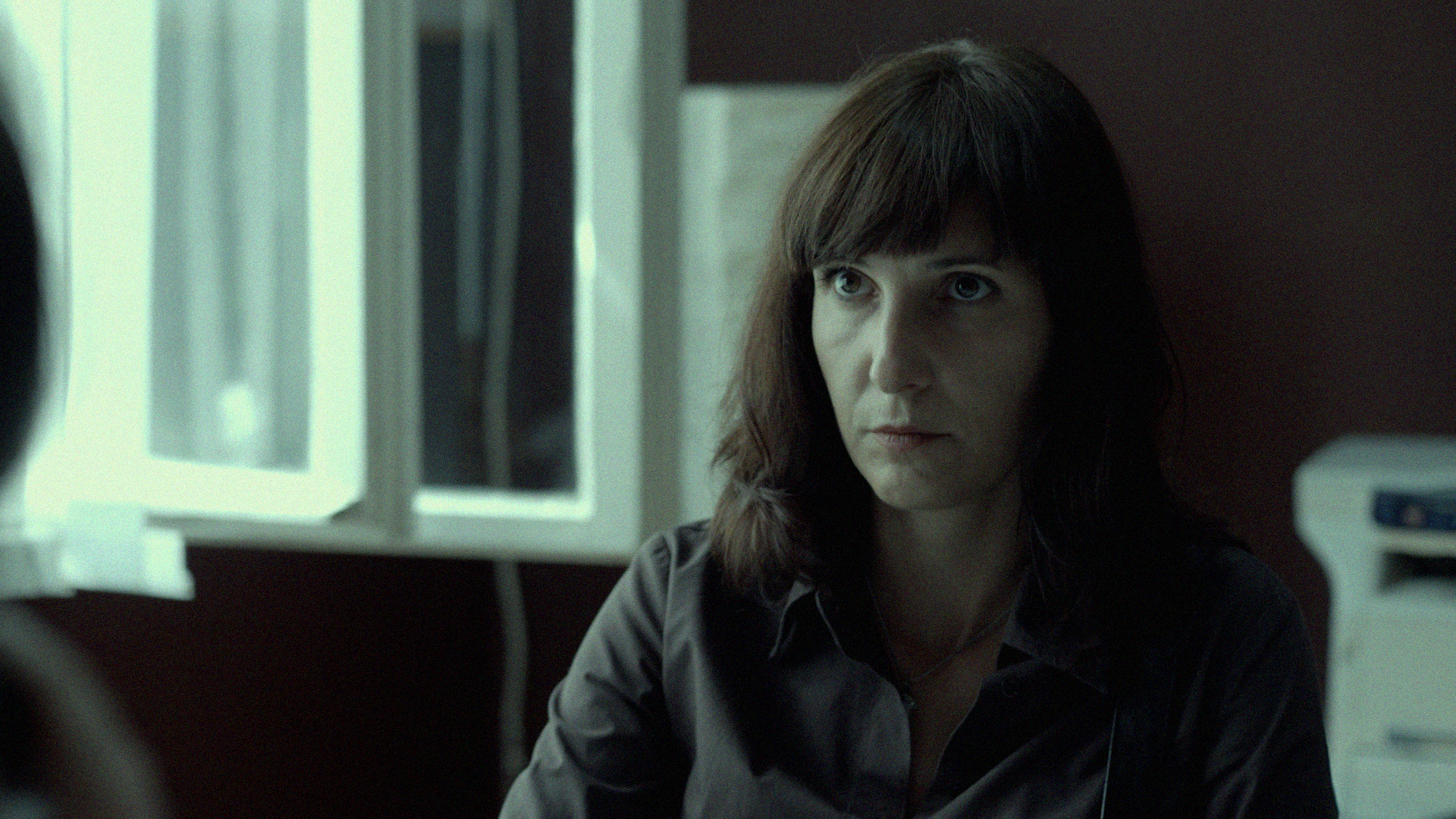
The central figure in the story is Nade. She is the one whom all events revolve around and must take decisive action when all others are unwilling to do anything much less the right thing. The least an audience asks of its protagonist is that they be watchable. Gosheva makes Nade much more than someone you want to watch but rather someone you have to watch. Her magnetism and sensitivity, intelligence, toughness, and at times impetuousness are all identifiable that make her one we’re drawn to whether we always agree with her decisions or not.
The Lesson, like any lesson, could be an experience that is didactic, drudgery or could be an experience you’ll likely hold on to and cherish for a long time. This film is far closer to the lattermost option on that list.
This is a post that is a repurposing of an old-school Mini-Review Round-Up post. As stated here I am essentially done with running multi-film review posts. Each film deserves its own review. Therefore I will repost, and at times add to, old reviews periodically. Enjoy!
Penumbra
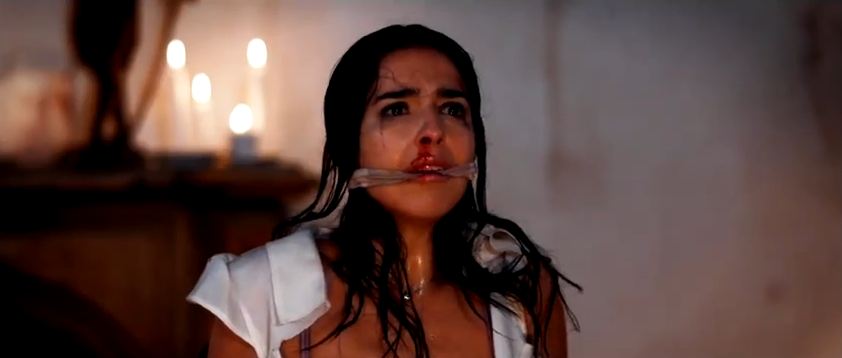
What Penumbra attempts to do is something I can definitely appreciate. How it goes about trying to do it is what I really have a problem with. It overplays its hand in some regards and is a bit too broad in the portrayal of its protagonist, her dialogue a bit too blunt; not to mention the scenes that set-up the gotcha ending that only play more annoyingly once everything is revealed. It’s an interesting examination of the Spanish-Argentine dynamic but many other recent co-productions layer horror, colonial antagonism and modern Latin America’s socioeconomic climate better than this does, combine that with its failings as a horror film and it becomes quite bothersome indeed.
This is a post that is a repurposing of an old-school Mini-Review Round-Up post. As stated here I am essentially done with running multi-film review posts. Each film deserves its own review. Therefore I will repost, and at times add to, old reviews periodically. Enjoy!
Branca’s Pitch
This is a fascinating bifurcated documentary about the man who threw the pitch that became “the shot heard ’round the world.” The bifurcation comes not only from not only telling his life story, both before and after that seismic moment, but also discussing the ghostwriting of his autobiography. There was also a shocking turn in this film, which is as much as I’ll say but baseball fans are in for quite a fascinating turn of events if they weren’t already aware of recent developments regarding that Branca-Thomson at-bat.
The most interesting part of the ghostwriting aspect of the film is that it really examines how everyone has their own story that is their individual truth. Aside from the fact that it it illuminates a career that was otherwise quite accomplished that got reduced to that moment, that is it’s most valuable contribution.
For 61 Days of Halloween, as well as for my posts categorized as Shyamalan Week (these usually lead up to, or surround, one of his new releases), I usually do some posts that are formatted a bit differently.
It’s with that I commence discussing M. Night Shyamalan’s The Visit. As per usual with Shyamalan, I go in depth and may reveal plot details you’d rather not know, so spoiler alert. Forewarned is forearmed.
The Visit (2015)
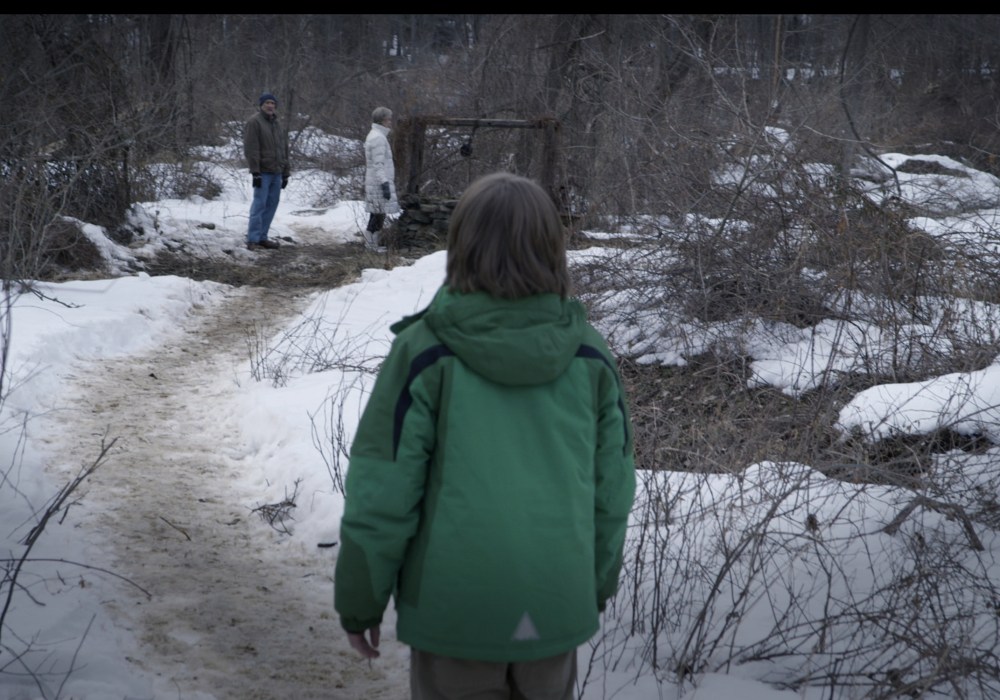
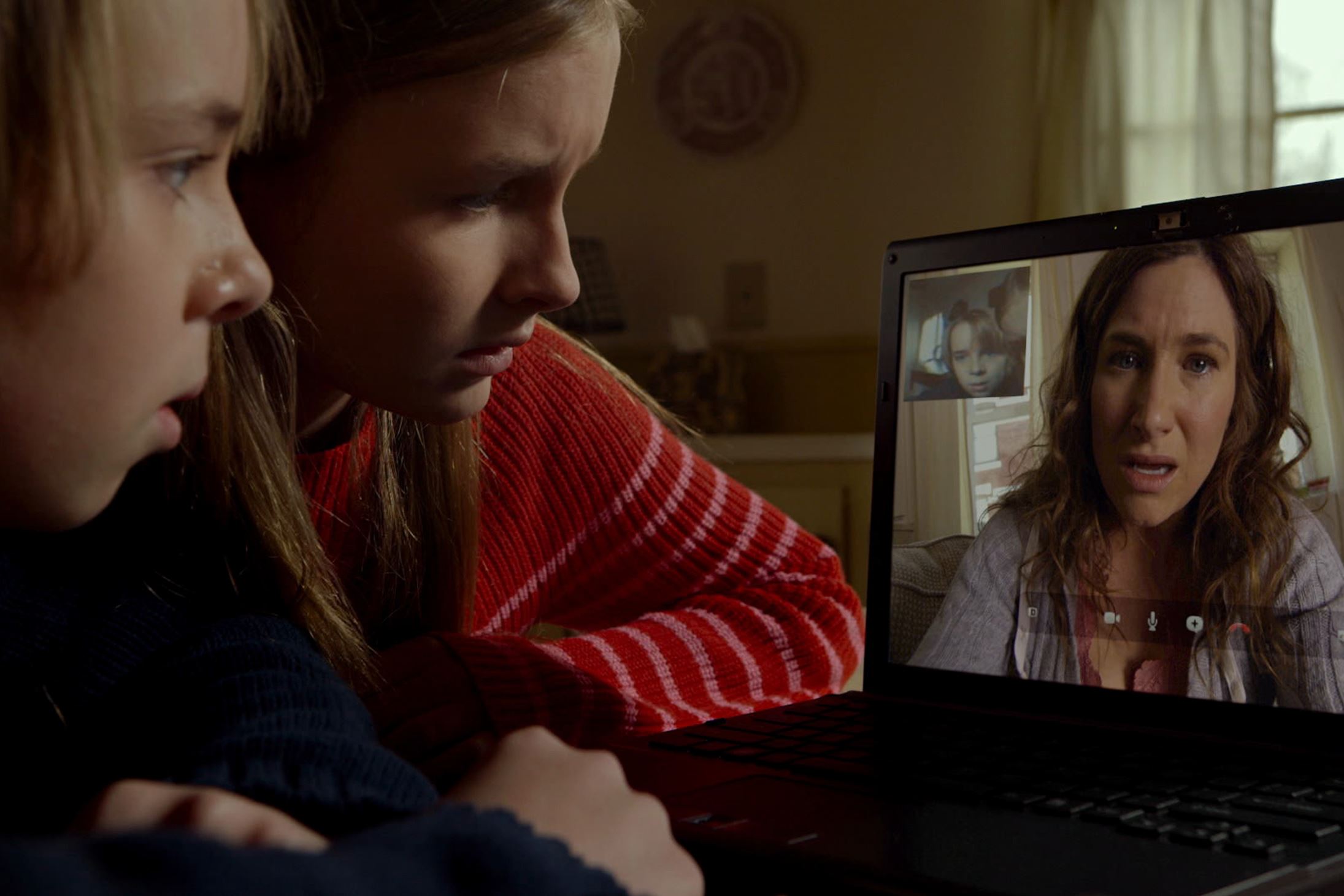
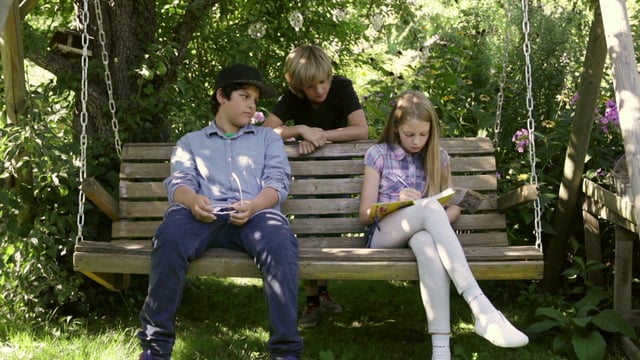
The Visit has a simple set-up: two kids, aspiring filmmaker, Becca (Olivia DeJonge), and her irreverent younger brother, Tyler (Ed Oxenbould), are going to spend a week with their grandparents (Peter McRobbie and Deana Dunagan) to get to know them as they are long estranged from their mother (Kathryn Hahn). It’s a scenario that allows for a stripped-down, character-driven relatively shoestring take from M. Night Shyamalan, and it’s also a perfect vehicle for found footage.
As do a lot of other found footage premises, so what makes this one work?
Auteur Theory
Knowing a director’s work can be a double-edged sword, to Shyamalan for me; I feel it always works as a benefit. Here what ends up occurring is that you’re put in the mindset of a Hansel and Gretel (Not the witch-hunters) tale immediately through the set-up that’s reinforced by the marketing but it ends up being the first of the film’s misdirections.
Shyamalan works some of his common touches better in this film than in many of his others including the ones with the most similar occurrences.
In no particular order they are:
Mom’s full story about the fight that lead to her leaving home, along with the fact that she is a single mom is reminiscent of The Sixth Sense.
In this film the tale of sports-related trauma is more organically folded in and involved the climax than in Signs.
When Grandma is stalling to tell the truth about her relationship with her daughter the tale she tells in its place, that sounds like lunacy, is not unlike The Lady in the Water.
The inclusion of Sundown Syndrome, a strange and fairly rare affliction, is also a recurrent theme most notably employed previously in Unbreakable.
Lastly, Pop Pop’s tale of the white creature with yellow eyes he saw at the factory reminds me of the creature in The Village.
\
Way back when, I forget if this was on At the Movies or in an article, Roger Ebert exclaimed that M. Night Shyamalan’s Pennsylvania was beginning to be a cinematic analog of Stephen King’s Maine. Here Shyamalan goes to Masonville, PA. Even as someone who lived in the state for four years it’s still a marvel to me how vast and expansive to me. It’s certainly a larger in-state playground than King has.
There are all touches that delighted me, and there’s a sort of active engagement, what-next urgency to my viewings of his films (most of them) that have me rapt regardless, like a kid listening to campfire story.
So far as his dovetailing he’s not only filmmaker who does so, and that’s also like a King story. With regards to the moviegoing public there seems to be a strange phenomenon with Shyamalan where certain people keep going to see his movies though they may not necessarily want to. It’s like sports fandom: you believe your team hasn’t been good in years, and maybe never will be again, but you still won’t give up your season tickets.
Performance, Tonality and Character
It manages to successfully shift tones and close-out all aspects of its narrative appropriately. It’s unquestionably both comedy and horror (the inclusion of Hahn and Oxenbould was a hint even beforehand). However, unlike many horror/comedies it does not struggle in either aspect and it does find equilibrium.
It excels mostly because Olivia DeJonge and Ed Oxenbould are both inordinately exceptional and achieve the unique tricks of appearing natural as if the camera is just rolling, being believably awkward when the moment demands it, and also entirely inhabiting their characters.
They have many memorable moments: the companion coerced confessions, freestyle rapping, and Oxenbould when snapping out of freezing in a rage are dream takes for an actor and director both.
DeJonge’s interpretation of Becca is that of clearly intelligent girl without a note of falsity or petulance, heartbreaking in her embittered memories of her father. These two are really the glue that holds the film together.
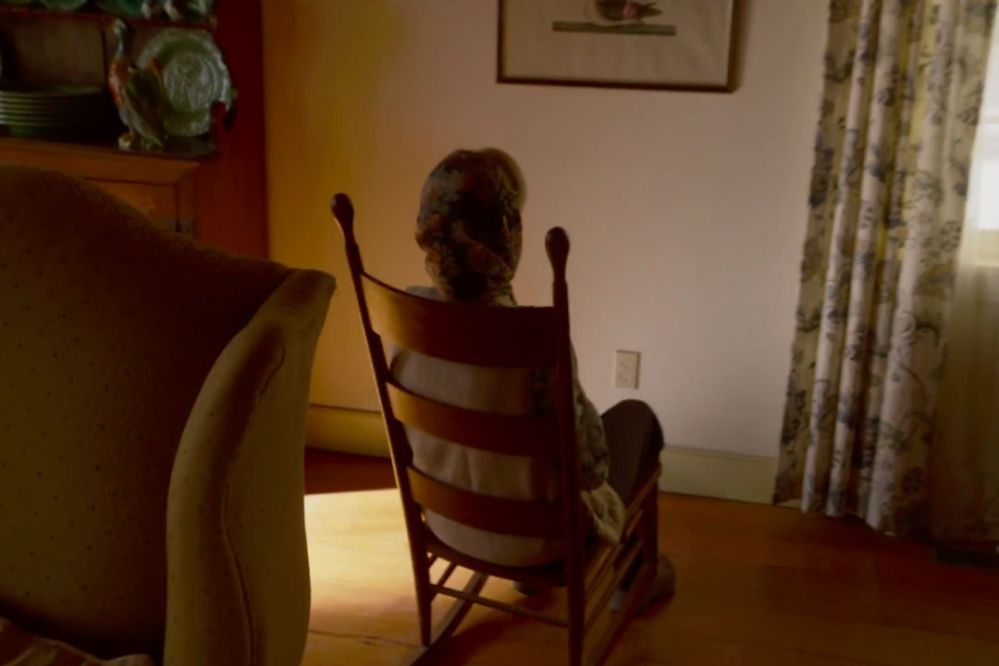
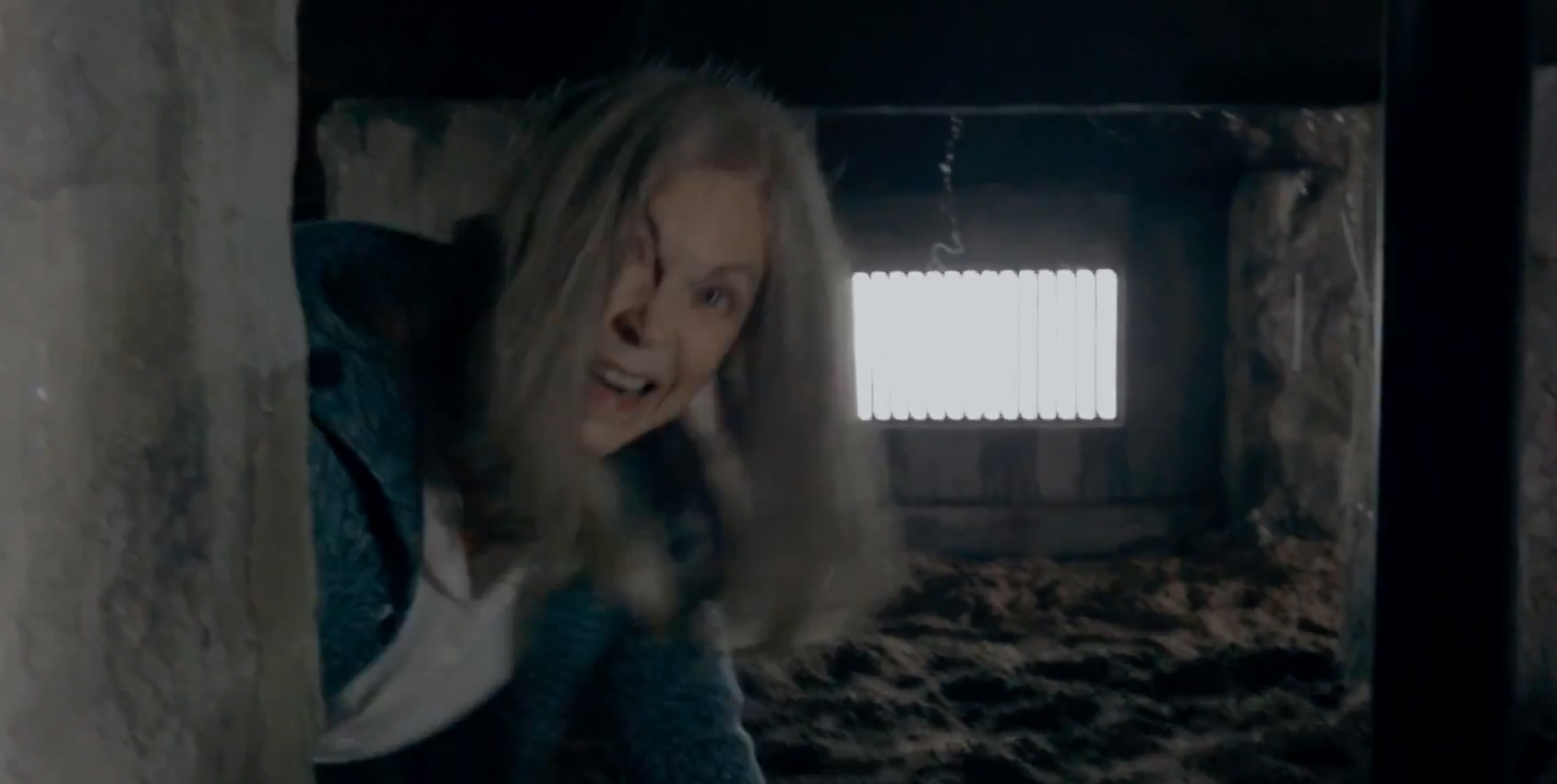
This is not to discount Peter McRobbie and Deana Dunagan. They provide some of the needed laughs as well, all the necessary scares which are very effectively delivered, and even one heart-rending moment. Their feat is also not limited as their physicality is a triumph for both.
With a cabin fever aspect to the story, and a lack of a supernatural element, character is at a premium and remains so. The characters are explored even more than the plot is built but both are slowly revealing themselves sometimes it’s even subsumed in seeming temporary nonsense.
Even in the conclusion where Tyler is allowed to do his closing freestyle rap (Shania Twain, bitches!) and Becca is looking into the mirror, her former aversion to such and the trauma that started that behavior were previously established. We see the growth and progression of both.
Newfound Footage
This film takes a few tired found footage tropes and injects some life into them, as well working a few tried-and-purported-to-be-true ones better than prior acclaimed films of the technique.
Incessant documentation is a new reality that is becoming more accepted by society with less and less backlash with each passing day, therefore one of the past requirements of this technique is already passé.
In differentiating itself from the newer brood of the found footage approach it both doesn’t ignore the cameras to its detriment nor does it obsess over the “Why Are We Filming This?” Conundrum.
With regards to the past it does at times it seem to echo The Blair Witch Project with dramatic moments in corners. It also takes what was the entire basis of at least twoParanormal Activity films, distills it into one chilling scene; and thus condemns the former to the purgatorial state of anti-cinema wherein it belongs for all eternity.
Conclusion: The Visit Twists
The Visit is a film that deals with creatures both real and imagined, the real being people, the ghosts of this tale being figurative. It’s a film where I was not waiting for a twist but rather reveals, but this one is successful because it was just sitting there waiting to be discovered like some others, but is highly organic and intrinsic to the plot. Furthermore, little morsels of prior information that seemed meaningless before ring true after it.
Another way for a viewer to ruin their potential enjoyment of a film is to be expecting a twist and constantly trying to ferret out what it is. What would happen if there was none? It’s like going to see an adaptation of a book and constantly be referring to your mental checklist about which favorite parts were included and which were edited out. It occludes you from focusing fully on what’s before you because you’re worried about parallel problems.
How many given endings can a story really have in cinematic terms? In most movies, especially Hollywood releases, you know how things will go. You’re there for the journey.
Previously I discussed how at least Shyamalan is consistently giving us something to talk about, something a lot of people can’t even claim, which is noteworthy at the very least. I still want to discuss, and watch, and I wanted this visit to continue and enjoyed it greatly.



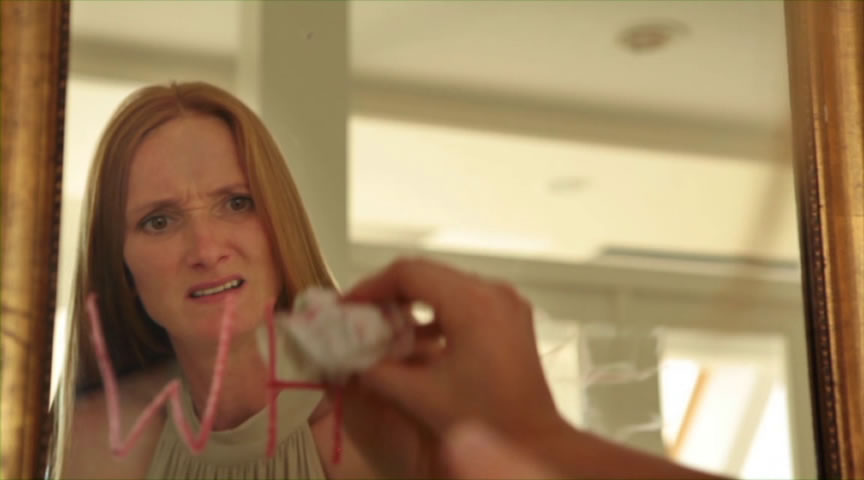 As tends to be the case, the scenes deleted from a film are better off having remained outside the cut. However, there is a curiosity sated here, and one can see how the pace of the film is aided in having excised them.