61 Days of Halloween: Gorgo (1961)

This is another selection that came to me by way of Stephen King’s list of horror films in Danse Macabre. I have to admit, I chuckled a bit and had some trepidation when I saw that this was a monster movie. After all I’m fairly sure that during the period from which King curated the list (1950-1980) there were other, more well-known giant-monster-attacks-city films; most notably the Japanese brood. So what makes Gorgo special?

I soon realized what it was and it’s not really about the fact that this species of prehistoric beast is discovered off the coast of an Irish isle, but rather the thing the film does in just 78 minutes. There’s a period of time wherein the film is like a proto-Jaws. There is a threat identified and a mostly unseen enemy. There is a plan to try and take it down.

What occurs then is a spin on King Kong, which has also been done. One notable example I viewed, that didn’t really work out, was Jurassic Park: The Lost World. However, here it does work because that second twist on the average monster film isn’t the last.

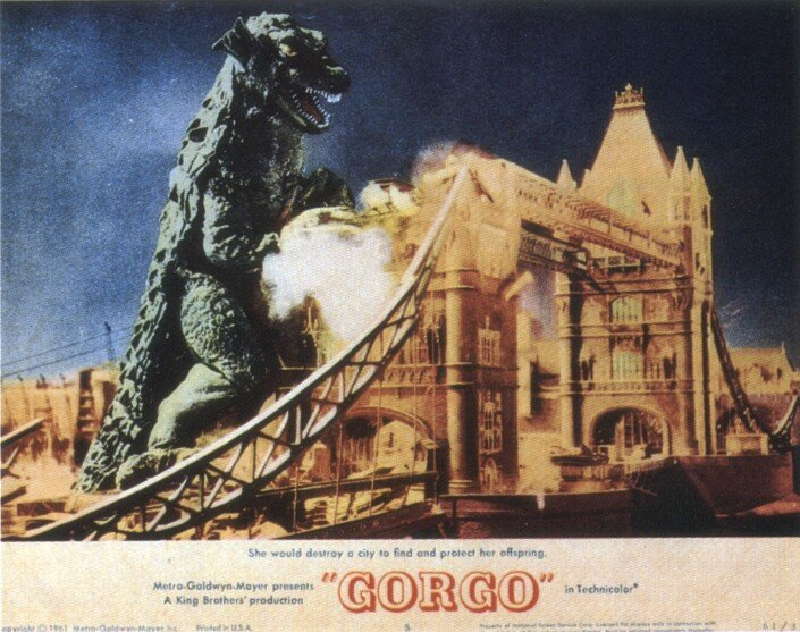
The last one is given away by this poster here. The beast that’s captured and taken to a London circus is a baby. Big, angry momma is coming for him and that’s where all the tense, well-wrought and choreographed chaos ensues.

I won’t say there aren’t period clichés and touches of cheese, both eternal and due to dating in the film, but it really is well done. There’s the especially disheartening note that the kid assistant, if he had only been listened to, could’ve saved everyone a lot of trouble.

One of the great things about going down this list is discovering titles you should have seen by now. An even better one is watching films you wouldn’t have seen otherwise, and this film qualifies in that regard.
61 Days of Halloween: Trilogy of Terror (1975)

Introduction

For an introduction to the concept of 61 Days of Halloween, as well as a list of previously featured films, go here.

Trilogy of Terror (1975)

At times it’s interesting, in fact, preferable to watch things out of chronological order when it comes to the work of a given director that are not in a series. I viewed and wrote about Dan Curtis’ anthology follow-up to this film, Dead of Night, before I got to this one the more famous of the bunch.

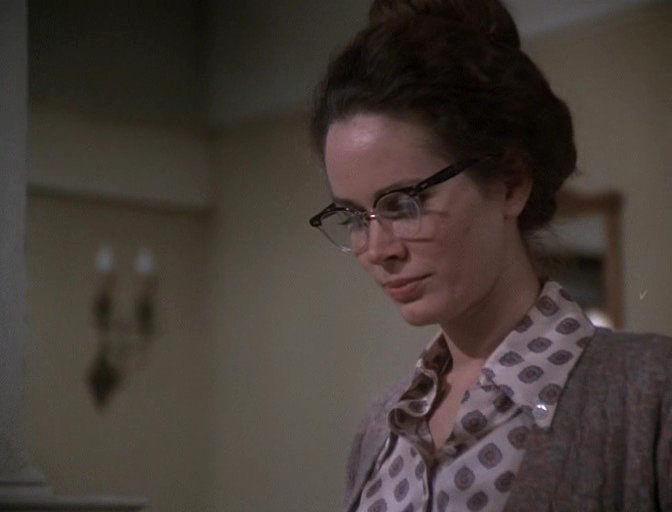
Whether or not I was inspired to go on a mini-Curtis binge I was likely to take this in as an homage to the late, great Karen Black, an actress I’ve not seen as much of as I would’ve liked by now, so this was welcome for that reason alone (Although she did help another Dan Curtis film greatly that being Burnt Offerings). For this anthology is fascinating inasmuch as it allows its lead to reinvent herself in three separate stories with quite different characters in each. It’s a great showcase and not a bad idea for how to assemble an anthology.

Yet, even with anthologies this one and the one that follow it have a similar structure. “Julie” the first tale in the trilogy has a bit more of an air of mystery to it. In something I’ve not seen much from anthology installments it plays more to subtext and isn’t overt about the nature of the power struggle. Similarly, the first tale in Dead of Night, while eerie has a definite air of mystery to it.

In “Millicent and Therese” much like “There’s No Such Thing As Vampires” there’s a conflict between characters being discussed with an outside party, and apropos to this particular tale the game is changed.

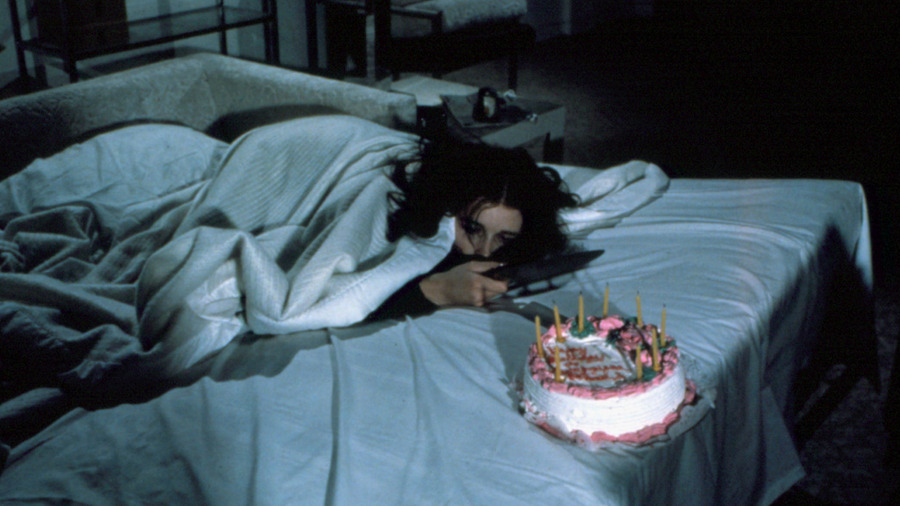
Lastly, this anthology ends with its doozie “Amelia” it’s the iconic moment from the film and the final shot in this film is seared on my mind not only for its execution, but because of Black’s commitment to her business. It’s haunting. A similar wallop is delivered by “Bobby” to close out Dead of Night.

Again involved in the writing of this film is Richard Matheson so the quality of the scripts, as well as the narrative design of the films, owe much to his work as well. However, Trilogy of Terror works not only because it had the interesting idea of having the same star in each tale, but of putting her in different kinds of roles and casting the right one, as Black knocks it out of the park here.

Silent Feature Sunday: Dr. Jekyll and Mr. Hyde (1920)

Introduction

While I do watch many new films, and have annual awards and will discuss current cinematic topics. Part of my desire to create my own site was to not have an agenda forced upon me that was not my own. This allows me to discuss films from all periods of history whenever I see fit. Recently my Short Film Saturday posts have been running toward silents more often. I questioned this tactic for a second until I realized that if I really do hope to encompass all of film history then the silent era most definitely should not be ignored. If you mark the silent era from the birth of film (1895) to the first talkie (1927), and I realize it could be argued that the silent era stretched a few years beyond that, and also that there were experiments with sound very early; that’s still 27% of film history at current which was entirely silent. Therefore a weekly post (or, however often I put it up) is not out of line at all mathematically or otherwise.

The good news is that many silent films are available to watch online, and are in the public domain. So I will feature some here.

Dr. Jekyll and Mr. Hyde (1920)

Folks, the intent here initially was to get to see some new silent features I’ve not seen. However, in certain cases I have been pressed for time to screen them. But, wanting to keep this post active I have dug around and found some titles that I have seen that I had not considered yet.

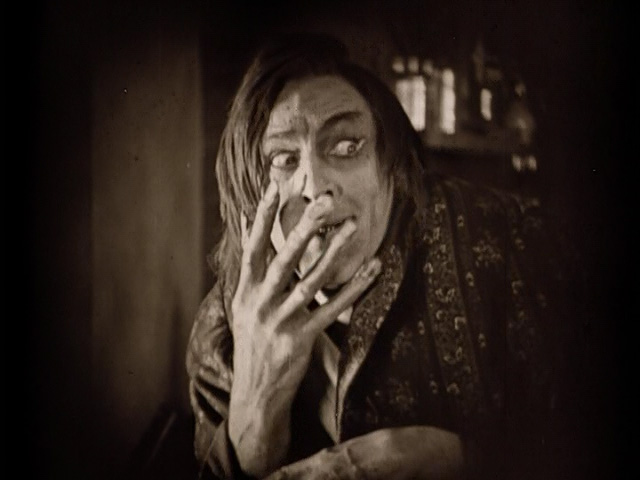
Dr. Jekyll and Mr. Hyde is what I would describe as one of the great stories, which in my vernacular means that I’ll gladly take in many renditions of it. This 1920 version features John Barrymore and is among the best of the bunch. Enjoy!

Silent Feature Sunday: Waxworks (1924)

While I do watch many new films, and have annual awards and will discuss current cinematic topics. Part of my desire to create my own site was to not have an agenda forced upon me that was not my own. This allows me to discuss films from all periods of history whenever I see fit. Recently my Short Film Saturday posts have been running toward silents more often. I questioned this tactic for a second until I realized that if I really do hope to encompass all of film history then the silent era most definitely should not be ignored. If you mark the silent era from the birth of film (1895) to the first talkie (1927), and I realize it could be argued that the silent era stretched a few years beyond that, and also that there were experiments with sound very early; that’s still 27% of film history at current which was entirely silent. Therefore a weekly post (or, however often I put it up) is not out of line at all mathematically or otherwise.

The good news is that many silent films are available to watch online, and are in the public domain. So I will feature some here.

Waxworks (1924)

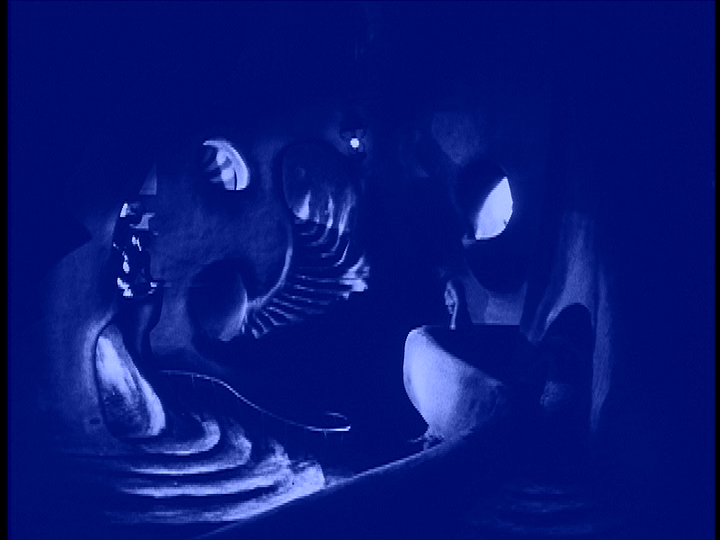
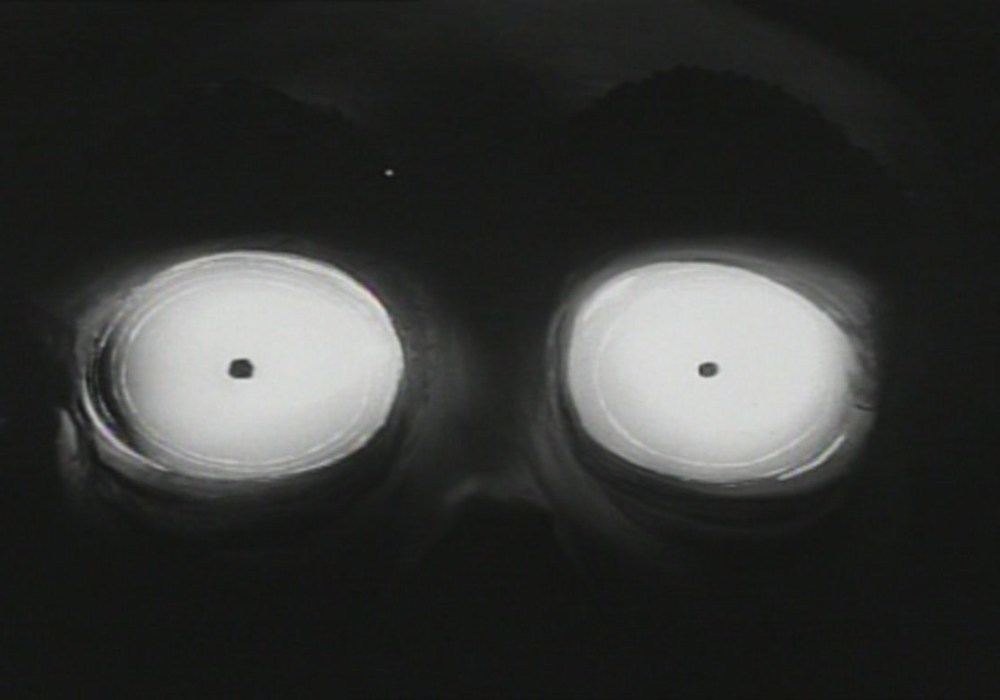
I initially planned on including this film as a literal 61 Days of Halloween selection because I have a DVD of it that I’d been meaning to watch. As it happens, after I saw it on the DVD I learned that it is available online so I decided to feature it here. One reason I did is because it’s a good chance to discuss different versions of Silents available. Most of it has to do with image quality. This YouTube version is the newly restored cut but the compression is not as good as a professionally manufactured DVD. Movies Silently has a wonderful, comprehensive post on this very topic that is worth reading.

As for the film, for an anthology it has quite an unusual structure. Two of the stories are in excess of 30 minutes in length, while the last is just 10 or so. However, due to the way the stories are handled it works. The third is the most expressionistic and visually arresting. The entire film uses tinting to great effect. I had not gotten around to seeing Paul Leni’s work, which are few yet highly regarded, and this film is a good start to the viewing. Enjoy!

61 Days of Halloween – Films to Keep You Awake: To Let (2006)

Intorduction

For an introduction to the concept of 61 Days of Halloween, and a list of previously featured films, please go here.

To Let (2006)

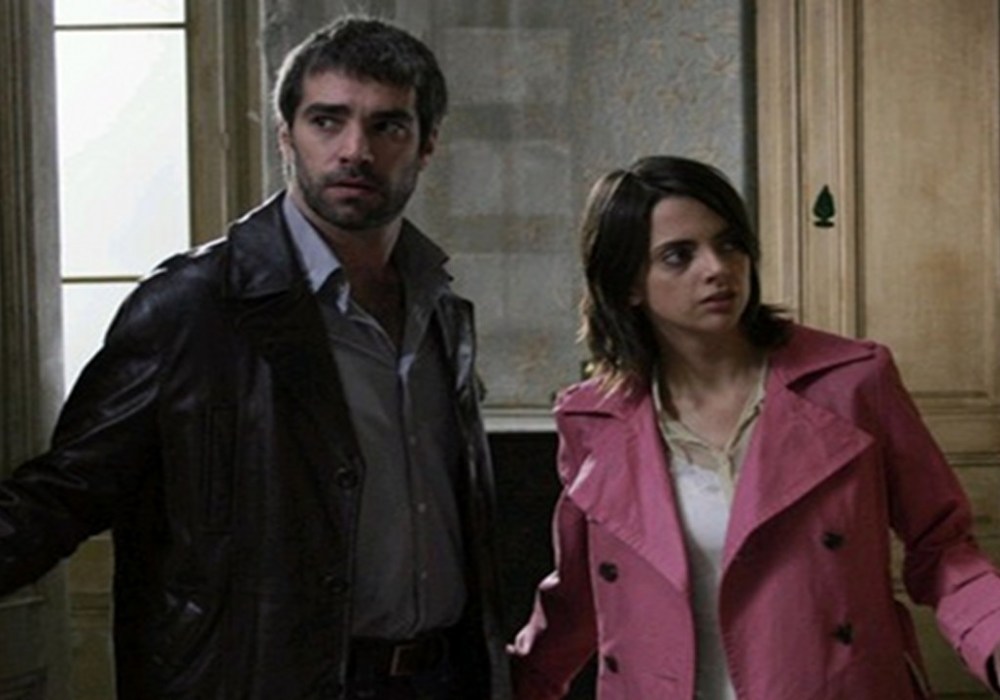
This is perhaps the hardest of the series to write about. Juame Balagueró is a filmmaker whose work, form what I’ve seen (which is a handful of his titles), I usually like. He has a way of layering his tales, a disturbed sensibility (essential for horror) and usually paces his tales very well. This is not the film to watch if you want to see that statement exemplified, however.

As has been a pattern in posts about these films there had been much discussion of pace because when the running time is something outside the norm then the film needs to do something outside the norm to make it work. This does not. It is the shortest of the six films and feels like it’s the longest by far. There are both editorial and narrative reasons for that.

However, pace is not the only issue this film has. This film has a fairly outrageous premise, which in and of itself isn’t a problem, especially for a horror film. However, it’s one that’s fairly well telegraphed. Only the details are twists. There is in a film like this a “get outta there” element that has to be dealt with. And it is, but the turns it takes make it further and further insane, aside from the fact that they occasionally waste time in an already short yet long-seeming film.

For a tale such as this one to work the acting has to be spot on and it’s perhaps the least effective in the entire series, which contributes to the telegraphing that this woman plans to keep this couple as long as possible, whether they like it or not.

But wait there’s more, it’s also visually disturbing in the wrong way. There is excessive and artless jiggly-cam at the most inopportune moments.

I could go on to further enumerate the faults I find with the film but that would become tiresome. Needless to say this is one of those movies where even the more basic things like business (the actor’s actions) are poorly staged and executed. If you were to skip just one of the six films this would be it.

61 Days of Halloween: Sisters (1973)

Introduction

For an introduction to the concept of 61 Days of Halloween, and a list of previously featured titles, please go here.

Sisters (1973)

One of the good things about going off a list, at least in part, to decide on viewing options is that it allows for more occasions for you to be a blank slate. A lot of the selections I’m seeing for this year are from Stephen King’s list of the best horror films from 1950-1980 that he included in his book Danse Macabre. I have replicated the list on my Letterboxd page (check it out!).

When I received Sisters from Netflix I knew it was De Palma and before Carrie and that’s all I could remember. Thankfully, the synopsis on the disc mailer didn’t give too much away.

On a personal note this may be my favorite film I’ve seen that set mostly on Staten Island. I had no idea that was coming and how it’s introduced is great: Danielle (Margot Kidder) is a Quebecois model/actress, and after a gig her and Philip (Lisle Wilson) have dinner and have it cut short by her ex (Emile Breton). Philip offers to take her home. She tells him she lives on Staten Island, and it goes something like this:
“Staten Island?” he says.
“Yes, Staten Island is part of New York isn’t it?”
Philip, smiling, says: “I guess it is.”

I was born in Manhattan, but I spent most of my formative years on Staten Island, and that statement in a nutshell is the conundrum of being from there; that whole “We’re New York too, dammit” subtext. A short exchange of dialogue encapsulates it on both sides.

Personal baggage aside, Sisters is a great little gem. I use that term because it starts with a fairly small series of events one after another that slowly turn in to a much bigger plot than was intimated at first. The simple Hitchcockian mystery element gets more byzantine as it progresses; even throwing some last second misdirection, making certain things even weirder than they are.

The first suspenseful passage features, yet another recently-viewed example of, a great use of split-screens. It’s a film that’s tied up in the psychology of its characters, their relationship to one another and secrets buried in the past.

In a certain way there were also parts of it that reminded me of Cronenberg as there were weird, significant things afoot with few characters noticing or being affected.

With scoring by the legendary Bernard Herrmann this film is quite the riveting pulse-pounder with a few jaw-dropping moments in store for those who do see it.

61 Days of Halloween: Seed of Chucky (2004)

Introduction

For an introduction to the concept of 61 Days of Halloween, as well as a list of previously featured titles, please go here.

Seed of Chucky (2004)

With Seed of Chucky I went in expecting next to nothing based on what occurred the last time around. What I got in it was surprising, if not redemptive. The film series that in Chucky’s first not-targeting-a-kid film felt a bit unbalanced. Here, albeit further out on a cliff, with still some head-scratchers and eye-rollers (it really wastes some time at the beginning) the film goes into a full-on-meta rendition, after it hinted at a world wherein Chucky (as well as Jason and Michael Myers) were real.

Jennifer Tilly’s involvement here makes much more sense because it gives her plenty more to do (being both onscreen and working voice) and is an appropriately self-deprecating, yet oddly reverential work for her. Also, striking mostly correct and humorous notes are the participation of Redman and John Waters, two men whom I never believed I would put in the same sentence together.

While the Glen or Glenda homage here is subtler and more clever than the Bride of Frankenstein in the previous installment, it may have been the only thing subtle about the entire thing. It does become more and more outlandish as it goes but a lot of the jokes and kills work to great effect.

While there is a descent into an unfortunate cacophony of events and screaming there is a some of actual self-exploration by these villains-turned-protagonists. As hard as it is to believe, there is some internal and external conflict in the film about their natures and trying to fulfill their pyrrhic mission of returning to human form.

However, not only do the blunders that hold it back come out far too often, but a lot of the good that’s done towards the middle of the film is undone by the grinding to a halt nature of the climactic sequences as well as what happens in the tag. I grant that to get any enjoyment out of this film at all, you do have to be prepared for any and all kinds of sophomoric, silly content that doesn’t further things too much.

It’s a sequel wherein I didn’t mind the direction it chose to go in at all, it just didn’t get there as well as it could have. It’s also a film in a bit of a catch-22. The prior film of the series crossed a point of no return: the girlfriend was brought into the fold so the direction of the series was altered. This film went further afield so to continue down that road would’ve been foolhardy. It was definitely time for the reset button to be hit after this one if it was to continue at all.

Said direct sequel that, based on reports, goes back to its roots is due out on video on October 8th

61 Days of Halloween: Insidious: Chapter 2 (2013)

Introduction

For an introduction to the concept of 61 Days of Halloween, and a list of previously featured films, please go here.

Insidious: Chapter 2 (2013)

Usually with these 61 Days of Halloween posts I am usually writing about an older film. However, owing both to the fact that I want to come as close to having 61 posts in this theme as possible, and also that new horror film releases are now virtually year-round; I figured that a film being released between September 1st and October 31st in cinemas also warranted coverage.

It also warrants discussion because not only is it a sequel to one of the best horror films of 2010 (Back when I still didn’t have a genre-specific list) but also because of how it goes about being a horror sequel. It seems that, for one reason or another, many horror sequels: a) don’t take chances b) are very hesitant to stick too close to the end of the first film in terms of chronology.

However, what James Wan, Leigh Whannell and the team at Blumhouse did here is akin to a few things. First thing that came to mind was John Carpenter’s Halloween II that was very close in chronology treatment of his and Debra Hill’s story. The second, being a modern reference, is what Marvel Studios is doing. Their initial films in series be it Thor, Iron Man or Captain America have all been variations on the origin story, but as the franchises built up goodwill, and their cups runneth over after The Avengers; there’s been some risk-taking.

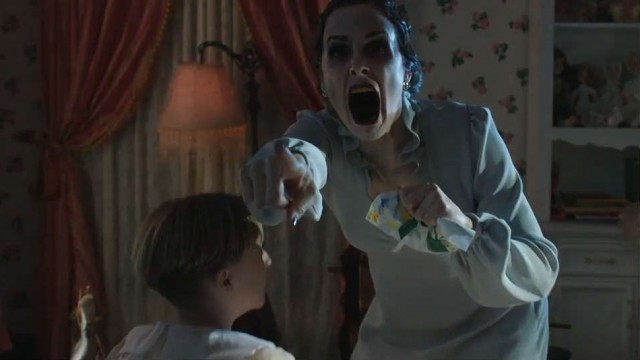
There’s a glorious dichotomy omnipresent throughout all of Insidious 2. After a teaser scene that takes us back in time, but is also referenced a few more times, and key to the story; the film picks up the narrative the day after events in the previous installment. For while the narrative picks up where it left off it goes down paths and alleys that are not entirely expected. It takes you there with mellifluously macabre scoring, mesmerizing edits and wondrous camerawork. It rips a few other pages out of the euroshocker (namely Argento) catalog, but it also continues to expound upon its myth building. It doesn’t do what’s expected, but none of it feels inorganic or forced. Both Wan and Whannell have very consciously crafted a story that warranted this kind of exploration. For what’s the point of a follow-up if its to be a carbon copy rather than a continuation?

I have yet to attend a double-, triple- or any other multi-film experience to mark the release of a new installment in a series, however, this is the one I most lament because I fully intended on going to but life got in the way. It’s not that I felt seeing the first film over was necessary when I walked out, it just would’ve been all the more glorious.

While a chapter of the tale closes at the end of this film (the syntax of the title is very apropos) there can still be more to tell as the film branches out. This marvelous bookend of a story also leaves one wanting more and can easily deliver it. To date Insidious: Chapter 2 is the best horror film I’ve seen this year not only for its bravado, but, also because of how it follows through on its characters searches and arcs, which gives the actors room to stretch and also expand or contrast to the prior film.

61 Days of Halloween: The Case of the Bloody Iris (1971)

Introduction

For an introduction to the concept of 61 Days of Halloween, as well as a list of previously featured titles, please go here.

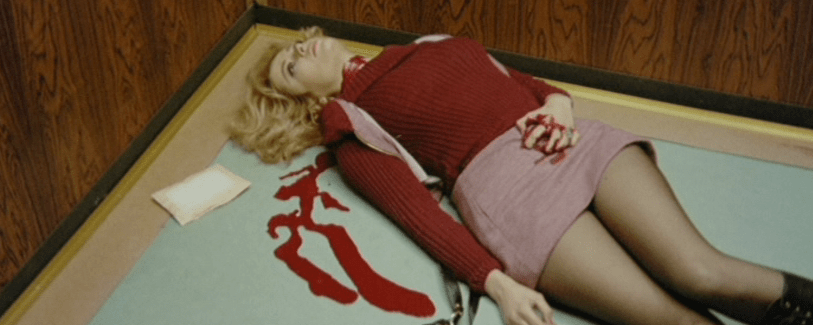
The Case of the Bloody Iris is a giallo film from 1971 by director Giuliano Carmineo. It’s written by Ernesto Gastaldi based on his own story. Now as is the case with many Giallo films it could end up being “just another one,” especially considering that this one does take place, at least in part, in the world of fashion (as quite a few do). Staple actors of the genre Edwige Fenech and George Hilton are leads. A lot of it boils down to how it all shakes out in the end.

Without spoiling it, I was highly satisfied with the result of the whodunit. There were, in my estimation, a few unsavory possibilities in that regard, and the best path was taken. The outcome does leave a question or two, but most of it works.

Yes, there are a few elements that do date it however some of the representations (both in terms of ethnicity and sexuality) while ensconced in the lack of political correctness of the day are somewhat departures from the norm, which was refreshing to see.

The mystery is cloistered about one building. The police involvement can be counted on for a bit of bumbling, and comedy, but they are mostly competent. It’s just that the enigmatic nature of the case does prove to be a rather difficult one.

For as many complications this film foists upon itself and engaging in the occasional flashback sequence, it never gets confusing which is another win for it. And, on a pet peeve note: gialli have some of the greatest, most florid titles in cinema. However, the more often than note end up being a bit of a stretch (one example would be The House with the Laughing Windows) that is not the case here. Despite its strong elements I can’t say it’s a great giallo, but it is a good one that is worth seeing if you’re a fan of the genre.