World War One in Classic Film Blogathon: Pack Up Your Troubles (1932)

Introduction

When trying to decide what film to cover for the World War I Blogathon I wasn’t surprised either by the number of films, or by the number of films I have yet to see. The reason that is so is that there are things about World War I that make it, to an extent, less conducive to cinematic representation than other artforms.

The complexities of the causality of World War I as well as the carnage make it such that there are not as many treatments of it on celluloid. Clearly, World War II was rife with atrocity and death, but the sides and aims were far more clear there. It makes archetypal depictions, and now an exploration of gray areas, far easier. The Movies, Silently comparison of the war to a barroom brawl is a good one; for further detail you could look at it as an inevitable endgame of the last era of imperial expansion and over-zealous treaty-drafting. It puts it into understandable context and shows what unbridled chaos existed. Such chaos on film is better as a detailed snapshot rather than an overview, in novels more detail could be explored.

Pack Up Your Trouble (1932, MGM)

Therefore, films typically focus on the fighters not the fight because it’s just too much obfuscated politics for audiences, then or now, to care about.

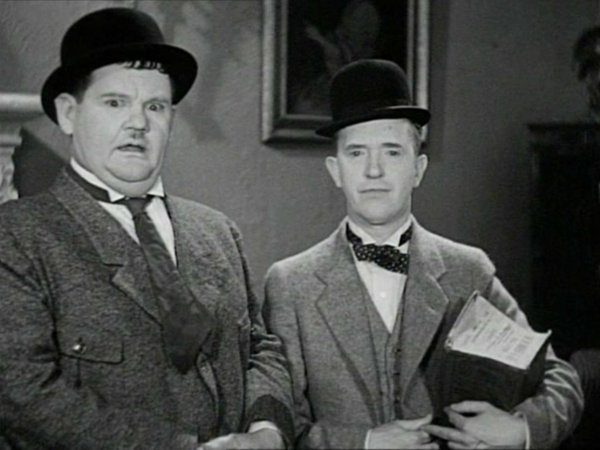
So with all that in mind I started looking through options as the few titles I’d seen were taken. There were other new-to-me options that were taken but I settled on Pack up Your Troubles starring Laurel and Hardy. It’s interesting also to pick a comedy because the fallout from World War I included the birth of existentialism and change in the kinds of entertainment people wanted, at least for a time. During, and especially after the war, silent cinema came of age. Subject matters became more serious and features became predominant. However, this feature coming at the start of the Golden Age, and sound, escapism was coming back.

Interestingly the film in question here is one that was made in 1932 the very year in which Adolf Hitler became chancellor of Germany and events would unfold leading to World War II. But enough history, well strictly history, let’s get into the film.

Pack Up Your Troubles (1932)

Pack Up Your Troubles (1932, MGM)

Now to the present-day audience the title itself was an allusion to the Great War and a hint as to what the adventures of Laurel and Hardy may entail. Pack Up Your Troubles references a war time tune that you can hear here.

What my precise viewing filmography with Laurel and Hardy is remains uncertain because I remember as I was growing up there was a time I’d find their films on TV on Saturday mornings (Probably on TCM) and watch them, sometimes from the middle, and not have any notion of what the title was. I cannot even recall how many of these titles were features.

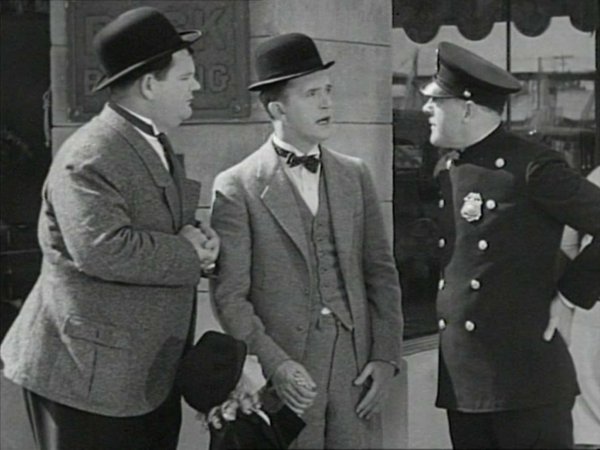
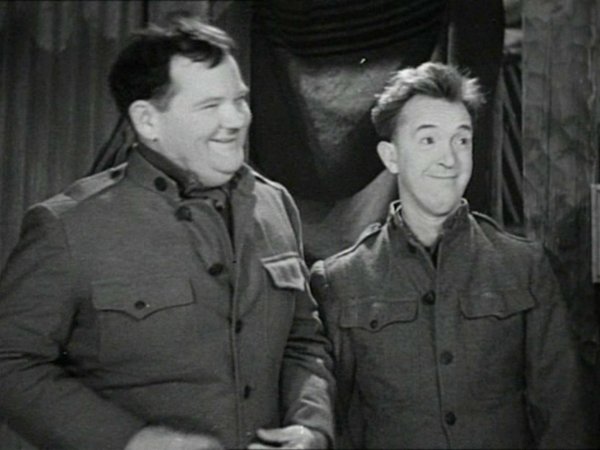
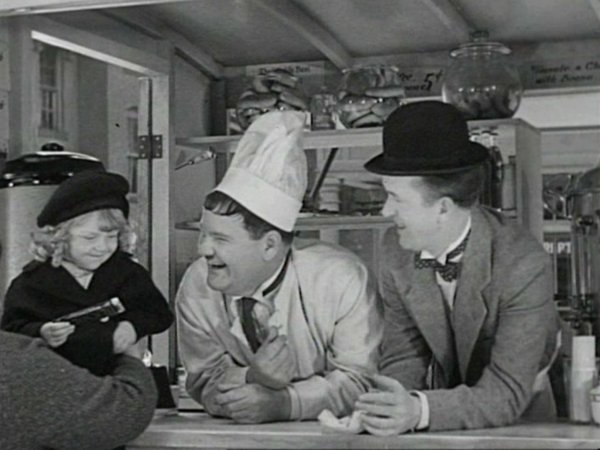
I did see one of their features for 31 Days of Oscar not too long ago and really enjoyed it. As for Pack Up Your Troubles it starts out similar to their other titles. The war has started and and Ollie is looking to get out of service by claiming disability. As expected, Stan blows their cover without meaning to and they’re off to basic training and eventually the trenches.

Pack Up Your Troubles (1932, MGM)

There are some slapstick scenarios built-in that are moderately funny, but not among their best. This is without even taking into account the fact that jokes in a war film can only be so funny due to the cacophonous nature of battle and the lives at stake, see 1941 as an example.

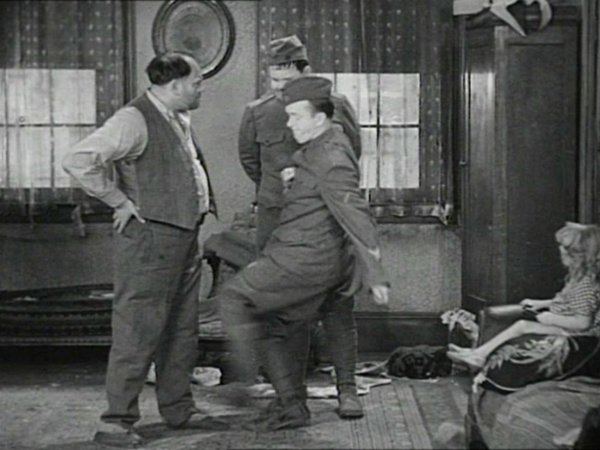
To this film’s credit, despite the fact that it’s not that great, it realizes there’s only so much to do there and the thrust of the film has a heartwarming element where they’re trying to unite a little girl (Jacquie Lynn) with her grandparents after their friend, Eddie (Donald Dillaway), dies in battle. In essence, it’s a bit like Ollie and Stan’s version of The Kid, except true to their character they will not keep the kid, but do want to do right by her.

What this creates for the remainder of the hour-long tale is quite a few skits where they are looking for a Smith family and finding the wrong one. There is, of course, follow-through and a central plot, but it’s a narrative structure that allows the pair of foils to play in a milieu that is not unfamiliar to them in the least.

Pack Up Your Troubles (1932, MGM)

Having said that with the stakes being raised, and somewhat serious, and with the gags being not as frequent or as memorable as in many of their other titles it makes it a bit of a tepid affair.

While the war itself is left by the wayside in the story the effects, and collateral damage does follow into peacetime just as it did in reality so that much is fine and works effectively. The resolution the film reaches is also very satisfactory, funny and well handled despite its convenience.

Pack Up Your Troubles (1932, MGM)

In fashion not dissimilar to World War II it seems there was an “We all have to pitch in” and tell a tale dealing with the War to End All Wars. Laurel and Hardy weren’t the only renowned comedians to handle it. If you know them they bring the film to a conclusion you’d expect. It’s mild escapist fare, but certainly not the best evidence of their comedic genius as a tandem. In fact, the film probably works best as a humorous fable of the reconstituting of families after the war that occurred the world over.

1984 Blogathon: Devil Fish

Introduction

When deciding what to pick for a 1984-themed blogathon there were many great options. It was a great year. However, many of those were taken so I thought it’d be fun to go off the beaten path. At first I considered something foreign or very obscure. What ended up happening was that it turns out I had written about many of my favorites already. So that introduced a new possibility: something memorably bad; the only debate was “Do I want to write about two bad movies in a row?”

When I decided I did I was instantly surprised. Little did I know that when I chose Devil Fish there would be quite a few things about it to uncover that I had not known prior to starting on this post.

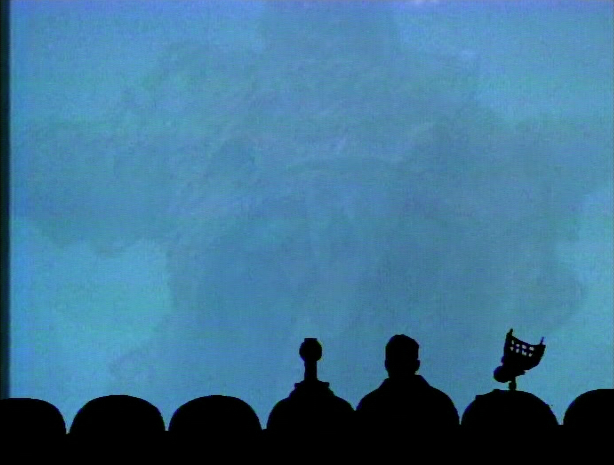
In the beginning, when I first saw it it was just another in the myriad of unfortunate works of cinema that Mystery Science Theatre 3000 introduced me to. Having revisited the film and asking myself questions like “Who wrote this?” and “Who directed this?” I came across some interesting answers that with more experience allowed me to better understand one of the eternal questions about bad films which is “What the hell happened there?”

So the first and most significant discovery I made regarding this film was that the director behind the credit of John Old, Jr. is in fact Lamberto Bava. This being the same Lamberto Bava of Macabre, and a film I have come to love when I just had to see it (as I wrote a short script in the same milieu) Demons. As it turns out he slapped a pseudonymous credit on a few of his works that were in the Italian low-budget rip-off arena. Fashioning this nom de plume after his father’s. Legendary Italian director Mario Bava had many great films but he did the occasional film he felt the need to take a John Old credit for.

Devil Fish is one of countless titles that have sought to cheaply gain an audience by playing off the popularity of Jaws, which will be eternal. I’m not one who tosses about the rip-off phrase about lightly. However, one can scarcely find a shark movie made after 1975 that doesn’t pattern itself after Jaws in some way, shape or form. This doesn’t have the failed tongue-in-cheek homages that say Sharknado has, but it definitely borrows liberally and was produced less than a decade after the original while Universal was still littering the landscape with subpar sequels.

Behind-The-Scenes

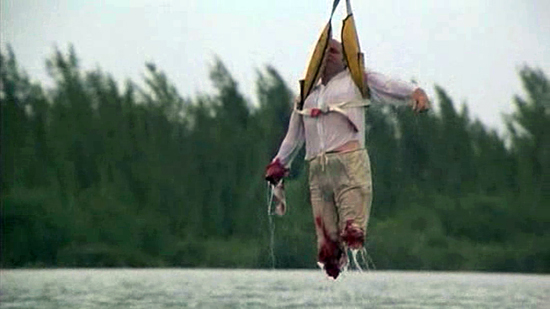
Devil Fish (1984, Cinema Shares International)

So that was one thing, but wait there’s more! As it turns out most of the behind-the-scenes talent took on pseudonyms as well. Usually in this case they are somewhat anglicized versions of their given names. For example, cinematographer Giancarlo Ferrando became John McFerrand. Now, one could try to argue that part of the attempt is to make the film seem more genuinely American-made. However, all of the cast doesn’t play ball and one of the go-to jokes for the MST3K crew was “We’re from Europe!” so no one was being fooled.

Beyond the names there are plenty of things to scratch your head about in wonder, or to at least note. Firstly, is that much in the Italian tradition actors came from all over the place and spoke several different languages while the camera rolled and then the dialogue was dubbed to create a uniform soundtrack. That by itself does not guarantee a bad film. I’ve seen well-dubbed works and many of the better low-budget Italian films were made the same way.

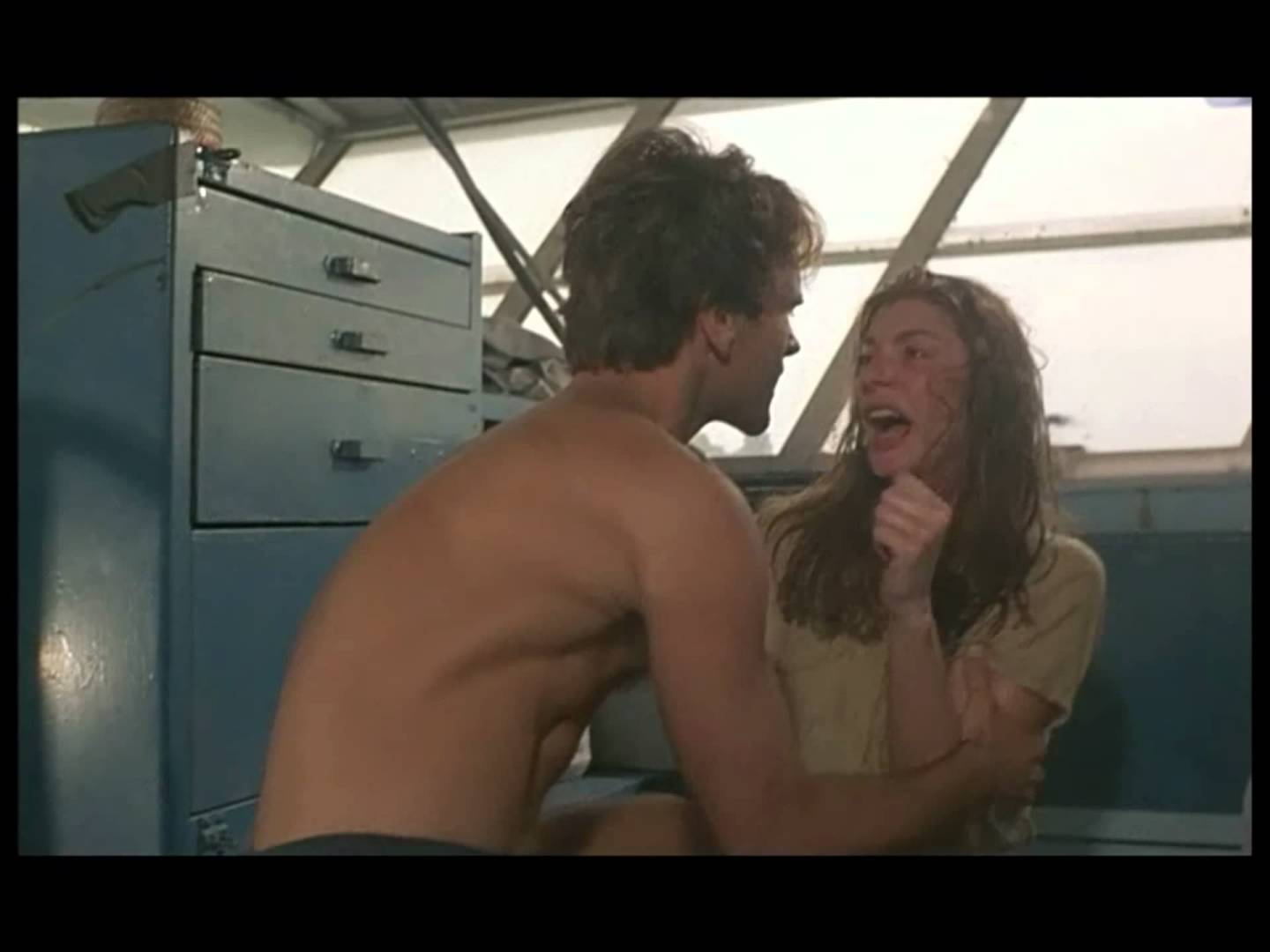
Getting back to the Jaws rip-off angle leads to one of the most infuriating parts of this film. There are several underwater shots that are supposed to tease the creature much like Bruce was scarcely seen. The problem here is that it is very difficult to decipher, at times, exactly what you are looking at. Instead of suspense all this builds is confusion, sighs and unintended humor.

The aforementioned John McFerrand’s score is one of the facets that heavily confuses the issue in this film. It sounds like the kind of antithetical music that makes a lot of giallo and Italian horror work but here it just seems to be terribly out of place, drown things out and distract from what the film is trying to accomplish. Just what that is at times is also confused, but you know what I mean.

Dialogue

Devil Fish (1984, Cinema Shares International)

What would a bad movie be without bad dialogue? It’s almost impossible. Much as great movies have memorable lines, bad movies do as well. A few gems that really stand out. Here are a few of those notable exchanges:

“Full of hate?”
“Hate.”
“Yes…That’s it….hate.”

“Do you think it was an accident or that she committed suicide?”
“I don’t know I think that’s for you to decide.”
“Yeah, right on. I think I’ll decide on suicide.”

“Lots of new things in this town lately waitresses, sharks, and ladies who call a taxi and take a bath.”

“A million years of solitude is a long time. I bet it’s just dying to boff something.”

Editing

Devil Fish (1984, Cinema Shares International)

In continuing the laundry list there is also a fair deal of editorial redundancy in this film. The uninspired editing is due to a number of factors namely the script and budget (which influences the tight schedule this film was made on). Aside from the vague shots of the fish that are supposed induce suspense there are also several shots cutting to Peter drinking repeatedly.

Those motifs aside there are mysterious individual cuts like a cutaway to slow-motion pan up phone line to a clock.

Some support for the effects of the schedule and budget can be found in a Michael Skopkiw online interview here:

I would love to know the definition or formula for a “cult classic”. Lamberto was a very nice, gentle guy as most of the Italians are. But you know, the budget on these films would prohibit a Ron Howard from making anything great! These directors are working with a cast from at least three different countries speaking diverse languages and a mixed crew of Italian /American production team on a very tight budget. Lamberto , like most of the foreign crew, loved coming to the States and drinking in as much of our culture as they could get. (The hills of Georgia have a unique personality somewhat portryed [sic] in this film.) We had a crisis one day as a holiday was approaching and the Iataian [sic] film crew wanted to get back to their families. We had been working for 13, I think, long consecutive days in freezing mountain water and adverse conditions and both the cast and Lamberto were wearing thin. The crew wanted to plow right through but I had a good talk with Lamberto and pointed out how the film suffered further if we just continued. He finally went to the producers and they gave us a day off (which they were contractually obliged to anyway). So he did have a heart and tried to do what he could with what he had.

However, the decisions are the decisions regardless of what forced them and many films have succeeded with small budgets and tight schedules, myriad examples of both exist running the gamut of genres.

Even when cuts aren’t technically awkward the narrative makes them aesthetically unintentionally comedic or uncomfortable like a cut from a dolphin to a legless corpse and a cross-cutting sequence between a sex scene (that’s fairly gratuitous) and a murder.

Blame

Devil Fish (1984, Cinema Shares International)

In terms of writing it could be the speed and the number of chefs in the kitchen that lead to a film that referring to as half-baked would be greatly generous.

As I’ve intimated before one cannot blame the inspiration for what the inspired do with it. Meaning that you can’t hold it against Psycho for the rash of slasher films that eventually took their cue from it. Similarly, Jaws cannot be held accountable for the rash of pale imitations telling tales of terrors from the deep.

Characterization

Devil Fish (1984, Cinema Shares International)

In this film the characters don’t really get established, they just are. If you need further evidence of this it gets reinforced later on when there’s a climactic scene, where the stakes should be high and the revelation is large and to an extent you’re confused as to who the parties are; therefore, you haven’t time to care about what they have to hide and what they have to gain.

Part of that has to do with how many characters there are and another part of it has to do with the dubbing. I’ve written on dubbing a few times. In short, my stance is that it can be an artform, there is a technique to it and it can be well done, but all too often it is not. In this film is most definitely a detriment. It’s not just about matching, but about performance, but when the same language is not being spoken on set you have a harder time creating a unified vision on film.

Backfiring

Devil Fish (1984, Cinema Shares International)

It seems almost impossible to say after all of this, however, all is not entirely lost in this film. However, in the true nature of this film that adds to the frustration instead of just imbuing a modicum of appreciation. There are themes that excised from the narratives are fine. There are permutations of the giant, monstrous fish tale that aren’t terrible.The isolated concept of manipulating science, the twists employed, underwater knife fights and not seeing the monster are fine when all has not already been lost. When the movie has already lost hope then these things just make it longer, more boring, unintentionally comedic and worse.

As if you needed further proof that there are things worth working with here this film was remade as Sharktopus on Syfy a few years back. Likely another wasteful effort, but there was something to mine there indeed.

Furthermore, touching on the aforementioned twist again, the mysteries this film plays hurt it. It’s a case where perhaps further, quicker revelation would have elevated it.

Conclusion

Devil Fish (1984, Cinema Shares International)

What is there to conclude about a film such as this? Not much different than other terrible movies that are of the MST3K ilk. I recall reading about The Beast of Yucca Flats and its making, or watching the special features on their take of Manos: Hands of Fate; what I got there was there’s always a story and that was the spirit I undertook this venture in. What was surprising was that I found more of a story than I expected. Having said all this, can I, as I did with Reefer Madness, recommend you watch this anyway? I can’t do so without aid from the Satellite of Love. Your tolerance for cheese has to be really high. If you want to see either Bava at their best I suggest you stray from titles where they were credited as being “Old,” unless you want to end up prematurely in that state yourself.

British Invaders Blogathon: Time Bandits (1981)

Introduction

When I had to decide on what to write about for the British Invaders blogathon the choice was a blissfully simple one. Time Bandits came to mind almost right away, and thankfully was available. It’s a film I’ve seen quite a few times, that I find quite funny and does not seem to be discussed often enough. It’s also, when thinking of British cinema one that comes instantly to my mind.

So, the what to write about selection was easy. How I chose to write about a film that quite easily fits the theme as it does deal with a band of invading time-traveling thieves was another question. Seeing as how the story flows in a series of vignettes that coalesce to have a centralized conflict, I think a more free-form examination of the film from a number of different angles would be highly appropriate.

Remake Haters

Time Bandits (1981, AVCO Embassy)

When you look at Gilliam’s filmography (one I’m not as familiar with as I should be) you see that Time Bandits kind of falls directorially towards the end of the Monty Python films and before Brazil, which may be why it’s at times under-discussed.

In fact, I had not seen much professed love for it until it was reported that it was being developed as a remake/reboot that would become a children’s fantasy/adventure film series.

I was kind of disappointed to hear that as well, but I have since then reached a sort of peace with remakes. I can dislike something conceptually, and grumble about its happening, but can judge the film on its own merits. Similarly, why is it in an ever-changing medium that stories cannot be revisited it seems? In theater there are remakes, but they are respected and referred to as revivals. All popular artforms are commercialized, conglomerated and globalized new packages on old ideas are nothing new.

However, in the ever unpredictable world of film development nothing has come of it as of yet, But it does have an In Development IMDb listing.

Up with Streaming and Film Preservation

Time Bandits (1981, AVCO Embassy)

It may have been misplaced (but that’s highly unlikely) but when I went to revisit this film I did not find the DVD of it on my shelves. But I had to see it again to be able to say anything meaningful. Sure enough it was available on Amazon Prime. With all the talk of what streaming or membership options there always seems to be a myopia. I take advantage of Prime as many ways as I can. I should do a study at some point to see what I’m getting out of my $99/year fee.

As I re-watched it struck me that the film wasn’t in the greatest shape. I’m unsure if its just degradation over time that could be restored or if a bad print was used like the original DVD of The Neverending Story. Regardless, it’s a film that I will nominate for enrollment in the National Film Registry this year.

The Vignettes and Time Travel

Time Bandits (1981, AVCO Embassy)

One thing that struck me as I rewatched this film is that it’s another case of time traveling and vignettes really working for me; including once in a play I wrote. It’s not the most commonly used trope, but it is one I’ve seen a few times and one I enjoy quite a bit. Another example that comes instantly to mind was The Annunciation, the first film adaptation of the classic Hungarian stageplay The Tragedy of Man. It came to mind because of that fact and some of the time periods visited are the same also.

The differences aside from language are the approaches to the tale, the comedy styles (there is some in both) and the order. The time bandits do not always go in the same order and Gilliam even fashions one non-historic time period.

Time Bandits (1981, AVCO Embassy)

The precise order is: Napoleonic Wars, Middle Ages, Ancient Greece, Titanic, Time of Legends which leads into the climactic showdowns.

The Napoleon segment had me hearkening back to Love and Death, which is Woody Allen’s take on Napoleon’s invasion of Russia amongst other things.

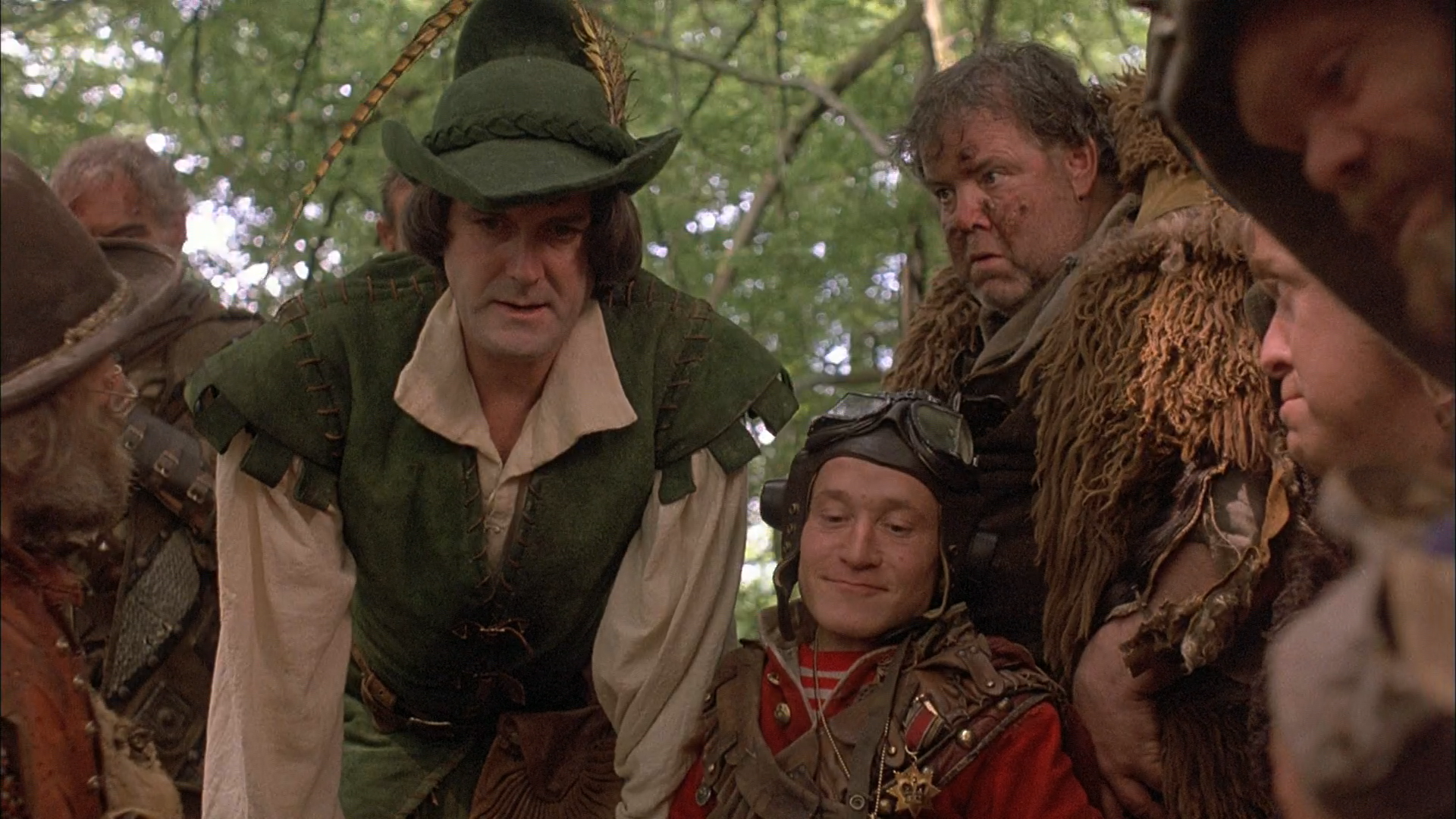
The Middle Ages section incorporates Robin Hood and his Merry Band of thieves in a way I never quite saw before. I love the story of Robin Hood but even I can’t help but laugh at a Robin who can say little else but “Jolly good.”

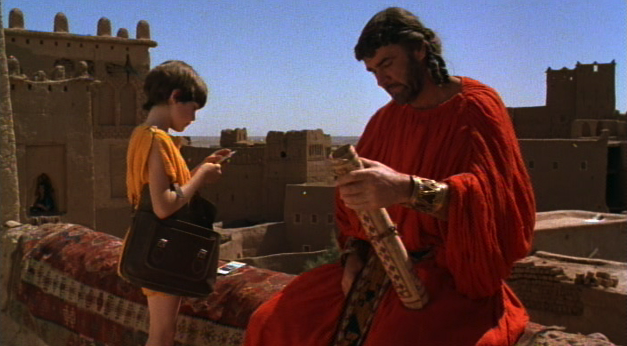
In Ancient Greece our young protagonist, Kevin (Craig Warnock), finds a new father figure in Agamemnon and some of the more dazzlingly surreal images come forth but there are quite a few.

Their brief stint on the ill-fated Titanic is a reappearance of the underrated Shelley Duvall, and it continues a gag of her character being referred to as Pansy. It’s also one of many instances where Kevin shows his knowledge of past events as the Bandits are clueless.

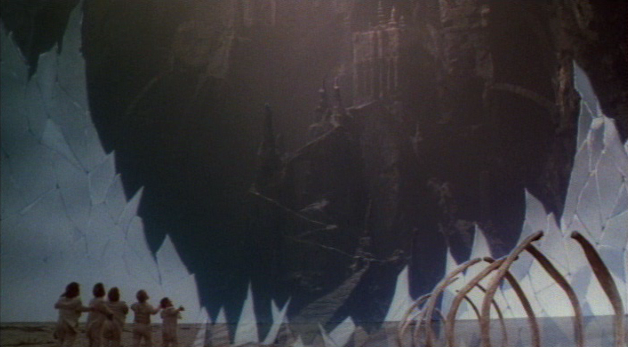
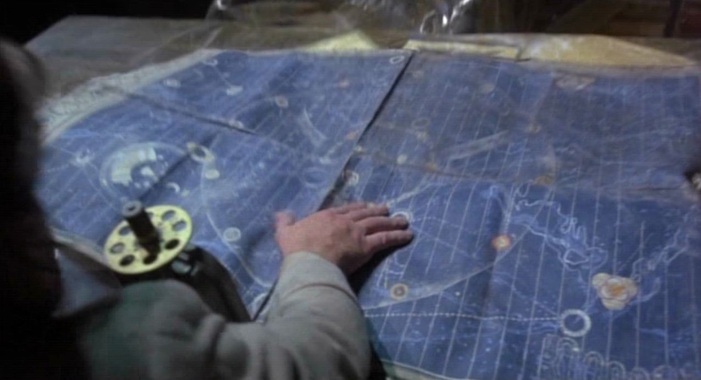
Due to the tone, narrative and structure of the film there is a natural ability to just forget about the notion of time-traveling paradoxes. There are any number of means to accomplish time travel in narrative devices from the most realistic, in theoretical terms, to fanciful. This film certainly comes out on the more fanciful end of things, which is fine by me because a map to the holes in the fabric of time is just really creative stuff.

Supreme Being and Evil

Time Bandits (1981, AVCO Embassy)

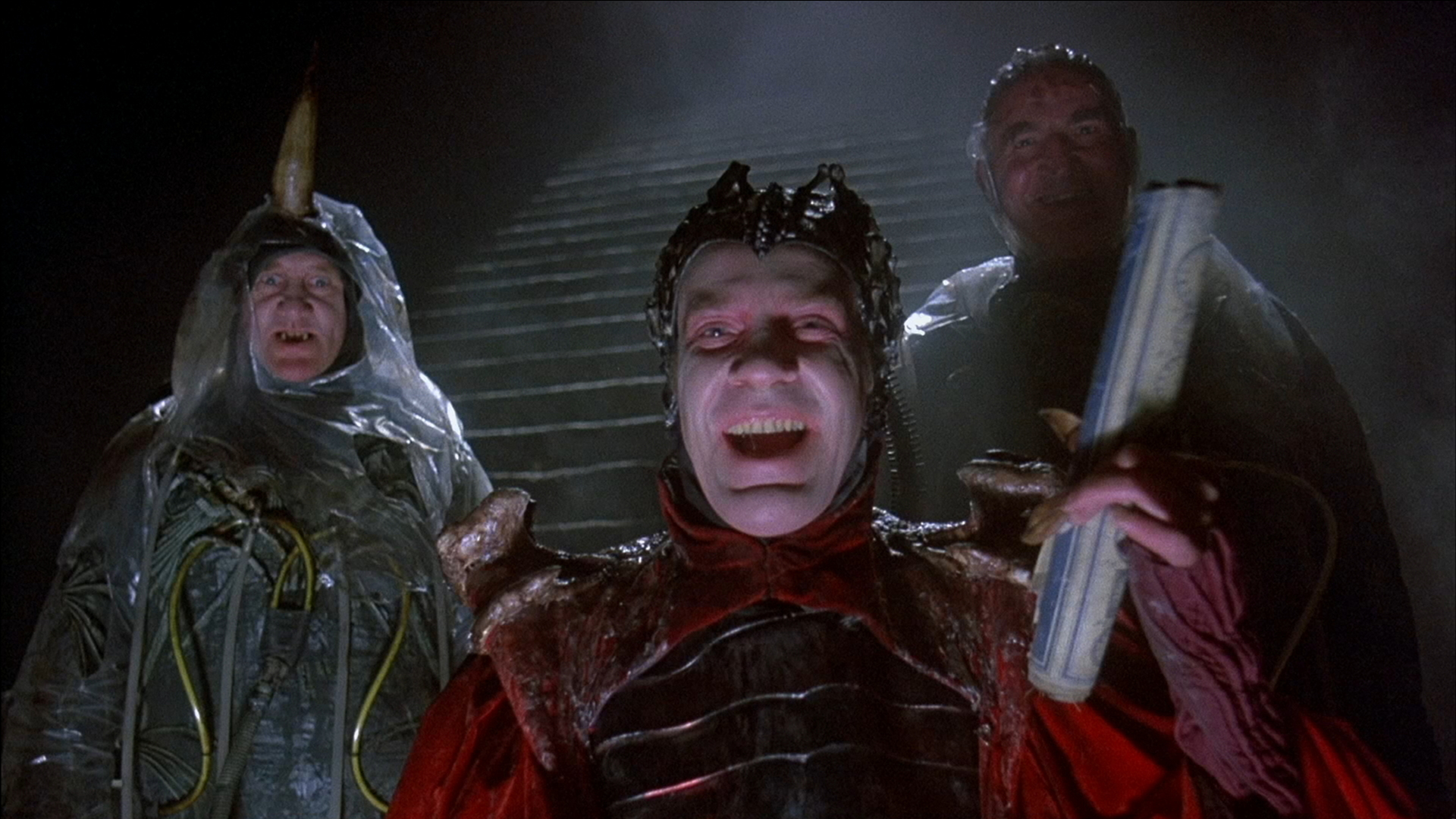
The aforementioned battle that comes to the fore is one between good and evil over possession of the map. In another interesting turn in this tale there is a God-versus-Satan battle that takes out denominational specifics and instead opts for more archetypal nomenclature and different approaches to visual representation of the two. The Supreme Being (i.e. God) is often seen as an Oz-like floating head and at the end appears as an old man in three-piece suit.

Evil (i.e. the Devil) is kind of a steampunk/Giger hybrid. And they fight over both the map, and Evil discusses mastering technologies, which at the time of this film’s making are the latest (and some of it is kind of prophetic), to get the upper hand.

Miscellanea

Time Bandits (1981, AVCO Embassy)

There can be quite a bit dedicated to miscellanea for this film: its one of several ’80s films to prominently feature many little people; there are many visual instances to drool over like the reversed negative images, or the negative fill (two motifs I love), or the giant underneath the boat; there are great lines like “Dear Benson, you are so mercifully free of the ravages of intelligence.”

Perhaps the two pieces of miscellanea that most demand some looking at are the Moderna Products that feature as a subplot, and the very ending. The Moderna Products are interesting because they play into commentary of consumerism and conglomeration that pervade not just the present day setting of the tale, but also play into the reveal of Evil when Kevin and the Bandits first run into him. There’s an omnipresence of these products on TV and even in Evil’s wheelhouse. It’s one of the pieces of the film that seems more apropos now than then.

As for the ending, this film has perhaps the most hilarious closing line in any film. It’s a quote I’ve used quite a bit in real life. The ending with the re-emergence of images and mementos (Polaroids and Connery in another part) also make the veracity of the daydream theory dubious and leaves events open to interpretation, and adds another layer to the comedy.

Conclusion

Time Bandits (1981, AVCO Embassy)

So in the five prior sections I looked at some different aspects of the film, and likely could’ve done more. Clearly, this a film that has stuck with me, though I didn’t discover it as early as I could have. This is also five aspects without examining the film in a traditional review mold. It is a film that finds an orderliness in its self-created chaos and keeps the levels of wonder, creativity and hilarity fairly consistent throughout, and paces itself well such that the two-hour running time doesn’t feel extraneous.

Whether or not the remake does happen I know we’d probably all prefer something new that’s all Gilliam. However, whether or not said remake does happen, the original is still here, stands the test of time and needs a bit more love in the ways described above.

Accidentally Hilarious Blogathon: Reefer Madness (1936)

If you have not yet seen Reefer Madness, be mindful that it will only consume a little more than an hour of your life. Now you may want to read what I have to say about it before investing said time. One thing that I can tell you is that movies so bad that they make me crack up are rare. Probably even more rare than “Bad Movies I Love.” So the fact that I’ve subjected myself to Reefer Madness a few times, only once with the aid of Rifftrax (the MST3K guys’ new riffing outfit) should say something about it, or me, or both.

In brief, this is a propagandist cautionary tale about the extraordinarily exaggerated dangers of marijuana usage. I am not condoning or condemning recreational drug usage, but if you’ve seen enough movies or TV, or lived in reality, you’ve seen the effects of various narcotics on people. One of the strangest things about this film is that they often seem like they’re on something else entirely, sometimes something you may have never even heard of rarely does it strike one as even a caricature of marijuana usage.

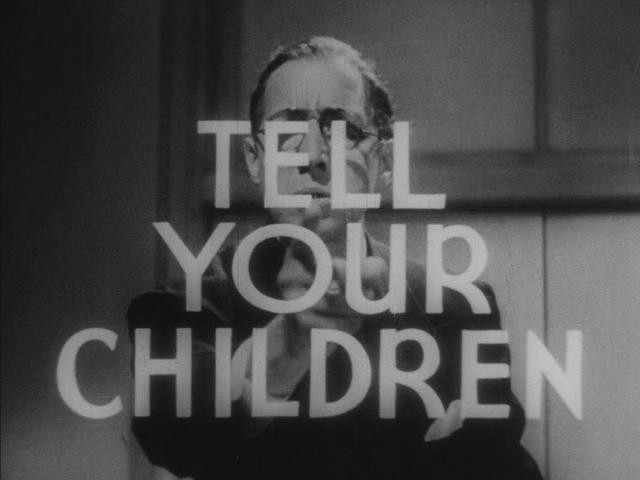
If there is one think I can credit Reefer Madness with is that it changed its title from Tell Your Children to Reefer Madness. It’s a smart marketing move, but also it’s less vague and more closely reflects the rather asinine levels of hysteria that this movie engages in. It’s propaganda to the nth degree, and that in an of itself is not a bad thing. There are films that are very openly propaganda that work to this day. Some seem rather innocuous like The Childhood of Maxim Gorky, others are frightening in their effectiveness and their reflection of a time like Triumph of the Will.

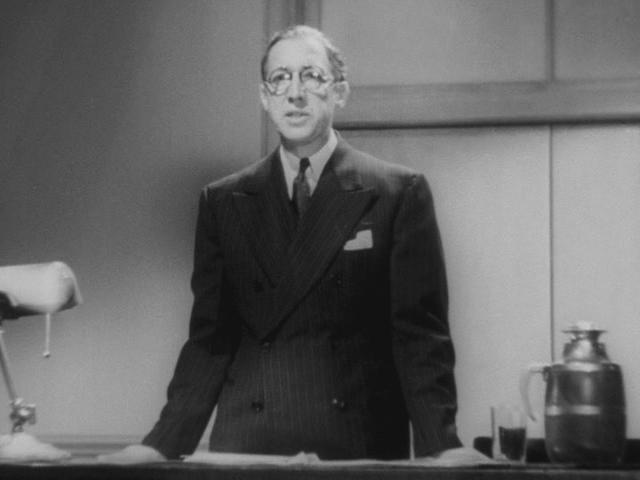
Reefer Madness (1936)

The standard disclaimer prior to the film that had just recently become Hollywood standard operating procedure due to a lawsuit (the one about similarities to real people being coincidence) rings particularly hilarious, not just because of the browbeating foreword that makes allusions to gangsters and also employs the old spelling of marijuana (with an “H” instead of a “J”). However, the unintentional humor this film finds is not just through dated syntax and cinematic techniques. If your tolerance for that is nil almost anything might be funny if it wasn’t meant to be.

Reefer Madness (1936)

Now clearly some of it is attributable to the time in which this film was produced. Whether the statements that marijuana was the worst drug around (Worse than heroin or opium) was commonplace it’s clear that those beliefs are no longer commonplace. And it would seem they were never deemed factual:

What makes Reefer Madness so notorious is its utter disregard for truth, and over-the-top dramatization. It should be noted however that the movie was made with the complete cooperation of the DEA then known as the Bureau of Narcotics.

The narrator [theoretically a high school principal, Dr. Alfred Carroll] warns parents about the dangers . . . “Marihuana is… an unspeakable scourge –the Real Public Enemy Number One! Its first effect is sudden violent, uncontrollable laughter, then come dangerous hallucinations, the loss of all power to resist physical emotions, leading finally to acts of shocking violence…ending often in incurable insanity.” He tells us how “time slows down…almost stops,” that it is “worse than heroin.” Can it get any worse?

Reefer Madness (1936)

Most frequently the chuckles here come from the stiff acting (in straight scenes, even for the time) and the the awkward blocking of characters whether its the dancing, the interpretation of what being high is or other manic behaviors; or in the framing scenes with the didactic lens-spiking and finger-pointing.

The dialogue isn’t exempt from inducing laughter; things like “All you gotta do is keep him from having too many reefers” or “She’s dead. Mae, get me some water” or the audacity to have Shakespeare be poorly recited by these line-readers.

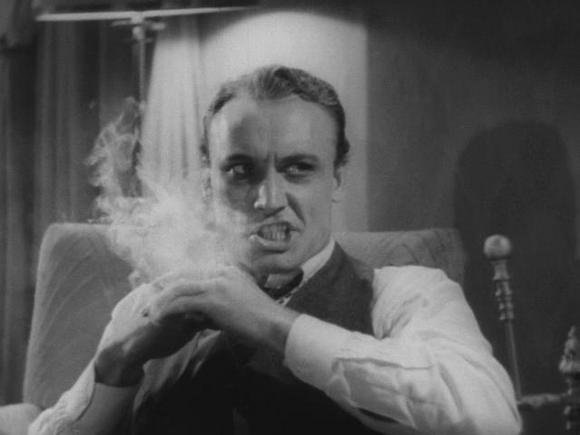
However, the more frequent offender is unquestionably the facial reactions of certain characters. They are almost always overboard and occasionally mystifying as to what is being reacted to, or precisely what it intended – a prolonged stare is only assumed to be murderous rage because we understand the narrative not because the actor staring is conveying the proper emotion. The fact that most of these instances occur when characters are high really undercuts the intent, such as it is. An intent mind you that the foreword of the film clearly states, which is simply something that should not be done.

Reefer Madness (1936)

Another issue is a seemingly all-too-frequent tactic by propaganda films which is framing an innocent for some crime and having them saved by intervention to see the error of their ways. If they really wanted these things to work they would go full on tragedy. Not that it’d make the movie good, but more effective.

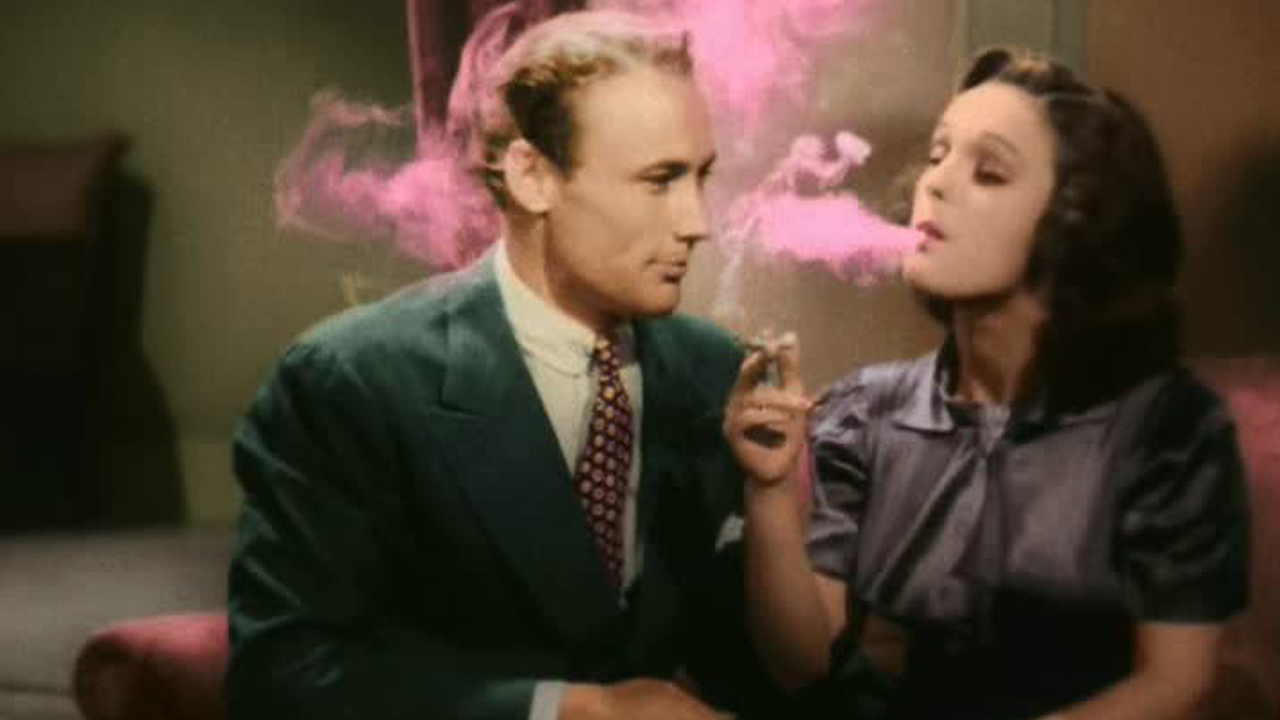
When fundamentals like editing lack on top of everything else just enumerated the film will never “work” except to make you laugh when you ought not. Of course, with a running time of just over an hour that dictates that a lot of things happen immediately: upon first puff of smoke you want to dance to something “hot” and engage in spastic bliss, the act of smoking itself becomes euphoric like a dumb baby eating candy. The editorial issues in narrative and technical terms are great, the logic flaws and exaggeration, such as a secondhand story of someone being rendered permanently insane by marijuana, take it over the edge.

Even who the protagonist is and what’s the central event seems in doubt in Act III. The trial is the logical assumption but it crosscuts so quickly with all the other balls in the air that its hard for that to have any impact. Indicative of the nature of the film even things that almost work falter and go too far over the top (which is more attributable to direction than anything else).

Reefer Madness (1936)

As I’ve said, this one does make me chuckle, even as bad and as hard to watch as it is. It does have a narrative so to speak which put it above the several MST3K-ilk films where what the point is is doubtful. Aside from its being a few levels up the dung heap another positive thing is that among credited cast members only Kenneth Craig (Bill, a second banana good-boy-gone-bad) claims this as his only film credit so it didn’t instantly kill careers not even the token kid Junior (Harry Harvey, Jr.).

And having slammed it, and explained why I find it so fun to laugh at this film several times over, I will close on a more positive note: this is a film made in 1936 that was re-released three years later, then 13 years later rebranded with the title that would cling to it to this day. Sure it’s infamous, but its a cult film for better or worst. The Rifftrax I referred to was in 2011 on a Thursday night and it was the most packed theater at a multiplex in my hometown, which is not exactly a cinematic mecca. That says something. And I think when you boil it down, the bad movies that survive are the ones made with earnest intentions by some, if not all the cast and crew. That’s true of Troll 2 and certainly true of Reefer Madness. The people who fashioned this meant well in their own head, they probably didn’t achieve the immortality they wanted with this film but the audience always has the final verdict and to this day we find this one accidentally hilarious.

The Billy Wilder Blogathon: Emil and the Detectives (1931) and (1935)

main

Wilder, Kästner, Emil and the Detectives

For the Billy Wilder Blogathon I wanted to cover a film, in this case films, that occurred early in Wilder’s career. The reason is because while it’s nearly impossible to know film without having stumbled upon Wilder’s work (even by accident) I can’t claim any level of expertise. Furthermore, in blogathon scenarios I find that the more popular and well-known titles, in this case things like Some Like it Hot, Double Indemnity or Judgment at Nuremberg would be snatched up right away.

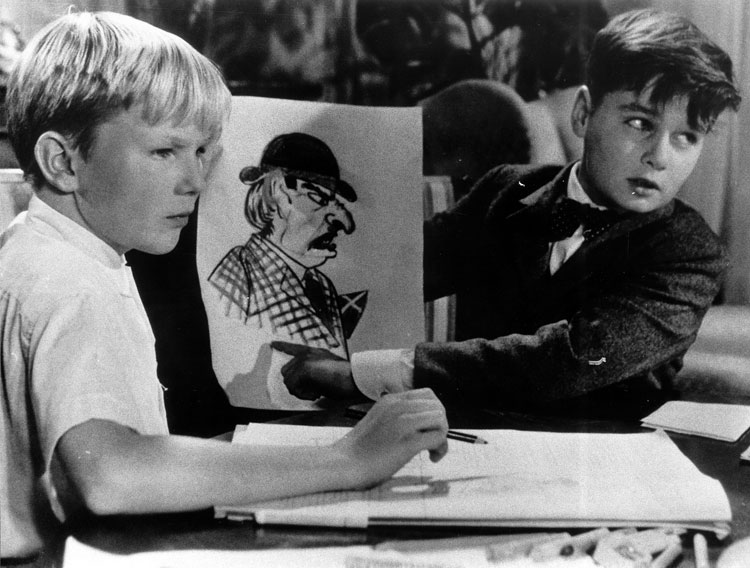
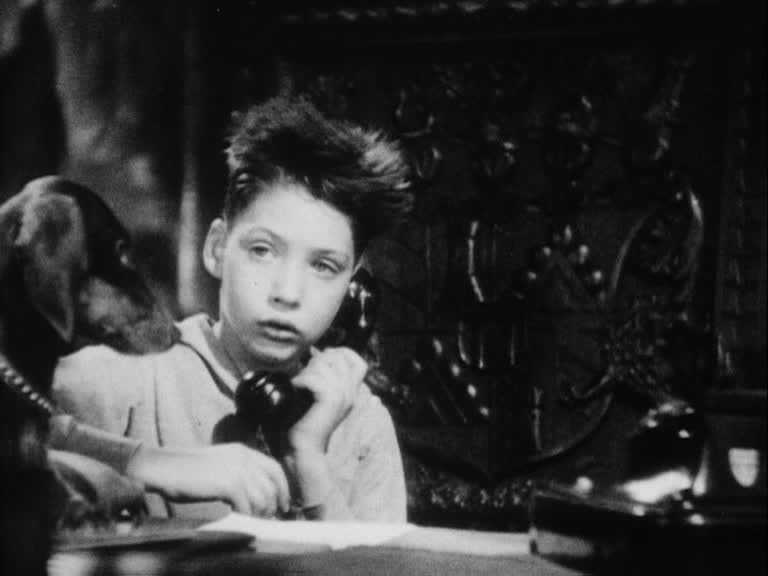
I was fortunate, however, to stumble upon the fact that one of Wilder’s earliest cinematic endeavors was the first-ever film adaptation of Erich Kästner’s classic children’s novel Emil and the Detectives. This particular version of the film I was able to find on a region 2 DVD set complete with the 1935 British remake, which by extension and its eerie similarity to the German version present early works of his screenwriting prowess.

In many ways Emil and the Detectives offers quite an interesting case study in a few regards: first, it is a tale of such timelessness and universal qualities such that it has been filmed many times over and in many cultures, however, it also offers a glimpse into the zeitgeist of the borderland in time and politics that was the end of the Wiemar Republic and the rise of the Nazis in Germany.

Less than two years after the debut of this film Wilder joined one of the throngs of German Jews who left his homeland for a long and successful career in Hollywood. Conversely, Kästner, while exiled and banned from publishing for a time due to his pacifism would spend the war and reconstruction in Germany to better report on events. In a hallmark of Nazi hypocrisy it has been reported that Emil and the Detectives was spared from burning in 1933 as opposed to his other books even though it, too, caused a stir.

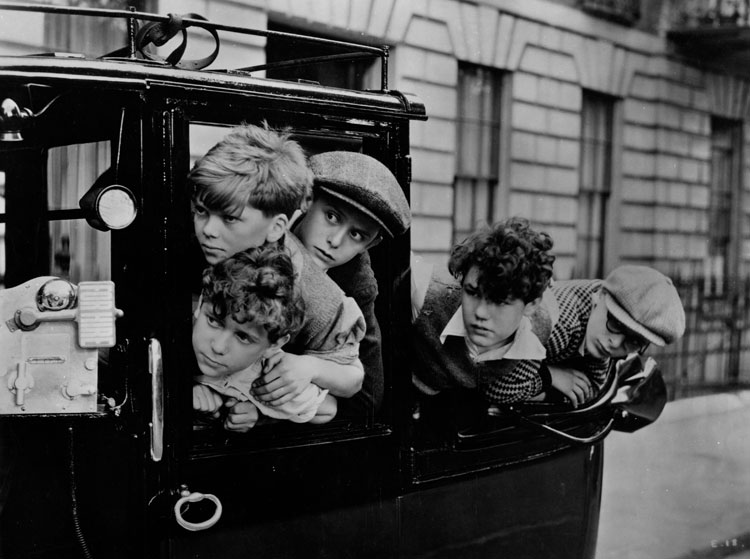
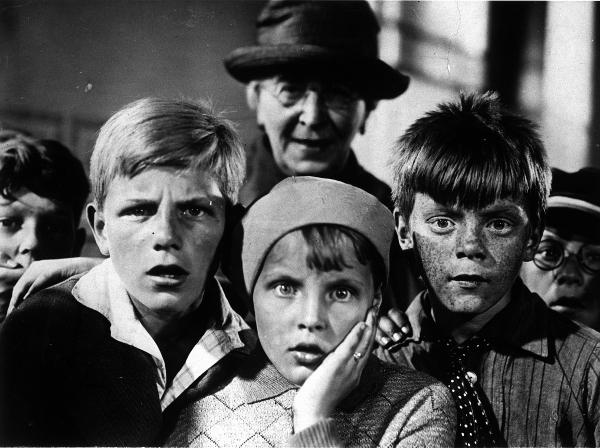
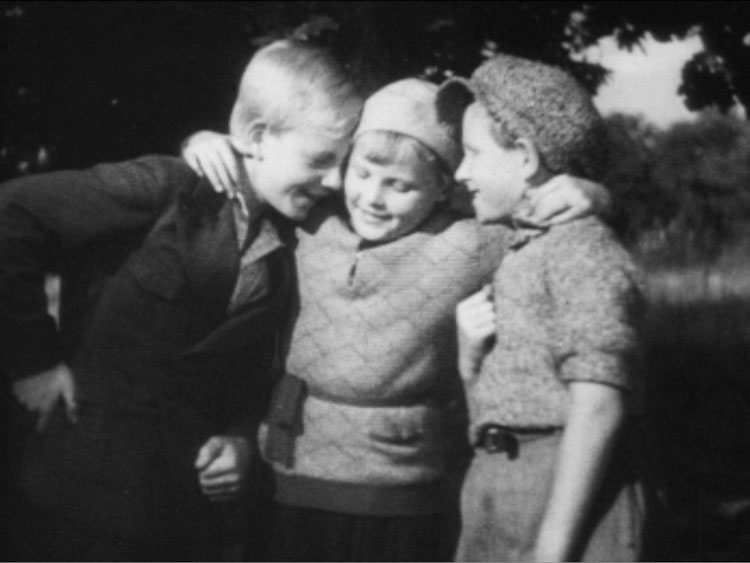
Emil and the Detectives (1931)

Emil und die Detektive (1931, Ufa)

My first exposure to this tale in anyway was the 1964 Walt Disney-produced version. Interestingly enough it ends up being rather a hybrid of the first two adaptations of the novel onto film. The actors are American but the story is German-set. As one would expect Disney is still Disney but much of the charm of the story still exists and it was one of my favorite film discoveries of 2012.

This tale is German and translated, but with a solid cast, very well-composed cinematography and an engaging storyline it works fairly well.

Clearly the standout the first time around was the visual-flair. The kids’ world with adults on the periphery is there, it’s adventurous and fun but a safe world. What Wilder and the team brought to the 1931 tale, that is likely also part of the fabric of the book, is that there is a naturalism to it, which when dealing with a crime and solving it means there is an inherent level of danger. With Disney some of the edge is taken off and its clubhouse-like. What is delightful to see the seeming opposites co-exist naturally.

What was written by the New York Herald seems well warranted and rings true to this day:

“The great simplicity in design and execution, the perfect naturalness and the move away from that particular sentimental hypocrisy and affectation, which often viewed as an inevitable prerequisite of cinematic oeuvre.”

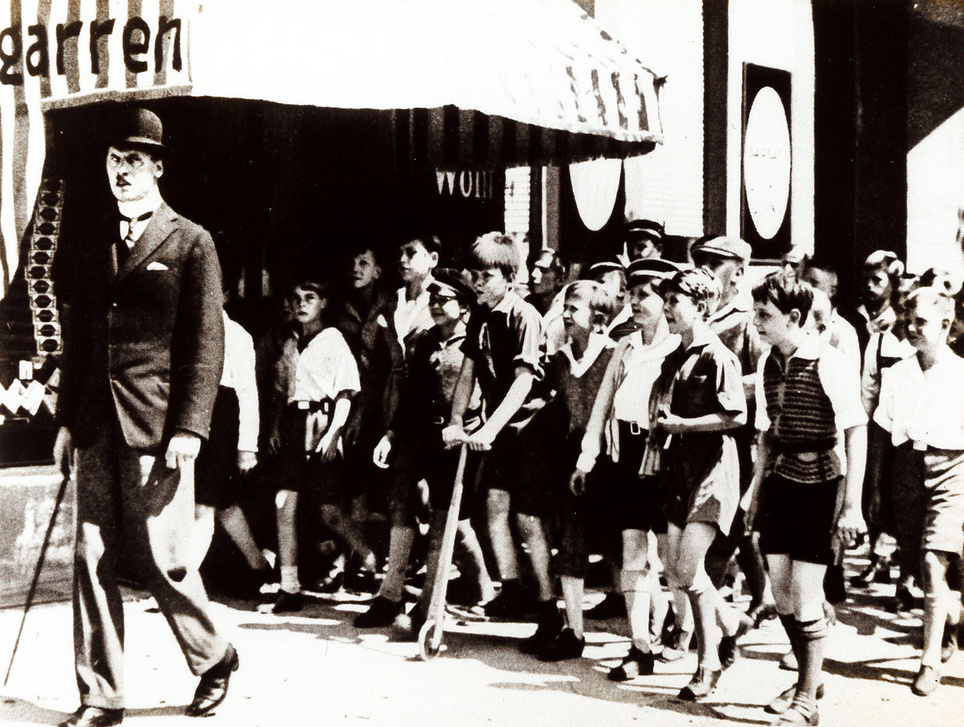
Emil and the Detectives (1931, Ufa)

While sticking fairly close to the source Wilder taps into and accentuates some of the universal truths of this tale and storytelling for young people that this narrative highlights. First, there is the introduction of the audience to “another world.” Though not a fantasy world in any sense, but rather just the big city we are still viewing somewhere fairly unknown to the protagonist and perhaps to us as well. The creation and depiction of the outsider is perfectly played.

Something that Michael Rosen underscored that I had never quite put my finger on is the following:

“I’ve always felt that children’s books that last the best are those which engender a sense of yearning in the child: you want to be there, you want to be them, you want to be as clever or as lucky as them. For me Emil and the Detectives has this in bucketloads.”

I would go so far as to extend that notion to any great children’s literature read at any age. For example, I first read Harry Potter in my senior year of High School, if I’m not mistaken, and as I made my way through that series I had that sense of yearning also.

Now something else Disney did was to add a more fantastical feel to the tale. Whereas what was shocking and controversial about the book, and handled so well by the original film versions, was the naturalness of the setting in which these children find themselves. It isn’t a fantasy or a far off world, but rather these kids, much like those that lived at that time, much like you or I in real city with a very real problem. Perhaps it is that singular notion that has kept the story alive even through a period where the Nazis tried to rewrite German culture and Europe and the world wasn’t as willing to dabble in anything Teutonic.

Emil and the Detectives (1929)

The trajectory of the project is one that will look familiar. It’s not that unlike a hot literary project today. It was published in 1929 was an almost instant hit. In 1930 a version hit the German stage, the adaptation by Kästner himself. The film rights were then picked up by Ufa. Although, a relative unknown at this point Wilder ended up working on versions of the film with Kästner and others. The success of People on Sunday had allowed him to become a professional screenwriter that the studio would tap for such an important project as this one.

One thing that the 1931 Emil and the Detectives excels at is visual storytelling. It is one of the earliest and most important German sound films but it is not as stagebound as many early US talkies are. There are montages, moving shots around Berlin and a wondrous impressionistic dream sequence which is breathtaking. Suspense is built by watching, following or hiding and not dependent on dialogue exchanges for too much.

Film Quarterly in 1933 astutely stated that:

“It is remarkable that the cinema all but ignores the very considerable audience of children that supports it; and it is tragic that the few films specially made for children lead one to wish that they had been ignored.”

This a lead-in to praise for this film, and in many ways, that can still be true today what’s key is that that the filmic touches are left to the apt maneuvering of the crew behind the scenes and the kids for lack of a better term just have to be themselves and seem to be selected specifically to be able to “be” their part rather than “play” it.

Emil and the Detectives (1931, Ufa)

As the date on the Film Quarterly review indicates the original film version had quite a legacy. While sadly many of the young actors who took part in the film would end up dying on the front in World War II it did launch an acting career for three of its cast members Hans Richter, Martin Rickelt (then Baumann) and Inge Landgut.

Such was its continued success that it was showed on Christmas in 1937 as Wilder was in the US and Kästner was forbidden to write.

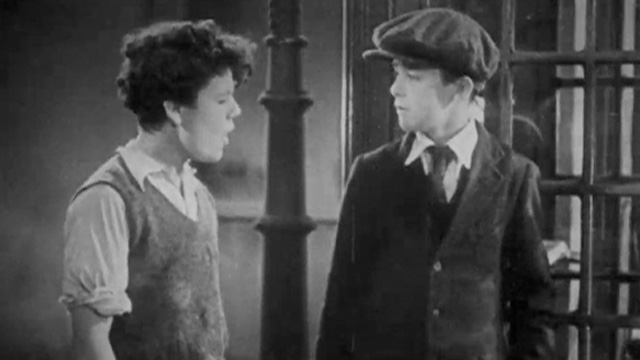
Emil and the Detectives (1935)

Emil and the Detectives (1935)

This film was recently rediscovered and restored. In the wonderful BFI booklet that accompanied the two-film release, where I sourced most of these quotes, is an essay called “Emil and the Detectives: A Faithful Remake” by Bryony Dixon that begins:

“Yet, despite being four years later, and with no hint in the publicity that this is essentially a remake of the German film, this is an exact replica with British cast and crew – and I do mean exact.”

Now there are differences and she goes on to cite them in detail in the last paragraph but what she states there is essentially true. And assertions that this film was cobbled together mainly from the German shooting script, or film, or stage play in English are likely correct.

However, the success of the film was similar in England. The original film played in the UK from April 1933 to January 1934; and a production of the play from Prague aired on BBC programme in 1934.

The oddity of the remake is that though it runs about 10 minutes shorter very little of that is put to good use. A lot of that is accomplished simply by tightening the dialogue scenes. Some expedited scenes work fine, but overall the suspense is lessened.

Emil and the Detectives (1935, BFI)

The change of venue from Berlin to London also does make a difference. Some of the vitality is robbed of it. It’s not just about the connotations each city brings with it, but the look and feel of it too. The Disney version which returns it there re-captured some of that.

However, it still works fairly well and even got fairly good notices. One that was included reads as follows:

“Although acted by juveniles for juveniles; the film is by no means limited in its appeal to young audiences; it should equally delight the elder members of the family.”

It does. What I was impressed by was how similar they were and that they both work well though the British one seemed to lack that suspense and grit, but it still quite enjoyable and it’s hard to find one remake so close to another – as Dixon rightly points out – that is not a foreign version shot simultaneously.

Closing Thoughts on Early Wilder

Emil and the Detectives (1931, Ufa)

When I was taking an introductory screenwriting course I remember our professor almost lamenting that we understandably were telling rather homey tales. The reason for this was that as writers having to only deal with the blank page there were no limitations. As writers the how things would happen and the cost of making them occur was really not our concern. One reason I’ve always recalled that is that is seems to be part of the path for many filmmakers. You seem to start with whatever rendition of a coming-of-age or first love tale strikes a chord with you.

One example would be in Bergman’s oeuvre: Very early on he had young romances like Port of Call or Summer Interlude or Summer with Monika and later on he’d revisit some of the themes in his early works with more sophistication as he did in Fanny and Alexander. Many will be more like Wilder than Kästner. They will tell a child’s tale when feeling there is something they can say with it, as opposed to having it be their raison d’être due to some philosophical slant.

Wilder has here a not dissimilar early career narrative to Bergman’s going from contributing to People on Sunday which was seen by many a slice-of-life of Berlin at the time. He then almost immediately moved on to sculpt another image of Berlin also real, but with flights of childish imagination that do not remove it from reality, but merely look at it in a different way.

Tales that tend to pass from generation to generation are usually either perfect dreams or perfect simulacrum. Emil and the Detectives, with Kästner’s blueprint, Wilder and the other filmmaker’s input may have blazed the trail for stories that balance the two giving an audience young and old an escape with a story that feels very real.

Emil and the Detectives (1931, Ufa)

It’s perhaps more interesting to see this film now as one can clearly see how earlier works influenced it and also how it intimated things to come in the careers of the makers, in the cinematic subgenre and the careers of those involved. Emil and the Detectives is a film that would’ve stood the test of time regardless but it gains additional significance as a beacon both of a bygone time and also for the career that Wilder had in store.

Big League Blogathon: Fictional All-Star Team

This my no-brainer choice as a topic for this blogathon. This is because I knew many of the individual films I was likely to want to cover would be taken, and because I had already toyed with this idea in the past. As I started to develop the list it became clear that two other lists could, and likely will follow at some point. For now, my focus will be on live-action films and fictional (or fictional renderings of) players at a professional level. Both baseball-themed animated shorts and films about Little League have their place and, being a Big League theme, and coinciding with Opening Day, the focus is narrowed accordingly.

A few notes about the selection process before beginning: since A League of Their Own stands as perhaps the only film about women in baseball their is no female team but that film is represented here. At least on this team, there is less room for the player-fulfilling-his-potential that comes through in many baseball films, there is no room for Roger Dorns either- most often these players are stars throughout. Now let us begin…

Pitchers are perhaps the most popular characters. The pitcher-batter duel is very cinematic, as is the rapport with the catcher, but to spare this list length I will pick one starter and one reliever.

Starting Pitcher- Steve Nebraska (Brendan Fraser – The Scout)

The Scout (1994, 20th Century Fox)

Listen, I get it. The way this film concludes, for those who have seen it and have the slightest notion of what baseball is like, is preposterous. However, this list is based on what happened in the film no matter how impossible. And it’s also based on “the season” (read: the film) so even if the implication is that it was a flash in the pan; it’s enough.

Relief Pitcher- Rick Vaughn (Charlie Sheen – Major League)

Major League (1989, Paramount Pictures)

For those unfamiliar with baseball, through the years pitching has become more specialized for myriad reasons. Pitchers once upon a time, even at the pro level, threw frequently and for complete games. Relief pitchers spell starters and they have varying roles. All-Star games frequently choose what are commonly referred to as closers, as they come out to secure the win.

When Major League came out relief pitching was just starting to become more popularized and was seen as a “sexier,” or more acceptable, role than in years past. As fiery as Vaughan is, when he gets accustomed to his role, he’s ice-cold when it comes to getting resultswhich is what you want.

Catcher- Dottie Hinson (Geena Davis – A League of their Own)

A League of Their Own (1992, Columbia Pictures)

Although I never played in an organized way (just pick-up Wiffleball and pitch-and-catch on a tiny field) I always liked catching and realized the importance of it. As mentioned above, it’s a very cinematically appealing position and dynamic. Catchers usually have to be tough, yet also a psychologist and a strategist. Not too often, at a pro level, is a catcher also one of the best players on the team. Hinson, per Davis’ portrayal, is all of those things.

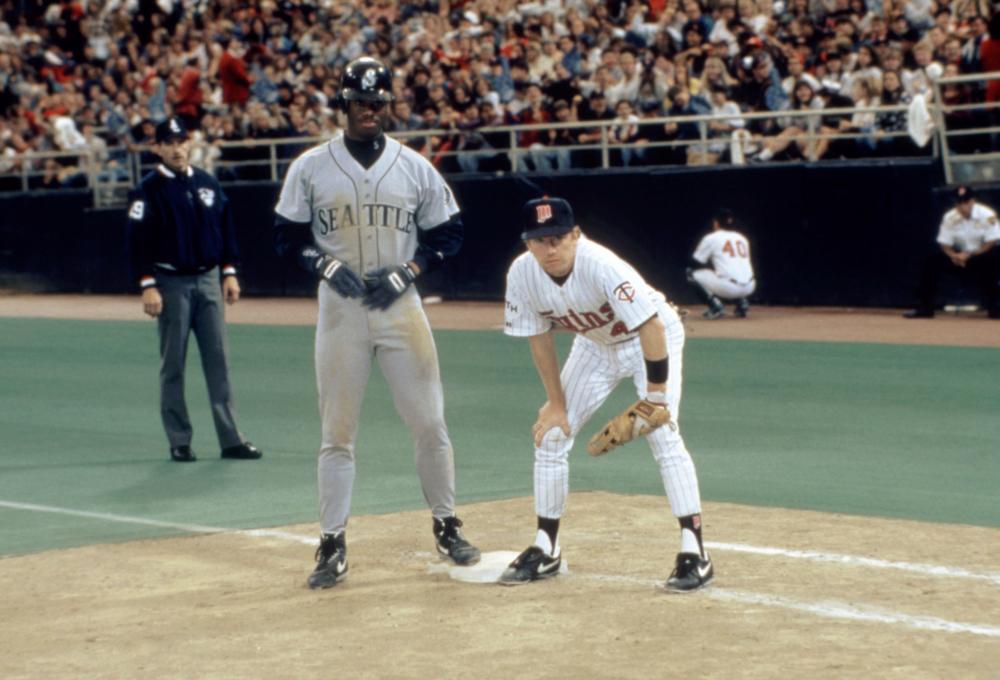
First Base Lou Collins (Timothy Busfield – Little Big League)

Little Big League (1994, Columbia Pictures)

When looking for options of players by position I had to do some searching. When I thought the team would be all-inclusive I thought Henry Rowengartner of Little Big League (Played by Thomas Ian Nicholas) would be the only player in that film with a chance. However, then I was reminded of Lou Collins. This isn’t a movie I think of when I think of Timothy Busfield but he looks the part, plays good defense, crushes the ball and is a leader in the clubhouse – all great attributes.

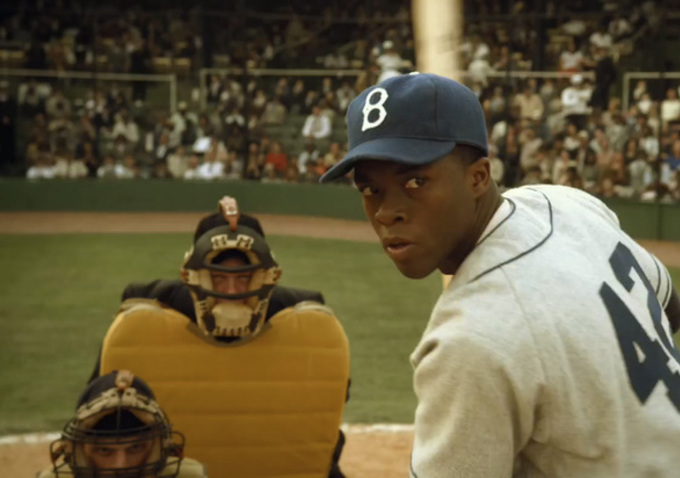
Second Base- Jackie Robinson (Chadwick Boseman 42)

42 (2013, Universal)

Alright, firstly, shame on me for not having seen this yet. However, as is often the case with me and these lists I try to use it as a catalyst to get around to seeing certain titles. When you grow up a baseball fan, if you’re being taught about the game properly, you get an appreciation for its history. Jackie Robinson’s significance is not just in breaking the color-barrier but also how he handled himself in doing so and, of course, what a talented player he was.

This isn’t the first treatment of Robinson on the big screen, but is the most recent, and one I wanted to see.

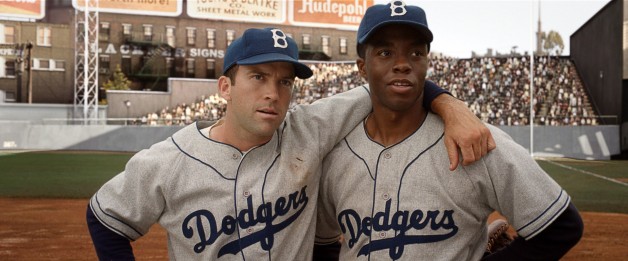
Shortstop- Pee Wee Reese (Lucas Back 42)

42 (Universal. 2013)

When picking teams, real or imagined, I think that pairing players familiar with one another is important. Reese and Robinson were a noted double-play combination. Reese was in his own right a 10-time all-star, two-time World Series champion whose number (1) is retired by the Dodgers. In any film on Robinson it’d seem his character was plucked out of a Hollywood cliche – talented white player who befriends and supports black superstar – however, this fact is well-documented.

I wasn’t overwhelmed with the number of choices at shortstop but the chance to underscore Reese (as well as the fact that Robinson moved to 2nd Base in his MLB career, furthering his legend) couldn’t be passed up.

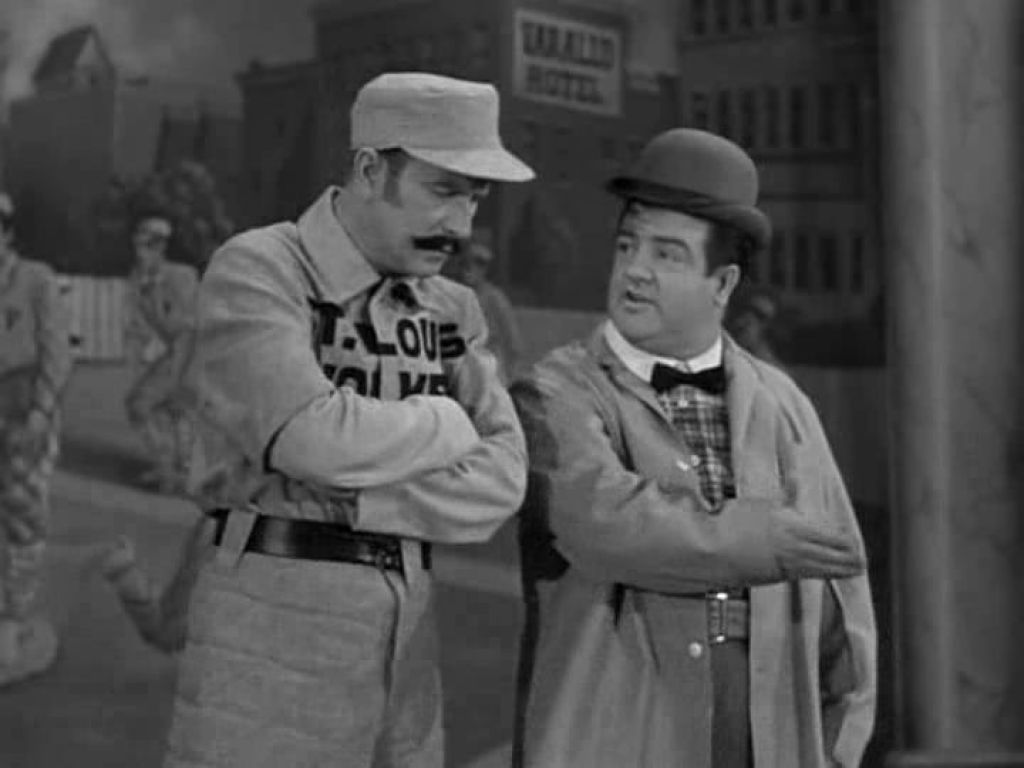
Third Base- I Don’t Know (Abbott and Costello)
The Naugty Nineties (1945, Universal)

This both is and is not a joke. There is not to my knowledge a film on Brooks Robinson or Wade Boggs, therefore, the “Hot Corner” is not that hot on screen. Unless, there’s some third basemen mentioned in passing in something I was not aware of. To cut a long story short: I really didn’t know who to choose, and I would also be remiss in not mentioning this Abbott and Costello routine, which is not only well-known to baseball fans but a comedy classic.

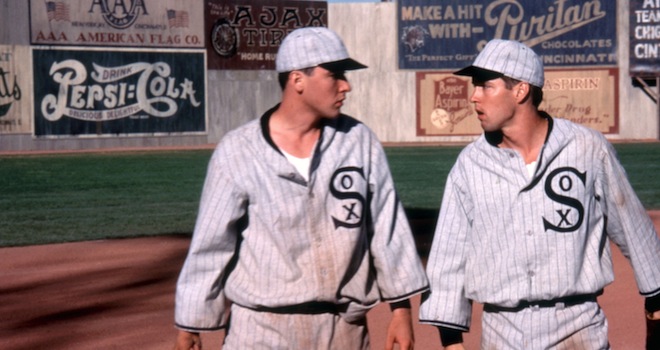
Left Field- “Shoeless” Joe Jackson (D.B. Sweeney in Eight Men Out)

Eight Men Out (1988, Orion Pictures)

There are a few selections where I would be in danger of going off on a tangent that’s all about baseball and not much about movies. “Shoeless” Joe Jackson is one of the greatest players in the history of the game, and also not in the Hall of Fame. The reason why is fairly apparent and chronicled in this film. Eight Men Out is an impressive piece of cinema regardless of your feelings about baseball. However, it’s especially great in that light because those who follow the sport know this tale and it’s an impressively rendered, foreseeable tragedy that oozes pathos. Furthermore, it relates history to new generations.

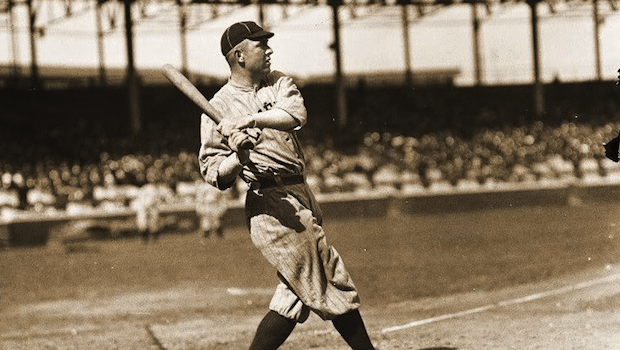
Center Field– Tris Speaker (Himself/Archival Footage in Baseball)

Tris Speaker

Once I opened the door to allowing myself to pick “real” baseball players, I knew that Ken Burns’ film would have to factor in. As I mentioned history plays a role in the game but so does lore. Burns combines these effortlessly in this sprawling narrative of America’s pastime. It also came out at a very strange time as later in 1994 the World Series was canceled for the first time since 1904, this time due to a players’ strike. Therefore, it was quite a dichotomy to have this grandiose love letter to the game at its best come out just as the sport would hit one of its lowest ebbs with myself and many fans.

I cannot recall how much of the film I saw, but Tris Speaker stood out as one of the great under-discussed greats the film highlighted.

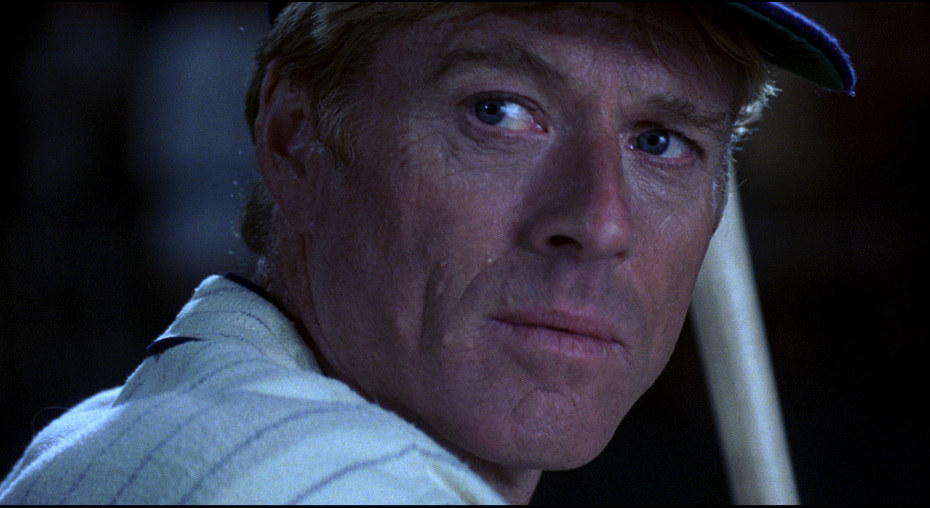
Designated Hitter- Roy Hobbs (Robert Redford – The Natural)

The Natural (1984, TriStar Pictures)

Here’s a second potential tangent, I hate the concept of the designated hitter. That’s all I’ll say as it’s now been part of the American League, and World Series Games at AL parks, for 41 years now. For those unfamiliar with the sport, the designated hitter is a player who bats in place of the pitcher, but does not play the field.

I must admit it is useful to have for All-Star consideration. Therefore, I knew either of the last two men on this list would get to swat the bat around. I went with Roy Hobbs because of that titanic blast and for who I wanted on the field more…

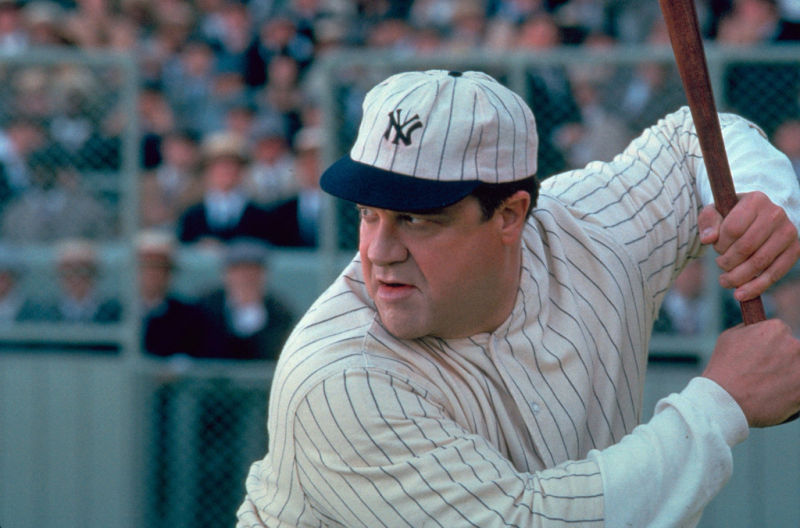
Right Field– Babe Ruth (John Goodman – The Babe)

The Babe (1992, Universal)

I’m open to seeing other tales of the Bambino, and even have a film he appears in on my Netflix “list” (still a queue to me). However, this is the one I saw when I was a kid – accurate, inaccurate, good, bad is no concern of mine here. It was an aggrandizing and a depiction I could see of a figure I was already fascinated by. As for All-Star consideration: I can read a stat line and Ruth was a titan.

I, for one, am never surprised when Little Leaguers cite former players as their favorites, because Babe Ruth was my favorite player even before I saw this film.

You may ask why I want him in the field over Hobbs? And here is where I get very baseball-ish and point out things about Ruth people frequently forget or don’t know like his pitching stats (94 wins, 46 losses, 2.28 Earned Run Average, 8 Seasons), Fielding (204 outfield assists and a fielding percentage of.968); and, yes, he was an offensive machine: .342 career average (Still 10th All-Time), Home Runs 714 (Still 3rd-All-Time – he broke the record in 1921 when he hit his 139th home run, and proceeded to break that record 576 more times; his mark was only surpassed 52 years later). So that’s why Ruth takes the field.

I hope to post a few more All-Stars in the future, but this concludes this team. Hope you enjoyed.

The Arts on Film: The Wind Rises (2013)

If one watches Hiyao Miyzaki’s latest, and reportedly last, film The Wind Rises it’s impossible to miss the influence of Paul Valéry’s poem on this film. In a bit of coincidence I had not heard of Valéry, or his works, until I saw the documentary The Short Game wherein his grandson was a subject and recited some of his words in the introduction.

That instance got me to look him up and I found his works scarce. Having heard another snippet in this film, and repeated often as the mantra of the story I searched again. I found the entire original French and translated included it below. This poem and others can be found here.

This one gave me chills and I was glad I found it.


Le cimetière marin

Paul Valéry

Ce toit tranquille, où marchent des colombes,
Entre les pins palpite, entre les tombes;
Midi le juste y compose de feux
La mer, la mer, toujours recommencee
O récompense après une pensée
Qu’un long regard sur le calme des dieux!

Quel pur travail de fins éclairs consume
Maint diamant d’imperceptible écume,
Et quelle paix semble se concevoir!
Quand sur l’abîme un soleil se repose,
Ouvrages purs d’une éternelle cause,
Le temps scintille et le songe est savoir.

Stable trésor, temple simple à Minerve,
Masse de calme, et visible réserve,
Eau sourcilleuse, Oeil qui gardes en toi
Tant de sommeil sous une voile de flamme,
O mon silence! . . . Édifice dans l’ame,
Mais comble d’or aux mille tuiles, Toit!

Temple du Temps, qu’un seul soupir résume,
À ce point pur je monte et m’accoutume,
Tout entouré de mon regard marin;
Et comme aux dieux mon offrande suprême,
La scintillation sereine sème
Sur l’altitude un dédain souverain.

Comme le fruit se fond en jouissance,
Comme en délice il change son absence
Dans une bouche où sa forme se meurt,
Je hume ici ma future fumée,
Et le ciel chante à l’âme consumée
Le changement des rives en rumeur.

Beau ciel, vrai ciel, regarde-moi qui change!
Après tant d’orgueil, après tant d’étrange
Oisiveté, mais pleine de pouvoir,
Je m’abandonne à ce brillant espace,
Sur les maisons des morts mon ombre passe
Qui m’apprivoise à son frêle mouvoir.

L’âme exposée aux torches du solstice,
Je te soutiens, admirable justice
De la lumière aux armes sans pitié!
Je te tends pure à ta place première,
Regarde-toi! . . . Mais rendre la lumière
Suppose d’ombre une morne moitié.

O pour moi seul, à moi seul, en moi-même,
Auprès d’un coeur, aux sources du poème,
Entre le vide et l’événement pur,
J’attends l’écho de ma grandeur interne,
Amère, sombre, et sonore citerne,
Sonnant dans l’âme un creux toujours futur!

Sais-tu, fausse captive des feuillages,
Golfe mangeur de ces maigres grillages,
Sur mes yeux clos, secrets éblouissants,
Quel corps me traîne à sa fin paresseuse,
Quel front l’attire à cette terre osseuse?
Une étincelle y pense à mes absents.

Fermé, sacré, plein d’un feu sans matière,
Fragment terrestre offert à la lumière,
Ce lieu me plaît, dominé de flambeaux,
Composé d’or, de pierre et d’arbres sombres,
Où tant de marbre est tremblant sur tant d’ombres;
La mer fidèle y dort sur mes tombeaux!

Chienne splendide, écarte l’idolâtre!
Quand solitaire au sourire de pâtre,
Je pais longtemps, moutons mystérieux,
Le blanc troupeau de mes tranquilles tombes,
Éloignes-en les prudentes colombes,
Les songes vains, les anges curieux!

Ici venu, l’avenir est paresse.
L’insecte net gratte la sécheresse;
Tout est brûlé, défait, reçu dans l’air
A je ne sais quelle sévère essence . . .
La vie est vaste, étant ivre d’absence,
Et l’amertume est douce, et l’esprit clair.

Les morts cachés sont bien dans cette terre
Qui les réchauffe et sèche leur mystère.
Midi là-haut, Midi sans mouvement
En soi se pense et convient à soi-même
Tête complète et parfait diadème,
Je suis en toi le secret changement.

Tu n’as que moi pour contenir tes craintes!
Mes repentirs, mes doutes, mes contraintes
Sont le défaut de ton grand diamant! . . .
Mais dans leur nuit toute lourde de marbres,
Un peuple vague aux racines des arbres
A pris déjà ton parti lentement.

Ils ont fondu dans une absence épaisse,
L’argile rouge a bu la blanche espèce,
Le don de vivre a passé dans les fleurs!
Où sont des morts les phrases familières,
L’art personnel, les âmes singulières?
La larve file où se formaient les pleurs.

Les cris aigus des filles chatouillées,
Les yeux, les dents, les paupières mouillées,
Le sein charmant qui joue avec le feu,
Le sang qui brille aux lèvres qui se rendent,
Les derniers dons, les doigts qui les défendent,
Tout va sous terre et rentre dans le jeu!

Et vous, grande âme, espérez-vous un songe
Qui n’aura plus ces couleurs de mensonge
Qu’aux yeux de chair l’onde et l’or font ici?
Chanterez-vous quand serez vaporeuse?
Allez! Tout fuit! Ma présence est poreuse,
La sainte impatience meurt aussi!

Maigre immortalité noire et dorée,
Consolatrice affreusement laurée,
Qui de la mort fais un sein maternel,
Le beau mensonge et la pieuse ruse!
Qui ne connaît, et qui ne les refuse,
Ce crâne vide et ce rire éternel!

Pères profonds, têtes inhabitées,
Qui sous le poids de tant de pelletées,
Êtes la terre et confondez nos pas,
Le vrai rongeur, le ver irréfutable
N’est point pour vous qui dormez sous la table,
Il vit de vie, il ne me quitte pas!

Amour, peut-être, ou de moi-même haine?
Sa dent secrète est de moi si prochaine
Que tous les noms lui peuvent convenir!
Qu’importe! Il voit, il veut, il songe, il touche!
Ma chair lui plaît, et jusque sur ma couche,
À ce vivant je vis d’appartenir!

Zénon! Cruel Zénon! Zénon d’Êlée!
M’as-tu percé de cette flèche ailée
Qui vibre, vole, et qui ne vole pas!
Le son m’enfante et la flèche me tue!
Ah! le soleil . . . Quelle ombre de tortue
Pour l’âme, Achille immobile à grands pas!

Non, non! . . . Debout! Dans l’ère successive!
Brisez, mon corps, cette forme pensive!
Buvez, mon sein, la naissance du vent!
Une fraîcheur, de la mer exhalée,
Me rend mon âme . . . O puissance salée!
Courons à l’onde en rejaillir vivant.

Oui! grande mer de delires douée,
Peau de panthère et chlamyde trouée,
De mille et mille idoles du soleil,
Hydre absolue, ivre de ta chair bleue,
Qui te remords l’étincelante queue
Dans un tumulte au silence pareil

Le vent se lève! . . . il faut tenter de vivre!
L’air immense ouvre et referme mon livre,
La vague en poudre ose jaillir des rocs!
Envolez-vous, pages tout éblouies!
Rompez, vagues! Rompez d’eaux rejouies
Ce toit tranquille où picoraient des focs!

The Graveyard By The Sea

Translated by C. Day Lewis

This quiet roof, where dove-sails saunter by,
Between the pines, the tombs, throbs visibly.
Impartial noon patterns the sea in flame —
That sea forever starting and re-starting.
When thought has had its hour, oh how rewarding
Are the long vistas of celestial calm!

What grace of light, what pure toil goes to form
The manifold diamond of the elusive foam!
What peace I feel begotten at that source!
When sunlight rests upon a profound sea,
Time’s air is sparkling, dream is certainty —
Pure artifice both of an eternal Cause.

Sure treasure, simple shrine to intelligence,
Palpable calm, visible reticence,
Proud-lidded water, Eye wherein there wells
Under a film of fire such depth of sleep —
O silence! . . . Mansion in my soul, you slope
Of gold, roof of a myriad golden tiles.

Temple of time, within a brief sigh bounded,
To this rare height inured I climb, surrounded
By the horizons of a sea-girt eye.
And, like my supreme offering to the gods,
That peaceful coruscation only breeds
A loftier indifference on the sky.

Even as a fruit’s absorbed in the enjoying,
Even as within the mouth its body dying
Changes into delight through dissolution,
So to my melted soul the heavens declare
All bounds transfigured into a boundless air,
And I breathe now my future’s emanation.

Beautiful heaven, true heaven, look how I change!
After such arrogance, after so much strange
Idleness — strange, yet full of potency —
I am all open to these shining spaces;
Over the homes of the dead my shadow passes,
Ghosting along — a ghost subduing me.

My soul laid bare to your midsummer fire,
O just, impartial light whom I admire,
Whose arms are merciless, you have I stayed
And give back, pure, to your original place.
Look at yourself . . . But to give light implies
No less a somber moiety of shade.

Oh, for myself alone, mine, deep within
At the heart’s quick, the poem’s fount, between
The void and its pure issue, I beseech
The intimations of my secret power.
O bitter, dark, and echoing reservoir
Speaking of depths always beyond my reach.

But know you — feigning prisoner of the boughs,
Gulf which cats up their slender prison-bars,
Secret which dazzles though mine eyes are closed —
What body drags me to its lingering end,
What mind draws it to this bone-peopled ground?
A star broods there on all that I have lost.

Closed, hallowed, full of insubstantial fire,
Morsel of earth to heaven’s light given o’er —
This plot, ruled by its flambeaux, pleases me —
A place all gold, stone, and dark wood, where shudders
So much marble above so many shadows:
And on my tombs, asleep, the faithful sea.

Keep off the idolaters, bright watch-dog, while —
A solitary with the shepherd’s smile —
I pasture long my sheep, my mysteries,
My snow-white flock of undisturbed graves!
Drive far away from here the careful doves,
The vain daydreams, the angels’ questioning eyes!

Now present here, the future takes its time.
The brittle insect scrapes at the dry loam;
All is burnt up, used up, drawn up in air
To some ineffably rarefied solution . . .
Life is enlarged, drunk with annihilation,
And bitterness is sweet, and the spirit clear.

The dead lie easy, hidden in earth where they
Are warmed and have their mysteries burnt away.
Motionless noon, noon aloft in the blue
Broods on itself — a self-sufficient theme.
O rounded dome and perfect diadem,
I am what’s changing secretly in you.

I am the only medium for your fears.
My penitence, my doubts, my baulked desires —
These are the flaw within your diamond pride . . .
But in their heavy night, cumbered with marble,
Under the roots of trees a shadow people
Has slowly now come over to your side.

To an impervious nothingness they’re thinned,
For the red clay has swallowed the white kind;
Into the flowers that gift of life has passed.
Where are the dead? — their homely turns of speech,
The personal grace, the soul informing each?
Grubs thread their way where tears were once composed.

The bird-sharp cries of girls whom love is teasing,
The eyes, the teeth, the eyelids moistly closing,
The pretty breast that gambles with the flame,
The crimson blood shining when lips are yielded,
The last gift, and the fingers that would shield it —
All go to earth, go back into the game.

And you, great soul, is there yet hope in you
To find some dream without the lying hue
That gold or wave offers to fleshly eyes?
Will you be singing still when you’re thin air?
All perishes. A thing of flesh and pore
Am I. Divine impatience also dies.

Lean immortality, all crêpe and gold,
Laurelled consoler frightening to behold,
Death is a womb, a mother’s breast, you feign
The fine illusion, oh the pious trick!
Who does not know them, and is not made sick
That empty skull, that everlasting grin?

Ancestors deep down there, O derelict heads
Whom such a weight of spaded earth o’erspreads,
Who are the earth, in whom our steps are lost,
The real flesh-eater, worm unanswerable
Is not for you that sleep under the table:
Life is his meat, and I am still his host.

‘Love,’ shall we call him? ‘Hatred of self,’ maybe?
His secret tooth is so intimate with me
That any name would suit him well enough,
Enough that he can see, will, daydream, touch —
My flesh delights him, even upon my couch
I live but as a morsel of his life.

Zeno, Zeno, cruel philosopher Zeno,
Have you then pierced me with your feathered arrow
That hums and flies, yet does not fly! The sounding
Shaft gives me life, the arrow kills. Oh, sun! —
Oh, what a tortoise-shadow to outrun
My soul, Achilles’ giant stride left standing!

No, no! Arise! The future years unfold.
Shatter, O body, meditation’s mould!
And, O my breast, drink in the wind’s reviving!
A freshness, exhalation of the sea,
Restores my soul . . . Salt-breathing potency!
Let’s run at the waves and be hurled back to living!

Yes, mighty sea with such wild frenzies gifted
(The panther skin and the rent chlamys), sifted
All over with sun-images that glisten,
Creature supreme, drunk on your own blue flesh,
Who in a tumult like the deepest hush
Bite at your sequin-glittering tail — yes, listen!

The wind is rising! . . . We must try to live!
The huge air opens and shuts my book: the wave
Dares to explode out of the rocks in reeking
Spray. Fly away, my sun-bewildered pages!
Break, waves! Break up with your rejoicing surges
This quiet roof where sails like doves were pecking.
Big Stars on the Small Screen Blogathon: Robert Loggia as Elfego Baca

Introduction

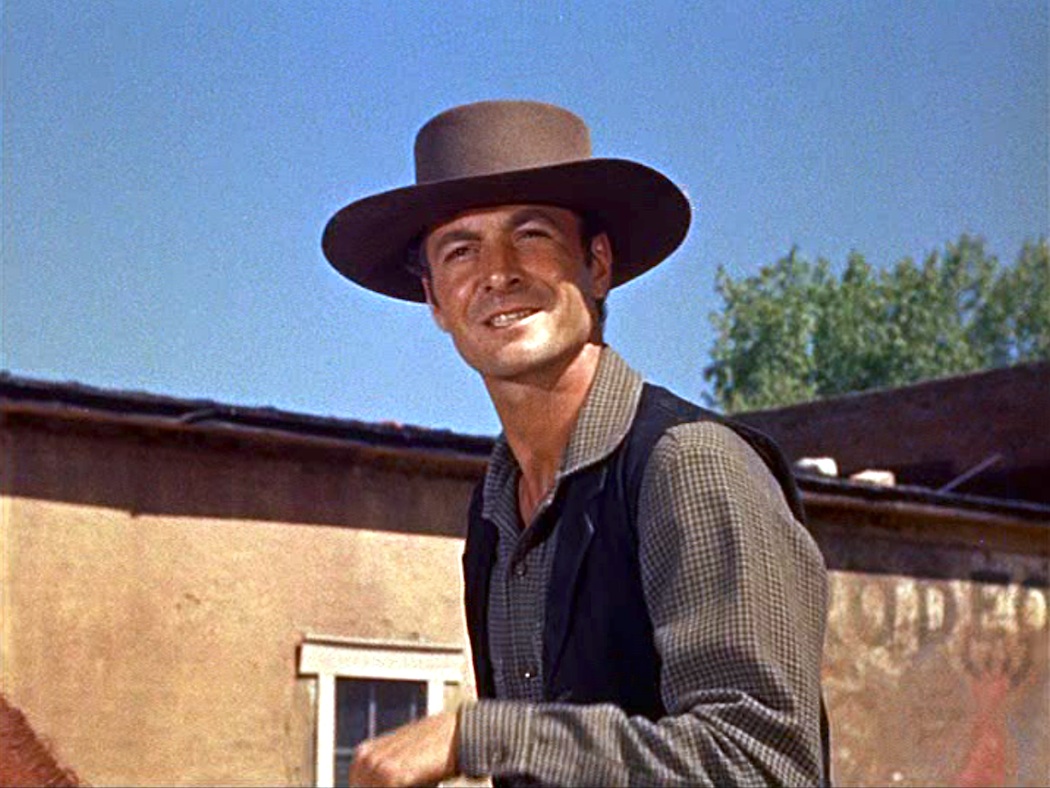
This is a post for the Big Stars on the Small Screen blogathon. The titles and actors I chose to cover are Robert Loggia as Elfego Baca, and Leslie Nielsen as The Swamp Fox (Tomorrow). Both of these television narratives aired in rotating fashion on an ABC program called Walt Disney Presents from 1958 and 1960, at the tail end of what some refer to as the (first) Golden Age of Television.

The structure of Walt Disney presents was such that the stories told were inspired by any of the four sections of Disneyland at the time: Frontierland, Fantasyland, Adventureland and Tomorrowland.

Both of the series I will discuss dealt with tales inspired by Frontierland, the same section of the park that brought Davey Crockett and Daniel Boone (’60) to the small screen. The modus operandi of said show was stories inspired by figures in American history.

Now many projects from the Walt era are vaulted by Disney and not frequently available, especially these serialized show-within-shows. However, there was a time (and I think that it should return) when Disney Treasures released a series of tin-cased box sets in limited supply that would be of interest to collectors and Disney fans. This was one of the selections, one that I was able to obtain via the Disney Movie Club.

The unfortunate part of the packaging is that you are not provided here with the whole run of the show on these discs. Since they’re DVD releases and an hour-long show there are but three-episodes per show. In one case the selection closes a chapter, in another it feels more like a prelude.

Having said all that, both these shows feature early-career performances of two actors who have had varied and successful careers: Robert Loggia played Elfego Baca and Leslie Nielsen played Robert Marion, a.k.a. The Swamp Fox.

Robert Loggia as Elfego Baca

Walt Disney Presents (1958, Disney)

The insights gleaned to this show, and the story behind it are better in general and not just because there is a supplemental interview with Loggia that gives further background to the series and his involvement.

Firstly, in narrative terms, these short tastes of series give an interesting insight into lesser-known figures in the US’s past. In Baca’s case it’s even more interesting because he was a US-born and -bred bilingual Mexican-American. He lived in the frontier lands and built a legend of having “nine lives” and a unique sense of justice. He eventually, mostly through self-teaching, became an attorney. We first meet him as a self-appointed deputy standing up to a group of bandits. Then he comes into the fold as a full-fledged deputy.

In cultural terms, the mere depiction of an ethnic character in later 1958 and early 1959 is quite a big deal, much less making him the hero. Surely, he was a historical figure but there was nothing forcing Disney’s hand to tell his tale. While the interview between Leonard Maltin does reveal that casting was down between Loggia and Ricardo Montalban, and what tipped the scales his way is not discussed -especially considering Montalban seemed to have an in. However, with Loggia being cast Baca’s heritage could’ve further been buried but it was the actor’s option, per his telling, to accentuate the ethnicity more than even the script would with an accent. He also passably slips into Spanish here and there which makes it a unique take. Cross-ethnic casting is a double-edged sword, and was more common in this day-and-age, but it’s not something that can be held against Loggia if you disagree with it on principal– he had a job to do and did it very well.

Walt Disney Presents (1958, Disney)

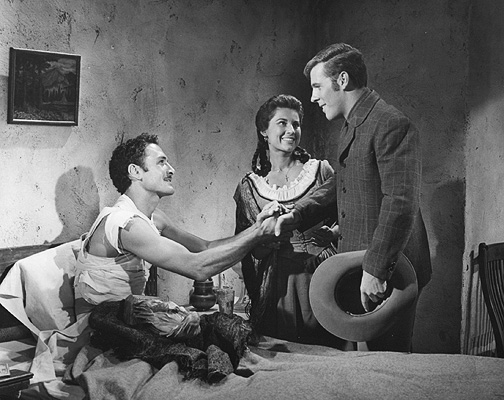
Loggia ’s break here is one he describes as very fortunate. He was an athlete in college and had served in Korea. He was working on Broadway in fairly short order and then was picked by Disney to play this role. The cowboy elements, a hefty portion of the role, were things he learned to be able to play it, which is impressive as there is quite a bit of riding and action in a western-set tale.

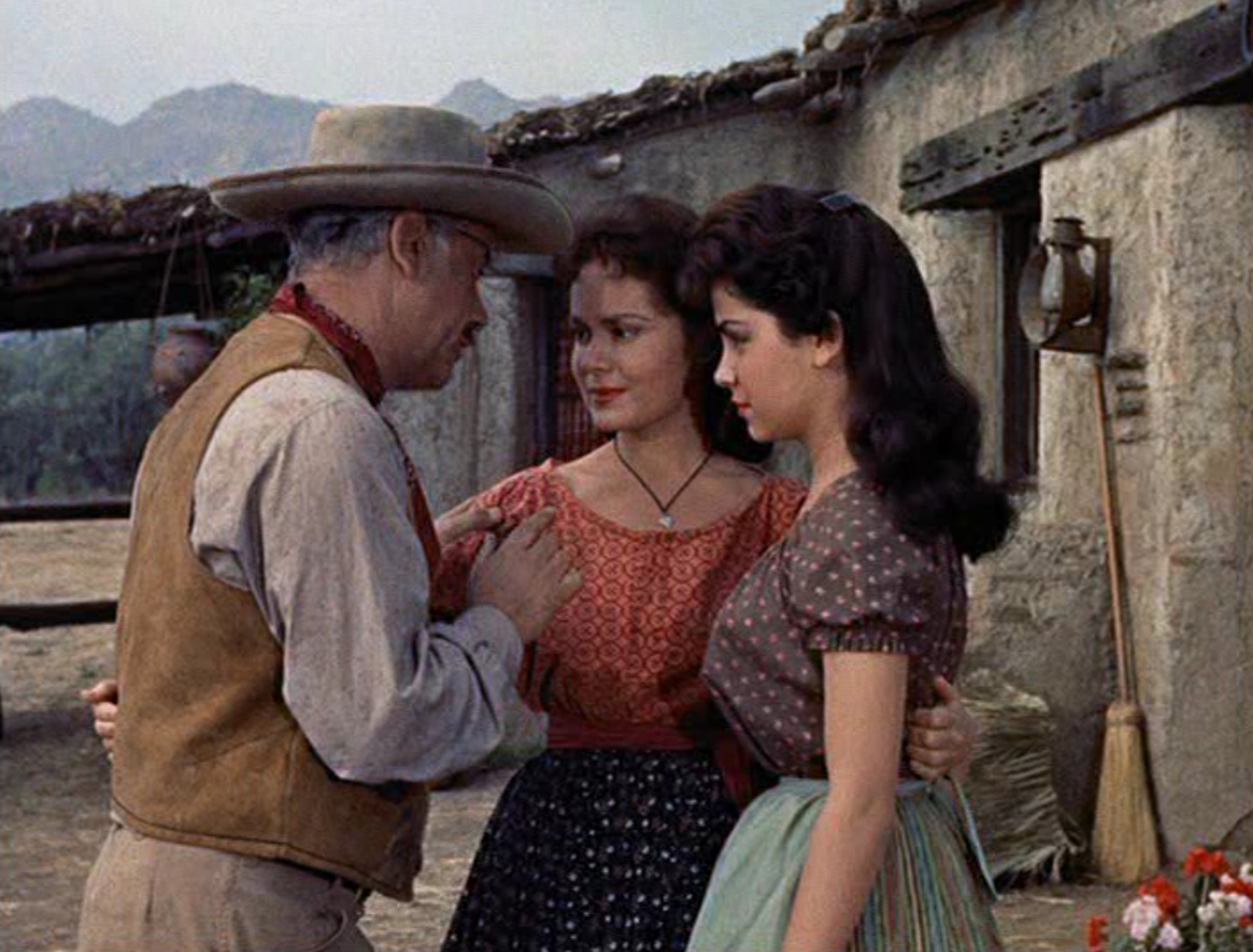
He also worked with legendary stunt people and did quite a few of those stunts himself and made his portrayal seem even more authentic than it would have otherwise. Of course, as referenced above, with access to only 30% of the series it’s impossible to get a sense of the totality of the series. The IMDb does indicate the further addition of Latin actors later on.

However, not only is Loggia, who in the minds of many is the willing participant in a Family Guy cutaway, or the boss in Big; great in a very different kind of role here. There are some important things of note in this show additionally such as Native Americans appearing with Baca in a scene as an ally, Baca’s betrothal and marriage to a Caucasian woman. Loggia in discussing Disney’s influence on the production stating that he “knew everything,” which reaffirms my assertion that he was one of those producers who had their fingerprints on their films. Loggia’s memories were always fond it seems. Of course, he was on a parade float in Disneyland in ’59 so I assume it would be. And like many Disney alums he returned many years later this time voicing a character in Oliver and Company.

Walt Disney Presents (1958, Disney)

Furthermore, it set the stage for Loggia in his career he played many varied ethnicities. It became one if his calling cards. Of course, being a character actor to some extent and having a bit of chameleon about him it made him one of those actors you knew, but maybe not necessarily from what film. However, many actors will take that, when you can be any number of people to moviegoers that’s a pretty great thing. To me, he may always be Skeletor first and foremost.
CHeck back tomorrow for the post on Leslie Nielsen!

The Classic Movie History Project Blogathon, 1944: Carmen Miranda, The Three Caballeros and the Good Neighbor Policy

Introduction and Approach

With the Classic Movie History Project Blogathon it was always my feeling that there was, and is, only so much of any given time period that one can truly discuss given the confines of a blog post. Truly if you’re looking at an artform such as film one that was so fruitful at this time, and already a global enterprise, then it becomes doubly impossible to accurately encompass the landscape at the time.

Therefore, I felt that the best way to tackle this year was to find an entry point. An entry that would allow me to discuss the topic I chose to focus on through the guise of one film. The Good Neighbor Policy, due to my being a dual citizen of the United States and Brazil, was always a topic that fascinated me. Therefore, I found my “in” in 1944’s (due to its premiere date in Mexico) The Three Caballeros.

Ideally, I would’ve loved to have taken in more retrospective viewings of various artists leading up to this post. As fate would have it, this blogathon fell around a time where the blog was very busy and my viewings are slight. Therefore, I hope it will inspire future viewings. In the meantime, however, there are insights one can glean from this title, and some things I do know to be true about how a pacifist, isolationist policy of non-interference did open up Hollywood to new names, voices and cultures.

Political Background

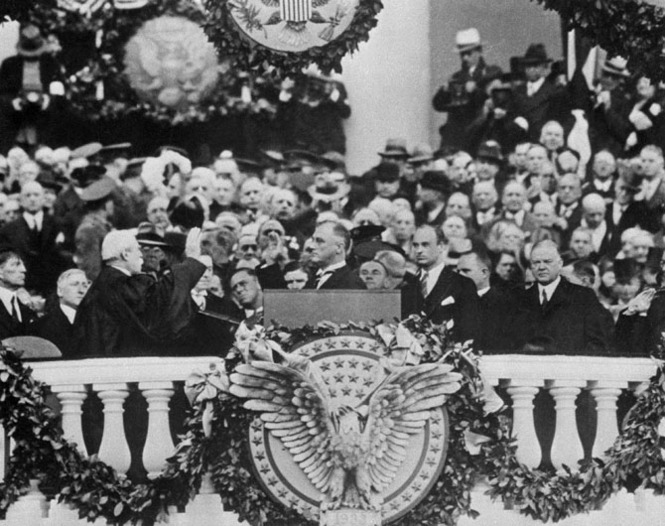
FDR Inauguration 1933

The film that is the centerpiece of this article is one that comes towards the end of The Good Neighbor Policy’s era. An era commonly defined as ending in 1945 with the threat of the Cold War looming following the end of the World War.

The policy was intimated at Roosevelt’s inaugural address in 1933:

“In the field of World policy, I would dedicate this nation to the policy of the good neighbor, the neighbor who resolutely respects himself and, because he does so, respects the rights of others, the neighbor who respects his obligations and respects the sanctity of his agreements in and with a World of neighbors.”

This policy was later formalized as any number of occupations and treaties were altered to reflect said intention, and later the formation of the Office of the Coordinator Inter-American Affairs (CIAA) in August of 1940 and appointed Nelson Rockefeller to head the organization. The Great Depression’s necessities aside, it was a policy a long time coming, whereas two such examples of US involvement in Brazil were attempts to free the Amazon waterways for trade and siding with Bolivia with politically, and with additional kinds of support if necessary, in a dispute over a piece of land that now forms the state of Acre.

The Policy’s Impact on Hollywood

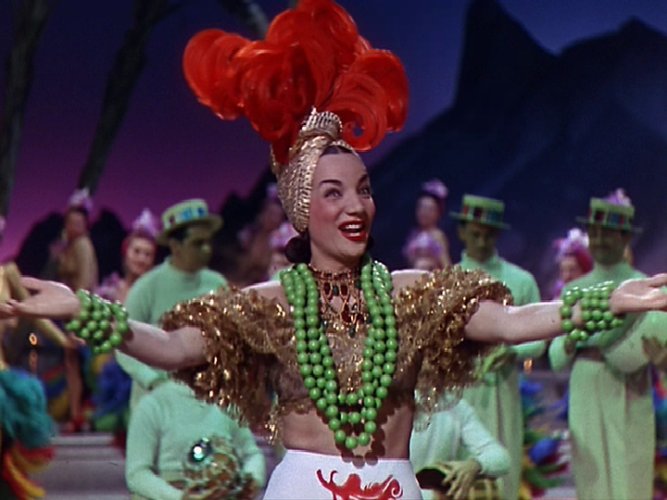
carmen1702

It was the CIAA that pushed the Good Neighbor Policy into the entertainment field. Walt Disney Studios and 20th Century Fox participated; RKO can be said to (though Welles never finished his documentary, and his being sent to Brazil has been generally cited as an excuse to wrest control of the edit of The Magnificent Ambersons away from him).

The question of how much influence entertainment has is always something open to debate, however, there’s no question that when seeking to improve an image in the American consciousness the World’s Fair of 1939 was one step, but the motion picture would reach many more hearts and minds.

With regards to Carmen Miranda, who representing Brazil, rose to stardom earlier than Disney could get their efforts to the screen; it illustrates the double-edged sword of a nation being brought out of its shell and into the consciousness of another for the first time.

Miranda received lavish praise and early stardom here in the US and eventual backlash in Brazil that was ultimately rescinded, just prior to, and upon her untimely passing. Essentially, the difficulty, and the issue is, that no one person is a monolith. She is not a monolith, she is not “The Brazilian bombshell,” but a Brazilian; one Brazilian. While the studio system of the 1940s was the perfect time to bring about some stars generated from these policies due to the amount of films generated and the star-specific packaging many titles employed, it was also a time sure illustrate some issues in the way global figures were handled in pre-globalized world.
Now I grant that I’ve seen footage of Miranda but not the films, but I know her playing an Argentine in Down Argentine Way is a stretch, so I take some of the same issues with that concept as they did.

Essentially, I view Miranda as a unique personality and persona that seemed to have been shoehorned into almost anything Latin in her time at Fox. The failure of Fox is a lack of specificity, which is where Disney excels in their treatment of Brazilian subject matter.

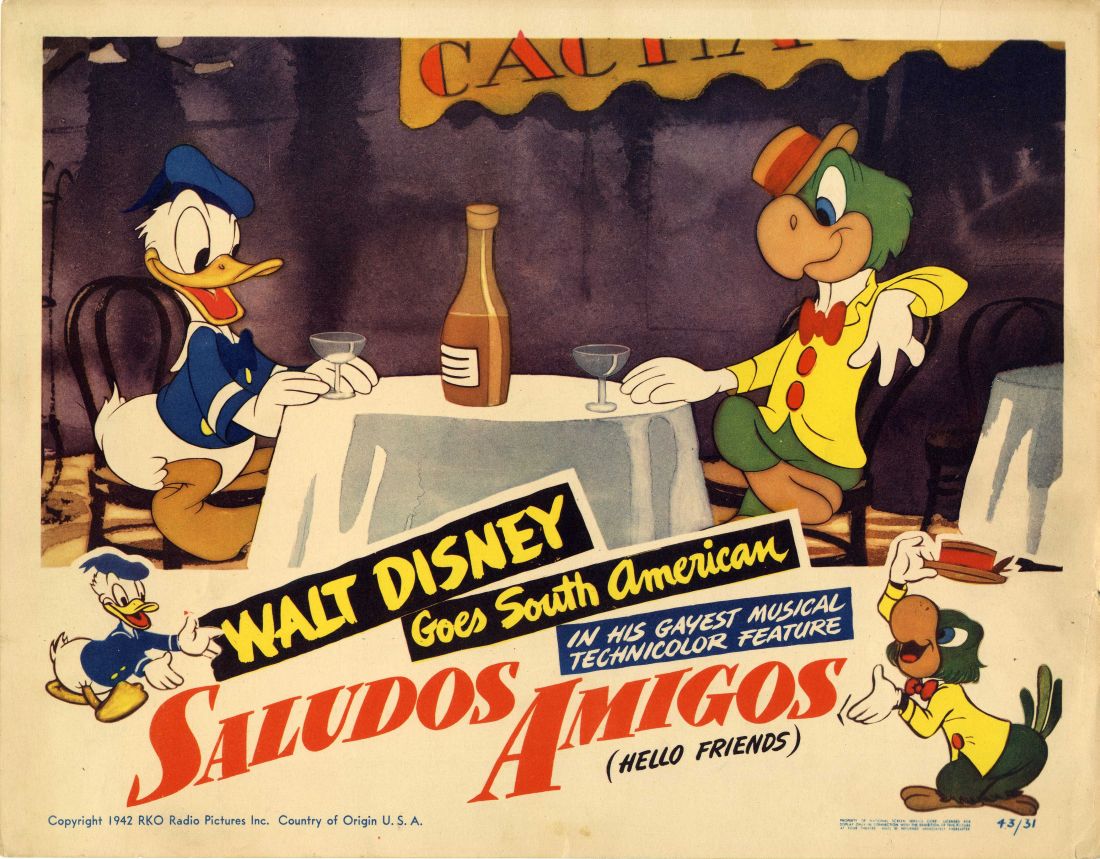
1944

SaludosAmigosLC

The road to the creation of The Three Caballeros really begins with the release of Saludos Amigos two years prior. Where the Three Caballeros stands out is adding another new character to the mix and expanding the what we knew of one character. And it is worth noting that being ahead of the curve by about 70 years these films premiered in Brazil and in Mexico, as mentioned above, respectively a few months ahead of hitting US theaters.

Saludos Amigos features four segments (Lake Titicaca, Pedro, El Gaucho Goofy and Aquarela do Brasil) the first features Donald in classic form struggling on a journey through the mountains; the second an anthropomorphized airplane on an adventure through Chile; thirdly, as one might expect from the title, it’s Goofy flubbing through the ways of the South American cowboy; then via the newly-introduced José Carioca, or Zé Carioca as he is known colloquially, Donald is given a musical medley, metamorphosing watercolor tour of Brazil.

The Three Caballeros

ThreeCaballerosTheLC3

The Three Caballeros is similarly constructed in a composite style. However, as opposed to Saludos Amigos it gets into full-blown feature film range (71 minutes) as opposed to Saludos Amigos‘ technically-feature-film-but-really-a-short film range (42 min).

This film puts Donald Duck front and center as opposed to just having a segment. Donald not only makes it a humorous film, but is also perhaps the most representatively American character to go on a South/Latin American tour. Not only that but the precedent of bird characters had already been set with José Carioca being introduced last time, and Panchito Pistoles joining the trio this time.

The framing mechanism in this film is birthday presents to Donald. The great thing is that the first segment is going to Bahia, a part of Brazil it turns out Zé only knows by reputation, which is a move I appreciate because it tips its hat to how big and regional a country Brazil is.

Snapshot 2014-01-14 13-50-34

Next there is The Cold-Blooded Penguin segment which is a great way to incorporate going all the way up the Pacific coast of South America. There is a quick interstitial with some rare bird species introduced that it also used to transition, and there’s also a hilarious tongue-in-cheek reference to Professor Holloway voiced by Sterling Holloway.

Whereas the last film there was an Argentine gaucho tale here there is a Uruguayan gaucho one with tale of the flying donkey, The Flying Gauchito. While being influenced by the Good Neighbor Policy and at time didactic by nature there is also a good bit of naturalness where things are sometimes just said and not instantly translated, or translated at all, and just left to incite further curiosity.

With the tour of Bahia there is beautiful scenery, which I’d like to see restored. Implementation of live-action and animation co-exisiting. It also allows the music to speak for itself. Music which for this film, in Portuguese, was written by the famous Brazilian sambista Ary Barroso.
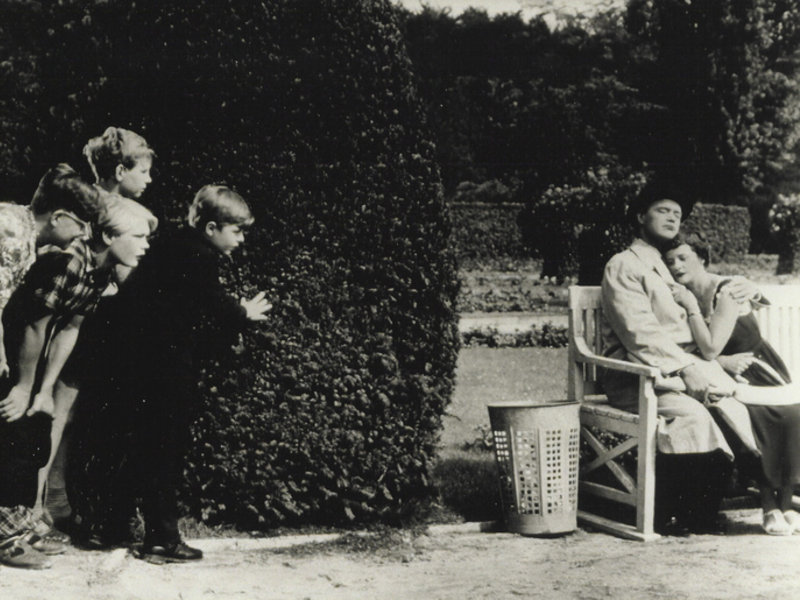

Snapshot 2014-01-14 13-53-28

So in his two-film stint Zé Carioca gets a decent tour of Brazil in. Owing to the fact that Mexico is our neighbor to the south, and that this is Panchito’s lone appearance, I understand how and why Mexico gets a much more thorough tour. It starts with the introduction of the history of the piñata and a Mexican Christmas custom of Posada; continuing with the Story of flag/Mexico City; there’s a song accompanied by montage; a Favorite dance illustrated, a trip to Veracruz for the Lilingo; Acapulco beach; the second live action/animated sequence: “You Belong to My Heart” that leads into a long very Disney, with Berkeley allusions; a metamorphosing montage concluding in literal fireworks, and a trilingual “The End.”

Aftermath

Snapshot 2014-01-14 13-59-50

Zé Carioca still survives, and, in fact, thrives in comics in Brazil. Being an originally by Disney he’s a obviously canonical, but is a testament to the power that the Disney characters have in that medium. In fact, in the Brazilian comics his own universe has expanded to include many supporting characters and cousins that represent different parts of the country. Aside from that he has resurfaced in American comics in stories by Don Rosa; on television, in Mickey Mouse Works and House of Mouse and in film as one of the many cameos in Who Framed Roger Rabbit. In the Disney Parks, the addition The Gran Fiesta Tour Starring The Three Caballeros reintroduces them to many.

Panchito Pistoles, aside from being a mascot on some Mexican WWII aircraft, he has not had much life outside American-made Disney products.

Funnily enough, while there were mixed feelings about Brazil’s first breakthrough thanks to the Good Neighbor Policy, the cartoon no less, that has had a bit of staying power and seems to have offered a less controversial representation. It’s well documented, even in a documentary that I’ve not yet seen, but want to; that Disney and/or his team spent a bit of time in Latin America therefore they got a good sense of the culture and at least on parts I can attest to didn’t go off half-cocked. and created some lasting, lovely tributes to a people and a culture that have stood the test of time.

Conclusion

Kiss of the Spider-Woman (1985, HB Filmes)

It’s pretty interesting to have happened upon this topic now. I recently discussed both the breakthroughs and the lamentations I had about the globalization of casting. My impetus was another, but the discussion of current Brazilian actors and the roles they are afforded in American films for global consumption is oddly not that different that this one.

A progressive governmental impetus was a great breakthrough for Latin culture in the American cinema. Not to be overly-reductive, but it’s sad the Cold War retarded whatever progress could’ve been built off that momentum for a number of years, and when you consider that McCarthyism would soon be in play and careers and lives would be ruined it’s not too far from accurate. As best as I can figure there would not be another Brazilian-born actress breaking through into American films in any significant way until the mid-eighties [Marília Pêra in Mixed Blood (1984) and Sonia Braga in Kiss of the Spider Woman (1985)].

However, I do have hopes regarding the ever-digitizing and -shrinking world that both the long-overlooked past will not be ignored and that mistakes of the past will be righted in the future. There’s a hilarious Carmen Miranda gag on Family Guy where Carter says: “Am I a singer or a dancer? No one knows, they just remember the fruit.” Which is the sad truth with regards to the past. As for the future, the bottom line is that when you go outside what’s known there are new and interesting stories to be told. The Three Caballeros is testament to that, which is 70 years old. Maybe one day we’ll learn from that.

Chaney Blogathon: By the Sun’s Rays (1914)

Note: You can view the film in its entirety below, as I do discuss the plot liberally feel free to view it prior to reading.

In order to be able to participate in another wonderful blogathon hosted by Movie Silently and the Last Drive-In, I volunteered to discuss By the Sun’s Rays. This is an 11-minute short film from 1914 released in Universal’s infancy that features Lon Chaney as a villain.

The reason this was a preferable selection for me is because I didn’t manage to squeeze in a Chaney title during my last theme 61 Days of Halloween (though I wanted to) and my current theme Thankful for World Cinema features films produced abroad. Therefore, the fact that this was presented as an option allowed me to buck my theme slightly to discuss it and I’m glad I could.

Here’s a fairly succinct synopsis of the film from an IMDb user:

Frank Lawler, a clerk for a mining company, colludes with a bandit gang about the timing of gold shipments with a mirror signal system and has designs on Doris Davis, the daughter of the local branch manager. The company’s main office dispatches their top detective John Murdock, who goes undercover to expose the scheme and rescue the Doris from the unwanted advances of the dastardly Lawler.

Chaney plays Lawler, and there are a few interesting things about the film. First, the appropriately florid description of the nature of Chaney’s character may paint the picture in a reader’s mind of a dastardly, handlebar-mustache twirling lothario if they’ve not seen the film. What’s refreshing, and what makes the film work in my estimation, is the fact that Lawler’s villainy, thanks to Chaney’s portrayal, is fairly subdued. In the segment of the film where Dora (Agnes Vernon) is distracting him from his intended rounds with her feminine wiles you can, even in a fairly wide shot, read the inner-monologue of Chaney’s struggle. It’s not over-the-top but is present and convincing enough that you understand the struggle he faces.

Similarly he lurks in the background in a few frames eavesdropping and plotting, awaiting his moment. To take his reactions and manifestations of character too far would render the film far too comedic for its intended western/action tone. Therefore, even here nearly one hundred years ago a few acting styles removed from what is considered modern and acceptable practice you have here similar truths about applicable acting styles for genres.

It has also been noted that this is Chaney’s earliest extant film and that is of significance too as it is the earliest indicator, in a small dose, of his ability, and is valuable and worth examining from that perspective as well. Enjoy!