In Defense of: Dubbing

(GrafittiStudio.Com)

It is quite easy to discuss what the cons of dubbing are. Many of us whether we consider ourselves to be filmsnobs or not agree with most if not all of them. Yet, I will within these paragraphs play devil’s advocate. To be completely frank, I’m doing more than that. I am taking a global view in this piece so while you will read me vehemently explain and defend dubbing as a necessity (in some cases, and an artform when done well) I do prefer to watch a film, in which I do not know the language, subtitled.

So very quickly here is the east part where we can agree on are the cons of dubbing:

Cons

When watching a film dubbed you are automatically submitting to a film wherein you are not witnessing the original vision of the director. The actors choices are re-interepreted as is his text. The edit is compromised in terms of intonation and inflection. The director’s choices are muted. A good dub will try and replicate as closely as it can what those choices are but a copy and a translation are not the same thing as hearing the original audio. Not to say that subtitles are impeachable. I know of at least two cases where edits tantamount to censorship occurred in subtitles making the theatrical release and the home video release quite different.

The biggest con for me, an American consumer who enjoys films from all around the world, is that many times in North American distribution dubbing is a “business decision.” This kind of decision is an attempt to broaden an audience which is niche to begin with and alienating the small but devoted groups of filmgoers who would watch subtitled fare (horror fans and the art house crowd to name two). Without wandering too much into the pro area the North American audience is not the base for which dubbing really is a functional, preferable alternative. We can pick and choose and those of us who will watch foreign films prefer subtitles.

When a film is dubbed suspension of disbelief becomes a major concern. Subtitles do add an artifice but it’s just relaying what is being said. You still hear it as intended. When a film is dubbed there is more artifice to it, it’s something you’re conscious of which is jarring you’re simultaneously distracted by detaching the voice from the actor and giving them a pass and gauging the abilities of the voice over artist. Then there’s the obvious that depending on what language the original was recorded in sync can be very difficult to accomplish at times, or in the worst cases completely disregarded.

And needless to say I have rarely if ever seen English dubbing that was palatable.

Pros

Charles Emmanuel in the studio for Harry Potter and the Sorcerer's Stone (Charles Emmanuel/Warner Bros.)

There is a technique to matching sync on dialogue. With care, performance and at times searching for synonyms or synonymous sentences it can be accomplished even when the languages in question have a large gulf between them.

So there’s technique, that’s fine, most would even be willing to grant that if they’ve seen halfway decent dubbing, however, too much dubbing experience is in Japanese monster movies of the 50s and 60s. There is, however, an art to it as well. Now I come to these conclusions because I speak two languages fluently (English and Portuguese) therefore if I am already familiar with material I can and have examined it dubbed and found some of them enjoyable. The first spark I had when I was about 13 I think and I saw Home Alone in Brazil and was rather impressed by how natural it managed to seem.

It was my most recent trip to Brazil that really got me thinking about dubbing more and differently. Just prior I had started to think of it because all of a sudden I did a “Where are They Now?” kind of search, the kind the internet seems specifically designed for and discovered that one actor who’s work I had enjoyed had taken to dubbing as he came of age and transitioned from being a child actor mostly on screen to mostly voice over work.

When in Brazil though I did some more watching and thinking. First, as I would often peruse the local showtimes seeking something to see (I ended up only seeing Harry Potter 7.2 there) I noticed things. For example, there was only one showing I could find in Rio for Winnie the Pooh that was subtitled. The reason is target audience. Little kids can’t read or very well so it’s easier for them to watch and comprehend a film from another country dubbed than it is subtitled. With most of the cinematic product around the world being American young people make it a necessity the world over.

However, children’s films and children as audience members only make up a small portion of the global box office Hollywood is so eager to conquer. The other reality dubbing addresses is that many countries throughout the world have lower than average literacy rate, thus subtitles present an issue. Many of the films coming out of Hollywood are easy enough to follow just a bit of assistance is needed to make it accessible to that many more people. Dubbing bridges that gap too.

So there’s a duality of purpose. The studios want a more impressive international gross and people the world round need entertainment. So its functionality is very clear. Especially when you consider the fact that the need for dubbing creates jobs for actors, recordists, editors and so on the world round in nations whose entertainment industries may not be as robust.

However, I needed to test the potential for artistry again. Being a kid seeing Home Alone, which I knew and still know quite well, opened the window in my mind allowing the possibility that seeing a dubbed film could be beyond tolerable but even enjoyable. However, the more we watch the more jaded we become. The more we study the less impressed we end to be. A new test case was needed. Again, Harry Potter fit the bill.

I must say that I did see The Deathly Hallows Part 2 subtitled, as it was a new film to me and I wanted to realize it fully. Therefore, considering it was the hot film series of the moment it was easy enough to find both on sale and readily available at people’s homes. My test case was Harry Potter and the Prisoner of Azkaban, in part because the “Where Are They Now?” actor (Charles Emmanuel) who I’d re-discovered as a dubbist played Ron Weasley in all eight films.

The first thing that struck me was how much better I knew the film than I thought. I knew it quite well indeed enough that I noticed the nuanced changes in language, syntax, intonation, inflection and so on that were made to make the film register as more natural in the language spoken. I reiterate that I must see a film many times before I can submit to seeing it dubbed but it is a masterfully well done job. I even managed to get the sense from it how one can become accustomed to and prefer the dubbed version when that’s all they’ve ever know, which is typically the case with animation. Only studio and network-based international networks show American programming mostly subtitled there.

So that was a revelation and then came another most recently and unexpectedly. I actuality this piece, though I have long pondered it would likely not exist without the following story. The reason that is so is that it’s all well and good to wax philosophical about the hypothetical (to the inexperienced) benefits of dubbing especially when most of them aren’t aesthetic but it’s another to get some insight into how two actors, each of whom portray the same character viewed their dubbing experience.

Dylan Riley Snyder

While on Twitter I saw a tweet from Dylan Riley Snyder (an actor whom you may know from either Disney XD’s Kickin’ It or Todd Solondz’s Life During Wartime) the link was a YouTube clip of scenes from Kickin’ It dubbed into Portuguese, the Brazilian version. I, of course, watched it and rather enjoyed it and was able to laugh at some of the same bits in the same way that I had in English.

The clips were uploaded to the dubbist’s personal Youtube but as of yet Snyder had not been able to discern if he had a Twitter account. After a quick search I was able to find it and relay it. So there I had discovered that the actor originating the role, to borrow the stage term, had heard the dubbist’s work and approved.

I was then further surprised by the ability to get insight into the other more unknown aspect of it, the voice over artist’s thoughts on his craft, his role and responsibilities. Bruno Dias had written a blog post and wanted a version translated to English so that Snyder could read it.

What I expected the post to be and what it was were two completely different things. I expected a cordial, complimentary, anecdotal re-telling of their interaction. What was surprising was the preface and the absolute sincerity and clarity with which Bruno Dias described his adopted and beloved form of acting and also the parallels drawn, respect felt for and connection he made with the actor whose work he is interpreting.

It is and always will be a much better explanation of how dubbing can be an artform than I can ever write so I suggest you read it. If one treats their work behind the microphone with the commitment and dedication that an actor onscreen and respects their interpretee’s process and interpretation they will be successful and yes it will be artful.
Film Thought: The Elasticity of Film

Occasionally on Twitter I’ll post a random epiphany-like encapsulation of a belief I have about film in general and hashtag it #filmthought. I have decided to write this one out here because it needs more explanation than Twitter can bear.

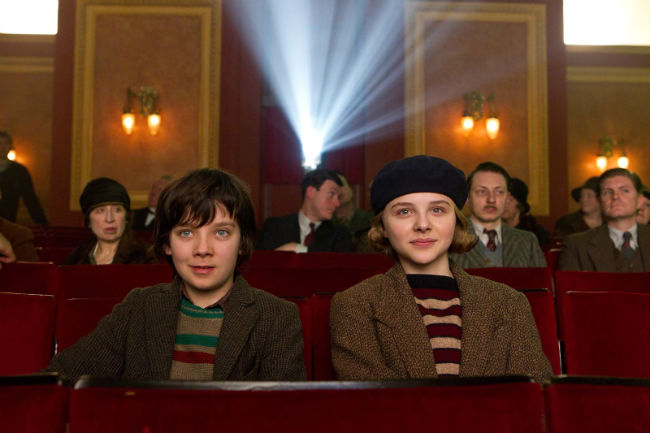
Today, I was sitting through my third screening of Hugo (Reviews of some sort on many of the films I’ve seen will come- apologies for being behind on new content) and the theatre I was at had some issues with the polarizer on the 3D projector. The polarizer is essentially what adds the additional D in layman’s terms. If you’re one who is physically or morally averse to 3D you do not want to see it with a polarizer on the fritz. Anyway, that got me thinking, once the issue was resolved, about 3D in very general terms. I will avoid a film if it’s post-converted or slam really poor 3D. However, when there’s an artfulness to it as there is in Hugo and Avatar the technical aspect can wow me personally. For the record, Hugo is an infinitely finer narrative than Avatar.

In watching this tale about the true birth of cinema, at least in part, and seeing such proficiency at the “latest and greatest” innovation I came to a realization. There have been an abundance of articles about how since film is younger than the other arts it always seems to be in peril in the eyes of those who love it most. Whereas 3D, alternate distribution paths and piracy are the big threats once upon a time sound and color threatened to end the seventh art and didn’t.

In a manner of speaking film has gotten somewhat experimental at least in terms of technique. Many techniques are being rolled out before they’re necessarily perfected but solely to innovate. I think a part of the fear of film critics, historians and enthusiasts in general is that they feel history repeats itself and have found cinematic trends to be cannibalistic rather than symbiotic.

That is to say new alternatives present themselves and become dominant rather than an additional option. In the annals of film history, taking all of it into account, it’s becoming one of the more well-rounded arts in terms of media employed. However, what I’d love is for such choices as 2D or 3D, color or black & white, sound or silent to be actual choices.

Think of all the options a filmmaker has in his arsenal if with the potential success of films like Hugo and The Artist.

There are more media than one realizes:

Short

Feature

Color

Black and White

Silent

Animation (Various techniques of animation as well)

3D is medium when there is thought given to it.

Motion capture

And there are even more rare instances for example: The French filmmaker Chris Marker took the still photograph montage, a wrinkle for an editorial change of pace brought in by the New Wave and created an entire film, La jetée, from it.

It is imperative that film keep its elasticity of form. That the evolution of the art creates more creatures with which this art can be expressed rather than killing them off entirely. Some of these creatures may become increasingly rare but survival of the fittest need not apply to an art especially when there are many artists out there who do not want to conform or be mainstream.

In summation, I will always welcome well done 3D and loathe it when it’s lazy and exploitative. There’s always room for more; in film the ways in which visual narratives can be constructed should not be limited. There are as many ways to tell stories as there are to tell them as long as there is an audience. In an ever diversifying world the artform needs to continue to push aesthetic boundaries not hide away in a CG 3D impermeable shell.

In Recognition Of: The Closet (Video)

In recognition Of: National Coming Out Day

I haven’t done enough promoting of indie and short films on this site yet or at least not as much as I would’ve liked to this point. In an effort to rectify this and in recognition of National Coming Out Day I am posting a short film (a little over three minutes) below.

It’s not only one of the most beautifully edited and constructed shorts I’ve ever seen but one of the most effective and evocative statements against homophobia and a reflection of social change.

Without much further ado I present you The Closet.

The Importance of Being Joel Courtney

Joel Courtney (Photo: Mark Brennan)

The way Variety tells it Joel Courtney headed to Los Angeles seeking to take some acting lessons and maybe land some commercial work if he was lucky. However, he not only landed a lead in a major motion picture but has also parlayed it into three more jobs within a month of his screen debut’s release.

Things worked out much better for him than he could’ve expected as he got into the Super 8 after an extended, elaborate and at times secretive casting process. One in which Spielberg and Abrams gambled on a few newcomers (and won big time) likely in spite of studio pressure to err on the side of experience.

The casting process started with an open call.
and what can be learned on both sides of the camera in this portion of the story is that open calls can lead to something good.

Courtney’s case is one of a natural talent being discovered and it benefited not only the film but, as recent stories have shown, Courtney as well.

While some were getting tired of the glut of Taylor Lautner news a while back, as he seemed to be signing deals at a record pace, I saw it as expected and good for him. It’s always been my contention that an actor has to strike while the iron is hot especially if he/she is being offered work they want to do. Fear of over-exposure ought not be a deterrent as it is a high class problem to have. Talent will win out over perception in most cases especially when an actor fits a part perfectly.

Courtney had already shot a two-episode stint on R.L. Stine’s The Haunting Hour, a series on The Hub Network, when it was announced that he was attached not only to a new Tom Sawyer/Huckleberry Finn film but also to an indie horror/sci-fi tale called The Healer. The films’ principal photography will occur in consecutive months (August & September) and shoot in Bulgaria and North Carolina respectively.

From being a cinematic debutant to suddenly in demand has taken about a month. Of course, as with most overnight successes, it hasn’t truly been that fast. There was a long audition process, principal photography and the worldwide press junkets and after all that one might expect Joel and the kids of Super 8 to be wary of taking on new commitments, however, many of them seem to think as I do and are seeking to keep working while there’s demand. Gabriel Basso is still a regular on The Big C and Zach Mills has signed on to be a regular on The Hub Network’s new series Clue.

In closing, I just want to address the fact that Joel is a child actor, which is for the most part virtually irrelevant. The bottom line is he’s a working actor who’s taking advantage of opportunities earned and should serve as a template for future actors who knock it out of the park upon getting their big break and that’s the importance of being Joel Courtney: not being content with or being disoriented by newfound stature but immediately seizing other great opportunities as they come along.

The Trouble with The Magician’s Nephew

The Chronicles of Narnia (Scholastic)

So yesterday the beans were finally spilled that it will be the Magician’s Nephew that is the next book in The Chronicles of Narnia that will be adapted into a film. Now I had been one of a select group of fans who had adamantly supported The Silver Chair as the next book that should get adapted and not just for continuity’s sake, as Eustace, played by Will Poulter, in the only character that crosses over to that book from Dawn Treader.

The fact that this debate exists is interesting and indicative of a few things that are unique about the Narnia series as opposed to other fantasy properties.

First, it needs to be acknowledged that the chronology was always likely to be fractured. Those seeds were sewn by C.S. Lewis himself. For it was Lewis himself who wrote The Magician’s Nephew after the other six installments and pleaded, mostly to no avail, that it be read before The Lion, the Witch and the Wardrobe. As a child I did not read it as such. When the first film was about to be released I searched for information on reading order and finally took the tales in properly.

Of course, we all know The Lion, the Witch and the Wardrobe was the first film and subsequently that the producers decided that it was to be the Pevensie tales would be told first. Whereas in other fantasy properties you typically have a continuity in the personages populating the tale. Lewis, however, is true to the name of his series and this series are about the stories and about the land rather than a particular lead or group thereof.

If one adheres to Lewis’s reading plot the books that have been adapted thus far are numbers two, four and five. The decision to go to The Magician’s Nephew, an origins tale, at this point is a curious one on a few accounts.

Firstly, I find it a bit of a curious business decision. The Voyage of the Dawn Treader just crossed the $400 Million mark in international box office receipts and it is a film that took the somewhat unusual path in this day and age of building by word-of-mouth. Due in part to the disappointment most felt in Prince Caspian it didn’t break out of the box strong but had staying power when people realized this one is very good indeed.

With a franchise redeemed, at least in a financial sense, it would seem like the most obvious decision in the world to go next to the one tale that had any sort of connection.

Will Poulter in The Chronicles of Narnia: The Voyage of the Dawn Treader (20th Century Fox)

Furthermore, it needs to be noted that while the film doesn’t make it explicit I assumed Will Poulter is playing quite a few years younger than he is in Dawn Treader. Given some time off he may not look the part of Eustace as much as he does now. Not that I think he’d be replaced but it just might seem a bit awkward or need a bit of a re-write when the Silver Chair‘s time does come.

With this sort of momentum I even entertained the wild fantasy that funding would be sought for both potential next films to shoot simultaneously and release one shortly after another. The fact of the matter is the remaining volumes need not all have the same director as each has its own sensibility.

Pipe dreams aside, personally I would’ve liked Silver Chair next not just because I prefer that story but because it made more logical sense. The series has already pleasantly surprised me in two of its three installments so I am more than willing to withhold judgment but as I said it strikes me as odd.

With Narnia being by its very nature a more fragmented series it does raise some doubts as to what its cinematic future is. Let us assume the tale works as well as possible and the marketing draws in enough fans new and old, then what?

After The Magician’s Nephew the books that remain are: The Horse and His Boy, book number three, a more introspective tale than any of the others. It always struck me as having a Carol Ballard’s Black Stallion vibe, which would make it rather an artistic venture and as such it’s a gamble. I can’t see the producers gambling twice in a row so I predict this book would be the 6th film of the series.

The Silver Chair being the runner-up this time around would thus be the 5th film adapted and naturally The Last Battle would close out the series.

If films four and five connect then I think it’d be safe to assume they could afford a gamble and a closing chapter.

When it started there were no guarantees, and there still isn’t, that this series would see completion. It’s an older property than the other big budget films and has Christian overtones, which do not appeal to some but it’s never been about that to me it’s been about great storytelling.

In conclusion, I do like The Magician’s Nephew and definitely think there’s potential there with new cast members and story which re-examines some familiar motifs. I am just not sure it was the right choice as the next film. However, if it does well this series will be one step closer to following in Harry Potter‘s footsteps, proving you can plan a massive series and achieve it. If you consider that I believe two of the first three Narnia installments trump Potter it is very exciting news regardless of which novel they chose to adapt next.

In Memoriam- John Hughes

John Hughes

Often times an era in which one excelled, and the fact that an artist was wildly prolific within a time period greatly influences our opinion of him. Simply calling John Hughes the “Bard of Teen Angst” is not praise enough for not all of his work was a teen movie or a brat pack film.

Planes, Trains & Automobiles was not only an uproariously funny film, which was John Candy and Steve Martin’s only onscreen meeting, but a heartwarming film in the end. The revelation that Candy’s character was homeless became a 1980s template for sitcom episodes as did the plots of The Breakfast Club, Ferris Bueller’s Day Off and Sixteen Candles.

Hughes then put Candy in The Great Outdoors in a similar brand of comedy but fewer social ramifications.

This was the man who penned the Vacation films to greatness and those were hardly angst-ridden just downright funny.

Hughes also showed his more dramatic side with titles like Curly Sue – a film whose perception in my mind is likely skewed due to my sister’s incessant watching of it. The heartfelt, sincere, coyly funny, at times dramatic She’s Having a Baby.

He was a star launcher from propelling Michael Keaton in Mr. Mom, and also John Candy, Anthony Michael Hall, Molly Ringwald and Macaulay Culkin.

Even his greatest hits: The Breakfast Club, Weird Science, Ferris Bueller’s Day Off show more diversity than Hughes is typically given credit for having.

The screenwriter is a largely anonymous figure in the Hollywood game and in the American consciousness, even more so when said writer chooses to leave Hollywood behind. Even with one of the longest string of hits in the history of film there was a fade, yet even while fading Hughes put his name on big scripts.

In the 90s Hughes was hired to write a series of remakes: 101 Dalmatians, Flubber, Miracle on 34th Street and Dennis the Menace.

He also wrote Beethoven which was good in its first installment and he has continued the series under his pen name scripting it or lending his characters.

The decade of course began with Home Alone, which has been tarnished in hindsight due to many things unrelated to the film. It is a classic comedy and at the end of its theatrical run was the 4th highest grossing film of all-time and the #1 comedy. It is still in the mid-20s of the all-time rank 19 years later, with no inflated ticket prices there to boost it. Hughes went on to pen the next two in the series.

Home Alone was inspired by one short scene in Uncle Buck where Macaulay interviewed Buck’s girlfriend through the mail slot. Which is another tremendous example of his artistry: one, because such a short exchange spun off into another film and that he found inspiration in that. It’s also great because the two films complement each other.

The remainder of his credits he had attributed to him where written under his pen name Edmond Dantès, he did have few indie attempts like a TV series called New Port South and a hard to find film called Reach the Rock.

Which were followed by story credits such as Maid in Manhattan– nothing special but as good as a Cinderella update can be. Lastly, Drillbit Taylor which reportedly was a tale optioned in the 1980s and untouched ’til last year.

So a lot of that body of work had little to do with angst and a lot to do with fantasy and laughter and things that would get us through angst. The label likely has to do with his magnum opus, the masterpiece whose first draft was written over the course of one weekend: The Breakfast Club.

This is the kind of film that strikes a big time nerve not just for teenagers but for those who were teenagers, I myself was in college when I first saw it and likely connected with it more because of it. It examines its characters with surgical precision, and they all understand each other more they are by no means fixed or better for the experience just changed and more aware. They stand united against a common enemy – their parents and the principal. 

Part of what made Hughes great was that he had an unwavering view of the world best exemplified by a quote of his: “I don’t think of kids as a lower form of the human species.”

Hughes practiced what he preached and will not be forgotten by any of us who are young or merely young at heart. Whether we just sought escape or seek to create characters as honest and true as he did we will not forget his words.

In Memoriam- Frank Coghlan, Jr.

Frank Coghlan, Jr.

Frank Coghlan Jr., who was a child actor in the silent film era passed away quietly last month (September 2009) of natural causes at the ripe old age of 93. He was the actor who brought the phrase “Shazam!” into the American consciousness and played Billy Batson in a serial, the pre-transformation Captain Marvel.

He started at the age of three appearing in a Western serial called Daredevil Jack. He was typically credited as Junior Coghlan and left his mark indelibly in The Adventures of Captain Marvel. Bruce Goldstein, Director of Repertory Programming at New York’s world famous Film Forum lauds it “It’s considered by many aficionados as the best cliffhanger serial of all time,” and continues saying “What a great fantasy for kids: a kid who turns into a superhero.”

Leonard Maltin puts Coghlan’s place in history further in perspective by saying “If you went to the movies in those days, you couldn’t help but know him, even though he was never a major star,” which, of course, indicates his importance in as much as he made up the tapestry of cinema when films and movie stars, whether A-List or not, were a part of American culture and something everyone was well-versed in.

In 1925 legendary director/producer Cecil B. DeMille signed him to a five-year deal on the strength of his publicity stills. Another small yet important role he had was as the young James Cagney in The Public Enemy.

Yet it is Captain Marvel and “Shazam!” for which he is most remembered. For many who toil and seek a serious dramatic career a singular, ubiquitous role, one to which they are always associated can be a burden and later on even a regret and something they seek to forget. Coghlan frequented conventions and seminars in his later years and was always pleased when people recognized him or came to see him. So appreciative was he that according to Leonard Maltin he even personalized his license plate to read “SHAZAM.”

Some people in entertainment don’t realize their good fortune and look a gift horse in the mouth. Frank Coghlan, Jr. was not one of those people and now left with only memories of classic film moments it is we, the film fans, who didn’t know how lucky we were.

The Gray Area Reviews

Every year there is invariably going to be a gray area with regards to films. What I mean by that is due to the tyranny of release dates (meaning Oscar-nominated or contending films being released towards the end of the year) there will be some that slip into the following year.

Some of these films will fall into the gray area meaning they were out in say 2010, I had adequate opportunity to see them but passed for whatever reason. Some I was ignorant about their release so they retain their eligibility for the following year.

This year has an additional shade of gray, if you will, and that comes form the fact that I was transitioning from one site to another and busy archiving rather than writing new content. Some films failed to get timely reviews due to that fact, however, they still deserve them and that’s what this article hopes to do: bridge that gap.

So without further ado: The Gray Area reviews.

Rare Exports

Rar Exports (Oscilloscope Films)

There isn’t much in the way of originality coming out of American horror films these days. If you want something different you’re better off going international specifically to Europe. Rare Exports is a Finnish film that tackles the Santa Claus in horror subgenre with style, humor and intelligence much in the way the Norwiegian film Dead Snow took on the Nazi zombie subgenre.

There is a good bit of folklore re-interpreted and made to be a modern horror tale with a few intentional chuckles along the way. There is some good make-up work and some really good performances out of the cast both young and old.

The only thing that holds this film back is after a while it stops progressing its narrative and danger quotient and just sort of stagnates. It never becomes uninteresting and has a nice button at the end it just slips in the latter part of the second act into the third.

It is, however, a brisk and fun watch that you should look for on video when it comes out.

6/10

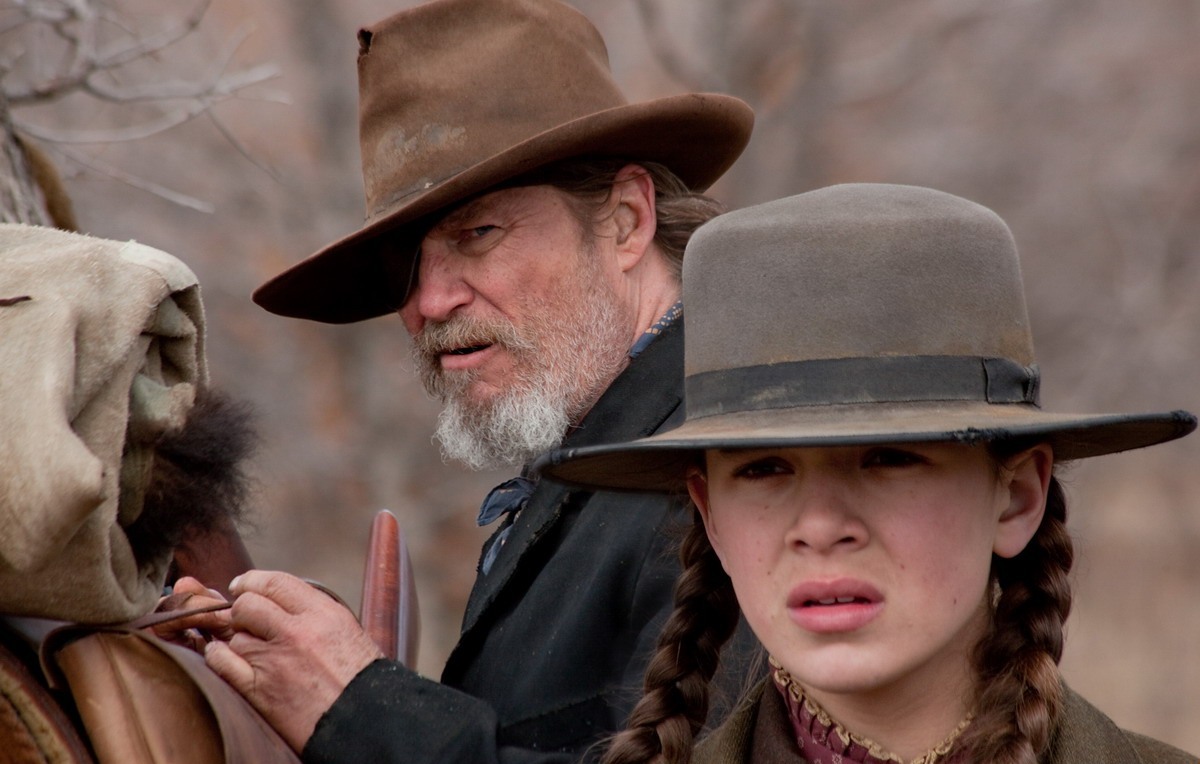
True Grit

True Grit (2010, Paramount)

This film falls into the Gray Area because I only managed to see it in January though I had chances to in December. For the record, I would not retroactively include this film in my Top 15 of 2010, however, that is one of the few things I can really fault it for. The film works and it works well I could just never get as involved with it as it wanted me to be.

The other thing that is a little bothersome is that in a rather realistic and well-spoken film you get an ending that smacks of a Hollywood cliché. The annoyance of false climax aside it’s two perils combined in one to add a little more running time and a quasi-tragic button to the whole affair.

Regardless of that the film is beautifully photographed by Roger Deakins and is played very convincingly by its cast particularly Jeff Bridges and newcomer Hailee Steinfeld. It’s a plot that’s simple enough but also intriguing enough that it naturally becomes a character study without ever being tiresome.

8/10

The King’s Speech

Colin Firth in The King's Speech (The Weinstein Company)

I have been reading some people either complain or just state how The King’s Speech is both rather bulletproof but also not mind-blowing. To re-iterate the above review if I had to go back would I slide this film in my Top 15, probably not, do I get the bulletproof comments? Yes.

There is even less to nitpick this film about, if you want to use that term than there is for True Grit. The only thing that slightly holds it back in my book is the intangible visceral reaction that I just didn’t quite get out of this film as opposed to others.

It’s not a daringly original film in terms of concept or structure it’s just very well executed, acted, edited and shot. It’s the kind of Best Picture contender that while I may not have nominated I can really get behind because it is the best film that the lowest common denominator can get behind. Seriously, who can hate this film?

Before you answer consider the fact that I may need to ask you what your problem is. This is a really easy film to get into whether it blows you away or not and is a really likable kind of story. It’s a “feel good” movie without all that “feel good” movie cheese in the mix.

9/10

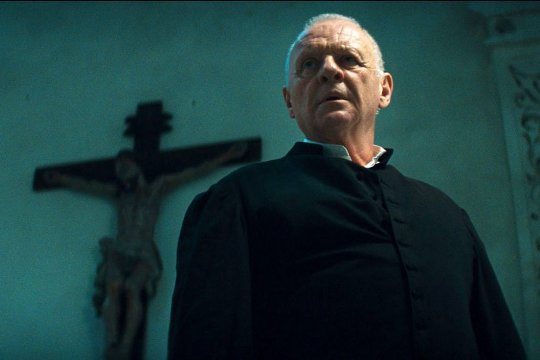
The Rite

Anthony Hopkins in The Rite (Warner Bros.)

The Rite is a rather surprising entry in the possession/exorcism subgenre of horror. There’s not a lot of new ground to tread so far as this kind of tale is concerned, however, the one thing this film, does right off the bat is acknowledge the existence of the subgenre with a reflexive joke about The Exorcist.

This film, of course, is a little like that one: there’s an old priest and young priest, there is the subject of doubt and it is in turn more about the exorcist than the exorcised, as a matter of fact, the exorcised are typically rather glossed over. However, what this film does do is deal with the mundane aspects of exorcism, it deals with many possessions and brings it down to earth a little from where its been.

The examples it uses as proof are simple and well-thought out. There are very good flashbacks in this film that allow more doubt to be created about where the tale is going then you’d ever expect.

Then there’s Anthony Hopkins. Just the fact that I am mentioning his name this late is an indication that this is a quality film worth seeing. Without saying too much there are shades of Hannibal Lecter in his performance which are great. The acting overall in fact really props this film up. It is definitely worth viewing.

8/10

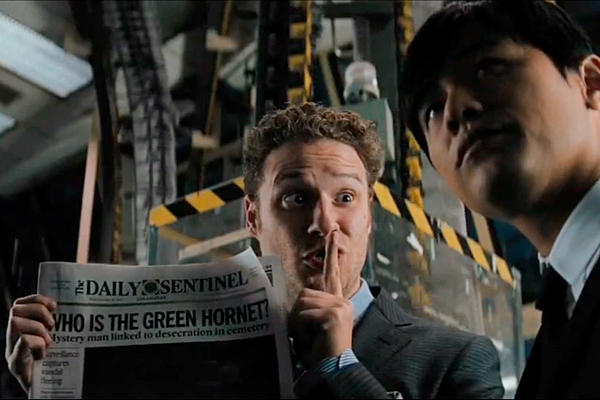
The Green Hornet

Seth Rogen and Jay Chou in The Green Hornet (Columbia Pictures)

I truly shudder to think at what this movie would’ve been like had it not been for the creativity and flair that Michel Gondry brings to it. Yes, there is plenty of competition between action and comedy elements of the tale and both serve the film and story well but there’s also a lot of both and the film gets a little long in the tooth. As an origin story it’s not the most gripping based on how its handled not just based on the empirical facts of the character such that the flair and verve that Gondry brings is desperately needed.

The name Seth Rogen in the same sentence as the word superhero still does seem a little funny to say, however, it does kind of work for this character because it’s not a case of his being superhuman and his sidekick, well-played by Jay Chou does contribute quite a bit to the equation.

6/10

Theme Thursday #1

OK, here I go again late again.

In watching films in rapid succession at time whether by design or purely by accident you’ll find themes whether they be narrative, visual or otherwise. For my first sojourn I decided to be rather clear and picked a narrative theme, while the films are very different: one is a modern French film and the other an American film made at the dawn of the sound era, they both to extent deal with death.

The French film is François Ozon’s Time to Leave. The American film is the 1935 cinematic rendition of Louisa May Alcott‘s Little Men, her much interpreted follow-up to Little Women in which Jo runs a boys’ school with her husband. Now the importance of death in each film and how it is handled is drastically different.

Ozon’s film has the occasional moment of truly striking beauty, which is undermined by the fact that our protagonist, Romain (Melvil Poupaud), who is diagnosed with a terminal case of cancer almost immediately never really lets his guard down, which is fine, however, the story could’ve had even more resonance than it does if we were allowed to see the family’s reaction to his death that they didn’t see coming. Aside from that it is a well-made film with some very great touches in it. The flashbacks are particularly strong. The theme of Romain wanting to take pictures of things and people he’s seeing for the last time is effective. Jeanne Moureau’s scenes are also quite good. However, in the end this film ends up being more impressive in its dealing with death than its American counterpart.

Now the indirectness and hastiness with which the death, which I won’t talk about in great detail to avoid spoilers, in Little Men (1935) has little to do with when it was made. Some of the all time great tragedies and tear-jerkers of cinema come from the Golden Age. However, there were some films back then who briskly rushed through their endings to get to happy resolution to shave minutes off running time to squeeze more showings in per day. This is one good thing that multiplexes have brought on, you can stretch your film out if needed and not worry as much about lost opportunity for profit.
The death here is quickly dealt with and bypassed and we rush toward the ending. Not to say that this is a horrible adaptation of the story. It’s just not quite up to snuff with the 1997 version starring Mariel Hemingway which I attribute mostly to direction and writing as the cast assembled amongst the kids anyway should be able to rival if not trump the modern rendition. Soon I will check out the 1940 version online but I think 97s will stand strong in my eyes as the best cinematic rendition- if you are already familiar with this tale, or even if you’re not I strongly recommend the TV series as well.

Why “Never Say Never” Makes Sense

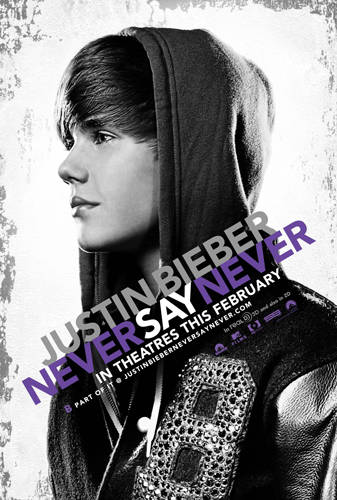
This is a re-post from when Never Say Never was first announced. It makes sense to post it again on the verge of the film’s release.

Never Say Never (Paramount)

So recently both on his Twitter feed and on several media sources it was reported that Justin Bieber was to be the subject of an upcoming film release. The film would follow his world tour, intercut live performances be part doc, part biopic and be in 3D. Academy-award winning director Davis Guggenheim was attached to direct it, that has changed but those were the facts.
 
I find it a little humorous some of the reactions this announcement has been met with. Surprise should not be among the reactions though, derision though not necessarily deserved, was expected.
 
Taking some of these facts into consideration: Hannah Montana/Miley Cyrus (as if they’re really two different people), The Jonas Brothers and even Celine Dion, of all people, recently had concert films so announcement this should be no surprise at all. Not to mention the record-breaking Michael Jackson doc This is It.
 
Not only is he talented but he’s out-earning all those acts at this point so of course a studio is going to want to put out a film. Being one who is familiar with him from his days of being pre-viral on YouTube it shocks even me that his rise to near pop immortality has been so meteoric and persistent.
 
And in 3D? Of course. Even though 3D fatigue is setting in, regardless of what scoffing studio execs say, there will still be those projects that will do it, and succeed, especially since a little more than a year has passed since Avatar smashed box office records just because it was shot in 3D. The overcharge, I mean surcharge, made it its money.
 
However, with him being a lightning rod anything Bieber-related is immediately fodder for conversation both positive and negative. It would seem this film is being overly-characterized as as a biopic, in the traditional sense of the word, much the way the photo book of his tour was being referred to as a memoir, where it is truly more of a chronicle, even if you don’t buy his assertion of it being a photo book.
 
Even more recently it was reported that Davis Guggenheim was dropping out. He is citing commitment issues as he will be plugging Waiting for Superman, his latest documentary about public education in the US, obviously there is speculation that he dropped it because his name was being dragged through the mud and the money wasn’t worth it.
 
I won’t comment on a personal/business decision but it most definitely would’ve been very time consuming. However, I don’t view this film as littering the cinematic landscape as it’s not a narrative film. It’s disposable (if you want it to be) entertainment that you can use once and destroy if you so wish and has no bearing on the overall aesthetic landscape of cinema as a whole.
 
This film will come and go and cinema will go on, so jokes or actual fears about the end times are greatly exaggerated.