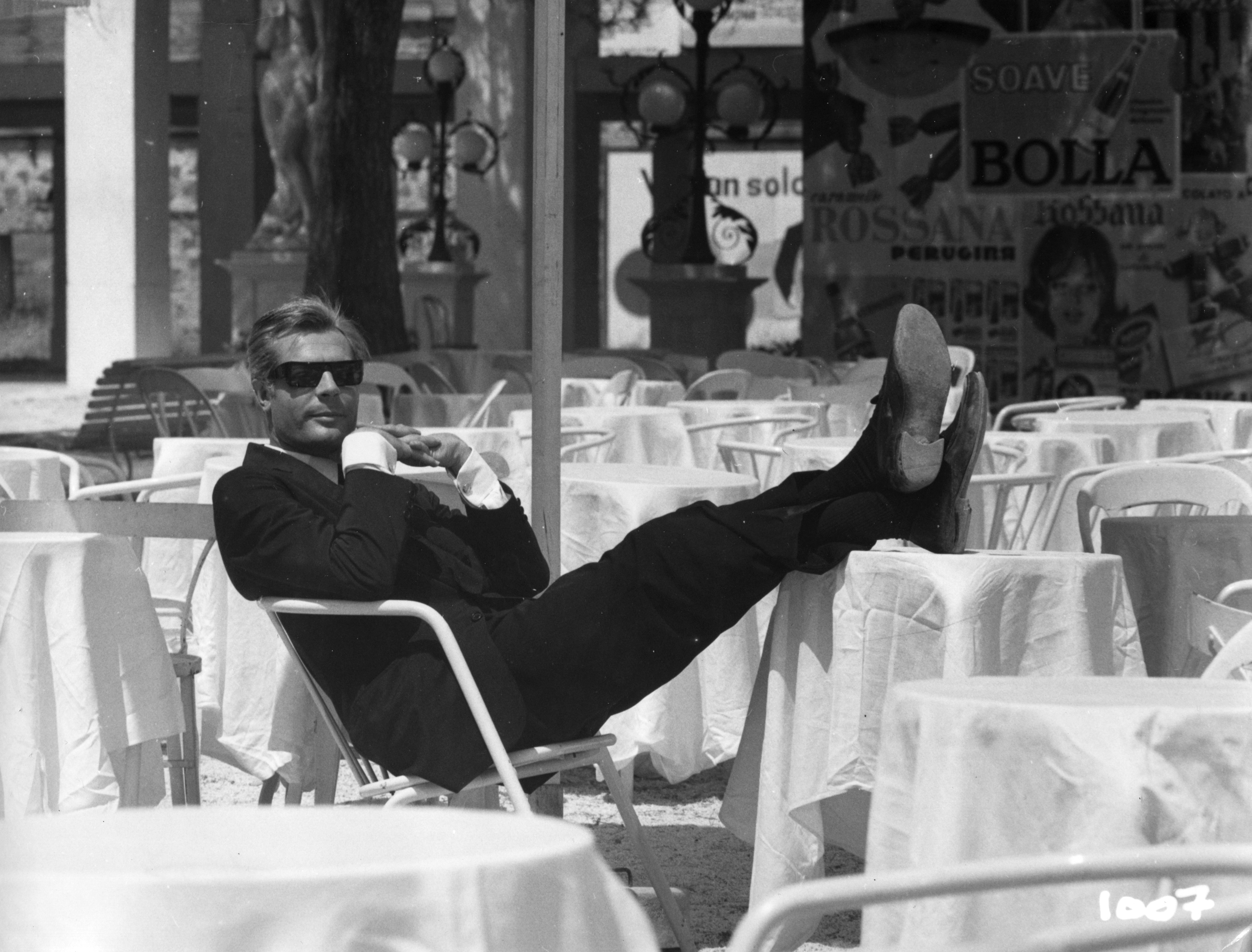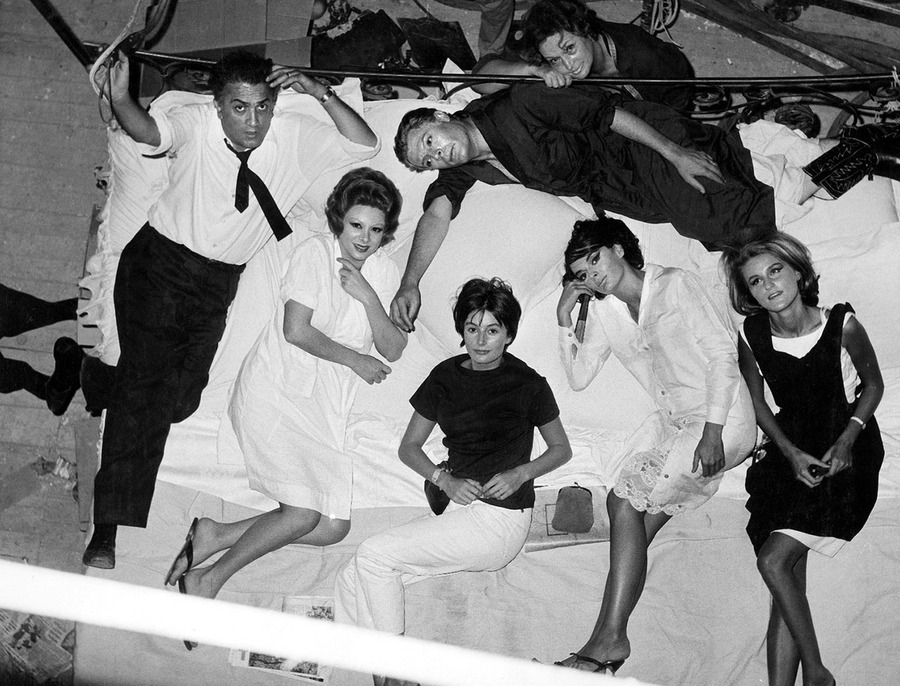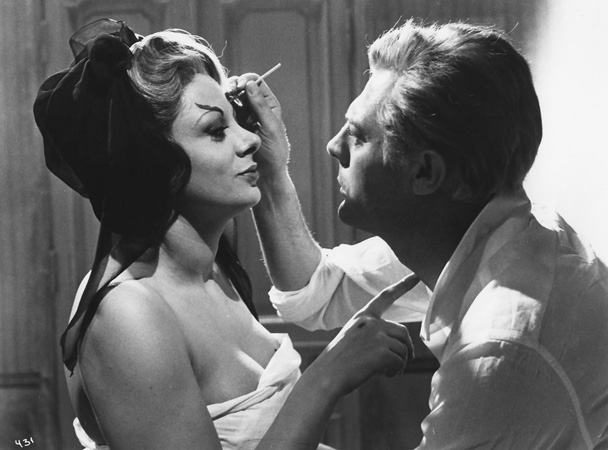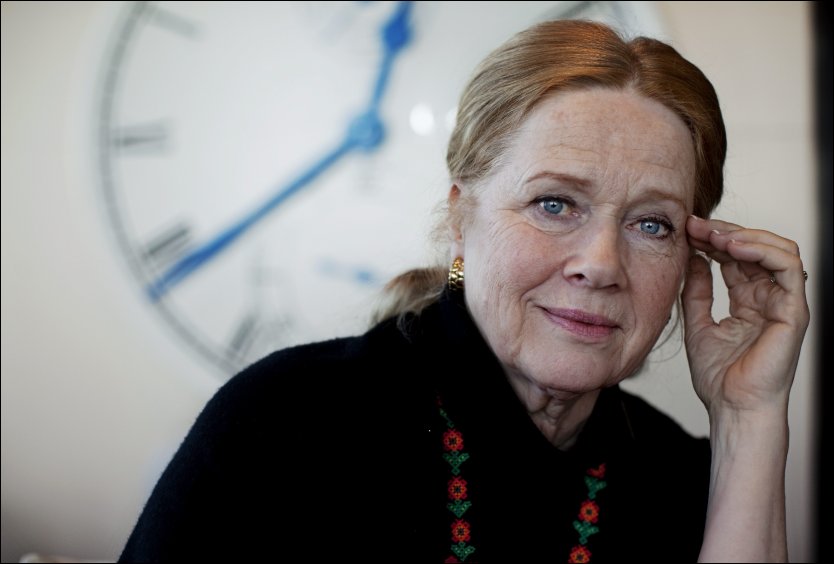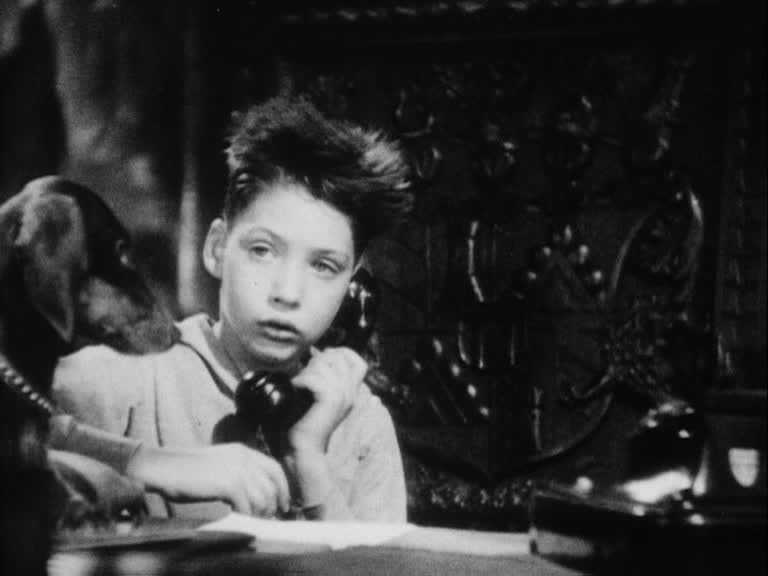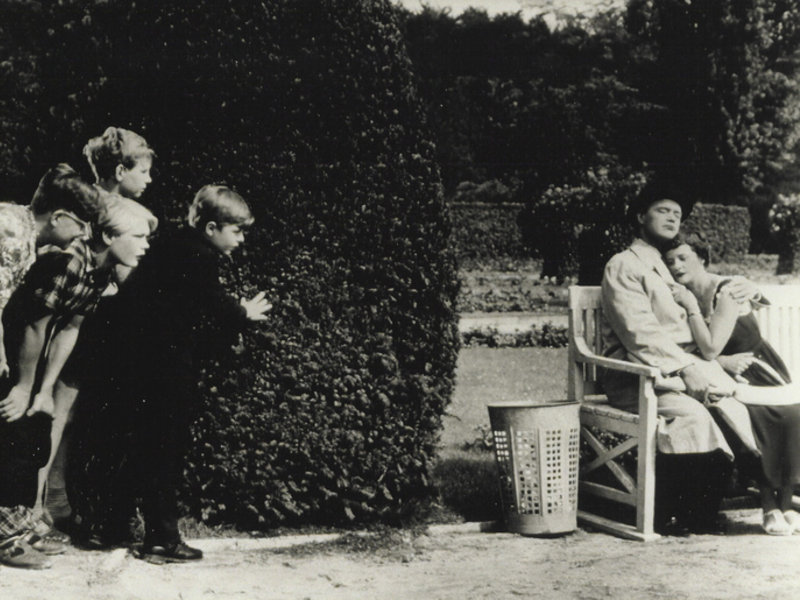
“…And scene!” Blogathon: Persona (1966) The Repeated Scene

Introduction: Fanny, Alexander and the Magic Lantern
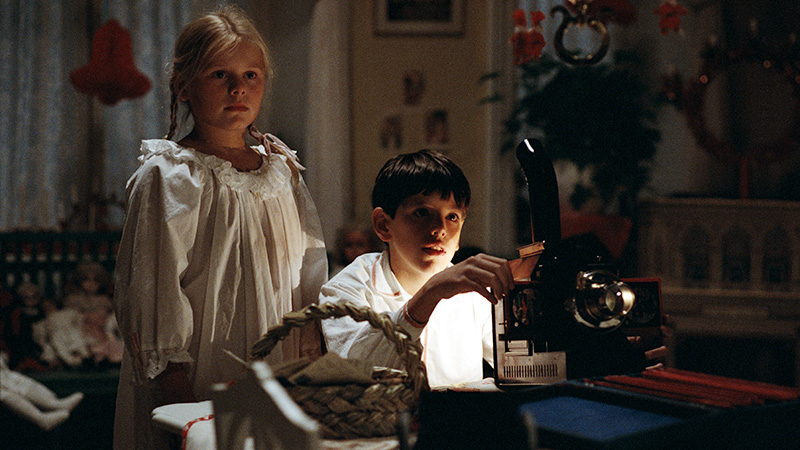
Fanny and Alexander (1983, Svensk Filmindustri)

When dealing with a film that Bergman chronicles as being highly personal I feel it is only right that I give it the same treatment when I discuss it here.

There are times when I cannot help but inextricably tie my discovery of a filmmaker, or the genesis of my admiration for them, to the strength of my connection to their work. Which is to say Hitchcock and Bergman, for example, whom I gravitated to without prodding, and of my own volition, hold a more special place in my heart and mind than directors whose greatness I recognize but only found their work after hearing tell of how worthwhile an investment of my time it was and very consciously decided to watch them.

Specifically regarding Bergman, the story of my first viewing is that I decided to take the plunge when I was visiting family in Brazil. I saw a region 0 DVD of Fanny and Alexander on sale and even though to be able to see it I’d really do two translations (hearing Swedish audio, reading Portuguese subtitles and transposing it to English mentally); I went for it anyway.

Fanny and Alexander (1982)

I almost instantly loved the film a great deal and it fast became one of my favorites. I then proceeded to watch whatever Bergman I could from my teenage years through the present. DVDs were upgraded to Blu-rays at times; new-to-me titles acquired blind; repertory screenings at the Film Forum taken in when I was lucky enough to see them; his swan song was viewed the weekend it was released, dominating much of my annual BAM Awards; and then with his passing an honorary award with his name was created, and has a backstory of its own.

Fanny and Alexander (which I also got the box-set for and then viewed all versions, loving the TV version more than the original) was the impetus not only for my admiration but the best example of how I always inherently, nearly by osmosis, attributed to his films the axiom that the emotional truth of them was far more significant than the literal truth of the nearly fictitious “one true, correct meaning.” For it was without noticing really that I virtually never considered the wild conundrum, the paradox really, that exists in the telling of Fanny and Alexander until I revisited it and saw alternate versions.

Thus, when I made it around to Persona, which I believe I first saw as a VHS rental before getting a DVD,  it was one I instantly knew I wanted to come back and dissect. Even though I got the Repeated Scene, and it may not even be my favorite part of the film, I always came back to it.
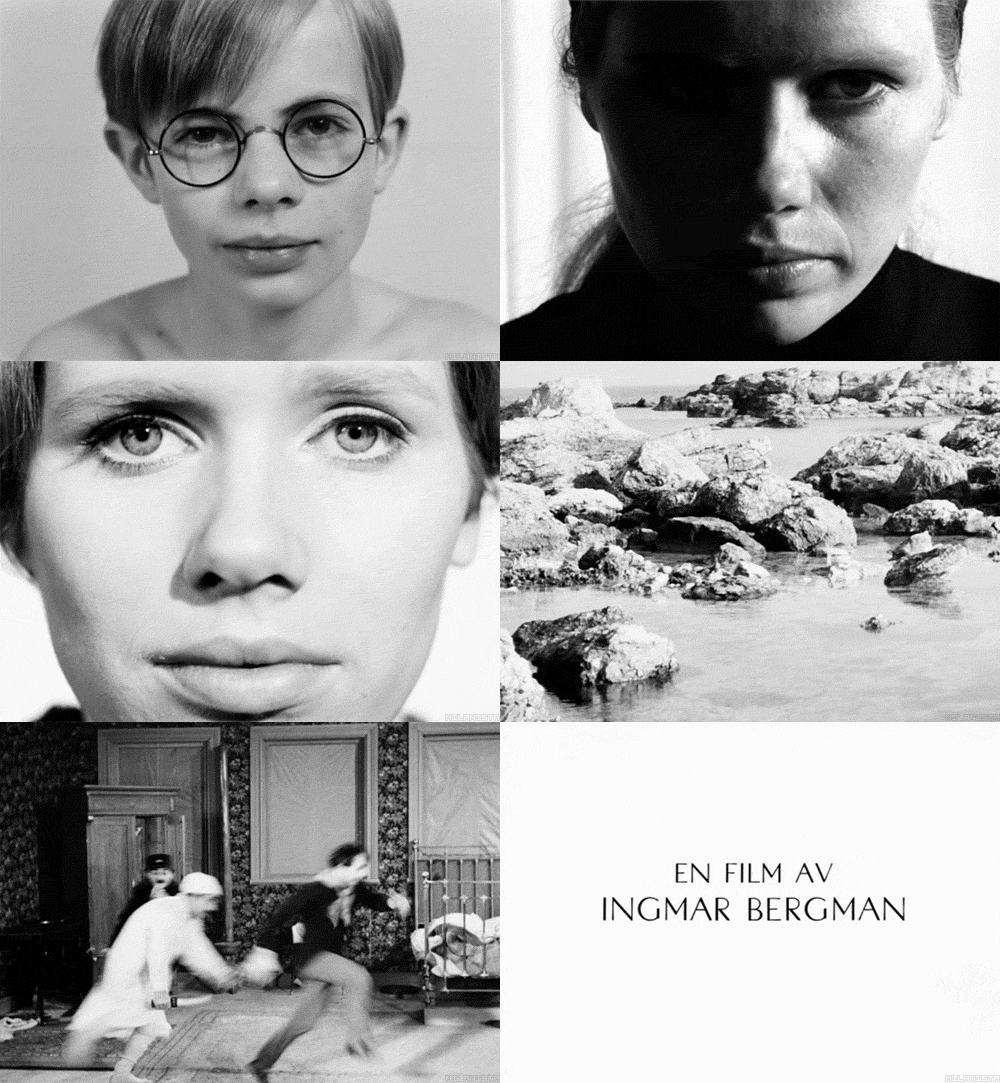
Persona (1966, Svensk Filmidustri)

When I began my journey with Bergman, much like Alexander watching the images produced by the magic lantern, I was transfixed, as if by a wholly new experience unlike any I’d seen. Through Bergman’s eye the Repeated Scene in Persona was perhaps the most hypnotically dazzling. So here goes …

The Scene
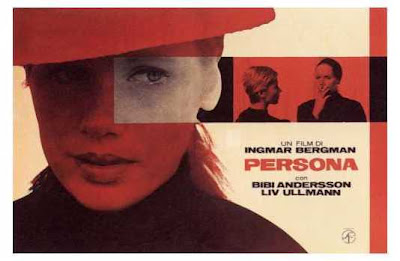
Persona (1966)

For those who have seen the film but would like a refresher here is a YouTube link that works (for now) Those who have not seen it are advised to read carefully and selectively and see it as soon as they can:

https://www.youtube.com/watch?v=OKlloomJujo


The Text

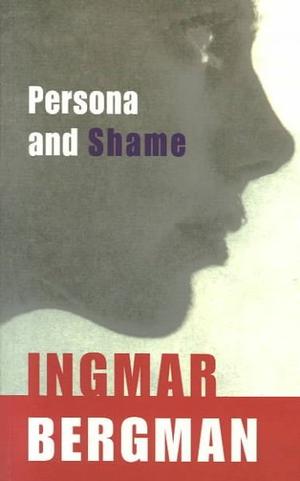
Persona and Shame

Stepping back from the audiovisual image to the script we can look at a few different things.

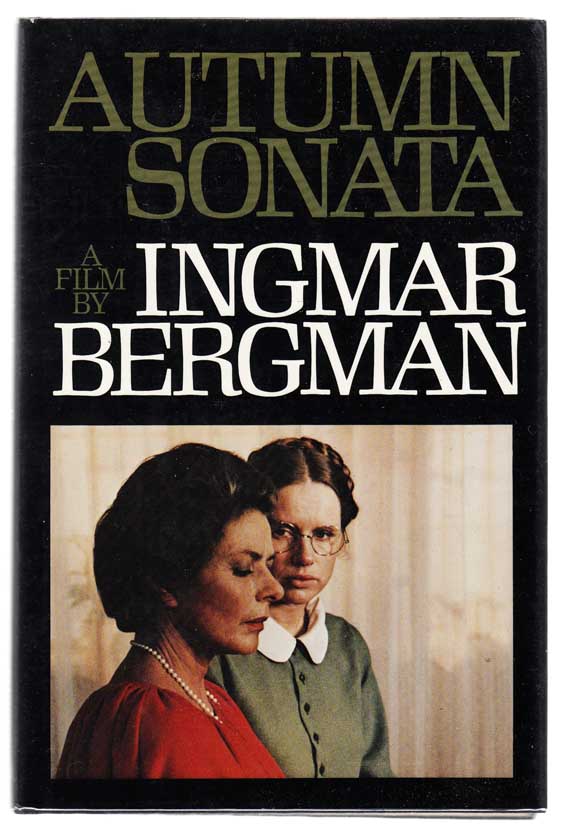
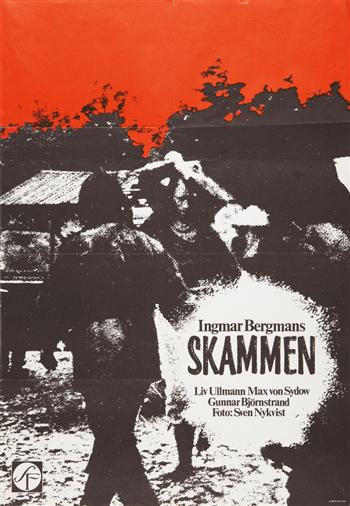
My need to be current on Bergman has extended a bit beyond films. Be they plays, screenplays, even his novels, I’ve read quite a bit of his work also. Some I took out from the library or photocopied, some I felt impelled to get like the recently republished Persona and Shame screenplays in a single volume.

A few things that become readily apparent when reading the screenplays are:

  • The edit is the final process so certain things are altered or augmented by the editing process. Specific to Persona the doubling, the very repetition of the scene, was a construct of the editing room rather than the initial design. It doesn’t make it any less a calculated decision just one that came to the film when it was deemed necessary. It’s the same reason famed editor Walter Murch would line up stills of the first frame of each scene in grids, not just to get a different look at the project as a whole (in abstract), but it also provided the occasional new idea.
  • As for the text itself, it’s instigated by an action and it gains added weight and significance by the visual treatment of the scene. For as talky as Bergman can appear and be he worked in theatre sufficiently to know very well the delineation and the framing, lighting, and editing were always pivotal as well as the dialogue painting images where the camera could not.

Bergman’s thoughts on the dialogue itself as well as the genesis for his creation of the film will be covered in the next section. What matters here are the basics:

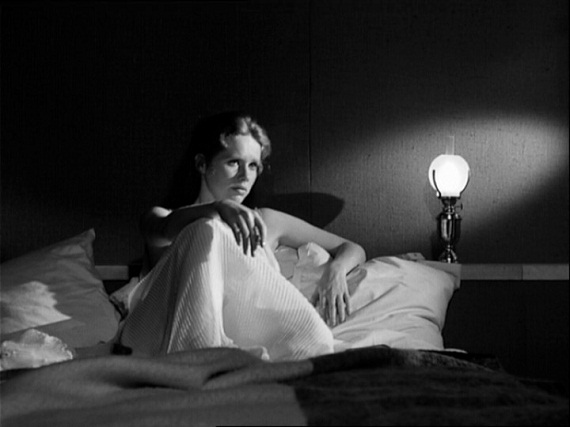
An actress Elisabet Vogler (Liv Ullmann) at the height of her fame and power consciously stops speaking but is just short of a breakdown and nothing is deemed physically or psychologically wrong with her. She and her nurse, Alma (Bibi Andersson), retreat to a country estate while she recovers. As Alma talks to her and observes her they clearly make an impression on one another such that the line that separates one from the other is blurred.
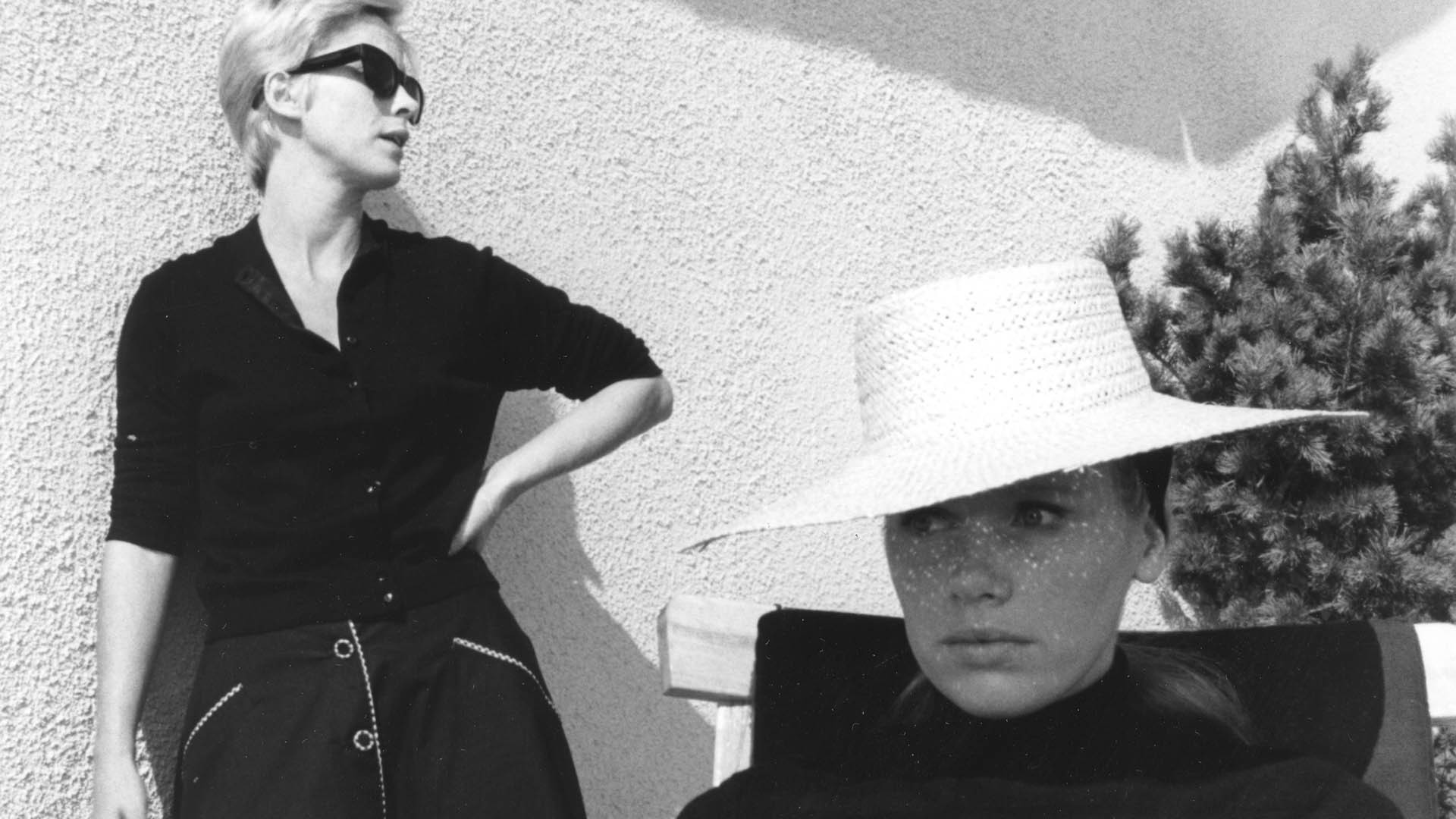
Persona (1966, Svensk Filmindustri)

Also interesting to note, is that this film had a change of shooting locale from Stockholm to Fårö Island that remedied many of the issues Bergman and company perceived when they saw the need for reshoots.

In examining the photo of Elisabet’s son that was Alma concocts a story about who this child in the ripped up photograph is clearly her son, so why is it ripped up? Alma speculates, to put it bluntly and concisely, that he was: the abortion that never happened. However, after the seeming coup de grâce of this judgment Alma reaffirms that she is she and coming up with something. She isn’t Elisabet only she can be.

Then the cycle starts anew. Alma repeats the story from a different point-of-view, in the camera’s view. However, where the tale was not quite complete here it is with Alma struggling against Elisabet invading her mind and soul. The story becomes Elisabet’s and Elisabet becomes Alma.
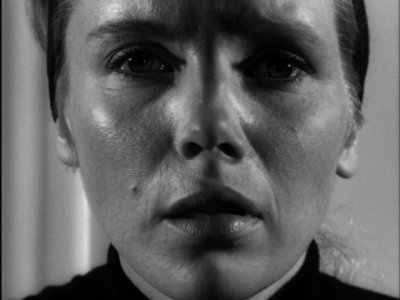
Persona (1966, Svensk Filmindustri)

The first half of the sequence culminates in the (in)famous double-image of the “bad” side of each of their faces spliced together in one frame.

The transformation is not as literal as it would be in a genre film but for the intents and purposes of this story its just as true and for either character to move on whether recovered or depleted a fracturing needs to occur to get them apart from one another.

Ingmar Bergman’s Perspective in Images: My Life in Film (1995)
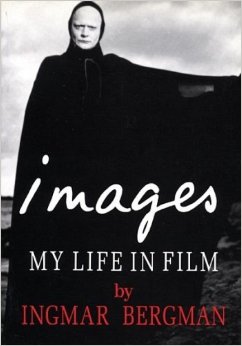
Images: My Life in Film (1995, All Rights Reserved)

Many directors bristle at symbolism being imposed on their work or film theorists. And, at times, the bristling is more about that old chestnut of the “one, true version.” When it is quite clear that certain directors like Kubrick invited audiences engaging and refused to define the film for its audience. Therefore, Bergman’s background he gives on the making of the film give you the genesis, what was happening with him and how it shaped him and the story.

It should be noted that right before this he was burning the candle at both ends frequently writing and directing films for Svensk Filmindustri and was then appointed director of the Royal Dramatic Theatre. It was a lot but he thought he could handle it and ultimately chalked it up as so: “That experience was like a blowtorch, forcing a kind of accelerated ripening and maturing.”

After writing, shooting and promoting All These Women, and directing Ibsen’s Hedda Gabler for the stage, his health was waning: fever lead to double pneumonia and acute penicillin poisoning. As he was admitted to Sophiasammet Royal Hospital to recuperate the idea for Persona struck him and he began to work on it “mainly to keep my hand in the creative process.” And in doing so it was a bit freeing in a few different ways.
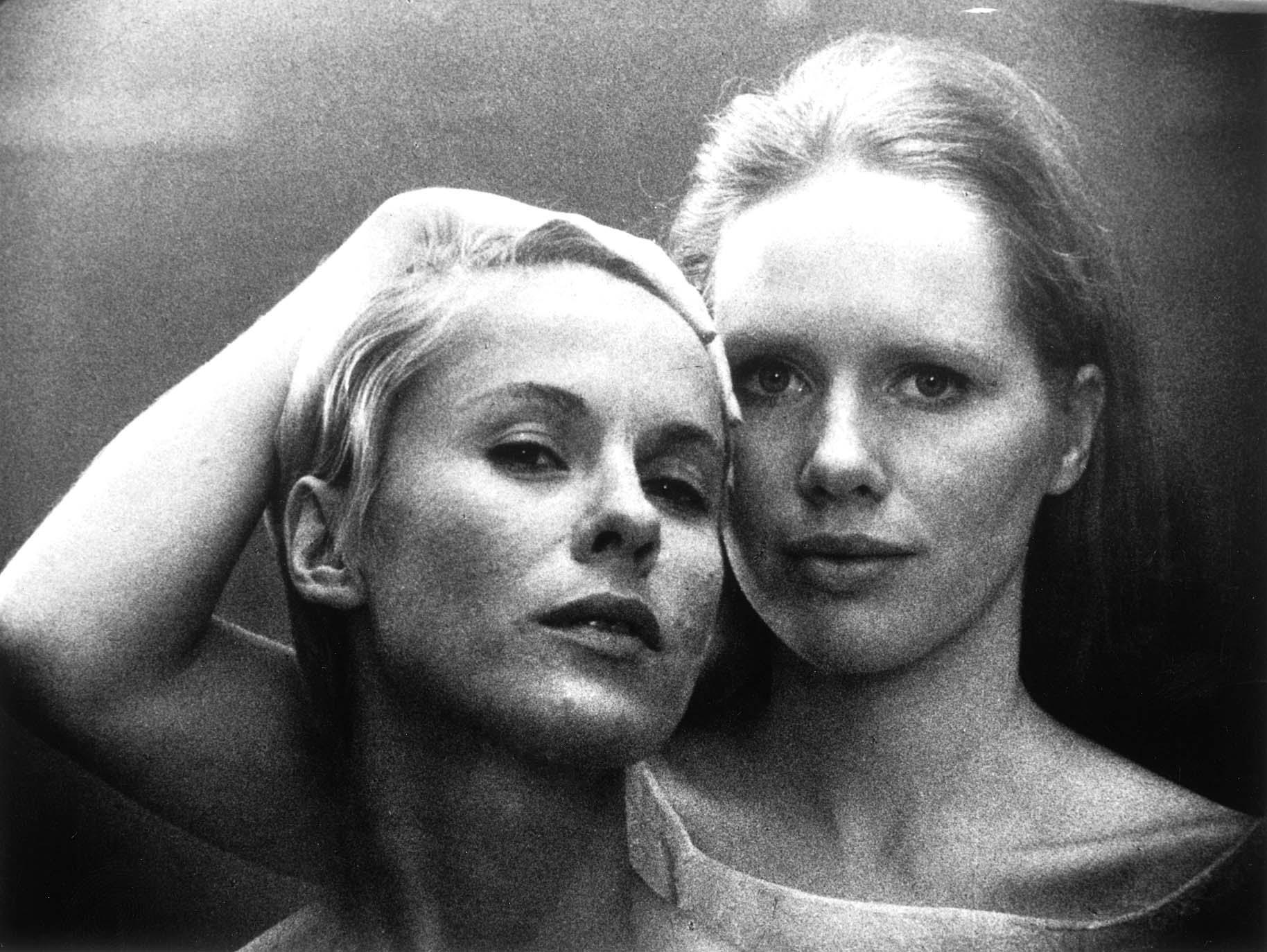
Persona (1966, Svensk Filmindustri)

With an unmade project canceled, his wondering about the place of theatre in the art world, and himself as an artist; he found a vehicle to express these doubts and pains and channeled it mostly through Elisabet Vogler’s personage. This is an emotional state he accurately encapsulated in what he wrote when he accepted the Dutch Erasmus Prize, an essay entitled “The Snakeskin,” which served as the foreword for the published edition of Persona. That state is rounded out and linked to the film more thoroughly in the book.

What is perhaps most fascinating is that I had not read this book, whole or in part before researching this (only the “Snakeskin” portion in Persona); so there was much information to discover, and it’s always interesting to glean insights into an artist’s creative process, but more illuminating that that is the fact that much of this story and truth is translated to the screen without overt underlining. It’s there, you feel it, and it either affects you or it does not but it’s there for you to see. Bergman’s art is not unlike his philosophy on why he is an artist:

“This, and only this, is my truth. I don’t ask that it be true for anybody else, and as solace for eternity it’s obviously rather slim pickings, but as a foundation for artistic activity for a few more years it is in fact enough, at least for me.”
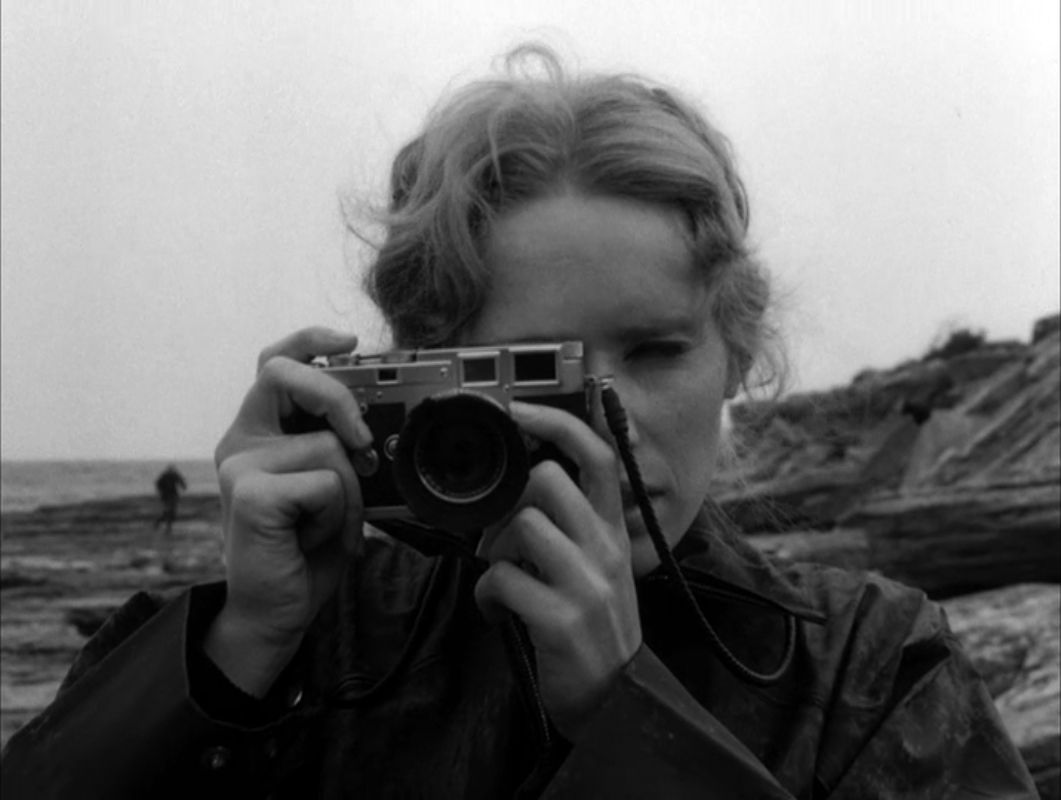
 

Persona (1966, Svensk Filmindustri)

In his notes Bergman has not only poetics about his creative crisis and things that are implied by the film like “The conception of time is suspended,” and most importantly “Something simply happens without anyone asking how it happens.” Yet there is also the key to the emotional heart of the film, which is right there in the film itself:

Then I felt every inflection of my voice, every word in my mouth, was a lie, a play whose sole purpose was to cover the emptiness and boredom. There was only one way I could avoid a state of despair and a breakdown. To be silent. And to reach behind the silence for clarity or at least to try to collect resources that might still be available to me.
Here, in the diary of Mrs. Vogler, lies the foundation of Persona.

It’s interesting to note here that Bergman, as he himself notes has named a character Vogler before such as in “The Magician —with another silent Vogler in the center — is a playful approach to the question.” The name would then pop up in later films. The usage of silence, one of the quintessential traits of cinema that separates it from the stage, is also strongly present in this title as well as others by Bergman including the appropriately titles The Silence which features hardly any spoken dialogue.
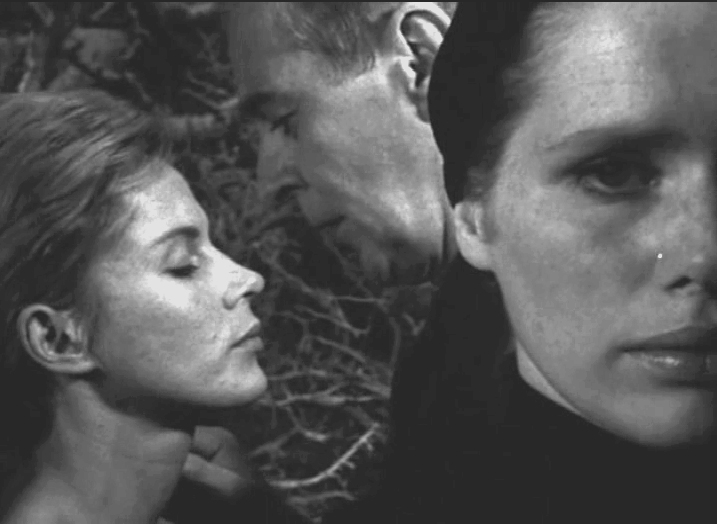
Persona (1966, Svensk Filmindustri)

About the Repeated Scene specifically he writes in his book:

“…Suddenly they exchange personalities.”

“They sit across from each other, they speak to each other with inflections of voice and gestures, they insult, they torment, they hurt one another, they laugh and play. It is a mirror scene.
The confrontation is a monologue that has been doubled. The monologue comes, so to speak, from two directions, first from Elisabet Vogler, then from Alma.”

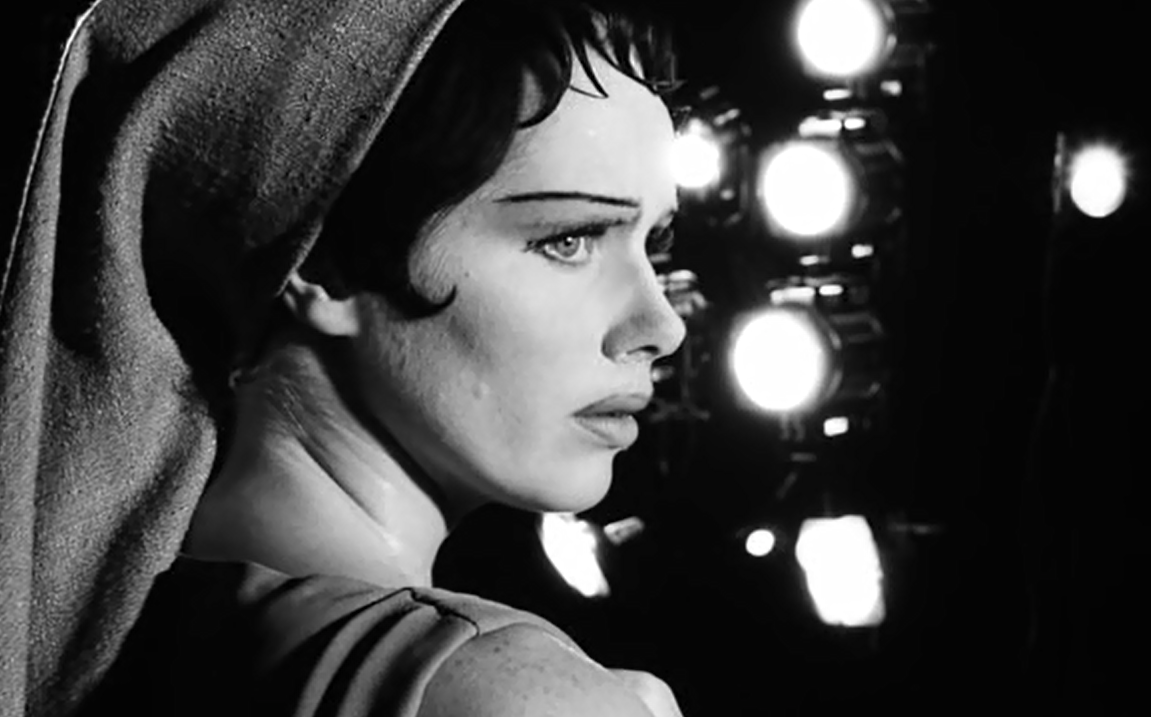
“We then agreed to keep half their faces in complete darkness — there wouldn’t even be any leveling light.”

Leveling light here refers to fill light, which is any light that would be aimed at the darker side of an actor’s face to lessen the contrast ratio. In keeping the highlight normal and the fill side very underexposed there is an inherent additional disquiet added to the viewership of the scene combine that with the editing tactics, then the unconventional treatment of the dual dialogue, including some jump cuts, and there is a crescendo to climax that is fairly universal even if the beats are more subsumed and the conflicts more internalized than in a standard, conventionally structured and told film. Upon seeing rushes of the scene edited Bibi Andersson and Liv Ullmann reacted as follows:

Bibi exclaims in surprise: “But Liv, you look so strange!” And Liv says: “No, it’s you, Bibi, you look very strange!” Spontaneously they denied their own less-than-good facial half.

The trick had worked and fooled the actresses themselves into seeing each other’s faces on the film. The film from that point was already speaking to people through its images alone. Yet despite the unconventional approaches, even on the written page, Bergman warns about those as well saying that “The screenplay for Persona does not look like a regular scenario.” And that it “May look like an improvisation,” but it is quite clear that there is a meticulous level of plotting that is only elevated by the inspired choice made in the edit.
Persona (1966, Svensk Filmindustri)

Even though Bergman saw his return to his position at the theatre as a temporary setback (“When I returned to the Royal Dramatic Theatre in the fall, it was like going back to the slave galley.”) there is no doubt that Persona was a personal triumph due to the very personal, even if abstracted, look at himself that revitalized virtually everything in his life as evidenced by the statement “I said that Persona saved my life — that is no exaggeration.” Persona also marked an artistic revolution for Bergman, a change in his whole approach wherein he realized “The gospel according to which one must be comprehensible at all costs, one that had been dinned into me ever since I worked as the lowliest manuscript slave at Svensk Filmidustri, could finally go to hell (which is where it belongs!).”

Liv Ullmann’s perspective in Liv Ullmann: Interviews (2006)
Liv Ullmann (2006, University of Mississippi Press)


What Ullmann added in interviews through the years does speak more to the scene itself, and as one of its participants she gives tremendous insight into the making of it, as well as her process as an actress. Also, how she was cast became a legendary story as she is a Norwegian-born actress and Bergman had only worked with Swedish actors at the time. It is the kind of stuff legends are made of but not as fantastical as people make it out to be.

“He had seen one picture I’d been in. And it wasn’t like he picked me up off the street, because I’d been an actress for many years in Norway. But he did take a terrible chance because I was very young — I was twenty-five — and I was to play a woman at the height of her career and having neurosis, which I knew nothing about. So he decided to use me on intuition, and I did the whole part completely by intuition, because I only understood what it was about many years later.”

About production specifically:

“That was very strange because he did that with two cameras. There was one on Bibi when she told my story. It was supposed to be cut up, using the best from each. But when he saw it as a whole, he didn’t know what to pick. So we used them both. Many people have tried to analyze why he does this. The real reason is that he felt that both told something there which he felt was important. He felt he couldn’t tell which was most important so he had both. “

That above reaction reinforces Bergman’s feelings and vision. Closer to the time she made it she revealed:

“The way I prepared was to read the script many times, to try and block it into sections. I would try to think, ‘This is the section where this is happening to her, and now he goes a little deeper in this section.’
“That is the way I very often work. I divide the manuscript into sections which always makes you know where you are shooting.”

Later on she elaborated even further:

“A lot of things I seriously didn’t understand. I just had to do it on feeling, on instinct. I couldn’t ask him because I felt so grateful he was giving me this, that I must pretend. When I see it now, I understand it so much better. I understand the character. But in a way I think it doesn’t matter because deep down we can experience even if we don’t really understand. I think you can instinctively play a character without intellectually or by experience being at that level. So many more people would appreciate him if they would dare to go in and think he’s really simple that he’s going to their emotions, not worry about the symbols.”

So with all these vantage points where does that leave us?

Conclusion: The Film Tears
Persona (1966, Svensk Filmindustri)

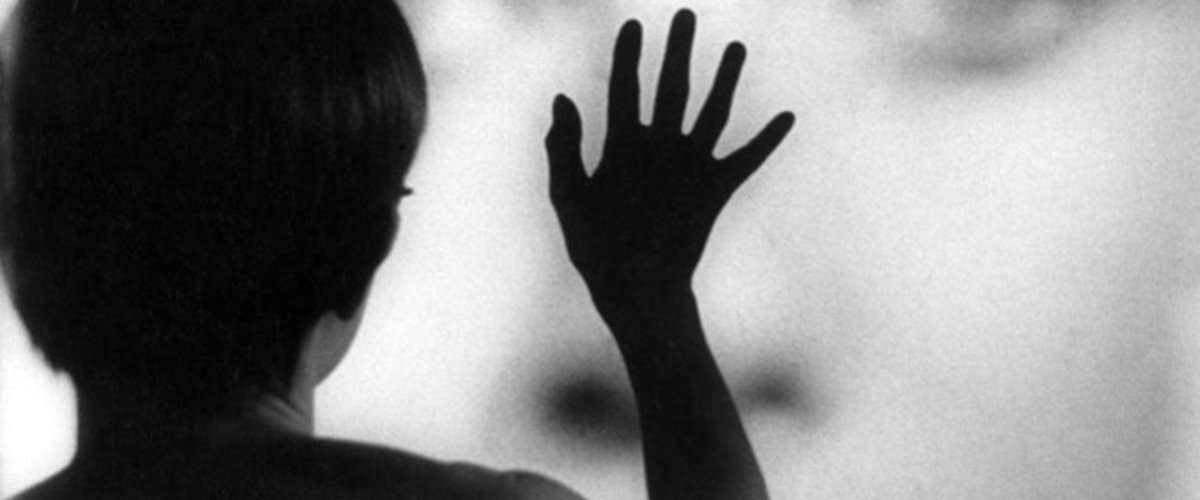
One of the structural totem poles in Persona is an image of a film strip burning and breaking. It marks a rupture in the reality as its being presented, and it reveals to us, as a reminder the eyes through which this story is being seen (Elisabet’s son played by Jörgen Lindström).
 

Faithless (2000, Fireworks Pictures)

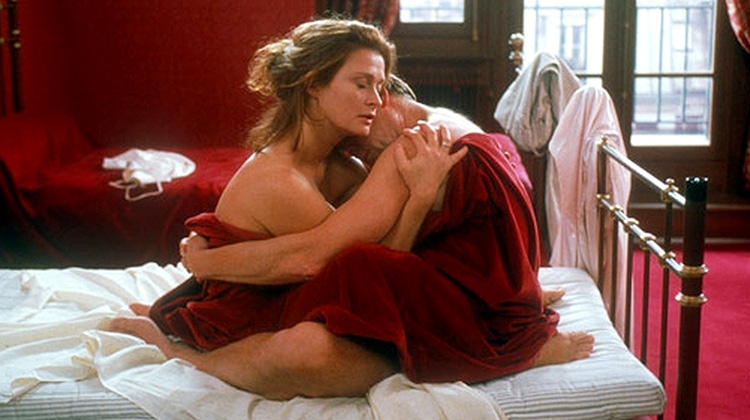
When the film tears for us as viewers what are we left with? Is all theorizing to be tossed out the window? An interview Ullmann gives later on in her career when she took on Faithless as a director, based on Bergman’s screenplay:

Both women are called Marianne, so you can make all sorts of fantastic connections. Every viewer should have the freedom to do that.
Everyone also has the freedom to make connections with Elisabeth Vogler, I didn’t know very much, but I just knew I was playing Ingmar. That’s why I said that Max von Sydow could have played the part. I thought at the time “I will just watch Ingmar and I will try to act like him. In the current film, the character is called Bergman like the character he made into a woman and I played as Elisabeth Vogler in Persona. You can have great fun with this.

Which actually is not discordant with her assertions that “The real reason is that he felt that both told something there which he felt was important. He felt he couldn’t tell which was most important so he had both,” and that “So many more people would appreciate him if they would dare to go in and think he’s really simple that he’s going to their emotions, not worry about the symbols.”

If the film guts you it’ll pay to dig and pick apart these images and examine the interplay of the characters, the questions about reality, dreams, psyche, life, death, and sexuality. If it doesn’t move you an intellectual examination may not make it any better for you, and what would your motivation be to go in search of answers anyway?

When seeing the Repeated Scene in Persona you will think any of three things: a noble attempt at an experiment that fell short, a brilliant gamble that pays off in spades or a wasteful piece of sophistry. Many of the scenes in the film can be seen along this spectrum. It just bears noting to modern audiences that while his style, at-times starkness, look, and human dramas have become clichéd through the reverence of film students and arthouse filmmakers through the years, but many of the things he was doing were new and unique when he did them.
Persona (1966, Svensk Filmindustri)

When the film tears for you as a viewer as Persona ends Bergman seeks for you to have been moved, to have thought and to have examined just as he moved, thought on, and examined his own life in its making. All else is fun, as Ullmann says, but there is no wrong. In this film Bergman rebelled against the tyranny of coherence and singular meaning and came out a victor, and we are all better for it; for now we have been moved.


Beach Party Blogathon: Flipper’s Good Ol’ Retcon!

Introduction

Note: There is within a discussion of plot points, which can be considered spoilers.
I must say when I offered to cover Flipper (1963) and Flipper’s New Adventure (1964) for the Beach Party Blogathon (co-hosted by Speakeasy and Silver Screenings) I believed that it would only fit the premise in a very superficial way. Neither are a literal beach party movie after all. Yes, there’s water, sand, even a boy named Sandy; but it’s not really about 1960s beach culture. However, there was something that caught me by surprise that does fit very well in the come as you are nature of this blogathon with no assigned days and things like that.

What came to mind to write about was not something one can really only notice by going from the first film to the next film and then into the series. That surprise is the bit of a retcon that occurs in the stories. For the uninitiated this is a phrase that is short for retroactive continuity. What this refers to are story changes in a follow-up that not only add a new wrinkle, but in many ways imply that the current state of affairs has always been true. While either the main term or the abbreviation were vernacular in the 1960s there are citations of this having happened in fiction dating back to the late 19th century with the death, and subsequent return of Sherlock Holmes. More specifically about the term can be found here.

I’m sure at this point you’re saying “That’s fine but what does that have to do with Flipper of all things?” Well, I kind of had to introduce the term in general simply because it seems like something so silly to have happen with as straight-forward a tale as family and their smarter-than-your-average dolphin friend/helper that I kept waiting for simpler explanations for certain things, and usually they didn’t come in overly-diegetic (story-based) ways.

To be clearer I’ll provide some context both with regards to myself, these films, and the show. I’ll begin with a bit of a personal history.

Flipper and Me

Flipper (1965. MGM)

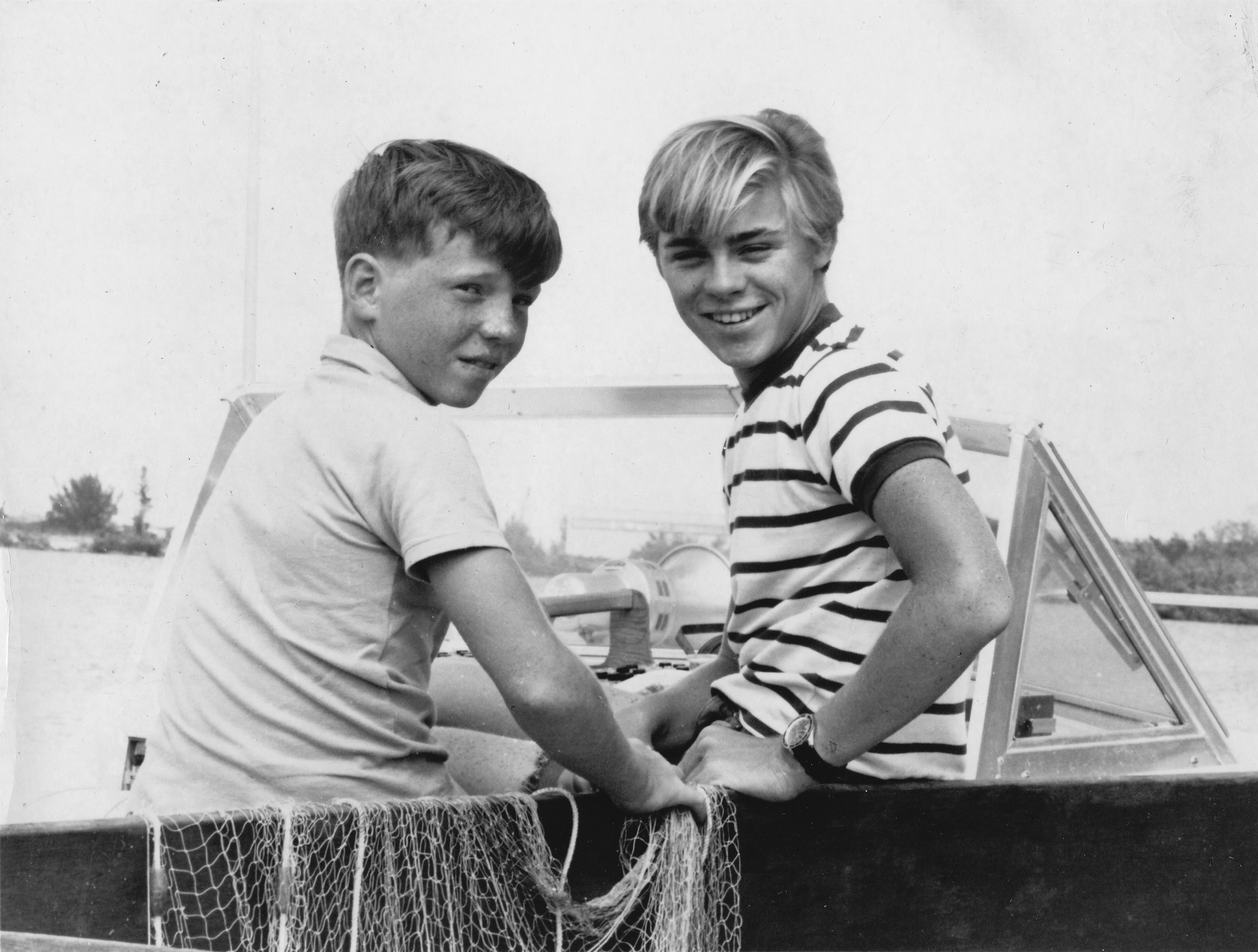
I saw the TV show first. It was one of many shows I discovered on Nick at Night when young, this fact makes it ideally suited to a true cinematic episodes treatment. Later on, I went to see the movie in the mid-‘90s. Being a fan of both the old show and Elijah Wood, I wasn’t too thrilled with how that movie went down. As cheesy as it can be,  with too much filler at times, I do enjoy it taking it for what it is. Clearly, it’s a concept well-suited for TV and also for kids. You’re living vicariously through Sandy and Bud indulging in what adventures you’d likely have with a dolphin as best friend/pet living on a marine preserve. It has its place and serves its purpose. I say this because I don’t want this piece’s tone misconstrued. I believe in treating all titles seriously but not too seriously. What that means is: sure I’ll talk about narrative liberties taken, while I’m not excusing them entirely, I’m also not yelling “HOW DARE YOU!?” either. The point of demarcation between those two is debatable, and can be discussed elsewhere. Here, I’m just pointing out some interesting things I noticed, this is a beach party after all.

Clearly, the time period accounts for some of these liberties in part. In the 1960s movies and TV were still very much in competition so a network may not have cared to keep continuity, and it could be assumed that you’d never have exactly the same audience for your film and television show. Even if you did, and though things started to go from movies to TV, there wasn’t the interplay then that the two enjoy now, such as when Marvel weaves its universe on big and small screen alike and projects are discussed as having both feature and miniseries components. So there was a clear line of delineation These things may have happened in a movie, but now this is a TV show. Usually these were treated as very different things, not as much here, you’ll see how so soon.

Another example not too long after this is that Maya was a film starring Jay North that was followed up by a one-season series. The series rebooted the story though. In the series Jay’s character in constantly searching for his presumed-dead father, in the movie they are together then separated.

So what are the changes in between these movies, and then leading to the series?

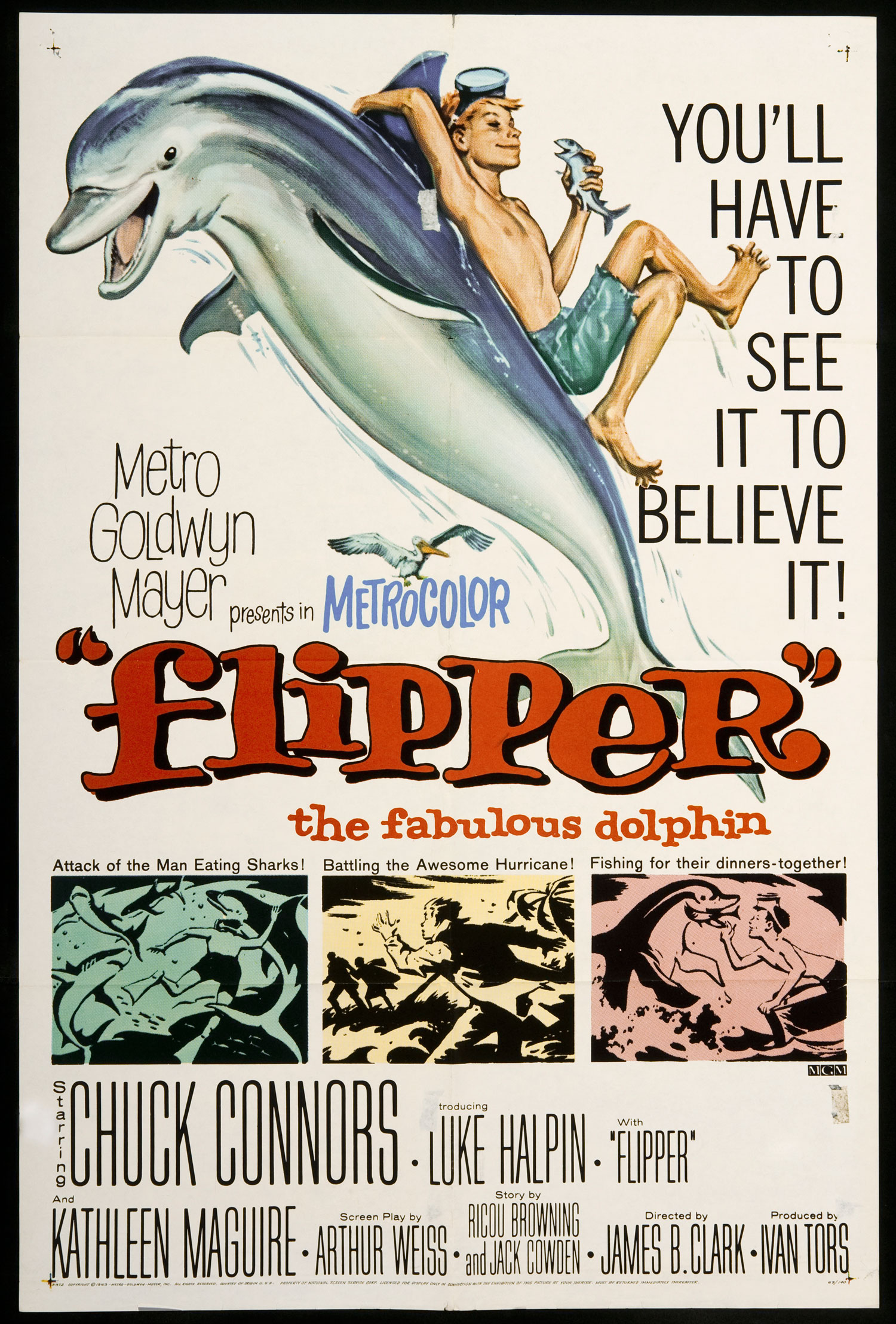
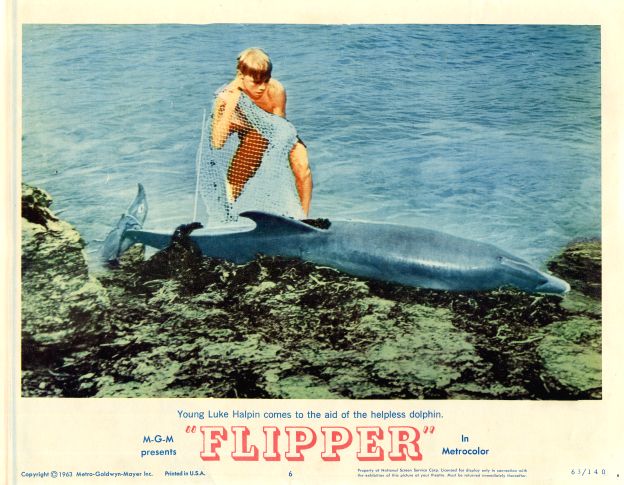
Flipper (1963)

Flipper_1963_movie_poster

What Flipper ends up being is a boy-and-his-dolphin movie, as opposed to a boy and his dog.

The synopsis as seen on the IMDb appears as follows:

Sandy is distraught when, having saved Flipper by pulling out a spear, his father insists the dolphin be released. A grateful Flipper, however, returns the favor when Sandy is threatened by Sharks.

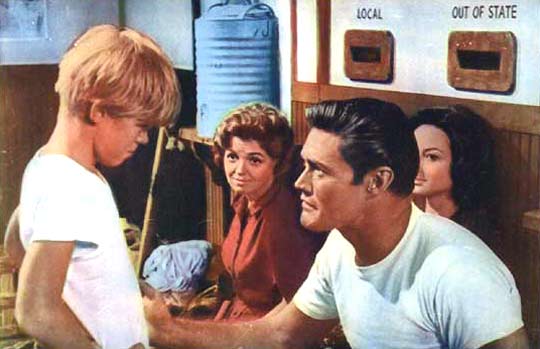
There’s some left out, some glossed over, but that’s the bones of it. It starts with a storm rolling in, a struggle to bear the brunt, then in recovery Flipper acts as the impetus for Act II. Flipper distracts Sandy and keeps him from his chores as his father’s away seeking a neighbor set adrift during the storm. There’s the classic father-son struggle about responsibilities. Needless to say its a little surprising to see Chuck Connors in this film lending name recognition as well as being a stern, but not overly-stoic when it matters, father.

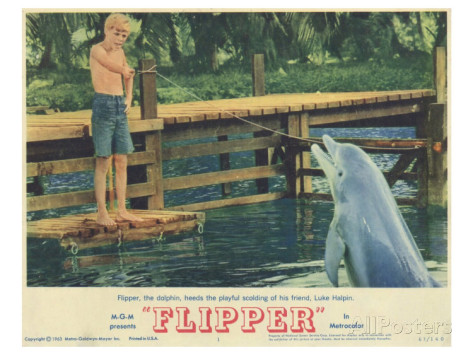
Flipper (1963, MGM)

In one regard it acts as the origin of how Sandy and Flipper meet, how Flipper becomes his de facto despite the fact in most regards Flipper is not really held captive. In a rather forward-thinking way he’s only really penned when injured and a short while after that. Beyond that her stays fairly free-roaming and seems to seek human companionship almost more than they seek him.

Flipper’s New Adventure (1964)

Flipper's New Adventure (1964, MGM)

With a second film is where things either become established parts of mythology or start to shift almost uncontrollably. The theme song, which debuted in the first film, here returns. (it was altered for season two). More original songs, that are about as forgettable and maybe worse, than the additional tunes in the first film come along for the fun too.

The next few changes are a combination or writing and casting concerns.

Kathleen Maguire, who played Martha Ricks, does not return. Instead of recasting her, as they did with Porter Ricks replacing Chuck Connors with Brian Kelly, who would proceed to the television show in in the role; she was written out of the story having tragically and inexplicably died (at least at this point) between the end of the first film and beginning of this one.

Flipper's New Adventure (1964. MGM)

Granted recasting will never be addressed with dialogue like “My father what strange plastic surgery you’ve had,” unless the intent is highly farcical. Deaths of parents were intimated, but not as often seen or discussed in children’s fare in earlier eras. This is just one reason Bambi stands out. However, it’s fairly rare for such a thing to occur between films.

Usually the writing accommodates a higher focus on one character through casting concerns by having that focus be integral. Both films in essence represent a coming-of-age or milestone for Sandy. In the first film he’s finding a pet and learning to care for it and balance his responsibilities. In the next film his father is again away through much of it; this time studying to be a Ranger, feeling a change is needed to be able to support his son. This allows the focus to be more on Sandy again as well as to distract the audience from the new actor playing Porter Ricks and making the change easier since it’s a small dosage. Sandy’s maturation here comes in helping a stranded family who are separated from their father, who was taken hostage on his own boat by escaped convicts. This allows him to see a family come together in real crisis and he copes with balancing wanting to help them and wanting not to be found himself. Clearly, he makes mistakes along the way but eventually does what he can to help with Flipper’s help.

All’s well that ends well here…

Television Series (1964-1967)

Flipper (1965, MGM)

Now, as of the last film things are set perfectly in place for an episodic run: Porter Ricks (still Brian Kelly) is now a full-fledged ranger assigned to Coral Key Park and Marine Preserve, he’s going to live there with his son Sandy (still Luke Halpin), Flipper is going there too after getting a clean bill of health. A single-father, a kid, an animal usually quicker on the uptake than human characters, all kinds of nefarious types doing who knows what on the waterways, threats to Flipper, threats to the main characters; plenty of fodder for show, sure. With frequent quests, guests, and usually minimal cutting to a B-plot from the A-Plot, or at the very least the B-plot wasn’t usually as detached from the A- as it is say on some sitcoms. So what’s missing?

Well, what if Sandy had a brother? Where’s Bud you say? Well, that’s what I was wondering as I had never seen these movies. I quickly got the feeling that Bud was quickly going to be the biggest, truest retcon in the series going from films to TV.

Any show will add supporting characters later that make their presence known. The beginning of season two establishes that Ulla (Ulla Störmstedt) will be “around all summer,” but a second sibling invariably adds potential conflict and plot-lines: differing ages and interests, sibling rivalry, different interactions, etc. That’s all well and good, especially considering that each episode of Flipper has a tendency to be so self-contained such that their order rarely matters; in fact, the episode shot as the pilot aired third after the show was picked up. However, you must accept that Bud (Tommy Norden) just exists there as Sandy’s younger brother with no precedent whatsoever. He was always there, he lost his mother too, he was just never seen before.

Conclusion

Flipper (1963, MGM)

As I mention above this is only really a concern if you’re going from one to another to another expecting seamless continuity. Being such a simple story I have to say, why wouldn’t I? However, I do say that for as much stasis as the show seemed to thrive on, being far more interested in situations for its characters to be in than in developing them; the films proved a pleasant surprise in those regards. Each had a sort of evolution from an unexpected kinds of adventure tale, to a quieter conflict and narrative demands. Sure, there are escaped convicts and a kidnapping plot and your usual action beats, but both have their smaller times as well as bigger character moments, which are an interesting contrast. It’s the movies that make Halpin’s theatre background and his appearance in Waiting for Godot on Play of the Week in 1961, which surprised me when I saw it on the IMDb, seem like less of an outlier.

Retcons aren’t new, nor are they necessarily going away, though they are certainly less than desirable. The invention of a character from one project to the next, especially when they were shot so close to one another that even some of the costuming is the same, is kind of crazy. Having said that the show would’ve had more struggles with fewer main characters, I just wish more thought had been give to how to introduce Bud. Regardless, it contributes a final odd chapter to the way these tales morphed from the silver to small screen that I thought was noteworthy.

Pre-Code Blogathon: Blonde Venus vs. The Code

Introduction

This post is for the Pre-Code Blogathon. Part of why it is late in going live is that I struggled with my angle on writing about this film. At first, I was just going to write a straight-up review. However, an anatomical, element-by-element approach didn’t seem to be the most intriguing. When I settled on an approach it was late, but I cracked it…

Blonde Venus vs. The Code

Blonde Venus (1932, Paramount)

Perhaps one of toughest things to wrap one’s head around with regards to the era commonly referred to as Pre-Code is that the Motion Picture Production Code was written, amended and had addenda added in 1930. Yet for four wild and woolly years in Old Hollywood it was rather ignored and altogether unenforceable as the an office to enforce it hadn’t been established. The films made in this period were made in the Pre-Code era. Therefore, it was really down to local censors to say “No, we don’t want to see that” since there was no one saying “You can’t say or show that you have to infer it, or strike it altogether.”

Invariably films from 1930 to 1934, both by big studios and independents, broke these rules with such scoffing glee it’s admirable to the rebellious teenager in all of us. What I always found interesting was to refer back to this Code whenever possible.

I did so on a recent post about the first version of The Children’s Hour on film (These Three) whereas it was made in era where homosexuality literally could not be broached. As I turn now to a film made it in the last wild era before the ’60s, when the classical infrastructure of Hollywood started to crumble. I find that while Blonde Venus it may seem tame by the standards of Forbidden Hollywood box sets, but it is still frequently in violation of the code because of its plot, and in part the redundancy of the document.

Blonde Venus (1932, Paramount)

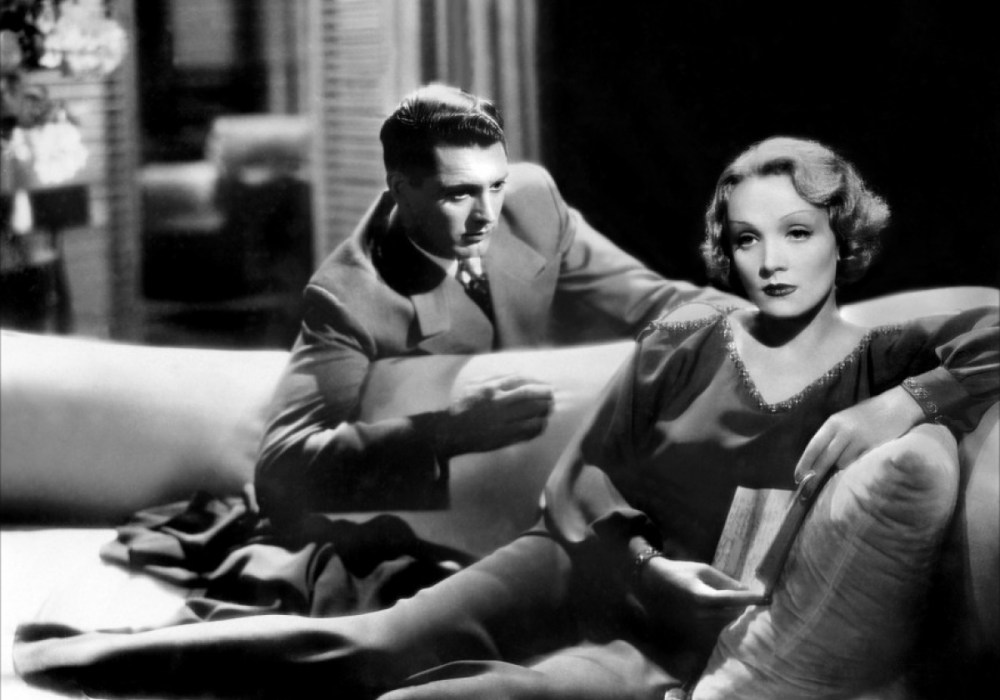
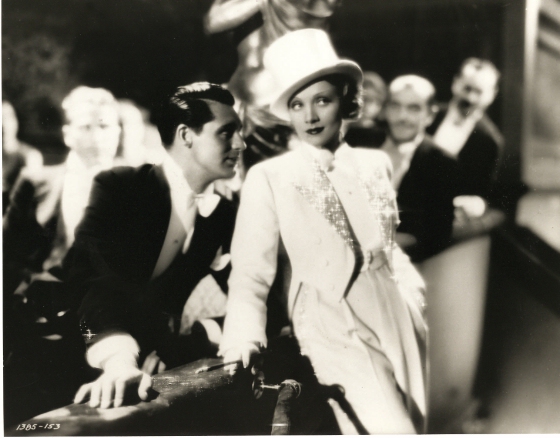
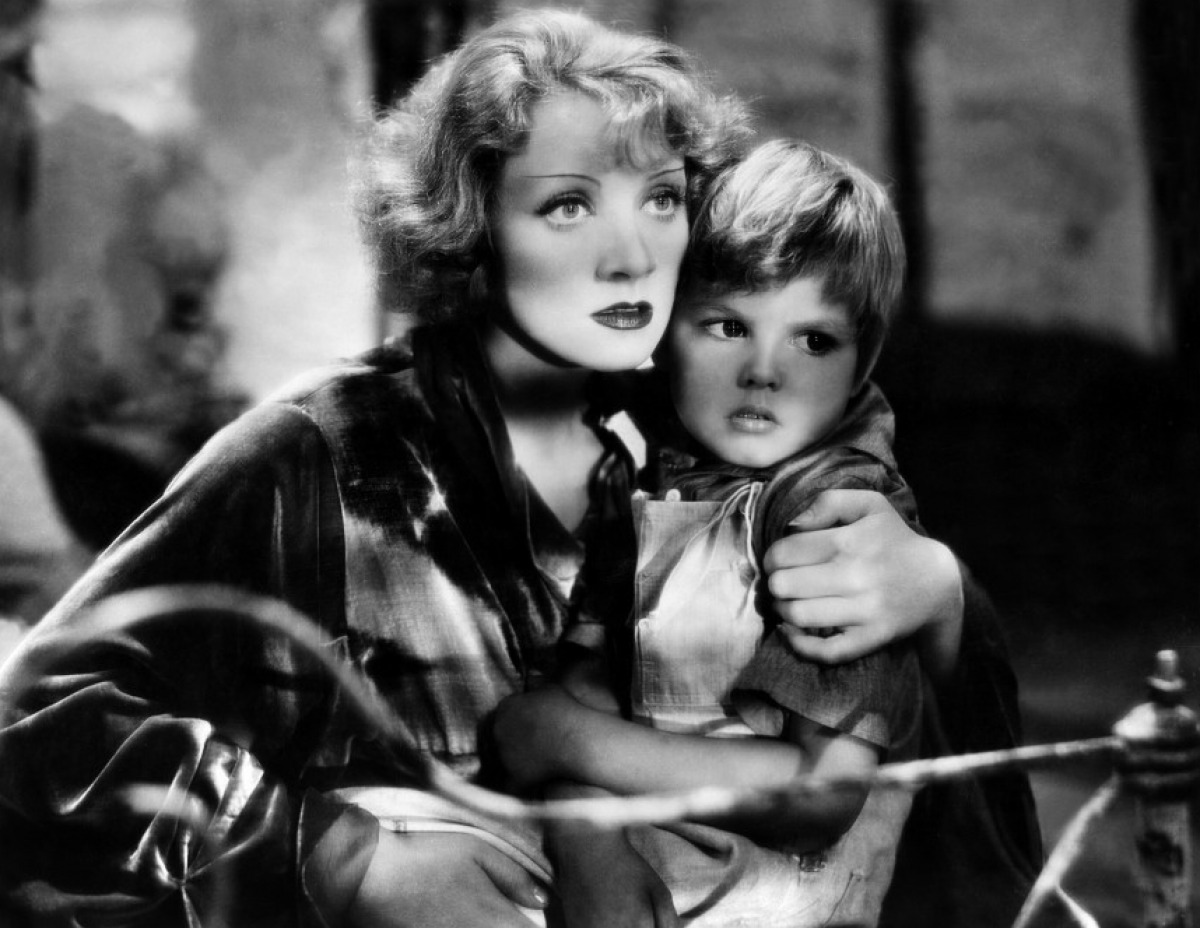
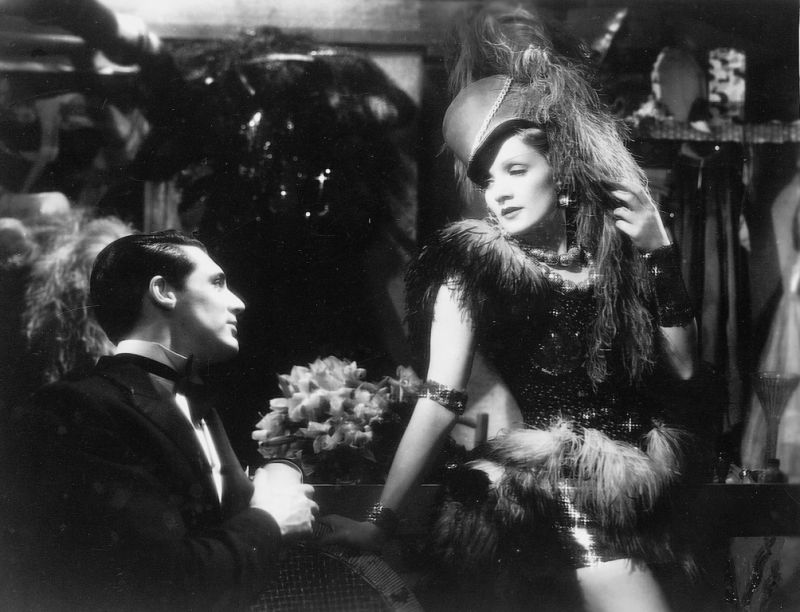
Blonde Venus is about Helen Faraday (Marlene Dietrich) sojourning back into the world of cabaret singing and moonlighting as a pseudo-prostitute solely in order to pay for an operation for her sick husband, Ned (Herbert Marshall). The illness is introduced first and it’s so advanced he can’t sell his body to science to pay for it, nor can he work to earn the money and time is short. An objective is introduced as well as a ticking clock that sends events precipitously into motion. Nick Townsend’s (Cary Grant) infatuation with her paves the way for her to do this and allows not only for the funds to be raised for the operation but for her and her son, Johnny (Dickie Moore) to remain clothed and fed. Their relationship reaches a tenuous agreement where they like one another and spend much time together, but she has no intentions of leaving her husband. It becomes a triangle wherein the other man is trying to win the woman away permanently but is unsuccessful. There are further ups and downs when Ned is cured. Confessing earns her no remorse from her husband. They split and he seeks custody. Helen runs off with Johnny. Adding kidnapping to her rap sheet in this film.

The film uses a few montages to illustrate rises and falls of her fortune, tracking her escape and evasion of authorities and when she’s on her own it tracks her movements, decadence and unhappiness. Ellipses aside we now, knowing the basics, can examine the plot versus the code with just one minor qualifying statement: this is going to be a somewhat litigious, semantic look at the Code. I, personally, as an artist and a film enthusiast bristle a bit at any form of censorship. Informing parents of content so their decision about what their kids are allowed to see is educated one thing; the preemptive approval on scripts and cuts in film so they adhere to a code of ethics is another. More simply stated I do not agree with statements like the following:

“Art can be morally evil in its effects. This is the case clearly enough with unclean art, indecent books, suggestive drama. The effect on the lives of men and women is obvious.”

“They [motion pictures] affect the moral standards of those who thru the screen take these ideas and ideals.”

Blonde Venus (1932, Paramount)

However, the Code did exist, eventually get applied, forced creative solutions to story problems, and helped advance cinematic language, but I feel that was more a secondary intention and byproduct, with all due credit for the assist there to Breen for engaging in dialogues and making that happen.

Taking all that into consideration and looking directly at the Code versus the facts in Blonde Venus a number of issues can be cited.

Here are sections that comment indirectly and directly on marital infidelities alone, under the WORKING PRINCIPLES section:

No picture should lower the moral standards of those who see it. This is done:

(a) When evil is made to appear attractive, and good is made to appear unattractive.
(b) When the sympathy of the audience is thrown on the side of crime, wrong-doing, evil, sin. The same thing is true of a film that would throw sympathy against goodness, honor, innocence, purity, honesty.

Note: Sympathy with a person who sins, is not the same as sympathy with the sin or crime of which he is guilty. We may feel sorry for the plight of a murderer or even understand the circumstances which led him to his crime; we may not feel sympathy for the wrong he has done.

Blonde Venus (1932, Paramount)

As you will soon see the way these are written are typically in guideline form. Specific exemptions are more black and white and very closely following a “thou shalt not” format like the 10 commandments. When dealing with questions about social mores as represented in drama things get nebulous, so as restrictive as some of these reads there is some leeway. With leeway it’s hard to say with 100% certainty always what the reaction would be.

Even clause (b) is a close-run thing. In a vacuum it’s easy to say that prostitution is evil, and you only sympathize with the person’s plight. However, to a more modern audience, knowing what we know of society at the time, it’s hard to fault Helen. How else, as a woman, can she get that kind of money that quickly? The amount is such that an legal means to amass that sum would not be quick. In this light, it kind of becomes a loaded statement about both feminism and morality. Would it be better for her to not do wrong or sin by the book and let her husband die, and her and her child end up destitute?

Even acknowledging that the Code would view these acts are evil it gets complicated:

The presentation of evil is often essential for art, fiction, or drama. This in itself is not wrong provided:

(a) That evil is not presented alluringly. Even if the later on the evil is condemned or punished, it must not be allowed to appear so attractive that emotions are drawn to desire or approve so strongly that later they forget that later they forget the condemnation and remember only the apparent joy of the sin.

(b) That thruout the presentation, evil and good are never confused and evil is always recognized clearly as evil.

(c) That in the end the audience feels that evil is wrong and good is right.

Blonde Venus (1932, Paramount)

Helen definitely goes through the wringer, and she does eventually give up being on the lam recognizing the error she made. However, clause (b) says confused inferring in doubt. I think you’d grant the film at least created the doubt. The vagueness of words like “evil is wrong” and “good is right” is also troublesome. Isn’t Ned’s refusal to listen to his wife’s explanations, insisting on divorce, also wrong? Aren’t they then both sinners by a conservative interpretation of the Judeo-Christian ethos’ that are the basis for much of the Code.

Next section is also troublesome with regards to this film:

(A) The presentation of crimes against the law, human or divine, is often necessary for the carrying out of the plot. But the presentation must not throw sympathy with the criminal as against the law, nor with the crime against those who must punish it.

Under the PRINCIPLES OF PLOT heading, the aforementioned statements are re-iterated, almost regurgitated:

(3) No plot should be so constructed as to leave the question of right and wrong in doubt or fogged.
(4) No plot by its treatment should throw the sympathy of the audience on sin, crime, wrong-doing or evil.

Under the following heading, there is further, similarly worded citations:

General Principles – regarding plots dealing with sex, passion and incidents relating to them:

(2) Impure Love, the love of a man and woman forbidden by divine human law, must be presented in such a way that:

(a) It is clearly known by the audience to be wrong;

Only under the PLOT MATERIAL heading we get specifically into adultery:

(b) Sometimes adultery must be counted on as material occurring in serious drama.

In this case:

(1) It should never appear to be justified;
(2) It should not be used to weaken respect for marriage;
(3) It should not be presented as attractive or alluring.

It can definitely be argued that it does not do (2) or (3), (1) would be the issue against a strong Code. She likes Nick but she’s definitely in the relationship for the benefit of her husband. He eventually does know that and takes care of them more because of it.

Conclusion

Blonde Venus (1932, Paramount)

While the transcription may have proved tedious seeing the Code ultimately got me into the right head-space to consider this film more within the context of its time. Viewing films through the prism of the zeitgeist will always be a disservice to that film, it allows for revisionist censorship and other issues.

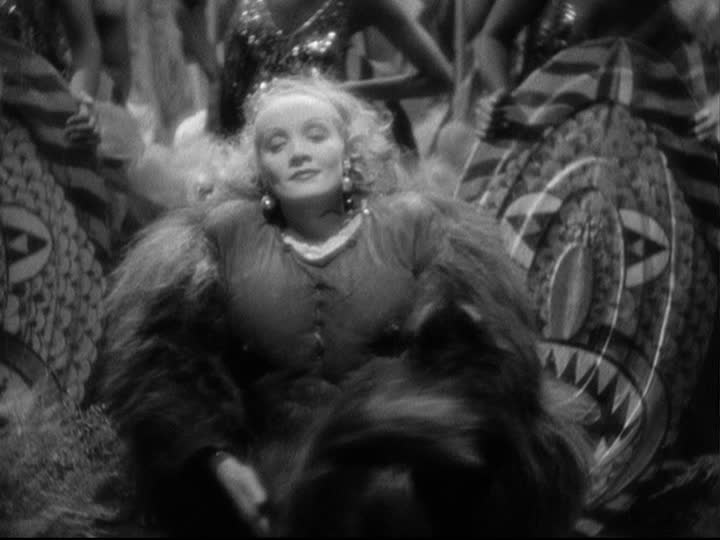
It’s clear that a musical number like “Hot Voodoo” would never be acceptable today by societal mores even if the MPAA didn’t suggest an edit. However, the shocking aspects of the film, what makes it a compelling drama is not likely to move the needle of outrage or intrigue today.

What is undoubtedly timeless is the fine construction and execution of this film, it’s intriguing and quite a roller coaster ride. It is a film certifiably Pre-Code based not only on when it was produced but also the treatment of its subject matter.

Russia in Classic Film Blogathon – Dziga Vertov: The Man with a Movie Camera in a Gyre of Time and Truth

In preparing this post I naturally watched The Man with a Movie Camera again. In doing so I was reminded of Berlin: Symphony of a Great City, which I had seen more recently but was made first. Due to that fact I got to thinking about my history with this film, and what if anything had changed in my perception of the film.

To accurately try to capture this I must go back to the beginning to where I first heard of the film. For yes, it is still my assertion that every film does have a pre-life in the mind of the viewer. This pre-life ought not effect the perception of the film in the viewer’s mind, but can and does more often than not color it. Furthermore, if I am to accurately map the trajectory of this film through time as I see it I have to go back to my beginning with it, which is in a textbook in an introduction to film history course that tries to encapsulate Vertov’s intention with his experiment.

This introduction was found in A Short History of the Movies by Gerald Mast and Bruce F. Kawin, 7th ed.:

Dziga Vertov, one of the Soviet Union’s pioneers in combining documentary footage with political commitment, experimental cinema with ideological statement, suffered similar artistic strangulation as Stalinism took hold – partly because he was a Jew, partly because his aesthetic stood for the truth, and partly because he didn’t praise Stalin enough in the last film he was allowed to make, Three Songs About Lenin (1934).

Dziga Vertov’s intense energy was evident not only in his documentaries and manifestos, but also in the name he chose for himself, which translates roughly as “Spinning Top.”

Yes, his work had quite an impact:

Vertov began by compiling footage into weekly newreels in 1918-1919, went on to edit full-length compilation films and shoot some of his own footage in 1920-22 (he called the camera his “Kino Eye”). then invented a documentary form that went beyond the reportage of the newsreel into creative journalism: a series of shorts that were called newsreels but focused on specific topics and themes. That series, which ran from 1922 to 1925 was Kinó-Pravda (“Film truth”; the French term, in homage to Vertov is cinéma vérité).

Documentary films are as old as films themselves. However, the very early documentary cinema was very literal, and would only be interested in what happened and that is all. The unseen hand theory of direction was more an iron fist.

This was the first film ever exhibited; a documentary:

https://www.youtube.com/watch?v=d_9N68MO9gM

Vertov clearly had other ideas in mind, and his revolutionary ideas transcend cinema as his artful treatment of real subject may predate the same concept in prose, like In Cold Blood and the birth of creative nonfiction. Did cinema beat other arts to something? I think it may have.

Next in my journey, I read some of Eisenstein’s works. He was not mum on Vertov’s works. In Film Form has some less sparkling things to say on Vertov.

With regard to the use of slow-motion:

Or, more often, it is used simply for formalist jackstraws and unmotivated camera mischief as in Vertov’s Man with a Movie Camera.

And with regards to his experimentation:

The young Soviet cinema was gathering the experience revolutionary reality, of first experiments (Vertov), of first systematic ventures (Kuleshov) in preparation for that unprecedented explosion in the latter half of the ‘twenties, when it was to become an independent, mature, original art, immediately gaining world recognition.

Great filmmakers often disagree. Tarkovsky thought Eisenstein’s overemphasis on editing was misplaced, as all arts have editing; so montage, in his mind, did not define cinema, but rather time did. Art is subjective and different perspectives lead to personal and unique works. Vertov acknowledged he was experimenting in title to The Man with a Movie Camera, so as he wrote (both scripts and theory), shot and cut he too developed his own ideas.

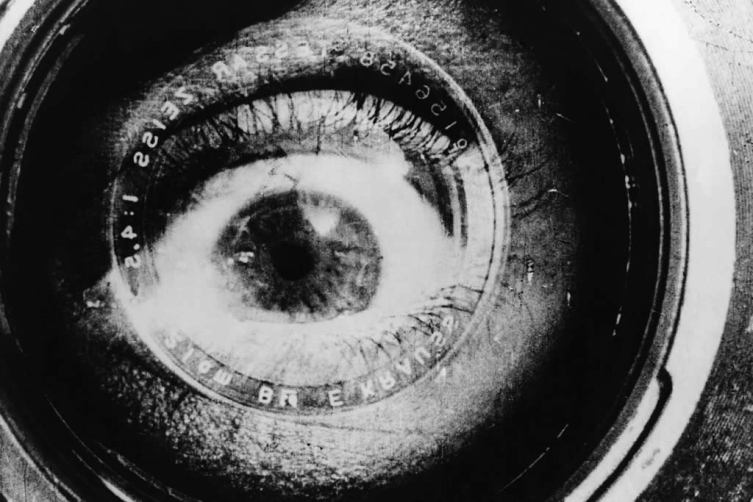
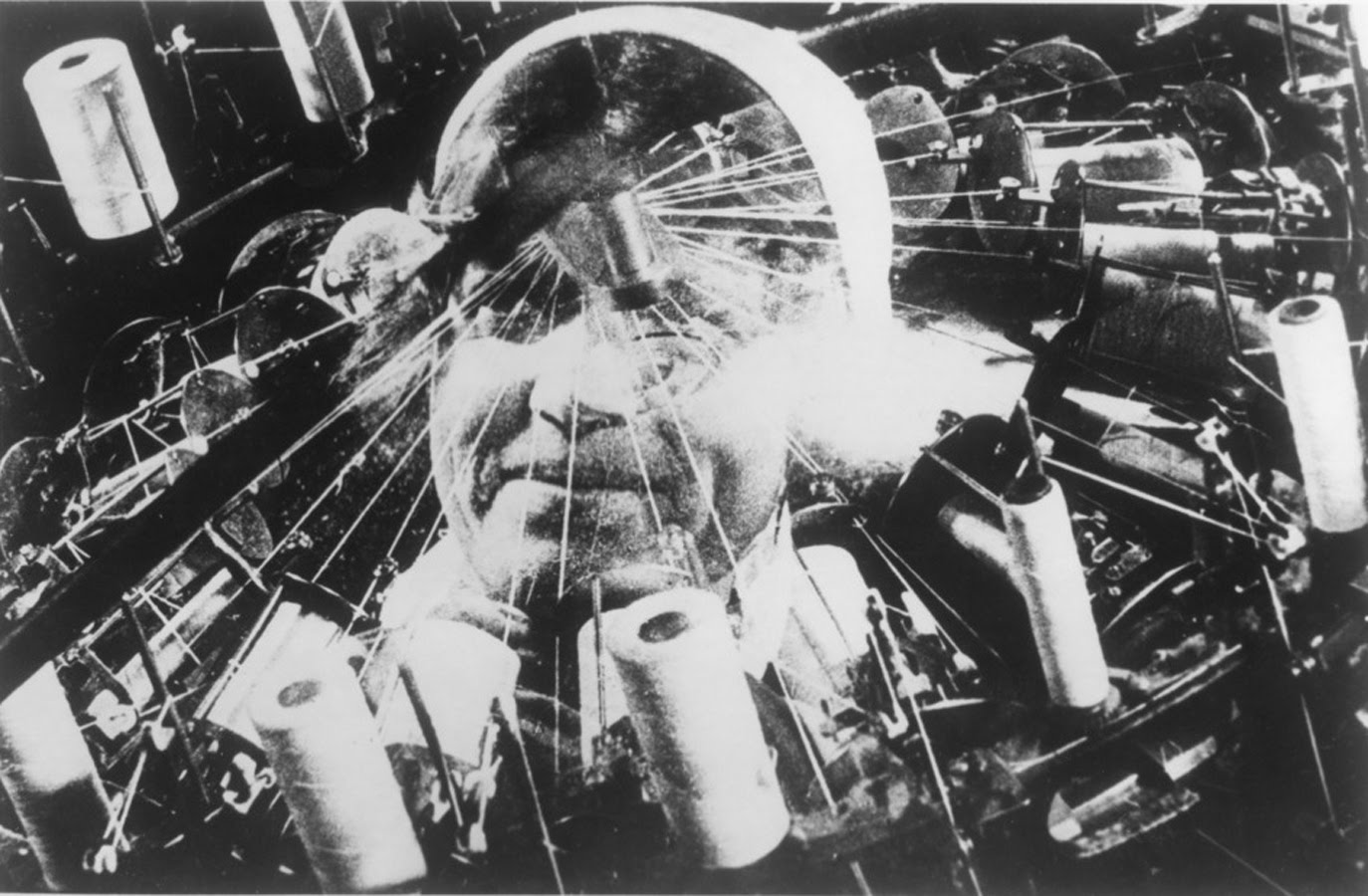
The Man with a Movie Camera (1929)

This idea took root after he had seen, and decided to respond to, Berlin: Symphony of a Great City. What Vertov seeks that’s different he states straight from the outset:

Man with Movie Camera
A 6 reel record on film
Produced by VUFKU in 1929
Excerpt from a camera operator’s diary

Attention viewers:
This film is an experiment in cinematic communication of real events/
Without the help of intertitles/
Without the help of a story/
Without the help of theatre/

This experimental work aims at creating a truly international language of cinema based on its absolute separation from the language of theatre and literature.

Author-supervisor experimenter
Dziga Vertov

With that in mind the mind instantly opens upon the start of the film. Yet it’s the creativity and positively kinetic nature of the film that makes it a unique experience. Yet, despite some of Eisenstein’s grumbling of the primitive nature of the trickery it’s not the party tricks, or the editing pattern that make this film standout, but the embodiment of statement; the visual unity created through theme that’s so clearly communicated.

Mast and Karwin put it best:

Like everyone else in society, the man with a movie camera has a job to do — his special work being to record and reveal the work of everyone else. And like everyone else in society, the man with the movie camera likes to play. Vertov allows the playful camera to dazzle us with accelerated motion split screens, superimpositions, stop-motion animation — demystifying the cinema even as it gives the audience the visual treats it came to the theater to enjoy. Grounded in daily life as much as in the theory and practice of cinema, this brilliantly reflective documentary renders cinema and life inseparable.

The only way in which the film relies on any other art-form (barring photography, of course) is in the use of music. Even upon its release it, like many other silents, was accompanied by a live orchestra. Since the silent days it has acquired many other scores to accentuate the cuts and changes in composition that this film has.

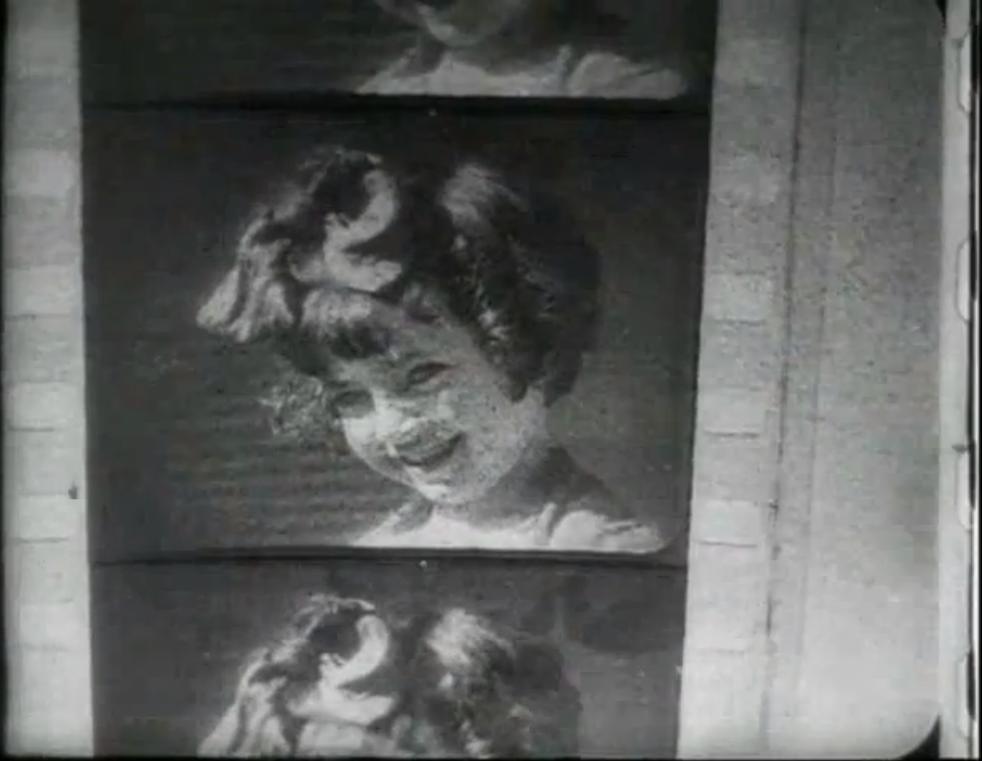
The Man with a Movie Camera (1929)

This is not to discredit the film in anyway. Music and film have always co-existed. Films need music. Especially this one cites Roger Ebert:

The experience of “Man With a Movie Camera” is unthinkable without the participation of music. Virtually every silent film was seen with music, if only from a single piano, accordion, or violin. The Mighty Wurlitzer, with its sound effects and different musical voices, was invented for movies.

This film seeks to unshackle cinema, and I feel it did, and most importantly it continues to do so as new viewers find it. For film, which relies on motion, both within the frame and in swapping those images out, the parameters must be challenged. Film was once a new toy, vibrant, irreverent and disrespected, looked down upon, and thus somewhat more unafraid to try things on for size. Yes, certain universal narrative precepts needed to be borrowed, but film needed to find its own voice with which to speak. Experiments like this one were crucial in developing that voice not only in documentary but in narrative cinema as well. This restless creative audacity is something that ought not be lost and held onto; the more fertile imaginations; the more impressionable viewers that catch a glimpse of this film the more possibilities the future of cinema has.

For that’s really what is being discussed here. Too often film history, like any history, can be bogged down in facts, dates and events that have happened without discussion the domino effect of influence that events, filmmakers and films can have. The concussive impact of one stellar film can have repercussions throughout time, and not just in the zeitgeist. The Man with a Movie Camera is such a film because it not only tests aesthetic norms and boundaries, but asks the important questions of “Why are we creating this way?” and “What can we do with it?” and most importantly it shouts “Yes, it is important and worthy and should continue!”

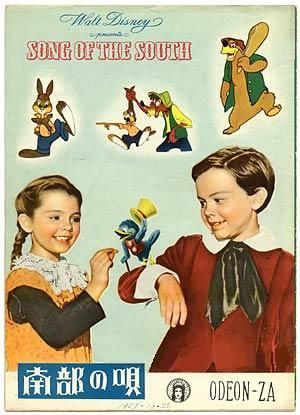
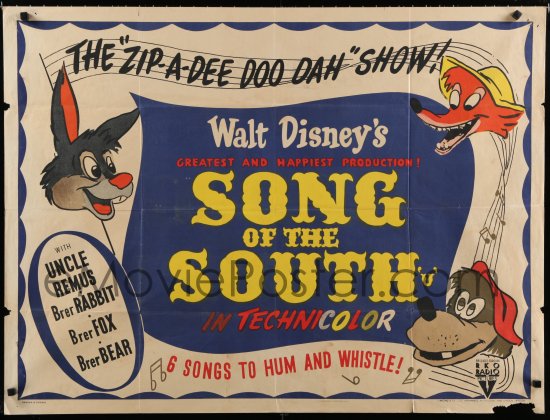
Contrary to Popular Opinion Blogathon: Song of the South (1946)

Is This Really Contrary to Popular Opinion, or Why Choose Song of the South

In the course of this brief examination of Song of the South I hope that the only mea culpa I have to write is about the fact that my enjoying this film is not a minority view. Usually, when I’ve seen discussion about the film on Twitter it has been by people who also have a fondness for the film, and are film people. However, the mere fact that it is Disney, the very company that produced the film that is doing the suppressing is a large part of the issue in my mind, and part of why it feels like an unpopular opinion.

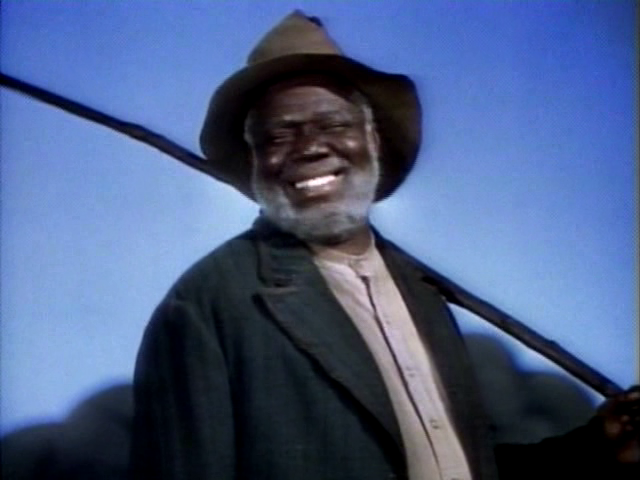
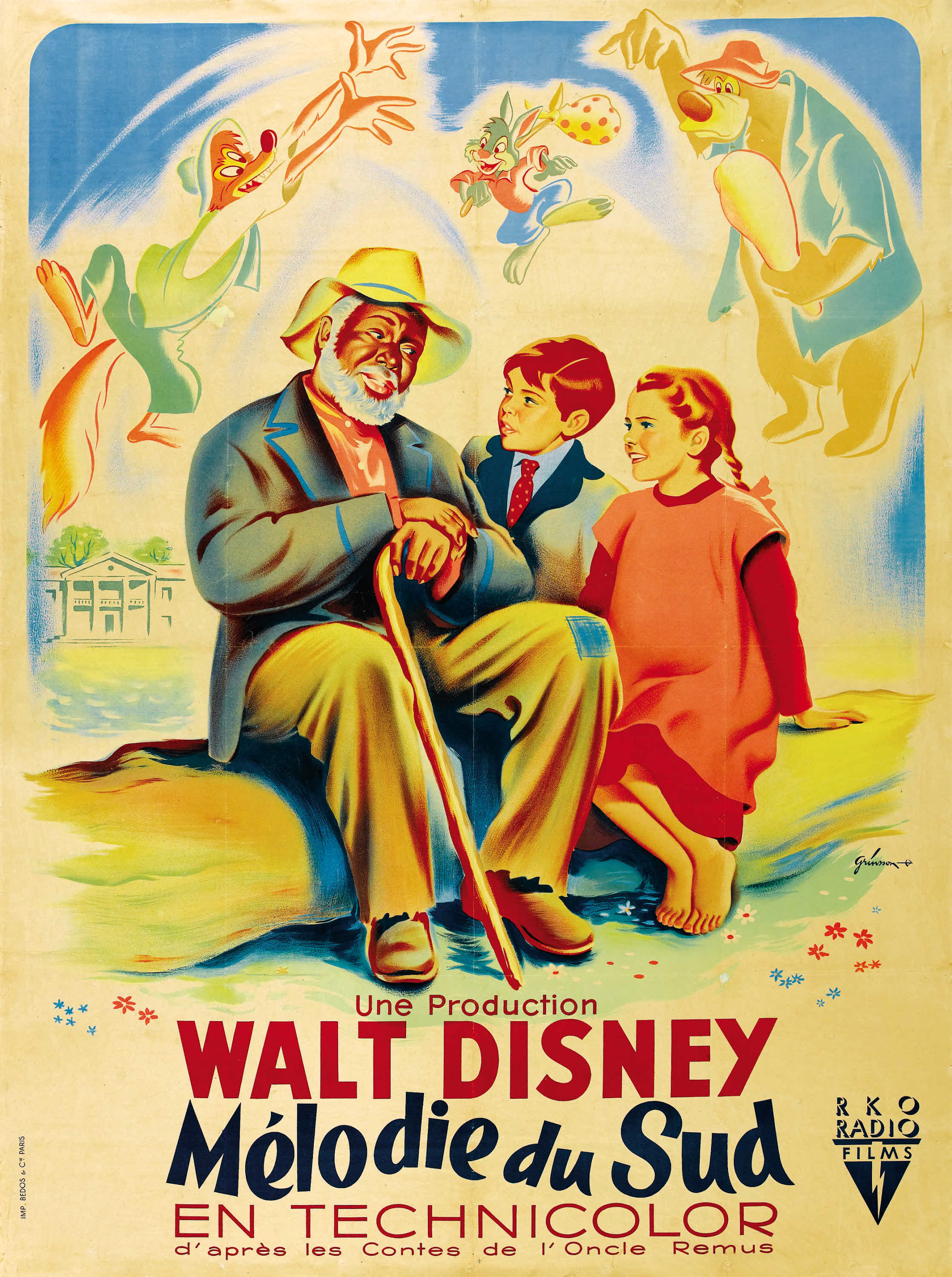
The film is one that Disney produced in the mid-40’s, had a mixed reaction, and early detractors, the NAACP included, but was not a title Disney ran from until the 1980s, after its second re-release in theaters it was gone from American home video in the mid-’80s. Later on “Zip-A-Dee-Doo-Dah” was even expunged from Sing-Alongs. However, one of the many aspects about this disavowal is the fact that Disney picks and chooses where and how it will shun the film. It will not distribute the film in the US, but it does still sell overseas; it will make one of its more popular Disney Wold rides about it, but it won’t include Uncle Remus or try to enlighten the park guests who is on the tee shirt they’re buying. They will have many pop singers reinterpret its iconic theme song, but no longer play the version from the film.

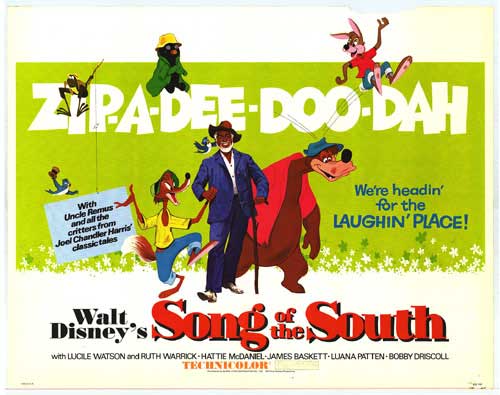
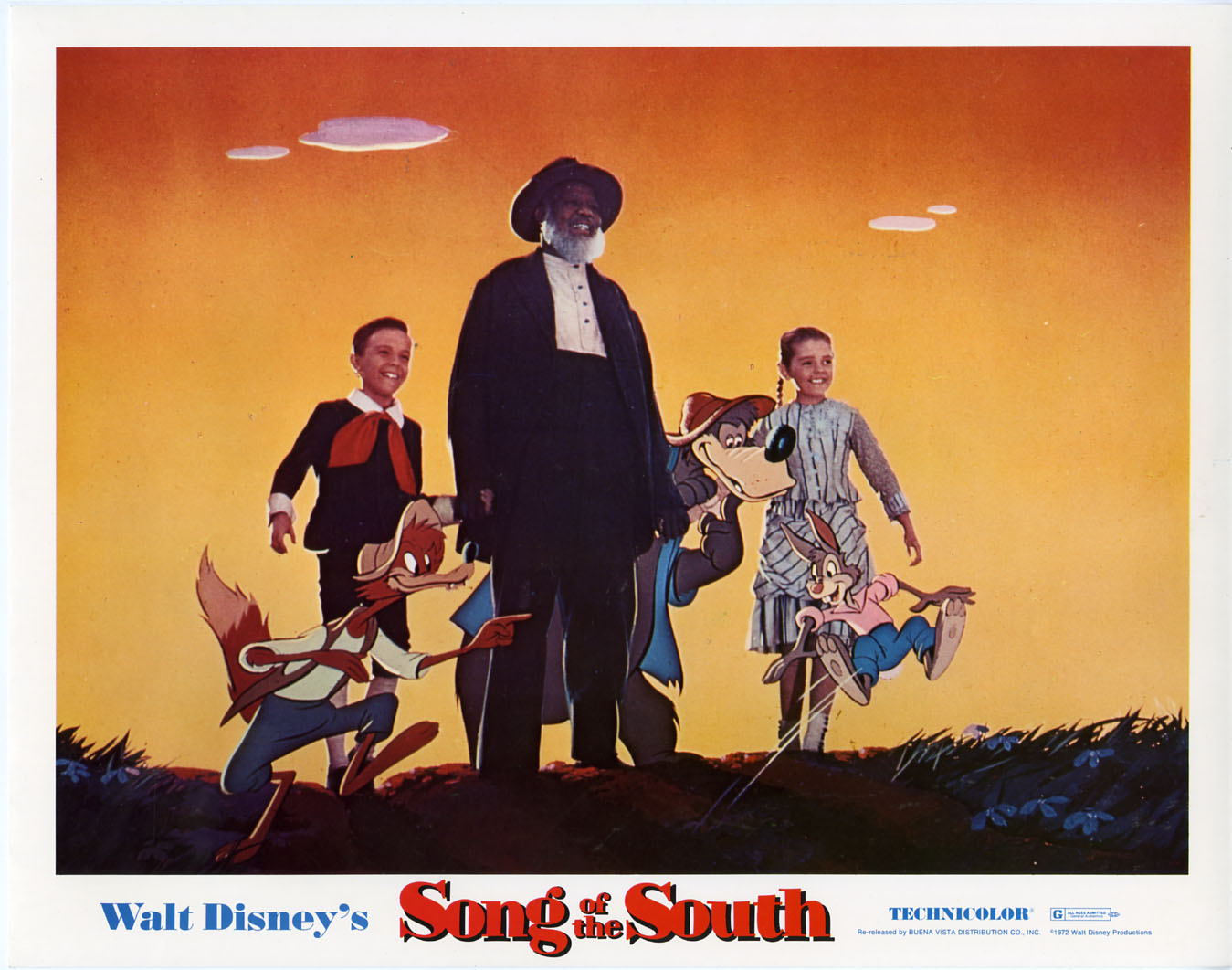
Song of the South (1946, Dinsey)

In the past Disney liked to used to play the “you misremember” card. With the advent of video and the internet that holds less water so editing and suppression have become the norm for certain things that have made people squeamish. While other projects, also fairly common to all forms of entertainment in their era are addressed via contextualizing disclaimer usually delivered by Leonard Maltin on a DVD collection.

In the interests of further fully disclosing where I am coming from I will say that yes, I do consider myself a fan of Disney. One of my blog’s theme topics on an annual basis is an examination of Disney fare. However, in an age of fanboydom it seems like you can only be a cynical chronic complainer or a blind follower. I’ve always equated following a studio, especially one that’s part of a large corporate armature, to be akin to rooting for a sports team: you like them, you want them to do well and right, but you’re not blind and they are not immune to being criticized by their patrons.

It’s not as if Disney has never had to deal with these questions even from their stockholders. It has come up rather frequently at annual meetings. There’s more on that and many other of the stories I will touch on here in Who’s Afraid of the Song of the South? a great book I read in preparation for this blogathon. I recommend you check it out if you have further interest in the topic.

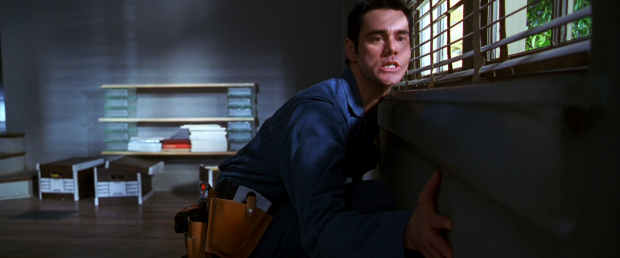
“Somebody has to kill the babysitter.”

The Cable Guy (1996, Columbia Pictures)

Television and Film as surrogate parent or babysitter is not a new concept. The quote that is in the inspiration for this heading is from The Cable Guy (1996). In that film this is the line that divulges the modus operandi of Chip’s psychosis. When this film was made the over-emphasis that some believed TV and Film had on society, or on certain individuals, was not a new debate. However, one of the points that the film is making, even in all its silliness, is that it takes a deranged sort of delusion to really use film or TV as an analogy for real life or to get it to substitute things like parenting, conversation, thought and other things. The climactic events of the film take place as the nation hangs on the live broadcast of a famous murder trial (a subplot which brilliantly spoofs the Menendez case). What this is all leading to is that one of the things that Song of the South has had to contend with, which was not a problem of its own making was the overemphasis that depictions in the media have been given on the formative process of human beings as they pertain to attitudes towards racial groups, women and the like.

I use the word overemphasis because I cannot argue there’s no impact, but it is almost never the main cause of a prevailing attitude. Those who have cited video games, movies, or TV as motivation for crimes have usually had mental issues that impaired their grasp on reality. Part of the issue stems from the fact that oftentimes a film or cartoon with dated material or material that can be interpreted as offensive are usually seen by children who are not monitored. In essence, removing the potentially offensive work of art is pandering to the lowest common denominator: the “impressionable child” watching something unsupervised.

Singled Out; Other Things are Never Questioned and Readily Available

Song of the South (1946, Dinsey)

Yet, aside from some short subjects this is the only Disney product that has been struck in its entirety. Disney’s corporate penchant for self-editing and censorship is usually in smaller moments but rarely involve making a title wholly available. Other films, even from the selfsame studio, have references or depictions by today’s standards that are wholly unacceptable but they’re still widely consumed without a second thought. One of the more notable examples is Dumbo. Aside from having its scary moments I am mostly referring to the crows. The characters are crows and clearly voiced by African-American actors, which can be construed as a reference to Jim Crow laws. However, the availability of Dumbo has never been threatened. Disney has never shied away from the title as a whole. Yes, the crows are absent from the Dumbo ride at Disney world and their songs (Namely “When I See an Elephant Fly”) are rarely collected and re-released despite being one of Disney’s finest musical creations. The Simpsons made a brilliant joke about this, Lisa asked if Dumbo was the film that had “those racist crows in it?” Homer responds “Oh, Lisa, those crows weren’t racist the men who animated them were.” Which is what a lot of this boils down to: it was a different era so the necessity of sensitivity, and the level that needed to be reached to be seen as progressive, was lower.

In watching documentary footage on a Little Rascals box set you hear speak of the progressive move it was to have characters like Buckwheat and Farina who played with white children as equals. In a nation that still had segregation and other discriminatory practices in play, yes, relative to society that was a utopian vision. Even though a lot of the dialog and gags those characters have are what most date their films relative to its own era it was a step forward. Back then it was a bold statement today children of different races playing together is far more common, as it should be.

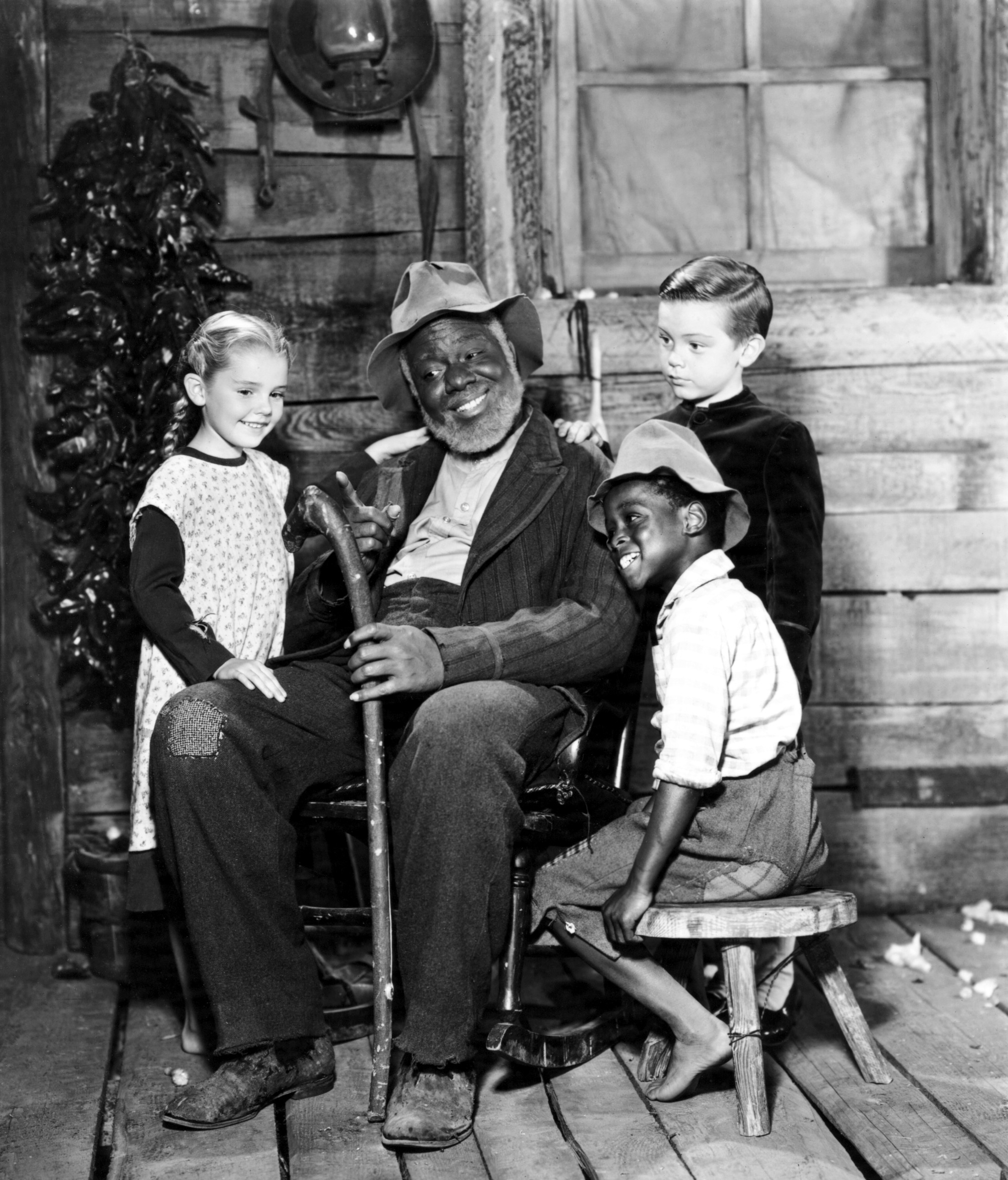
Song of the South (1946, Disney)

In the ‘90s certain Bugs Bunny cartoons like Hillbilly Hare for one were taken off the air after complaints were lodged to Cartoon Network. Yet, to my knowledge the short where in Bugs sings “One, Little Two, Little Three, Little Injuns” as his tallies his arrow-hits and then corrects himself to mark one as only half a hit because “that one’s a halfbreed” never was removed. That fact is brought to attention because those who know of the cartoons know these facts, but they don’t get the notoriety the Disney titles get for equal or lesser offenses. Looking at the whole landscape of animated shorts from these eras ethnic stereotypes were common, broad and not unique to one studio. Even with these occasional lapses in judgment (by modern sensibilities) it doesn’t really change Bugs Bunny’s character. He was wisecracking and had a mean-streak at times but he was always the retaliatory figure in his conflicts. Only on occasion like in the aforementioned short or in his battle with Giovanni Jones, the opera singer did things go too far. Woody Woodpecker over at Universal on the other hand was an instigator but still made of similar stuff, maybe a little more unhinged. Getting back to the Disney realm, one correct modern interpretation is actually found on a t-shirt you can find at Disney World gift shops with Donald Duck on it, which cites him as the original angry bird.

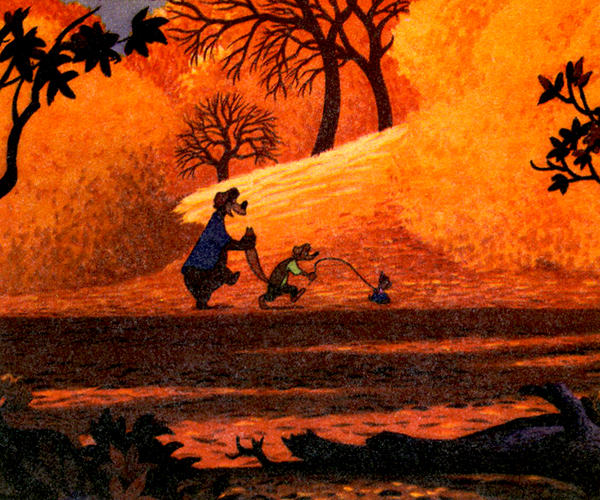
Song of the South (1946, Disney)

In Song of the South, even accepting the fact that there are some miscalculations the bottom line is that Br’er Rabbit and Uncle Remus are undoubtedly heroes of the story. I used to attribute most of the notion that the film was racist to the Tar Baby sequence, which as I discovered when watching this film was and is a phrase and a fact of life in the South before it became a racial slur. Much of the belief that the film is racist stemmed from the fact that Disney did not add a title card establishing a postbellum time period. Thus, some believed it was antebellum and not postbellum. It’s an unusual miss though from an audience that frequently had to infer and decode as the Hayes Code made filmmakers get creative about such things so they could deal with adult issues in films without being overt.

One thing that Who’s Afraid of the Song of the South by Jim Korkis goes into a good amount of detail about is the pre-production process. Many of the errors and perceived errors in the making of this film can be attributed to Disney playing both ends against the middle. The first writer (Dalton S. Raymond) they hired with a mind to be true to the source material. Then after some battles about certain elements like his use of the word “darkie,” which Disney sought to avoid they hired a leftist Jewish writer (Maurice Rapf) to try and balance it out.

If you want a troubling depiction of the South and slavery set before the war watch Way Down South which I discuss here. There’s no move from any entity to strike it. On a more noteworthy level Birth of a Nation both received protests upon its release and spurred and increase in popularity of the KKK. The next decade (the 1920s) was the zenith of its membership numbers. It is in the public domain now so it would be hard to suppress, but it’s still very easy to find.


Segregation and Other Truths We’d Prefer not to Address

Song of the South (1946, Disney)

Part of this whole issue is that we like to pretend there’s no racism in America. If we didn’t how could someone seriously have coined the term post-racial with a straight face almost entirely based on one election result? Song of the South was made in an America that was still segregated, thus, in some ways racism was still government-sanctioned. Furthermore, its premiere was in Atlanta meaning that many of the cast members were not even in attendance because the premier venue was “Whites Only.” So clearly almost any film made in this time will likely reflect racial attitudes that are no longer prevalent or acceptable. But just because its not the norm, or frowned upon, does not mean that racism has been eradicated.

Slaves being emancipated, didn’t end the discrimination against blacks in America. Neither did the Civil Rights Act. Nor did the creation of the term Post-Racial. However, unless some incident sparks the debate like Ferguson we choose not to have the discussion. Film has always tied art and business and with the corporations running the big studio being larger than ever the gut instinct more than not is to always be safe and never be sorry.

Splash Mountain

Splash Mountain (Disney Parks)

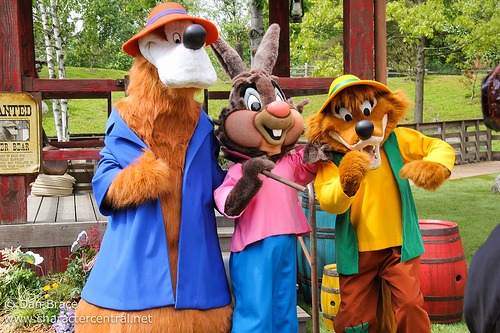
Splash Mountain is perhaps one of the most iconic rides at Walt Disney World. The theme parks are like an embodiment of the Fantasia ideal rides (read segments) have been switched out but the basic premise remains the same. The planning of the ride, like anything Disney, is well-documented in lore. There was much discussion and it was decided that all the animal characters could and should play a role in the ride, but Uncle Remus, the center of the film, should be omitted since it was his persona, his perception by some as being an Uncle Tom, which much of the controversy around the film swirled. Because the fables in which Uncle Remus and his cast of animal friends were a part of are no longer as well known as they once were there is no frame of reference for younger patrons.

However, what happens when he’s hidden is that Disney really ends up misrepresenting itself and baiting-and-switching its consumers. There are are people riding it who have no idea there’s a film behind the ride, many likely leave believing that Br’er Rabbit, Bear and the like may be created for the ride like Figment was for The World of Imagination in Epcot. It’s another case of Disney wanting to have its cake and eat it too: because the film is deemed misrepresentative and offensive to some in the US market we will not make it available on video there, but we will make it available in many foreign markets, exploit the song for CD sales and the other characters for a ride.

Zip-A-Dee-Doo-Dah

Sing-Along (Disney)

Lawrence Welk, Xavier Cugat, Freddie and the Dreamers, André Previn, Bing Crosby, Doris Day, Debbie Reynolds, Mannheim Steamroller, Dionne Warwick, Johnny Mercer, Rick Ocasek, Steve Miller, Los Lobos, The Jackson 5, Miley Cyrus and many others have recorded the song. Many of them on Disney released albums. Disney has even still included James Baskett’s film version on some collections. The only apparent retraction of the song was removing it from a Sing-Along collection on later editions. It’s just another case of Disney being inconsistent. They still want to be able to profit from the movie, but not actually make the movie available.

The Split On the Film Has Always Existed

Song of the South (1946, Disney)

Upon its release the NAACP issued a statement on what if felt about the film much of their interpretation was shaped by the areas Disney left vague. The point being really that that reaction was immediate and not revisionist or in hindsight. It’s only many years later that Disney decided it would start to err on the side of caution to protect their brand name and assuage the detractors of the film and make the film hard, if not impossible to find in the US.

It’s Consistent with Disney

Song of the South (1946, Dinsey)

However, the unfortunate part of this story is that it’s just the most notable example of Disney’s in-house censorship. Many of the stories Jim Korkis tells are about films being altered, edited or otherwise modified because certain things years down the line may have been deemed objectionable.

Among them are the car crash in Who Framed Roger Rabbit, characters being digitally removed from Fantasia and shorts disappearing because they were wartime propaganda, and there are many more.

Disney Buried RKOs Swiss Family Robinson

Swiss Family Robinson (1940, RKO)

Here’s a small tidbit about Disney that really irks me, and it goes back to suppression: when Disney was preparing to make Swiss Family Robinson they made sure they acquired all the copies of Swiss Family Robinson (1940) produced by the defunct RKO Radio. The purchase was made simply because Disney didn’t want the versions compared. Now, this is not an act too dissimilar from repeatedly optioning a story, or many stories, simply so your competition can’t have any. However, where it falls into suppression is that the original they wanted hidden is now 75 years old. They audience for it, and even for Disney’s version has, dwindled. No one can see it now, it’s not impossible that the film is now lost for all time just to continue to protect the business interests of a 55 year old film.

Rerelease Madness

(Disney Parks)

Song of the South is a property that Disney didn’t cool on immediately. It was later on, when Walt was gone and the company was bigger, more successful and more corporate than it was during and just after World War II. A comic strip story was the topic of some internal debate in the 1970s, ultimately it was printed and came and went without incident. A clip from the film was featured in an episode of the Disneyland TV show a decade later. More telling is the fact that the film was, like many Disney films, rereleased on multiple occasions. The difference here was that there was more of a layoff. The film again saw the light of day in 1980 and 1986. It was released on VHS in 1986 but has since been further and further barred from the pantheon.

Conclusion

Song of the South (1946, Disney)

Perhaps what should really be asked is “What is gained through the suppression of Song of the South?” If there’s one thing that many recent headlines have proven is that freedom of speech is still under attack, and many of us who are fond of the arts and making a living therein are willing to fight tooth and nail to defend the right to speak. The argument that passive racism is more pervasive and harmful than overt racism is a fair one. In my estimation there are cinematic trends that are far more harmful than one interpretation. If you look at the landscape of films most award-nominated performances for African-American actors are still Civil Rights or Slavery-themed films. Films without award aspirations usually still cater to stereotypes that are not new. The Help may be a film that was divisive, but regardless if your outlook on it is positive or negative it is still about domestics as well-intentioned as it is. The point I’m driving towards here is: Song of the South had good intentions that were muddled in the the production decisions, and furthermore through interpretation. There are far more obviously troubling titles that never get questioned.

The expunging of history, and formerly accepted attitudes, many of which still exist, do not change the fact they once existed. If there’s one thing that history, or even the nightly news proves, is that ignoring problems does not make them go away. Even in its condemnation of the portrayal of African-Americans in the film the NAACP did commend the filmmaking at play involved, and the Academy followed Mr. Disney’s suggestion and gave him a honorary Oscar. Correcting the notion that this was an antebellum tale lessens much of the issues. The costuming was another aspect that in reading the book I had to roll my eyes. If the white characters had been more threadbare and destitute in the throes of reconstruction as they had been described as in the script the notions of class and master-slave relations wouldn’t have been able to take hold. That doesn’t alter the fact that these children are taught sage advice, and helped out greatly by Remus more so than their parents can.

Song of the South (1946, Disney)

While I’ve gone over the finer points and discussed how the film has been construed as racist, and where I believe more deliberate decisions could have been made to make the facts and points of the narrative more clear; I do not agree with its assertion that its racist. I have not been able to get past Birth of a Nation’s introductory shot of African-American characters sitting on a porch eating watermelon. There it’s not the kind of offense I can roll my eyes at and continue Propaganda films are still available to see in more cases, highly uncomfortable to sit through and at times more uncomfortable because of how effective they are like Triumph of the Will. However, these are opinions I’ve formed by seeing all or part of this film. I’ve seen Song of the South on multiple occasions. Those who have seen it and contend it is racist are at least informed by their interpretation of the film. As Eric Vespe of Ain’t It Cool News points out, the gatekeepers who keep the film hidden are not as informed:

I was speaking to an ex-Disney executive a few years ago at a film festival and I brought up Song of the South. We had been watching a lot of films together over a couple of days and I decided it was okay to broach this subject. After all, this unnamed exec seemed very smart and obviously cared about cinema.

My big question: “When do you think we’ll ever see Song of the South on DVD or Blu-Ray?”

His response: “Never.” I asked why. “Because it’s racist,” he exclaimed.

I know that’s the general perception of this film, but I was still taken aback. I thought for a second and asked, “Have you seen it?” Incredibly he said he hadn’t and that right there is the root of the problem. People see the Tar Baby image or remember Uncle Remus as a slave, which is wholly incorrect. The film is set during Reconstruction and Uncle Remus is a free man. In fact all the people working on the farm are free.

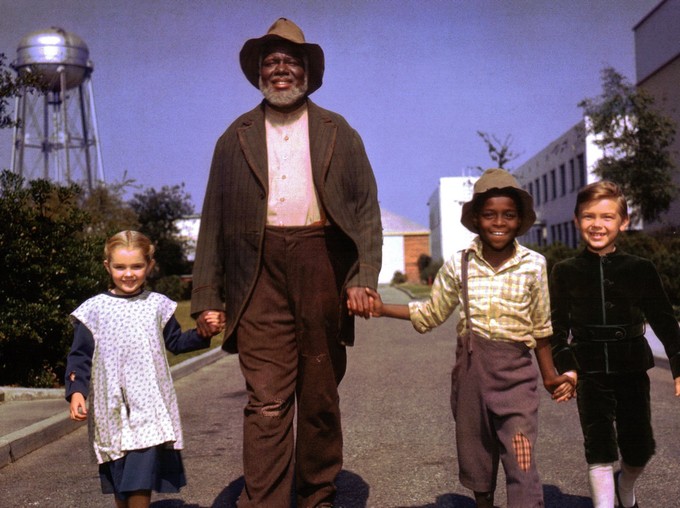
The heart of the film is Uncle Remus’ friendship with the white kids, played by Walt Disney favorites Bobby Driscoll and Luana Patten. Their characters didn’t see Uncle Remus as black or a lesser person. He was a friend.

Someday someone at Disney will realize there’s a way to release the movie to home video. Harry had a good idea to have someone like Spike Lee put the film in context with a specially filmed intro. It’ll take something like that, which is a bit of a shame. It’s also a bit hypocritical since they aren’t afraid to monetize the cartoon characters and the infamous Zip-A-Dee-Doo-Dah while pretending the actual movie they come from doesn’t exist.

Dated and inaccurate portrayals where they are found are different than a film that is in its entirety a racist construct. Furthermore, there is a bottom line notion that every film is a film of its time. Disney here becomes a victim of its own marketing where titles are branded as classics prior to even coming out. There’s also a fallacy of timelessness, of unchanging social mores and that everything will always be the same. Nothing is ever the same. A popular film notion has always been “They don’t make them like they used to.” Recently I saw that amended to read: “They don’t make them like they used to and they never did.” Film is an ever-changing artform just as society continually adjusts our interactions, laws, politics, etc. Therefore, how can a film made nearly 70 years ago ever be acceptable by current standards of anything. Context always matters, and discussion is not bad regardless of what side of a topic you land on.

That puts a button on the final point of the last argument. I feel if anything Disney was trying to make its point in not-so-many words. The problem there, especially when things were usually more didactically done is that it can be misconstrued. However, just because something makes us uncomfortable or can be difficult to discuss doesn’t mean it should go away. Ignoring problems doesn’t make them go away as we’ve been forced to rediscover many times over. I happen to be pro-Song of the South. However, even if I was against it and thought it to be a harmful representation, I would not be in favor of its being made unavailable. Too many films are lost to the ravages of time and chance. Where other arts enjoy more permanence film remains fragile in this regard and we should not wilfully remove films from existence just because some may dislike it. It’s a part of cinematic history and our history that should be readily available.

contrary-blogathon-6

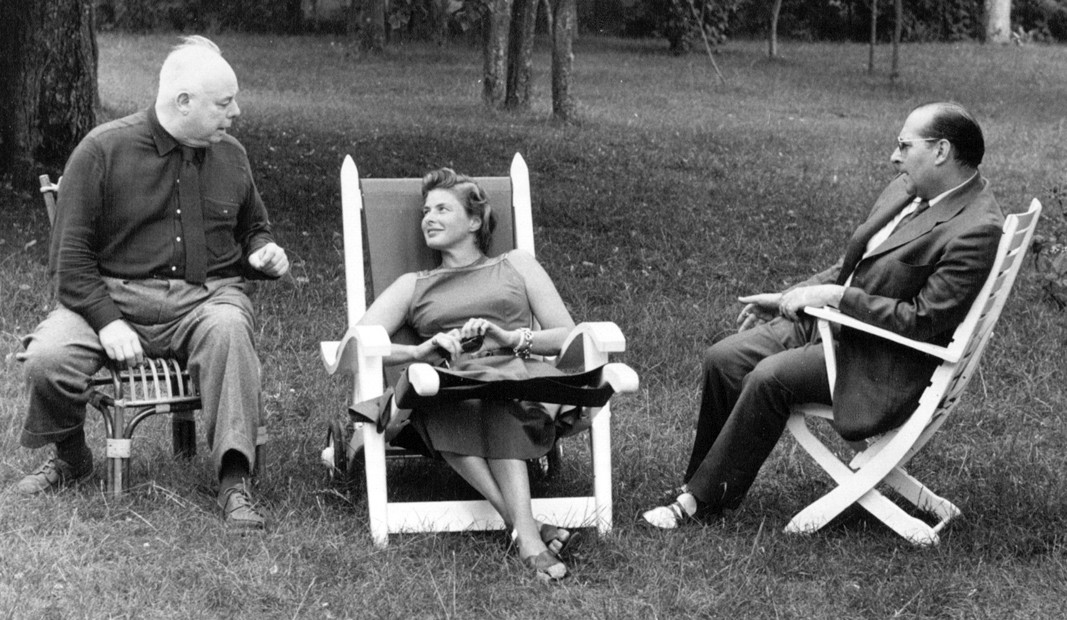
Intro to Auteur Theory with Jean Renoir

Auteur criticism is a very particular brand of film critique and study in which one focuses on a particular director. Now this may seem like highly involved stuff, however, it need not be so complicated. If you like complications, and are a perfectionist, you can read biographies and the like, but let us start simply. These days with innumerable outlets for purchase and rental of films it’s easy enough to amass the films needed.

Through this specified study one will quickly learn quite a bit, all you really have to do is choose a film you liked and if you don’t already know who directed it find out and watch a series of their films in close succession.

Patterns in their choices visually, in editing, theme and story will quickly make themselves evident. Sometimes due to their similarity, sometimes because they are quite varied.

It is also extremely helpful, if one wants to become ensconced in the works of one particular director, to start with some of their lesser-known works. There are a few reasons for this. First, they are by nature less popular so the burden of expectation is lowered – you are not victim to any preconceived notions of what the film should be or is supposed to be. For example, in my experience with auteurs I had in the past seen some landmarks by famous filmmakers right off the bat and either they didn’t live up to expectations or the film was so good that I thought nothing that director could do otherwise could compare.

Don’t be deterred if you like the director but don’t connect with a particular title. Everyone is different. As long as you enjoy their work you should pursue it. Most importantly do not be afraid to form your own opinions on something. The first type of film I mention, “not living up to expectations,” refers to my experience with The Seventh Seal. When I saw it I was too young to get it and I had preconceived notions about what that film was and it ruined the movie. My being less-than-impressed with it kept me away from Bergman for a long time. He is now one of my favorite filmmakers, while I appreciate The Seventh Seal more now I still like at least a dozen of his films better than that one.

This is why I recommend going for the not so famous films of a director first. The second example I would cite would be Jean Renoir. I first saw The Grand Illusion in film school and thought it was fantastic and that he was fantastic for making it, however, I always shied away from his other works thinking it would pale in comparison.

Finally, I purchased a seven film box set of his works and have a much better understanding of him as an artist now. Here are some observations I had of the titles in the set:
The films in the Jean Renoir box set rank as follows.

T1. Charleston Parade (1927) & The Little Match Girl (1928)

The Little Match Girl (1928)

Both films are similar and should be watch back-to-back ideally these shorts are his most visually compelling and creative in the set. Both include very extensive and slightly surrealistic dream sequences. While the first is somewhat avant-garde the second is more traditional. They are both essentially fairy tales but very different in nature, one dealing with aliens and a dance craze and the latter with poverty and class struggle.

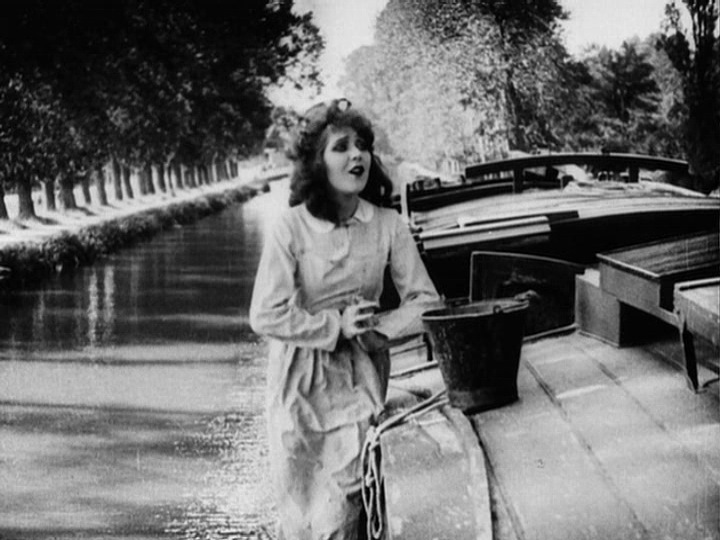
3. Whirlpool of Fate (1925)

Whirpool of Fate (1925)

This is a film that really lives up to the title and sets you up as circumstances for a young girl from the country drastically change at fate’s whim. This tale has an upward arc in terms of the character’s fortune as she goes from virtual slavery at the hands of an abusive uncle to marrying into money. It is one of the two films in the set which deal with a woman’s upward mobility through the class system. It subtly comments there and it is very interesting to see the contrast between the two.

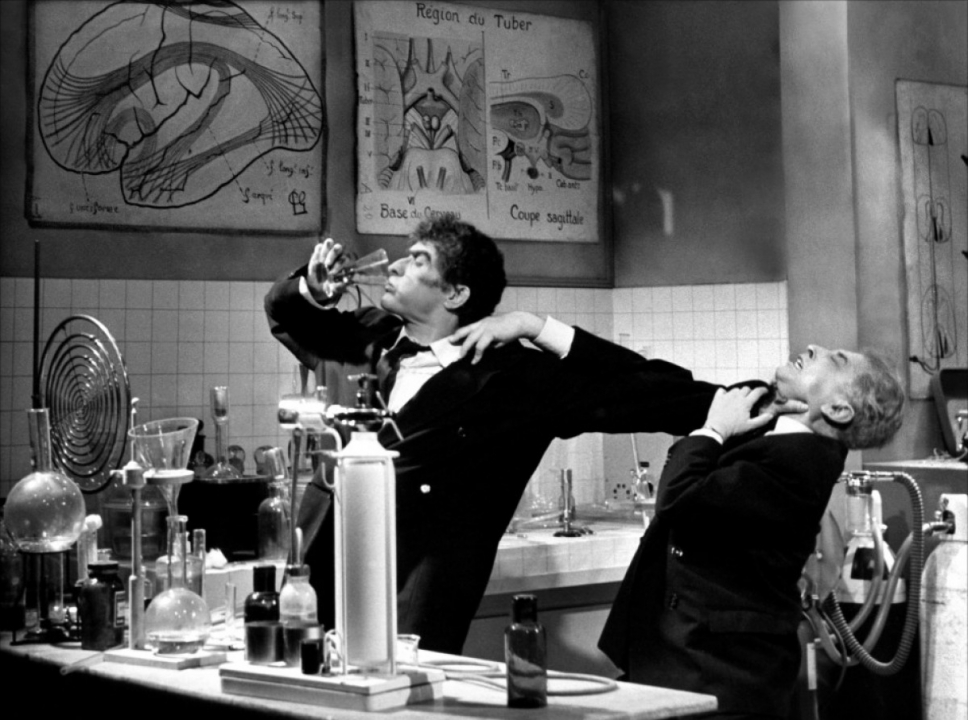
4. The Doctor’s Horrible Experiment (1959)

The Doctor's Horrible Experiment (1959)

This is a subtle, well-done modern (in 1959) update of Dr. Jekyll & Mr. Hyde of course due to that fact it lacks unpredictability due to the general familiarity people have with that tale but it is quite an apt retelling that focuses on the characters rather than the alchemy of effects.

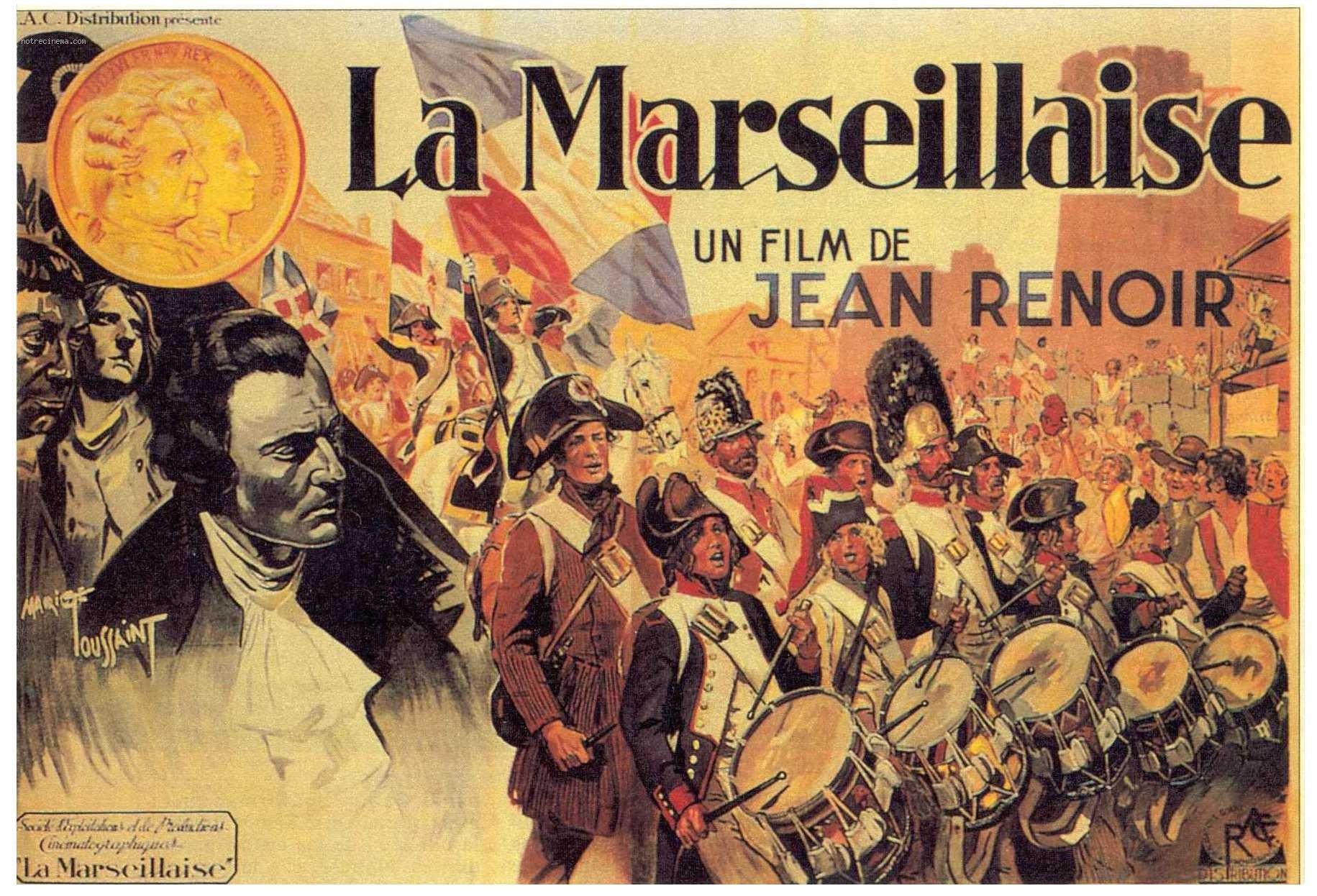
5. La Marseillaise (1938)

La Marseillaise (1938)

This is an interesting tapestry film about the French Revolution that does settle on what we presume to be a fictitious band of rebels as its protagonists but there are many characters. While it does get preachy at times, filled with metaphor of the verbal variety, albeit very intelligently written. It features entertaining acting if not classically good film acting- one actor was noted as being a guest from La Comédie-Française and I think most were theatre actors mainly, and they remained as such on occasion the vulgarity of a stage performance on screen makes itself quite evident but overall Renoir keeps his distance enough to give his players the room they necessitate to be as a effective as possible.

6. Nana

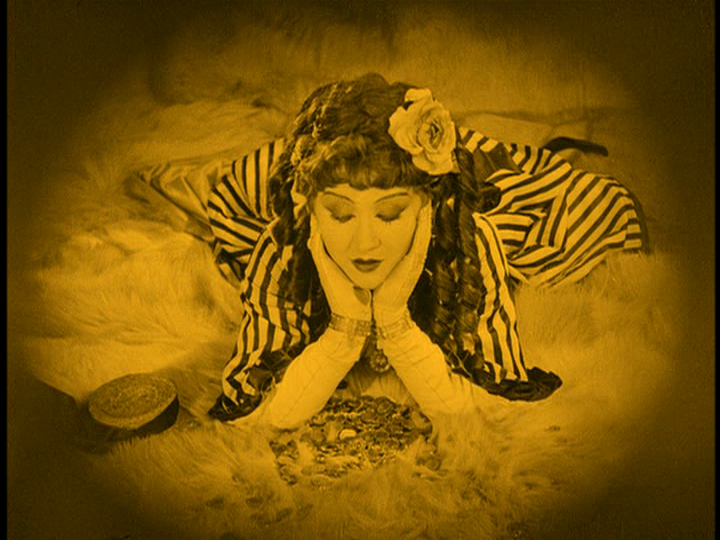
Nana (1926)

Nana is a rare film in which the protagonist isn’t likeable and it’s extremely melodramatic Zola, a tale of his that I and many Americans are likely unfamiliar with it’s similar to Whirlpool of Fate except the lead creates her own fate and it’s downhill in terms of her fortunes, not up despite her rise in social standing. It features some really great tinting after a brief B&W section to mark the midway point and beautiful purple section for the decline. Technically speaking a masterful film but also a perfect silent vehicle with too ludicrous a plot for people to tolerate if they were required to hear some of this dialogue instead of reading it. It also illustrates Catherine Hessling to be a great silent film actress because here for the first time she is portrayed as an unsympathetic figure and she pulls it off with great aplomb and is not likable at all.

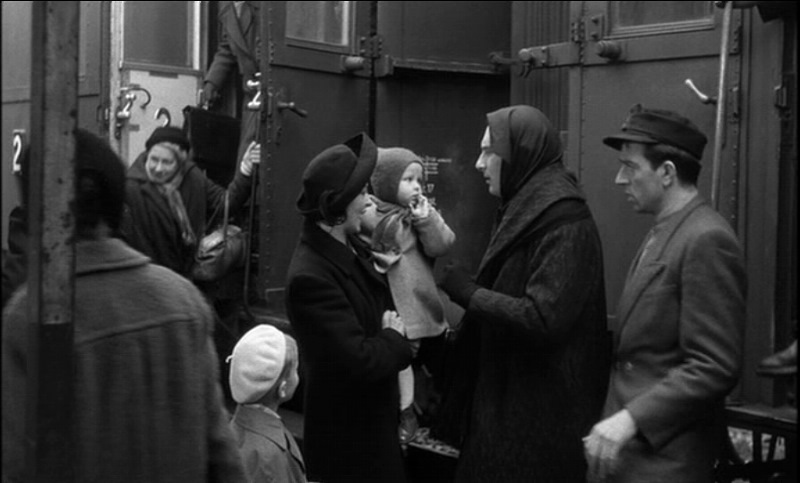
7. The Elusive Corporal (1962)

The Elusive Corporal (1962)

A WWII tale, which while funny and smart does get repetitive. Can be seen as a funny version of The Grand Illusion but it doesn’t quite compare.

Renoir is the kind of filmmaker with a very laid back simplistic approach, at least in these titles, in terms of both his visuals (most of the time) and his storyline which will likely be hard to get a grasp of right away as the plots develop more organically and less in your face than with many films. This in essence makes him deceptively simple. The films in the set are compulsively watchable and it is truly in comparison and seeing how he’d take themes from one film and reverse them later on for similarly effective results in which he truly demonstrates his skills.

Conclusion

Jean Renoir, Ingrid Bergman and Roberto Rossellini

So, in this instance by getting a boxed set which featured lesser known titles and not going directly for Boudu Saved from Drowning or The Rules of the Game I got a sense of his style, sensibilities and the trajectory of his career. Renoir was quite a dazzling showman who seemed to revel in the silent film genre who toyed with the visual only medium so easily he scarcely required titling.

Sound changed the equation for him as it did for many others. While he did eventually move the camera about again he was not as wont to experiment a lot his films seeming to follow the John Ford edict of the frame being a window on the action. Yet while not trying to do too much he shows quite a great deal.

The great important films of historical significance are wonderful. They should be seen but it is the cinematic equivalent of island hopping. When one does that they are not getting the whole picture sometimes one should stop and enjoy the scenery for at times it will not be the ballyhooed and popular choice that will win you over but a film that is nearly forgotten in the canon of a great that will truly demonstrate the enormity of their skill.

Catholicism and Alienation in Fellini’s 8 1/2

In 8 ½ Federico Fellini uses the Catholic Church as a means to depict Guido’s isolation from society and by the end of the film we see how the church has completely outcast him and also how he has completely abandoned the Church. For it always works both ways. As we go on a fantastical journey through his memories and daydreams we see that the church is always present as an ideal he cannot accept. It comes to be the symbol for all that Guido is rejecting in his half-hearted attempt to make a film. Yet it is the Church’s rigidness and hypocrisy that has driven Guido to this point as Fellini shows.

The film starts off with a very famous sequence where Guido is stuck in traffic. The very fact that he is stuck will reverberate through the film, his relationships with the women don’t change and he avoids telling people about the film he has no intentions of making. The car starts to overheat and it’s the first time Fellini uses smoke or steam to symbolize Guido’s clouded vision and confusion as life is going on about him – lovers caress each other and old people stare at him he is lifted from the car, he literally dies, exalting himself to the heavens. After he makes it through the clouds we see him float above a beach, a man is holding a rope that is tied to his foot then an evil looking rendition of St. Peter says “Down, definitely down.” Guido then falls and wakes from his dream. The dream speaks volumes, however, Guido feels damned and confused about his life and one of the doctors at the spa caps off this sequence emotionally by saying “What are you working on another movie without hope?”

The first introduction to the clergy we get in this film is in the spa. Guido is walking around aimlessly and we are introduced to I think one of the most interesting symbols this film has to offer and they are the nuns carrying umbrellas. Now one would think with the wimple that wouldn’t be necessary. I think Fellini is trying to just show that they’re human and they to fear what God can bring upon them, in this scene there’s also a smiling priest on a bench. My favorite is when Guido goes to meet with actresses on a set there are some clergymen who walk in the opposite direction highlighting the separation of film and religion which will come up later on.

8 1/2 (1963, Criterion)

In this film Guido examines his whole life and goes back to his childhood in one scene he meets with his parents in a mausoleum. From them, as would any child, he seeks answers and solace yet finds none. His parents feel they have not been honored as states the 4th commandment. Yet so mundane and disconnected are these apparitions that they cannot see Guido is in a crisis or that he needs help. They cannot communicate with him on any real level. His mother for the second time complains of the tears he made her shed and his father oddly remarks of how low the ceiling of his tomb is. An odd insistence of vanity from someone who is supposed to be in heaven, so estranged is Guido from his parents that they are but ghosts in this film, especially, his mother who we will see is strictly religious and Guido has found through his life that he cannot agree with the monoliths the Catholic Church has constructed.

At the dinner scenes we get questions posed to Guido by who I like to call the Annoying American Intellectual. These questions very closely mirror the cause of his isolation. He asks two questions of which religion are the focus the first being: “Is Italy a fundamentally Catholic country?” and a girl gives the immediate stock response “Yes,” then the man she’s with says “Shut up, and eat your ice cream,” it’s a funny and great illustration of the religious ambiguity that pulses throughout this film. Guido doesn’t answer and the question remains hanging in the air. He then later asks in his staggered Italian “Could you create something meaningful and important on demand, for example, on commission from the Pope?” The idea of creating on demand in the context of this story is ludicrous because Guido can’t even make a film about his own life much less one someone tells him to. His answer, however, is more telling “I’ll think about it,” He says and that’s what he does through the whole film is think about his life. While talking to the Cardinal he drifts off and thinks about were his rift with the Church began. But before that at the dinner the entertainer asked if they could read his mind and they saw but three words: Ana Nisi Masa.

We go back to Guido’s childhood; he is at an age where he still runs away from baths. The women of the house all chase him down and throw him into the vat of wine with the other children. Later, when the lights are out, and a girl, likely his cousin, gets up and tells him to be alert because “Tonight is the night when the eyes on the painting move. And where the eyes go that’s where the treasure is.” And they start their incantation ‘Asa Nisi Masa,’ this scene is important not only because of the way it reflects on ‘The Harem Scene’ but because of the only intangible thing Guido ever believes in, “if I say these words the picture will move its eyes and we’ll be rich” it seems to say. Maybe this set up lead to his disillusion with the Church but Fellini does most definitely illustrate a turning point there as well.

8 1/2 (1963, Criterion)

In the interview with the Cardinal Fellini lays out in black and white what Guido thinks about religion. Guido says he wanted to examine the traditional Catholic Italian upbringing because he felt it had created many ‘complexes’ in the people. The Cardinal states simply “I don’t believe that film is the right medium to explore such issues. You mix spiritual love and sex too easily.” The Cardinal never directly answers Guido’s concern about the Church and never asks him why he might feel that way. His interest is a mass one because he has achieved stature he is beyond the people. The only statement he makes close to addressing Guido’s film in this meeting, he will make one in the second, is that “Film has the power to educate and to corrupt.” Guido believes the same about the Church and it is reinforced when he sees a woman walking down the hill that looks just like Saraghina.

We again flashback this time Guido is a grade schooler and at recess all his friends yell out to him “Saraghina!” There is a moment of indecision outside the school a statue of the pope is framed in the foreground overshadowing Guido, he then runs towards his friends and Saraghina. Leaving the statue shows Guido turning on religion’s inflexibility and conservatism. When the boys arrive at the beach they give Saraghina their money and watch her Rumba. The party ends when the priests show up, everyone gets away but Guido. Here Fellini has his fun with the clergy speeding up the film while they chase Guido making it seem like an absurd version of the Keystone Kops. When he is punished Guido hears the same things he’s been hearing all his life and that’s why we hear them in duplicate and triplicate “How shameful,” “It’s a mortal sin” and so on. Then at confession he is further pushed by being asked “Didn’t you know Saraghina’s the devil?” which is all part of the wonderful psychology of Early-20th Century Catholicism telling kids the Devil himself walks among us. And that’s pretty much ends Guido’s connection to the Catholic Church. So much so that he went back to see Saraghina right away he saw nothing Satanic there only beauty. The logic works: The Church put a dunce cap on me and a “Shame” sign on my back; the prostitute danced for me, it’s obvious.

We then find Guido talking to his producer and the producer says: “If you want to make a film about the Catholic conscience in Italy you have to do it on a higher intellectual and philosophical level…these are just detached memories.” This statement not only puts down Guido as an artist but says that his struggle within the Church and against the Church to find an identity doesn’t matter and that the public would only be able to accept the film if it were more of an allegory and less personal. It’s a blow saying his search for meaning through film and relationships has not mattered.

8 1/2 (1963, Criterion)

Guido is called out of his sauna for another discussion with the Cardinal. On the way out Guido faces a parade of people who want help with one thing or another that they want to ask the Cardinal. Again, irony creeps in as everyone thinks Guido can help them but he doesn’t know what he’s doing. When he arrives the Cardinal has a towel hung in front of him putting him in silhouette and creating a bizarre confessional. He then gives Guido some advice which is in essence condemning him saying “There is no salvation outside the Church. Outside the church there is no salvation. Everything outside the City of God belongs to the City of the Devil.” Guido who has abandoned the Church has now been convicted.

“He can’t communicate,” says one of the women on the way up to the space tower. And therein lies his sentence. Guido has removed himself from the Church and in essence has been excommunicated. They are visiting a structure to something that will never be reached, the space tower, a cinematic Tower of Babel. Guido’s alienation at this point is so extreme it’s obvious he’ll find some way to get out of making this movie.

This film ends in a circus-like parade which upon first seeing it seemed very facile. Looking at it from this point-of-view, however, I think it works. This is not an evil 16th-Century Excommunication I’m talking about but one that happens every being that the person doesn’t care to go back and the Church isn’t crying. In this light the ending is rather happy Guido having quit the film has stripped himself of the falsehoods in his life and is just going with the flow as is shown by the parade.

Liv Ullmann Between Stage and Screen

This piece is a throwback. It was published it previously, but owing to the fact that the observations of the engagement are always relevant and fit into Thankful for World Cinema theme. Although the event was one night only the information and resources are still valid.

On December 7th, 2009 the Brooklyn Academy of Music had a very special speaking engagement at their Harvey Theater location. Liv Ullmann, star of many of Ingmar Bergman‘s most enduring and legendary works was the guest of honor of this very special speaking engagement. The event was held on the very stage where Ullmann directed a sold-out and for the most part critically acclaimed revival of A Streetcar Named Desire starring Cate Blanchett.

A majority of the evening was focused on this new adaptation there were some very valuable general insights to be gleaned on art, film, theatre and acting that were not show-specific.

She was introduced by a representative of the Royal Norwegian Consulate General who said, to paraphrase, that she has “striking emotional range and Norwegian identity with an international appeal that transcends borders.” This was quite an astute and concise encapsulation of her brilliance and of her appeal.

Autumn Sonata

Ullmann’s brilliance and appeal made themselves ever more apparent both as a person and as an artist when she graced the stage. She did have a great deal to say about acting and directing in the 90 minutes total in which she was on stage.

The first fascinating comment she made was how she wanted, in her US theatrical debut as a director, to put a new spin on Blanche DuBois because in Elia Kazan’s classic film the incarnation of Blanche played by Vivien Leigh is a shattered woman at the end of the film and how there is a deeper psychology to the character and a more profound and ambiguous ending to be explored.

Liv discussed Cate Blanchett and on a few occasions expressed admiration of her skill and then talked a little bit about her directing approach specifically and said two things that were quite interesting one was “I would never tell Cate what her face should look like that’s her creation” and similarly she’d never say “That keep that, that’s perfect!” whether it be an inflection on a line or a look. It’s gone and the only way to have it possibly come back it to just not mention it and let it go as she puts it “It will come back when great actors open up and trust each other.”

Persona (1966)

Moderator James Lopate made a great connection between some of the scenes that Stella and Blanche share and Bergman in which the two woman scene was often the most powerful. Liv talked about the connection that women could share and how she and Bibi Andersson were best friends before Persona and that connection could certainly help their scene-work.

When it came to working with Bergman she told a well-documented but funny story about working with Ingmar Bergman and Ingrid Bergman on the set of Autumn Sonata. It was one of the climactic arguments in the film and the camera had been facing Liv all day and her character had been spilling her guts blaming her mother for her problems, on which Liv humorously commented saying “Get over it, you know?” but then the camera was going to turn around and face Ingrid and she didn’t want to say what was scripted, which is not how Ingmar worked. It lead to quite a ruckus, Ingmar and Ingrid took the argument outside the soundstage and came back and Ingrid read the scripted line but her eyes still showed the fury she felt. Having seen this film a few times you can see the anger in her eyes and it probably helped the line reading.

She commented that there is often tension or anger between actors and directors but she doesn’t necessarily look at it as a bad thing. In fact, Bergman himself gave Liv advice on dealing with a bad director which she relayed so it’s obvious she didn’t see him as bad just as a perfectionist, which most knew.

Cries and Whispers (1972)

Ms. Ullmann then got back to being asked about the show and had some other great insights into directing due to her perspective being an actress. Contrary to a lot of theatre works where there is a premium on movement and using the stage she at times of great significance to the story prefers to, if not keep her actors still, confine their movement. “Let them create. Keep them in one place,” she continues “Keep her in one place so everyone can see what’s happening right there in her face.” This is perfectly consistent with her previous comment of not directing facial expression.

Similarly, she told Blanchett and the aspiring actors at the event that when on stage and a line prompts one player to turn upstage in response she advises her actors to not turn too quickly but instead “Give your close-up to the audience for two to three seconds then turn.” The close-up is hereby turned into a theatrical term where an actor is facing the audience instead of their scene partner and it is a brilliant parallel which I hadn’t heard before and it most certainly holds true it is the closest thing the theatre offers because the actor is revealing their character in a way only the audience is witness to.

She is a natural performer who on the stage of the show she is directing on more than one occasion walked around and demonstrated things of which she spoke. The last great tidbit about directing she gave was about storytelling and not in the narrative sense. She told of how certain bits of blocking the show, or prop decisions were made almost unconsciously after a story was told or a conversation was had. She mentioned that José Quintero, one of her favorite directors to work with, was very fond of telling stories as a rule and inevitably that is how he affected the work and it sort of inspired how she goes about giving backstory to actors, especially when it is meant as a note. She never fills in the blanks but merely says, as she did to Blanchett, “Something happened yesterday.” This allows them to have a thought process, to create something of their own but will also inform their action with the correct emotion because at the point this note is given the scene is already understood.

Shame (1968)

Miss Ullmann’s wisdom seems endless. Available at BAM was a book of her interviews. She has however authored her own books on acting and life called Choices and Changing respectively and two more suitable titles can hardly be thought of for such a craft for they are the essence of it.

When discussing the character of Blanche DuBois Ms. Ullmann made the point that “Loneliness doesn’t function for Blanche,” meaning she can’t deal with it. “For me loneliness functions.” I think that is likely true of most artists for to create, and to make a true creation a certain degree of loneliness needs to exist. As her new vision of A Streetcar Named Desire closed on December 20th (2009) one can only hope and wonder what she turns her creative energies to next whether back to stage or screen, in front of camera or behind it, either way it should prove to be very exciting.

Limbo: When Casting Clouds a Point

One of the films featured at Philly QFest (when I went) was called Limbo. The tale of a 5th Grade homosexual boy who falls into a delusional world after suffering an accident. Having missed this film upon its initial screening it became a DVD must. However, this film in the end suffers from more than just aesthetic/technical issues.

Those issues are rather abundant: The dialogue is rather repetitive – repeating that “it is limbo” and “everyone has their own” several times seeming to want to make up running time because they didn’t have enough, the video cinematography is uninspired to say the least, the sound is not good – in fact it’s quite bad, the revelation of the significance of the blind man is no surprise. In the end a bulk of the movie is (to not give it away too greatly) like an entire season of Dallas, at some point the lawyer, who is in Limbo with him, takes over and becomes the center of the film and the development of Isao and his driving the story stops completely, the cuts out of the limbo state to his friend’s reaction and the “real world” is jarring more than anything else and only seems to interrupt things.

As if those things weren’t bad enough it is also becomes confusing as a selection for a gay film festival in a couple of ways. The first way in which it manages this is through an exchange between Isao and the nurse towards the end, made even more awkward because she is a Virgin Mother figure, in which she says vaguely “You should give girls a chance.” The film’s message in the end is not one of conversion but at this moment that is dubious and the fact that this film depicts a Mary figure seemingly encouraging a gay boy to be straight is actually the most disturbing rendition onscreen, and that includes Sinead O’Connor’s turn in The Butcher Boy because that was Francie Brady’s vision and he was off-kilter to say the least.

Limbo (2008, Gussi Artecinema)

The intent of this line is softened, but only slightly, a few minutes later. Isao is alive and well with his friend, who tried to kiss him earlier, and tells her “I don’t want to be your boyfriend, but I like you,” and then they kiss. This would be fine if it hadn’t gotten into slow motion, and gone on for so long. There’s no reason for it and it becomes disturbing after a while.

The gaffes committed by the film don’t end there. In the end credits you’ll notice that Isao was played by Fatima Diaz. This fact is not cited on the festival page or on the Amazon listing and not even on the DVD blurb. This is a casting ruse that is completely and utterly unnecessary. The character was not written or played such that a young male actor could not have pulled it off, this is not like Felicity Huffman in Transamerica where the unconventional casting choice worked to a great advantage of the film. It wasn’t made a necessity or even preferable. In the end this little bit of simulacrum not only creates a lesbian kiss where there was supposed to be a friendly one but also makes the homophobia that Isao faced seem almost justified because there isn’t even a boy playing this role. Making it seem like it’s unacceptable for a male actor to play this part. Mind you I don’t blame Diaz in any way, though not spectacular she was only noticeably a girl when she screamed, which at time I thought was an odd ADR choice not a casting one; a casting choice more appropriate for The Crying Game than this story.

Now perhaps director Horacio Rivera was trying to make a statement both in casting and in the lesbian kiss, but what he failed to take into consideration was that that message needs to be trumpeted and said message, if intended, is more likely to backfire when the whole film just fails to work. The bottom line is that it’s a choice too open to the audience’s interpretation and undercuts the message of the film entirely.

The Billy Wilder Blogathon: Emil and the Detectives (1931) and (1935)

main

Wilder, Kästner, Emil and the Detectives

For the Billy Wilder Blogathon I wanted to cover a film, in this case films, that occurred early in Wilder’s career. The reason is because while it’s nearly impossible to know film without having stumbled upon Wilder’s work (even by accident) I can’t claim any level of expertise. Furthermore, in blogathon scenarios I find that the more popular and well-known titles, in this case things like Some Like it Hot, Double Indemnity or Judgment at Nuremberg would be snatched up right away.

I was fortunate, however, to stumble upon the fact that one of Wilder’s earliest cinematic endeavors was the first-ever film adaptation of Erich Kästner’s classic children’s novel Emil and the Detectives. This particular version of the film I was able to find on a region 2 DVD set complete with the 1935 British remake, which by extension and its eerie similarity to the German version present early works of his screenwriting prowess.

In many ways Emil and the Detectives offers quite an interesting case study in a few regards: first, it is a tale of such timelessness and universal qualities such that it has been filmed many times over and in many cultures, however, it also offers a glimpse into the zeitgeist of the borderland in time and politics that was the end of the Wiemar Republic and the rise of the Nazis in Germany.

Less than two years after the debut of this film Wilder joined one of the throngs of German Jews who left his homeland for a long and successful career in Hollywood. Conversely, Kästner, while exiled and banned from publishing for a time due to his pacifism would spend the war and reconstruction in Germany to better report on events. In a hallmark of Nazi hypocrisy it has been reported that Emil and the Detectives was spared from burning in 1933 as opposed to his other books even though it, too, caused a stir.

Emil and the Detectives (1931)

Emil und die Detektive (1931, Ufa)

My first exposure to this tale in anyway was the 1964 Walt Disney-produced version. Interestingly enough it ends up being rather a hybrid of the first two adaptations of the novel onto film. The actors are American but the story is German-set. As one would expect Disney is still Disney but much of the charm of the story still exists and it was one of my favorite film discoveries of 2012.

This tale is German and translated, but with a solid cast, very well-composed cinematography and an engaging storyline it works fairly well.

Clearly the standout the first time around was the visual-flair. The kids’ world with adults on the periphery is there, it’s adventurous and fun but a safe world. What Wilder and the team brought to the 1931 tale, that is likely also part of the fabric of the book, is that there is a naturalism to it, which when dealing with a crime and solving it means there is an inherent level of danger. With Disney some of the edge is taken off and its clubhouse-like. What is delightful to see the seeming opposites co-exist naturally.

What was written by the New York Herald seems well warranted and rings true to this day:

“The great simplicity in design and execution, the perfect naturalness and the move away from that particular sentimental hypocrisy and affectation, which often viewed as an inevitable prerequisite of cinematic oeuvre.”

Emil and the Detectives (1931, Ufa)

While sticking fairly close to the source Wilder taps into and accentuates some of the universal truths of this tale and storytelling for young people that this narrative highlights. First, there is the introduction of the audience to “another world.” Though not a fantasy world in any sense, but rather just the big city we are still viewing somewhere fairly unknown to the protagonist and perhaps to us as well. The creation and depiction of the outsider is perfectly played.

Something that Michael Rosen underscored that I had never quite put my finger on is the following:

“I’ve always felt that children’s books that last the best are those which engender a sense of yearning in the child: you want to be there, you want to be them, you want to be as clever or as lucky as them. For me Emil and the Detectives has this in bucketloads.”

I would go so far as to extend that notion to any great children’s literature read at any age. For example, I first read Harry Potter in my senior year of High School, if I’m not mistaken, and as I made my way through that series I had that sense of yearning also.

Now something else Disney did was to add a more fantastical feel to the tale. Whereas what was shocking and controversial about the book, and handled so well by the original film versions, was the naturalness of the setting in which these children find themselves. It isn’t a fantasy or a far off world, but rather these kids, much like those that lived at that time, much like you or I in real city with a very real problem. Perhaps it is that singular notion that has kept the story alive even through a period where the Nazis tried to rewrite German culture and Europe and the world wasn’t as willing to dabble in anything Teutonic.

Emil and the Detectives (1929)

The trajectory of the project is one that will look familiar. It’s not that unlike a hot literary project today. It was published in 1929 was an almost instant hit. In 1930 a version hit the German stage, the adaptation by Kästner himself. The film rights were then picked up by Ufa. Although, a relative unknown at this point Wilder ended up working on versions of the film with Kästner and others. The success of People on Sunday had allowed him to become a professional screenwriter that the studio would tap for such an important project as this one.

One thing that the 1931 Emil and the Detectives excels at is visual storytelling. It is one of the earliest and most important German sound films but it is not as stagebound as many early US talkies are. There are montages, moving shots around Berlin and a wondrous impressionistic dream sequence which is breathtaking. Suspense is built by watching, following or hiding and not dependent on dialogue exchanges for too much.

Film Quarterly in 1933 astutely stated that:

“It is remarkable that the cinema all but ignores the very considerable audience of children that supports it; and it is tragic that the few films specially made for children lead one to wish that they had been ignored.”

This a lead-in to praise for this film, and in many ways, that can still be true today what’s key is that that the filmic touches are left to the apt maneuvering of the crew behind the scenes and the kids for lack of a better term just have to be themselves and seem to be selected specifically to be able to “be” their part rather than “play” it.

Emil and the Detectives (1931, Ufa)

As the date on the Film Quarterly review indicates the original film version had quite a legacy. While sadly many of the young actors who took part in the film would end up dying on the front in World War II it did launch an acting career for three of its cast members Hans Richter, Martin Rickelt (then Baumann) and Inge Landgut.

Such was its continued success that it was showed on Christmas in 1937 as Wilder was in the US and Kästner was forbidden to write.

Emil and the Detectives (1935)

Emil and the Detectives (1935)

This film was recently rediscovered and restored. In the wonderful BFI booklet that accompanied the two-film release, where I sourced most of these quotes, is an essay called “Emil and the Detectives: A Faithful Remake” by Bryony Dixon that begins:

“Yet, despite being four years later, and with no hint in the publicity that this is essentially a remake of the German film, this is an exact replica with British cast and crew – and I do mean exact.”

Now there are differences and she goes on to cite them in detail in the last paragraph but what she states there is essentially true. And assertions that this film was cobbled together mainly from the German shooting script, or film, or stage play in English are likely correct.

However, the success of the film was similar in England. The original film played in the UK from April 1933 to January 1934; and a production of the play from Prague aired on BBC programme in 1934.

The oddity of the remake is that though it runs about 10 minutes shorter very little of that is put to good use. A lot of that is accomplished simply by tightening the dialogue scenes. Some expedited scenes work fine, but overall the suspense is lessened.

Emil and the Detectives (1935, BFI)

The change of venue from Berlin to London also does make a difference. Some of the vitality is robbed of it. It’s not just about the connotations each city brings with it, but the look and feel of it too. The Disney version which returns it there re-captured some of that.

However, it still works fairly well and even got fairly good notices. One that was included reads as follows:

“Although acted by juveniles for juveniles; the film is by no means limited in its appeal to young audiences; it should equally delight the elder members of the family.”

It does. What I was impressed by was how similar they were and that they both work well though the British one seemed to lack that suspense and grit, but it still quite enjoyable and it’s hard to find one remake so close to another – as Dixon rightly points out – that is not a foreign version shot simultaneously.

Closing Thoughts on Early Wilder

Emil and the Detectives (1931, Ufa)

When I was taking an introductory screenwriting course I remember our professor almost lamenting that we understandably were telling rather homey tales. The reason for this was that as writers having to only deal with the blank page there were no limitations. As writers the how things would happen and the cost of making them occur was really not our concern. One reason I’ve always recalled that is that is seems to be part of the path for many filmmakers. You seem to start with whatever rendition of a coming-of-age or first love tale strikes a chord with you.

One example would be in Bergman’s oeuvre: Very early on he had young romances like Port of Call or Summer Interlude or Summer with Monika and later on he’d revisit some of the themes in his early works with more sophistication as he did in Fanny and Alexander. Many will be more like Wilder than Kästner. They will tell a child’s tale when feeling there is something they can say with it, as opposed to having it be their raison d’être due to some philosophical slant.

Wilder has here a not dissimilar early career narrative to Bergman’s going from contributing to People on Sunday which was seen by many a slice-of-life of Berlin at the time. He then almost immediately moved on to sculpt another image of Berlin also real, but with flights of childish imagination that do not remove it from reality, but merely look at it in a different way.

Tales that tend to pass from generation to generation are usually either perfect dreams or perfect simulacrum. Emil and the Detectives, with Kästner’s blueprint, Wilder and the other filmmaker’s input may have blazed the trail for stories that balance the two giving an audience young and old an escape with a story that feels very real.

Emil and the Detectives (1931, Ufa)

It’s perhaps more interesting to see this film now as one can clearly see how earlier works influenced it and also how it intimated things to come in the careers of the makers, in the cinematic subgenre and the careers of those involved. Emil and the Detectives is a film that would’ve stood the test of time regardless but it gains additional significance as a beacon both of a bygone time and also for the career that Wilder had in store.