Bernardo Villela is like a mallrat except at the movies. He is a writer, director, editor and film enthusiast who seeks to continue to explore and learn about cinema, chronicle the journey and share his findings.
This was a site that came to the fore a few years ago. In a paradoxical way it can be seen as both a great boon to, and a slap in the face of, film studies. It’s a boon because odds are if you input a title you will find a thesis you would be able to argue- maybe not well, but you can give it a go. The slap in the face is that you can put any title into the generator and at time the worse the movie the more hilarious the results (Note: I do genuinely like one of the films in the examples below, it’s just funny to think of any of them in such an austere academic fashion).
I wish I had saved the first response I got for Pootie Tang because I laughed for a minute solid but can’t recall the wording.
Now, I do not endorse this in lieu of formulating your own theses, when you are permitted to, as those are more enjoyable to pursue. It really just is fun. More often than not in film school I was assigned a general topic and given films to choose from. Either way here are some examples of results I got. You should go and have some fun when you have time to spare.
As a post-script for those with an interest in true theses being explored in a more real way I am planning on a series of posts in January and/or February of next year that will deal in more serious-minded, closer examinations of titles.
Through the use of implied depth-of-field, C.H.U.D. delegitimizes pre-Oedipal anxieties.
Through the strategic use of narrative ellipses, Troll 2 conforms to colonial attitudes toward race.
Through the use of mise-en-scene, Eegah echoes the plight of the migrant worker in post-war America.
Soul Plane reminds the spectator of the subjugation of the individual in the face of the primacy of television through its conflicting duality of progress and humanity.
Through the deliberate suppression of colors meant to signify passion, Striptease reveals critical seams in stereotypical conceptions of Islamofascism.
Quite recently a planned-boycott of the film adaptation of Orson Scott Card’s Ender’s Game was announced by a group called Geeks Out.
As one who once wrote this piece about Roman Polanski, it may not surprise you that I do not plan to participate in said boycott. However, a topic of this nature cannot be discussed by simply saying I separate the artist from the person.
I can’t remember when I read Ender’s Game, but I assure you it’s before I knew anything about Orson Scott Card. As I learned, and read Speaker for the Dead, sure some of his experiences (his work as a Mormon missionary in Brazil makes itself apparent by his frequent use of Portuguese words and the like) do come through, and every so often there’d be a bothersome passage, but I still found the book to be quite enjoyable. After all, most of the stories he’s building a science fiction and have little to do with the rhetoric he espouses that I not only strongly disagree with, but find downright hateful, striking a rawer nerve with me than most other artists of dubious character.
I got Speaker for the Dead at a library sale after I read Ender’s Game and Lost Boys, which I bought at retailers. The extent of my boycotting is wanting to read his works but having the funds go to my local library (or perhaps a reseller at some point; anyone really) rather than him.
I’ve never been one to divorce myself from the works of an artist simply because I find things they say or stand for personally are despicable. And believe me Card really even has some doozies in the non-sociopolitical arena, just look at this Oscar time rant. So, yes, I still watch Polanski, I think Mel Gibson is still a effective screen presence, and I will grant that due to what he rails against still seeking out Card is perhaps most difficult, but the movie is the wrong target for many reasons.
Firstly, if you’re going to boycott Card, boycott him; everything he does. Pressure Disney and Marvel to stop adapting Ender’s Game into comic form, stop buying his books, don’t visit his website. Don’t make this just about the film. And I find it interesting that as I looked into the series anew lately I noticed that Ender in Exile, the latest in the series, is only available from resellers in physical form; so maybe some backlash has already hit home, but I think Dustin Lance Black‘s comment on it come close to expressing why I won’t boycott the film:
“Boycotting a movie made by 99% LGBT equality folks in an LGBT equality industry is a waste of our collective energy. Making one phone call to a relative in the south who isn’t quite there yet would be 1,000 times more effective.”
I would go further and say: yes, if you refuse to go see the movie that’s less royalties for Card (that is if he even has a back-end percentage, which is unlikely. The likes of Stephen King get points on the back-end. Most authors merely get the money for the option to adapt the book. In other words, he’s likely already made his money on this film.), but truth be told he’s already made his killing with this series many times over. The fact of the matter is while Speaker for the Dead might be the book he wanted to write, but he needed to put out Ender first; I’m not sure that’s as appealing as written as a follow-up. In fact, while this installment could be a great rendition of the first part of the series I’m not sure of the potential it has as a franchise without being vastly different than the books.
The bottom line is, removing my sociopolitical beliefs and feelings about the author, Ender’s Game is great book in my estimation one that I wanted to see a movie of since I read it and the cast assembled for it is quite and incredible one and I will have to see it. If I happen to use coupons or passes to do so even better, but see it I will.
I read Film School Reject’s post on the boycott, which is where I found Dustin Lance Black’s quote, I think the closing is great (I suggest you read the whole article because it does touch on other things including corporate personhood and heteronormative cinema):
In all seriousness, geeks and bloggers: keep up the boycott. Geeks Out: keep holding the practices and associations of studio filmmaking accountable and transparent. Orson Scott Card: go fuck yourself. No amount of advertising and sleek promotion means that a movie deserves our money or must be seen. If Ender’s Game flops, I will likely enjoy a brief moment of satisfaction. Not only because of Card’s homophobia but, as with Chick-fil-A, because some forms of mass production are just plain bad for you.
That said, Ender’s Game may make the bar, and it’s important not to see this or any single commercial film’s fate as the terms by which LGBT advocacy in the field of entertainment is valued. Queer cinema exists. It exists on HBO with Behind the Candelabra. It exists in underground cinema with Interior. Leather Bar. It exists in the arthouse with Laurence Anyways. It doesn’t yet exist in science-fiction.
Emphasis on “yet.”
While I’ve spent time discussing why I won’t boycott it. I agree with many of the points made here. Just because I won’t throw down the gauntlet on this one title doesn’t mean the discussion is invalid. Yes, there should be more inclusive sci-fi, horror and any other genre you can think of. This story was making news around the same time Andrew Garfield was almost lamenting Peter Parker’s heterosexuality. As long as the discussion occurs, as long as there is some brushback, maybe a studio will take a “risk” on another project and not play only to the lowest common denominator. Does that mean I think there will be a lesbian in the next Star Wars trilogy or a gay interpretation of a Superhero anytime soon (on the big screen that is as comics have picked up the slack in that regard lately), not necessarily but without discussions like this there may never be at all. So, I agree this isn’t just about Ender’s Game so my decision to see it, or other’s to boycott it, won’t be the end of the discussion but hopefully the opening salvo in a long dialogue.
The other day I saw tweets from Clive Barker about a website organizing the effort to get a home video release of the director’s cut of Nightbreed. Now, this is a film I had not gotten around to seeing but once I discovered that said cut had been unearthed and restored and has now even screened, seeing what the theatrical release ended up being seems to pale in comparison.
I urge you to sign the petition and follow its social network links. I believe in standing with artists and defending their vision, and clearly Barker is one who has earned the right to show his intention. So, it’s not really just a case of I want to see it and so will you. Also, when DVD came on to the market this was the kind of thing that was supposed to become more commonplace, but has become all to rare. If there is demand, an overwhelming amount of it, it will not be ignored. Make yourself be heard!
UPDATE: Since the news that the cut existed first broke there have been screenings at horror conventions and festivals the world round of the Cabal cut. Due to unfortunate scheduling I was unable to attend a screening very close to me. The good news is that Nightbreed the Cabal cut is now officially coming to Blu-Ray. The story was broken by Rue Morgue. You can read more here.
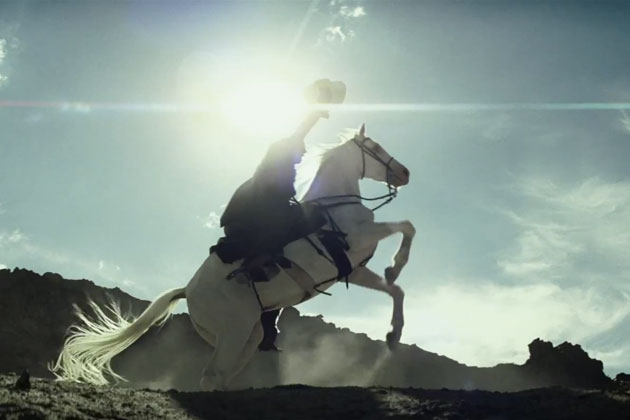
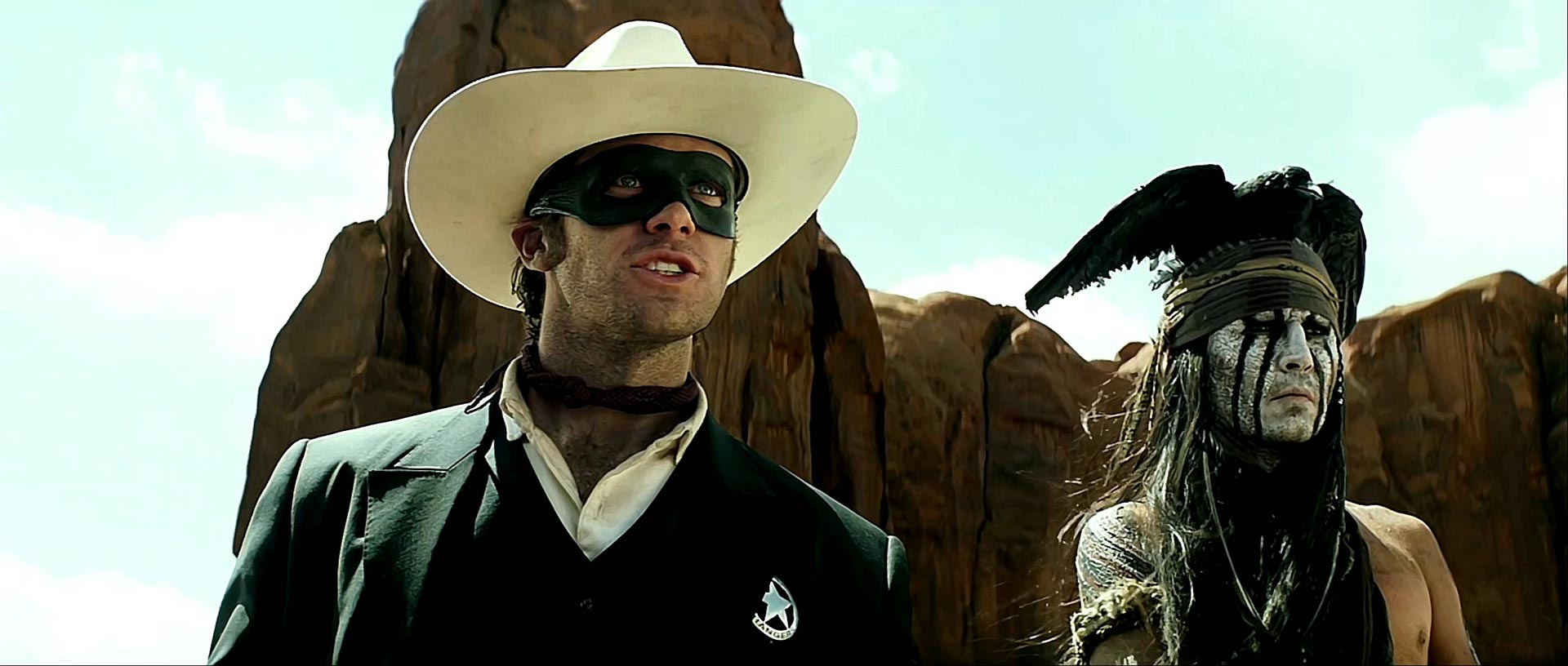
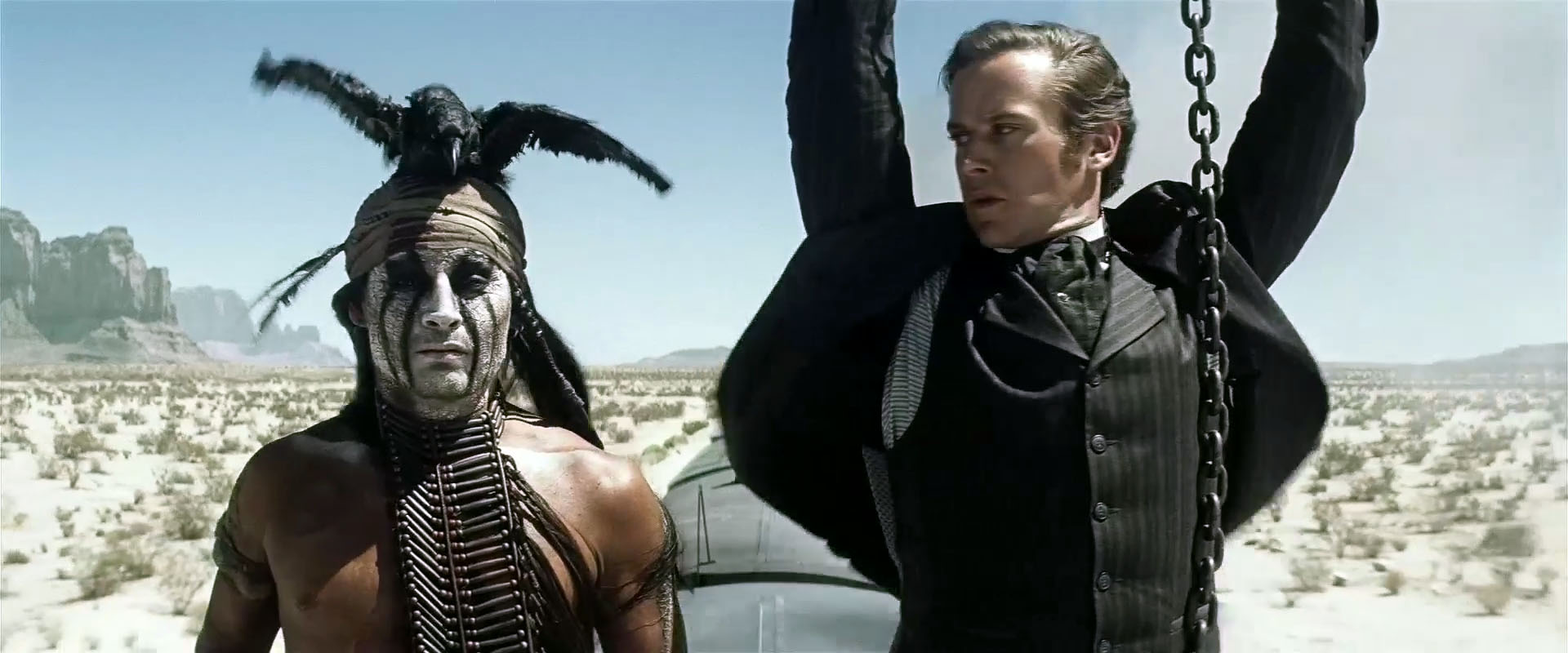
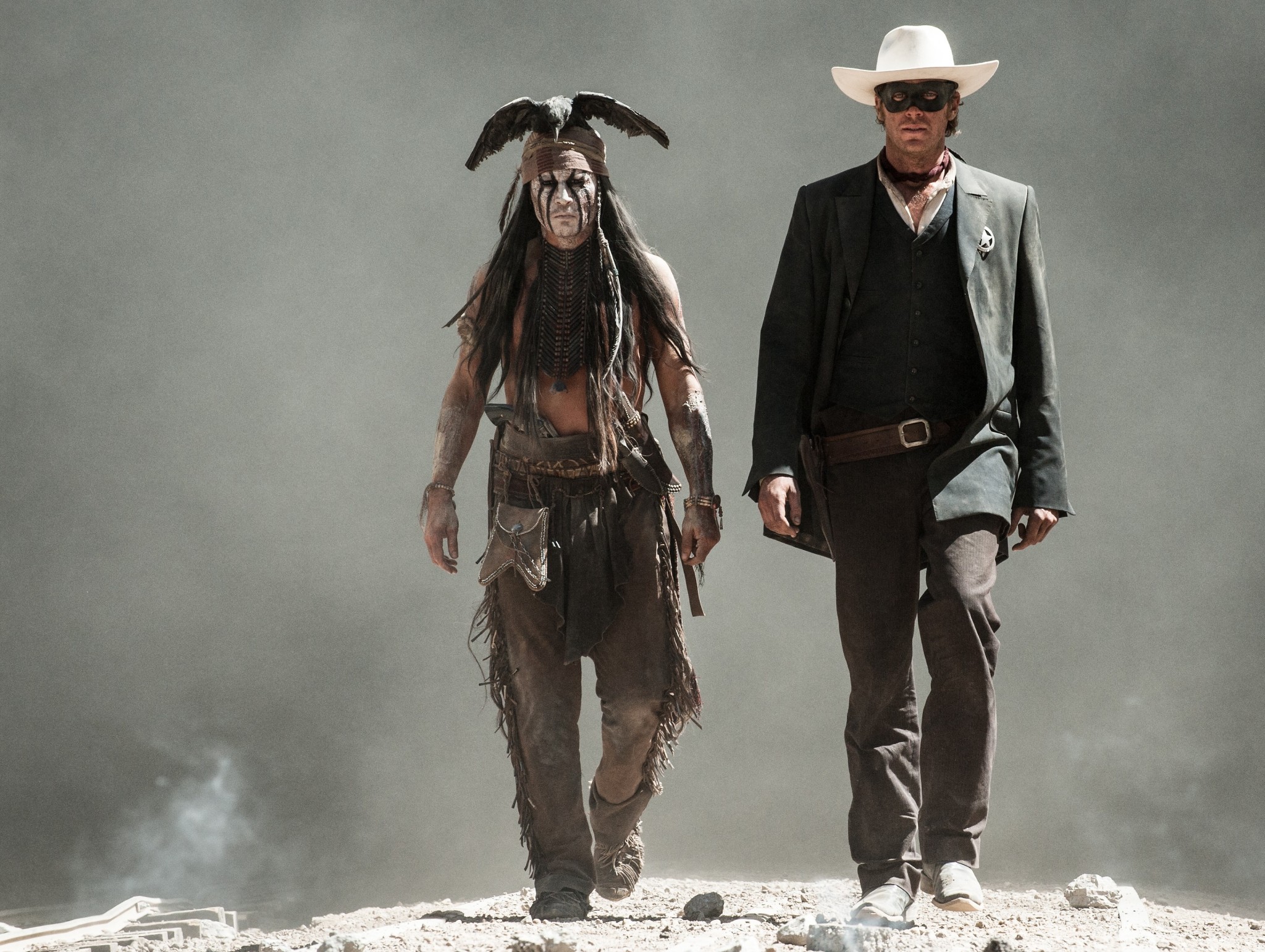
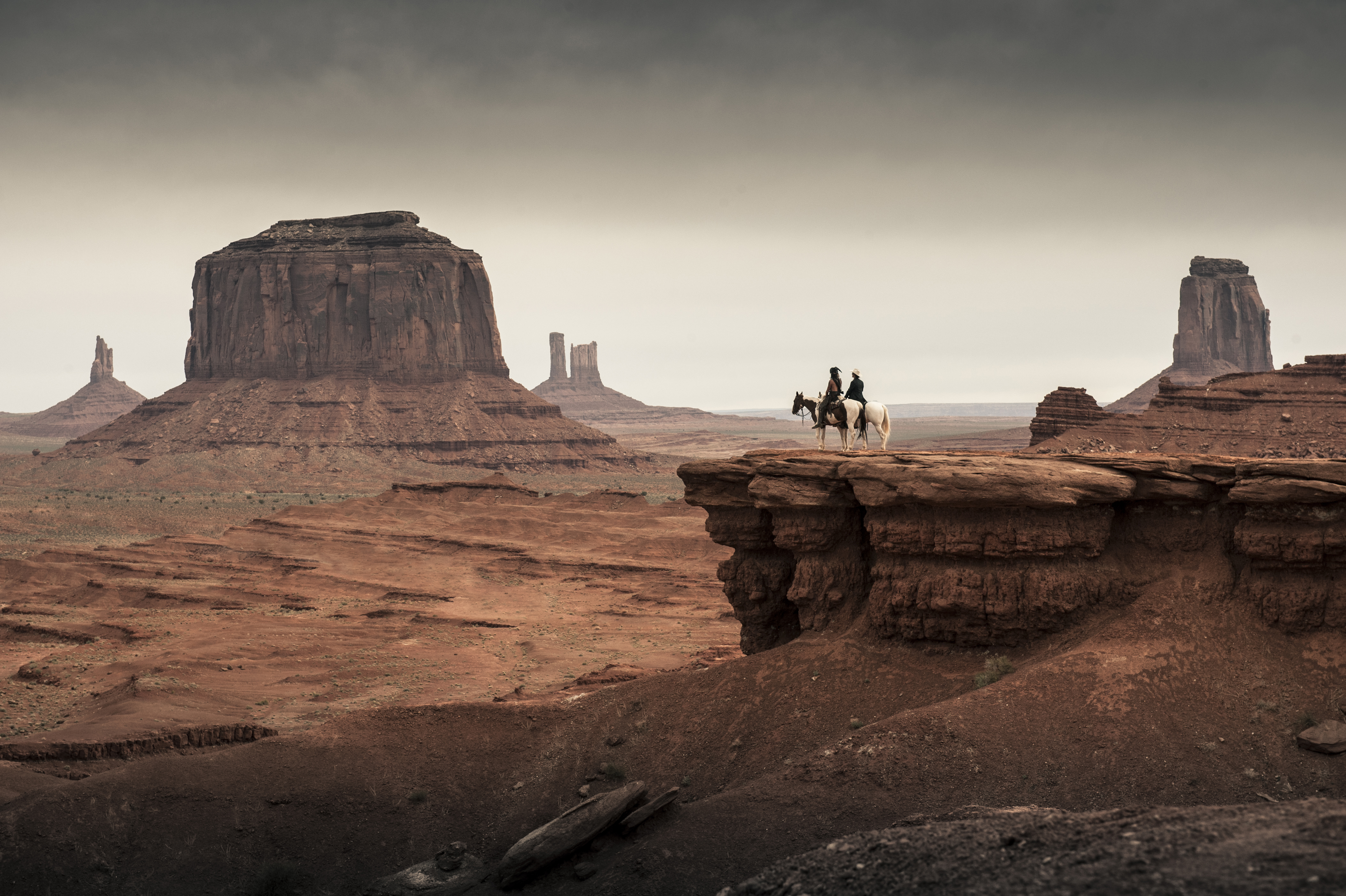
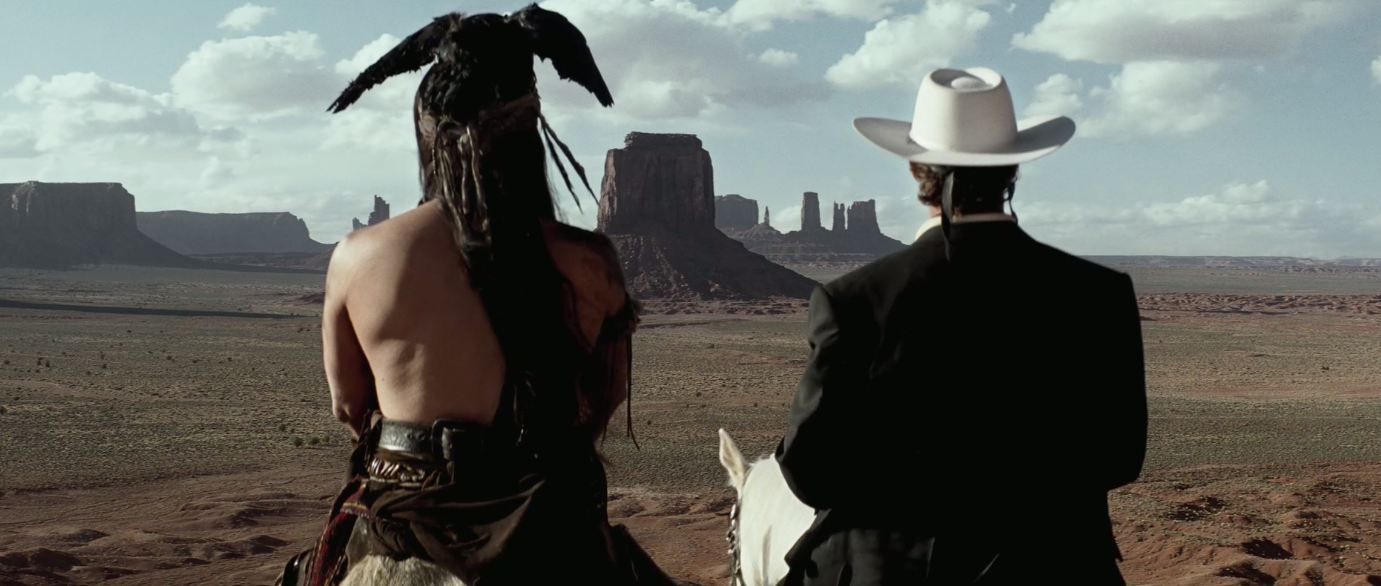
At the beginning of Matt Zoller Seitz’s review of The Lone Ranger he encapsultes exactly what’s right and wrong with the film in my eyes:
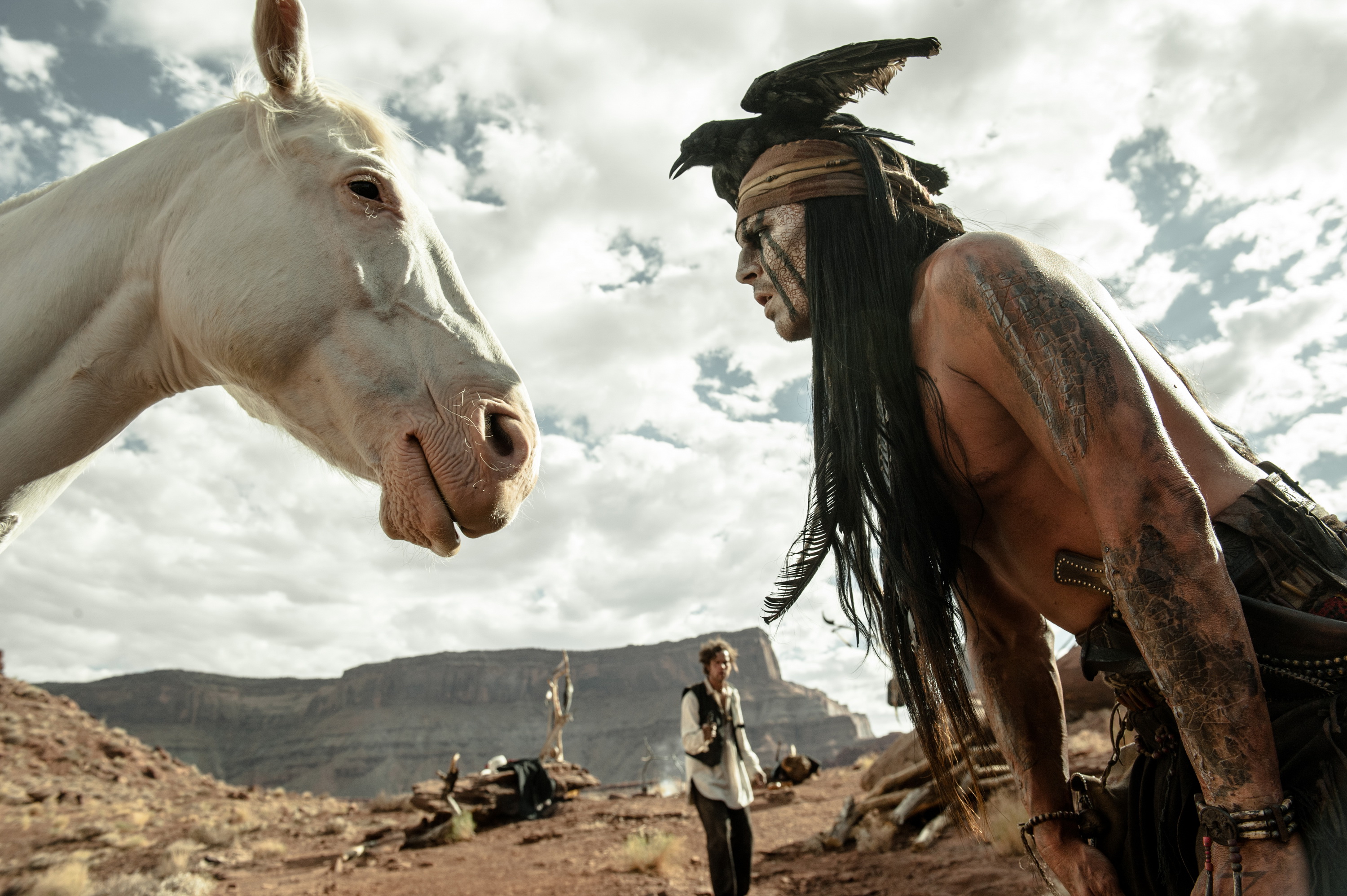
Like “Speed Racer” and “John Carter” before it, “The Lone Ranger” is a movie with no constituency to speak of. It’s a gigantic picture with a klutzy, deeply un-cool hero (Armie Hammer of “The Social Network”), based on a property that most young viewers don’t know or care about. It arrives in theaters stained by gossip of filmmaker-vs.-studio budget wars, and concerns that its star and co-executive producer, Johnny Depp, would play the Ranger’s friend and spirit guide, Tonto, as a Native American Stepin Fetchit, stumbling around in face-paint and a dead-crow tiara. The film’s poster image might as well have been a target. Too bad: for all its miscalculations, this is a personal picture, violent and sweet, clever and goofy. It’s as obsessive and overbearing as Steven Spielberg’s “1941” — and, I’ll bet, as likely to be re-evaluated twenty years from now, and described as “misunderstood.”
You really should read the whole review it’s simply replete with brilliant observations about the movie, but what struck me most was that beginning wherein it enumerates not only kind of how I walked out of the film feeling but also what was miscalculated about it in terms of its being a tentpole.
As I tweeted when the numbers started coming in, and I should’ve put it out there earlier, you could’ve seen the box office failure of the film coming. It was a film that almost didn’t happen and after John Carter flopped you thought it might not. It’s almost like they went back to a well that ran dry hoping to find water this time because they brought Johnny Depp along.
Lack of Bankability
Not to sound too crass, as I did like it, but clearly the same inherent issues that John Carter had in terms of bringing out the masses The Lone Ranger was sure to have. It seems tiresome but every time there’s some sort of box office bomb it makes me want to list who is involved. Yes, there are still plenty of good actors and movie stars, but guaranteed draws are very few.
Off the top of my head it seems only Tom Cruise and Adam Sandler get people to show up, but even Cruise had the under-viewed Jack Reacher just recently. As with Sandler, I have to wonder how much of that is morbid curiosity because after seeing Grown Ups 2 I wanted to curl up into the fetal position, weep and wish it was still 1999.
So, in spite of the fact that this film also is a good one, likely a much better one than John Carter, I never saw it as a money-maker. I couldn’t have predicted how insanely Despicable Me 2 would open (It really is Universal’s year it seems; R.I.P.D. notwithstanding) but in a vacuum this is not one I had high hopes for in that regard.
Disney Issues
It’s even more frustrating because if you follow what Disney does you know they acquired Lucasfilm and will be bringing Star Wars back. Sure that cost a lot of money both in acquisition and the production of the five announced films, but could they just grin and bear it for a while and know they’ll see a return on that investment, especially with the Marvel leviathan growing ever bigger? No, they just had to gut their hand-drawn animation staff.
Yes, hand-drawn is costly, but it did all begin with a mouse and all those investments will yield dividends but you can’t forget where you came from. New Mickey cartoons are great but it’s bittersweet to say the least.
Reflexive Western
Back to The Lone Ranger, as for the film itself, it’s constructed in such a way that we can likely go back to it and start parsing the visual cues and narrative references to diagram the deconstruction of the western, as Zoller Seitz does and this review does.
It takes an old character, and perhaps a cynical, nihilistic advantage of older connotations of Disney films and toys with expectations and creates this The Lone Ranger perhaps the only way he can exist now and re-creates Tonto perhaps as he always should have been.
Does Depp being Depp undercut some of the commentary being made on race and the old west, Manifest Destiny and all the rest? That was something I grappled with as the film played. In the end, I don’t think it does for narrative perspective has to be taken into account. This is really Tonto’s story from the opening shot to when he tells The Lone Ranger to “Never do that again,” after finally breaking out the anticipated (by those who know something of the character) catch phrase “Hi-yo, Silver, away!” at the very end.
There’s lamentation and regret from both characters in this tale: The Ranger for his lost ideals, and Tonto for his naive mistake. In some ways the film plays like a lament of the loss of the old Western, not the Old West. When film and society was more naive the Western was the canvas of absolute ideals, as we’ve come to terms with our past as a nation and further world events have stripped that naïveté; the Western had to grow up. The films are now adult tales for adults who remember the genre as children and don’t cater as well to a young audience anymore because it’s not really in the pop culture landscape anymore, not for kids.
While this allows the film to do some interesting thing in terms of commenting on genre, history, race, the country in general; it’s not box office material, especially considering the amount of money invested in this film.
Lastly, the character of Tonto, for how it used to be portrayed, is likely a racist symbol to many. Honestly, the only exposure to the character I had as a kid was in SNL parodies of Tonto, Tarzan and Frankenstein. I don’t think there will be a consensus of where this rendition falls. All I know is in culturally sensitive matters there is never a unanimous sentiment and hardly ever a consensus. From my perspective, as one who had my defenses up waiting for something that crossed the line, I really don’t think it did. Especially when the tribe s introduced and explains Tonto’s story.
When one went in not knowing what to expect it was far too easy to be caught off-guard by the film; far too easy too take it at face value as over-produced, overly-expensive fluff, but there’s more to it than meets the eye, which is what makes it interesting even if it won’t make it profitable.
As I have proven in the past by watching many more Hellraiser, Friday the 13th and Children of the Corn than I likely would have otherwise; I am at times inclined to watch a series long past its best days being behind it. However, what delineates those examples from, say my treatment of Paranormal Activity, is that in those series there was the impetus of having liked at least one installment. With Paranormal Activity, though I came dangerously close, I’ve not liked one. Yet, I admit to having been a small part of the problem inasmuch as I’ve seen all four at theaters.
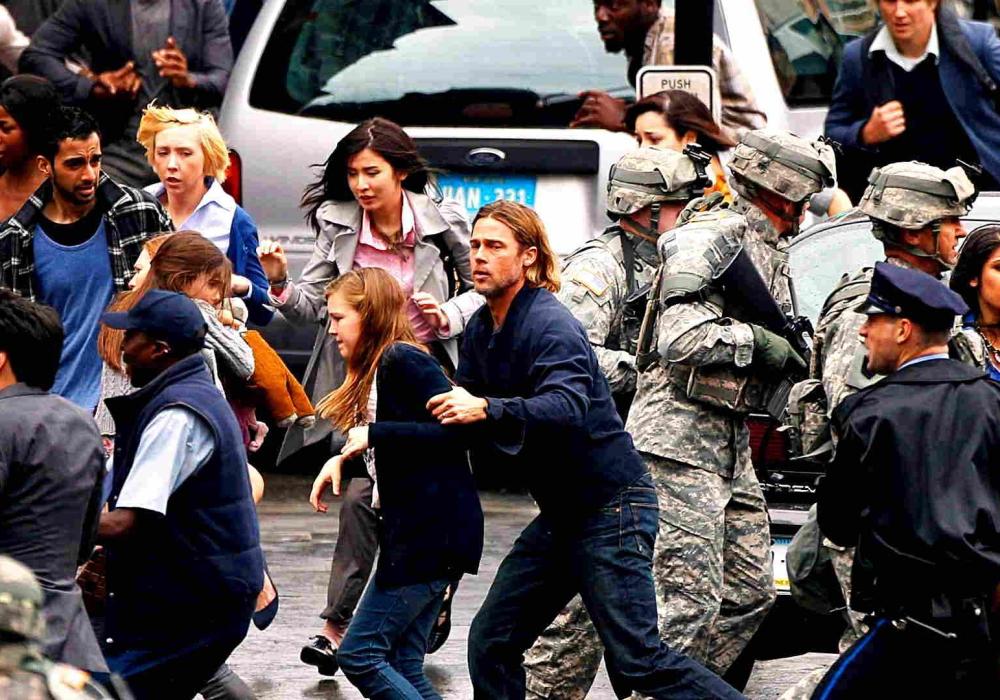
It therefore occurred to me, after having been made perfectly aware that I am in a minority opinion on World War Z, that I should publicly decree that I quit the series. Rumors of a sequel I feel may have been a bit premature, even in this day and age, considering the unwieldy production budget, that does not include the promotional blitz, but as it stands fairly strong both here and overseas it seems more likely. I will not contribute to the success of the sequel even out of curiosity. Not during its theatrical release anyway. I know that sequels tend to lower the threshold for financial success, but this is more about principle than any delusion that my ticket makes that much of a difference.
It’s just time to say enough. I could’ve picked another franchise to be the sacrificial lamb, and this seems to be one in the making that I’m fairly sure I’ll never get so I’ve had it. Enough. If you enjoyed it I don’t begrudge you, go and enjoy them all, however many there may be. However, I do encourage you to stand firm regarding another property that you’re patronizing just because, not due to the fact that you really want to see it.
Will I be able to throw down to gauntlet to other behemoths? Maybe not, but it has to start somewhere. I shielded myself as well as I could from outside opinion of World War Z before I saw it. In all honesty, I expected my reaction would be ‘meh’ in the face of many positive reviews. It fell well short of even that unimpressive standard to me and hovers somewhere between atrocious and a travesty in my mind. So I say no more. If you feel as strongly about it or something else I suggest you do the same.
This post is meant as a brief accompaniment/aside to my latest schedule update. It’s meant to just further explain what Box Set Summer is and why, like other themes usually have, it may not generate posts specifically branded with the title.
Essentially most of my theme ideas are linked either to a time of the year and/or a need to whittle down my unwatched DVD pile. Box Set Summer was designed to tackle the box sets in the pile which are some of the most cumbersome in terms of viewing commitment and take up quite a bit of space too. One area you have and will continue to see Box Set Summer’s agenda reflected is in my ongoing Tarzan series. I’ve now viewed all the Wiessmuller titles and have one other box to get to before I’ve seen everything currently in my possession.
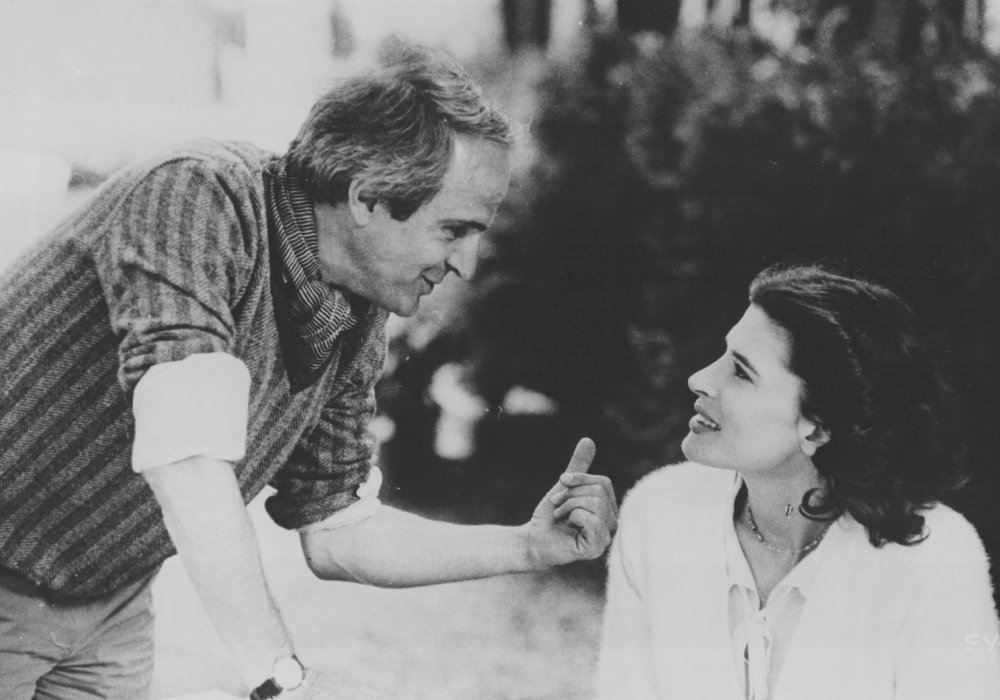
I also, in conjunction with a TCM theme, may start preparing for future Truffaut-related posts by watching and reading more of him soon. And there are a few other examples. It may not become a category but my fulfilling this mission will influence myriad posts and hopefully bring more diversity to the content offered on The Movie Rat. Thank you!
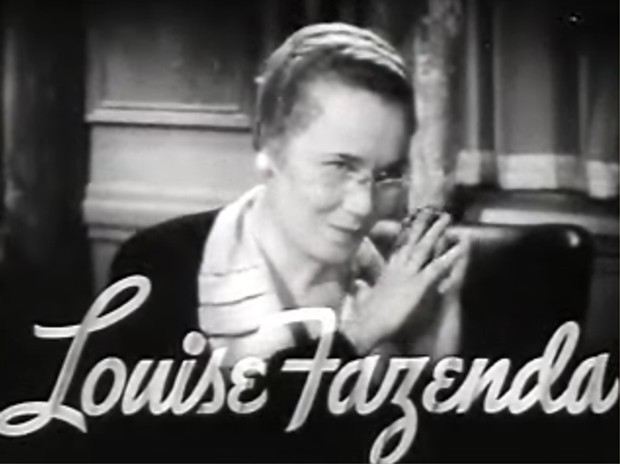
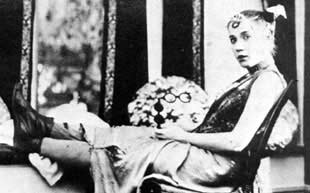
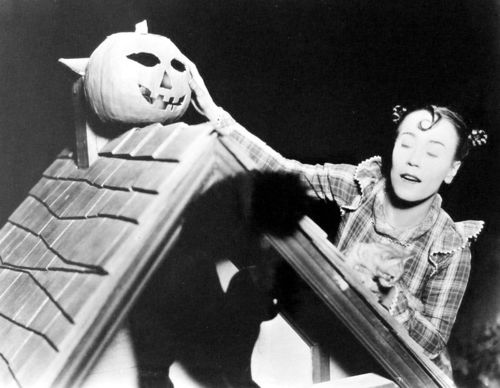
When I heard about Movies, Silently’s blogathon about funny women the first name that came to mind was Louise Fazenda’s, and that was almost instant. However, unlike in my recent Children in Film Blogathon post wherein I knew Jackie Searl’s works, but had just discovered a new side of his them; here I’d quite honestly never heard of Louise Fazenda until I read the wonderful book The Keystone Kid.
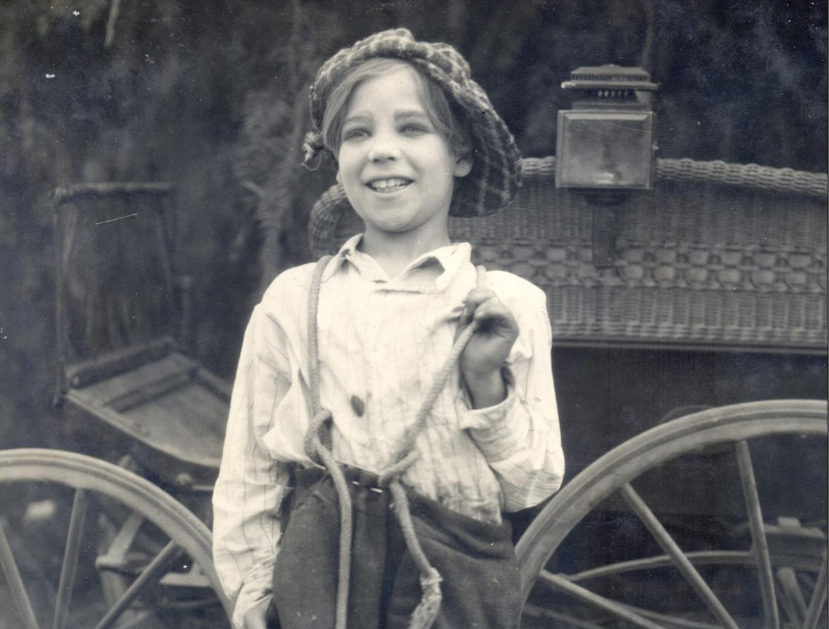
The Keystone Kid is part film history and part memoir. The recollections of Coy Watson, Jr. speak most fondly of Louise Fazenda, not only as she became a close family friend, but also of her talents as a comedienne.
My discovering Fazenda’s work, any of it really, is a testament to the importance of The Keystone Kid as a document of film history. As we move further and further in time from given eras in the artform, thumbnail sketches and one line synopses become what we take to be the truth about era, films and performers alike, while other instrumental figures can be forgotten entirely.
Examples of this would be that through Watson’s book I learned that Bobs, whose talent and fame for crying I knew and have been witness to, was the youngest of a large family; that Coy, Sr. was a pioneer in wire effects in Hollywood and that there was an actress named Louise Fazenda who was highly regarded. However, even in wanting to give her what was her due, and he did so citing her notoriety; and two stories (one on set and one off), I still knew nothing of her really, and I was very intrigued. This was not just because she was an unknown silent actress to me, but also because even her name, which means farm in Portuguese, fascinated me. It was a decidedly “un-American” surname yet remained unchanged.
Method
So this post has that element of excitement wherein I’m not coming of a position of having known a bit about, and having insights into, said performer, but instead was discovering her. And that’s great because part of why I don’t read books about film as voraciously as I could is that element of “I wanna see that, and that and that” for various reasons and being disappointed to find said titles are rare or hard-to-find.
My tactics in finding her, owing to the fact that I didn’t have too much time to get cracking, were to hit two internet resources one was YouTube, the other the Internet Archive. I didn’t scour compilations as it may have taken too long to uncover he appearances there.
The films I was able to see all or part of were as follows:
Your Show of Shows(1929) Wilful Ambrose (1915) Ambrose’s Fury (1915) When Ambrose Dared Walrus (1915) Ambrose’s Lofty Perch (1916) Ambrose’s Nasty Temper (1917) Once Over Lightly (1944) The Bat (1926) Her Fame and Shame (1917) Her Torpedoed Love (1917) A Versatile Villain (1915)
General Impressions
If I had only seen Once Overly Lightly, a 1944 moviereel style compilation of many silent films with a voice-over track full of insincere wistfulness and backhanded apologies for silent tropes; I still would’ve known little. Again she’s cited as one of the best but all that’s cut into the film is one very apt pratfall. This release being just five years after her last credit mind you.
Yes, Louise Fazenda survived into the sound era. As the first clip I watched showed (Her segement in Your Show of Shows), though she was playing the straight man, she remained quite funny, versatile and had a pleasant speaking voice. She had a good run in the transition to sound, at least in terms of years, it seemed apparent even in 1929 that writers didn’t know what to do with her talking though – a harbinger of the influx of stage influence in the craft of writing and acting perhaps.
So those first two bits only gave me small glimpses. As I sat down to write this I wondered, maybe the internet has some insights. I found on Golden Silents her bio from Who’s Who on Screen 1920:
“Louise Fazenda, famous Mack Sennett comedienne, was born in Lafayette, Indiana and educated in Los Angeles. After a short season in stock she secured an emergency engagement with Universal, going from there to Keystone and Mack Sennett. Miss Fazenda scored notable success in “The Kentucky Lady,” “Her First Mistake,” “Her Screen Idol,” “The Village Chestnut,” “The Village Smithy,” “The Foolish Age,” “Hearts and Flowers,” “Treating ‘Em Rough,” “Back to the Kitchen,” and “Down on the Farm.” She is five feet, five inches tall, and weighs a hundred and thirty-eight pounds. Her hair is light and her eyes are blue. In spite of her remarkable characterizations of homely girls, Miss Fazenda is one of the screen’s most beautiful actresses.”
At least, here you see some popular titles at the time. It can be worth looking into those down the line, but I’m fairly sure that time has been very unkind to many of her earlier works. Oddly enough through my viewing over this week, I didn’t see what was cited as her staple character:
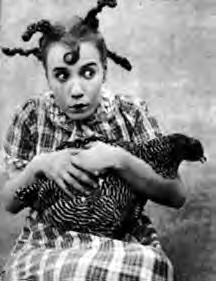
Her best known character was her country bumpkin — complete with spit curls, multiple pigtails, and calico dresses, a look that went on to inspire such later comics as Judy Canova and Minnie Pearl.
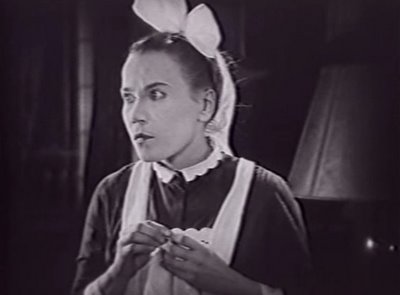
However, I did see her range one of the amazing things I picked up by watching Fazenda, even in the fleeting glimpses I saw, was that there is an elasticity, a chameleon-like quality to her appearance. In the teens she played lovestruck young ladies and matronly housewives. When you compare that to her appearance in Your Show of Shows, she looked more refined, mature (as she could look) but hardly like 14 years had passed.
Sure there was movie magic even back at the very beginning but ones facial structure and the quality of their features have to be perfectly conducive to such a seamless transformation. Fazenda did what needed doing to create her character and seemed to take it seriously even in entirely goofy films. That grounding in reality, even of just one element can be essential for comedic success. It’s not a wonder that legend has it that Mack Sennett would bring in Fazenda to try and quiet Mabel Normand’s comments on the caliber of films Keystone put out.
Fazenda seems to have a physicality that’s ahead of her time, possessing not only natural ability but the innate ability to seem natural on screen. Silents weren’t communicating with words so gestures, movements and looks had to be exaggerated such that those who could be big but also convey and get desired results with restraint are noteworthy. As cameras moved closer to actors broader was no longer better and those who could make subtle communicative gestures continued to work consistently. Fazenda proved early on she had that innate ability.
Her facial expression in Wilful Ambrose as she lines up a “bonk” in Wilful Ambrose is priceless. A husband being smashed on the head is a standard bit, but to make the anticipation funnier than the result is great and the mark of a good comedian. All of these traits, including a good singing voice, were on display in the sound era.
In The Bat you can see that she was the comic relief and brought that levity when needed but her fear always seemed very real. She instantly asserts her presence. Her character, for as superstitious as she is, is often correct to be fearful and it ends up being one of the charms of the film. While that film had its failings it is perhaps the best illustration of her persona that I was able to see: deft physical comedy and seriously grounded commitment.
Conclusion
Going back around to the beginning, it really is a wonder what The Keystone Kid, or any written work about film can do. You open the book with a vague interest in the subject matter and learn of very specific avenues to explore. They are entryways to new constellations in the universe of film. Due to this book I now have definitive thoughts on why Louise Fazenda is great. I no longer take that statement and remember it like a cinematic platitude such as film X is great and film Y is such-and-such’s best. I’ve now seen some of her work for myself.
If a piece of film writing leads you find one new artist of film it’s done a great service. If you find many it’s a debt that can never be repaid save to thanks again. I am now a fan Louise Fazenda’s thanks to Coy Watson, Jr.’s book, and I’m quite grateful I am.
Note: Please do not proceed if you have yet to see Man of Steel.
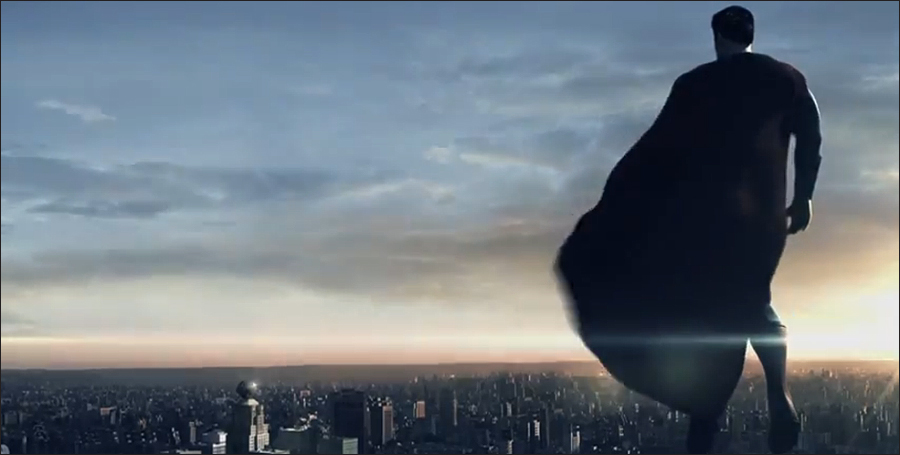
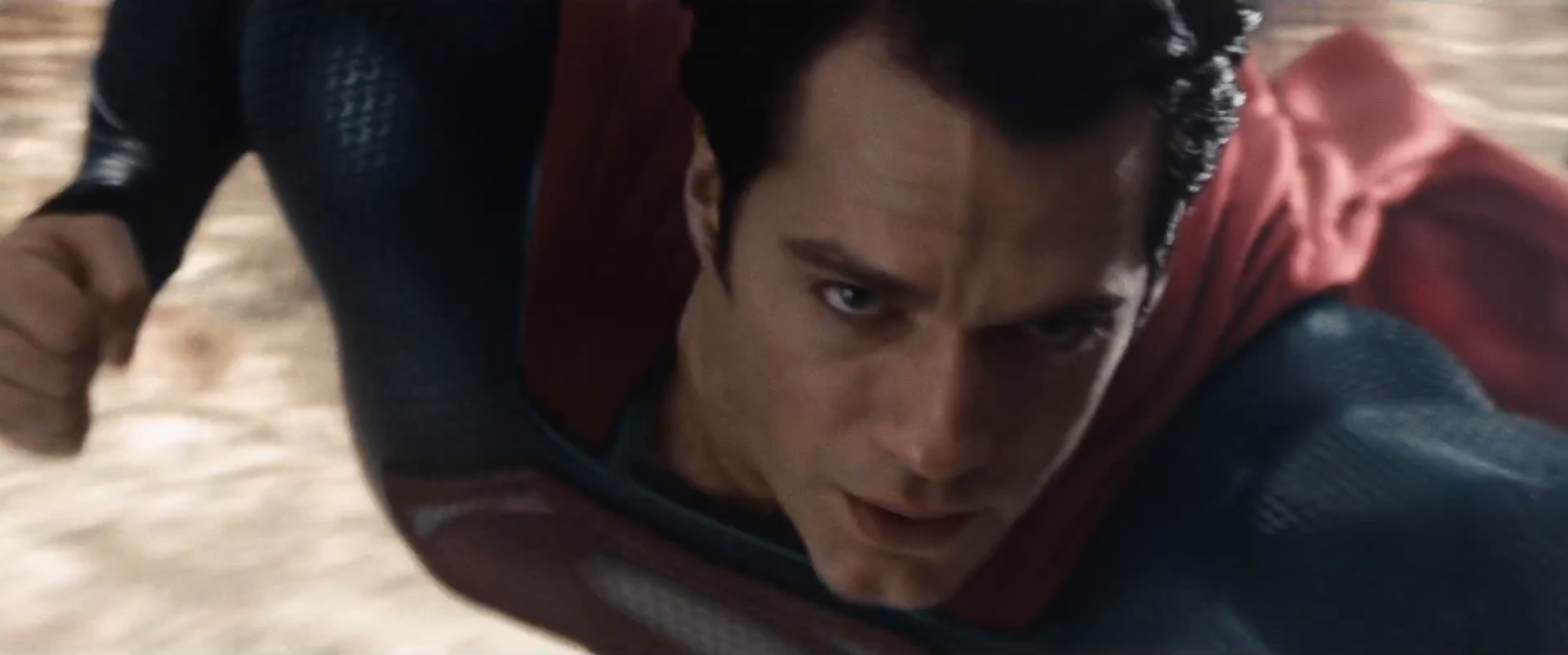
In a very similar vain to how I responded to the Rex Reed fiasco earlier, I wanted to wait until the Man of Steel banter ran its course before chiming in. I will, more often than not, forgo a bit of traffic for clarity. In a certain regard my discussion is more about the discussion than my reaction to the debatable points in the film, but I will touch upon those too.
However, before I get to that very specifically allow me to couch my commentary by telling you where I’m coming from. As I chronicled painstakingly in parts one and two of Hero Whipped (and to a lesser extent in further additions), I was a comics reader as a kid, left and returned but was never a superhero guy until my return. Having said that, even since my return there are only a few individuals or teams, usually obscure, that I consider myself to be well-versed in. Therefore, I am not coming at this talking point from a perspective of extreme Superman fandom.
I believe when I was younger I likely saw pieces, if not all of, the Christopher Reeve versions but that’s about all I can claim. The last attempt to revitalize the franchise was one I skipped. The parts of Man of Steel that I enjoyed were good enough that I liked it in spite of my major reservations regarding many sections of the film.
Character vs. Film: The Fan Argument
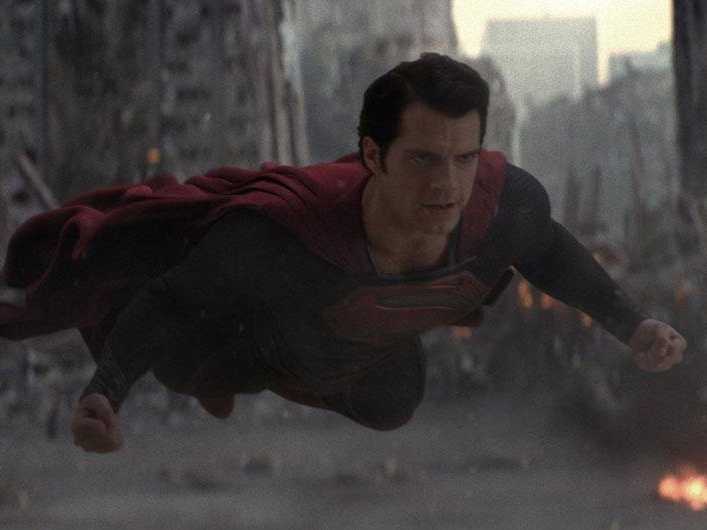
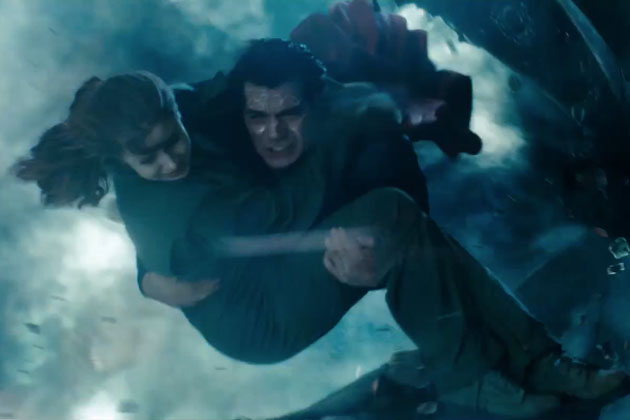
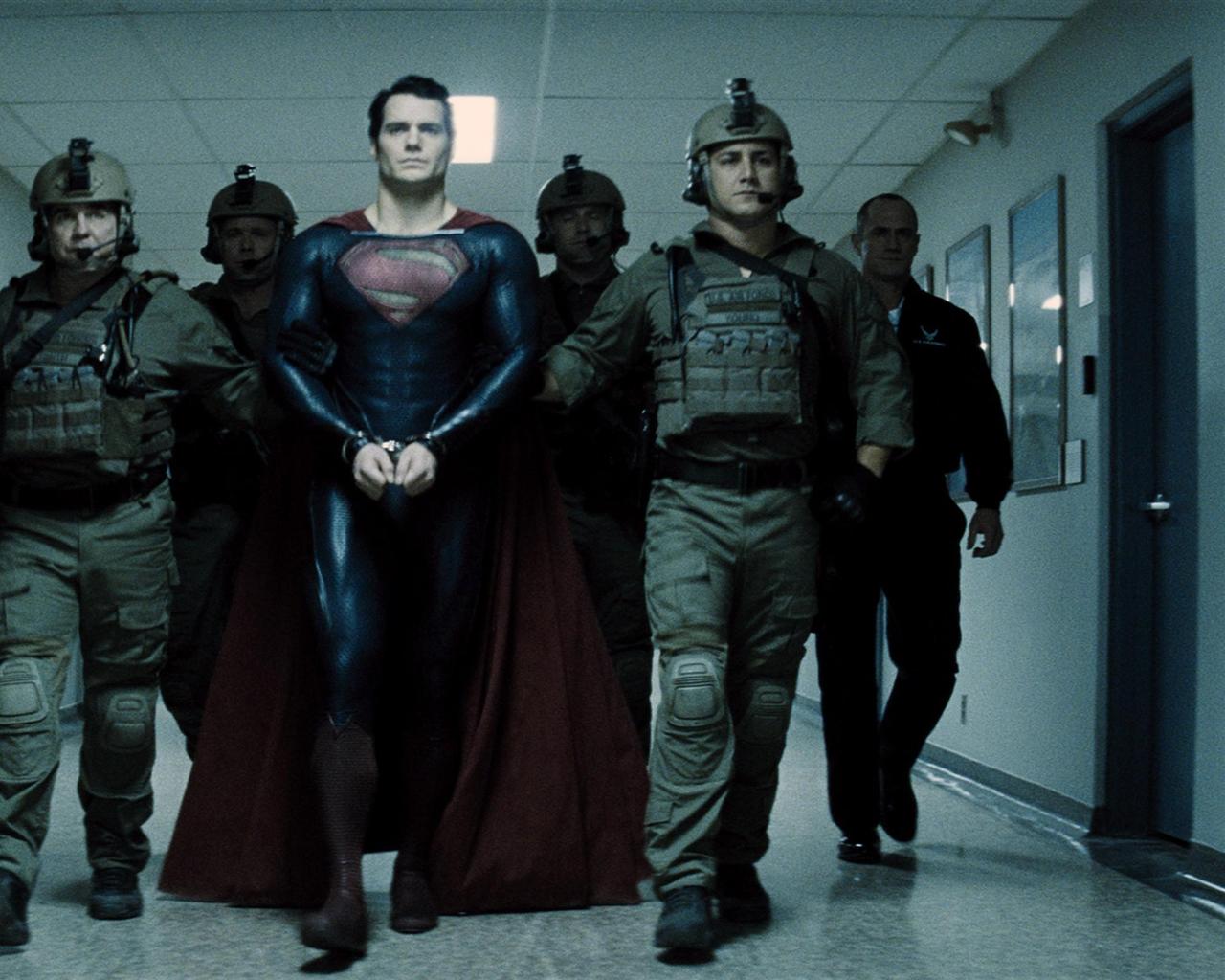
The main tenet that I will state here is that a lot of the comments that I saw in my twitter feed seemed to be arguing mixed points. Namely the film was getting slammed for what the character was doing. The climactic battle with Zod is problematic due to its length, repetitiveness and the fact that there are cutaways to pieces of less consequence where better story edits existed.
However, I cannot knock the mere fact that there is collateral damage in the battle. That has happened in myriad action, sci-fi and superhero films depending on how you want to pigeonhole Man of Steel. However, the fact that it exists is not what I’m reacting to. It’s how the destruction is portrayed that’s problematic.
The first aspect of a detrimental nature is the amount and the incessant nature of the destruction. However, I have no issue with this film deciding that Clark’s inexperience and Johnny Come-Lately status to this battle will impact how it occurs. I also fully understand and appreciate that the destruction of Metropolis, in part, is a small price in dramatic context when compared to what Zod intends to do with the world.
However, while Goyer and Snyder have since broken the silence and discussed the controversy, future plans of a series don’t absolve the sins of an installment much in the same way knowledge of a book doesn’t forgive the shortcomings of a film version thereof. What I was missing from all this was either the film caring about the impact of all these buildings and cars being crushed with people in them. And based on the way he was drawn I believe that Clark does care, and we’ll see that along with his guilt in the sequel, it was not evident in this film until the moment where he just can’t take it anymore and ends Zod rather than seeing someone else victimized.
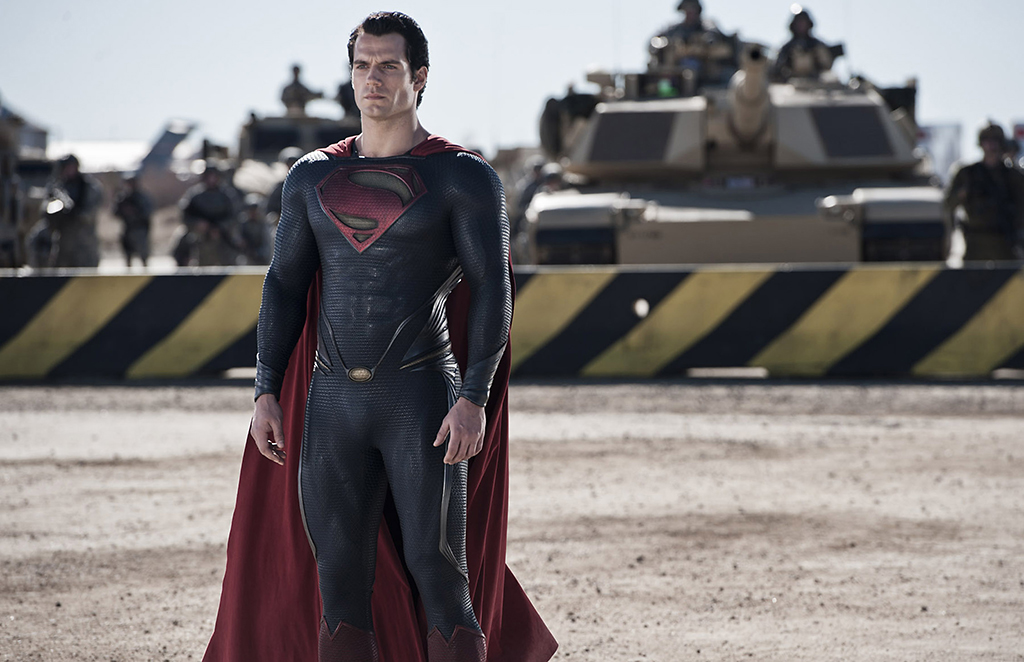
I’m fine with his attitude in the one exchange with the military. This is not discordant to the posture many superheroes take. They act based on principal, not political agenda. They will assist the common good, but will not be pawns. The police in Gotham have a signal to summon Batman, but Batman does not seek permission from the Gotham PD to act. Superman doesn’t want to be a pawn of the military; I love that scene.
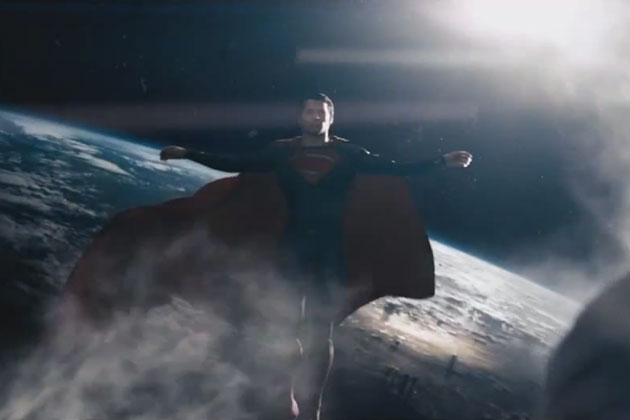
Similarly, the epilogue wherein Clark joins the Daily Planet is a great set-up and capper for the film. To me the film’s highlights are Clark’s humanity and progression. His doubts about how to deal with his gifts, to understand where he came from, who he is and how the world will deal with that are what hold the film together. His regrets about how this battle happened and the decisions made will play into the next one surely, but there was none of that here. In a number of ways Man of Steel is combining certain coming-of-age tropes in the flashbacks and also chosen one tropes from many sci-fi tales, and it mixes them beautifully. What the climactic sequence lacks are what the film gave us throughout: thought, understanding of consequence and introspection.
Suddenly, we were thrust into random destruction anew that was not elevated either by the stakes or how either character responded to it.
Post-9/11
Is there something specific about this post-9/11 world that made these images seem so jarring that caused so many to jump on this point in unison as the glaring issue in the film, or is it just a combination of Superman, the original superhero and American icon, with these images that is so jarring?
I personally will admit that apocalyptic and post-apocalyptic films wherein there’s some extraterrestrial source of destruction, or some outlandish cause, has less impact for me and holds less interest than ever before. New York, and or its comic book clones in the DC Universe Metropolis and Gotham, have not been exempt from cinematic disaster since then.
So I think the character has something to do with it, but there’s also a lack of examination of impact that’s my biggest pet peeve. Mind you that Spielberg‘s War of the Worlds deals with a lot of these old hat items, places its ground zero in New York and was released post-9/11 and is very effective part of the reason is the survival aspect. Aside from the workers at the Daily Planet there’s not much in the way of attempted escapes, and due to ratings concerns, none of the buildings being damaged are shown to have visible victims. Their literary ghost status makes it a more haunting tale, but a colder one.
Does one sacrificial lamb that we can see change this perception? Maybe, that is if we got to see Clark get distracted by it before ending the fight. I get the adrenaline and focus arguments that can be made, but that’s exactly the issue with protracting the fight so long. The longer it goes on the more the audience gets to wonder about things that aren’t happening or being shown because what is being shown is fairly redundant.
Conclusion
Part of why Man of Steel has gotten pounced on is because films featuring superheroes have had the bar raised in the past several years. In fact, part of that raising of the bar was done by gentlemen involved in this film, writer David S. Goyer and Producer Christopher Nolan first and foremost. One of those films is Iron Man 3 as it does have a strength where Man of Steel has a weakness. Tony Stark starts to show signs of PTSD in light of the events in The Avengers where he had to escort a nuke through a wormhole and save New York.
It was actually a plot element I was surprised by because its precisely the kind of thing you’ve come to expect superheroes to shake off. The fact that Tony doesn’t makes the film that much more interesting and it makes sense when you realize that Tony is closer to a guy in a suit compared to some heroes endowed with certain gifts as birthright.
So coming off a hero that shaken by an experience he had, and just having come through the most recent Batman trilogy, and there’s hardly a more haunted hero than Batman; it’s not a wonder we expected some kind of response from Superman, especially when the film showed his sensitivity and caring prior. I do believe that not unlike Batman Begins, Man of Steel could be a stepping stone, and if Warner Brothers and DC play their cards right, and don’t rush; they could build differently and eventually to a Justice League film, however, that doesn’t mean there weren’t missteps here.
I cannot claim that I have a foundation in opera. Nor can I claim, as I can with ballet, that I have a very active appreciation of it.
What my history with this artform is, in all likelihood, not unlike that of most people. Pieces that were featured in Looney Tunes shorts either in part, or as the basis for entire stories I know well. In fact, two of my more memorable Looney Tunes viewing experiences were shorts of this type, Rabbit of Seville being one of the funnier ones, and Long-Haired Hair being one that as a kid made me a bit uncomfortable because I did start to feel bad for the pompous Mr. Jones (I got over that eventually).
My first true introduction to opera appropriately enough was through a film. In French class we watched Franceso Rosi’s Carmen (1984) as one of our screenings to get more acclimated with hearing the language; this time through Bizet. I absolutely loved it. I later found what I thought was the same film and didn’t like that interpretation of the story at all (that version being Saura’s 1983 version).
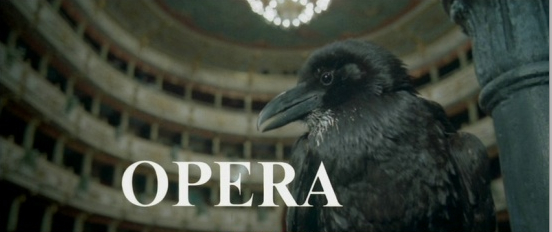
There was a long hiatus after that where I really didn’t take another jump back in. As I discovered the works of Dario Argento, Opera quickly became one of my favorite works in his oeuvre. In that film I did learn both a bit about Argento outside film and also about the operatic version of Macbeth; and how it has similar tales of misfortune associated with it.
Later on I would, again going through the works of a particular director, this time Ingmar Bergman; come to know The Magic Flute. Yes, heathen that I am, I first experienced Mozart’s tale with all-Swedish libretto. I enjoyed that version a lot and then viewed it in German, as it was written, at a Fathom Events screening at a local movie theater.
Since then, while I may not have gained too much narrative or other insights into operas in general, I have listened to a lot more of them through a few means. Namely borrowing CDs from the library and on Spotify (I’ve used both these means to become more versed in classical music as well).
The Magic Flute (2006, or 2013 as the case may be)
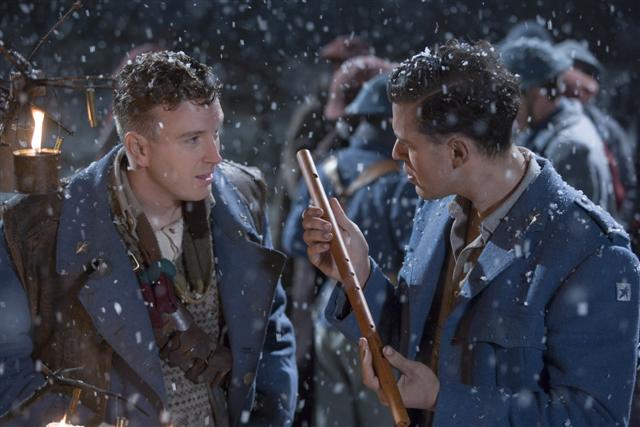
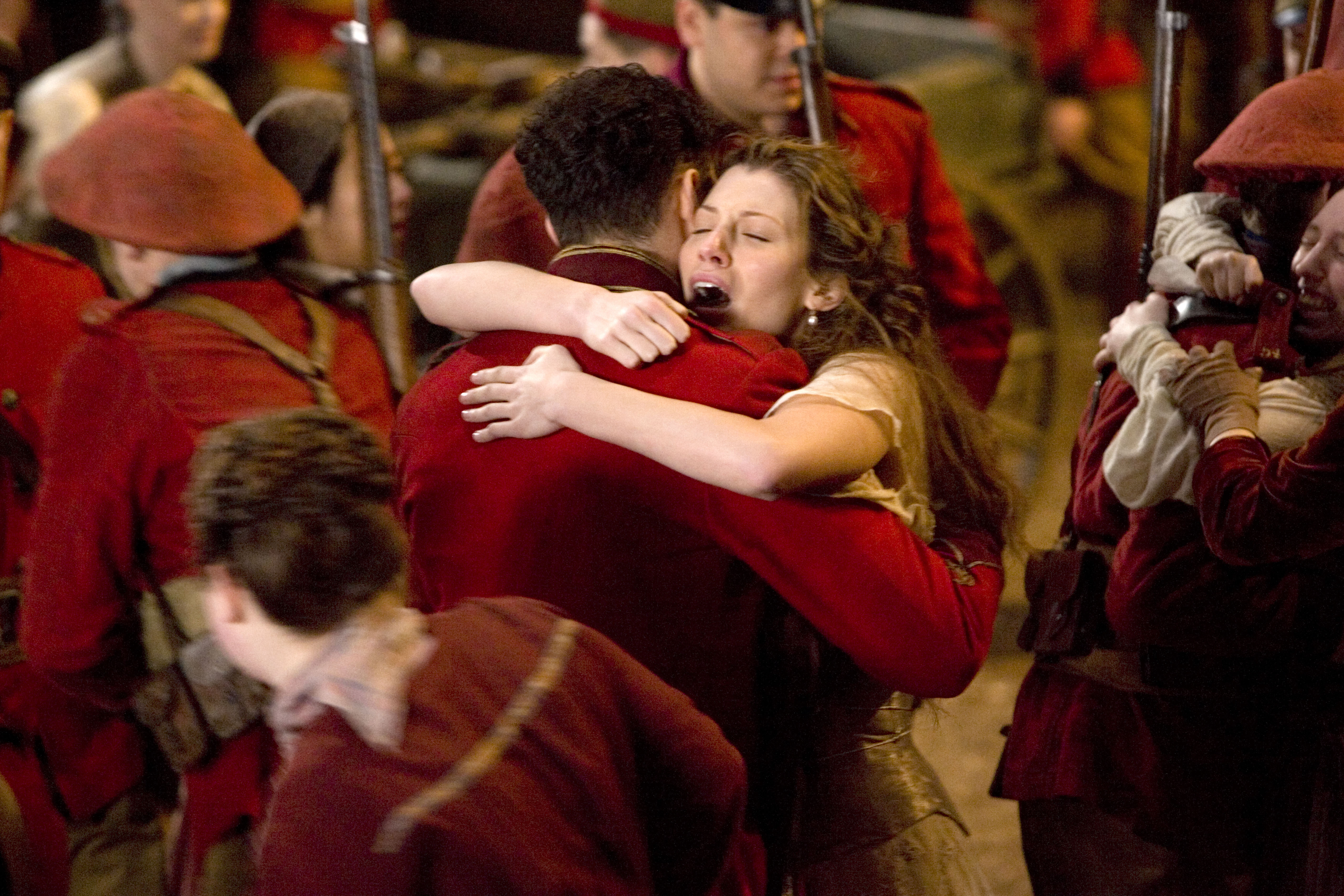
That brings me to the present and my latest brush with the artform in Kenneth Branagh’s only-recently-distributed English rendition of The Magic Flute. What Branagh does with this film is not that unlike what many have done with Shakespeare: the text is the same albeit translated and the setting is updated. This tale taking place during World War I.
Branagh’s doing this makes perfect sense when you consider that most are familiar with him through his Shakespearean adaptations. However, this film is perhaps the best assimilation of his sensibilities: there’s the classical dramatic sensibility he’s familiar with in Shakespeare and parlayed well in Thor, but also a zany, irreverent humor that he possesses as he’s shown as an actor in the Harry Potter series that fit this film as well.
Being an opera on film it will invariably have its stagier moments, but it has infinitely more cinematic ones. The camera, and at times even the characters in motion, accompany the movements of the music. This is especially true in the “Queen of the Night Aria” which is as mind-blowing cinematically as it is musically in this version.
In short, after all prior re-introductions to opera on film are taken into consideration the Looney Tunes are a wonderful warm up, but Kenneth Branagh’s The Magic Flute is the perfect introduction to opera for the uninitiated.
When film began any things that were deemed worth crediting came at the front, or at latest on a title card. The end of the film was reserved for a card saying “The End” and re-affirming who owned the film. As the film industry became more formal and unionized more crediting became necessary, thus the creation of closing credits at some point in time and the changes to the opening credits. Since both those as well as studio logo and/or fanfare count toward running time there have been tweaks to the the way title sequences are handled to economize in that regard. Here are a few instances and trends I’ve noticed lately.
Probably one of the best tone-setting openings of the year was that to Iron Man 3. I say this in part because it is slightly out of the ordinary:
Tony Stark (Robert Downey, Jr.) starts recounting the story. He will ultimately tell how his blowing off Alrdich Killian (Guy Pearce), and his one night stand with May Hansen (Rebecca Hall), came back to haunt him. However, like a few film’s storyteller’s he has a false start. So he starts over. After that false start is when the Marvel logo comes up and Eiffel 65’s “Blue (Da Ba Dee)” starts playing. It’s an inspired musical choice. I never liked that song, but few things say 1999 like it, so it works very well. Following that, the prologue on the eve of Y2K in Bern, Switzerland plays out.
I’m not sure when the plan for the opening title sequence (OTS) came to fruition for this film, but this is part of the reason why screenwriters are instructed never to indicate where the opening credits go. Firstly, because it’s not the screenwriter’s job, but also because even if you did decide in preproduction where it belonged, and what it should entail, it could close you off from a better idea should one present itself.
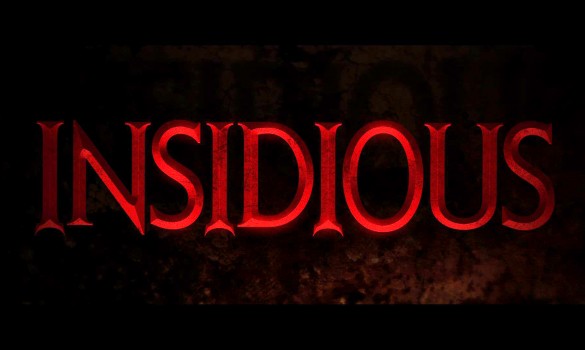
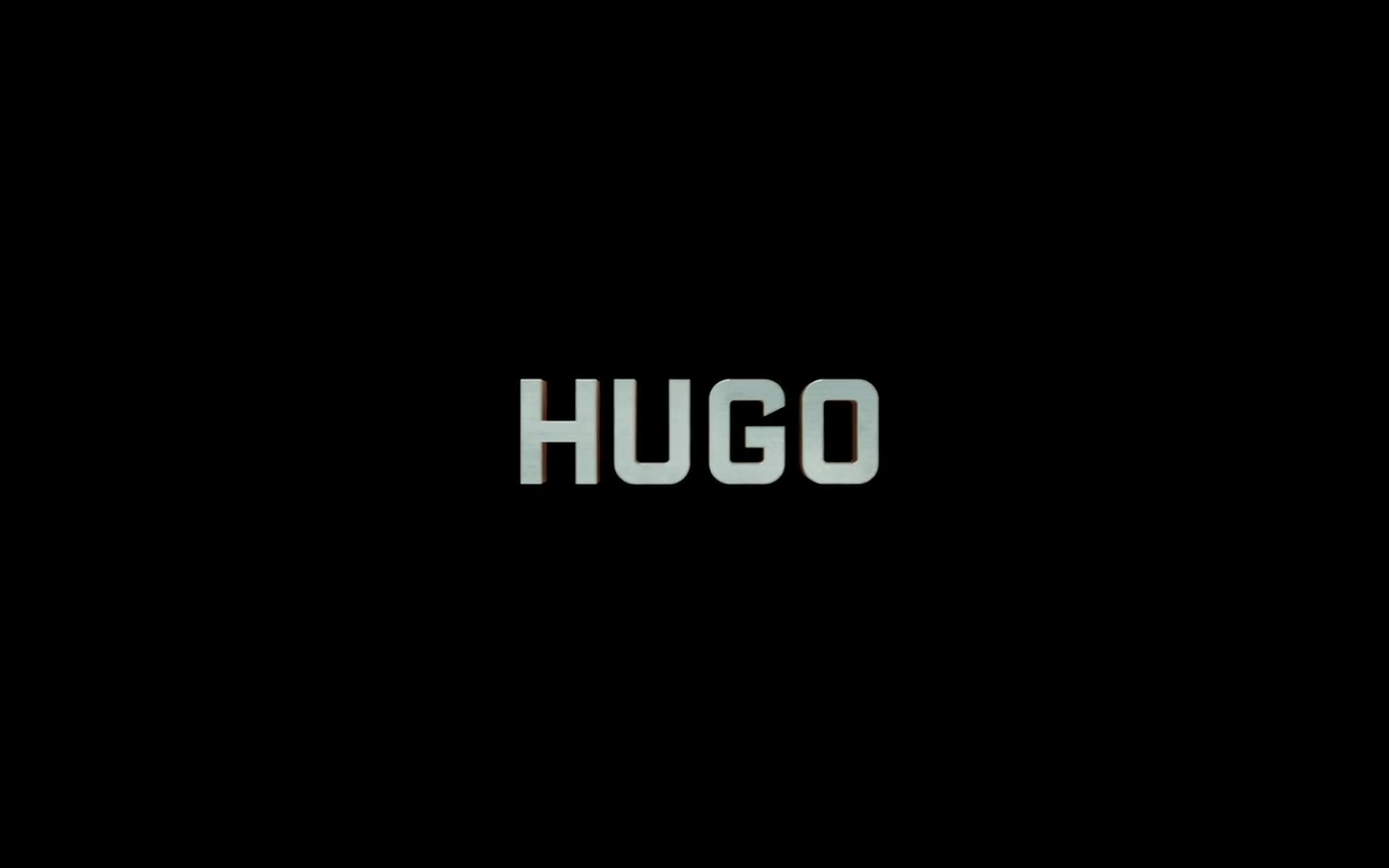
Perhaps the most inventive thing about the open of the film is that it creates a payoff in the now-obligatory Marvel stinger that most people now know to wait for. This opening also stood out to me though because in 2011 a trend in OTSs developed of quickly flashing the title after an introduction. The title was usually very large, but that was all and the story proceeded unabated from there. Insidious is an example, as is Hanna. Hugo notably brings its music to a climactic crescendo as if a short film had come to a close, but instead the title of the film merely pops up and on we go to the rest of the film.
Whether a protracted OTS at the start, a truncated one after a prologue, or no OTS is requisite depends on the film and it is interesting to follow the tendencies as it is a part of setting the tone of the story and changes in approaches don’t seem to come along very often.


 The Movie Rat