Review: Still (2014)

One thing I will always aim to do is examine the film in and of itself and try as much as I can to avoid the cinematic pre-life (the interaction, impressions, and ideas I may have had with and about the film before seeing it) having any influence on my writing on it. However, that is not always possible. One way in which that’s true is when you’re watching an actor who has become very well known for a role, particularly one on television. In this case I refer to Aiden Gillen, best known to most as Petyr Baelish a.k.a. Littlefinger on Game of Thrones.

Specifically to the large cast on Game of Thrones I’ve noticed a few interesting things: first, you can almost forget how deep and talented the cast is because you see them on a weekly basis, usually in small but strong snippets. Then when you see the same actor in a film, where they get to dominate a lot more screentime you are almost taken aback. This has proven true with Isaac Hempstead-Wright in The Awakening, Art Parkinson in Dracula Untold, but this extends past house Stark too one example being Nicolaj Coster-Waldau in Headhunters. Another interesting thing is that it can affect your view of the title some: Lena Headey was in 300 before Game of Thrones, then returned for the sequel. That sequel had a lot more issues than the original and the lack of her involvement, because I know knew her better, was one of them.

However, one thing I don’t expect these actors to do is to be static or settle into a type. I relish seeing them stretch and test their mettle, which is usually why actors are drawn to indies in the first place. It’s also a testament to my blank slate theory as I had forgotten the synopsis by the time I went to check this film out.

If you’re interested here it is:

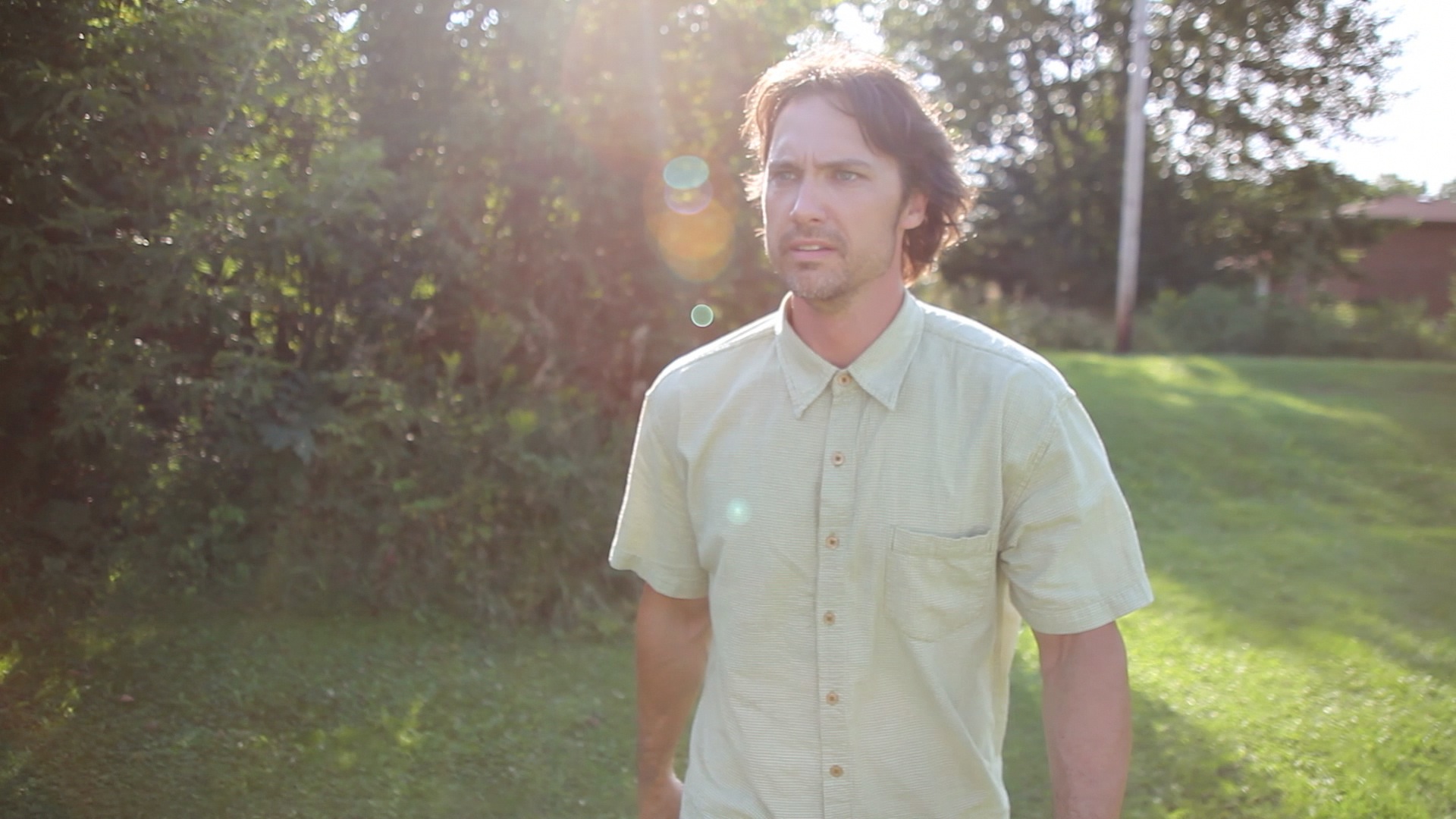
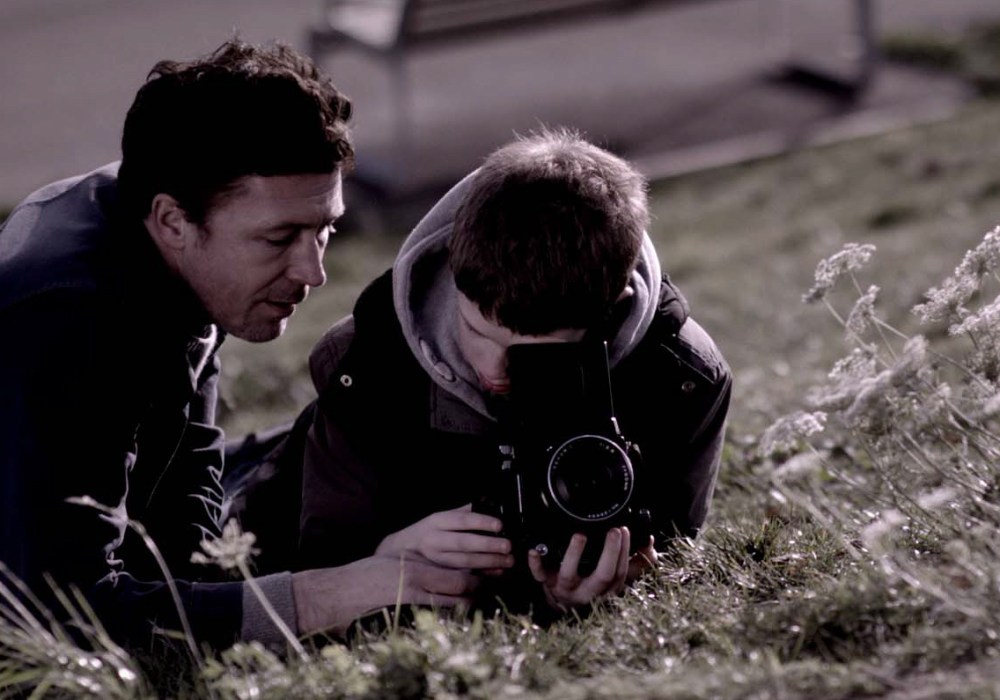
A gritty and atmospheric thriller about the traumatic disintegration of a man and father, STILL is the haunting, deeply moving story about a journey every parent hopes they will never have to make. Tom Carver (Aidan Gillen, Game of Thrones and The Wire) is a man stumbling blindly towards a crossroads in his life, recently thrown out of focus following the unexpected, tragic death of his teenage son in a car crash. After a seemingly harmless encounter with a neighborhood kid, he finds himself involved in a feud with a teenage gang that quickly intensifies to more disturbing and horrifying heights. With Tom’s personal life unraveling before his eyes, and the threat of gang violence escalating out of control, the world he is so desperately trying to rebuild may disintegrate all together.

What that set-up moves puts in play is a scenario wherein the stakes are ever-rising and the spiral is potentially ever-downward, and allows for an arc of such power that its positively captivating. That’s not to say this film is merely an actors’ showcase. That would be incorrect and unfair for this is a great film that is compelling because of the characters it builds. One you get to know very well and see how he responds to getting pushed. Some you assume you know and get to know better as the film progresses.

Nor is Gillen alone in his strong showing here. Joining him as being of note are Elodie Young, who as a pained but distanced ex-wife, and Sonny Green, who plays his one-note expertly and surprisingly adds quite a few towards the end.

This film is one that starts small and slowly but mushrooms and truly earns its tragic arc that makes it worth investing time in. It’s simple in conception but not easy to execute by any means.

Still is hypnotic and most effective because of how it manages to reverse fortune in its closing act, as well as have you dole out your empathy to many of the concerned parties, leaving your jaw agape at its conclusion. This is a film I’d recommend to anyone looking for a drama with a tragic arc, and serious real world stakes.

9/10

Still will be available on DVD on June 30th.
Review: William’s Lullaby

William’s Lullaby is a film about how the inability to integrate events of the past consciously into one’s being can lead to the dissolution of the present, and even the future. This is not just sophistry but I believe the most succinct way to encapsulate the response to the dramatic question this film poses, or for lack of a better word the moral. It’s the best way to discuss a film wherein the less one knows the better it will likely end up being.

The subject matter can get a bit heavy, and it was actually a film that haunted me for a bit, and made it a little difficult to write about, but if you’re open to cinematic experiences across the emotional spectrum it’s well worth looking into and investing your time in.

Here is the synopsis, and it’s really as much as you want going in:

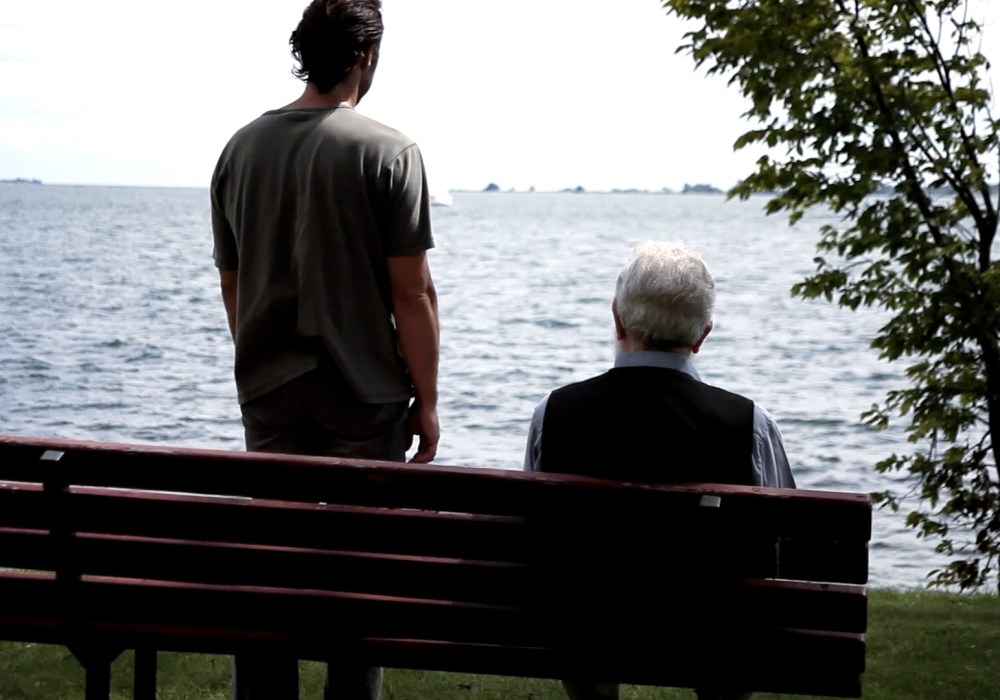
A single father struggles to raise his five-year-old son while coming to terms with a trauma from his childhood.

William's Lullaby (2014, Nicholas Arnold Productions)

One of the most interesting things about the film is some of the chances it takes. It’s labeled on the IMDb as a drama/mystery, which are accurate. However, in trying to deal with a mostly repressed pass it certain possesses a good deal of a the character of a psychological thriller. Yet, the endgame isn’t as obvious or trite and the concept not high, but still very intriguing. There are moments in Thomas’ (Richard Roy Sutton) mind that we are privy to us that are rendered as skillfully frightening as in a full-on horror film. In fact, it gave me one of the better jolts in a non-horror film I’ve experienced in recent memory. Even with all this blended in the film does have a fairly even handle on its tone and tenor.

The build and progression is a bit unorthodox, and some of the balance among hiding information, revealing it, then accepting and moving forward is slightly askew, but it ultimately creates a cinematic language that becomes easy to follow, and the film hits a great stride in the second half such that I was prepared for it to go on a bit more after it ended. That’s saying quite a bit with a film that burns slowly to start and runs nearly two hours.

The film as a whole does grow as it moves on, which is saying quite a bit, as it usually works in the inverse. The edit, score, as a whole, and moments in the cinematography help buoy it a great deal. By the time the facts come to the fore and his whole arc is displayed Richard Roy Sutton is quite impressive in the role of the distraught now-single father; Robert Lawton possesses a screen presence and sagacity that belies his inexperience on film at his advanced age in his role; conversely, Toby Bisson deals with material far more difficult than most young actors his age are asked to deal with and does so with near-prodigious ability.

William's Lullaby (2014, Nicholas Arnold Productions)

As this film deals literally with the workings of the mind, the subconscious, and the havoc that can wreak on one’s life and stability, particularly following newfound trauma; it’s understandable that the structure is a bit out of the ordinary. It deals with memories, dreams and visions, and such brings to mind Fellini’s quote about the natural kinship the language of film and dreams share.

The courage of this film, the emotions it stirs, the questions it raises, how it goes about revealing its truths, and guarding its mysteries generates enough power to overcome the sparse shortcomings it has and is a worthy investment.

8/10

William’s Lullaby is now available on DVD and digital platforms. Further information about the cast and crew can be found on the film’s official website.

Review: Kick It

Here you have what is ostensibly a sports movie, as tends to be the case the best one’s aren’t inherently about the sport at all. Kick It would definitely qualify and it bears mentioning since the English title would lead you to believe its your run-of-the-mill sports film as opposed to well-crafted, superbly acted, and emotionally rendered drama focused on kids. The title of the original Dutch film, and this one in its native Norwegian, give you a bit more of an indicator of what you’re in for: Cool Kids Don’t Cry.

To know more specifically what you’re in for here is the official synopsis:

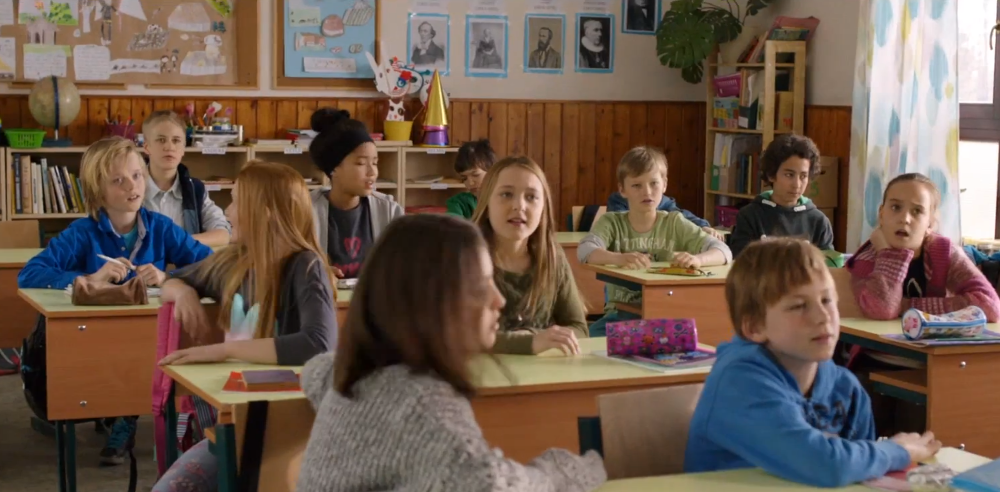
Kick it! Tells the story of Anja, a spirited young girl who loves soccer, even when her classmate Jonas thinks soccer is not for girls. Anja uses her humor to deal with Jonas’ bullying, not knowing that behind his hostility hides a boy who is in love with her. When Anja is diagnosed with leukemia, she remains optimistic and full of energy. She even continues interfering with the school soccer tournament while she is in hospital. When Anja is no longer able to participate in the tournament, Jonas comes up with a really special plan.

As becomes a pattern when you see enough foreign-language youth-geared films there is far more realism and less sugar-coating with subject matter just because children are involved in the project, or the intended audience. The film does very well to balance and appropriate level of seriousness with occasional comedic relief, and other emotions as appropriate through the different subplots.

One of these subplots are the actual dueling love stories. Anja (Mia Helene Solberg Brekke) has Lars (Ulrik William Græsli) who carries a torch for her, as her love/hate with Jonas (Victor Papadopoulos Jacobsen) moves toward the latter the arcs of both relationships is deftly handled. Surely, the change in emotions the two have becomes apparent but the progression is natural, and Lars’ being overlooked as a romantic option doesn’t go the conventional anger/bitter route and they remain good friends to one another. Sure, these characters are younger, it’s puppy love, but the complication of a love interest in a film whose main focus is not romance can be a hurdle either to trip a film up or that can be surpassed. Here it is clearly surpassed, and in a natural, organic, wholly satisfactory way.

Not shying away from things and refusing to treat difficult subject matters superficially puts a huge onus on the young actors of a film and the main foursome Brekke, Græsli, Jacobsen and Sigrid Welde (Anja’s other best friend, Lisa) are wholly up to the task. There is a general sincerity about all the interactions the children have with one another whether combative, friendly, supportive, or romantic that really drives home the emotion. This truth is not only evident in the scenes where the children interact with one another but also when Anja is dealing with adults, namely her parents and doctor.

This film is heartfelt, sincere, moving and beautifully done regardless for the emotion the film is striving for. It’s not a wonder that the book upon which this story is based is so popular, and that it’s already yielded two film versions. This film will have you chuckle, and also pull at your heartstrings but in a way that’s wholly intrinsic to the film and not in due in large part to manipulation. A truly excellent film.

10/10

Review: Outlaw League

The sports film, it would seem, is one of the subgenres that’s most constrained by its tropes in all of cinema. Usually, a lot of hinges on the result of the game or a season. As there are only so many ways an athletic event can end that’s where the limitation of options begins. Things get a bit more unique when the competition, and the result thereof, are an afterthought and not the biggest thing.

The synopsis as provided by Attraction Distribution is as follows:

Nicolas, 12 years old, son and grandson of fishermen, lives alone with his mother in a village overlooking the sea. A terrible storm snatched his dad a few earlier. Summer vacation is the chance for Nicolas to resume his greatest pleasure: playing baseball with his friends. But a major obstacle greets the kids who assemble at the village baseball field: the town council has decided to convert the field into a municipal dump. With Nicolas as their leader, the village kids will resist the mayor’s machinations with ferocity and, to their surprise, they will receive the support of Nicolas’ grandfather and his old buddies.

In this guise the film is really as simplified as it could get: it’s really only about playing for the love of the game and that becomes paramount. The game that the kids have to win just becomes a means to an end. It’s about them being allowed to be played, satisfying the need the kids have while satisfying the adult concerns with the well-being of the town. This simplicity is enviable inasmuch as it strips most of the sports film encumbrances out of the the film.

The issues only come in to play because there’s not much else brought into it to fill the void that those clichés usually occupy. In fact, aside from the main conflict (finding a suitable playing field and being allowed to play) there’s really only one subplot that ends up being significant: Nicholas’ relationship with his grandfather and mending fences in the family he has left. The amassing of the few new friends is treated by the film as little more token scenes needed to round-out a starting nine.

With an uncomplicated plot, and a short running time, one would hope that the film would move briskly but it doesn’t so much. The film does end up feeling a bit longer than it really does. The must-win game being introduced late is good but it is rendered anticlimactic by its treatment.

The film has its enjoyable qualities, Nicholas’ relationship with his Grandfather, Nicholas’ imaginary conversations with his father, and the performance by André Kasper as the young lead.

If one is a huge baseball fan it’s definitely worth looking into, children who may not be as discerning, and can also deal with some adult themes can find enjoyment in it. The simplicity of the film could’ve yielded more but it is a fairly realistic treatment of young characters and love for sport that would likely find an audience.

5/10

Review: T.I.M (a.k.a The Incredible Machine)

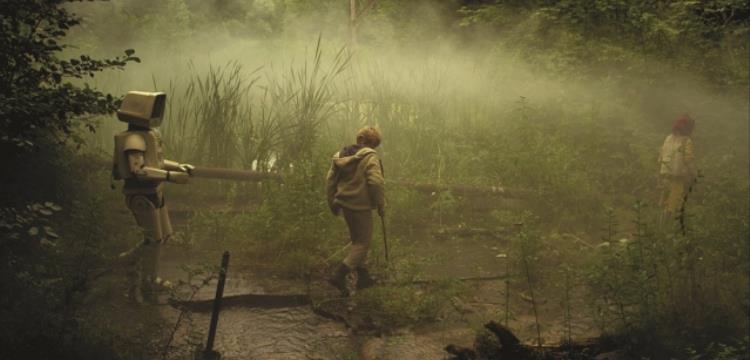
In media res, is one of those phrases that is bandied about, at times a bit haphazardly. Such that it has become cliché inasmuch as we don’t really consider its true meaning at times and the functionality this technique can have. Beginning in the middle of things, which is what in media res translates to, factors into this story about T.I.M. is set in the future, in a world where personalized robots have become commonplace and Tibor (Dyon Wilkens) and his father (Bas Keijzer) have one that is a relic among many generations of newer better android assistants. However, these are things that we as an audience infer as the movie travels along a bit. It is not something handed to us via voice-over or other forced exposition. These facts are a given combined with an in media res beginning quickly tip you off, again subtly, that this movie is more concerned with other things than the robot and the sci-fi elements of the story.

At the heart of the story is a lonely, socially maladjusted Tibor; his struggling, verklempt father Arend; and a journey to try and find the man who built T.I.M. in the first place to try and fix him, holding on to him rather than having to part with him. Taking into account the fact that Tibor lost his mother when he was young the quest to get T.I.M. fixed takes on a thin veil masking the desire he has to keep some semblance of his mother’s memory alive.

Yet simultaneously the film also builds in and addresses Tibor’s struggle to relate to his peers as his pain and isolation have made him unable to relate to those around him. Readily confessing that T.I.M is his only friend, he faces challenges in owning up to his shortcomings, learning to trust, communicate, as well as the meaning of friendship.

Most of that learning how to have a friend is personified in the hot-and-cold relationship he has with Kiki (Claudia Kanne) as she helps him along his path to where he thinks he’ll find answers. He does just not in the way it was expected.

What’s loveliest about this film is that while all this is readily apparent it never hits you over the head, and it is still as enjoyable on the surface as it is in its subtext. The film balances emotions well, it keeps some humor in, there is a bittersweet nature to it, some sadness, and surpassing beauty to it all.

It’s a lustrously shot film with an enchanting score that closes its circle well and leaves the characters in a great place, so much so that you enjoy the journey as much as the destination. The film moves briskly apace and is entertaining throughout and can be enjoyed equally by audiences of all ages.

The irony that at times the best examinations of humanity are made when contrasting us to artificial intelligence is not lost on filmmakers. The motif still appears to be fertile ground yielding much fruit, this is just the latest in a long line of great films to prove that point. Exactingly done and precisely performed, it’s an enrapturing experience that should be sought out.

10/10

Review – My Mistress

My Mistress will be released on DVD on May 5th and is the first title I’ve been able to sample from Film Movement’s newest imprint Omnibus Entertainment. Having just recently rolled out Ram Releasing one might wonder what the focus of Omnibus is:

Omnibus Entertainment brings compelling motion picture features, acclaimed television programming and insightful documentaries from around the world to North American audiences. Dedicated to providing quality content “for all,” Omnibus Entertainment includes a growing catalog of carefully curated titles with appeal that extends beyond the dedicated art house and film festival enthusiast.

So the line of delineation seems to be Film Movement is arthouse, RAM is genre titles fro adults (note their horror offerings like App, Moebius and A Life in Dirty Movies); while the first offering from Omnibus is an erotic drama looking at their site certainly indicated they will bring in varied film styles befitting their name. It’s another exciting development from Film Movement who will also introduce a restoration and repertory imprint called Film Movement Classics; adding to to the legion dedicated to preservation and rereleases.

As for My Mistress, the synopsis is as follows:

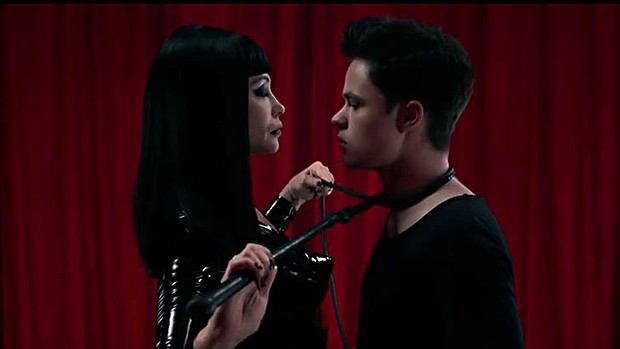
It’s a long hot summer for sixteen-year-old Charlie Boyd. He just found out his mother is having an affair with his father’s best friend, but is distracted from his problems by the mysterious woman down the street who has visitors day and night. After a sudden family tragedy Charlie is overwrought with pain. At first feeling hopeless, Charlie soon finds solace in Maggie, the beautiful French stranger, a dominatrix who teaches him the seductively beautiful side of pain, and how it can heal his emotional wounds. What starts as a perverse game quickly turns into a taboo love affair. And as Charlie learns to control his pain he turns that control back onto his mistress.

What occurs in My Mistress is that the tale is mostly segregated telling of the personal dramas of interconnected characters who too rarely consult one another about their issues. While they do spend a good amount of time with one another they are usually struggling with their own baggage and rarely let the other person in. Usually these struggles become a bit redundant until either party lets the other in, which usually takes a bit too long to happen.

Aside from that we are frequently left holding the bag inasmuch as Maggie’s (Emmanuelle Béart) story is more muddled than Charlie’s (Harrison Gilbertson). Charlie deals with an almost instant shock that sends him into a spiral looking for answers, closure and to vent. We know Maggie has a child, she no longer has custody and her struggle is being exploited, but the motivations of the blackmailer are vague.

These subtleties are usually a boon to a film, when more complex emotions or situations are being conveyed. That’s not really the case here. Most of the narrative is pretty transparent and close to the surface such that any obfuscation seems like unnecessary coyness on the part of the film. It doesn’t develop intrigue but encourages detachment. This doesn’t make the film a total failure just one that falls well short of its potential.

Those who would be tuning in for the more lascivious aspects of the narrative also shouldn’t get their hopes up. For a film that ostensibly deals with BDSM it most of the time acts more like a metaphor than a gratuitous selling-point. The scenes where it is featured are tame; the tapping into the emotional pains that draw these characters to such activities is where most of the intrigue lies actually. The subjugation of sexuality to character and conflict are not an issue overall, it only becomes so when the portrait is hazy, and you’re left wanting more out of these two that’s when it becomes problematic.

For their efforts Emmanuelle Béart and Harrison Gilbertson should be commended. They play characters at opposite ends of the spectrum convincingly and seem to share a genuine connection within this film. Their pencil-sketch characterizations are about as fleshed out as the script allows them. Their engaging presence is much of what makes this film as watchable as it ends up being.

My Mistress unfortunately skims the surface and doesn’t have an abundance of complications. One wonders if a tightened edit would’ve benefited this film a bit. Instead of being a middle-of-the-road tale, a bit more risk, detail and definitive resolution may have alienated more, but yielded greater aesthetic results. Instead it serves the function of letting us know Béart is still here and Gilbertson has a promising future and not much else.

5/10

Review – The Nun

The Nun is based upon a classic French novel by Diderot, which has also inspired a classic film by Jacques Rivette. Having not been familiar with either rendition of the tale prior I cannot comment on its faithfulness of it or its lack thereof, but I was fairly riveted throughout much of this film. Its a tale where fate and circumstance take our protagonist and put her through the wringer and it seems there will be no end to her downward spiral. This is fairly standard of the fiction of the time. It is the rumination on convents, social mores, religion and the performances that give this film the variety it needs to work.

As stated by Film Movement the synopsis is:

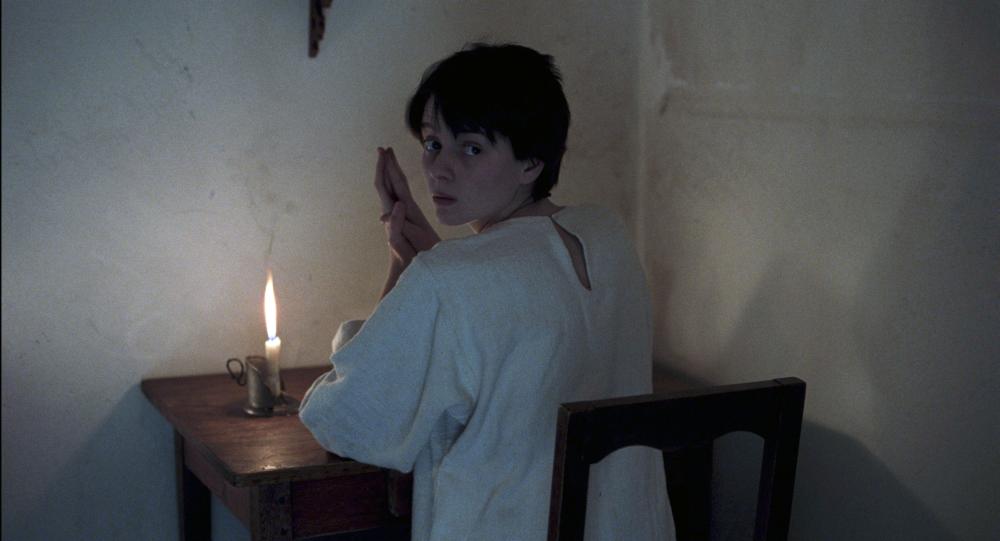
Born to a bourgeois family in 1760s France, Suzanne is a beautiful young girl with a natural talent for music. Inexplicably, her parents abruptly decide to send young Suzanne off to a convent, where she resists structure at every turn until she discovers that she is an illegitimate child. Left with no other option, she pronounces her vows and suffers the consequences of her mother’s sin. Still uncertain of her path and wishing to revoke her vows, Suzanne’s only ally, the Mother Superior, dies and is succeeded by Sister Christine, a sadistic and cruel woman who inflicts the worst forms of humiliation imaginable upon the young nun. Suzanne is finally transferred to another convent, only to discover another kind of Mother Superior, a woman who develops an inappropriately affectionate bond with her new charge. Ultimately, The Nun, based on the classic French novel by Diderot, is the story of a woman trying to resist imposed religious values and the dehumanizing effect of cloistered life.

What can plague a film of this kind, where there is virtually no escape throughout a vast majority of it, is the structure. Thankfully, there are changes in routine, locale and escalations in treatment, which invariably lead to different editing patterns that help spice up the flow. The film’s cut-points flowing one scene into another, cinematography and the sparing use of the mellifluous score also aid in varying what may seem like redundancy if one was merely looking at a beat-sheet.

Another interesting amalgamation of this tale is that there is an element of bildungsroman to this teardown of a religious convention and social mores. Suzanne’s virtual incarceration is incited by a trumped-up interpretation of her affection for a young man. Madame Simonin (Martina Gedeck) fearing that her daughter will make similar mistakes to those she made she is shipped to a nunnery. The over-punishment of children for the sins of parents are one thing, but the deeper commentary in this film is how a seemingly more religious society lead to the ruination of lives and the self-imposed strictures of religion lead to the corrosion of institutions like convents.

It seems as if its increasingly difficult to find films with a strong female presence these days. Never mind being progressive or passing the Bechdel Test, just having films fronted by female personages seems a rarer occurrence lately. Therefore, even though this is a eighteenth century tale about one woman needing to rebel simply to not be a victim of fate and circumstance it does remain significant and relevant. Having three very strong female performances at the forefront Suzanne (Pauline Etienne) and the Mother Superiors (Louise Bourgoin and Isabelle Huppert) is noteworthy indeed.

Most impressive about Etienne is that not only are there many notes to her performance, even many notes to her agonizing; never does her would-be martyrdom become trite or un-engaging. She remains magnetic and effective throughout and runs the gamut from ingenue to glassy-eyed mort vivant and everywhere in between. Isabelle Huppert’s desires fester and manifest themselves with equal parts awkwardness and oppression which create a perfect atmosphere of discomfort. The trap for Bourgoin’s character is being seemingly too one-dimensional. However, he cruelty is so perfectly-rendered it terrifies persistently without becoming cartoonish or boring.

The Nun lands a bit softer in the end than I anticipated perhaps because of the fact that it stuck too closely too the book, though I cannot say for certain. Regardless, the journey is well worth it. On the religious end it would be likely to draw skeptics and free-thinking believers alike. From the cinematic spectrum fans of dramas and French cinema should be on the look-out for this film.

7/10

Review – God’s Slave

With God’s Slave you have another tale of a series of planned terrorist attacks and a man planning to stop them. What starts to separate this film is that the site of the attacks is Argentina in 1994, and also that the film takes a very personal, character-driven approach to both sides of the story. Just the fact that it tells both sides of the story is telling enough. Clearly, the key to drama is conflict, and the most effective dramas are ones wherein both sides are equally understood and watchable. This is not to say one doesn’t bring their own baggage to the film, but rather that it doesn’t force your hand. It tells the story of the each character from their perspective.

Here’s how the film goes about doing that specifically, as per Film Movement:

Based on the actual events of a 1994 bombing in Buenos Aires still making headlines today, GOD’S SLAVE follows Ahmed, trained since childhood as an Islamic terrorist now assigned to execute a suicide bombing at a synagogue, and David, the cold-blooded Israeli special agent who will stop at nothing to prevent the attack. But neither man is defined solely by their extremist views. Ahmed, posing as a doctor, lives happily with his wife and young son; though David’s marriage is on the rocks, he remains devoted to his wife and daughter. With time running out before the attack, David zeros in on Ahmed as a suspect, his investigation culminating in violent, if unexpected, consequences.

The film takes interesting approach in the use of flashbacks and its overall structure as it does not delve in to both stories simultaneously, but through visuals and effectual montages bridges narrative ellipses and creates elisions between the two central figures as they set off on a collision course for one another.

To affect this collision course and make it something worth seeing the performances need to be up to snuff and they clearly are here. There is always something to be said for faces unfamiliar to moviegoers as suspension of disbelief becomes easier, and analysis of the actor and his transformation is not in the forefront of one’s mind. That being said Mohammed Alkhaldi and Vando Villamil definitely seem entirely immersed in their characters and torn with their own personal struggles – as both continuously fight against their better natures to do what they feel needs doing. The full and nuanced portrayal of both is what makes the story so captivating.

The film’s closing shot is one of those where I anticipated it by a split-second but still enjoyed seeing my prediction come to fruition. It’s one that satisfactorily closes the story for the characters yet is realistic. For better or worse, the two sides come to terms with the events precipitated the final showdown, though the world hasn’t quite.

When dealing with terrorism and counterterrorism efforts on film the trap is set to lump in either side too monolithically with their respective ethnic or religious identities. The strength of this film is that it built its characters as individuals and was able to see the world through both sets of eyes and still paint a compelling portrait. In fact, the film begins by illustrating the deep rift and spirals from there with one man’s egalitarianism sparking incredulity. The only thing the film is careful of is condemning actions rather than making generalizations.

God’s Slave does not sacrifice suspense or its cinematic qualities to tell a more balanced tale – nor does it ever feel disingenuous on either side. It’s still chilling and viscerally rendered without oversimplifying a complex problem that has faced the world for decades, and shows no signs of slowing. To compromise, to play both ends towards the middle throughout would’ve weakened the film and it doesn’t go that route. Yes, there are likely some movie-logic touches but even those are earned after the journey.

8/10

Review – The Amazing Wiplala

The Amazing Wiplala is a family film from the Netherlands that introduces a new breed of diminutive personage to the big screen. There are many films of this kind, one of the more notable being the many iterations of The Borrowers that have come about – there is also a portion which hearkens back to Honey, I Shrunk the Kids, which is a touch I love.  Wiplala is a film adaptation of a children’s book that comes form the Netherlands and is beloved there. However, the film should have a fairly broad appeal and does have some wrinkles of its own.

The tale is outlined as follows:

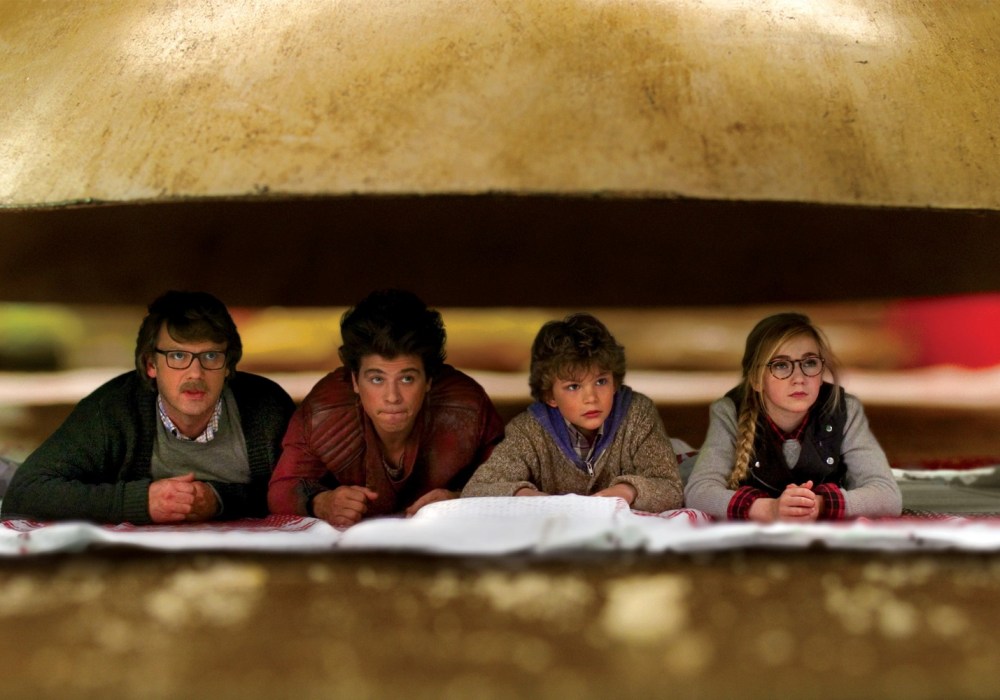
Young Johannes’ “Wiplala” is no imaginary friend, he’s as real as a four-inch-tall wizard can be. Wiplala befriends the family until he shrinks all of its members. Oops… the spell can’t be undone! Thrills and adventure ahead!

There is the added element of magic and its clear that thing soon start getting out of hand and somehow that has to be corrected. As with any film of this kind there is a discovery by the protagonist in this case Johannes (Sasha Mylanus), and slowly the existence of this creature must be learned by the rest of the family. This is handled in a fairly pain-free and humorous manner. In a nice bit of balancing the ramifications of the mishaps Wiplala incurs are far-reaching but only the family, and select others know. The world doesn’t get too big such that when the focus has to shift from Wiplala (or his deeds) to the individual family members its nearly seamless and not competing with anything else.

The narrative is full of creative, simply-rendered comedic elements and a few small subplots that work. The funniest one being about Arthur Hollidee, the lovelorn unsuccessful author. There is a more visually striking one but that is better off left as a surprise. The struggle is a fairly simple one and there is a good deal of emotional symbiosis that connects the characters and makes it click.

The cast does fairly good work making all this work. Geza Weisz in the eponymous role of errant betwinkler (a kind of wizard, but don’t call him that) is sprightly, bubbly and charismatic without a trace of irony. Kee Ketelaar has a tricky role to handle as the elder sister Nella Della. The script allows her little room for being anything other than an implicative, brown-nosing older sister through much of it then when things get serious she has to be more sincere and earn those moments for the film. Next, Sasha Mylanus well embodies the role of Kid Next Door who just kind of feels lost in the shuffle and finds this secret wonder. His character’s journey is the most complete and takes us into this world well. Many of the Dutch family productions I’ve seen recently have also featured memorable humorous turns from supporting players whom are senior citizens, most notably here Paul Kooij.

The Amazing Wiplala a humorous, escapist light fare that will offer diversion to all sensibilities in a family keeping them equally engaged and entertained; well worth looking out for.

7/10

Review: Futuro Beach (Praia do Futuro)

Futuro Beach is a film that may upon a cursory, superficial examination be as opaque as the atmosphere of its closing shot. However, much as the fog, the source music and score paint in tones and moods; so does this film. In this painting it explores emotions unspoken through the most part via its imagery, edits, compositions and contrasts. However, this ought not scare anyone away as there is not some hidden mosaic that the viewer himself needs to refocus. The conflicts are mostly internal but the struggles and emotions are clear; insight into the cultures in question here will only deepen appreciation, but are not critical.

The synopsis from Strand Releasing is as follows:

Part gay romance, part inquisitive self-journey, FUTURO BEACH is a stunning examination of lives lost and found. Donato (Wagner Moura) works as a lifeguard at the spectacular but treacherous Praia do Futuro beach in Brazil; Konrad (Clemens Schick) is an ex-military thrill-seeker from Germany vacationing with a friend. After Donato saves Konrad from drowning, but fails to save his other friend, initial sexual sparks give way to a deeper, emotional connection. Donato decides to leave everything behind, including his ailing mother and younger brother, Ayrton, to travel back to Berlin with Konrad. There, he finds both confusion and liberation, and his journey for love soon turns into a deeper search for his own identity. Eight years later, an unexpected visit from Ayrton, brings all three men back together as they struggle to reconcile the pain of loss and longing, instinctively drawn to each other in search of hope and a brighter future.

The film’s three acts are headed with three title cards that introduce titular theme for each segment of the story: “The Drowner’s Embrace,” “A Hero Cut in Half,” and “A German-Speaking Ghost.” In the first portion of the film there is the struggle to overcome as a professional’s confidence and a foreigner’s relationship is torn apart. In this portion of the film, as in the rest of it, there is a struggle to balance relationships as Donato balances his relationship and responsibility to his younger brother Ayrton and forms a new bond with Konrad.

The first section does also set the stage for many parallels that the story plays with. The opening act closes with Ayrton on his own imagining himself as Iron Man fighting off an unseen assailant. This action will be mirrored when he is older and has found temporary refuge with a new companion to dull his pain. This superhero motif is clearly important as it is also referenced in the title to act two. It also serves the obvious function of illustrating a child’s idealized view of his older sibling. However, the fact that this theme comes back to reflect Donato’s angst as he struggles to decide on a path for his life is also highly significant.

“A German-Speaking Ghost” is not only a very fitting title to the section, but a fitting conclusion. Parallels again come into play as the film finds its climax on a beach much as it reached its first highpoint on one. The visuals in this film, and the activities that constitute screentime, are ones that need to be taken more for their significance than for the literal activity. an example being what is a character running to or from when they jump on to a bike and ride off.

This chapter title is also significant because for a while you are in a bit of doubt as to whom it refers to. In this film you not only have three distinct POVs that represent different life-experiences but you can identify with and understand all of them. There is a triumvirate of powerful performances (Moura, Schick and Barbosa) that feed off one another and take turns coming front and center.

The emotional currents and undercurrents are also strongly supported by the music both brought into the fold and created by Hauschka that allows the film to have the tenor that director Aïnouz usually desires to find in the narrative. The best evidence of this are the closing notes and frames, which act as the zenith of this symbiosis.

Futuro Beach is, from its start, about characters losing and trying to find themselves; connecting, disconnecting and trying to reconnect; saving each other and failing to save themselves; and, ultimately, finds beauty in the discomforts created by distance and yearning and the solitary journey of finding oneself. It takes a gamble with its narrative ellipse, but like a strong story it punctuates the end of its dramatic phrase properly and memorably.

9/10