Review- A Bag of Hammers

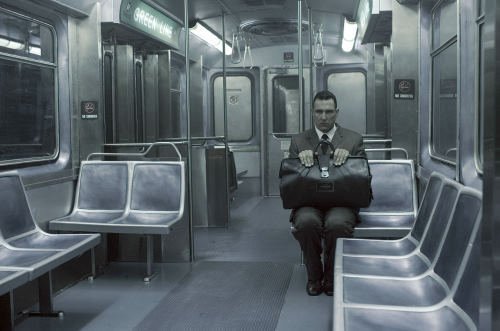
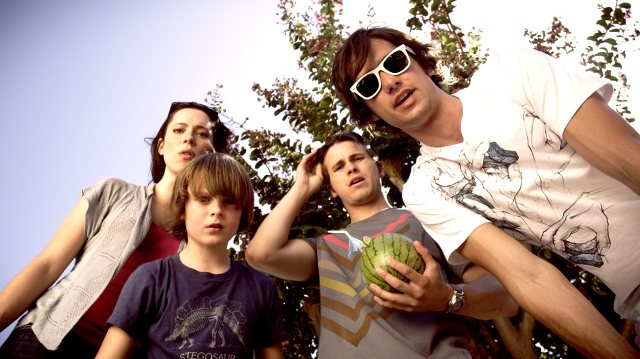
A Bag of Hammers is a comedy, which follows two men in their 20s who make a living stealing cars and suddenly find that responsibility falls into their laps when a neighboring child loses his mother. The film, as some have noted, fits a bit to the mold of About A Boy. The main difference being that here its a pair of men and they are somewhat less reticent to assume responsibility.

The film is quite funny but it does mix in its themes rather well because of that fact. There are comments on child rearing and social services being made with out being too on the head about either of them. Also, considering that this pair of leads can be seen as beyond imperfect role models and quintessential slackers it does underline the points that are being made. These same points are further underlined by the fact that their background is not dissimilar to that of the young boy’s.

One thing the film is to be commended for is its handling of quirkiness. The temptation to be quirky in pursuit of originality is a strong one, especially in an indie film, especially in a comedy. However, quirkiness for quirkiness’ sake can be a disturbance to the progression of a film. What this film does well is makes the idiosyncrasies seeming necessities, and builds them through the characters and not as plot devices.

The pace of a film is a significant boon to it. The film doesn’t run long but I think that we all know that running time is not necessarily a fair gauge of pace. The pace is positively breezy throughout and the film really flows well for the most part.

The lone exception to the pacing brilliance is the fact that the third act is a bit abrupt. I can’t say it’s the handling that’s poor, it’s just that there’s a certain disproportion to the structure and a bit of acceleration through the end that could require a little more time than it gets.

However, what does need to be said is that the film is propelled to said end by a brilliantly framed and beautifully rendered wish-fulfillment montage, the likes of which you rarely see in this day and age. It truly is the coup de grace of the entire film and it’s rather breathtaking and should serve as an instructional as to how to construct a montage.

One thing that’s interesting to note is that the film, despite some it’s comedy being rather broad and it’s dramatic question being very much up front, it does handle thing with a certain bit of restraint. Namely after the film myself and the two friends I viewed it with were debating the sexuality of the two friends. It’s something that’s never addressed directly but certainly gives food for thought.

The performances in this film are wonderful. Jason Ritter, the spitting image of his father John, plays his character sincerely with great comedic timing and dramatic aplomb. He even carries the film through it’s most difficult patch where his character is resistant to taking care of the boy. Jake Sandvig is comedically deadpan and very sensitive as the character who reaches out to the child. The child, of course, plays a crucial role and Chandler Canterbury who is a very talented, as of yet underrated young talent, is very good in this role. He retains innocence while emoting the browbeaten posture of a child in an inadequate home situation and also shows great restraint emotionally. The scenes between him and his mother feature some of the best writing in the film.

A Bag of Hammers is by no means perfect but it does deserve to be seen and sought out if you have not heard of it yet. It’s both funny and moving and gets the manic depressive seal of approval: you’ll laugh, you’ll cry. Be on the lookout for it.

8/10
Review- Dark Shadows

With a film like Dark Shadows I have to spend a bit of time discussing where I’m coming from here and couching it. While I cannot claim to be an expert, I am a fan of the show and do have quite a fondness for it. Having said that, there will be no armchair direction or writing here make no mistake of that. I will gauge the film based on the direction and manner it was interpreted not how I would’ve preferred it, and I will be explicit in explaining why it still doesn’t work.

From the moment I saw the trailer I had a sense for what this film was going to try to be. It’s a rare case of a trailer being true to the tone of the finished product. What you get in this film is a very uneasy balance between horror elements and attempts at humor and self-parody. Essentially, it tries to be The Brady Bunch films, which are true to the tone and spirit of the show but poke fun at the show too.

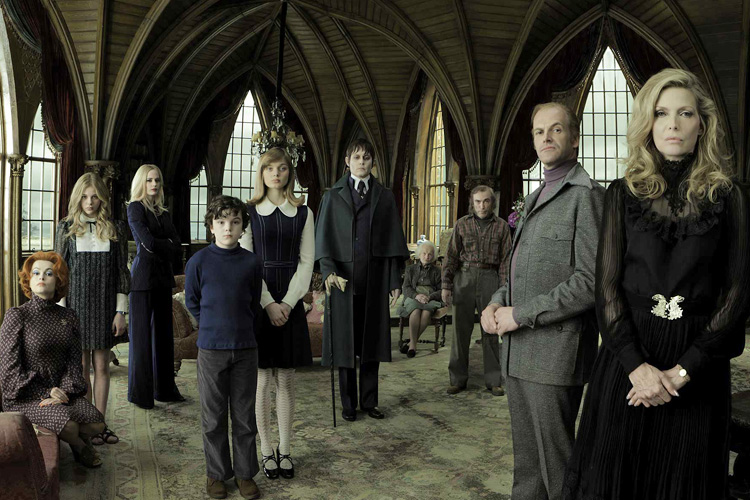
What makes this different and not as successful is a disharmony in tone. It goes from a facsimile of a horror scene to forced humor. I should’ve counted attempted jokes for the percentage of success was very low. I literally laughed out loud thrice, once was a suggestive joke David (Gully McGrath) made about Carolyn (Chloe Grace Moretz). With the Brady films clearly it was always silly. How this would’ve worked better is either of two ways: One, be the kind of over-the-top horror the show was, which is humorous to some, or two, play it straight dramatically and tongue-in-cheek comedically. Instead, you could feel the gears shift and the sudden impetus “Must try and be funny now.” It’s one of the more forced comedies I’ve ever seen in that regard.

There are many Tim Burton movies I have loved. I am among the many who still have enough fondness for much of his work such that I will still come to see what he’s done. However, I’m not really angered by this turn so much as disappointed. Granted it’s not an original piece but I thought Dark Shadows and Tim Burton, what could possibly go wrong? The following did: The complete lack of tonal cohesion, the near glacial movement of the plot when there’s not an over-abundance of things going on, the thinness and simplification of characters.

Why is this one frustrating and not infuriating? I did like the performances for the the most part. Again, this is divorcing expectation and examining the actual content. However, it comes down to the milieu within which the players played. When the film is straight-up gothic-style horror it’s rather breathtaking. Those moments are few and far between but it shows the potential of the narrative had there been a sort of balance or reversal of tone.

Johnny Depp, who in his now long renaissance, is at times too big and too much the center of attention in certain films does well here. His Barnabas Collins is his own and I don’t begrudge him that, I just feel the performance would’ve been augmented further in a tale more worthy such an awesome vampire. For even in this rendition Barnabas deserves better.

Touching upon the Brady Bunch notion again there is the fish out of water aspect; the concept of the Brady films was that it was the 1990s and they were very much still stuck in the 1970s, while here Barnabas was in the 1970s after being interred in 1752. It plays the fish out of water but the film tries so hard with musical cues, other pop culture references and an Alice Cooper performance that is not up to his “Feed My Frankenstein” in Wayne’s World 20 years ago; that they just become tired, then trite and finally bothersome. We get it, it’s the 70s. Moving on.

Contrary to divorce where it’s only the children who suffer in a movie that’s bad it’s really only the kids who leave unscathed: Chloe Moretz doesn’t really have a lot to do here but shows a more mature side of her persona, which is easing and accelerating her transition from in-demand child actress to eventual A-List leading lady. Gully McGrath in sparing moments plays one of the more rounded characters in the film and shows a glimpse of his talent. Bella Heatcote, though not a child actress, is new talent who likely has much more to show in a more rounded role.

An example of a wasted, underdeveloped character in this film is that of Willie Loomis. Aside from being a weirdo his only other functions are being a stooge and a driver. Wonderful, really needed the new Freddy Kreuger for that part.

Partially to expiate the film its slowly moving, thin plot there’s some randomness thrown into the end of the film, which while are hat tips to the show are also slightly foreshadowed and only serve to prolong the cacophonous silliness that is the climax.

In the end, whether I agreed with it in principle or not, Dark Shadows made an attempt to do something different and it failed there also.


4/10

Review- Battleship

Considering that the pedigree of films based on board games goes back at least to the 1980s and Clue, I was not one who was inclined to dislike Battleship based on that fact alone. Of course, if you are there are many upcoming game-based films to avoid. However, this is one that could’ve worked but didn’t.

Some have lumped this film in with things like Battle: Los Angeles. While I did like that film (quite a bit) I did not like this one. I will avoid a comparative analysis but I believe the three biggest differences are that the former film had better performances; a simpler, swifter story-line; and is more proficient technically.

This film means well in a lot of regards, but it spends so much time at the beginning trying to establish Alex Hopper (Taylor Kitsch), his relationship (Both with older brother and girlfriend) and even creates a set-piece in part to establish a rivalry between him and Nagata (Tadanobu Asano). What’s wrong with that? Inherently, nothing. However, it’s too much time and it forestalls the inevitable, especially when the inevitable too gets drawn out.

The need to do all this expository work might be a condemnation of the Armageddon-alien attack motif if you think about it. It’s so tired that by the implication alone the motif no longer compels an audience to feel. It’s helpful that less motivation is needed for the aliens so more time is spent on the humans, but that time is misspent. The other issue is that less time is spent building character once the attack starts. The film likely works better with just vital pieces of information disseminated beforehand then allowing details to unfold during the battle.

The developing of character is an issue, but combine that with the fact that some performances are just inept and things get harder to handle. A lot of the the ineptitude is in casting. Rihanna may be many things: beautiful, a talented singer, dancer, but an actress is not amongst those things she is. She’s never believable or compelling and perhaps most annoyingly the script, direction and/or editing insists upon her. Her character’s commentary is required in nearly all situations and she’s deployed in any and all situations, if only to create drama about whether or not she can get back to her actual post. It’s the kind of role Michelle Rodriguez could play in her sleep, alas she does not, sadly.

I’ve mentioned in the past that I try to go into a film as close to a blank slate as I can. Therefore, I did not realize beforehand there were actual veterans in the cast. It became very evident quickly.The usage of veterans in the film while commendable produces mixed results. Clearly, as an American I understand and appreciate the efforts and sacrifices of the armed forces. However, this is a film about aliens and it’s plausibility is dubious so actors are needed to make it somewhat believable. As a gesture it’s fantastic, and the older veterans are hilarious when given a line of comic relief, the key is the roles are small in those cases, and they’re doing what they did; helping on the ship. The involvement of Gregory D. Gadson in a larger capacity is an issue because his role is big. Granted he doesn’t get a lot of help from the story or dialogue, but all the more reason to have someone who can try and wring something out of it.

The dialogue features its share of ill-timed lines such as “I’ve got a bad feeling about this” when things are already rather cataclysmic even in their bubble, and clichéd lines that you’ve heard in too many action and sci-fi movies.

Much of the battle is frankly rather uninteresting and not very dramatically conveyed. As a matter of fact, it’s in cameo moments later on that few of the compelling moments. Aside from that most of the other intrigue, if you can really call it that, comes when the film actually most closely resembles the board game. There’s a sequence where the ship has lost radar capabilities and they use water displacement data from buoys to gauge where the enemy is and try to time their launches to hit coordinates designated by letters and numbers.

The aliens are also an issue. Almost any film needs to create aliens that are vastly superior and are on the brink of annihilating the planet, but then some flaw inherent in them makes itself known that we exploit or become the beneficiaries of by sheer luck, this likely dates back to War of the World in novel form. Here there’s a scan interface, which we are privy to in alien POV and when biological entities are found they are not assaulted directly, yet battleships and skyscrapers full of thousands of people get blown up. Combine that with the fact that all indications are this is an invasion and attempt at conquest then this really doesn’t make sense. The technology also stinks, and they’re aliens! Example: Any one with any foreign substance on their body to aid them in a physical task (eyeglasses, prosthetic legs) is unrecognizable as man or machine to these aliens.

Now, I went on and on about the aliens in part because of the pace. I mentioned the length and the pace works hand-in-hand with it. This film gives me the time to wonder about these silly aliens that I’m not all that scared by, and I’m not all that intrigued by. The alien invasion plot is by no means foolproof, but this film tries too hard in some aspects and doesn’t try hard enough in others and the end result is that it just doesn’t work at all.

4/10

DVD Review: Haxan

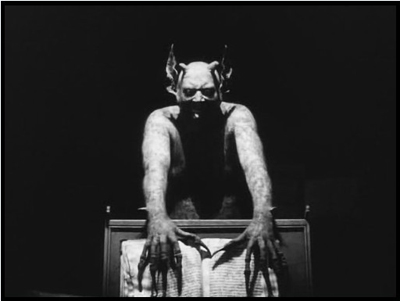
Häxan is a fascinating piece of cinematic history for a number of reasons – the first certainly being that it is one of the earliest films to straddle the line between fact and fiction; narrative and documentary. Second, because it is one of the earlier (#134) releases by the Criterion Collection.

The film tells its tale of witchcraft and satanism from the middle ages through the modern times. It cleverly uses vignettes (dramatizations if you prefer) and slides, illustrations etc. It goes from a title describing reasoning and custom behind an act or belief to a scene in which it is depicted or to an illustration where typically a pencil held by an unknown person indicates to us the area of interest.

The film goes along chapter by chapter revealing reason and the cause and effect of the hysteria concerning witches and the devil. Although, we at one point find out that several trials involve people from the same household there is little by way of a through-line, and that is by design. However, it does make it slightly troublesome to follow in part because you expect it to come back to one scenario or another but it doesn’t. Alas, one of the perils of blending fact and fiction, it moves and is structured like a doc but is portrayed as fiction much of the time so the audience member expects similar conventions.

Towards the end it does do a fascinating feat of simulacrum and tell the audience its reusing actors, does demonstrations and the titles take on a very analytical approach but it is some of the more enjoyable stuff in the film.

Criterion gets very high marks for this particular release for a number of reasons. First, there are two versions of the film on this DVD – one the 1922 silent, and then a 1968 re-score, voice-over included re-do by avant-gardists called Witchcraft Through the Ages.

In the former Criterion did a great job re-recording the score and returning the film to its original intended tinting. Tinting was a fabulous technique which was widely practiced in the silent era because it gave you the wonderful contrast and grain of black and white but it was bright and lively. It was also a tremendous tool for symbolism of time, place, emotion and so forth as colors hold many associations for people.

The original Häxan is very much worth watching. The sound version is worth comparing for students and serious films fans. The sound version is not only unnecessary but appalling; it’s akin to colorization in its futility in attempting to improve something that needn’t be fixed.

Not only is it conceptually a bad idea but the execution is also poor you get two conflicting sonorous signals sent to you and thus the confusion of the filmmakers is evident, even if subconscious. There is a clear dichotomy between the pomposity and seemingly unintentional Movie Tone newsreel style gravitas that Burroughs has in his voice and the ridiculous, cacophonous Jazz score by Jean-Luc Ponty, which makes me wonder if that music wasn’t the work of the devil.

Another thing lacking in the newer version was the tinting, so in fact, it is the opposite of colorization it’s actually a desaturated less visually appealing version of the film. The voice-over also cuts out a lot of text from the titles some including interesting anecdotal information and at times footage. There was one instance there the image was up well before the voice over started.

Ultimately, it pales in comparison to the silent film but it was still quite intriguing to watch both and compare them and the two cuts plus a plethora of bonus material like liner-notes, commentary by a Danish silent film scholar, director’s intro outtakes a look at Christiansen’s sources and stills make the DVD worth getting,

Häxan (1922) 7/10
Witchcraft Through the Ages (1968) 4/10

DVD presentation: 10

Rewind Review- Rudo y Cursi (2008)

As those who know me, and if such a person exists, cyberstalk me, know I created this blog after writing on another site, which shall remain nameless, for a while. The point is, I have material sitting around waiting to be re-used on occasion I will re-post them here. Some of those articles or reviews may have been extemporaneous at the time but are slightly random now, hence the new title and little intro, regardless enjoy!

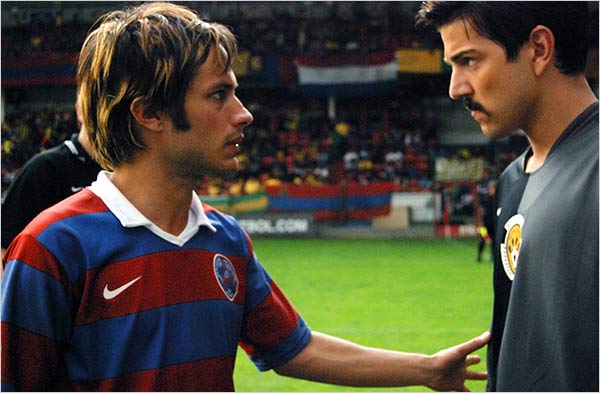
Rudo y Cursi is the feature length directorial debut of Carlos Cuarón, brother of Alfonso Cuarón. It tells the tale of two brothers who live in a rural economically depressed section of Mexico who are discovered by a talent scout and promised their chance at stardom in the Mexican soccer league with two fictitious teams.

The thing this film does best is incorporate a storytelling voice-over which draws parallels between soccer and life and also gives a little insight into the character of Batuta, played by the scene-stealing Guillermo Francella. Gael García Bernal and Diego Luna work together as if Y Tu Mama Tambien was completed yesterday and not eight years ago. Each is a bona fide star in his own right.

Both cinematically and as a soccer enthusiast one might be slightly disappointed by the in-game action. Very few of the game scenes shoot on field action but rather a reaction in stadium or around a TV or just the ball entering the net and people on the sideline.

The trajectory that each character takes to fame is quite different both as players and people – and that’s great. While their declines are also different they are equally predictable, however well-executed. Cursi (Bernal) offers a tremendously funny Spanish rendition of “I Want You to Want Me,” the music video thereof is undoubtedly the best scene of the movie and one of the best of the year, as he desperately wants to be a singer and shouldn’t be. Luna (Rudo) is spotted at a track and taken deeper into the gambling world.

There’s nothing terribly wrong with Rudo y Cursi. It’s a fine watchable film and even incorporates a decent subplot with Rudo’s wife looking for money and falling into a pyramid scheme but with such talent assembled on camera you kind of want it to do more. Things which get glossed over you want examined in more depth.

The ending ultimately, while you like Rudo and Cursi, was a bit too facile and I think as good as the voice over was, telling the tale from Batuta’s point of view might have been a mistake because it ultimately creates a distance. In the beginning we as an audience are wondering “Who is this guy?” If it was either Rudo or Cursi we might’ve been even more invested in the brothers’s plight even if all events played out the same.

6/10

Rewind Review- Trucker (2008)

As those who know me, and if such a person exists, cyberstalk me, know I created this blog after writing on another site, which shall remain nameless, for a while. The point is, I have material sitting around waiting to be re-used on occasion I will re-post them here. Some of those articles or reviews may have been extemporaneous at the time but are slightly random now, hence the new title and little intro, regardless enjoy!

Trucker is a film that knows that dialogue is precious and never wastes it. It is not afraid to leave the subtext as just that- subtext. Too many films feel the need to say what you’re already thinking, what you already know and fill in that blank for you when it’s not really necessary at all.

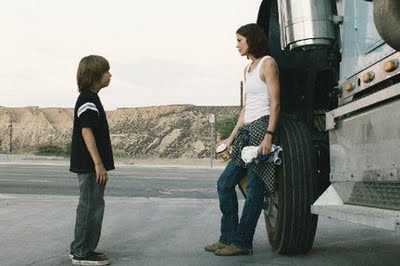
Written and directed by James Mottern it tells the tale of Diane (Michelle Monaghan) a woman who, as the title suggests, makes a living by driving a big rig. The curveball that comes into her life is that her ex-husband is dying and his wife Jenny (Joey Lauren Adams) can’t watch Diane’s estranged son (Jimmy Bennett) because her father is sick.

OK, so at this point you want to say “Stop, I’ve heard this one before” and you would be correct but the success of this film, like that of many films, is not necessarily in its originality because original concepts and stories are in short supply but in their execution. This story is executed quite well indeed.

The strength of this film, like any film which is about real people and real situations, should be in it its ensemble. Michelle Monaghan believed a lot in this project and wanted to flex her acting muscles which can be assumed by the fact that she signed on as a producer of this film. While always maintaining a consistent and true characterization she hit several different notes and her evolution from unwilling babysitter to mother was perfect, unspoken and like most things in reality not a steady upward climb as there are several missteps along the way. She has the looks and the ability to be an A-List leading lady.

When there is a mother-child team it needs to be a harmonious and comfortable fit for the actors engaged in the story or we as an audience will check out emotionally, even if intellectually we understand the plight; the connection needs to be made. For that connection to occur both actors need to be on equal footing and Jimmy Bennett is certainly that. Although this film has been in the can for a while this adds to a long and impressive string of performances that Jimmy Bennett has been putting together from projects as disparate as Asia Argento’s The Heart is Deceitful Above All Things, one of the most psychologically effective and haunting movies of the decade to a blockbuster bit part like in Star Trek. His anger and rebellion at the beginning never feels petulant and whiny which shows that he was well-directed and at a young age has a good deal of natural talent.

The supporting cast is also worth mentioning: Joey Lauren Adams, who is best known for being Amy from Chasing Amy, who is very convincing as the woman stuck in the middle of all this family drama. Why she never had a career akin to Renee Zellweger’s is beyond me. Then there is Benjamin Bratt who played the sick father who is better than I’ve ever seen him in anything in this film. Him and his son share a very emotional scene which is the epitome of restraint on the part of both actors and it was great to watch. Nathan Fillion plays Runner the confidant and new father figure for Peter and was also very well-played and also a developed character of his own.

The film ends at the right time on a beautifully framed and orchestrated pull out, the pace is spot on and it never drags. It is always seeking to move forward and it never seeks answers but resolutions because that’s what we typically get in life: moving on, forgiveness, unspoken apologies and if you’re lucky a second chance.

8/10

Rewind Review- The Maid

As those who know me, and if such a person exists, cyberstalk me, know I created this blog after writing on another site, which shall remain nameless, for a while. The point is, I have material sitting around waiting to be re-used on occasion I will re-post them here. Some of those articles or reviews may have been extemporaneous at the time but are slightly random now, hence the new title and little intro, regardless enjoy!

A Golden Globe nominee for Best Foreign Language Film and not submitted for the Oscars The Maid is a title likely to slip through the cracks. This, however, would be sad as it is a film guided by the cool hand of second time feature director, Sebastián Silva.

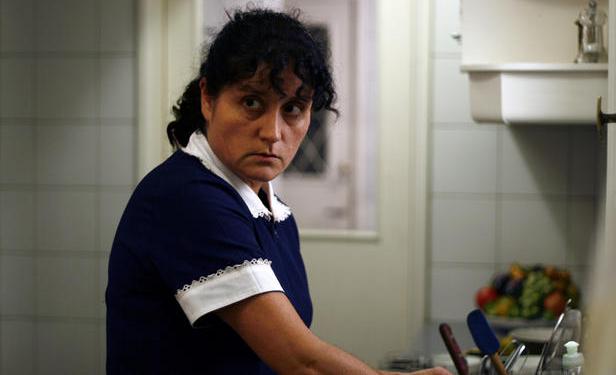
The film begins with the camera staying in the kitchen and our protagonist Raquel, played by Catalina Saaverda, going in and out to serve the family dinner. The next scene opens on her birthday, an event that will be effectively distorted in a mirrored scene later, and she is embarrassed and doesn’t want to take part. We can see she wants to but can’t. This is one example of the contradictory nature that will be effectively revealed by Saaverda throughout.

What we have here is an examination of a world rarely looked at and also of a figure that though foreign to most American audiences, a maid, is still very much a part of the fabric of Latin households. We get a glimpse at the strong yet tenuous bond that exists in this household.

Saaverda’s performance was one of the most decorated of 2009 and it’s easy to see why. She carries the film with a gruff charm and though her actions may seem simple there is always intent and thought going into everything. Looks contain lines of dialogue undelivered and the simplest words uttered over a cell phone to her mother carry more profundity because of what is not said than because of what is.

As the maid struggles with her health, job security and personal insecurity we also see her deal with an influx of new maids brought in to give her help she doesn’t want. These battles help bring humor and tension to the mix.

The subtlety of the film and the performance can truly be felt when the character of Lucy is brought into the mix. For it is in an exchange where Lucy assures her “I’m not going to be here for the rest of my life. I’d rather die” where the change occurs. What we see on Saaverda’s face is reproach but what we really get, as an audience, is a turning point. Raquel slowly realizes Lucy really isn’t a threat to her job and she starts to confide in her.

It is typically in a lesser character where you can see how far a film goes to build character and to give them depth. Mundo, the patriarch of the family, seems like your typical aloof film father. He claims he’s going up to work in his office and is really just working on his model boat. This seems to be all that matters to him ever. When he finds his family on his bed frantically trying to piece it together after its been broken, quicker than expected he gets a hold of himself and allows perspective to enter his life and he says it’s no big deal.

It’s interesting to note that this film played at the European Film Market and the Buenos Aires Festival Internacional de Cine at a running time twenty minutes longer than it currently is. It doesn’t necessarily have those pace issues at current. It takes its time and five minutes off would likely not change a thing. It’s good to see that it has been addressed and would actually be interesting to if an alternate cut makes the DVD.

While the highs are never that high and the lows are never that low this is a very strong and effective work from a director who knows how to put together an effective and thought-provoking tale. Silva is name who should be noted and have an eye kept on.

8/10

Rewind Review- Little Indi

As those who know me, and if such a person exists, cyberstalk me, know I created this blog after writing on another site, which shall remain nameless, for a while. The point is, I have material sitting around waiting to be re-used on occasion I will re-post them here. Some of those articles or reviews may have been extemporaneous at the time but are slightly random now, hence the new title and little intro, regardless enjoy!

Little Indi is a film that is playing as part of a new series called New Spanish Cinema at the Film Society at Lincoln Center. It tells the tale of a boy named Arnau, nicknamed “Little Indian” for reasons unknown to us (one can assume it’s based on his appearance but it is not confirmed), who is desperately trying to earn himself money to pay a lawyer to assist his mom who is incarcerated.

Most of the quiet, sparsely-dialogued film involves Arnau, played by Marc Soto, looking for extra work, going to a dog track or debating whether to sell his prize-winning goldfinch. He is mostly on his own and in many ways caught between adulthood and childhood. One minute he is pounding the backroads seeking more hours of work anywhere he can find them, but he is tending to a wounded fox the next.

The scoring of this film is very distinctive and it never overpowers or sentimentalizes anything but it does help push the story about and also keeps the correct middling tone. A tone believed to be desired because there is little seen of this incarcerated mother, she is seen briefly and it is understood. It is in essence a very observational film. It’s a window into a world.

There are many hurdles and many disappointments which take this film to its conclusion. The ending is open so divulging too many plot details would allow one to know exactly how it stays open.
It is a film that ultimately stays visual so bear with it and eventually you will understand what competition he enters the finch into and to an extent what the judging criteria is. Other things within the film which might also seem foreign but eventually do come to make sense.

Marc Soto is described in the writings accompanying this film as a newcomer, however, the pedigree of a film actor can be gauged more so when they say nothing than when they speak and Soto’s pedigree seems to belie his experience. Words are the domain of the theatre actor; a film actor has to be able to hold our interest in quiet moments of which this film has many. Will we watch him behave and not just speak? Yes. Do you see him thinking? For as much interaction as Soto has yes there is definitely potential for a new star of Spanish cinema to have been born in this part.

When minimalism in a minimal environment occurs it can be much easier to accept. When minimalism occurs in an urban/suburban environment, as it does in this film, it is asking for a bit more patience from its audience. Does the film reward the audience for its patience? Ultimately, I believe that answer to be yes. It’s not a tremendous reward but it is also not a shortchanging experience. It is the type of film that may even go up a rating point or two upon a second viewing as you examine how it works but it does involve you in the avenues that Arnau investigates to try and earn more money and also involves you in how he tries to go about rectifying his missteps.

Also, if you are a fan of Spanish cinema you might recognize the cameo by Agustí Villaronga, director of such disturbing thrillers as El Mar and In A Glass Cage, as the mysterious The Man in White Shoes. Ultimately, it is an enjoyable film that this critic will want to re-examine.

6/10 
 

Rewind Review- Midnight Meat Train


Midnight Meat Train is a very interesting film. While it was a limited release film last year, it certainly got the attention of horror film buffs. It was widely speculated and hyped, in part by Barker himself, as the most faithful adaptation of a Clive Barker work in years. Ryûhei Kitamura seemed certain to handle this difficult task with aplomb.

The story is ripped from the pages of Barker’s seminal short story trilogy The Books of Blood, and this is one of the most evocative pieces in said collection. So there was a lot to live up to, and for the most part it does. This film owes much of its success to its faithfulness, both in narrative and tonality, to the short story – which is a rare feat. Seldom, if ever, has Barker’s knack for mixing the mundane and the preternatural creations of his nearly unparalleled imagination been so deftly captured on celluloid. Fluorescent, washed-out lighting and long dialogue-free sequences also add greatly to the film’s impact.

The creative use of flashbacks in sync with the sound of the shutter closing as Leon (Bradley Cooper) has his breakdown in front of his girlfriend (Maya- Leslie Robb) is the cinematic apex of the film. A close runner-up is the first kill which is shocking, literally jaw-dropping and thus, great. Mahogany played stoically by Vinnie Jones is one of the better horror villains to hit the screen in quite some time and proves a silent villain is always most effective.

The ending is as shocking in its reveal and nearly as well-executed as it was in the text, and for that it deserves kudos and watching. The only real issue I had was that the mood and overall impact of the film, not just the kills, were dampened by the repeated use of CG blood, which made those scenes more like comic books and less like film. I just wish a few shots were framed or blocked differently so that they didn’t feel CG was necessary or better yet had they gotten creative and taken a risk with practical effects. Typically, CGI does play better on DVD but blood it seems will never work.

Ultimately, it is a very effective piece which is why any undercutting of the effectiveness and sheer brutality of it is hard to forgive. Its grade would be much higher without the two or three instances of digital blood.

7/10

Rewind Review- Alice in Wonderland (2010)

Tim Burton’s Alice in Wonderland is a film that dares you to stand up and walk out of the movie theatre and makes you sorely tempted to take that bet. It’s a film that galumphs along on its over-the-top intentionally goofy and self-consciously stylistic way with complete disregard for respecting its audience either intellectually or emotionally.

The cast of the film is not your typical Burton ensemble in as much as everyone is either miscast or misguided. Johnny Depp is convincing in the part of the Mad Hatter but acting does boil down to choices, as does directing, and most of the decisions made in the film with regards to character were unfortunate. Not quite as unfortunate as Mia Wasikowska as Alice – a young Australian actress with a painful British accent and little to no inflection in her voice in this part ever. Crispin Glover is his usual weird self and poor Mairi Ella Challen, as Six-Year-Old Alice, was woefully misdirected into a modern day rendition of Tami Stronach in The Neverending Story. Depp’s character wasn’t the only one who was steered towards the annoying end of the spectrum Tweedledee and Tweedledum were further there than ever before and the March Hare was so insufferable you hope for a cameo by a steady-handed, sharp-witted, eagle-eyed Elmer Fudd.

Unfortunately, the bright spots in the cast were in the smallest parts like Helena Bonham Carter as the Red Queen and Anne Hathaway as the White Queen and finally Alan Rickman as the Blue Caterpillar. This film goes so far as to waste great talent in small parts like Christopher Lee as the Jabberwocky.

Tim Burton’s talents are still readily apparent in this film as are his flaws amongst them are the fact that more often than not he tends to struggle with non-original material, meaning that which he did not write himself. Since Burton has become a Hollywood player his films based on pre-existing concepts like Planet of the Apes and Charlie and the Chocolate Factory have been some of his weaker and least inspired efforts in which he seemed to be wandering into the world of self-parody.

The film’s disrespect for the audience’s intellect is most clearly demonstrated by how repetitive the screenplay is. It is impossible to count how many times Alice insists that all the events in the story are part of a dream and that others in Wonderland claim she is not the “real Alice.” Surely there are other things that can be conveyed to reach an adequate running time and certainly kids have seen enough films follow the Rule of Three that you shouldn’t feel the need to follow the Rule of Three tenfold throughout the course of this film.

Another issue with the film was that the 3D was unessential to the film and it didn’t add anything at all to the movie-going experience. With the proliferation of 3D films there is more and more of an onus on these films to make it count and not just make it an excuse to charge an extra $2.50 or whatever the case may be. It’s a similar axiom to when black and white was frequently an option for films, filmmakers were told to “have a reason to shoot in color.” Think about it and have one strong, irrefutable reason you need all the colors of the spectrum. Same thing with 3D – think of one strong reason you need the depth, dimension and jumping out at the audience because I didn’t see it.

The CG and animation was consistently inconsistent. There were some things like the aforementioned Jabberwocky which are quite great and then things like most if not all the landscapes are not great. Some of the digital manipulation was good but some was a little off like when The Red Queen stuck something in her mouth her fingers popped out in a noticeably bad way and Tweedledee and Tweedledum weren’t bad.

Despite any technical accomplishment or other cases of slight brilliance it is all washed away by the absolutely underwhelming and unsatisfying emotional experience that this film is. It is a homogenized sequelbot, patent pending, which smashes two books together and focuses on minimalist story and nonexistent character development. It plods along so superficially that you actually become bored which is something that was once seemingly impossible with this tale.

If you want a truly different and unique take on the tale of Alice in Wonderland visit Amazon and Netflix and give Jan Svankmajer’s Alice a chance rather than this. You won’t regret it, “Said the White Rabbit.”

2/10