Review- Extremely Loud and Incredibly Close

Thomas Horn in Extremely Loud and Incredibly Close (Warner Bros.)

It would seem based in part on some the reactions that this film has received that 9/11 is still a cinematic subject matter that is off limits in the minds of some. For my ruminations of the handling of the day and my thoughts on it go here, in this review I will try and stay on topic, which is the film at hand. As for the film itself it handles the day and its ramifications with about as much restraint and respect as possible with very few and minor exceptions.

The few minor missteps are taken in the realm of artistic license where our protagonist Oskar has fleeting visions of his father having jumped. Aside from that I just have a very minor quibble about the very closing shot, however, all told the marketing did not lie and much of the story does deal with the days after. When dealing with 9/11 itself it is usually over the phone or on voicemail. The buildings are not entered, the day is not painstakingly chronicled. There is one scene with a shot of the towers in the distance and one with the implosion on TV. This laundry list may seem a bit trite but when dealing with an actual tragedy in a fractured chronology you will, as in real life, repeat the tragedy many times so it’s key to see it as little as possible. I think it’s fair to say we all remember what it looked like.

Ultimately, breaking the timeline up starting with a burial then going back occasionally to just before it happened and then to the journey undertaken afterward is the most effective possible treatment. This rendition of the events of the date thus far this one has most closely replicated the range of emotions I felt on that fateful day. In its traversing time and displaying impacts then causes and moreover conveying the tangibility of the senselessness of the acts and the confusion and fear they incurred the film recreates the numbness, the gnawing in my stomach and the sudden floods of emotion triggered soon thereafter. In a manner of speaking it acts as a time capsule. As fantastical as the storyline is in certain ways it hits truths on many levels.

People have issues when raw nerves are hit. Hitting nerves is what art should do as long as it’s done tastefully and I think this film succeeds in that regard it just so happens that all the nerves on this event are still rather raw. This is likely a kind of story we won’t be comfortable with for a very long time but let’s face it the moratorium ended long ago. Whether one finds this experience cathartic or manipulative is quite subjective I’ll admit but I found it to be the former.

One thing that I cannot state clearly enough is that one ought not confuse Oskar’s character with Thomas Horn’s performance. Oskar, the character, is socially awkward and referred to as having undiagnosed Aspeberger’s, he’s an at times abrasive, smartass New Yorker who has ticks and next to no inner-monologue. He may make you laugh because he’s weird and unabashedly so or he may annoy you because it’s too much for you to handle. Yet his plight; his search for meaning, is universal and the quality of his performance is beyond reproach, particularly when he tells the story of his search to The Renter (Max von Sydow), granted that speech is aided by great edits where L-cuts have his dialogue chase itself but his delivery is such that he hit crescendos in the right spots as if he’s doing a topping exercise with himself. He’s positively brilliant.

The performances that support his lead are fantastic as well and in many ways really take this film up a level. Firstly, there is the slew of smaller appearances by those who Oskar visits in search of answers. Their interpretations make this concept plausible and their crew is spearheaded by Viola Davis. Similarly, Tom Hanks is absolutely perfectly cast in a role where his presence needs to far exceed his screentime and he excels enormously.

On occasion there are moments, whether they be lines or readings where actors will cut straight to the heart of me, some of the more memorable instantaneously induced reactions recently would have been precipitated by Marion Cotillard pleading that she has to sing in La Vie en Rose and Asa Butterfield’s pleas when he suspects he’s really been caught in Hugo. Sandra Bullock’s assurance to her son that “Some things just don’t make sense” is what got me here, in a heartbeat. Lastly, there’s Max von Sydow who stands out even amongst many recent mute performances and has a huge impact on this film and has perhaps even more gravitas for not speaking than he would otherwise.

In his past two projects Stephen Daldry has dealt with uncomfortable and controversial subject matter and while both are very different he’s handled each about as well as one could hope. He is, and will remain, one of the few directors whose name being on a project will be all I need to know.

9/10

Review- Underworld: Awakening

Kate Beckinsale in Underworld: Awakening (Screen Gems)

Going into this film in all sincerity I wanted the ceiling of its potential quality to be much higher than I expected it to be. To be fair I only saw the last installment prior to this so I came in dreading a similar experience and hoping for a better one. While I’ll concede it was a better film it wasn’t by very much at all.

The film starts immediately on the wrong foot with a tired recap that relies too heavily on voice-over and not enough on montage. Granted it is a storytelling crutch to introduce new viewers and/or refresh the memory of fans but even the Friday the 13th series, which practically invented the technique, was more visual and inspired than this attempt at backtracking.

The tonality of this film is, from the very first, off. When you combine the desaturated color palette with the icy, stiff performances and flat-lining storyline you’re in a situation that no stakes can raise. I do grant this film raises the stakes from the last chapter but everything is so rote and done with such little aplomb it has no impact whatsoever.

Essentially the problem that plagues this film is the same that plagued the last one: the conflict seems created to support the action sequences and the action does not seem to flow organically from the conflict. We are given the minimum information and development and expected to be fat and content from that as we watch yet another tiresome action sequence where we as an audience have little to no investment.

Upon looking at the cast list one can easily ask “What is Stephen Rea doing here?” Sadly, that question does not dissipate in my mind as the film progresses. It seems as if Rea wanted nothing to do with this film and that perception makes itself evident in every frame.

In technical terms the films fares slightly better than the narrative does. The 3D is serviceable but rarely exploited and hardly worthy of the upcharge incurred. The effects are decent in execution but in conceptual terms the same unfortunate choices are made and exacerbated like big, hairless, “werewolves” and so on.

The film like the prior installment overdoes gunplay and downplays chase and is always trying to be more action then horror and achieves neither. All it ends up being is an incredibly tedious exercise that minimally advances a muddled mythos.


4/10

Short Film Saturday: Dym (Smoke)

Short films are an artform in and of themselves. Sadly, there are rarely avenues for these films to be displayed. While the platform I can offer is not a large one I do hope that by featuring short films on the weekend you’ll be encouraged to look for more that you do like or perhaps even work on your own. I will try to get these up on Saturday morning, which may be the ideal time to catch a short film: It’s a relaxed time and you’re in search of some entertainment but your attention span may not be as long as it will be later in the day.

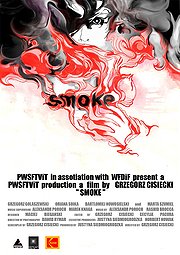
The first film I am deciding to highlight is one called Smoke. It’s a film that was actually brought to my attention via an email from the film’s director. I’m sorry it took me so long to profile it here, however, I am glad he brought it to my attention as it truly is quite special.

The film is constructed in a stream-of-consciousness montage that is incited by the turning on of a tape recorder. What words are being spoken on the tape, or to it for that matter (if any), are left for the audience to divine as we don’t hear them. The images are rather surreal and at times completely disconnected and at others only connected by the common motif: smoke, be it in one form or another. While some images are Kubrickesque the film possesses a voice of it’s own that speaks to you in visual fragments seeking your input and associations to determine meaning. I’ve seen the film twice now and had two distinct, but both positive reactions to it.

Before I belabor it too long watch it for yourself:

Review- Contraband

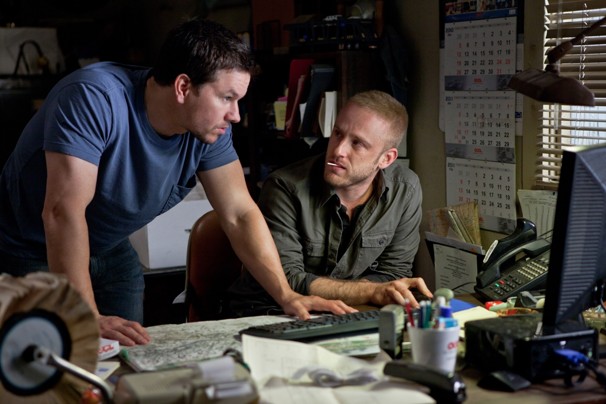
Mark Wahlberg and Ben Foster in Contraband (Universal)

In the first incarnation of the Best Foreign Film Awards for the BAMs one of the winners was The Sea, a film from Iceland. While I try to keep tabs on former winners it does get harder as the years go on and the new winners accumulate. Combine that with the fact that Baltasar Kormákur, the director of the aforementioned film, continued to work in Iceland, a country that doesn’t always achieve international recognition and distribution, one could see how I lost track of him but that one film with its sharp direction, palpable drama and believable performances stayed with me. So when I saw his name on the opening credits of Contraband, which is itself an American remake of an Icelandic film, I was perhaps a little more hopeful than I otherwise would’ve been and I was not disappointed.

Contraband indeed does take a lot of familiar elements: an ex-con turned legit doing “one last job” (until the potential sequel) to protect his family because his brother-in-law got in over his head. The set-up is one we’ve seen but the film language and interpretation is a bit more artistic than one might expect. The precise relationship of the characters does not reveal itself right away, concepts that might be unknown to the audience are introduced then explained later, certain continuity is assumed therefore less-than-essential elements might be omitted and bother completists. It is this kind of telling that is almost required of a story that otherwise doesn’t offer much in the way of innovation.

One of the places wherein this film really does excel is in the portrayal of its villain both in the scripting of the film and in his interpretation. Briggs is not only ruthless and reckless but very well realized by Giovanni Ribisi. In this modern era there seem to be fewer black-and-white characters than before and a lot of navigating in the gray areas of humanity, which can be fine but it’s a lot more nebulous and difficult to get through it. Therefore to have a character who has no obvious redeeming qualities or seemingly no complexity is practically verboten but a good actor relishes this challenge. It can allow the actor to do a lot of work on the character’s story that could lead to his mannerisms and so on. I’m not saying Ribisi is method, I can’t confirm or deny but that what I am saying is a character so seemingly simple free of being judged can be a liberating experience and allow an actor to bring more than expected to a part. One way or another Ribisi goes above and beyond here and is a big reason this film works.

It seems every so often some way or somehow I’m reminded that Mark Wahlberg started in music and I do need to be reminded. Not only am I now accustomed to seeing him as an actor but have liked quite a few things he’s done. I think the key is creating a screen persona. He has one and usually he finds himself in films not too different than this and he also helps makes this film happen. Some action films need to work to have you believe the star fits in the milieu or builds up the world of the character and then the character but Wahlberg due to his persona and the types of characters he plays naturally fits therefore the film’s world and character can be discovered simultaneously. He always makes his characters identifiable and likable in spite of their flaws.

The supporting cast highlighted by Kate Beckinsale as the knowing yet vulnerable and worried wife, then there’s Ben Foster who’s very nuanced and Caleb Landry Jones who seems to be carving out his own niche as the engaging yet troubled youth.

Two other things that are a boon to this film are: it has a very good twist that propels it to a dramatic conclusion and it depicts an interesting and oft unexplored world of smuggling on ocean faring vessels. The conclusion gets quite dramatic and actually does leave you wondering how things will work out in the end.

The end did make me wonder how things turn out in the Icelandic version, however, that didn’t really adversely affect this film. What did was in the Panamanian episode there’s really the only pacing issue of the film and our leads are forced into a situation where they become passive observers, which makes that section quite tedious. That and a few other willful suspensions of disbelief are all that hold it back.

Despite its second act stumbles Contraband is a slightly elevated genre film with some good surprises in store and a nicely appointed denouement that should be a crowd pleaser.

7/10

Review- The Devil Inside

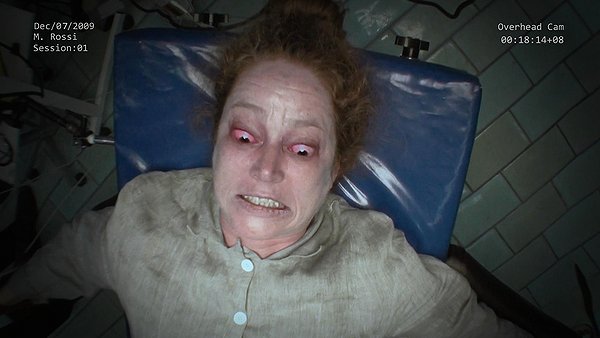
Suzan Crowley in The Devil Inside (Paramount Insurge)

The possession, or exorcism film if you prefer, is not likely the most retreaded but definitely one of the more tired subgenres that horror has to offer. Despite the fact that I chose a film of this ilk as one of the best horror films last year it is an area wherein filmmakers have struggled as of late to cover any new ground whatsoever.

Interestingly this film also acts as a found footage/mockumentary. Unlike some I will not allow, whenever possible, one film to forever change my perception of a given subgenre. Found footage like anything else has its pros and cons; the biggest pro being immediacy and one of the biggest cons being uninspired cinematography. However, the found footage technique alone is not why this film fails just as it’s not the only reason The Blair Witch Project, [REC] and Lake Mungo work. The way it decides to use the technique is a failing but it’s not the only one.

Some examples besides the obvious are cutting around certain incidents rather than watching them happen live. Another is actually going the other direction than the subgenre usually goes, it’s actually over-edited and over-produced at times such that any chance it has of creating anything like simulacrum is squandered quickly.

The performances in the film are a bit too inconsistent, which is unfortunate because many of the incidents in the film are very low concept and restrained so more is needed from the actors. Typically Simon Quarterman and Evan Helmuth, the sometimes rogue priests, are fine but on occasion they were written into situations where they couldn’t avoid being unintentionally humorous.

Those characters in and of themselves are fine though, they make sense, the cameraman Michael (Ionut Grama), however, is an unnecessary disruption. His only functions as a character are to be a nuisance and act as cynic when Isabella Rossi (Fernanda Andrade), the subject of the supposed doc, can serve that function.

It’s easy to appreciate the efforts this film makes to legitimize exorcism and possession both through scientific and theological means to those who would have trouble suspending disbelief. The effort can’t be reproached that badly it’s the clunkiness of how facts are introduced, finer points are debated and lastly church bureaucracy reveals itself that hurts the film’s credibility more than anything.

If you were to look at this film in terms of a meal it’d be one with myriad amuse bouche, hors d’œuvres and appetizers but not much of a main course. The attraction of an exorcism film is…exorcisms. There’s the hospital encounter and one later, both a brief and somewhat anti-climcatic. However, that’s not unusual many of the countless progeny of The Exorcist are underwhelming in this manner. I will admit that for most of its duration it’s a watchable bad film that even features a strong performance by Suzan Crowley. What then makes this movie so terrible?

It is the ending. A few things need to be said about it: first, even though I heard stories about how bad it was before I saw it, it was actually worst than advertised. Second, I refrain from re-writing in reviews but what angered me most was that I could feel the potential for a good 20-30 minutes coming, most could, there’s a satisfying conclusion to this film (good enough to redeem the whole thing) in some other dimension perhaps but sadly we weren’t shown it.

2/10

Review- Beneath the Darkness

Tony Oller and Dennis Quaid in Beneath the Darkness (Image Entertainment)

It’s a bit frustrating that a film like Beneath the Darkness can scarcely find an actual screen to play on while the universally reviled The Devil Inside is out making January box office history. That’s really neither here nor there but is something that needed saying in my estimation. That being said I do like this film.

While not the most ground-breakingly original in conception this film does feature a rather good teaser. It’s the kind of opening that is vague enough such that you can’t quite connect the dots to how it will factor in later on in the film but you know it will. Not only is it well-done but it’s a quick effective table-setter that adds unease to the next section of the film despite the lightening of tone incumbent thereafter.

In the horror genre substandard to poor performances from the cast are nearly expected and for those most familiar with the genre rather easy to overlook. I’m not sure if it’s that horror generally scares away actors with chops or there is a commitment issue from those involved but that’s really not the case here at all, in fact, much of the success of this film hinges on the fact that it gets good to very good turns by most everyone involved.

Tony Oller has the unenviable task of being a male lead in a horror film which usually doesn’t amount to more than a hill of beans, however, he is the protagonist and carries the movie rather well. Ultimately, he does not fall into tiresome horror movie tropes and is affable and relatable, which lends a level of credence to the plot not easily found.

Were Oller alone in his impressive turn the film would not work nearly as well as it does. Devon Werkheiser also manages to add a layered performance to his character distinguishing him as the good-natured joker of the group, a role which suits his talents very well and then there’s Aimee Teegarden an actress of such abilities that she automatically elevates any genre film she’s in even if she were written into a scream queen type but thankfully she is given some dimension.

So there’s a likable core of leads who despite their missteps we end up rooting for as we should. Now we get to the antagonist. How good is he? This is a film that’s in the psycho mold rather than the slasher mold. It makes the identity of the killer apparent to all except to bumbling local cops, whose aloofness adds some good comedic value but with this higher visibility is the antagonist a good one? Absolutely. Dennis Quaid relishes the role it seems and adds some life to a film that while well-executed wouldn’t have been as memorable otherwise. He’s funny, creepy and believably nuts and really makes it work.

Two other things that really work in this film’s favor are through the voyeurism of our young leads we are left wondering what the precise nature of the antagonist’s oddity is, it could either be a ghost tale or a necrophilic tale. Another wonderful step is that it brilliantly sidesteps it’s biggest opportunity to be incredibly stupid by having their be a disagreement about whether to enter the house.

I saw this movie On Demand and not only was it a great value, which was a given but it was also quite a pleasant surprise. It’s a funny, well done and intriguing little horror tale that pulls off the rare feat of having a nearly flawless core of young leads and an engaging, magnetic antagonist. It’s well worth looking for.

8/10

Thankful for World Cinema- La Cage aux Folles

When looking for a theme in which to select films from the start of November until Thanksgiving being literal is not the best option. Films centered around Thanksgiving tend to be overly obsessed with dysfunctional families. So in thinking about the nature of the day which was initially a celebration of survival in the New World, I thought why not focus on foreign films.

La Cage aux folles

It is impossible for me, having been exposed to The Birdcage first, to not compare the original and the remake. Almost from the word go I sensed a great disparity between the two films even though the remake ended up being and uninspired copy and paste writing job. The first thing that lends itself to creating a different tone is the music composed by Ennio Morricone. The music in The Birdcage by Mark Mothersbaugh and Jonathan Tunick is forgettable seeing as I’ve seen the remake three or four times and can’t remember a single note while I’ve seen the original once and can still remember Morricone’s score.

Ennio Morricone’s gentle music takes us into a world that we shouldn’t be afraid of. The key word to thinking about his music is sensitive. It exudes softness, tenderness which is aped by the action and the actors who are not ridiculous characterizations but with real people and real emotions. Due to the fact that all scenes include practically the same dialogue it is a huge complement to Ugo Tognazzi and Michel Serrault that they made their characters more three-dimensional and real than Robin Williams and Nathan Lane.

The American interpretation of this film is also vastly different than the French. Due to the fact that this film deals with homosexuality, which is a topic that still is tinged with taboo here Americans have to turn the film into a farce of a farce. In other words the movie has to be ridiculously over-the-top to be accepted. The pathetic part of the remake is that it perpetuates stereotypes and while the stereotypes do exist (for how do stereotypes come into being?) by merely making them more human we can see beyond a stereotype to the person portrayed. A perfect example of this is the opening scene. They are the same in both films. Renato (Armand in the American version) tries to get Albin (Albert) onto the stage to perform his act. In the American version Nathan Lane makes his character seem like a whining melodramatic pain-in-the-you-know-what because of this the scene is very funny but emotionally superficial. In the French version practically the same dialogue is spoken but because of the way Michel Serrault delivers his lines and because of the more subdued expression he has on his face the words take on weight. They have meaning they come across as real concerns for the relationship as opposed to a paranoid delusion and an excuse not to go on stage. It made me believe the affair was a possibility all over again and made me forget about the son and his impending marriage.

The deception of the possibility that Renato is having an affair is aided by the son’s appearance. In the American version he was clean-cut and Ivy League here the son in full 1970s look, long hair included.

 La Cage aux folles in 1978, even in France, was a more progressive film depicting a gay relationship, a gay couple who had raised a son and how the couple still had to pretend in certain social situations while longing to be completely honest. By 1996 in the United States homosexuality was not such a hot topic of controversy yet a slapstick-esque context is the only way the mainstream will be able to accept gay characters. Dramas about homosexuals are sole dominion of the art houses.

This is a film that does something very difficult to do. It takes a situation that is rich with comedy and imbues it with humanity and warmth. Making this a layered comedy which is something rare regardless of the country the film is made in. La Cage aux folles is a really fun film which takes a serious look at human relationships and society’s perception of people’s lifestyles without putting any one down or getting preachy. It’s a lot of fun.

10/10

Thankful for World Cinema- The Vanishing

When looking for a theme in which to select films from the start of November until Thanksgiving being literal is not the best option. Films centered around Thanksgiving tend to be overly obsessed with dysfunctional families. So in thinking about the nature of the day which was initially a celebration of survival in the New World, I thought why not focus on foreign films.

The Vanishing

Johanna ter Steege and Gene Bervoets in The Vanishing (Meteor Film Productions)

This film exemplifies many things I like to see in films but rarely get enough of. Often times in Hollywood films we get interesting concepts that never live up to their full potential. In The Vanishing we get a film that forgoes cheap thrills and pace to examine the characters involved in a very thought-provoking way and it manages to achieve a greater level of creepiness than most American films would. After having first watched this film I was looking around in all directions as I walked around and here’s why: One of the first things that strikes you is the music. There’s a deep bass and it doesn’t overly-anticipate the moment but still highlights the film with an overtone of foreboding which is just magnificent. And as this word could apply to the film as a whole it is especially significant in the antagonist; subtlety. Played by Bernard-Pierre Donnadieu, Raymond Lemorne is a great villain because he’s believable, well defined and most frighteningly in the end we even understand him and worse yet he seems real.

Another thing this film has going for it is the way the film isn’t told chronologically. We first see the vanishing and the desperate search in the first few hours, then we are introduced to Lemorne, peg him as the man, see his routine and see that three years have gone by. All throughout the film we will skip through time for large periods. The disappearance of Saskia will be filled in over and over again until the actual events are seen through their entirety. And the last piece only falls into place at the very end.

Amazingly, with this unusual structure the film is not hard to follow in the least and certainly much more intriguing then the conventional linear plot we’re used to seeing in the United States. The ‘reality’ of these events are set up in many way by director George Sluizer. Firstly, there was great used of subjective camera and the ‘Zero Degree Style’ common in the States is completely abandoned.

The other touches of reality come as we delve into the two main characters: Rex and Raymond. Raymond, the criminal, is first only seen in a very one-dimensional manner. We see him as a fraud who seems to be scoping out the store for possible victims. Then later in the story we see him begin to formulate his plan, to perfect it over and over again. The one scene where we see him as a biology teacher is just enough to show us that these people could be anyone and can fool you so easily. There is also the scene where Rex is waiting for him at the restaurant. Rex says he’s waiting for Mr. Montmejan and that happens to the waiter’s name. The commonness of the name adds profound statement about the plausibility of the plot.

The tension of the film is also aided by McGuffins, or botched attempts by the professor. In one scene we see him pick up a young girl, we know already that him locking the door is where he makes his move and poisons the girl but it’s his daughter. He also runs into a former student of his and tried to get her in his car and we see a chilling example of how he may have escaped justice for so long for even when someone calls him on it their content to just get away. There’s also the scene where Raymond is out of focus in the background as Rex looks around for him. This is also another great scene of anticipation.

Rex’s relationship with Lieneke and also his quest are also quite believable. He reaches a point where all he seeks to know is the truth. The Vanishing is also greatly helped by some really good dialogue. The image of the Golden Egg as related by Saskia through her dream sort of predestines the film in a way as we’ll see they both have the same fate, however, that is not a fault of the film. I firmly believe that there are only so many ways a story can end and it’s not how it ends that always matters but how you get there. The Vanishing is a toned down psychological thriller that’ll get under your skin. It’s a film that’s had my imagination captive for a week. It’s not only a prime example of a psycho-thriller but also of well-structured and executed character studies. It’s a great achievement.

8/10

Thankful for World Cinema- The Passion of Joan of Arc

When looking for a theme in which to select films from the start of November until Thanksgiving being literal is not the best option. Films centered around Thanksgiving tend to be overly obsessed with dysfunctional families. So in thinking about the nature of the day which was initially a celebration of survival in the New World, I thought why not focus on foreign films.

The Passion of Joan of Arc

Maria Falconetti in The Passion of Joan of Arc (Gaumont)

The first thing that needs to be said about The Passion of Joan of Arc in the state it currently exists is that it’s a miracle we have it at all. Several cuts vanished through the years and this one suddenly surfaces in a Norwegian mental hospital 25 years ago. Truly, the salvaging of some of these older films is at times miraculous and lends even more credence to the importance of film preservation. These works of art shouldn’t be lost and we can’t leave it to chance to find wonderful cuts such as these.

Second, is if you’re watching the Criterion collection version of this film opt for the Voices of Light soundtrack. Again an interesting note is that even though music clearly, according to all the records, was played when this film was screened Dreyer has nothing in his notes to indicate what that music should be, which is odd if you see his other work you know how exacting and precise he could be. So this is as close to an “official” score as you get and it is truly wonderfully done and moving and while it claims not to be a score it syncs beautifully with the images and story.

This film should be viewed for the performance of Maria Falconetti alone. It is often cited as one of the greatest in the history of film a fact which is also unique to this film considering how infrequently Falconetti acted on camera, however, this is no rote repetition of consensus. She is marvelous. It can truly be said this performance is well ahead of its time and reads like one of the greats of the 40s who had the benefit of sound. Falconetti needed no sound, no words and carries this film single-handedly in the rare performance that can be called a tour-de-force.

Lastly, there is the story itself and how it unfolds. I think it is likely one that transcends religion. Whether you’re inclined to believe Joan or Arc’s claims or not you see someone being horribly mistreated, you see one of the judges hurting because he believes her and you witness the tragic outcome of the tale.

This film is a masterpiece of silent film. You’ll note as you watch very few titles are actually needed. It manages through it’s unique visual style to communicate its tale very effectively. It is a must see.

10/10

Thankful for World Cinema- A Man and a Woman

When looking for a theme in which to select films from the start of November until Thanksgiving being literal is not the best option. Films centered around Thanksgiving tend to be overly obsessed with dysfunctional families. So in thinking about the nature of the day which was initially a celebration of survival in the New World, I thought why not focus on foreign films.

A Man and a Woman

Anouk Aimée and Jean Louis Trintignant in A Man and a Woman (Les Films 13)

A Man and a Woman is about the simplest and least pretentious romantic story you are bound to find. This statement is important because most often the problem with the romantic comedy or the straight romance is that the story is often too contrived, far-fetched, and/or lacking in true human emotion. In this film we see how two people fall in love and better yet we don’t even get a happily ever after type of ending but rather we see that these two people are willing to love again after having lost their first spouses.

This film is also interesting in the way director Claude Lelouch structures his narrative. Not only do we never over-deal with the fact that they both lost their first loves we also find this information out at different times in the story and the information in the film is also communicated very visually which is interesting as opposed to hearing dialogue which if poorly-delivered would come across as ham-handed.

The psychological focus of the tale is definitely Anne Gauthier (Anouk Aimée). She is more the focus because we see both her falling in love with her first husband, Pierre, while “Samba da Bênção” by Toquinho and Vinicius is played. On a side note, the addition of Samba to a French film shows how much broader their cultural horizons are than ours are. It matters not that they might not understand Portuguese for they recognize the Samba as probably the most wonderful sound ever created. We see Anne meeting her first husband and also how he dies.

Then as she consummates her relationship with Jean-Luc we see her thought process as she flashes back to her time with Pierre and how difficult loving another man is for her. One of the best parts of the film on Lelouch’s part is when Valérie (Valérie Lagrange), Jean-Luc’s first wife, is in the hospital after his accident. We see not only her strife but the passage of time through a series of jump cuts. I found this technique much more effective than a series of dissolves or on very long take.  In this sequence we also see how sometimes telling can be more effective than showing as we do not see her commit suicide but rather hear Jean-Luc say it with sadness in his voice.

Another interesting technique in this film is alternating between color and black and white. In the very beginning of the film it is used solely to differentiate between a flashback and the present tense but rather in a reversed way. The flashbacks are in color. This presents the present as more gritty and not as joyful whereas the flashbacks may not have been happier they certainly were more colorful as they are with most people.

What’s impressive about A Man and a Woman, as is often the case with a lot of French films, is its simplicity. We deal with real people in a real type of story, plot devices and formulas are completely thrown out the window. And in this film what we get is a much more enjoyable experience than any Hollywood formula could possibly provide.

10/10