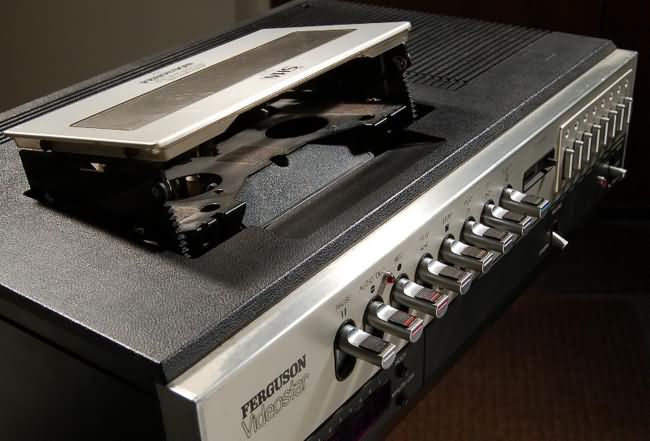
VHS Gems

Here’s another great list idea courtesy of @bobfreelander. Whenever contributing to a popular list I believe that once must always include their slant on it so you understand the selector’s criteria, perspective and so forth.

I do have a horror story of foolishly trusting a VHS-DVD dubber and then tossing the back-ups only to find the DVDs incompatible with any other players, save the one that broke from overuse; despite that VHS is not my favorite format. I’m fine with progress in that regard.

What I’m not fond of is losing access to titles and that’s what format changes have done. Granted, with streaming, DVD, Blu-Ray and movie on demand distribution we’re getting closer, eventually to having most of what is still extant available, completism is all that will satisfy me. Therefore, here are some of my top choices of films I saw on VHS but have not had an official region 1 DVD version (BTW, going multi-region will change your life, and blow your face off your head).

I did pick some titles to try and make them representative of a niche that is likely replete with missing titles and you may see some of these titles pop-up on another similar list soon.

Ghost Town (1988)
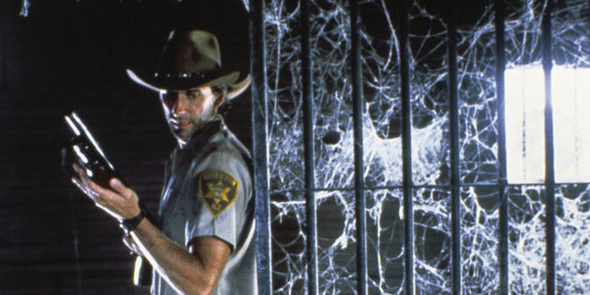
This is a film I actually heard of thanks to Rupert Pupkin Speaks. Then, as luck would have it, I found it on sale at the library where all VHS tapes that get donated cost $0.50. Quite a bargain. If you see enough Charles Band movies, and get a taste for them, you’ll find that as a director/producer he’s somewhat in the Roger Corman mold inasmuch as if you sift through enough of his refuse, there’s some good movies to be found, and this is one of them! Western-horror and ghost towns in general have always interested me, and while what’s delivered is not something quite like the box promises it is strong enough to withstand a late second act bout of sloth.

Song of the South (1946)
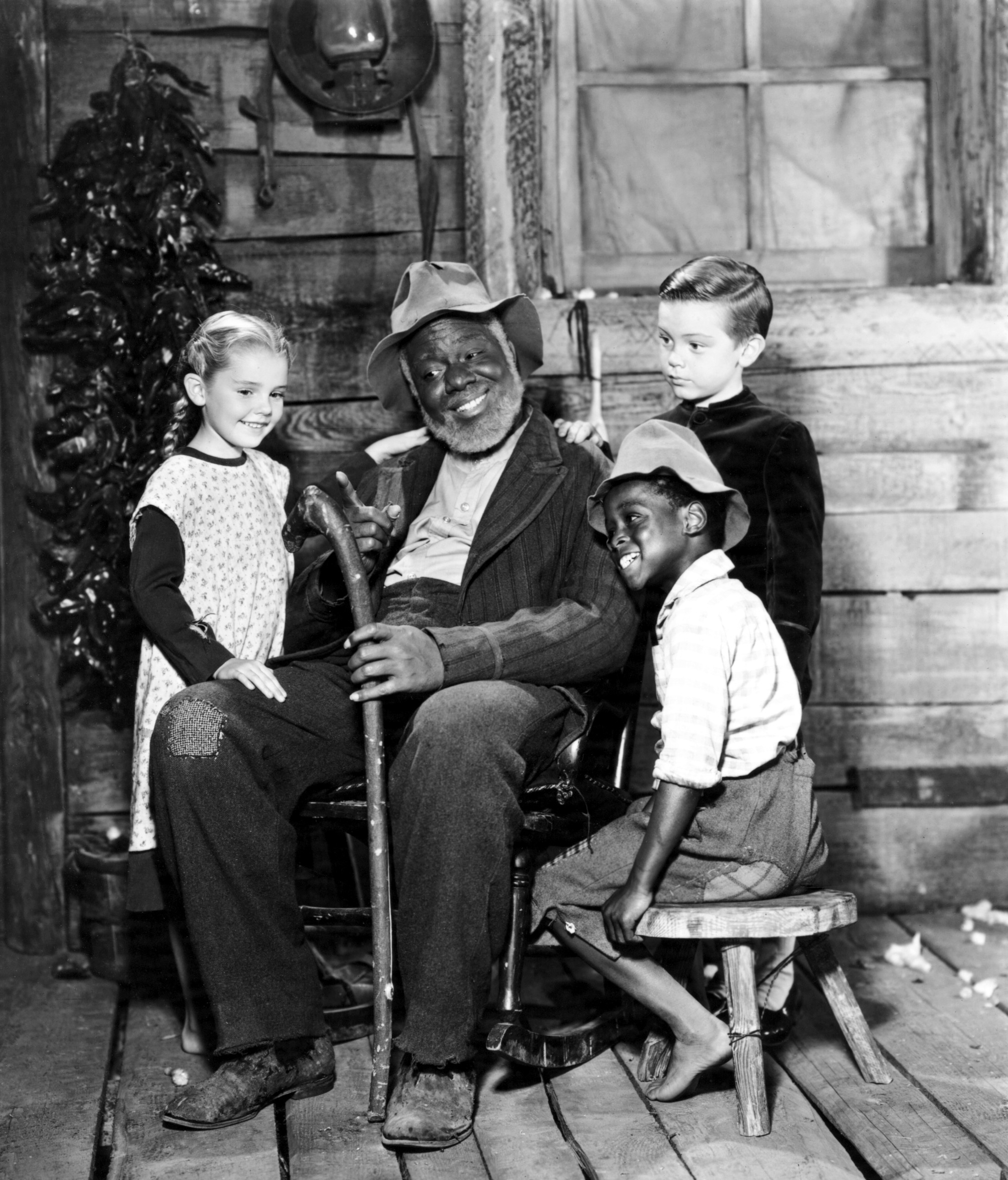
I’ll save my Song of the South rant for another post. In fact, this selection isn’t really about Song of the South but Disney in general. There are rumors abound that Disney will create its own streaming service. They’ve already put their toes in the water on an international line, and recently into an MOD line. Both of those are very small and release titles infrequently. It’s bad enough the animated classics get vaulted, but for certifiable Disney nuts like myself (and I’m more tame than most) Disney’s squatting on its titles is terribly bothersome and this is at the top of the list.

The Son of the Shark (1993) and Jacqout de Nantes (1991)
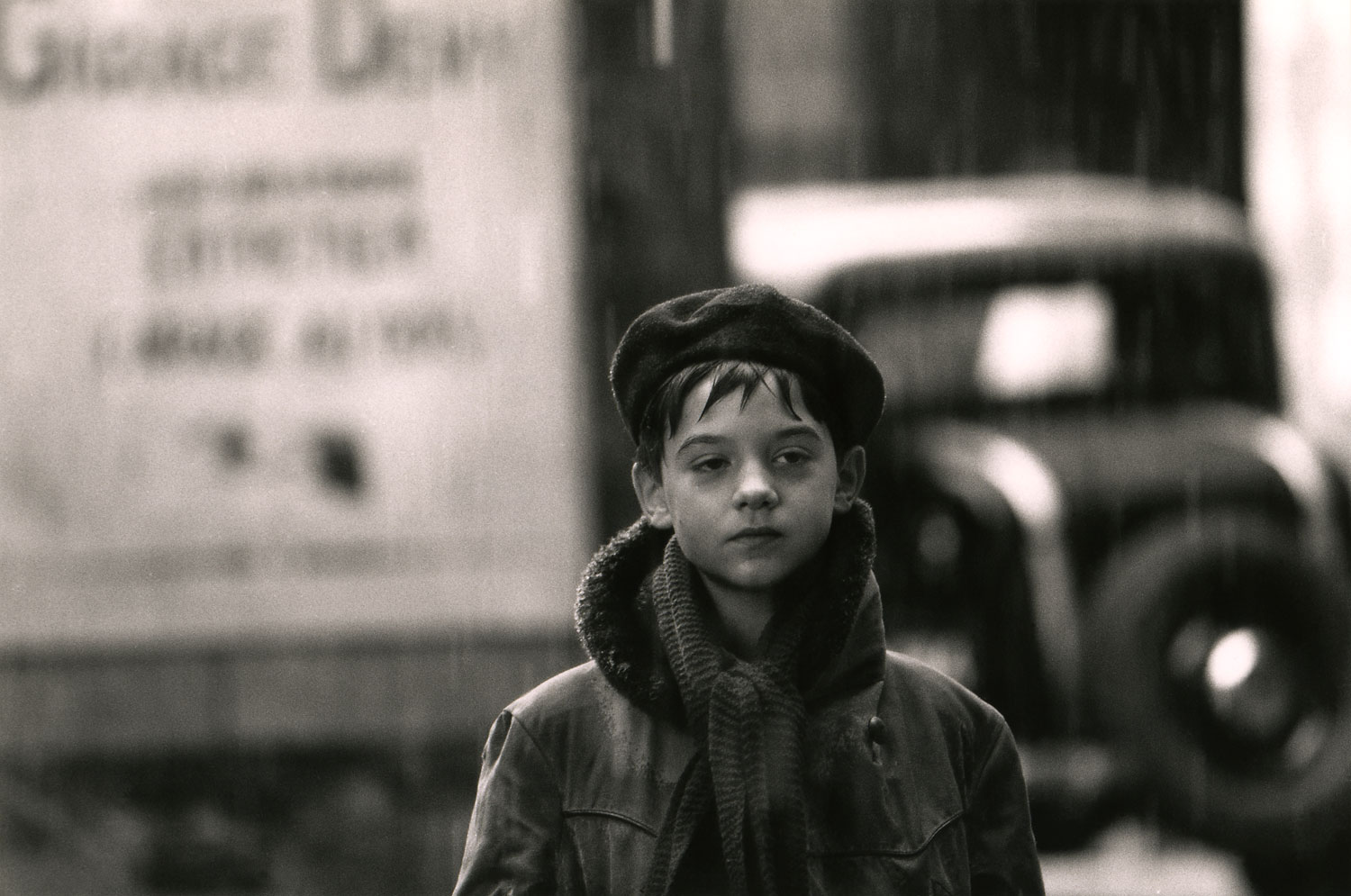
I combine these two selections to further illustrate a point, and that’s about foreign-language films in the US. Far too often when formats change, some new home video distributors emerge, others fall by the wayside; and to capitalize on new technology some older titles get overlooked. These two French films couldn’t be more different: the first is a hard, gritty, disturbing look look at juvenile deliquency the second is a delightful, charming warm-hearted portrait of Jacques Demy by his wife Agnes Varda. It is a film she made in memory of him, that features many clips of his films, as well as ho his childhood shaped them and his life.

These films have not made it to DVD or blu-ray in the US.
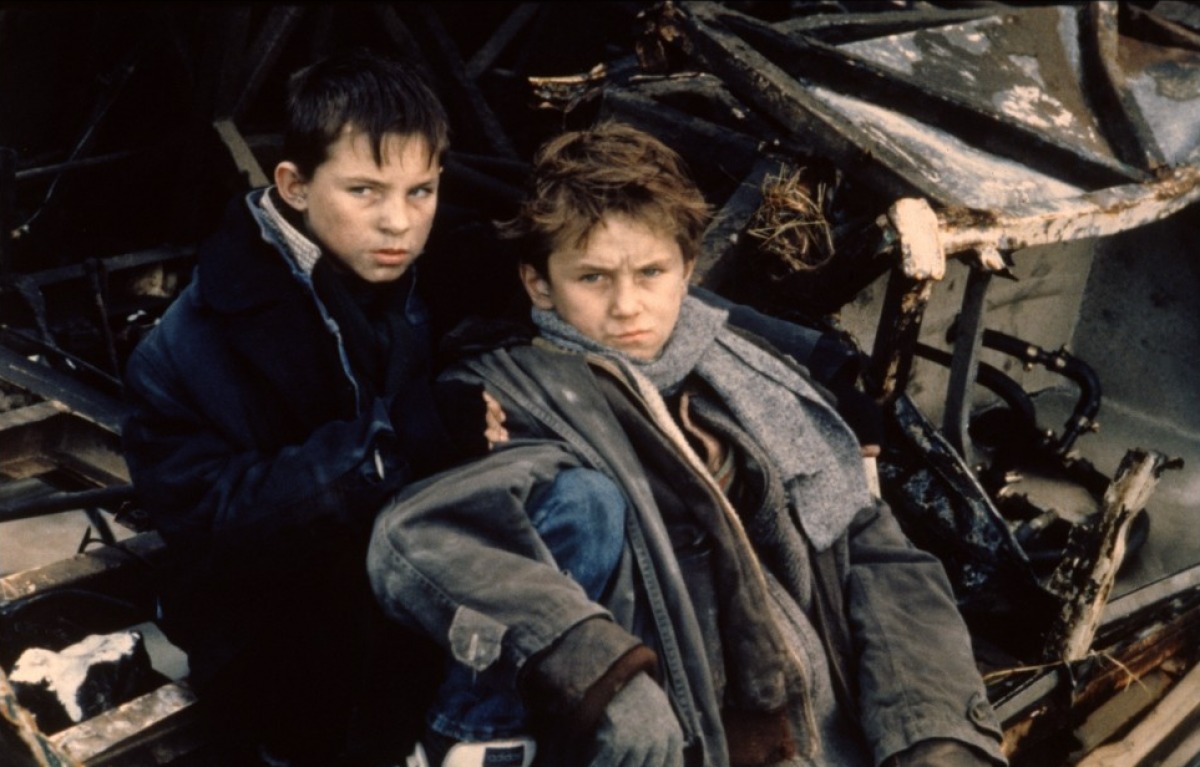
American Gothic (1988)

I have to be honest and confess that I really can’t recall that much about American Gothic, other than I can differentiate it from the excellent short-lived TV show of the same name. However, I do recall seeing it as a Blockbuster rental and enjoying it a great deal – it’d be perfect to revisit but I cannot.

The Cellar (1989)
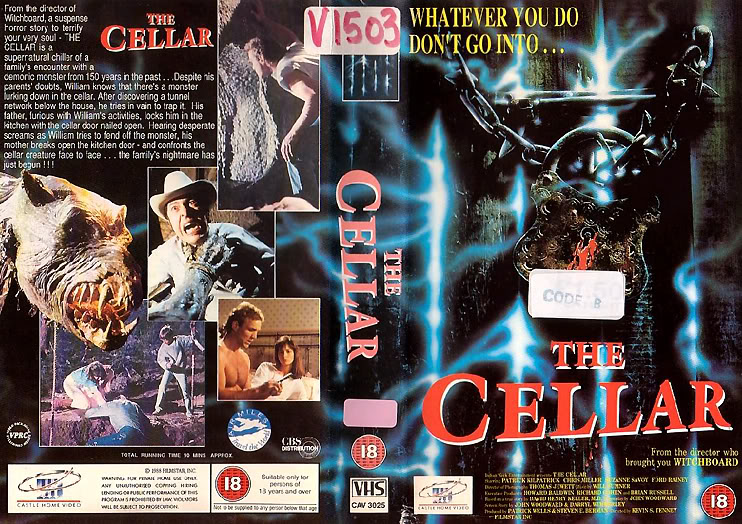
The Cellar represents another interesting aspect of distribution inasmuch I first saw it on cable, I believe at some point during the DVD era, but it has not moved past VHS into further means of being viewed.

Blake of Scotland Yard (1937)
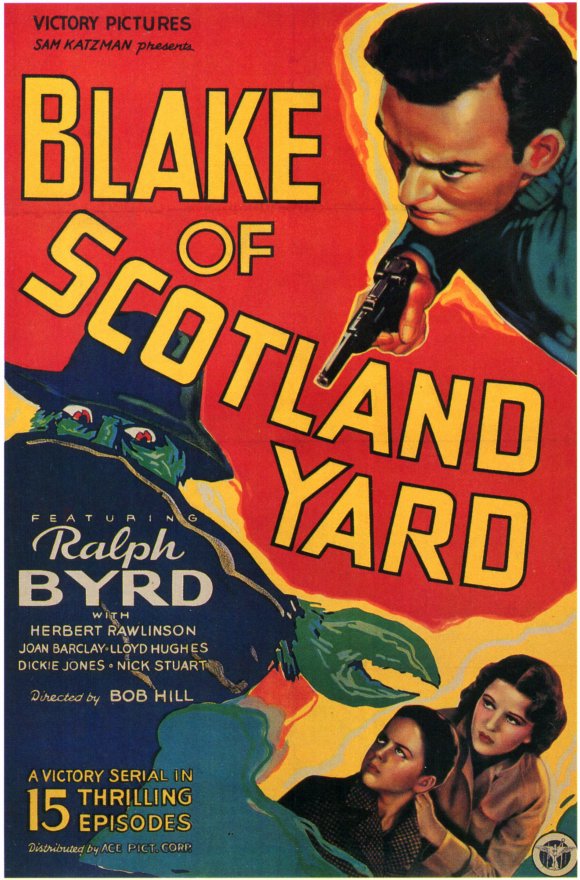

I needed an older film here but I also needed one representative of serials, which I do like but don’t get to see enough of. As for Blake of Scotland Yard it’s as good a choice as any. In fact, one of my first posts on this new blog was my consumer outrage at discovering that such a thing as a composite serial, or as I like to call it “Studio Sanctioned Nonsense,” exists. I’ve probably seen it three times through in one for or other and it should be in print.

So those are just 7 films that are on VHS alone as of this writing. If I sat down I could find many more I am sure, but these were the ones that came quickest to my mind and also highlight gaps in distribution patterns that hopefully get picked up.
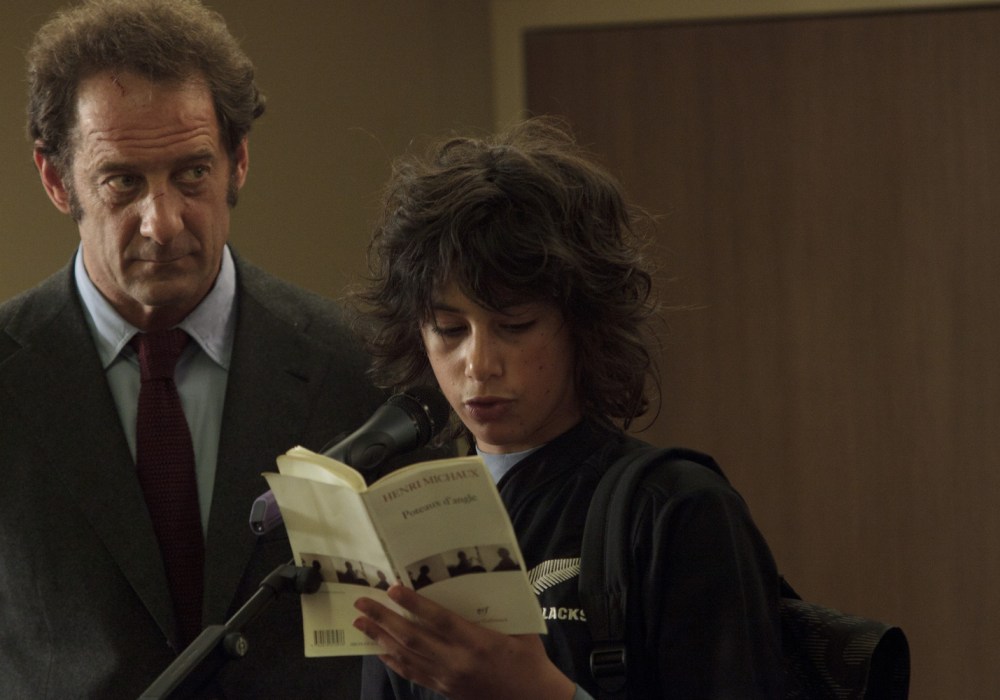
Review- Moon Child (La Permission de Minuit)

This is another example of a film that I am fortunate to have seen thanks to a film program, in this case it’s Rendez-Vous with French Cinema, which is presented in part by the Film Society of Lincoln Center and Emerging Pictures. Much like films I saw last year in From Britain with Love this series presents new films from foreign countries that likely have little to no US distribution. It’s a great way to discover some hidden gems. If you see a new films series from a specific country playing near you I urge you to go out and see some selections.

I wanted to see many of the titles that were playing at a local art house but sadly my schedule only permitted one.

This film concerns a doctor/patient relationship between David (Vincent Lindon) and Romain (Quentin Challal). David is a dermatologist who specializes in X.D., a photosensitive skin disorder, which Romain has. Essentially he can’t be exposed to UV radiation and must cover up if out in daylight and must check lighting conditions. It’s a chronic condition which causes many growths, which may or may not be cancerous and he undergoes many procedures. The basic relationship conflict that exists in this film and a chronic illness, are things I can identify very closely with, though on a far less severe level.

However, there’s not merely a doctor patient struggle in this film. Yes, there is a the personal connection that a physician has with a patient he’s treated his whole life but they also each have their own conflicts they grapple with. David struggles with trying to transition to a position with the WHO, dealing with his successor where he is and making sure his patients are in good hands and how to break it to his current patients. While Romain struggles not only with his conditions but with adolescence and trying to find some sort of harmony between the two.

The film’s weakest point is perhaps the one it should’ve handled most easily. The rivalry that develops between David and Carlotta (Emmanuelle Devos) is a bit too infantile and trite, especially when contrasted to some of the naturalistic truths found in other aspects of the film. The arc seemingly takes a huge jump in their relationship also. Thankfully the film has so much else going for it that this is a minor complaint.

One of which is an aspect I love and that is the juxtaposition of high point and low point in the narrative. David takes Romain on a road trip as a pretext to telling him he’s leaving. There’s some great scenes, interactions and montage. It’s wonderful and you get swept away in the fun. Upon their return Romain’s mother (Caroline Proust) lets the cat out of the bag immediately. Overwhelming high to incredible low in a split-second that propels the film beautifully into its second half.

The acting in the film for the most part is very strong but it really is a two-man show both Vincent Lindon and Quentin Challal are absolutely wonderful playing their disparate characters. Moreover, they work very well and naturally with one another which really sells you on the fact that the characters have a history. It feels organic an not like an artifice created for the purposes of story-telling.

The music whether instrumental or an original song for the film is very well-spotted, always emotionally truthful and highlights the emotional resonance of all the scenes in which it’s present. It’s rare to see both incorporated in one film and even more rare still to see them both work so well.

Through all its interpersonal drama and life-and-death situations the film does find a lot of room for comedy, quite naturally too. It’s this mix that allows it to work so well. It doesn’t stay to dour and works enough ebbs and flows such that it can extend the story the necessary amount so as to tell things in their proper time without forcing things.

My one previous aversion aside this is a very strong film and I’m glad it’s getting this showcase and I’m saddened that my screening was so woefully empty. It’s rare to see a doctor’s and a patient’s tale told so well much less a man’s and a child’s but here it is and there’s a great synergy to it. It’s a film that’s grown on me since I’ve seen it and I hope more people get a chance to see it.

9/10

Thankful for World Cinema- La Cage aux Folles

When looking for a theme in which to select films from the start of November until Thanksgiving being literal is not the best option. Films centered around Thanksgiving tend to be overly obsessed with dysfunctional families. So in thinking about the nature of the day which was initially a celebration of survival in the New World, I thought why not focus on foreign films.

La Cage aux folles

It is impossible for me, having been exposed to The Birdcage first, to not compare the original and the remake. Almost from the word go I sensed a great disparity between the two films even though the remake ended up being and uninspired copy and paste writing job. The first thing that lends itself to creating a different tone is the music composed by Ennio Morricone. The music in The Birdcage by Mark Mothersbaugh and Jonathan Tunick is forgettable seeing as I’ve seen the remake three or four times and can’t remember a single note while I’ve seen the original once and can still remember Morricone’s score.

Ennio Morricone’s gentle music takes us into a world that we shouldn’t be afraid of. The key word to thinking about his music is sensitive. It exudes softness, tenderness which is aped by the action and the actors who are not ridiculous characterizations but with real people and real emotions. Due to the fact that all scenes include practically the same dialogue it is a huge complement to Ugo Tognazzi and Michel Serrault that they made their characters more three-dimensional and real than Robin Williams and Nathan Lane.

The American interpretation of this film is also vastly different than the French. Due to the fact that this film deals with homosexuality, which is a topic that still is tinged with taboo here Americans have to turn the film into a farce of a farce. In other words the movie has to be ridiculously over-the-top to be accepted. The pathetic part of the remake is that it perpetuates stereotypes and while the stereotypes do exist (for how do stereotypes come into being?) by merely making them more human we can see beyond a stereotype to the person portrayed. A perfect example of this is the opening scene. They are the same in both films. Renato (Armand in the American version) tries to get Albin (Albert) onto the stage to perform his act. In the American version Nathan Lane makes his character seem like a whining melodramatic pain-in-the-you-know-what because of this the scene is very funny but emotionally superficial. In the French version practically the same dialogue is spoken but because of the way Michel Serrault delivers his lines and because of the more subdued expression he has on his face the words take on weight. They have meaning they come across as real concerns for the relationship as opposed to a paranoid delusion and an excuse not to go on stage. It made me believe the affair was a possibility all over again and made me forget about the son and his impending marriage.

The deception of the possibility that Renato is having an affair is aided by the son’s appearance. In the American version he was clean-cut and Ivy League here the son in full 1970s look, long hair included.

 La Cage aux folles in 1978, even in France, was a more progressive film depicting a gay relationship, a gay couple who had raised a son and how the couple still had to pretend in certain social situations while longing to be completely honest. By 1996 in the United States homosexuality was not such a hot topic of controversy yet a slapstick-esque context is the only way the mainstream will be able to accept gay characters. Dramas about homosexuals are sole dominion of the art houses.

This is a film that does something very difficult to do. It takes a situation that is rich with comedy and imbues it with humanity and warmth. Making this a layered comedy which is something rare regardless of the country the film is made in. La Cage aux folles is a really fun film which takes a serious look at human relationships and society’s perception of people’s lifestyles without putting any one down or getting preachy. It’s a lot of fun.

10/10

Thankful for World Cinema- The Vanishing

When looking for a theme in which to select films from the start of November until Thanksgiving being literal is not the best option. Films centered around Thanksgiving tend to be overly obsessed with dysfunctional families. So in thinking about the nature of the day which was initially a celebration of survival in the New World, I thought why not focus on foreign films.

The Vanishing

Johanna ter Steege and Gene Bervoets in The Vanishing (Meteor Film Productions)

This film exemplifies many things I like to see in films but rarely get enough of. Often times in Hollywood films we get interesting concepts that never live up to their full potential. In The Vanishing we get a film that forgoes cheap thrills and pace to examine the characters involved in a very thought-provoking way and it manages to achieve a greater level of creepiness than most American films would. After having first watched this film I was looking around in all directions as I walked around and here’s why: One of the first things that strikes you is the music. There’s a deep bass and it doesn’t overly-anticipate the moment but still highlights the film with an overtone of foreboding which is just magnificent. And as this word could apply to the film as a whole it is especially significant in the antagonist; subtlety. Played by Bernard-Pierre Donnadieu, Raymond Lemorne is a great villain because he’s believable, well defined and most frighteningly in the end we even understand him and worse yet he seems real.

Another thing this film has going for it is the way the film isn’t told chronologically. We first see the vanishing and the desperate search in the first few hours, then we are introduced to Lemorne, peg him as the man, see his routine and see that three years have gone by. All throughout the film we will skip through time for large periods. The disappearance of Saskia will be filled in over and over again until the actual events are seen through their entirety. And the last piece only falls into place at the very end.

Amazingly, with this unusual structure the film is not hard to follow in the least and certainly much more intriguing then the conventional linear plot we’re used to seeing in the United States. The ‘reality’ of these events are set up in many way by director George Sluizer. Firstly, there was great used of subjective camera and the ‘Zero Degree Style’ common in the States is completely abandoned.

The other touches of reality come as we delve into the two main characters: Rex and Raymond. Raymond, the criminal, is first only seen in a very one-dimensional manner. We see him as a fraud who seems to be scoping out the store for possible victims. Then later in the story we see him begin to formulate his plan, to perfect it over and over again. The one scene where we see him as a biology teacher is just enough to show us that these people could be anyone and can fool you so easily. There is also the scene where Rex is waiting for him at the restaurant. Rex says he’s waiting for Mr. Montmejan and that happens to the waiter’s name. The commonness of the name adds profound statement about the plausibility of the plot.

The tension of the film is also aided by McGuffins, or botched attempts by the professor. In one scene we see him pick up a young girl, we know already that him locking the door is where he makes his move and poisons the girl but it’s his daughter. He also runs into a former student of his and tried to get her in his car and we see a chilling example of how he may have escaped justice for so long for even when someone calls him on it their content to just get away. There’s also the scene where Raymond is out of focus in the background as Rex looks around for him. This is also another great scene of anticipation.

Rex’s relationship with Lieneke and also his quest are also quite believable. He reaches a point where all he seeks to know is the truth. The Vanishing is also greatly helped by some really good dialogue. The image of the Golden Egg as related by Saskia through her dream sort of predestines the film in a way as we’ll see they both have the same fate, however, that is not a fault of the film. I firmly believe that there are only so many ways a story can end and it’s not how it ends that always matters but how you get there. The Vanishing is a toned down psychological thriller that’ll get under your skin. It’s a film that’s had my imagination captive for a week. It’s not only a prime example of a psycho-thriller but also of well-structured and executed character studies. It’s a great achievement.

8/10

Thankful for World Cinema- Bicycle Thieves

When looking for a theme in which to select films from the start of November until Thanksgiving being literal is not the best option. Films centered around Thanksgiving tend to be overly obsessed with dysfunctional families. So in thinking about the nature of the day which was initially a celebration of survival in the New World, I thought why not focus on foreign films.

Bicycle Thieves

Enzo Staiola and Lamberto Maggiorani in Bicycle Thieves (Produzioni de Sica)

Firstly, it must be said that as simple as it is a test of the greatness of Bicycle Thieves is how much can and has been written about it. This piece, however, is meant as an introductory piece to the film in hopes that more people will discover this cinematic gem. This is not an in depth examination or an in depth film theory piece. For that kind of examination I could not do better than to direct you to the companion booklet that comes with the Criterion release.

 Bicycle Thieves is all that is good about Neorealist cinema in one tidy story. It is naturalistic acting, practical locations and a simple yet utterly compelling storyline.

The film sets up its dramatic problem instantly. Antonio is assigned work but needs a bicycle or he won’t get the job. He does manage to get it out of hock but his troubles aren’t nearly over.

What is most effective in this film is that in following Antonio on his quest we become fully immersed in it. We identify with him because we know the significance of the bike and why he needs it.

What’s more is that we can see the extremes he goes through and can relate when he is pushed past his breaking point. In his failing we can see why he has reached his last resort.

In this way Bicycle Thieves becomes the perfect tragedy because our protagonist can see how far he fell and can wonder what he could’ve been thinking without ruining his entire life.

The tragedy is ultimately left for us to examine. As we know there are many more stories like it playing themselves out everyday. By making the tale small and not grandiose it’s easier to see how it could be you.

10/10

Thankful for World Cinema- The Green Room

When looking for a theme in which to select films from the start of November until Thanksgiving being literal is not the best option. Films centered around Thanksgiving tend to be overly obsessed with dysfunctional families. So in thinking about the nature of the day which was initially a celebration of survival in the New World, I thought why not focus on foreign films.

The Green Room

François Truffaut in The Green Room (Le Films du Carrosse)

Truffaut’s The Green Room may be his great over-looked gem. It is a film that I think still deserves the Criterion treatment even though it was saved from the Land of the Out of Print by the wonderful new On Demand services.

It is a film that sees Francois Truffaut make a rare trip in front of camera, not only as an actor but one playing a character unlike himself to a large extent. Unlike his turn in Day for Night in this film he is not a director but a journalist who after World War I starts to detach himself from the world lamenting all those he has lost.

The film is a fascinating examination of how to reconcile the fact that even as we live we are amidst death. It examines a character who is overly-preoccupied with those who have passed such that he forgets how to live. Perhaps what is most impressive is that it takes an noble and relatable premise, respecting and honoring the dead, and takes it to an extreme such that we se how detached from reality one can become.

It is also a refreshingly intimate piece. There aren’t many players concerned in the drama here. There is the home nucleus: Julien, Georges and Mme Rambaud. Then Julien also interacts with his boss on a few occasions and Cecilia most of all. This allows the drama to be very focused on the protagonist and his obsession.

This film is a sparkling example of Truffaut’s simplicity shining through. It’s an examination of character and theme where all is very apparent and he wants you to delve deeper and search for more within the film. It is often hypnotic, always fascinating and a must see no matter how you manage to obtain it.

9/10

Thankful for World Cinema- The Annunciation

When looking for a theme in which to select films from the start of November until Thanksgiving being literal is not the best option. Films centered around Thanksgiving tend to be overly obsessed with dysfunctional families. So in thinking about the nature of the day which was initially a celebration of survival in the New World, I thought why not focus on foreign films.

The Annunciation

Péter Bocsor and Júlia Mérö in The Annunciation (Hungarofilm)

If you’re ready for a mind-bending account that is likely to be one of the most bizarre film-watching experiences you’ve ever had then The Annunciation is for you. One thing that shows you almost off the bat that this is a challenging film is that as the story changes location the subtitles include location cards, which are not dictated by the film itself.

However, owing that the shift in locations and time period are due to the fact that it is a dream should make it an easier watch. This existential tale of Adam and Eve is still ripe with multiple meanings and answers that can be gleaned from the text of it.

Another thing that should be noted that all the characters, save for circus performers near the end, are played by children. If you have a problem with child actors I feel sorry for you but I also then do not recommend this film to you because they are dealing with very real material, extraordinarily challenging material that they dive headlong into and perform spectacularly.

The things that can be observed as Lucifer sends Adam and Eve through time in similarly dystopian plots are truly fascinating. However, though the film may seem like it’s hellbent on nihilism it ends on a wondrous of hope and sardonic comedy.

It’s a classic of absurdism and dreamlike cinema, cinema in general, which deserves a wider audience.

10/10

Thankful for World Cinema- Son Frère

When looking for a theme in which to select films from the start of November until Thanksgiving being literal is not the best option. Films centered around Thanksgiving tend to be overly obsessed with dysfunctional families. So in thinking about the nature of the day which was initially a celebration of survival in the New World, I thought why not focus on foreign films.

Son Frère

Bruno Todeschini and Eric Caravaca in Son Frère

This is quite an interesting French drama about the difficult relationship that two brothers have. One of whom is gay and receives his brother one night as learns he is fighting a mysterious and seemingly incurable disease.

One thing that is interesting about this film is that while it does deal a lot with treatment of this illness it goes out of its way to say that the disease even has a name but never says what it is. It insists on being about the patient and the care-taking brother and not the disease itself.

Aside from being a relationship film that doesn’t take the traditional route of dealing incessantly with whatever relationship it addresses. It also deals with death obviously, but moreover with being a patient. In examining those with chronic illnesses it casts an eye on the hopelessness of it all and the fear of surgery.

In that vain there is an amazing one-scene performance by Robinson Stévenin in which the brother witnesses the fear very sharply by seeing someone else in pain.

The film works very sure-handedly and keeps its pace steady but don’t let it fool you in that regard because there is a climax coming and it might even fool you in that regard. You may miss it or its impact immediately but it is one that leaves you thinking.

It is a very intimate and taut drama that is worth looking up.

8/10

Thankful for World Cinema- The Passion of Joan of Arc

When looking for a theme in which to select films from the start of November until Thanksgiving being literal is not the best option. Films centered around Thanksgiving tend to be overly obsessed with dysfunctional families. So in thinking about the nature of the day which was initially a celebration of survival in the New World, I thought why not focus on foreign films.

The Passion of Joan of Arc

Maria Falconetti in The Passion of Joan of Arc (Gaumont)

The first thing that needs to be said about The Passion of Joan of Arc in the state it currently exists is that it’s a miracle we have it at all. Several cuts vanished through the years and this one suddenly surfaces in a Norwegian mental hospital 25 years ago. Truly, the salvaging of some of these older films is at times miraculous and lends even more credence to the importance of film preservation. These works of art shouldn’t be lost and we can’t leave it to chance to find wonderful cuts such as these.

Second, is if you’re watching the Criterion collection version of this film opt for the Voices of Light soundtrack. Again an interesting note is that even though music clearly, according to all the records, was played when this film was screened Dreyer has nothing in his notes to indicate what that music should be, which is odd if you see his other work you know how exacting and precise he could be. So this is as close to an “official” score as you get and it is truly wonderfully done and moving and while it claims not to be a score it syncs beautifully with the images and story.

This film should be viewed for the performance of Maria Falconetti alone. It is often cited as one of the greatest in the history of film a fact which is also unique to this film considering how infrequently Falconetti acted on camera, however, this is no rote repetition of consensus. She is marvelous. It can truly be said this performance is well ahead of its time and reads like one of the greats of the 40s who had the benefit of sound. Falconetti needed no sound, no words and carries this film single-handedly in the rare performance that can be called a tour-de-force.

Lastly, there is the story itself and how it unfolds. I think it is likely one that transcends religion. Whether you’re inclined to believe Joan or Arc’s claims or not you see someone being horribly mistreated, you see one of the judges hurting because he believes her and you witness the tragic outcome of the tale.

This film is a masterpiece of silent film. You’ll note as you watch very few titles are actually needed. It manages through it’s unique visual style to communicate its tale very effectively. It is a must see.

10/10

Thankful for World Cinema- Last Year at Marienbad

When looking for a theme in which to select films from the start of November until Thanksgiving being literal is not the best option. Films centered around Thanksgiving tend to be overly obsessed with dysfunctional families. So in thinking about the nature of the day which was initially a celebration of survival in the New World, I thought why not focus on foreign films.

Last Year at Marienbad

Delphine Seyrig and Giorgio Albertazzi in Last Year at Marienbad (Concinor)

If there is a film that can be said to define the French New Wave it may well be Last Year at Marienbad. A film directed by Alain Resnais (Night and Fog) which deals heavily with memory, or more precisely the accuracy of memory and what is reality. It is a film that moves along dreamlike with many incremental repetitions of phrases, with fractured snatches of conversations creating whole thoughts and at times surrealistically staged scenes.

It is a film that engages the viewer that dares him to follow this Byzantine structure and try to get out the other end, and if he does get out the other end will he have his head on straight when he gets there? It is a fact that film is not a disposable medium and many, if not all films, welcome a second viewing. This film insists on several. It is very likely that every time you’ll walk away from the film with a new piece of information you never considered before. This film is a complex abstract masterpiece that makes Inception look like finger-painting by comparison.

Consider that you examine two characters, their relationship and how much they really know one another and they are never given proper names, in fact, no one is: the three main players are referred to as A, X and M. Most of the rest are referred to as “Une personnage de l’hôtel.”

Which brings to mind another point: The camera pans around this hotel and its surroundings a great deal. Sometimes in conjunction with voice-over sometimes running contrary to the scene. The Baroque architecture of the edifice is quite startling and the hotel becomes a character in the tale in and of itself. As the discussions in which M is trying to convince A they did meet often begin with him stating where in the hotel they were.

It is a fascinating and mind-bending film which has no equal or parallel, an infinitely rewarding experience you’ll want to revisit over and over again.

10/10