Short Film Saturday: Jack Frost (1934)
For Short Film Saturday for most of the coming year I will revisit the animated shorts that were presented in snippets by the King of Cartoons on Pee-Wee’s Playhouse. And here you’ll get to see the whole thing.
For Short Film Saturday for most of the coming year I will revisit the animated shorts that were presented in snippets by the King of Cartoons on Pee-Wee’s Playhouse. And here you’ll get to see the whole thing.
For Short Film Saturday for most of the coming year I will revisit the animated shorts that were presented in snippets by the King of Cartoons on Pee-Wee’s Playhouse. And here you’ll get to see the whole thing.
For Short Film Saturday for most of the coming year I will revisit the animated shorts that were presented in snippets by the King of Cartoons on Pee-Wee’s Playhouse. And here you’ll get to see the whole thing.

As of this writing SAG/AFTRA and AMPTP are heading into a fifth day of negotiations in their current session. I’m more than a bit disappointed and flabbergasted the studios seem to still be playing hardball considering the season of scripted network television hangs in the balance. There was some news after day one of the clichéd “cautious optimism” after day one, but not much since. However, that doesn’t mean there hasn’t been labor news.
Just recently Disney VFX workers joined Marvel (who were first) in voting unanimously for unionization through IATSE. It’s incredible to believe that these positions remained non-union for so long, but the fact that they were not led to hard deadlines and excessive hours leading to less-than-desirable work in both trailers and finished films. This move is a long time coming and could lead to more and hopefully better conditions and work product for an increasingly necessary tool in the gamut of filmmaking.

After yesterday’s ratification of the deal, the WGA strike is officially over as of 12:01 a.m. this morning. The wins the writers secured are spectacular! You can read more about it here.
For Short Film Saturday for most of the coming year I will revisit the animated shorts that were presented in snippets by the King of Cartoons on Pee-Wee’s Playhouse. And here you’ll get to see the whole thing.

For Short Film Saturday for most of the coming year I will revisit the animated shorts that were presented in snippets by the King of Cartoons on Pee-Wee’s Playhouse. And here you’ll get to see the whole thing.

This is a post I’ve been meaning to get up for a while. As I write this strikes are on their 95th and 22nd days respectively. I’ve created count-ups at the bottom of the page. I steadfastly support the writers and actors. If you think 10,000 writers and 171,000 actors are all millionaires you’re wrong, so please keep corporate bootlicking to yourself.
UPDATE: 10/12/23
Aftert yesterday talks have been suspended between SAG/AFTRA and the AMPTP. The studios came out on the offensive with their version of the most recent breakdown:
Negotiations between the AMPTP and SAG-AFTRA have been suspended after SAG-AFTRA presented its most recent proposal on October 11. After meaningful conversations, it is clear that the gap between the AMPTP and SAG-AFTRA is too great, and conversations are no longer moving us in a productive direction.
SAG-AFTRA’s current offer included what it characterized as a viewership bonus that, by itself, would cost more than $800 million per year – which would create an untenable economic burden. SAG-AFTRA presented few, if any, moves on the numerous remaining open items.
Member company executives and AMPTP representatives met with SAG-AFTRA for five days over the past eight workdays. During that time period, AMPTP extended offers including:
- A first-of-its-kind success-based residual for High-Budget SVOD productions.
- The highest percentage increase in minimums in 35 years, which would generate an additional $717 million in wages and $177 million in contributions to the Pension and Health Plans during the contract term.
- A 58% increase in salaries for major role (guest star) performers wages on High Budget SVOD Programs.
- A 76% increase in High Budget SVOD foreign residuals for the four largest streaming services.
- Substantial increases in pension and health contribution caps, ranging from 22-33%, which will make it easier for performers to qualify for additional periods of health coverage and earn years of service toward a pension.
- Meeting nearly all of the Union’s demands on casting, including guardrails around self-tapes, options for virtual and in-person auditions, and accommodations to performers with disabilities.
- Compensation adjustments of 25% for singers who dance and dancers who sing on camera in the same session, whether in rehearsal or photography, representing a 30% increase over current wages.
- Wage increases for stunt coordinators of 10% in the first year and outsized increases in years two and three, and giving television stunt coordinators fixed residuals for the first time ever.
- Substantial improvements in relocation allowance – a 200% increase if the performer is on an overnight location for 6 months. The relocation allowance would now be payable for every season in which the performer is on an overnight location (versus a current limit of two to four seasons).
- Substantial increases in Schedule F money breaks of between 11% and 41%. The 41% increase applies to one-hour television programs, which covers the largest number of productions done under the Agreement.
- A 25% increase in span money breaks.
- Covering performance capture work under the Agreement, which the Union has sought for 20 years.
- On AI protections:
- Advance consent from the performer and background actor to create and use Digital Replicas;
- No Digital Replica of the performer can be used without the performer’s written consent and description of the intended use in the film;
- Prohibition of later use of that Replica, unless performer specifically consents to that new use and is paid for it; and,
- A “Digital Alteration” that would change the nature of an actor’s performance in a role is not permitted without informing the performer of the intended alteration and securing the performer’s consent.
On common issues, such as general wage increases, High-Budget SVOD residuals, and viewership bonuses, the AMPTP offered the same terms that were ratified by the DGA and WGA. Yet SAG-AFTRA rejected these.
We hope that SAG-AFTRA will reconsider and return to productive negotiations soon.
To which SAG-AFTRA resonded:
UPDATE: 10/9/23
The first substantive update since negotiations reopened seems to confirm nothing much has happened and both sides are regrouping.

UPDATE: 10/6/23
As of this writing SAG/AFTRA and AMPTP are heading into a fifth day of negotiations in their current session. I’m more than a bit disappointed and flabbergasted the studios seem to still be playing hardball considering the season of scripted network television hangs in the balance. There was some news after day one of the clichéd “cautious optimism” after day one, but not much since. However, that doesn’t mean there hasn’t been labor news.
UPDATE: 9/28/23
Negotiation restart set.


Update: 9/27/23
With the WGA strike thankfully resolved this post now has a singular focus. There’s been a lot of rumors going around about SAG/AFTRA negotiations reusming but nothing official. So much so that SAG/AFTRA posted this today:

NEWSFLASH: 9/24/23

THERE IS A TENTATIVE AGREEMENT BETWEEN THE AMPTP AND THE WGA.
The writer’s strike is not quite over yet, there are some votes and final approvals to go through but it’s finally winding down. I was hopeful when more studios joined this most recent round of negotiations, but wasn’t holding my breath. You can read more here.
Random Most Important Thoughts 8/31/2023

Taylor Swift’s concert film will serve as a way to bolster exhibitors’ profits while not aiding the studios it seems. So that’s good stuff.
With the Venice Film Festival kicking off it’s the first major event where I’ve heard of actors speaking out abroad, like Adam Driver. International pressure against multinationals is not just fair, it’s necessary.
Solidarity appears strong when donations like this from the DGA are made.
With many majors scrubbing their Q4 release calendars some indies might grab more screens and attention. Case in point would be, What Happens Later. This is by no means Meg Ryan’s first indie, but it’s garnering pre-release attention unlike any she’s ever done, not only because she’s also the director. I actually found out this movie’s on the horizon thanks to a post by Regal Cinema’s Facebook.
Random, Most Important Thoughts 8/23/2023

A court ruled this week about whether or not works wholly created by AI could be copyrighted. That’s not as comforting as ruling it infringement of existing copyright though. Also the AI conversation is far more layered than just this decision. A great resource to follow on social media platforms about this topic is Justine Bateman, a member of both unions.
Studios are still looking at this through their own lens and are apparently not even worried about damage control. If they were they wouldn’t let stories about how much money the strike will save them get out.
Of course now that they saved it they don’t want to part with it though. Examples of that are that the AMPTP believes that lecturing the writers on how good their counteroffer was constitutes re-entering negotiations.
One of the most notable TV impact of the strikes so far is on Jeopardy. They’ll recycle old clues to skirt hiring scabs and will only have one host as opposed to two. Another impact is networks have ported streaming shows ported over to network TV. I think refusing to watch those on TV is the only acceptable boycott. It’s a cheap way for the studios to fill shedules and stick to their unfair streaming residuals. Canceling streaming services only helps the studios.
Random, Most Important Thoughts 8/5/2023
Even if the studios were all cash-strapped, it still hasn’t stopped them spending excessively on Oscar campaigns. Harvey Weinstein is in jail, but his corrosive influence remains.
The studios did not counter the Writer’s proposal and still haven’t agreed to resume negotiating.
Dwayne Johnson set the pace, but other actors have donated funds to support artists who need it as evidenced here and here.
Netflix has gained subscribers thanks to the password sharing crackdown, so they’re not hurting but somehow they want us to believe it’s the actors and writers who are greedy.
The Teamsters got a deal done about a week before they were set to strike because the studios need them for replacement programming, the solution for the networks this fall will be reality shows and importing scripted content from streaming services.
Lastly, for now, consider the contrasting stories of residuals. Payments for streaming performance over time have become heinously low for actors, once it was possible to make a living from them..
The closet is an impossible topic to avoid when it comes to LGBT films. This one handles it better than most and in almost no time at all.
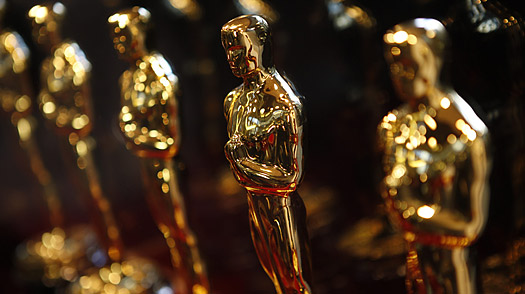
Might not catch any of the “Champagne” carpet or the pre-show, but I will be watching the show.

If you want to demystify the Oscars, and hate life a little more, read a some anonymous voter articles like this or this. These are helpful to me to keep the awards in perspective.
Vanity Fair has written some great retrospectives on some previous shows that have only gotten worse with age like 2003. Or the you can look for what was written about beginning of the new nadir we’re in 1998 when Harvey Weinstein broke the Oscars even more than it was and the Academy hasn’t really taken any strides to curb campaign spending, but god forbid Academy members go on social media to talk up a performance.
The show’s starting in a minute so a thought on the no-win host situation. I think Jimmy Kimmel’s return is handled as well and as funnily as it can be in this video.
I know much of America will be watching the season finale of The Last of Us tonight. As will I. Unlike most, I will pause the Oscars watch the show then go back to the Oscars.

The decline in popularity of the Oscars is not a simple riddle to solve. The factors are varied.
The divergence between what is popular and what is nominated was foreseeable since the end of the studio system. However, that didn’t really pan out on Oscar night until the late 90s. The revolution of American independents had less to do with it than it did first with Weinstein’s new campaigning tactics and then with further fragmentation of the audience with streaming and now with dwindling theatrical attendance post-pandemic. All these factors and more have driven down viewership over the years.
In short the magic and glamour people associate with old-school Oscars are tinged by many things: it was the studio super-production of the year, the system manicured personae far more back then and embellished legends, such that award shows and the like where they appeared were further hyped. Being a film history buff or a child of a bygone era adds nostalgia to the belief that the Oscar are no longer what they were.
And they’re not because these things always change. But one thing that is undeniable when there are fewer universally viewed nominees than in previous eras means there is less excitement—or even basic interest—among the average movie fan. That has been the case in the past few years, however, I don’t anticipate this years high-grossing class will bring in that much interest.

Putting this here to commemorate the first and perhaps only Oscars reference of Encino Man.
Dwayne Johnson and Emily Blunt are the first presenters. More Jungle Cruise?
Best Animated Film
Best Animated Film has been around for a little over 20 years. It still feels like a novelty in large part because of how the Academy treats it.
This article were many animators are spoken to shines quite a bit of light onto the problem. One issue that’s obvious to everyone is a little similar to how Best Animated Short Film began.
The first 13 prizes went to either a Walt Disney or Fred Quimby production. Disney’s wins were for shorts that were Silly Symphonies or starred their core characters. Quimby’s MGM shorts were all Tom and Jerry shorts. In 1947 Warner Brothers finally won with a Silvester and Tweety short.
Better intro to the category this year.

I didn’t do great catching up on the Oscar nominees before the ceremony. I hope to afterward. Glad to see it’s not a Disney film for a change.
It’s been quite an emotional start to the night.

I mentioned it in my BAM Awards that actors from the same movie nominated against each other don’t normally trade-off wins but they usually get canceled out. When Jamie Lee Curtis won the SAG Awards that was when I had a feeling that she was going to get the Oscar because of how big a voting block actors are.
When Navalny wins Best Documentary…

I’m trying to remember if two actors from an upcoming film have come to show a clip of an upcoming film before. Of course, the Oscars are on ABC so it’s not like anyone can stop it.
All Quiet on the Western Front is near the top of my must-see list.
And we’re back…
Fitting for the Discovery acquistion of Warner Bros. the Oscars are looking back on their 100 years rather than plugging an upcming release like Disney go to.
Julia Louis-Dreyfus dropping the National Lampoons Chirstmas Vacation reference.

A song from an Indian film being up for an Oscar is overdue.
Is it me or are Antonio and Salma always introducing International Feature now?
I’m all for international films being nominated, but when only one in the Feature is also up for Bes Picture it’s a dead giveaway.
So far as Best Animated Short is concerned please do search out all the nominees. I did see this program this year and they’re all quite good. My favorite was An Ostrich Told Me the World is Fake and I Think I Believe Him.

“Basically a scrotum…” – Hugh Grant. Line of the night.

Yay, Cocaine Bear!
Resonable minds can differ on whether Jimmy Kimmel’s Robert Blake/In Memoriam joke was tasteful, but the seed of it is truthful: the Oscars In Memoriam is imperfect, political, and pales in comparison to what TCM does annually.
Having said that John Travolta’s introduction was truly moving and for once the musical acompaniment didn’t feel like a distraction. The link to the Academy’s page for a fuller appreciation is also a good touch.
Good on “Naatu Naatu” winning Best Original Song.
The live blog is not ideal for a night like this because this has been one of the best shows in a while.
A24 has deserves its followers because they dare to be different when most do not want to.
Closing thought for the night: predictability does not necessarily mean a bad show.


