Monochromatic Monday #2

Now for this week’s installment I will continue with my 31 Days of Oscar theme.

The first film is…

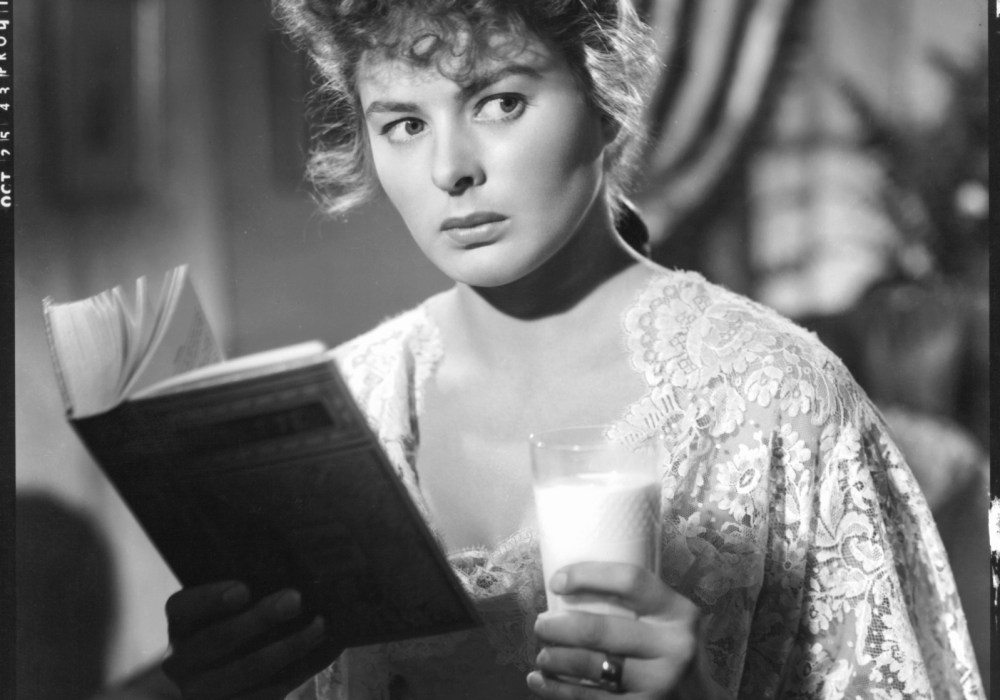
Gaslight (1944)

For the record this film won two Academy Awards: one for Ingrid Bergman for Best Actress (her first) and another for Art Design (Black & White). It was nominated for 5 others: Best Picture, Best Actor (Charles Boyer), Best Supporting Actress (Angela Lansbury- her first film role at 19), Best Black-and-White Cinematography and Best Screenplay.

This is a film that I had already seen so this is where some films get a real litmus tests. Most films diminish upon a second viewing, some stay the same, others, and this is rare, get better. Gaslight falls into the middle category which is not meant as a slight at all. It is still a tremendously effective piece of work. This is for the most part a chamber drama wherein a villain gets firmly established and he and our heroine face-off throughout the rest of the film.

What differentiates Gaslight somewhat is the amount of psychology that is employed. By the time we the audience realize Gregory (Boyer) is up to no good Paula (Bergman) already doubts herself and her sanity such that we never question why she doesn’t catch on. Boyer plays such a devilish role it’ll make your blood curdle.

This is a film that hinges on subtleties: footsteps in a locked room, the gaslight going down, the odd way the servants sometimes behave around their mistress. The final confrontation between husband and wife is not one of bombast but of anger tinged with lingering doubt. Bergman truly plays many notes in this performance perhaps her best moment is when she confronts her husband and tries to get back at him. The conclusion is marvelous as Joseph Cotten, a man who lies about the periphery of the tale and slowly takes center stage, moves in.

To discuss too many plot details would be to do this film a disservice. You should see it for yourself.

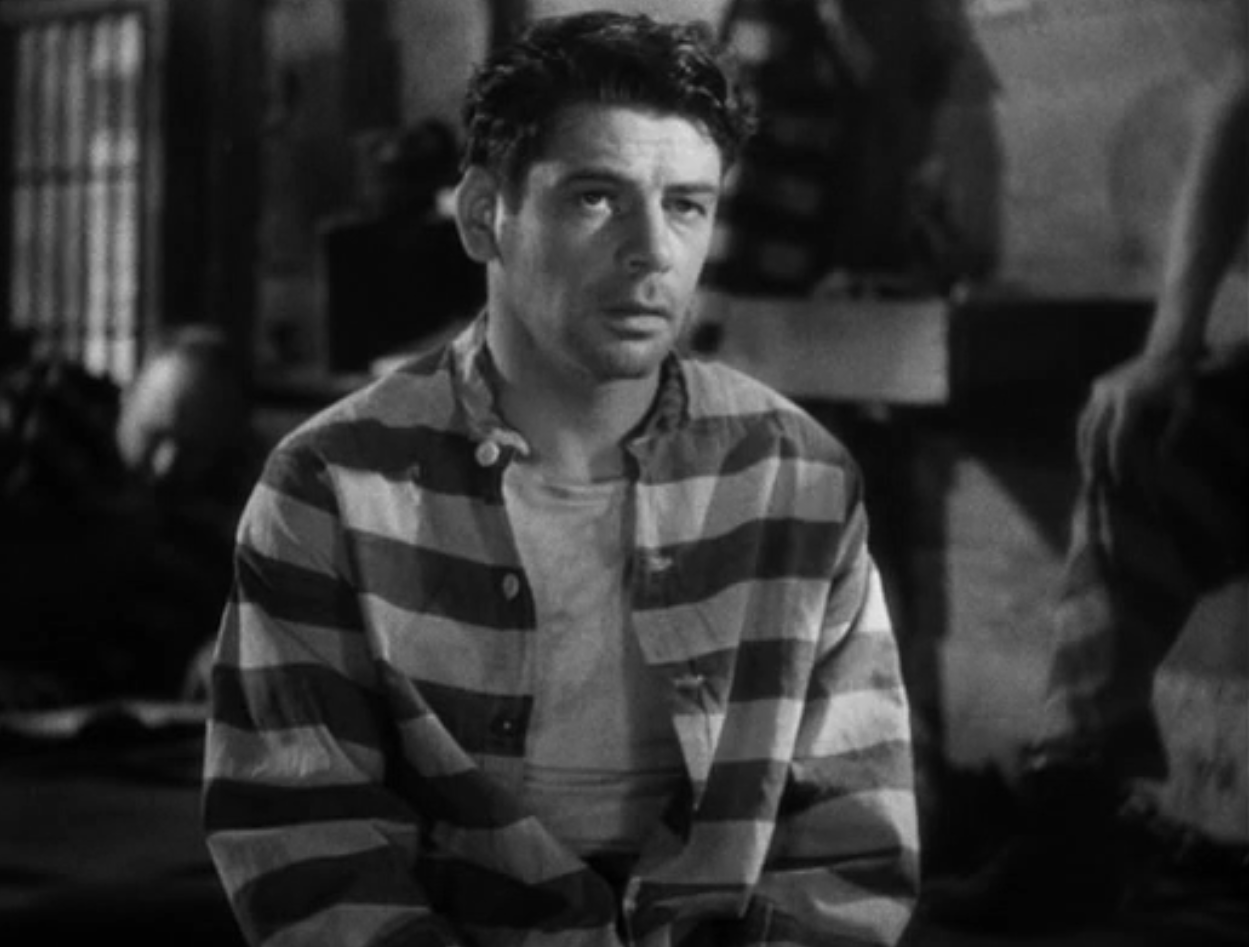
I am a Fugitive From a Chain Gang (1932)

I am a Fugitive From a Chain Gang was nominated for three Oscars: Best Picture, Best Actor (Paul Muni) and Best Sound Recording. Now this film does have a few things going for it aside form one of the most awesome titles in the history of cinema and a couple of major hindrances too.

Paul Muni is absolutely fantastic in this part. He brings to this part a humanity and cynicism that is needed to add an extra dimension to what may otherwise have been just another social issue film of the 1930s. Now one of the more inconsistent pieces of the puzzle is the writing. For example, for the good James Allen (Muni) is a character who is poised to be sort of an American Jean Valjean. He is arrested for being forced, at gunpoint, by a man he just met to assist in a robbery. He tried to flee and is caught. For that five dollars he stole he is sentenced to 10 years on the chain gang.

Some of the negatives of the writing are certain parts of his escape are just too easy after one really close call. The suspense as to whether or not he’ll make it is somewhat drained. Then there’s the biggest issue is when he is found out he willingly goes back. Now granted this sets up a tremendous last line in which you can’t even see Muni saying it as he has drifted back into the darkness but the tragedy which is impending is undermined by this acquiescence because it’s quite clear that the assurance that are being made are false. It’s terribly transparent and the decision happens fast. If he’d given a little thought something that the edit and the screenplay should’ve accounted for on more than one occasion it might’ve been easier to swallow.

The film ends up being not so much an expose as a very tightly would circle that should really pack more punch than it does but it is still very much worth a watch.

Oscar Nominated Short Films, Animated

Yesterday, I was fortunate enough to attend my first ever screening of Oscar Nominated short films. The live action shorts will screen next weekend for more information you can visit the official site.

Madagascar, a Journey Diary (2010): Bastien Dubois (France)

While this is a very interesting film in terms of technique narrative-wise its nothing much to write home about. In fact, it plays sort of like a documentary except without disseminating nearly enough information.

Let’s Pollute (2009): Geefwee Boedoe (USA)

This film is truly a hysterical one. It’s in the format of an educational video in which it instructs the audience how to pollute and further degrade the environment. Of course, while you’re laughing the effect is that of reverse psychology and you start thinking about how you can better conserve resources.

The Gruffalo (2009) (TV): Jakob Schuh, Max Lang (UK/Germany)

There are two standout reasons that garnered this film its nomination: the first is the voice cast. There are a lot of recognizable names attached such Helena Bonham Carter and Robbie Coltrane. However, what is even more impressive is the animation. it’s perhaps the most impressive 3D animation I’ve ever seen (it’s not projected as such I’m talking technique). Having said that the story is far to simplistic, repetitive and downright redundant to be as long as it is. It could’ve have used some tightening up.

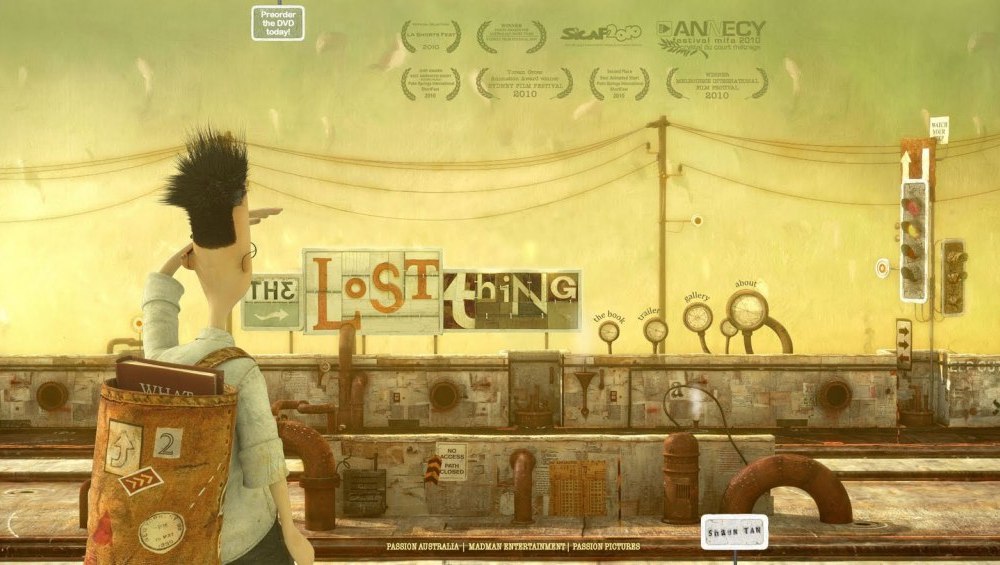
The Lost Thing (2010): Shaun Tan, Andrew Ruhemann (Australia/UK)

This would be my second choice as winner. It is without question the most subtle of the candidate films. There is some creativity in technique as well as story-telling here, principally in storytelling it tells of odd creatures showing up and no one knows where they belong. There is definitely a non-blatant parallel to humanity drawn which is just great.

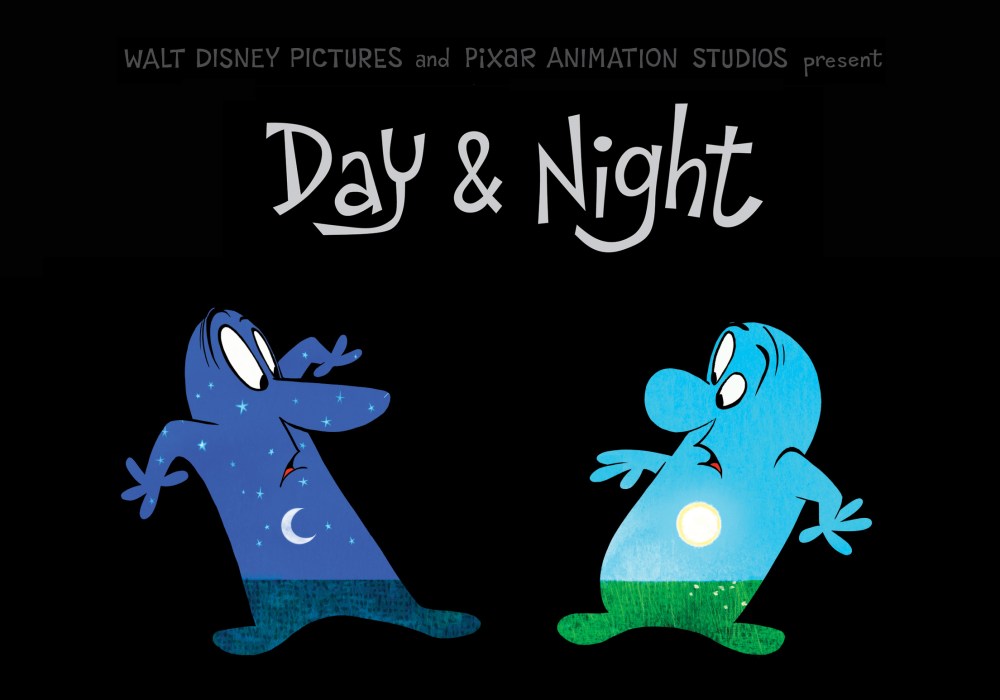
Day & Night (2010): Teddy Newton

I have linked above to a full review of this film I was prompted to view upon its release. This screening reiterated my belief that it should win. Not only is it a truly smart idea but it’s classical Disney which is what draws people to Pixar. This film plays like the old free flowing montages Disney was famous for such as those in Alice and Wonderland and Dumbo. While it’s not as subtle as the above film its message may have even more resonance and is not so on the head such that it detracts from the film.

Review- You Will Meet A Tall Dark Stranger

I, unlike many, will attest to the fact that reports of Woody Allen’s demise are greatly exaggerated. While last year’s reviews for Whatever Works were greatly mixed it does not seem like the kind of film that you can use to illustrate that someone had “lost it.”

In You Will Meet a Tall Dark Stranger you can see why people would say that, however, the way I see it is that you get in the film a pastiche of what’s both great and not so great about Allen. At the risk of sounding like a stereotypical fan who likes the “early, funny movies” it must be stated for the record that this film is a drama before all else.

Moreover, it examines some similar questions as both Whatever Works and Vicky Cristina Barcelona examined. It’s principally about life and love but to paraphrase Allen’s idol Ingmar Bergman “What else is there?” Where the film is somewhat lacking is that it could dig deeper.

What really holds the film back is that fears that were caused by the trailer are realized and it’s the voice over. It is perhaps the worst-delivered most poorly-acted voice over narration that I’ve been privy to listen to. Zak Orth’s delivery could not be be drier if he tried. The only thing that helps this film overcome it is the fact that there’s not a whole lot of it and he’s speaking Allen’s words. Sadly, it also unnecessarily spoon-feeds a relatively simple film and by speaking the film’s conclusion to its hypothesis this renders it more banal than it otherwise would’ve been.

The Bergman reference above is not totally misplaced as this is another examination by Allen of a subject that obsessed Bergman: death. Through these intertwining tales Allen not only examines how we deal with mortality but conversely, of course, with life and what the point to all of it is.

Barring the aforementioned narration the acting is good across the board. The characters are actually a bit less neurotic than Allen’s usual dramatis personnae and feel more like well-rounded, less erudite types. While these characters can come across as more flat it is a tribute to the actors in this film that they breathed life into them.

Another problem the film battled was the edit. The film is a bit too methodical. It never quite gets slow but it could quicken its step through the second and into the third act. True there are four interconnected storylines to resolve but they all end up more or less where we expect them to when we expect them to such that not as much time need be devoted to each to make the point that each segment is trying to make.
While the valid point that sometimes “delusion works better than medicine” is well-made and ties up the film nicely albeit heavy-handedly there is a surprise that develops towards the end that is never really resolved. Now while we can surmise what will happen and the dilemma the character in question is left with it would still have been nice to add a little more closure to that chapter than we get.

Although not a great work and not a minor work, Woody Allen’s films are still vital because he is not overly-concerned with genre or the trappings therein. He through his writing and his cinema is still one of the few American auteurs who is willing to ask real and serious questions with every film he takes on and for that reason his audience should spring eternal and not age with the great cineaste.

6/10

Mini-Review- Day & Night

As has become standard with Pixar releases they whet the audience’s appetite for Toy Story 3 with its rendition of what is in danger of becoming a lost art form: the animated short. Pixar, however, does more than its share to preserve this artform by not only producing these shorts but proliferating them on television and on DVD. 

The short that preceded Up, called Partly Cloudy was one of the best films of 2009 and Day & Night which precedes Toy Story 3 is even better. 

What you get in this tale is an even more ingenious tale than offered previously but with execution that is of surpassing genius. Day & Night are represented in the tale by specter-like beings with sky-scenes appearing through their seemingly transparent person. 

The fact that they are Day and Night is introduced wordlessly in a temporarily dislocating and fantastic pull out. In fact, the only words uttered in the film are picked up when they pass a radio station and highlights why these two, and thus we also, should get along. 

This short is so good its worth the price of admission and obviously earned itself its own review. Do yourself a favor and show up early to watch Toy Story 3 so you don’t miss it (or watch it on the DVD should you get it). 

10/10

Film History Friday #1


Better late than never I always say.

So for Film History Friday my goal is to look back at a filmmaker, event, or whatever in the annals of the history of film that has had a profound impact on the course of the artform. Aiding me greatly in this quest will be the wonderful website known at The Internet Archive this is a fantastic site that archives all sorts of content online, from old web pages, to books, music and films in the public domain.

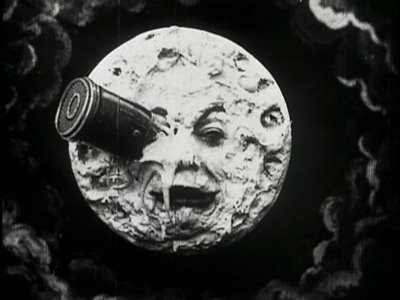
It’s all well and good to talk about films but the best way to learn about them is to see them so there will be some video links below. My subject for this particular installment is the magnificent Georges Méliès. He is frequently referred to as the first wizard of cinema. A magician at heart, Méliès truly was the first man that demonstrated the boundlessness that film has in its ability to enchant and amaze. The first two films below feature wonderfully blocked, I dare say choreographed, shots wherein cuts that are nearly invisible create the most wondrous illusions. Truly now the tact of cutting and making an object vanish is old hat but keep in mid the era, the lack of sophistication of audiences and also it must be said that Méliès performs these illusion with such a deft hand, with such aplomb that it brought a smile to my face. There’s such unabashed joy in many of these films that it is likely to communicate to audiences even more than a century later.

This first film shows you a very basic demonstration of what Méliès is about. It’s a short simple tale of a many being driven slowly mad by a mischievous imp playing tricks on him.

The Black Imp (1905)

https://www.youtube.com/watch?v=OEwRIn4lSWw


Here we see Méliès upping his game. While this film was made just two years later you must take into account the fact that he is credited on the IMDb with having directed 555 films between 1896 and 1913. Even dealing mostly in shorts that’s a ridiculous output. The point is the learning curve was high and he can tell a simple story in one film knowing he’d get to push the envelope in another. If you liked the first film you’ll love this one.

Satan In Prison (1907)

https://youtu.be/xxcBVnEFr0I?si=Yt7FrmtEMjZVqw31

The video posted below is a fragment. It’s a piece of an adaptation of Robinson Crusoe that he did. It seems to be all that remains. Many of his films its sad to say are lost. The fact remains that a lot of silents are gone and we only know of them because the text for titles was copyrighted. Film preservation combined with the short-shelf life and combustible nature of of silver nitrate stock made things difficult. It’s also interesting to note that the book The Invention of Hugo Cabret, and the forthcoming film, deals with Méliès in a fictional sense and his lost films also.

Robinson Crusoe -fragment- (1902)

I was only going to post three but since that was a fragment I think one more is in order. This is the film that made me fall in love with him. Even 108 years later this is still amazing stuff.

A Trip to the Moon (1902)

https://www.youtube.com/watch?v=XAJVgLyJKx0

Theme Thursday #1

OK, here I go again late again.

In watching films in rapid succession at time whether by design or purely by accident you’ll find themes whether they be narrative, visual or otherwise. For my first sojourn I decided to be rather clear and picked a narrative theme, while the films are very different: one is a modern French film and the other an American film made at the dawn of the sound era, they both to extent deal with death.

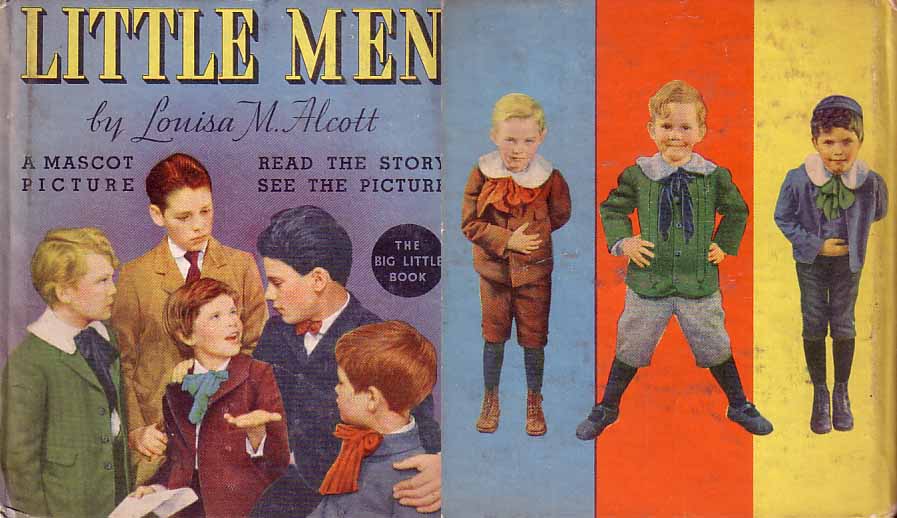
The French film is François Ozon’s Time to Leave. The American film is the 1935 cinematic rendition of Louisa May Alcott‘s Little Men, her much interpreted follow-up to Little Women in which Jo runs a boys’ school with her husband. Now the importance of death in each film and how it is handled is drastically different.

Ozon’s film has the occasional moment of truly striking beauty, which is undermined by the fact that our protagonist, Romain (Melvil Poupaud), who is diagnosed with a terminal case of cancer almost immediately never really lets his guard down, which is fine, however, the story could’ve had even more resonance than it does if we were allowed to see the family’s reaction to his death that they didn’t see coming. Aside from that it is a well-made film with some very great touches in it. The flashbacks are particularly strong. The theme of Romain wanting to take pictures of things and people he’s seeing for the last time is effective. Jeanne Moureau’s scenes are also quite good. However, in the end this film ends up being more impressive in its dealing with death than its American counterpart.

Now the indirectness and hastiness with which the death, which I won’t talk about in great detail to avoid spoilers, in Little Men (1935) has little to do with when it was made. Some of the all time great tragedies and tear-jerkers of cinema come from the Golden Age. However, there were some films back then who briskly rushed through their endings to get to happy resolution to shave minutes off running time to squeeze more showings in per day. This is one good thing that multiplexes have brought on, you can stretch your film out if needed and not worry as much about lost opportunity for profit.

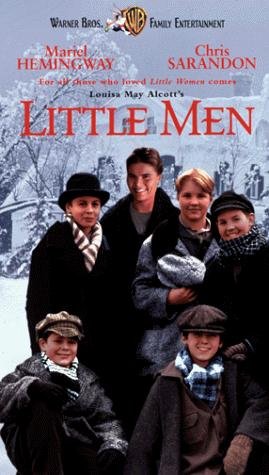
The death here is quickly dealt with and bypassed and we rush toward the ending. Not to say that this is a horrible adaptation of the story. It’s just not quite up to snuff with the 1997 version starring Mariel Hemingway which I attribute mostly to direction and writing as the cast assembled amongst the kids anyway should be able to rival if not trump the modern rendition. Soon I will check out the 1940 version online but I think 97s will stand strong in my eyes as the best cinematic rendition- if you are already familiar with this tale, or even if you’re not I strongly recommend the TV series as well.

Review- Never Say Never

If there was one thing that was most frustrating about watching Step Up 3 last year, whether it be the 3D version or otherwise, was the fact that there were moments that were magic about it that were almost immediately contradicted or overwhelmed. You could see that Jon Chu had latched onto something at least for a fleeting moment that was like catching lightning in a bottle but there just wasn’t quite enough in the story to propel the film past a few moments of grace and charm.

While I typically avoid any sort of comparative analysis in a review of a single film I mention this to begin the case for Never Say Never and may need to resort to it again to make a point. Chu is, in fact, the perfect candidate for this project because while prior it was like he was wringing a dry sponge here the story existed and it’s the kind of thing you can’t make up and he absolutely nailed it as far a making it a piece of narrative cinema.

Absolutely stripping away any notions you may have pre-conceived or otherwise about the music this film is quite amazing and exhilarating and that has every bit as much to do with the crafting of the film as it does with the narrative it tells.

So far as the crafting is concerned: the edit of this film great and rather impressive and, of course, it interlinks with the narrative. While the story is framed as a countdown to one show, Madison Square Garden, it is told neither chronologically nor does a majority of it take place there.

As the production team had protested for months most of the film is not a concert, hence it’s a little misleading to label it a concert film. There is footage, of course, but rarely is a full song used but what’s most incredible is that all the songs are placed perfectly just watch and listen to the tempo and the lyrics in conjunction with the flow of the film.

As much show footage as there is it doesn’t end up being about the show but about the journey but it’s not a one-sided tale. It tells things both from the perspective of Bieber and his team and with man-on-the-street interviews with his fans. So it makes sense that in a tale as someone who has been launched to astronomical heights thanks to the fervent devotion of his fans that both tales be told as they truly are one.

That is where this film truly separates itself from the other two recent teen sensation films (Miley Cyrus and The Jonas Brothers): this is a personal chronicle and the concert is not the thrust of the film but used as peaks and the big show is used as the climax. Whereas, you saw some goofy-we’re-trying-to-show-how-we’re-like-the-Beatles interstitial scenes in the Jonas Brothers film you didn’t learn anything about them or their journey. This film puts you both in the position of the performer and the audience almost simultaneously, which is quite a feat.

As if further evidence is needed that this film isn’t about the concert there is a star-studded line-up of guest performers, including Miley Cyrus herself in a duet, and it doesn’t detract or elevate things it just fits right into the mix.

It’s not a completely skewed depiction of the performer either. There is a part of the film, which propels the film towards its climax with stakes raised and plays almost like it was scripted, wherein Bieber is fighting off a throat infection and swollen vocal chords just before the MSG show, and his vocal coach asks him if he’d been straining his voice outside the performances. He, of course, responds “No” and then there is a quick montage hearkening back to a short layover he had in a hometown where he’s yelling and gallivanting with his friends that is quite funny.

Like almost anything he does, the film doesn’t take itself or its subject, too seriously and just shows things as they are. In showing him, as much as a film can in this format, as a real person there it can establish its dual connection to both performer and audience.

In the end, many quick flashes of home video and YouTube clips that started off the tale are quickly spliced into the last musical performance of the film and hint at the completion of the journey. The journey concludes in a frame wherein an anonymous user is linking their friends to his videos and hence the viral machine starts. There is also some very creative use of graphics displaying YouTube comments, tweets, subtitles and titles that also gave the film a little more cinematic leverage.

Watching this film, again based on comparison with the other two, was like being at a concert. It was virtually the same atmosphere. That alone should say something. It’s easy enough to dismiss this film as a crass money-grab if you want to but if you watch this and see it as anything less than a sincere depiction and a thank you to those who got Bieber where he is you’re not watching closely enough.

This is a film that is exciting and exhilarating cinematically if you give it an unbiased look and watch it as film, which is what it is. It’s not a concert film because there’s so much more to it than that. It’s the full story of this phenomenon about as well as it can be told. Kudos to Jon Chu and Paramount.

10/10

Weird Wednesday #1- Jan Švankmajer

Once again, I am aware of what day it actually is for this week anyway I will likely be late with these themes as I get my footing with them: as things progress I may stagger them.

Here we go.

Weird Wednesday

Weird Wednesday is one of the blankest canvases I am likely to give myself as a cinematic theme. After all the word weird despite its connotation merely means outside the norm and many things can fall into that category.

Yesterday, I chose to watch most of the films on the collection of Jan Svankmajer short films called The Ossuary and Other Tales.

I have been familiar with Svankmajer for quite some time but haven’t seen him in a long time. Milos Forman astutely asserts that “Disney + Buñuel= Svankmajer.” He is an artist that seamlessly goes from puppetry to stop-motion to conventional animation to live action and every way in between.

The Films

The Last Trick

This first tale, if it is the first one you watch in your version of the collection. Is likely to be your litmus test as to whether or not you like Svankmajer. There is a seamless and effortless surrealism to his narratives that provokes thought and seeks to make no explanation. While deceptively simple there are many conclusions that can be drawn from watching this dialogue-free short.

Historia Naturae

Despite how ponderous some of his films may be and how odd they are I’ve always felt a certain kinship with Svankmajer and this proves I’m not crazy. Below you will see both his film where skeletons and illustrations of animals are made to do different dances through the edit. And below that a project I did in an editing class in college which I made with no prior knowledge to Svankmajer’s film. There is a certain similarity. Mine is set to a samba which is a dance he does not include but his waltz is fabulous.

Johann Sebastian Bach

One of his pieces that cuts to the music. Very well done.

Don Juan

A shocking and horrific version of the tale told with puppets.

The Garden

A brilliant and fascinating surrealist live-action film about a man who has unusual gardening practices to say the least.

The Castle of Otranto

A wondrous mockumentary that splices live-action in with an animated story. The live action purports to report on the events that inspired Horace Walpole’s The Castle of Otranto, the animation tells the story within the book in painstaking detail.

The Ossuary

A kaleiodoscopic tour of the Sedlec Ossuary in the Czech Republic.

Two for Tuesday #1

OK, first of all I realize it’s Wednesday. I may find a way to write and post in anticipation of the day but in order to truly get started I want to watch films on the day of and identify my theme properly and then post. Yesterday it was just too late by the time I would’ve gotten around to it.

Anyway, the idea for Two for Tuesday is just to watch two films, no matter how different they may be. Yesterday’s choices were disparate indeed: they were Mrs. Miniver and the aforementioned feature film cut of Blake of Scotland Yard.

Mrs. Miniver

Mrs. Miniver (MGM)

This is another film I watched for 31 Days of Oscar. What was frustrating to learn was that this was during a Greer Garson block on TCM wherein her five consecutive best Actress nominations were shown. This is a feat that was only matched once, by Bette Davis. It makes sense to feature Garson, however, because I, like most, am underexposed to her. With Robert Osborne doing the introduction there was much to be learned. First being that the role of Mrs. Miniver was originally offered to Norma Shearer. Shearer didn’t want to play the mother of a fully grown son, as there’s a stigma of being an aged actress attached and thus it was offered to Greer Garson who at the time didn’t want to do it either but didn’t have the clout to turn it down. The age concern was such that Garson according to the studio was 34 but in actuality was 37 at the time. Thankfully she did it and it worked out wonderfully.

This film swept away quite a few Oscars and it’s not a wonder. Suffice it to say I just thought myself brash in guessing it was nominated for 10 Oscars, I underestimated it. It was up for 12 and won six. This film also bears a stamp this time is that of William Wyler. Wyler, who despite winning three Oscars and the Irving G. Thalberg Award doesn’t seem to get as much recognition as a man who has a similar name to him, Billy Wilder. Wyler’s film’s are always well-shot and moreover beautifully framed. This film also has a quiet realistic tension to when Mrs. Miniver (Garson) is held captive in her own house by a wounded German soldier there is no scoring it’s all quite realistically handled. Then there is shockingly good sound design that also makes you flinch as you see the quiet, simple village life disturbed by air raids.

It’s also not a wonder that there was pressure on MGM to get this film released to show the American public what life in Europe was like during the war. It’s also no surprise that this film was added to the National Film Registry in 2009.

There was also the wonderfully woven in subplot of the flower show. This not only demonstrated class differences and stasis in society but as things developed came to symbolize the solidarity of a nation. As Mr. Ballard says “There’ll always be roses.” A beautifully deft and understated way of saying the world will go on and life will persist despite what may try to ravage it. I could go on elaborating the naturalistic-humanistic symbolism of the film ad nauseum but you get the idea.

However, the poetics of the film do not halt there. During one of the first air raids the Mr. (Walter Pidgeon) stay awake as their young children do manage to fall asleep and they discuss their love for, and recite the ending of, Alice in Wonderland. The words made far more haunting and beautiful due to the backdrop and wonderful example of artistic re-appropriation of material.
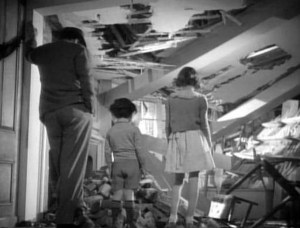
Christopher Severn, Walter Pidgeon and Calre Sandars in Mrs. Miniver (MGM)


There were also some notable long take and it wouldn’t surprise me to learn that Wyler allowed the camera to roll a bit to see what his actors did. One example of this, and the genesis of this idea for me, is when Mr. Miniver and his young son Toby (Christopher Severn) and young daughter (Clare Sandars) are looking into one of the rooms of their house after an air raid taking in the damage. they look for quite a bit of time such that it feels like the scene should end but then Toby kicks a piece of rubble over the step and laughs, forcing a smile from his father. Whether improvised or whether this long pause was dictated kudos are still in store for Wyler.

Mrs. Miniver (MGM)

The very ending is also remarkable without giving too much away. There is a great reveal of the roof of the church most of which is missing. Through the hole in the roof can be seen bombers off to another battle as the congregation sings “Onward Christian Soldiers.” You can protest as much as you like about the propagandist nature of this ending or of mixing religion and war but without even involving politics it’s a great piece of cinema that ending.

In the interest of not spoiling too much I avoided the plotline of Vin (Richard Ney) and Carol (Teresa Wright, who also won an Oscar for her role) it is a major component of the story as it is a love affair that springs from a subplot and becomes quite an important and poignant part of the film. One interesting note was that the part was originally offered to Montgomery Clift who turned it down because it came with the stipulation that he sign with MGM for seven years. Clift, and the industry apparently, felt his time would come and he stayed on Broadway in the meantime.

This movie slowly and steadily rolls itself along picking up meaning and creating a tense environment in the characters. There is no real resolution within the narrative, as they are still in the midst of war but life goes on and “There will always be roses.”

Blake of Scotland Yard (1937; theatrical cut)

One thing that could’ve been added to my manifesto is that I want to try not to be redundant. I realize that I just posted about this here but yesterday I saw this version mostly for lack of something better to do and time. I will try not to over-elaborate but merely convey how utterly gutted I found this film.

The main thing that’s off when you lop 75% off a story is pace. There are moments that are far too slow or protracted and then some that whiz by in a blur, the film ends up being shorter than it feels because of that. There are far too many characters involved in this tale for it to only run 71 minutes and taking out so much you lose clues, speculation and discovery of facts and are left with basically an inciting incident, a long chase which becomes tiresome and a final reveal that is still a surprise because you had little time to wonder who the scorpion could be and were busy trying to figure out what’s up. I had issues following it and I’ve seen the longer version twice I can’t imagine the uninitiated confusion upon viewing this mess.

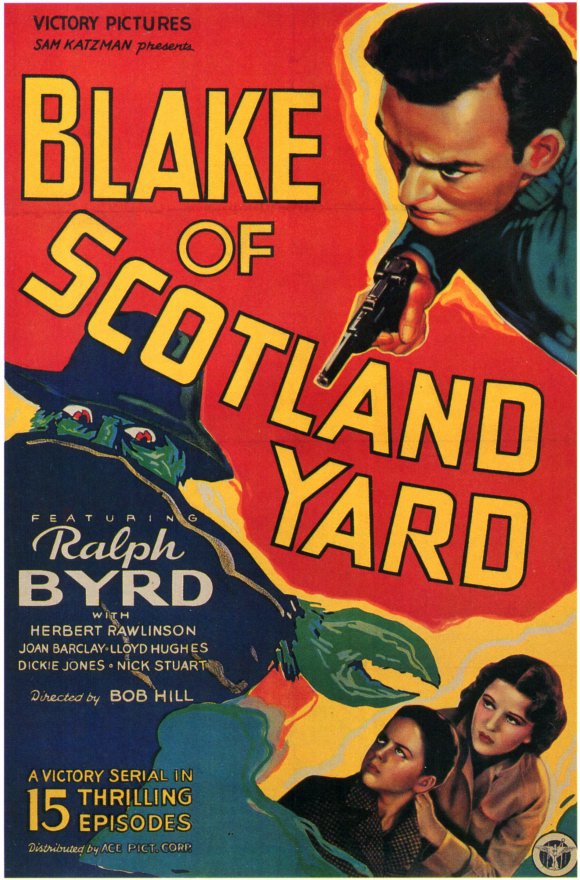
The intent of this piece is to honor the original film as it was made. There were some notable players involved in this such as Ralph Byrd who played Dick Tracy in more than one incarnation, Joan Barclay who starred alongside Douglas Fairbanks in The Gaucho and Dickie Jones who later went on to voice Pinocchio. There’s also a lot of good story cut out: There is a big arc with the false beggar that here seems pointless, there is Baron Polinka who is oft suspected and one of his catchphrases that cracked me up (“But I’m Baron Polinka”) is missing from this, even the tertiary involvement of Scotland Yard, which is in the title here seems unnecessary.

The only thing I liked is that it made me nostalgic for the original version. This one also gave you a virtually muted soundtrack as the theme rarely played within scenes but was always played in titles which, of course, you only see once here. Due to the desire there are some weird and bad cuts including a very awkward “If you can’t solve it, dissolve it.”

As a DVD presentation it is also a failure: it looks like there are VHS tracking lines at the bottom as if this was a dub and there’s no resume play option so when I stopped I had to find a spot within the chapter.

Ultimately, this proved it’s a failed concept as you see a long but simply-told tale diluted into a short confused mess. I hope other distributors stick to full-length serials.
Why “Never Say Never” Makes Sense

This is a re-post from when Never Say Never was first announced. It makes sense to post it again on the verge of the film’s release.

Never Say Never (Paramount)

So recently both on his Twitter feed and on several media sources it was reported that Justin Bieber was to be the subject of an upcoming film release. The film would follow his world tour, intercut live performances be part doc, part biopic and be in 3D. Academy-award winning director Davis Guggenheim was attached to direct it, that has changed but those were the facts.
 
I find it a little humorous some of the reactions this announcement has been met with. Surprise should not be among the reactions though, derision though not necessarily deserved, was expected.
 
Taking some of these facts into consideration: Hannah Montana/Miley Cyrus (as if they’re really two different people), The Jonas Brothers and even Celine Dion, of all people, recently had concert films so announcement this should be no surprise at all. Not to mention the record-breaking Michael Jackson doc This is It.
 
Not only is he talented but he’s out-earning all those acts at this point so of course a studio is going to want to put out a film. Being one who is familiar with him from his days of being pre-viral on YouTube it shocks even me that his rise to near pop immortality has been so meteoric and persistent.
 
And in 3D? Of course. Even though 3D fatigue is setting in, regardless of what scoffing studio execs say, there will still be those projects that will do it, and succeed, especially since a little more than a year has passed since Avatar smashed box office records just because it was shot in 3D. The overcharge, I mean surcharge, made it its money.
 
However, with him being a lightning rod anything Bieber-related is immediately fodder for conversation both positive and negative. It would seem this film is being overly-characterized as as a biopic, in the traditional sense of the word, much the way the photo book of his tour was being referred to as a memoir, where it is truly more of a chronicle, even if you don’t buy his assertion of it being a photo book.
 
Even more recently it was reported that Davis Guggenheim was dropping out. He is citing commitment issues as he will be plugging Waiting for Superman, his latest documentary about public education in the US, obviously there is speculation that he dropped it because his name was being dragged through the mud and the money wasn’t worth it.
 
I won’t comment on a personal/business decision but it most definitely would’ve been very time consuming. However, I don’t view this film as littering the cinematic landscape as it’s not a narrative film. It’s disposable (if you want it to be) entertainment that you can use once and destroy if you so wish and has no bearing on the overall aesthetic landscape of cinema as a whole.
 
This film will come and go and cinema will go on, so jokes or actual fears about the end times are greatly exaggerated.