Bernardo Villela is like a mallrat except at the movies. He is a writer, director, editor and film enthusiast who seeks to continue to explore and learn about cinema, chronicle the journey and share his findings.
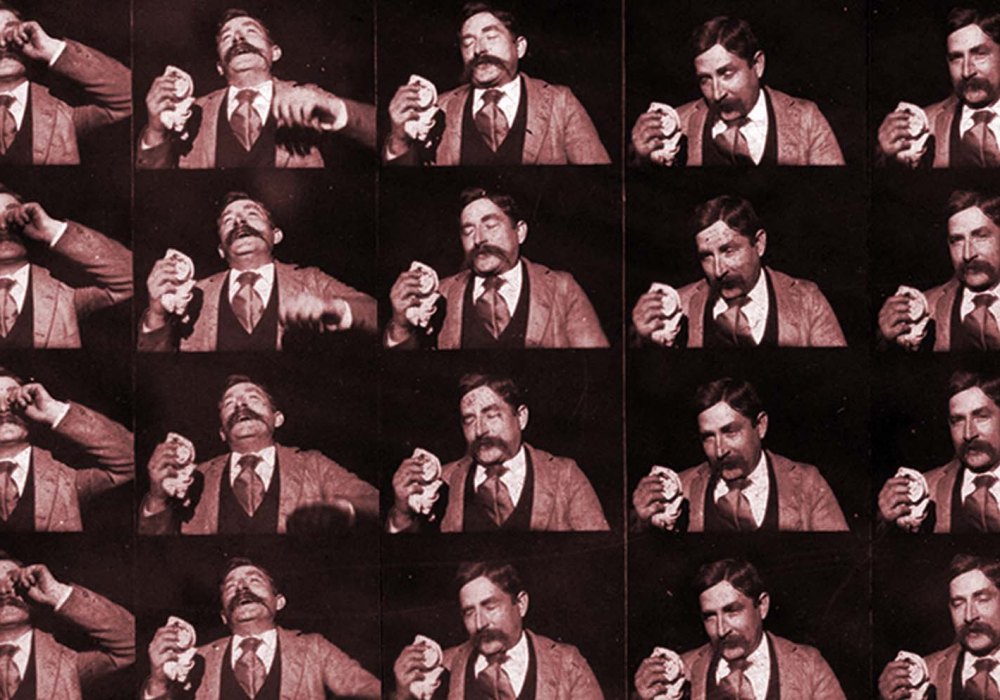
Thomas Edison was many things, some admirable, some not as much. One thing that’s undeniable is that he was a great believer in the copyright and the patent. So much so that he nearly suffocated the fledgling art & science of film in its infancy. However, he did set some precedents and this is one: he was the first to copyright the content of a film.
A while back I had an enlightening Twitter conversation wherein I realized that filmic terminology typically conflates the word classic with classical.
The first definition of classic as an adjective is what many of us think when we hear the term with regard to film:
of the first or highest quality, class, or rank:
When trying to classify something as a classic, inasmuch as it attains that highest I tend to want to give it some time. I use the automobile aficionado’s rule of thumb wherein a film needs to be 25 years old to be considered a classic in that regard.
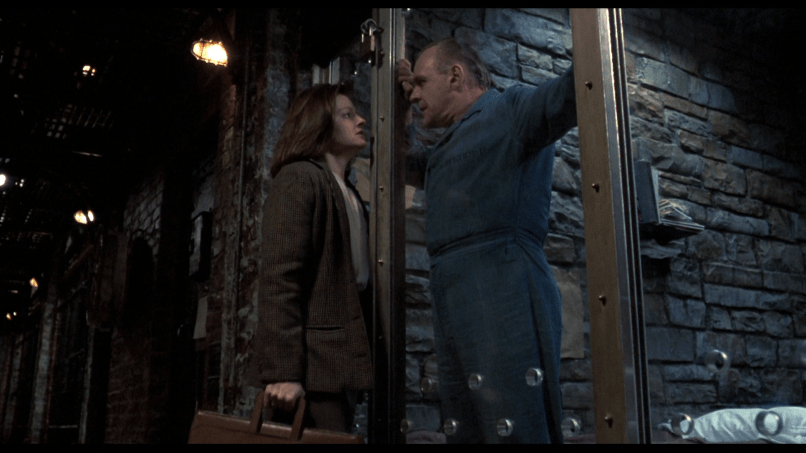
By the 25-year standard The Silence of the Lambs can now be considered a classic.
Thus it also adheres to definition seven of classic as an adjective:
of enduring interest, quality, or style:
Whereas classical film can and should—as opposed to pertaining to Greek and Roman origins of Western Civilization— pertain to filmmaking techniques of a bygone era. Thus, one does not assume all films of a certain vintage are outstanding but recognize they all were created with different societal mores, aesthetic and industrial realities than today.
Classical filmmaking can be defined broadly as starting with the dawn of film and ending in 1960 with the end of the studio system. Other subdivisions can be found therein. The business as well as the art changed from thereon as Hollywood sought a new way in which to function and the world, caused aesthetic revolutions, spearheaded by France, that would change the game anew.
From 1960 on can be considered in cinematic terms as the Modern Era. Clearly the advances in this age are coming fast and furious in technological terms: widescreen became the norm, computer effects were created, home video was born, non-linear editing systems developed, the advent of digital photography, and so on, but for now that’s a good catch-all with inherent advances and stylistic markers attributed to each decade
So for my own personal edification, and also to inform readers of my site, I will try and refrain from calling anything made after 1991 as classic, and when talking about how things were done in 1960 and before I will try and always use to term classical to avoid confusion.
I’ve debated starting this theme for a few weeks, and I ultimately decided I would as it would encourage me to looks for options that actually fit what I’m aiming for. If one pays too much attention to Top 40 type music you tend to see a dearth of creativity in the music video form. The music video is spawned from short films and can be as creative if not more so than their predecessor. Far too often it does just become singing heads. I want to try and buck that trend and find ones both new and old that do something somewhat outside the box, at the very least have some sort of visual narrative. Here we go.
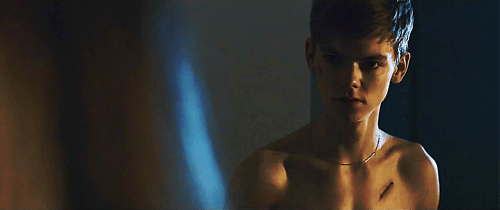
30 Minute Break by The Luka State
This is another great one that puts its narrative, a portrait of a couple in crisis, from and center and does not offer facile closure but leaves the par at a crossroads. It also features a great performance by actor Thomas Brodie-Sangster.
Now, I know that sounds like a dissertation title. However, the approach I’m planning on is a bit freeform, personal, and as all encompassing as I can be with such a huge topic.
I will limit myself somewhat as the nuance and intricacy of human sexuality this could be a much, much longer piece than it already is.
Introduction
The other day was National Coming Out Day. I didn’t post anything specifically about the day because as fate would have it I was actually doing quite a bit of other writing on that day. What I wanted to say on that day was probably more appropriate on a day like today then on the actual day.
A day such as that is not an appointment to be kept, to be either taken advantage of or passed over. It is a day of recognition, of noting those who have taken the step and come out; a day of sharing stories and support. When I was in the closet to the world I kept thinking some specific date or deadline would force my hand. It never did. I wasn’t ready until I was ready. So that was my message for the day: it’s not a compulsory day but rather a day that can be used to show those in struggle that it’s safer than they imagine to take that step.
Usually the blogathons I’ve signed up for have either been review-oriented or could be more academically approached. This one is different because it’s inherently personal, and the topic I selected made it impossible to stray from being candid. It’s about what you have taken away from seeing a movie. Frequently that thing may not even have been the intention the film has but no two people ever see the same film.
Some of these films are LGBT films, some aren’t, but all make a singular point I didn’t take away from other films. Hopefully in underscoring many of these films I have a diverse cross-section. The pride flag is a rainbow for a reason: it’s all-inclusive and highlights differences. Too often underrepresented groups want the whole of their identity enveloped in a character or two, which is an impossible ask. We’re past the point of being merely stereotyped. Characters have to be themselves and not representative of all subsets and subcultures.
The Films
Where I Learned: A Little More About Myself Than I Wanted To
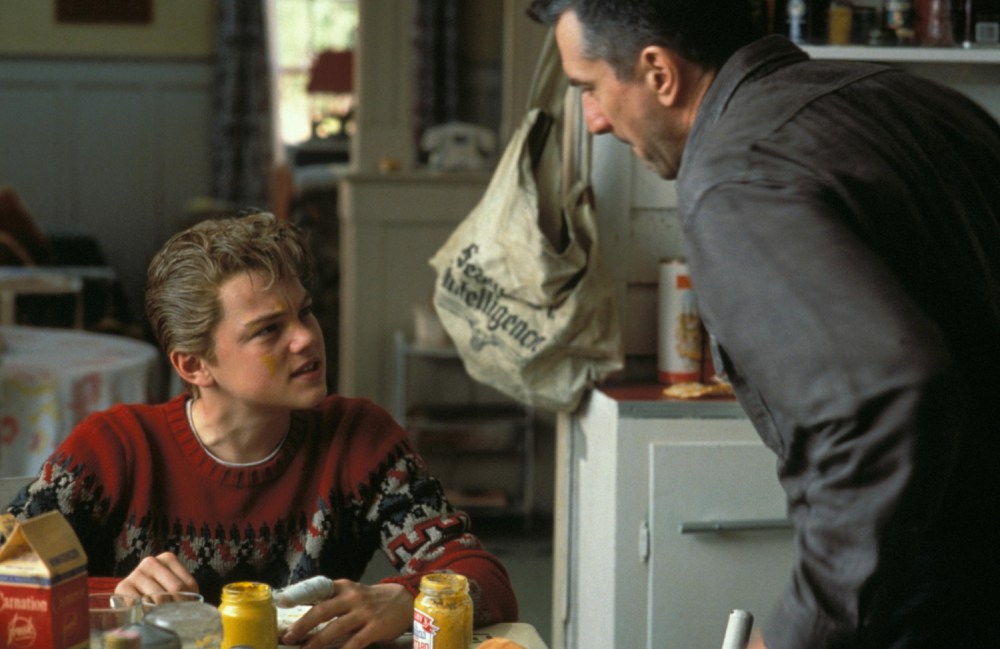
This Boy’s Life (1993)
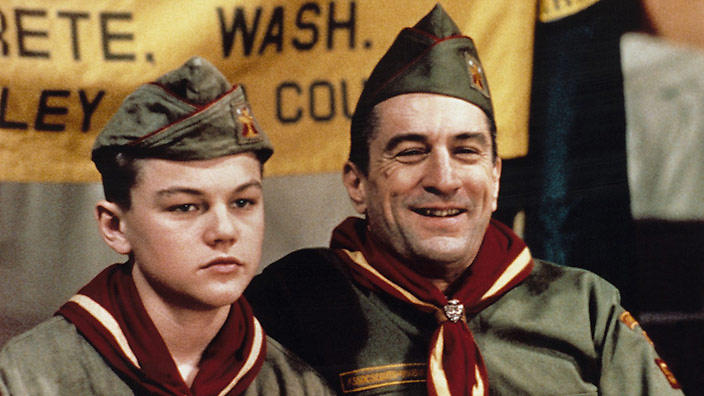
This Boy’s Life was a film I first saw on cable while in Brazil. I watched it with my uncle. It’s a captivating story of Toby (Leonardo DiCaprio) living with an intolerable stepfather (Robert De Niro), finding his voice as a writer, and trying to make it out of a toxic home life.
I was a teenager when I saw it and not entirely self-aware. At some point in the film the character of Arthur (Jonah Blechman) is introduced. Being set in the 1950s with the kind of character DeNiro is the homophobia directed toward him is quite overt and something he just has to deal with. This was probably the first film wherein I was consciously smitten with a male star and I identified with Arthur’s plight all the more for it, but I was self-conscious about it. So when the famous scene where Arthur steals a kiss on Toby’s cheek while they’re singing comes about I felt defensive. I felt as if my facial expression was readable or else some of my thoughts were. I felt the need to say something to cover.
“I’d punch him!” I blurted out.
My uncle without hesitation said “You don’t have to do that. You just say ‘I’m not like that.’”
I was still a while away from admitting I was like that even to myself much less out loud, but the film and scene are important for a number of reasons. In that scene you can actually look at it a few ways: there is of course the obvious viewing it as a romantic overture. However, they are close and having a good time. Arthur is wordlessly expressing his gratitude of having someone to sing with. By midcentury homophobic fears had sufficiently strangled men showing affection for one another in verbal ways much less physically was verboten. And in that second reading it’s almost more important, but the lack of judgment that Tobias shows at that moment is important in and of itself and it’s a hallmark of many of these films either in isolated scenes or as a whole.
Where I Learned About: Coming Out of the Closet
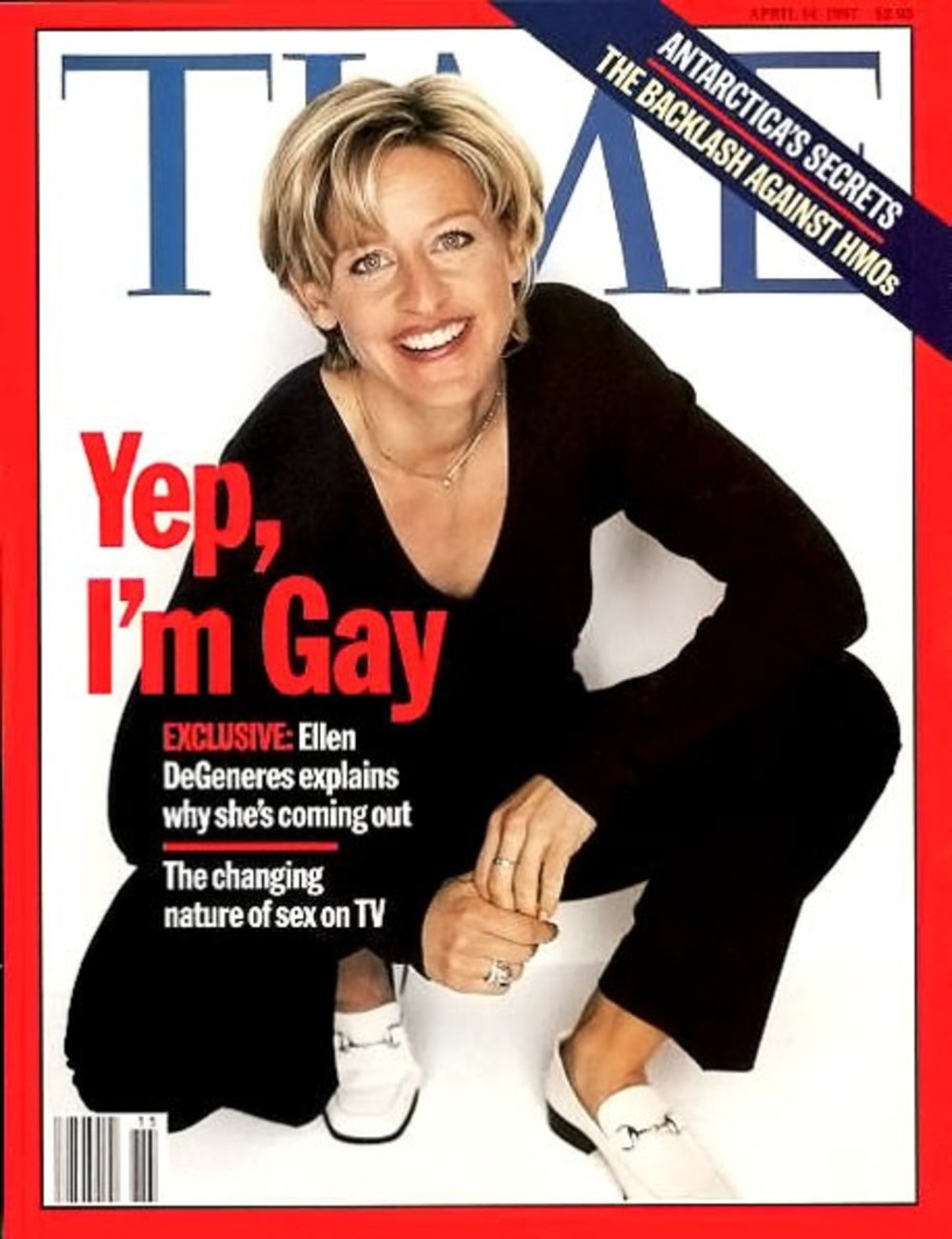
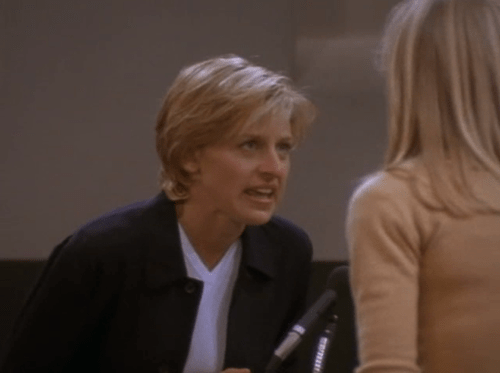
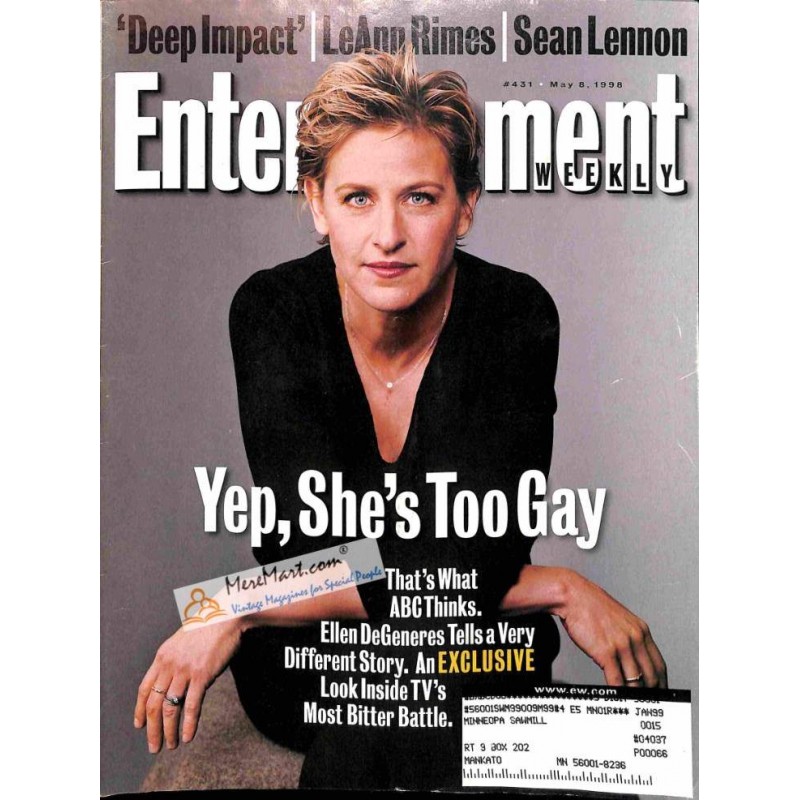
Ellen (TV 1997)
Yes, it’s a TV show but there are plenty of movies on the list, calm down. This was the first coming out I was ever conscious of. It was probably where I became familiar with the phrase and its meaning. I already liked this show, so I was curious to see how it would go, especially since it was announced beforehand. I think it went brilliantly.
The sad reality of TV especially on a sitcom, where constancy is prized, it was too big a change for the show and maybe for the country as a whole at the time. I’m glad to see where we, ABC, and the Walt Disney Company has come since then.
Where I Learned: Bisexuality is Real, Lust Can Make You Crazy, And How To Love The Femme Fatale
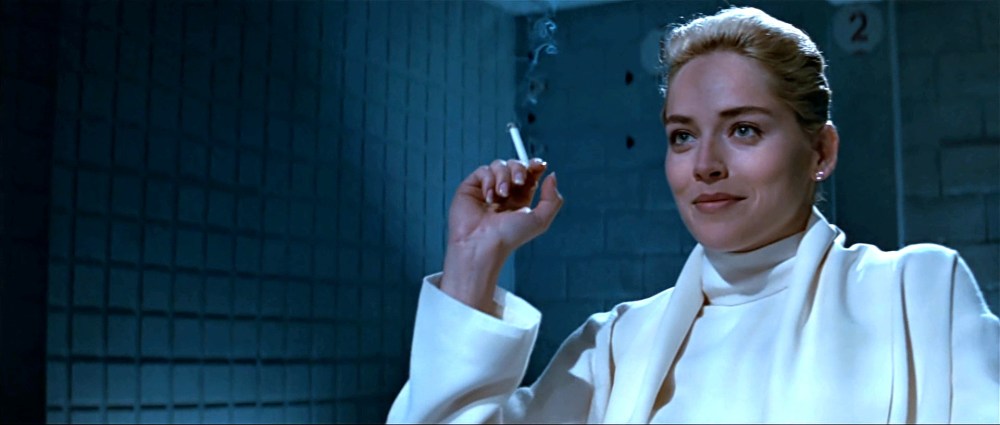
Basic Instinct (1992)
Firstly, I must apologize that it needed to be phrased as such. Sadly, there is a stigma that exists that there is no such thing as bisexuality. Everyone’s path to self-discovery is slightly different. Mine included a time when I identified myself as bisexual. Growing up tremendously quiet and withdrawn in certain social situations most of my deductions about my true identity was all based on the internal battle with no real experience to draw any definitive conclusions from. In that time I experienced that stigma first hand. No sooner had I identified myself as bisexual I got the “lecture” in an online conversation about needing to decide, and you “can’t have the best of both worlds.” It was a rude awakening. When it came time when I had to face if I could make real emotional and physical commitments one way or the other is when I learned the truth for sure, no one’s ultimatum was going to do it for me.
Having been someone who always accepted that a duality is not only possible but real suspension of disbelief was easy in this film. The hurdle I really had to get over, involved what I learned most about how lust, and the adrenaline rush that Nick Curran (Michael Douglas) feels is what makes his character so vulnerable.
Before I ever watched a long-running horror franchise in full I saw this, it may be the first villain I ever embraced, thanks in large part to Sharon Stone’s performance. She fully embraces the femme fatale role.
Where I Learned: About the True Toll of AIDS
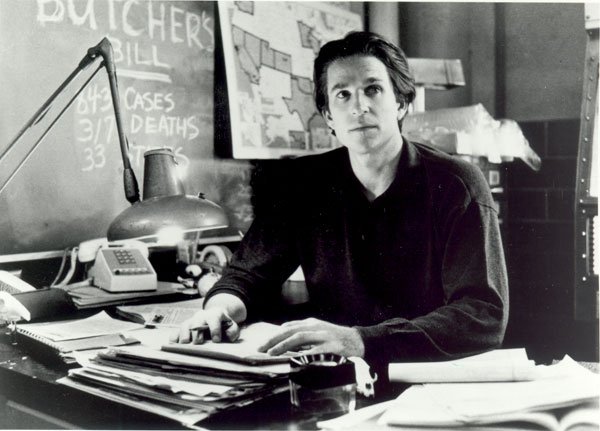
And the Band Played On (1993)
For the most part I never fell victim to any falsehoods about HIV or AIDS. Magic Johnson’s announcement coming in my formative years was quite helpful. However, the mysterious, terrifying, and most tragically inactive (from a Federal Government standpoint) I was too young to realize what was happening. This film enlightened me.
Where I Learned About: Persecution in a Bygone Era
Paragraph 175 (2000)
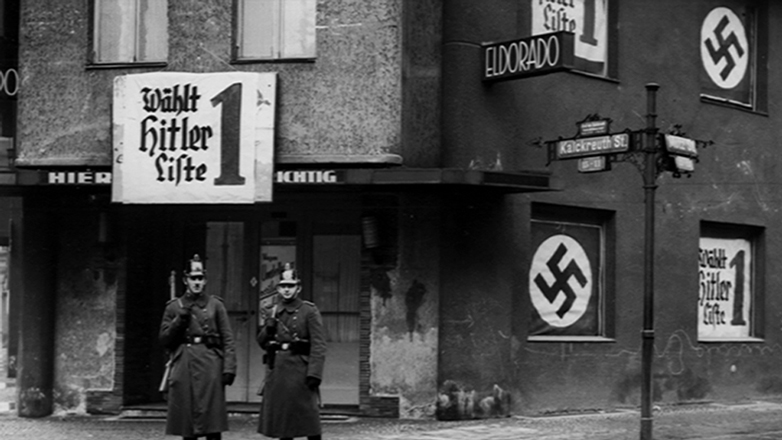
In outlining a dogma of hatred there has to be a public enemy number one designated. In the Nazi regime that target was the Jewish people. The Nazis were by no means singleminded in whom they considered enemies of true Aryanism. Estimates of Romani, or Gypsies as the more commonly referred to, deaths range from 220,000 to 500,000. Marzahn was the first concentration camp used for Gypsies. Many then went to Auschwitz-Birkenau, Chelmno, Belzec, Sobibor, Sachsenhausen, Buchenwald, Dachau, Mauthausen, and Rävensbruck.
The documentary Paragraph 175 takes its title from the German Criminal Code at the time that discussed prohibitions on homosexuality. Since the persecuted could be of either gender and of any race or creed there aren’t precise statistics. However, documentation of state-sanctioned ostracism, arrest, and murder of homosexuals in the Third Reich following the edicts of Paragraph 175 are documented.
Banning of Gay organizations like the Institut für Sexualwissenschaft run by Magnus Hirschfeld
Banning scholarly writing on Homosexuality and sexuality in general.
There were 100,000 people arrested as homosexuals; 50,000 were sentenced.
Homosexuality in any form was outlawed, but as per usual in these historic incidents the brunt of the force of said policies fell upon gay men.
The Gestapo compiled a list of homosexuals and forced many to conform to the “German Norm”
Where I Learned About: More People See False Morality
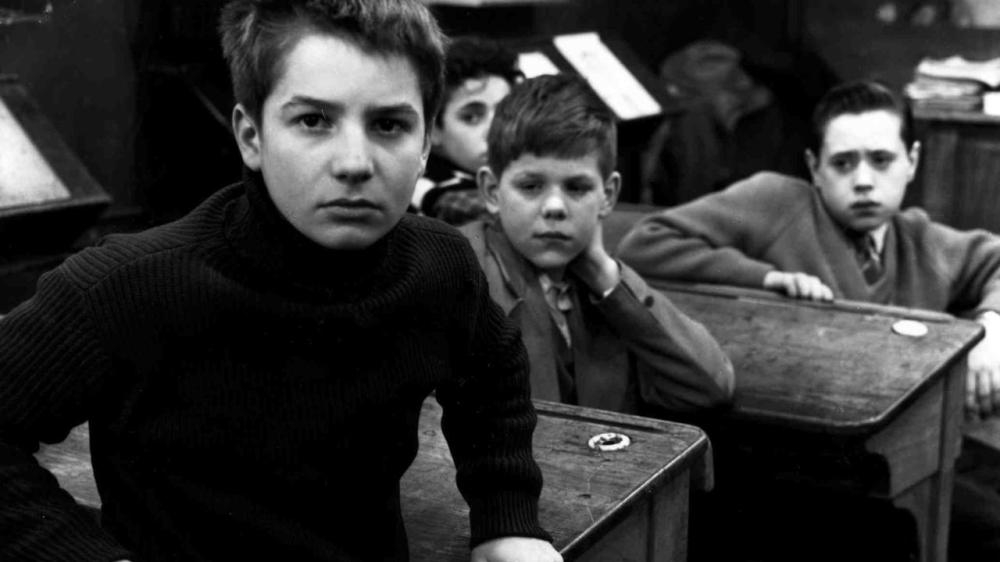
Léolo (1992)
False morality is not an exclusively North American phenomenon, but we do have our own special brand. This was underscored in specificity as something other have noticed in this film where students never learned the English words for “those things” in class.
The topic comes up as Léo introduces us to their school’s guide to English; the omnipresent John and Mary. The schooling they were receiving was still very recitative and in this litany of body parts that the francophonic children learned there was a glaring absence: reproductive organs. Yet, Léo, and some of his other classmates had begun to discover these parts of their anatomy had other functions that were heretofore unknown to them.
So immediately Léo is complaining about the injustice of forced ignorance. In the guise of sheltering the children and preserving their fleeting innocence they are left to discover sex between “ignorance and horror,” as Léo says. And with no demystification from anyone elder in their life how else can this discovery occur. Surely, for some the repercussions of this will be minimal, but for others who knows how much of a negative impact this had on their development.
Aside from learning not to expect true greatness to be recognized by the Academy, even when nominated; this film opened my eyes on the emotional toll a person will pay when undergoing gender reassignment. Before and after the fact there will be grieving over lost time, opportunity, reclaiming identity, striving for a new future while incorporating a difficult past.
Aside from Felicity Huffman’s brilliance there is so much to experience and feel in this film.
Where I Learned About: Differentiating Sexual Identity and Orientation
Prodigal Sons (2008)
For those who like axioms this one stuck out to me as I was seeking to learn more about what the transgendered experience is like, when being asked about why it is some people who have gender reassignment have heterosexual relationship and some have homosexual relationships, one woman answers perfectly and made me understand the magnitude of that journey; to paraphrase what she said: look in a mirror and ask yourself does what you see match how you feel inside? Most people will say yes. Look around and who are you attracted to.
That’s it. That is the difference between sexual identity and orientation. I have not in my life ever felt that specific emotion when looking at myself in a mirror. I never felt torn against myself for the very skin I was living in. I felt isolated, conflicted emotionally, and at war with where my mind and eyes would wander, and with whom I sought to be closer with amorously and amicably, but not something that fundamental.
Wherein: I Re-Examined a Film with the Topic of Sexuality in Mind (and Found a Road Less Traveled)
The Silence of the Lambs (1991)
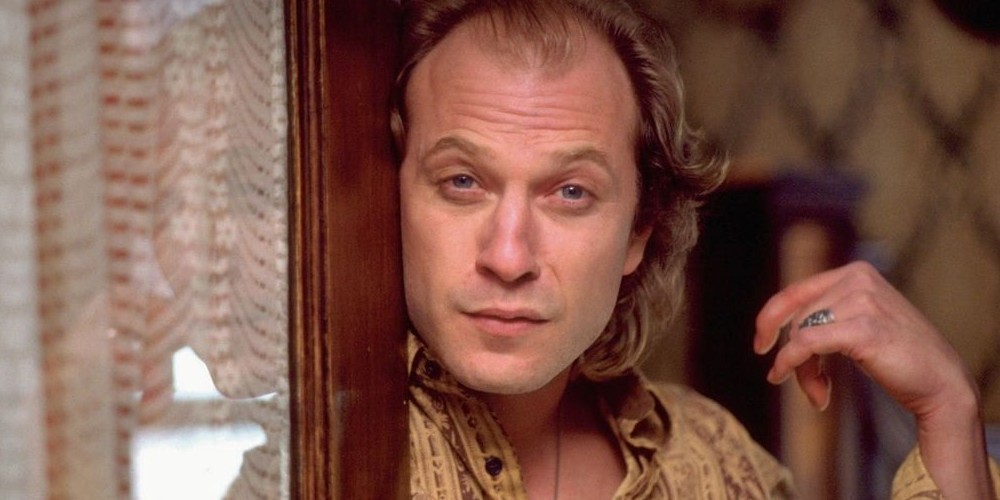
After being reminded of the fact that the character of Buffalo Bill was a controversial one in the LGBT community took offense to – on a doc about it and I believe The Celluloid Closet (below) does touch on it. There were angry protests and signs about how the film seemed to vilify a transgendered person. When watching it with this in mind, I came away unconvinced, and not just because of my axiom of needing to understand that one character does not a whole demographic represent.
Bill’s situation is exacerbated by two factors: he was not given the go-ahead for surgery in psych evaluations and he specifically has sociopathic and psychopathic tendencies. Bill reacts violently and irrationally to the circumstances facing him. A vast majority won’t.
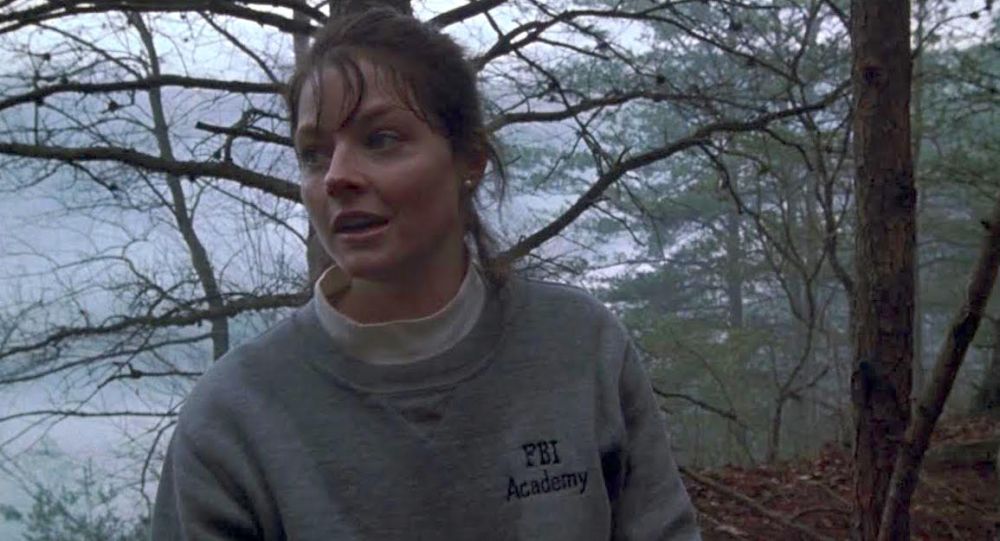
Looking at the film focusing merely on the aspect of sexuality there is no evidence, as it is played in this one film, that Clarice Starling is a heterosexual woman, aside from the assumption we’re societally conditioned to have that everyone is “straight unless proven gay.”
To my mind this dubious, and nebulous nature of her sexual orientation is underscored by her subtle disregard for being objectified by men while jogging around the FBI’s training compound.
So if we’re viewing the film through a prism of presumed sexuality, and as I see it there are heterosexuals, one lesbian, and one man longing for a sex-change. There are characters across the spectrum.
Where I Learned: Sometimes Film Theory Has To Go Away
Thelma and Louise (1991)
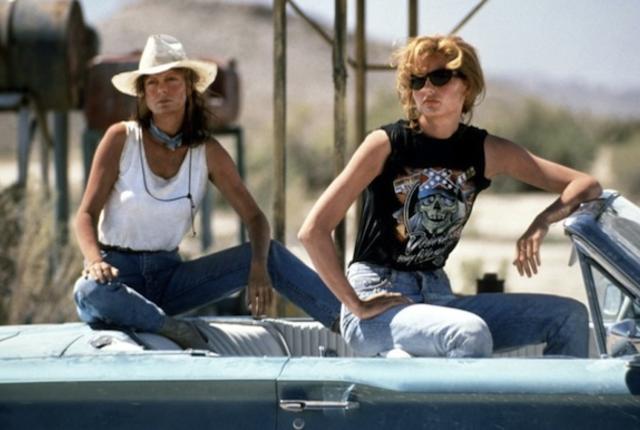
Learning film theory can be dense and difficult to most. However, there is a value to it and learning to analyze in terms of interpretations that may not even even have been made by design. It can be the only to enjoy some filmmaking styles like certain New Wave films or works of magical realism. However, never is this subject harder to learn than when you just disagree with a theory.
I fully understand the visual cues and character roles and attitudes that lead those to argue that Thelma and Louise becomes a lesbian tale by proxy. The reason I don’t buy it is because I cringe at the notion that any movie that includes an “I don’t need no man” sentiment is promoting lesbianism (Frozen) or the very sexist attitude that treats lesbianism as a choice whereas being a gay man is a sentence.
Thelma and Louise is many things: flawlessly structured, brilliantly acted, a masterpiece, a tremendous feminist statement, up there with The Accused but it’s not a lesbian story. Not to me.
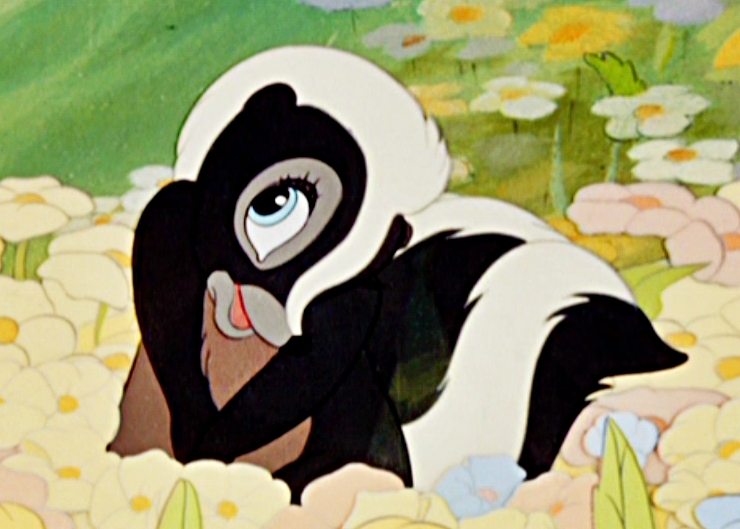
I fully get and support the notion that due to a lack of representation individuals in the LGBT community can cling to characters that were not designed to represent us, and that is a healthy and normal thing, one instance from my childhood that comes to mind is Flower in Bambi.
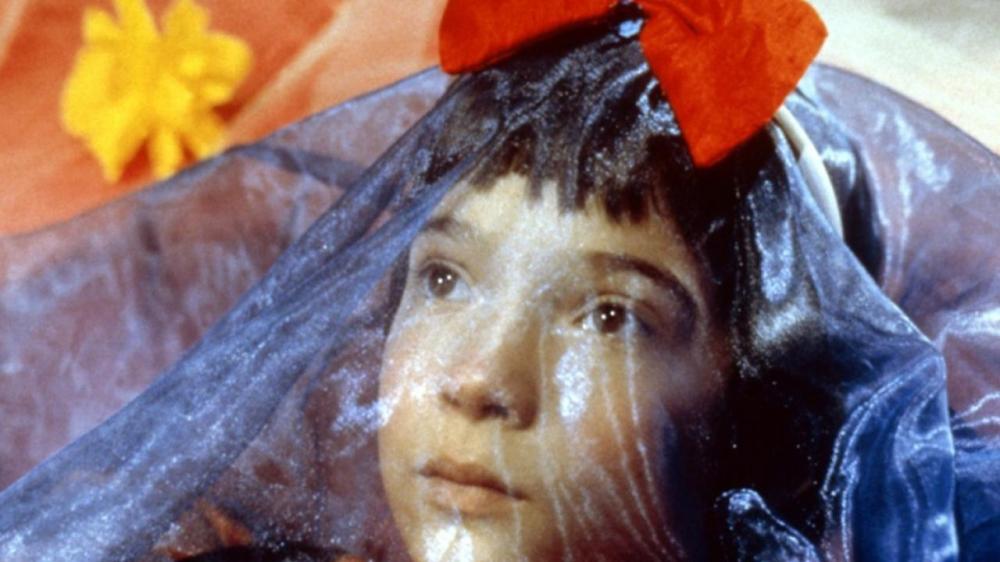
Ma Vie en Rose (1999)
Where I Learned: Being Comfortable Can Change How You See the World
Cinematically speaking, in the opinions of most, children are seen as lower beings on the totem pole. Too often children are societal afterthoughts when decisions our leaders are making now are molding the very world they seek to inherit. So there can be a great amount of coddling and shielding in film and society. However, those with a sensitivity, understanding, and appreciation can make changes, insights and be of help.
Ma Vie en Rose tells a tale of a common childhood activity, cross-dressing, through the eyes of a character who takes it to an uncommon degree and finds more comfort and joy in it than most. Even with social norms varying from country-to-country, this film being set in France doesn’t change many of the reactions to this.
The beauty seen in the world through the eyes of its protagonist is a breath of fresh air and can be an eye-opener to many about acceptance as opposed to tolerance.
Where I Learned: About More Nuances of Sexuality and the False Equivalency Tranvestites Face
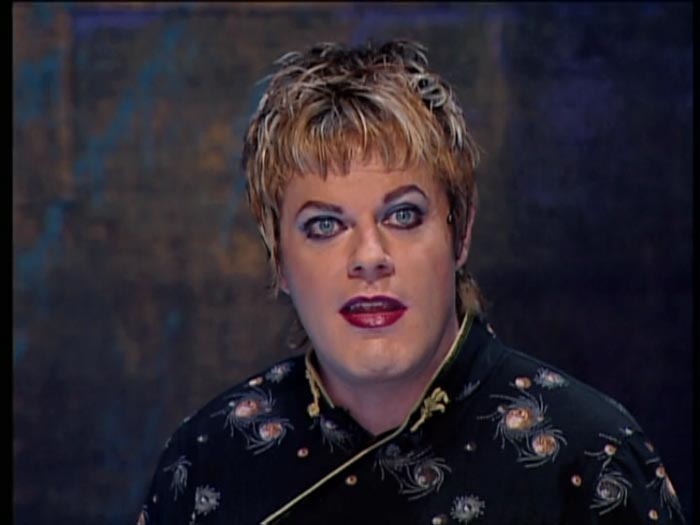
Dress to Kill (1999)
For those who need simple axioms by which to live, and learn better whilst being entertained Eddie Izzard can be a great means of enlightenment. His discussion on “weirdo transvestites” and “executive transvestites” and him describing himself as a “male lesbian” are as insightful as they are funny.
Where I Learned: Stories of First Love Don’t Have to End in Tragedy or Heartbreak
One of the defining books of my teenage years was The Bitterweed Path. It was among a select few books I read when I was visiting family in Brazil. My grandmother has accepted a trove of books in English that she had no use for as she reads solely in Portuguese and French.
It’s a wonderful tale of an unrequited, unfulfilled love at the turn of the 20th Century. It meant so much to me, in the edition I read, that I asked for it to be be specially bound like my Grandmother and aunt sometimes do. It was quite a chore for the bookbinder but still holds an honored place on my shelf. But not all stories need be like that to work.
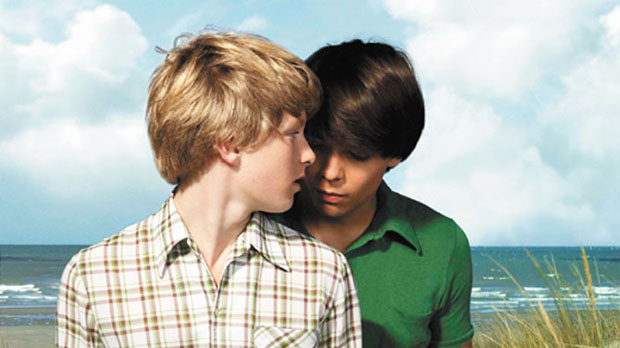
Here’s a perfect example. After I learned that much to my surprise North Sea Texas was nominated for a GLAAD Media Award I wrote the following:
However, what North Sea Texas strikes upon, and what makes it work so well and so important is that it’s an idealistic tale. It reminds me of a debate I and a professor had about the Indian film Fire in college. His criticism of the film was that the revelation of, and the familial objection to, a sexual abuse situation was unrealistic. My assertion was “Why should it be?” If you’re trying to make a point be it societal, political or otherwise, there are times when the best way to make it is to seek out an ideal and illustrate it, rather than just illustrating that the problem exists.
Where I Learned: It Has Gotten Better, Or Stereotypes Used to be Much Worse
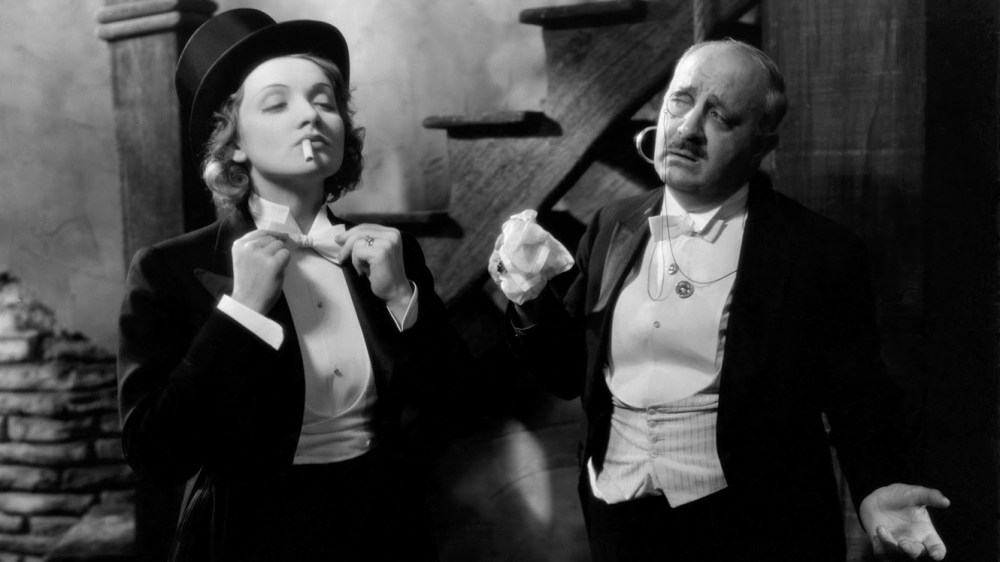
The Celluloid Closet (1996)
Yes, the picture is an outlier, a maverick.
While you can note issues that still exist you cannot understand how the present is better without looking to the past. Documentaries like this and Reel Injun do well to highlight the way in which marginalized populations have been treated onscreen through the ages. Outliers are as noteworthy as patterns and improvements can be noted across the board with improvements and continued, diversified representations appearing frequently.
Where I Learned: You Don’t Even Need to Say the Word “Gay”
the film could be handled differently and still work but then it would run the risk of pigeonholing itself as a gay film, or a racial film or a courtroom film, depending on how the plot unfolds. It could quickly become maudlin and melodramatic. However, in restraining its emotion, allowing it to build in its characters and its audience it creates a tremendously universal and human story that I’m sure many can relate to, whether it reflects anything in their life or not. One example of the restraint, and a litmus test of sorts for films with gay themes, is that the words “gay” or “homosexual,” or any pejorative variation thereof are not spoken. This is a clear choice it seems that underlines both the humanity of the story and the underlying hostilities and prejudices that exist.
Where I Learned: Parting is Such Sweet Sorrow
Billy Elliot (2000)
The musical adaptation of Billy Elliot amplifies virtually all the emotion in the tale. Aside from the obvious that dancing or liking it does not determine one’s sexual orientation, this one selection closes the circle from the beginning of the post.
Billy Elliot (Jamie Bell) is not a poofter as the vernacular would state it. Despite the fact that Michael (Stuart Wells) is not fully self-aware for a majority of the film, he is gay. Michael’s pain at losing his best friend when he goes off to the Royal Ballet School will be massive. There is no expunging it, it can scarcely be mitigated.
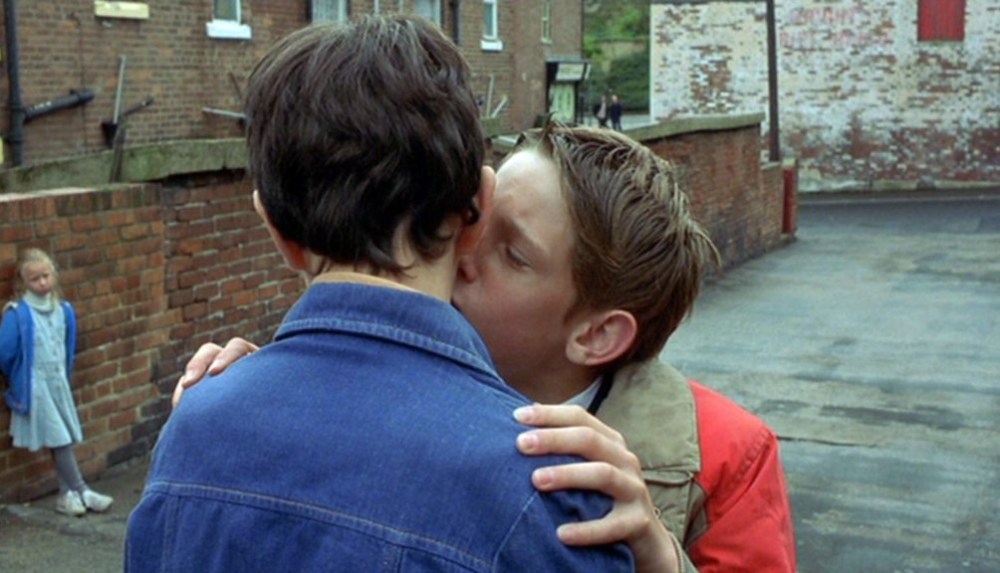
Billy’s kiss on Michael’s cheek is not a pandering gesture by a character or in filmmaking terms. It’s a simple, beautiful act of friendship. One that on its own is tear-jerking but sets up the end of the film beautifully: Billy makes his professional debut. Of course, Michael is there. So glad are we that he is both happy and supporting his friend that the coincidence of his sitting next to Billy’s dad can be forgiven.
Bonus Features
A few titles, scenes, and moments that came to mind where words are a bit unnecessary; the images say it all. Enjoy!
Where I Learned: Cartoons Can Make You Feel Uncomfortable
Who Framed Roger Rabbit (1988)
Where I Learned: It’s Real Awkward When You Get What’s Going On in Some Performances at Madonna’s Blond Ambition Tour and You’re There With Your Dad
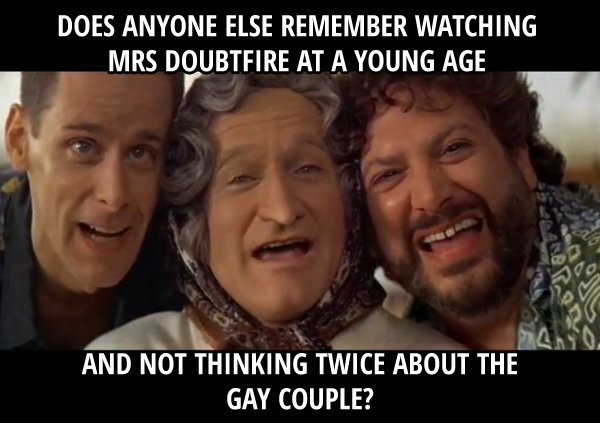
Where I Learned: Some People Are Gay, and That’s OK
Mrs. Doubtfire (1993)
Where I Learned: Dancing Can Be Sexy
Look Who’s Talking Too (1990)
Where I Learned: You Will Have To Come Out More Than Once Whether You Like It or Not. Thanks for Bearing With Me!
Another short, another first in film history. This simple action is cited as being the first ever staged scene on film. Truly much of early film work and experiments were documentarian in nature, here there is an effort to choreograph a sequence of actions for the camera: in short the birth of mise-en-scene.
A while ago I took a look at a film theory book by Kim Jong-Il I mentioned how on Open Culture they also linked to a copy of one of his films available on YouTube. I’ve recently watched it and, if curious, you can take a gander here. It’s a North Korean communist take on a Kaiju-type story.
Things to bear in mind:
The video quality of this YouTube upload is not ideal.
Turn on CC and there will be Spanish subtitles. Using the Auto-Translate function removes most of the issues.
The narrative is better than expected
Sound effects are at times nonsensically juxtaposed to the action, seemingly by accident.
The pacing is miserable. It’s 95 minutes long but feels like it takes at least a half-hour longer.
The first act is it’s best but it takes a precipitous dive from there. The introduction of Pulgasari serious downgrades the amount of gravitas it can hope to achieve and there is not much escapist fun either.
In responding to this advertisement and discussing its relevance 81 years later, I will not even go into lengthy asides about issues with brightness of digital and/or 3D projection, or masking issues, or sound issues that modern audiences face.
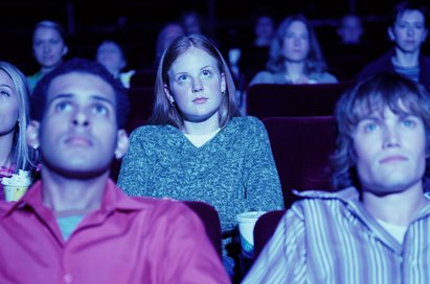
Let’s return to patrons and avoiding noise. Granted there are technological advancements and connectivity that was never before imagined. However, it should all still apply.
Movies cost more now so:
Why would you want to divide your attention with a device you have access to at all other hours in the day?
Why would you want to interrupt the experience, and lessen it, for yourself alone and not to mention others.
Why would you be inclined to see something you didn’t want to see or wanted to see ironically?
There are fewer reasons to talk now so:
Many theaters are going the way of assigned seating, therefore, much less conversation about where your party is sitting is required. So that’s one of the catalysts right there.
It’s an unwritten rule that you kind of have a free pass during the interminable trailers. However, it would be best if you kept it down and better yet wait until in-between trailers to make comments.
Usually, the only reason one leaves in the middle of a movie is to go to the bathroom. Your party can usually figure that is your destination. No need to tell the world.
Yes, there’s more food now so:
come early if you have to and
open whatever needs opening before the feature begins.
I’m young, I can’t disconnect:
Yes, you can. Technically speaking I am a Millennial also. Granted the definitions of birth years vary but it’s the only generational label that ever seemed like it fit me, so I’m taking it. I can and so can you.
It is possible. All this constant information has a drawback to it and taking a break from it is healthy.
When lost in a movie or a book and being lost, I sometime refer to getting back to mundane mandatory activities as resurfacing or coming out from under a movie into reality.
What of emergencies:
At the very least you can turn off all audio if you need to be able to respond to something. And believe me I do not speak of this in a hypothetical context. I’ve been coming back from dinners or movies wherein I did not touch my phone and learned of a loss in the family. I learned of one on social media, the most 21st century way possible.
A movie should be taken in as time off. Treat it as such.
Movie-watching is my job:
If you’re one of the few where watching film is work; even more reason. I’ve had phases of assiduous note-taking in my reviewing and have always done so the old fashioned way.
Let the film speak:
Granted too many modern films inundate you with dialogue, explosions, bass, score, images, and fast cuts but even the most pedestrian efforts are trying to speak to you. Listen!
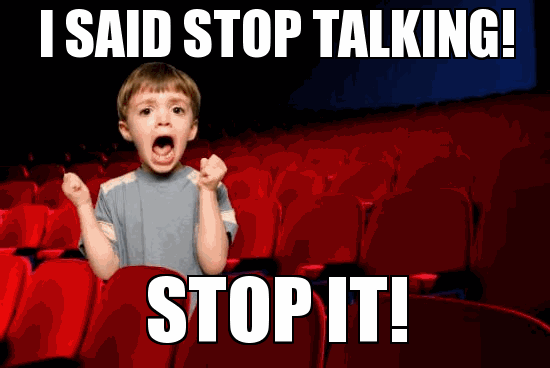
Please avoid noise at all costs. Movie lovers can long for a utopian society wherein more theaters implement zero-tolerance policies towards talking and cell phone usage. That will likely never happen but it needn’t be threatened with decency.
Device-friendly screenings or sections of auditoriums are not the answer! The world may be more understanding and sensitive and eager-to-please than ever before but life still has its demands and some situations demand you to modify behaviors to fit it rather than the environment change to suit you.
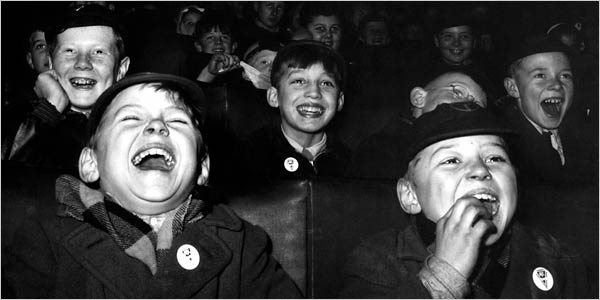
Yes, standard TVs are now like what home theaters used to be like. So if you insist on offering color commentary, flopping about, checking Facebook or whatever the hell else you feel like doing watch something at home. The movies are a ritual, a communal experience and as such certain luxuries or trespasses ought not be allowed for the good of the community.
Sit back, relax, shut your mouth, and enjoy the show.
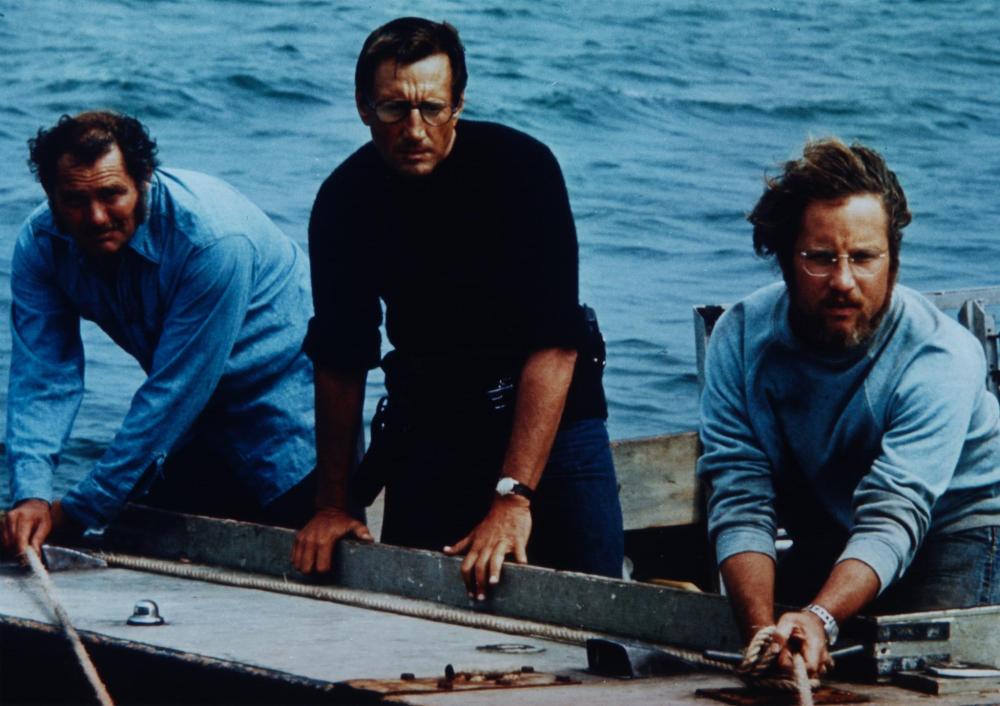
As time moves on we must learn that things need to be contextualized. It takes no insight to show kids Jaws and sit there bemused as they’re unimpressed. The first thing that must be noted is that, in my case for example, Jaws wasn’t that old a movie when I saw it as a kid. Now things from five years ago may have the faint whiff of being dated already. I’ve caught myself thinking “Wow, that came out a while ago” about a fairly recent film.
The art, all arts, are evolving at ever-dizzying speeds because they have to to survive. That’s just the way things are. It’s not better, not worse, no judgment; just a fact. Therefore, Jaws is now an old film. Even I, who was a self-motivated film watcher needed, and relished hearing, the framework my favorite college professors would create to establish what our mindset should optimally be going in. I was motivated to watch Citizen Kane on my own and Hitchcock and a few others and I got an innate sense for them. As I learned more film history and discovered more varieties and approaches. I benefitted from the brief intro.
Tendaciousness still will apply. You will like what you’ll like. I don’t care for The Social Network. I am able to appreciate all the technical refinement and skill in the making of it. My background makes it such that I can ignore its departmental prowess. It cannot move me in any way as much as it tried, but I had the framework.
Bringing it full circle to Jaws you can’t just put it on and say “watch this, it’s great.” You can’t really do that for any old movie, which it now is. Context before, and not during or after, is the only real way to ensure it may be appreciated. And, as is true with any kind of film, like what you like and let the kids respond to what they will.
One of the biggest fallacies around is the whole “you have to like this or you don’t like film” school of thought. Venture forth wisely, bringing some of your knowledge with you but your baggage with a film (good or bad) is yours, so don’t pass it on just try to help them see it the way you did once upon a time, even if it can no longer be looked at the same way.
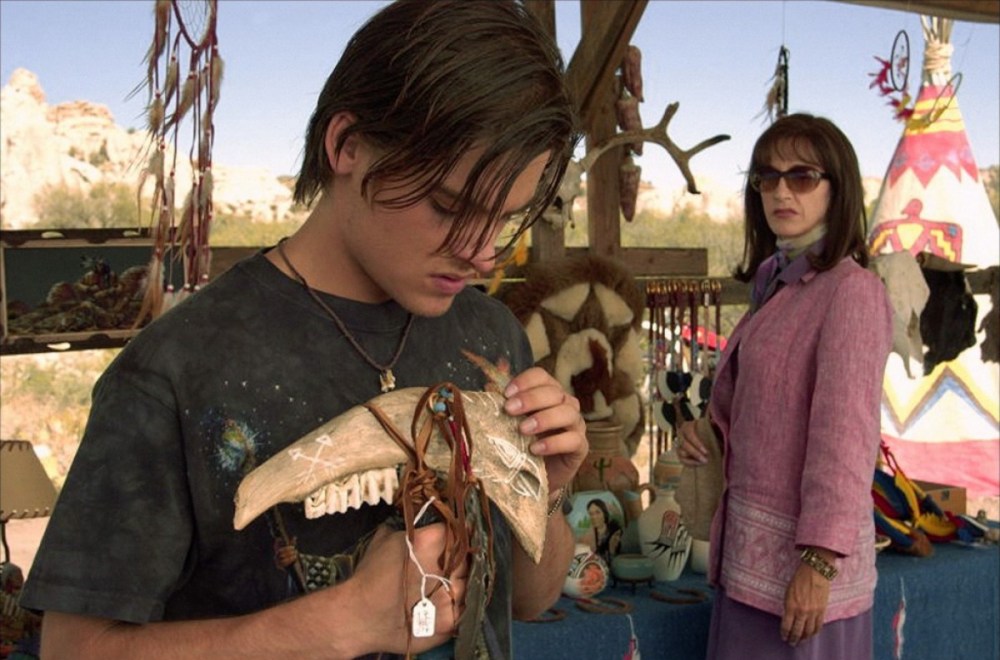
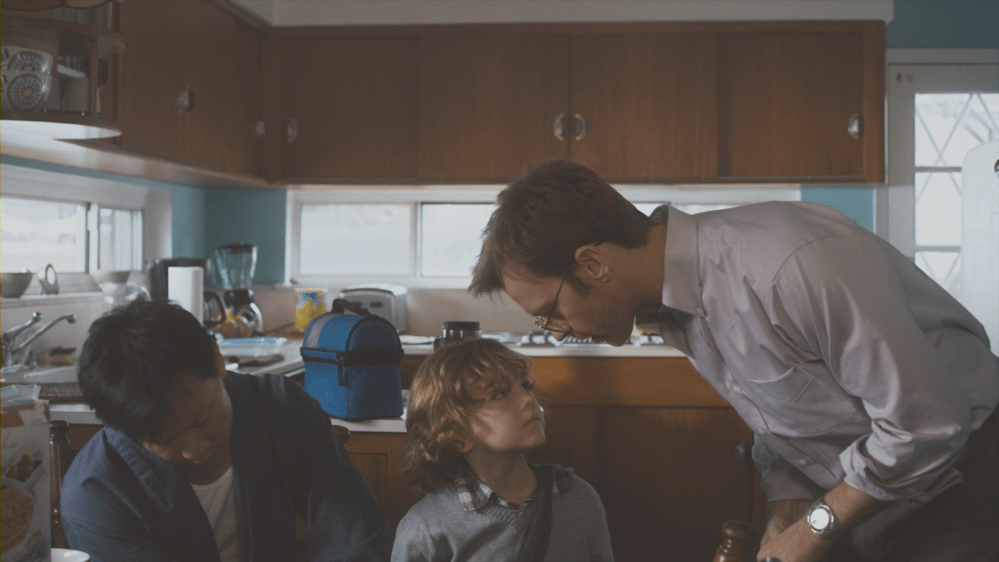
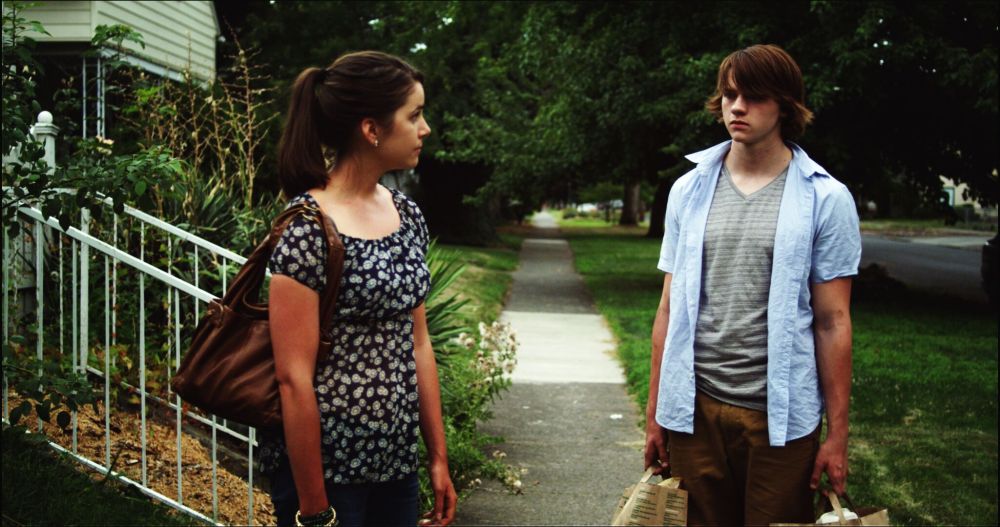
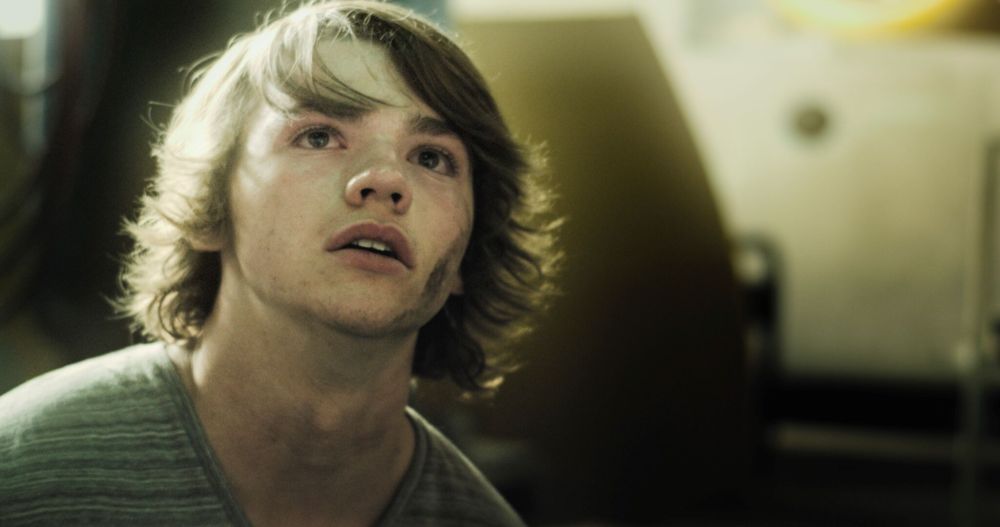
The River Thief is a film that tells the story of Diz (Joel Courtney), a street urchin for as long as he can remember, who was abandoned by his mother and has long since lost touch with his father. Diz is the kind of character one could see as irredeemable, as he steals to survive and has no qualms about it. His solitude and lack of upbringing make him socially maladjusted to say the least. His worldview is challenged when he meets Selah (Raleigh Cain) whom is the first person he he’s longed to be closer to and ingratiate himself to.
N.D. Wilson helms this, his debut feature, in fairly assured manner with missteps few and far between, as he builds a somewhat unconventional tale methodically that manages to surprise without cheating and with a minimum of tonal dissonance. Wilson is a best-selling author whose previous directing experience include book trailers for his own titles, and short films.
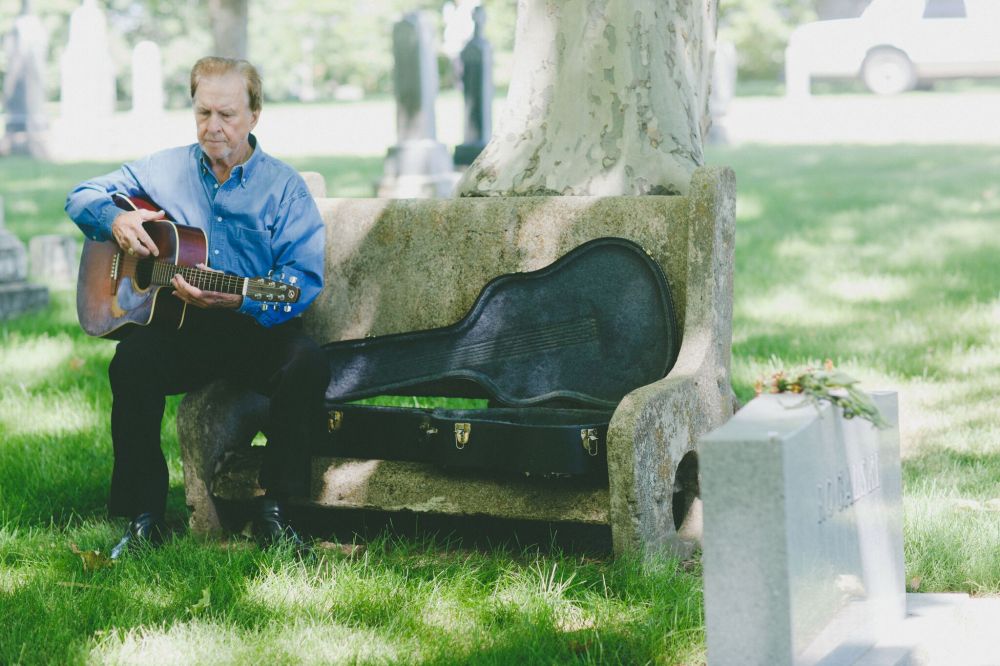
There are large portions of the second act where there is a sustained betterment of the film, which is almost entirely unlikely considering some of the hiccups of the first act. This crescendoing leads to a powerful, unexpected climax that fulfills the allegory, message, and meaning that was merely alluded to at the start. Much of the cohesion to be found among at first seemingly ill-fitting tropes and narrative facets is created through the scoring by Eli Beaird and music by Tommy Cash, whose musical aplomb is on display in one of the films more heart-rending scenes; and the rest is tied together by the lovingly sumptuous cinematography of Andy Patch.
Joel Courtney assuredly turns in his best performance since Super 8, due in equal parts to his maturation as an actor, the material, and his rapport with Wilson. Raleigh Crane matches Courtney with a vibrant breakout performance as an average girl equally struggling to understand her enigmatic new admirer and her grandfather’s willingness to forgive and reach out to Diz.
The River Thief is a film that is akin to Diz’s namesake, St. Dismas –the Penitent Thief of the Cross, so named in the Apocrypha- any of its sins either of omission or execution can be forgiven because of the way it ends, its earnestness, and persistence in reaching its final poignant moments. The River Thief has not been rated by the MPAA but I would recommend it for older teens due to certain themes and scenes.
It is available on VOD starting on Friday, October 14 on iTunes and in select theatres.