March to Disney: The Education of Where the Red Fern Grows

Though branded as a March to Disney post the only discussion of Disney will be at the open, as this film was independently produced and sold to Disney. I got this film as a redemption on Disney Movie Rewards, which is where you can redeem codes and movie ticket points for swag – I usually go for DVDs. It’s a good deal.

As for Where the Red Fern Grows I had not seen this version, but I was aware that it was one of Joseph Ashton’s few follow-ups to The Education of Little Tree – there rare onscreen one as he usually got voice work.

The Education of Little Tree and Ashton’s performance was well-received. Ebert singled him out: “And Joseph Ashton, as Little Tree, is another of those young actors who is fresh and natural on camera; I believed in his character.”

He was also nominated for a Young Artist Award and in my own BAM Awards.

I also have yet to see the original Where the Red Fern Grows (1974) so I was a virtual blank slate going in (which is always a good thing). Essentially, it ends up being a Disney dog-film, one of many. As the film started I wondered if Ashton’s ethnicity would be referenced in the story or if he was just cast for the role in an open casting.

When it comes to casting I have written on it a few times in the past. One casting precept I am fine with is just casting someone “just because.” What I mean by that is exemplified by Love Actually: one of the many characters in the film is Karl, played by Brazilian actor, Rodrigo Santoro. Karl is the unrequited, secretly admired love interest of Sarah (Laura Linney). What I liked about that piece of casting is that it’s a Brazilian actor just cast as the “hot guy,” the crush with no indication from the script or film that he had to be the “hot foreign guy.” It’s incidental and that’s refreshing from time to time.

The reason this is, is that true inclusion and universality means casting actors from all over, as rounded characters and in mixed films. Having all films be a melting pot is utopian, and I get arguments against films for targeted audience, but for the time being they are sadly a necessity. Roles in general for African Americans, Asians, Latinos, women, Native Americans, little people and other groups are limited. Roles for the aforementioned groups in a dimensional piece they play a part of are more limited still. Roles for these groups are usually reserved, in the US, for race-specific films like civil rights tales.

Therefore, when I was under the impression that Ashton was just in the film I was intrigued. However, that only lasted so long as a fractional Cherokee heritage of his mother was referenced. So it does not meet the Love Actually standard, but one thing it did is fully embrace Billy’s heritage. Another thing it does is cast an actor of Native American lineage in a film not ostensibly about his lineage as The Education of Little Tree was.

While I have not read the book there is some American Indians in Children’s Literature did some great research on a post about Native depictions in the School Library Journal’s Top 100 Children’s novels:

On page 10, “The land we lived on was Cherokee land, allotted to my mother because of the Cherokee blood that flowed in her veins.”
Page 43, “I reached way back in Arkansas somewhere. By the time my fist had traveled all the way down to the Cherokee Strip, there was a lot of power behind it.
On page 143, where Rubin says “A long time ago some Indians lived here and farmed these fields.”
On page 254, Billy recalls that he “had heard the old Indian legend about the red fern. How a little Indian boy and girl were lost in a blizzard and had frozen to death. In the spring, when they were found, a beautiful red fern had grown up between their two bodies. The story went on to say that only an angel could plant the seeds of a red fern, and that they never died; where one grew, that spot was sacred.”

With those being the sole references to the Cherokee people in the book clearly the boy-and-his-dog(s) aspect has more impact since his goal is to save up to be able to buy them, he has to figure out how to get them train them, and they build his self-esteem.

So this does not quite reach the threshold that a few Māori actors (Temuera Morrison in Star Wars: Episode II – Attack of the Clones and Keisha Castle-Hughes in Nativity Story) achieved, but it still is significant. Casting is still a battle. When superheroes ethnicity is changed to anything non-white racist trolls come out of the racist woodwork; whether it is in the best interest of the project or not sometimes actors will be cast to learn a dialect as opposed to being portrayed by a native; even little people have to deal with being digitally multiplied, and now with being replaced by shrunken normal-sized actor; therefore, whenever there’s a Tyrion Lannister, Ellis Redding or Valentin Arregui part it’s notable even more so when it’s a project with many things to say and not just one.

In a utopian world Ashton may have been cast when an actor of Cherokee descent was not a prerequisite, but at least that was a Cherokee cast as a Cherokee.
Music Video Monday: Violacida – La ballata degli ostinati

Introduction

I’ve debated starting this theme for a few weeks, and I ultimately decided I would as it would encourage me to looks for options that actually fit what I’m aiming for. If one pays too much attention to Top 40 type music you tend to see a dearth of creativity in the music video form. The music video is spawned from short films and can be as creative if not more so than their predecessor. Far too often it does just become singing heads. I want to try and buck that trend and find ones both new and old that do something somewhat outside the box, at the very least have some sort of visual narrative. Here we go.

Violacida – La ballata degli ostinati

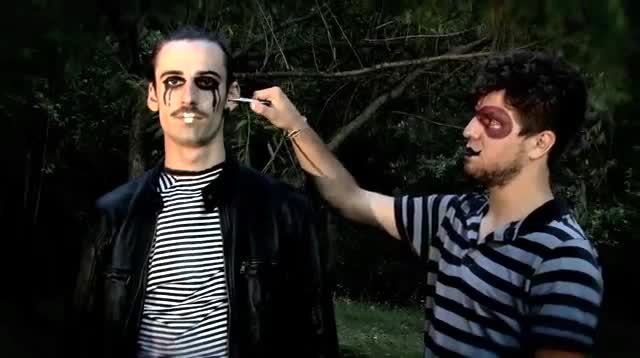
It starts with the surreal image of an audio jack being stuck in an ear (pictured). The make-up vaguely reminiscent of commedia dell’arte the edits being driven by percussion (hard cuts for drumbeats, quick dissolves for tambourines) make this quick song’s visuals move as quickly. There’s a surreal home video feel to the rest of the video that’s very fitting. Quick viewing. Enjoy!

March to Disney: The Hunchback of Notre Dame (1996)

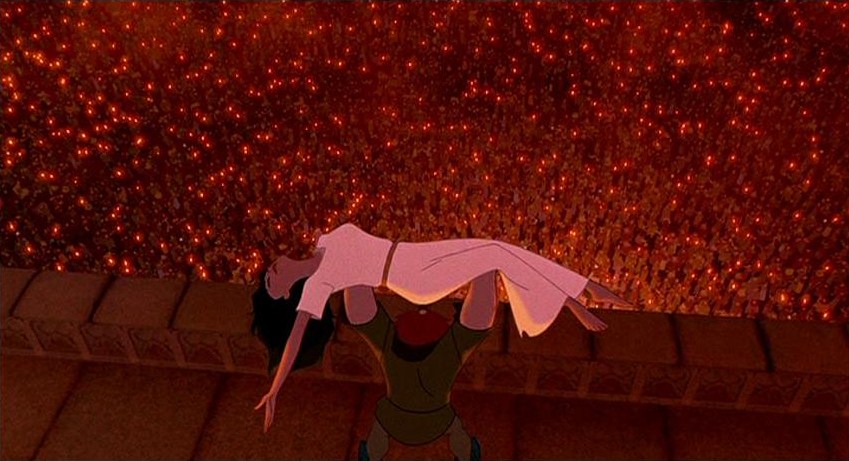
Introduction This is a post that is a repurposing of an old post. As stated here I am essentially done with running multi-film review posts. Each film deserves its own review. Therefore I will repost, and at times add to, old reviews periodically. This post was originally featured during 31 Days of Oscar and I have decided to include it here for March to Disney. Enjoy! The Hunchback of Notre Dame (1996) Due in part to the fact that I just didn’t know very much about this title, I expected less from this Disney selection than the above, but in the end I liked it a lot more. It does things a little differently in the end, and with regards to anthropomorphism, but it goes back to the theme of ostracism and has a solitary character effectively drawn, literally and figuratively, that really make this film work. It also by its nature takes on aspects of religion and racism with a lot more finesse than you’d ever expect out of a Disney film, which makes it highly underrated in my mind. Score: 9/10 Oscar Nominations/Wins: 1/0

Short Film Saturday: The Story of Menstruation

Yes, if you can believe it this is a Walt Disney production. It is one of the more fascinating of Disney productions in many regards. Firstly, because although Disney did make educational and didactic films on occasion they were rarely on such a frank subject. The forthrightness of it in such a prudish day an age made this a rarely seen title for many years. Anyone who has had health since it became a virtually mandated class will not be stunned but taking the context of this being made in 1946 adds some surprise to the proceedings.

Free Movie Friday: A Bucket of Blood

You need never fear that this site is running a theme that may not be your cup of tea for the plan this year is to always have content that runs a little bit counter to that. The current theme is March to Disney, but the Free Movies on Firday continue to be horror films.

Here is another AIP film. This another in the vein that Corman came out with after Psycho changed the game in the horror and thriller genres.

March to Disney: Pocahontas (1995)

Introduction

This is a post that is a repurposing of an old post. As stated here I am essentially done with running multi-film review posts. Each film deserves its own review. Therefore I will repost, and at times add to, old reviews periodically.

This post was originally written for 31 Days of Oscar, but I am including it for this year’s March to Disney. Enjoy!

Pocahontas (1995)

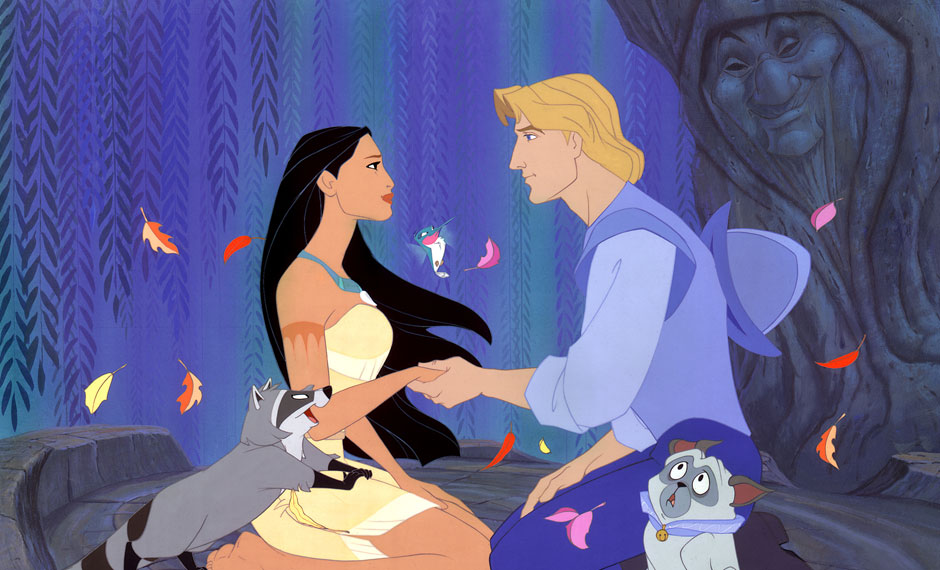
When you watch films in runs and themes, you welcome any chance that will allow you to kill two birds with one stone. Considering that I plan to write about Disney films in March, screening some now will give me a jump on that and there are some titles I have been missing, as much as I like Disney. My complicated adolescent relationship with the company and more detailed thoughts on this film will follow, for now suffice it to say: Disney did some different things that worked here, it was treacherous ground they covered and for the most part it’s very well done.

Score: 8/10
Oscar Nominations/Wins: 2/2

March to Disney: The Apple Dumpling Gang (1975)

The Apple Dumpling Gang is a film that I did not get a chance to see until Disney Movie Club started offering a club-exclusive Blu-ray. The exclusives are just one thing I’ve found about the Club that I enjoy. The other one would be, while like old school movie clubs there is a minimum commitment to reach in terms of purchases over two years (along with the introductory bundle for a low, low price). However, the good thing is that count doesn’t reset and when you hit your minimum you are upgraded to VIP status and are afforded deals in terms of pricing and shipping.

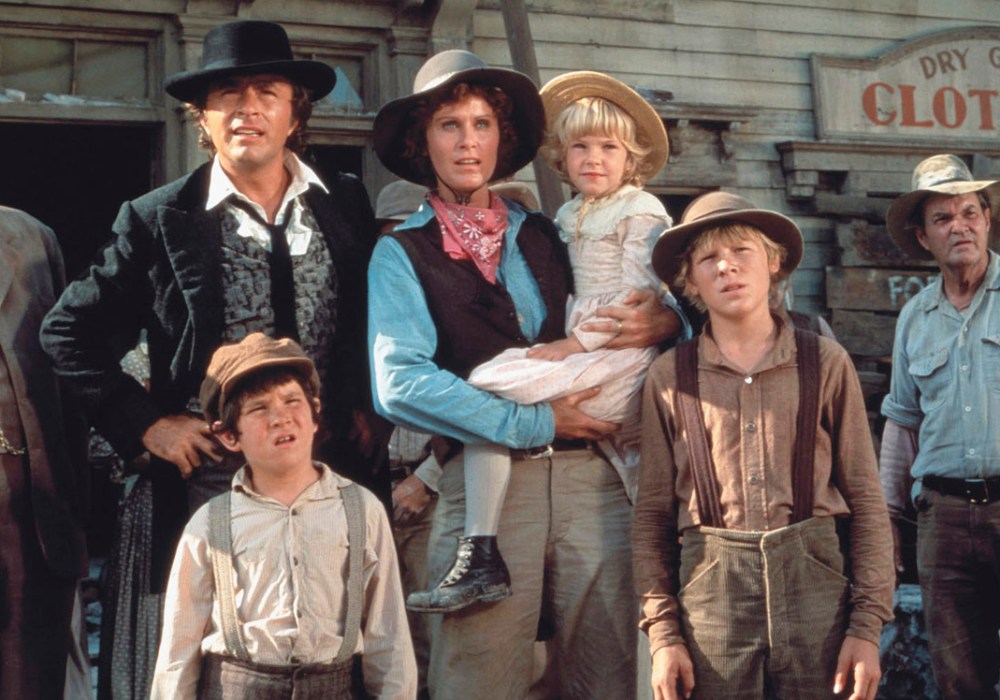
As for the film itself it plays with a few fairly common tropes; one being orphaned children and the other being bumbling crooks (expertly played by Tim Conway and Don Knotts). The film is based on a book by Jack Bickham, and the major wrinkles it adds to those tropes is the backdrop of the wild west, the more informal nature of relinquishing parental rights and then the involvement of a more able group of robbers. The clashing bank robbers also reminds one a bit of Take the Money and Run.

Another commonality is the fact that in this story it’s the children who find the truth of a situation where adults had given up and told them they were silly. Specifically, this is regards to gold mine that was purportedly a bust. The kids find a treasure and their doing so leads many adults to suddenly take an “interest in their welfare.”

Not entirely dissimilar from Bedknobs and Broomsticks here you have adults that are not necessarily altruistic, but the lead Russel (Bill Bixby) does change and come to genuinely care for the kids. Meanwhile, Dusty (Susan Clark) does come to care for Bill even though she ends up with him only for the kids’ well being at first.

The Apple Dumpling Gang is a humorous enjoyable tale that looks brilliant in this Blu-ray upgrade. If you are a member of the Club and a fan of the film it is definitely recommended for the picture alone even though it offers no extras.

March to Disney – Bedknobs and Broomsticks: An Overlooked Oddity

Upon revisiting Bedknobs and Broomsticks anew, and for the first time in a long time, it occurred to me that some of the more unusual aspects of the film and story should be examined some. The first thing that occurred to me that bared some investigation were the books the film is based on.

The feature-length film is actually based upon two books The Magic Bed Knob; or, How to Become a Witch in Ten Easy Lessons (1943) and Bonfires and Broomsticks (1945). While that fact is not unusual by itself, it was a bit more rare for Disney. Song of the South combine many Br’er Rabbit Tales, but typically while Disney optioned many films in a series they tended not to conglomerate.

Having not read the books I cannot tell you what impact this had on the film. It does bear noting that with its whimsical structure, and flights of fancy, there aren’t too many places where this may show. Furthermore, the link between the mundane and the magical is well-established and broached properly.

Even with no more source material to fall back on it did surprise me that Disney didn’t try to franchise this idea. Granted that notion has only gained clout, but was not unheard of in the 70s. It is a prime candidate for a remake.

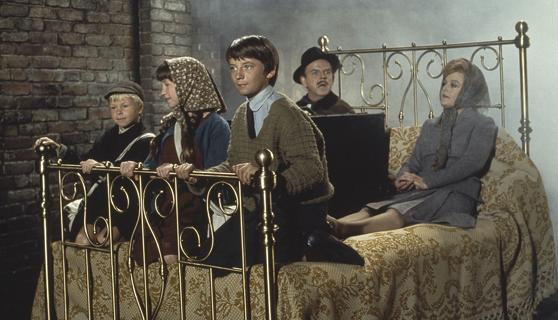
In some ways I think that this film has become a fairly overlooked oddity, and it should not be. It should not be, if for no other reason than the fact that “Portobello Road” is one of the Sherman Brothers’ greatest creations. Another interesting footnote is that two of the three young leads (Ian Weighill and Roy Snart) claim this film as their only screen credit. While usually this can be either a very notable or dubious distinction, the results here are somewhere in between with both boys bringing a bit of humor to the film.

Another thing that I think should be mentioned is that Angela Lansbury’s Miss Price and David Tomlinson’s Emelius are not exactly angels, but not antiheroes either and do eventually warm to one another and the wartime-displaced children.

Lastly, while it is another World War II set tale about children ripped from London into the English countryside, but it folds nicely into the rear-view of the proceedings until is necessarily molds the finale. There’s simple magic and tropes that make this tale memorable even when omitting to mention that it’s another live action/animation hybrid.

Music Video Monday: Oren Lavie – Her Morning Elegance

Introduction

I’ve debated starting this theme for a few weeks before starting last week, and I ultimately decided I would as it would encourage me to looks for options that actually fit what I’m aiming for. If one pays too much attention to Top 40 type music you tend to see a dearth of creativity in the music video form. The music video is spawned from short films and can be as creative if not more so than their predecessor. Far too often it does just become singing heads. I want to try and buck that trend and find ones both new and old that do something somewhat outside the box, at the very least have some sort of visual narrative. Here we go.

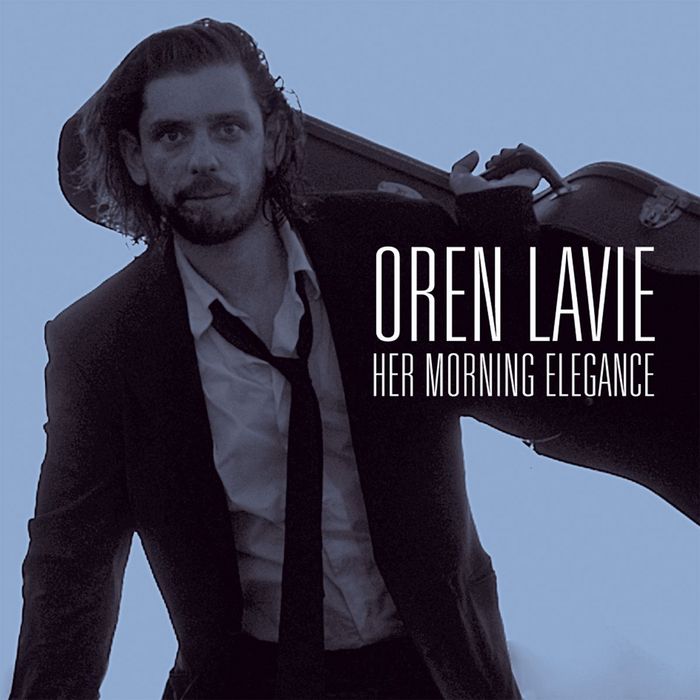
Oren Lavie –Her Morning Elegance

Here is the first of the videos recommended to me. This one would be notable enough if it was just actors being used in stop-motion animation. You add to that the creative use of abstract staging that still concretely conveys the story and you have something rather intriguing. Enjoy!

Treasures from the Disney Vault – Tonight on TCM!

Coinciding serendipitously with March to Disney, TCM tonight will feature its second block of films from the Disney vault. This block debuted in December after a deal with Disney. Here’s TCM’s blurb on tonight’s block:

TCM is honored to present the second installment of Treasures from the Disney Vault, an ongoing showcase that features a broad mix of classics from the Disney library, encompassing live-action films, animated shorts and features, documentaries, TV series and movies and a variety of short subjects. All entries in this month’s Disney programming are TCM premieres.

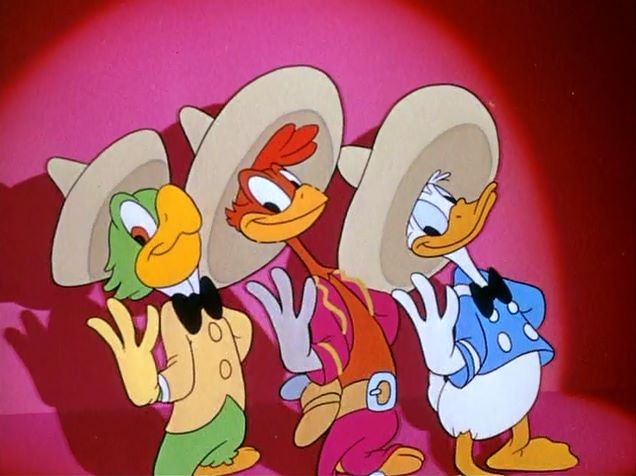
Features include The Three Caballeros (1944), an animated musical feature film that mixes animation and live action as Donald Duck celebrates his birthday with gifts from Latin America; and Walt & El Grupo (2008), a documentary by Theodore Thomas about a South American goodwill tour by Disney and his creative team as they gathered material for The Three Caballeros and the 1942 Saludos Amigos.

The Story of Animated Drawing (1955), originally broadcast on the TV series Walt Disney’s Wonderful World of Color, traces the history of animation and features “The Nutcracker Suite” from 1940’s Fantasia as performed by Leopold Stokowski and the Philadelphia Orchestra. Darby O’Gill and the Little People (1959), a live-action feature about an Irishman and his battle of wits with leprechauns, counts Sean Connery among its stars. Another live-action adventure set in Ireland, The Fighting Prince of Donegal (1966) is based on the real life exploits of the 16th century prince “Red” Hugh O’Donnell as played by Peter McEnery.

The two shorts are Babes in the Woods (1932), a Silly Symphony cartoon that loosely retells the story of Hansel and Gretel; and I Captured the King of the Leprechauns (1959), a TV episode about the folklore that inspired the Darby O’Gill movie.

Having written about the Good Neighbor Policy and the Three Caballeros before I’m glad to see that film kicking things off. Then the docs I’ve not seen, including Walt and El Grupo, should be enlightening. The shorts as always should be great. The St. Patrick’s Day appropriate titles should be interesting even though I’m not a fan of Darby O’Gill and the Little People. Set your DVRs!