Bernardo Villela is like a mallrat except at the movies. He is a writer, director, editor and film enthusiast who seeks to continue to explore and learn about cinema, chronicle the journey and share his findings.
This is great contemporary newsreel look at how Disney creates its animated films. This was made in light of the release of Snow White and the Seven Dwarfs. One interesting factoid is the budget cited as $1.5 million dollars. Adjusted for inflation that’s $25 million today; I am unsure how much unionization would have ballooned that but just on raw numbers it’s an interesting tidbit. Despite its dated tone its a more entertaining explanation of the traditional animation process than I would give.
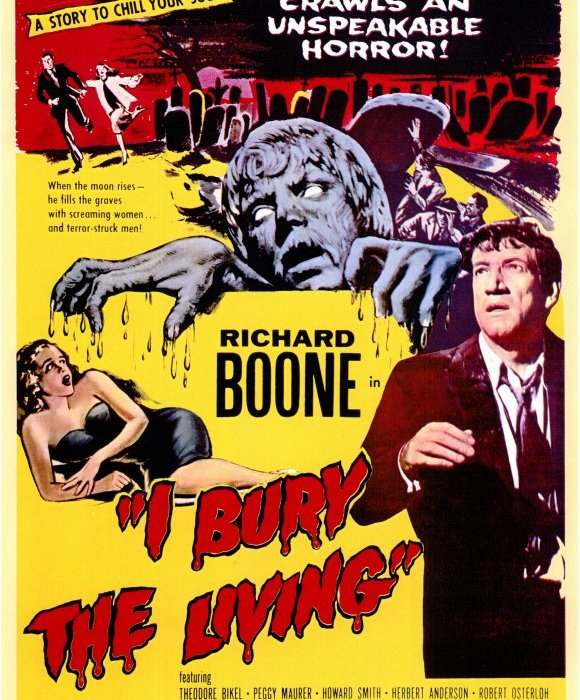
In starting this theme in the horror genre I was glad to have found this film online. This was one of my favorite discoveries of 2011 and well worth viewing. My thoughts from back then were:
I remember after I saw this film I tried to remember where I first heard of it: it was in Stephen King’s non-fiction book about horror Danse Macabre. He listed it in an appendix as one of 100 excellent horror films released between 1950 and 1980 or so. I agreed with his assertion immediately. It’s a jarring film but brilliant at both ends so to speak.
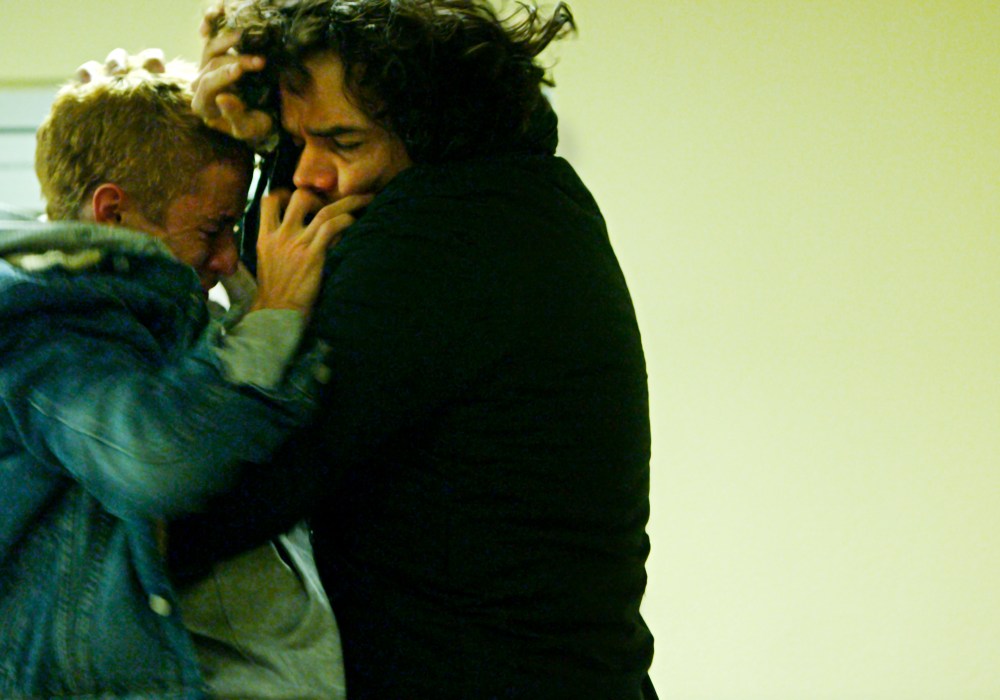
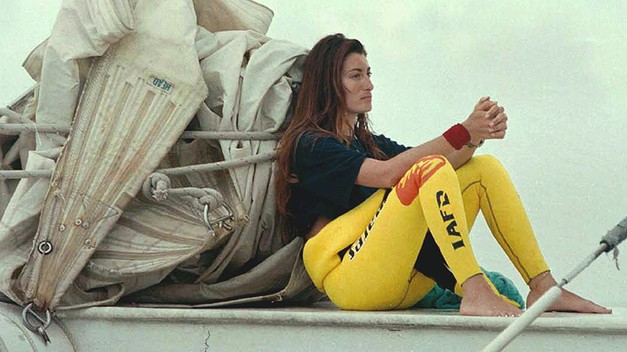
Futuro Beach is a film that may upon a cursory, superficial examination be as opaque as the atmosphere of its closing shot. However, much as the fog, the source music and score paint in tones and moods; so does this film. In this painting it explores emotions unspoken through the most part via its imagery, edits, compositions and contrasts. However, this ought not scare anyone away as there is not some hidden mosaic that the viewer himself needs to refocus. The conflicts are mostly internal but the struggles and emotions are clear; insight into the cultures in question here will only deepen appreciation, but are not critical.
The synopsis from Strand Releasing is as follows:
Part gay romance, part inquisitive self-journey, FUTURO BEACH is a stunning examination of lives lost and found. Donato (Wagner Moura) works as a lifeguard at the spectacular but treacherous Praia do Futuro beach in Brazil; Konrad (Clemens Schick) is an ex-military thrill-seeker from Germany vacationing with a friend. After Donato saves Konrad from drowning, but fails to save his other friend, initial sexual sparks give way to a deeper, emotional connection. Donato decides to leave everything behind, including his ailing mother and younger brother, Ayrton, to travel back to Berlin with Konrad. There, he finds both confusion and liberation, and his journey for love soon turns into a deeper search for his own identity. Eight years later, an unexpected visit from Ayrton, brings all three men back together as they struggle to reconcile the pain of loss and longing, instinctively drawn to each other in search of hope and a brighter future.
The film’s three acts are headed with three title cards that introduce titular theme for each segment of the story: “The Drowner’s Embrace,” “A Hero Cut in Half,” and “A German-Speaking Ghost.” In the first portion of the film there is the struggle to overcome as a professional’s confidence and a foreigner’s relationship is torn apart. In this portion of the film, as in the rest of it, there is a struggle to balance relationships as Donato balances his relationship and responsibility to his younger brother Ayrton and forms a new bond with Konrad.
The first section does also set the stage for many parallels that the story plays with. The opening act closes with Ayrton on his own imagining himself as Iron Man fighting off an unseen assailant. This action will be mirrored when he is older and has found temporary refuge with a new companion to dull his pain. This superhero motif is clearly important as it is also referenced in the title to act two. It also serves the obvious function of illustrating a child’s idealized view of his older sibling. However, the fact that this theme comes back to reflect Donato’s angst as he struggles to decide on a path for his life is also highly significant.
“A German-Speaking Ghost” is not only a very fitting title to the section, but a fitting conclusion. Parallels again come into play as the film finds its climax on a beach much as it reached its first highpoint on one. The visuals in this film, and the activities that constitute screentime, are ones that need to be taken more for their significance than for the literal activity. an example being what is a character running to or from when they jump on to a bike and ride off.
This chapter title is also significant because for a while you are in a bit of doubt as to whom it refers to. In this film you not only have three distinct POVs that represent different life-experiences but you can identify with and understand all of them. There is a triumvirate of powerful performances (Moura, Schick and Barbosa) that feed off one another and take turns coming front and center.
The emotional currents and undercurrents are also strongly supported by the music both brought into the fold and created by Hauschka that allows the film to have the tenor that director Aïnouz usually desires to find in the narrative. The best evidence of this are the closing notes and frames, which act as the zenith of this symbiosis.
Futuro Beach is, from its start, about characters losing and trying to find themselves; connecting, disconnecting and trying to reconnect; saving each other and failing to save themselves; and, ultimately, finds beauty in the discomforts created by distance and yearning and the solitary journey of finding oneself. It takes a gamble with its narrative ellipse, but like a strong story it punctuates the end of its dramatic phrase properly and memorably.
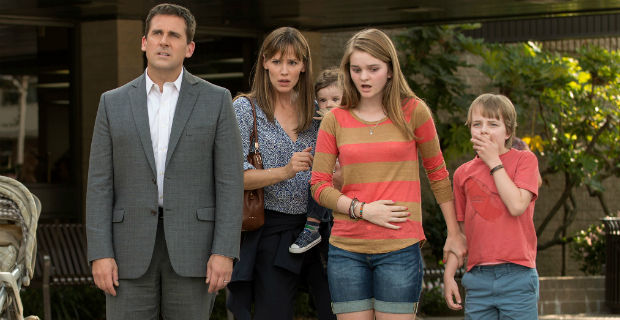
If there’s one critique I could never get behind in the realm of book-to-film adaptation it’s the kind I hear a great deal surrounding the transition of Where the Wild Things Are from beloved children’s classic to film property. Many found it odd, confounding even, that a 20-page book with scarcely any prose and mostly illustrations would be suitable for film treatment. I personally like the possibilities of expansion over contraction more times than not.
Stephen King when discussing rewriting in On Writing confesses to being more of a putter-inner than a taker-outer, which is to say he’d love to expand on a narrative rather than omit any time. The wisdom to know when to edit as opposed to over-embroider makes a skilled writer. However, a literal adaptation of something as sparse as Alexander… would not only be un-artful, but also far too short for a feature film. Therefore, expansion is necessary.
Furthermore, taking a short story and making it a feature is far less embellishment than taking a single volume and making it two or three films. Therefore, in the over-analytical film news cycle of today it’s a far less worrisome leap.
In fact, expanding on the book diminishes the over-analytical complaint that Alexander is whiny. By turning the film into a narrative with many prongs wherein everyone has a calamitous day it allows the protagonist to come to a realization on his own with minimal wallowing in self-pity and maximizing comedic moments.
However, it is another successful adaptation of a children’s tale that is well-liked in the Disney realm. The only truly bothersome moments are the very Disney realm of it all, which is double-edged sword. For example, the Peter Pan musical the daughter rehearses are with songs from the film not the musical; and the principal’s reference to Wreck-It Ralph seem somewhat extraneous. It would also be a bit odd if this family was being created in a supposedly real world that pretended Disney was not a thing. Furthermore, the viral sensation that Dick Van Dyke is involved in creating is a highlight of the film for sure.
A completely appreciated wrinkle was building in a fully healthy obsession for Alexander that rounds out his character (his obsession with all things Australian). It’s happy accident that Ed Oxenbould is also Australian, but it adds good dimension, sets up a great gag and introduces cool animals – and once again shows off the knack actors of all ages have adapting to American dialects.
Ultimately, the warmth and humor of the tale and the talent of the cast win out and deliver on the promise of a well-thought out expansive adaptation.
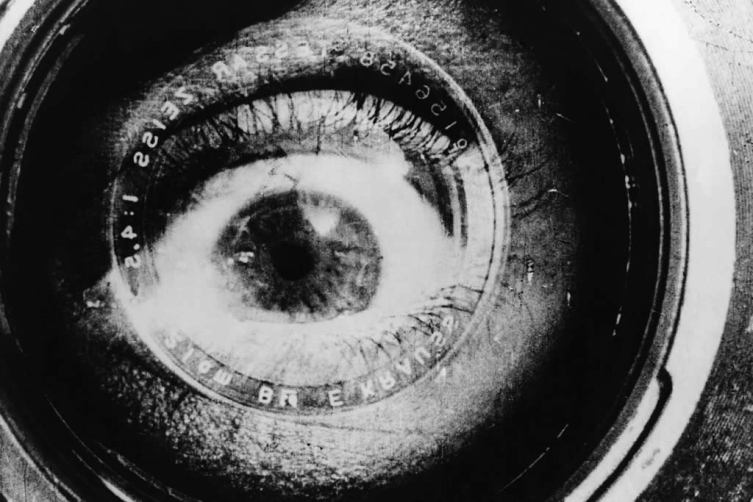
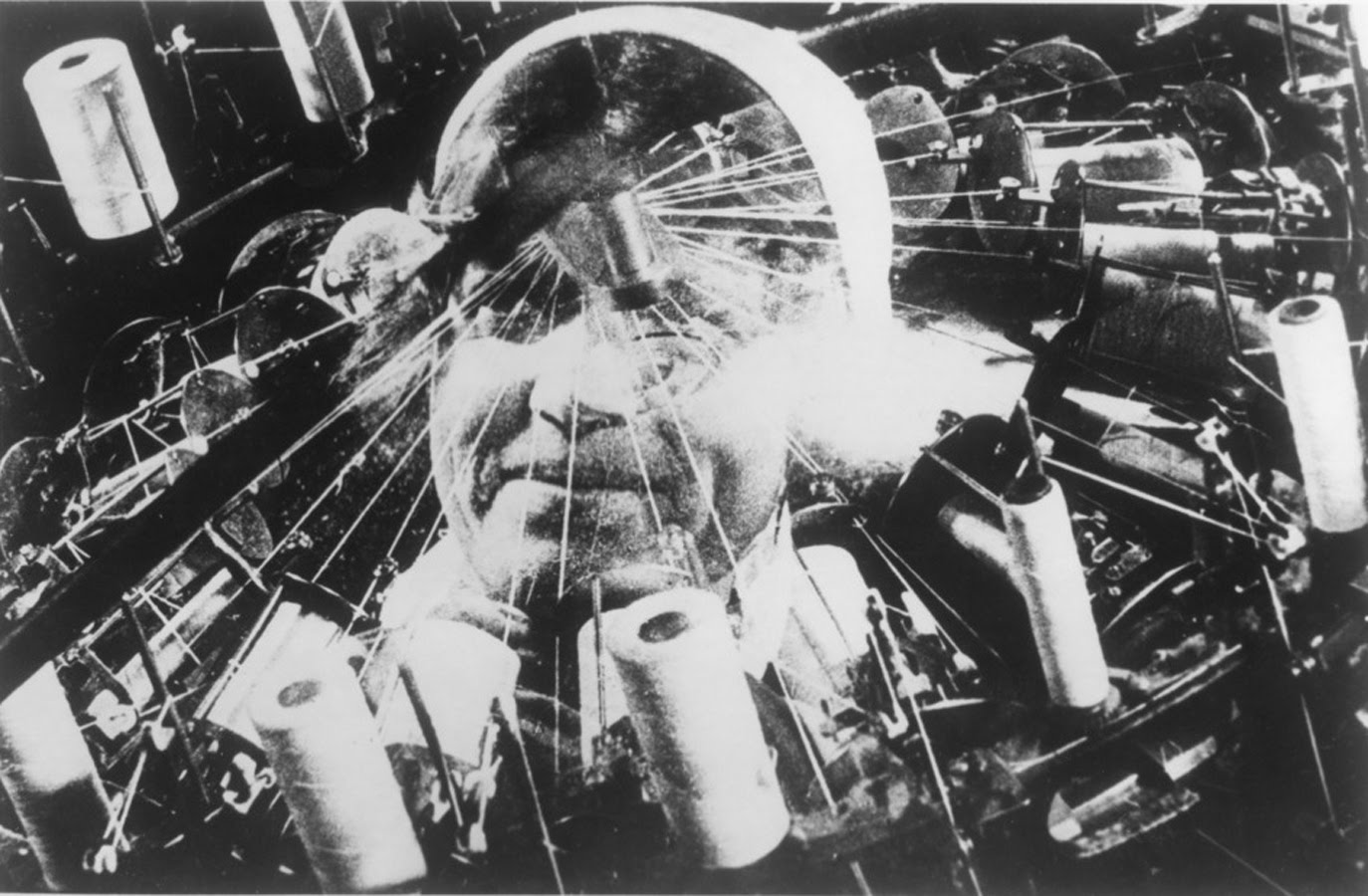
In preparing this post I naturally watched The Man with a Movie Camera again. In doing so I was reminded of Berlin: Symphony of a Great City, which I had seen more recently but was made first. Due to that fact I got to thinking about my history with this film, and what if anything had changed in my perception of the film.
To accurately try to capture this I must go back to the beginning to where I first heard of the film. For yes, it is still my assertion that every film does have a pre-life in the mind of the viewer. This pre-life ought not effect the perception of the film in the viewer’s mind, but can and does more often than not color it. Furthermore, if I am to accurately map the trajectory of this film through time as I see it I have to go back to my beginning with it, which is in a textbook in an introduction to film history course that tries to encapsulate Vertov’s intention with his experiment.
This introduction was found in A Short History of the Movies by Gerald Mast and Bruce F. Kawin, 7th ed.:
Dziga Vertov, one of the Soviet Union’s pioneers in combining documentary footage with political commitment, experimental cinema with ideological statement, suffered similar artistic strangulation as Stalinism took hold – partly because he was a Jew, partly because his aesthetic stood for the truth, and partly because he didn’t praise Stalin enough in the last film he was allowed to make, Three Songs About Lenin (1934).
Dziga Vertov’s intense energy was evident not only in his documentaries and manifestos, but also in the name he chose for himself, which translates roughly as “Spinning Top.”
Yes, his work had quite an impact:
Vertov began by compiling footage into weekly newreels in 1918-1919, went on to edit full-length compilation films and shoot some of his own footage in 1920-22 (he called the camera his “Kino Eye”). then invented a documentary form that went beyond the reportage of the newsreel into creative journalism: a series of shorts that were called newsreels but focused on specific topics and themes. That series, which ran from 1922 to 1925 was Kinó-Pravda (“Film truth”; the French term, in homage to Vertov is cinéma vérité).
Documentary films are as old as films themselves. However, the very early documentary cinema was very literal, and would only be interested in what happened and that is all. The unseen hand theory of direction was more an iron fist.
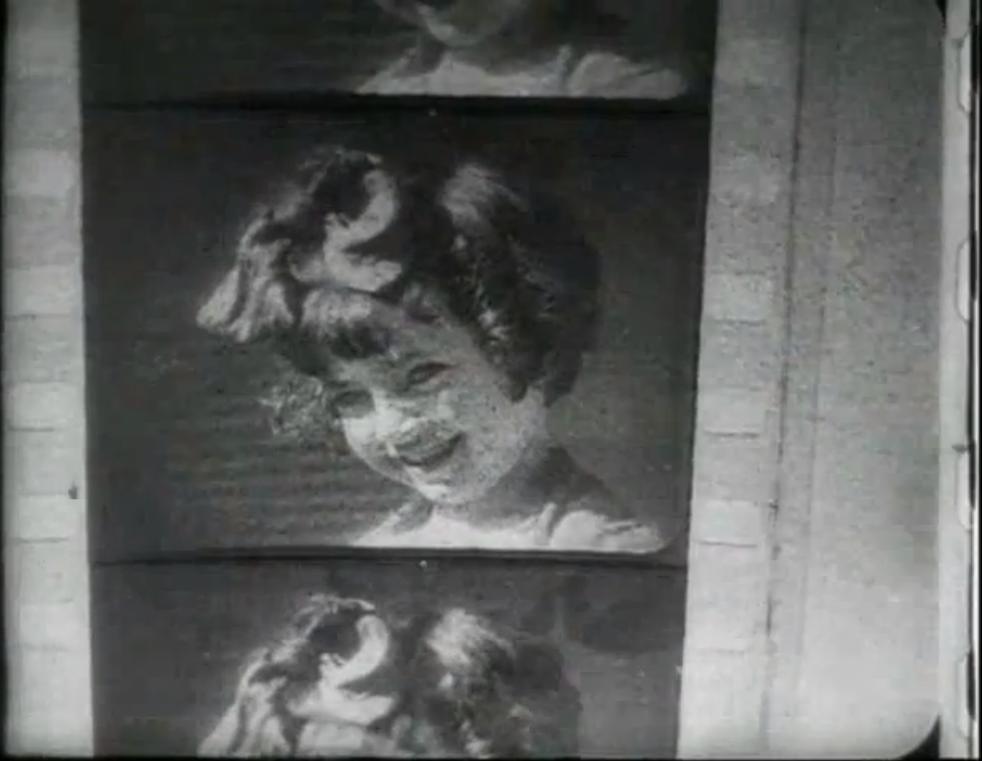
This was the first film ever exhibited; a documentary:
Vertov clearly had other ideas in mind, and his revolutionary ideas transcend cinema as his artful treatment of real subject may predate the same concept in prose, like In Cold Blood and the birth of creative nonfiction. Did cinema beat other arts to something? I think it may have.
Next in my journey, I read some of Eisenstein’s works. He was not mum on Vertov’s works. In Film Form has some less sparkling things to say on Vertov.
With regard to the use of slow-motion:
Or, more often, it is used simply for formalist jackstraws and unmotivated camera mischief as in Vertov’s Man with a Movie Camera.
And with regards to his experimentation:
The young Soviet cinema was gathering the experience revolutionary reality, of first experiments (Vertov), of first systematic ventures (Kuleshov) in preparation for that unprecedented explosion in the latter half of the ‘twenties, when it was to become an independent, mature, original art, immediately gaining world recognition.
Great filmmakers often disagree. Tarkovsky thought Eisenstein’s overemphasis on editing was misplaced, as all arts have editing; so montage, in his mind, did not define cinema, but rather time did. Art is subjective and different perspectives lead to personal and unique works. Vertov acknowledged he was experimenting in title to The Man with a Movie Camera, so as he wrote (both scripts and theory), shot and cut he too developed his own ideas.
This idea took root after he had seen, and decided to respond to, Berlin: Symphony of a Great City. What Vertov seeks that’s different he states straight from the outset:
Man with Movie Camera
A 6 reel record on film
Produced by VUFKU in 1929
Excerpt from a camera operator’s diary
Attention viewers:
This film is an experiment in cinematic communication of real events/
Without the help of intertitles/
Without the help of a story/
Without the help of theatre/
This experimental work aims at creating a truly international language of cinema based on its absolute separation from the language of theatre and literature.
Author-supervisor experimenter
Dziga Vertov
With that in mind the mind instantly opens upon the start of the film. Yet it’s the creativity and positively kinetic nature of the film that makes it a unique experience. Yet, despite some of Eisenstein’s grumbling of the primitive nature of the trickery it’s not the party tricks, or the editing pattern that make this film standout, but the embodiment of statement; the visual unity created through theme that’s so clearly communicated.
Mast and Karwin put it best:
Like everyone else in society, the man with a movie camera has a job to do — his special work being to record and reveal the work of everyone else. And like everyone else in society, the man with the movie camera likes to play. Vertov allows the playful camera to dazzle us with accelerated motion split screens, superimpositions, stop-motion animation — demystifying the cinema even as it gives the audience the visual treats it came to the theater to enjoy. Grounded in daily life as much as in the theory and practice of cinema, this brilliantly reflective documentary renders cinema and life inseparable.
The only way in which the film relies on any other art-form (barring photography, of course) is in the use of music. Even upon its release it, like many other silents, was accompanied by a live orchestra. Since the silent days it has acquired many other scores to accentuate the cuts and changes in composition that this film has.
This is not to discredit the film in anyway. Music and film have always co-existed. Films need music. Especially this one cites Roger Ebert:
The experience of “Man With a Movie Camera” is unthinkable without the participation of music. Virtually every silent film was seen with music, if only from a single piano, accordion, or violin. The Mighty Wurlitzer, with its sound effects and different musical voices, was invented for movies.
This film seeks to unshackle cinema, and I feel it did, and most importantly it continues to do so as new viewers find it. For film, which relies on motion, both within the frame and in swapping those images out, the parameters must be challenged. Film was once a new toy, vibrant, irreverent and disrespected, looked down upon, and thus somewhat more unafraid to try things on for size. Yes, certain universal narrative precepts needed to be borrowed, but film needed to find its own voice with which to speak. Experiments like this one were crucial in developing that voice not only in documentary but in narrative cinema as well. This restless creative audacity is something that ought not be lost and held onto; the more fertile imaginations; the more impressionable viewers that catch a glimpse of this film the more possibilities the future of cinema has.
For that’s really what is being discussed here. Too often film history, like any history, can be bogged down in facts, dates and events that have happened without discussion the domino effect of influence that events, filmmakers and films can have. The concussive impact of one stellar film can have repercussions throughout time, and not just in the zeitgeist. The Man with a Movie Camera is such a film because it not only tests aesthetic norms and boundaries, but asks the important questions of “Why are we creating this way?” and “What can we do with it?” and most importantly it shouts “Yes, it is important and worthy and should continue!”
I’ve debated starting this theme for a few weeks before starting last week, and I ultimately decided I would as it would encourage me to looks for options that actually fit what I’m aiming for. If one pays too much attention to Top 40 type music you tend to see a dearth of creativity in the music video form. The music video is spawned from short films and can be as creative if not more so than their predecessor. Far too often it does just become singing heads. I want to try and buck that trend and find ones both new and old that do something somewhat outside the box, at the very least have some sort of visual narrative. Here we go.
Eurythmics – Sweet Dreams (Are Made of This)
Based on some recommendations I will have some more newer vintage videos coming. It would be far too easy to only cherry-pick these selections from when the medium was new. This one came to mind again recently. It’s as odd and off-center as it is memorable and it accompanies a great song. Enjoy the orange hair and the cow in the field!
This is a post that is a repurposing of an old-school Mini-Review Round-Up post. As stated here I am essentially done with running multi-film review posts. Each film deserves its own review. Therefore I will repost, and at times add to, old reviews periodically. Enjoy!
No Limits
Here is the second Nine for IX title that I got to in the course of the month, you can find the other above. This film deals both with a sport and an event that I had no familiarity with. In the case of some documentaries that could be a hinderance, in the case of this film it is most certainly not.
The precepts of no limits free-driving are simply told enough and the film dramatically, both through recounting of facts, various interviews and use of split-screens and incredibly harrowing footage that audiences do need to be warned of, recreates events such that as a film it overcomes the lack of cooperation in interviews by the key figure in question.
No Limits conveys this terribly tragic event in jaw-clenching fashion, is not recommended for the feint of heart or weak of stomach, but is an excellent documentary nonetheless.
10/10
I have always wanted to sit down and define what to me were the “Great Stories.” By great stories what I mean is those stories where I can watch many different adaptations of it without tiring. This particular story, like many that would be on that as of yet un-drafted list, is one I’ve enjoyed since childhood. This 1946 Disney produced version is the one I first saw.
Since discovering and re-discovering it several times over I have since sought out other versions of the story, including: A ballet produced by the Royal Ballet School; a live action/animation hybrid with characterizations by Chuck Jones and a Soviet stop-motion animation film from the ‘50s (this version will soon be featured on a Short Film Saturday post. As well as crafting my own version for the stage for young actors and musicians to perform.
What I believe draws many to this story is, of course, Prokofiev’s music, but also the inherent humor many have found to counterbalance the true scares the plot points can offer.
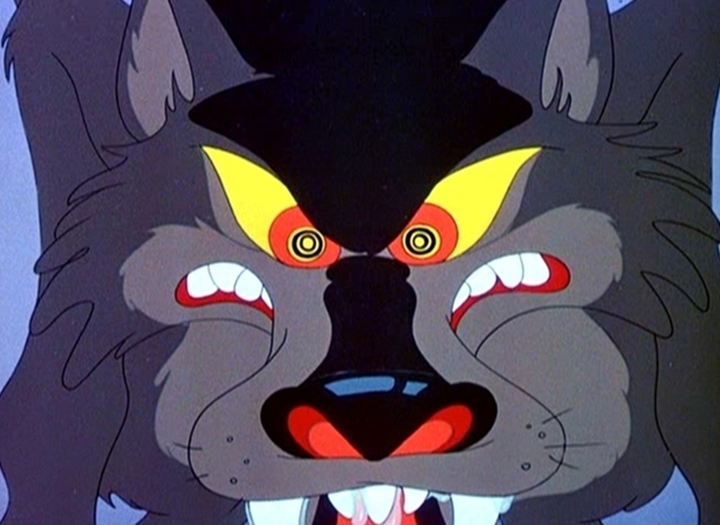
Peter and the Wolf (1946)
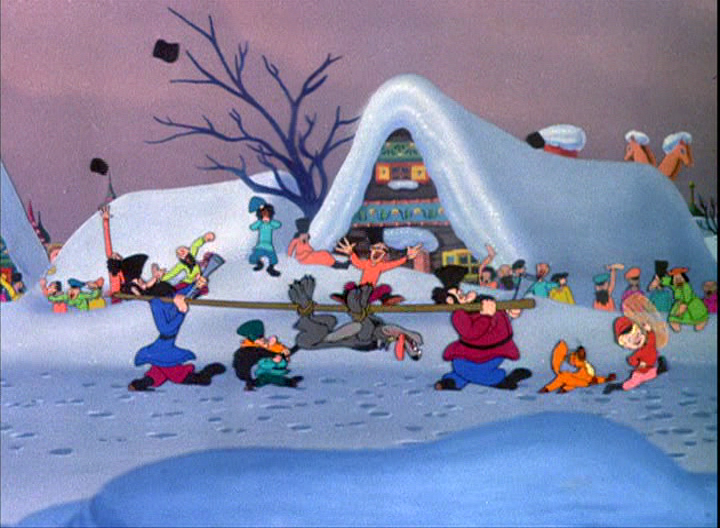
For the purposes of this blogathon, and to mesh with my March to Disney theme, I will focus solely on Disney’s 1946 version created for inclusion in the anthology film Make Mine Music. This version was also later siphoned off as its own short and released on video (once with the original Sterling Holloway narration, and one time now) and it also accompanied a theatrical re-release of Fantasia, which is rather a perfect pair.
Make Mine Music, I recently discovered is yet another title that has been subject to Disney’s self-censorship having lost an entire segment in all subsequent releases due to concerns over racial insensitivity. However, that is but a compelling footnote here. What compels here is the treatment of Peter and the Wolf within the longer piece.
It’s interesting to consider that this short film was fashioned just 10 years after Prokofiev’s opus debuted, a debut he himself cited as being inauspicious. So in many ways this animation truly is largely responsible for popularizing and immortalizing the piece; at least in the west. Like many lasting works it wasn’t an instant success.
Much like Disney did with the Seven Dwarfs (who had no names in Grimm’s version) he named Peter’s animal friends (Sasha – Bird; Sonja – Duck and Ivan – Cat) and the hunters were also named (Misha, Yasha and Vladimir).
I have written extensively on divorcing oneself from a prior incarnation of a narrative when watching the film. However, when discussing different versions of a work noting changes matters. The introduction of the representative instruments remains, yet the situation with the Duck’s fate is slightly changed from the original.
The short balances real scares like the wolf’s appearance in general, his threatening the duck and other’s are balanced with humorous touches, like Peter’s pop-gun, pantomime action and voice-over dialogue. This follows through to the ending with Peter’s presumed fate and his heroic reveal.
It truly is a fairy tale set to music that also includes some of Disney’s didactic proclivities by having signs in Cyrillic then dissolve to translated versions after being misunderstood. This helps indicate to even the youngest audience members that the story is foreign in origin, but allows them to relate to it through the narrative storytelling technique.
The main action sequence of the film is very well and dramatically rendered. Furthermore, at 13 minutes there’s a more grandiose sprawl to this tale than standard six-to-eight minute shorts allow. Yet, with the musical score usually clocking in around 25 minutes in length it moves more briskly apace than that. Add to that the typical deep, intricate backgrounds, and fanciful setting that Disney can create, and you get a world that is fully realized and dimensional. A narrative landscape that seems much larger than indicated and seems to belie the modesty of budget likely implemented (I hypothesize somewhere between pre-War opulence and wartime belt-tightening).
It’s a rendition that has stood the test of time, and like much classic animation, has come to define pieces of classical music in the minds of those who know it. Whether individually or as part of the underrated Make Mine Music it’s a short that is worth knowing whether you’re a Disney enthusiast or not.
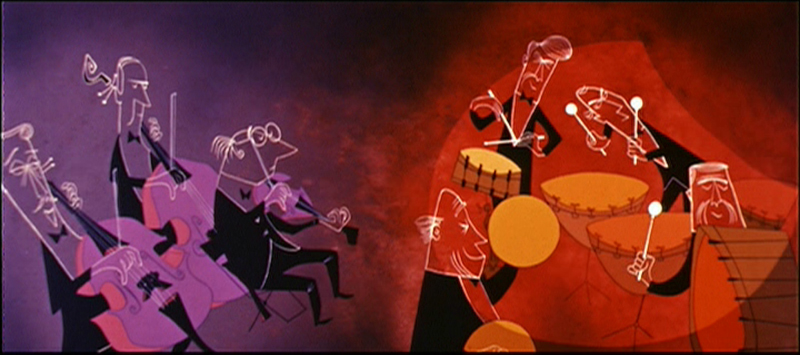
Is the second Adventures in Music short produced by Disney and the first animated film ever presented in Cinemascope. It is a funny and didactic tour through the evolution of the sections of orchestration from pre-history through modern times. Enjoy!
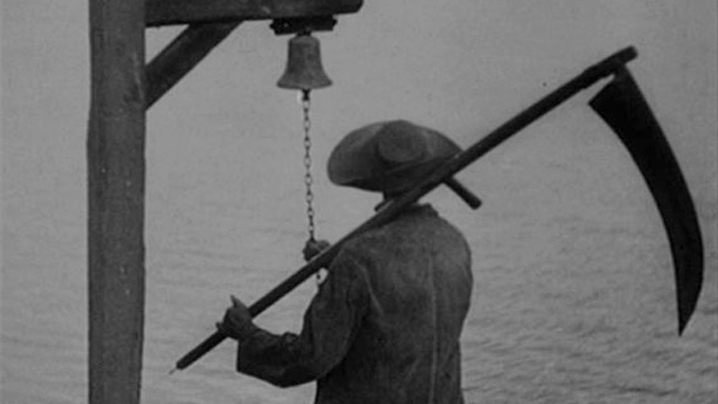
This theme is kicking off with horror before it expands to other genres. Next is the greatly atmospheric Carl Dreyer film based on Sheridan Le Fanu’s Carmilla, the first such adaptation of the novel to the screen. It’s also the rare public domain and horror title that Criterion has given the royal treatment. Their extras, including the screenplay, are well worth checking out if you can get a hold of the box set.



 The Movie Rat