Mini-Review Round-Up: November 2012

I had quite a review drought to end 2011 so I think the remedy for this kind of post would be to have the post be cumulative monthly. Therefore, after each qualifying film a short write-up will be added to the monthly post. The mini-reviews will be used to discuss Netflix and other home video screenings. Theatrical releases, regardless of how they are seen whether in an auditorium or on VOD, will get full reviews.

For a guide to what scores mean go here.

Ghosts of Ole Miss
If it were in anyway possible, it’d be interesting to examine this 30 for 30 entry in a vaccuum. The reason I say that is: as a film about the integration of Ole Miss with a unique subplot about the undefeated football team that played and was overshadowed by sociopolitical unrest on campus during that year, it’s intriguing. However, the film purports to examine the team and be a testament to the team, to memorialize the forgotten squad. While there are plenty of interviews with players about on campus events and quick chronicles of game events and results, the team becomes a subplot in a film supposedly mainly about them. The struggles of integrating the school ought not be overlooked, but when there’s little overlap between the tales aside from time and place structural balance becomes hard to find.

The film does very well to examine the cultural morass that many face, southerners in this case, that exists when you’re trying to balance pride, heritage and also acknowledging past failings and dark moments. Some of the voice over is very well-written and poetic in a way that seems unique to the south, as much as the music is lyrical and local. However, this personal connection also fights for time with the football team’s tale and the exposition of the events surrounding the integration. Ultimately, the film succeeds by giving you barely enough to get by on each angle, but it would’ve been better served by restructuring and/or delving further into each aspect.

6/10

Benji

It’s a method I generally try to avoid, but perhaps the best way to discuss Benji is via comparative analysis. After I had seen Benji what occurred to me is that there was some structural similarity to 9.79*, and that being that it is mainly a chronology of events (this one far more linear) but there is a late-in-the-game monkeywrench thrown into the mix. I will not expose details to preserve surprise, but the late revelation here only has one side telling the story period, not just on camera. Furthermore, the revelation, in my mind didn’t really shift the legal burden of blame.

Regardless, for the most part, this is an effectively rendered tale for the most part that reveals a mostly unknown personage now. The film does well to just present its case and not comment upon it. The only other issue it suffers from is that there is a slight lack of ebb and flow. There is a definitive rise-and-fall, but its crescendo and decrescendo. The rigidly linear nature of this tale hinders its efficacy some.

7/10

Off White Lies

I find myself commenting on a film’s subtlety quite often. Rather than sounding like a broken record I will expound on that. It’s one think to tell an intricate story without spoon-feeding an audience like say Tinker Tailor Soldier Spy, and another to tell a simple story in a straightforward way. However, to tell a simple story, subtly; jumping in medias res and making revelations indirectly rather than with overt exposition is quite a feat. As is often the case, it’s not necessarily the end destination that matters with a film, it’s the journey. With necessary information being delivered when absolutely necessary and without drawing attention to itself we are allowed instead to focus on the characters and how they interact. This is especially helpful when dealing with a father-daughter dynamic. We see how they interact and the why becomes more and more apparent as we learn more about them.

The story, such as it is, moves rather smoothly ends at an appropriate time and features good performances all around.

8/10

The Dynamiter

As I tweeted immediately after seeing The Dynamiter, it seems to be par for the course that every year there will be a Film Movement selection that will slowly, subtly work on me and leave me bawling nearly uncontrollably, and almost unbeknownst to myself, by the end. Last year’s film was A Screaming Man. What both films share in common is a simple tale of people with simple desires, facing seemingly mammoth obstacles to overcome and struggling mightily against them.

Yet, even that congratulatory paragraph doesn’t really do this film justice. For the magic this film weaves, it creates in a mere 73 minutes. It’s a running time so brisk you’d never imagine it’d have the power in its finale to sneak up on you, but it does.

In writing up any sort of reaction piece to a film, I am somewhat loathe to quote other works, be they literary or musical, to echo my sentiments. However, that’s really more a writer’s pride than anything because sometimes, with the really good films, they are more accurate. One such work is a spoiler so I’ll avoid it, leaving just one: this film does indeed seem to have “The Invisible Touch,” it takes control and slowly tears you apart.

It’s a film that’s deserving of a re-screening and a bigger write-up, but something tells me I’ll be writing about it again at the end of the year.

10/10

The Best Exotic Marigold Hotel

The Best Exotic Marigold Hotel is a cautionary tale, in the best way possible, and part of why I love the year-end sprint to catch up on releases of the year. Towards the end of the year, I get a little less finicky about selections and just watch things, not just to be adventurous but admittedly to bolster the BAM qualifiers. This may all sound quite underwhelming but the impetus to see this film was really a personal recommendation.

I knew of the film but frankly the trailer and all other marketing elements didn’t sell the film. What looked at the outset a rather myopically comedic tale turns out to be, in reality, a wide-ranging inclusive, heart-warming, bittersweet, charming and funny film; in short, one of the more well-rounded experiences.

The character’s narrative threads which start out very disparate reminded me in some ways of Love, Actually but with more interweaving and less contrivance to get things linked up. There is a general emotional over-current that makes this true also, not just some similar cast members.

Through the natural functioning of the narrative there is ample room, which is taken full advantage of, for commentary on myriad topics that is never extraneous, which adds to the enjoyment of the film.

One thing I can applaud the marketing of the film for is that it did leave many of the surprises of this tale in tact, and if you take this journey you will definitely be rewarded.

10/10

Teddy Bear

Teddy Bear is a testament, not only to Film Movement’s Film of the Month Club and the bonuses they include on their DVDs but cinematic acclimatizing. What I mean by that is not necessarily that the packaging of a film, or the presentation thereof, can condition a viewer, but when you’re visiting a slightly different avenue of film a bit of an introduction can be beneficial.

My best and favorite professor in film school was Max Simkovitch. Not only was he an uncanny “bill builder” in terms of doubles and triples, but he also put you in the right frame of mind to absorb the film you were about to see. Is that to say I liked everything I screened in his classes? Not at all. However, it kept me in place where I would and continue to fight against making the film what I thought it ought to be, take it for what it was and judge it on its own merits.

How this relates back to Film Movement is that for the DVD of Teddy Bear they include two prior shorts by Mads Matthiesen an up-and-coming Danish filmmaker. In seeing these two shorts, one of which was the basis for the feature Teddy Bear, you definitely get a taste for his style and in the short Kim Kold shows flashes that, yes, he will convey the effective gentle giant needed for the narrative.

The feature is an effective tussle between mother-and-son, portrait of loner trying to break out of his shell and an underdog love story. The pace is imperfect later on, but the tale is always engaging, endearing and watchable, if not completely realized.

7/10

The Pact
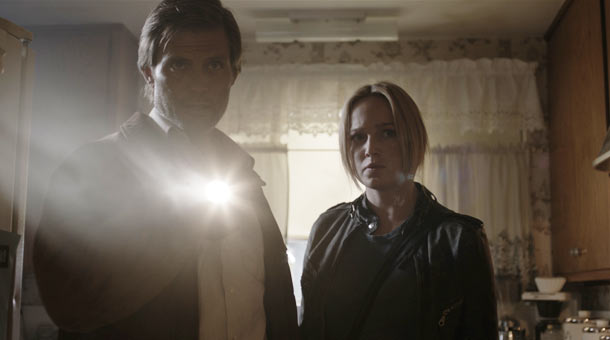
This is the kind of movie that will be referred to as a slow burn. The slow burn in the horror genre, the gradual but consistent build-up, has become more popular as of late. However, like any technique or philosophy it is not inherently good or bad. What I believe is that if you’re going to take this approach you have to take the escalating events to a fairly wild and unpredictable place. The stakes and incidents continue to increase and just when you think you have the film pinned down it expands.

The films imperfections, barring a seemingly nonsensical title and a jolt-shock end shot, are mainly that early pace that makes it a tough tale to get into. The performances are inconsistent, but the story does just enough to buoy it. How much each individual enjoys the film will likely vary on his or her patience, and their embracing or rejecting of the twists.

6/10

A Chrismoose Carol

The review of this film can be found here.

ATM

I often discuss the merits of going into a film as a clean slate. I can’t say I went in 100% clean to this film, however, I don’t see that as a detriment here. I found this was streaming, saw it qualified as a 2012 release, and added it to my queue without further thought for a time. One tweet by a fellow Twitter compatriot who disliked it, didn’t give much away, but intrigued me enough to give it a play.

A few things struck me as odd as it pertained to ATM: the first of which is that it does hold interest and a fairly believable premise through a much larger portion of the film than I expected based on what I heard. While I will credit the film for its set-up and a certain degree of cleverness in it maniacal plan, the second oddity is that the most major twist I was way ahead of, and the resolution was one that doesn’t stand up to harsh scrutiny, and the length of the reveal allows you to scrutinize it. It reminds me a bit of Penumbra but with more annoyance and less impact.

This is also a film that inflated its running time to its detriment. It cut out of the closing credits at least three, if not four times, to additional montages hinting at more villainous plots. Such were the cutaways that it bloated the credits crawl (which were slow to begin with) to nine minutes. The film clocks in at exactly 90 minutes with it included. It wouldn’t have saved the film, but it is OK to run less than 90 minutes. It really is. Add to that a very slow reveal, and you have an end that doesn’t end long after the point where the film becomes completely asinine.

4/10

Home Alone: The Holiday Heist

Home Alone: Holiday Heist (2012, 20th Century Fox)

For my review of this film please go here.

I didn’t quite catch up to the backlog of November titles viewed, seeing as how I managed to get into an end of year viewing groove early. The titles that would’ve been here will appear in the December running post. All these lists also qualify films for the BAM Awards, which have many exciting dates in the month to come.


Mini-Review Round-Up: October 2012

I had quite a review drought to end 2011 so I think the remedy for this kind of post would be to have the post be cumulative monthly. Therefore, after each qualifying film a short write-up will be added to the monthly post. The mini-reviews will be used to discuss Netflix and other home video screenings. Theatrical releases will get full reviews, or another kind of write-up as per my recent shift in focus.

For a guide to what scores mean go here.

9.79*

ESPN’s 30 for 30 is back, and I’m glad. More than ever it seems like the landscape of sports fandom and coverage is more reactionary and instantaneous. We’ve almost devolved to the point where we’re immune to revisionism because there is less and less focus on the past, history and progression of certain sports. Not to sound overly dire or pessimistic, but sometimes perception is reality. However, what the ESPN Films documentary series is goes back and finds milestones, overlooked stories and traces the trajectory of the events, themes and trends involved.

Therefore, 9.79* about Ben Johnson’s disqualification after winning gold with a record-shattering time in 1988 Seoul Olympics starts by tracking each of the finalists (some more than others) following the events that lead to that fateful day and the fall out since. It’s not a story told in precise chronology, there are jumps and clearly new interview footage will reflect the past, but it tracks the phenomenon of doping rather well, exposes the testing issues of the time and leaves a lot of great tidbits dangling for your interpretation. One of the more astounding one is ones that gets hinted at early then dropped like a hot potato until very late in the film. In a way, it makes the capping of the story even more potent. There are quite a few players in the game here. My interpretation is that it’s all a moral quagmire when in this era doping was rampant, harder to prove and everyone is seemingly guilty of something. It makes the situation fascinating almost like a “sports noir” tale. No one’s angel, but you fall on one side of the issue or another, and maybe even side with one camp or another on certain claims.

Not only is it an event that I wanted to be more informed about (and now I am) but Daniel Gordon does great work reconstructing the narrative from an impartial place and bringing forth all the opinions and information known and presenting it in a compelling and dramatic way.

9/10

Girl vs. Monster

For a review of Girl vs. Monster please go here.

Excision

What is most successful about Excision is that it is a study in character from the inside out. Which is to say that the fantasy/daydream segments in this film may be too numerous, but the purpose they do serve is to show how the inner-monologue of a disturbed, delusional character come to the fore and affect her everyday life. There are a few dichotomous splits in character: a struggle between adoration and mutilation (both their own versions of body worship), a fight against authority, a struggle between a libertine attitude and a theistic construct. Perhaps, what’s most intriguing about Excision is watching the journey, granted I did figure where the journey would end at some point, but it seems like a basic virginity plot with a very socially awkward lead, but as it progresses you see so much more is going on here. Through all the serious and horrific observations you make there are also some laughs to be had, and many great performances notably AnnaLynne McCord, Traci Lords, Roger Bart, Ariel Winter and Jeremy Sumpter.

8/10

Magic Silver and Magic Silver 2

Without going into a full rehash of recent guest post that I did, what I will say on a wider scale with relation to the Magic Silver films is that it’s prime example of what’s great about Netflix. Here you have two recent and rather popular Norwegian films that I had heretofore not heard of. Physical home video distribution of these titles in North America is a riskier, more expensive proposition so the streaming solution is perfect and brings these films to a wider audience.

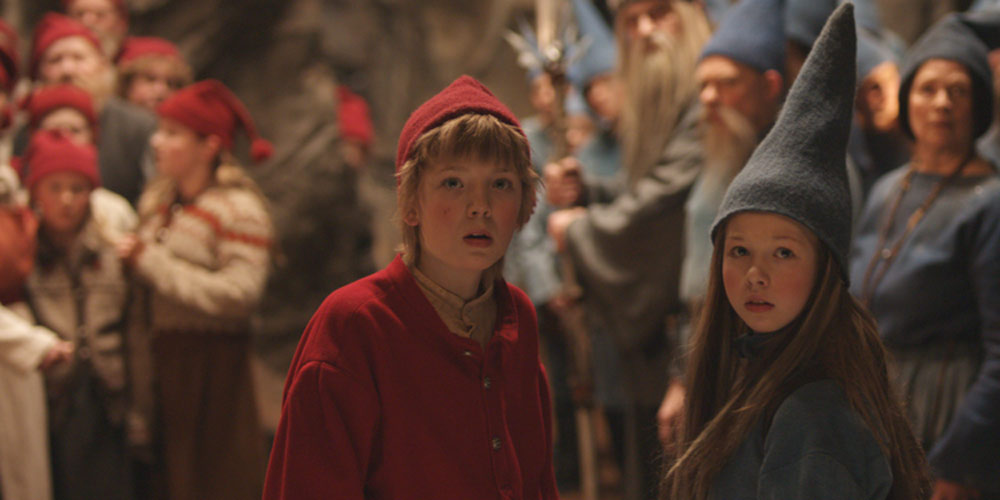
As for the films, what drew me to the films at first was the 1980s-like illustrated approach to the artwork. Sure enough, the first film does have that feel, with some 21st Century technique thrown in. The film excels in virtually every level of production and maximizes the values it can get for whatever the budget is.

It’s a fantastical tale about how gnomes can control the weather and their life in a mountain. The sets of the inside of the mountain in the first film are simply but beautifully done and gives everyone just enough room. In the sequel the expanded space is not maximized. Similar to the costuming which in the first film is simple but effective, but in the second gets a bit more intricate and somehow doesn’t work as well. However, the art direction in both is quite good.

The story, however, again more so in the first film than the second, introduces the rules of this world wisely, as we hear it being told to the children of the village. It’s a thin but effective veil on the exposition, and some of the rules are really fascinating dramatically as they have intriguing consequences.

Both films are quite good, but the difference being that the first film has much higher stakes. Not only is the protagonist, Bluerose, coming to grips with overcoming her own fears, she must also learn the consequences of her actions, learn to assume responsibility, deal with mortality and try to do what is best for all concerned; a test of true leadership. Making this an even more intriguing dynamic is the fact that her struggles as princess are mirrored by a child king in the other clan of gnomes. There’s an innocent, subtly played romantic interest, but they both in working together learn how they can face up to their newfound responsibilties.

In these films I expected good escapist fun, what caught me most off guard about the first film was the gravitas of it, how involved and moved I would be by the narrative, and how compelling the performances of the entire cast especially Ane Viola Semb and Johan Tinus Lindgren. The best fantasy tales go to a very real place emotionally, when they are character-driven. When plot-drives a bit too much it’s harder to reach that heightened level. So a film like the former can be fun (read the sequel) but is ultimately disposable. Whereas, the film that finds universal truths in its fantastic settings, and also connects across cultural boundaries is truly special.

One more note about the follow-up film, it is fun and intriguing for randomly deciding to have four musical numbers. The first caught me totally by surprise but the next three are better, and the last one is a great Christmas-themed song that also highlights the climate change subtext of the story.

Very fun and different movies both that lend themselves to consecutive viewings like I had.

10/10 and 6/10

There’s No Place Like Home

ESPN’s 30 for 30 continued last week with There’s No Place Like Home. Here’s another case whereupon seeing the synopsis of the film I was not so interested, but after having viewed the film it’s more effective than anticipated.

The film tells the tale of Josh Swade, a lifelong Kansas Jayhawk fanatic, who organized a grassroots effort to try and win the original rules of basketball as written by James Naismith. When reading the narrative the piece I was missing, either from ignorance or faulty memory, was that Naismith shortly posting these rules in a Massachusetts YCMA took the game to Kansas and started the Basketball program at Kansas. He was at the University for four plus decades after that. So, yes, Kansas has, and had, a very rightful claim to ownership that I was unaware of.

Another moment of enlightenment was the underscoring of the fact was that basketball, as opposed to other sports which became formalized after years of play, was very much created fairly spontaneously. I was always a rules nerd as a kid, and gaining access to rule books was a big deal, and writing down rules to created games was something I’d partake in. Therefore, the provenance of the document also interested me.

However, that’s all information gleaned, which is valuable but not the be all and end all. What’s truly most interesting in this film is that it takes perhaps the most interesting avenue in telling the film. It takes the perspective of a superfan who has the unmatched, undying passion for his team and has him be the mouthpiece, the spokesman for what he knows is something right but hasn’t the means to accomplish: acquisition of the rules. Through sheer will and determination he does get in contact with those who have the connections and the financial means, and it is impressive to see the seemingly spontaneous outpouring of similar emotions from members of the KU family.

There are some occurrences that would’ve been great to see on camera (like the apparent defeat faced), but other portions that seem rather extraneous do come back into play. The film does feel like it could’ve been tightened a bit, however, it builds the personal connection well and gets a lot of tension and drama out of the auction day even though the outcome is somewhat foreseeable.

All in all, it’s a very good dramatic rendering of the situation, and I always like to see the bump where the filmmakers discuss the process, their inspiration, etc. and this one is perhaps the best I’ve seen.

8/10

Sexual Chronicles of a French Family

I discovered that this film existed through Instant Watcher, more specifically their Twitter. It is a website that it perhaps the best source for what’s new to stream on Netflix. I was not surprised to see that this film is a popular streaming choice. The title is designed to intrigue and get people watching. Based on the fact that it’s a French film, and the totality of the synopsis, I expected more scenes like the one between the matriarch of the household and the grandfather. So, my expectation of more of a chamber drama was mislaid, OK. I won’t, and can’t, penalize it for that. What I can penalize it for is that for as short as it is, the insightful, charming, touching, intelligent scenes are few and far between. Instead, you get many love scenes which are protracted and only add minimally, sometimes not at all, to the story. The intention of the film is one I understand and respect, and it is successful in a few of its attempts, but ultimately it left me wanting and a bit bored.

5/10

The Monitor

I will freely admit that Noomi Rapace along with the fact that this film is a subdued Swedish horror film were both selling points. I saw The Girl with the Dragon Tattoo series in rapid succession and became quite an admirer of hers rather quickly. Sadly, elevating her global star status was just one of the many failings of Prometheus.

What is perhaps most surprising about The Monitor is not that it reveals twists, and character in wonderfully indirect, yet clear, ways; but that what would be the biggest twist in most films is one you become fairly certain of early on, and I was actively thinking and hoping that “There’s gotta be another one,” and sure enough there are plenty both big and small.

The Monitor is a very interestedly handled narrative that is a great character study not only of the protagonist but of her newfound friend Helge, played wonderfully by Kristoffer Joner.

I watched this on Amazon Prime, but any way you can watch this film would be good.

9/10