Django Unchained: Mandingo Fighting and Phrenology

Introduction

The first full-length post on Django Unchained, my choice as Best Picture of 2012 was my first guest post and first translated post. However, owing to the accolades I gave it, and the wait, it was time to post my own thoughts on the film. This is the last of four posts. The first can be found here, the second part can be found here and the third here.

Mandingo Fighting and Phrenology

Here’s another section where some may have missed the forest for the trees. When we go to Candieland, perhaps the most deliciously hilarious and ironic name for a plantation to American audiences for its allusion to a board game where almost everything is wonderful, and, well, candy; we are introduced, directly and indirectly to two concepts: the first is Mandingo fighting.

Now, here’s a piece that covers the niggling question of “Is Mandingo fighting even a thing?” To be completely honest, I hadn’t read any piece on it until now, because to an extent it didn’t matter, and I’ll explain why shortly.

Next, there’s John Candie’s (Leonardo DiCaprio) “scientific” assertions of why blacks are inherently subservient. The speech, his illustration of the ridges on the inside of the skull and the smashing of said skull are ultimately what won Leonardo DiCaprio his second BAM Award for Best Supporting actor; it’s a moment as captivating as it is chilling.

Django Unchained (AP/The Weinstein Co.)

Now, getting back to the matter of truth, I will draw a parallel to Argo. Right after Argo won its anticipated Best Picture some select Canadians decided to go into a tizzy about the historical inaccuracies of the film. Apparently, they needed to be reintroduced to what movies are and the fact that just because they purport to be based on historical events does not mean they are under any sort of oath to be factual.

Coming back to Django, it does not purport to be based on historical events. Quite to the contrary it is consciously telling an alternate history. So, how come when we as the film nerds hear of gripes about a historical thriller we rationally say “Well, it’s not a documentary and doesn’t have to report the facts” yet, invention in a work of fiction can bother us? I ask this question hypothetically just to point it out. I don’t think too many people were upset by either of these elements in the film, but why should a film that’s not beholden to as many facts as one “based on a true story” not invent things?

Mandingo fighting as an element in the film is not only an ode to blaxploitation film of the 1970s, but it’s also an allegorical representation of how the slave states were in essence cannibalizing the African populous and profiting off their bloodshed. As King Schultz would say it was “another flesh for cash trade.” If nothing else in the film, things that actually happened like slaves being branded and whipped, people being lynched or the Klan burning crosses and terrorizing the ignorant, then this would; and it did me.

Django Unchained (2012, The Weinstein Co.)

As for the Candie theory on black subservience, considering that the pseudoscience of phrenology purported that the characteristics of the skull indicated ones faculties or mental traits, this is not that outlandish to put into a racist character’s mouth. What’s outlandish in this day and age is anyone giving any credence to phrenology. However, even if phrenology charts never went so far as to say indicate “African subservience” there was a generally unfounded and accepted belief that these were inferior, in fact, inhuman beings and these were the most dramatic rendition that Tarantino found to illustrate those points, and he drove them home so hard it should shame anyone.

Whether there is any basis in fact for these constructs is virtually irrelevant. For as Hitchcock said “…in my fantasies, plausibility is not allowed to rear its ugly head.” Any of Hitchcock’s edicts needed to be ciphered a bit. I think he meant he didn’t lose sleep if something seemed plausible, I think he did worry about if it made the story better and if it made sense, and I think these touches by Tarantino definitely do.
Cinematic Episodes: Introduction

Themes are sometimes difficult to stick to. The way I usually manage to stick to them is by getting a bunch of installments written and ready and then scheduling ahead of time. Themes that I work on extemporaneously have a chance of being more inconsistent, or worse, falling into abandonment entirely.

I say this because I have had it in mind to do this idea for quite some time. I have not made the intention to do this theme known here, just in a few conversations. The main reason I’ve not announced this one to try and get this one started, and to give themes I do not consider to be done, some staying power.

Without much further ado, the idea I purport to embark upon is one I call Cinematic Episodes. This would be another cross-medium post wherein the link between cinema and another medium is explored. I have written about adaptations, films in books, characters in comics and other arts hitting the big screen. However, I recently have started to consider some of the technical, and in some ways, narrative similarities film and television have always shared and are starting to share.

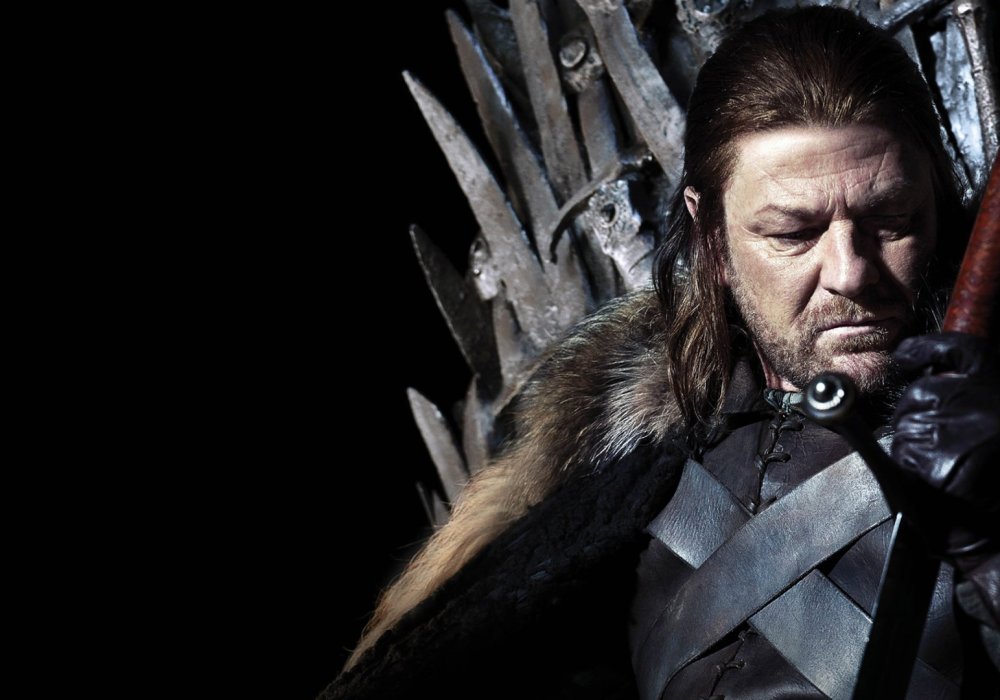
It’s no coincidence that on the day I sit awaiting delivery of Game of Thrones‘ second season that I post this, HBO and other cable outlets have truly blurred the lines more so than most in the past due not only to single camera approach, but also production values and elimination of the commercial break, thus, creating a more cinematic structure that builds its ebb and flow in a more traditional three-act manner than an hour of network television does due to the crescendo to commercial, the precipitous drop upon retuning and then the rise anew.

However, many shows on many outlets come to mind when thinking of the parallels and the current landscape, which I will plumb for the examples I am familiar with. This evolution didn’t happen on its own. I will look back and try and trace, to the extent I possibly can, the evolution of the exchange of ideas.

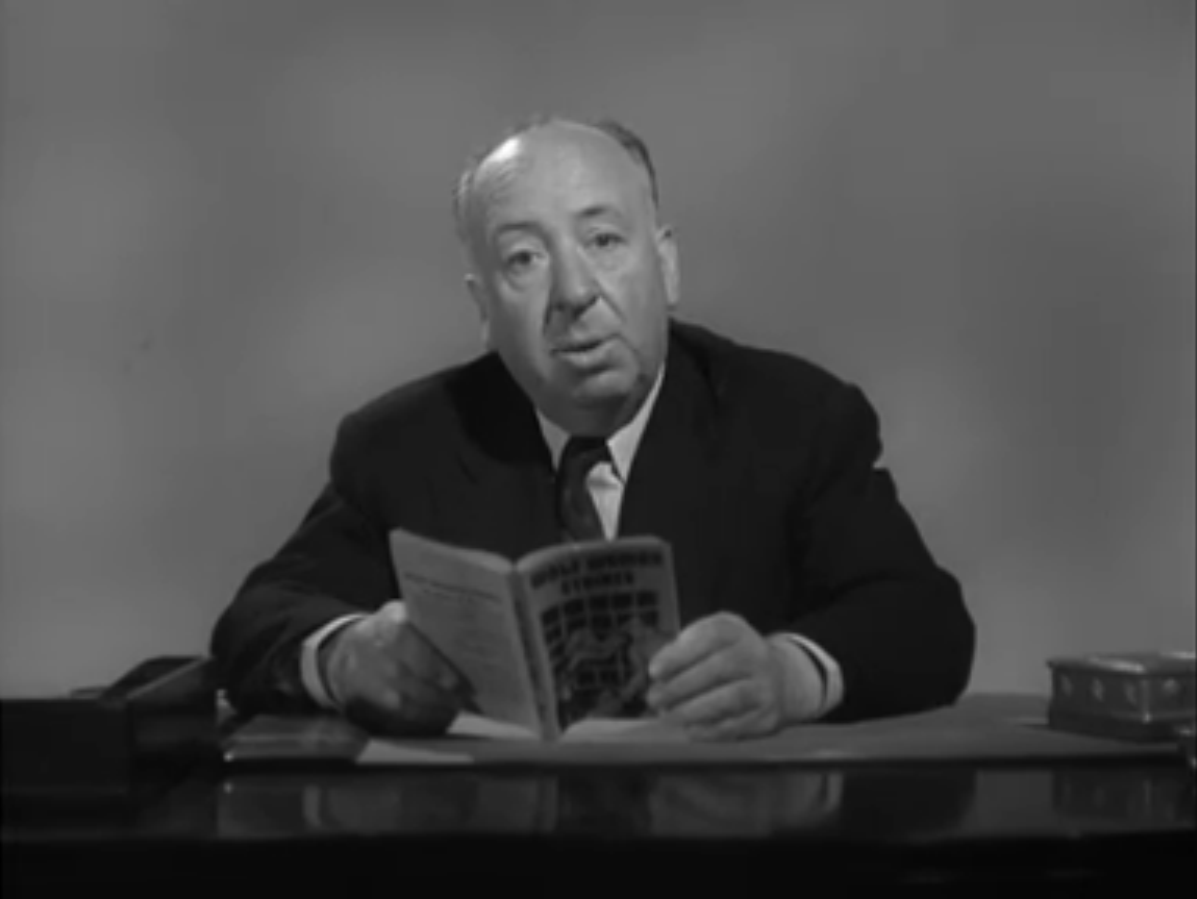
Alfred Hitchcock Presents (Universal)

However, it’s not only a technique and structural focus. The first topic I thought of and will likely examine, with what I have access to are the Hitchcock-directed episodes of Alfred Hitchcock Presents. There will be other topics to examine, other specific shows, but I won’t be tiresome in listing them here.

Essentially, any other medium in relation to cinema is worth taking a look at. I’ve always viewed film as a culmination of all the other arts since the advent of sound. With the introduction of sound elements of theatre were further added, music was added as a permanently affixed appendage rather than a variable live element, through the ages an artist’s touch in framing and composition, be it in color or black and white, has been needed. As any new form of communication and/or artistic expression has come about, film has been challenged, however, it perseveres both by adapting itself and also by an eventual embracing and exchanging of ideas and symbiotic influence. It’s been illustrated before with the rise of radio and then with television, the internet is the next frontier, but that landscape is still a bit nebulous. Film is not yet truly threatened or totally changed, similarly those making content for YouTube and other such sites are progressing, pushing back and breaking through but, still being in process, the changes are not yet as evident.

Television being the middle child of “Threats to Film” has firmly established its foothold as a fixture, mostly due to its varied nature of content and usage, but on the entertainment side it remains vital. The last thing that bears saying is that the fallacious “which is better” arguement will not be found in this space – and considering the main focus of my site I doubt you want to read such an anti-climactic piece. As many similarities as I will find, and as many cases of shared influence I will illustrate both films and television work, or don’t, due to completely different reasons. If television is in a halcyon it’s certainly not due to the networks. It’s a bit like the major/indie dynamic in film. What’s pushing the envelope and advancing episodic visual storytelling is basic and prime cable original content.

The Hitchcock piece will likely be the first. I have a definitely viewing list for that and taking an auteurist approach and looking at a different kind of show is actually one of the better easier way to start such a comparative analysis. Stay tuned.