Short Film Saturday: How Walt Disney Cartoons Are Made?

This is great contemporary newsreel look at how Disney creates its animated films. This was made in light of the release of Snow White and the Seven Dwarfs. One interesting factoid is the budget cited as $1.5 million dollars. Adjusted for inflation that’s $25 million today; I am unsure how much unionization would have ballooned that but just on raw numbers it’s an interesting tidbit. Despite its dated tone its a more entertaining explanation of the traditional animation process than I would give.

Favorite Film Discoveries of 2014: Part One (Shorts)

This is the same idea as “Favorite Older Films First Viewed in” which I did since 2011. The idea was one I first saw on Rupert Pupkin Speaks. I have usually done the list in parts. This time I will find ways to group the films. I noticed I had four short films that are available to view online so I figured I’d start with them.

Les Oeufs de Pâques (1907)

I only recently discovered the works of Segundo de Chomon. He seems a worthy Spanish counterpart to Georges Méliès. This is a presentational, magic style of silent film implementing many invisible cuts, but it is very enjoyable.

His Wooden Wedding (1925)

Many thanks to Fritzi over at Movies, Silently for suggesting this film when I wanted a wedding-themed silent. I was unfamiliar with Charley Case before viewing this film, and look forward to seeing more. It’s quite funny. Enjoy!

Mickey’s Race (1933)

This is a selection that is fitting not only in light of Mickey Rooney‘s recent passing, but it also plays into my Poverty Row April theme.

This is purportedly the last of the series of Mickey McGuire shorts (back when Rooney was credited as such) that he starred in while not signed with a major studio. The story is simple escapist fare and fairly humorous. It’s more noteworthy because I had not yet seen one of these shorts. Enjoy!

Please follow the link to view the film:

https://archive.org/embed/MickeysRace1933ShortFilm

The Fly (1981)

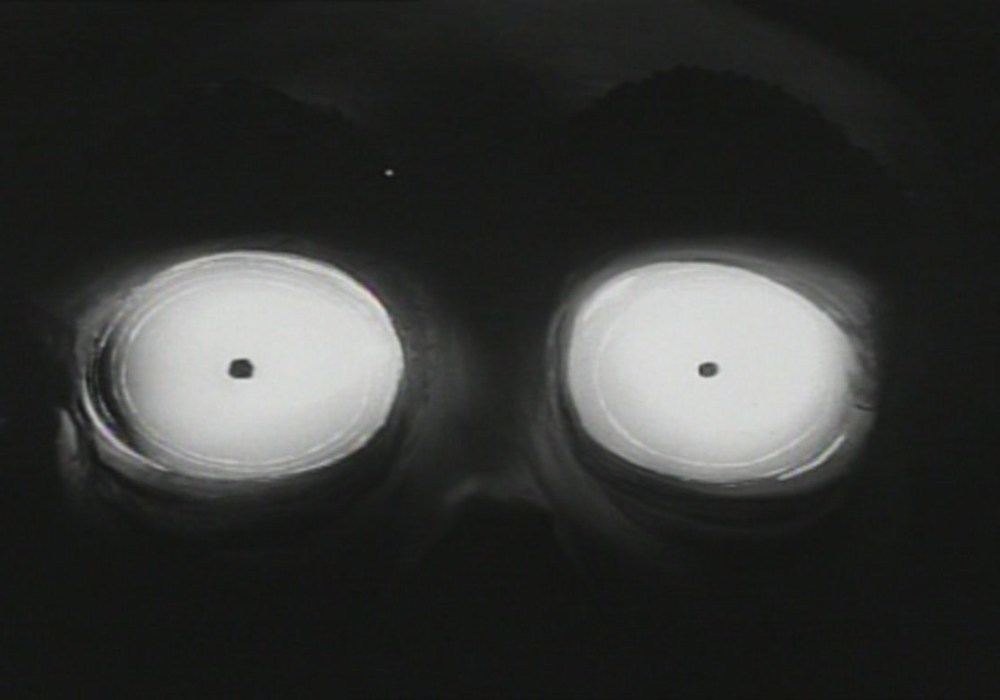
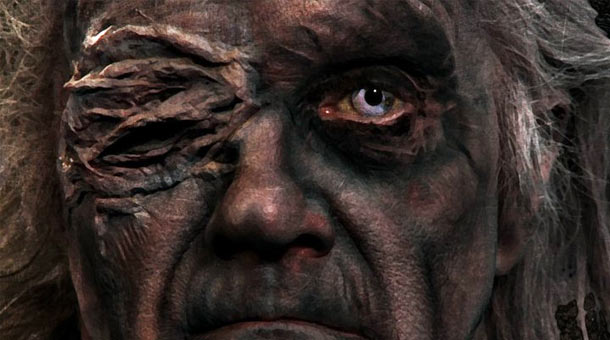
I when watching this film preferred to take a textual approach rather than a subtextual one. Regardless, it’s one of the most impressive pieces of first-“person” perspectives I’ve seen. For more of a read and more of a background on this film check the post on The Dissolve that drew this piece to my attention.

Tarzan Thursday: Tarzan (1999)

Introduction

In 2012 the character of Tarzan celebrated his 100th year in print. A serialized version of the story first appeared in 1912. A hardcover collection of Tarzan of the Apes first appeared in 1914. Being in the middle of the Tarzan centennial period it’s an opportune time to (re)visit many of the screen renditions of the character. Previous posts in this and other series can be found here.

As I have referenced several times in the past, there was a time when I wandered away from Disney fare but alas I have come home. In looking back it lasted maybe a decade or so. Now, having been back I am occasionally catching up. Thus, having tracked down many Tarzan titles over the past two years revisiting many and parsing them out and finding what in each typically does not work for me I figured it was time to give Disney’s rendition of Tarzan (the initial one) a shot.

As it turns out this film is a nearly unqualified success in both what it does in terms of telling a Tarzan story but also in its smooth manipulation of the standard Disney formulae. In terms of Edgar Rice Burroughs’ creation, as best as prior cinematic adaptations are concerned it distills merely one book, Tarzan of the Apes, and adapts that to tell its story. So far as Disney has been concerned there was no other blueprint to go off of because they were tackling the tale for the first time.

With an opening that is dialogue-free, save for Phil Collins’ source music; the film begins rather quietly and powerfully. The connection established between an orphaned babe and Kala, a female gorilla who rescues him and raises him as her own. The technique of animation allows for more exacting and concise editorial decisions about what needs to be shown. Since there are no live animals, but ones constantly under control of the animators, the temptation of cutting to something for cute factor is gone. Clearly, cultural mores changed over time, but the fact that this film deals strictly in an origin allows it to convey characters on a more human level, and avoid pitfalls some past films faced.
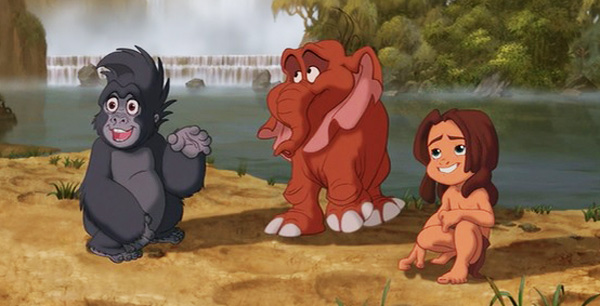
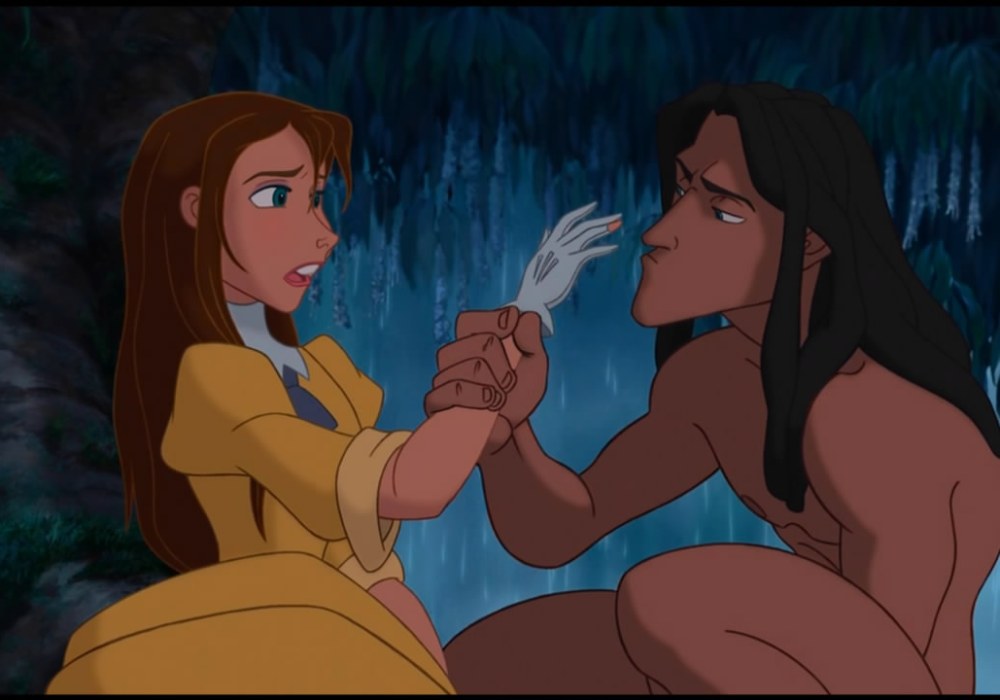
Tarzan (Disney, 1999)

Interesting from a Disney standpoint is that the characters do not sing, the music is played as part of the score. There’s one moment of instrumentation but they are not anthropomorphic chorus members this time. Tarzan’s sliding about as if strapped to an invisible surfboard through jungle trees gets a bit trite but it does add a controlled kinetic element and makes him seem superhuman. Also a stumbling block that is overcome is that of language. It takes some suspension of disbelief, but Tarzan and his family can talk to one another, but when he meets Jane, her father, and Clayton; he can only grunt at first and then he learns to parrot and eventually understand. This is well-covered with artful montages.

By getting away from certain conventions that other Tarzan movies set, and spinning the tale a Disney way, while also tweaking certain expectations of a Disney film the road to success is already paved. In a pleasurable surprise, however, the film also does manage to tug at the heartstrings like most Disney fare does – more strongly here. Also, Disney flips the script on a template established in The Jungle Book. A successful restructuring of a given pattern can be a joy to watch, conversely a failure of such an attempt is difficult to deal with.

Taking all that in mind, with so many other versions under my belt, and with the hallmark Disney delivery of the origin, this may be the Tarzan film I was looking for all along the one that combines adventure, emotion and the intrinsically fascinating things about this tale in one package.
Introduction: March to Disney 2014

As profiled on one of my newer pages this is my annual tribute to Disney and its works in all shapes and sizes. On the aforementioned page you can see the titles I have profiled in the past. This year I am seeking to cover a few more and dip my toe back into the TV waters on a new installment of Cinematic Episodes. There will be shorts and some other surprises through the course of the month. Come back early and often and see what this year’s posts have to offer.

Short Film Saturday: If I Am Your Mirror

Last weekend was the first time in a while I missed one of these posts. I will attempt to make it up at some point. Essentially I didn’t have my horror shorts lined up yet.

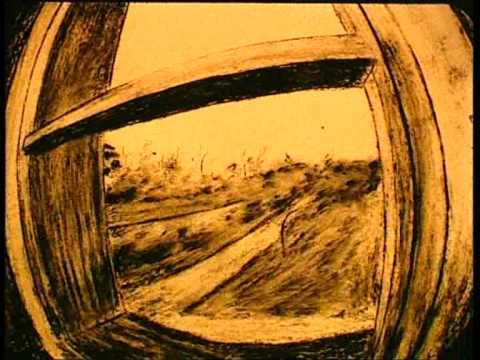
This one I found courtesy of Film School Rejects. It’s a rather apropos star because one of the earliest scares I remember was listening to The Tell-Tale Heart read aloud in grade school. This film offers quite a unique spin on the tale, rightfully citing it draws inspiration from it; as opposed to being a direct, literal adaptation. It’s a very visual tale with a unique style of animation employed to convey it. There is only one significant piece of dialogue in its 20-minute running time. A lot of the film is told in montage and flashback. If ever you needed proof that animation is a medium and not a genre, this should do the job quite well.

Enjoy!

March to Disney: The Rescuers in More Ways Than One

This is a series of posts this month wherein I will focus on Disney films. For more on my background with Disney films and about the timing of this focus please read the introductory post here.

One of my more recent revisits in the Disney library were the two Rescuers films. There are a few interesting things to note about this series, especially when one considers the seemingly unusual fact (due to how overlooked the films seem to be) that this was the first Disney animated property to spawn a sequel, and a theatrically released one nonetheless.

Now, the soft spot I have for these titles it does turn out is for more reasons than just the fact that in some territories these films are referred to as Bernardo and Bianca.

The first thing that both these titles share in common is that they truly embrace the “It’s a Small World” ethos that Disney incorporated in its parks, but didn’t truly exemplify in its films until later on. The Rescuers Down Under is the first non-package film that takes place outside a fictitious kingdom that’s vaguely European or in Europe itself. As much as I love Saludos Amigos and the Three Caballeros, there’s a very “Hey, let’s all go to South America” feel to it, rather than just naturally incorporating the location into the tale. Also, Bianca, voiced by Eva Gabor, in the first film serves in a mouse version of the United Nations and does represent Hungary.

The first film’s adventure, saving a girl named Penny from jewel thieves, is US-based, but is a trip down to the bayou that’s wonderfully exploited by Disney’s artists who in the 70s were vastly underrated. Many people find the movies that came out of this decade a bit subpar, but to me there was a flair and artistry, a painterly finesse to the backgrounds and a still-present fluidity that leant itself wonderfully to the stories they were putting out.

The sequel, as the title would indicate, takes the narrative to Australia. While the films succeed in complementing one another, they do have shortcomings individually. Taking the best from both would make one truly masterful work. In the sequel, there’s a more developed victim in need of rescuing whose story needs a cap. The villain is more motivated in the second film and less cartoonish.

Whereas the first film’s title is very apropos it really is about The Rescuers above all other characters, here in the second film its more split.

What The Rescuers and The Rescuers Down Under both did aesthetically was set the table for the decade to come. More so than any sequel footnote, each film seemed to encapsulate the aesthetic and sensibility of the decade prior and push towards the future. The Rescuers in certain scenes is the apex of the ’70s style, but pushing the boundary toward the more polished, less sketchbook ’80s feel and then The Rescuers Down Under with its aerial animation and action sequences was a precursor of the more dynamic swooping crane-simualtions and action shots in things like Beauty and the Beast, Aladdin and The Lion King. The Rescuers, it would seem, was a fitting title in more ways than one.