Short Film Saturday- Moonrise Kingdom Animated Shorts

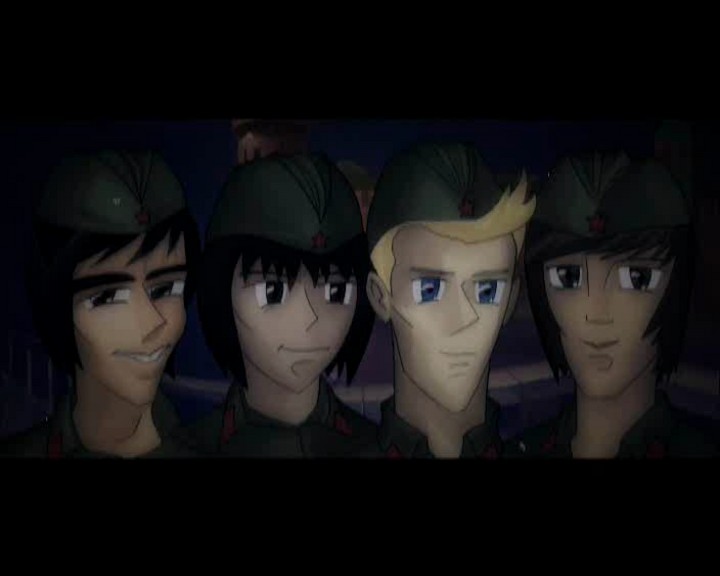
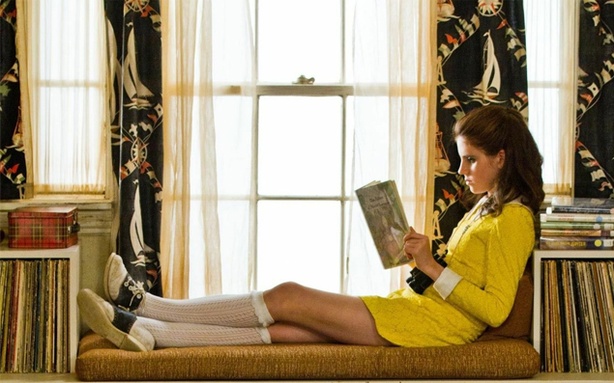
Wes Anderson’s film Moonrise Kingdom, which will be reviewed here shortly (Hint: I liked it), features six fictitious books that are Suzy’s (Kara Hayward) favorites and she reads from constantly. Aside from having a heroine who is an avid reader, thus encouraging reading in general, the film is also very creative in making these tales. Not only does Suzy read aloud from these imagined tomes but different artists were commissioned to create the covers and also animate this short film, which is not only entertaining, but gives you a glimpse into the world of this film without spoiling it.

Enjoy!

Book Review- Asterix and Obelix: The Book of the Film

Asterix and the Vikings (M6 Films)

Whenever possible I always like to address what the grain of salt is that my reader should keep in mind when reading a piece. In this scenario the grain of salt is: I like reading but I don’t as much as I should, and it’s likely impossible for me to read as much as I want to. So my experience is a little lacking but there’s another caveat here and that is this: this is essentially a novelization with a twist.

Now, novelizations are a bit passé and if I recall correctly I’ve only ever read a few. What was interesting and irresistible here is: first, I was at Disney World when I spotted it. Second, it’s Asterix and an animated film, which I said is where the franchise should go (little did I know it had been there before).

Now, it’s a hand-drawn (in terms of style if not technique), 2D film and that’s fine with me. I’d still love to see these characters and others get the motion-capture treatment as Tintin truly was a huge step forward for the technology to me, far greater than Rise of the Planet of the Apes.

Regardless, the fact that this film is animated means there are stills and illustrations in the book and it gives you a fair glimpse of what the film is like and that’s the idea: to conquer viewers for the film through another medium and this film succeeds in that task.

The images are plentiful, fairly well-selected and importantly are chasing the text, so the pictures don’t forecast the text but reflect it an allow the book to tell the tale.

As with any Asterix title, there are laughs to be had but most of it does come through the prose, which is impressive since the pictographic nature of the usual tale Uderzo and Goscinny tell is somewhat altered here.

The story also runs about as long as a typical Asterix tale 45 pages or so, but the bonus is that there are character, sketches and other making of illustrations and text that give you insight into the making of this film.

It may not be available on region 1 DVD but where there’s a computer there’s a way and this book has certainly made me want to seek this film out. Mission accomplished.

Asterix & Obelix (Clement)

Short Film Saturday- Ralph Phillips

Ralph Phillips in Boyhood Daze (Warner Bros.)

Continuing the theme of under-utilized characters I now turn my attention to the Looney Tunes. In the short film game the Looney Tunes are without question my favorite cadre of characters. I love some of the smaller personages especially, however, they are fewer and further between than other groups. The Looney Tunes while they do have depth in talent are buoyed mostly by their titanic personalities. Having said that the two Ralph Phillips shorts that Chuck Jones directed have always been favorites of mine. They are lyrical and whimsical celebrations of childhood imagination. Of all the characters in the Warner canon he is who I’d most want to see more of owing mostly to the fact that he has only these appearances. Establishing him as a dreamer makes him suited for shorts or a TV series and he could be easily incorporated into the Looney Tunes comic published by DC Comics, I’m uncertain if he ever has been.

So here are the two shorts, the first of which was nominated for an Academy Award.


Short Film Saturday- Every Cowboy Needs a Horse

Here’s a short I was reminded about recently by a post my cousin made on Facebook. There are a few reasons I decided to post it. In light of my recent trip to the Disney parks clearly the great shorts of the studio era. Here’s one that exemplifies Disney’s style even in a small piece, there’s music (lyrics included) and emphasis on visuals. It’s a fluid piece that encapsulates the dream-state implicit in the story. It’s very well done.

Short Film Saturday- Aquarela do Brasil (Watercolor of Brazil)

I was reminded of this one in an email from my grandfather.

As many of you know Walt Disney was quite fond of South America, Brazil in particular. Some of the studio’s best, but not necessarily most celebrated works, were about South America like the short vignettes that comprised the features Saludos Amigos and Three Caballeros. While they were in many cases pedagogical and didactic they were also entertaining and brilliant introductions to Latin cultures that in many cases highlighted the hallmarks of Disney’s Golden Age on of them being their inventive, mutative animated montage that brings one of the greatest Brazilian songs ever written vibrantly to life.

Enjoy!

Review- The Secret World of Arrietty

The Secret World of Arrietty (Studio Ghibli/Disney)

I haven’t seen that many Miyazaki films but I must say that I’ve liked all the ones I’ve seen therefore I wish I had seen more. It’s not a wonder that these films seem to transcend the typical limits of appeal and tend to reach rather broad audiences not just niche fans. It’s similarly not surprising that Disney has partnered with Studio Ghibli as the Japanese company’s US Producer/Distributor.

The animation in this film is rather beautiful to look at and very well composed. It is great evidence of the flexibility and variety that the medium still offers despite some prevailing trends. Perhaps more so than other film media animation still has within it the most diversified and varied employment of techniques and this film is evidence of why. It looks great.

Similar to the Toy Story films this story plays much with the theory of size by portraying small characters in a world that we don’t perceive as massive. It’s a boon to imagination and engages you in a different way and it allows you to view a seemingly normal world that you see everyday but you see it in a completely different way, a way you never saw it before. It makes the story to an extent more plausible but also more engaging because it’s making the mundane magical.

Now as is the case with many animated films when they travel overseas this film is dubbed. Now, I will say the performances by the English cast are pretty good. The leads being Bridgit Medler, David Henrie and Carol Burnett the only thing I found a little off was a lot of the vocalizations (grunts, sighs, onomatopoeia), which can sound unnatural and could’ve been omitted in the US version, were kept because they’re stylistically accurate and expected. So it’s the scripting I struggled with not the actors.

The story is based on the novel The Borrowers and it seems to be a well-handled version and it’s an interesting and inventive treatment of one of life’s minor mysteries (“Where did that thing go?”).

Playing off the concept and the theory of size there are great situations and tasks set forth in the film. The narrative is a simple but enjoyable but that suffers no unnecessary complications but instead progresses with the temporal elasticity of a Disney classic.

The film does all it can to separate and reunite this newfound friendship and concludes in a very touching and proper way. It’s a great animated film that might introduce some new audiences to Miyazaki as well as Disney’s own Winnie the Pooh did.

10/10

Short Film Saturday: Jan Švankmajer

Yet again I’d prefer to introduce you to an animator through one quick example of his style rather than a barrage. Should you enjoy it there are many examples of his works on Youtube and elsewhere on the web.

Below you will find some biographical information on Švankmajer, which accompanies the YouTube video:

Švankmajer (born 4 September 1934 in Prague) is a Czech surrealist artist. His work spans several media. He is known for his surreal animations and features, which have greatly influenced other artists such as Tim Burton, Terry Gilliam, The Brothers Quay and many others.

Švankmajer has gained a reputation over several decades for his distinctive use of stop-motion technique, and his ability to make surreal, nightmarish and yet somehow funny pictures. He is still making films in Prague at the time of writing.

Švankmajer’s trademarks include very exaggerated sounds, often creating a very strange effect in all eating scenes. He often uses very sped-up sequences when people walk and interact. His movies often involve inanimate objects coming alive and being brought to life through stop-motion. Food is a favourite subject and medium. Stop-motion features in most of his work, though his feature films also include live action to varying degrees.

A lot of his movies, like the short film Down to the Cellar, are made from a child’s perspective, while at the same time often having a truly disturbing and even aggressive nature. In 1972 the communist authorities banned him from making films, and many of his later films were banned. He was almost unknown in the West until the early 1980s.

Today he is one of the most celebrated animators in the world. His best known works are probably the feature films Alice (1988), Faust (1994), Conspirators of Pleasure (1996), Little Otik (2000) and Lunacy (2005), a surreal comic horror based on the work of Edgar Allan Poe and the Marquis de Sade. Also famous (and much imitated) is the short Dimensions of Dialogue (1982), which shows Arcimboldo-like heads gradually reducing each other to bland copies (“exhaustive discussion”); a clay man and woman who dissolve into one another sexually, then quarrel and reduce themselves to a frenzied, boiling pulp (“passionate discourse”); and two elderly clay heads who extrude various objects on their tongues (toothbrush and toothpaste; shoe and shoelaces, etc.) and use them in every possible combination, sane or otherwise (“factual conversation”). His films have been called “as emotionally haunting as Kafka’s stories[1].”

He was married to Eva Švankmajerová, an internationally known surrealist painter, ceramicist and writer until her death in October of 2005. She collaborated on several of his movies including Faust, Otesánek and Alice. They had two children, Veronika and Václav

Short Film Saturday: Jirí Barta

Rather than another marathon I will give you one example of the work of Jirí Barta. If you enjoy it an entire collection of his shorts is available on YouTube (at the moment). Below is the description found on Vimeo. Enjoy!

”Laid-off old mannequins spend their cracked and broken lives in an old, abandoned warehouse. New mannequins are brought to the warehouse. They are old as well, but from a younger generation. The two groups must live together, but it’s not easy at all.” written by Anon, taken from IMDB

Jirí Barta- Klub odlozenych (The Club of The Laid Off) (1989) from off the text on Vimeo.

Short Film Saturday: Aqua

This post serves two purposes in essence: one it serves to highlight a great young talent in animation (Gints Zilbalodis) and second to steer you towards a great Twitter account. I would not have seen this if I didn’t follow @ShortOfTheWeek, which is a great resource if you want to discover shorts on your own time. The film was uploaded to Vimeo, the more cinematic video site and is accompanied by this text written by its creator:

My name is Gints Zilbalodis, I’m 17 years old and this has been my passion project for the last year an a half. It started as vague ideas of a cat, ocean and overcoming fear. Then through numerous battles with the script it shaped up to something similar you can see now. After seven drafts I felt that it was ready to start storyboarding, but the film kept evolving all the way until the sound mix was done. I kept learning about filmmaking everyday, going through all of the different processes.

I chose the cat as the main character mainly to save time with exposition, because people know that generally cats are afraid of water. So I could just jump right into action. Plus cat is a fairly small creature and the ocean seems even bigger to him. And of course cats are much easier to draw than humans.

The film’s music is by my friend Bertrams Pauls Purvišķis who helped a great deal to tell the story the way it was intended. Music had a lot of to convey in very little time and it came out much better than I could’ve ever expected.

I’ve been delaying the release for quite some time, because as I learned by making it, a lot of mistakes made earlier when I didn’t have the experience had to be remade from scratch. I’m glad it’s finally done and I can show it to the world.

I will only further comment by saying its very visual but the music is brilliant, enjoy!

Tintin Finds Its Own Path

The Adventures of Tintin (Columbia/Paramount)

As the art of cinema develops alongside technology, so does the business of it. Methods of distribution and viewership are now more varied than ever, however, what some may not fully consider is that aside from method of viewing (streaming, MOD, DVD, etc.) theatrical releases also have found new paths. Now more than ever theatrical releases have tinkered with the formula. It used to be an unwritten rule that the rest of the world would have to wait for Hollywood films until America had seen it first. Now, for many reasons whether it be location or just the international viability of a given project, films are not only premiering overseas with increasing frequency but opening there well ahead of the US also.

Perhaps the best example of this is Steven Spielberg’s The Adventures of Tintin. I for one had always had a vague awareness of Hergé’s well-known creation but didn’t know much about him or the stories in which he lived. However, similar to my affinity to The Little Prince, which crosses not only various media but also three languages, I knew that it was a property more renowned abroad than in the US. Therefore, it’s perfectly logical that not only did Tintin debut overseas first but also opened there well in advance.

Tintin is, in fact, a cinematic rarity in as much as of this writing it already ranks #360 all-time in worldwide box-office with $239.1 Million and opens in the US tomorrow. Considering the fact that it opened in late October overseas and the ubiquity of social media below you will find some of the reactions I’ve gotten from overseas as I anxiously await the US release. The conversation started rather spontaneously when discussing some of my favorites of 2011 after that Twitter discussion I asked around and got more feedback:

Alex Terentjev, Russia

“What bout Tintin? I think this is the best film to share the evening with family…btw (By the way) I didn’t know anything bout Tintin before I’ve watched a movie, but u know this film is amazing…comedy elements mixed with criminal and interesting adventures and motion capture, as well, makes this movie really awesome…I even started to read Tintin comic books cuz of this movie.”

Patrick Gibson, England

Tintin, one of the best animated films I’ve seen in a long time! Such well thought out characters and beautiful animation!

@lucylucesim, Ireland

Tintin was brilliant![…]The 3D was great but could’ve been better utilized.

@everyfilmin2011, England

So, after months of looking forward to a new Spielberg movie, one of my Twitter followers threw cold water on my mood by telling me it was boring. I must admit, I’m glad they did – because watching a movie with low expectation is always best. First off, I can happily report that there was far too much going on for it ever to be condemned as boring but it’s certainly not the standard of an animated Raiders Of The Lost Ark, which I’d originally hoped…

The action, of course, comes thick and fast and computer animation really lets Spielberg’s imagination out of any normal constraints. Jamie Bell is the perfect voice for Tintin but the real revelation is Daniel Craig as the baddie. He hams it up like never before – talk about shaken and stirred! Of course, it goes without saying that Britain’s greatest chameleon actor, Andy Serkis, is unrecognisable and in top form as the captain…

My biggest bugbear is the 3D. It really doesn’t bring anything to the party and, once again, is just a giant rip-off. The sooner this gimmick dies off, the better. So, a Spielberg classic it isn’t but is Tintin worth a family outing. Yes, I should say so. Rating? 7/10

Here’s an excerpt from Screenings a great resource for those of you in the US who want a chance to see movies early and free:

It mainly mixed three of the original comic books: The Crab with the Golden Claws (1941), Red Rackham’s Treasure (1944), and of course, The Secret of the Unicorn (1943). While the precise motion-capture couldn’t compare to Hergé’s original execution of his characters, it delivered a new fascination for the current generation to enjoy. So don’t expect as much nostalgia but do expect a great viewing experience…

The script does a wonderful job introducing the audience to Tintin and the whole premise quickly. Even if you have no idea what the source material is about, you will get it within the first 10 minutes where you see the new animated Tintin get a caricature of himself which shows the original inked boy journalist […] By mixing many different plots in one, the filmmakers were able to explore more of the Tintin universe and splice together various story lines to keep the momentum and the pace quick. However, you never forgot the main story at hand…

The cast was as impressive as the men behind the scenes. The motion capture and voices were provided by the likes of Daniel Craig, Jamie Bell, Simon Pegg, Nick Frost, and motion capture legend/guru Andy Serkis. With every mocap film, Weta Digital somehow tops itself and delivers a more seamless experience letting you forget your even watching an animated feature. It was a weird mix…even though it looked extremely lifelike, The Adventures of Tintin still had it’s [sic] cartoony feel…

The 3D was used well but again, not drastically enough. The best implementations were the particle effects that were unlike any other movie. They added a strong feeling of depth in their scenes that can’t be duplicated using 2D cameras. Even with the fast moving action scenes, the 3D didn’t get too crazy or give headaches so in the end it just made the visuals pop that much more. I would actually recommend watching this one in 3D because animated films do gain the most from the 3D technology…

The biggest win for this production, however, was a chaotic sequence which never seemed to end. It was very reminiscent of the Indiana Jones days where everything fell into place and the characters had to pull off stunts just at the nick of time. Of course, this is a lot easier to accomplish when every movement is animated by a computer rather than a stunt double. In the end though, the action scene came out so well that it makes you want to watch the entire film again just to watch that portion. If it was on DVD or DVR, you would instantly rewind it back to see again. The whole movie is ok up until that point but then Tintin blasts into full force and dazzles you with the unbelievable. It was really fun and that alone made the movie enjoyable for me. If you’re ready for a big dose of action adventure, The Adventures of Tintin is an amusement ride in the form of a movie and you should probably watch it because the sequel is already in the works.

Two other pre-certifications are first that it currently scores a 7.8 on 21,946 votes on the IMDb, it is “Certified Fresh” by Rotten Tomatoes with 82% based on 67 Reviews and is at 67% on 11 reviews at Metacritic.

However, my open inquiries for a reaction from abroad to Tintin also garnered this surprise response from Simon Doyle who runs titinologist.org:

In 1983, when I was much younger, I watched an “interview”, broadcast on Janet Street-Porter’s “yoof TV” show Network7. Boy-reporter Tintin (we, the viewing public, were assured) was orbiting the Earth in Professor Calculus’s rocket, to bring amazing news to the world. Duly excited, I watched a 2D, somehow-electronically-but-rather-simply-animated Tintin inform the interviewer (and us) that none other than Steven Spielberg was in the process of bringing his globetrotting adventures to the screen!

Wow! If he could do for Tintin what he’d done with Indiana Jones–! I sat back, and waited…

…and waited…

…will it ever happen?…

…and waited…

…Great snakes! – A chap could start to lose hope…!

…and then…!

It’s 28-years later, and I am sitting in the viewing-theatre at BAFTA (BAFTA! The glittering heart of British cinema!), courtesy of the good folks at MediCinema, watching Thompson and Thomson introduce Steven Spielberg’s glorious new movie –

The Adventures of Tintin: The Secret of the Unicorn!

– and it proved well worth the wait!

If you want the devil’s advocate take there is a discussion link at the bottom of the review, however, if someone who has been as devoted fan for ages and has waited that long for a film version can come away that impressed it is most definitely worth my time. Moreover, the distribution path decision while might’ve seemed obvious to some has reaped rewards for the film as it opens with a bit more buzz stateside than it might otherwise.