Review- Hereafter

Cécile De France and Matt Damon in Hereafter (Warner Bros.)

Clint Eastwood over the last decade has emerged as one of the pre-eminent American filmmakers on the cinematic landscape. Part of the reason behind his emergence is his belief in tried and true classical storytelling techniques. They are the kind of techniques that form the foundation of film and have become almost outdated due to their simplicity. This straightforward approach is avoided by most not only for aesthetic reasons but also because you have little to no margin for error when you are this direct. Some may call it ham-handed or on the head but that just indicates a personal disconnect with the material what best describes it is direct.

Why this analysis of his style is even worth mentioning is because he has now applied it to many different genres and/or styles of tale within close proximity to one another. In this tale, however, there is a little something missing from it. It’s almost as if the subject of the hereafter needs a little bit of an arcane approach to be as effective on screen as it could be.

There is, of course, also the concern of the limited omniscience that is rendered this tale. We are left examining people who are touched by death but none who actually die. We don’t follow them we follow the living, which makes it a much more mundane human drama, which can be as interesting if not more so. Of course, it ends up being a tale about life but there is no major insight or revelation offered save for some reassurance that there is something to look forward to in the big sleep.

It tells a three-pronged tale which will predictably intertwine and much like You Will Meet a Tall Dark Stranger it could’ve used some more judicious edits to make the story it tells just a bit tighter. One example is the trip that Marie, played wonderfully by Cécile De France, takes to Switzerland. She is only there to get files from a doctor. Yet there is quite a bit of her walking about and witnessing melodramatic deathbed scenes before she meets with the doctor. In tandem with that both her scenes with her publisher run a bit long and could’ve been shortened. The eventuality of the intertwining becomes apparent at some point so the journey needs to be truncated somewhat.

The acting overall is very strong and carried the movie through its doldrums. Matt Damon in particular is quite effective especially when he is doing readings on people which he approaches tentatively.

This film is also proof that films don’t necessarily need to be replete with incident but at least information such that the story moves on. Both Marie and Marcus have their very clear inciting incidents which are huge but the rest of their respective journeys are filled with a lot less fireworks but no less interesting just a bit longer than necessary.

Eastwood in this film is tackling a bigger subject with much the same approach he has faced others except musically. If there’s one thing that sets Eastwood apart from most is that he typically also scores his own films. In this film, however, the score is never noticeable. Which is good because it doesn’t call attention to itself but it also doesn’t enhance the film greatly.

All that said this film does have its moments of surpassing quality. Particularly the ending and the much anticipated reading. It does give us wonderful visuals in the rare glimpses of the afterlife we do get and does acknowledge the enormity of its subject matter and gives you some food for thought.

6/10

Hereafter is available on home video starting today.

In Memoriam- John Hughes

John Hughes

Often times an era in which one excelled, and the fact that an artist was wildly prolific within a time period greatly influences our opinion of him. Simply calling John Hughes the “Bard of Teen Angst” is not praise enough for not all of his work was a teen movie or a brat pack film.

Planes, Trains & Automobiles was not only an uproariously funny film, which was John Candy and Steve Martin’s only onscreen meeting, but a heartwarming film in the end. The revelation that Candy’s character was homeless became a 1980s template for sitcom episodes as did the plots of The Breakfast Club, Ferris Bueller’s Day Off and Sixteen Candles.

Hughes then put Candy in The Great Outdoors in a similar brand of comedy but fewer social ramifications.

This was the man who penned the Vacation films to greatness and those were hardly angst-ridden just downright funny.

Hughes also showed his more dramatic side with titles like Curly Sue – a film whose perception in my mind is likely skewed due to my sister’s incessant watching of it. The heartfelt, sincere, coyly funny, at times dramatic She’s Having a Baby.

He was a star launcher from propelling Michael Keaton in Mr. Mom, and also John Candy, Anthony Michael Hall, Molly Ringwald and Macaulay Culkin.

Even his greatest hits: The Breakfast Club, Weird Science, Ferris Bueller’s Day Off show more diversity than Hughes is typically given credit for having.

The screenwriter is a largely anonymous figure in the Hollywood game and in the American consciousness, even more so when said writer chooses to leave Hollywood behind. Even with one of the longest string of hits in the history of film there was a fade, yet even while fading Hughes put his name on big scripts.

In the 90s Hughes was hired to write a series of remakes: 101 Dalmatians, Flubber, Miracle on 34th Street and Dennis the Menace.

He also wrote Beethoven which was good in its first installment and he has continued the series under his pen name scripting it or lending his characters.

The decade of course began with Home Alone, which has been tarnished in hindsight due to many things unrelated to the film. It is a classic comedy and at the end of its theatrical run was the 4th highest grossing film of all-time and the #1 comedy. It is still in the mid-20s of the all-time rank 19 years later, with no inflated ticket prices there to boost it. Hughes went on to pen the next two in the series.

Home Alone was inspired by one short scene in Uncle Buck where Macaulay interviewed Buck’s girlfriend through the mail slot. Which is another tremendous example of his artistry: one, because such a short exchange spun off into another film and that he found inspiration in that. It’s also great because the two films complement each other.

The remainder of his credits he had attributed to him where written under his pen name Edmond Dantès, he did have few indie attempts like a TV series called New Port South and a hard to find film called Reach the Rock.

Which were followed by story credits such as Maid in Manhattan– nothing special but as good as a Cinderella update can be. Lastly, Drillbit Taylor which reportedly was a tale optioned in the 1980s and untouched ’til last year.

So a lot of that body of work had little to do with angst and a lot to do with fantasy and laughter and things that would get us through angst. The label likely has to do with his magnum opus, the masterpiece whose first draft was written over the course of one weekend: The Breakfast Club.

This is the kind of film that strikes a big time nerve not just for teenagers but for those who were teenagers, I myself was in college when I first saw it and likely connected with it more because of it. It examines its characters with surgical precision, and they all understand each other more they are by no means fixed or better for the experience just changed and more aware. They stand united against a common enemy – their parents and the principal. 

Part of what made Hughes great was that he had an unwavering view of the world best exemplified by a quote of his: “I don’t think of kids as a lower form of the human species.”

Hughes practiced what he preached and will not be forgotten by any of us who are young or merely young at heart. Whether we just sought escape or seek to create characters as honest and true as he did we will not forget his words.

The Gray Area Reviews

Every year there is invariably going to be a gray area with regards to films. What I mean by that is due to the tyranny of release dates (meaning Oscar-nominated or contending films being released towards the end of the year) there will be some that slip into the following year.

Some of these films will fall into the gray area meaning they were out in say 2010, I had adequate opportunity to see them but passed for whatever reason. Some I was ignorant about their release so they retain their eligibility for the following year.

This year has an additional shade of gray, if you will, and that comes form the fact that I was transitioning from one site to another and busy archiving rather than writing new content. Some films failed to get timely reviews due to that fact, however, they still deserve them and that’s what this article hopes to do: bridge that gap.

So without further ado: The Gray Area reviews.

Rare Exports

Rar Exports (Oscilloscope Films)

There isn’t much in the way of originality coming out of American horror films these days. If you want something different you’re better off going international specifically to Europe. Rare Exports is a Finnish film that tackles the Santa Claus in horror subgenre with style, humor and intelligence much in the way the Norwiegian film Dead Snow took on the Nazi zombie subgenre.

There is a good bit of folklore re-interpreted and made to be a modern horror tale with a few intentional chuckles along the way. There is some good make-up work and some really good performances out of the cast both young and old.

The only thing that holds this film back is after a while it stops progressing its narrative and danger quotient and just sort of stagnates. It never becomes uninteresting and has a nice button at the end it just slips in the latter part of the second act into the third.

It is, however, a brisk and fun watch that you should look for on video when it comes out.

6/10

True Grit

True Grit (2010, Paramount)

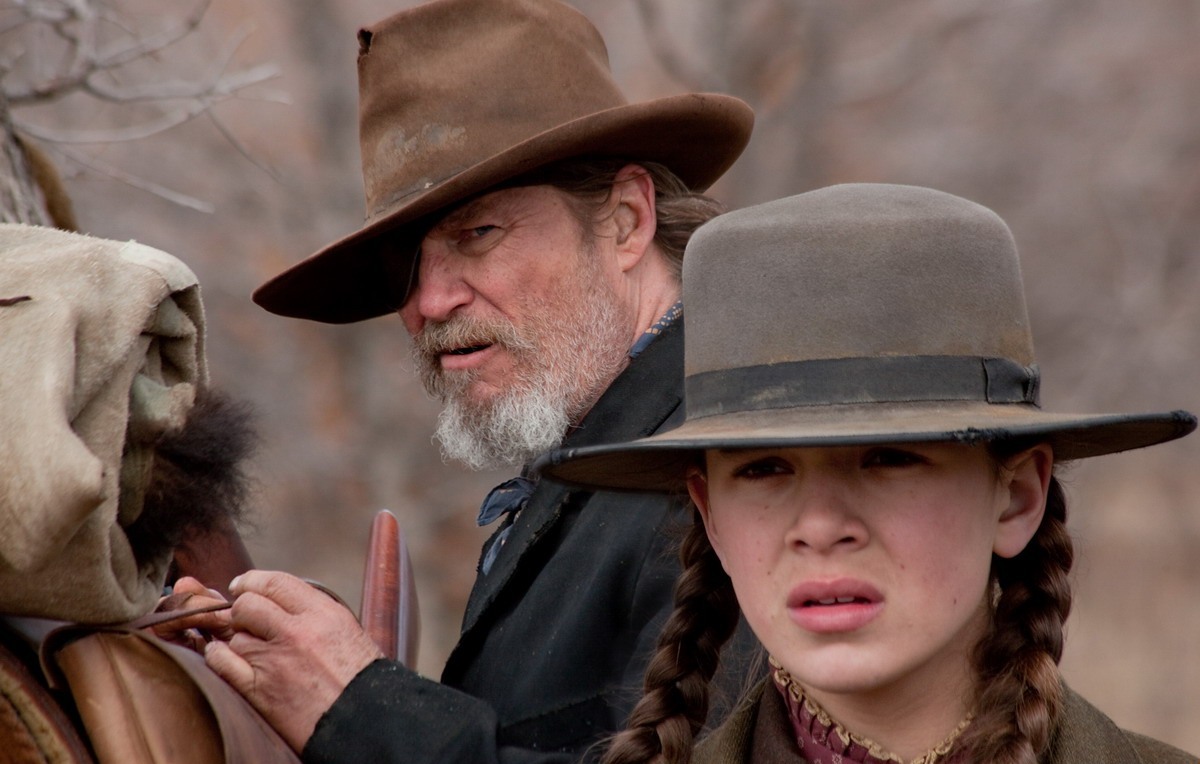
This film falls into the Gray Area because I only managed to see it in January though I had chances to in December. For the record, I would not retroactively include this film in my Top 15 of 2010, however, that is one of the few things I can really fault it for. The film works and it works well I could just never get as involved with it as it wanted me to be.

The other thing that is a little bothersome is that in a rather realistic and well-spoken film you get an ending that smacks of a Hollywood cliché. The annoyance of false climax aside it’s two perils combined in one to add a little more running time and a quasi-tragic button to the whole affair.

Regardless of that the film is beautifully photographed by Roger Deakins and is played very convincingly by its cast particularly Jeff Bridges and newcomer Hailee Steinfeld. It’s a plot that’s simple enough but also intriguing enough that it naturally becomes a character study without ever being tiresome.

8/10

The King’s Speech

Colin Firth in The King's Speech (The Weinstein Company)

I have been reading some people either complain or just state how The King’s Speech is both rather bulletproof but also not mind-blowing. To re-iterate the above review if I had to go back would I slide this film in my Top 15, probably not, do I get the bulletproof comments? Yes.

There is even less to nitpick this film about, if you want to use that term than there is for True Grit. The only thing that slightly holds it back in my book is the intangible visceral reaction that I just didn’t quite get out of this film as opposed to others.

It’s not a daringly original film in terms of concept or structure it’s just very well executed, acted, edited and shot. It’s the kind of Best Picture contender that while I may not have nominated I can really get behind because it is the best film that the lowest common denominator can get behind. Seriously, who can hate this film?

Before you answer consider the fact that I may need to ask you what your problem is. This is a really easy film to get into whether it blows you away or not and is a really likable kind of story. It’s a “feel good” movie without all that “feel good” movie cheese in the mix.

9/10

The Rite

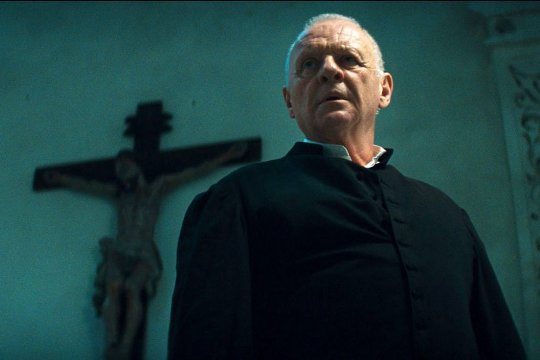
Anthony Hopkins in The Rite (Warner Bros.)

The Rite is a rather surprising entry in the possession/exorcism subgenre of horror. There’s not a lot of new ground to tread so far as this kind of tale is concerned, however, the one thing this film, does right off the bat is acknowledge the existence of the subgenre with a reflexive joke about The Exorcist.

This film, of course, is a little like that one: there’s an old priest and young priest, there is the subject of doubt and it is in turn more about the exorcist than the exorcised, as a matter of fact, the exorcised are typically rather glossed over. However, what this film does do is deal with the mundane aspects of exorcism, it deals with many possessions and brings it down to earth a little from where its been.

The examples it uses as proof are simple and well-thought out. There are very good flashbacks in this film that allow more doubt to be created about where the tale is going then you’d ever expect.

Then there’s Anthony Hopkins. Just the fact that I am mentioning his name this late is an indication that this is a quality film worth seeing. Without saying too much there are shades of Hannibal Lecter in his performance which are great. The acting overall in fact really props this film up. It is definitely worth viewing.

8/10

The Green Hornet

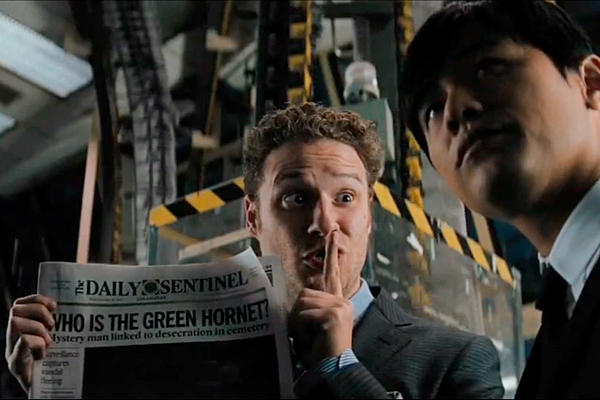
Seth Rogen and Jay Chou in The Green Hornet (Columbia Pictures)

I truly shudder to think at what this movie would’ve been like had it not been for the creativity and flair that Michel Gondry brings to it. Yes, there is plenty of competition between action and comedy elements of the tale and both serve the film and story well but there’s also a lot of both and the film gets a little long in the tooth. As an origin story it’s not the most gripping based on how its handled not just based on the empirical facts of the character such that the flair and verve that Gondry brings is desperately needed.

The name Seth Rogen in the same sentence as the word superhero still does seem a little funny to say, however, it does kind of work for this character because it’s not a case of his being superhuman and his sidekick, well-played by Jay Chou does contribute quite a bit to the equation.

6/10

Review- You Will Meet A Tall Dark Stranger

This film will be released on video tomorrow.

Naomi Watts and Anthony Hopkins in You Will Meet a Tall Stranger (Sony Pictures Classics)

I, unlike many, will attest to the fact that reports of Woody Allen’s demise are greatly exaggerated. While last year’s reviews for Whatever Works were greatly mixed it does not seem like the kind of film that you can use to illustrate that someone had “lost it.”

In You Will Meet a Tall Dark Stranger you can see why people would say that, however, the way I see it is that you get in the film a pastiche of what’s both great and not so great about Allen. At the risk of sounding like a stereotypical fan who likes the “early, funny movies” it must be stated for the record that this film is a drama before all else.

Moreover, it examines some similar questions as both Whatever Works and Vicky Cristina Barcelona examined. It’s principally about life and love but to paraphrase Allen’s idol Ingmar Bergman “What else is there?” Where the film is somewhat lacking is that it could dig deeper.

What really holds the film back is that fears that were caused by the trailer are realized and it’s the voice over. It is perhaps the worst-delivered most poorly-acted voice over narration that I’ve been privy to listen to. Zak Orth’s delivery could not be be drier if he tried. The only thing that helps this film overcome it is the fact that there’s not a whole lot of it and he’s speaking Allen’s words. Sadly, it also unnecessarily spoon-feeds a relatively simple film and by speaking the film’s conclusion to its hypothesis this renders it more banal than it otherwise would’ve been.

The Bergman reference above is not totally misplaced as this is another examination by Allen of a subject that obsessed Bergman: death. Through these intertwining tales Allen not only examines how we deal with mortality but conversely, of course, with life and what the point to all of it is.

Barring the aforementioned narration the acting is good across the board. The characters are actually a bit less neurotic than Allen’s usual dramatis personnae and feel more like well-rounded, less erudite types. While these characters can come across as more flat it is a tribute to the actors in this film that they breathed life into them.

Another problem the film battled was the edit. The film is a bit too methodical. It never quite gets slow but it could quicken its step through the second and into the third act. True there are four interconnected storylines to resolve but they all end up more or less where we expect them to when we expect them to such that not as much time need be devoted to each to make the point that each segment is trying to make.
While the valid point that sometimes “delusion works better than medicine” is well-made and ties up the film nicely albeit heavy-handedly there is a surprise that develops towards the end that is never really resolved. Now while we can surmise what will happen and the dilemma the character in question is left with it would still have been nice to add a little more closure to that chapter than we get.

Although not a great work and not a minor work, Woody Allen’s films are still vital because he is not overly-concerned with genre or the trappings therein. He through his writing and his cinema is still one of the few American auteurs who is willing to ask real and serious questions with every film he takes on and for that reason his audience should spring eternal and not age with the great cineaste.

6/10