What Should You Want a Franchise to Do Next?

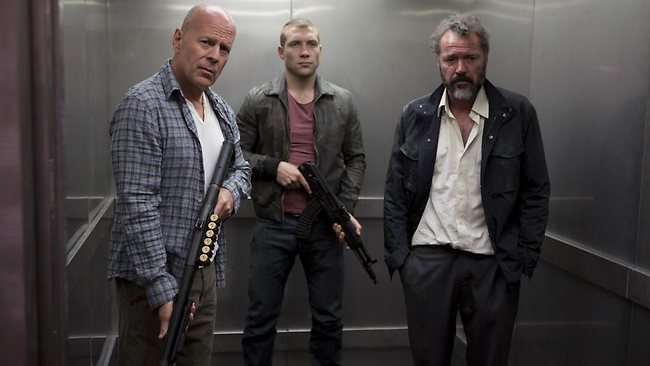
I cannot say I’m a die hard Die Hard fan, not just because that’s a pun, but also because it’s true. However, what the chatter about the latest Die Hard did reveal to me is that even in disappointment, which is the fairly universal reaction to the latest installment, there are different grades of frustration. Furthermore, differing thoughts on what the future of the franchise should be by those who hold it dear.

Essentially, what struck me as most interesting to write about was examining the logic of differing plans through the spectrum of my feelings on other series’.

One of the first I heard can be succinctly described as “Ain’t Goin’ Out Like That.” In other words, “Why end the series on a sour note?” However, if I were to apply that to a series I truly liked there would need to be something that I wanted to see salvaged. Because on the surface it can seem a contrarian statement to say “Man, that wasn’t very good, they’ve got to make another one.” However, I do get the sentiment. I think a series in my mind that has gone off course but can still be righted is say the Final Destination films. So far as Die Hard goes, I don’t think a third generation is an eventual solution or becoming further spy-oriented. Again, not a die hard, so I won’t over-speculate.
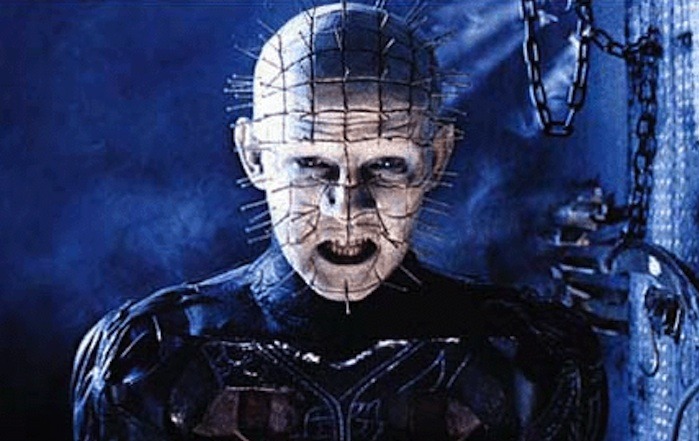
Hellraiser (1987, New World Pictures)

As opposed to continuing and just fixing the story, another reaction that’s possible it to want to go back to square one. I doubt this would be satisfactory to Die Hard fans. I know it’s a course of action I would accept as a fan of the Hellraiser concept and works wherein Barker was involved, that series is so far from healthy, restarting is the only way to come close to his intention for the character. Especially when the last film prompted Barker to respond that this particular plot it didn’t even come from his a-hole much less his mind, one wonders how worried about being true-to-form Dimension really are. In Die Hard terms, I find it hard to believe an attempt that doesn’t involve Bruce Willis would be made any time soon. The reboot option may only come when he’s really, really old and plays a humorous cameo wherein my generation and those above can tell the youngins that he made the first one and it was better.

So righting the ship and a reboot are options, but not viable ones in this series. The other two options that are theoretically possible would be a prequel, which also doesn’t makes sense here, and just ending it. These two seem to be the two hardest options to accept when your the fan of a franchise. Usually my litmus test about a prequel, or a tale in the same realm being told, is involvement of the originator of the series, like if Rowling pursued other wizarding stories or pursued a new strand of tales with her triad.

Harry Potter and the Sorcerer's Stone (2001, Warner Bros.)

Another determining factor is: is there room for narrative growth? Lucas had plans for more Star Wars, so now that the decision about proceeding on a new installment belongs to someone else; it’s happening and that’s fine by me. The reported stand-alones are too. The differentiation between the Star Wars and Harry Potter properties is one of time and ownership. So far as we know, lest we get new indications otherwise, Rowling’s world-building is complete. Lucas’ plan was always longer.

Few franchises have a grand design, and that prompts many follow-ups to come about due to responding to questions such as “Well, why not?” or “Well, what now?” Those with a grand design seem to have more staying power, and those who are consistently trying to re-invent the wheel are gambling more.

In the end, I believe “The Ain’t Going Out Like That” school should be the one we feel a film falls into least. A desired abandonment, as nihilistic as it may sound, could be the preferred reaction to most disappointing late-franchise sequels. The cessation of installments ends the false hope, that no matter if we know better, that part of us always holds onto believing that an intangible piece of the first film’s magic will come along into the second, third, fourth and fifth. So perhaps rather than wanting it to be fixed perhaps a franchise we feel is broken should be left alone until it heals or dies.

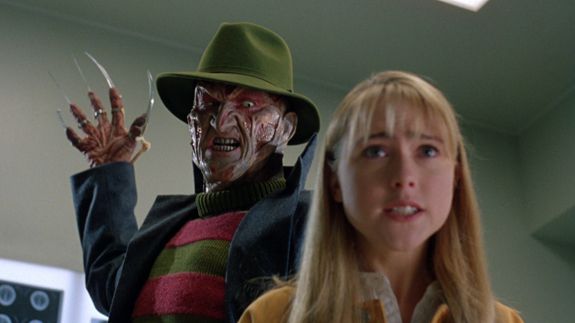
61 Days of Halloween: A Nightmare on Elm Street, the Series Revisited

Most holidays worth their while encompass entire seasons, such as Christmas, for example. However, as you may have noticed there is a corporate push every year for us to think about the next holiday even sooner. While this has many negative side effects I figure I may as well embrace it.

Since Labor Day is really only good for college football and movie marathons cinematically it is as significant as Arbor Day, which means the next big day on the calendar is Halloween and we can start looking toward it starting now.

Daily I will be viewing films in the horror genre between now and then and sharing the wealth. Many, as is usually the case, will not be worth it so for every disappointment, I will try and suggest something worth while as well.

A Nightmare on Elm Street

Each year, since I’ve started doing 61 Days of Halloween anyway, I’ve selected a long-running horror series to view in its entirety in rapid succession. I’ve already done Halloween, Friday the 13th, Children of the Corn, Hellraiser and Final Destination. Now, whether I spawned write-ups or not on each individual film has varied, what it does serve is to track the trajectory of the series, to follow certain narrative threads, concepts and plot points through the series.

A Nightmare on Elm Street is a series I should’ve done earlier. There is a a slasher trinity in 80s, it just stands as a fact whether I like it or not. I’d peg the Nightmare on Elm Street series 3rd overall, and I still do having seen it all. Essentially, what it boils down to is that it’s a great, great concept that’s never executed to it maximum effectiveness.

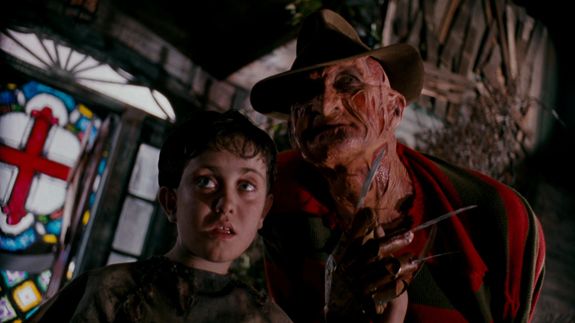
One issue that always plagued the series as a whole is the rendition of Freddy Krueger. In Wes Craven’s New Nightmare, a film which does great things with simulacrum and reflexivity, there is a great joke where Heather Langenkamp (playing herself) is confiding in Robert Englund (also playing himself) that she’s having nightmares about Freddy. Englund responds something to the extent of “What, like, me as Freddy?” Heather responds, “No, scarier.”

It’s a wonderfully perceptive joke by Craven. Over the course of the original series, Craven only is involved in the first two, Freddy becomes more frequently a vehicle for one-liners and clownishness. It ends up being the situation, and whether or not we have any sympathy or identification with the characters, that determines whether or not we’re involved. Freddy does have an arc in the series, which is gravitates towards comedy. Jason and Michael Myers stay virtually the same, we may learn more about them, but they as symbols do not change; they don’t speak, they rarely if ever show their face and they haunt in their same way.

Perhaps the best thing about the Nightmare series consistently is that it does come of with very creative ways to have Freddy attack anew, or to explore a new aspect of the Dream paradigm. In a similar manner to the Children of the Corn series, the second Nightmare film is perhaps the most unfortunate and furthest removed from the intentions of the tropes established in the first. In this one, Freddy is able to lodge himself in his victim’s mind in his sleep and he bursts forth with a body anew whenever he takes over. It’s a symbiotic, quasi-Dark Half oddness that doesn’t befit the rest of the series.

Similar to the Halloween series which follows Jamie Lloyd for a few films, there are the Alice Johnson movies in this series. Some under-served ideas occur in her films in both Dream Master and The Dream Child wherein you have very interesting concepts that don’t get the kind of films that live up to how fascinating the ideas folded into it are.

Aside from New Nightmare, which flips the script literally, Dream Warriors is the best new ground covered. It reintroduces Nancy years later in a pretty great evolution of her character becoming a mental health professional with a unique insight to her young patients’ nightmares.

Now, as I mentioned above, in ranking the iconic 80s-started series, I put Halloween above Friday the 13th and A Nightmare on Elm Street. I would do so anyway, but having the two other series involved in the farce that is Freddy vs. Jason doesn’t help. And, of course, the way that film ends, even taking it for what it is, didn’t please me in the slightest.

So, the concept is great and was original upon its inception. In horror movies the “it was only a dream” escape was always a cop out. Here, in this series, there’s nothing more dangerous than dreaming. It’s not only a dream. That above all is most refreshing.

Now, this film, like the other two iconic franchises of the 80s, has been re-imagiend for the 21st century. I already wrote plenty about it in my initial review, but it did find a new avenue to make sleep attack when you least expect it. It was also a set-up part one that could’ve been improved upon in part two. However, the good news/bad news is that apparently the pie is split too many ways to make a sequel financially desirable; so for the time being Freddy’s dead anew. If and when he’s resuscitated let’s hope his persona leans towards the remake, and that the film makes no apologies for his villainy and the dream concepts are fully enforced.