61 Days of Halloween: Vinyan

Most holidays worth their while encompass entire seasons, such as Christmas, for example. However, as you may have noticed there is a corporate push every year for us to think about the next holiday even sooner. While this has many negative side effects I figure I may as well embrace it.

Since Labor Day is really only good for college football and movie marathons cinematically it is as significant as Arbor Day, which means the next big day on the calendar is Halloween and we can start looking toward it starting now.

Daily I will be viewing films in the horror genre between now and then and sharing the wealth. Many, as is usually the case, will not be worth it so for every disappointment, I will try and suggest something worth while as well.

Vinyan

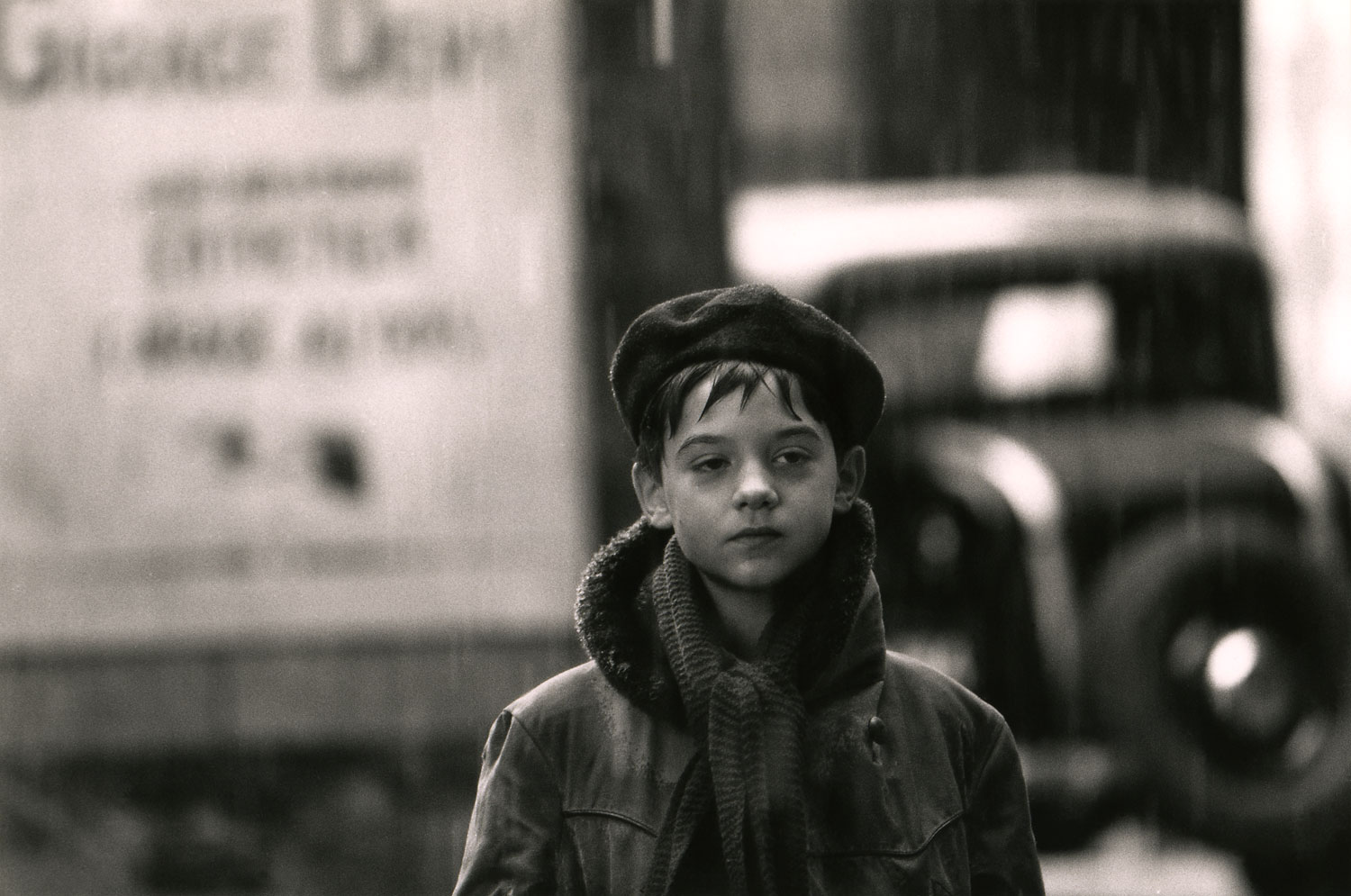
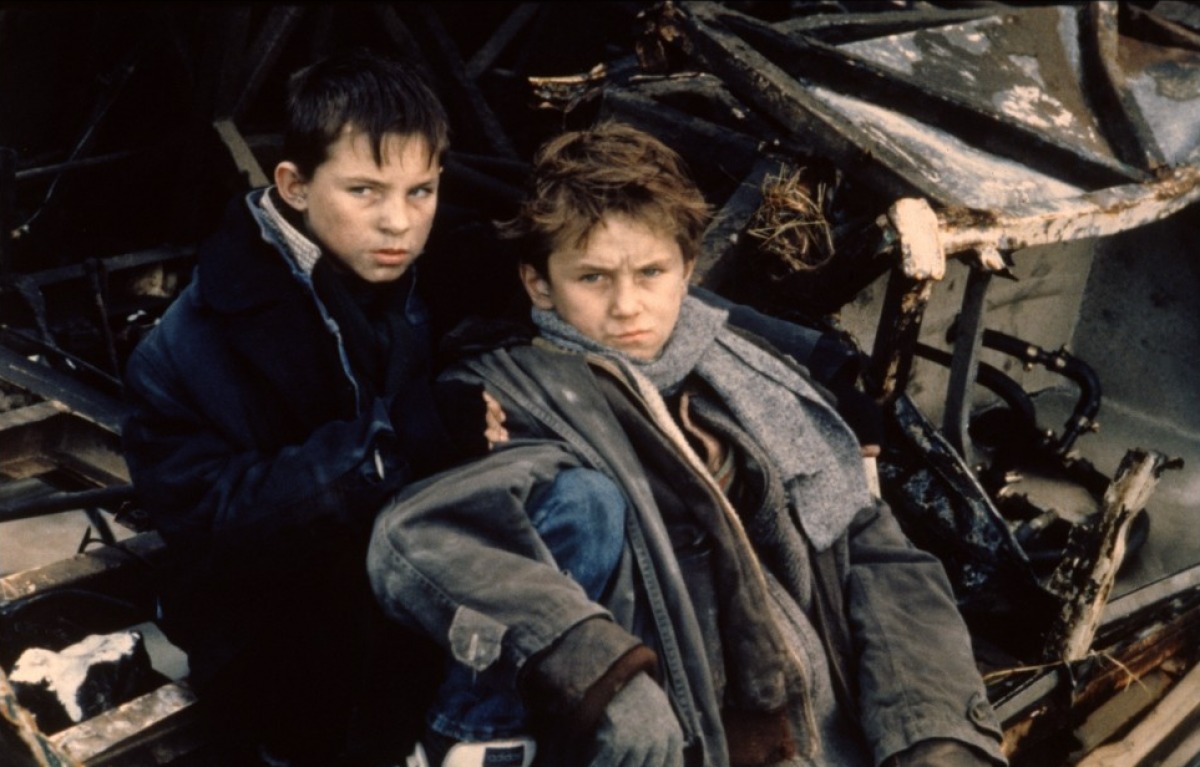
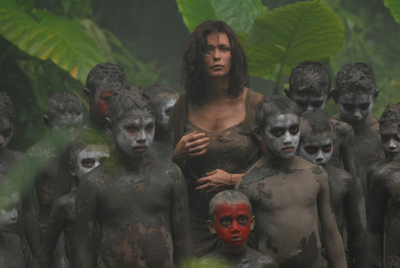
Vinyan was an unknown horror-drama film to me before picking it up at Best Buy one day. This film is an absolute success visually and there are myriad reasons why. Students of cinematography should watch this film because rarely if ever have I seen so many different techniques employed in a single film so naturally, and effectively. It was most certainly not what Hitchcock would’ve called “pictures of people talking” but rather “paintings in which people moved.”

A second, solid bonus is the performances of the two leads. Emmanuelle Béart especially is fantastic as usual and definitely gets to flex her muscle as she slowly loses her bearings over the stress of thinking she has seen her long lost son. Rufus Sewell’s performance is no less complicated. He is strong and must get angry, impatient, and sympathetic. He must also try to deal with the possibility that Béart is right, and try to be the grounded one, while he is just as stressed.

While the inciting incident, first act and first plot point are very strong the film does sort of lose a little bit of its momentum after the idea of the Vinyan is introduced. Aside from being onlookers they never assert themselves as a presence psychologically or physically and that is what ultimately leads to this film falling short of greatness that and the herky-jerky pace of act two.

The ending’s disturbing nature, and rightness in timing, doesn’t quite make up the squandered potential the film shows. The visual variety ultimately save it some examples are: a shot of foreground colored differently than the background, the red lighting in the rain, the use of an overhead shots, POV of a man being buried, shafts of sunlight through the trees, fog, fog and light through the trees; a silhouette and more. If only it had closed the deal narratively speaking and accompanied the visuals better.

7/10

61 Days of Halloween – Drag Me to Hell

Drag Me to Hell is director Sam Raimi’s latest offering and a film which some had expected and hoped to be his triumphant return to the horror genre. Pair that with this being the first major production by Ghost House Pictures who have been unearthing and presenting some gems on DVD and it had some things going for it that would make one think it was a “can’t miss” hit. Well, it did miss – by a lot.

The main issue this film has is that it tries to be too funny sometimes, so blatantly that the film becomes a parody of itself. In one scene the protagonist, Christine (Alison Lohman) is in the tool shed gathering things to hock at the pawn shop and has an encounter with Mrs. Ganush, the Gyspy who cursed her. The old woman shoves nearly half her arm down Alison’s throat. Alison only escapes because she cuts down an anvil that is hanging conveniently over the Gypsy woman’s head. Are you kidding me? When did this turn into a roadrunner cartoon? The Evil Dead, which is one of my all-time favorite horror movies, was tongue-in-cheek and wasn’t trying nearly as hard to amuse you as the sequels and this did.

Of course, the Gypsy curse is old hat in horror terms so nothing exciting there. What this film gave the inkling of was perhaps a vision of hell. Nope, sorry, none of that either. While it is gross on occasion, even that is inconsistent. Alison is at the Gypsy woman’s viewing and the corpse spills out spewing bile (or enbalming fluid) on her, CGI bile not the good, real stuff. There are just so many examples. I will not elaborate on the nosebleed all I will say is it was just too much.

Pacing and overall lack of surprise is an issue as well. There were two instances in the film where you knew that couldn’t be the end but things seemed neatly resolved so either some not-so-exciting twist would come along, or a long explanation scene with new rules about the Lamia would ensue.

The craft of acting generally suffers in the horror genre partially because people with chops don’t want to be involved with it or the parts are too superficial. The supporting cast overall holds their own but Alison Lohman in this film had to carry it and she let it down by being a mousy, annoying, air-headed and unsympathetic version of Jenna Fischer, and in a couple of scenes towards the end she did her worst Bruce Campbell impression.

There was not a moment in this film that was genuinely scary or funny. The only thing that kept it on its feet was a halfway decent concept, the sound mix and the occasional practical or special effect, but even that gets old after a while. Of course, the blame, if you don’t like it, should go towards the filmmakers but spare a thought for the MPAA. Their undue influence on the marketability of films is what helped create this avalanche of PG-13 horror. So we get watered-down, tween-friendly garbage and this is another piece to add to the scrap heap. It’s a colossal waste of time.

3/10

61 Days of Halloween: Cat in the Brain

Most holidays worth their while encompass entire seasons, such as Christmas, for example. However, as you may have noticed there is a corporate push every year for us to think about the next holiday even sooner. While this has many negative side effects I figure I may as well embrace it. Since Labor Day is really only good for college football and movie marathons cinematically it is as significant as Arbor Day, which means the next big day on the calendar is Halloween and we can start looking toward it starting now. Daily I will be viewing films in the horror genre between now and then and sharing the wealth. Many, as is usually the case, will not be worth it so for every disappointment, I will try and suggest something worth while as well.

Cat in the Brain

This review does pertain to the DVD edition of the film.

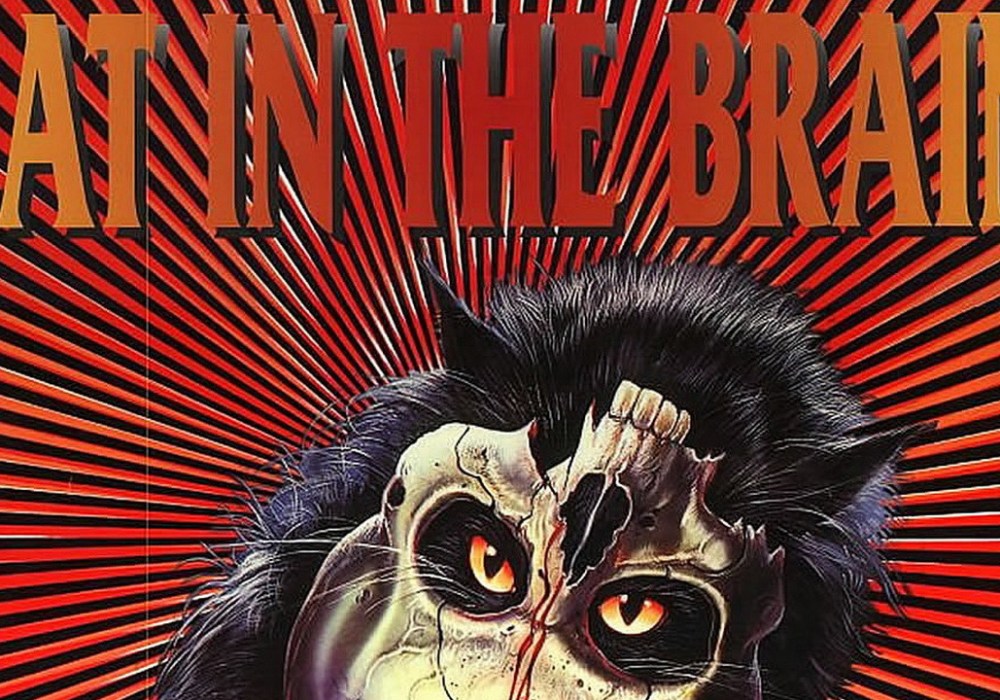
Lucio Fulci’s Cat in the Brain is a must-have for any fan of giallo or Italian horror in general. And for all those enthusiasts, I have no tolerance for Fulci vs. Argento arguments – you can’t have one without the other, and talks of rivalry between the two are greatly exaggerated. Also give this film a chance and don’t dismiss it merely because it is “late Fulci.” Lucio Fulci himself stars in this film, and like most directors he is not mistaken when placing himself in this role, as Fulci plays himself he creates an interesting little bit of simulacrum while also turning the typical giallo formula on its ear. The premise is simple… Fulci is getting paranoid having visions of gruesome murder scenes he has filmed both in his current film and in the past. The film cleverly uses clips from Fulci-directed films such as Touch of Death and The Ghosts of Sodom to be both Fulci’s delusions and the blueprint for the killer framing him. Fulci ultimately thinks he’s the culprit when tricked by his therapist while under hypnosis. This is where the twist occurs and the formula is turned upsidedown. Usually the killer’s identity is a mystery to the protagonist and the audience. Here the protagonist thinks he’s guilty and the audience knows who is at fault. And the twist at the end is quite effective, as the film blurs the line between memory and reality and film and reality throughout. The best thing about this film it is that it lives almost entirely in the head of the protagonist who is so stressed he is constantly delusional. That allows for probably more splatter-filled moments than any Fulci film ever made. Many Italian horror or giallo film’s titles are based on minor plot points or metaphors. This one is actually more fitting than many after an opening shot and a mention in dialogue later. For those unfamiliar with the genre this may be the best introduction to the way Italians like to do things and considering the “clip show” approach if you don’t like Fulci after this you never will. The DVD is loaded with bonus features and includes the original Italian audio track with subtitles which makes a huge difference in the quality of the film, as dubbing helps to ruin so many films. 7/10

61 Days of Halloween- House (1977)

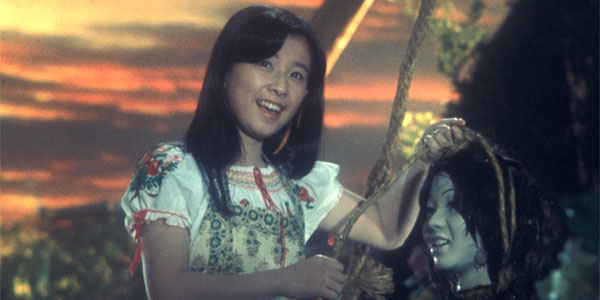
House directed by Nobuhiko Obayashi is a film which makes one glad simply because of how inventive it is – even if it’s not great. Never have so many cinematic techniques been crammed into one small film: still montages, wipes, irises, superimposition, distortion, black and white; the list is seemingly endless. It not only uses them but uses them correctly, well and never without some justification.

The second technical thing of note to House was that as the film was about to start it became clear by the side masking sliding in that the film was shot in 4:3. This is an interesting and effective decision for a number of reasons. It’s interesting because with the advent of Cinemascope shooting full-frame quickly became passé but this decision is incredibly inspired as it gives you a myopic glimpse into a kinetic world that holds your gaze completely.

The tone of this film is an interesting one. While it is great that it does build up the protagonist, and we get to know her and her friends, the tone shifts radically many times which shift focus away from her character later on. In terms of differing tones, there is a very tender scene between the protagonist and her father, several slapstick portions reminiscent of silents, comedic portions in the open and Kung Fu; then as they arrive and stay at the aunt’s house it will stay mainly horror but blend all that came before in and more. While the tale is one of witchcraft and occasional gore, it’s never what you would call terrifying but always entertaining even if predictable in terms of its end result.

It’s ultimately a very fun movie to sit and watch, even if you’re not in to counting techniques. It is, however, better if you are not thrown by things which come out of left-field because almost everything does.

To watch this film you will also need a very high tolerance for bad pre-1980 effects work because there are times you can taste the green screen so much it’s nearly nauseating, but in a way it adds to the charm of the film because it never seems to take itself too seriously.

However, if you like great cinematography this film is definitely for you. The aforementioned conversation between the daughter and father alone is nearly worth the price of admission with the supernaturally saturated background and the shots through the glass. The camera work is always appropriate for the tone at current, as is the lighting.

Ultimately, the greatest treat was in being able to view a previously unseen film in the States on the big screen where it belongs. Any film disappearing from public knowledge or not being known is a sad thing and kudos to Janus for finding a genuine original and putting it on display for the world to see.

House which was originally released in Japan in 1977 slowly made the theatrical rounds here in the U.S. and is available from Criterion on home video.

8/10

Dario Argento Says No to Prequels

A few years ago I was fortunate enough to attend a horror convention that Dario Argento was attending. The following is a repost based on questions that I and a friend of mine were able to ask.

While at a Q & A session at Monster-Mania I managed to ask a question. It was as follows:

Considering that the flashback that acts as a frame in Deep Red is one of my favorite flashbacks have you [Argento] ever considered expanding that story into a prequel?

The answer was short, sweet and pretty funny.

“No, no, no. That’s a joke; for money. The movie is the movie.”

61 Days of Halloween: The Last Exorcism

Most holidays worth their while encompass entire seasons, such as Christmas, for example. However, as you may have noticed there is a corporate push every year for us to think about the next holiday even sooner. While this has many negative side effects I figure I may as well embrace it.

Since Labor Day is really only good for college football and movie marathons cinematically it is as significant as Arbor Day, which means the next big day on the calendar is Halloween and we can start looking toward it starting now.

Daily I will be viewing films in the horror genre between now and then and sharing the wealth. Many, as is usually the case, will not be worth it so for every disappointment, I will try and suggest something worth while as well.

The Last Exorcism

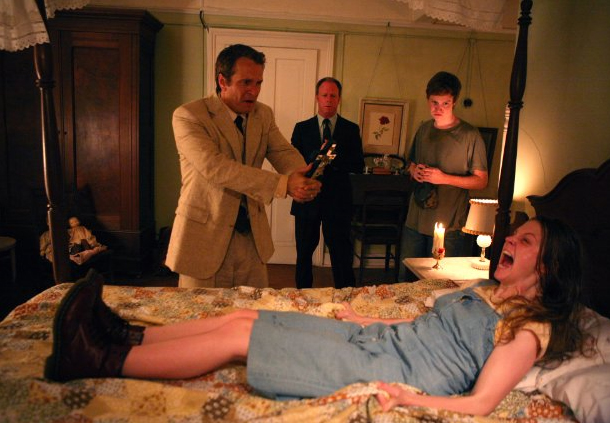
I thought of a (American) football analogy as I was watching The Last Exorcism as the most apt description of the film. This film reminds me of a team driving down the field to win the game and taking the ball to the opposing one-yard line and then throwing an interception, or to put it otherwise, it’s a film that comes real close to doing something special but ruins it at the end.

The first thing that absolutely has to be said is that the cast of this film is just absolutely outstanding, pretty much pick a cast member and you weren’t likely to find a better fit for the part. Everyone knows who they are what the role demands and how to deliver it in spades, and this goes down to the smallest roles. It is indeed a rare treat to see acting of this caliber in a horror movie and it is most of what propels this film to the edge of greatness before it plummets of a cliff terribly. It is worth viewing for the performances alone.

The second thing this film does very well is that is convincingly portrays its story in a documentary/cinéma vérité style. It opens with a lot of exposition through questions and the thoughts of our protagonist Rev. Cotton Marcus. Then it morphs from Q & A mode to recording things as they happen.

The cinematography throughout manages to be rather good and economical in its movement, despite the ever-present handheld images. It is only on the rare occasion that things get wild and visual information is hard to interpret.

It’s like the metaphor above implies, the film does a lot right but it really botches it with its ending and in truth most if not all the weaknesses that drag it down are story-related.

While it is very effective, at times, for horror films to have their protagonists be non-believers this one takes it a bit too far and has Rev. Marcus steadfastly disbelieve what his eyes are seeing for far too long such that it’s out of character because a man that smart can’t be that stubborn for that long.

He believes there is no possession and continues to even though they have recordings of Nell (Ashley Bell) having a conversation with a person unknown in Latin, a language they have established she cannot speak. Nell also picks up the camera at one point and tapes herself attacking livestock. It’s never made clear whether they watched the footage, the ways the characters act towards the end make you think they did not. Yet the camera is found damaged and bloodied, they know she used it but they didn’t check the footage? It’s the first thing a cameraman would do.

Then there is the end where there are a few twists one of which is major and we see coming the other which we really don’t. The second of which is truly the extraneous, one in which the film is trying to be a little too clever for its own good. Also, the end does raise up a few more questions and is a bit frantic and the one place where things can be lost and that’s where you can’t afford to.

This is a film that has so much going for it on the technical end, but it was all in service to a story that could’ve been more tautly rendered and more well-told. Such a shame.

5/10

61 Days of Halloween: Zombieland

Most holidays worth their while encompass entire seasons, such as Christmas, for example. However, as you may have noticed there is a corporate push every year for us to think about the next holiday even sooner. While this has many negative side effects I figure I may as well embrace it.

Since Labor Day is really only good for college football and movie marathons cinematically it is as significant as Arbor Day, which means the next big day on the calendar is Halloween and we can start looking toward it starting now.

Daily I will be viewing films in the horror genre between now and then and sharing the wealth. Many, as is usually the case, will not be worth it so for every disappointment, I will try and suggest something worth while as well.

The facile comparison, and also the attention-grabber, when discussing Zombieland is to try and compare it to Shaun of the Dead. The impulse is understandable but an errant one. There is a major but subtle difference between the two, Shaun of the Dead, like the subsequent Wright/Pegg project, Hot Fuzz, is a spoof which about midway through metamorphoses into the genre spoofed. Meanwhile, Zombieland is a tongue-in-cheek zombie story which is much less self-conscious.

The most self-conscious aspect of it serves a very valuable function, which is the list of rules for survival which the protagonist, referred to as Columbus, develops. The rules serve very good comedic effect, if at times becoming too prominent a part of the story by appearing on screen as a graphic, but at the very least the filmmakers have fun with it.

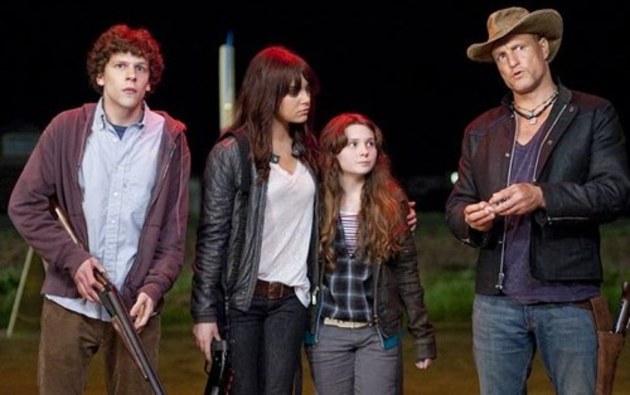
What is most surprising about Zombieland is that in being consistently funny, and remaining myopically focused on four central characters, it manages to become a more complete experience than most zombie films can be. There are actually a few real scares including Columbus’s first encounter with the undead, and what’s impressive is that it tries less often than a traditional horror film but succeeds more frequently.

Conversely, the rare dramatic/serious scenes also work quite well, again because the characters are well established, their conundrum is easily recognizable and we can identify with their plight, as surreal as it may seem.

What Zombieland proves is that when well done, people are always ready for a new twist on an old hat genre. The zombie is undoubtedly the hot commodity in the horror genre, sorry vampires. The reason for this is because they offer the perfect vehicle for social commentary, even when you’re not trying very hard. Even though Zombieland tries a little too hard at the end; it’s forgivable. Just having the living dead roaming about makes reference to both our humanity and inhumanity; either we are walking through the world in a daze or we are savagely mistreating people and killing off our own kind; any attempts to expound on this imagery only furthers the concept.

Zombieland always stays, first and foremost, a comedy with very funny dialogue and hilarious performances by all those involved. Perhaps the funniest being a very unexpected but welcome “as himself” appearance towards the end, which will be left as a surprise.

The film moves briskly, with great fun and has some of the creative and artistic use of slow-motion that has been seen in some time. The narration, while ever present, never seems to get in the way even though you never learn what causes such omniscience you laugh anyway at things like the cutaway to the Zombie Kill of the Week.

In the landscape of the horror genre that is so full of sludge that people latch on to anything halfway decent as if it’s gold, it’s great to see a film come along, even though mostly comedic, that both doesn’t misrepresent the genre but enhances it. The makeup is very good and these zombies didn’t try to re-invent the wheel like the first fast ones a few years ago did.

It is a very enjoyable movie-going experience that you’ll likely want to see again.

9/10

61 Days of Halloween: The Mist

Most holidays worth their while encompass entire seasons, such as Christmas, for example. However, as you may have noticed there is a corporate push every year for us to think about the next holiday even sooner. While this has many negative side effects I figure I may as well embrace it.

Since Labor Day is really only good for college football and movie marathons cinematically it is as significant as Arbor Day, which means the next big day on the calendar is Halloween and we can start looking toward it starting now.

Daily I will be viewing films in the horror genre between now and then and sharing the wealth. Many, as is usually the case, will not be worth it so for every disappointment, I will try and suggest something worth while as well.

When it was released The Mist was one of those films that just fell through the cracks for many. Mixed reviews are likely the reason. It is a film that should be seen if only as a conversation piece because it does have one of “those” endings, you know the kind that will get you talking and will inflame passions. In other words, it takes a risk and that alone makes it worth watching.

However, for the two hours leading up to said ending it earns that “should be watched” distinction. The running time alone is worth noting. Few films in the horror genre have enough substance to add a half-hour to the usual running time to build character but if a film can it should. Knowing who these people are and whether we as an audience love them or hate them makes a huge difference. The personal dramas and threats keep us locked in when there is no threat from the creatures in the mist.

The situation in which these varied characters find themselves in is built up steadily, slowly and sinisterly; such that before any of the characters realize the peril they are in we are already feeling tense. In combining two techniques of the genre we get in this film a very compelling drama with a horrific backdrop: characters trapped in a building with assailants outside (reminiscent of Night of the Living Dead) and a multi-character yet character-driven tale, which is a forte of Stephen King’s, whose novella is the source material for this film. Darabont’s handling of King’s difficult-to-adapt material is again nearly spot-on, Darabont creates and in some ways amplifies King’s effective scenario and makes it one of the most enthralling and captivating no-win horror scenarios ever created. There just seems to be no escaping it.

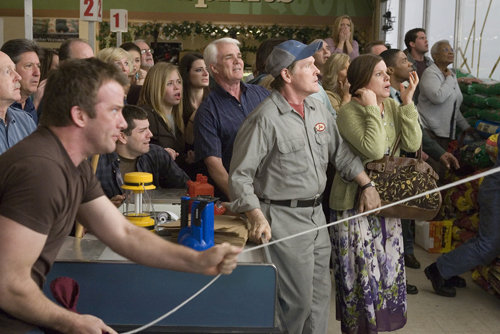
In a horror film one can forgive flawed acting from a lead, Thomas Jane, but the antagonists and most of the cast, especially in a film such as this need to be solid and they are. Andre Braugher plays his character convincingly enough such that you despise him, forgetting that it’s the part and not the man annoying you. Marcia Gay Harden, as always is brilliant, and downright frightening in this role. Her ability to convince those in the supermarket, though a bit overwrought at times, is fantastically illustrated. Some of the smaller parts are also very well-played like the Woman with Children at Home (Melissa McBride), Nathan Gamble as Billy (most well known from Dolphin Tale) and the Terrified Woman (Kim Wall).

The thing which is the most inconsistent in the film is the CGI. It seems whenever there was a good to great sequence of effects they would extend it too long or cut too close to the action and the illusion would fall apart. Typically, CG looks better on DVD than in the theatre, but not here. Some elements, like the bugs, were very impressive but the CG was not judiciously used and not carefully crafted enough, which is the only major inconsistency in the film. However, there has been worse it’s just upsetting to see such a glaring problem in a film which is of a very high caliber most of the time.

The ending is a conversation piece. It is strong and unlike King’s story it’s not open. King approved of this change. Certain elements are very effective some aren’t. What you make of it is up to you. It does not detract from the whole and the film is definitely worth watching.

This review pertains to the standard edition DVD not the two-disc special edition.

8/10

Horror Films and Stephen King (Part Six)

Stephen King has always been somewhat uncomfortable with the marketing of his name such that he created his alter-ego/pseudonym in large part to avoid the media’s scrutiny of his work. His name was Richard Bachman. “I’ve been asked several times if I did it because I was overpublishing the market as Stephen King. The answer is no. I didn’t think I was overpublishing the market …but my publishers did.” (Bachman, ix). 
 

Over-exposure is something that Hollywood has never been afraid of, especially when a gifted writer who people love to read comes along. In fact, the film which I examine in this paper Maximum Overdrive was recently re-made for TV and it was called Trucks. Many a time King has had little or no involvement with many of the films made from his work and in the past many people have had little or no regard for his actual text or for his input on the project, this has since changed.
 

“Sometimes I feel like Mickey Mouse in Fantasia. I knew enough to get things started, but once they started to march, things are never the same.” (Bachman, vii). Stephen King was taking the helm of Maximum Overdrive just after his pen name had been “outed.” In a way, this was a chance for King to take control of a project but even this was marketed and commercialized. King was the center of the theatrical trailer claiming that he was “Going to scare the hell out of you.” The one sheet also proclaimed the film a masterpiece before it was released. This marketing scheme was poorly thought up, while it’s hard to sell a horror film that’s not as scary as it’s supposed to be, it’s more difficult to sell a film when all the audience sees is the director saying how scary it is. One thing the trailer does seem to imply is that King was looking for someone to do his work justice up ‘til then no one had until Rob Reiner did later in Stand by Me.
 

Miscasting has been a hindrance in many King films. In reference to the protagonist in The Running Man King said “he’s about as far from the Arnold Schwarzenegger character in the movie you can get.” (Long, vii). This is a problem he faced in Maximum Overdrive was in choosing the wrong actors. Not many good actors do horror films when they’re already famous and it’s hard to make a successful horror film when the characters are so horribly miscast. When the audience knows something was a novel their critical faculties seem abnormally heightened and this makes every decision crucial.
    

His difficulties also came into play in reference to length. King is one who likes to slowly develop things and needs time. He once commented that “these days it seems everything wants to be a novel, and every novel wants to be approximately four thousand pages long.” (Nightmares, 4). With film being what it is today, and what it was starting to become in 1986, it’s no wonder that Maximum Overdrive feels like a sketch by Picasso, it lacked color. Sure, Picasso could do a lot with a pencil but to see his full genius he needed a larger surface. King likewise was confined by the need to be a 90 minute film, I sometimes get the feeling that just another half hour and it might have been a whole other film.

Horror Films and Stephen King (Part Five)

Note: What follows is a full analysis of the entire film, all other parts of this essay are fairly spoiler-free with regards to the film but this is not. You’ve been warned.

Maximum Overdrive begins with a title insert basically stating that the earth will be stuck in the tail of a rogue comet for about a week. The insert seems a extraneous to me and takes away from the story to a certain extent, however, King may have stated his reasoning in an earlier writing “…any horror film (with the possible exception of the German expressionist films of the teens and twenties) has got to at least pay lip service to credibility” (Danse, 156). One will note that even Friday the 13th and A Nightmare on Elm Street give their slashers traumatic pasts they must exorcise. In this film the explanation comes early and removes a necessary suspense element I feel would’ve helped the story out. One may also notice that the picture of the earth used in this sequence is backwards meaning Egypt now looks out on the Atlantic. I don’t know how no one caught that.
    

The film is set in Wilmington, North Carolina for the duration of the story. The only other time King set a tale in the south was The Green Mile. He’s set tales in Nevada, Pennsylvania and had a few go across some states but usually relied on atmosphere or people he could sketch reasonably well, which is Maine. The characters in this tale while are sometimes sketched and drawn out by King, to the extent he could with the limitations of the film but they’re acted like caricatures in most cases.
 (Note: This geographic note was correct upon the original writing. Since then King has taken to wintering in Florida, thus his fiction goes there sometimes too).    

We first see the way that the comet affects machinery on the streets of Wilmington.  First, we see a news ticker over a bank that constantly displays the phrase “Fuck You.” Then we get the early King cameo in which, he’s a bumpkin who’s called an “Asshole” by his ATM machine, this is humorous but nowhere near as good as his role as Jordy Verrill in Creepshow.  These small details may add a bit of eeriness to the beginning but as is the theme throughout this film we get a lot more humor than fright. In this sequence all the laughs are intended.

After this we get what might be one of the more frightening sequences of the film, unfortunately no one really escapes this scene unharmed. There is no protagonist who makes their way out of this wreckage and moves on to where a bulk of the action takes place. Instead, what we get is quite an effective crash scene that shows that all machinery can now think and the drawbridge lifts even though all the cars got the green light. The bridgemaster and his assistant look befuddled and the bridge is a disaster area. Everyone is stuck at the base of the lifted bridge. A motorcycle rider flies off the edge, this is the source of the big continuity error one man slides of his motorcycle and we see him seemingly go in two directions, and also go out the gap which hasn’t opened as big as camera angles would have us believe later. This huge mistake is also surprising considering Evan A. Lottman, who edited The Exorcist and Sophie’s Choice worked on this film. This scene is somewhat freaky but is also a little extraneous.
    

We then cut and see the Happy Toyz truck, it’s adorned with a huge demon face on the grill and has a slogan emblazoned across its broadside (“Here Comes a Load of Joy,” King’s ability to come up with clever and humorous slogans is uncanny). It is driven by Andy (J. Don Ferguson) who stops at the Dixie Boy Truck Stop. We get our first good shot here it comes when Andy’s talking to one of the gas jockeys, it’s a medium from the inside of the truck and we get a hint that soon there’s going to be some trouble.
 

We’re introduced to our protagonist next, Billy played by Emilio Estevez in his first role outside of “The Brat Pack.” Someone should have told Emilio that it is very difficult to flex your acting muscles and make a name of yourself from one horror film. Inside the Dixie Boy we now see that the pinball, coffee and cigarette machines are going crazy in the game room and we get a bad performance out of Videoplayer (Giancarlo Esposito) who is quickly killed off.

The first act’s pace is relentless as soon after Duncan (J.C. Quinn) is outside filling the Happy Toyz truck and the pump has mysteriously stopped. He removes the nozzle to check what’s going on and gets sprayed in the eye with diesel. At this moment we get our first sample of the score, the true score and not any sort of source music. While the score like so many is reminiscent of Hermann’s Psycho we only get this stabbing music on a few rare occasions. A few old AC/DC songs were used for this film along with a new one entitled “Who Made Who?” I happen to know that Stephen King is a big fan of AC/DC but I feel that he knows enough about horror to not have left most of the music track in this film dead. There is a lot of silence and it wasn’t very effective at all. AC/DC provided the wrong kind of mood with their high to medium Heavy Metal riffs. It makes me wonder if most of the budget wasn’t diverted towards pyrotechnics and Emilio’s salary further taking away from the film’s quality.
    

We’re later introduced to Bubba Hendershot (Pat Hingle) who shows himself to be the human villain in this tale. He is unscrupulous and uncaring. His character is quite well played. Then we see King’s first big touch when we see a headline about the comet. Prior Duncan and Joey (Pat Miller) had been talking and it was more subtle and many people won’t realize that the “Mickey Mantle” they were referring to is Deke (Holter Graham), Duncan’s son. In this film King had a little more than 90 pages and too many characters to deal with in that allotted time.
 
   
Our next two mechanical attacks work in different ways and introduce two more characters. A hand-held electric saw attacks the waitress Wanda June (Ellen McElduff) gets her forearm sliced into this is quite a gross moment and also establishes Billy as the protagonist. Then we cut to the baseball field and Deke’s team has just won and the coach is attacked by soda cans shot out of the vending machine. There is some great makeup work in this scene and it’s also pretty funny along with a shocking steamrolling shot that literally made my jaw drop. There are more characters to get to though.
    

We are in a car and getting a radio report about the odd occurrences a la Night of the Living Dead, but more subtle, and are introduced to the Bible Salesman (Christopher Murney) and Brett (Laura Harrington) a hitchhiker he has picked up. The Bible Salesman actually ends up being quite a good hypocritical character in this tale carrying a briefcase with has gold leaf on it and has “The Holy Bible” scrolled across it. Brett is going to be the love interest and this party like Deke are heading to the Dixie Boy. Laura Harrington should have gotten an Oscar…thrown at her, she was so terrible in this film. As a matter of fact the casting in this movie for the most part is rather weak; I wonder why in the closing credits the Casting Director got top billing. A director should know his actors limitations and should have reworked his characters accordingly.
  

Staying in the mode of less than satisfactory acting we switch over to Curt (John Short) and Connie who are a newlywed couple. Connie (Yeardley Smith) who went on to make a name for herself on The Simpsons as Lisa, is so annoying in this role it is nearly impossible to sympathize with her. John Short is one of the actors who ruins some of Stephen King’s great dialogue by having no idea how to deliver it. This is where King should have stepped in and altered the dialogue. It does pain a writer to change effective and intelligent dialogue for simple, pedestrian dialogue but it should be done when the actors sound stupid saying these lines.
    

Along Deke’s journey on bike to the Dixie Boy we see the wrath of the machines has left many dead bodies splayed all over the place. We get an eerie feeling again with a guitar riff for each corpse that is found. If there is one thing that can be said for this film is that all the effects are well done; as we see the trucks maneuver, drive and terrorize people. When these vehicles are on the move on their own they even drive better than real people in film they did quite an admirable job in that respect.
    

Perhaps the best dialogue King has to offer us in this film is when the Bible Salesman is trying to sell some editions in the Dixie Boy. This is also where we see Wanda June start drinking it may be the most well written scene of the film capped off by the salesman saying “This Bible has everything from the creation of this beautiful world to the fall of mankind.” This is the closest we come to seeing the implications that King had intended to impose, aside from a painting of the Last Supper we see for a few seconds, in the short story and there isn’t enough emphasis placed on this scene in my opinion. I also feel it’s a humorous commentary on how the salesman doesn’t know his scripture because all Bibles, regardless of denomination, include those tales.
    

Right before Duncan goes out to be killed we see how the blood has escaped his burned eyes. It’s a rather creepy shot that reminds me of one of King’s favorite films X – The Man with X-Ray Eyes. This death occurs in minute 32 and already we’ve seen so many characters. The Bible Salesman is later sent flying into the sewer after he charged the truck that smashed his car. King, being one who doesn’t believe in any one Christian doctrine, throwing a Bible Salesman into a gutter is a great touch. The truck that decks him also rolls over his Bible briefcase which I liked. When the body is returned to the truck stop we get another good piece of dialogue Bubba says, “He’s dripping all over my floor.” to get the people moving.
    

Stephen King also usefully employs the sewer in the attempted rescue of the Bible Salesman who we find many minutes later is clinging to life in the gutter. This provides the film with it’s only truly good looking and dark cinematography. John Short also displays his inability to deliver a great off-color line written by King in the sewer sequence (“What happened to the people who peed in this?”). The salesman we see is ultimately not worth saving when Deke finds him and the salesman says “Help me or I’ll kill you,” very Christian.
     

Just after the trucks smash a phone booth, we assume in order to effectively isolate them, and begin to angrily circle the truck stop instead of attempting to build some tension we cut away to Curt and Connie, who are chased by an eighteen-wheeler, it’s literally a cut to the chase situation. King had the opportunity to have a situational and somewhat atmospheric film but I feel that was robbed from him by producers looking to imitate many of the 80s poorer films.
    

The way in which these massive hunks of metal are fought most of the times is through gunfire, this is aided by the fact that Hendershot has a huge armory in his basement, which seems to hold everything from AK-47s to Bazookas. The only way in which the special effects fail in this film, being no ballistics expert I’m not sure, but the bazooka’s missiles are never seen in flight we only see the truck exploding. With something that big I’d go to the optical lab and add it even if it is technically inaccurate. 
    

King touches upon the flying airplane mentioned in his short story but this also comes out as comical. Once again we have a nice shot from the inside of the plane and can see the plane operating itself. It is turned humorous by the employment of Wagner’s “Flight of the Valkyries.”
    

Aside from the seemingly incessant presence of the comedy in this film we are also pestered by the lack of darkness; we are bombarded by light. “The dark, it goes without saying, provides the basis for our most primordial fear.” (Danse, 182). Cinematographer, Armando Nannuzzi, had done plenty of films in Italy for years on end and had most recently done quite an admirable job with King’s Silver Bullet. The nighttime footage in that film was effective in deemphasizing the low-budget werewolf but he seemed to thrive on the use of daylight to make some of his more impressive shots in Maximum Overdrive. In all fairness, Maximum Overdrive is a bright, pretty to look at film with sporadic good shots but it’s not quintessential horror. With the positive affect of darkness being so obvious one must wonder if budgetary concerns or perhaps weakness in the lighting department played into it. Even though much of the story is at day time in prose King must have realized he’d need more nighttime scenes for the film. He also knows that not only is it needed but the dark and night time is often heavily used in certain films. “All but approximately eighteen minutes of John Carpenter’s Halloween are set after nightfall.” (Danse, 186). Whereas after sunset we have but 17 minutes in the dark, and then we also have the interesting situation in which most of the human deaths occurred in broad daylight. In this film, the first scene to be set in a darkened place is in minute 48 and the sun only sets three minutes later more than halfway through the movie. Later on in the sequence, the truck stop also loses its power but this is not used in any sort of dramatically moving way and it comes back on before ever having taken any sort of toll on the story. And we are made well aware of it by a beautiful shot of the sunset.

Afterwards, we get the weird green effect in the sky which is larger in some areas of the sky than others. It was used at the beginning to symbolize the comet’s tail. In a poorly acted moment yet again provided by Laura Harrington, in the role of Brett, assumes the comet must be causing all this. It’s in a way also King’s most unfortunate piece of writing because the title card shown from the beginning is practically reiterated for the audience.  At night it seems that only Wanda June and Deke have been affected negatively. Billy is courting Brett, all others are unmoved by the celestial oddity. It’s very unusual that King with the understanding of character he has wouldn’t have gotten on these actors and told them they weren’t driving home the suspense and claustrophobic elements that should have been what was carrying the film.
    

Billy and Brett dominate this section of the film with their nighttime romance which I can only describe as filler. While I understand people can cling to each other in such a situation there was too much focus on the romance for my liking while I do applaud King for not being afraid to implement it. Wanda June dies an overacted death, she was completely drunk and yells the lines I least liked from King’s short story “We made you.” and if a film such as this can have a subtext she just blurted out part of it and she made this little speech more than once.

    
Another thing which constantly plagued this film was that it was very heavy with incident in the beginning and towards the middle of the film the action begins to taper off. The story becomes diverted to an extent.
    

Many times we are shown that Deke is the best drawn of all the characters. In the beginning we see him check on his injured coach, he’s then scared off by the salesman. He breaks down upon hearing about his father’s death, then the next morning has apparently regressed and is blowing bubbles. Not only that but when the trucks start beeping he not only realizes it is Morse code but translates it. What would have made this a better film was some more focus. At the end, when the great exodus of the Dixie Boy begins, we see eleven characters running, three of which I don’t think ever had their name uttered in the film but were perhaps named in the script.
    

The Morse incident is where the trucks admit that they need to be refueled. Billy’s reasoning eventually wins out. They pump gas for the truck because the dried out ones might call for one or many that can destroy them. A few more vehicles do show up including what appears to be a mini-flatbed with a machine gun set on a tripod, which in the end seems a little too beatable. During this sequence Emilio Estevez’s performance, which was nothing earth-shattering to begin with, also slips when we see him yelling at the truck, the Happy Toyz one with the Green Goblin face.
    

Towards the end we get an escape. The truck stop blows up. The Evil Truck which has been harassing the people and is the villain gets a bazooka in its open mouth. This moment is somewhat effective as we think for a moment maybe that one can’t be beat but then it explodes. We end with another annoying title card with a sappy finishing touch and some odd Soviet involvement in destroying a “weather satellite.” And the film closes on a comedic note with the last line of dialogue being Connie saying “Ooh, I think I’m gonna whoops my cookies.”
  
 
Maximum Overdrive is a film that has a few shocking and jaw-dropping moments. All the effects are well done and the cinematography is well-composed. What King ends up providing is a movie that ends up being a pretty good comedy/adventure, which is probably why he didn’t like it all that much. He should definitely give it another go because despite the bad casting there were some good performances in this film most notably those of Holter Graham as Deke and Pat Hingle as Hendershot. One thing King can be thankful for is that his film doesn’t ever tread into the so bad it’s good region.