Two for Tuesday #1

OK, first of all I realize it’s Wednesday. I may find a way to write and post in anticipation of the day but in order to truly get started I want to watch films on the day of and identify my theme properly and then post. Yesterday it was just too late by the time I would’ve gotten around to it.

Anyway, the idea for Two for Tuesday is just to watch two films, no matter how different they may be. Yesterday’s choices were disparate indeed: they were Mrs. Miniver and the aforementioned feature film cut of Blake of Scotland Yard.

Mrs. Miniver

Mrs. Miniver (MGM)

This is another film I watched for 31 Days of Oscar. What was frustrating to learn was that this was during a Greer Garson block on TCM wherein her five consecutive best Actress nominations were shown. This is a feat that was only matched once, by Bette Davis. It makes sense to feature Garson, however, because I, like most, am underexposed to her. With Robert Osborne doing the introduction there was much to be learned. First being that the role of Mrs. Miniver was originally offered to Norma Shearer. Shearer didn’t want to play the mother of a fully grown son, as there’s a stigma of being an aged actress attached and thus it was offered to Greer Garson who at the time didn’t want to do it either but didn’t have the clout to turn it down. The age concern was such that Garson according to the studio was 34 but in actuality was 37 at the time. Thankfully she did it and it worked out wonderfully.

This film swept away quite a few Oscars and it’s not a wonder. Suffice it to say I just thought myself brash in guessing it was nominated for 10 Oscars, I underestimated it. It was up for 12 and won six. This film also bears a stamp this time is that of William Wyler. Wyler, who despite winning three Oscars and the Irving G. Thalberg Award doesn’t seem to get as much recognition as a man who has a similar name to him, Billy Wilder. Wyler’s film’s are always well-shot and moreover beautifully framed. This film also has a quiet realistic tension to when Mrs. Miniver (Garson) is held captive in her own house by a wounded German soldier there is no scoring it’s all quite realistically handled. Then there is shockingly good sound design that also makes you flinch as you see the quiet, simple village life disturbed by air raids.

It’s also not a wonder that there was pressure on MGM to get this film released to show the American public what life in Europe was like during the war. It’s also no surprise that this film was added to the National Film Registry in 2009.

There was also the wonderfully woven in subplot of the flower show. This not only demonstrated class differences and stasis in society but as things developed came to symbolize the solidarity of a nation. As Mr. Ballard says “There’ll always be roses.” A beautifully deft and understated way of saying the world will go on and life will persist despite what may try to ravage it. I could go on elaborating the naturalistic-humanistic symbolism of the film ad nauseum but you get the idea.

However, the poetics of the film do not halt there. During one of the first air raids the Mr. (Walter Pidgeon) stay awake as their young children do manage to fall asleep and they discuss their love for, and recite the ending of, Alice in Wonderland. The words made far more haunting and beautiful due to the backdrop and wonderful example of artistic re-appropriation of material.
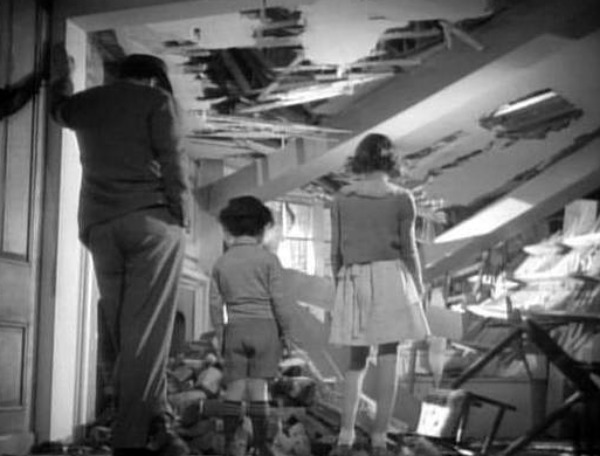
Christopher Severn, Walter Pidgeon and Calre Sandars in Mrs. Miniver (MGM)


There were also some notable long take and it wouldn’t surprise me to learn that Wyler allowed the camera to roll a bit to see what his actors did. One example of this, and the genesis of this idea for me, is when Mr. Miniver and his young son Toby (Christopher Severn) and young daughter (Clare Sandars) are looking into one of the rooms of their house after an air raid taking in the damage. they look for quite a bit of time such that it feels like the scene should end but then Toby kicks a piece of rubble over the step and laughs, forcing a smile from his father. Whether improvised or whether this long pause was dictated kudos are still in store for Wyler.

Mrs. Miniver (MGM)

The very ending is also remarkable without giving too much away. There is a great reveal of the roof of the church most of which is missing. Through the hole in the roof can be seen bombers off to another battle as the congregation sings “Onward Christian Soldiers.” You can protest as much as you like about the propagandist nature of this ending or of mixing religion and war but without even involving politics it’s a great piece of cinema that ending.

In the interest of not spoiling too much I avoided the plotline of Vin (Richard Ney) and Carol (Teresa Wright, who also won an Oscar for her role) it is a major component of the story as it is a love affair that springs from a subplot and becomes quite an important and poignant part of the film. One interesting note was that the part was originally offered to Montgomery Clift who turned it down because it came with the stipulation that he sign with MGM for seven years. Clift, and the industry apparently, felt his time would come and he stayed on Broadway in the meantime.

This movie slowly and steadily rolls itself along picking up meaning and creating a tense environment in the characters. There is no real resolution within the narrative, as they are still in the midst of war but life goes on and “There will always be roses.”

Blake of Scotland Yard (1937; theatrical cut)
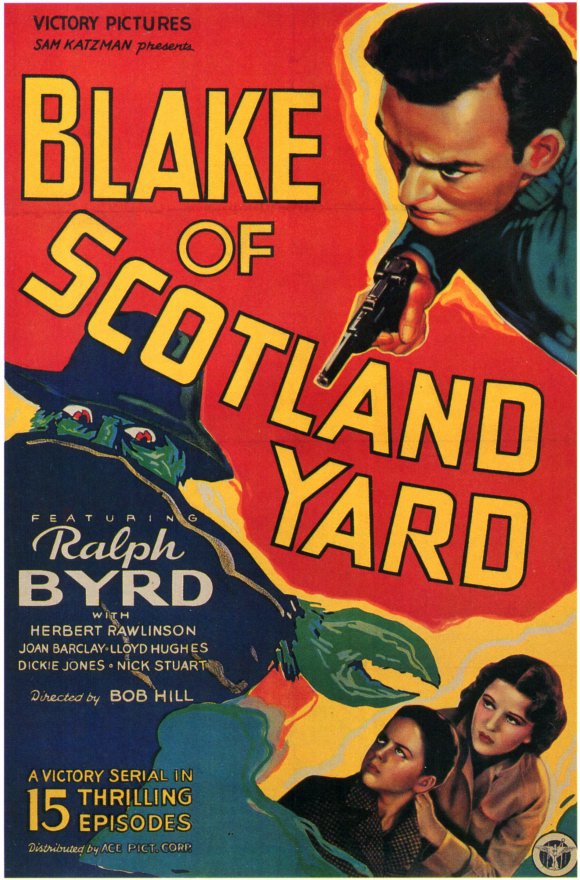
One thing that could’ve been added to my manifesto is that I want to try not to be redundant. I realize that I just posted about this here but yesterday I saw this version mostly for lack of something better to do and time. I will try not to over-elaborate but merely convey how utterly gutted I found this film.

The main thing that’s off when you lop 75% off a story is pace. There are moments that are far too slow or protracted and then some that whiz by in a blur, the film ends up being shorter than it feels because of that. There are far too many characters involved in this tale for it to only run 71 minutes and taking out so much you lose clues, speculation and discovery of facts and are left with basically an inciting incident, a long chase which becomes tiresome and a final reveal that is still a surprise because you had little time to wonder who the scorpion could be and were busy trying to figure out what’s up. I had issues following it and I’ve seen the longer version twice I can’t imagine the uninitiated confusion upon viewing this mess.

The intent of this piece is to honor the original film as it was made. There were some notable players involved in this such as Ralph Byrd who played Dick Tracy in more than one incarnation, Joan Barclay who starred alongside Douglas Fairbanks in The Gaucho and Dickie Jones who later went on to voice Pinocchio. There’s also a lot of good story cut out: There is a big arc with the false beggar that here seems pointless, there is Baron Polinka who is oft suspected and one of his catchphrases that cracked me up (“But I’m Baron Polinka”) is missing from this, even the tertiary involvement of Scotland Yard, which is in the title here seems unnecessary.

The only thing I liked is that it made me nostalgic for the original version. This one also gave you a virtually muted soundtrack as the theme rarely played within scenes but was always played in titles which, of course, you only see once here. Due to the desire there are some weird and bad cuts including a very awkward “If you can’t solve it, dissolve it.”

As a DVD presentation it is also a failure: it looks like there are VHS tracking lines at the bottom as if this was a dub and there’s no resume play option so when I stopped I had to find a spot within the chapter.

Ultimately, this proved it’s a failed concept as you see a long but simply-told tale diluted into a short confused mess. I hope other distributors stick to full-length serials.
Why “Never Say Never” Makes Sense

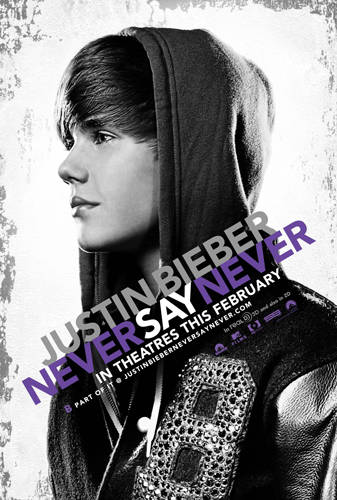
This is a re-post from when Never Say Never was first announced. It makes sense to post it again on the verge of the film’s release.

Never Say Never (Paramount)

So recently both on his Twitter feed and on several media sources it was reported that Justin Bieber was to be the subject of an upcoming film release. The film would follow his world tour, intercut live performances be part doc, part biopic and be in 3D. Academy-award winning director Davis Guggenheim was attached to direct it, that has changed but those were the facts.
 
I find it a little humorous some of the reactions this announcement has been met with. Surprise should not be among the reactions though, derision though not necessarily deserved, was expected.
 
Taking some of these facts into consideration: Hannah Montana/Miley Cyrus (as if they’re really two different people), The Jonas Brothers and even Celine Dion, of all people, recently had concert films so announcement this should be no surprise at all. Not to mention the record-breaking Michael Jackson doc This is It.
 
Not only is he talented but he’s out-earning all those acts at this point so of course a studio is going to want to put out a film. Being one who is familiar with him from his days of being pre-viral on YouTube it shocks even me that his rise to near pop immortality has been so meteoric and persistent.
 
And in 3D? Of course. Even though 3D fatigue is setting in, regardless of what scoffing studio execs say, there will still be those projects that will do it, and succeed, especially since a little more than a year has passed since Avatar smashed box office records just because it was shot in 3D. The overcharge, I mean surcharge, made it its money.
 
However, with him being a lightning rod anything Bieber-related is immediately fodder for conversation both positive and negative. It would seem this film is being overly-characterized as as a biopic, in the traditional sense of the word, much the way the photo book of his tour was being referred to as a memoir, where it is truly more of a chronicle, even if you don’t buy his assertion of it being a photo book.
 
Even more recently it was reported that Davis Guggenheim was dropping out. He is citing commitment issues as he will be plugging Waiting for Superman, his latest documentary about public education in the US, obviously there is speculation that he dropped it because his name was being dragged through the mud and the money wasn’t worth it.
 
I won’t comment on a personal/business decision but it most definitely would’ve been very time consuming. However, I don’t view this film as littering the cinematic landscape as it’s not a narrative film. It’s disposable (if you want it to be) entertainment that you can use once and destroy if you so wish and has no bearing on the overall aesthetic landscape of cinema as a whole.
 
This film will come and go and cinema will go on, so jokes or actual fears about the end times are greatly exaggerated.

The Effect of YouTube

YouTube of course is one of the most used and most important websites on the Internet. As will be displayed below there are many ways in which YouTube has already effected the film industry and many more ways in which it can and should in the future.

Self-Shooting and First Person

The image of an arm disappearing off-frame where it is holding the camera is not uncommon in digital photography and not unheard of on YouTube. Some films have been shot first person meaning the film was self-conscious and aware and the person filming is a character, like The Blair Witch Project, Cloverfield and Diary of the Dead.

With so many vlogging and freely adjusting the camera while rolling it is an image that the people are now used to, and will accept this kind of image, and it wouldn’t be surprising if it started getting incorporated into narrative features more often than it is.


Viral Marketing

Several films have already taken to creating footage to be used only for their viral marketing purposes – most recently and notably a “leak” of footage for Cloverfield 2.  The buzz surrounding Paranormal Activity was also aided in part due to its trailer being on YouTube.

When original content was first created a few years ago solely for the purposes of promoting a film you knew that it was going to be, and it continues to be, a crucial part of marketing a film. Even if not creative no major release leaves either YouTube or Apple’s trailer site out of their promotional plans.

Jump Cuts

OK, so jump cuts are nothing new and have been a somewhat tolerated part of the language of film since the French New Wave but it is truly only through the fictional narratives created on YouTube, both crude and refined, that people have en masse truly accepted the fact that continuity is a contrivance which can be forsaken for effect, if necessary.

Even the music video, which planted this seed, never fully communicated this because very few have a coherent narrative. So it was really only when the everyman got on their home video camera or webcam and started to edit that the jump cut became not just acceptable but almost preferred.

Granted the jump cut isn’t predominant in feature films, however, films don’t feel the need to justify or feel timid about using them when they need to.

Mash-Ups

This is a concept original to video sites in their way. It takes the audio and visual associate with a song and presents an alternative to the remix and ultimately creates a new song. Yet the phrase mash-up was quickly re-appropriated to merely mean combining ideas and not so specific to music so it’s not inconceivable that the idea can be used to conjoin disparate ideas in one motion picture.

In a Hollywood littered with prequels, sequels, remakes and reboots it’s certainly within the realm of possibility.
 
Trailer Recuts

Another popular YouTube trend is to recut a trailer with carefully chosen dialogue and different music to make it seem like it was created for another genre altogether. One of the most famous examples is Mary Poppins as a horror film.

Now while this is usually just film enthusiasts having fun again we are in an age where executives are looking to repackage, re-brand and recycle wherever possible and considering the studios own the depictions of these films they created on screen it is not out of the realm of possibility that they go with an idea they find online, pay off the viral editor and go off and turn The Shining into a family film.

Pre-Makes

A recent trend in which modern era movies are spoofed as trailers from the golden age splicing footage from those old films to make it seem like the older star appeared in the newer film. A for example: Indiana Jones cut as if it was a 1950s serial or Ghostbusters in the 1950s.

An even more literal interpretation of this concept of using a bygone star in a modern idea could be accomplished through motion capture or 3D animation and a deal with the estate. If that sounds a little crass keep in mind Gene Kelly has posthumously danced with a vacuum cleaner so sometimes money does outweigh legacy unfortunately.

Handheld

Handheld imagery is already well accepted by modern audiences. However, the YouTube influence is that people will become so used to seeing wildly unsteady imagery that there will be less and less concern about stable images and Steadicam.

This could be a very bad thing in the case of Quantum of Solace the combination of handheld camera work, editing and rapidity of the fight render the action nearly incomprehensible.

The positive could be an added element of realism where a film would not feel the need to cut to a more stable image or a different angle and want to exploit the sense of realism the lack of cuts would create. Images don’t always have to be pretty so long as they are effective too many modern films fail in their hand holding on both accounts.

Video

It’s kind of obvious but needs saying regardless: save for the rare loon, such as yours truly, people are rarely uploading digitized film projects on to YouTube. They typically are all native to video in one form or another. So proponents of the digital revolution in the late 90s were indeed correct only premature.

Video is getting better looking all the time and people are used to it and will accept it unquestionably. Being consistently bombarded by video that’s in a resolution less than ideal on the Internet has aided the transition.

Fred

There are no history books likely to be written about what was the first video that was considered to have gone viral and even YouTube with its statistics keeping would be hard-pressed to quantify many statistics anymore considering how widespread usage of the site has become.

However, it was recently was announced that Fred, a YouTube persona created by teenager Lucas Cruikshank was optioned to a feature film. Should it come to fruition it would be the first concept to go from YouTube to a feature film. A few instances exist of YouTube inspiring commercials but nothing like this.

This would likely be a litmus test for other YouTube sensations in the film world (the music world has already been notably affected with Justin Bieber’s career owing its existence to YouTube popularity) but more than likely a few better, if not as popular people might get deals because of this and it would obviously be the most direct influence of YouTube on cinema: content.

Recently, a Uruguayan filmmaker signed a deal on the strength of his YouTube Short.

Casting

Troye Sivan in X-Men Origins: Wolverine


YouTube has already notably played a part in the casting of a major Hollywood motion picture. Troye Sivan gained notoriety on YouTube mainly just by singing a cappella and gaining attention including that of a casting agent. The agent got in contact with him and gauged his interest in acting and sent him out on a series of auditions. The first of which was for X-Men Origins: Wolverine.

He landed the role, played Young Logan and the rest is history. It is not likely the last story of that kind which will occur.
 

Photo Montage

Another popular motif on YouTube is that of the still picture montage. It is rarely a tag but is a very frequently used technique that could be effectively used in film because in an art form predicated on the moving image to stop the motion whether through a freeze frame or a still is a very powerful maneuver.

Recently, a very effective still picture montage was used at the end of The Hangover, which showed the audience the digital photos from their wild forgotten night.

Structure

This could be the way in which YouTube has the most potential to revolutionize conventional narrative cinema as we know it. Unless a user is uber-popular and they become a “content provider” you are limited to 10 minutes or less. Flow varies and structure is unheard of, however, that does not keep many videos from being quite entertaining and creative while not traditionally structured.

However, at this day and age what has traditional structure really gotten us anyway? At this point, in many cases, all structure does is facilitate unoriginal plotlines that are made in cookie-cutter forms. When something new and original comes along it typically at least bends if not breaks the rules of narrative form so it is not far-fetched to consider that the YouTube videomakers of today could be the cinematic mavericks of tomorrow.

Therefore I call upon the YouTube generation to continue shooting, editing and telling tales the way you want to tell them and the world will listen. If not now, soon.

Conclusion

These are just some of the small ways in which YouTube can affect films. Considering how slow the learning curve is in Hollywood the effect can still permute in the years to come and let us hope that it does. It may create fascinating if not always brilliant work. At this rate it is the only current forum that can be considered a vox populi. It is a movement in and of itself even if not self-conscious of it. For that reason alone the impact is likely to be felt because as studios seek to emulate the viral style they will think it was their idea in the first place but really it was ours and that would be the greatest victory of all.

Review- Paranormal Activity 2

Paranormal Activity 2 (Paramount)

If it’s even possible this installment of Paranormal Activity is even worse and more anti-climactic than its progenitor. It is a film that takes tedium to delirious new heights (or depths) and is the sad side effect, the grotesque underbelly of the Effect of YouTube.

Why I say this is that it is a bamboozling experience. It looks terrible and therefore expects you to accept not only substandard imagery but also expects you to riveted by a film which is most lacking in incident. While I can credit the first installment with having a rather consistent strain of tension that never quite amps things up, this film is nowhere near as fortunate, or even as enjoyable, as that mess.

The first thing that will quickly grate on your nerves is that this film takes the Rule of Three to the Nth power. Nearly every day in the story, of which there are many, starts with the same half-dozen establishing shots. Few of which ever lead to an incident almost none of which ever leads to anything of real consequence.

These shots artificially inflate the running time of a film which ought not reach feature film status. Now there may have been other scenes shot that ended up on the cutting room floor that would’ve been more interesting but we’ll never know.

There is a reason that the New Wave hated establishing shots. They are more often than not unnecessary. There is something reassuring, not disconcerting, about the predictability in the pattern of the edit remaining the same when no new information is conveyed through the shots. We know what the location is always, the film doesn’t leave the house, so these shots are unnecessary and don’t advance the story in any way, shape or form.

Furthermore it is a film that handcuffs itself by being beholden to the surveillance camera angle to capture the action with. Yet this film like the previous one feels no need to pay lip-service to how someone found and cut together the footage. There is just a title that is meant to fool the more gullible element of the audience into thinking this really happened.

Lack of incident isn’t a cardinal sin in and of itself, there are plenty of things that can create tension when the big scare isn’t happening but this film either chooses not to utilize (score) or doesn’t utilize them effectively (cast), such that the film just becomes and exercise in banality and the cinematic equivalent of a “surprise symphony” in which the filmmakers will nearly lull the audience to sleep and then a rare, big shock will rouse the audience to life. Sadly, not all the major scares are effective. Only one can be called truly effective and more than one are laughable.

To carry off a mockumentary style you need pristine acting like you got in The Last Exorcism and even that fell short. Here you get Acting with a capital A, which is the antithesis of being naturalistic which is paramount when the bill of goods you’re trying to sell is one of veracity. For some sense of the quality of thespian you have in this film the best in the cast are twins William Juan and Jackson Xenia Prieto, as Hunter, the baby; Vivis as Martine and the dog.

Pace is the child of Necessity in film. What pace does the story necessitate to be effective? This is an equation in which the film does not have the answer. It plays an overly-methodical hand thinking it is constantly, but slowly, ratcheting things up but it is not.

It is a film quite nearly fails to comprehend the function of a scene. What came to mind was Hitchcock’s example of building suspense. You show a bomb under a table and cut to the conversation above. You periodically cut to the bomb counting down anew and regardless of what the conversation is about suspense is built. This film treats its entire narrative as one scene and doesn’t set up plot points but one or two major incidents such that the journey is nearly pointless and it ends up being a waiting game, which goes back to not knowing the function of a scene. Each scene needs a purpose. Each scene needs to progress the film. Not every moment of this film is essential. Not every scene moves the story, nearly none of them build suspense.

It is a poorly told, wasteful exercise in narrative cinema.

1/10

Paranormal Activity 2 is available on DVD and Blu-Ray today.

Monochromatic Monday #1

As I mentioned in my manifesto I endeavor to have viewing themes and post short entries on them. Not necessarily a full review of what I watch but just a bit of information to give you the gist.

Up until early March many of my themes will likely be concurrent with TCM’s 31 Days of Oscar. My goal as a side project is to see at least one film from every day of the festival with a little assistance form my DVR. I am currently one behind.

Today’s selections were the first in a while where both films were afforded introductions by TCM hosts which gave some interesting information, more so in the second film. But without much further ado the films.

Mr. Deeds Goes to Town (1936)

Gary Cooper and Jean Arthur in Mr. Deeds Goes to Town (Columbia Pictures)

Ben Mankiewicz hosted and while he does a fine job, invariably he leaves out a piece of information that puzzles me. The theme for part of the afternoon line-up on this day was good luck charms and it chronicled Bess Flowers, the so-called “Queen of Hollywood Extras,” who was a good luck charm herself. She appeared in over 700 films, yes, 700, this is in the days of the studio system remember, and appeared in 21 Best Picture Nominees and Five winners. Frank Capra employed her often. What I wanted to know, with all this to do being made about someone with a bit part, is where do I look for her, if I can find her that was not mentioned.

This film was a Best Picture nominee and was one of Capra’s three Best Director trophies (amazingly none of them came for his most notable film It’s a Wonderful Life). It certainly does have that Capra touch to it. It’s the story of a simple country man, often mistakenly thought to be a simpleton, who inherits a large sum of money and then has to deal with everyone trying to take advantage of him. It’s a film with a lot of subtle humor and most notably through some Hollywood magic creates some of the most surreal vistas of New York you’re likely to see on film. Capra is often associated with comedy or sentiment but here in this film there is a lot of great cinematography and the visuals really drive the story home. The shot of Longfellow Deeds (Gary Cooper) complacently sitting in a cell with barely a highlight upon his profile is a breathtaking piece of chiaroscuro.

Then, of course, there’s Cooper. This is one hell of a performance and most notably so because he is silent for so much of it. However, there’s a clear subtext and thought-process behind his actions. He’s also incredibly naturalistic, especially for the era, which really allows the story to sink in. More often than not he doesn’t let on but is listening, and absorbing information and planning his next move. Of course, there is misplaced trust in an undercover reporter (Jean Arthur) and that plot goes predictably enough but it’s very well executed but there is one surprise in store which is how it looks like out hero will be vanquished and how he triumphs.

This is a truly wonderful film that has Capra’s stamp all over it, which means that it is timeless this one more than most perhaps because it does talk about cynicism in society which is pervasive and being too cynical might allow you to take a film like this for granted but you shouldn’t.

Viva Villa! (1934)

Wallace Beery in Viva Villa!

*****Warning Spoilers Below*****

There’s much less to say about this title. The intro by Robert Osborne was quite interesting. This film was shown during a block of films that were winners of awards the Academy retired. This one winning a certificate, not a statuette, for Best Assistant Director. There were lots of pieces of information to relay here like Howard Hawks’ firing, the unruly extras who were real soldiers and peasants and the actor who relieved himself off a balcony on members of the Mexican military.

Once the film began the story was compelling but not quite compelling enough. First, it needs to be said that Wallace Beery is incredibly effective and endearing as Villa, when I read the cast I thought it might be a stretch but it worked. The film creates an interesting cinematic mestizo situation in as much as the natives of Mexico are all either Mexican or made to look like they are and the Spaniards are mostly white and don’t speak with accents. The mix of different voice stylings was actually pleasurable rather than rampant stereotypes.

While I love how full screen titles in the Golden Age were poetic and verbose there are far too many of them here and it avoids shooting some scenes which would’ve enhanced the film. It seems they might’ve been an afterthought based on the edit and there are some weird cuts in there, scenes that don’t seem to end in a logical place or stop abruptly. If you count the “Villa Wants You!” title montage as one there are 14 instances of full screen titles in this film. It was like a bad joke at times: “I went to a movie and a book broke out.”

Speaking of bad jokes there ‘s a running gag that an artist/writer friend of Villa’s refuses to draw a bull and is willing to die for this artistic standard. He called it advertising. I call it hard to swallow. Won’t draw a bull? Really?

What this film did have going for it was a beautiful little circle that closed. In a prelude that’s too short we see Villa for a child as a moment don’t really get to know him and he grows but what does get set into motion is the path of his destiny. His family was robbed of its land. His father dies for questioning it and off he goes to eventually lead a long multi-faceted revolution. While knowing that a plot is in the offing does drain some of the tension and drama out of Villa’s last words he does say, not ones the reporter puts in his mouth, are great. The reporter had started his fictionalized obit with the words “Mexico, I apologize.” Villa responded in the end “Johnny, what have I done wrong?”

It was a bit uneven and it was the rare film, in my experience, wherein the conventions that date it hold it back rather than exalt it but it is worth a watch and a decent film. Not sure it should’ve been a Best Picture nominee in this top-heavy era though.

In closing Robert Osborne related the fascinating tale of James Wong Howe the DP who was born in China but grew up in Washington State. He was an Assistant Camera at 19 and had done time at Lasky Studios. As a Director of Photography he garnered 10 Oscar nominations and two wins.

Review- Wild Target

Bill Nighy in Wild Target (Magic Light Pictures)

Wild Target in many ways epitomizes a British comedy and simultaneously epitomizes the Briton take on genre-crossing tales. The comedy is, make no mistake, ever-present throughout the course of this film making it a brilliantly farcical tale. The farce is perhaps the most difficult comedy sub-genre to pull off because it relies so heavily on the preposterous lampooning of what we typically in life or in film take seriously or for granted.

While this film excels far more easily in its comedic elements than it does as an action-thriller, those elements are there and consistent. The edit may be a little unbalanced and a cross-cut or two to the organized crime figures on the chase may be a little late it still does work.

Yet what makes this film most interesting is the interplay of the three main characters. The lead, Victor Maynard, is played wonderfully by Bill Nighy [A performance which after this writing I would honor as the Best of the Year.] This is truly a fantastic character study. We slowly see this man become the person he was longing to be, as in the beginning he imagines dinner conversation and then later on enacts it but he is also a confused man. He is so defined by being a hitman he doesn’t know himself and questions everything; even his sexuality.

The confrontation of that fact leads to one of the funniest and most complex jokes in the film, which can be taken as a triple entendre. That is not a typo watch it and consider the exchange carefully and you’ll see what I mean.

Which leads us to the performance of Rupert Grint. While he is not breaking the mold that made him famous in this part, as he has in others, it is definitely a more grown-up and comedic interpretation thereof and a wonderful counterpoint to the tension of Maynard and Rose (Emily Blunt).

Last but certainly not least is Emily Blunt as Rose who carries off a rather complex character with relative ease and makes her fully realized. She is never predictable and real and furthermore complicates Maynard’s life brilliantly.

Wild Target manages to balance the thrill of the chase and comedic situations and the mix is rather easy indeed. It eases you in familiarizing you both with the status quo of Maynard and Rose and then showing you how their fates will intertwine.

When a film opens with a hit in which the hitman may be betrayed by a parrot and the hitman places his silencer against its head, you should know what you’re in for.  The fact that they argue makes nearly Monty Python-esque. What proceeds from there is a deliriously good time.

9/10

Wild Target will be released on video tomorrow (2/8/11)

A Recap of Super Bowl Film Commercials

The Super Bowl this year, as it is many years was replete with ads that either advertise films or referenced them. Here’s a quick recap.

Captain America: The First Avenger

This is the first look I’ve really gotten at Captain America. At least in terms of a trailer, this seems like a rather good glimpse at at least some of the highlights of the origin of the character. Playing the tale as a period piece is also likely to work to this film’s benefit.

Fast Five

A continuation of The Fast and the Furious series. This installment takes place in Rio de Janeiro, there will be a Brazilian theme. What is most humorous about this one is that our heroes will drive through favelas and mess up hardened criminals and likely walk out unscathed. Very realistic.

Super 8

This was, hands down, the best trailer of the night. Oddly enough, esteemed publications like The Hollywood Gossip ran a headline which reads “Super 8 Movie Trailer: What the… ?!?” Now granted the article does admit it’s somewhat excited for the release but why complain about being confused. Super 8 first released an even more arcane teaser months ago and now about four months prior to its release we see a little more. This is how trailers used to work. You see just enough of a film to be intrigued into watching it, instead now sometimes you feel like you watched a whole movie. I finish seeing many and say to myself “That movie sucked.” because I feel like I saw the whole thing. This gives us just enough to want more and I’m even more amped for it than I was before. Bring it on Abrams and Spielberg.

Transformers: Dark of the Moon

Another example of why less is more. The original trailer while it was a little annoying when you found out what it was for was a little more mysterious.Now you see more than before and it gets silly from the get go and that’s just annoying.

Thor

While this ad made me giggle because I randomly thought of re-writing the song “War” and inserting “Thor,” it is decent. Not nearly as effective as the theatrical trailer as this one shows some possible chinks in the armor but not bad.

Rango

This is literally a film that has been overexposed and again reiterates the brilliance of the Super 8 strategy. I have been seeing trailers and commercials for this for so long I am fatigued of it and the worst part is the concept was only borderline in my estimation to begin with.

Pirates of the Caribbean: On Stranger Tides

Nothing could be less appealing to me than another Pirates film considering that they have fallen off precipitously and I literally fell asleep during the last one, which was fine by me save for the fact that I needed to be woken up because I was snoring. This ad actually presents the film in a better light than does the full-length trailer.

Cowboys & Aliens

This is the kind of film most people already have an opinion on based on the concept. You either think the combination of two disparate entities such as these is ridiculous or inspired. The fact that the director of this film is also responsible for Elf, Zathura, and Iron Man won’t sway you. Aside from the much hyped ‘seeing more of the alien craft’ not much to be gleaned here or to change one’s mind.

Limitless

Not much to see here. a condensed version of the trailer. The concept has potential but it seems like it gets pushed to extremes. Interesting to note that it’s one of the few films coming out in fairly short order that shelled out the big bucks for a Super Bowl ad. It will be interesting to see what it does.

Rio

It’s a short 0:15 spot but even here you get to see some of the unfortunate aspects of the film: Hispanic actors subbing in as Brazilian and inaccuracies of beach life in Brazil such as the overly-large bikini cuts. While there is some promise in the concept of a film about the birds of Brazil it seems like it might not quite hit in this rendition.

Now some websites are mentioning The Adjustment Bureau, Just Go With It, Priest and Battle: Los Angeles, the last one I saw pre-kick-off. Others I didn’t see in-game. Maybe I was on a health break but I only count kick-off to final whistle and those were the ones I counted. Did I miss them?

There were also a few ads inspired by or referencing films such as the Bud Light Product Placement ad, Budweiser Cowboy singing “Tiny Dancer” reminiscent of Almost Famous, Volkswagen Mini-Darth Vader and Hyundai Sonata a bit callously referencing silent films.

To see all the ads go here.

What was Your Favorite Film Commercial During the Super Bowl?
(polls)

Review- My Soul To Take

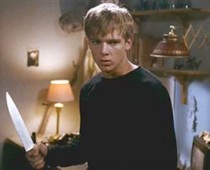
Max Thieriot in My Soul to Take

While traditionally it has been that October offers us a barrage of horror releases other months are not immune from seeing them either.  It is a genre that though as much as I love it is drowning in sub-par sequels and remakes, which is sad because while finding a truly great horror film is kind of like finding a needle in a haystack when you do find one there’s almost nothing like it.


My Soul to Take, Wes Craven’s latest film, is very likely the film that will capture the title of Horror Film of the Year. While it’s true that Let Me In is a wonderful rendition of the tale it was not quite perfect and it is a tale already told whereas this was not.

This film hooks itself into you right away as we watch a jaw-dropping and fascinating opening sequence which chronicles who the Riverton Ripper was. Springing forward we are watching a late night party in the woods where those who were born on the last night the Ripper was seen alive, and is presumed to have died. They are about to engage in a cleansing ritual it is interrupted and things go south from there.

While there is a bit of willful misdirection by the film, certain scenes want you to lean one way over the other as to who the killer is, rest assured it does add up in the end if you look back on some of those scenes as just planting the seeds of mental illness and character building.

Almost from the word go this film ratchets up the tension and makes it a jaw-clenchingly enjoyable experience which is not only full of suspense but comedy, by design not by accident. What is even more surprising is that a seemingly superficial scene in which Bug (Max Thieriot) and Alex (John Magaro) are trying to eavesdrop on the girls in the rest room turns into one of the pivotal scenes in the film due to the fallout from it.

Even though this was a film that was converted to 3D in post production that bears commenting on because when I went to see it there was no 2D option available. While I don’t have a scorecard of native-3D vs. post-conversion I must say it is the best I’ve seen of post-conversion. The images are crisp and clear and there is depth of field. A lot of time and effort was put into it to make it all seem by design and indeed it did enhance the experience.

Finding a horror protagonist is a tricky thing. People who will watch a horror film will watch many and become jaded. We’ve all been there where we’re watching a horror flick and it stinks and part of why it stinks is we don’t like the protagonist and they just won’t die already. This film doesn’t have that concern Max Thieriot plays Bug as endearingly and affably as possible while still maintaining the utmost sincerity. We see him struggle through this nightmare and root for him not only to make it out alive but to not be the killer.

Another reason that this film manages to keep itself so engaging is while Bug is boyish, kind and sheltered he is never stupid. There is never a decision he makes or something he does that makes you roll your eyes and take you out of the moment.  

My Soul to Take will keep your eyes glued to the screen and your knuckles white. It is a great night at the movies waiting to happen and a breath of fresh air in a sometimes stagnant genre.

10/10
 
For More Information: please visit the film’s site. For tickets and showtimes please use Fandango.

The Gay Dilemma

Vince Vaughan in The Dilemma

There has been much controversy swirling about the Ron Howard directed, Vince Vaughn starring, Universal film called The Dilemma, a rather apt title when you think about the conundrum the film presents. The kerfuffle is about a joke that Vaughn’s character utters “Electric cars are gay…”

Firstly, it must be said that this line is controversial because the word gay is being used out of context. It is not used in any of its eight assigned definitions. What this usage insinuates could be anything from stupid to effeminate (which is not synonymous with male homosexuality for the record).

This issue about the usage falls into no man’s land which is what makes it a lightning rod. On the one hand I do not and shall not be an endorser of censorship in any form. However, what has occurred with this line in the film falls just short. Universal didn’t have to agree to GLAAD’s demands of the line’s removal from the trailer but it was in their best interest after the publicity started getting negative. On the other hand, I firmly disagree with the misappropriation of the word.

GLSEN (Gay, Lesbian and Straight Education Network) is doing great work, which started well before the rash of suicides to combat slurs, like using gay as a synonym for stupid. I applaud their efforts and as you will see this kind of forum is where a real difference in attitudes and perceptions can be made.

Art imitates life, I believe, and not the other way around. Racism was much more pervasive and out in the open through much of American history than it is now. These attitudes were reflected in how minorities were portrayed by Hollywood. While racism still exists, of course, it is less socially acceptable now and its appearance in films, save for pedagogical purposes, is frowned upon. Hence, if homophobia becomes less present in society it’ll be a less functional device to implement in cinema.

There have been much, much more offensive gay jokes in the past such that what offends me most about this joke is actually the writing. Whether this version or the earlier version it’s bad writing and not terribly funny. Not to cast aspersions on the film as a whole. It may end up being funny and that joke just falls terribly flat because its unoriginal, unintelligent and unnecessary. Slurs should be viewed like profanity: what a writer must always ask him or herself is “Is the profanity/slur the most viable option?” If not substitute it.

Vaughn’s statement regarding the line where he defends the it rings hollow due to this fact. If the line was comedic genius I’d understand the need to defend it but whether or not this line ends up in the final cut will not change what the film is and what it’s about (knowing Vaughn there are likely ad-lib takes with different assessments of electric cars). This is not removing instances of “The N-Word” from Huckleberry Finn we’re talking about here.

My adolescence coincided with a world where “Politically Correct” was a buzzword and there is something to be learned from the concept. Mostly it’s this: political correctness can lead to over-zealousness and over-sensitivity but it can also create real change when applied to the right situations. Eradicating the use of the word gay as a pejorative would certainly be one of those cases.

The main factor that keeps me from lighting a torch, getting a pitchfork and charging the Universal Lot is the fact that I don’t think art will change perception of a given people in one fell swoop. Everything is cumulative.

Look at the very climate we live in now, in the 1980s and 90s there were to an extent varying degrees of apathy. Protests both for and against gay rights are much more prevalent now and the Gay Rights Movement has become a forefront issue not only in the US but worldwide. Many more people seem to be open about their sexuality now, which is great but there is a backlash, sadly. This openness has lead those who find fault with homosexuality, for whatever their prejudicial and ignorant reasons, to feel more inclined to persecute those who are, and those they deem to be, gay.

So the ebb and flow in societal assimilation is very violent at the moment, both literally and figuratively. Homosexuals are trying to refuse the counterculture label they’ve had to live with for better or worse and are standing up and seeking to be counted. Obviously, there are some who don’t want that. Things always come to a boiling point before a new sense of normalcy is reached. Hopefully, a nation repeatedly struck by the tragic losses of those whose only “sin” was knowing who they were will wake up and realize they are berating their sons and daughters into an early grave.

This drift in topic, away from the film itself, does have a purpose. For the word ‘gay’ to stop being used as a putdown the change has to come from society. It’s happened before, the mentally challenged and physically challenged weren’t always referred to as such. It wasn’t arts that lead the way to correcting the derogatory nicknames they acquired, it was people.

Timing is everything. That is why this silly little line has become such a talking point. If the political climate were calmer then GLAAD still would’ve objected but it may not have gotten this kind of attention. Oddly, the one thing we can be thankful for is that this film with its thoughtless insensitivity has created more debate. And discourse is good. Talking about this and saying its wrong repeatedly is the only way it’ll ever sink in. Eventually people will learn but movies won’t teach society but instead will follow. So let’s take the first step to making both better.

Beware of “Composite” Serials

In my previous post I asserted that, for the most part, I want this blog to be a positive place and I stand by that so please take this more as consumer advocacy than film nerd complaining, though in truth it is a little of both.

Now a little bit of background: I absolutely positively love the serial format, aka chapter plays, aka cliffhangers. Believe me when I say they are a sort of cinematic narcotic. It’s the simplest kind of story-telling done in the best possible way and more often or not they compel you to keep going and leave you wanting more. What’s not to love? I will admit that I have not seen as many as I’d like to because it is kind of a leap of faith to start one. Twelve to fifteen episodes at 20 minutes a pop is a larger commitment than you realize.

However, those I’ve seen I’ve greatly enjoyed for one reason for another. Furthermore their cinematic significance is not confined to being a footnote of a bygone era but also have left a lasting legacy. George Lucas and Steven Spielberg both admit to owing a debt to the serial format in constructing both Star Wars and Indiana Jones.

Now the point of all this backstory is so that you might better comprehend my anger when I recount the following tale as I learned of an industry practice the hard way. Whether they were created for a theatrical re-release, television or video so-called “theatrical” cuts of serials exist. Meaning, that tidy, condensed, at times confusing versions of stories intended to be much longer exist.

This is what I fell victim to. I had a complete version of Blake of Scotland Yard on VHS. I used a DVD/VHS deck to transfer it to a DVD. That deck broke and nothing else plays the DVDs. This is a situation I am still trying to to remedy. So cut to the present: I am hankering for serials anew, more specifically my favorites. I see Blake of Scotland Yard on Amazon and order it. Now I got two more serials there which are whole but this one is a so-called “composite.” Something I am just learning about and passing along.

So I may or may not watch this confounding version which is 73 minutes long as opposed to 303, (over four times shorter!) but I will not enjoy it.

So, buyer beware: before renting or buying a serial I implore you to check the running time they typically should run well in excess of three hours, so anything in typical feature length range is cut.

Happy viewing.