Mini-Review: Kauwboy

This year, as I did both last year and in 2012, I am engaging in something I like to call the Year-End Dash. Basically, its the scramble to get as many eligible titles viewed as possible before the end of the year for the forthcoming BAM Awards.

The extemporaneous reactions to late viewing will be short, but they will be logged. So I thought it would also be a good idea to re-post in standalone form some of the more memorable films I’ve seen in the first few jaunts.

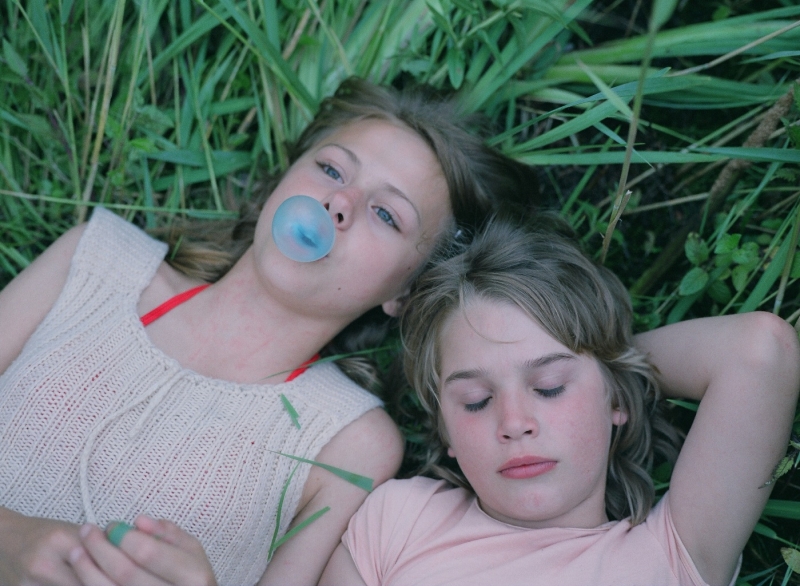
Kauwboy (2011)

The Netherlands’ entry into the Best Foreign Language Film fray is quite a wonderful one indeed, and for the second year running the Netherlands could have a major player at the BAM Awards. Kauwboy is tale that’s simply told and all the more beautiful for it. It artistically expresses the wonderment of childhood, how a child can keep himself occupied, but also how a child can retreat and hide away from a difficulty. There’s great tension at times, and also laughs. The world is small containing few players, but all of them are well played; including the very expressive debutant Rick Lens. A most excellent film.

Kauwboy did indeed have quite an impact on that year’s BAM awards.

10/10

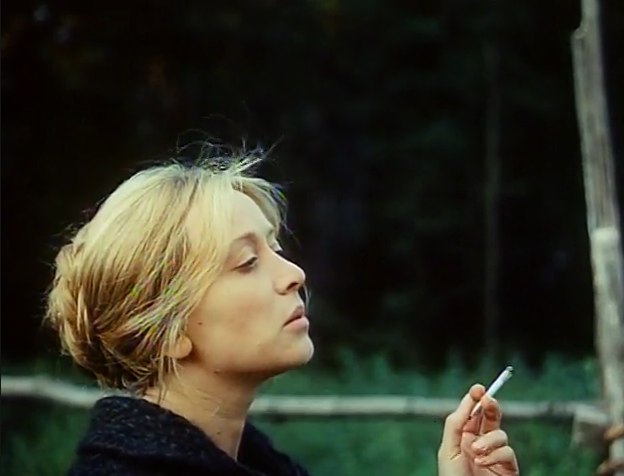
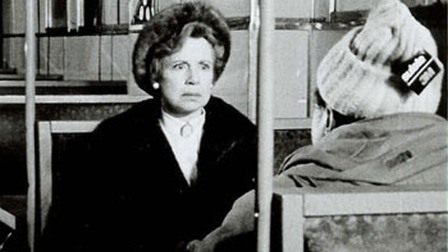
Tarkovsky Thursday: Mirror (1975)

If you’re not already aware of Open Culture you should bookmark or follow them for they are great resource. One post on their site notified me to the fact that the films of Andrei Tarkovsky are online legitimately. In the case of his last student film: the great The Steamroller and the Violin it’s been taken down, but the others are good to go. Be sure to click on the “cc” for subtitles.

It’s hard to believe that Tarkovsky authored but seven features. What he lacked prolifically he made up for with his impact.

This is the one film I came in to cold and had to revisit to truly appreciate. My suggestion is to let it wash over you. Bergman’s axiom of understanding a film emotionally rather than intellectually definitely applies here.

http://www.youtube.com/watch?v=gCTMM1iZ5Lw

Review- To Kill a Man

Lest I sound like I’m sitting here griping about cultural vegetables after yesterday’s post and today’s which include similar conclusions about films that are rather different, but have been pigeonholed similarly for the purposes of the American market. There are certainly past examples of my enjoying films that don’t fit the Classical Hollywood Style to a great extent. Perhaps the most noticeable over the past few years has been this film. So what is it here that rings a bit hollow.

Jorge (Daniel Candia) middle-class family man whose neighborhood has become overrun by a fringe class of street thugs. Jorge’s teenage son, Jorgito (Ariel Mateluna), boldly tries to stand up for his father, which only serves to unleash the bully’s terrorizing reign of threats upon the family. Jorge and his wife, Martha (Alejandra Yañez), seek protection from the legal system but they remain vulnerable. As Jorge’s family suffers from fear and humiliating anguish, the situation paints him as a deficient patriarch-until he’s cornered into defending what’s his.

Much of this is established before the thrust of the film is embarked upon, this being incited by the thug, Kalule (Daniel Antivilo), being released from prison. The initial set-up is simple and quietly menacing, the inability of conventional means to stop this crook is predictable and lacking drama. It merely being a table-setting scene makes it OK the decisions later on are where the lack of impact is felt.

The reason this is so is that there is a very naturalistic, visually distant, abundantly real-time approach to the proceeding following the zenith of suspense in the film. The film does not quite fall into a paint-by-numbers approach but it instead realities instead on the realities of a not entirely unique scenario to build the impact and staunchly refuses non-diegetic amplification of stakes and emotions consciously. Which mean the soundtrack is natural or sound effects lacking score wherever possible. The wide shot, all-too-absent from most cinema is in the forefront seeking to communicate the time and space Jorge has to interact with as he copes with his decisions.

Aberrant event in his nature aside the film tries to work with this reverse notion of the break in the routine occurring early and the change in tenor it takes later. Compare this (again if you will) to something like Cannibal the mundane carries wait because the quotidian activities of that protagonist are typically far out of the norm. Here the return of the norm post departure is not heightened nearly as much.

Thus, it should be clear that as a thriller it does not work in my estimation. Does it work then as a drama, especially considering the fact that drama is the foundation of all other genres? It comes closer but it ends in such a way such that it doesn’t fully explore its potential and instead leaves one wondering about the form of the story wondering: as it’s based on real events, would it not work better as a documentary? To not try and implement my own creativity on the film I acknowledge it comes close, but for the approach taken it felt it lacked a button to fully connect.

5/10

Mini-Review: On the Ice (2011)

This year, as I did both last year and in 2012, I am engaging in something I like to call the Year-End Dash. Basically, its the scramble to get as many eligible titles viewed as possible before the end of the year for the forthcoming BAM Awards.

The extemporaneous reactions to late viewing will be short, but they will be logged. So I thought it would also be a good idea to re-post in standalone form some of the more memorable films I’ve seen in the first few jaunts.

On the Ice (2011)

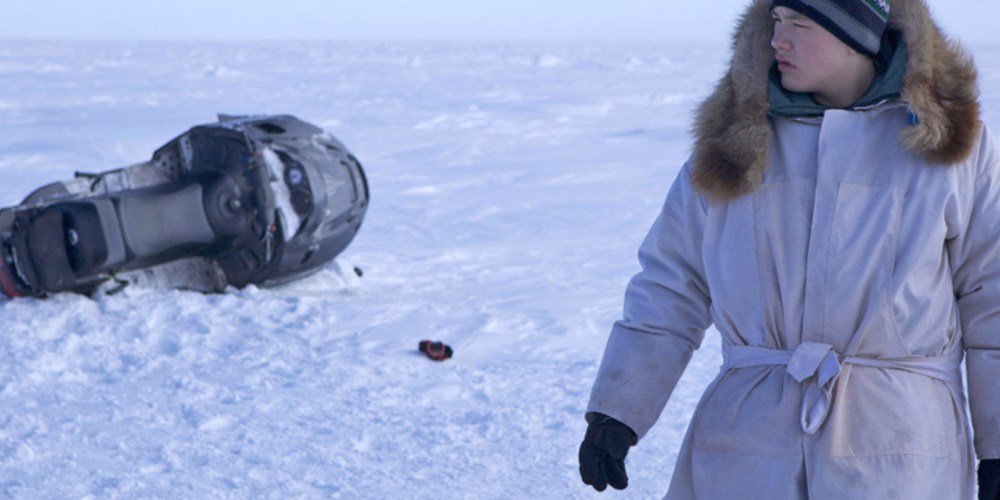
This is a slice of neo-neorealist cinema (if you can follow that) set in a native community in Barrow, AK. As opposed to something like Before Tomorrow, which dealt with traditional living in Canada, this film deals with the clash of modern times and tradition in the US. This is a low-key thriller very well executed that features shocking twists and turns.

9/10

Review: Apaches (2013)

With Apaches, and similarly a film that shall be reviewed tomorrow, the tendency of genre categorization here is again to attempt to pigeonhole a film into a genre-specific spot based on American aesthetic mores. While it can still be argued that American cinema, Hollywood and independent cinema alike, do set global genre expectations – foreign films often eschew cozily fitting in predetermined slots the same way many genre films here do. When I hear the word “thriller” used to descibe a Hollywood film I usually see it a catch all: a film with crime and/or suspense elements that isn’t quite a drama, cape, horror film or another more specific type.

Apaches certainly seems like it has very traditional bones:

A group of beautiful but morally bankrupt teenagers live the fast life in the dark side of beautiful Corsica, but things spiral out of control when one of their number wants to confess their crimes. -IMDb

However, while the plot points in and of themselves may seem familiar for a thriller the rendering thereof, the mise-en-scène and editorial approach are more removed. Communicating this moral bankruptcy is mostly accomplished by examining these characters on the surface rather than digging in deeper. Yet that’s not uncommon. Combine that with some elements being near afterthoughts or occurring between scenes and you see evidenced a different tack than one is used to.

The most common-seeming sequence would be the inciting sequence. This approach in and of itself is not inherently an issue or a downfall. The issues come when there’s less of a probe, when we’re focused more on a place than people (especially a place scarcely appearing on films) there’s an untapped potency being ignored. Definitions could be set or reset, a world built in any number of compelling ways when there is truly no shorthand for us. Instead we get the world through a window approach that doesn’t let us in. A callous series of acts and consequences viewed coldly, presented factually as if they’d have intrinsic weight. A weight that would be be redoubled by its aloof far-too-cool ending. Instead that salvo reads as more of an anomaly than anything else.

With this film we’re getting the anatomy of a crime, and a bit of the environment that breeds these attitudes in these characters, but not enough of why they develop the attitudes and the struggle or lack of struggle they have with that notion. It’s a blasé rendering of blasé criminals that seems to insist its existence is enough to merit my emotional investment. That much doesn’t work.

I frequently discuss the fact that I greatly dislike comparative analysis. I have an issue of it on many levels the main one being that it could judge a film by goals its not trying to accomplish. However, sometimes there are fairly intangible feelings that these comparisons can encapsulate. Here it felt to me like this was Spring Breakers without the artistic verve. That verve is all that kept me at all interested in that film and this film had none of it.

I can unequivocally state that I don’t find this to be a thriller in the traditional sense. It didn’t work for me for the reasons listed above, they may work for you for the same reasons, but I just couldn’t engage more than the characters seemed to engage in their own actions.

3/10

Mini-Review: A Christmoose Carol (2005)

Introduction

In an ongoing effort to give each film its own post I decided that some films previously featured in Holiday Viewing Guides should also get their own post.

Specific to this post: A new remake is a newly reviewed film today.

A Christmoose Carol (2005)

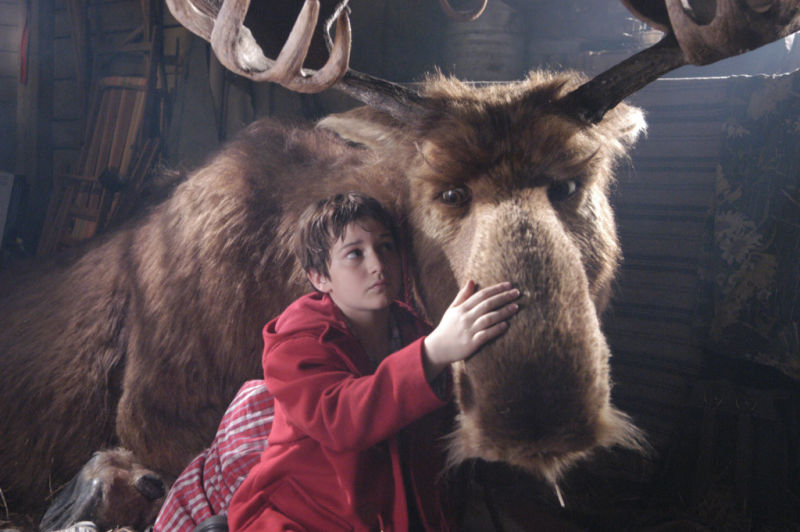
This is one of the films I picked up after getting a region-free player. I saw a trailer for it and it just seemed like the kind of thing too silly not to give a shot. What’s refreshing is that the film is playing comedy throughout. Yes, there are overtures of schmaltz and warm-fuzziness, it is a Christmas film after all, but it’s eminently more watchable and enjoyable than I ever thought it would be – and really should have any right to be. Part of this has to do with just a different perspective. Heaven forbid an American film try and get away with a Santa getting drunk and distracted, yet still trying to make a positive film, much less having it actually be Santa and not a mall employee or a psychopath. What the film deals mostly with is a thankfully practical and rather well-crafted Moose character (It seemed rather Falkor-like, I wonder if there is any connection to NES) and adds its own spin, and a rather cloistered tale that is neither a retread or earth-shattering in its repercussions as “disaster” is being avoided. A funny anecdote is that when I was younger I’d always insist on writing the original title of the film. However, seeing Es ist ein Elch entsprungen plastered on the box and being unable to record it to memory made me learn the English title, as silly and punny as it is.

6/10

Review: A Christmoose Story (2013)

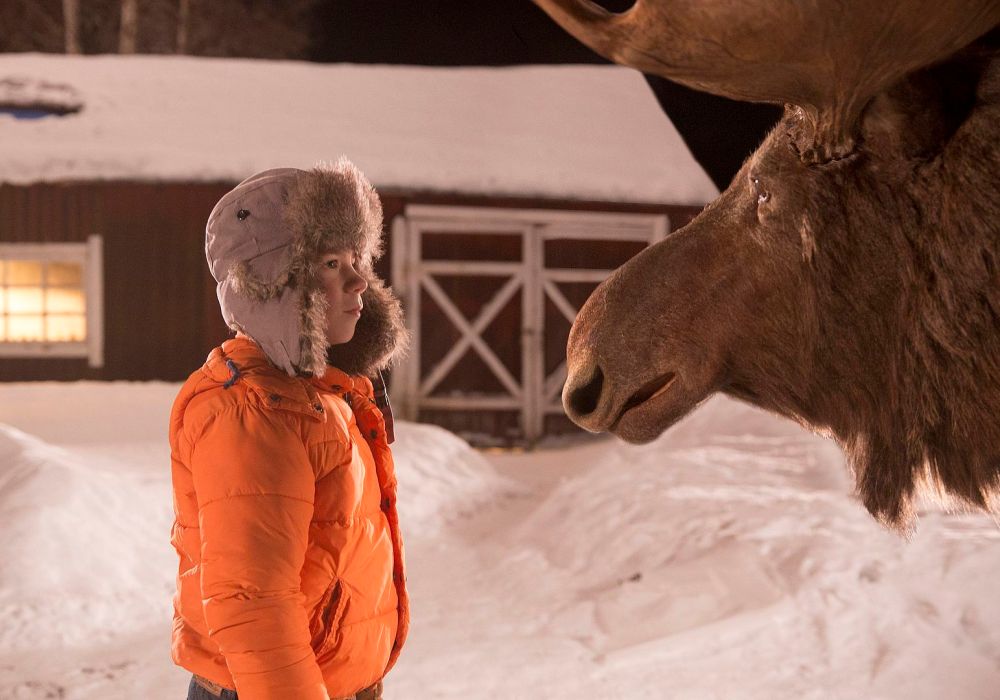
A Christmoose Story (Midden in Der Winternacht) from 2013 actually marks the second version of this story that I’ve seen adapted to film. As was the case when I saw the second of the new wave of Famous Five films, this remake caused me to look more into the source material being adapted here. The first version of A Christmoose Story I saw was produced in Germany where Andreas Steinhöfel the book’s author hails from. About eight years later to re-adapt the film this time in Dutch and co-produced by Sweden, The Netherlands and Belgium it can seem culturally redundant tio bring this story to film anew so soon. Gladly there are myriad ways in which this film justifies a new interpretation.

What is the most persistently charming aspect of this story is how through a new tale many age-old Christmas story tropes are flipped on their ear. This moose is Santa’s test pilot, he crashed into a barn on a farmstead and he fears beign fired and mistreatment by the reindeer amongst other things.

The bones of this version and the prior are essentially the same. Much of the humor being intended to stem from the situations the characters find themselves in in this well-crafted world. However, through more sure-handed filmmaking, better implementation of practical and digital effects work as well as a more prominent, comedic presence from supporting actors makes this film work even better.

Truly, with the prior version there was a somewhat stilted aesthetic and the impression that the ceiling on this story was only so high. It seemed like it was a pleasant diversion but could not be a more rounded holisitcally enjoyable holiday tale.

Here were some key quotes from my review of the prior version:

Yes, there are overtures of schmaltz and warm-fuzziness, it is a Christmas film after all, but it’s eminently more watchable and enjoyable than I ever thought it would be – and really should have any right to be. Part of this has to do with just a different perspective. Heaven forbid an American film try and get away with a Santa getting drunk and distracted, yet still trying to make a positive film, much less having it actually be Santa and not a mall employee or a psychopath. What the film deals mostly with is a thankfully practical and rather well-crafted Moose character (It seemed rather Falkor-like, I wonder if there is any connection to NES) and adds its own spin, and a rather cloistered tale that is neither a retread or earth-shattering in its repercussions as “disaster” is being avoided.

Much of the same commentary applies to this version, but it’s a level of degrees: one thing many family films struggle with is making leading and supporting young characters who are siblings equally appealing. Here Max (Dennis Reinsma) and Kiki (Dana Goldberg) are equally well realized and the girl/sister is not just an annoying counterpart to her brother, but a valuable member of the cast of characters and players. Similarly, the crotchety villainous older neighbor can be a very tired trope but Arjan Ederveen is quite hilarious. Then, especially for this story, rounding out Santa Claus is crucial in this film and Derek De Lint does so marvelously with a fabulous counterpoint.

Lastly, the pace in this film is excellent as well as a cinematography which adds a richness to the tale. While I described schmaltz being a trap, and almost a Christmas necessity, here even amidst the silliness and improbability there is some genuine emotion, which is a fine achievement.

8/10
Mini-Review: The Other Son

Introduction

This year, as I did both last year and in 2012, I am engaging in something I like to call the Year-End Dash. Basically, its the scramble to get as many eligible titles viewed as possible before the end of the year for the forthcoming BAM Awards.

The extemporaneous reactions to late viewing will be short, but they will be logged. So I thought it would also be a good idea to re-post in standalone form some of the more memorable films I’ve seen in the first few jaunts.

The Other Son

Sometimes themes develop very unexpectedly throughout the year. One that has occurred this year is the Israeli-Palestinian conflict. This film, which oddly was a co-production but not selected by either nation for the Oscars, uses perhaps the most effective vehicle possible to examine the issue (children switched at birth) and examines it very well.

9/10

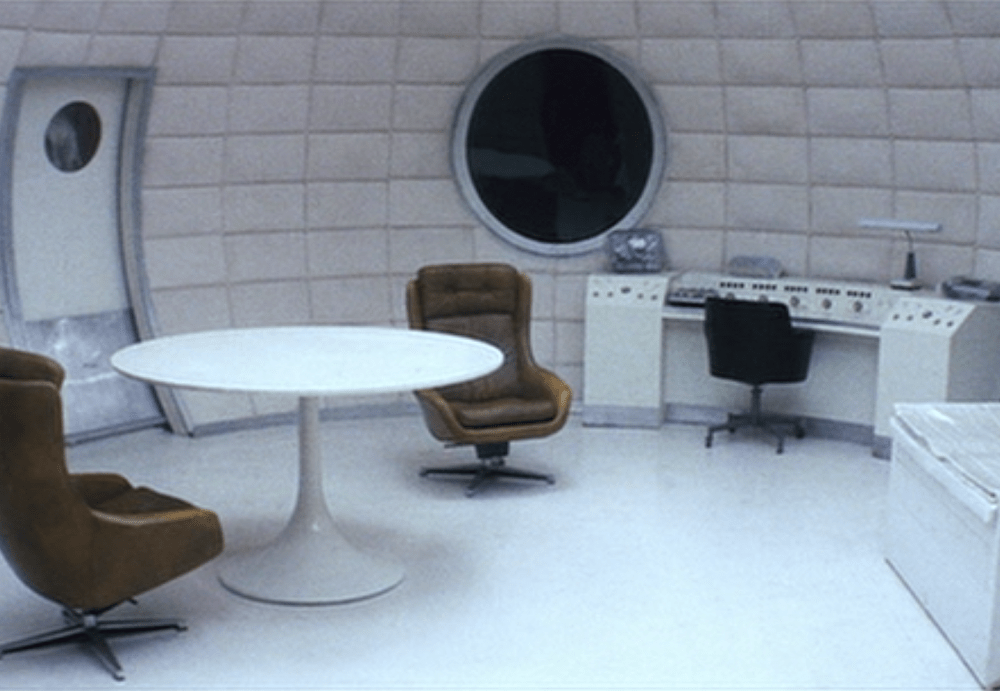
Tarkovsky Thursday: Solaris (1972)

If you’re not already aware of Open Culture you should bookmark or follow them for they are great resource. One post on their site notified me to the fact that the films of Andrei Tarkovsky are online legitimately. In the case of his last student film: the great The Steamroller and the Violin it’s been taken down, but the others are good to go. Be sure to click on the “cc” for subtitles.

It’s hard to believe that Tarkovsky authored but seven features. What he lacked prolifically he made up for with his impact.

I will be featuring all his films here.

http://www.youtube.com/watch?v=GG9Anstjlro

http://www.youtube.com/watch?v=yOGHMmKpASk