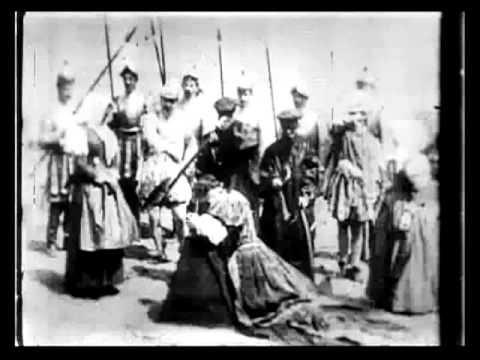
Short Film Saturday: The Execution of Mary Queen of Scots
The film is cut at last, and in stunning fashion, it is used in an effort to depict violence. So much for that being a modern problem.
The film is cut at last, and in stunning fashion, it is used in an effort to depict violence. So much for that being a modern problem.

Yesterday was Thanksgiving and one could argue that it’s perennially the most ironic of American holidays, but particularly this year with the political climate and the DAPL standoff.
Then the news hit of the passing of Florence Henderson and the world of TV and film shook anew. If you check on her filmography the fulcrum is The Brady Bunch. However, she always embraced it and always had fun with it as some of these clips will prove.
When The Brady Bunch came to the silver screen in tongue-and-cheek fashion (the only way possible) Florence was there playing grandma. Her version of a grandma was a far “groovier chick”that Carol could hope to be just contrast her to Shelley Long’s hilarious caricature.
Here’s the opening that featured her. And Yes, RuPaul is also in this movie.
For the 1993 MTV Movie Awards she and members of The Brady Bunch did spoofs of the films nominated. Here is The Bodyguard.
She also did this brilliant spoof of A Few Good Men.
Florence was one of the most stellar examples of someone who far outperformed her material. If that was hard to see in the original show, her takes later on more than prove it. Enjoy, and rest in peace, Florence Henderson.
In closing, if you need some catharsis, and haven’t seen John Oliver’s “ode” to the year, do yourself some good today.
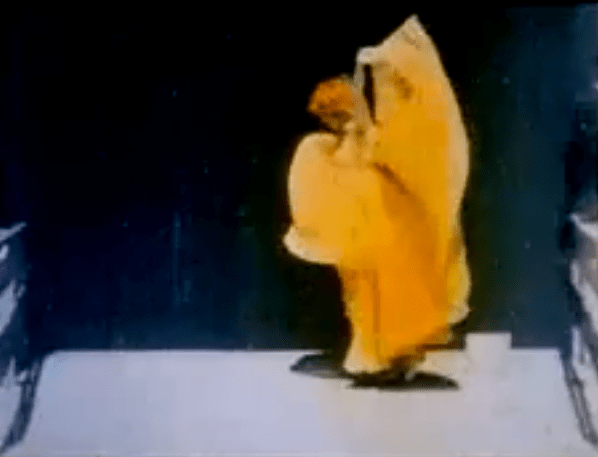
Color, like sound, came to film well before many realize. Initially the only way to bring color to film was hand tinting, which debuted as a technique in 1895.

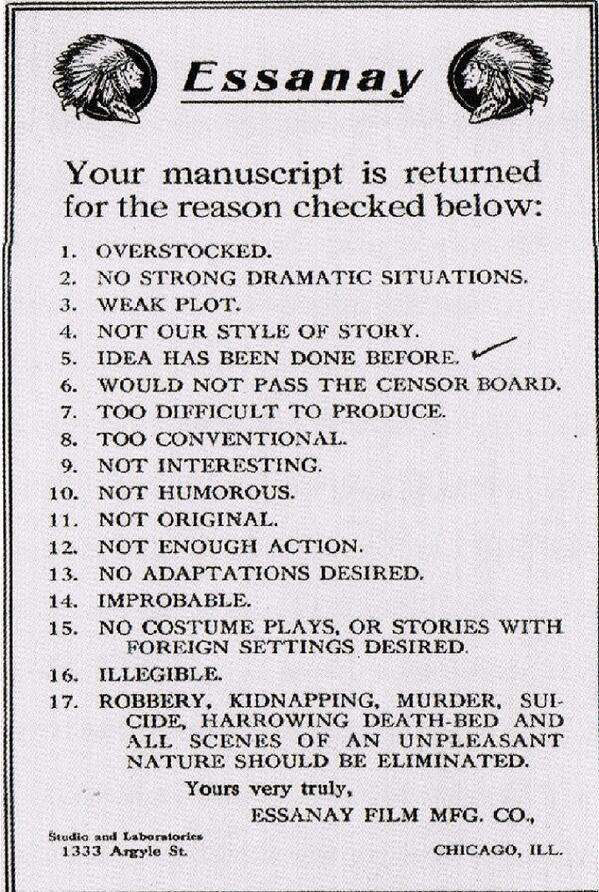
Sure it’s been around the web but the succinctness of this form rejection checklist is enviable for a script-reader even if it isn’t always constructive for the writer. It is, and could be a tremendous object lesson for screenwriters about dealing with rejection and the varying degrees of feedback they might get. Start from this and work in increasing degrees to interact further and polish the concept. Make use of it if needed and check out Open Culture for more gems like this!

Recently I created a political blog on this domain to have as place to vent in that arena and free my focus for cinema, it would be cathartic. It will not be included in typical update notifications
Why the idea of a political blog, and doing more in general, has come back to the forefront of my thoughts is not just because of the unprecedented craziness of the 2016 election cycle but is one that’s a bit older and I’ve come to embrace.
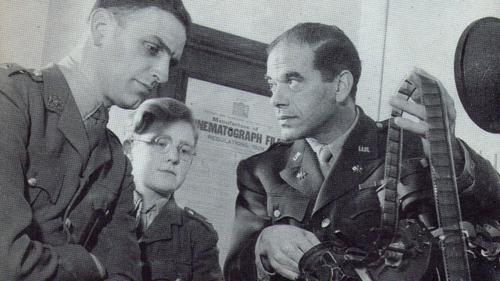
Long before the lie of WMDs in Iraq was exposed I was debating doing a serialized story on a daily basis called Why We Fight giving a nod to the Frank Capra film series produced by the US Government about World War II. This version would have been about the nightmare I and others felt it would be, not to mention the tenuousness of our aims and the flimsiness of our pretense for war.
At that time, I had no platform to have it ready for, our involvement in Iraq was not televised to the extent that Vietnam was, so we didn’t live with it in the same way, and I would’ve run out of steam. Keeping a daily idea going from 2003 thru 2010, when active combat ended, is a bit like Sisyphus trying to get that boulder up a hill.
Perhaps the main reason that wouldn’t have been the most suitable idea for a series is that it would be a portrait of despair at a dystopian present with no prescription for remedy. Remedy is the operative word. There are dysfunctions in our democracy that we can cite until we’re blue (or red) in the face but unless we’re willing and able to discuss and push representatives for changes to try and address them it’s nothing but a bunch of bluster, I will add a bit about how to most successfully make that push today.
So that blog will be an attempt to seek active solutions. It will start with a pep talk tomorrow to get the dejected off the matt, and move into calls for action soon thereafter. In the meantime, enjoy this contribution for Music Video Monday.
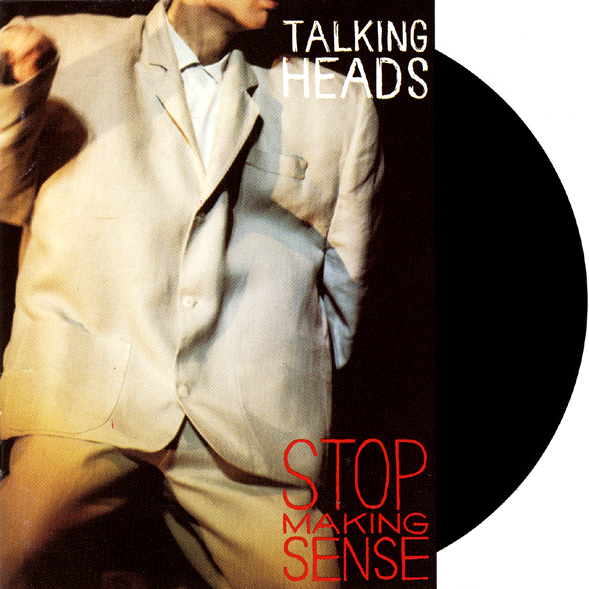
“Life During Wartime” from The Talking Heads concert film Stop Making Sense directed by Jonathan Demme, a song whose lyrics have inspired stories of mine in the past and gotten me through some difficult days. Enjoy!
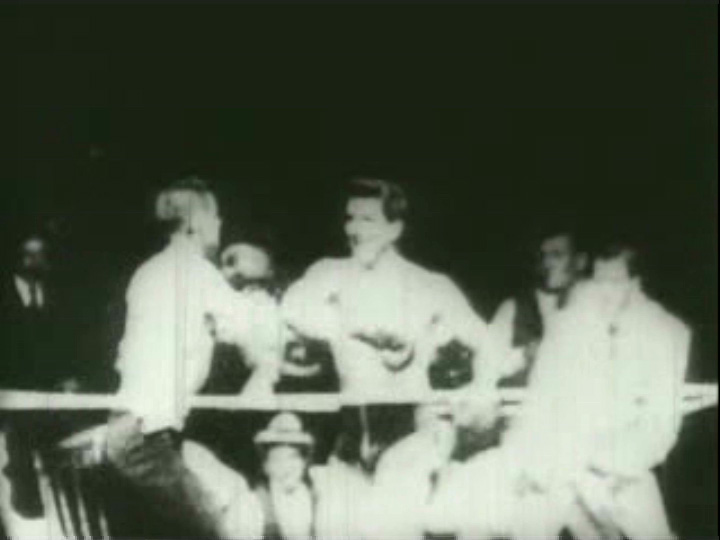
Sports on film is common either in drama or broadcast live sports. In this footage 6 rounds were fought exclusively for cameras. This is all that remains.

Rather than taking up room in a post I decided to write about this matter here.
Whenever I sit down and dissect a film down to all its component parts and how well I feel each facet affected the whole, of course, I can give it a score from one to 10. When I figured out how to write my rating scale, I worded it such that there can be varying degrees of film within each ordinal number but a definite stratification from one number to the next.
However, the nature of the internet is such that sometimes you will just want to scroll an article, or stop reading it after a certain point. That is fine. That is certainly the reader’s prerogative.

However, I saw a comment on Twitter that crystallized what I didn’t realize consciously:
If you’re not being forced to assign that grade, why do it? Why incentivize someone to skip your explanation? Why force a reader to fight against human nature to skip to the grade.
Most of the reviews I read that affect my viewing options do not have a number or stars but they stick in my mind based on how the reviewer discussed it.
Memorably unfavorable reviews have made it clear to my mind why I would like something. I’d rather be intrigued by what is said about the film rather than a fairly arbitrary number that means different things to different people.
For example, many people would classify a film rated 5/10 as a middle of the road, mediocre film. However, when I rate something as a five I could tend to be quite angry at it because it’s usually a minor slip up that cost it being what I consider to be a good film (6-10).
Furthermore, there are many examples of times wherein I’ve dedicated many words or whole paragraphs of a review to explain “This movie does not work for me because but here are some reasons why you may enjoy it…”
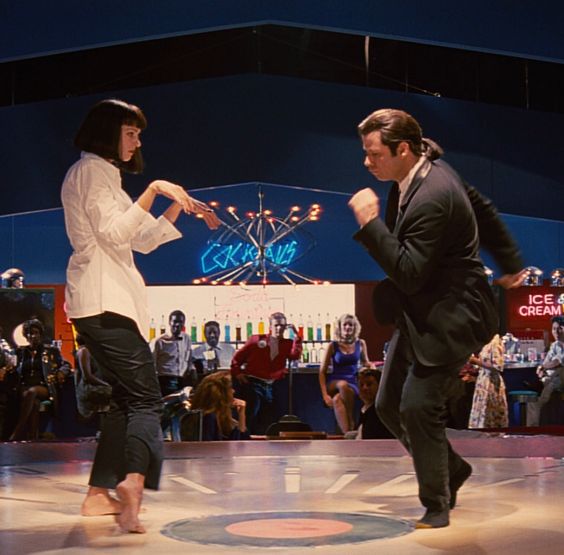
This is the only image I could think of that matched the keyword “Enjoy.”
Having a hyperlinked number down there tempting eyes to skip explanations that may underscore why they’ll like or dislike a film.
So if I feel a film should have that number at the bottom of the review, I’ll surely add it. However, sometimes it’s caused significant consternation on my part and delayed getting reviews up. No more.
Hope you enjoy the numberless reviews to follow.
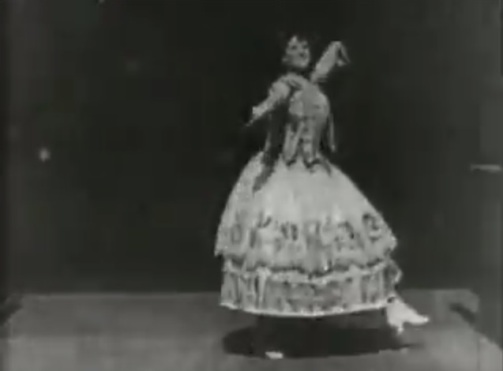
While it may shock modern audiences to think of a time when women had not yet “starred” in a film, so to speak; consider for a moment that there was a time many centuries ago in England when women were forbidden from performing on stage, so this early egalitarianism is noteworthy.

I meant to post this yesterday. Without too much adieu this is a movie that must be seen. Enjoy!

Contrary to what many believe, there were experiments with sound in the silent era. The first of which is this short clip of a fiddler playing a song as two men danced. The motion picture has had people testing its bounds and limits from the start.

