Bernardo Villela is like a mallrat except at the movies. He is a writer, director, editor and film enthusiast who seeks to continue to explore and learn about cinema, chronicle the journey and share his findings.
As those who know me, and if such a person exists, cyberstalk me, know I created this blog after writing on another site, which shall remain nameless, for a while. The point is, I have material sitting around waiting to be re-used on occasion I will re-post them here. Some of those articles or reviews may have been extemporaneous at the time but are slightly random now, hence the new title and little intro, regardless enjoy!
The Tooth Fairy (2010)
The Tooth Fairy is a predictable and poorly executed family comedy which leaves everyone uncomfortable, including a majority of the cast and the audience who is asked to try and sit through it without squirming. It’s the kind of film that even if you give your intelligence or critical faculties a holiday you’d have a hard time enjoying.
The film takes a brash, arrogant athlete knocks him down to size, he rebels then embraces the changes that have come into his life then rebels again before living happily-ever-after. It’s the old template tried and true except it is not handled with any precision whatsoever.
The writing of this film seemed to borrow generously from the Big Book of Clichés in assembling the story: you have a single mother, musician kid, a fantastical world to which our protagonist is whisked away, a guide, a mentor, a moral and redemption. All that is well and good but the execution issues are what make those things fall flatter than they should. Too much of the comedy in this film is based on puns, which is one of the lower and least tolerable forms of comedy. There is also the Moment of Apparent Defeat which is written more like an Irredeemable Act, meaning had our hero acted this way in real life there’s no way anyone would have forgiven him.
Sports are often turned into a shell of what they really are and bastardized in film to no end. Ice hockey usually suffers the most because it has a bad reputation in the U.S. and is being written by writers who don’t know the game. The writer’s familiarity is something that yours truly cannot testify to but it is without question the worst depiction of the sport ever put on celluloid to those who know the game. A depiction so bad that it might be worthy of a second article, however, it is dubious whether writing about such a film a second time is justified for any reason. More confusing than the poor depiction is that both ESPN and anchor Steve Levy would agree to appear in such a project when one would assume they read the script before saying yes.
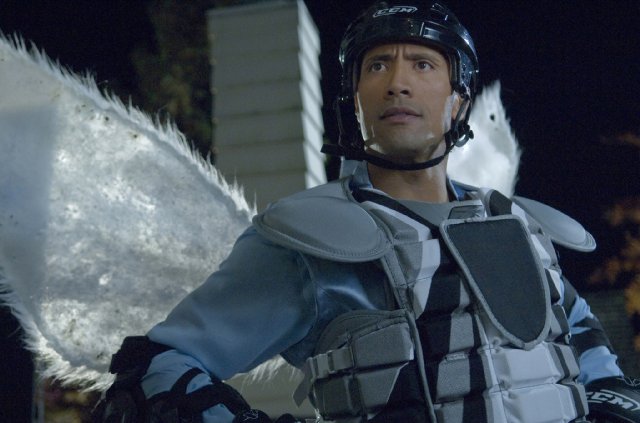
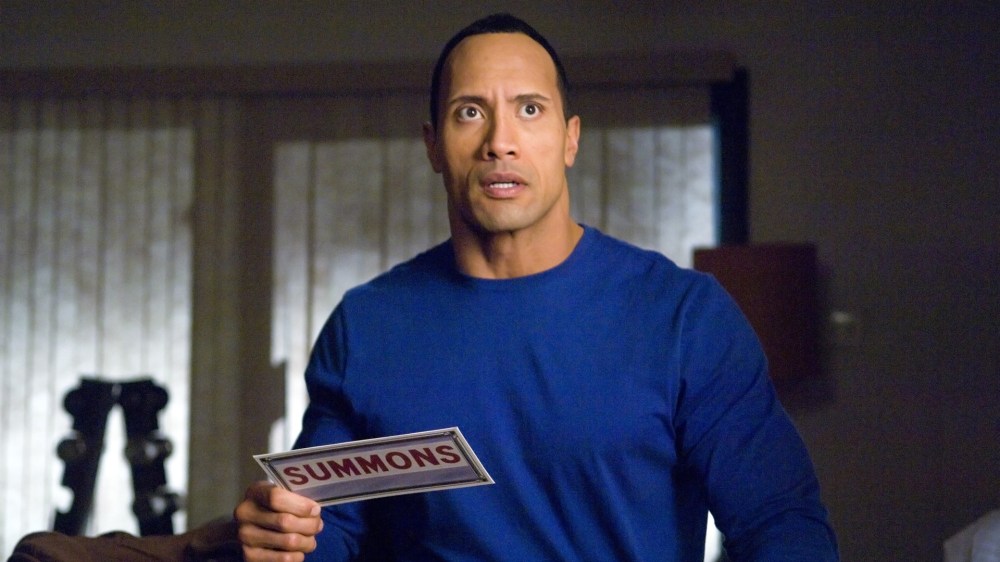
The cast was underutilized and not put into a position where it could succeed. Dwayne Johnson, who I enjoyed in Escape to Witch Mountain and other action roles, was asked to play an occasionally goofy, arrogant jerk and his usual steadiness shares screen time with some embarrassing and unfortunate moments and readings. It’s rather unfortunate that both Billy Crystal and Julie Andrews not only were in this film but likely spent multiple days working on it. Crystal’s scene with the amnesia powder is the worst thing he’s done and is hacky – a word one thought might never be associated with him. It would be better if Julie Andrews didn’t take this part as well it’s better to not see her than see her in this. Then there is Ryan Sheckler, who really isn’t an actor but rather a skateboarder who has appeared in a handful of films. Not only is he horrible but he adds to the denigration of the sport of hockey in this film by playing a hot-dog rookie who cops the kind of attitude usually reserved for the NFL and NBA. Stephen Merchant was occasionally funny as Derek’s caseworker but more often than not he was trying too hard. Typically in a film like this the only people who escape unscathed are the kids that is true in the case of this film as well, Destiny Whitlock and Chase Ellison are both quite good especially Whitlock.
The most confusing casting question was actually, “What is Seth McFarlane doing in this film as the counterfeit fairy accessory dealer?”
This film isn’t immune from issues outside story though. The score sounds as if it was pulled from stock and had been recycled on many family films in the past.
The effects work, specifically on the popped out tooth and stretched face sequence were weak.
Those who may be forced to watch this film by their kids do note that in spite of the previous comments this film was still nowhere near as bad as expected. There are a few laughs despite the poor writing style and it is not too painful an experience.
As those who know me, and if such a person exists, cyberstalk me, know I created this blog after writing on another site, which shall remain nameless, for a while. The point is, I have material sitting around waiting to be re-used on occasion I will re-post them here. Some of those articles or reviews may have been extemporaneous at the time but are slightly random now, hence the new title and little intro, regardless enjoy!
The Prince and the Pauper (2000)
The Prince and the Pauper is the kind of film/story that is hard to knock unless extreme liberties are taken with the story – if it’s modified, modernized and bastardized as Disney did with its recent Sprouse brothers’ version, which had as much to with Mark Twain’s version of the tale as the film The Lawnmower Man had to do with Stephen King’s.
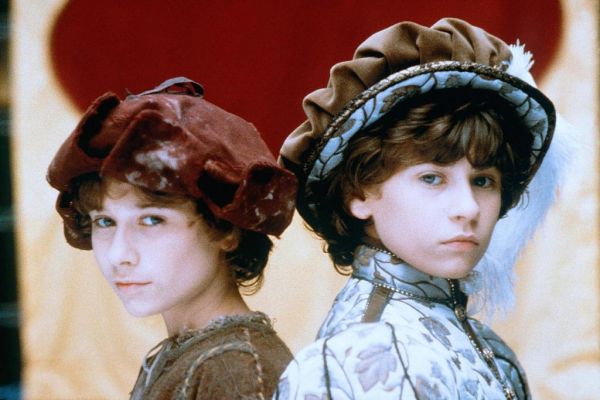
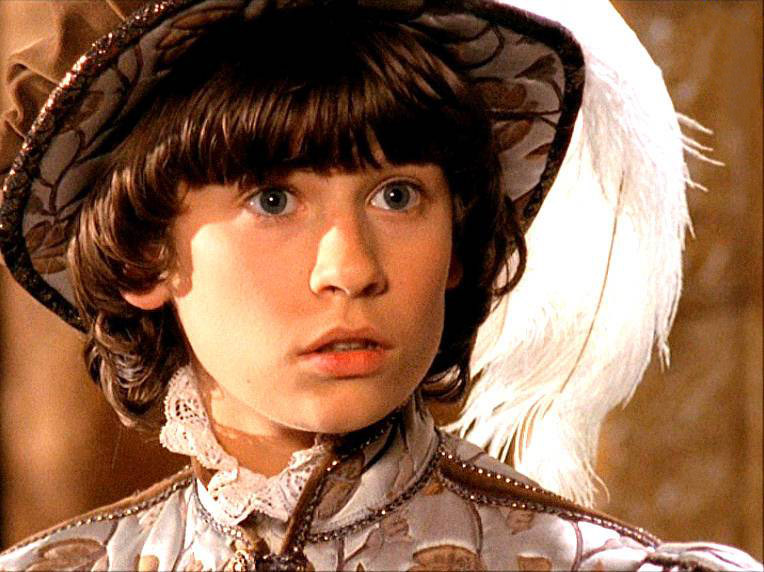
The television rendition that is the topic of this article, however, is more like the version you’re used to seeing. Thus, it turns into one of those traps where you could worry more about comparison than about execution. As is not unusual twin brothers, Robert and Jonathan Timmins, were found to play Prince Edward and Thomas Canty. Their progression through the tale was subtle and quite well done. As they are at the beginning they are decent and bordering on boring seeming both to be nice polite boys, a bit too much on Tom Canty’s part, however, their role reversal brings out the best in them as actors and them as well as the cross-cutting nature of the tale really get the film moving.
The film’s pace is never an issue as it clocks in at a brisk 90 minutes; the only issue is that it might just be a tad too quick. While emotionally you don’t mind the climax being resolved too quickly, if you compare that to the denouément (where several wrongs from the tale are righted) it is rather quick. The denouement is typically not seen and was a delightful twist but it just seemed that the Lord Protector’s enmity to the false King had just been announced and then things were nearly at a head.
The character of Miles Hendon is always a great vehicle and Aidan Quinn played the role quite affably and very well indeed. However, while Jonathan Hyde is an effective enough villain he does wander a bit too close to being over the top and cartoonish at times- some cartoons being more realistic.
The scene where Miles discovers what happened while he was gone was great and nearly makes up for the fact that he is repeatedly over sarcastic in his disbelief of the Pauper’s tale that he is Prince.
This is the kind of tale you almost want more time to tell. Disney’s version in 1962, featuring one of the most spectacular performances by a child actor on celluloid, Sean Scully playing both parts, was two hours and felt about right and could have been longer. It’s a loaded tale which says a lot merely by the situations the two boys are put in they don’t need to preach the stories and pictures do it.
The cinematography is quite good and is aided in great part by the fabulous art direction and costuming which was sure to pack many of the frames full of vibrant colors. The locations, rarely mentioned, were very well scouted and all looked quite good and made for a very “authentic” feel and created great possibilities for the film’s visuals.
All in all this is a good rendition of one of the best and most repeatable stories ever written.
As those who know me, and if such a person exists, cyberstalk me, know I created this blog after writing on another site, which shall remain nameless, for a while. The point is, I have material sitting around waiting to be re-used on occasion I will re-post them here. Some of those articles or reviews may have been extemporaneous at the time but are slightly random now, hence the new title and little intro, regardless enjoy!
The Kids Are All Right (2010)
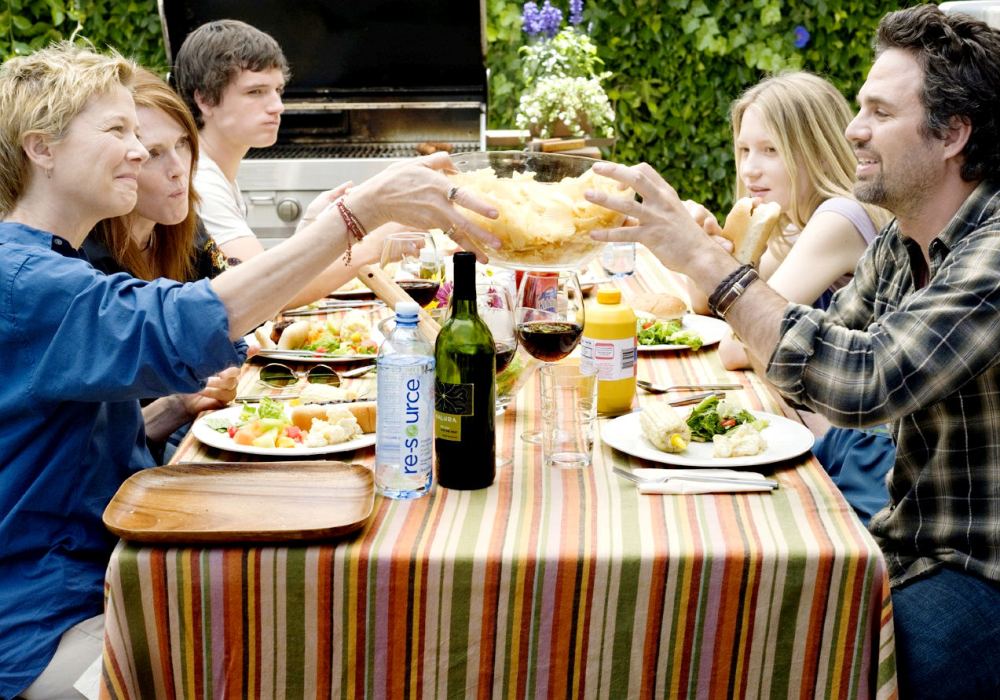
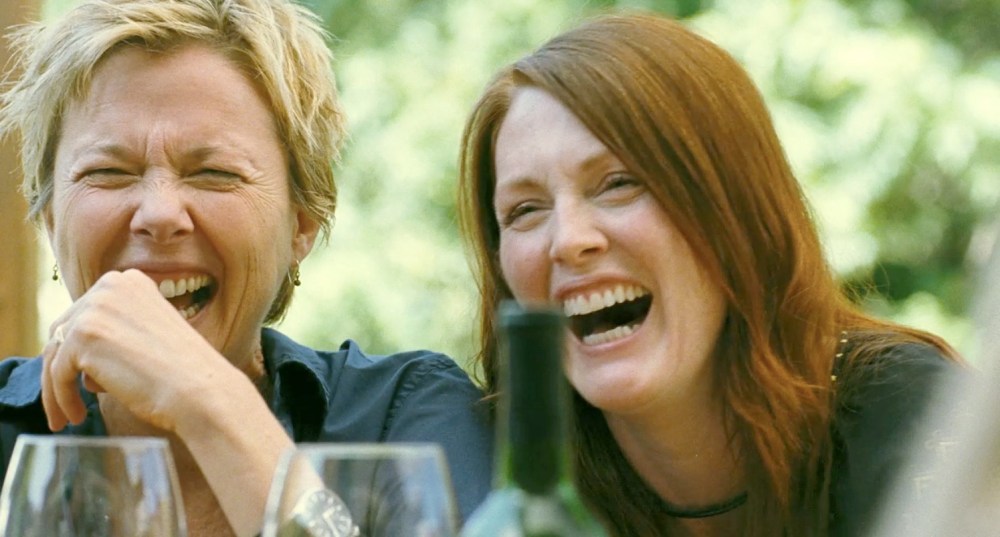
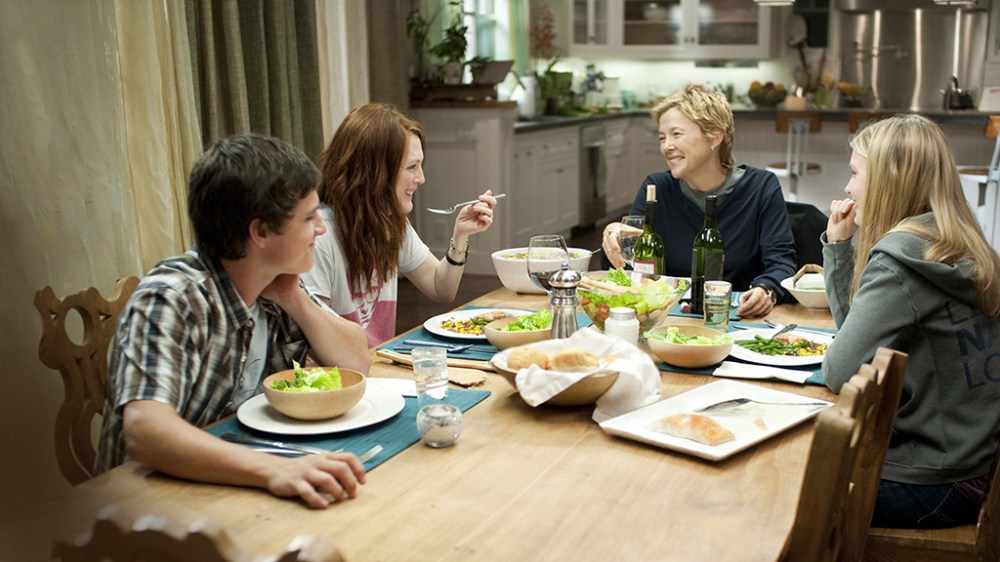
The Kids Are All Right is a film for whom success, marginal as it may be, rests entirely on the shoulders of its cast. The film tells the story in a rather tight nucleus focusing on the parents (Annette Bening and Julianne Moore), the kids (Mia Wasikowska and Josh Hutcherson) and finally their heretofore unknown sperm donor/father (Mark Ruffalo). Ultimately it is the compelling, truthful, funny and touching performances in this film that make it worth watching even in spite of some very serious problems.
While this is a more sure-handed feature effort from Lisa Cholodenko than the disjointed and awful Laurel Canyon it is not without its serious deficiency. That deficiency to be discussed in full warrants a spoiler alert.
Having said that the major conflict of the film occurs when Jules (Julianne Moore) starts having an affair with Paul (Mark Ruffalo). At one point you think it may just be a one time thing but the film almost revels in showing the multiple relapses that Jules has and her enjoyment of this seemingly inexplicable affair. Your hopes that it will never surface are also quickly dashed.
Now while I will not dwell in the land of film theory in this review and speculate on the potential impact of yet another homosexual character engaging in a heterosexual tryst in a film it is also a plot contrivance that fails in terms of cinematic mechanics in several ways.
First, to simply state it it’s lazy. My major grievance with Valentine’s Day is that even with the sheer number of couples in that film nearly all of them were dealing with infidelity. Oddly enough that film deals with its one homosexual couple in a unique and taboo-breaking way and they have no issues.
While barring some other grievous offense this is the biggest cause of conflict possible it’s not one that had to be introduced just to create drama. While it does allow there to be a very emotional tearing apart and subtle reunion of the family as Joni (Mia Wasikowska) goes off to college one wonders if there would ever be a film that would ever do the opposite and get away with it. Would a man be able to have an affair with another man and be able to repair his marriage, family and have an audience believe it? Doubtful. However, here a gay couple faces the ultimate betrayal and while you want them to resolve things it doesn’t make it any less implausible that they’d manage to stay together.
Yet, plausibility is overrated and almost anything can be accepted in a film if it is sufficiently set up but aside from the one cliché I-Hate-You-I-Want-You glance they exchange right before they kiss you don’t see it coming and further more when pressed Jules doesn’t have a satisfactory answer for Nic (Annette Bening) that would explain not only an extra-marital affair but one with the opposite sex. If that is going to happen in homosexual relationship more needs to be cited than a lack of attention. It’s not like flipping a light switch and while sexuality is between the ears and the affair doesn’t make Jules suddenly straight, this kind of thing does take convincing to make sense and it never quite does.
Unfortunately, this affair is a major event and does take up a significant portion of this film and thus this review. Ultimately, the audience is the determinant of meaning so it is the director’s job to convey that meaning clearly so we can see intent. I am quite sure that perhaps there was some symbolic or representational intent with the affair and that Cholodenko didn’t want it interpreted in a possibly negative way, however, whatever message or motivation existed there was not clearly conveyed.
The overall affect the film has on an audience is a positive one. It is a touching and fitting conclusion and Julianne Moore’s apology scene is a tear-jerker as is Laser’s (Josh Hutcherson) final assertion of why they belong with one another. It’s a film that makes it by on the strength of its actors and its finale it’s the journey I would’ve preferred changed somewhat. Perhaps the message lies in the title that The Kids Are All Right even if the adults aren’t but isn’t that an awfully dangerous mixed message?
As those who know me, and if such a person exists, cyberstalk me, know I created this blog after writing on another site, which shall remain nameless, for a while. The point is, I have material sitting around waiting to be re-used on occasion I will re-post them here. Some of those articles or reviews may have been extemporaneous at the time but are slightly random now, hence the new title and little intro, regardless enjoy!
The Next Three Days (2010)
The Next Three Days unquestionably has some good elements to it but there are far too many occasions it trips itself up just when it is gaining momentum. It ends up being too far-fetched, silly and to an extent anti-climactic to be an effective action film.
The biggest strike against it in the far-fetched arena is that this film uses the Youtube-created myth of a punctured tennis ball being able to unlock a car door. Either the filmmakers never saw that Mythbusters episode or they don’t care. This makes even less sense when you consider the bump key plan, were John (Russell Crowe) learns to fashion a key that can open any door. At least there the way it’s explained it seems feasible. In terms of being far-fetched it almost doesn’t bear mentioning that this film contains the obligatory scene where Liam Neeson is brought in to be awesome. The information he gives is crucial but the way he delivers it and how its used is somewhat suspect.
Neeson’s performance is wonderful but it gets a bit expository and at some point and you wonder why he doesn’t lower his voice and/or look around to see if he’s being overheard, which I blame on the director- even having written a book about escaping prison you’d think he’d want to be a little discreet about being an accomplice before the fact. Then the numbers on how long it’ll get to put certain lock downs in place are taken as gospel and placed on a map and on our protagonist’s wrist, as if he would forget like this is Memento or something.
There are a few miscalculated story devices that end up working against the film: The first being the ticking clock element. It is treated like gospel but when the time runs out there really isn’t an overt threat that makes it seem as if our hero is going to get caught. Then there is the question of guilt or innocence. Due to the fact that the film wants to leave that question in doubt we rush through the early part of the story, are left thinking the protagonist is a little delusional and then are escorted through a moderate twist-ending.
Perhaps what is most difficult to embrace about this film is that our lead does resort to extraneous criminal activity to pull off the escape. To go into more detail would be to give too much away. Suffice it to say that decisions are made to cross a line that needn’t be crossed to get the job done.
Now there is in this film a few very good touches which make it watchable and do build suspense. One of the best touches being that upon leaving his house John removes all materials from his “war room.” It ends up filling three bags of garbage. Two he takes with him and one he leaves in the trash can to be found. This acts a diversion and is very well done.
However, as with everything in this film, it seems that for every step forward there was a step back. As enjoyable as that little ploy was it does try to bury something that was a niggling concern throughout, which is that he very clearly has details of his plans and calculations plastered all over his wall simply because they accommodate the aesthetics of the cinematography and tosses aside any semblance of realism. Should anyone have entered this room it would be obvious he was plotting something.
Ultimately, there are a few elements to latch on to that will get you through this film mainly watching the plot of the escape unfold, however, there are too many elements that hold it back and stop it from staying afloat.
As those who know me, and if such a person exists, cyberstalk me, know I created this blog after writing on another site, which shall remain nameless, for a while. The point is, I have material sitting around waiting to be re-used on occasion I will re-post them here. Some of those articles or reviews may have been extemporaneous at the time but are slightly random now, hence the new title and little intro, regardless enjoy!
Kick-Ass (2010)
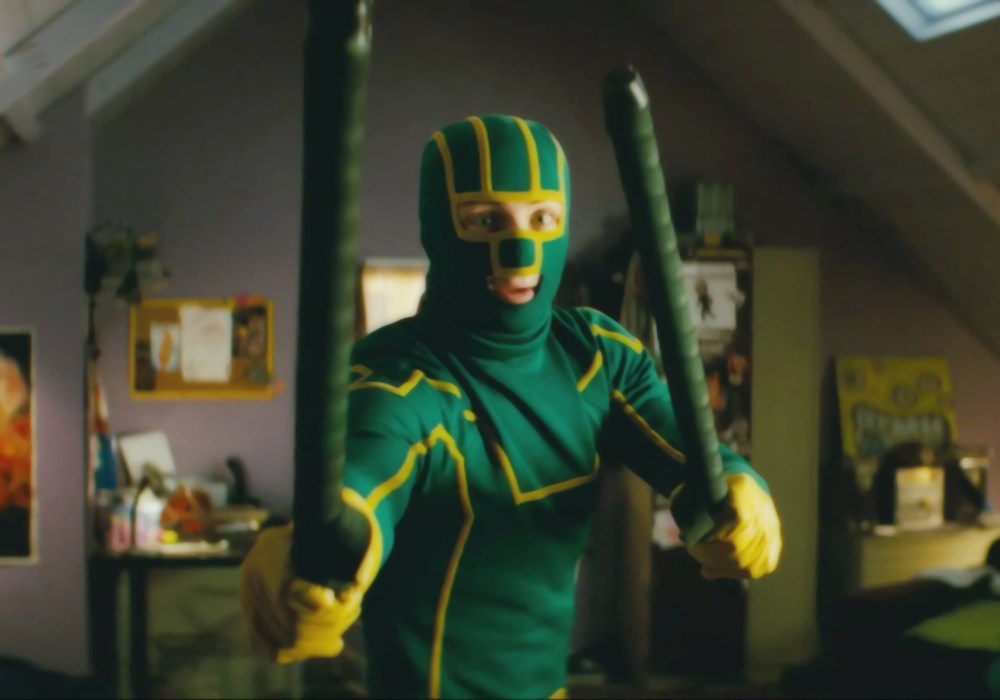
Kick-Ass had been touted by some who had seen it prior to its release as the next generation of comic book movies which is a lofty moniker to live up to and some have fallen woefully short of this expectation. Kick-Ass not only reaches this lofty praise but fair exceeds it on many levels. It is a film that takes the subgenre in a new direction bravely and boldly.
One of the biggest contributing factors to this film’s overwhelming success is the outstanding performance of its lead cast. Aaron Johnson, as the title character, delivers what is likely to a be a star-making performance. While that ability has always been apparent he has yet to have such a showcase as this. His American dialect is not only unique but completely bulletproof such that many who have recently seen him interviewed were completely unaware that he is, in fact, British.
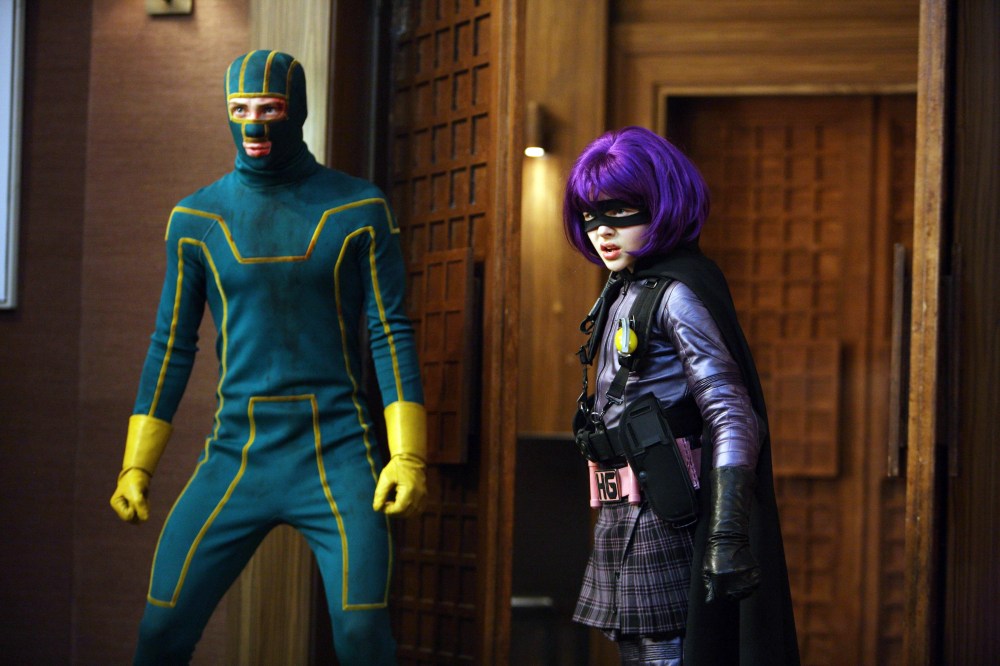
Probably the second biggest contributing factor of the film’s success, in terms of casting, is Chloë Grace Moretz as Hit Girl. While she too recently proved herself in a smaller role in the film Diary of a Wimpy Kid she absolutely breaks out here with a film that was released later but clearly shot first. In one of the better plot devices the film employs the title character/protagonist/narrator is the least skilled of the would-be real life superheroes and it is Moretz as Hit Girl and Nicholas Cage as Big Daddy who give us the audience the jolt of the graceful, intelligent, funny and nearly infallible heroes we expect. Yet as seeing this film will prove as the events are taking place in the real New York City and not Gotham there can be grave consequences for these vigilantes.
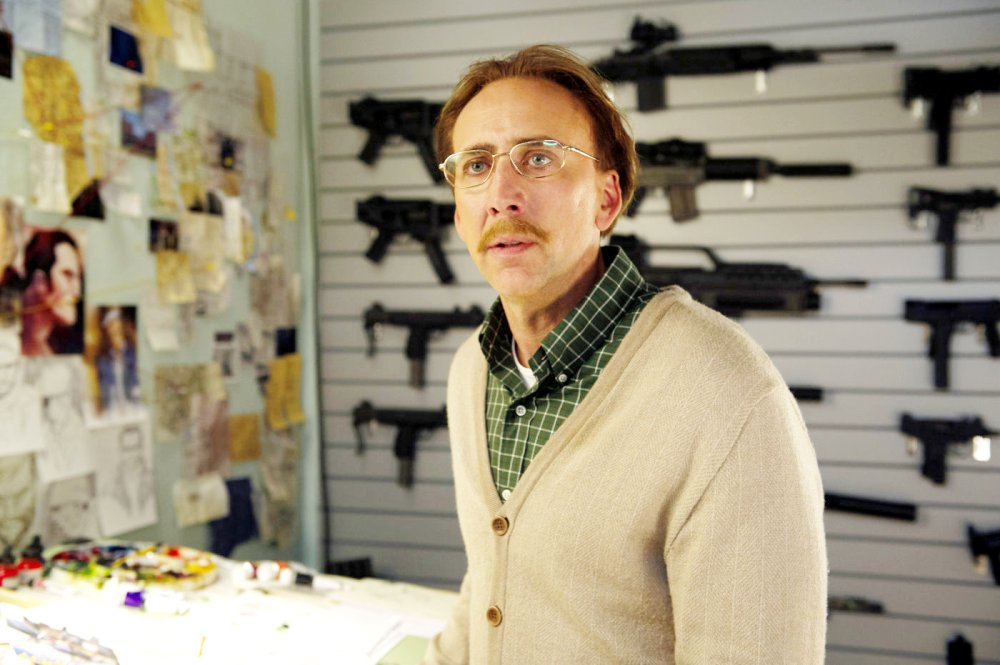
Nicolas Cage delivers a performance in this film that once again is making me eat my words to an extent. Last year in the marginally bad film Knowing I lambasted Cage. It seems he took that film, and many in the action genre (Many of which are Bruckheimer-produced) off. It’s not an excuse for his line-ready badness at times but just a fact because in this film he was, dare I say it? Glorious. And this coming on the heels of The Bad Lieutenant: Port of Call New Orleans. He had something here to sink his teeth into and went at it full boar and created a superhero alter ego who seemed to be the bastard child of Adam West and William Shatner and was so funny he challenged my ability to control my Coca-Cola filled bladder.
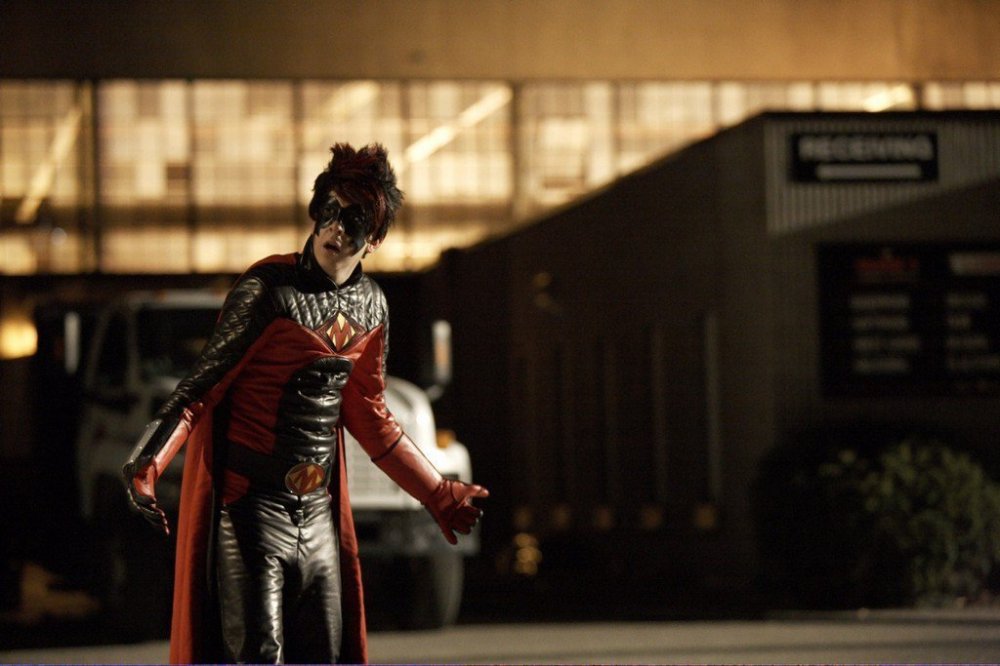
Last but certainly not least in deserving a mention is Christopher Mintz-Plasse. While he will never be able to shake being McLovin’, nor does he really want to, he was starting to run the risk of being pidgeon-holed in a very small subset of roles with this he is still in the nerd vein but he did get to stretch a little bit and does play a character with dimensions, a struggle, an arc and ambition. In another fantastic twist, which shouldn’t be that hard to do, Kick-Ass gives us the origin story first as opposed to other comic franchises who insist on backtracking towards them in spinoffs, sequels and/or reboots.
Another major element this film benefits from is the implementation of verisimilitude. By constantly giving you reminders that this film is different from others in its ilk in as much as these are real people and not aliens beings or billionaires with fancy toys the stakes are raised greatly and almost anything can happen.
It is this very verisimilitude that allows the film to hit many different notes of emotion throughout the film and also play with tone going from comedy to drama to suspense with ease and in the blink of an eye.
The facile nature of bouncing from tone to tone also allows the pace to stay steady such that when the pedal hits the metal and the film is driving towards the finish you are hooked and literally at the edge of your seat.
Another aspect in which this film separates itself and makes it somewhat different is that it also seeks to please by having our heroes have good kills. Generally this is a notion of the horror film genre when you know that the body count will be high so it’s a matter of creatively disposing of victims not so much the fact that they do die. The same applies here in this film where there are many henchman to work through before getting to the ultimate villain and the film really thought about how to fluidly and creatively have these obstacles eliminated.
One sequence towards the end where Hit Girl is in the enemy’s lair is not far off the finesse and prowess of the massive fight scenes in Kill Bill but like with that film to reduce this film to a massive bloodbath would be an injustice.
As I frequently say, and will write on shortly, I am not one for hyperbole so take the following statement as an apt comparison, due to the fact that Kick-Ass ends with Red Mist (Mintz-Plasse) reciting a line from the following film: I, not being a comic book film completist by any means, have been waiting for something like this since Batman and it is good to know that it can happen and that the exalted feeling I had leaving the movie theatre is not reserved for childhood. 10/10
The first thing that needs saying about Easy A is the following: I for one am not the kind who is off-put by listening to dialogue that is so witty and on point that it seems too good to be true. Unrealistically rapid, witty dialogue is part of what made Film Noir and many classic films work. Lip service need only be paid to reality when absolutely necessary to preserve suspension of disbelief. Especially when dealing in the comedy genre dialogue will be unrealistic in one way or another what matters is, is it good? The dialogue in Easy A is fantastic from beginning to end and is the best I’ve heard since Whatever Works, which is saying something because Woody Allen can talk circles around most.
Part of what makes this seemingly sitcom-style dialogue work is that this film is never, not even for a moment insincere, whether about the points its trying to make or its characters. The parents in this film played brilliantly by Patricia Clarkson and Stanley Tucci are oddball, California liberal stereotypes, however, even when consoling their daughter and actually playing parent they do not suddenly change persona but rather do their variation of this person being sincere which is still a little offbeat.
The bottom line is that this film is hysterical an that is what matters most when it comes to comedy. It may not quite be up to snuff with The Hangover, which would need to be re-viewed but now there have been two comparisons made to the two best comedies of 2009 so you get a sense of the quality of this particular film.
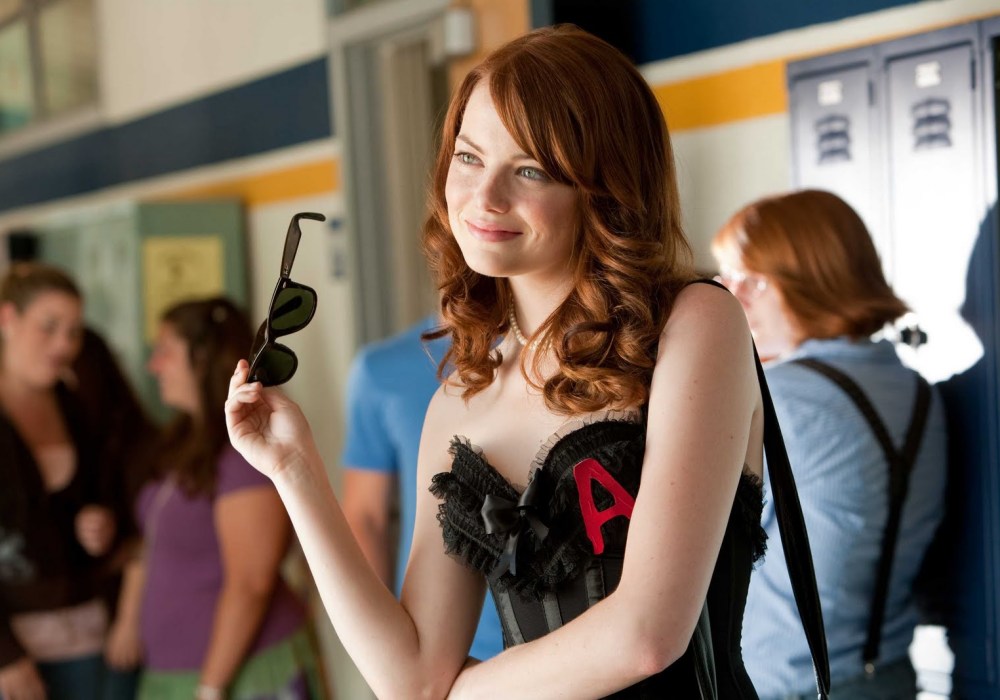
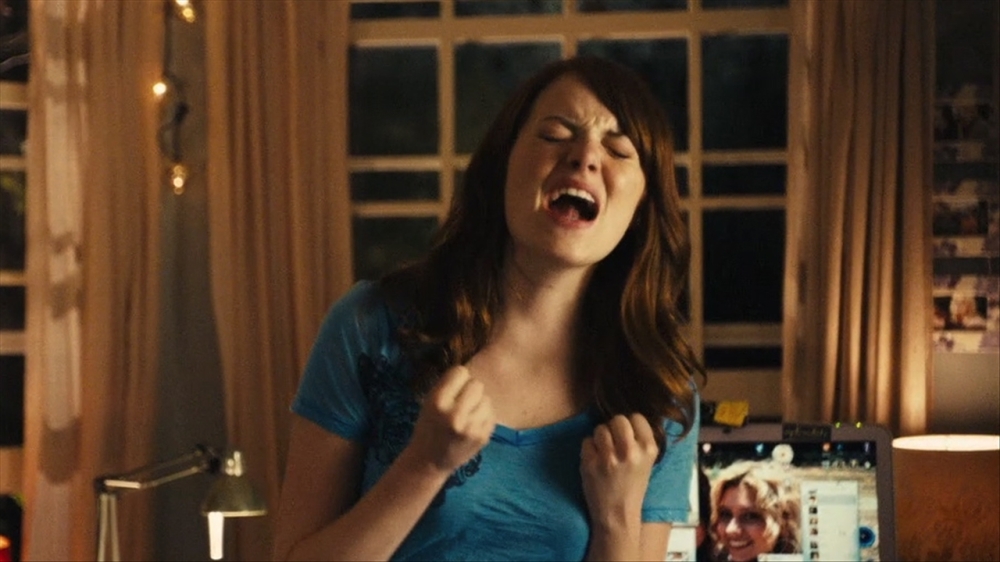
What helps to elevate this film is the performance turned in by Emma Stone. While Stone already has many credits to her name this is indeed a star-making turn and it’s little wonder that her name is already being bandied about for two very high profile roles now. Her performance in this film is nothing short of a revelation. Her delivery and reactions are always spot on and when she needs to get emotional, even in the context of this tale, you believe it.
While playing a high school tale which is essentially a self-conscious and modern day retelling of The Scarlet Letter the film still manages to avoid didacticism which is quite a feat. This is likely due in part to the influence of John Hughes which can be felt in this film not only in the dialogue but the usage of music throughout including blatant The Breakfast Club references.
There is through the jokes also a reverence for cinema particularly the classics there is also quite a bit of adherence to the comedic rule of three. One particular example comes to mind but it’s best kept a surprise. The film is also told in a frame of a webcast. While frames are a classical technique the webcast is a current/forward-thinking. Easy A, if you’ll excuse the cheesy critical pun, earns an Easy A as one of, if not the, funniest films of the year and one of the better most complete comedy experiences you’re likely to find in contemporary cinema combing intelligence, heart and laughs.
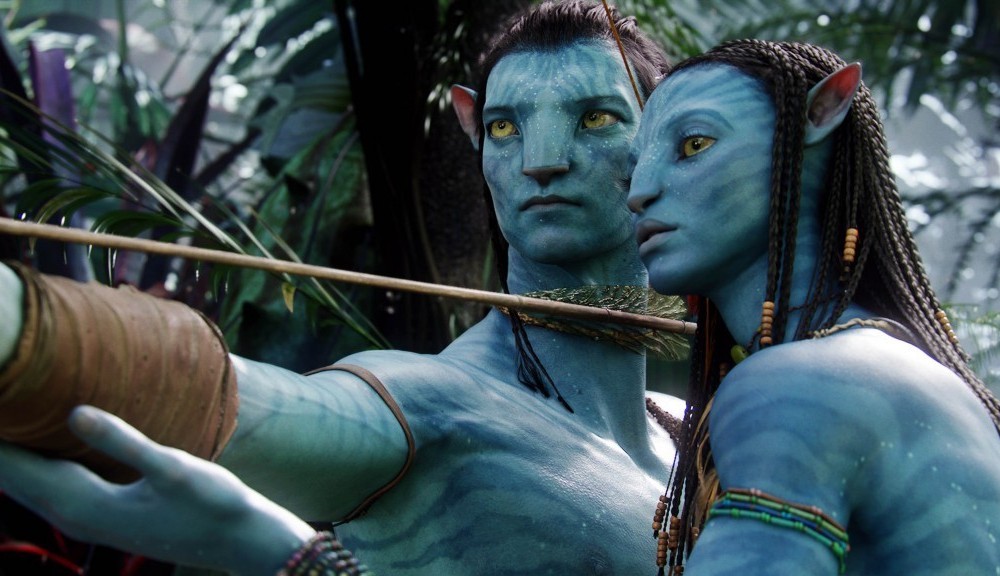
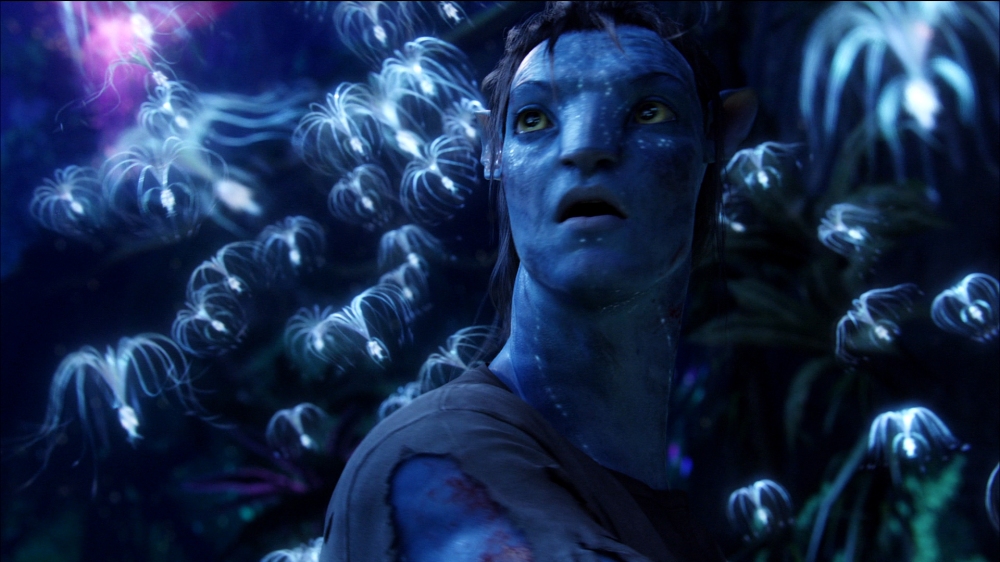
Avatar is probably the most amazing piece of eye candy that moviegoers have been allowed to unwrap in quite some time. It includes fantastic vistas, wonderful conceptions, phosphorescent and vibrant images that are always intriguing and some are downright awe-inspiring. As just a film to look at it may be the most amazing film this critic has ever beheld.
The effects are truly tremendous in every way. The creature-work done in this film is unparalleled. There is a very unique and enthralling ecosphere created on the fictional planet of Pandora which is just incredible. All the creatures are fascinating, effective and memorable which cannot be said for all sci-fi films.
The sound design was also fantastic in helping to create the world’s animals but also in making the battle scenes hit harder. There is creativity in conception and excellence in the edit.
As any good sci-fi tale does it comments on our society, our world, through the subterfuge of a far off place. Sometimes the commentary is subtle or nearly non-existent. What was surprising about Avatar was how very present the commentary was.
There is an aspect of colonialism to the way humans displaced from earth now occupy this planet in a very uneasy equilibrium. The people from earth are after a precious mineral and looking to get the Na’vi, the natives of the planet, to abandon their land so it can be excavated.
In the mineral lies the only issue of the film’s construction and plot. Firstly, the mineral is called Unobtainium. Really? This is a film that from what we can tell created a people and a bestiary but this is the best name they could think of for the rock? The other issue is that we never find out what purpose it serves except that it’s valuable. Is it just precious like gold or can it be harnessed as a fuel – what is the attraction?
That all being said the hunt for the Unobtainium brings other things to light. Giovanni Ribisi’s character, although it is never made clear, appears to make an unspoken comment on the Military-Industrial Complex. He seems to be there just urging the army to obtain it by any means necessary and is never addressed as a dignitary so it seems his power is inferred and not one of rank.
Some have commented that this is a Pocahontas type tale and while the parallel can be drawn from the Native-outsider relation in this film there is a very distinct difference. In relationships between Native Americans and Europeans it was the native who would leave with the other, here it is the outsider who literally becomes a member of the tribe. The tribal commentary seems very general and shouldn’t be interpreted wrongly whether you read it as an African or Native American tribe the point is this: the people belong to the land and vice versa, they treat it with respect and they care for it due to the abundance it gives them and that ought not be taken lightly, and certainly not destroyed, by so-called civilized peoples.
Minor vague points aside this film is an incredibly enthralling experience that does build slowly but it uses that added half-hour of running time to its advantage. The battle scenes at the end are also very well-executed.
This is one of the top 15 films of the year based on its technical merit, advancement and engaging story-line alone. There are some head-shaking flaws that just make you wonder but it does not taint the overall experience.
The main objective of a documentary is to inform and illuminate subject and bring it to a larger public’s attention. More often than not the subjects of a film’s investigation will be one that is greatly unknown. It is generally in learning new things and in examining difficult questions that the best documentaries are made.
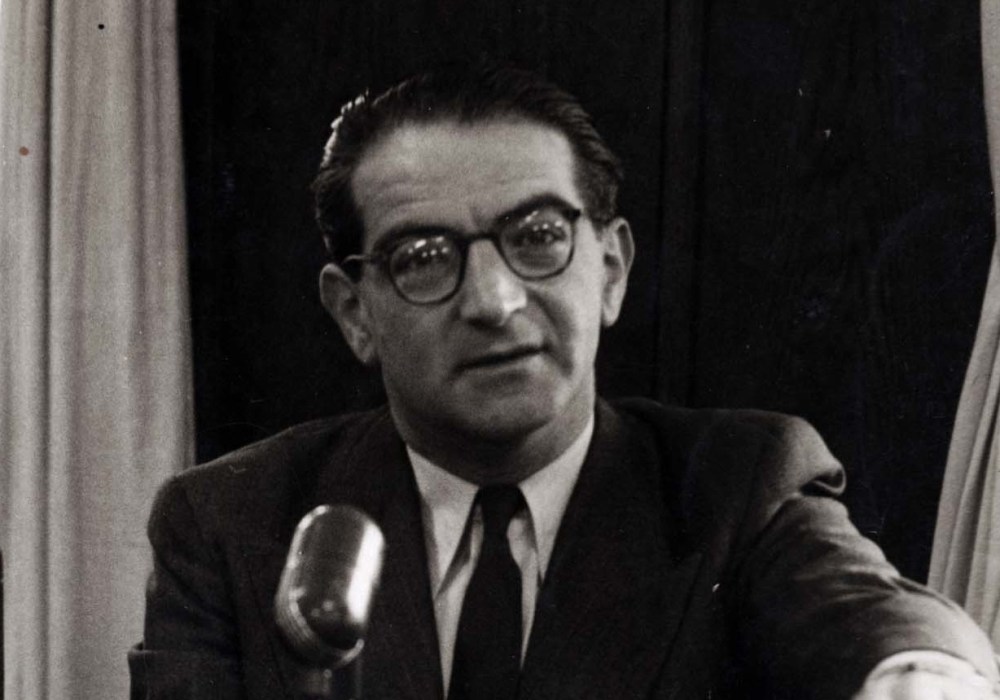
Killing Kasztner is just such a documentary as it brings to light a largely unknown, suppressed and unexplored chapter of the history of World War II and the infancy of the Israeli state. It examines the polarizing figure of Rezso Kasztner a Hungarian Jew who negotiated with Adolf Eichmann for the release of more than 1,600 Jewish prisoners. It investigates the controversy that exists surrounding the negotiation itself, the postwar implications, a trial Kasztner faced in Israel and his subsequent assassination at the hands of a young extremist Ze’ev Eckstein. Even walking into the film knowing all this beforehand you will still learn a great deal and it will provoke much thought and emotion throughout.
The film is an interesting one in as much as you not only hear the director/interviewer, Gaylen Ross, ask certain questions but also see the director on occasion, typically accompanying voice over she wrote and performed. It is most definitely an auteur’s approach to documentary film wherein the director is not an invisible hand but is to an extent involved and invested in the tale being told not unlike Werner Herzog is in some of his works. This involvement, however, is never obstructive and both sides of the story are presented and certain questions asked are never answered because they have no answers and so one could leave the film with either opinion of the man based on the facts presented. Moreover, this involvement works to the benefit of the film as just getting a little taste of what the story means to the person behind the camera raises the stakes for us as an audience a bit.
It is a film that tackles its subject matter from as many different angles as possible talking to many people on all sides of the tale from Kasztner’s family to his assassin, from the son of the man who tried him to the survivors who were saved by him and also journalists who covered him and were against him. A very full picture, in terms of participants, is painted of this very intricate story.
One of the truly great things about watching this film at Theatre N was that there was a Q & A with director/producer Gaylen Ross via Skype after the screening, where I was able to ask her about her handling visually of some of the interview footage with the assassin Ze’ev Eckstein. There was a different visual approach to him than all the other interview subjects. The shots were more close-up, sometimes extreme-close up on his mouth or eyes. Ross said she didn’t want him looking too “natural or dramatic” and that she wanted to “separate him from the others in the story as just a force that’s present.” Thus, he’s differentiated from both those for and against Kasztner but he is not commented on by the filmmaking process itself, which is preferable.
It’s a fascinating and thought-provoking film that brings to light a story which should be part of common knowledge regarding the holocaust. The change in attitude regarding Kasztner even as Ms. Ross was in production is rather impressive. It is a well-crafted and well done documentary. It is also one with an evocative, haunting and moving score which is well-placed throughout.
It’s a sprawling tale that does deserve our full attention it uses just about all of its two hour running time to its advantage. It also deftly avoids sensationalizing potentially combustible confrontations and renders the situations with calm, insight and art.
To keep tabs on where this film is playing next please visit their official website.
This is an idea I first saw on Rupert Pupkin Speaks. The idea is to list your favorite films from the past year that you saw for the first time, but exclude new releases. This allows much more variety and creates a lot of great suggestions if you read many of them.
Enjoy!
Favorite Film Discoveries of 2015
This list kicks off with three disparate short films by Carol Ballard that I watched on the Criterion Collection release of The Black Stallion:
The first is…
The Perils of Priscilla (1969)
The story of a cat told from its POV.
Crystallization (1974)
With amazing technique and engineering this film shows the process of crystallization bigger than life.
Seems Like Only Yesterday (1971)
A series of interviews with centenarians about the changes they’ve seen in the world.
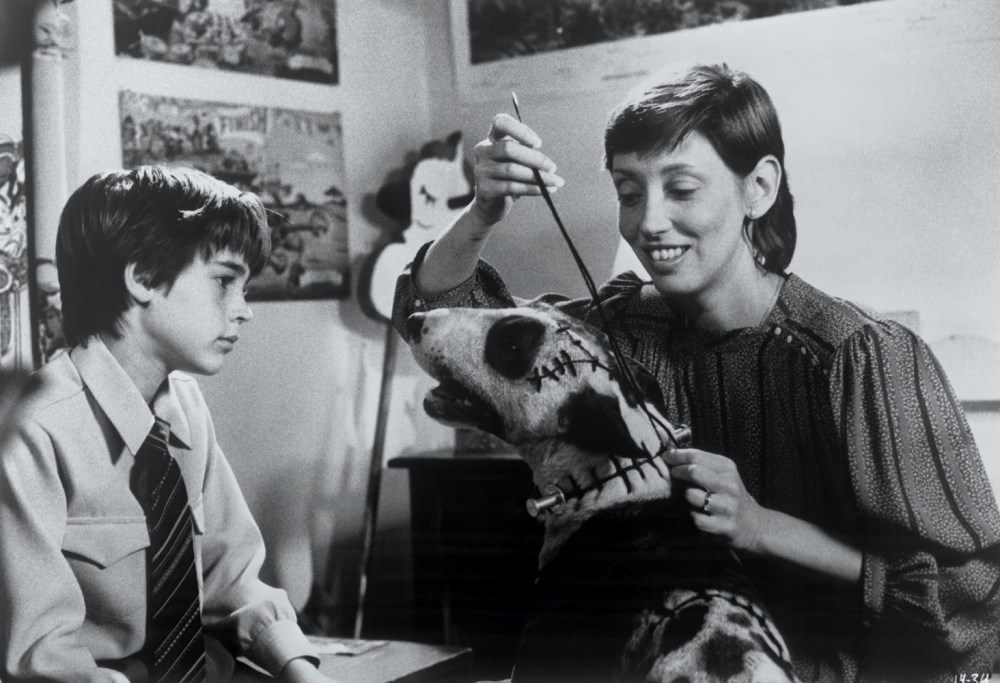
Frankenweenie (1984)
Seen as one of my few 61 Days of Halloween selections this one was long overdue, but well worth the wait. Not what I’d call a discovery but rather a confirmation. This is Burton at his finest and weirdest.
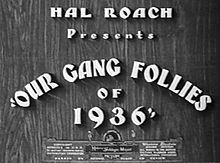
Our Gang Follies of 1936 (1935)
The gags in this short, unlike some of their shorts, are varied and plentiful: there is a monkey shoeshining, cross-dressing, animal hiding in a bodice, things go wrong and it’s live, hiding in hay, running skull, gunshots at boots, and animated eyes.
It’s no wonder there was a sequel was a sequel to this short a few years later. This version is well done and allows great variety in scenes, different talents to be displayed and many jokes.
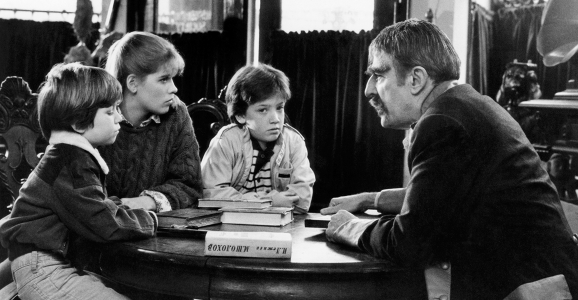
Mr. Boogedy (1986)
This is another Disney viewing during 61 Days of Halloween that I saw thanks to TCM’s new Disney Vault special programming block. This is another mid-’80s title from Disney, this one playing on The Wonderful World of Color and at current is available digitally or thru Disney Movie Club. Richard Masur, David Faustino of Married …. with Children and Benji Gregory of ALF are the standouts. Historien om en Gut (1919)
The movie has a simple thru-line:
After being accused of stealing the teacher’s watch, Esben escapes with a ship and gets work at a farm. He then works his way back home, to get justice.
So this is an old one and curiously is listed as a 90-minute run time but this version runs about 48 (not sure if there’s anything missing) but it seems complete. One of my pet projects may be to put more proper titles on it and upload it.
Francesco is a film I had not even heard of, much less seen, and one I was glad to have a gander at. I’m also thankful this is the first full version of St. Francis’ life I took in. While any one can identify with his naturalist tendencies and love of birds, this earnest devout portrayal; a man fighting peaceably for a belief in conducting oneself he firmly believes can inspire all and I can see why he continues to have such a following.
Francesco is a wonderfully re-presented title that should delight viewers for secular and holy reasons alike.
Being a Mac Sennett comedy the to-be-looked-for staples are slapstick comedy and insane chases, this film most definitely has both. The runaway house trailer being chased by any number of police and fire engine is breathtaking and frequently hilarious. Much of this hilarity due to Billy Bevan whose milieu when he headline was the wild marital farce, per Wikipedia, and this title certainly fits into that realm
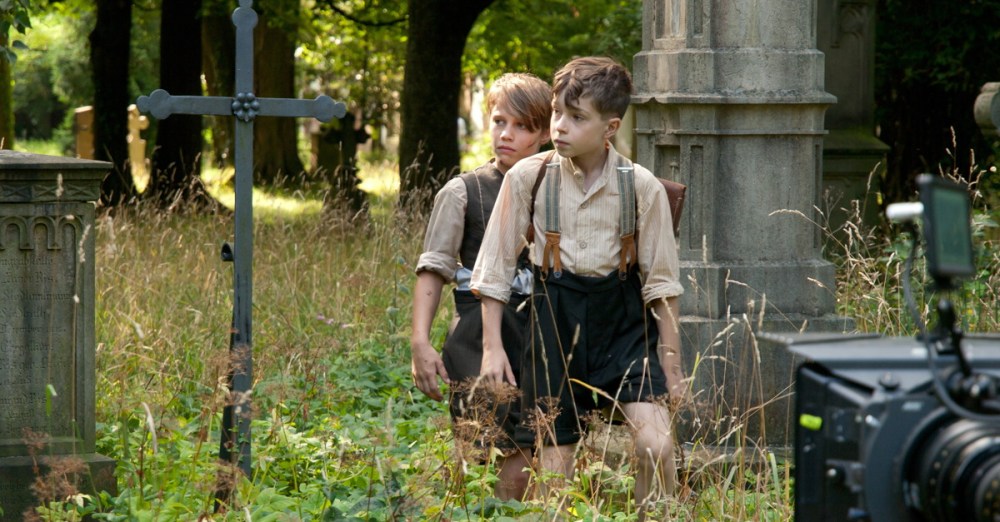
Tom und Hacke (2012)
Transplanting a story to another culture, especially a classic like Tom and Huck doesn’t always work. This German rendition does.
The Legend of Rockabye Point (1955)
The old fishing boat captain tells the story of Chilly Willy, a singing polar bear and a bulldog who quickly falls asleep when he hears a lullaby.
Did a lot of Woody Woodpecker watching in the early part of 2015, but Chilly Willy will always be my favorite in that gang and I loved this one and don’t think I’d seen it.
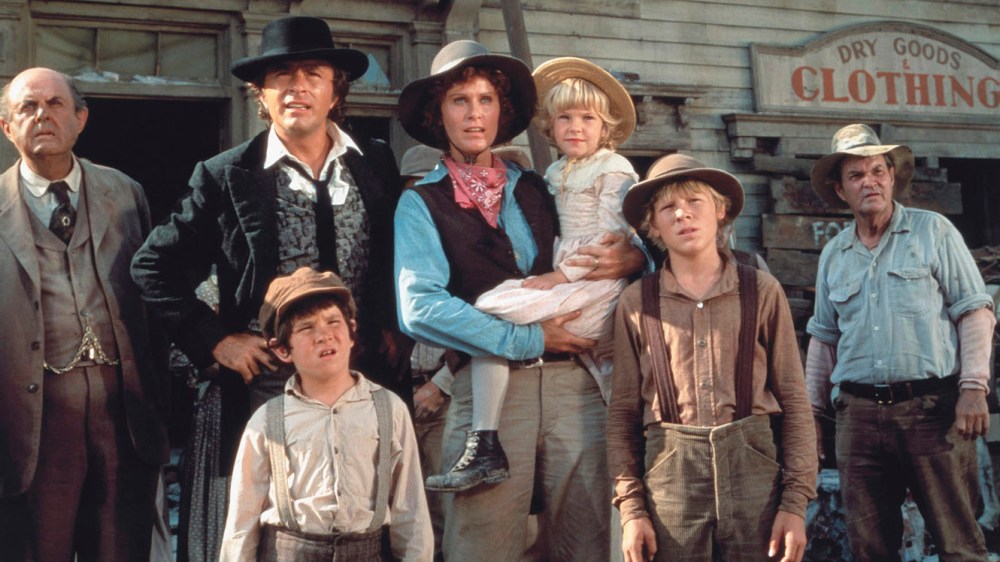
Not entirely dissimilar from Bedknobs and Broomsticks here you have adults that are not necessarily altruistic, but the lead Russel (Bill Bixby) does change and come to genuinely care for the kids. Meanwhile, Dusty (Susan Clark) does come to care for Bill even though she ends up with him only for the kids’ well being at first.
The Apple Dumpling Gangis a humorous enjoyable tale that looks brilliant in this Blu-ray upgrade. If you are a member of the Club and a fan of the film it is definitely recommended for the picture alone even though it offers no extras.
The Playful Pelican (1948)
Another Walt Lantz title, this one features Andy Panda and a Pelican. The creativity seemed to break out when Woody wasn’t there.
The Tin Drum (1975; Director’s Cut in 2012)
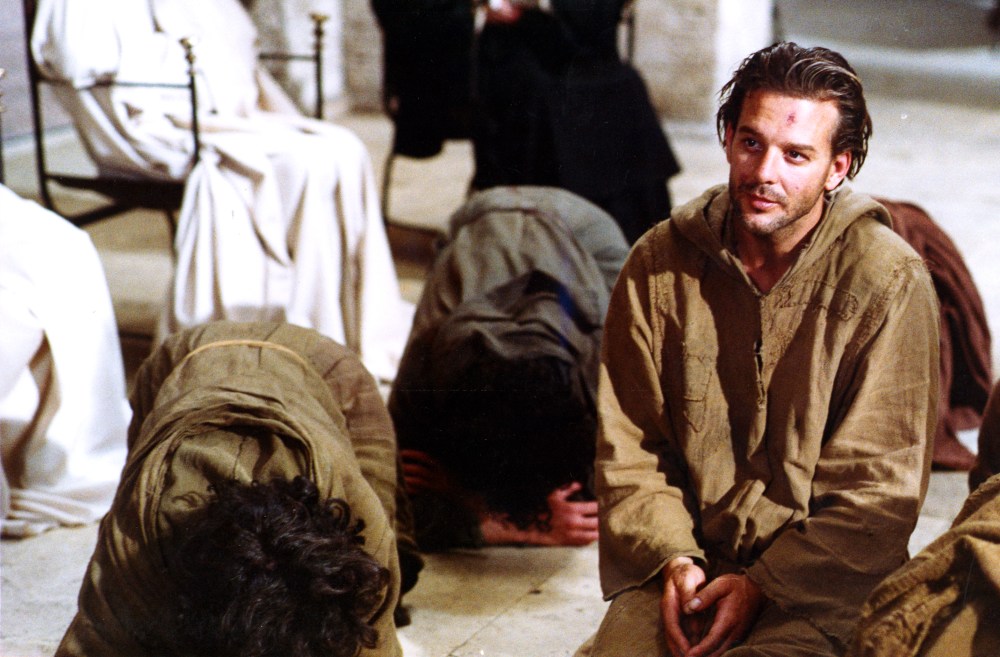
As I mentioned here I have a long history with The Tin Drum. However, I agree with Schlöndorff’s assessment that this version is almost like another movie and superior to the version we al got to know, and many of us appreciate greatly.
I loved this film before and I love it more now with the longer cut, much in the same way the TV cut of Fanny and Alexander is better than the theatrical.
Knick Knack (1989)
I honestly cannot remember if saw this one before or not. It seemed new at the time, either way it’s really neat.
Miami Connection (1987)
Is Miami Connection a good movie? Not at all, is it more readily embraceable as something asa bad movie I love than much of Rifftrax’s fare? Absolutely.
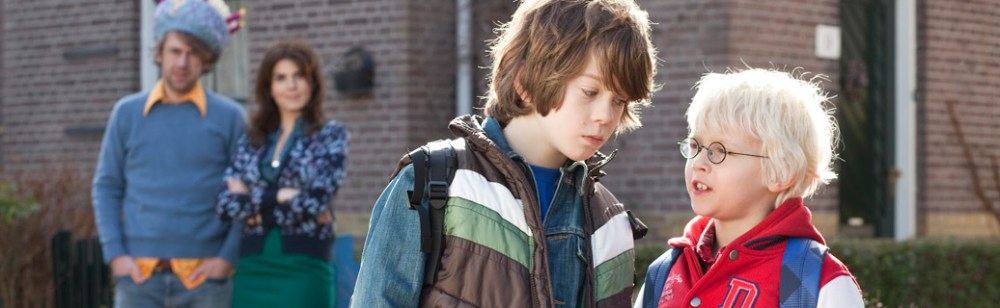
Perhaps what’s most refreshing about this film, from a production value and aesthetic standpoint, is the fact despite being a 2011 domestic release in the Netherlands it does not shy away from practical effects work. Yes, CGI is use where it’s truly beneficial like making the lycan child run about, but for more settled scenes he’s in a suit and make up. It is very well-done indeed.
Alfie the Werewolf is an enjoyable film for all members of the family, and perhaps most intriguing for parents is that it is a fairly benign way to reach a compromise with your kids on viewing material. It could satisfy the desire to see a werewolf movie but would not be potentially emotionally scarring in the process.
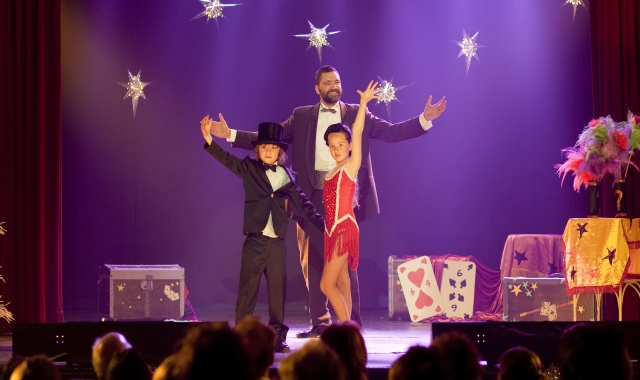
Most family films would only be tasked with resolving the concerns of one family unit. The Magicians decides to take the task of trying to sort out two family situations. There is also the ongoing struggle Sylvie faces in her house with her father living overseas and her mother being detached leaving her mostly to the care of an Au Pair. This dual purpose is most refreshing and combine that with the unusual-though-not-unprecedented disappearing foible it keeps you engaged.
The Magicians is well-edited and paced. It tells its story briskly, in a manner lacking pretension but conversely it’s not devoid of content. The whole family can enjoy, laugh, and learn from this film.
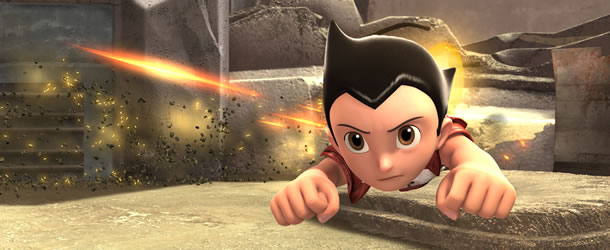
Astro Boy (2009)
Astro Boy has become an increasingly bigger thing for me. It started with many of the graphic novels and now I finally saw the movie and enjoyed it and felt it a very good representation of the character.
So Much for So Little (1949)
Post-War Chuck Jones, and sadly relevant now because it tells you that you should: VACCINATE YOUR CHILDREN!
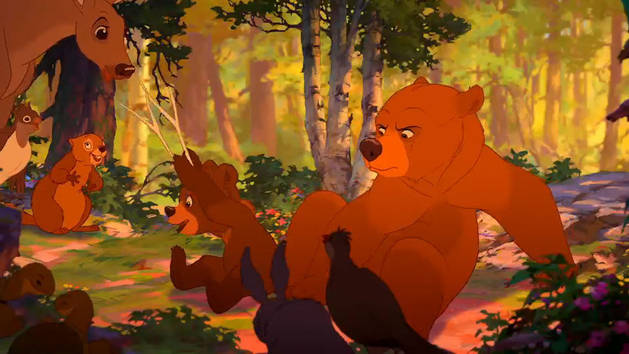
Brother Bear (2003)
This is the Disney movie where you know ahead of time someone turns into a bear. It’s Native American themed which always appeals to me, and when it was out my brother really wanted to see, but it slipped through the cracks for years. Glad I finally got to see it and the better than expected straight-to-video sequel.
I happened upon this film by chance. I had yet to see a film by Jiří Trnka. Having seen many of Švankmajer’s works I always wanted to. The clay-animation herein is quite excellent and the subject matter appropriately surreal. Enjoy!
Rubber Tires (1927)
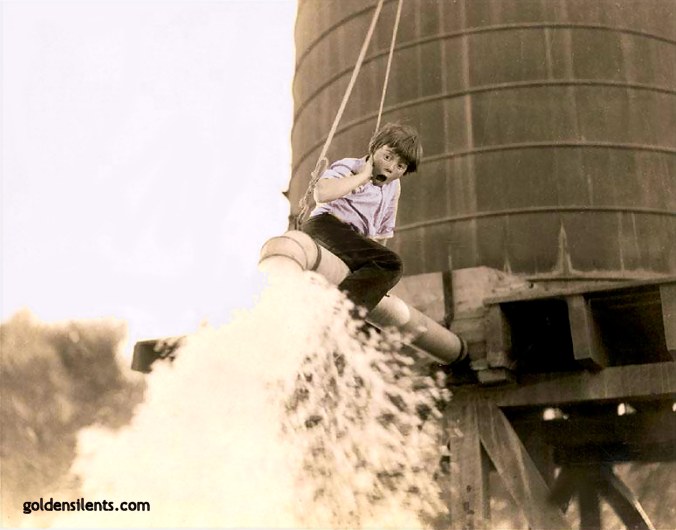
The way in which this one is a discovery is that I finally found it. I knew that Rubber Tires existed, long before I finally caught it and read Junior Coghlan’s autobiography. This photo has been around a bit teasing its existence.
I thought it may have been lost. Then I saw it. Not as mad-capped as I would’ve liked but funny nonetheless.
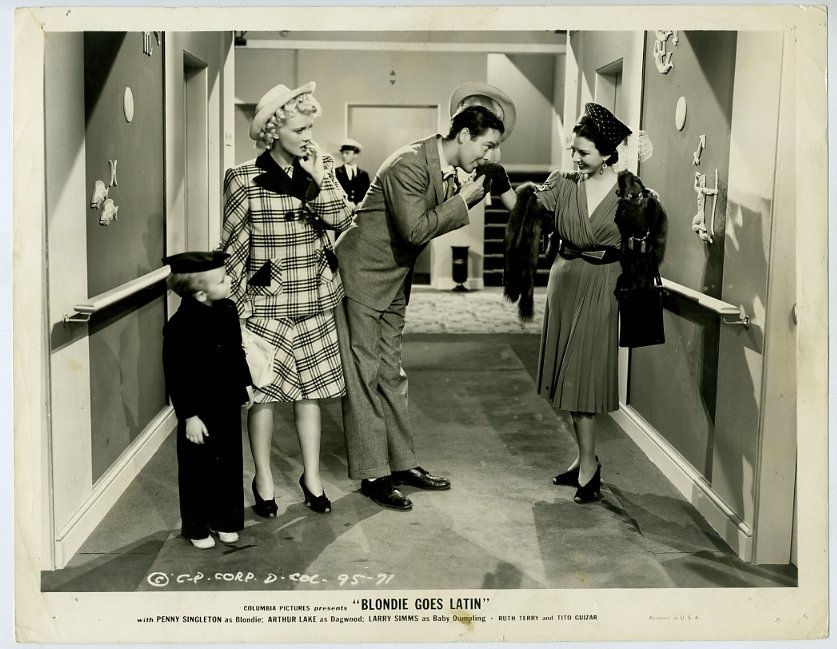
Thia is a sort of representative pick. Here is how I introduced the Blondie films when I first posted a few of them on my Free Movie Friday post:
Firstly, anyone lamenting that sequels are “ruining movies” today, this is one of the easiest examples to cite proving that everything old is new again, meaning sequels are not a modern scourge. There were about 25 of these films released over a thirteen year period. Also worth noting is that long before the Harry Potter films Larry Simms grew up on film – at least in real life if not so much as Baby Dumpling.
I finally started watching a box set of these short, easy-viewing comedies this year. They are in the public domain, readily available and usually quite enjoyable even if the formula has few variables. The series may bolster this section for quite some time as the completist in me does want to get through all of them.
Of particular interest in this one is that it seems to play right into the Good Neighbor Policy.
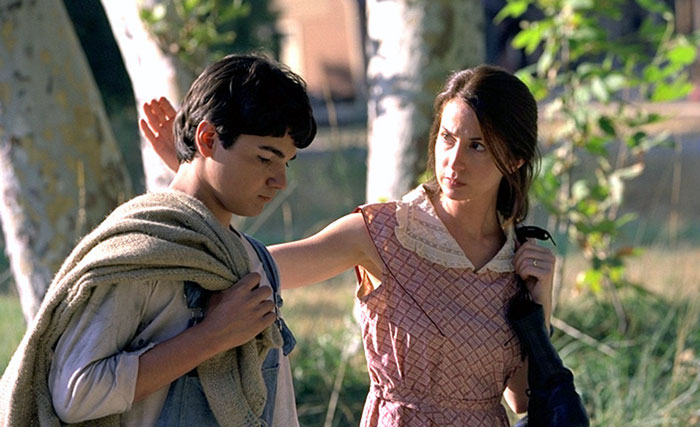
This film was noteworthy especially for the casting of a Native American in the lead role. The character is only a few times referred to as having any native blood, this is unique as it had not happened yet. Some of my thoughts on why it’s significant below:
The reason that is, is true inclusion and universality means casting actors from all over, as rounded characters and in mixed films. Having all films be a melting pot is utopian, and I get arguments against films for targeted audience, but for the time being they are sadly a necessity. Roles in general for African Americans, Asians, Latinos, women, Native Americans, little people and other groups are limited. Roles for the aforementioned groups in a dimensional piece they play a part of are more limited still. Roles for these groups are usually reserved, in the US, for race-specific films like civil rights tales.
Therefore, when I was under the impression that Ashton was just in the film I was intrigued. However, that only lasted so long as a fractional Cherokee heritage of his mother was referenced. So it does not meet the Love Actually standard, but one thing it did is fully embrace Billy’s heritage. Another thing it does is cast an actor of Native American lineage in a film not ostensibly about his lineage as The Education of Little Tree was.
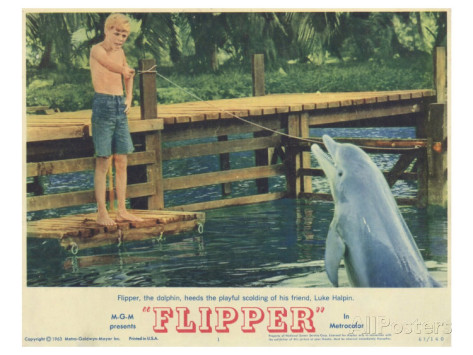
In one regard it acts as the origin of how Sandy and Flipper meet, how Flipper becomes his de facto despite the fact in most regards Flipper is not really held captive. In a rather forward-thinking way he’s only really penned when injured and a short while after that. Beyond that her stays fairly free-roaming and seems to seek human companionship almost more than they seek him.
Santa Claus (1898)
The oldest Santa Claus movie can’t be that bad, can it? It’s short and sweet.
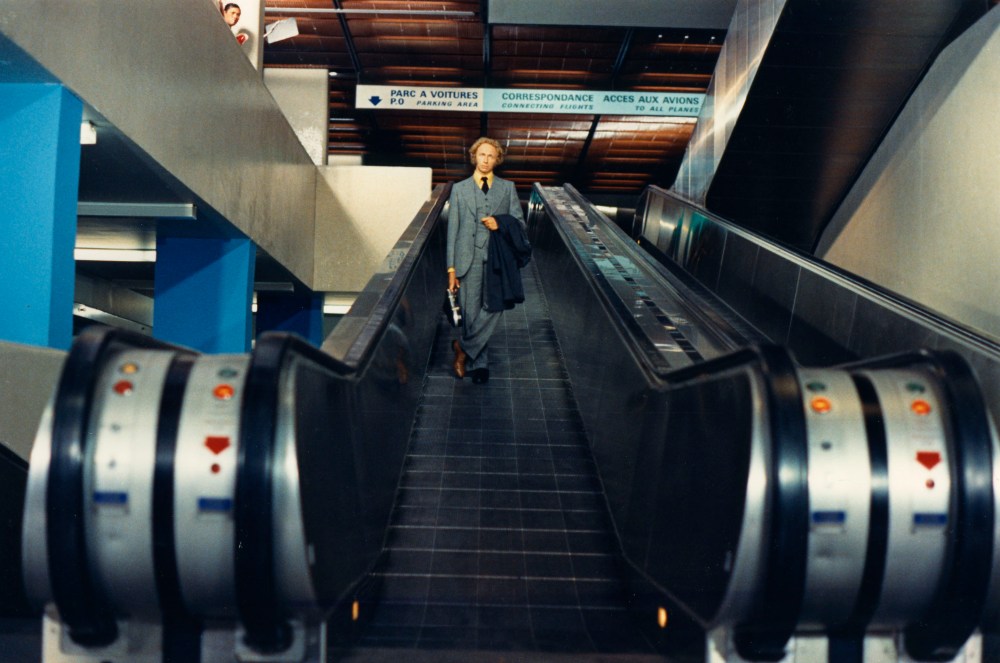
The Tall Blond Man with One Black Shoe (1972)
The film works sight gags in a fashion that is eternally accessible and hilarious, and does indeed make gorgeous use of visual storytelling from Parisian backdrops, to instrument-adorned apartment walls, ornate opera houses and spy offices.
Add to that the catchy, cheeky score by Vladimir Cosma, the physical virtuosity of Pierre Richard, and the clockwork precision of the script crafted by Yves Robert and Francis Veber and you have an unqualified comedic success.
As those who know me, and if such a person exists, cyberstalk me, know I created this blog after writing on another site, which shall remain nameless, for a while. The point is, I have material sitting around waiting to be re-used on occasion I will re-post them here. Some of those articles or reviews may have been extemporaneous at the time but are slightly random now, hence the new title and little intro, regardless enjoy!
The Ghost Writer (2010)
As much as one might try and protest to the contrary every film we see has a pre-life, which consists of our first hearing of it, seeing a trailer and things of the like. While these things may not ultimately color our opinion of the film they do make part of the experience. The fact that The Ghost Writer is a Roman Polanski film is not irrelevant both to the pre-life and to the film itself. The pre-life is even more affected by the fact that this is potentially Polanski’s last film. As sad as it is to admit Polanski’s recent arrest may garnered this film more distribution and attention than it was likely to get. It was picked up by Summit Entertainment and in a move that did somewhat affect the end product they pushed for a PG-13 rating and dubbed over a few F-Bombs noticeably. While this did allow a few open-minded locals who can separate the artist and the man to bring their kids to see it, it is unlikely to boost the audience that much and it didn’t make the film any better.
Another palpable way in which Polanski’s situation affected the film was in filming locations. The film is set mostly on an island off the coast of Massachusetts but clearly it could not have been filmed there. However, having not known that fact it’d be hard to decipher visually. The German locations were scouted perfectly and were fantastic and added an extra dimension to the tale.
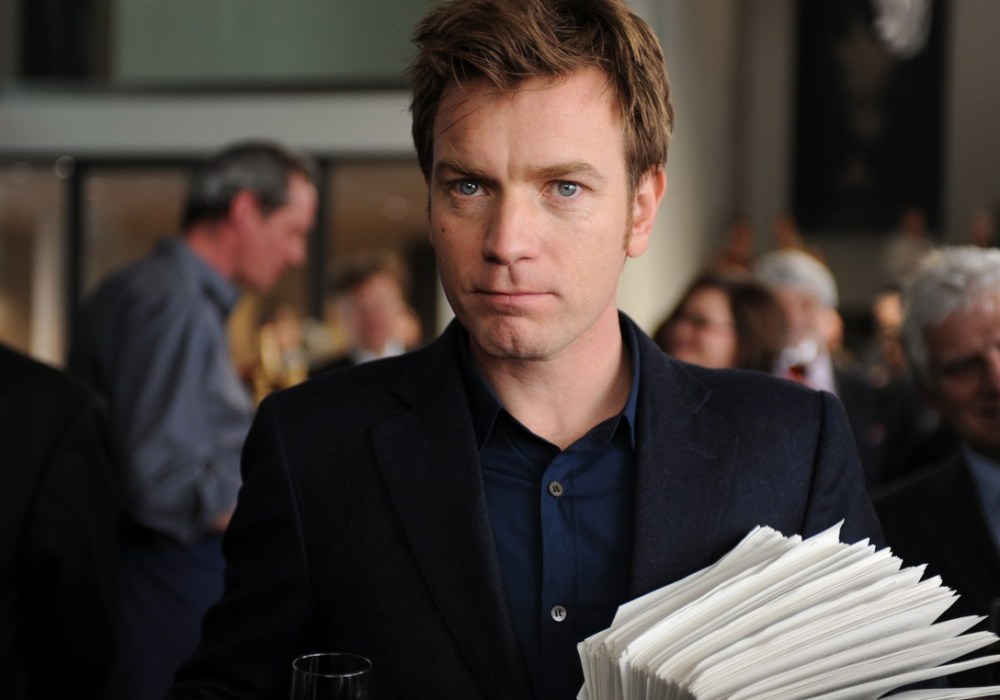
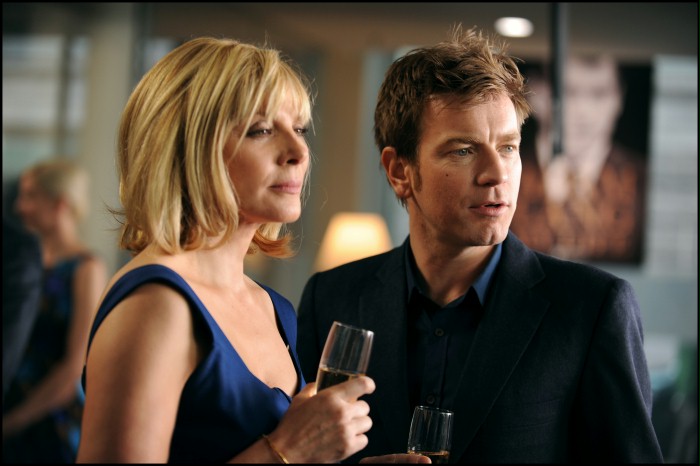
The cast of this film is nearly flawless with the noticeable exception of a very small part the Michelle Obama-like US Secretary of State played by Mo Asumang. In this cast you have the small appearance by a legend in Eli Wallach in a spectacular scene, an actor playing against type in James Belushi and a very strong dramatic core with Ewan McGregor easily playing the protagonist unwittingly thrown into political intrigue, Pierce Brosnan as the mysterious former Prime Minister, Olivia Williams as the strong-headed wife, Tom Wilkinson as the cryptic college professor and Kim Cattrall as the PM’s personal secretary. It’s a combination of talent, character and material that is nearly impossible to top. The Ghost Writer is a film that is truly Hitchcockian, which is a rarity. Hitchockian is a phrase most people will bandy about as irresponsibly as “feel good.” It would seem that almost any suspense film that is successful to any degree in the past 30 years has been given this moniker by one critic or another yet few, if any, ever reach the tension created in a Hitchcock vehicle, which consists of a tautness so palpable it brings to mind the Gene Wilder line from Willy Wonka & the Chocolate Factory “The suspense is terrible…I hope it lasts.”
It is also a film that wastes no time and has the intrigue begin as soon as MacGregor lands job as the replacement ghost writer. First, he has to operate under a ridiculous deadline and then he is mugged and has the wrong manuscript stolen from him on the street. Slowly but surely with increasing tension and rising stakes the routine nature of this assignment is stripped away and the mystery comes front and center and we start getting closer to the truth. Each revelation is more fascinating than the last and nothing is ever apparent each twist and turn in the tale is a pleasant surprise.
Key to the success of a film like this is the scoring and Alexandre Desplat’s work on this film is nothing short of spectacular. It’s not the most overwhelming score but it pulls the right strings and ratchets up the tension at the right moments with the proper effects. The Ghost Writer is a truly great film and an instantly classic thriller that you should seek out. While it’s too soon to know if this is Polanski’s swan song if it is it is such an incredibly high note to end on. Absolutely top notch. 10/10




 The Movie Rat