Mini-Review: Branded

Introduction

This is a post that is a repurposing of an old-school Mini-Review Round-Up post. As stated here I am essentially done with running multi-film review posts. Each film deserves its own review. Therefore I will repost, and at times add to, old reviews periodically. Enjoy!

Branded

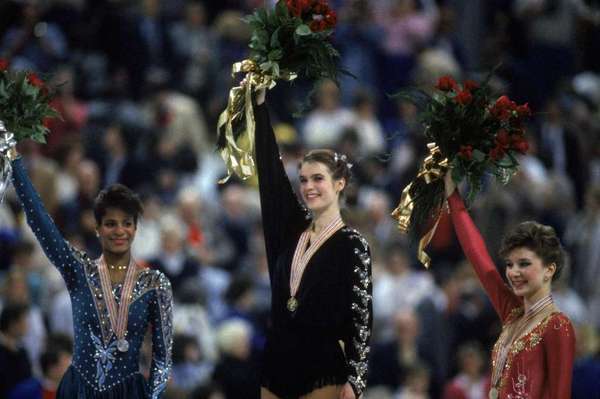
Out of the recent Nine for IX series this is the one film that takes on a rather broad subject: marketing female athletes. It takes a chronological look from the early days of the first athletes to sign endorsement deals in the still very sexist world of the ’70s through to today. While many of these titles excel in part due to their truncated nature (50+ minute stories formatted for an hour-long TV slot) this one could’ve dealt with more time. I would’ve welcomed the overlap of discussing Sheryl Swoopes, or delving into the Martina Navratilova/Tracey Austin rivalry more.

The insight that women athletes much choose between a vixen image or wholesome All-American girl to land deals is appreciated if rather obvious. It’s also one of the installments where one of the more memorable moments is an interview not acquired. There is a clip of Anna Kournikova walking out of an interview angered, but no new footage of her looking back on her career. That would’ve been great to put a perspective on the idea of conscious marketing decisions women make simply because her popularity at one point was so great.

That ground is well-covered by Gabrielle Reece and Lolo Jones, especially the former who does well to mention that there is a three-year window when American Olympic athletes can’t get sponsors looking their way. All in all, it’s another very solid installment of the series even if it did leave me wanting more a bit more.

8/10

Summer Reading Classic Film Book Challenge: What is Cinema? Vol. 1 by André Bazin

Introduction

This post is part of the Summer Reading Classic Film Book Challenge. This particular title pertains to the blogathon by being a work of film criticism that discusses some classic films and then-new approaches to adaptation of stage plays and novels and other developments in the early history of film.

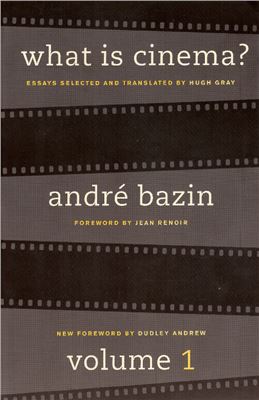
What is Cinema? Vol. 1

What is Cinema? Vol. 1 (All Rights Reserve)

With the recent shutdown of The Dissolve, one of the most celebrated and well-respected film criticism sites in the past two years; a site created in part as a response to the closing of Cinematical; it’s not unusual that the discussion of “Is film criticism dead?” firing back up. When you pair that with the fact that I recently took to reading What is Cinema? Vol. 1 by André Bazin, and I started to give this some serious thought; seeing as how Bazin’s essay collection encompasses five volumes and only two of them exist with modern English translation. Usually, I leapfrog from one film thinker to another based on having read one and heard them talk of another. However, the last two names I came across I were met with similar lack-of-translation issues. René Tabard being the last one prior to Bazin. Tabard practically invented film history, and jumped to mind again after he was featured in Hugo.

I think this collection from Bazin proves there is still a relevance if we are willing to engage and seek out such writing, as will be detailed to follow. So “Who is André Bazin?” you may be asking. André Bazin was a film critic and theorist who founded one of the most influential film publications of all time, Cahiers du Cinema. It was Cahiers where the likes of Jean-Luc Godard and François Truffaut, among others, got their start. It was Truffaut’s references and admiration that lead me to him.

The contents of the book are as follows:

Ontology of the Photographic Image
The Myth of Total Cinema
The Evolution of the Language of Cinema
The Virtues and Limitations of Montage
In Defense of Mixed Cinema
Theater and Cinema: Part one and Two
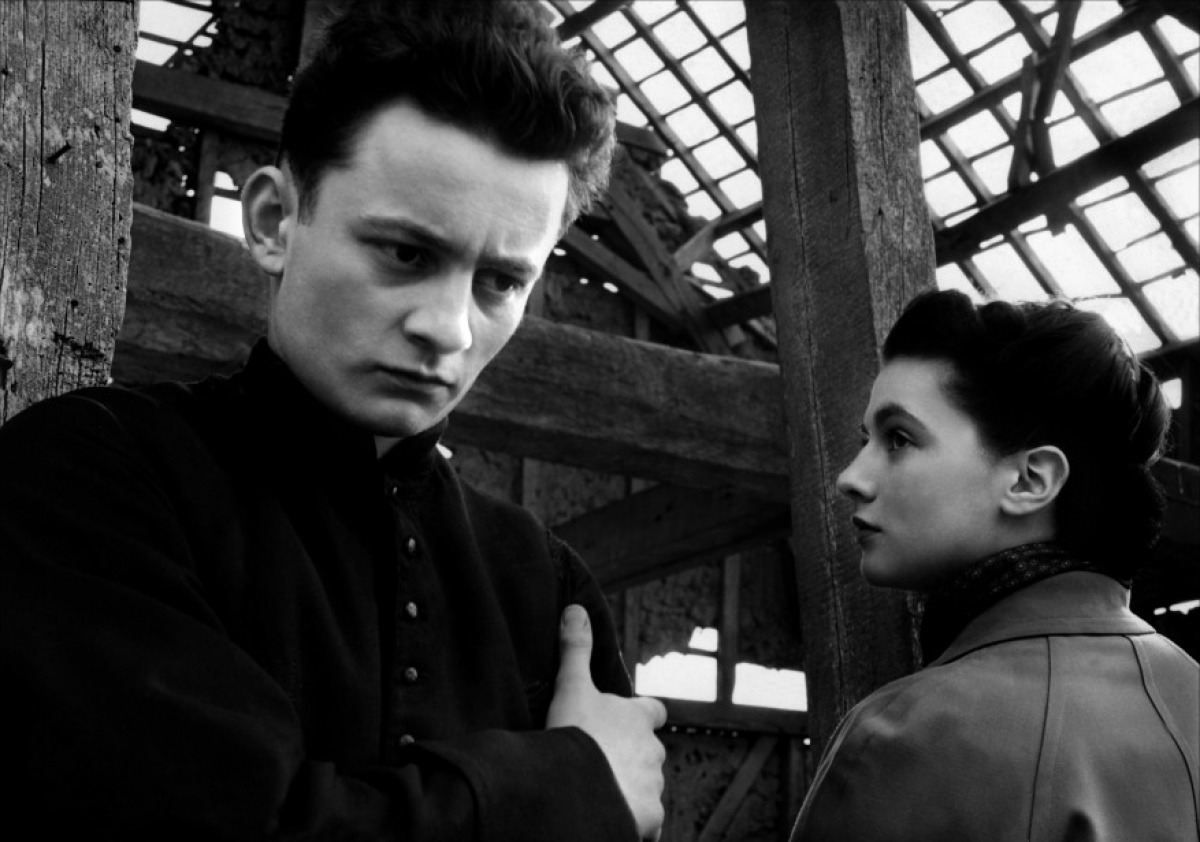
Journal d’un curé de campagne (Diary of a Country Priest) and the Stylistics of Robert Bresson
Charlie Chaplin
Cinema and Exploration
Painting and Cinema

The title seems simplistic but bear in mind that when Bazin was working cinema was about 60 years old. Synchronized sound much younger still and many things were being addressed for the first times on film. Furthermore, to establish a foundation of what the study of an artform is defining and delineating it is a necessity. Furthermore, when aesthetic precepts and styles change, or are challenged, chronicling the process and debating the pros and cons of said approaches has much validity. In trying to define the then-youngest artform it mattered to compare and contrast it to those arts that came first.

Bazin breaks down many things specifically: the frame itself, the incorporation of multiple disciplines, film grammar, editing with a different approach that Eisenstein had, as well as tackling specific performers (encapsulating Chaplin’s genius) discussing specific titles and subgenres. Further some of these essays have slight overlap which make the order make sense, and give you the sense of an ongoing dialogue that developed over time.

Those essays are followed by notes inserted by the translated for further contextualization. These are vital. For while Bazin was not shy about writing lengthy, at times multiple page, footnotes to make elliptical tangential points there are times where there is no clarification that you wish were there. On a few occasions they occur in the final line of the essay and the point is obfuscated if not lost entirely.

Diary of a Country Priest (1951, Criterion)

I, as a reader, am not shy about doing searches or seeking definitions extemporaneously. However, some of them only made sense with the notes; hence their vitality. I usually consider the introduction optional but Jean Renoir sets the stage very well and gets you in the mood and proper frame of mind to start this book so I’d recommend it though it’s not as vital as the notes.

Online I found some reader reviews that cited excessive liberties in editing, re-arranging essays. However, those changes are cited in the back and it does not say if it’s unique to the English translation. As for the arguments I saw about reading the original French text, clearly if you have a level of fluency in the original language of the text that’s alway preferable, but a translation is better than not ever having read a text at all. I have experimented with reading in French but cannot claim proficiency, and translation is imprecise, which is why new translations happen, and I have read multiple versions of a work when interested enough. It’s just always something to keep in mind.

Regardless of the transcriptive liberties either taken or not, I found the ideas communicated clearly, even through their complexities, and the compact, polysyllabic style Bazin appeared to have is evident without being so dense it reads as if its intended for academics only. It’s certainly challenging but a foundation in film makes it accessible. It’d have been further illuminating if I had the level of exposure to French literature and theatre he did, the other works of art, but even without the specific contextual framework what he’s saying is clear. Furthermore, reading always begets reading so it’s good to have some ideas of what to look for.

André Bazin

I wouldn’t say its introductory level stuff, nor does it supplant film history supplements, but Bazin’s work is a foundation that is still relevant for film is in a constant state of evolution. Therefore, to question what makes a work cinematic, and what the form entails, is critical food for thought for all those who love the seventh art.

Review: Michael

Introduction

This is a post that is a repurposing of an old-school Mini-Review Round-Up post. As stated here I am essentially done with running multi-film review posts. Each film deserves its own review. Therefore I will repost, and at times add to, old reviews periodically. Enjoy!

Michael (2011)

I generally remain vague about plot descriptions in my reviews. Philosophically I believe that if you happened upon my review you know enough about the film and you’re just looking for some further information. With a film such as Michael one does need to be forewarned: while not sensationalistic or exploitative this film does chronicle about five months in the life of a pedophile. You will be disturbed and affected by it: I guarantee it. What is most effective is that the film does so almost exclusively through implication.

The film edit of the film is tremendous and much of the dialogue on reflection implies so much more than is said. One example of how the film communicates horrible consequences while doing little is a simple visual: Michael and Wolfgang, the child he has captive, are setting up a bunk bed in his room. That scene has made its point and hits you in the gut.

What makes the film most harrowing is the humanistic portrait painted of Michael. With an act as awful as child abuse, whether of a physical or sexual nature, some films overplay their hands. Meaning they feel the need to make the antagonist over-the-top and borderline cartoony as if to re-emphasize the inherent villainy and cruelty of their actions. Yet more often than not that kind of writing takes a viewer out of the moment. This film takes things as mundane as decorating a Christmas tree, talking to a neighbor, or a haircut and tinges them with malignancy and implications that belie the simplicity of the line spoken or the action taken.

You also have in this film two performances that make this film work and they are those of Michael Fuith, who used his awkwardness to endearing effect in Rammbock, but here is intimidating, frightening, awkward, and charming as needed. Then there’s also David Rauchenberger, who while not in the film a tremendous lot, has the unenviable task of playing the victim who as times dour, at times detached, at times a child and also rebellious.

The craftsmanship of the film is what truly makes it work. There’s one scene that really doesn’t jibe with the restraint, and the ending is one I stewed on but decided it is earned, as a whole other film would start had it continued.

8/10

Review: Reckless

Reckless is the inverse of what we normally see as it is a foreign language remake of an English language (British) film, called The Disappearance of Alice Creed. Seeing as how comparative analysis is not something slipped into lightly here, I can only state in the interest of full disclosure that I never did get to see the original. However, a review is self-contained and it is not incumbent on a film to justify its existence in relation to a prior rendition of the same tale. It only matters if it justifies its existence on its own merits. Just recently I happened to see a remake and only became aware of it after the fact.

Reckless is the first title from Artsploitation Films that I had the pleasure to see. Like many independent distributors this company has a specific an precise credo that pulls into focus the kind of film niche they seek to fill. Theirs is one I readily identify with with:

Not strictly a genre label, ARTSPLOITATION FILMS looks for intriguing, unsettling, unpredictable and provocative films from around the world. Artsploitation’s focus knows no boundaries and we hope you’ll enjoy our unconventional cinematic tastes.  Artsplotation: International films with an edge.

That ethos is readily apparent if one synopsizes the film; it tells the tale of Victor (Tygo Gernandt) and Rico (Marwan Kenzari) who met in prison believe they have picked a perfect target for their kidnapping-for-ransom plot, Laura (Sarah Chronis), but secrets about the plan and the identity of the girl could unravel their plot in unexpected ways.

Reckless has a rather deceptive outward appearance. The bare facts belie the intricate web of interpersonal relationships that are motivating the plot. For as unsettling a scenario as it is it is a film that is not impelled by shock value or cheap sensationalism, but rather how these extremes in setting, situation, and circumstance put a strain on both the relationship between the kidnappers and on how they relate to their captive.

Sure there are many stories that breed discomfort and fright and the envelope does get pushed to a degree but never to the detriment of narrative progression. The film is tightly edited, artfully styled, and precisely acted ; and so organically such that the overtures at elevating more base story elements doesn’t feel disjointed.

The film is one rife with twists each of which further elevates the stakes, intensity and suspense of the proceedings. None of them seem out of place and things resolve themselves naturally and correctly based on the momentum accumulated leading up to the climax. It’s not a case where the ending needs to be forced to satisfy audience expectations, but really feels like the only one that is just.

9/10

Review: Tinker Tailor Soldier Spy

Introduction

This is a post that is a repurposing of an old-school Mini-Review Round-Up post. As stated here I am essentially done with running multi-film review posts. Each film deserves its own review. Therefore I will repost, and at times add to, old reviews periodically. Enjoy!

Tinker Tailor Soldier Spy

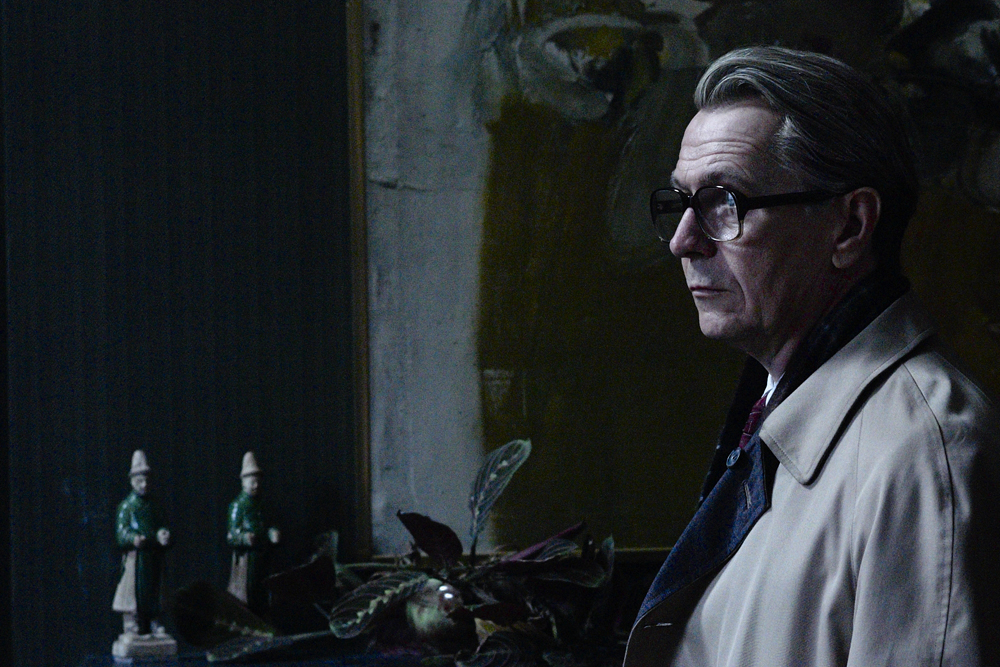
Had I not read that Thomas Alfredson (Let the Right One In) directed this film I would’ve figured it out at some point and that’s due to the film’s pace and construction. Tinker Tailor Soldier Spy is not an easy story to convey on the screen. It’s the type of film that has to put forth a very difficultly-attained and nearly intangible fascination that is usually the sole purview of spy capers and whodunits wherein you must be simultaneously enthralled by the intrigue of the narrative and rapt by the film; such that you can keep pace with it, on a mental level. I specify that pace because the temporal pace of the film is rather interesting. In a film such as this it’s information that’s flying at you tinged with foreboding, and the sense of a gyre closing, such that the story cannot speed along at a brisk 90 minutes but must unfurl at a more leisurely 120 yet also still have enough incidents within it to hold that bifurcated attention its worked to create. The film manages that easily and keeps the pace rather steady and the facts quick in coming. Even when in flashback sequences, which there are many, though the cuts may be quick the information does not overwhelm. That is not to say that a second viewing wouldn’t make the film more enjoyable or that nothing will be missed, I certainly can’t guarantee that as the film does play things close to the vest often but it does easily connect a lot of seemingly disparate incidents such that a vast majority of facts, and how the conclusion that occurs is reached, becomes clear. In the end, whatever vagueness the film may have is not something one can find in anyway distasteful as it recalls to me Bergman’s quote:

I don’t want to produce a work of art that the public can sit and suck aesthetically… I want to give them a blow in the small of the back, to scorch their indifference, to startle them out of their complacency.

I have always taken that to mean that he wanted people to be moved one way or another by his work and if you’re actively trying to piece this film together and succeeding or failing it won’t bore you to the point of indifference I feel and I think it’s riveting.

9/10

Updates: July 17th, 2015

It’s been too long since I wrote up and update post. I thought it was about time. Especially when you consider that we’ve passed the midway point of the year, and that’s usually when there’s some overhauling done around here.

First, since an update around this time last year I no longer conglomerate film reviews. Therefore reviews are usually either categorized as Reviews (full-length; 400 words or more) or Mini-Reviews (Under 400 words).

You may see more instances of multiple posts in a day as I have now scheduled almost all the remaining backlog of reviews that have not gotten their due.

This should allow me to dedicate the time needed to creating new content and keeping up on films and reviews.

201-Ingrid-Bergman-in-Arch-Of-Triumph-1948

This includes my next blogathon contributions, which as of right now are on Ingrid Bergman, William A. Wellman and Film Books.

Jurassic World (2015, Universal)

Having recently compiled June’s BAM Award considerations the compiling of offline master lists has begun. It seems like contenders are shaping up well.

twitter

New and older posts will be posted more frequently on Twitter, film viewings can be accompanied on Letterboxd. You can also accompany the site on Facebook or subscribe via email.

There will likely be more news soon so check back soon and enjoy!

Mini-Review: Let Them Wear Towels

Introduction

This is a post that is a repurposing of an old-school Mini-Review Round-Up post. As stated here I am essentially done with running multi-film review posts. Each film deserves its own review. Therefore I will repost, and at times add to, old reviews periodically. Enjoy!

Let Them Wear Towels

I have been a bit behind but have wanted to start up on the Nine for IX series by ESPN Films. What Nine for IX is is a companion series of documentaries to ESPN’s acclaimed 30 for 30 series. The difference in the two is that this series of films is that this series started to commemorate the passing of title IX, which assured equality of opportunity between the sexes in college sports; and therefore, focuses on stories about female athletes or women in sports in general.

The first tale I took in was the corollary-to-women’s-liberation tale of the struggle for female sports writers to be allowed into pro locker rooms so that they could do their jobs. In factual terms it’s an interesting, incisive survey of the battle in three of the major sports leagues in the US (MLB, NFL and NHL). The NBA is conspicuously absent and why that is so is never mentioned. Another thing is that while it’s effective didactically it’s not as strong dramatically. Its briskness absolves its slightly repetitive nature. It’s an important story that needed telling and deserved being told in a somewhat more compelling way.

6/10

Mini-Review: The Kings of Summer

Introduction

This is a post that is a repurposing of an old-school Mini-Review Round-Up post. As stated here I am essentially done with running multi-film review posts. Each film deserves its own review. Therefore I will repost, and at times add to, old reviews periodically. Enjoy!

The Kings of Summer

The Kings of Summer has within it some of the funniest scenes I’ve seen all year, but also within it there is some great truth. In a new wave we’re seeing of insightful coming-of-age-dramas, or at least the element in films; this is a parents on the side story. What’s refreshing is that in a film where the kids voluntarily run off for a better part of the summer the parent-child conflicts are fairly normal and the exploration of character is first and foremost in the lead characters (excellently played by Nick Robinson, Gabriel Basso and Moises Arias) and their dynamic. It’s a very related unsentimental film that is very much worth discovering.


8/10

Mini-Review: Lovely Molly

Introduction

This is a post that is a repurposing of an old-school Mini-Review Round-Up post. As stated here I am essentially done with running multi-film review posts. Each film deserves its own review. Therefore I will repost, and at times add to, old reviews periodically. Enjoy!

Lovely Molly

I tend to take my time to even send out a tweet-reaction to a film most of the time. In very vague terms I’ll know walking out of a film, if I liked it or not. However, to what extent I did and what I thought of it usually takes a little time to decide. It’s the rare film that plays on my mind for a while.

Lovely Molly is one of those films. My initial tweet about it, when I did finally mention it, was slightly mis-worded: it’s not that the film is difficult to follow, it’s not; the denseness and nebulousness comes in the ‘answers’ the film gives to questions it poses. They’re not entirely clear, they invite debate, they invite you to re-view the film; but they are all chilling and surprising.

The film also features a fabulous performance by Gretchen Lodge, which makes you stand up and take notice.

This film made me realize that there are two kinds of re-viewable films ones that could get massively better and one with a definite ceiling. This film is the latter kind, but worth giving your own shot.

6/10