Mini-Review: Black Bread (Pan Negro)

Introduction

This is a post that is a repurposing of an old-school Mini-Review Round-Up post. As stated here I am essentially done with running multi-film review posts. Each film deserves its own review. Therefore I will repost, and at times add to, old reviews periodically. Enjoy!

Black Bread (Pan Negro)

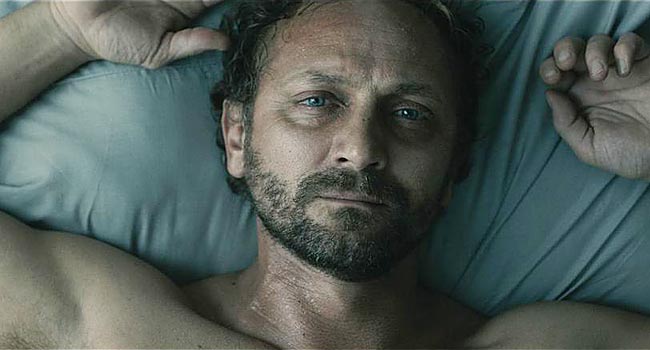
This was a film that featured previously on The Movie Rat during last year’s post about the Oscar Foreign Film Submission Process. It was a gutsy choice to submit this film over the likes of Almodovar’s The Skin I Live In, but I applaud gutsy choices such as Dogtooth. That and the fact that Villaronga is a director I’ve seen and like previously made me intrigued by this film.

One thing that’s a double-edged sword about it being Spain’s submission last year is its indigenous nature. It’s a film set in the the Catalan region and deals greatly with the Spanish Civil War and the aftermath thereof. It layers in horror elements, legend, drama, politics, and coming-of-age with deft and not much bluntness. One’s familiarity with the vaguest aspects of the conflict will be aided greatly in viewing it.

The story divides itself neatly and the section whose title alludes to a later scene is the strongest.

7/10

Short Film: Headlong

Introduction

Quite a few notes before this one.

First, since this post I’ve shaken up the schedule a bit so it’s a rare non-Saturday short film.

Second, this is a post that is a repurposing of an old-school Mini-Review Round-Up post. As stated here I am essentially done with running multi-film review posts. Each film deserves its own review. Therefore I will repost, and at times add to, old reviews periodically.

Lastly, it’s also the rare occasion on a Short Film Saturday where I will not link directly to an upload of the short film, but you can rent it for $0.99 for three days, link at the very bottom (below the trailer). Enjoy!

Headlong (a.k.a Corps perdu)

Typically in January when the release calendar is light of things really worth taking too long and hard a look at I get to browsing the IMDb for upcoming releases from the previous year’s standouts. That’s how I came to learn of the existence of this short film which stars Young Actor nominee Jelle Florizoone and co-stars Thomas Coumans, who worked with him in North Sea Texas.

Now being a short of about 17 minute I don’t want to discuss it too closely, but I can share two thoughts; one of my own and one from the film’s director. My biggest takeaway from Headlong is that it’s a lovely portrait not just of a fleeting encounter, but also of how a souvenir earns significance in a person’s life. The second is from the film’s director, Lukas Dhont, in an interview:

The main thing I tried was to make a film that could be interpreted as a love story but just as easily as something else. This tension between characters and openness in interpretation is the thing I’m still most happy with. I don’t really like gay shorts that evolve just around the gay eroticism.


8/10

You can rent it here:

Boys on Film X from Peccadillo Pictures on Vimeo.

Mini-Review: Asterix and the Vikings

Introduction

This is a post that is a repurposing of an old-school Mini-Review Round-Up post. As stated here I am essentially done with running multi-film review posts. Each film deserves its own review. Therefore I will repost, and at times add to, old reviews periodically. Enjoy!

Asterix and the Vikings

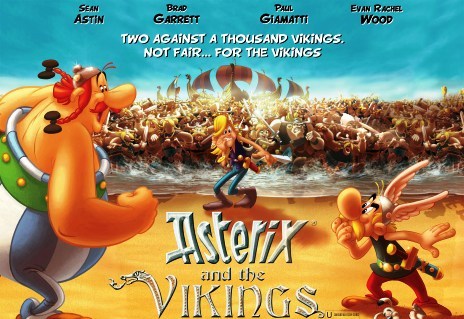
This is a movie that I have a rather unusual relationship with. I actually didn’t know about this fairly recent animated rendition of Asterix until I was in Orlando earlier this year. In Epcot, there was a book of the film and I got it. The book renders the movie fairly well and considering that I as a fan of Asterix was fairly disappointed in the live-action version I was excited. What it really goes to show is that putting production elements in place: music, dialogue, voice actors, the different animation techniques and effects employed made the movie so much more immersive than I imagined. From the book it seemed like standard fare: fun bordering on cute. The film that the book represents is a very fully realized version of the tale and is highly recommended to fans of this beloved character.

10/10

Mini-Review: First Position

Introduction

This is a post that is a repurposing of an old-school Mini-Review Round-Up post. As stated here I am essentially done with running multi-film review posts. Each film deserves its own review. Therefore I will repost, and at times add to, old reviews periodically. Enjoy!

First Position

I can’t claim to be an aficionado but I am a fan of dance. Through my production company I sponsor a dance competition, so while not an insider I do know my fair share about the world this film describes. What I was somewhat fearful of was that this film would serve as a glorified infomercial for YAGP (Youth America Grand Prix), which is the world’s largest youth dance competition.

All those fears are soon allayed. The necessary information is divulged such that the layman understands the enormity and the gravity of the competition and the controversy regarding any competition is vaguely hinted at, but mostly the film is an introduction to just how competitive the world of dance is, and also a glimpse into how dedicated these artists must be from a very young age.

Yet any film can only get so far on the facts alone. Where First Position succeeds is that it profiles dancers from diverse ethnic and economic backgrounds and also with varying aesthetic philosophies. The film is structured very dramatically such that the performances with the highest stakes appear latest in the cut and the flow from performer to performer is just right and well-ordered.

What starts as an informative, introductory doc soon turns quite the emotional experience that gets you very invested in the outcome. It’s a great film sure to please fans of film and dance alike.

10/10

Mini-Review: In The Name Of

Introduction

This is a post that is a repurposing of an old-school Mini-Review Round-Up post. As stated here I am essentially done with running multi-film review posts. Each film deserves its own review. Therefore I will repost, and at times add to, old reviews periodically. Enjoy!

In the Name Of

Whenever a film is dealing with the topic of clerical celibacy there is always the concern about whether or not the film will handle said topic in a sensationalistic way. This is a concern not because of any religious or politically correct hypersensitivity, but a concern over the artistry of the piece. A sensationalistic piece that exists only to shock and push the envelope, and do nothing more, is of little worth. This is a sensitive character study of a man torn between his sexual and religious identity.

With regards to how the film portrays its protagonist I don’t really take an issue with the film. Where the film has struggles is in terms of its narrative flow and progression and its conclusion. It seems for a vast majority of its running time a film that seems to want to avoid making a “statement” but rather paint a picture of a person rather than a hot-button issue, and that is admirable. The end of the film seems to be more towards the statement realm and in a dichotomous way that is the the detriment of the whole. Any number of resolutions including even being bereft of one may have been preferable.

However, it’s not a twist in the narrative that has the whole film implode upon itself, but rather salt in the wound of a film that was already on a downward spiral to its finale.

4/10

Mini-Review: Runner

Introduction

This is a post that is a repurposing of an old-school Mini-Review Round-Up post. As stated here I am essentially done with running multi-film review posts. Each film deserves its own review. Therefore I will repost, and at times add to, old reviews periodically. Enjoy!

Runner

As I’ve previously noted, one of the great things about ESPN’s films is that they can put into greater perspective events and athletes whose story was either at the periphery or, or outside my understanding due to my age when they were at their zenith. Mary Slaney would fall into that category. By the time I became aware of an interested in the Olympics, the collision at the 1984 games that caused: Slaney to lose, get injured, her last/best chance at a medal and cost the racing world an epic race; was but a snippet in a “thrill of victory, agony of defeat” kind of montage. You really couldn’t get the full sense of the unfortunateness of the event without a closer examination both of Slaney and the race.

There is an writing axiom that states: some characters insist on being in a story despite the author’s best laid plans. Zola Budd is just such a character in this real life drama and her backstory, intrigue and involvement would be scoffed at as unrealistic in scripted entertainment. Furthermore, the fair portrait both athletes get in this telling make the story all the more compelling.

Moreover, the tale highlights better than most in the series the uneasy existence with the Olympics many American athletes have. Yes, it matters to them, and they want to win, but the entirety of their career and achieving an Olympic appearance matters too. The fragile nature of Slaney’s health underscores the fact that going to the olympics and medaling are two separate goals.

This is a tautly-rendered tale of a life and career through the prism of one unforgettable event and how it affected its participants.

10/10

Mini-Review: 9.79*

Introduction

This is a post that is a repurposing of an old-school Mini-Review Round-Up post. As stated here I am essentially done with running multi-film review posts. Each film deserves its own review. Therefore I will repost, and at times add to, old reviews periodically. Enjoy!

9.79*

ESPN’s 30 for 30 is back, and I’m glad. More than ever it seems like the landscape of sports fandom and coverage is more reactionary and instantaneous. We’ve almost devolved to the point where we’re immune to revisionism because there is less and less focus on the past, history, and progression of certain sports. Not to sound overly dire or pessimistic, but sometimes perception is reality. However, what the ESPN Films documentary series does is goes back and finds milestones, overlooked stories; and traces the trajectory of the events, themes, and trends involved.

Therefore, 9.79* about Ben Johnson’s disqualification after winning gold with a record-shattering time in 1988 Seoul Olympics starts by tracking each of the finalists (some more than others) following the events that lead to that fateful day and the fall out since. It’s not a story told in precise chronology, there are jumps, and clearly new interview footage will reflect the past, but it tracks the phenomenon of doping rather well, exposes the testing issues of the time, and leaves a lot of great tidbits dangling for your interpretation. One of the more astounding anecdotes is one that gets hinted at early then dropped like a hot potato until very late in the film. In a way, it makes the capping of the story even more potent. There are quite a few players in the game here. My interpretation is that it’s all a moral quagmire when in this era doping was rampant, harder to prove, and everyone was seemingly guilty of something. It makes the situation fascinating almost like a “sports noir” tale. No one’s angel, but you fall on one side of the issue or another, and maybe even side with one camp or another on certain claims.

Not only is it an event that I wanted to be more informed about (and now I am) but Daniel Gordon does great work reconstructing the narrative from an impartial place and bringing forth all the opinions and information known and presenting it in a compelling and dramatic way.

9/10

Mini-Review: The Diplomat

Introduction

This is a post that is a repurposing of an old-school Mini-Review Round-Up post. As stated here I am essentially done with running multi-film review posts. Each film deserves its own review. Therefore I will repost, and at times add to, old reviews periodically. Enjoy!

The Diplomat

As I was a young when the Berlin Wall came down and communism collapsed in Eastern Europe, documentaries like this that take a more focused look at things are really beneficial. For example, I was under the impression that it was just because I was young that it felt like the wall’s coming down was fairly sudden; as it turns out, it was, compared to other similarly seismic sociopolitical touchstones. However, that’s a detail about a larger event. What this film does is take the diplomatic, athletic lightning-rod that was Witt and examines East Germany, both their sports regimen (pro and con) and the Stasi (only cons) through that guise and billows out from there to close relations and the everyman – and it has great and significant interview subjects on the matter. However, it’s also about Witt, some of conflicting feelings about the time, about her relationship with her coach; and how her coaches struggle molded her path to an extent. It’s a film that made me want to delve into that period, into other films about East and West Germany, made me want to see Carmen on Ice; in short, I wanted more and lots of it, and there’s hardly a higher compliment one can pay a film.

10/10

Mini-Review: Pat XO

Introduction

This is a post that is a repurposing of an old-school Mini-Review Round-Up post. As stated here I am essentially done with running multi-film review posts. Each film deserves its own review. Therefore I will repost, and at times add to, old reviews periodically. Enjoy!

Pat XO

Here’s another Nine for IX title that takes an unexpected avenue. Not only was I unaware for Pat Summitt’s early career, both in being Head coach at such a young age and also her close-calls, but it tells the story mostly through her and her son, Tyler Summitt (recent University of Tennessee graduate), reminiscing and other colleagues, former players, etc. The film reflexively talks about how it likely helped her remember things she wouldn’t have otherwise (Summitt recently retired due to early onset dementia). Therefore, aside from being a great piece on her life and career it also becomes a living document for her and her family and all those she coached and helped along the way. The film could end up being far too loose with such a format but it crafts itself into a very neat and highly effective narrative.

9/10

Summer Reading Classic Film Book Challenge – Interviews: Liv Ullmann

Introduction

This post is part of the Summer Reading Classic Film Book Challenge. This particular title pertains to the blogathon by being a collection of interviews that serve as a biographical account of sorts as they are collected over a number of years, there are some personal questions, and Ullmann is speaks at various times of her life with evolving perspectives.

Interviews: Liv Ullmann

Liv Ullmann (2006, University of Mississippi Press)

I’ve written about Liv Ullmann here before. Naturally, having written about the films of Ingmar Bergman in the form of a list, and most recently a specific scene she was in that Bergman directed. I also posted a piece called Liv Ullmann: Between Stage and Screen here. This was something I wrote as a reaction to a speaking engagement she had in 2009 at the Brooklyn Academy of Music. It was held in conjunction with her directing a show there and touched on her career as an actress in both media. Following the engagement I got this book, as I have a tendency to do; it ended up in a pile of books for a while. A similar practice applies to movies as well. I’m trying to use Goodreads and Letterboxd to deal with both issues.

But I digress…

I’ve not made a habit of reading interviews exhaustively. However, it’s fascinating in this case because they are legitimate interviews that take a number of projects and topics into considerations and not as much of the junket/talk show nature is in there. Having them span years you can see certain progression, changes in perspective and priorities, and different career phases. The time when her career began, and the type of films she was usually involved in, I’m sure contributed to the meatiness of these interviews. Plus, she doesn’t give the short shrift to any answers.

The 1970s: The Bergman Years

Persona (1966, Svensk Filmindustri)

If we’re being literal Ullmann’s “Bergman Years” began in 1966 with the release of Persona. However, these interviews begin in 1972. It was a different time and cinematic era, therefore, she only came over to the US and started doing interviews around the release of The Emigrants (Dir. Jan Troell), which garnered her a Golden Globe Award and her first Academy Award nomination.

Therefore, many of these interviews concern films like Persona, Cries and Whispers, Scenes from a Marriage, Troell’s epics The Emigrants and The New Land; Face to Face, Autumn Sonata; and her brief, mostly unsuccessful, in box office terms, but fun forays into Hollywood and the Broadway stage.

One can trace the growth of Ullmann as a person and her mastery over he instrument through these years. Always emotionally attuned she gives tremendous insights into her philosophy on life, art, the place of her craft, and the world in general.

The 1980s: UNICEF Ambassadorship and Broadening Horizons

Liv Ullman (U.N.)

When asked to visit refugee camps, and eventually asked to be a UNICEF ambassador; Liv Ullmann admits to a personal epiphany. In a prescient way she talks of the power of the media, and the positive change celebrities can affect by using the media. This is even more true today. She fascinatingly comes to terms with her acting as a profession, something she does for income, but sees this ambassadorship as her new, truer calling.

The 1990s: Sitting in the Director’s Chair

Liv Ullmann

Whether in Hollywood or abroad, the difficulty female actors face landing roles for the same time window of time as their male counterparts is a reality many have to deal with in an inarguably sexist industry. However, Ullmann seems to have found a new direction that personally satisfied her and coincided fortuitously with her entering an age range where actresses struggle to even see scripts much less good ones. Her transition to directing is well-documented, and openly explored.

Her first two films were quite personal yet also included departures. Ullmann is typically seen as a modern woman, emotionally open, intelligent and confidently independent found period pieces to tell her first tales. The first film Sofie is a story of a 19th century Jewish family (Ullmann herself is Christian but has always had Jewish friends and affection for the culture) who pressure their daughter to marry the man of their choosing. Her second feature is a cinematic adaptation of a classic Norwegian saga Kristin Lavransdatter. Also, clearly a temporal departure.

The 2000s: Bringing Bergman Back to the Silver Screen

Liv Ullmann and Ingmar Bergman

Even with only a handful of screen directing credits Ullmann herself has already seen phases. First, were her personally befitting period-pieces, and then after Bergman’s initial retirement from film (one he really only broke for Saraband, which Ullmann participated in) she tackled two Bergman adaptations Private Confessions, as a lengthy TV project and edited feature project based on a novel Bergman wrote, and Faithless, an original Bergman screenplay she piloted solo on his insistence.

Conclusion: All the World’s a Stage

Liv Ullmann (Chicago Film Festival)

Whether it’s been as a legendary screen luminary and muse, activist and force for change, or emerging director; Liv Ullmann has never seemed to back down from a challenge starting from the moment she started Persona not 100% sure what she was getting into and how she was going to pull it off. These interviews cut-off about a decade ago and it shows.

In researching this piece I learned that Ullmann has made her debut directing in the English language with her own adaptation of Strindberg’s Miss Julie starring Colin Farrell and Jessica Chastain. This doesn’t quite surprise me that much as I read some of her thoughts on Strindberg, and her saying she does not see language as an obstacle to directing.

Miss Julie (2014, Columbia TriStar)

Also, considering that Bergman was her closest collaborator who himself had a fascinating theatrical mash-up of Ibsen, Stringberg, and himself it’s not as surprising.

All the works I touched upon hardly scratch the surface as there is much to find in this book for fans. She talks of her evolving relationship with Ingmar personally and professionally, marriage in general, her relationship with her daughter, aging, fame, social issues, gender inequality, her theatrical works, coming to Hollywood as a newbie, interesting insights in to the film industry and specific films in general; and more.

Sure, as with any interview collection that at times features a few talks from the same year there will be some redundancies, certain titles will come up more than other ones, certain information will be redundant or slightly contradictory; but with minimal editorializing, and many Q & A transcriptions it really is speaking for herself and allowing us a window into her heart, mind, soul, and art. Fans and film enthusiasts should be willing to take a glimpse.