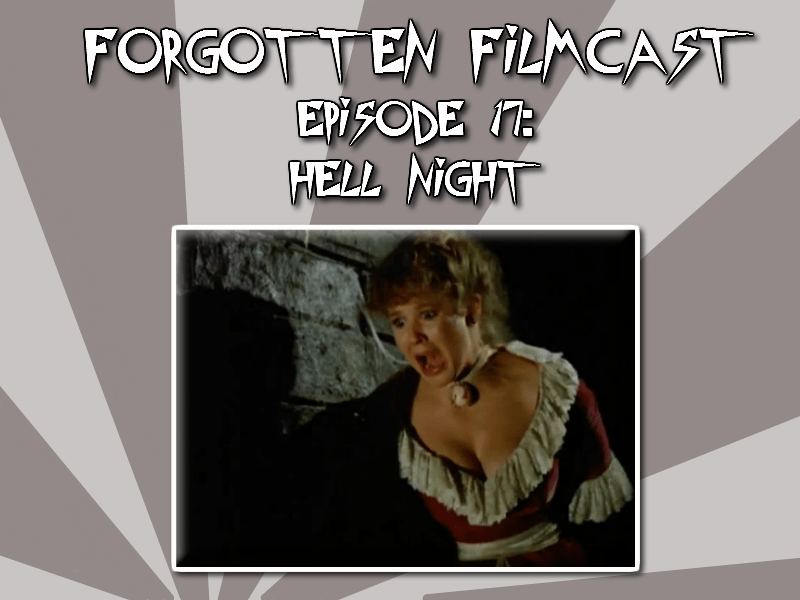
The Movie Rat Discusses Hell Night on Forgotten Filmcast

I was invited to be a guest on my first ever podcast recently. Yesterday, it went live. Pertinent links are up here. We discuss the 1981 film Hell Night starring Linda Blair. It’s an in depth discussion of that film, that brings up points I didn’t include, or hadn’t considered when writing on the film as well as our personal recommendations. So it’s worth checking out for deeper look into Hell Night. For other episodes you can also search iTunes for “Forgotten Films.”

61 Days of Halloween: Hell Night (1981)

Introduction

For an introduction to the concept of 61 Days of Halloween, as well as a list of previously featured titles, please go here.

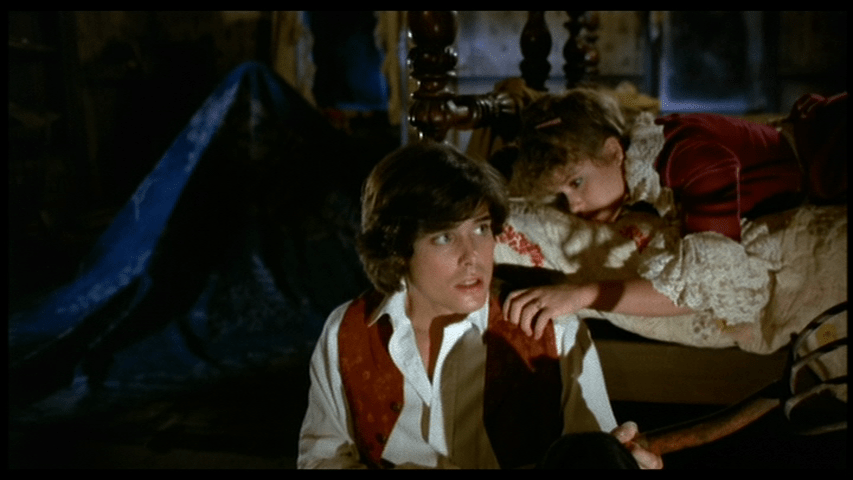
Hell Night (1981)

One thing that struck me as interesting when I was viewing Hell Night was the 1981 vintage of horror films. Would I have thought of this fact, and how this film manages to kind of get lost in the shuffle were it not for my invite to discuss it on the Forgotten Filmcast? Maybe not. However, 1981 as year of horror films that have stood the test of time if a oft-covered topic. Fans and aficionados of the genre will have their favorite overlooked titles from that year. The issue with sticking is in part, I believe, due to the glut of horror films that came out that year, particularly in the slasher subgenre. Such that looking into aggregated ratings may not even tell the whole story because more than 30 years later it’s hard to know how much fatigue factored into it.

This was a time when horror itself was being skewered even at this apogee of popularity. The spoof film Student Bodies cites 20+ studio-released horror films the year before all of which made money. If you add to that fact that this was another Linda Blair horror film following her two contributions to The Exorcist series, as well as a few made-for-tv-scares and it becomes easier to see how this may have gotten lost in the shuffle over time.

However, I tend to gravitate towards the overlooked, and had heard of this film prior. I had just not gotten around to seeing it yet. As with almost any horror film, especially one released amidst a rising tide, it’s unlikely that it’ll stand out as a wholly original entity. That’s not to say this film isn’t trying to, at least a bit; and I think it does fairly well in that regard.

It may be another slasher, another slasher with college co-eds but it does try to spice things up. Firstly, the four pledges who are locked in the house of ill-repute overnight are two different factions: those very much into the fraternity/sorority process and those not so enamored with the idea, doing it because they feel they have to. That already gets more of the audience involved because that was one college activity I could care less about, and don’t feel I missed out on at all.

Next, there is the fact that there is some character building and it’s not just a body count film. The film takes a bit more time than most, does a bit more lurking and snooping than a lot of films in attempts to build tension.

There’s also the backstory about why this house is infamous. The exposition needed in this regard is conveyed ingeniously as the pledges, and other brothers and sisters give the pledges a tour and the facts before their Hell Night is set to begin.

There is also the added layer of natural and plausible disbelief added to the film that has members setting up scares to mess with the pledges heads. This leads the pledges to not suspect something out of the ordinary is happening for a while and it’s quite believable.

Then with this being a slasher there is also the question of the kills and those here, though not as many in other films, are well-staged.

Ultimately, it may not stand out and be among the crème de la crème of its vintage, but Hell Night is quite a good slasher that’s worth looking up if you’re looking for something new-to-you.

61Days of Halloween: The Fly (1958)

Introduction

For an introduction to the concept of 61 Days of Halloween, as well as a list of previously featured films, please go here.

The Fly (1958)

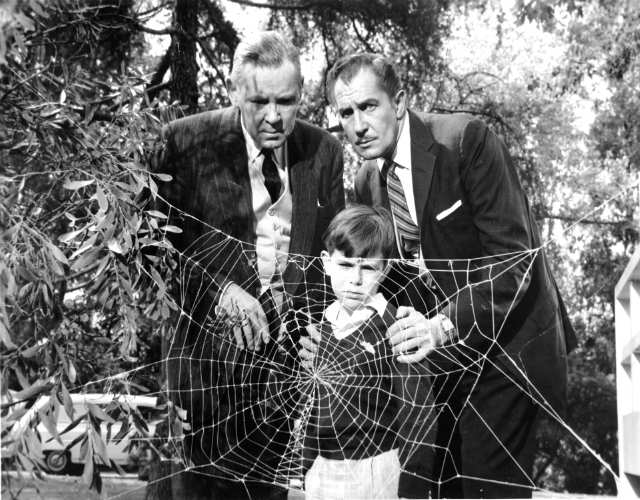
If you’re like me (and in this regard, you just might be) you’re likely to have seen the 1986 version of The Fly first. With that being the case, it’s likely you think there’s nothing that compare with it. Superficially speaking you’d be right, however, both films have separate and equally valid aims with their versions of the story. Aside from a modernized filmmaking approach, Cronenberg’s The Fly is seeking a more realistic handling of the tale. The 1958 version is working in the highly-stylized 1950s horror/sci-fi milieu.

What’s more is that that version of the tale tells its story in a different way, backtracking and retracing the events that have come to pass and ultimately trying to prove the highly improbable tale. However, with all the affectation of 1950s horror/sci-fi the film is tremendously and not without its chill-inducing moments.

The use of Cinemascope and the vivid color photography is used to great effect in this film. Not to mention the sound design which takes the buzzing of a common housefly and turns it into something even more terrible than it normally is.

A fact I was unprepared for was the covert Canadian-set nature of this tale. While this achieved through the occasional use of French words, surnames, and not much in the way of accents (in a very Old Hollywood way) it does add an additional texture to the film.

Then, of course, there is the incomparable Vincent Price. While not the eponymous character in this film he plays, due in part to the structure, a central figure in the tale. As per usual, he is marvelous adding a seriously needed dose of gravitas to a tale with a preposterous concept.

And therein lies the genius of the film. For it does commit to its concept and delivers many spine-chilling moments, and though different in tenor, is a classic in its own right.

61 Days of Halloween: Macabre (1980)

Introduction

For an introduction to the concept of 61 Days of Halloween, as well as a list of previously featured titles, please go here.

Macabre (1980)

I’m going to warn you right now that this is one of those films that makes me glad I didn’t decide to employ my rating scale and rather talk about narratives, themes, techniques, almost anything above quantifying how much or how little I enjoyed the film. For those of you who have to know (and I admit being in this vein myself) when ultimately deciding if this film sinks or swims I think I have to say sink. However, it’s one of those where there’s plot elements, and portions of it so well-handled that you’d like to see it get remade (that is assuming of course you do dislike it).

One of the things that does work about Macabre is that each of the three main characters is dealing with their own baggage. Jane (Bernice Steggers) is supposedly recovered after she spent time in an asylum following the tragic, nearly simultaneous deaths of her son and lover; Robert (Stanko Molnar) carries a torch for her and Lucy (Veronica Zinny) drowned her little brother and no one knows. Each has a secret, each is a little disturbed. The interplay that eventually comes into the mix is great.

However, and if you check the IMDb synopsis you can kind of fill in this blank. The film, after the teaser sequence, which establishes the affair and two deaths then spends the rest of Act I more or less reassembling the pieces of Jane’s life a year later. In Act II, if you haven’t figured out exactly what she’s hiding, you’re close, and the film plays that game quite a bit, it slows things down greatly. There is also probably a scene too many of Robert feeling rejected and obviously pining. In Act II there is are several bouts of repetition and lack of narrative thrust.

Where it gets frustrating, and here’s where it falls into a re-makable film category, is that there is nary a misstep in Act III; its a climax that (as you’re seeing the pieces fall into place) you want to see occur and most of what goes on there is great and well-handled.

Lamberto Bava has had his moments but this is one I can’t help feeling was maybe better served with another draft (who knows maybe some things hit the cutting room floor that would’ve made the flow feel a bit more natural) or perhaps waiting on this idea. That’s mere speculation on my part because, as I said there were combined elements that made me want to like this one, but in the end, I couldn’t and that was disappointing.

61 Days of Halloween: Dead Souls (2012)

Introduction

For an introduction to the concept of 61 Days of Halloween, as well as a list of previously featured titles, please go here.

Dead Souls (2012)

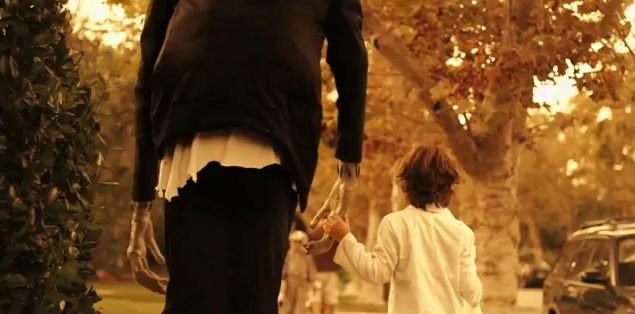
I have frequently argued that when I choose to watch a TV movie that does not preclude it from inclusion in BAM Award consideration. However, on occasion some TV movies, I must admit, will have me shy away for a while. This is one I regretted letting slip. I think this were late 2012 re-airings of this Chiller original film but I let it slip owing to the fact that I was bogged down in my Year-End Sprint. I wish I hadn’t. However, this film is very much alive for my favorite older films of 2013 list.

The synopsis on the onscreen guide was thankfully bereft of information. With a setup up kind of like this on the menu: John returns to his birthplace to learn the secrets of his biological family; there’s a lot of blanks left to fill in.

The film starts strong from the very start. What you see is a shocking series of events, including crucifixions (easily cringe-inducing for me) as well as intimations of some kind of cult activity. However, the exact nature of what is going on is a bit obscured. Thus, we the audience are placed much in the same place as the protagonist, discovering along with him. That’s a good place to be in.

What this film does that’s slightly off the beaten path is that it plays out like a haunted house/ghost story, but also has an element of occult building and that puts it’s own spins on the events.

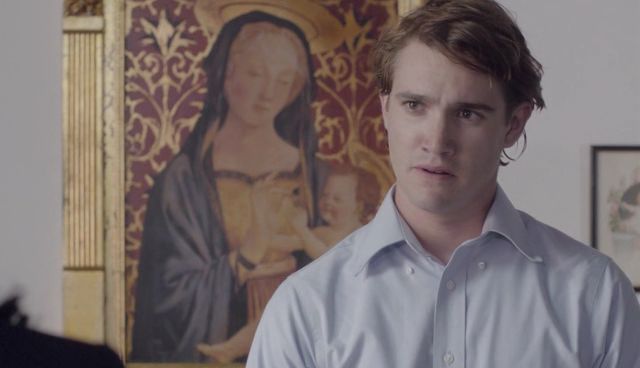
It leaves its protagonist John (Jesse James) alone much of the time. That’s good for character work, especially when there’s an expressive actor in tow. James has a natural sensitivity that exudes off the screen and allows him to carry the vehicle quite easily. He effortlessly handles the notes he has to play in the film: thoughtful, quiet, scared – and, upon learning what he deals with, feeling an emotional pull to the place and his family he’d never known. He does brilliant work here.

The arc of Emma (Magda Apanowicz) is also a benefit to this film. Whereas, she seems like she’ll be a bothersome and unnatural guest much like the one in Let’s Scare Jessica to Death, she softens, becomes a sidekick and co-combatant with the protagonist.

By the conclusion of the film not only are the blanks left un-filled by the beginning filled in but a new spin on the occult has been portrayed. Not to mention that the start is mirrored, completed and filled in by that point. This is a horror film that’s a little different and ought not be overlook, and I’m kind of kicking myself for letting it slip through the cracks last year.

61 Days of Halloween: Seven Deaths in a Cat’s Eye (1973)

Introduction

For an explanation of the concept of 61 Days of Halloween, as well as a list of previously featured films, please go here.

Seven Deaths in a Cat’s Eye (1973)

Seven Death in a Cat’s Eye takes a slightly offbeat approach to the whodunit aspect of the story. As I have celebrated, and complained about when the opposite is true, the title is not only eye-catching but literal. However, that is one of the few intriguing things about the way this story is handled.

There is one ludicrous red herring that is both poorly handled and so far out of left-field compared to the rest of the things that occur in the film that it sticks out terribly and drags the film down. However, at least this insane thing that occurs – that I’m sparing you a spoiler about – is something notable and interesting.

Perhaps the biggest issue this film has is the lulls between its deaths and characterization. It does fairly well with one supporting character, but the protagonist is the kind we get facts dropped about but don’t really get to know. This is the kind of lead that we’re supposed to root for simply because they’re the lead, and we’re really given no other impetus to give a damn about them at all.

While the approach does well to obfuscate the identity of the killer the climactic reveal and confrontation really aren’t as such. There are some decently executed kills, however, the most memorable thing about film ends up being title and the ridiculous red herring.

61 Days of Halloween: House of Dracula (1945)

Introduction

For an introduction to the concept of 61 Days of Halloween, as well as a list of previously featured titles, please go here.

House of Dracula (1945)

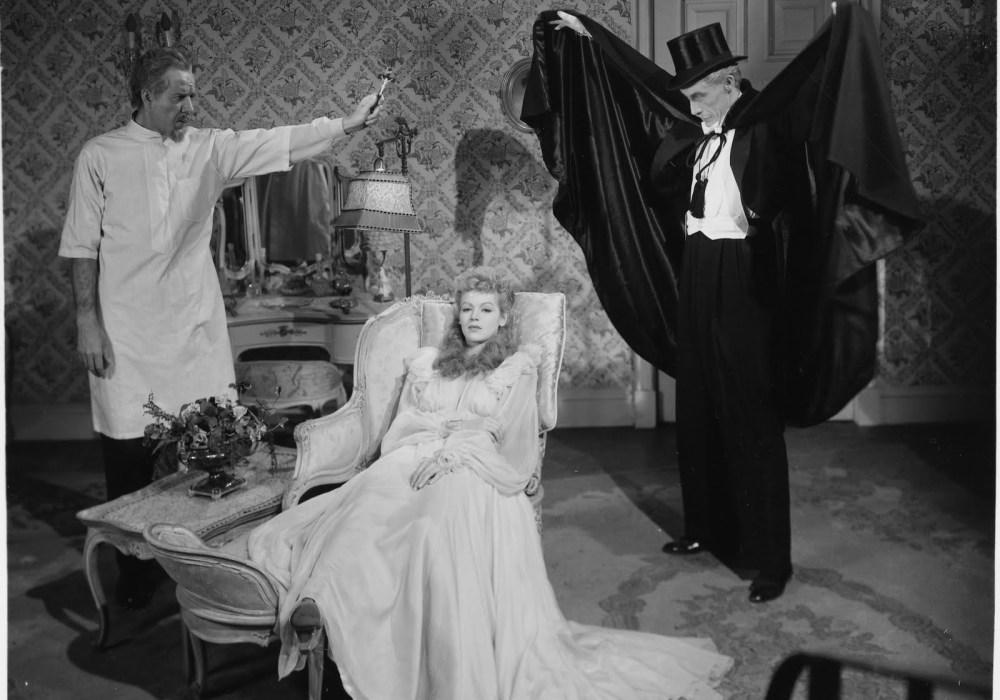
What House of Dracula attempts to do is similar to what House of Frankenstein did before it, and that is to create a tale that balances most if not all the Universal monsters. When people complain of the lack of originality in modern cinema I can’t say that I blame them, it’s only that they act like it’s new. There have always been property projects and series that became cash cows that studios went back to repeatedly. The smaller ones were more likely to over-exploit certain successes. So after House of Frankestein worked, why wouldn’t Universal try the trick again?

The problem here ends up being one of balance. The Wolf Man’s involvement, here it’s Lon Chaney, Jr. playing him as per usual, is perhaps the best because his storyline gets the fullest and most complete treatment. The notion of the current Count Dracula being the one to seek a cure, much in the way Dracula’s Daughter did, except this time through blood transfusions rather than psychiatry is an interesting one. His fairly static nature, as the battle is fought and lost isn’t really an issue, but rather it’s his scarcity. That scarcity makes the title a misnomer.

This film is really about the doctor all these monsters seek his counsel. However, that doctor’s plot is not without its issues. It may have been a hamfisted attempt at foreshadowing, but there is an uncharacteristically dumb and manic maneuver he tries early. If it is a foreshadowing attempt it’s in no way earned and poorly executed.

The element that’s used to bring the story to a conclusion is also one of the least effective in all of drama and I’ll leave it at that. It’s not that this film isn’t without moments but that’s all it can boast, and what do moments really mean when the center doesn’t hold?

61 Days of Halloween: Carrie (2013)

Introduction

For an introduction to the concept of 61 Days of Halloween, as well as a list of previously featured films, go here.

Carrie (2013)

I’m well past the point of complaining about remakes based on principal alone, as a matter of fact, the same goes for sequels too. In part, the reason for that is that it’s sort of a myopic view of things. Throughout the whole of film history there have been series of films that refused to die as well as stories that either we (or the studios) have not grown tired of. Stephen King, as much of an institution as he is, is still with us such that it may seem that three adaptations in 39 years of the tale being in print is a bit much, especially when the writer is in question is not only alive but prolific.

However, as I said, some tales just have a way of sticking around (in the words of King himself “Sometimes They Come Back”). Therefore, invalidity cannot be assigned based on the existence of this third version alone. The second being a 2002 rendition that I needed to be reminded just recently was actually a thing that I’d forgotten about.

With regards to the text itself, I am not a huge, huge fan of the book. I like it fine. However, when Stephen King recounted that early on he was dissatisfied enough to throw out his manuscript and it was his wife’s salvaging it and belief in the story that had him stick with it; I was not surprised. And, of course, I’m glad she did see something there because the rest, as they say, is history. It’s just that from among his oeuvre it never stuck out as a favorite, and it makes me glad I didn’t read him chronologically for that may have had me go on to other things. Prior to continuing, I must preemptively state that much of my discussion of this film will read like comparative analysis and fanboy whining. However, I’m left with little recourse since the version created here reads so much like a copy of the first.
0451157443

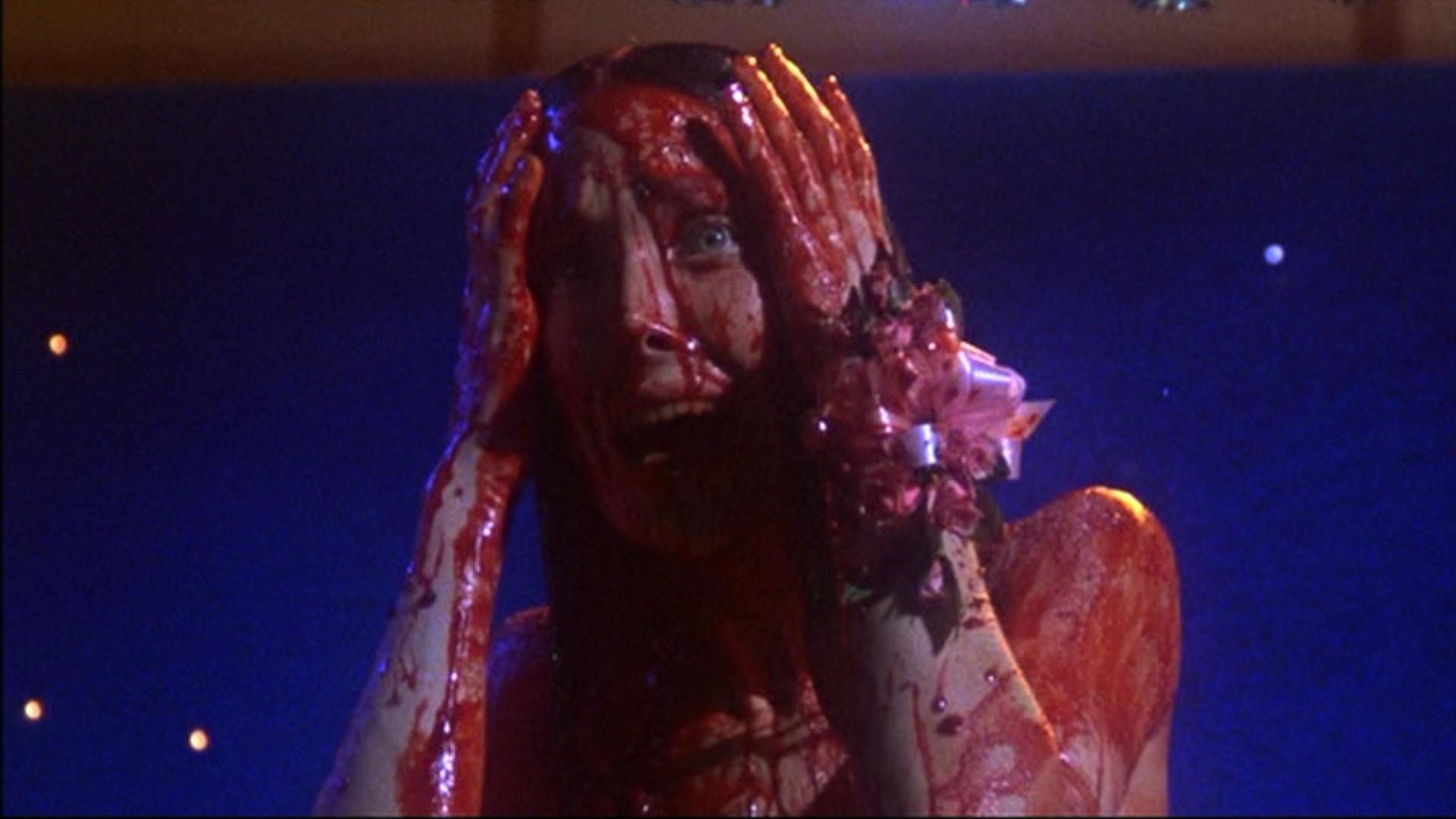
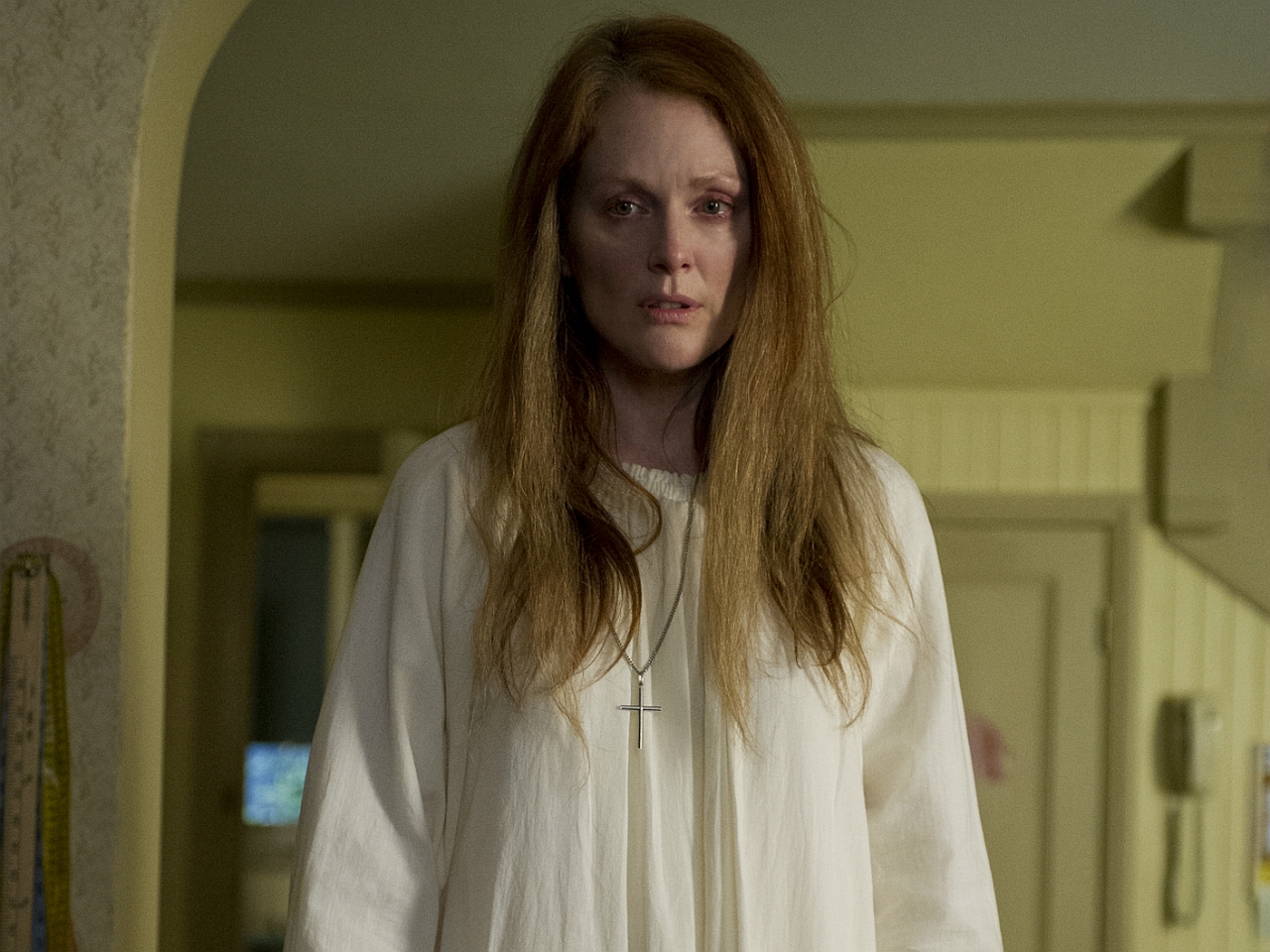
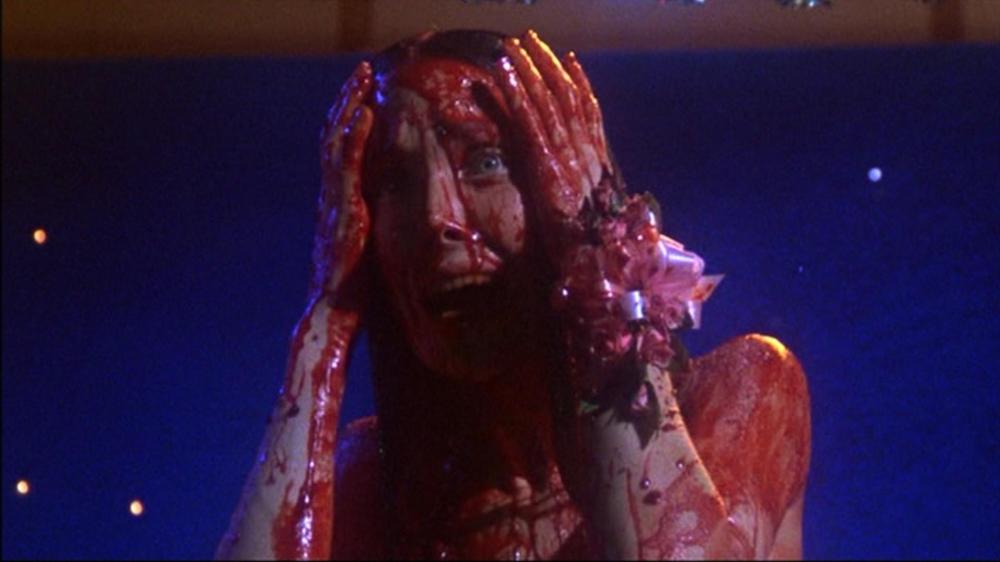
I do, however, share King’s own high regard for Brian De Palma’s version of the film. It’s a tremendous cinematic treatment of the tale that’s masterfully directed, but moreover, a lot of that success is due to Sissy Spacek and Piper Laurie’s portrayal as the mother and daughter (earning each an Academy Award nomination), whose relationship is scarier than anything supernatural that occurs in the book or film.

However, owing to the fact that film was released in 1976, and so much has occurred in the world, some things in the tale needed to change. Due to the supernatural element added to the tale, this was never a film that caused too much hullabaloo with regards to its depiction of violence in schools (this recent Variety opinion piece not withstanding). This was a book that though occasionally banned, was never cited as the impetus for violence as his brilliant Rage was (written under his nom de plume Richard Bachman). Keeping all that in mind, as well as all the horrific incidences of bullying and school violence in the intervening years since the original big studio release and this one, something had to be altered to make this truly effective to a modern day sensibility.

Now, that’s not to say Carrie had to be altered to a point of un-recognition, or be tasteless and tactless in rendition, but while the situation she’s put in (the infamous inciting incident) does engender sympathy it seems a mere drop in the ocean compared to the stories of real life occurrences. Granted there are two escalations of Carrie’s humiliation with regards to that incident, however, it feels it needs a bit more.
carrie_1976_1

The incongruous and dated feeling that her humiliation gets is not aided by many production choices. In aesthetic terms the film feels stuck in many regards. While there are cell phones and an upload of the video to the internet some of the costuming (Miss Collins, the gym teacher’s attire) as well as the automobiles (all seeming to be of an older vintage) that had the film feeling stuck between a modern 1970s-set remake and an update that underscores the relative timidity of Carrie’s initial torturing. If anything the backward nature of the White house house should have stood out in stark contrast to the rest of the town.

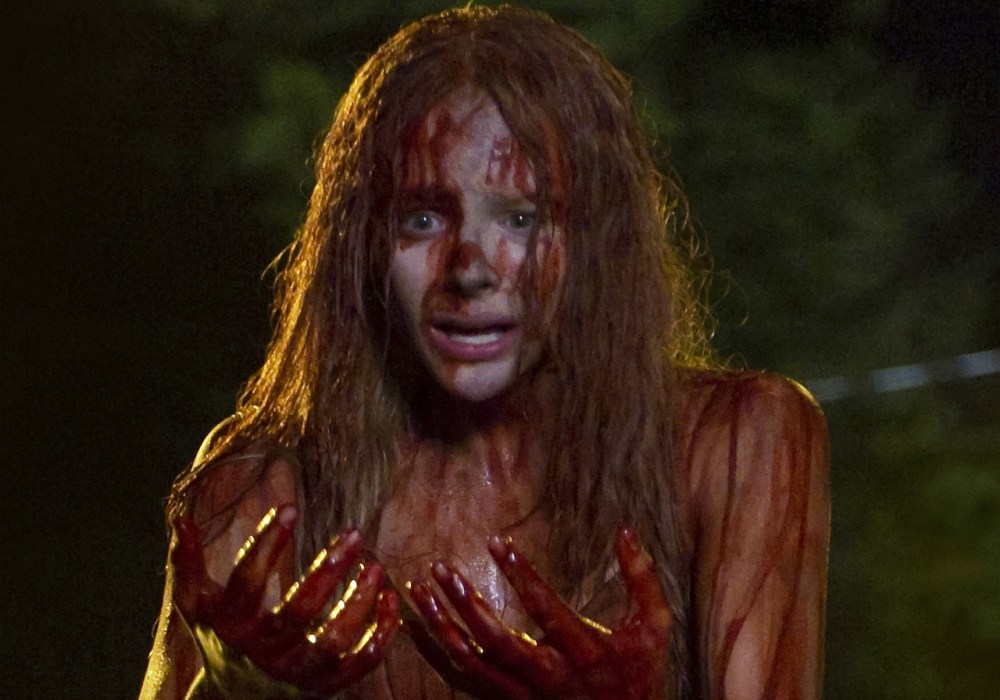
Much of the discussion regarding the film and whether it works or not has surrounded Chloë Grace Moretz. If you look at my site you’ll see that in her breakout year she won my Entertainer of the Year Award. Clearly, I am admirer of her work in general. And where her involvement in this film falls short has more to do with production than anything on her part. The first thing that must be acknowledged is that all actors are artists, and the inclination of anyone remaking something is to put their own stamp on it. So expecting Moretz to reproduce Sissy Spacek’s turn is folly for a number of reasons, not the least of which is that you’re not casting someone to imitate someone else but rather for what they bring to the part. Considering she does have a past with horror, and vast experience, Moretz makes about as much sense as anyone. Things that were lacking with regards to building her performance have to do with editing (when it’d be more effective to see the results of what she’s doing rather than her reaction to it) but more often it’s actually in hair and make up. And I mean that in all seriousness.

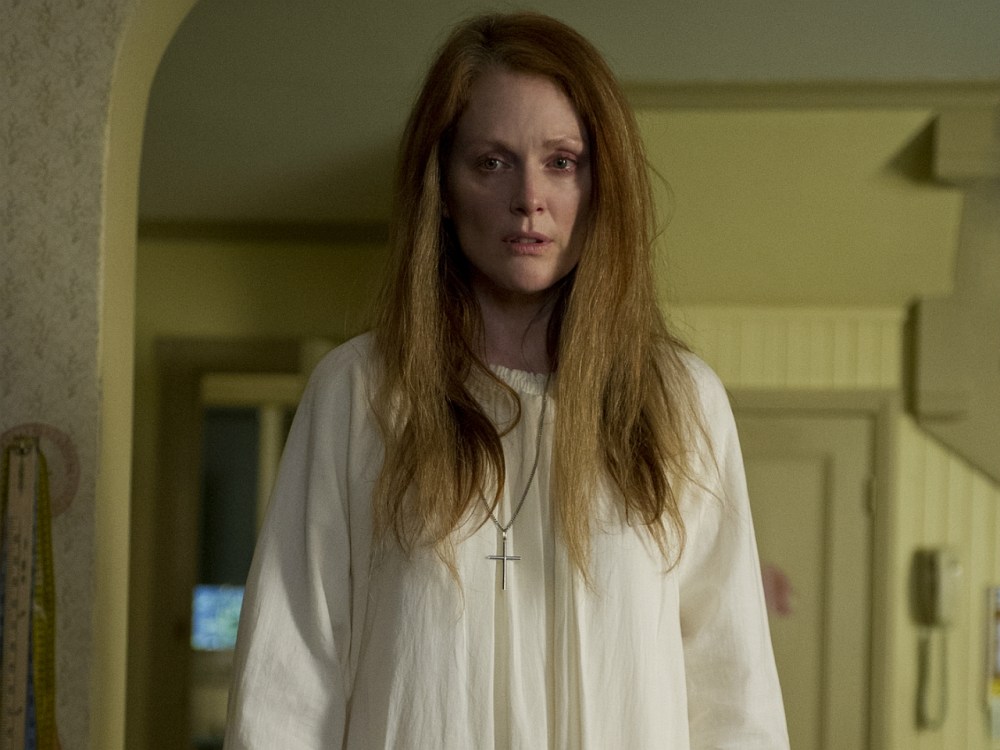
There is a sequence of edits when the coach is trying to build her up and in some editing slight-of-hand she’s tidied so the barely-hidden, beautiful girl she is. The fact is more work needed doing to make Moretz seem more like a Carrie White than a Sue Snell. Her hair and dress both needed frumping up. It came off a bit too much like the glasses-and-a-ponytail gag in Not Another Teen Movie.
316259

Yet the biggest flat-lining in the film is the rote repetition of the exact story beats almost exactly as they happened before save with more advanced but inconsistently rendered CG. The wrinkles were often good (the principal’s inability to say the word “period,” Maggie’s self-mutilation, Tommy playing lacrosse, etc.) but these are all small things and when so much of the film is precisely the same, but emotionally flatter; you need more. There are occasional moments of viscera at the beginning and end but far too much “meh.”

“They’re all going to laugh at you,” Miss White says. This version isn’t quite laughable, but I was not impressed this time around at all.

4/10