Bernardo Villela is like a mallrat except at the movies. He is a writer, director, editor and film enthusiast who seeks to continue to explore and learn about cinema, chronicle the journey and share his findings.
This post is part of the Summer Reading Classic Film Book Challenge. This particular title pertains to the blogathon by being a work of film criticism that discusses some classic films and then-new approaches to adaptation of stage plays and novels and other developments in the early history of film.
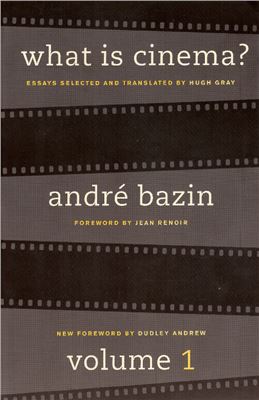
What is Cinema? Vol. 1
With the recent shutdown of The Dissolve, one of the most celebrated and well-respected film criticism sites in the past two years; a site created in part as a response to the closing of Cinematical; it’s not unusual that the discussion of “Is film criticism dead?” firing back up. When you pair that with the fact that I recently took to reading What is Cinema? Vol. 1 by André Bazin, and I started to give this some serious thought; seeing as how Bazin’s essay collection encompasses five volumes and only two of them exist with modern English translation. Usually, I leapfrog from one film thinker to another based on having read one and heard them talk of another. However, the last two names I came across I were met with similar lack-of-translation issues. René Tabard being the last one prior to Bazin. Tabard practically invented film history, and jumped to mind again after he was featured in Hugo.
I think this collection from Bazin proves there is still a relevance if we are willing to engage and seek out such writing, as will be detailed to follow. So “Who is André Bazin?” you may be asking. André Bazin was a film critic and theorist who founded one of the most influential film publications of all time, Cahiers du Cinema. It was Cahiers where the likes of Jean-Luc Godard and François Truffaut, among others, got their start. It was Truffaut’s references and admiration that lead me to him.
The contents of the book are as follows:
Ontology of the Photographic Image
The Myth of Total Cinema
The Evolution of the Language of Cinema
The Virtues and Limitations of Montage
In Defense of Mixed Cinema
Theater and Cinema: Part one and Two
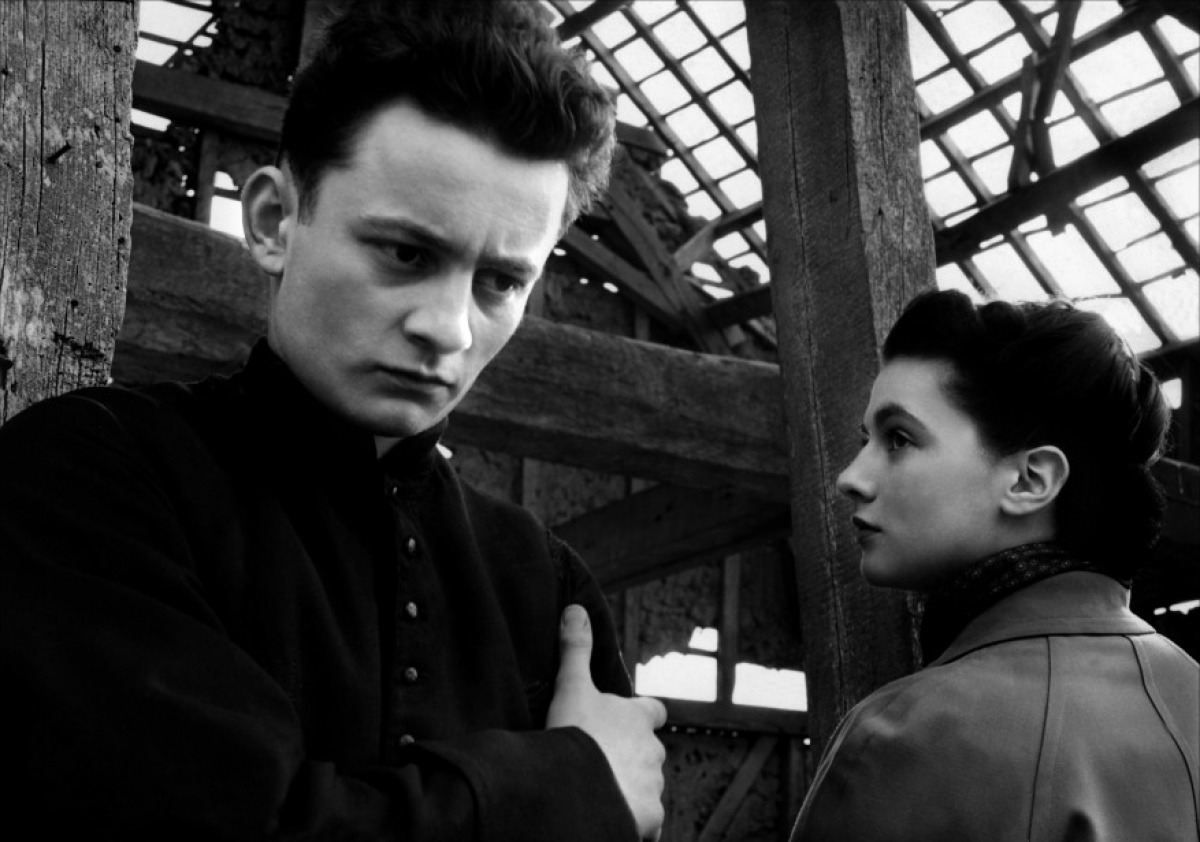
Journal d’un curé de campagne (Diary of a Country Priest) and the Stylistics of Robert Bresson
Charlie Chaplin
Cinema and Exploration
Painting and Cinema
The title seems simplistic but bear in mind that when Bazin was working cinema was about 60 years old. Synchronized sound much younger still and many things were being addressed for the first times on film. Furthermore, to establish a foundation of what the study of an artform is defining and delineating it is a necessity. Furthermore, when aesthetic precepts and styles change, or are challenged, chronicling the process and debating the pros and cons of said approaches has much validity. In trying to define the then-youngest artform it mattered to compare and contrast it to those arts that came first.
Bazin breaks down many things specifically: the frame itself, the incorporation of multiple disciplines, film grammar, editing with a different approach that Eisenstein had, as well as tackling specific performers (encapsulating Chaplin’s genius) discussing specific titles and subgenres. Further some of these essays have slight overlap which make the order make sense, and give you the sense of an ongoing dialogue that developed over time.
Those essays are followed by notes inserted by the translated for further contextualization. These are vital. For while Bazin was not shy about writing lengthy, at times multiple page, footnotes to make elliptical tangential points there are times where there is no clarification that you wish were there. On a few occasions they occur in the final line of the essay and the point is obfuscated if not lost entirely.
I, as a reader, am not shy about doing searches or seeking definitions extemporaneously. However, some of them only made sense with the notes; hence their vitality. I usually consider the introduction optional but Jean Renoir sets the stage very well and gets you in the mood and proper frame of mind to start this book so I’d recommend it though it’s not as vital as the notes.
Online I found some reader reviews that cited excessive liberties in editing, re-arranging essays. However, those changes are cited in the back and it does not say if it’s unique to the English translation. As for the arguments I saw about reading the original French text, clearly if you have a level of fluency in the original language of the text that’s alway preferable, but a translation is better than not ever having read a text at all. I have experimented with reading in French but cannot claim proficiency, and translation is imprecise, which is why new translations happen, and I have read multiple versions of a work when interested enough. It’s just always something to keep in mind.
Regardless of the transcriptive liberties either taken or not, I found the ideas communicated clearly, even through their complexities, and the compact, polysyllabic style Bazin appeared to have is evident without being so dense it reads as if its intended for academics only. It’s certainly challenging but a foundation in film makes it accessible. It’d have been further illuminating if I had the level of exposure to French literature and theatre he did, the other works of art, but even without the specific contextual framework what he’s saying is clear. Furthermore, reading always begets reading so it’s good to have some ideas of what to look for.
I wouldn’t say its introductory level stuff, nor does it supplant film history supplements, but Bazin’s work is a foundation that is still relevant for film is in a constant state of evolution. Therefore, to question what makes a work cinematic, and what the form entails, is critical food for thought for all those who love the seventh art.
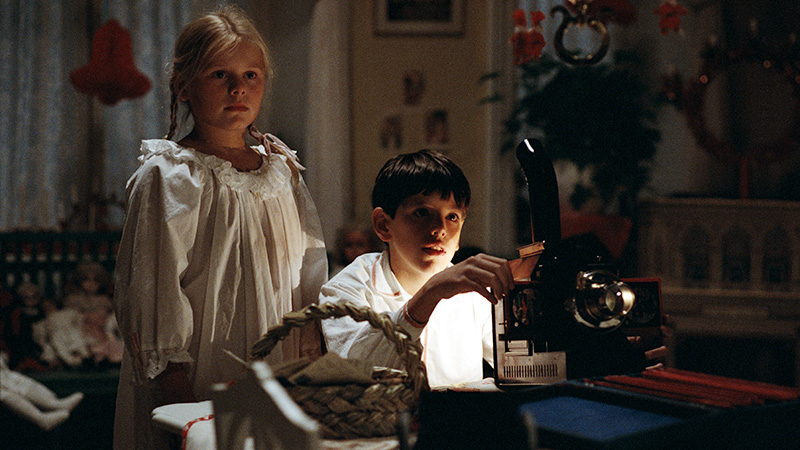
Introduction: Fanny, Alexander and the Magic Lantern
When dealing with a film that Bergman chronicles as being highly personal I feel it is only right that I give it the same treatment when I discuss it here.
There are times when I cannot help but inextricably tie my discovery of a filmmaker, or the genesis of my admiration for them, to the strength of my connection to their work. Which is to say Hitchcock and Bergman, for example, whom I gravitated to without prodding, and of my own volition, hold a more special place in my heart and mind than directors whose greatness I recognize but only found their work after hearing tell of how worthwhile an investment of my time it was and very consciously decided to watch them.
Specifically regarding Bergman, the story of my first viewing is that I decided to take the plunge when I was visiting family in Brazil. I saw a region 0 DVD of Fanny and Alexander on sale and even though to be able to see it I’d really do two translations (hearing Swedish audio, reading Portuguese subtitles and transposing it to English mentally); I went for it anyway.
I almost instantly loved the film a great deal and it fast became one of my favorites. I then proceeded to watch whatever Bergman I could from my teenage years through the present. DVDs were upgraded to Blu-rays at times; new-to-me titles acquired blind; repertory screenings at the Film Forum taken in when I was lucky enough to see them; his swan song was viewed the weekend it was released, dominating much of my annual BAM Awards; and then with his passing an honorary award with his name was created, and has a backstory of its own.
Fanny and Alexander (which I also got the box-set for and then viewed all versions, loving the TV version more than the original) was the impetus not only for my admiration but the best example of how I always inherently, nearly by osmosis, attributed to his films the axiom that the emotional truth of them was far more significant than the literal truth of the nearly fictitious “one true, correct meaning.” For it was without noticing really that I virtually never considered the wild conundrum, the paradox really, that exists in the telling of Fanny and Alexander until I revisited it and saw alternate versions.
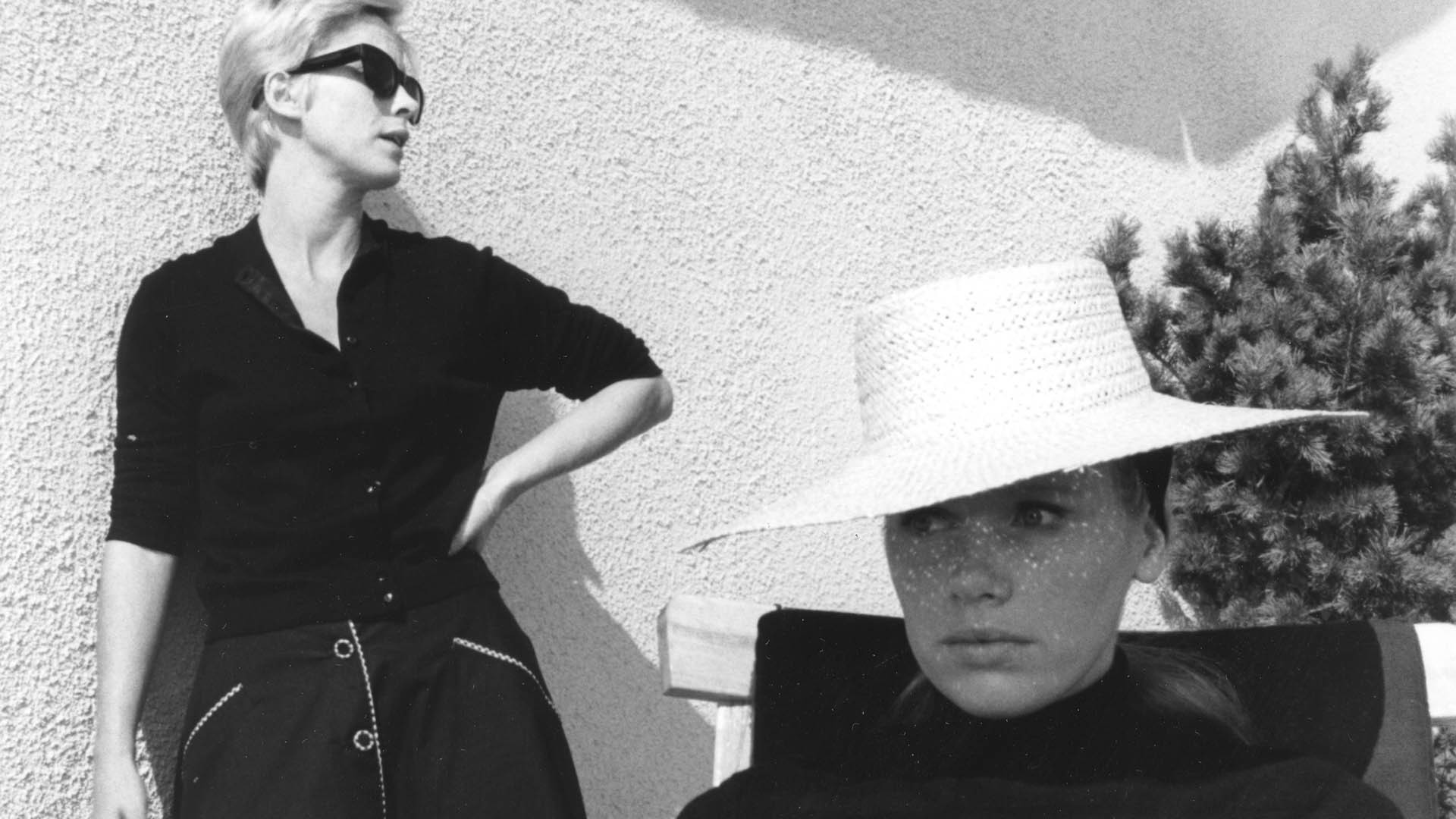
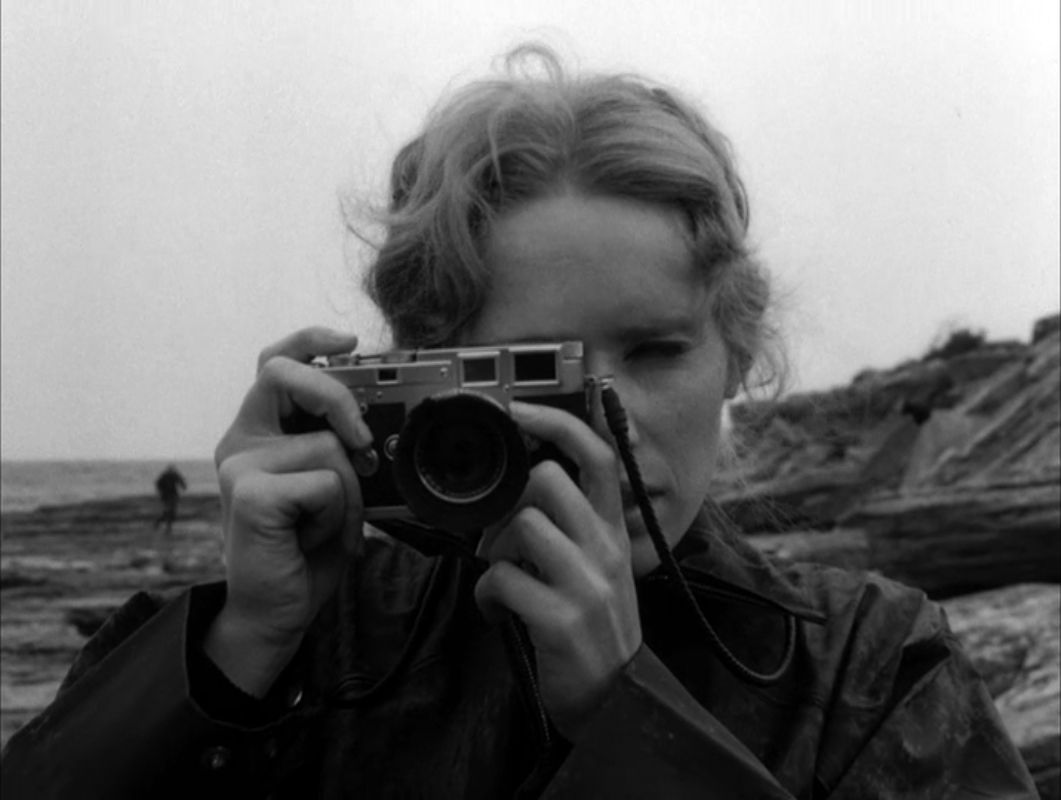
Thus, when I made it around to Persona, which I believe I first saw as a VHS rental before getting a DVD, it was one I instantly knew I wanted to come back and dissect. Even though I got the Repeated Scene, and it may not even be my favorite part of the film, I always came back to it.
When I began my journey with Bergman, much like Alexander watching the images produced by the magic lantern, I was transfixed, as if by a wholly new experience unlike any I’d seen. Through Bergman’s eye the Repeated Scene in Persona was perhaps the most hypnotically dazzling. So here goes …
The Scene
For those who have seen the film but would like a refresher here is a YouTube link that works (for now) Those who have not seen it are advised to read carefully and selectively and see it as soon as they can:
The Text
Stepping back from the audiovisual image to the script we can look at a few different things.
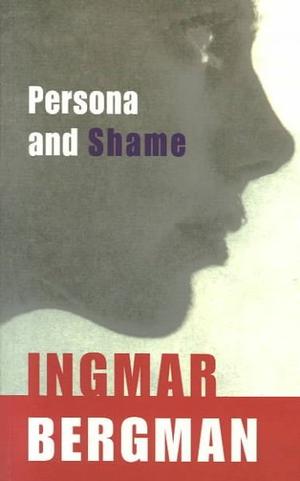
My need to be current on Bergman has extended a bit beyond films. Be they plays, screenplays, even his novels, I’ve read quite a bit of his work also. Some I took out from the library or photocopied, some I felt impelled to get like the recently republished Persona and Shame screenplays in a single volume.
A few things that become readily apparent when reading the screenplays are:
The edit is the final process so certain things are altered or augmented by the editing process. Specific to Persona the doubling, the very repetition of the scene, was a construct of the editing room rather than the initial design. It doesn’t make it any less a calculated decision just one that came to the film when it was deemed necessary. It’s the same reason famed editor Walter Murch would line up stills of the first frame of each scene in grids, not just to get a different look at the project as a whole (in abstract), but it also provided the occasional new idea.
As for the text itself, it’s instigated by an action and it gains added weight and significance by the visual treatment of the scene. For as talky as Bergman can appear and be he worked in theatre sufficiently to know very well the delineation and the framing, lighting, and editing were always pivotal as well as the dialogue painting images where the camera could not.
Bergman’s thoughts on the dialogue itself as well as the genesis for his creation of the film will be covered in the next section. What matters here are the basics:
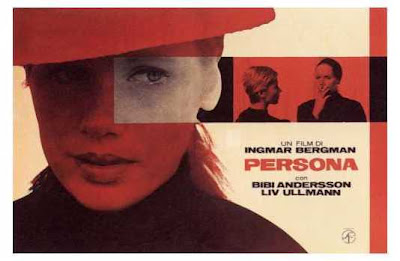
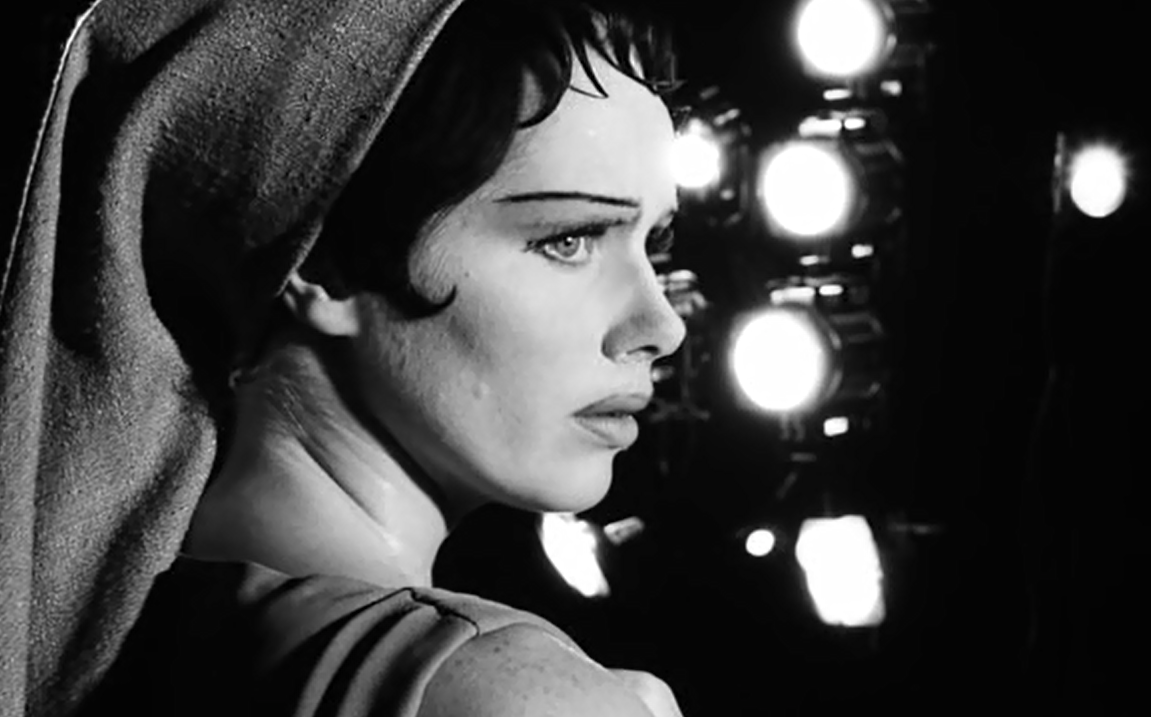
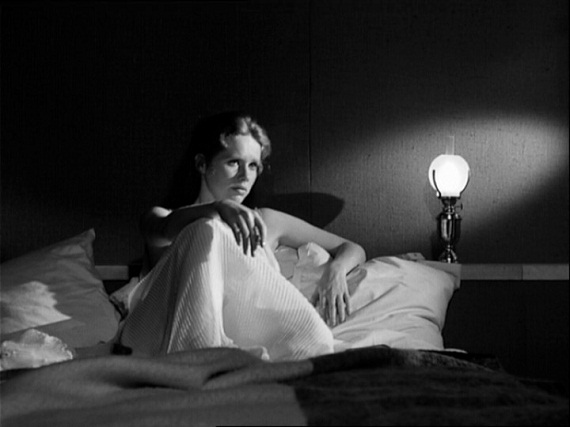
An actress Elisabet Vogler (Liv Ullmann) at the height of her fame and power consciously stops speaking but is just short of a breakdown and nothing is deemed physically or psychologically wrong with her. She and her nurse, Alma (Bibi Andersson), retreat to a country estate while she recovers. As Alma talks to her and observes her they clearly make an impression on one another such that the line that separates one from the other is blurred.
Also interesting to note, is that this film had a change of shooting locale from Stockholm to Fårö Island that remedied many of the issues Bergman and company perceived when they saw the need for reshoots.
In examining the photo of Elisabet’s son that was Alma concocts a story about who this child in the ripped up photograph is clearly her son, so why is it ripped up? Alma speculates, to put it bluntly and concisely, that he was: the abortion that never happened. However, after the seeming coup de grâce of this judgment Alma reaffirms that she is she and coming up with something. She isn’t Elisabet only she can be.
Then the cycle starts anew. Alma repeats the story from a different point-of-view, in the camera’s view. However, where the tale was not quite complete here it is with Alma struggling against Elisabet invading her mind and soul. The story becomes Elisabet’s and Elisabet becomes Alma.
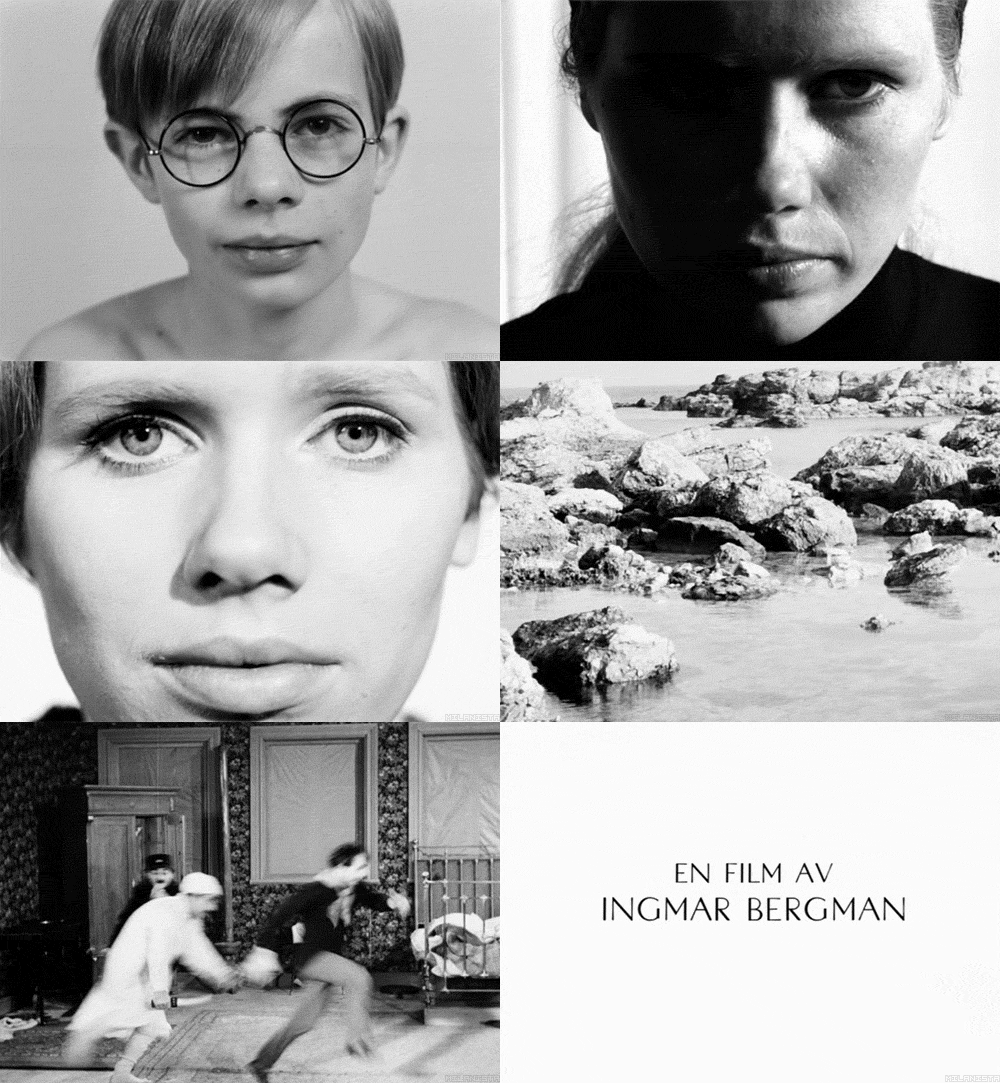
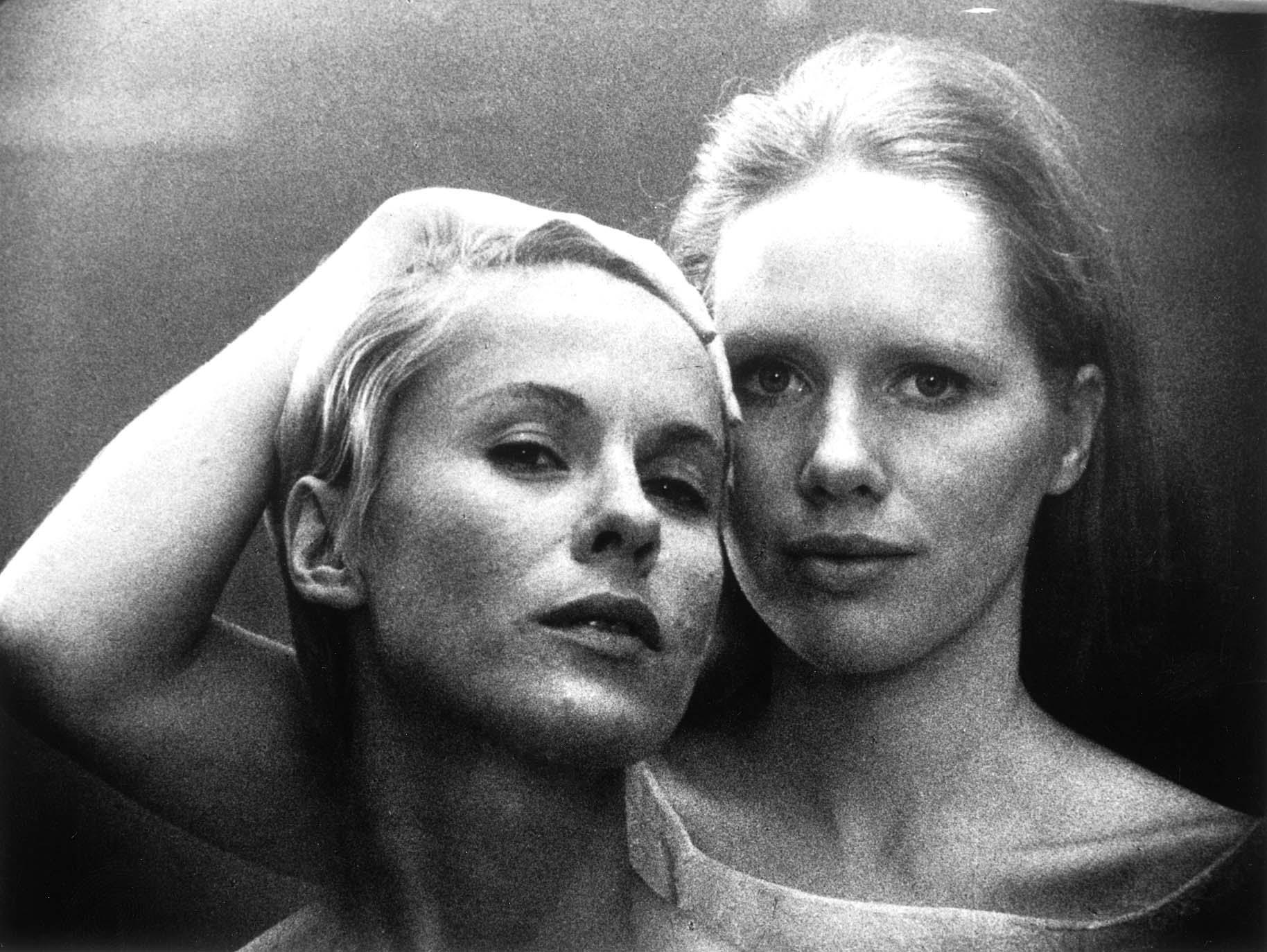
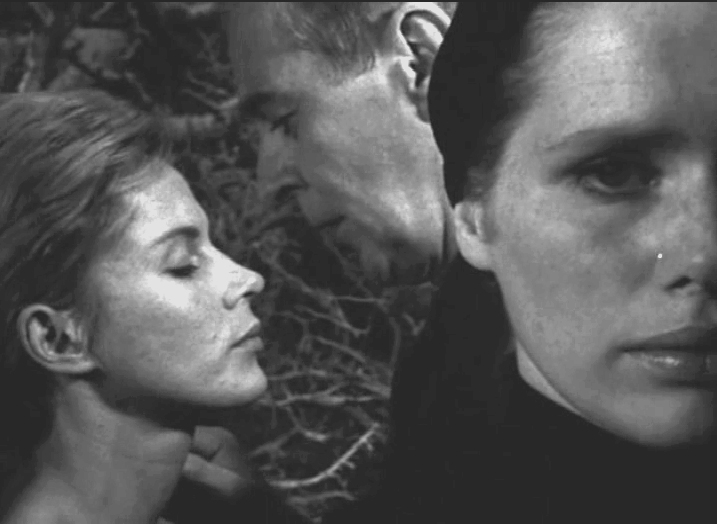
The first half of the sequence culminates in the (in)famous double-image of the “bad” side of each of their faces spliced together in one frame.
The transformation is not as literal as it would be in a genre film but for the intents and purposes of this story its just as true and for either character to move on whether recovered or depleted a fracturing needs to occur to get them apart from one another.
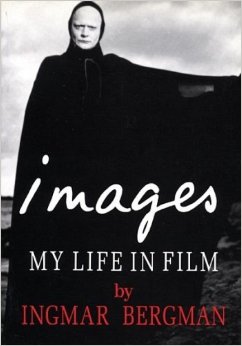
Ingmar Bergman’s Perspective in Images: My Life in Film (1995)
Many directors bristle at symbolism being imposed on their work or film theorists. And, at times, the bristling is more about that old chestnut of the “one, true version.” When it is quite clear that certain directors like Kubrick invited audiences engaging and refused to define the film for its audience. Therefore, Bergman’s background he gives on the making of the film give you the genesis, what was happening with him and how it shaped him and the story.
It should be noted that right before this he was burning the candle at both ends frequently writing and directing films for Svensk Filmindustri and was then appointed director of the Royal Dramatic Theatre. It was a lot but he thought he could handle it and ultimately chalked it up as so: “That experience was like a blowtorch, forcing a kind of accelerated ripening and maturing.”
After writing, shooting and promoting All These Women, and directing Ibsen’s Hedda Gabler for the stage, his health was waning: fever lead to double pneumonia and acute penicillin poisoning. As he was admitted to Sophiasammet Royal Hospital to recuperate the idea for Persona struck him and he began to work on it “mainly to keep my hand in the creative process.” And in doing so it was a bit freeing in a few different ways.
With an unmade project canceled, his wondering about the place of theatre in the art world, and himself as an artist; he found a vehicle to express these doubts and pains and channeled it mostly through Elisabet Vogler’s personage. This is an emotional state he accurately encapsulated in what he wrote when he accepted the Dutch Erasmus Prize, an essay entitled “The Snakeskin,” which served as the foreword for the published edition of Persona. That state is rounded out and linked to the film more thoroughly in the book.
What is perhaps most fascinating is that I had not read this book, whole or in part before researching this (only the “Snakeskin” portion in Persona); so there was much information to discover, and it’s always interesting to glean insights into an artist’s creative process, but more illuminating that that is the fact that much of this story and truth is translated to the screen without overt underlining. It’s there, you feel it, and it either affects you or it does not but it’s there for you to see. Bergman’s art is not unlike his philosophy on why he is an artist:
“This, and only this, is my truth. I don’t ask that it be true for anybody else, and as solace for eternity it’s obviously rather slim pickings, but as a foundation for artistic activity for a few more years it is in fact enough, at least for me.”
In his notes Bergman has not only poetics about his creative crisis and things that are implied by the film like “The conception of time is suspended,” and most importantly “Something simply happens without anyone asking how it happens.” Yet there is also the key to the emotional heart of the film, which is right there in the film itself:
Then I felt every inflection of my voice, every word in my mouth, was a lie, a play whose sole purpose was to cover the emptiness and boredom. There was only one way I could avoid a state of despair and a breakdown. To be silent. And to reach behind the silence for clarity or at least to try to collect resources that might still be available to me.
Here, in the diary of Mrs. Vogler, lies the foundation of Persona.
It’s interesting to note here that Bergman, as he himself notes has named a character Vogler before such as in “The Magician —with another silent Vogler in the center — is a playful approach to the question.” The name would then pop up in later films. The usage of silence, one of the quintessential traits of cinema that separates it from the stage, is also strongly present in this title as well as others by Bergman including the appropriately titles The Silence which features hardly any spoken dialogue.
About the Repeated Scene specifically he writes in his book:
“…Suddenly they exchange personalities.”
“They sit across from each other, they speak to each other with inflections of voice and gestures, they insult, they torment, they hurt one another, they laugh and play. It is a mirror scene.
The confrontation is a monologue that has been doubled. The monologue comes, so to speak, from two directions, first from Elisabet Vogler, then from Alma.”
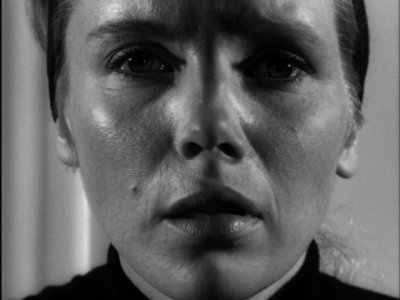
“We then agreed to keep half their faces in complete darkness — there wouldn’t even be any leveling light.”
Leveling light here refers to fill light, which is any light that would be aimed at the darker side of an actor’s face to lessen the contrast ratio. In keeping the highlight normal and the fill side very underexposed there is an inherent additional disquiet added to the viewership of the scene combine that with the editing tactics, then the unconventional treatment of the dual dialogue, including some jump cuts, and there is a crescendo to climax that is fairly universal even if the beats are more subsumed and the conflicts more internalized than in a standard, conventionally structured and told film. Upon seeing rushes of the scene edited Bibi Andersson and Liv Ullmann reacted as follows:
Bibi exclaims in surprise: “But Liv, you look so strange!” And Liv says: “No, it’s you, Bibi, you look very strange!” Spontaneously they denied their own less-than-good facial half.
The trick had worked and fooled the actresses themselves into seeing each other’s faces on the film. The film from that point was already speaking to people through its images alone. Yet despite the unconventional approaches, even on the written page, Bergman warns about those as well saying that “The screenplay for Persona does not look like a regular scenario.” And that it “May look like an improvisation,” but it is quite clear that there is a meticulous level of plotting that is only elevated by the inspired choice made in the edit.
Even though Bergman saw his return to his position at the theatre as a temporary setback (“When I returned to the Royal Dramatic Theatre in the fall, it was like going back to the slave galley.”) there is no doubt that Persona was a personal triumph due to the very personal, even if abstracted, look at himself that revitalized virtually everything in his life as evidenced by the statement “I said that Persona saved my life — that is no exaggeration.” Persona also marked an artistic revolution for Bergman, a change in his whole approach wherein he realized “The gospel according to which one must be comprehensible at all costs, one that had been dinned into me ever since I worked as the lowliest manuscript slave at Svensk Filmidustri, could finally go to hell (which is where it belongs!).”
Liv Ullmann’s perspective in Liv Ullmann: Interviews (2006)
What Ullmann added in interviews through the years does speak more to the scene itself, and as one of its participants she gives tremendous insight into the making of it, as well as her process as an actress. Also, how she was cast became a legendary story as she is a Norwegian-born actress and Bergman had only worked with Swedish actors at the time. It is the kind of stuff legends are made of but not as fantastical as people make it out to be.
“He had seen one picture I’d been in. And it wasn’t like he picked me up off the street, because I’d been an actress for many years in Norway. But he did take a terrible chance because I was very young — I was twenty-five — and I was to play a woman at the height of her career and having neurosis, which I knew nothing about. So he decided to use me on intuition, and I did the whole part completely by intuition, because I only understood what it was about many years later.”
About production specifically:
“That was very strange because he did that with two cameras. There was one on Bibi when she told my story. It was supposed to be cut up, using the best from each. But when he saw it as a whole, he didn’t know what to pick. So we used them both. Many people have tried to analyze why he does this. The real reason is that he felt that both told something there which he felt was important. He felt he couldn’t tell which was most important so he had both. “
That above reaction reinforces Bergman’s feelings and vision. Closer to the time she made it she revealed:
“The way I prepared was to read the script many times, to try and block it into sections. I would try to think, ‘This is the section where this is happening to her, and now he goes a little deeper in this section.’
“That is the way I very often work. I divide the manuscript into sections which always makes you know where you are shooting.”
Later on she elaborated even further:
“A lot of things I seriously didn’t understand. I just had to do it on feeling, on instinct. I couldn’t ask him because I felt so grateful he was giving me this, that I must pretend. When I see it now, I understand it so much better. I understand the character. But in a way I think it doesn’t matter because deep down we can experience even if we don’t really understand. I think you can instinctively play a character without intellectually or by experience being at that level. So many more people would appreciate him if they would dare to go in and think he’s really simple that he’s going to their emotions, not worry about the symbols.”
So with all these vantage points where does that leave us?
Conclusion: The Film Tears
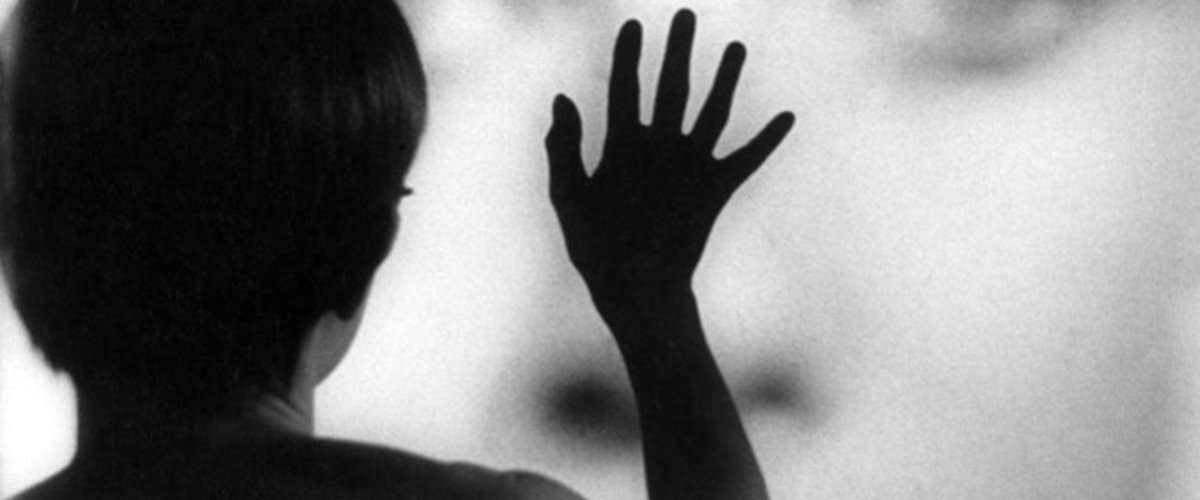
One of the structural totem poles in Persona is an image of a film strip burning and breaking. It marks a rupture in the reality as its being presented, and it reveals to us, as a reminder the eyes through which this story is being seen (Elisabet’s son played by Jörgen Lindström).
When the film tears for us as viewers what are we left with? Is all theorizing to be tossed out the window? An interview Ullmann gives later on in her career when she took on Faithless as a director, based on Bergman’s screenplay:
Both women are called Marianne, so you can make all sorts of fantastic connections. Every viewer should have the freedom to do that.
Everyone also has the freedom to make connections with Elisabeth Vogler, I didn’t know very much, but I just knew I was playing Ingmar. That’s why I said that Max von Sydow could have played the part. I thought at the time “I will just watch Ingmar and I will try to act like him. In the current film, the character is called Bergman like the character he made into a woman and I played as Elisabeth Vogler in Persona. You can have great fun with this.
Which actually is not discordant with her assertions that “The real reason is that he felt that both told something there which he felt was important. He felt he couldn’t tell which was most important so he had both,” and that “So many more people would appreciate him if they would dare to go in and think he’s really simple that he’s going to their emotions, not worry about the symbols.”
If the film guts you it’ll pay to dig and pick apart these images and examine the interplay of the characters, the questions about reality, dreams, psyche, life, death, and sexuality. If it doesn’t move you an intellectual examination may not make it any better for you, and what would your motivation be to go in search of answers anyway?
When seeing the Repeated Scene in Persona you will think any of three things: a noble attempt at an experiment that fell short, a brilliant gamble that pays off in spades or a wasteful piece of sophistry. Many of the scenes in the film can be seen along this spectrum. It just bears noting to modern audiences that while his style, at-times starkness, look, and human dramas have become clichéd through the reverence of film students and arthouse filmmakers through the years, but many of the things he was doing were new and unique when he did them.
When the film tears for you as a viewer as Persona ends Bergman seeks for you to have been moved, to have thought and to have examined just as he moved, thought on, and examined his own life in its making. All else is fun, as Ullmann says, but there is no wrong. In this film Bergman rebelled against the tyranny of coherence and singular meaning and came out a victor, and we are all better for it; for now we have been moved.
If you follow my blog closely you’ll note that in trying to cover the depth and breadth of the cinematic experience I often gone very early into the origins of film. Most recently I posted on a very early film I first saw on Movies Silently. When trying to select a topic for the Classic Film History Blogathon the easiest way for me to narrow down potential topics was to go very early and very specific.
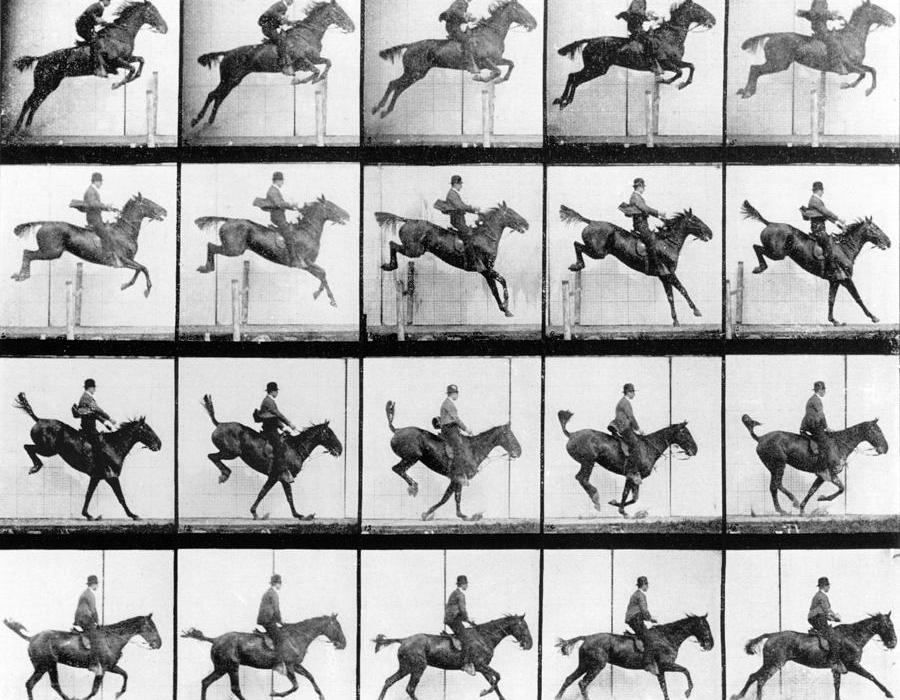
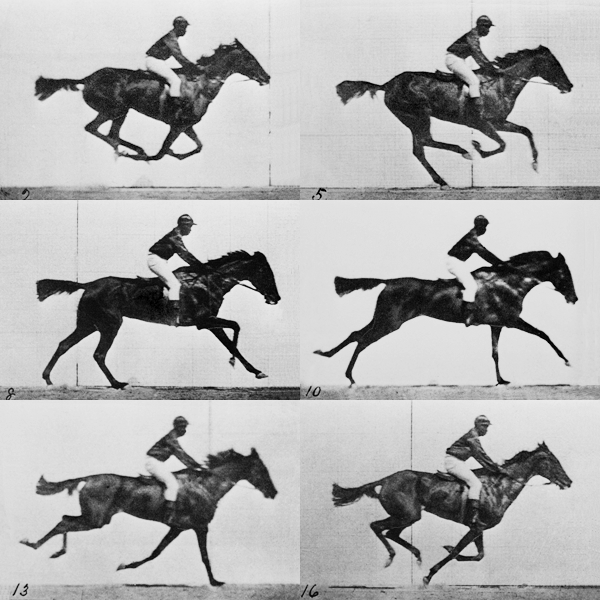
This brings me to the Muybridge Experiment. They were the most significant photographic experiment prior to the advent of motion pictures (1880), as we knew them for more than a century. It is also further evidence that nothing comes from nothing and these things can always be traced, and it is my firm belief that knowing these things is highly important. While these rapid-fire stills have been shown in a simulation of motion, they were taken as stills in 24 triggered cameras solely to prove whether or not all four of a horse’s hooves leave the ground at full gallop (they do):
Mast & Kawin in A Short History of the Movies underscore many things worth noting about the experiment itself:
In fact they were not motion-picture photographs but serial photographs; Muybridge himself called them “serial pictures.” But they were major advances over a series of drawings and posed stills. Continuous motion had been divided into distinct frames, but it had not yet been photographed by a single camera.
The intent was not to create a pre-cursor to the motion picture, but it was quickly realized that that is just what happened.
After having projected the images he proceeded to advance the photographic science and arts:
In 1880, Muybridge first projected moving images on a screen when he gave a presentation at the California School of Fine Arts; this was the earliest known motion picture exhibition. He later met with Thomas Edison, who had recently invented the phonograph. Edison went on to invent the kinetoscope, the precursor of the movie camera.
The relationship between Muybridge and Stanford became turbulent in 1882. Stanford commissioned the book The Horse in Motion: as Shown by Instantaneous Photography, written by his friend and horseman J. D. B. Stillman; it was published by Osgood and Company.The book claimed to feature instantaneous photography, but showed 100 illustrations based on Muybridge’s photographs taken of Stanford’s mare Sallie. Muybridge was not credited in the book except noted as a Stanford employee and in a technical appendix based on an account he had written. As a result, the Britain’s Royal Society of Arts, which earlier had offered to finance further photographic studies by Muybridge of animal movement, withdrew the funding. His suit against Stanford to gain credit was dismissed out of court.
Muybridge soon gained support for two years of studies under the auspices of the University of Pennsylvania. The university published his current and previous work as an extensive portfolio of 781 collotype plates, under the title Animal Locomotion: An Electro-photographic Investigation of Consecutive Phases of Animal Movements, 1872–1885. The collotype plates measured 19 by 24 inches, each were contained in 36 by 36-inch frames; the total number of images were approximately 20,000. The published plates included 514 of men and women in motion, 27 plates of abnormal male and female movement, 16 of children, 5 plates of adult male hand movement, and 219 with animal subjects.
Muybridge’s experiments lead to Marey’s advances in France in 1882 where the images where shot through a Chronotograph process, all in one camera. Then in 1884 George Eastman began experimenting with celluloid and paper-roll film. None of these things occurred without Muybridge’s experiment though.
It’s also interesting to note that while silent films were shot at variable frame rates sound synchronization required a standard; that compromised rate ended up being the same number Muybridge shot trying to prove a simple point.
The last of three blogathon announcements for today: following up the Bergman theme from the last one here I will be covering the one collaboration between Ingmar and Ingrid Bergman (no relation) Autumn Sonata.
It’s not without reasons that Ingrid Bergman is on this year Cannes Festival’s official poster. That’s because, on August 29th 2015, we’ll celebrate her 100th birthday. Of course, Ingrid Bergman is unfortunately no longer with us, but that’s not a reason why we shouldn’t celebrate her. For the occasion, I decided to host my very first blogathon: The Wonderful Ingrid Bergman Blogathon. So, that’s a new step for me as a blogger. Ingrid Bergman is my personal third favourite actress, but she’s also, for me, most talented of them all. She was also a fascinating lady. Of course, this is my personal opinion. I’m sure many of you like her too, so I’m hoping for a high level of participation! The event will take place from August 27th to August 29th 2015. Rules for the blogathon: The rules for this blogathon are quite simple.
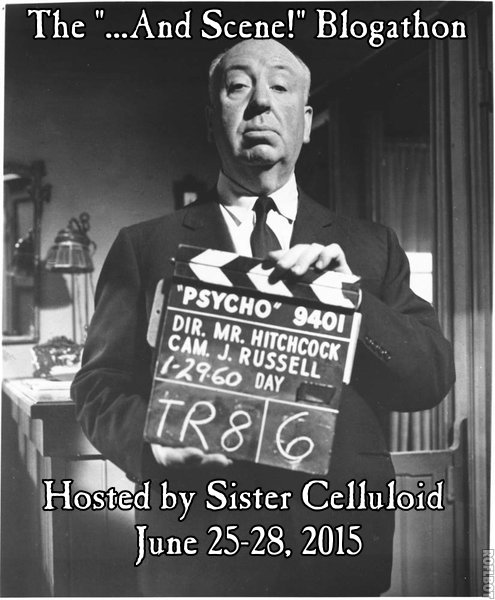
Second reblogged announcement of the day. At the same time I will be partaking in The Classic Movie History Blogathon I will also be contributing to the great “…And Scene! Blogathon” where I will be discussing the repeated scene in Persona.
Breathes there a classic movie lover who has never burst forth with those immortal words…
“I LOVE THIS PART!!”
Well, here’s your chance to sing it loud and proud!
Sister Celluloid presents the “…And Scene!” Blogathon—your chance to go into excruciating detail about your favorite classic film scene (or one of them, anyway—I’d never be so cruel as to ask you to narrow it down any further). The one you replay over and over, so the DVD ( or VHS tape—c’mon, you know you still have them!) has a little groove in it. The one you catch yourself mouthing the words to. The one where your loved ones tiptoe out of the room because they know you’re going to get all weepy or crazy or giddy again. Yeah. That one. Share it here, with your movie people… we know just how you feel!
I’ve been meaning to keep up on the blogathons I will be a part of by re-blogging for some time. It’s a habit I was not in long enough.
Anyway, this is one I’m very excited to be involved in. I’m taking a small, but very important topic that paved the way for the motion picture before cameras even started rolling: The Muybridge Experiment.
I thank you so much for your interest in this historical blogging event! Be aware that new and exciting additions have been made to this event. For complete details please visit the updated announcement.
◊
One of my favorite blogging events of 2014 was the Classic Movie History Project, which was the brainchild of Fritzi Kramer at Movies, Silently. I, along with Ruth of Silver Screenings, co-hosted the event with Fritzi and we’re all back for a bigger and better second edition.
Following is the official announcement, which was written by Fritzi. Included throughout this post are the gorgeous event banners – designed by Fritzi. Ruth has done lots of behind-the-scenes work already and I’ve…uh…been sitting on the sidelines looking pretty. Or…looking in any case. But really, I couldn’t be more honored to be a part of this and will promote the heck out of it in hopes you’ll join us…
Note: There is within a discussion of plot points, which can be considered spoilers.
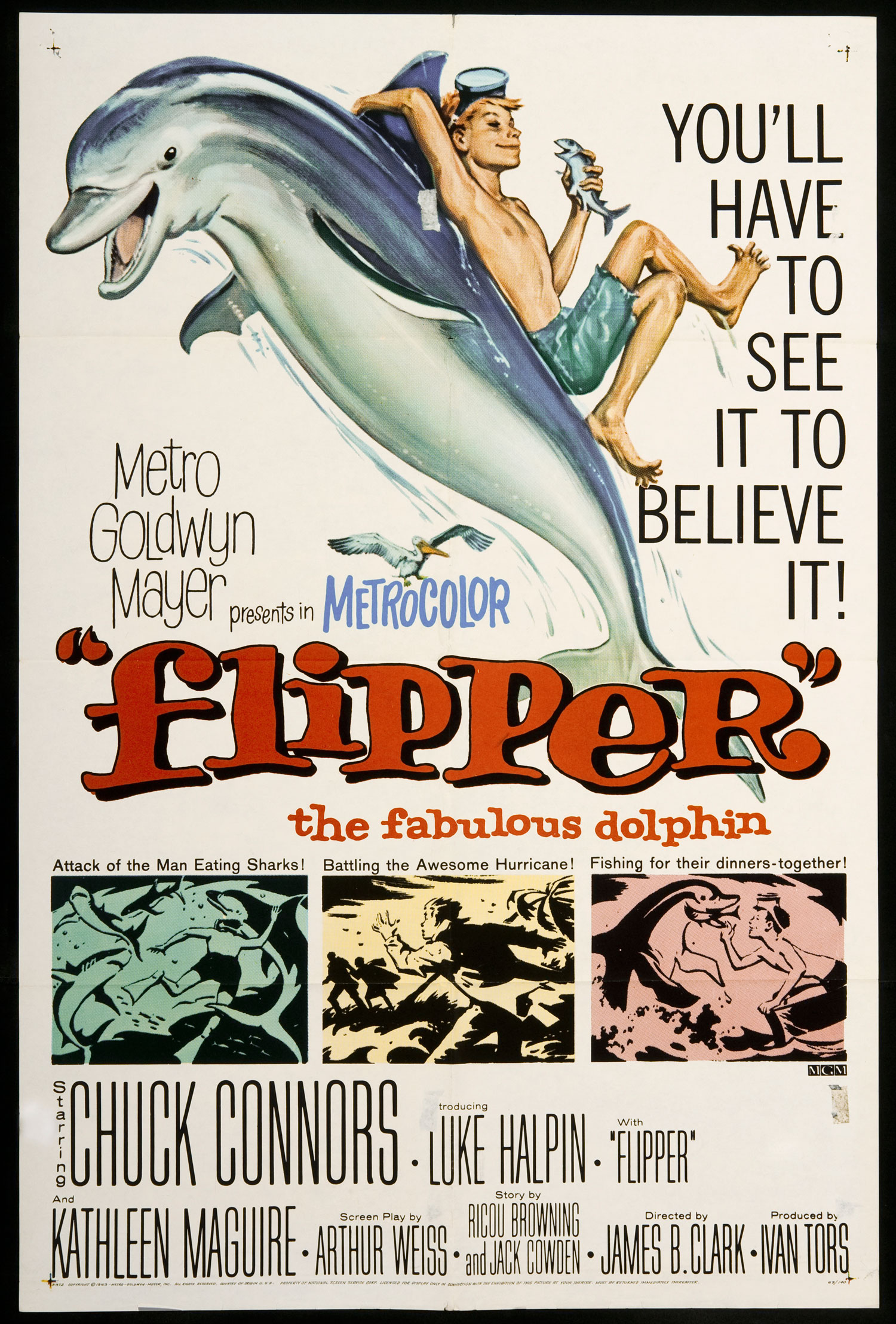
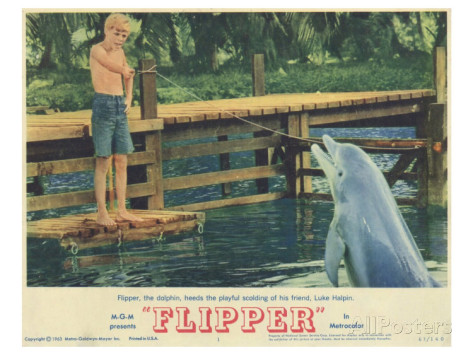
I must say when I offered to cover Flipper (1963) and Flipper’s New Adventure (1964) for the Beach Party Blogathon (co-hosted by Speakeasy and Silver Screenings) I believed that it would only fit the premise in a very superficial way. Neither are a literal beach party movie after all. Yes, there’s water, sand, even a boy named Sandy; but it’s not really about 1960s beach culture. However, there was something that caught me by surprise that does fit very well in the come as you are nature of this blogathon with no assigned days and things like that.
What came to mind to write about was not something one can really only notice by going from the first film to the next film and then into the series. That surprise is the bit of a retcon that occurs in the stories. For the uninitiated this is a phrase that is short for retroactive continuity. What this refers to are story changes in a follow-up that not only add a new wrinkle, but in many ways imply that the current state of affairs has always been true. While either the main term or the abbreviation were vernacular in the 1960s there are citations of this having happened in fiction dating back to the late 19th century with the death, and subsequent return of Sherlock Holmes. More specifically about the term can be found here.
I’m sure at this point you’re saying “That’s fine but what does that have to do with Flipper of all things?” Well, I kind of had to introduce the term in general simply because it seems like something so silly to have happen with as straight-forward a tale as family and their smarter-than-your-average dolphin friend/helper that I kept waiting for simpler explanations for certain things, and usually they didn’t come in overly-diegetic (story-based) ways.
To be clearer I’ll provide some context both with regards to myself, these films, and the show. I’ll begin with a bit of a personal history.
Flipper and Me
I saw the TV show first. It was one of many shows I discovered on Nick at Night when young, this fact makes it ideally suited to a true cinematic episodes treatment. Later on, I went to see the movie in the mid-‘90s. Being a fan of both the old show and Elijah Wood, I wasn’t too thrilled with how that movie went down. As cheesy as it can be, with too much filler at times, I do enjoy it taking it for what it is. Clearly, it’s a concept well-suited for TV and also for kids. You’re living vicariously through Sandy and Bud indulging in what adventures you’d likely have with a dolphin as best friend/pet living on a marine preserve. It has its place and serves its purpose. I say this because I don’t want this piece’s tone misconstrued. I believe in treating all titles seriously but not too seriously. What that means is: sure I’ll talk about narrative liberties taken, while I’m not excusing them entirely, I’m also not yelling “HOW DARE YOU!?” either. The point of demarcation between those two is debatable, and can be discussed elsewhere. Here, I’m just pointing out some interesting things I noticed, this is a beach party after all.
Clearly, the time period accounts for some of these liberties in part. In the 1960s movies and TV were still very much in competition so a network may not have cared to keep continuity, and it could be assumed that you’d never have exactly the same audience for your film and television show. Even if you did, and though things started to go from movies to TV, there wasn’t the interplay then that the two enjoy now, such as when Marvel weaves its universe on big and small screen alike and projects are discussed as having both feature and miniseries components. So there was a clear line of delineation These things may have happened in a movie, but now this is a TV show. Usually these were treated as very different things, not as much here, you’ll see how so soon.
Another example not too long after this is that Maya was a film starring Jay North that was followed up by a one-season series. The series rebooted the story though. In the series Jay’s character in constantly searching for his presumed-dead father, in the movie they are together then separated.
So what are the changes in between these movies, and then leading to the series?
Flipper (1963)
What Flipper ends up being is a boy-and-his-dolphin movie, as opposed to a boy and his dog.
The synopsis as seen on the IMDb appears as follows:
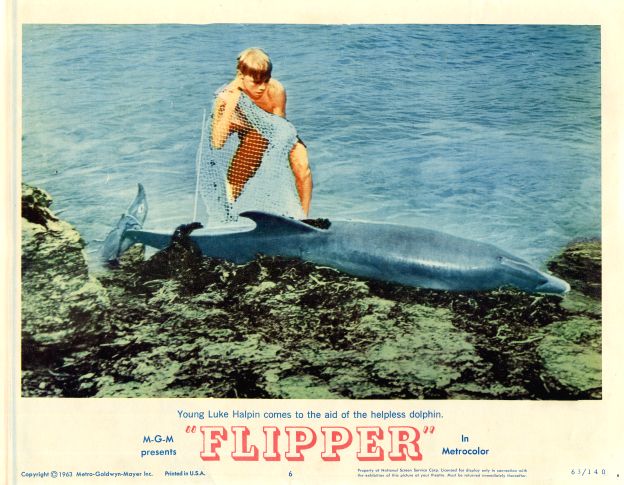
Sandy is distraught when, having saved Flipper by pulling out a spear, his father insists the dolphin be released. A grateful Flipper, however, returns the favor when Sandy is threatened by Sharks.
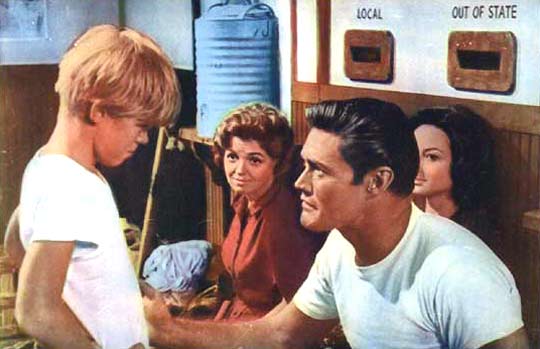
There’s some left out, some glossed over, but that’s the bones of it. It starts with a storm rolling in, a struggle to bear the brunt, then in recovery Flipper acts as the impetus for Act II. Flipper distracts Sandy and keeps him from his chores as his father’s away seeking a neighbor set adrift during the storm. There’s the classic father-son struggle about responsibilities. Needless to say its a little surprising to see Chuck Connors in this film lending name recognition as well as being a stern, but not overly-stoic when it matters, father.
In one regard it acts as the origin of how Sandy and Flipper meet, how Flipper becomes his de facto despite the fact in most regards Flipper is not really held captive. In a rather forward-thinking way he’s only really penned when injured and a short while after that. Beyond that her stays fairly free-roaming and seems to seek human companionship almost more than they seek him.
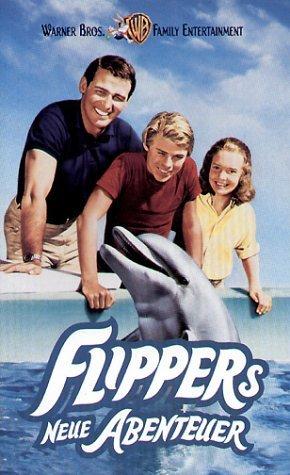
Flipper’s New Adventure (1964)
With a second film is where things either become established parts of mythology or start to shift almost uncontrollably. The theme song, which debuted in the first film, here returns. (it was altered for season two). More original songs, that are about as forgettable and maybe worse, than the additional tunes in the first film come along for the fun too.
The next few changes are a combination or writing and casting concerns.
Kathleen Maguire, who played Martha Ricks, does not return. Instead of recasting her, as they did with Porter Ricks replacing Chuck Connors with Brian Kelly, who would proceed to the television show in in the role; she was written out of the story having tragically and inexplicably died (at least at this point) between the end of the first film and beginning of this one.
Granted recasting will never be addressed with dialogue like “My father what strange plastic surgery you’ve had,” unless the intent is highly farcical. Deaths of parents were intimated, but not as often seen or discussed in children’s fare in earlier eras. This is just one reason Bambi stands out. However, it’s fairly rare for such a thing to occur between films.
Usually the writing accommodates a higher focus on one character through casting concerns by having that focus be integral. Both films in essence represent a coming-of-age or milestone for Sandy. In the first film he’s finding a pet and learning to care for it and balance his responsibilities. In the next film his father is again away through much of it; this time studying to be a Ranger, feeling a change is needed to be able to support his son. This allows the focus to be more on Sandy again as well as to distract the audience from the new actor playing Porter Ricks and making the change easier since it’s a small dosage. Sandy’s maturation here comes in helping a stranded family who are separated from their father, who was taken hostage on his own boat by escaped convicts. This allows him to see a family come together in real crisis and he copes with balancing wanting to help them and wanting not to be found himself. Clearly, he makes mistakes along the way but eventually does what he can to help with Flipper’s help.
All’s well that ends well here…
Television Series (1964-1967)
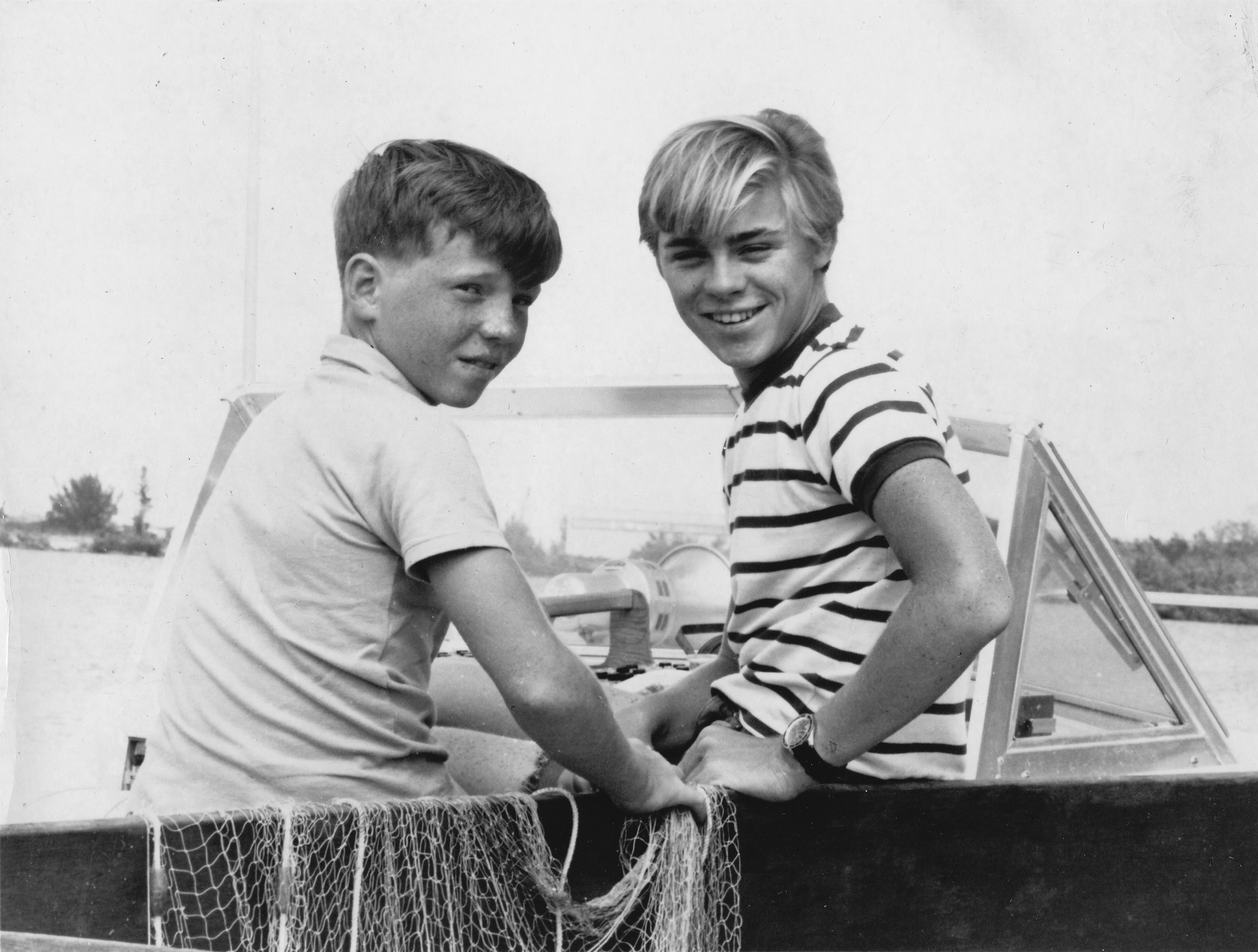
Now, as of the last film things are set perfectly in place for an episodic run: Porter Ricks (still Brian Kelly) is now a full-fledged ranger assigned to Coral Key Park and Marine Preserve, he’s going to live there with his son Sandy (still Luke Halpin), Flipper is going there too after getting a clean bill of health. A single-father, a kid, an animal usually quicker on the uptake than human characters, all kinds of nefarious types doing who knows what on the waterways, threats to Flipper, threats to the main characters; plenty of fodder for show, sure. With frequent quests, guests, and usually minimal cutting to a B-plot from the A-Plot, or at the very least the B-plot wasn’t usually as detached from the A- as it is say on some sitcoms. So what’s missing?
Well, what if Sandy had a brother? Where’s Bud you say? Well, that’s what I was wondering as I had never seen these movies. I quickly got the feeling that Bud was quickly going to be the biggest, truest retcon in the series going from films to TV.
Any show will add supporting characters later that make their presence known. The beginning of season two establishes that Ulla (Ulla Störmstedt) will be “around all summer,” but a second sibling invariably adds potential conflict and plot-lines: differing ages and interests, sibling rivalry, different interactions, etc. That’s all well and good, especially considering that each episode of Flipper has a tendency to be so self-contained such that their order rarely matters; in fact, the episode shot as the pilot aired third after the show was picked up. However, you must accept that Bud (Tommy Norden) just exists there as Sandy’s younger brother with no precedent whatsoever. He was always there, he lost his mother too, he was just never seen before.
Conclusion
As I mention above this is only really a concern if you’re going from one to another to another expecting seamless continuity. Being such a simple story I have to say, why wouldn’t I? However, I do say that for as much stasis as the show seemed to thrive on, being far more interested in situations for its characters to be in than in developing them; the films proved a pleasant surprise in those regards. Each had a sort of evolution from an unexpected kinds of adventure tale, to a quieter conflict and narrative demands. Sure, there are escaped convicts and a kidnapping plot and your usual action beats, but both have their smaller times as well as bigger character moments, which are an interesting contrast. It’s the movies that make Halpin’s theatre background and his appearance in Waiting for Godot on Play of the Week in 1961, which surprised me when I saw it on the IMDb, seem like less of an outlier.
Retcons aren’t new, nor are they necessarily going away, though they are certainly less than desirable. The invention of a character from one project to the next, especially when they were shot so close to one another that even some of the costuming is the same, is kind of crazy. Having said that the show would’ve had more struggles with fewer main characters, I just wish more thought had been give to how to introduce Bud. Regardless, it contributes a final odd chapter to the way these tales morphed from the silver to small screen that I thought was noteworthy.
Thanks to a tweet by Now Voyaging I heard about this Challenge from Out of the Past. I have many books of all shapes, kinds and sizes sitting around that I am trying to make a major dent in this year as my ambitious Goodreads 2015 Reading Challenge goal indicates. This also fits in with a blogathon type theme so it’s perfect. Look for posts throughout the summer from June 1st to September 1st.
This post is for the Pre-Code Blogathon. Part of why it is late in going live is that I struggled with my angle on writing about this film. At first, I was just going to write a straight-up review. However, an anatomical, element-by-element approach didn’t seem to be the most intriguing. When I settled on an approach it was late, but I cracked it…
Blonde Venus vs. The Code
Perhaps one of toughest things to wrap one’s head around with regards to the era commonly referred to as Pre-Code is that the Motion Picture Production Code was written, amended and had addenda added in 1930. Yet for four wild and woolly years in Old Hollywood it was rather ignored and altogether unenforceable as the an office to enforce it hadn’t been established. The films made in this period were made in the Pre-Code era. Therefore, it was really down to local censors to say “No, we don’t want to see that” since there was no one saying “You can’t say or show that you have to infer it, or strike it altogether.”
Invariably films from 1930 to 1934, both by big studios and independents, broke these rules with such scoffing glee it’s admirable to the rebellious teenager in all of us. What I always found interesting was to refer back to this Code whenever possible.
I did so on a recent post about the first version of The Children’s Hour on film (These Three) whereas it was made in era where homosexuality literally could not be broached. As I turn now to a film made it in the last wild era before the ’60s, when the classical infrastructure of Hollywood started to crumble. I find that while Blonde Venus it may seem tame by the standards of Forbidden Hollywood box sets, but it is still frequently in violation of the code because of its plot, and in part the redundancy of the document.
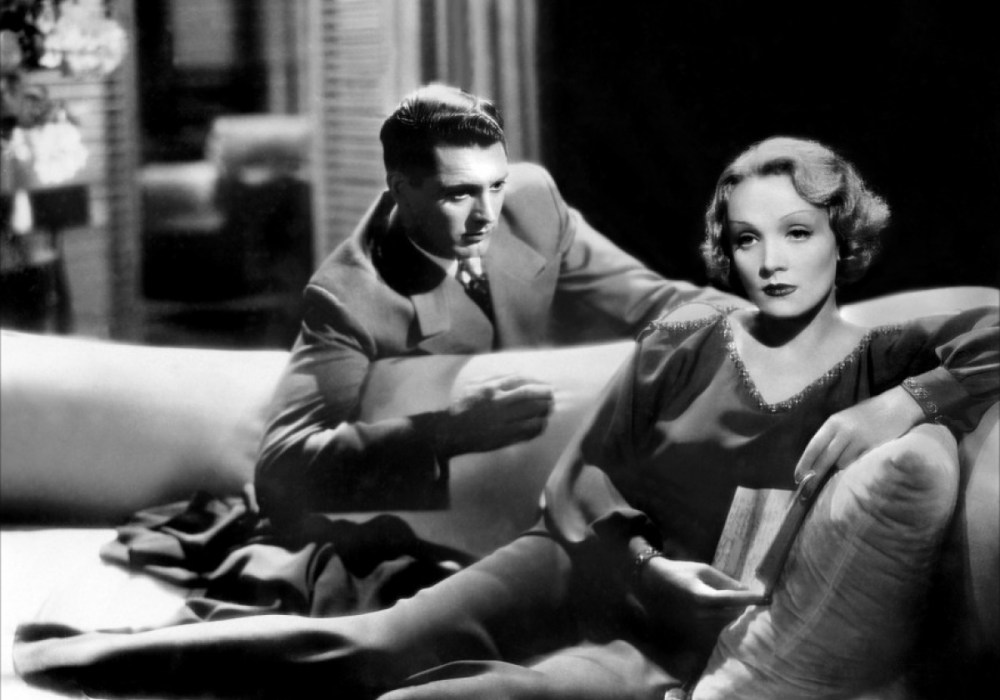
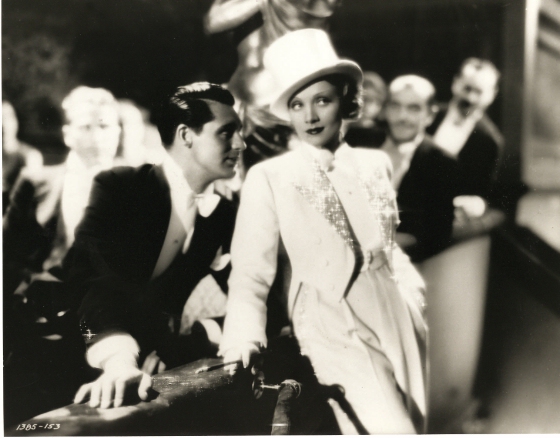
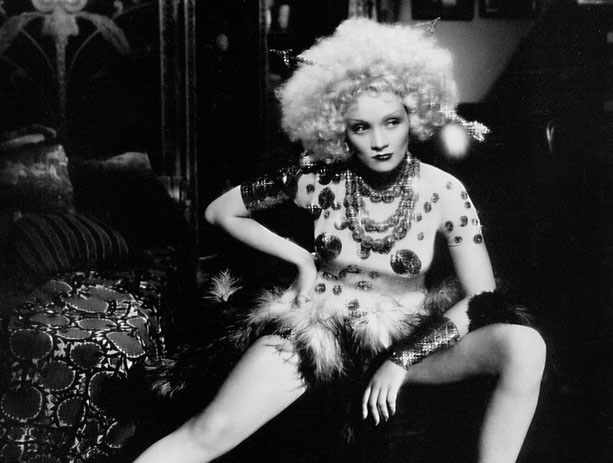
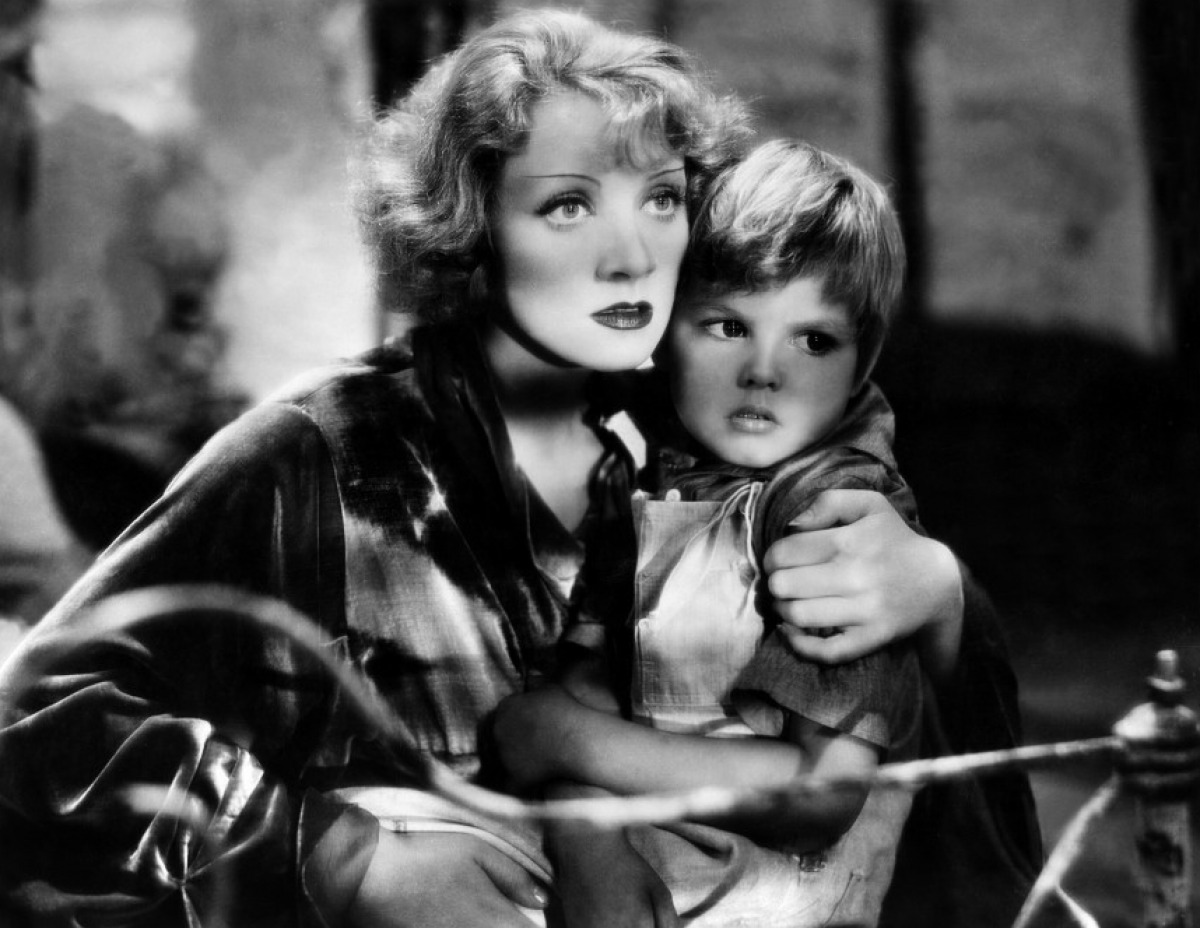
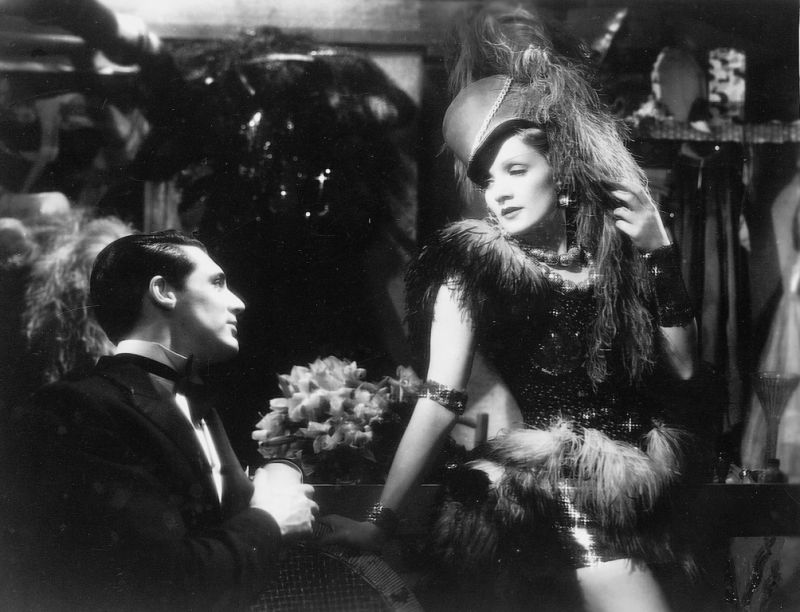
Blonde Venus is about Helen Faraday (Marlene Dietrich) sojourning back into the world of cabaret singing and moonlighting as a pseudo-prostitute solely in order to pay for an operation for her sick husband, Ned (Herbert Marshall). The illness is introduced first and it’s so advanced he can’t sell his body to science to pay for it, nor can he work to earn the money and time is short. An objective is introduced as well as a ticking clock that sends events precipitously into motion. Nick Townsend’s (Cary Grant) infatuation with her paves the way for her to do this and allows not only for the funds to be raised for the operation but for her and her son, Johnny (Dickie Moore) to remain clothed and fed. Their relationship reaches a tenuous agreement where they like one another and spend much time together, but she has no intentions of leaving her husband. It becomes a triangle wherein the other man is trying to win the woman away permanently but is unsuccessful. There are further ups and downs when Ned is cured. Confessing earns her no remorse from her husband. They split and he seeks custody. Helen runs off with Johnny. Adding kidnapping to her rap sheet in this film.
The film uses a few montages to illustrate rises and falls of her fortune, tracking her escape and evasion of authorities and when she’s on her own it tracks her movements, decadence and unhappiness. Ellipses aside we now, knowing the basics, can examine the plot versus the code with just one minor qualifying statement: this is going to be a somewhat litigious, semantic look at the Code. I, personally, as an artist and a film enthusiast bristle a bit at any form of censorship. Informing parents of content so their decision about what their kids are allowed to see is educated one thing; the preemptive approval on scripts and cuts in film so they adhere to a code of ethics is another. More simply stated I do not agree with statements like the following:
“Art can be morally evil in its effects. This is the case clearly enough with unclean art, indecent books, suggestive drama. The effect on the lives of men and women is obvious.”
“They [motion pictures] affect the moral standards of those who thru the screen take these ideas and ideals.”
However, the Code did exist, eventually get applied, forced creative solutions to story problems, and helped advance cinematic language, but I feel that was more a secondary intention and byproduct, with all due credit for the assist there to Breen for engaging in dialogues and making that happen.
Taking all that into consideration and looking directly at the Code versus the facts in Blonde Venus a number of issues can be cited.
Here are sections that comment indirectly and directly on marital infidelities alone, under the WORKING PRINCIPLES section:
No picture should lower the moral standards of those who see it. This is done:
(a) When evil is made to appear attractive, and good is made to appear unattractive.
(b) When the sympathy of the audience is thrown on the side of crime, wrong-doing, evil, sin. The same thing is true of a film that would throw sympathy against goodness, honor, innocence, purity, honesty.
Note: Sympathy with a person who sins, is not the same as sympathy with the sin or crime of which he is guilty. We may feel sorry for the plight of a murderer or even understand the circumstances which led him to his crime; we may not feel sympathy for the wrong he has done.
As you will soon see the way these are written are typically in guideline form. Specific exemptions are more black and white and very closely following a “thou shalt not” format like the 10 commandments. When dealing with questions about social mores as represented in drama things get nebulous, so as restrictive as some of these reads there is some leeway. With leeway it’s hard to say with 100% certainty always what the reaction would be.
Even clause (b) is a close-run thing. In a vacuum it’s easy to say that prostitution is evil, and you only sympathize with the person’s plight. However, to a more modern audience, knowing what we know of society at the time, it’s hard to fault Helen. How else, as a woman, can she get that kind of money that quickly? The amount is such that an legal means to amass that sum would not be quick. In this light, it kind of becomes a loaded statement about both feminism and morality. Would it be better for her to not do wrong or sin by the book and let her husband die, and her and her child end up destitute?
Even acknowledging that the Code would view these acts are evil it gets complicated:
The presentation of evil is often essential for art, fiction, or drama. This in itself is not wrong provided:
(a) That evil is not presented alluringly. Even if the later on the evil is condemned or punished, it must not be allowed to appear so attractive that emotions are drawn to desire or approve so strongly that later they forget that later they forget the condemnation and remember only the apparent joy of the sin.
(b) That thruout the presentation, evil and good are never confused and evil is always recognized clearly as evil.
(c) That in the end the audience feels that evil is wrong and good is right.
Helen definitely goes through the wringer, and she does eventually give up being on the lam recognizing the error she made. However, clause (b) says confused inferring in doubt. I think you’d grant the film at least created the doubt. The vagueness of words like “evil is wrong” and “good is right” is also troublesome. Isn’t Ned’s refusal to listen to his wife’s explanations, insisting on divorce, also wrong? Aren’t they then both sinners by a conservative interpretation of the Judeo-Christian ethos’ that are the basis for much of the Code.
Next section is also troublesome with regards to this film:
(A) The presentation of crimes against the law, human or divine, is often necessary for the carrying out of the plot. But the presentation must not throw sympathy with the criminal as against the law, nor with the crime against those who must punish it.
Under the PRINCIPLES OF PLOT heading, the aforementioned statements are re-iterated, almost regurgitated:
(3) No plot should be so constructed as to leave the question of right and wrong in doubt or fogged.
(4) No plot by its treatment should throw the sympathy of the audience on sin, crime, wrong-doing or evil.
Under the following heading, there is further, similarly worded citations:
General Principles – regarding plots dealing with sex, passion and incidents relating to them:
(2) Impure Love, the love of a man and woman forbidden by divine human law, must be presented in such a way that:
(a) It is clearly known by the audience to be wrong;
Only under the PLOT MATERIAL heading we get specifically into adultery:
(b) Sometimes adultery must be counted on as material occurring in serious drama.
In this case:
(1) It should never appear to be justified;
(2) It should not be used to weaken respect for marriage;
(3) It should not be presented as attractive or alluring.
It can definitely be argued that it does not do (2) or (3), (1) would be the issue against a strong Code. She likes Nick but she’s definitely in the relationship for the benefit of her husband. He eventually does know that and takes care of them more because of it.
Conclusion
While the transcription may have proved tedious seeing the Code ultimately got me into the right head-space to consider this film more within the context of its time. Viewing films through the prism of the zeitgeist will always be a disservice to that film, it allows for revisionist censorship and other issues.
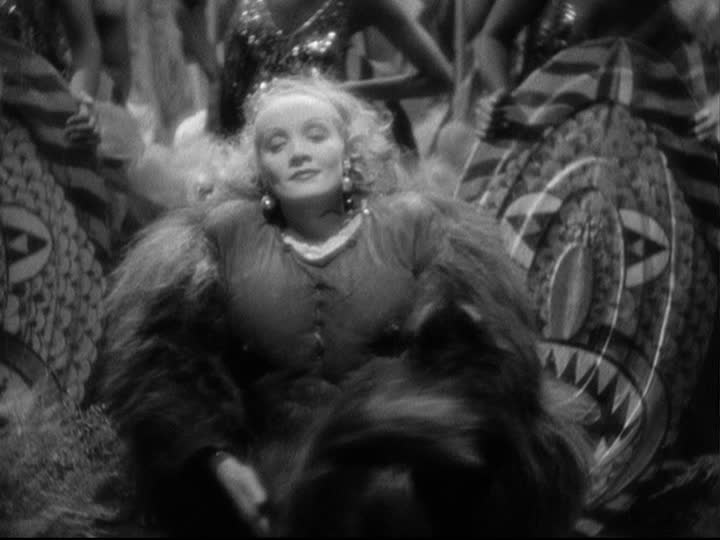
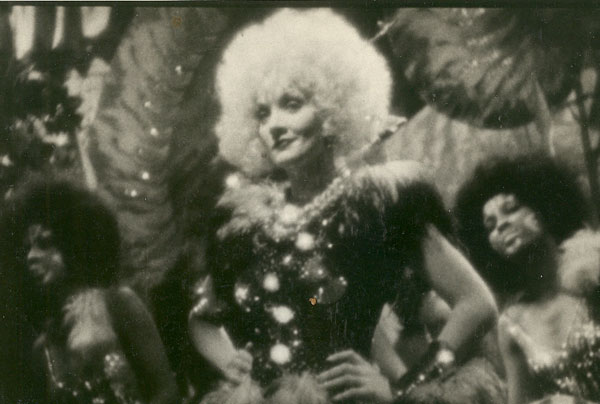
It’s clear that a musical number like “Hot Voodoo” would never be acceptable today by societal mores even if the MPAA didn’t suggest an edit. However, the shocking aspects of the film, what makes it a compelling drama is not likely to move the needle of outrage or intrigue today.
What is undoubtedly timeless is the fine construction and execution of this film, it’s intriguing and quite a roller coaster ride. It is a film certifiably Pre-Code based not only on when it was produced but also the treatment of its subject matter.
Alfred Hitchcock Presents“Incident in a Small Jail”S6E23
Introduction
In the late 1980s and into the early 1990s, when I was quite young and did most of my Nick at Nite watching, it seemed they stretched a bit further back for shows than nostalgia, re-run based stations do now. Maybe being able to pick over selections from the initial Golden Age of television had something to do with it, or maybe memories were longer then. Rather than allow excessive amounts of nostalgia to get mixed into this post I will leave that an open-ended question.
There will be some reminiscing involved because my history with this episode is much of why I like it, but by no means all. That is because this particular episode more than any other on any show lodged itself in my (sub)consciousness and was intermittently lost through the years as I’d forget about it then recall it again.
Also, I’m grateful for this opportunity to discuss this episode in part because a while ago I introduced the concept of Cinematic Episodes, and except for two entries I’ve not revisited it. So, finally I have returned to discussing television. I even have a partially drafted take on Hitchcock’s turns directing the show he produced and hosted, so it really is something I’ve anticipated. Amazingly Hitch didn’t handle this particular episode, but like almost all the stories they definitely bore his stamp.
As Alfred Hitchcock Presents became one of the select TV shows I started collecting seasons of on DVD, I began to search for this episode, amongst others. It was actually only seeing this blogathon announced that I discovered what its name was and in what season it aired (as it turns out its the most-recently distributed in the US, Season six).
Due to this fact, I had the unusual pleasure of seeing it for the first time in eons, and one tremendous development was that it still affected me greatly; however, I had entirely forgotten the ending – but I’ll get to that.
For now, my impressions on the episode both then and now.
Incident in a Small Jail
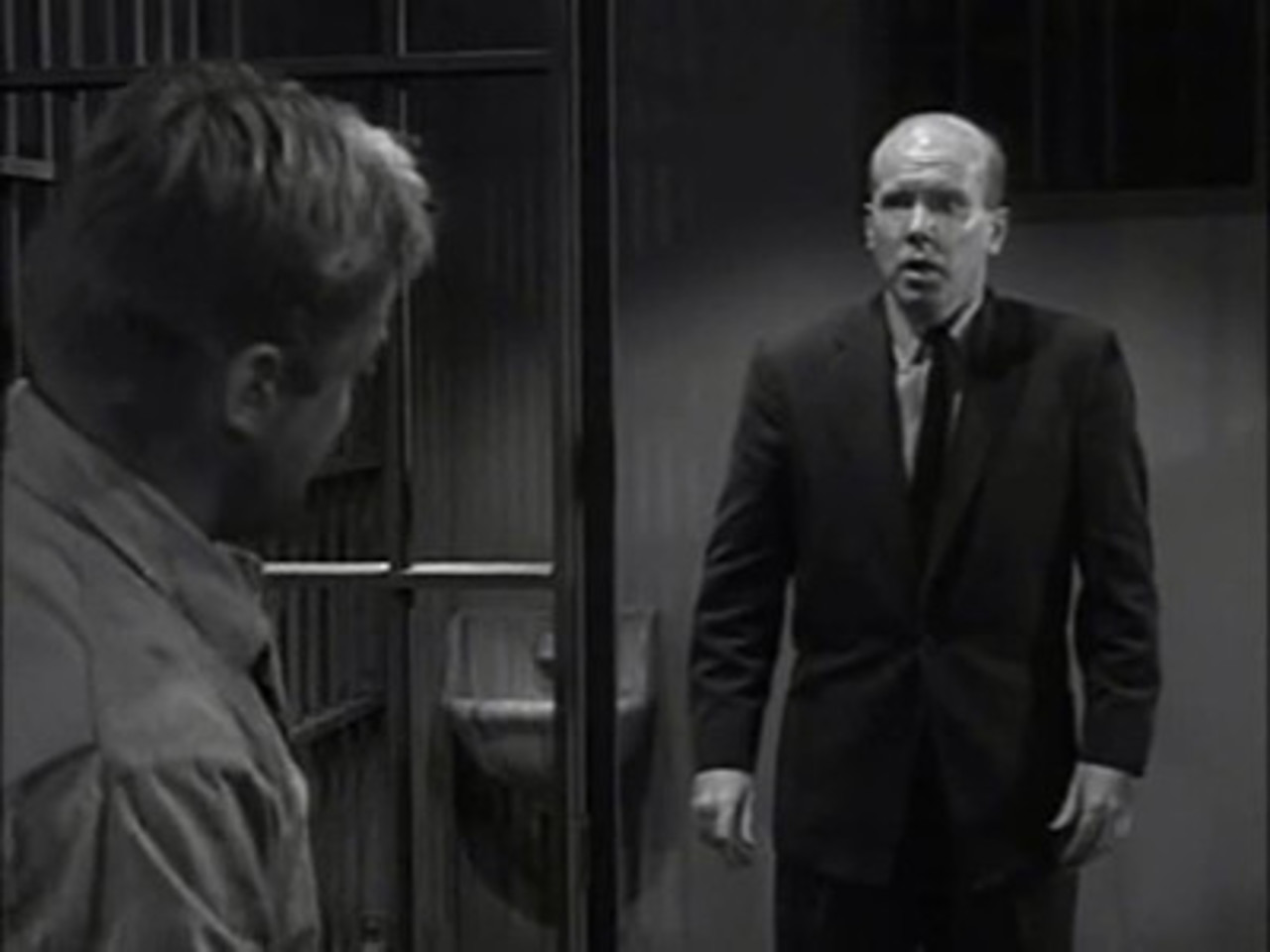
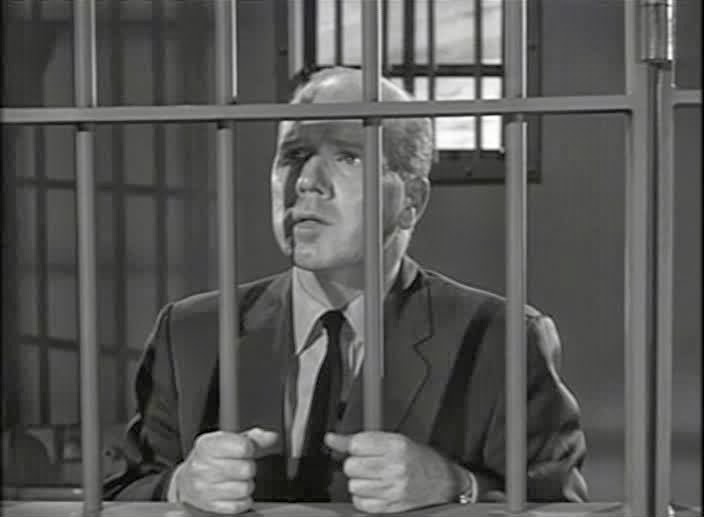
The premise of the story is fairly simple. A salesman, Leon Gorwald (John Fiedler), is cited for jaywalking. In a clumsy attempt to bribe the stickler cop (Ron Nicholas) he is hauled off to jail. After a bit a suspected murderer (Richard Jaeckel) is brought in. Eventually there are fears that a lynch mob is forming to raid the jail the police try and make arrangements to transport the prisoners. The suspect has no designs on waiting to be lynched though, he overpowers the sheriff tricking him and getting out of his cell then forces Gorwald to trade clothes with him.
What I had recalled most vividly was the beginning. The thought of being stuck in a cell for jaywalking (bribe attempt or no bribe attempt) was terrifying enough in and of itself. However, that part omitting the bribe attempt is what I recalled. All I remembered beside that was the dread suspense, which was still there many years later with a lot of added nuance.
It’s very clear to see that this and all the other episodes of this show were basically in three-act structure. What’s impressive here is that the unity of time and space is sustained through a large portion of the story in the jail. There’s only one true temporal ellipse, not including the omission of small fractions of time that don’t need to be seen by more modern audiences.
In regards to modern audiences the episode, like all of Alfred Hitchock’s Presents’ episodes, featured stand-ups by Hitch himself teasing the story, adding gravitas or humor where needed, adding finishing touches or throwing it to commercial, while mocking the sponsors. In this particular episode it’s more adding levity due to the nature of the ending of “the play,” as he was wont to call it.
Setting aside the traumatic mark this episode left on me there was room to notice more of what made this episode work for me: John Fiedler is key amongst them. He’s a face you may recognize, a name harder to recall, but you likely know the voice. Fiedler was the voice of Piglet from the time Walt Disney started handling the character until his (Fiedler’s) death. Another aspect that really makes it work is the direction of Norman Lloyd. Lloyd was one of the most prolific director’s during the show’s run, and consistently delivered results. His episodes, for being so numerous, were not always the best but he did helm many great ones.
Much like the films Hitch directed the episodes of the show frequently found their inspiration from works of fiction. This particular tale was originally written by Henry Slesar and appeared in Ellery Queen’s Mystery Magazine. It truly is an ideal candidate for a short form treatment because the conflict and set-up are so simple and unencumbered by secondary concerns.
Since this was a show of mystery and suspense I will avoid discussing plot detail much further than I already have, lest I ruin the surprise. However, even knowing all the facts anew (as I watched it twice in preparation for the piece, it still worked with nearly equal efficacy the second time around. The reason this is so, is that like many forms of entertainment, this episode plays with your perceptions. Types of characters and actors are shortcuts for those working on a project and for the audience alike. They allow immediate identification and classification before characterization has begun. Without much time to develop character, and more time focused on situation and plot, perceptions are more easily exploited. This episode plays this game expertly.
Another nuance that has always struck me is that: dead silence can be very dramatic. No silence is deader than a monophonic track. Even when there is dialogue the ambient sound can be very low. Hitchcock and his show knew how to use silence and volume well. Two of my notes in preparing for this blog dealt with volume. One commented on the whispered conversations the officers had about how to deal with the potential lynchmob, another about the bombastic, loud laughter of the suspect. This unsettled tone of voice throughout, the repetition of dialogue; it all gets to you.
Alfred Hitchcock Presents reached heights in suspense, writing and performance that few shows have reached – especially considering the anthology nature of its structure – and “Incident in a Small Jail” is perhaps the finest example of that.







 The Movie Rat