March to Disney: Zokkomon and Disney World Cinema

This is a series of posts this month wherein I will focus on Disney films. For more on my background with Disney films and about the timing of this focus please read the introductory post here.

Disney has two fairly recently initiated and under-exploited and under-publicized home video lines. I may write about them both here today, but the focus of this piece is Disney World Cinema rather than Disney Generations Collection.

Disney World Cinema, as the title implies, makes available in the US Disney-Produced titles from overseas. The selections so far a mainly original content, and not as diverse as they could be.

For example, I was once linked to a clip of a visually stunning film produced by Russia’s Disney Channel, but understanding 0.001% of the Russian language I couldn’t watch all of it. The point being there is plenty of content out there this line could make available. Out of the initial wave of releases I selected one and finally gave it a whirl for this theme.

One of the examples in this line is a High School Musical set in China. Now Foreign versions of movies or TV shows, that are remakes as opposed to subtitled or dubbed are not new. In fact, in the early days of sound, scripts used to be translated and re-shot on the cheap after an A-List feature was done. Paramount was a prime example using everything identical to the American version for Spanish features.

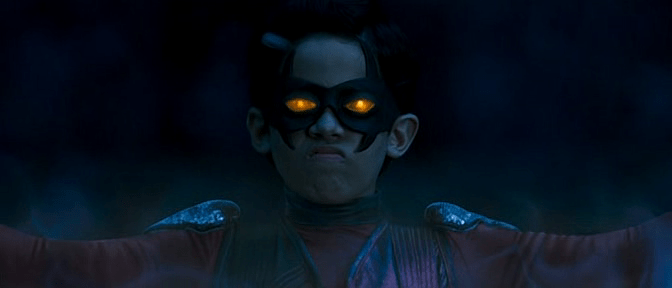
The film I saw comes from India and is entitled Zokkomon. Now, while simplified, there is a more indigenous approach to the film in terms of the fairly apparent themes it tackles with minimal didacticism. The feel of the film is a hybrid between a DCOM and a big budget Bollywood musical, which also includes elements of tentpole action films towards the end. Yes, there are story-commenting, fairly random musical numbers that border on non-diegitic inasmuch as a narrator/singer is introduced, but it still remains a fairly hybrid product.

While even at a relatively short 105 minutes there are a few flashback montages too many and a spare song or two, but it’s not so bloated that it weighs down the entire project. There are some universally recognizable, and identifiable fairy tale tropes updated to make this perhaps one of the more obvious titles to try this series out on. The principal cast is fairly good as a whole, namely Majari Phandis, Tinnu Anand with the standout being the young lead Darsheel Safary.

Disney has their Channel and distribution arms the world over, there are likely more markets where titles can be found for this line. Perhaps merging this concept with the also under-ultilized and under-publicized Disney Generations Collection, a disc-on-demand concept similar to Warner Archive in conception, if not in practice, is the way to go for these films, such that there’s less monetary commitment to pressing copies, thus making a larger library available. In a similar vein, a DisneyNature feature, Wings of Life, that was originally only released in France will soon hit US home video for the first time. This will be its only release here, in lieu of a theatrical run, but in time for Earth Day.

Zokkomon served as a good introduction, that had I seen it as soon as it was available may have been in the running for some BAM Awards, I may look into the other selections and you should check them out and see if any titles appeal to you.
March to Disney: What Bolt and Dumbo Share

This is a series of posts this month wherein I will focus on Disney films. For more on my background with Disney films and about the timing of this focus please read the introductory post here.

What’s been great is that I have through sheer luck managed to come across titles I had previously not seen as soon as this theme started. Just recently while browsing Netflix these two titles came up, then randomly on a Sunday morning on Disney Channel Bolt came on.

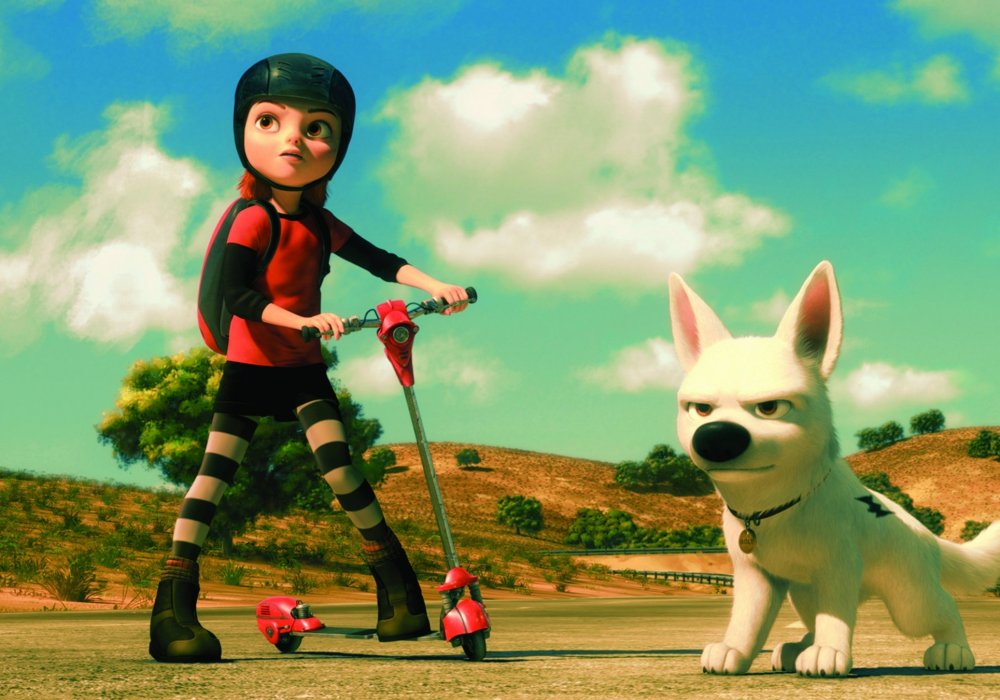
Now, again, this film came out when I wasn’t as ardently following Disney films. Since it happened to be starting I stuck with it, even with the commercial interruptions. What I hadn’t realized before it came out was that the tale, in which a dog who has been raised to believe the TV show he’s the star of is reality, is not just the set-up to The Truman Show, but in a way Disney refashioning Dumbo with a modern twist.

I saw that because the goals and the protagonists are similar inasmuch as they are unwitting stars. Dumbo is young and knows only the circus, his large ears are hidden, when they come out he’s mocked by the public he’d tried to win. When he learns to fly his unique trait is not a stigma but a mark of pride. The naïveté in the story is more about how he perceives the world.

Bolt’s reality, more modern, stylized, with action sequences, is no different. He’s presented everything as if it’s happening and has to defend his master. Granted the means of production, the stuntmen, the pyro rigs, any essentials needed to produce a TV show, are hidden so it’s easier for him to accept the reality. By chance he gets marooned out in the real world and he wants to and feels he needs to return home to the studio. He faces a lot of hard truths he has to come to terms with, the reversals of fortune are strong and quickly dealt with and the film is very funny.

While there are twists to it, like Dumbo being a more knowing participant in the circus, not that he ever “agrees,” it breaks down to the same path. You substitute a mother for an owner and both seek reunion with that figure. Both struggle against the odds and ultimately win out, gain that reunion and freedom from the life of performance that kept them trapped.

A recent New York Times article had one of the most telling quotes I ever saw, it was a discussion of both films and criticism where the statement “They don’t make them like they used to and they never did” was made. It may seem obvious that film is an ever-evolving artform, but sometimes it’s hard to accept that. There are technical and narrative trends that are the norm and en vogue in one decade and seem passé and almost wrong in another.

Dumbo is a masterpiece because of how perfectly all the elements of the story are rendered from the animation, to the emotional engagement, to the story, music and songs. Everything fits and works perfectly. I wouldn’t say Bolt is a masterpiece but it is very good, in part, because it borrows and adapts so well from a great source. Everyone borrows, self-plagiarism is style and any other quote you can think of can apply to this notion. Disney has done it before, but while it has fallen flat on other occasions like in Hercules, here it’s an infusion of technique, action film editing, humor and an updated sensibility that doesn’t seem forced that really makes it work.

March to Disney: The Gnome-Mobile

This is a series of posts this month wherein I will focus on Disney films. For more on my background with Disney films and about the timing of this focus please read the introductory post here.

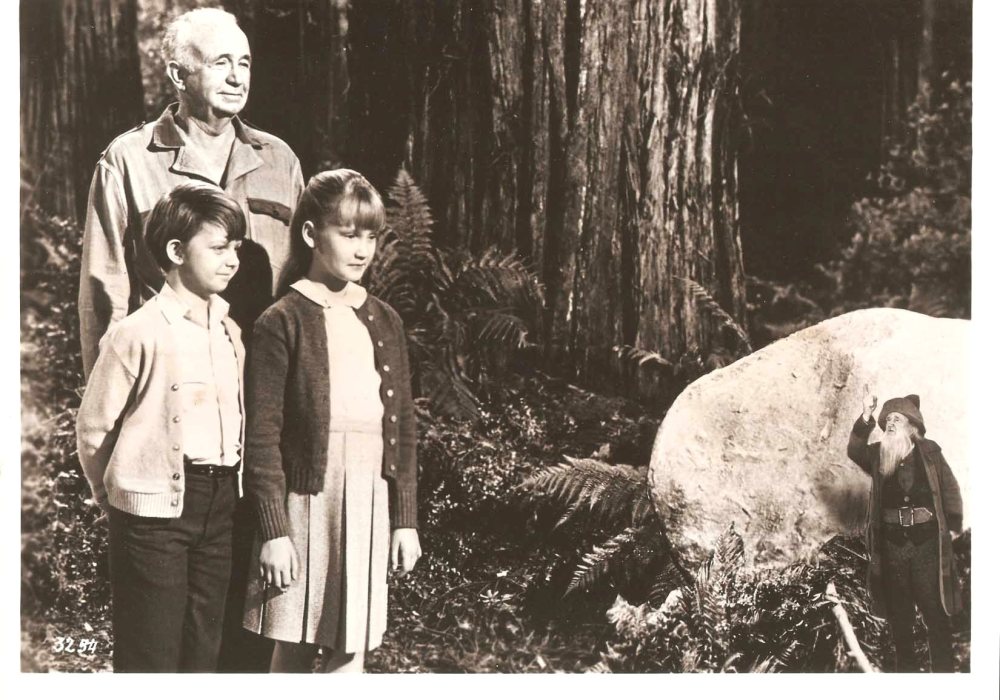
It’s rather impressive how many Disney themes can run through one innocuous little film like The Gnome-Mobile. I bought it as part of a four-pack and almost instantly the common players and themes started to make themselves quite clear.

With regards to gnomes and other fantastical, diminutive humanoids this isn’t the only Disney title that touches on the that subject in the bundle. The set also contains Darby O’Gill and the Little People, and, outside the set there’s the atrocious DCOM Luck of the Irish. Even through acquisitions, like Studio Ghibli, whose latest release was The Secret World of Arrietty, which is a reworking of The Borrowers, these tales find their way to the fore every once in a while for Disney.

Yet again under a magnifying glass you find more themes. For example, there are also many Disney staples of the time. Firstly, there are Karen Dotrice and Matthew Garber, who are credited as The Mary Poppins kids and were paired together three times in Disney titles. Again, if you need a downer look up Garber’s bio.

Also recognizable from the Poppins crew here is Ed Wynn, whose delightfully goofy cameo in the film comes very late during a sadly elongated and anti-climactic courtship sequence that is really the only dull patch in an otherwise fairly delightful film.

In fact, as I write this I still have one of the two songs, both set to the same tune, stuck in my head. This was yet another project that the illustrious Sherman brothers set upon for Disney. Surely, no other musicians will be able to match their output in the annals of the Studio’s history due to their longevity, prolificness and sheer talent.

At the helm of this film was Robert Stevenson who was likely the foremost of Disney live action ventures.

Another interesting aspect of this film is that it again featured anthropomorphized creatures, but they were animatronic rather than animated. The illusion is sold a lot better in wide shots, but aside from Disney’s penchant for robotics it was clearly a budgetary concern.

While not a great film, it does have its share of fun moments and I was glad to have seen it if only to see more of the work that several of these artists did with the studio.

March to Disney: Trips to Treasure Island

This is a series of posts this month wherein I will focus on Disney films. For more on my background with Disney films and about the timing of this focus please read the introductory post here.

When one looks at a studio and all the films they’ve made in a given subgenre, it could be easy to forget what the first incarnation of a particular type of character is. As I revisited Disney’s 1950 version of Treasure Island I realized that this was the Studios first treatment of pirate lore in a feature film, seeing as how it was the first entirely live-action film Disney made.

In fact, once I got the pirate notion in my head I watched with an eye for that and I found that many of the men that Long John Silver recruited, as cast in this film, seemed to be models for the Pirates of the Caribbean animatronics that would follow soon thereafter.

Disney, as it was widely reported, had been seeking to enter the live-action film world. The desire was, in part, to produce cheaper films that were easier to turn a profit on. Aside from being a first it’s interesting to note that, based on what the average production timeline on an animated feature, Peter Pan was likely already in the works. So Disney’s hand at working with a seafaring tale and representing pirates was being tested.

Another interesting correlation between those two projects is the involvement of Bobby Driscoll. Driscoll was literally the first actor to be a contract player for Disney. In fact, his loan to RKO, which earned him an the Juvenile Award at the Oscars for The Window, was thanked in the credits of that film. He voiced the prior incarnation of Goofy’s son, Junior, and also appeared in So Dear to My Heart and Song of the South. After working on Treasure Island he served not only as voice actor but also as the model for Peter Pan, which proved to be his last involvement with Disney and one of his final roles in film. The end of Driscoll’s career and later on life are progressively sadder stories. You can easily find those on the IMDb if your day is going too well and you need a depressing interlude. However, the fact remains that in participating in some of Disney’s classics and being the pioneer of actors signing with Disney, Driscoll and his films serve as milestones. In the studio era if you had no contract players you had no chance, he was the linchpin to the early parts of that plan, and certainly this film.

The film preserves Hawkins’ perspective and tells itself through his eyes such that some things are learned after the fact through dialogue. The difficulties this film faces are due to some slight pacing issues, some over-the-top performances and a few overly-simple characters, but it is and enjoyable version of the tale.

Another interesting historic note is that The Muppets, after Jim Henson Productions were acquired by Disney, did their own Treasure Island, which I just recently saw as well. It’s true to form for the Muppets down to the musical treatment, the involvement of Tim Curry and the casting choice among their stable of characters.

Disney has also put a sci-fi twist to the tale via the animation in Treasure Planet, which I need to see and is currently streaming on Netflix (US). However, currently the most well known Disney pirate property is the one one based on the ride that was, in part, inspired by this tale, The Pirates of the Caribbean. I’ve seen all those films and they go up and down quality-wise.

So here you have another Disney table-setter in more ways than one that is worth checking out for cinematic purposes as well such as the production design and cinematography.

March to Disney: The Rescuers in More Ways Than One

This is a series of posts this month wherein I will focus on Disney films. For more on my background with Disney films and about the timing of this focus please read the introductory post here.

One of my more recent revisits in the Disney library were the two Rescuers films. There are a few interesting things to note about this series, especially when one considers the seemingly unusual fact (due to how overlooked the films seem to be) that this was the first Disney animated property to spawn a sequel, and a theatrically released one nonetheless.

Now, the soft spot I have for these titles it does turn out is for more reasons than just the fact that in some territories these films are referred to as Bernardo and Bianca.

The first thing that both these titles share in common is that they truly embrace the “It’s a Small World” ethos that Disney incorporated in its parks, but didn’t truly exemplify in its films until later on. The Rescuers Down Under is the first non-package film that takes place outside a fictitious kingdom that’s vaguely European or in Europe itself. As much as I love Saludos Amigos and the Three Caballeros, there’s a very “Hey, let’s all go to South America” feel to it, rather than just naturally incorporating the location into the tale. Also, Bianca, voiced by Eva Gabor, in the first film serves in a mouse version of the United Nations and does represent Hungary.

The first film’s adventure, saving a girl named Penny from jewel thieves, is US-based, but is a trip down to the bayou that’s wonderfully exploited by Disney’s artists who in the 70s were vastly underrated. Many people find the movies that came out of this decade a bit subpar, but to me there was a flair and artistry, a painterly finesse to the backgrounds and a still-present fluidity that leant itself wonderfully to the stories they were putting out.

The sequel, as the title would indicate, takes the narrative to Australia. While the films succeed in complementing one another, they do have shortcomings individually. Taking the best from both would make one truly masterful work. In the sequel, there’s a more developed victim in need of rescuing whose story needs a cap. The villain is more motivated in the second film and less cartoonish.

Whereas the first film’s title is very apropos it really is about The Rescuers above all other characters, here in the second film its more split.

What The Rescuers and The Rescuers Down Under both did aesthetically was set the table for the decade to come. More so than any sequel footnote, each film seemed to encapsulate the aesthetic and sensibility of the decade prior and push towards the future. The Rescuers in certain scenes is the apex of the ’70s style, but pushing the boundary toward the more polished, less sketchbook ’80s feel and then The Rescuers Down Under with its aerial animation and action sequences was a precursor of the more dynamic swooping crane-simualtions and action shots in things like Beauty and the Beast, Aladdin and The Lion King. The Rescuers, it would seem, was a fitting title in more ways than one.

March to Disney: From Snow White to Cinderella

This is a series of posts this month wherein I will focus on Disney films. For more on my background with Disney films and about the timing of this focus please read the introductory post here.

It’s interesting to note that Cinderella was released in 1950. If you count the hybrid films (Song of the South and So Dear to My Heart) and the package films (Make Mine Music, Fun and Fancy Free, Saludos Amigos and Three Caballeros) it was the 12th animated feature that Disney had released. In a way it was like the circle closing after having started with a princess tale and embedded Silly Symphonies, Disney’s name for their early musically-inclined shorts.

In both the case of Cinderella and Snow White the anthropomorphism of the animals manifests itself by their interaction and communication, non-verbal in the former and verbal in the latter, that the protagonist shares with them. What Snow White possesses is much of what would become staples of Disney fare such as the great heightened moments. The innovation of technique in Snow White to an extent masquerades the embedding of familiar, albeit more defenestrated, tropes of earlier shorts. If you compare the narrative movement of Snow White to the films that follow, the progenitor of the Disney films ends up feeling like a cozy, quaint dream that, aside from the inherent value of the story and its bolder moments, isn’t tremendously riveting on a purely narrative level.

Cinderella is not entirely dissimilar with its asides to the mouse subplots, but is differentiated by having more parallel action. The ball is introduced early on and the Stepmother is a terrifying, yet very real, and down-to-earth villainess. The witch’s transformation and magic mirror are bold, tremendous images that stand out more than does anything in Cinderella. Cinderella’s coach, and, of course, the iconic castle are the standout visuals there.

This isn’t really to knock either of the two films. Of course, I still enjoy them both. Between the films I think Cinderella may work better and definitely has a slightly more forward pre-feminist-movement Disney princess.

The experiments that Disney went on after Snow White and before Cinderella, were highly interesting and for the most part wildly successful. In 1940 there was both Pinocchio and Fantasia. In narrative terms on opposite ends of the spectrum, but both really push the frontiers of what they could do with visuals.

While the Silly Symphony aspect of these films stands out, the musicality of Dumbo is well-embeded. Not only that but in terms of narrative it can’t move fast enough, the tempo of the music pushes the pace of the edits and allows the story to flow perfectly. There are many beats, and much emotion wrenched out of just barely an hour in Dumbo, which makes it even more staggering.

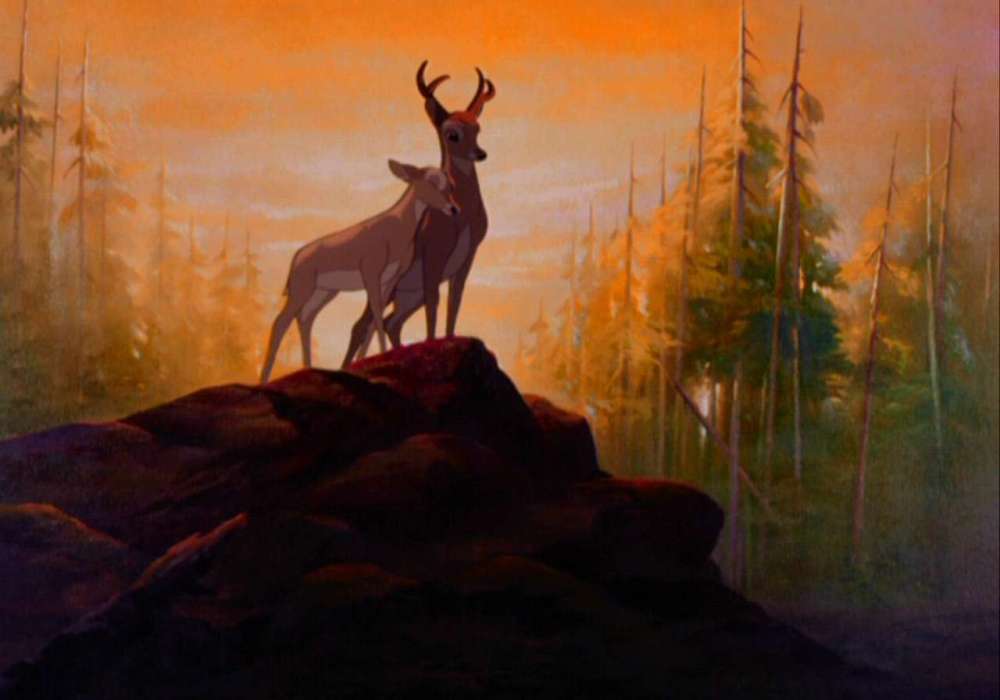
Bambi created a world devoid of humans, allowed real fears and traumas to sneak in still managed to tell a charming uplifting story with very little dialogue and not a lot of fat either.

The last untouched upon films pre-1950 that are all-animated would be the aforementioned package films, which are a pastiche of shorts so it by definition they have a more storybook, anthology feel to them. The sensibility is overgrown, related shorts.

So between 1937 and 1950 Disney about ran the gamut of what could be done at the time, and with Cinderella seemed to be consciously setting down a milestone with a similar tale. As if to say, “Thirteen years ago we were there, now we’re here and moving upward and onward.”

March to Disney: Introduction

Though it really kicked off in my last Short Film Saturday post, and there were Disney titles among my 31 days of Oscar selections, this is where my March to Disney theme starts in earnest.

As to the timing of this focus, that owes itself to the fact that I will be going to Disney World during this month. Naturally it would seem to be the right time to get caught up and re-focus on their titles.

A brief history of my relationship with Disney films is as follows:

So far as I can remember a re-release of Bambi was the first film I went to see on the big screen. Bambi, of course, being one of the more silent and also more marking of the Disney animated features due to the fact that it not only tells the tale of an orphaned child, but within the story includes the death of Bambi’s mother.

Aside from that I saw many of the classics countless times as a kid.

My first trip to Disney World occurred when I was fairly young.

As I grew, and started to watch films in all forms, my horizons, of course, expanded. There was the occasional Disney title that would then not interest me, and after seeing Hercules, and disliking it a great deal; I went on a hiatus.

However, I did return. Now, through my fandom of Disney, I have come to a very safe and accurate, I feel, metaphor about said fandom. If you like the product of a studio its akin to being the fan of a sports team, your loyalty does not forbid your honesty. Yes, there are things about the company in terms of business over the years, and on the creative side, that I don’t necessarily agree with. However, that doesn’t color my view of their titles I’ve seen that work for me and I enjoy.

Aside from the timing of the trip this is also a focused and concerted effort to get DVDs or Blus that I haven’t gotten to yet seen. So there will be some re-assessments, reviews and other pieces and based on what I’ve already seen. I’ll likely rank the Disney feature-length Animated films, the crown jewels in their empire.

For a number of years, namely the ones where I was off elsewhere, Disney was fairly lost. Now, however, it seems that regardless of which branch of the family tree you’re discussing they’re doing fairly well both creatively and financially. Many of the pieces I write will be on the animated films, both during and after Walt’s time, but there will also be discussion of their live action ventures and maybe some talk of the more recently acquired subsidiaries of note namely Pixar, Marvel and LucasFilm.

So my first post on an individual film should be up tomorrow. Enjoy!