Tarzan Thursday – Tarzan and His Mate (1934)

Introduction

Last year the character of Tarzan celebrated his 100th year in print. A serialized version of the story first appeared in 1912. A hardcover collection of Tarzan of the Apes first appeared in 1914. Being in the middle of the Tarzan centennial period it’s an opportune time to (re)visit many of the screen renditions of the character. Previous posts in this and other series can be found here.

Tarzan and His Mate (1934)

Here is another case wherein I honestly am quite glad to be revisiting the series chronologically. In earlier viewings I not only skipped this film but saw later ones out of order. It’s hard for me to argue that this installment is better than its predecessor, but it is rather impressive.

It does take its time easing you in. Once again it makes its title character’s presence scarce in the first 20 minutes or so. Instead, what we are introduced to is an outside party’s trip into the jungle seeking a return to the elephant graveyard and a bounty of ivory. These two white men carry a torch for Jane and it’s her first contact with them in some time. This allows her to be rather conflicted between comforts of her old life and the happy simplicity she now enjoys.

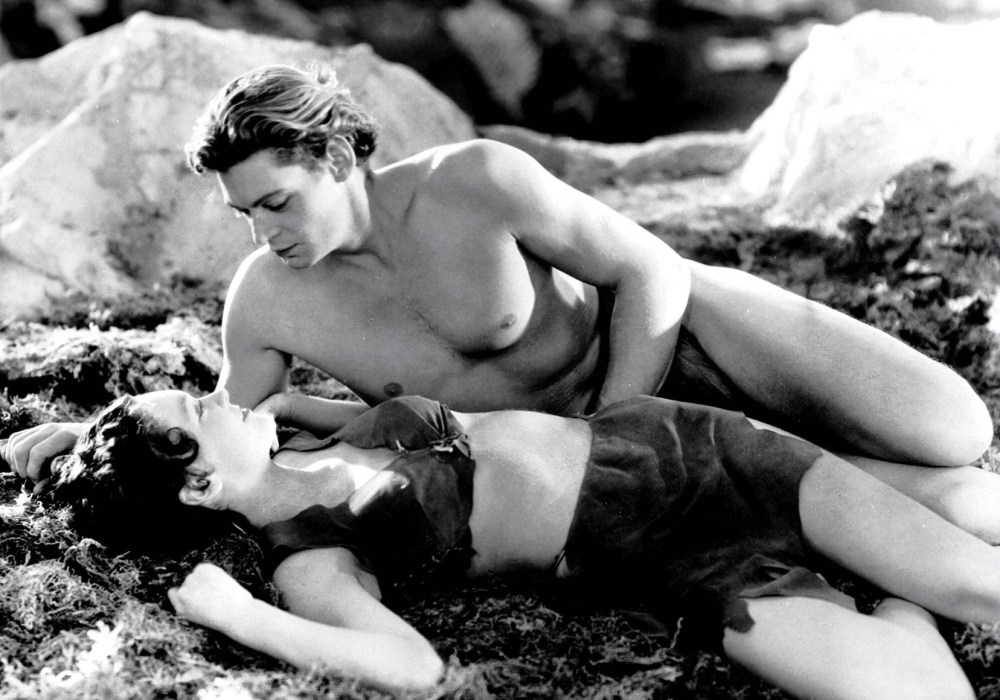
It’s also great to find this film in this set, if not in its intended form, then closer to it than previously screened. The infamously altered skinny dip of O’Sullivan is in this cut, but overall there’s a very Pre-Code take to this tale that seems a step beyond “figuraitve literalness” to being very overt as both men make their plays for her affections quite openly.

So far as Tarzan’s character goes, while he is still written fairly monosyllabically there is an arcing toward a more vocal character and the words chosen for him are chosen well; “Always is gone” and the response at the end have a great significance and are wonderful touches.

There is the introduction of music to Tarzan’s character, but on the more visceral side the fights are better staged and the blend of actual trained animals, dummies and rear projection looks to be about as seamless as the era could produce.

The villainy sets itself up early and rears its head when it matters most and thankfully on the animal side of the equation, whereas later on Cheetah serves more as a prop, comic relief and/or distraction here his presence is vital, which is another nice touch. Most second installments to series are disappointments but the second MGM Tarzan is an exception.
Tarzan Thursday: Tarzan The Ape Man (1932)

Last year the character of Tarzan celebrated his 100th year in print. A serialized version of the story first appeared in 1912. A hardcover collection of Tarzan of the Apes first appeared in 1914. Being in the middle of the Tarzan centennial period it’s an opportune time to (re)visit many of the screen renditions of the character.

If there’s one thing that’s beneficial about viewing, and in many cases revisiting, installments in the Tarzan film adaptations it’s that by viewing the Weissmuller-starring MGM-produced versions I now get a sense for that series. Before, having skipped certain installments and gone out of order, some patterns harder to pick up on, yet some traits were easy to pick up, like the sudden vanishing of Jane’s presence as a forward-thinking character when Maureen O’Sullivan was replaced.

Now, at long last, I viewed Tarzan The Ape Man and began the series properly. I must say that I am most impressed with how this series starts off. Everything that had been intimated about Jane in sequel shorthand is firmly entrenched here. Furthermore, the commitment to building character is so strong that Tarzan, the titular character, is absent from the entire first act. His signature call is heard a few times off-screen, disembodied and creates a chilling effect for an audience that does not know the story that will unfold after his introduction.

My feelings about O’Sullivan, the writing she seemingly demanded, and the performances she gives, was solidified by seeing this entry now. Tarzan’s progression towards “Noble Savage” is very slight in this film. Jane really is the conduit to the audience’s understanding about this character’s nature. We must see and feel through her eyes and that link is so well-forged and so strong in this film that it makes for a rather engaging and emotional experience.

Perhaps what’s the biggest pleasant surprise of the film is that Tarzan, and the nature of his character, becomes the focus of the story and the MacGuffin, the mission that the hunters and/or other white men embark upon truly takes a backseat. As seen through the spectrum of this film, it will be interesting to see how the rest of the films play out, if any differently.

Tarzan Thursday – Tarzan of the Apes (1918)

Last year the character of Tarzan celebrated his 100th year in print. A serialized version of the story first appeared in 1912. A hardcover collection of Tarzan of the Apes first appeared in 1914. Being in the middle of the Tarzan centennial period it’s an opportune time to (re)visit many of the screen renditions of the character.

Thanks to the wonders of the internet and copyright laws, the very first screen appearance of Tarzan is available to any and all who want it legally and free of charge. It’s also an interesting historical footnote as this was one of the earlier, quicker adaptations of very popular literature; appearing just six years after the character was introduced to the public.

Any film of a certain era can be referred to as dated. To me it’s a fairly weak, simplistic argument. Very few films are truly of the vanguard and ahead of their time. What needs to be taken into consideration is how does it function for the era and the kind of film it was. In silents, less titles are better; conversely if you feel you’re needing titles that too could be an issue.

This film gets by a lot of the time without needing them, but is sadly a little heavy on them. Unfortunately, there is also some hokey writing within them like a few references to his “little English brain” longing for things more akin to what a civilized white man would desire, when he never had any such frame of reference.

However, the version I saw was a little over an hour long, and though the titles helped it breeze through, it could’ve stood a bit more running time. This truncation only hurts minimally though as the story does ends up being a pretty brisk, entertaining and coherent origin.

Tarzan is played at two ages: by Gordon Griffith when he is young and Elmo Lincoln as a man. Griffith was one of the first young stars of the cinema and it’s clear why. He carries the first half of the film mostly on his own without any real scene partners. His expressiveness is, of course, influenced by screen acting conventions of the era, but exploits them to great effect. Similarly, Lincoln seems to have a great following among those who are great fans of the character, and it’s apparent why also.

Returning briefly to the concept of being dated, the only two times that became terribly apparent in ways that weren’t just about it being silent cinema were in one or two prejudiced/racist title cards and the very obvious (though not terrible) gorilla suits. Otherwise, it’s actually fairly easy to lose yourself in this story, and a perfect way to kick off this retrospective.

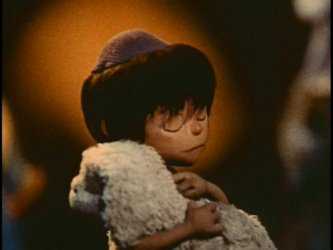
Christmas Special Review- The Little Drummer Boy

Many, and by many I mean a vast majority of, Christmas specials are more secular in nature meaning they deal with the myths and the folklore of the season, which is all well and good, but on occasion it is important to reflect on the true significance of the date. When more secular specials break for a moment into the more spiritual, and the better ones do like Charlie Brown and Santa Claus is Comin’ to Town, it is noteworthy. More noteworthy still is one that deals head on with the religious aspect of the holiday.

To start about the only thing, of major significance, you can knock this special on is some of the writing, it is likely the weakest in that department of the wonderful specials that Romeo Muller and Rankin & Bass brought us. There is a lot of repetition early on about how Aaron hates people, however, some of the finer writing in the piece is when you finally see why.

Also noteworthy are the words Muller wrote which are elevated by the stunning narration by Greer Garson. There is no narrator personified in the case. She is simply a storyteller whose voice moves the tale along which makes her role more important and allows you to delve deeper into this profound tale.

Where this special separates itself is that it is the most cinematic. The climax of the tale is practically all visuals and this film soars to new heights as Aaron is overcome with emotion and changes. He decides on his gift with little commentary. Then there is no commentary as for the first time in the special we hear the Vienna Boys’ Choir singing “The Little Drummer Boy” in its entirety and in full voice.

Then the conclusion which sends this film out of the stratosphere is the closing as relayed by Our Story Teller, as the narrator is referred to in the script. It’s a story that starts a bit slowly and uneasily but absolutely packs a wallop each and every time you see it, and beautifully sends home the message of the holiday.

The visceral impact of the conclusion of this short special is what makes this the absolute best special that Rankin and Bass ever put out. It’s an absolute classic.

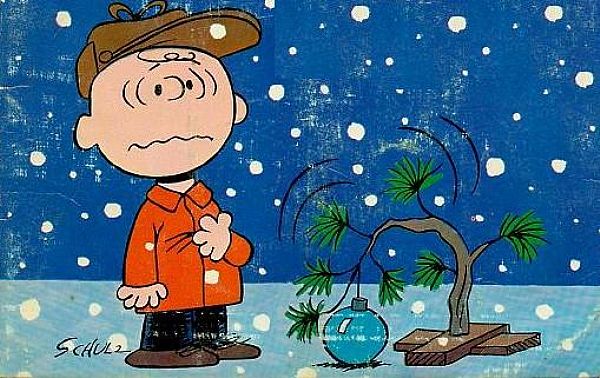
Christmas Special Review- A Charlie Brown Christmas

When you think of the iconic Christmas specials one of the first, if not the first, that comes to mind has to be A Charlie Brown Christmas. It is most likely the best suited for repeated viewing and in all likelihood holds a special place in the heart of the masses because it’s the one you can most closely identify with.

Think about it: this special probably connects to adults more so than children. Not only is Charlie a character with anxieties and worries but he has developed some of the same observations about Christmas that we do over the years: its become too commercial, it’s a hassle, etc.

The discussion of the commercialism of the holiday is very on the head but it also allows for the easy transition from a secular to a religious story. At first, there is only concern for the fenestration: gifts, decorations, trees and the like. Eventually the true meaning is allowed to burst forth.

It is a very brief but also very powerful intercession of the religious in this tale wherein Linus recites the story of the Nativity. Linus in many ways ends up being the hero of this tale because he is the first to change his mind on Charlie’s modest tree choice, and then, he relates the true story of Christmas.

Of course, the carols in the film are also religious and a breath of fresh air. It’s a fact that many of the memorable Christmas specials feature original music but just as often specials fall flat on their face in their attempt to create something new. Here we get the simple, tried and true and beautiful throughout, whether it be in carols or story choices.

This special succeeds because it is exceedingly human, and like the season, gives us a glimmer of hope for the world annually and that is why it is a timeless classic.

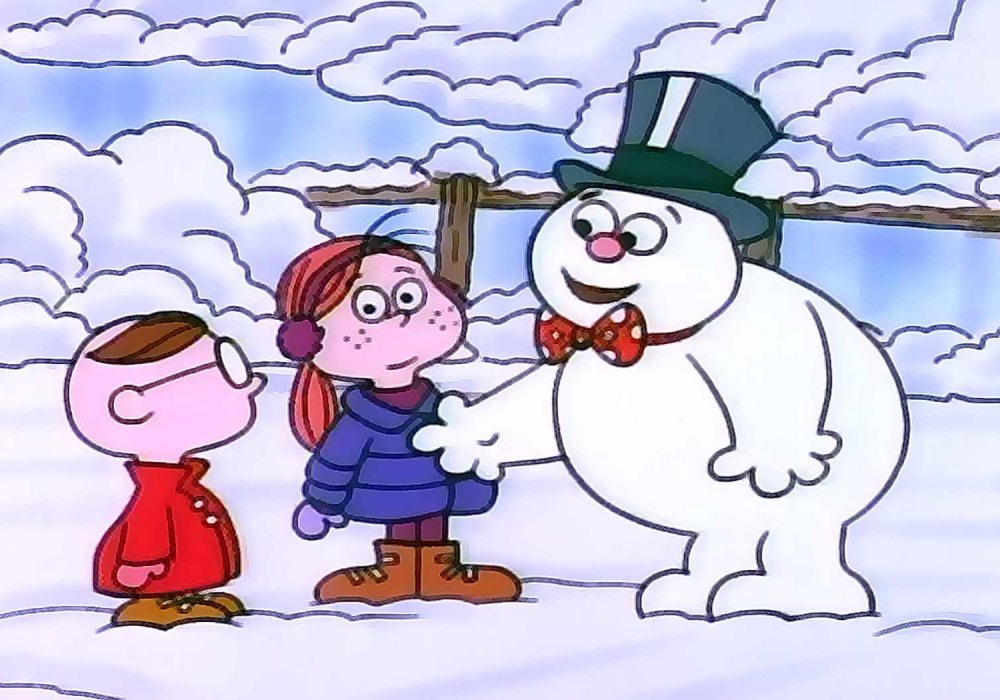
Christmas Special Review- Frosty Returns

Where does one begin with Frosty Returns? Well, I supposed I could start out by simply saying that it is not recommended in the least and what follows will illustrate why:

Firstly, there is a stylistic incongruity to this special that’s hard to get over. The first few scenes set up different locations but are animated as if they are splicing scenes out of different projects. There is no sense of visual unity to the front end of the piece but it’s a problem that never fully rights itself.

Then there is the absolutely odd mixture of voice talents. The first mistake this special made in that regard was to carry on the tradition of creating a character that looks like the actor doing the narration. With the shoddy animation work and the fact that you have Jonathan Winters and not Jimmy Durante it’s a failed homage. You get a grab bag of comedic actors: Jan Hooks, Andrea Martin and Brian Doyle-Murray. Notable amongst the kids is Michael Patrick Carter a few year before his only true claim to fame in Milk Money.

Then there is John Goodman as Frosty, which ends up being the most troubling and much of the why doesn’t even have to do with him. He’s given quite a bit of weak dialogue to work with, nothing even shining a candle to what came before, and we all know John Goodman can sing but then he’s given songs not quite in his range and it wouldn’t work because the lyrics are terrible.

Then there’s this asinine plot about this aerosol type spray that will remove the snow, ruin a festival and the environment and in this crazed little town a majority of the kids hate snow, which is really weird.

If this hadn’t been included in the holiday specials set I got I never would’ve sought it out it really is an unfortunate misfire in all respects.

Christmas Special Review- Santa Claus is Comin’ to Town

Amongst Christmas specials, but particularly amongst those produced by Rankin and Bass, Santa Claus is Comin’ to Town stands apart. It does so because it is most the most triumphantly well-told of the lot, soon I will describe the most cinematic but here we’re talking strictly based on narrative.

The film opens in a fashion reminiscent of Citizen Kane with a newsreel spewing headlines about Christmas that go from mundane to fantastical and we are braced for the story. Then we are introduced to a mailman modeled after and voiced by Fred Astaire, he reads and we hear, in voice over, the questions children have about Santa Claus. These facts about him we all take for granted are about to be explained.

This may seem like a simple enough, paint-by-numbers method of concocting a tale but there is such ingenuity in the plot devices and also a lack of any rococo quality to it that it works. It all flows naturally from the action. Then the narrator chimes in and connects the dots just in case, and a child’s voice is heard responding.

This may just be Romeo Muller’s, the writer Rankin/Bass employed, best work as he makes Santa an even more heroic figure because in this tale we learn of his past, learn to think of him as a person not just an icon, and then also have an antagonist who vilifies him and renders him an outlaw.

You have, of course, the talents of Astaire and Mickey Rooney in this tale and the indelible figures of the Winter Warlock and Bergermeister Meisterberger and of course another classic song. It is an absolutely unbeatable combination and one of the best options for the season.

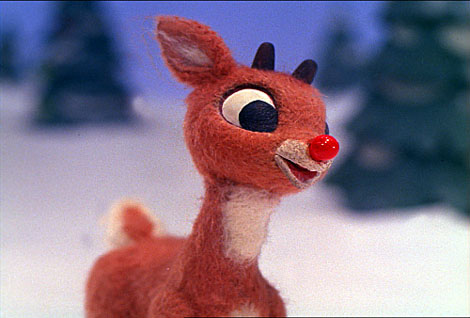
Christmas Special Review- Rudolph The Red-Nosed Reindeer

If you need further evidence of the genius of Rankin & Bass, and their favorite writer Romeo Muller, I present to you exhibit B: Rudolph the Red- Nosed Reindeer. The only thing I could really call this special out on, in my umpteenth viewing, was how silly Rudolph’s ostracism is, but that’s a given of the story, and ostracism is usually baseless and it’s really lampooned if it’s based on something so frivolous.

What really stands out in this tale is the characters and some of the things which are done with them. You have Rudolph’s parents who have differing opinions his mother sees no problem with the nose, his father, Donner; is embarrassed by it. You also have Santa Claus, of all people, being wrong about Ruldolph and admitting as much.

Typically, I do not favor didacticism in the arts, but there are exceptions to every rule, and many to this one; here it works wonderfully because it’s not overt. Kids see that even Santa can be wrong and learn not to judge a book by it’s cover, so to speak.

Yet, where this special really excels is in the original characters it brings into the mix, and the different wants they each have, and yet, most of them are also misfits. There of course is Hermey, who wants to be a dentist and not build toys. He and Rudolph are fast friends.

The cause and effect also works very well the Abominable Snow Monster chases them away and they run into Yukon Cornelius. A character who meets a very real fate, following a Disney axiom that you can scare kids if things work out in the end.

Then of course there is the iconic Island of Misfit Toys. All these pieces may seem disparate but the fact that they’re all sewn together in a coherent manner, and each are still original pieces that do not get homogenized, make this story work.

Christmas Special Review- A Garfield Christmas

A Garfield Christmas is the warmest/fuzziest of the three specials. I do not mean that to sound facetious, it does have its touching moments both with Garfield comforting Grandma and Garfield and Odie actually getting along for a change.

It does start off on a misfire with Jon’s song as they are driving towards his mother’s house. It is a prime example of original music in a Christmas special falling on its face, which is why sometimes Carols work better. What’s worse is that the music insists on staying in this special. However, to its credit the music is not the downfall of this story.

It is a fun little jaunt, I can’t say it’s the best of the Garfield holiday specials, but it is definitely a worthy addition to the trilogy.

This story opens in a dream that’s is quite funny and the transformation Garfield has from greedy glutton to understanding the true meaning of the holiday is gradual and rather invisible which is refreshing.

Thanksgiving Review: A Charlie Brown Thanksgiving

A Charlie Brown Thanksgiving is kind of like the middle child of the specials: it is often overlooked but it should not be. There is a lot that is good about the special which makes it deserving of more positive pub.

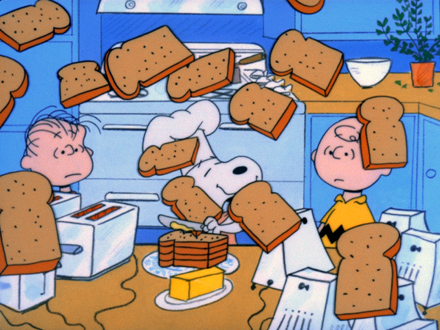
There is, as per usual, a good little bit of pedagogy in this short, however, there is so much more than that. In this special you get Snoopy’s funny, side-tracking antics playing very closely into the story as he not only sets the table but helps cook.

As Snoopy is making popcorn, there’s a New Wave like cut away from frozen popcorn exploding in mid-air but beyond film nerd things there is a charm to this one that is its own.

It’s due to two factors: first, these kids are having two Thanksgiving dinners. What’s not to like there? Second, I remember as a kid seeing Charlie’s plate and for the first time I saw a Thanksgiving meal where I could eat everything (I have a metabolic condition). However, even if your connection to his plate isn’t that close Patty is way harsh especially considering she invited herself and everyone else. Why does she expect Charlie to know how to cook, anyway?

Regardless, her coming down that hard makes the payoff even sweeter and makes this special at least as good as they other two.