61 Days of Halloween: Vinyan

Most holidays worth their while encompass entire seasons, such as Christmas, for example. However, as you may have noticed there is a corporate push every year for us to think about the next holiday even sooner. While this has many negative side effects I figure I may as well embrace it.

Since Labor Day is really only good for college football and movie marathons cinematically it is as significant as Arbor Day, which means the next big day on the calendar is Halloween and we can start looking toward it starting now.

Daily I will be viewing films in the horror genre between now and then and sharing the wealth. Many, as is usually the case, will not be worth it so for every disappointment, I will try and suggest something worth while as well.

Vinyan

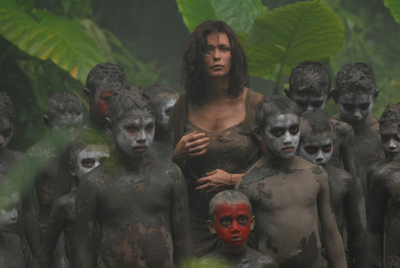
Vinyan was an unknown horror-drama film to me before picking it up at Best Buy one day. This film is an absolute success visually and there are myriad reasons why. Students of cinematography should watch this film because rarely if ever have I seen so many different techniques employed in a single film so naturally, and effectively. It was most certainly not what Hitchcock would’ve called “pictures of people talking” but rather “paintings in which people moved.”

A second, solid bonus is the performances of the two leads. Emmanuelle Béart especially is fantastic as usual and definitely gets to flex her muscle as she slowly loses her bearings over the stress of thinking she has seen her long lost son. Rufus Sewell’s performance is no less complicated. He is strong and must get angry, impatient, and sympathetic. He must also try to deal with the possibility that Béart is right, and try to be the grounded one, while he is just as stressed.

While the inciting incident, first act and first plot point are very strong the film does sort of lose a little bit of its momentum after the idea of the Vinyan is introduced. Aside from being onlookers they never assert themselves as a presence psychologically or physically and that is what ultimately leads to this film falling short of greatness that and the herky-jerky pace of act two.

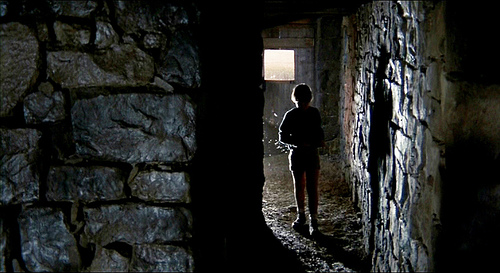
The ending’s disturbing nature, and rightness in timing, doesn’t quite make up the squandered potential the film shows. The visual variety ultimately save it some examples are: a shot of foreground colored differently than the background, the red lighting in the rain, the use of an overhead shots, POV of a man being buried, shafts of sunlight through the trees, fog, fog and light through the trees; a silhouette and more. If only it had closed the deal narratively speaking and accompanied the visuals better.
7/10

61 Days of Halloween: The Other

Introduction

Most holidays worth their while encompass entire seasons, such as Christmas, for example. However, as you may have noticed there is a corporate push every year for us to think about the next holiday even sooner. While this has many negative side effects I figure I may as well embrace it.

Since Labor Day is really only good for college football and movie marathons cinematically it is as significant as Arbor Day, which means the next big day on the calendar is Halloween and we can start looking toward it starting now.

Daily I will be viewing films in the horror genre between now and then and sharing the wealth. Many, as is usually the case, will not be worth it so for every disappointment, I will try and suggest something worth while as well.

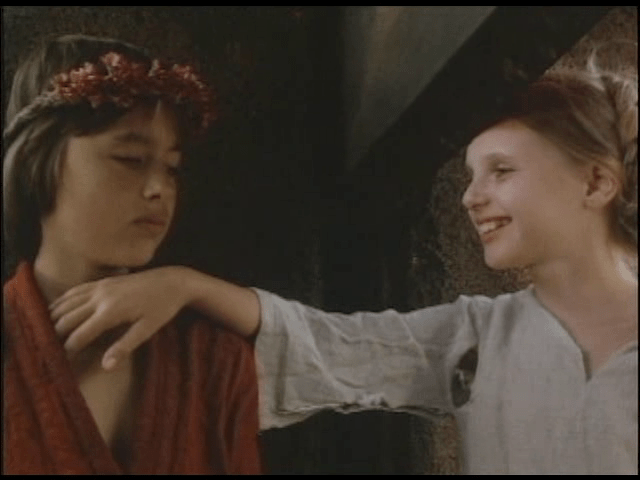
The Other (1972)

Some films are worth the digging they require to find on DVD. This film was found while sifting through the “for sale” options at TLA. It was one I had seen on VHS way back when and was unaware that it was now available on DVD.

The film is the 1972 film adaptation of the Thomas Tryon novel The Other. The first thing this film did right was that they had the novelist adapt the screenplay. Quite often you want someone as familiar with the material as possible to transition it to the screen. The second good thing they did was to get Robert Mulligan at the helm as director. He is the man behind such greats as Fear Strikes Out and To Kill a Mockingbird. This man handles the story with a deftness and sophistication that few in the genre could.

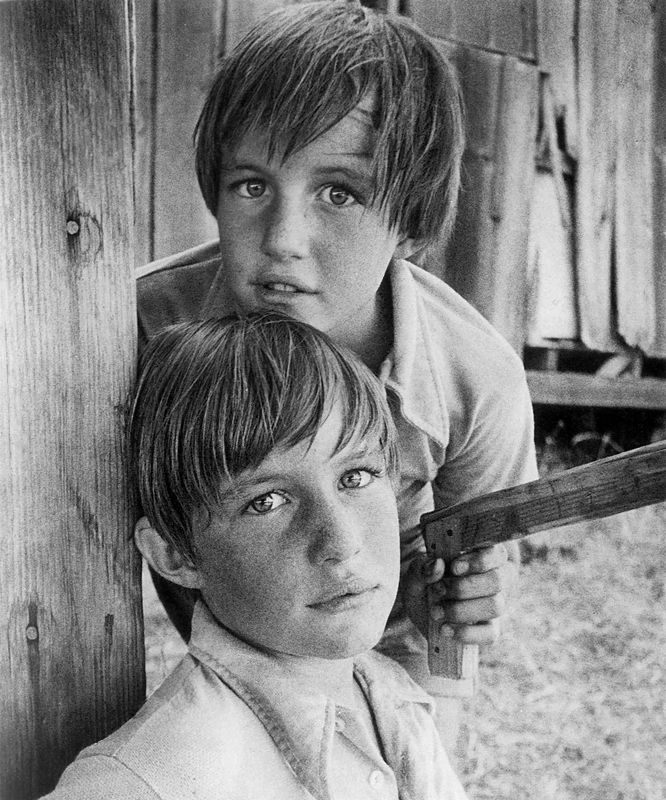
The film tells the tale of twin brothers Niles and Holland (played by Chris and Martin Udvarnoky) and the deadly secret they share. The Other is also a film that has not one but multiple twists well before The Sixth Sense made it the thing to do in horror and/or suspense for a time. These twists are set up in at least 16 instances where the truth, as we know it, is reaffirmed, only to be flipped on its head later.

Another major strength of the film is the character of Ada, the boys’ grandmother, played by Uta Hagen. Uta Hagen’s works on the craft of acting are some of the most insightful and respected in the field, and this film shows you why. Ada is the only one who holds a special bond with the boys, tries to help them and understands their special ability, which they refer to as “The Game.”

The Other is a film that is full of genuine shocks. It is the kind of film in which no character is safe from the threat that presents itself and that makes for the most realistic, palpable and enjoyable type of suspense film, one in which anything and everything can and will happen.

This may be a film that time forgot, but it is certainly a hidden gem which deserves to be unearthed.

9/10

Postscript

Prior to my ever having started the 61 Days of Halloween theme and I believe after my previous posting of this review, Christopher Udvarnoky died at the unjustly young age of 49. May he rest in peace.

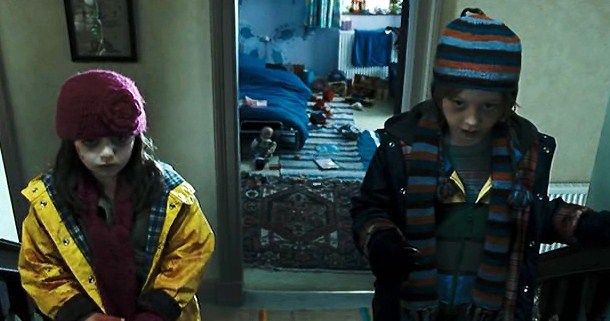
61 Days of Halloween: The Children (2008)

The Children, which bears no connection to eponymous 1980 film, continues Ghosthouse Underground’s newly started tradition of showcasing independent horror films that are truly deserving of a spotlight on a bigger stage. This film was recently featured at Toronto After Dark and should be a testament to my feeling that that particular year’s field was very strong indeed.

It is a subtle film indeed, which just goes to show that the horror genre does not need to spoonfeed its audience exactly what is happening at every single turn. The wheels start turning slowly but very surely; as two sisters and their families meet up at one of their houses in the English countryside to celebrate Christmas.

Their children start to come down with a very mysterious virus, which seems flu-like. We get as much detail on what’s wrong with them as the parents do, which is fine. This allows for the parents not to be the typical stupid victims in horror film, and makes most of the kills occur at the first chance the children get.

It’s a film that doesn’t get overly-contrived. We know just enough but it never gets bogged down in details, and it is likely to please the horror aficionado whether they like children (or the acting version thereof) or not.

Another very effective trait of this film is that it’s quite a nuclear tale and occurs in an around this secluded property in its entirety. The unity of space adds to the immediacy of the threat they were facing. They, of course, have to remain stranded there but it is always an effective trait to have in a story of its kind.

It’s also a film whose violence is more about its quality than its quantity, which again proves that body count is usually a cover-up for an ineffective scenario. You may be able to guess what will occur at the end of a film with a seemingly isolated problem, but I will not give it away.

It is a film that finds numerous ways to unnerve you whether it be score, the children screaming, the build up and the violence both actual and implied. It is a film that should most definitely be seen by enthusiasts of the genre.

8/10

Thankful for World Cinema- Bicycle Thieves

When looking for a theme in which to select films from the start of November until Thanksgiving being literal is not the best option. Films centered around Thanksgiving tend to be overly obsessed with dysfunctional families. So in thinking about the nature of the day which was initially a celebration of survival in the New World, I thought why not focus on foreign films.

Bicycle Thieves

Enzo Staiola and Lamberto Maggiorani in Bicycle Thieves (Produzioni de Sica)

Firstly, it must be said that as simple as it is a test of the greatness of Bicycle Thieves is how much can and has been written about it. This piece, however, is meant as an introductory piece to the film in hopes that more people will discover this cinematic gem. This is not an in depth examination or an in depth film theory piece. For that kind of examination I could not do better than to direct you to the companion booklet that comes with the Criterion release.

 Bicycle Thieves is all that is good about Neorealist cinema in one tidy story. It is naturalistic acting, practical locations and a simple yet utterly compelling storyline.

The film sets up its dramatic problem instantly. Antonio is assigned work but needs a bicycle or he won’t get the job. He does manage to get it out of hock but his troubles aren’t nearly over.

What is most effective in this film is that in following Antonio on his quest we become fully immersed in it. We identify with him because we know the significance of the bike and why he needs it.

What’s more is that we can see the extremes he goes through and can relate when he is pushed past his breaking point. In his failing we can see why he has reached his last resort.

In this way Bicycle Thieves becomes the perfect tragedy because our protagonist can see how far he fell and can wonder what he could’ve been thinking without ruining his entire life.

The tragedy is ultimately left for us to examine. As we know there are many more stories like it playing themselves out everyday. By making the tale small and not grandiose it’s easier to see how it could be you.

10/10

Thankful for World Cinema- The Green Room

When looking for a theme in which to select films from the start of November until Thanksgiving being literal is not the best option. Films centered around Thanksgiving tend to be overly obsessed with dysfunctional families. So in thinking about the nature of the day which was initially a celebration of survival in the New World, I thought why not focus on foreign films.

The Green Room

François Truffaut in The Green Room (Le Films du Carrosse)

Truffaut’s The Green Room may be his great over-looked gem. It is a film that I think still deserves the Criterion treatment even though it was saved from the Land of the Out of Print by the wonderful new On Demand services.

It is a film that sees Francois Truffaut make a rare trip in front of camera, not only as an actor but one playing a character unlike himself to a large extent. Unlike his turn in Day for Night in this film he is not a director but a journalist who after World War I starts to detach himself from the world lamenting all those he has lost.

The film is a fascinating examination of how to reconcile the fact that even as we live we are amidst death. It examines a character who is overly-preoccupied with those who have passed such that he forgets how to live. Perhaps what is most impressive is that it takes an noble and relatable premise, respecting and honoring the dead, and takes it to an extreme such that we se how detached from reality one can become.

It is also a refreshingly intimate piece. There aren’t many players concerned in the drama here. There is the home nucleus: Julien, Georges and Mme Rambaud. Then Julien also interacts with his boss on a few occasions and Cecilia most of all. This allows the drama to be very focused on the protagonist and his obsession.

This film is a sparkling example of Truffaut’s simplicity shining through. It’s an examination of character and theme where all is very apparent and he wants you to delve deeper and search for more within the film. It is often hypnotic, always fascinating and a must see no matter how you manage to obtain it.

9/10

Thankful for World Cinema- The Annunciation

When looking for a theme in which to select films from the start of November until Thanksgiving being literal is not the best option. Films centered around Thanksgiving tend to be overly obsessed with dysfunctional families. So in thinking about the nature of the day which was initially a celebration of survival in the New World, I thought why not focus on foreign films.

The Annunciation

Péter Bocsor and Júlia Mérö in The Annunciation (Hungarofilm)

If you’re ready for a mind-bending account that is likely to be one of the most bizarre film-watching experiences you’ve ever had then The Annunciation is for you. One thing that shows you almost off the bat that this is a challenging film is that as the story changes location the subtitles include location cards, which are not dictated by the film itself.

However, owing that the shift in locations and time period are due to the fact that it is a dream should make it an easier watch. This existential tale of Adam and Eve is still ripe with multiple meanings and answers that can be gleaned from the text of it.

Another thing that should be noted that all the characters, save for circus performers near the end, are played by children. If you have a problem with child actors I feel sorry for you but I also then do not recommend this film to you because they are dealing with very real material, extraordinarily challenging material that they dive headlong into and perform spectacularly.

The things that can be observed as Lucifer sends Adam and Eve through time in similarly dystopian plots are truly fascinating. However, though the film may seem like it’s hellbent on nihilism it ends on a wondrous of hope and sardonic comedy.

It’s a classic of absurdism and dreamlike cinema, cinema in general, which deserves a wider audience.

10/10

Thankful for World Cinema- Son Frère

When looking for a theme in which to select films from the start of November until Thanksgiving being literal is not the best option. Films centered around Thanksgiving tend to be overly obsessed with dysfunctional families. So in thinking about the nature of the day which was initially a celebration of survival in the New World, I thought why not focus on foreign films.

Son Frère

Bruno Todeschini and Eric Caravaca in Son Frère

This is quite an interesting French drama about the difficult relationship that two brothers have. One of whom is gay and receives his brother one night as learns he is fighting a mysterious and seemingly incurable disease.

One thing that is interesting about this film is that while it does deal a lot with treatment of this illness it goes out of its way to say that the disease even has a name but never says what it is. It insists on being about the patient and the care-taking brother and not the disease itself.

Aside from being a relationship film that doesn’t take the traditional route of dealing incessantly with whatever relationship it addresses. It also deals with death obviously, but moreover with being a patient. In examining those with chronic illnesses it casts an eye on the hopelessness of it all and the fear of surgery.

In that vain there is an amazing one-scene performance by Robinson Stévenin in which the brother witnesses the fear very sharply by seeing someone else in pain.

The film works very sure-handedly and keeps its pace steady but don’t let it fool you in that regard because there is a climax coming and it might even fool you in that regard. You may miss it or its impact immediately but it is one that leaves you thinking.

It is a very intimate and taut drama that is worth looking up.

8/10

Thankful for World Cinema- Last Year at Marienbad

When looking for a theme in which to select films from the start of November until Thanksgiving being literal is not the best option. Films centered around Thanksgiving tend to be overly obsessed with dysfunctional families. So in thinking about the nature of the day which was initially a celebration of survival in the New World, I thought why not focus on foreign films.

Last Year at Marienbad

Delphine Seyrig and Giorgio Albertazzi in Last Year at Marienbad (Concinor)

If there is a film that can be said to define the French New Wave it may well be Last Year at Marienbad. A film directed by Alain Resnais (Night and Fog) which deals heavily with memory, or more precisely the accuracy of memory and what is reality. It is a film that moves along dreamlike with many incremental repetitions of phrases, with fractured snatches of conversations creating whole thoughts and at times surrealistically staged scenes.

It is a film that engages the viewer that dares him to follow this Byzantine structure and try to get out the other end, and if he does get out the other end will he have his head on straight when he gets there? It is a fact that film is not a disposable medium and many, if not all films, welcome a second viewing. This film insists on several. It is very likely that every time you’ll walk away from the film with a new piece of information you never considered before. This film is a complex abstract masterpiece that makes Inception look like finger-painting by comparison.

Consider that you examine two characters, their relationship and how much they really know one another and they are never given proper names, in fact, no one is: the three main players are referred to as A, X and M. Most of the rest are referred to as “Une personnage de l’hôtel.”

Which brings to mind another point: The camera pans around this hotel and its surroundings a great deal. Sometimes in conjunction with voice-over sometimes running contrary to the scene. The Baroque architecture of the edifice is quite startling and the hotel becomes a character in the tale in and of itself. As the discussions in which M is trying to convince A they did meet often begin with him stating where in the hotel they were.

It is a fascinating and mind-bending film which has no equal or parallel, an infinitely rewarding experience you’ll want to revisit over and over again.

10/10

Thankful for World Cinema- The Sea

When looking for a theme in which to select films from the start of November until Thanksgiving being literal is not the best option. Films centered around Thanksgiving tend to be overly obsessed with dysfunctional families. So in thinking about the nature of the day which was initially a celebration of survival in the New World, I thought why not focus on foreign films.

The Sea

The Sea (Palm Pictures)

It’s great to go into a film knowing nothing about it before hand. This was the case when I saw The Sea. While you can easily see it was adapted from a play the themes are consistent and handled cinematically for the most part.

The first thing that is apparent is that the casting in this film is ridiculously perfect. No actor feels out of place. Speaking of which neither are any of the scenes. It is rare to watch such a multi-character film and never be left confused about who’s who. All the characters are sharply defined and they all illustrate the struggle amongst family, between the generations and the joining or avoidance of a globalized world.

The scenes in the pool and the scenes with the black sheep are accessible symbolism that serve comedic or story functions such that the audience is never lost. Another amazing thing is that even though all the characters have undesirable traits they’re all funny and identifiable. The only place the film falters in anyway is that the father has a speech that’s a little too long at the end. With the way the film cuts the framing of the story is very surprising.

The acting all around is great but those who stand out are Gunnar Eyjólfsson, Hilmir Snær Guðnason, Hélène de Fougerolles, Guðrún Gísladóttir and Elva Ósk Ólafsdóttir.

Whenever watching a foreign film, especially one from a culture I’m not that familiar with, I always look for two things: One, does it seem indigenous and not overly influenced by Hollywood?  Two, While being indigenous does it communicate a universal message and/or theme. The Sea succeeds in both cases.

10/10

Thankful for World Cinema- Night & Fog

When looking for a theme in which to select films from the start of November until Thanksgiving being literal is not the best option. Films centered around Thanksgiving tend to be overly obsessed with dysfunctional families. So in thinking about the nature of the day which was initially a celebration of survival in the New World, I thought why not focus on foreign films.

Night & Fog

Night & Fog (Argos Films)

It is virtually impossible to ever come close to fully grasping the totality of the horror of the holocaust. If anything were to ever come close it’s Night & Fog. Never has the greatest calamity of the 20th Century been handled so precisely.

Many people are down on voice over narration but it’s part of the nature of the beast in a documentary and here, in this film, you have some of the greatest narration ever written by Jean Cayrol, a man who was himself a concentration camp survivor.

Not only does this film uniquely, at the time, mix color and black and white images but also uses the abandoned structures of the camps to haunt the film.

There is no question that this film is the apex of documentary filmmaking. It tried to take a massive subject and condense into something easy to understand. It allows you to reflect on things you see and learn but tries to bring as much of what transpired out as it can.

It also in turn becomes an important historical document. It is a masterpiece in as much as it achieves perfection in its form. If it was a feature length documentary it may not have this kind of impact.
 
It is an eye-opening and jarring account of the atrocities of the second World War that should be required viewing for all.

10/10