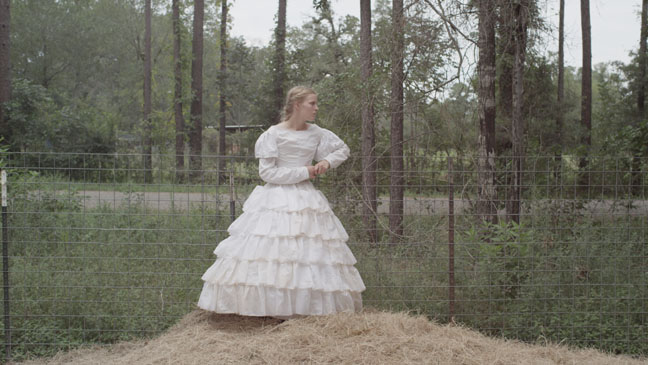
Review: Stop the Pounding Heart

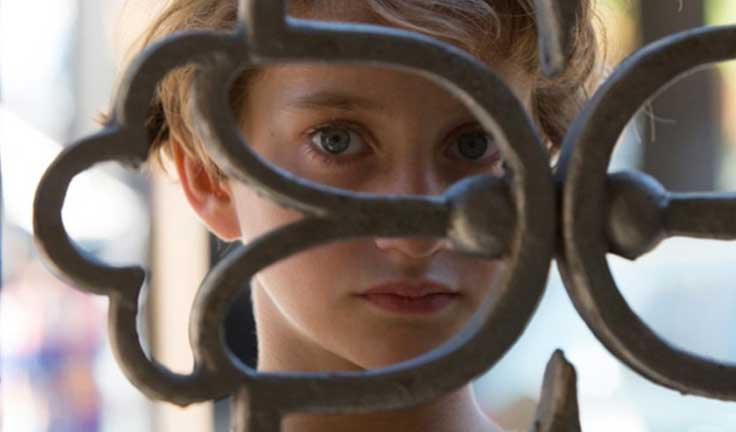
Stop the Pounding Heart is a low-key modern neorealist look at cloistered religious upbringing clashing with the pitfalls of adolescence. It carefully treads the line between narrative and documentary perhaps more so than any other film I’ve seen recently – as such evaluating it becomes tricky. However, my interpretation of the film having seen it (through the end credits) was that I would treat it as a narrative feature. This notion is reinforced by something the director says in response to that vagary in the press kit:

I work exclusively with real life people and their true environments, so there are no actors involved in the traditional sense. At the same time, the underlying arc of the story is my own so you could say that the hand of the director is present. My involvement with these communities is a deeply intimate experience, and it required a lot of mutual trust. They were willing to open up their lives up to me, and me for properly portraying their lives to the public. In addition to the relationships that are cultivated over time, I also credit my shooting style with allowing people to feel comfortable in front of the camera. My production consists of a five person crew, no artificial lighting, and one take for each shot. One could say that this film follows in the traditions of Rossellini and Bresson, the latter of whom once said that more than realism, he was interested in truth. That comment has always stayed with me.

The brief synopsis up-top is the most succinct encapsulation of what passes for a narrative in this film, and that is not a slight; it does pass. For a while most, if not all, the turmoil is internalized and when it does overflow near the end it does so in a tearful confession by the lead, Sara (Sara Carlson), in which she cuts to what’s bothering her, but does not enumerate the events/symptoms bringing on such feelings.

Much of the running time of the film is spent watching Sara’s life unfold. All the characters in the film are eponymous. The film in large part engages in watching the characters behave and the most basic voyeurism known to man; the psychological root of our interest in cinema. There are established routines that come around full circle and at times have different iterations: homeschooling, bible study, selling at the farmers market, talking to Colby, watching bullriding, going on the firing range, etc.

While this film enjoying a different shade of behavioral observation that Chantal Akerman, Bela Tarr and others occupy what separates this tale is the documentarian removal. There is, due to the fact that there is a loose scripting, no talking heads, natural light; a distance and lack of judgement. Because the lives of these people is being explored as uninterrupted as possible it does achieve a sort of real slice-of-life effect.

This film is an affectation though, much as a more conventional documentary would be. What the guise of narrative allows it to do is widen its exploration of this family and place. A traditional documentary has to be about one thing only, even off-beat docs like Leviathan and Bestiary are about one unifying notion. As an affectation it is an affective one as it finds a humanity in these people regardless of what differences we may have. In a traditional documentary there’d likely be a point of view, in a narrative there is a slant to any tale, a commentary or moral. In this film the characters just are and we just watch them and have a small notion of what it’s like to be in their home, their town, their work, and their life. Because of the way these ideas, emotions and images weave together it just washes over you with minimal focus on where those differences lie, but more focus on where commonality exists.
6/10

Review: Mercy

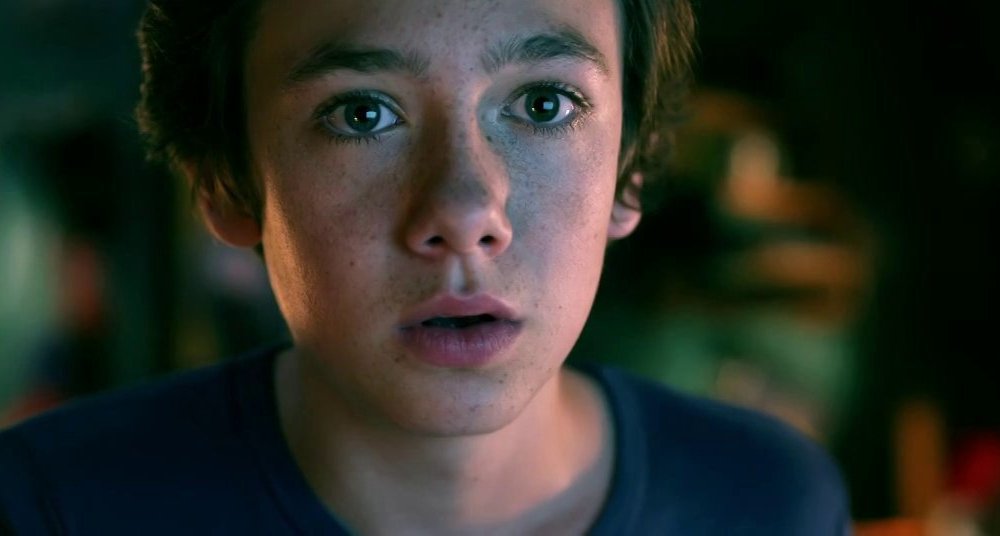
Mercy was a film that I had on my radar for quite some time. It was a film announced a while ago. It was one of a rash of projects that Joel Courtney got involved with on the heels of his outstanding performance in J.J. Abrams’ Spielbergian Super 8. Combine that with the fact that it is a Stephen King adaptation, the signing of Chandler Riggs (The Walking Dead), the involvement of Blumhouse and Universal and there were plenty of reasons to look forward to this film. Eventually though, without and fanfare (as there usually isn’t), this film kind of vanished from consciousness as all involved moved on to the next job.

Then with just as little fanfare the film plopped up available as a digital first download on Amazon ahead of its DVD release.

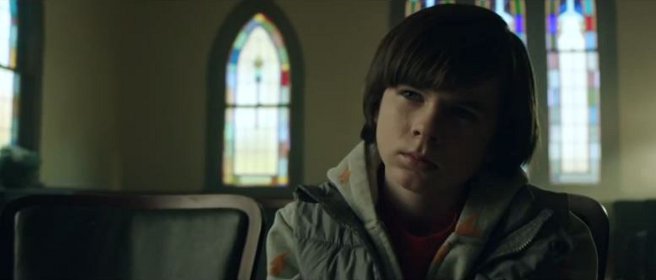
Mercy mainly concerns a young boy, George (Chandler Riggs), who with his grandmother (Shirley Knight) bedridden starts to wonder about and discover her true nature and family secrets buried in their past.

The difficulty of divorcing one’s fanboy self from an objective film-viewer is epitomized by the fact that this film could have harvested an intriguing internalized tale from the prose, but instead it perhaps over-externalized it. One of the pitfalls it faces is also expanding a short and building out characters because it only does so part of the way. More dimensions are added to characters but it only goes part of the way. Mark Duplass, plays an uncle, he comes to George (Riggs) to disavow him of his notions because he idealizes her. However, this has to be assumed. He’s barely introduced when he makes this leap, and knowing how jaded he is, why not try and talk to Buddy instead (Courtney)?

The aforementioned facets of the film nits; smaller quibbles. There are things that occur that in some ways make you wonder about the production, and in general questionable decisions. The very first scene in the film cuts awkwardly. Riggs and Courtney overall do fine jobs, but in the early scenes they seem a bit ill at ease in their roles, Courtney especially; as they get caught up then the stakes go up. Unfortunately, CG plays a hug role in the latter third and it doesn’t really work that well at all.

I think to convey it best to King fans I can frame it this way: the CG-heavy climactic portions of this film remind me of a 21st Century Langoliers, only this film isn’t anywhere near as compelling as The Langoliers is before being heinously under-served by the effects work.

Up until then the film is passable, and there are things worth watching it for, Shirley Knight is another. In a film whose running time is less than 80 minutes it tries to spread the tale between too many inconsequential supporting characters, and doesn’t move as quick as it should.


When Mercy is available on rental platforms it’s worth it if you’re curious enough, but in this case sadly the whole is far less than the sum of the parts.

5/10

Review: Annabelle

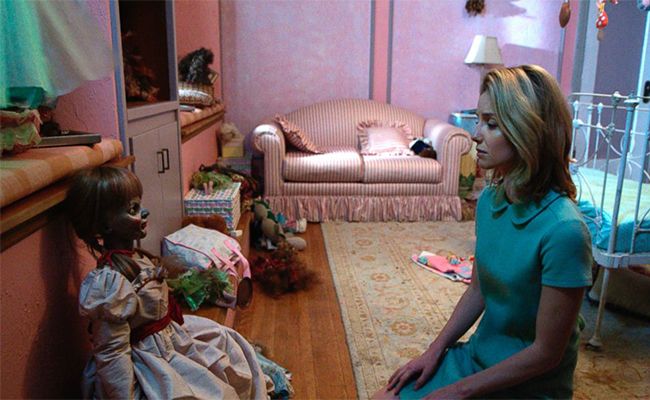
When The Conjuring came out, I, like many enjoyed it a great deal. Not necessarily like many, and moreover, a bit uncharacteristically; I was really psyched about the prospect of Annabelle. It was one of the rare cases where I thought a prequel, or more appropriately, a spin-off had the potential to expand a bit of backstory into a feature-length tale on equal footing with its progenitor.

After having seen it, however, it did bring to mind Dario Argento’s response to when I asked if he ever considered further examining the backstory of Deep Red. Basically, what this ended up feeling like was a vacuous money-grab even though it, and the Deep Red concept, still could theoretically work.

What Anabelle lacks is not only atmosphere, which it is sadly in wont of throughout, but also a compelling narrative. In The Conjuring James Wan and the Hayes brothers wrung out so much effect from this doll affectation to give the protagonists a background you were left wanting more, in getting it you are left dissatisfied.

One issue the film contends with is that it’s not really an origin. The accursed doll comes to the couple at the center of this story and they deal with it. However, that’s not really a fault of the film. One true fault is that its zest for innovation peters out on the first act when introducing the notion that the world is changing in light of the Charles Manson killings. Much of the rest of the film following the inciting sequence is methodical and rote, and rarely introduces a wrinkle that is unique to this tale.

BANG!

There. Are you scared yet? No, well then don’t see this movie, because as it is unable to generate palpable atmosphere, real concern, or interest, in its characters the film then resorts mostly to jump- and false-scares. This is really a shame because the score does have some nice moments but it has to be an accomplice to the lacking script and direction and try and pry scares out of its prospective audience.

One would think that it would be hard to bungle a film wherein one protagonist is either pregnant or raising an infant, but this film manages to quite easily. Some milquetoast performances along with all else that’s plain to lacking really doesn’t help.

To add insult to injury the obligatory, somewhat open ending is as anticlimactic as the rest of the film is. It’s rare I use the phrase “forgettable” as it usually employed crassly, but when one has recently experienced a film so empty, so devoid of soul and verve, that you could easily forget that you just saw it. “Forgettable” one of the most fitting words there are.

3/10

Review: Labyrinthus

Labyrinthus is, like many films around the world, a multi-national co-production. It is essentially a Belgian film as the talent involved hails from there, it’s in Flemish with smatterings of French and it’s Belgian-set in a very vague way. It tells the story of Frikke (Spencer Bogaert) who discovers a video game by chance and beneath the surface of this mysterious game is something sinister. It is plunging kids from the neighborhood into the game, while simultaneously sending their real-world into inexplicable comas. This creates a precarious symbiosis. Frike’s mission then is to discover who the nefarious creator of the game is.

This is not the first children’s film to deal with video games that I can think about off the top of my head. The obvious allusion would be to Spy Kids 2. However, what differentiates this film is the aforementioned duality. We mainly see the comatose character’s personae in the game. However, there is a tonality to it that is unique. The film is not overly-concerned about creating a video game onscreen. While this can be read to mean that the visual language isn’t terribly inventive, and the CG is nothing to write home about; what that thought would overlook is that it is interested in developing characters in these situations that we get to care and know about, also allowing them many crucial moments of decision and action. It also manages to craft some interpersonal relationships we care about.

This film also wastes no time getting things underway. Frikke’s introduction to the game comes very quickly. Characters and visual clue immediately spring to fore; Frikke’s very soon aware that something very odd is going on and that he has to get to the bottom of this mystery. It should be expected but a film with a brief running time should move well and this film does.


All those character and relationship moments are inevitably buoyed by the excellent performances by the young cast. It is shocking to consider that this is Spencer Bogaert’s first screen credit as he carries himself with the certitude of veteran. His presence is engaging and he easily conveys an every-kid type. Felix Maesschalck whose few moments in Time of My Life where rather is, in heartbreaking and beautiful scenes, here demonstrates a different type and shows a decent amount of range. Also notable is Emma Verlinden as Nola who has a genuine cinematic radiance.

The tonal balance that this film reaches is is perhaps what makes it work best. Any stuck-in-a-video-game film needs a fair bit of whimsy, but considering the stakes it also needs the correct amount of gravitas. Labyrinthus has enough of both and keeps it light at times, has its humor but also plays the drama and romance up where appropriate.

Labyrinthus may find its way to US audiences, like the recent Attraction Entertainment title Antboy, did. If it does it is a family-friendly tale that is well worth seeking out and should prove entertaining to viewers of all ages.

7/10

Review: Misunderstood (Incompresa)

I was fortunate enough such that the stars aligned and I was able to attend a New York Film Festival screening of Asia Argento’s latest feature-length directorial effort: Misunderstood (the original Italian title being Incompresa). Asia as a director came to my attention with the release of The Heart is Deceitful Above All Things, a film that was among my favorites of 2006 and of the past decade. It’s hard to remember which came first but there was a rather fortuitous symbiosis of my discovering both her work on/off the screen and that of her father internationally renowned Italian horror and giallo director Dario Argento.

In certain ways there are parallels between her latest effort and The Heart is Deceitful… in terms of visual motifs and story tropes. However, the main difference is one of intended tonality. With the prior film it’s a much starker, more harrowing journey for a mother, but mainly her child. Whereas here while there are some serious, heavy growing-pains dealt with there is also a lot of humor, warmth, sensitivity and joie de vivre. The reason for this is that there is each of these past two films and honest understanding of intention of how emotion and mood could be evoked. Whereas before Argento’s eye was the lens through which she refracted J.T. Leroy’s then-purported-to-be-true memoir, here she turns her sensibilities towards a story of her own making.

There has and can be much discussion of how much of this film is autobiographical with protagonist, Aria (Asia’s birth name), being the daughter of a famous father and other things. However, regardless of that she is the auteur of this oeuvre directing and co-writing the script and the music. It’s her vision and the truth she finds in this story is a universal one. For nine-year old Aria (Giulia Salerno) there are many rites of passage, both large and small, that occur in this film. As idiosyncratic as her family is, as caricatured as her parents are, there is still a kernel of truth at the core of the film that allows it to speak to you whether you’re Italian, American or Chinese; man or woman; straight, gay or otherwise; fairly young or old.

The characters’ foibles is also where her directorial sleight of hand comes into play. The film is told from Aria’s perspective and when it does slip into flights of fancy it doesn’t blare it from the mountaintops but allows it to wash over you fluidly and then for you to realize what had occurred. The key to this film keeping its feet on the ground while reaching up is that at her core Aria doesn’t seek changes or make ultimatums she merely wants to be loved and essentially accepts everyone as they are warts and all.

Misunderstood (2014, Orange Films)

Due to the fact that this was a festival screening we were treated to a Q & A after the fact and one of the many insightful answers Miss Argento gave were about the young star of the film, Giulia Salerno. Asia having been a young actor herself, having children, and also teaching acting to children has a keen eye not only for talent but for kids who she says “are pushed into and kids who want it [acting].” Salerno is type who wants to act and it shows in her performance as she effortlessly communicates emotion, is engaging and charismatic.

A testament to the way this film moves and structures itself in small, somewhat isolated sequences that form a coherent whole allow characters whom are typically over-the-top-types; Mom, a party girl who refuses to settle down in an adult relationship (Very convincingly portrayed in a bilingual performance by Charlotte Gainsbourg), and Dad, a short-tempered, superstitious, vain actor (Engagingly brought to life by Gabriel Garko), to have moments and to let down their façade and be more human. Argento also did well in crafting the script and picking actors who could emote beyond merely the text and convey their characters through action.

The thread that really holds this film together is the music, which seamlessly blends obscure source music from the period (1984), scoring and new songs fashioned to emulate the mid-‘80s sound. It gives the proper emotional tenor as well as transitioning the story between scenes and sequences. It’s one of the rare cases of the music being used in all possible ways to enhance the whole of the film.

Misunderstood
is refreshing inasmuch as its a coming-of-age tale that does not focus solely on one rite. It’s a slice of life for Aria’s character with many of the usual concerns: schools, friends, first crushes and the like, as well as some other concerns conveyed in somewhat more unorthodox circumstances such as her relationship with her siblings with the spiritual world and more. It’s a film that wants you to laugh along with it as it’s trying to strike that universal chord that rings true to all regardless of circumstances. Misunderstood is aptly named very ably portraying not only its protagonist’s being misunderstood but also understanding her at a deep, fundamental level and conveying her story clearly.

8/10

Review: The Way He Looks (2014)

This is a film that has some tremendous surprises in store and exudes a subtlety in revelation that is quite affecting and disarming. Throughout there is a tenderness, and a heartfelt sensitivity to the subject matter at hand that makes the film not only universally human, but one of surpassing beauty and brilliance.

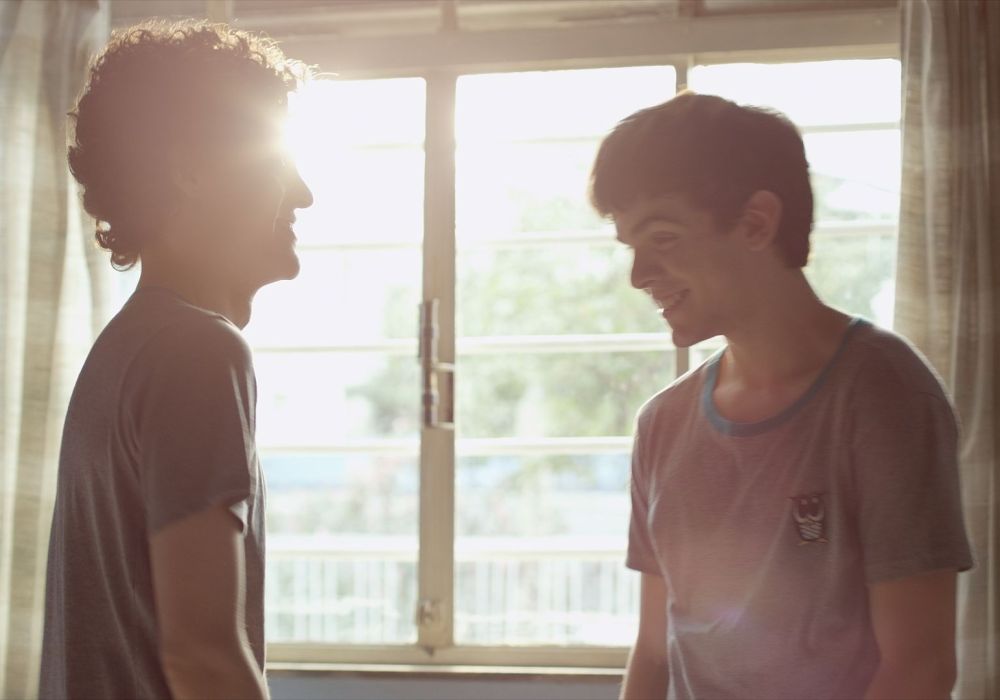
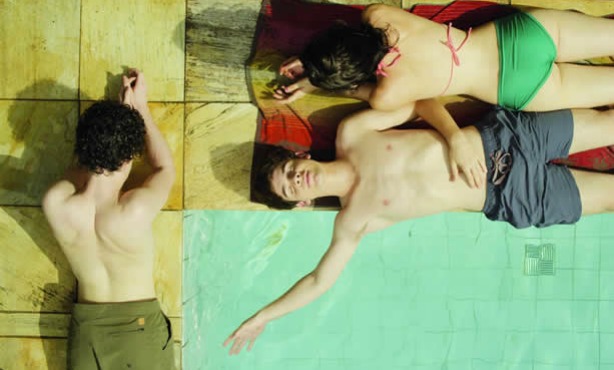
The Way He Looks tells the tale of Leonardo (Ghilerme Lobo), a blind teenager who is struggling for his independence caught between and understandably protective mother (Lucia Romano) and his best friend/champion Giovana (Tess Amorim). When Gabriel (Fabio Audi) moves to town his life gets turned upside down. With the additional layers that inhibit the protagonist’s individuation this is a coming-of-age story that has an additional resonance that most can only dream of attaining.

Both the fact that Leonardo is blind and the fact that he is becoming attracted to Gabriel are handled very subtly upon first being revealed. After almost an entire scene we suddenly notice that Leonardo is just staring ahead blankly and not following movements with his eyes. Similar is the handling of the attraction. As the film develops these factors naturally come to the forefront and become powerful presences.

The Way He Looks (2014, Strand Releasing)

One of the most fascinating angles this film takes on is naturally the addition of an omnipresent burden or condition that makes the awakening of sexuality, and the self-realization of sexual identity, a bit more difficult. It’s also a quietly made statement about the fact that one’s sexual orientation is merely a part of a person’s identity. When examining the narrative progression in retrospect it’s clear some of his dissatisfaction and desire to find himself, perhaps abroad, has its roots in this as-of-yet unrealized facet of his personality.

The performances in this film are absolutely spot on. Interestingly the cast seems to have made this film at the last possible moment they could have. Any further delay in the production of this feature, following up a wildly successful short film, and the cast would’ve read as too old and playing any younger would’ve played awkwardly. Instead, it works as it should as a case of naturally arrested development, a development no doubt retarded by Leonardo’s disability. Ghilerme Lobo’s ability to emote mostly through his tone and inflection and less so with his facial expression is incredible. On the flipside Audi’s shyness and occasional subsumed reactions, despite the fact that they’re not being seen are great. The scene-stealer of the film would have to be Lucia Romano whose combative, protective scenes with her son are some of the strongest the film has to offer.

When all is said and done the statement The Way He Looks is never overt, but always clear. There are any number of ways you can extrude Leonardo’s blindness into a statement about love, but the film allows you to do that yourself and never says so in so many words. The delicacy of the handling of the story, the warmth it exudes throughout and the investment made in the characters that has you understanding their plight quite well is what makes the film’s conclusion so satisfactory and so well earned. This is without question one of the best films of the year to date and well worth looking out for when Stand Releasing brings it to the US.

10/10

Review: The Famous Five 3 (Fünf Freunde 3) (2014)

When you dig around through international releases long enough it becomes quite interesting to discover what films, books, shows, music, etc. register abroad that may not have quite such an impact in your home culture. Such is the case of The Famous Five series.

Prior to discovering this current incarnation of these cinematic adaptations I was unfamiliar with the series and author Enid Blyton both. As it turns out both this series and her works continue to be very popular both in her abroad and in her native England. Though she died in 1968 she was one of the top 10 selling authors in the UK during the first 10 years of the 21st century. Her film adaptations to date have been all overseas. The first two were serials in 1957 and 1964 in the UK. Then in 1969 and 1970 there were two adaptations in Denmark. The current German series is the most prolific and most profitable at the box office to date.

I went into part three blind to all these facts, as well as to the cinematic backstory that accompanied these films. Therefore, I backtracked to be better able to appraise these films on their own merits, including how this particular film worked in conjunction with the other two.

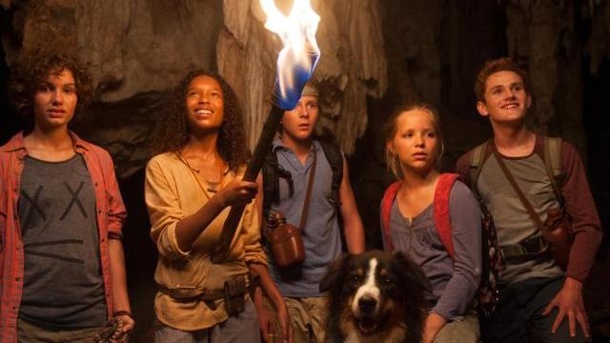
The Famous Five feature a familiar formula of smart kids who get embroiled in mysterious capers by chance or insistence and save the day. The fact that there are two boys, two girls and an extra-smart dog make the best of The Hardy Boys, Nancy Drew and Rin Tin Tin rolled into one.

The Famous Five 3 (2014, Beta Cinema)

In this particular installment the villainous foils that go up against our intrepid heroes are perhaps the least successful in the series to date Nick (Michael Kessler) and Cassi (Nora van Waldstätten) don’t successfully balance over-the-top humor and actual menace.

As is the case with these, and many other sequels in franchises the world over, the obligatory new character, Joe (Davina Weber), works here and the love interest plot is not so much of an issue as it can be. Also, the updating of the character from the books making her Thai rather than Romany, is an appropriate modernization.

An interesting thing about the progression of this series is that in each it has seemed to be the turn of one of the four leads to shine. Considering the first film was all the kids meeting George (Valeria Eisenbart) that was very much her breakout, in the second film circumstances pushed Dick (Justus Schlingensiepen) to the fore. In the third installment Julian (Quirin Oettl) emerges with the key, dramatic scenes and mostly acquits himself very well.

Ultimately, The Famous Five 3 is an agreeable third installment to the series that is fairly enjoyable. It doesn’t quite reach the level that the first two films did in terms of balancing peril, adventure and humor; however, it doesn’t completely derail the series. It also has some good reversals of fortune and could easily segue into another installment.

6/10

Review: The Amazing Catfish (2014)

Sometime the conventions of fiction can blind us to the fact that there are at least as many stories as there are people in the world. However, upon viewing them presented as fiction we can become obsessed with how realistic it seems. That’s not to say that The Amazing Catfish is the most unique tale in the world, but it does have its quirks.

The Amazing Catfish concerns itself with the lives of a young woman who had an appendectomy and a mother fighting AIDS intertwining. However, the film begins with following the life of Claudia (Ximena Ayala) for about the first ten minutes. We only meet Martha (Lisa Owen) and her family when in the hospital. After her procedure Martha, and her family offer Claudia a ride and a meal. She tries to conceal herself and tries to pry herself away but Martha’s clan persists in being in her life and she then seeks chances to be there as well away from her apartment, her job and reality as she had known it.

There is a subdued nature to the film that allows these events, as unorthodox as they may be, to flow naturally, eventually the language of the tale starts to seep in such that you begin to connect and speak it rather than it translating itself to you.

This subdued nature makes the flow of the tale an odd one as well but not a disagreeable or slow one just one that’s bit out of the ordinary. Perhaps it has a bit to do with the fact that Claudia is still sorting out her past, and Martha is dealing with her future (or rather her family’s) and both are ever-stuck in the present whether they like it or not. As such the flow is not unnatural but proper just and unusual one.

As circumstances make for the makeshift creation of a new family dynamic each of the members must deal with how they feel they fit in the new arrangement and assert themselves. This allows for each of the actors to have their moments. Sonia Franco, Wendy Guillén, Andrea Baeza and Alejandro Ramírez-Muñoz each work such that they all feel like real-life siblings and very naturally embody very different personalities and the roles they play in the family.

While this film doesn’t quite earn the ending it seems to seek it does work in structural, mechanical terms but just may not connect in the visceral way it may be seeking as the final act progresses.

7/10

Review: The Custody (2014)

The Custody, original title La Garde, is a film that proves that a straightforward simple premise that opens an avenue to examine characters in the tensest circumstances possible can be highly effective. It’s a low concept that’s high on drama, character studying and features two tremendous performances by Paul Doucet and Antoine L’Écuyer.

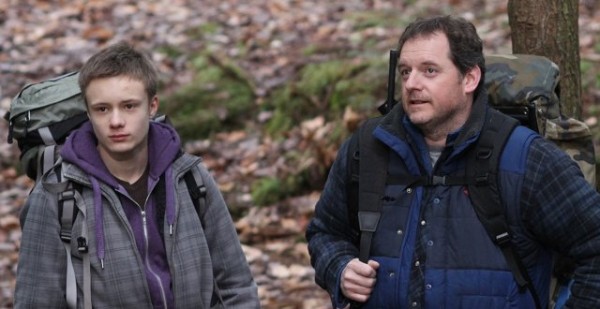
The premise is as follows: Luc (Doucet) is frustrated with the restrictions that have been placed on his custody rights. His disobeyed court orders about visitation have lead to restraining orders and the like. Risking jail time he has continued to follow his son and resolves to take him hunting so they can be closer whether Samuel (L’Écuyer) wants to go or not.

In seeing the trailer or reading the synopsis you know certain things are givens. However, the foreboding that’s built in through the edit and the low-angle shots and urban color palette of the early shots really carries the film until there is a shift both in the tone and setting.

However, with the more traditional thriller template somewhat out the window once the backdrop is sylvan there is a fascinating shift, as despite the high stakes circumstances that come to the fore the characters continue to prod one another and seek answers. In certain ways they are still duty-bound as father and son, but the estrangement and conflict continues to influence proceedings. There are no facile resolutions, no epiphanies where unrealistic understanding can be achieved.

With all the givens in place be they character- or narrative-driven there could be a great temptation to expand the world and cutaway, to raise the stakes and detract from the central focus of the narrative: the father/son conflict. This temptation is wisely resisted and the world stays small.

Much of the storytelling in this film is visual and that is appreciated. However, to reach the heights this film does it needs superlative performances. It gets those in spades. Doucet carries himself as a man who is clearly flawed but not cartoonishly evil, a man whose motivations can be clearly understood even if his actions can’t always be condoned. When he fills in those blanks with backstory the film, and his performance just becomes richer.

It’s so unique to find two performances by an actor at such different ages in development as a child performer being released in the same year. When I saw It’s Not Me, I Swear recently I saw that L’Écuyer had tremendous potential. With that film waiting so long to see American distribution I did not realize that I had seen him in a music video before. In this part he’s about four years older than he was when he showed such promise in It’s Not Me, I Swear. That promise is followed through with tremendous alacrity and poise. His presence on film, this one especially, is a forceful one indeed.

I’ve been quite careful to try and preserve much of the surprise in this tale. Rest assured that what you now know of this film is only the very beginning where things set-up. There are changes afoot throughout and it is a tremendously engaging drama that is worth seeking out.

8/10

Review: Bicycling with Molière

It’s interesting, on an ancillary note, to consider the English and French titles of this film. The English title is, of course, the above referenced Bicycling with Molière. The French title is Alceste à bicyclette, which translates literally to Alceste on Bicycle. What this speaks to the relativistic nature that Molière and The Misanthrope has to English-speaking cultures, as opposed to in his native France. In France a mere mention of the name Alceste is already an allusion to Molière, such is his influence in French literature. Here it’s better to merely mention Molière to have a better chance of and audience to know what this film’s driving at based on its title. An analogy would be that if a similar concept would be attempted here a Shakespearean character’s name would be more recognizable such that the Bard’s name need not be in the title.

Yet, even admitting to a bit of cultural myopia on our part this is a film that can connect with audiences regardless of their familiarity with Molière and The Misanthrope in general. Furthermore, you get to see quite a bit of it rehearsed in scenes such that it can definitely intrigue one and whet their appetite for more.

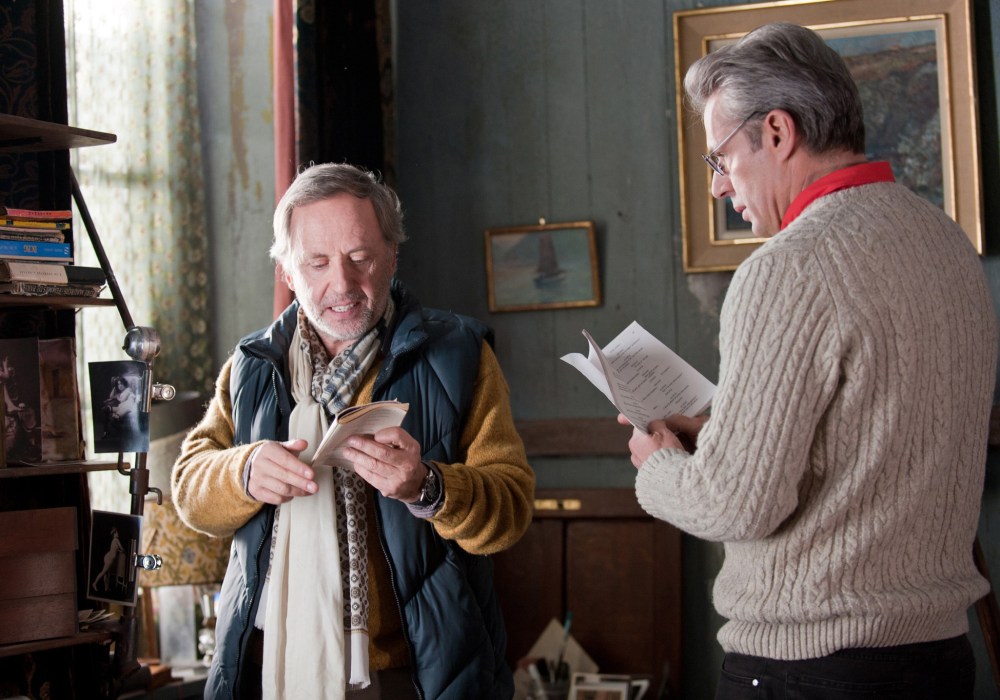
The set-up for the film is that now-famous TV actor Gauthier Valence (Lambert Wilson) travels to Île de Ré to recruit his friend, now-retired reclusive actor, Serge Tanneur (Fabrice Luchini) to be in a revival of The Misanthrope that he is producing.

Naturally this concept is one that is very conducive to playing with the line that divides theater and film. There isn’t anything very revolutionary done but there are subtle touches. One of which deals with the characters they read and how they mirror Gauthier and Serge in their interactions. While the concept of an alexandrine may be something new to the viewers of this film the way this dramatic/poetic device highlights personality differences between the two not only in their approach to their profession but their overall philosophy. The would-be unprecedented trick of having Serge and Gauthier alternate between Alceste and Philinte it allows even more aspects to be examined and more acting muscle to be flexed organically.

Bicycling with Molière (2013, Strand Releasing)

There is much muscle to be flexed indeed for the actors and both Wilson and Luchini are both fantastic. They have definitive approaches to the roles that have to tackle in reads, but also convey the complexity and humanity of their characters outside the framework of the play. Furthermore, with scenes of Valence’s medical drama on display Wilson shows a third acting style in just one film.

Yet with all that symbiosis and the tackling of a classical work it’s not merely an intellectual exercise. It is billed as a comedy and the humor does translate and comes from the characters and not out of knowledge requisite to follow it. Therefore, there’s a universal commonality that allows the audience comfort, and, should they be interested enough they can look into Molière and his works later.

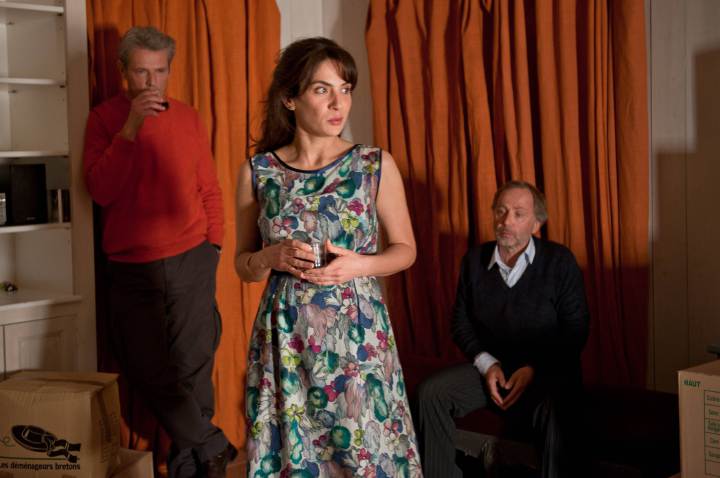
Due to the fact that it’s the people and not the situations so much that make the film funny, on the flip side because you can understand the characters and they are well-defined the drama makes sense is appealing. This perhaps shows itself best as Francesca (Maya Sansa) is fleshed out. With the presumed performance coming it seems prudent for Gauthier to buy a getaway house. At first Francesca is a brusque, abrasive b-word. Then she opens herself up and connects to each of them on an individual basis and contributes well to the whole.

From the outside Bicycling with Molière may seem like and ivory tower dweller’s delight, but there is an approachability and relatability to the humor that make it a welcome treat for all. The theatrical tricks, TV Drama jokes and the like are just icing on the cake.

8/10