Tarzan Thursday: Tarzan (1999)

Introduction

In 2012 the character of Tarzan celebrated his 100th year in print. A serialized version of the story first appeared in 1912. A hardcover collection of Tarzan of the Apes first appeared in 1914. Being in the middle of the Tarzan centennial period it’s an opportune time to (re)visit many of the screen renditions of the character. Previous posts in this and other series can be found here.

As I have referenced several times in the past, there was a time when I wandered away from Disney fare but alas I have come home. In looking back it lasted maybe a decade or so. Now, having been back I am occasionally catching up. Thus, having tracked down many Tarzan titles over the past two years revisiting many and parsing them out and finding what in each typically does not work for me I figured it was time to give Disney’s rendition of Tarzan (the initial one) a shot.

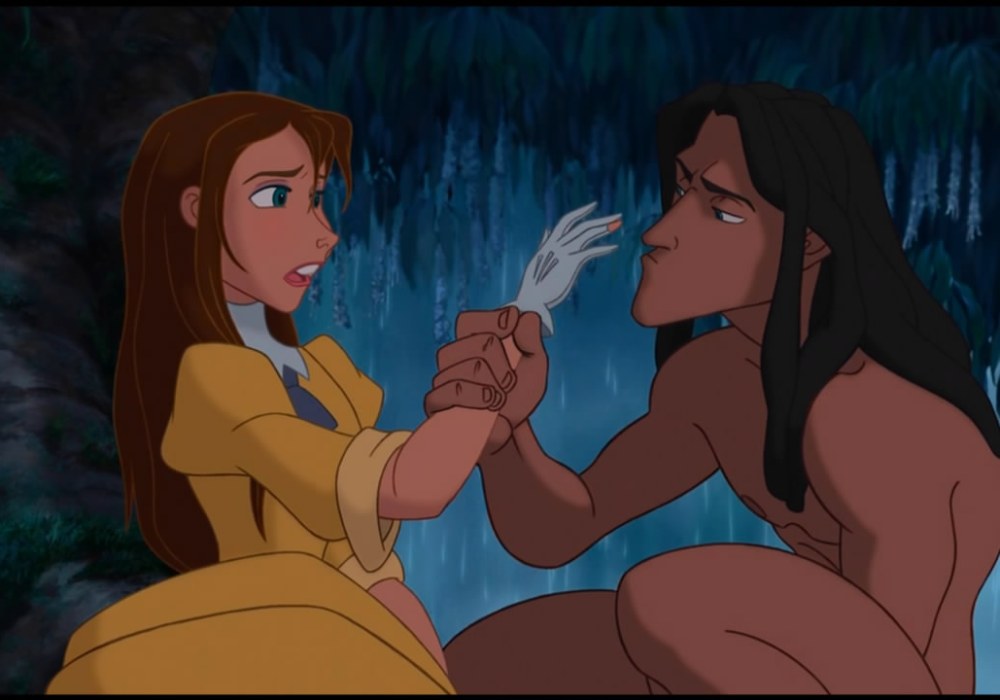
As it turns out this film is a nearly unqualified success in both what it does in terms of telling a Tarzan story but also in its smooth manipulation of the standard Disney formulae. In terms of Edgar Rice Burroughs’ creation, as best as prior cinematic adaptations are concerned it distills merely one book, Tarzan of the Apes, and adapts that to tell its story. So far as Disney has been concerned there was no other blueprint to go off of because they were tackling the tale for the first time.

With an opening that is dialogue-free, save for Phil Collins’ source music; the film begins rather quietly and powerfully. The connection established between an orphaned babe and Kala, a female gorilla who rescues him and raises him as her own. The technique of animation allows for more exacting and concise editorial decisions about what needs to be shown. Since there are no live animals, but ones constantly under control of the animators, the temptation of cutting to something for cute factor is gone. Clearly, cultural mores changed over time, but the fact that this film deals strictly in an origin allows it to convey characters on a more human level, and avoid pitfalls some past films faced.
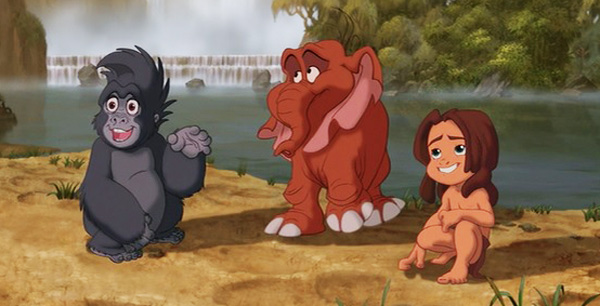
Tarzan (Disney, 1999)

Interesting from a Disney standpoint is that the characters do not sing, the music is played as part of the score. There’s one moment of instrumentation but they are not anthropomorphic chorus members this time. Tarzan’s sliding about as if strapped to an invisible surfboard through jungle trees gets a bit trite but it does add a controlled kinetic element and makes him seem superhuman. Also a stumbling block that is overcome is that of language. It takes some suspension of disbelief, but Tarzan and his family can talk to one another, but when he meets Jane, her father, and Clayton; he can only grunt at first and then he learns to parrot and eventually understand. This is well-covered with artful montages.

By getting away from certain conventions that other Tarzan movies set, and spinning the tale a Disney way, while also tweaking certain expectations of a Disney film the road to success is already paved. In a pleasurable surprise, however, the film also does manage to tug at the heartstrings like most Disney fare does – more strongly here. Also, Disney flips the script on a template established in The Jungle Book. A successful restructuring of a given pattern can be a joy to watch, conversely a failure of such an attempt is difficult to deal with.

Taking all that in mind, with so many other versions under my belt, and with the hallmark Disney delivery of the origin, this may be the Tarzan film I was looking for all along the one that combines adventure, emotion and the intrinsically fascinating things about this tale in one package.
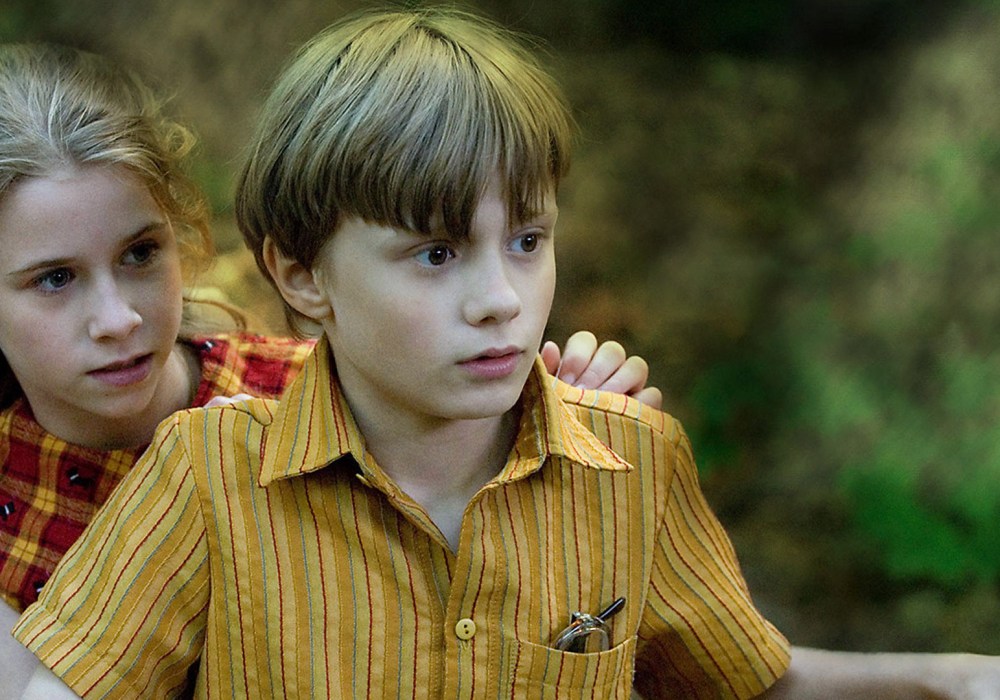
Review: It’s Not Me, I Swear

It’s Not Me, I Swear is a film that takes a tonally difficult and topically potentially controversial tale and handles its narrative with a level of sophistication that allows its dark whimsy, humor and introversion to radiate outward. The tone, and the blueprint for the story, are set almost immediately with the use of voice over narration in which the protagonist, Léon , waxes philosophical on his interpretation of life at the tender age of eleven, how he finds it futile and has tried to end it on several occasions.

However, considering the fact that this is the film that Phillippe Falardeau would tackle just prior to Monsieur Lazhar, it’s not impossible to see how he would be able to balance the tenuous tone and also be able to handle children acting in rather complex and profound roles. In a quirk of the international distribution game this film has actually only found release in the United States this year (on home video) and is subsequently eligible for the 2014 BAM Awards slate.

From the internalized narration we get the externalization. Leon’s latest suicide attempt is thwarted and sets the story and further events into motion. With all the life-altering moments that will occur throughout the film, and the unusual characters to whom said events occur; it’d be tempting to externalize too much of the narrative and thus have the film wallow in melodrama. What the film wisely does is allows changes in attitudes and perceptions, even the complications of the players’ natures be demonstrated visually. The journey thus has appropriate tones and more accurate humanity.

Whether in the bigger scope of the tale in the travails of Leon (Antoine L’Écuyer), the temporary inseparable companion in Lea (Catherine Faucher) or his older brother Jérôme who feels equally tired of, and responsible for, his brother and struggles with and against writing him off (Gabriel Maillé); the motivations and subtexts remain just that more often than not. Certain things are unspoken entirely and left for the audience to ferret out. In an otherwise straightforward film these enigmas would be bothersome, but in a film that asks for active participation from its viewers from the first frame; it’s welcome.

This all is not to say that story is cryptic or uninviting. To the contrary the events that occur and what the plot is are very easy to figure out and follow, if not necessarily predict. It’s just that the story goes places where a typical American production wouldn’t and isn’t broad or blunt about telling you what to think, what the characters feel and why. It shows you, but in a removed fashion.

A further testament to how well this film works is that the flow remains consistent and pleasurable despite it not having a conventional plot. When a film is outside the norm, even if its good, the pace can feel hinky; here there is a smooth natural progression to proceedings.

Yet even beneath all that superficial idiosyncrasy, the plot does flow neatly into three distinct sections. The events do trigger one another even if in unexpected ways. Its the subtle handling of performance, story and structure that lands this film with an odd sensibility, yet ultimately uplifting end; comfortably and enjoyably for the viewer.

7/10

Mini-Review: Grigris

One thing that can be an easy trap to fall into when your experience in a certain cinema is fairly limited is to take one filmmaker’s world view or aesthetic and transplant it blindly to an entire nation’s films. I say this because it was only after having watched Grigris in its entity that I had seen Mahamat-Saleh Haroun’s prior effort A Screaming Man.

That film was my first exposure to him and Chadian cinema both. My reaction to A Screaming Man, one of my favorite films of that year, was as follows:

I am one who can be swayed but a very restrained and minimalist tale. This is a perfect example of that. Here you have the very simple story of a man who works tending to a pool in a posh hotel in the central African nation of Chad. Since he used to be a swimmer the pool is his life. He says as much. As civil war encroaches on the routine of his life and tears his family asunder he tries to keep control of things. You never learn too much about the conflict. War is war. Civilizations get caught it in it whether in the crossfire of by some form of collateral damage. Events are at times implied and others commented upon, facial reactions are restrained or non-existent but it gets you. I was brought to tears by this film. When it ended with a gorgeously languid fade to black I was completely gutted and left wanting another scene for more closure but knew another scene would not be right. The film had ended and we the audience like our protagonist would have to live with what had transpired.

What is still similar in this narrative is that everyday life in Chad is a struggle for survival. However, and as the inside of the dust jacket insinuates, it is a film that also has its sociopolitical comments but also blends several different genre conventions to tell a new kind of tale.

The motivations of character are clear, the filmmaker’s motivation to make the film spring from a real-life encounter with this dancer with a crippled leg. What springs forth is a sort of modern neorealist tale that incorporates various conventions to tell a tale familiar enough to those overseas but structured in a way that is as uncommon to us as the backdrop of Chad.

While I personally felt the tug of emotion from the subtly minimalist rendition offered in the prior film more, Haroun’s is a voice I definitely want to hear more of on film.

7/10

Tarzan Thursday: Tarzan and the Trappers (1958)

Introduction

In 2012 the character of Tarzan celebrated his 100th year in print. A serialized version of the story first appeared in 1912. A hardcover collection of Tarzan of the Apes first appeared in 1914. Being in the middle of the Tarzan centennial period it’s an opportune time to (re)visit many of the screen renditions of the character. Previous posts in this and other series can be found here.

Tarzan and the Trappers (1958)

Here, not entirely unlike last week, we have a feature film that was created by splicing together. Last week’s was created by cutting together a serial into a feature format. Here you have a proposed TV series that was turned into a film. Now this could equal if not better results than the former treatment, but the material here is quite odd.

In many ways it feels as if episode one and two were a single storyline (i.e. a double episode) and then the third act/episode was a new story with similar players that was shoehorned in. Aside from story issues this also creates little gaffes in continuity. For example, Tartu, the name of Tarzan’s son in this tale (Rickie Sorensen) has two distinct haircuts and they jump back and forth over the course of three scenes.

Now with these pacing and narrative issues clearly this is one that was going to fall low down the pecking order. This is also one I had seen previously. My initial rating was 3/10 and I was wondering why that was until it became clear there was a narrative break and structuring issue. If there is a lack of a link between episodes and no episodic structure to allow links to be built between episodes like, say Agents of S.H.I.E.L.D. did in season one; it had seemed like all cases were isolated then an overarching plot came to the fore.

This, and many ventures in the 1950s, was produced by Sol Lesser. Lesser was involved in many Tarzan titles among many other films. The call is not entirely dissimilar to MGM’s, this is another story that deals with Tarzan against animal trappers (granted there are only so many avenues these tales can take). This environmental angle has new angles these days and could play well in a newer version (moreso than treasure which this also touches upon). This Tarzan played by Gordon Scott, is a more literate version and closer to Burroughs initial intention. This film also returns Cheetah the chimpanzee to the series. Scott was a star in a slew of Tarzan’s. His build is better, but his acting, at least in this one, seems as stiff-acting as ever. I would gladly look into a designed feature to try and dispel that.

In this tale there is next to no stasis and lots of presumptive givens about who these characters are and what their backstory is and it dives straight into the adventure. This can be a positive if the narrative is strong enough which it is not.

While I recently have discussed how TV has become more like film over time this is a clear example of how they are not interchangeable. While there are minute elements that are more appealing here like lack of stock footage cutaways, many bigger elements and production value issues (like the fighting and wasting Scatman Crothers) cannot be overlooked.

Still a 3/10.

Review: Hide and Seek

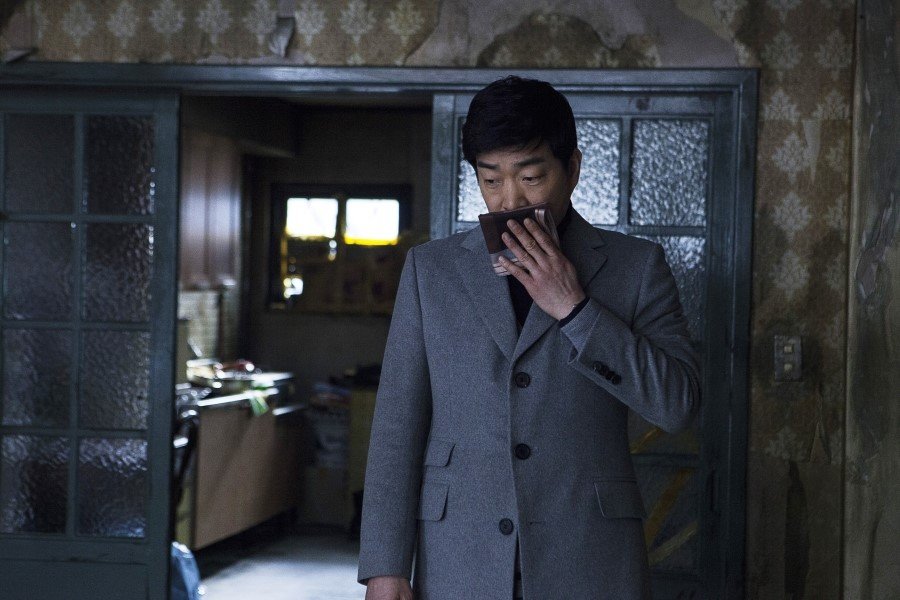
Things really get going in Hide and Seek starts off with Sung-soo learns that his estranged brother Sung-chul has gone missing. This sends Sung-soo into memories about his past oft-concealed from those he loves and sends him in search of answers and a deepening mystery. When visiting the apartment complex his brother last lived to look over his effects and trying to get answers he spots odd symbols and meets a terrified neighbor Joo-hee. From there on out the film truly intensifies from its eerie start to its shocking finale.

Hide and Seek does an expert job at misdirecting its audience cleverly in ways that work (i.e. are not cheats) given the context and the rules of the world built. What also works greatly in this film’s favor is that the whodunit aspect which is implicit in the mystery set-up early on takes a backseat to the atmosphere of quiet terror that builds slowly. For surely enough there is an oddity looming throughout and and as the film progresses it moves up ever-slowly overtaking the tonality of the film as Sung-soo gets ever-closer to the truth.

Hide and Seek does have the bones of a classical thriller with many of the elements and tropes built in. There are confined segments there is a modernized rendition of Rear Window aspects with looking about ones apartment complex suspiciously. What makes it stand out are the cultural and auteurist adornments that make it different than the run-of-the-mill. Furthermore, its effectiveness is amplified by the fact that it does retain a certain amount of credibility throughout.

Perhaps the greatest testament to the effectiveness of Hide and Seek is that it does a few things in its climax and denouement that are old hat but very effective here. It’s climactic confrontation is rather protracted and has quite a few stages, but never becomes tiresome. This has a lot to do with how the characters are built and portrayed. Secondly, the last few jolts and twists are not by any means unique but are very well-earned due to execution and timing. Hide and Seek is not a front-loaded or fast-moving piece of bombastic horror but rather gets under your skin in a rather usurpatory way. A highly effective fill well worth seeking out.

This credibility is buoyed by the fact that the characters are allowed in this film room to have sufficient arcs. The film clocking in at 107 minutes allows for a few things: firstly, it allows large and small mysteries alike to build. Second, as we are being misdirected we believe we understand the characters but as revelations and clarifications are made things come into focus and characters show themselves and how they’ve changed.

9/10

Review: Fun in Boys Shorts

One could go into an entirely tangential essay with regards to the title of this gay-themed short film collection its audience baiting and simultaneous unfortunate connotations that do a disservice to the films collected herein, but it is in such a situation where Shakespeare’s standby of “What’s in a name?” is most apropos.

Eschewing that angle the seven films herein for the most part handle themes facing gay men in society but also frequently plays with these tropes be they narrative, societal and frequently both. While most of the shorts are American-made, which means the inclination will be to be more comedic in tone there are still very valid points and observations being made through many of them.

And illuminating the diversity within a given “minority” segment of a population is one of the many boons that targeted fiction can have, especially if there is a universality to the story-telling. Whether or not the film, short or feature, crosses over to a more mainstream viewing, is nearly incidental.

These films follow gay men of different walks of life, in different relationship stages and brings up varied truisms regarding society. To be more specific both Bald Guy (Skallaman), with its very quirky treatment of a story of a parents’ shame and Unanimated (Desanimado), the story of a cartoon character in a live-action world; present very humorous allegories which underscore the absurdity of homophobia by transposing the aversion to other attributes which are equally innocuous or irrational to fear.

Both Spooners and Housebroken take humorous looks at rather standard situations. Spooners hilariously plays up societal inclusionary over-eagerness making a mattress purchase for a couple more uncomfortable than it should be. Housebroken seems like its going to the overly-outlandish as commonplace which are the waters that Queer as Folk liked to swim in, but the payoff is a refreshing and hilarious twist.

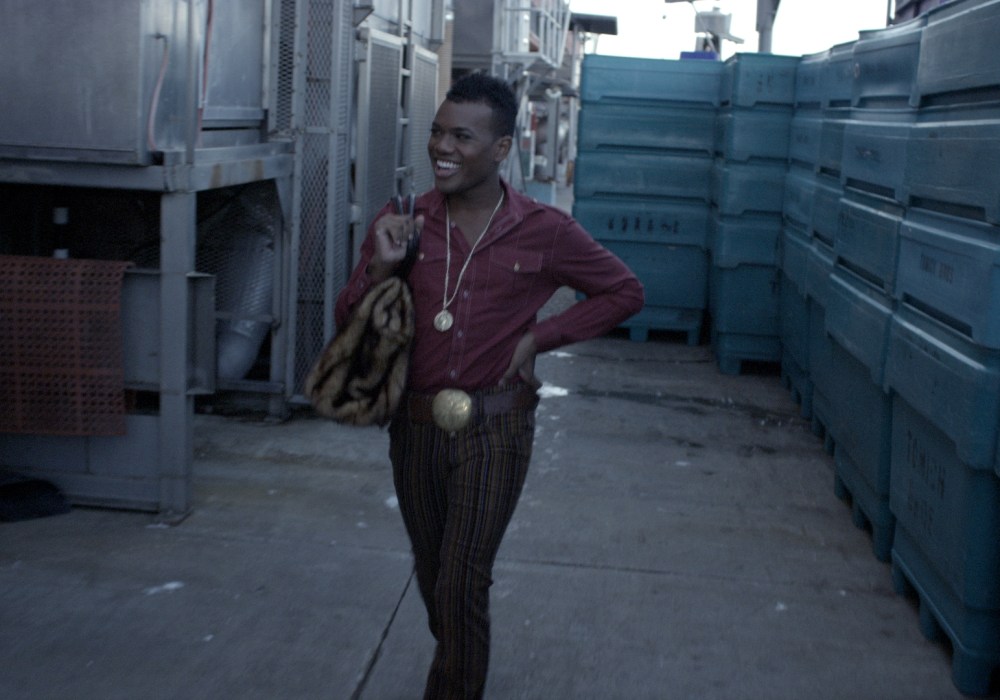
The best thing this collection of shorts has to offer is variety. It goes from quasi-farcical and vaguely surreal comedic concepts to more down-to-earth serio-comic treatments of concerns both large and small. Alaska in Drag tells a fish-out-of-water story told through the eyes of a newcomer to an Alaskan town meeting a black gay co-worker; which incidentally features one of the best retorts to faith-based homophobia I’ve seen. Sabbatical treats an unusual relationship decision with temporal suavity and devoid of histrionics. Lastly, in a fashion not dissimilar to Housebroken, P.D.A. deals with the very common hot-button in relationships of public handholding and thoroughly examines it before reaching a humorous resolution.

Similar to an anthology film, a shorts collection will have hits-and-misses, or better yet peaks-and-valleys. This collection has closer to the latter and is better than its title would have you believe.

Review: Ilo Ilo

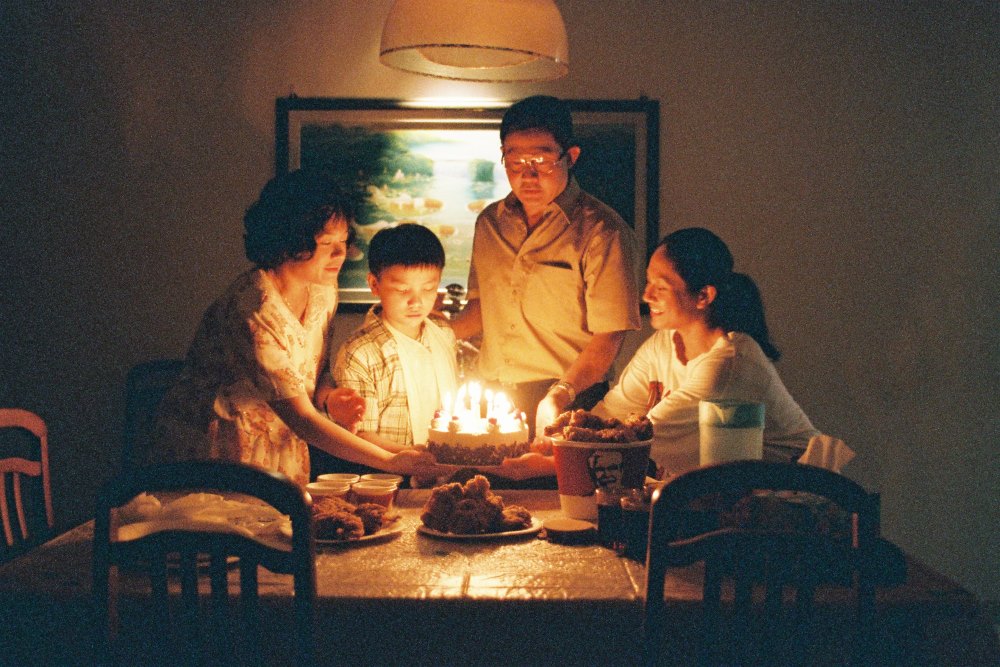
Ilo Ilo tells the story of a Singaporean family and how they are affected when they hire a live-in Filipino maid to help manage the household, one where the parents who both work long hours cannot always dedicate the amount of time required. As events progress the members of the family drift apart from one another, but in different ways grow closer to Teresa (Angeli Bayani).

If one is to purchase this film through Film Movement you get the benefit of a statement from the distributor and the director on the inside cover of the DVD case. What this underscored to me is something I took as a given due to my being a dual citizen of the US and Brazil. That fact that director Anthony Chen points out is the hiring of a maid when he was growing up in Singapore was not a “bourgeoisie luxury” but rather a necessity, and this is true in many countries as maid/nanny become a combined role and a necessity where two jobs and longer hours are required just to make ends meet.

The home-based tale has an autobiographical slant throughout and one way in which this apparent is the film is a subtle period piece. In a trend that is evermore repeating; films set in the recent past don’t blare as such with loud titles but rather with small clues like events in the news, pay phones, calling cards and Tomagotchis. When this soft approach to instilling a sense of time an place matches the overall movement of the film it’s an even finer choice than it already is in a vacuum.

The film’s narrative progression is one that is as gentle as its insinuation of its setting. There is a vignette approach to the story-telling in terms of scene constructions, but that is not to say the film is structurally loose. There is a naturalistic progression of events. And although, even in a dramatic context, there’s not a lot of mystery to the film and the conclusion may be somewhat foregone, you do end up invested in these characters such that even though it doesn’t try to actively pull at you, you care what becomes of them, and in the end how they feel with regards to most things.

As with almost any foreign film there are some similar very general themes you run into: for example, it is a window into another culture, there are specifics to the culture that come to light (like the perception of someone who speaks only English) and things that are universal; financial duress, immigration, culture clash and the like. It’s seeing similar themes refracted through another culture that makes the treatment of these themes both unique and universal. I’d admit to more than my share of ignorance about Singapore prior to this film. It caused me to search a bit more based one what I saw here.

What this film had me thinking of after it was done was Hitchcock’s analogy about cake. He said some films are slices of life, he liked to make slices of cake. What Ilo Ilo struck me as was the best of both. Yes, for the most part the film is scenes of everyday life and how these characters can or can’t cope with changes in that, how they try and force some changes, how they struggle to relate. However, its all centered on a fulcrum and structured around the introduction of this new presence in the family.

Film acting is about subtleties and about how one carries themselves and embodies a role moreso than it is about dialogue. Whereas theatre is an actors’ medium. film is a medium wherein an actor completes the picture and Ilo Ilo succeeds because it has the right actors filling in the blanks. Whether its the very hard shell hiding a scared, loving mother conveyed by Yann Yann Yeo; or the stressed, burden-carrying quiet reasoned concern of Tian Wen Chen; the quiet caring of Angeli Bayani; or the impulsive, often angry, frequently impulsive and infuriating good-at-the-core Jiale played by Jialer Koh; all the pieces are in the right place.

Ilo Ilo ultimately moves deftly itself and moves you in much the same way. It’s unsentimentally touching and balances perspectives such that it’s really about the newly created family unit as opposed to one member therein. Its insights and commentaries are specific and universal. An enjoyable all-around viewing experience.

9/10

Second Screen Review: App

Since this is a very different kind of review I will offer some tidbits in the interest of full disclosure. I think it’s fairly safe to say that we all look at our phones too much and it’s part of why the film App is allowed a chance to succeed. I still have a bit of perspective since I find myself in the middle-ground between the technologically illiterate who just don’t get it and the kids growing up with computerized telephony as second nature. I still remember the randomness of sending my first text message and how I followed its evolution from novelty to near-necessity.

At the movies I do not silence my phone I TURN IT OFF. It’s not just out of respect but out of necessity. On rare occasion I felt compelled to silence only my restless shifting has inadvertently switched the ringer on. Thankfully it’s usually only been an email bing that alerted me to the fact. So a concept like App, a film with a second screen experience, is not something I’d disavow as a notion on principal, but it’s not something I’d personally engage in on first viewing.

This is a concept that’s not unheard of. Some television shows have used apps to offer additional second screen content as the show airs. Basically how these work is the app accesses your microphone to pick up where you are in the course of the show so it can synchronize pop-ups.

From a marketing perspective it’s great for branding of your film. It also, if you keep the app, creates a keepsake of the film for the viewer. Anyone who looks at my Instagram knows that’s something I’m fond of.

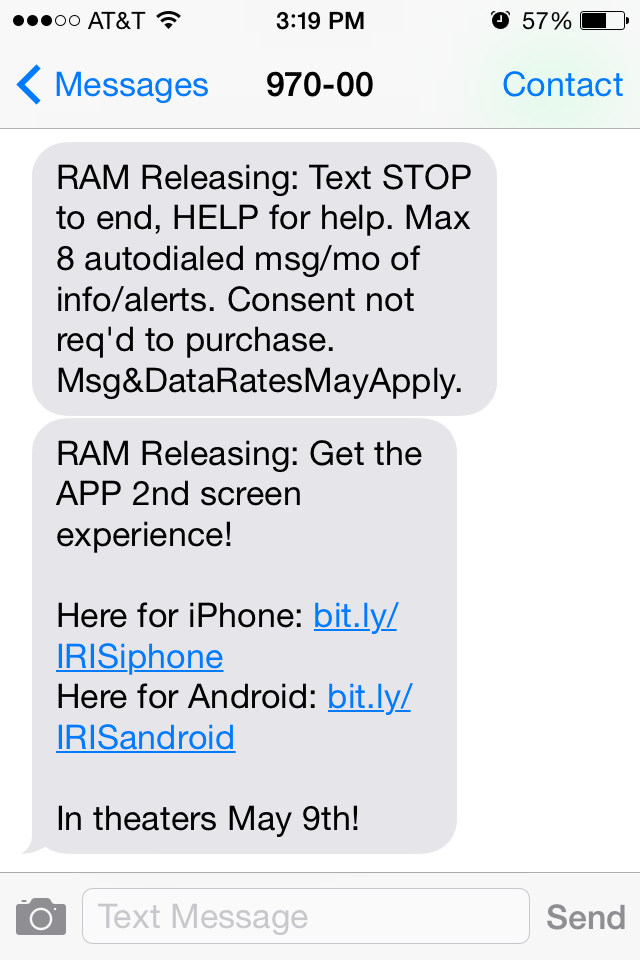
textshot

So with the basics and background out of the way how does Iris operate and interact with the film? You text the word “Iris” to 97000 on your Android or iPhone and receive a link to download the app. This also subscribes you to RAM Releasing’s text-blast list, which is smart of them and easy enough for you to opt out of.

A few tips that will make it better for you as a viewer:

First, if you turn off your ringer the phone will vibrate when there’s something to be seen on the second screen. This is helpful. It being a second viewing I spent too much time glancing at my phone when I didn’t have to. Also, activate the do not disturb function on your phone as push notifications from other iPhone apps will appear on your second screen if you don’t.

screenshot2

When you open the app you hit start when the film tells you to do so. If your microphone is obstructed start-up will take longer and you’ll see more scrolling code than needed. The app’s icon and the words “IRIS ACTIVATED” will appear when it’s working.

Also, if you have to take a bathroom break, either at home or at the theater, you can restart the app. It will say “Ah, so there you are…” when it’s synced and get you right back on track.

screenshot

What are the things you can hope to see, without putting too fine a point on it? There are alternate cuts of scenes. For example My favorite shot in the film was cut down for pacing reasons. With second screen you can watch that shot continue as the film goes through transitional shots. In essence, what this creates is a new-age split-screen. The important thing here is to reduced the level of gimmickry and make the technological component feel intrinsic to the story, which based on the synopsis of this film it does. It really was designed to include this element. If it does that and draws in more viewers it can’t be all that bad.

What you get in the approximately 35 instances when Iris warrants your attention during the film are only occasionally extraneous bits of information. There are purposeful filling in of chronological gaps, all interactions are tonally appropriate for the moment. One item even underscored what I perceived one subtext to be based on what was implied in the monologuing of the antagonist. It also provides nice moments where you’re in the action seeing the same thing on your phone the characters are, and it re-highlights certain facts.

App (2013, RAM Releasing)

I can go on a philosophical jag, asking “What is cinema?” as if I fancied myself to be Andre Bazin, but I won’t. It’s not a treatment that would fly at an Alamo Drafthouse. I do know that the cleverness of this film is that it connects the experience to the film. This film doesn’t concern itself with if the tide of cellphones in movie theaters can be stemmed. And the film also doesn’t concern itself with if second screen technology in cinema will be a blip or a trend. Whether 50 years from now this ends up being the beginning of a trend like the shift in aspect ratio or just a wise ploy of its time that can’t be replicated like those in William Castle’s repertoire remains to be seen. What I do know is that the app works really well and it would’ve been a seamless experience if I personally wasn’t in uncharted waters and distracted. Having the aforementioned guidance ahead of time would’ve made it quite perfect.

My rating scale isn’t calibrated for second screen. Take all my points into consideration, and more importantly, read what I said of the film before making your own decision about how and if to watch it.

Review- App

App is a Dutch horror film that is the first feature length motion picture to employ second screen technology – meaning additional content will play on a viewer’s phone. For more on that and how it plays with the film itself come back tomorrow where I will review that portion independently.

The merging of technology and horror in plot is not a new trope. However, it is always noteworthy. As technology evolves cinema will invariably comment and employ. Text bubbles appearing onscreen, as opposed to shooting the phone’s screen, is now commonplace in the language of film. So it was only a matter of time before horror went from voicemails and cellphones themselves to apps.

This is a story that clearly will take a supernatural slant as it concerns Anna (Hannah Hoekstra) who finds an app on her phone and doesn’t know where it came from and she can’t get rid of it. From that moment the stakes only increase as the A.I. continues to only get stronger and more omniscient.

One of the best aspects of the film is how it sets things up and then delivers pay-offs in unexpected ways. Characters both major and minor are introduced and the film spends a good portion of act doing that, but as it does its also foreshadowing and setting up incidents later on. In fact, there were a few set-ups that became apparent to me one my second viewing.

One of the things the film does struggle with a bit is a balancing act many films have to figure out, which is what to explain and what not to explain and when to disseminate said information. A lot of the answers are all provided at once in a monologuing-style stream such that its possible some information can be lost in hindsight.

Not that the film quite gets off the rails, but as things are speeding towards a conclusion it’s a bit of a slow-down in pace to get the answers. The film overall does not engage in much spoonfeeding such that one small ever-so-slightly incongruous section such as this one stands out even more. However, in dealing with it alone it does leave some things for you to ferret out and some stay mysteries.

One very pleasant aspect of the film is that the catalyst for the inciting incident is not a dumb/obvious mistake by the protagonist, but rather a an innocent and not very apparent one. There are based on incidents in the narrative requisite scenes that must be played out: namely those between Anna and Sophie (Isis Cabolet) when they’re fighting. These scenes are not belabored, well-handled and resolved with minimal dialogue.

As opposed to one of my favorite recent film discoveries Hellphone; App, while still having comedic moments, is playing it a bit more serious. To do that with a fairly outlandish plot requires a lot of finesse in the directing and scripting, but also from the cast. The standout being Hoekstra who effortlessly conveys and intelligent, tough, fun-loving character whose turn as horror heroine rivals that of Sharni Vinson in You’re Next, albeit in a far different subgenre.

App is a film that works quite well, whether you decide to engage in the wizardry of the second screen experience or not. Its an 80-minute tale that feels brisk and not truncated, that’s is great fun and even though all the kills and thrills aren’t jaw-dropping surprises they are well-executed and staged.

7/10

Review – The Jewish Cardinal

This film tells the dramatized tale of Cardinal Jean-Marie Lustiger. Lustiger was born to a Jewish family but was kept safe by a gentile family during the second world war. At the age of 14 he felt the calling to convert and was baptized into the Catholic Church.

That’s the backbone of the tale; it’s the hook. It’s what gets you intrigued, however, the film structures itself differently in part because its allowed to. The dual-nature of Lustiger’s identity only really surfaced when he was promoted to the position of Bishop of Orléans. Were this to be an exploitative tale a bulk of the film would be public bickering and fighting back against both sides trying to claim him as their own; what for some films is a whole here is merely a launch-point. Where the film excels is the introspective nature the film has.

Another hurdle this film has to overcome is that it tells a sprawling tale from 1979 to 2007. Covering that much time in roundabout 100 minutes can be problematic, however, there is a wonderful symmetry among the struggles Lustiger has within his own family, with the Church, with himself and in trying to be a liaison between said Church and the Jewish people. That conflict is crystallized as a bulk of the tale ultimately concerns an ill-fated and -conceived establishment of a convent at Auschwitz.

Such a duality wherein a character is balancing his faith an ethnicity is not an easy one to convey. Audiences who appreciate gray areas will certainly gravitate to this film. It reminds me of a bit of The Other Son where the inextricable link of the Jewish faith and ethnicity is made rather profoundly in a different way. Whereas here a man seeks to keep his cultural identity and his “newfound” faith.

A film that paints in such shades of gray would be nowhere without an excelling cast, faltering on their part would render the tale farcical or disrespectful regardless of the best efforts of the writer(s) and director. Thankfully this film has no issues as such. Both clerics that are the central focus of the film are painted as rather human. Firstly, there’s Laurent Lucas as Lustiger, whose introspective yet fiery nature. Then there is Aurélien Recoing as, for the lack of a better term, the antagonist (in some regards), as Pope John Paul II is not painted as infallible, but rather a man whose judgment of a particular situation is clouded by his own world-view. The coming to an understanding that both characters have as they reach a consensus on the crisis is rather moving and sets the stage well for the closing acts.

Those acts are set in motion by the well-timed nature of the flashbacks. For a time it seems like the film is burying the lead not showing or discussing the conversion process and similarly avoiding discussion of the war. Those play in later. It’s a clear illustration of breaking chronology is a better treatment.

To preserve the surprise of it, I will avoid describing the detail the peace that Jean-Marie comes to and the conclusion he reaches regarding his identity at is really only discussed at the most pivotal points of the film. However, it is an intriguing way to look at it.

Clearly, as described above, this is a film that’s not afraid to discuss matter of faith, but also take those discussions into some difficult, challenging places. It’s a story wherein it could be tempting dumb it down and mollycoddle but it does not, quite the opposite it respectfully challenges those watching it to think – proving that faith-based films needn’t be neither propaganda or mindless.

9/10