Review – How We Got Away with It

How We Got Away with It concerns Henry (McCaleb Burnett) who has just been released from prison on the verge an annual weekend getaway with a group of friends to his hometown. A sudden tragic turn of events causes some of them to respond in a violent manner.

When one is a credits reader they may be leery seeing one of the actors listed as one of the writers and director as well. However, this film does have a very cinematic start and flourishes throughout. Moreover, its ensemble nature, for the most part, feels organic and not as solely a showcase.

The film builds mysteries, throughout but how big they are and how much they should be guarded is one of the main struggles of this film. Subtext swallows text; while that is a higher-class problem to have than the opposite it presents a challenge of its own, which is keeping interest through the subterfuge. The subterfuge can become either a beautiful smoke-screen to a gorgeous reveal or a frustrating encumbrance when a clearing is reached. Here it ends up being more the latter as some of the information revealed is unsurprising, or doesn’t change the game. Ultimately it feels like the film plays coy for far too long.

This even extends to the characters and their relationship to one another. Now that does end up being clearly by design as events unfold. However, there is a cumulative effect to all these facts being played so opaquely, as in the end all the scenes aren’t intrinsic in leading to the big reveal and something more tangible to hold on to would be nice. The issue being that the dialogue is precise enough, and the actors are en point enough that you know they’re driving at something, but are not always sure of what. There needs to be a scrap thrown now and then. After reveals there are scenes that play out perfectly, but then the cycle on consistent tenuous engagement recommences.

Even when some satisfactory answers and information are revealed it proves a bit more frustrating because in the end it’s not that far from succeeding as a whole. It’s a film that’s belabored and too “cute” for its own good.

This especially proves true when it comes to the sequence that illustrates the title. It ends up being a second example of Becker (Jon Lindstrom), the detective, nearly Holmesian intuitions, powers of deduction and evidence gathering. It’s another double-edged sword: it’s cinematically handled and to an extent respects the audience’s intelligence, on the other hand its incredibly convenient and quick.

When all is said and done, it’s a different approach to a fairly standard story that should find an appreciative audience, it just didn’t hit home here.

5/10

Review – A Long Way Off

A Long Way Off is a film that is a modern retelling of the story of the prodigal son. As such it has the foundation, firstly, to be an effective human drama and, second, transition well to a modern secular retelling. However, its successes and ultimate failures are attributable mostly to what is built upon the foundation of one of the most beautiful stories the Bible has to offer.

Aside from a title card at the beginning citing the chapter and verses of Luke wherein the story is disseminated first, the source is never that overt, save for plot points (should you know them) and certain pieces of dialogue (again, should you know them). That title card at the beginning is indicative of one of the issues the film has which is that of lacking in subtlety.

Not to say that this film ever truly hides its nature as faith-based entertainment, but the narrative of a man struggling with his purpose, family, ultimately faith is universal enough such that it should translate to all audiences regardless of their religious or other affiliations.

That’s why in a story of unconditional acceptance of a son by his father, and by extension of the Father for all His children, its an exceptionally curious and tonally incongruous decision to include divisive material that isn’t even veiled but appears in the forms of propaganda, virtual infomercials, politicking and more. One example is Sean Hannity introducing a book that “has converted many liberals to conservatives.” Another is a scene that has narrative purpose: the lost son seeks a gun in self-defense and the salesman is not only a clairvoyant, knowing he never used one, but also a mouthpiece for responsible application of the second amendment.

This isn’t a comment fueled by personal leanings but one that is made noting the lack of narrative necessity of these asides; in the aforementioned gun-buying scene Jake, the prodigal son; didn’t have money anyway, so it was crafted just to make the point that there are responsible gun vendors, etc. These are just a few examples. People who took issue with The Secret Life of Walter Mitty would have an embolism watching this film. Product placement is one thing (and a necessary evil of all levels of filmmaking) but when it starts to feel like you’re not just acknowledging the reality of corporate influence in the world but like you’re leasing airtime to people for infomercials, that comment overtly on the story mind you, it becomes a further issue.

Granted in the modernization of a story there needs to be a sojourn into excess and secularism. However, the perils of leaving home and forsaking ones family cannot be cartoonish if the film is to maximize its full potential. And that’s about the only way to characterize an eye-patch clad gangster with a wise-guy accent. The film still, in spite of itself and due to the strength of the story its basing itself on, has its moving moments.

It seems as if a few things were at work here the film was trying to cram all its ideas in one story whether they truly fit or not, when it really didn’t have to. Despite some stilted scenes and dialogue the core of the film does function, but in an updating it is really about the update that makes or breaks it. A litmus test of a faith-based film is if it’s preaching to the choir. It sounds like a platitude but it’s true, it has to work as a film. This film more often then not seems like it’s not only preaching to the choir but trying to tell us who is welcome in the choir – or maybe just sell us books also.

5/10

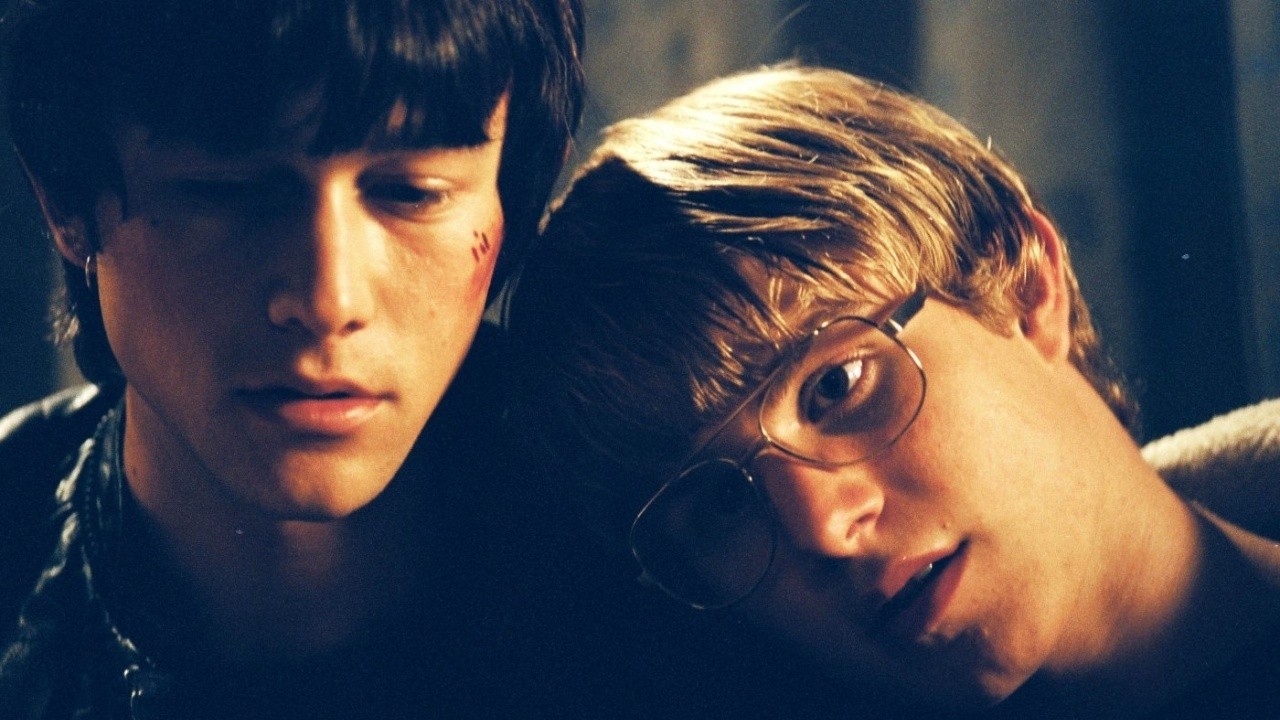
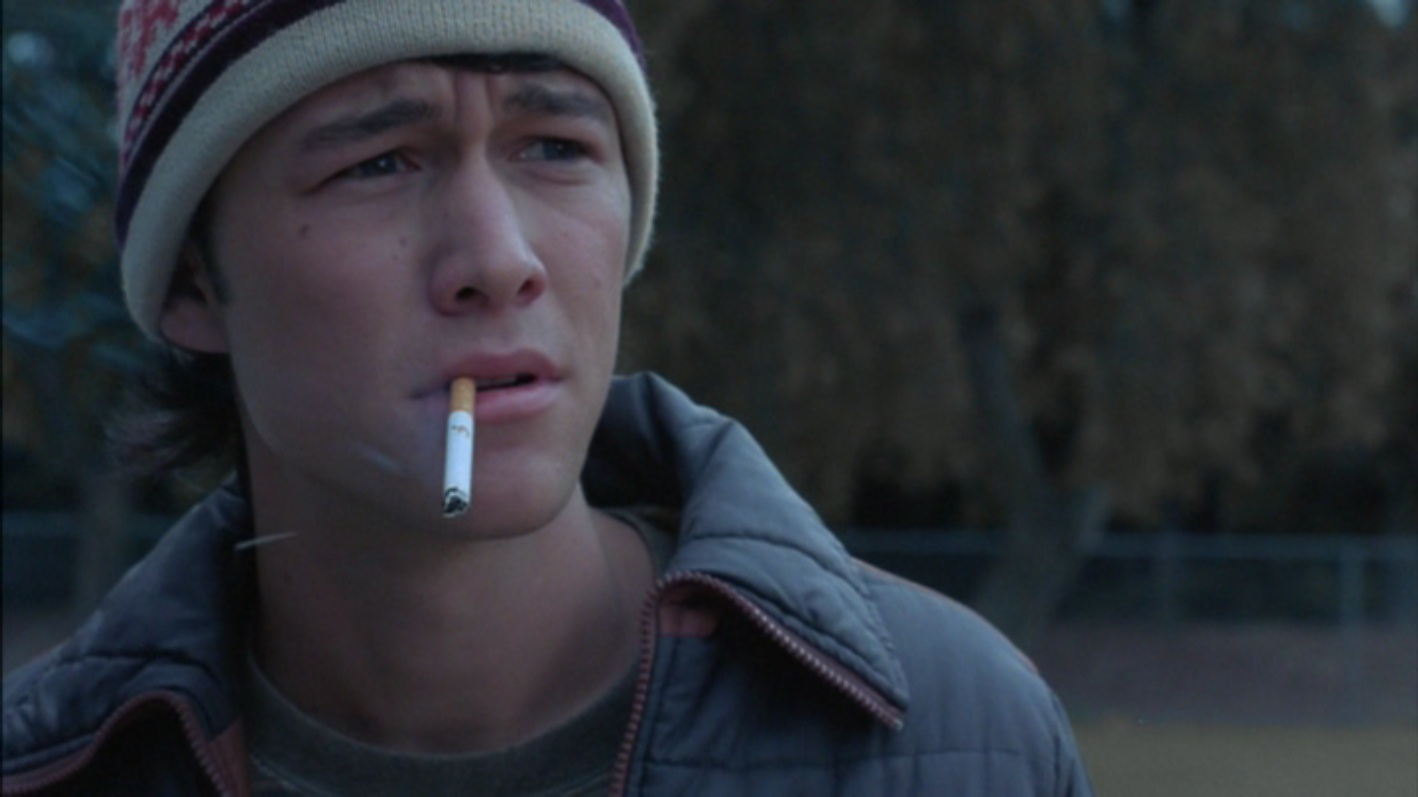
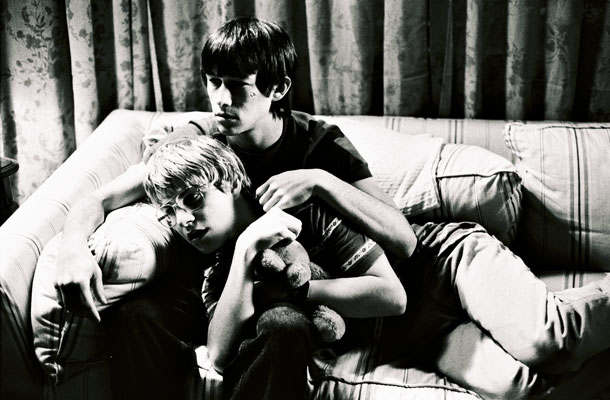
Blu-ray Review: Mysterious Skin (2004)

Film

The IMDb synopsis of the film describes this film as follows:

“A teenage hustler and a young man obsessed with alien abductions cross paths, together discovering a horrible, liberating truth.”

That’s about as dull a point as can be put on it without going too far into it.

This is a film that I had only truly written about once in the past. When compiling, to the best of my ability, and within the realm of what I had seen; the best films of the past decade. I wrote this about this film:

One of the most disturbing yet most captivating tales of the decade which creates a great plot around the subterfuge of memory. It also tells the disparate tales of two kids now grown with a shared traumatic childhood experience. This is the film that allowed Joseph Gordon-Levitt to break out of his sitcom persona and become a giant of the independent film scene.

That is certainly only beginning to scratch the surface when it comes to this film. Perhaps what is the most captivating thing about this film is not just the emotional resonance, or the parallel structures of seemingly disparate stories, but the fact that it stays with you, and also leaves the characters in a place that doesn’t finish their whole story, but rather concludes what needs telling.

When the dust settles, and this was certainly true this time, it becomes apparent that some of the seeming-meandering (although still effective) is all deftly building and exploring character throughout. Neil’s pains are more below the surface, he doesn’t show them, but his is a more difficult arc to write and perform because his character is the one who doesn’t misremember his past but has an interpretation of it that both helps him cope but to an extent poisons his present.

I think what was re-affirmed in this re-watching of the film is that its impact the first time around is one that will not be equaled upon review whether you see the finale coming or not. It’s also proof that whether the subterfuge of memory fools you or not it’s a harrowing and effective narrative regardless.

As will be demonstrated through some of the special features, Araki’s direction of this tale is sure-handed and allows a sensitivity and insight to exude this tale usurping its brutal and harrowing moments cutting to the heart and soul of the characters at the core of this tale. They are characters we don’t always fully understand but when we do the empathy overflows, and through some of their questionable choices and actions they are still watchable.

It’s a film that’s still very highly recommended to all (of suitable age to see it). If you are unfamiliar with the film I’d recommend you find a way to rent it before committing. For fans of the film already either the Blu-ray or the DVD are a steal for all the bonus content you get regarding the crafting of this magnificent film – the Blu-ray offering clearly superior imagery.

Bonus Features

Here I will specifically discuss the bonus features included on the new Deluxe Blu-ray.

Introduction by Director Gregg Araki

Mysterious Skin (2004, Strand Releasing)

Sometimes having an introduction to a movie can be a great thing and really set you up well for what you’re about to experience. You need not feel guilty if you skip the intro for later consumption. Araki does discuss all the fortuitous breaks that made the film what it is but does not offer any greater insight in this short snippet.

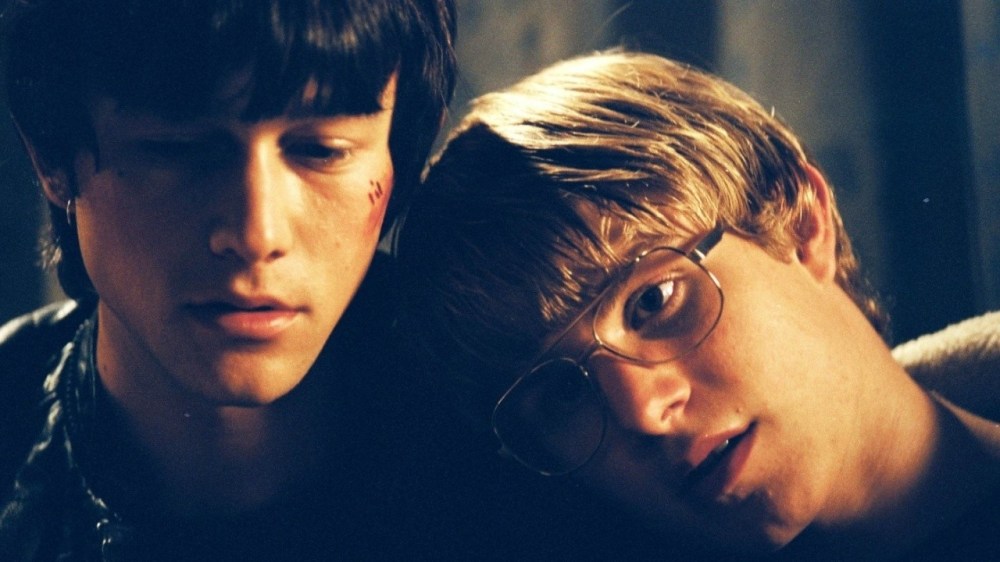
Interview with Brady Corbet and Joseph Gordon-Levitt
Mysterious Skin (2004, Strand Releasing)

This is perhaps the gem of the bonus features. I won’t give it away by enumerating the surprises in store but will rather say it’s great to hear their thoughts on the film ten years later, the intelligent discussion that they have, and that they frequently talk to one another as if there is no interviewer there.

Script/Sketch Gallery

Mysterious Skin (2004, Strand Releasing)

One thing the actors talk about is Gregg Araki knowing what shots would end up in the cut – the clarity of his vision. This is illustrated here with his crude storyboards on script pages mapping the film’s conclusion.

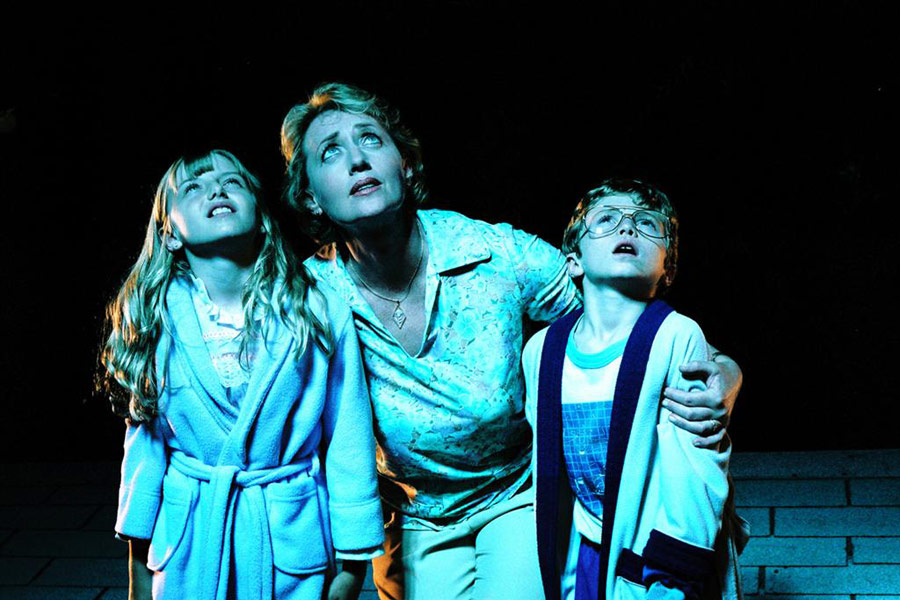
Deleted Scenes
Mysterious Skin (2004, Strand Releasing)

Deleted scenes usually should be deleted. However, they never fail to fascinate and often can be illuminating and rarely educational. Here you get a rare example as you see dailies of how the toughest parts of the story were handled. Illustrating the fine direction and editing the film had, and that the very young actors really weren’t fully aware of what the scenes were about (yet Chase Ellison and George Webster are still fantastic), but rather the Kuleshov effect and other editing techniques that filled in the blanks.

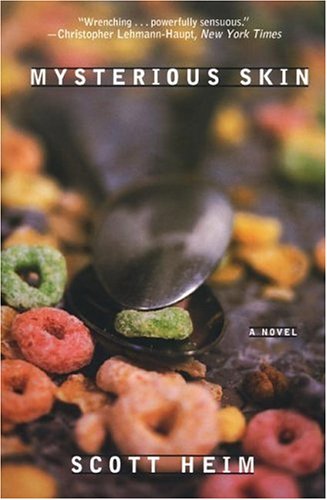
Mysterious Skin Book Reading
Mysterious Skin (1996, Harper Collins)

A very cool touch is that you get to see Brady Corbet an Joseph Gordon-Levitt read the opening chapters of their characters’ story out of the novel upon which the film is based. A fitting feature.

Author Scott Heim Reflects on the Adaptaion

Scott Heim (2008, Harper Collins)

The author discusses how in tune he and Araki were, and also how he was allowed more involvement than most writers are on film adaptations of their novels.

Photo Gallery
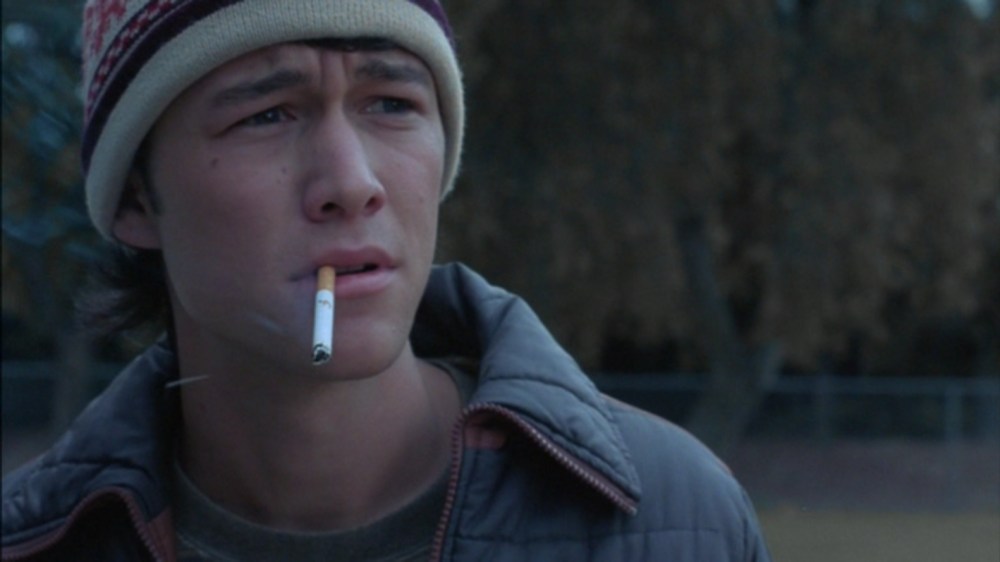
Mysterious Skin (2004, Strand Releasing)

A good look a probably more stills of the shoot than you can find anywhere. Proof of the upbeat atmosphere Araki created in spite of the content of the film.

Actors’ Audition Tape

Mysterious Skin (2004, Strand Releasing)

I always love to see this included. No, they’re not always earth-shattering obvious examples of why so-and-so got a part. However, it’s interesting for the layman, filmmakers and actors. You see unfinished renditions of these characters, the raw material of the performances were already present, and how much was being done with the actors having nothing to play off of.

Isolated Score and Effects Track

Mysterious Skin (2004, Strand Releasing)

This is not a feature that’s done very often but it can be very cool and informative. You can see how the score works independently, as usually it’s about a seamless marriage; and also some effects work you may have missed with everything else going on.

Commentary Track

Mysterious Skin (2004, Strand Releasing)

If you listened to the commentary track on the original DVD release this is the very same one. It features writer/director Gregg Araki and stars Brady Corbet and Joseph Gordon-Levitt. Since they all do help to contribute new material to this Blu-ray release this recycling is perfectly fine. In spite of the self-conscious and self-deprecating nature of the commentary track there are useful pieces of information conveyed and it is entertaining. Despite jokes to the contrary I did listen to the whole thing.

Trailer

Mysterious Skin (2004, Strand Releasing)

When a trailer is the only real bonus feature it’s a throwaway, when it’s added with all these other bonuses it’s the cherry on top.

Film Score: 10/10
Bonus Feature Score 10/10

Mysterious Skin is now available on Blu-Ray from Strand Releasing.

Review: Forgetting the Girl

When I heard that Film Movement was starting a “genre film” off-shoot called Ram Releasing, of course, I was excited to see what they’re offering. If you play close attention to my blog posts you’ll see that Film Movement has had quite an impact on my year-end lists and awards as of late. Of course, it being Film Movement I should have known that even “genre film” has a loose definition. And I meant that in the best way possible. The first announced releases sound interesting, and the first I got to see, Forgetting the Girl, toes a few genre lines.

Forgetting the Girl
concerns Kevin Wolfe (Christopher Denham) and his struggle to forget certain traumatic dating experiences and other painful memories. It does quite a few things such that not all are apparent right away. Firstly, and most recently coming to light, it slyly dabbles with found footage technique in the guise of confessional videos to be viewed if such and such occurs. However, conventional, and even unconventional cinematic technique are not abandoned and there are artful transitions in time and between scenes, parallel character structures and even implied off-screen occurrences.

Essentially, what you get are psychological self-examinations of two characters. Yes, two for Jamie, played brilliantly by Lindsay Beamish, comes into the fold and plays a significant role in the film and breaks the myopia of the film some.

Now, while the technique question is one thing, the genres are another. Clearly there is a dramatic tenor to the film as a whole with a serious and honest self-examination by two characters who acknowledge they have mental disturbances, but may not realize to what extent those issues pervade their being and activities. However, when the litany and history of Kevin’s relationships falls by the wayside and the narrative focuses more so on one relationship there will be slight mystery/thriller aspect added to the film.

The film impact ends up being not in surprising you, but in anticipating the culmination which you kind of see coming and how the characters deal with and discuss their fate. The film eschews simple explication scenes either quickly in montages or by excising them completely. This may create some holes, gaps and questions which are just merely niggling doubts and invite re-viewing. However, they do heighten the anticipated impact and serve the goal.

Forgetting the Girl is some ways experimental and its results will vary with viewers. I found myself somewhere in the middle range. However, I love the challenging and bravado that this flagship film offers. If it’s a harbinger for the kinds of films Ram Releasing will try and bring forth to winder North American viewership, I am all for it.

7/10

Review- Mission: Sputnik

One of the cornerstone moments in world history, at least during my upbringing, was the Fall of the Berlin Wall, and subsequently the Eastern Bloc. It was one of the first significant moments I was witness to on live television (and one of the early coups of the 24-hour-news network). As a child I understood its significance but its oncoming always seemed a bit of a mystery. What lead up to it all. Later, I would learn that it was nearly as sudden as it seemed.

It’s with such a youthful kind of eye that Mission: Sputnik tells its tale about children in the waining days of the Berlin Wall’s dividing Germany. The two keys to its success are the whimsy with which the tale is conveyed and the cloistered nature of the central characters; siphoning them from the adult/outside world allows them to believe more wondrous things are happening than actually are.

What this all alludes to is the mission that Frederike (Flora Thiemann) embarks on when her uncle Mike (Jacob Matschenz) is expelled from the GDR. She decides to amp up her experiments with teleportation to bring him back home with the help of her friends, with the backdrop of the Stasi cracking down on her hometown leading up to the town festival, which coincidentally falls on November 9th, 1989.

These experiments are inspired by an East German sci-fi show the kids watch, and allows a great balance in this film between childlike belief and innocence and perception. Another balancing act that occurs is between the comedic, fanciful aspect and the more dramatic moments with regards to fleeing East Berlin and the consequences of staying in town.

While there are clearly tropes at play here in this film it’s how they’re implemented here and what they play up against that make a majority of the difference between this film and standard family fare is made. Clearly, any film stretching the limits (at least a bit) of suspension of disbelief not only needs the proper touches in scoring, the editing room and direction, but also needs standouts in the cast. You get that here with the parents Yvonne Catterfeld and Maxim Mehmet and the kids Thiemann, Finn Fiebig, Luca Johanssen and Emil von Schönfels.

Another testament to this film is that despite the running time being brisk, coming in under 90 minutes, it does not feel too short or contradictorily languid. Its pacing is right on the money. This allows the film to be quick and enjoyable while the treatment and themes elevate it, giving it substance and fancy.

More often than not it is in our fictions that our histories live. Our fictions do not define our histories but they do pass them on and begin the discussions with future generations. The children playing the central characters in this film were likely not born in the 20th century, but are conveying a tale set against the fall of the Berlin Wall to their generation, and perhaps future ones. It’s a film worthy of starting the discussion because of how it treats the subject with a childish gaze of half-understanding through a maelstrom of oncoming sociopolitical upheaval.

9/10

March to Disney: Genius (1999)

Introduction

Last year to coincide with a trip to Walt Disney World in March, I decided to have a month-long focus on Disney fare. Their vaults are vast and varied enough such that this is a theme that could recur annually. Below you will find links to the inaugural posts written for the theme.

Genius (1999)

For this year’s March to Disney I most definitely wanted to cover a few Disney Channel Original Movies (DCOMs). I have at a few points in the past (most recently Teen Beach Movie). While they can be painful, as a lot of Disney Channel fodder can unfortunately be; on rare occasions they are quite good, not just among their own subset, but in general also. This particular title comes from the very earliest vintages of the DCOMs. In these days, late in the last millennium, these titles stood alone more and didn’t necessarily springboard performers into A-List Disney status, or weren’t always star vehicles. It sounds idealistic to state that “In this era the play was the thing,” but in many cases this is the truth.

Genius is a tale of a twelve-year-old wunderkind (Trevor Morgan) who is socially maladjusted, on his way to college and has his pick of the litter. He goes with an underdog choice in part because he gets to work with his idol. While the school fills his academic requirements the fact that he has to teach remedial classes for his scholarship underscores his misfit status, and leads to the alter ego plot that takes up a bulk of the tale. This is teased through most of the trailers. Now that plot line is old hat, and there are other tropes like a getting-to-know-you montage, mirror smooth-talk practice and more, abound that one has seen quite a few times before, but many of them are executed quite well and the mixture of them is what makes the film stand out.

It would be tiresome to list them all but there are most definitely moments where you will willingly have to suspend disbelief. However, if you do that there are rewards in store. And for some of the scientific and other fudging that’s done, the ice hockey elements are, for the most part, well-executed and not over-exaggerated.

Most of why this film does work has to do with the central performances, namely Trevor Morgan as Charlie Boyle. Morgan, in what was his first leading role, even at this young age, shows an innate ability to listen and react naturally such that his line readings don’t sound like readings at all but rather just talking. This influences everything from his timing to his physicality and makes all of it play more true. Playing his goal, his impetus for his dual personality, is Emmy Rossum who you may know from many films and most notably Showtime’s Shameless; she has her moments (especially her story about her mother’s figure skating which is better than 99.9% of what you usually get in these films). Playing his idol, in a rare onscreen appearance, is Charles Fleischer perhaps best known as being the voice of Roger Rabbit.

The prior mention of hockey, my favorite sport on the face of the earth, isn’t just a nod to the fact that they included it; it also plays a vital function in illustrating the progression of the protagonist. The film starts with his being a benchwarming cheerleader. In Charlie’s cooler persona he is allowed to play and shows sympathy to one who is in the same position he was once in. Lastly, a game of pick-up hockey is also used as the denouement when all’s well that ends well. This is not to mention the fact that there are the organized games played in a rink built above his lab that also play a vital role in the narrative. The sport here is most definitely a metaphor for acceptance and a narrative device, you rarely see something so deftly folded in to a DCOM.

There is bit of self-awareness to the silliness abound in the film, such as an actual ‘wah-wah’ chord in the score at a well-chosen moment. The effects work in these days were in shorter supply and more attentively done. A skeleton dancing in this looks better than most of what airs today, and reads as a nod to Harryhausen in its approach. While there are some aforementioned aspects that need to be overlooked there is a built-in symmetry that does aid this script. The jock/brain conflict drives a lot of this film and is given many chances to boil over. There are several great pieces of dialogue like Krickstein’s advice about experiments, smart barbs like “japesome wag,” use of phrases like “The Eureka Syndrome,” and the like. While the film does cram a lot of necessary plot elements into the third act it all works in the end and is one of the best, more under-appreciated DCOMs.

Review: 20 Lies, 4 Parents and a Little Egg

As time moves on the lines between visual media will continue to inevitably blur. Surely, each discipline needs to maintain its fine line for there to be a reason to continue separation of them. However, I raise the point because ever since the made-for-TV movie was created due to a perceived need by American networks, there has been a growing similitude growing between the two forms such that when one watches a TV film without commercial break there is scarcely a notable difference depending on the production, and what attempts were made to give it a filmic quality.

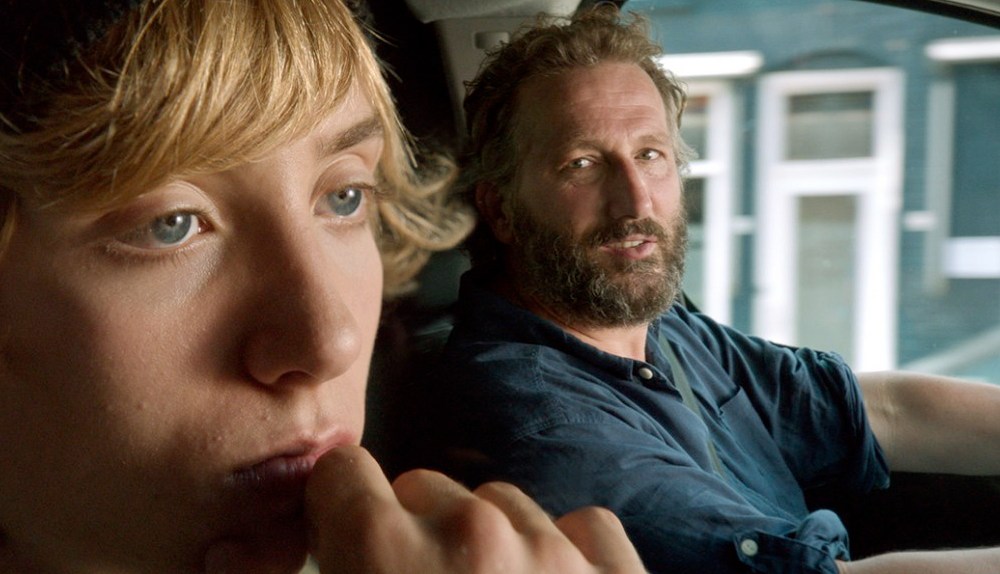
While the TV movie may have originated here it has, by now, migrated the world over. Which brings me, after that roundabout introduction, to the film at hand 20 Lies, 4 Parents, and a Little Egg. This is a dramedy that premiered on Dutch television last year. It tells the tale of how, after a freak accident, Dylan (Nils Verkooijen) gets to know his biological father, Sjors (Marcel Musters), after having been raised for most of his 15 year by his mother (Anneke Blok) and partner Ilse (Marieke Heebink). Dylan’s re-emergence into Sjors’ life disrupts his relationship with Bert (Mark Ram) and also threatens the secrets that each of them have harbored over the years – hence the title.

With a synopsis as I encapsulated above it would be easy for a film such as this to wander into melodrama. It manages to avoid doing that not only by staying quite humorous, based on the way all the characters interact with one another, but also being dramatically real. The film is ultimately driven by the character and how they react to one another. Dylan is a rather realistically rendered pest who has an “impossible” facade that is slowly taken down, which is a credit to the writing and the performance by Verkooijen. Yet even with that the film never loses its core conflict for facile resolution.

In the end the decisions are made quietly, mostly visually that sins of omission made to keep up appearances need to be addressed and moved past, and ends the story in satisfying fashion.

With all this talk of character clearly this puts and emphasis on performance and the quintet of central figures in this film all do a marvelous job. There is a naturalness and ease of interaction between all the characters that creates a shorthand that allows the film to move as briskly as it does. This keeps the pace up and the tale moving without getting bogged down in unnecessary bouts of exposition and the like.

20 Lies, 4 Parents and One Little Egg
doesn’t tread easy ground. When you’re dealing with a family-based comedy-drama that concerns two sets of same-sex couples the dangers become either insensitivity or faux-edginess. What this film opts for instead is heart and humanity and a brief toe-dip into the complexity of human emotions, and that’s the right path and it’s well-navigated here.

8/10

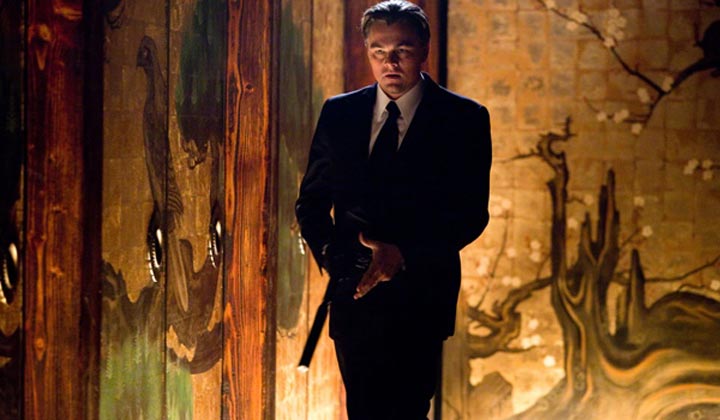
BAM Best Picture Profile: Inception (2010)

Introduction

After my series of posts on Django Unchained which began with a translation and then spawned my own posts I wanted to have posts for all my Best Picture winners. Therefore, I decided to revisit those I’ve not written about here.

NOTE: 2009’s Best Picture Where the Wild Things Are was reviewed here, therefore skipped in this retrospective.

Inception (2010)

One theme that I can’t help but notice in my Best Picture winners is that in quite a few of them there’s been a sense of anticipation. Now, on the flip side there will be just as many, I wager, that took me completely by surprise, but quite a few I saw coming ahead of time.

On the Site That Must Not Be Named, in part because there was an impetus there to write about breaking news, I wrote a piece about Inception prior to its release.

Christopher Nolan’s upcoming movie Inception seems like it might be another mind-bender in very much the same vein, perhaps, of Memento and The Prestige but to the nth degree. It is described by its logline as: ““a contemporary sci-fi actioner set within the architecture of the mind.” The plot is still rumored at this point and is under a cloud of quasi-Spielbergian secrecy. There are clues to it complexity though, as Nolan has been quoted as saying that it is “the biggest challenge” he has faced.

The cast is not only studded with stars but with talent featuring the likes of: Marion Cotillard, Ellen Page, Joseph Gordon-Levitt, Ken Watanabe, Cillian Murphy, Michael Caine and stars Leonardo DiCaprio who has the most telling quote about the film’s complexity saying in the Inquirer:

“The material and its complexity are what I’m attracted to…I’ve been lucky to work with people who want to tell stories that hit on different cylinders simultaneously. ‘Shutter Island’ is definitely that. ‘Inception’ is the same. It is Chris delving into dream psychoanalysis and, at the same time, making a high-octane, surreal film that came from his mind. He wrote the entire thing and it all made sense to him. It didn’t make sense to many of us when we were doing it. We had to do a lot of detective work (laughing) to figure out what the movie was about.”

Sounds like it should be one of the more intriguing summer releases and perhaps even more apropos for the fall.

One thing that that piece doesn’t mention is something that could only be realized when the film was released, and something that was only hammered home when I read the published version of the screenplay: in the introduction Christopher Nolan discussed how he wanted to do a film about dreams but what he needed was a recognizable mechanism to convey the story and make it accessible. So what he ended up finding was a heist film model. And the heist scene is one of my favorite parts no doubt, even though some of the parts fall into that new-age that’s-not-a-plothole style dialogue.

One thing that really impressed me was how small a film, how much less impressive this film was on blu-ray when I revisited it. It surely is a meant-to-be viewed on the big screen experience. In the end my thoughts from 2010 have not changed much in hindsight.

You will rarely if ever see such an audacious combination of high concept and highbrow. Typically, a film dealing in dreams is too busy being aloof to tell a coherent much less have an intelligent storyline. Nolan’s film is not, in my mind, overly-concerned with trying to confound quite on the contrary one of the few negatives you could say about it is that it is very concerned with making sure the audience is still holding on tight almost as if the subtext of certain lines of dialogue is “Are you still with me here?”

Yet it manages to impart its information in a way that is not overly-expository, we never learn what’s eating at Cobb all at once. In fact, we don’t know there is anything for some time. An important point is danced around in one scene and cleverly revealed later. A character unaccustomed to the world of dream espionage is the vessel through which we learn.

Inception takes a wild vision of the future and makes it seem mundane and doesn’t make a spectacle of itself but slowly builds a world and a narrative. It’s a blur slowly coming into focus and with each ratchet towards clarity more and more meaning can be inferred. It is a grandiose tale told in the intimacy of the psyche of its characters. It’s a tale that reduces large concepts into characters that dresses as a heist film only to shed that skin and reveal something even more appealing.

Yet through all its brashness, pomp and circumstance there is a deft hand at the controls of this tale too. It is a film that does hint at larger meanings that travels through the catacombs of the mind and makes you consider if you are reminded of someone… a man you met in a half-remembered dream.

BAM Best Picture Award Profile: Let the Right One In (2008)

Each year, I try and improve the site, and also try to find a new an hopefully creative and fun way to countdown to the unveiling of the year’s BAM Awards. Last year, I posted most of the BAM Nominee and winner lists (Any omissions will be fixed this year). However, when I picked Django Unchained as the Best Picture of 2012 I then realized I had recent winner with no write-ups. I soon corrected that by translating a post and writing a series of my own. The thought was all films honored as Best Picture should have at least one piece dedicated to them. So I will through the month of December be posting write-ups on past winners.

Let the Right One In (2008)

Not that long before Twilight descended on the world Let the Right One In crept up on the United States in limited release. And I’m fairly sure that I got to see it before I subjected myself to that first work that purports to be a New Age vampire tale. Let the Right One In concerns a bullied boy, Oskar, who finds a most unusual ally, Eli, and is a film that’s surgically precise and brainy enough for viewers of all ages; demanding rather than seeking serious consideration and easily sustaining gravitas.

There are a lot of things that stand out about this film, not the least of which is that it was my first introduction to the work of John Ajvide Lindqvist. He’s the latest Swedish literary sensation and the most recent, most naturally presumed successor to the horror in commonplace crown that the still-alive-and-kicking Stephen King wears so well. I’ve not yet read this book, but I’ve read Lindqvist since this time and plan to continue doing so. What’s evidenced in this film is not just Alfredson’s fine direction (which is re-iterated in his follow-up Tinker Tailor Soldier Spy) but also the quality and depth of Alqvist’s narrative.

Another testament to this tale that I can cite without even delving into the picture itself too deeply is the fact that this is one of the few foreign films of any ilk, much less one in the horror genre, that has spawned an American remake that comes anywhere near having the same tonal quality, emotional complexity, and performances on par with the original. Yes, as I cite in my review, Matt Reeves and crew get full marks for their Americanization, but the bones are there and if well-reproduced can create an engaging tale in almost any nation and language.

Getting down to the film in an of itself perhaps the most brilliant thing about this film is indeed the balance and the unusual co-existence of so many seemingly disparate elements. You have in this film horror and a coming-of-age, however, they co-exist in such a way that it’s not gimmickry or even overt commentary on either state of being. The given parameters of the situation complement each other so perfectly that once you’re eased in to the tale it seems like the most natural combination in the world.

Then you, of course, have the performances of Lina Leandersson and Kåre Hedebrant who have to play two very opposite characters and come to a mutual understanding. Leandersson is guarded, as one in her condition must be, and carefully examines her new friend to see if, in fact, he is the right one that must be let in. Hedebrant’s natural sensitivity allow him to convey a state or near perpetual petrification that is usually broken only by his fascination with his new friend and neighbor.

All this reasoning aside there is a moment, usually a more enigmatic, intangible one wherein a film’s Best Picture status makes itself clear; something I feel right in my gut. With this film it was the fact that, for the first time since early childhood, I was watching a movie I literally didn’t want to see the end of. That’s a kind of magic that’s hard to capture, but this film had the right elements in place, and a proper pace to make such a thought possible.

There are a few rarities and a first in this selection: although the second in a row, a foreign language film isn’t often my Best Picture, and as much as I love horror, it’s the only horror film to have claimed the top prize. Here’s hoping both those categories are represented again. If they are in the same film odds are Alqvist will have something to do with it.

BAM Best Picture Award Profile: Day Watch (2007)

Each year, I try and improve the site, and also try to find a new an hopefully creative and fun way to countdown to the unveiling of the year’s BAM Awards. Last year, I posted most of the BAM Nominee and winner lists (Any omissions will be fixed this year). However, when I picked Django Unchained as the Best Picture of 2012 I then realized I had recent winner with no write-ups. I soon corrected that by translating a post and writing a series of my own. The thought was all films honored as Best Picture should have at least one piece dedicated to them. So I will through the month of December be posting write-ups on past winners.

Day Watch (2006)

Firstly, it must be said that I cannot recommend you go out and see Day Watch unless you’ve seen Night Watch first. Yes, this is a sequel. In a way similar to what occurred in 2002 this is a sequel that is a game-changer. However, while Attack of the Clones merely changed Star Wars in my eyes, giving me a glimmer of what it is that drew the fanbase; The game-changing here is completely narrative-based. I cannot get too deeply into except to say that it’s a second installment that not only trumps the first entirely, but also sets the table for almost anything and everything to happen in the third.

Now the bittersweet follow-up to that sentiment is that the third installment, at least on film, may never come. The films are based on a trilogy of novels by Russian authors Sergey Lukyanenko and Vladimir Vasiliev. As best as I can tell co-writer and director Timur Bekmambetov still has ahold of the rights. While I was tempted to be mad at him for coming to the US and directing and producing things I either didn’t like or had no interest in seeing, I read a while back that one of the hold-ups was that financiers wanted to make a third installment in English, which I am against. If that’s the case I applaud the holding out.

Leading me to my next point that if you do seek these films out do so by watching with the original audio. I’ll not bash dubbing all the time, but when it’s bad it’s awful and the dubbing here is the worse. Aside from the fact that you hear the actors speak in the Russian language version you also get some of the most creative implementation of subtitles that you’re likely to see. The text floats about where it makes the most sense for it to be, the lettering is stylized and dynamic and is every bit as much an artistic statement .

At its very core, when boiled down to a bare minimum, yes this is a narrative like others you’ve heard of before. The series is a tale of the eternal unseen battle between forces of darkness and light in a very literal way. However, it’s the adornments, the style and the production that give the films their added flair and meaning. It’s also not a film whose cultural setting is inconsequential, which is a large part of why an English-language follow-up would be a mistake, being a Russian story very much factors into this film.

This was the first year my awards went to 10 Best Picture nominees. I cited it as not being a very strong year at the time, but the top couple of films were quite memorable. Even if this series never sees completion this is quite a way to go.