Mini-Review Round-Up February 2012

I had quite a review drought to end 2011 so I think the remedy for this kind of post would be to have the post be cumulative monthly. Therefore, after each qualifying film a short write-up will be added to the monthly post. The mini-reviews will be used to discuss Netflix and other home video screenings. Theatrical releases, regardless of how they are seen whether in an auditorium or on VOD, will get full reviews.

For a guide to what scores mean go here.

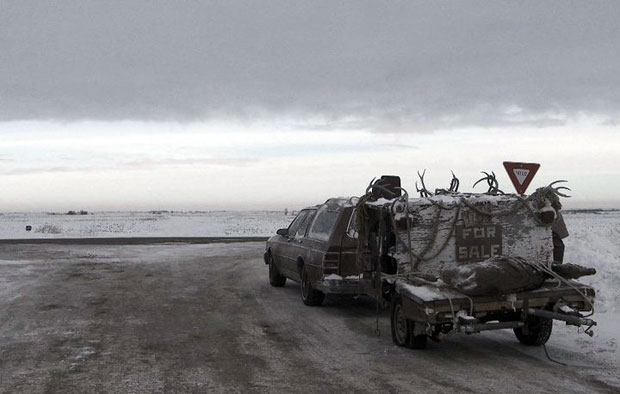
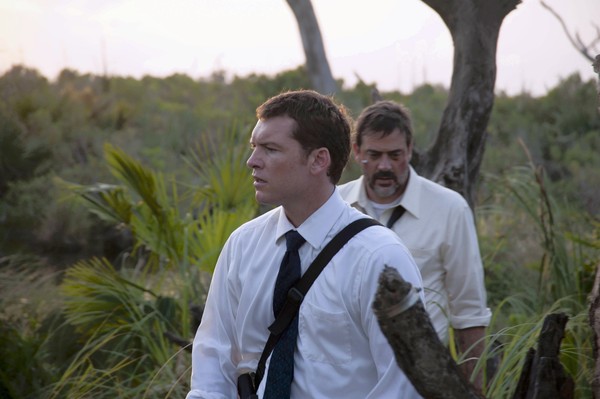
Texas Killing Fields

Sam Worthington and Jeffrey Dean Morgan in Texas Killing Fields (Anchor Bay Films)

This was a film I’d hoped to see when I went up to New York for a little over a day in the fall but little did I know it was only doing a one-week engagement in theatres there, which ended the day before I went, so I did not get a legitimate chance to see it last year therefore it counts towards this year. What’s interesting about the film is that it’s not so much a whodunit as a cat-and-mouse game between law enforcement and known local unsavory elements. It’s a rather interestingly rendered tale that kept me engaged and doesn’t live down to critical bashing or up to my take on its trailer. It also has some pretty good performances by Jeffrey Dean Morgan, Sam Worthington, Jessica Chastain in perhaps her least seen and most differentiated performance from her breakout year and Chloë Grace Moretz who is building herself quite a résumé, one which by the time she comes of age will likely be incomparable. Her plotline is well-rendered albeit somewhat predictable. The film also has the first legitimate Best Song contender of the year (maybe more than one) in the end credits.

6/10

Prairie Love

Prairie Love (Film Movement)

Yeah, I know that as I write this it’s March but I saw this film in February and needed some time to think it over.

This is the first film I got as a member of the Film Movement Movie of the Month Club. One thing I love about this club is that each DVD has a selected short film on it. The other is that on the inside cover you get a statement from both the company about why it was selected and the director has a statement as well. The comments from Film Movement are the most intriguing and they are how I couch this mini-review, essentially you don’t get backstory on the two leads or that much explication of why what occurs within the narrative occurs.

In a vacuum I’m fine with both. It becomes a question to the individual viewer if you want or need more. The situation and through-line are good and looking back in hindsight maybe a tag or frame would’ve made it better for me but with the approach it did take it didn’t quite work for me. However, it did make me think on it, reflect and I appreciate the aspect and feel the direction was clear but it ends up being similar to NEDs in a way, I feel there was a clear vision and it was achieved but it didn’t quite click for me. I did like that the first selection I got was thought-provoking and does have me considering revisiting it.

5/10

Spielberg Sunday: Duel (1971)

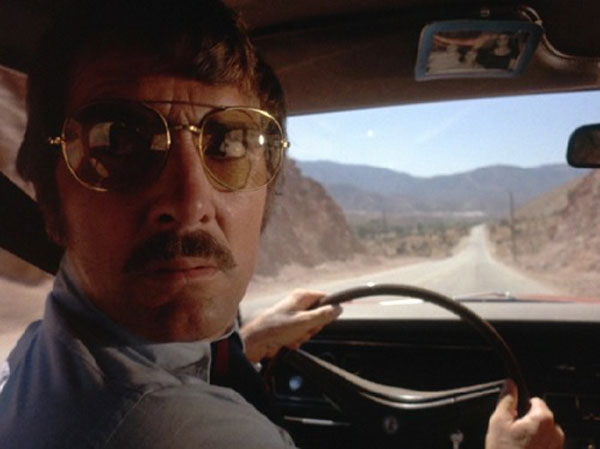
Dennis Weaver in Duel (Universal TV)

Owing to the fact that I have decided to honor Steven Spielberg this year with my version of a Lifetime Achievement Award I figured it was an appropriate time to dust off some old reviews I wrote when I took a course on his work. The remarks still hold true, he is an amazing filmmaker.

Duel is a film that is deceptively simple in its narrative. It is simple enough that if you are simply told what it entails you’d wonder “Well, how can that ever make a good movie?” This is the same thought I had when my Uncle told me about it and talked about how great it was. He wasn’t wrong and there are many reasons why this film works so well.

While Spielberg worked many wonders in wielding this tale into an unforgettable motion picture, for which, we cannot forget that Richard Matheson wrote a tremendous screenplay based on his own short story. When we watch this film we get a sense of quiet and inner-monologue along with paranoid, frightened contemplation by our protagonist which is so well laid out that this comes very close to being a novel on film which is why people thought it couldn’t be done.

At the beginning we have a long sequence from the point of view of the protagonist and the only thing we hear besides the car-whipped wind and the hum of the engine is a radio call-in show where a man is talking to a woman and saying that he feels emasculated by his wife. Little do we know it but we are getting information about our protagonist without even knowing about it. I had suspected this for if we weren’t hearing a reflection of our protagonist this background conversation would be most extraneous indeed. The first time we see our protagonist is a shot in the rear view mirror of his car.

Duel takes what is a very real situation and takes it to its most insane and cataclysmic possible conclusions, the quintessence of horror. All we get in most of the beginning is a truck and a little car on a road. One cuts the other off and then they exchange volleys and try and block each other off. It’s a situation people find themselves in quite often, the exchange of ‘being cut-off’ and it is likely that, more than once, someone has wondered ‘Maybe I should stop messing around with this guy I don’t know what’s going on in his head.’ Not only do we see a man pushed to his limits but we only see this man. The trucker appears but once in the whole film. Occasionally, we see an arm sticking out a window but most of the time it’s a mystery. The fear of the unknown is also played upon in this film to a great extent and in what took a lot of courage and was difficult to pull off we never really do get to meet the trucker or understand him.

I don’t often hear people talk about Spielberg’s visual sensitivity this is usually because people often confused good art direction and set design with cinematography this is not the case and ‘Duel’ proves it. We see the wheels bounce and the camera accompanies it. We have two instances in which Spielberg uses a close up on the speedometer to increase the tension just a quick little glimpse and we watch the climb 70, 80, 90, this in tandem with the Hitchcockian and an occasional sampling of vivacious Bluegrass music. We watch our lead talking to his wife through a washing machine lid to show how trapped he feels when talking to his wife. We see shots of the back of the dusty, grimy trucks that read ‘Flammable’ and foreshadow the trucker’s demise and many more. The important thing about all of his camera work in the film is that it all has a purpose it doesn’t just look pretty. There’s a beautiful sequence where Spielberg tracks around the grill of the car and around the back and does the same with the truck moving up and down as he goes. Not only does this get us closer to the battle but it leaves us uneasy as do much of the shots and it works tremendously.

The paranoia of the picture really shows itself when the man is in the diner. At this point and really at any point in the film his name is irrelevant (When speaking to the operator we discover his surname is Mann, that isn’t an accident). He is just any old guy. In the diner we hear his thought process as he jumps through possibilities and then just as any person might. We see him look at the bar and scan all the patrons up from their boots to their faces. In this scene he loses it and confronts the wrong man about the on highway altercation he had. It’s in fact probably a film that has become more relevant as the years have gone on with incidents of “Road Rage” and even the coining of that phrase. We’ve seen this sleeper go from an odd chunk of macabre and mutate into something not so far-fetched.

The tension just doesn’t let down. We see tight shots of the back of the bus with the kids antagonizing an already aggravated man. We later see a great shot of the truck going back into the tunnel. He comes and knocks the bus out so that he and the car can engage in battle. It’s all battle now the trucker has decided to take it to the finish. Our protagonist once tried to avoid it by sitting at the side of the road for an hour but the truck was waiting for him just around the bend. Spielberg returns to the speedometer towards the end as we see the speed decrease because the radiator hose is leaking. This was foreshadowed when he stopped at a gas station and the guy popped his hood and that was noted it was dismissed as mechanic jive.

This is a film that should be noted not just as the first film of a great filmmaker but a great film on its own.

9/10

Review- Journey 2: The Mysterious Island

Josh Hutcherson, Luis Guzmán, Vanessa Hudgens and Dwayne Johnson in Journey 2: The Mysterious Island (Warner Bros.)

Perhaps one of the things that works best about Journey 2: The Mysterious Island if that it gives you sort of a non-sequel/quickstart. The concept of the film is introduced quickly and simply and before you know it we’re on the beginning of the quest. It’s a film that knows it’ll be plot-driven so it gets right down to it.

That being said there are a few character and dialogue issues that come into play right away. They don’t rear their ugly heads too often but they do hold the film back a little bit. In the first scene things are going swimmingly and then Sean (Josh Hutcherson) sees longitude and latitude coordinates and doesn’t know what they are though it’s already established he’s a straight-A student. There are also perhaps too many attempts to make certain plot elements seem plausible with lengthy explanations. The elements are well thought out but the dialogue is somewhat clumsy and didactic.

To address the only other bugaboo quickly there’s also the unnecessary complication of gold in this film also, a bit like the latest Chipmunks movie. It’s such and antiquated and tired cinematic motif, and hard to swallow in a life or death situation.

Journey to the Center of the Earth was a precursor to the 3D renaissance and it was very good and took advantage of the technology. This film may not be up to that standard , partially based on other production decisions, but it is good and utilized 3D that’s worth the up-charge for sure.

The cast in this film is quite good and keeps the tone light and fun and makes up for any inadequacies the film may have. Josh Hutcherson is clearly the lead, while he’s always been a great talent, here he really shows he’s already a movie star by carrying an action vehicle with some heavy-hitters. That being said Dwayne Johnson does well here with his usual good delivery of humorous one-liners he also works well with Michael Caine who effortlessly adds a nutty adventurousness to the film. Luis Guzmán, who has been hilarious in countless things gets a much bigger part and stage upon which he can shine.

The movie keeps the laughs consistent, which keeps the tone fitting with the prior installment. This means that this film will earn new fans and please old ones in equal measure.

The CG on screen is better than TV and trailers can really give you a sense of and the action sequences are pretty good. They work especially well with the good 3D.

This is a real fun and funny follow up to the prior film that made it worth the wait.

7/10

Review- Big Miracle

Drew Barrymore in Big Miracle (Universal)

Big Miracle is based in part on a true story. One of the things that was interesting while watching it is that as it progressed I realized I was vaguely aware of the story as a kid. This was around the point I saw the set design was pretty accurate as there was in the film a globe I had as a child around that time. Another interesting tidbit is that if you stick around for the end credits you’ll see real footage that shows you how close to the story they stay.

The film really does tell a multi-faceted tale in as much as it deals with the political/military involvement in the rescue, the journalist’s perspective, the environmentalist’s viewpoint, the indigenous population, the oil company to an extent and also some well-meaning opportunists. This seems like a lot to handle, and it is, but the film does really well with it all. The balance stays about as good as it can be. In the end all the characters are examined, respected and working towards the same end.

Clearly with all those avenues there is quite an ensemble at work to make it happen. The two leads would have to be Drew Barrymore and John Krasinski. Both do very well but Krasinski’s the surprise offering more depth than I’m used to. They get great help from Ted Danson, Dermot Mulroney and Vinessa Shaw as the somewhat antagonistic triad. Also very noteworthy are John Pingayak and Ahmaogak Sweeney, as a tribal leader and his grandson respectively. Newcomer Sweeney is featured in perhaps the best rendered and written scene where he alone, after his grandfather failed, finds his connection to the whales.

It is not a film about the whales in and of themselves. It’s of course about the people involved but also in the grand scheme of things it’s about environmental responsibility and humanitarianism most ostensibly and the other general themes that always find their ways into stories.

As mentioned above the best moment of the film is one I’d characterize as a spiritual awakening. While there are a lot of themes and factions fighting for attention in this film the importance of the indigenous population is not overlooked and the culture is given a respectful treatment, which folds into the narrative rather than standing apart.

This film does manage to have its emotional and moving scenes both at a moment of apparent defeat and during the climax. It manages to make you invest in the characters and though it’s not Free Willy and the whales don’t become characters per se you, of course, feel for them also.

The key antagonists, roadblocks to freeing the trapped whales, are politics and money, which usually go hand in hand. I think this aspect is well handled for the most part. While there was a lot of backbiting both sides seemed accurately portrayed and the symbolism and political chess game seems well drawn.

Big Miracle might not be the simplistic movie you anticipate it to be but for all the avenues it explores it never gets unfocused. Much like the news story it’s based on it’s a unifying force that brings its characters together. It’s a fun, enjoyable and occasionally emotional movie.

8/10

Review- The Woman in Black

Daniel Radcliffe in The Woman in Black (Hammer Films)

Perhaps what’s most noticeable about The Woman in Black is that it is Gothic Horror. It un-apologetically so and it is a fine and darn near pitch perfect example of it too. One often hears the word atmosphere associated with movies, if you’ve ever wondered what people mean by that watch this movie.

I have frequently written about the teaser scene in a horror film, the quick scare at the very beginning to give the audience a jolt before building the story and characters. Not only does this one tie-in very closely, which is important but it’s very memorable, brilliantly shot and staged.

The drama of this tale despite its shocks is rather subsumed. It isolates its protagonist effectively and allows him the time to feel the place, find information and get intimations about what this place is really like. His story is also well and clearly defined early on and adds an element of necessity to the story which is key as the question of “Why don’t they just leave?” is one horror films frequently have to contend with.

The film uses practically every element at its disposal to add to the tension. It has the unwanted outsider aspect without overdoing it, the location plays a role as does the set design. The isolation of the character allows all the jump scares to more or less work because he’s usually spooked and there’s nothing done aimed solely at the viewer. Everything becomes a chore and an obstacle that makes the coming events have even more impact and the stakes rise consistently throughout.

The film is further supported by tremendous ensemble work. Horror films typically get the short shrift acting-wise. With such a tale as this the actors really need to sell it and work well with one another as interactions are at a premium. The cast is lead by Daniel Radcliffe whose growth as a performer has been something to watch. This may not be the character or project one would’ve expected to start the next phase of his career but that’s the genius of it. It’s a character and it’s a subdued work not a tentpole, regardless he sells it. Ciarán Hinds and Janet McTeer also shine in disparate but crucial supporting roles. Not to be overlooked are the ensemble of children in this film who almost always play in crucial scenes and are a big factor.

When I spoke of jump scares earlier there is an implied allusion to sound design there which I will address here. Now I typically take issue with scares based mostly on the sheer volume of the accompanying sound effect but this film seems to have a progressive plan. Not only are these jolts always accompanied by a creepy visual but they also go down decibel-wise as the film moves on, indicating a decided plan, which works. Once the movie has you it needn’t try as hard.

There are few things that can match a well-made Gothic horror film, an excellently crafted one is nearly untouchable. This film is the former, a truly special and brilliant horror film.

10/10

Oscar Nominated Animated Short Films

In recent years there have been nationwide screenings of the Oscar-nominated short films, which is a great thing for many reasons: clearly it promotes the filmmakers but also as a filmmaker and Oscar spectator you’d like to have an informed opinion based on more than just the title and/or the snippet shown, which I have operated under many times.

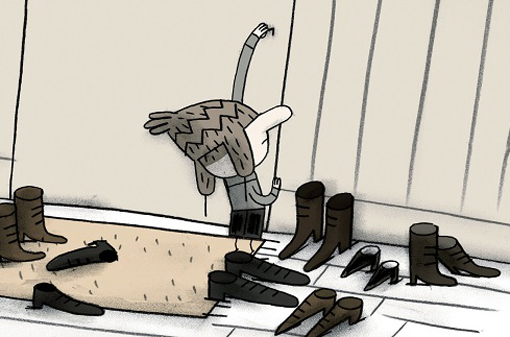
Sunday

Sunday (Dimanche) (The National Film Board of Canada)

A really charming and imaginative piece that sees the world accurately through a child’s eyes and more importantly through his imagination.

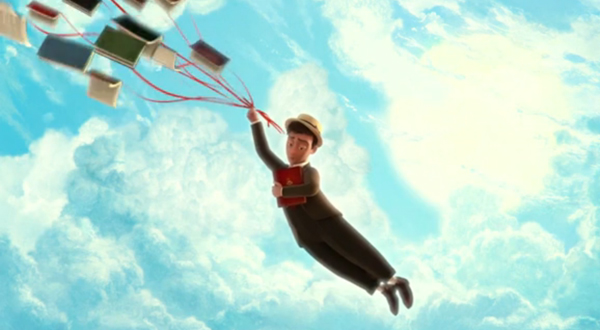
The Fantastic Flying Books of Mr. Morris Lessmore

I will start out by saying I do love the concept of this short. There are some funny, insightful and charming moments, however, this short also bothered me on more than one occasion. It’s the most original idea but yet feels the need on several occasions to incorporate tropes that make it more mundane, more ordinary and less intriguing. One of the tropes is absolutely unnecessary spoon-feeding that puts a damper on the ending. The concept the film has gives it an edge I just feel some of the choices it makes means it doesn’t live up to its fullest potential. All that said I fully anticipate this film will win even though there are several worthy shorts.

Wild Life

Wild Life (The National Film Board of Canada)

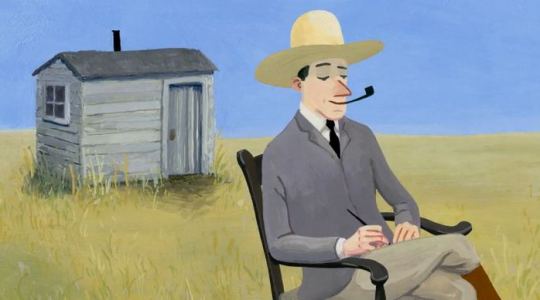
If my gut about Oscar voters is right this is a long shot but by no means should it be. The animation in this film is beautiful in a painterly style and the story has comedic and dramatic impact. It also features some frames, a title-card driven subplot and documentary style confessionals. For a short it’s got so much going on, great stuff.

La Luna

La Luna (Disney/Pixar)

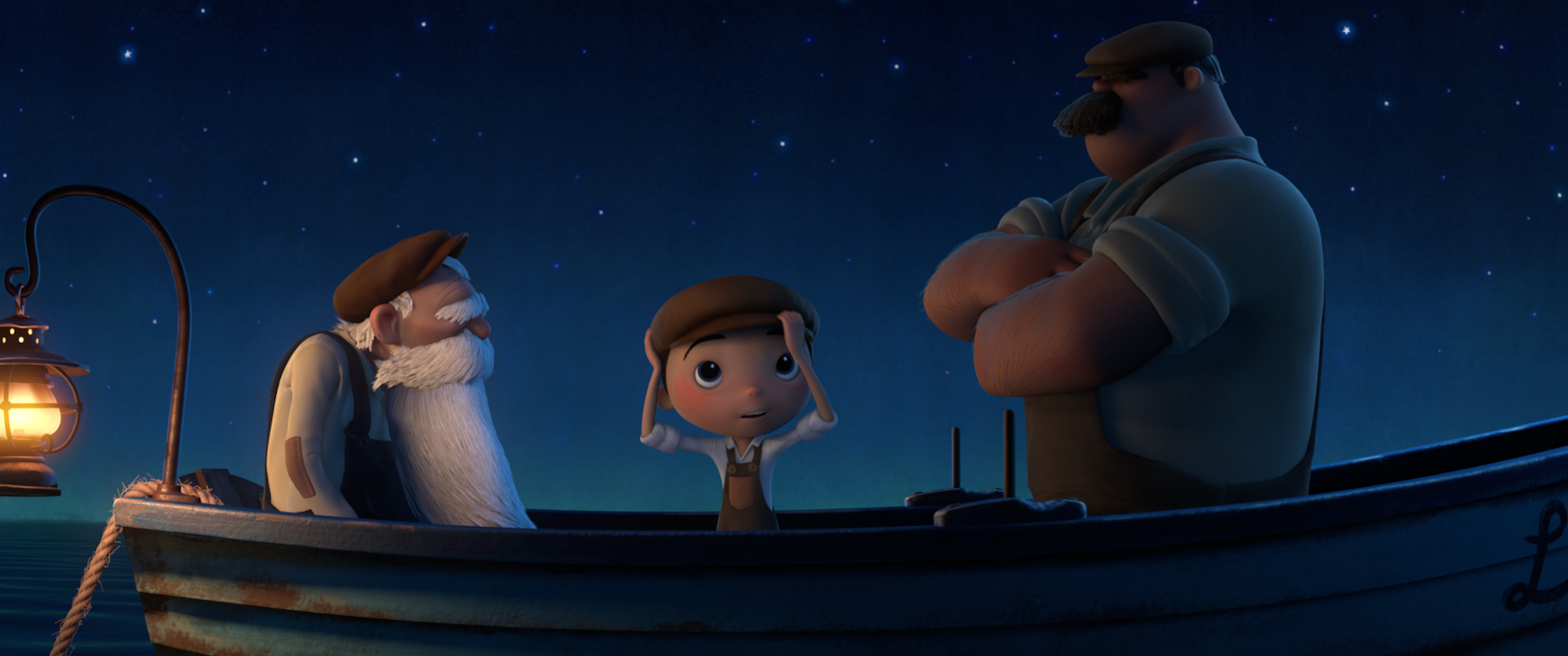
An absolutely wonderful and whimsical tale that is pure magic. The short features no actual dialogue but says so much. It boasts a beautiful score by Michael Giacchino and great 3D animation. My favorite by far.

A Morning Stroll

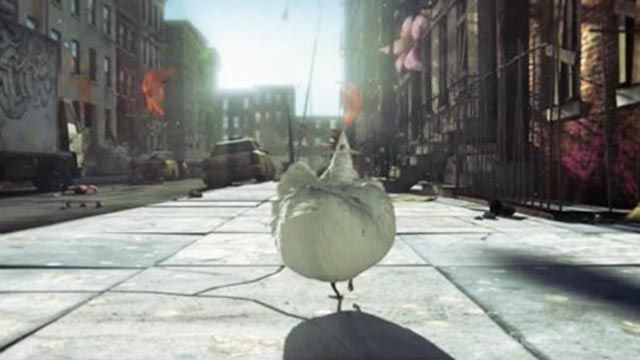
A beautifully constructed and simple tale that uses several different animation styles to equal effect.

The animated program also usually features several highly commended shorts, as the nominees usually run short.

This year’s highly commended selections are: Skylight, Nullarbor, Amazonia and The Hybrid Union. All are very good and consistent across the board. In fact, some of the biggest reactions at my rather full screening was during this portion and I’d venture to say Skylight was the funniest one by far.

This year’s animation slate is quite strong with a few titles I’d be happy to see win.

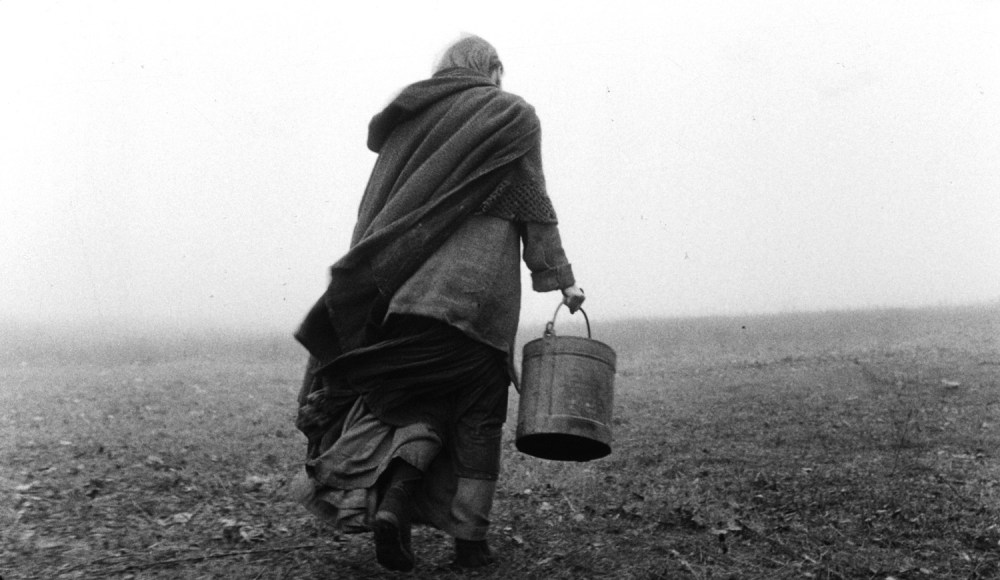
A Reading and Review of The Turin Horse

Erika Bók in The Turin Horse (Cinema Guild)

NOTE: A film like this warrants discussion beyond a typical review. While some relevant plot details are discussed they are not what I’d deem spoilers.

Béla Tarr. Perhaps one of the most daunting things to contend with when writing about him or his films is trying to encapsulate him and/or his work for the uninitiated. For to write this review solely as the fan and devotee that I am would not do for all who may come across this article. The read of the film that rang true to me became apparent very quickly. However, the prior question nagged me. So how do I go about it? Carefully and with explication but not what I’d classify as a spoiler. Recently, upon viewing Fata Morgana I tweeted that I was glad it wasn’t my introduction to Herzog and that it likely should’ve been the last film of his I saw. With Tarr there really only is baptism by fire I feel and I’ll attempt, aside from reacting, to give a bit of a primer for his work. My baptism by fire occurred by acquiring and watching his seven-hour epic Satantango while in college and I’ve been hooked ever since.

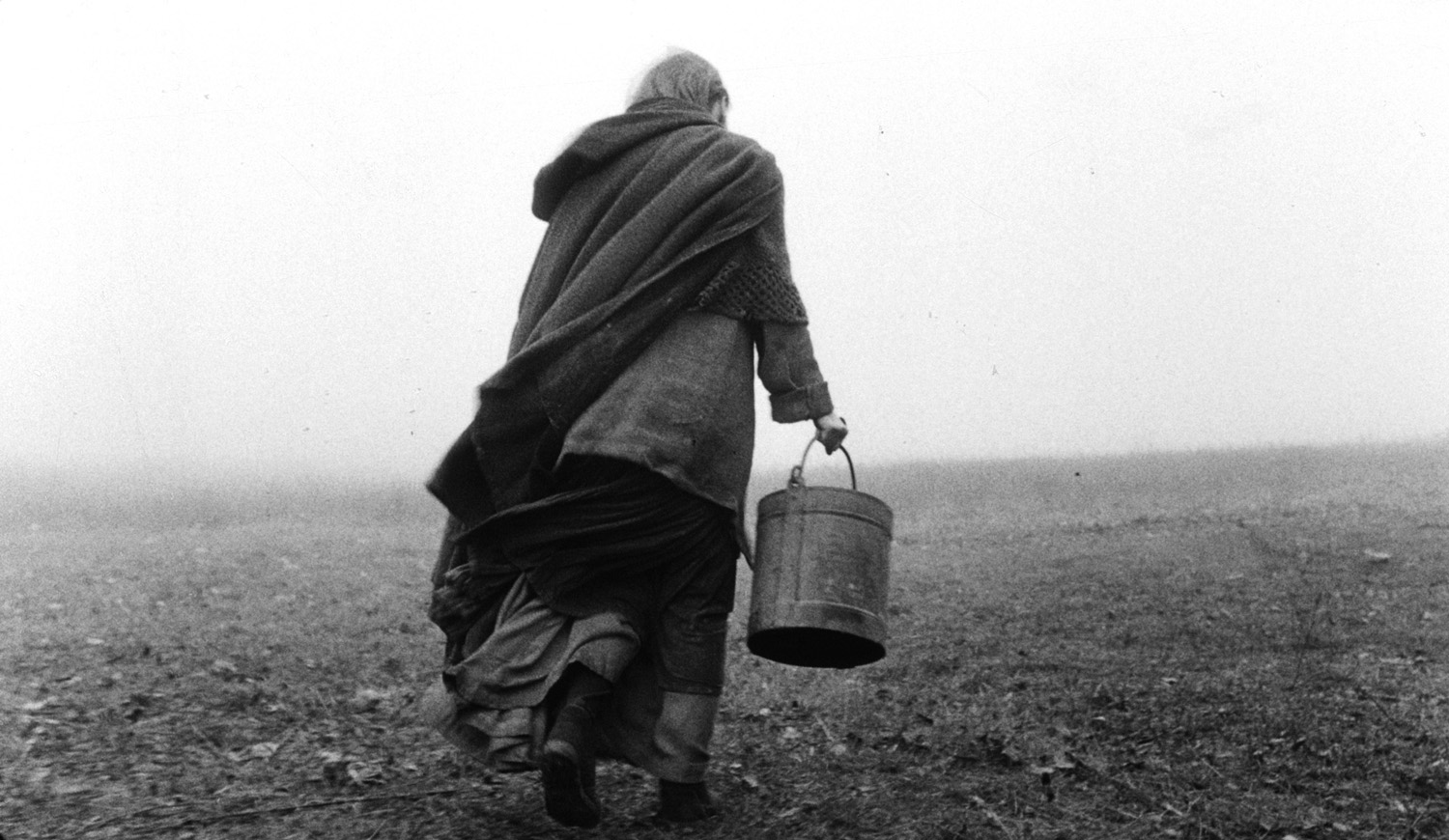
This is as good a place as any to discuss the pace and a few other trademarks of Tarr’s work. Tarr has shot only black and white for the past 30 years. He moves the camera beautifully and intricately at times while using very long takes. I counted shots in this film and came up with a similar number to reports I read: 30. The running time is approximately 146 minutes meaning the average length of a take of about five minutes when Hollywood has us conditioned to expect cuts every five seconds, depending on genre. All the cuts are good, some are wonderful and the pace works for the tale but is worth noting for those who are unfamiliar with his work. Gird your attention span!

With regards to this film, as I started to watch it what struck me is that it seemed like his own version of Jeanne Dielman. This allusion to Chantal Akerman is not completely my own Scott Foundas in a Facets symposium on Tarr made the comparison that made me want to see Jeanne Dielman in the first place. However, while he’s talking stylistically in terms of camera movement, mise-en-scene and blocking; here the narrative in many ways resembles in that in Jeanne Dielman in as much as the film most reveals its characters and their story in the slow but steady deterioration of daily routines.

The setup is fascinating in two ways: First, the name of the film refers to the incident wherein Nietzsche supposedly lost his mind, he so felt for a horse being beaten by his owner that he broke down in tears, intervened and embraced the horse and was never the same. The story then is really about the owner of said horse and his daughter, however, I’d caution you not to forget about the horse and the title and watch him and his arc and the relationship the family has with him. Second, in a structural consideration the inciting incident occurs in a voice over wherein a detached, unidentified narrator tells us what happened and that propelled an unseen Nietzsche into madness and affected the horse and the family in the long run.

The film is above all indirect, even when seemingly being direct, which is part of its brilliance. The film is about the inevitability of death but it’s not spoken about in certain terms. The bare minimum these people need to do to survive starts to deteriorate as does their ability and willingness to live, mostly due to said uncommented upon inevitability.

Perhaps what works best is that it really creeps up on you. These routines play out repeatedly, shot and cut a little differently each time such that the slight changes at the start might not be picked up but then you start to see them.

With regards to moments that are direct there are a few ways to interpret them. Perhaps the pivotal scene where there can be some debate is one wherein their neighbor comes over because he’s run out of Palinka (Hungarian fruit brandy). It’s human nature to want to hang your hat on something when watching a story that’s not traditional, therefore when watching a father and daughter just doing what they do in a desolate countryside in the middle of an unnatural windstorm you listen to the neighbor’s wild theory. Ohlsdorfer, the father, dismisses it as bull and some reviews as a red herring, I feel the truth lies somewhere in the middle.

You don’t have to know Tarr’s cinema to start to sense that there’s a metaphysical nature being applied to a mundane setting, a sort of allegory free of dogmatic restraints. The neighbor’s theory on what’s wrong with the world and life in general may be only his mad formulation but his view, like anyone else, is all he has and everyone’s seeking an answer, we may change it, we may not have one but anyone’s guess is as valid as the next to questions like “What’s the point of all this? What’s going on? Why am I here?” The neighbor’s theory may be vague and labyrinthine but part of what tips it towards truth for me is that he made it a specific revelation to each individual and not an externalized event. I know I’ve have been aloof in the theory’s description because I think it’s open to individual interpretation. My inference that it’s closer to fact or fiction falls in line with my final interpretation, which deals directly with how the film ends, which I will not reveal.

Similarly oblique is the passage read from a book left as a gift by a band of Gypsies passing through for some water. However, in that it speaks of defiling of the Holy Land and damnation, in short inevitability, so it works. It connects to a theme rather than offering and epiphany, yet I did have one. Only as I was just walking out of the theatre after the very short closing credits did I realize the last domino that needed to fall for me and it did and it made the whole thing that much more amazing.

The film keeps its cast of characters small and the location virtually unchanging. It’s probably too claustrophobic to be called a chamber drama. That sense heightened by the sound editing and mixing which plays the persistent sound of the wind at just the right level to unnerve you and will then drop entirely to bring in Mihály Vig’s dichotomic score, half-mellifluous and half-discordant.

Another thing that bears mentioning that there’s next to no dialogue. Yes, there is the neighbor’s extended monologue which gets a few replies, curses thrown at the gypsies and occasional exchanges between father and daughter but no scene I would call a conversation scene and it’s all the better for it. The lack of the spoken word invites you to participate in the film more freely, draw your own conclusions.

The actors János Derzsi, Erika Bók and Mihály Kormos are all brilliant. The main tandem do so much physically and with their eyes they scarcely need dialogue to convey their emotions and turmoil.

The only other plot point that really bears any discussion is the attempt the Father and Daughter make to leave their house. You are not told or shown why they don’t make it to some safer locale. You are left to speculate on it. I drew my own conclusion, you may draw a different one. It’s just one of the other great touches this film has. Again it’s something that fits in my reading for the story, in a film about the inevitability of death what escape can there be, really?

It’s a bit sad to have to say that not all directors are what you can call visionaries but Tarr is definitely one. What you see on display in The Turin Horse is the mark of an artist. There is a style and language all his own, which he has cultivated through the years. I love Hungarian cinema from what I’ve been able to see but at the start of his career you wouldn’t know just by watching one of Tarr’s films it was his, now his style is unmistakable and inimitable, unique in all the world. If this is truly to be his last feature what a glorious way to go.

The Turin Horse is a flat-out masterpiece. That’s not a word I use lightly. There are films I consider masterpieces but I did not proclaim them as such upon first seeing them. However, when trying to encapsulate my reaction that’s the first word that came to mind. It truly is, it’s sheer brilliance and believe me when I say that my stating several facts in the course of this piece does not detract from the experience of the film, it’s just a guide. Watching and immersing yourself in it is a lot more valuable and harder to describe than a few instances in the story. If you have decided this is the kind of film you’d like to see (it’s certainly not for everyone) it’s worth seeking out on the big screen.

10/10
Oscar Nominated Live Action Shorts

In recent years there have been nationwide screenings of the Oscar-nominated short films, which is a great thing for many reasons: clearly it promotes the filmmakers but also as a filmmaker and Oscar spectator you’d like to have an informed opinion based on more than just the title and/or the snippet shown, which I have operated under many times.

Clearly seeing only a few seconds of each film as opposed to each in their entirety can skew your perspective. It’s rather enjoyable to discover these films and artists and while I don’t feel this year’s field is as strong as last year’s there are some very good contenders all the same.

Pentecost

Pentecost (Irish Film Board)

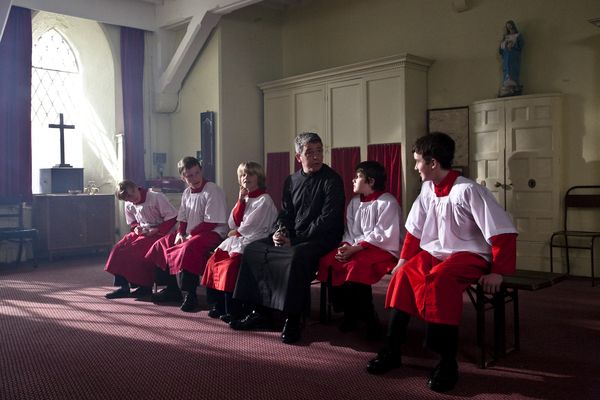
Is a hilarious film from Ireland, which at my screening got the only round of applause upon its completion. It tells the tale of an altar server’s chance at redemption at a big service. It plays like a sports film at times and all its laughs are good natured ones.

Raju

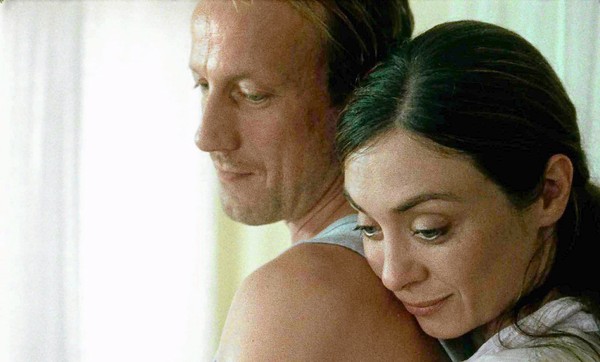
Wotan Wilke Mohring and Julia Richter in Raju (Interfilm Berlin)

A tale of the complications a German couple encounters in trying to adopt a child in India. The intentions of the tale and message are fine but there are a few narrative stumbles and predictable moments that hold the film back from maximizing its potential.

The Shore

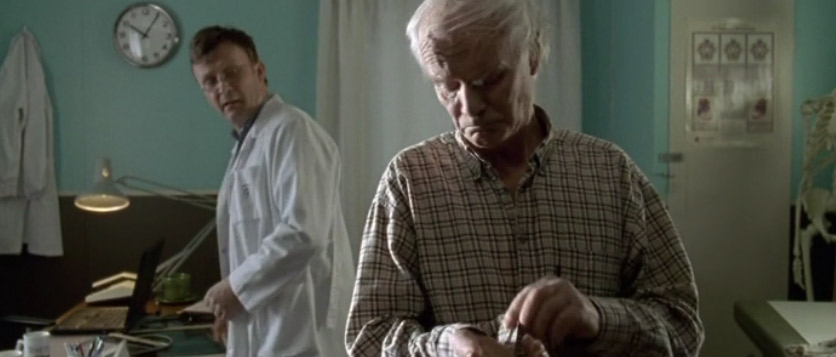
Ciarán Hinds in The Shore (Screen Northern Ireland)

This film from Northern Ireland features not only the only star turn (Ciáran Hinds) in this year’s nominees but perhaps the simplest through-line. A great film about forgiveness and friendship above all else.

Time Freak

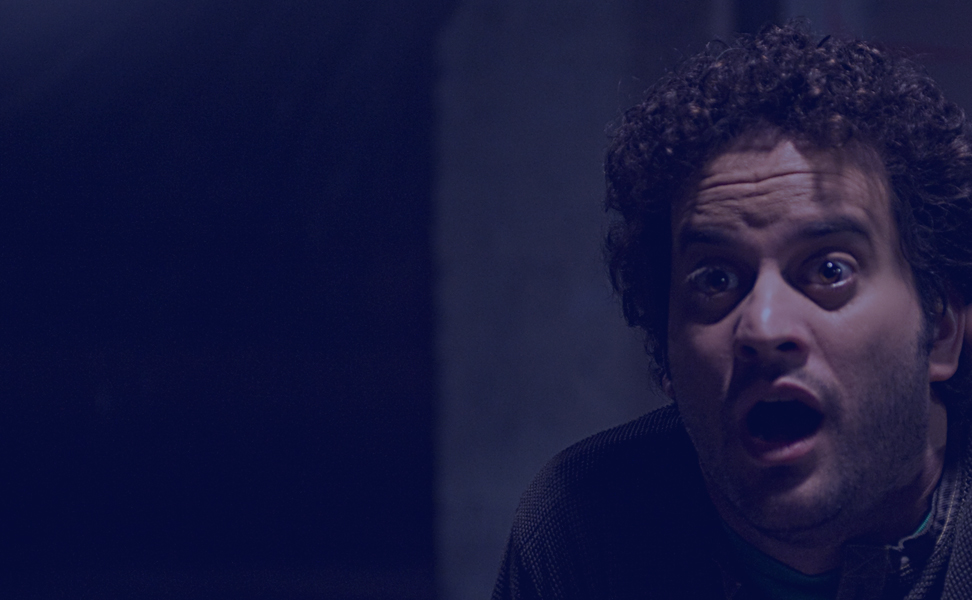
Michael Nathanson in Time Freak

It seems the American entry is usually comedic (based on these two years I’ve seen- not much to go on but bear with me). There’s been a surreal or silly edge to both, however, God of Love (Last year’s winner) is a fully articulated thought and this while funny felt a bit more like an ambitious sketch. There’s talent and film craft at work but it wasn’t as narratively whole or as ambitious as other entrants.

Tuba Atlantic

Edvard Hægstad and Terje Ranes in Tuba Atlantic (Norwegian Film School)

In a short tonality matters greatly and is harder to establish for you have less time so your choices have to be that much more certain, your intentions that much clearer. Therefore when a short not only plays as comedic and dramatic it’s twice as impressive. The film also creates very well-defined and unique but not irrationally quirky characters. It touches on many of the themes that the other nominees do but handles each quickly and deftly and creates its world quickly and precisely. It’s full of surprises laughs and emotion and the most complete and fulfilling short I’ve seen since this time last year.

More information about these shorts can be found here. The Academy Awards are on Sunday, February 26th on ABC.

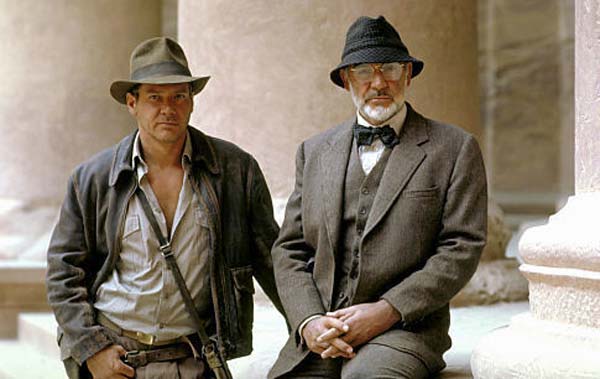
Spielberg Sunday- Indiana Jones and the Last Crusade (1989)

Harrison Ford and Sean Connery in Indiana Jones and the Last Crusade (Paramount)

Owing to the fact that I have decided to honor Steven Spielberg this year with my version of a Lifetime Achievement Award I figured it was an appropriate time to dust off some old reviews I wrote when I took a course on his work. The remarks still hold true, he is an amazing filmmaker.

Indiana Jones and the Last Crusade is better than the original for many reasons. It’s a film that doesn’t just hit you but involves you more in the story line. Part of why it is easier to go along for that ride is because you’ve been prepared by the previous film to expect certain things despite this there are also some new and creative elements in this movie which separates it.

In the beginning we get what is seemingly an unattached scene. In this one we flash back to when Indiana was a child, played by River Phoenix. His chase for a crucifix establishes a few things. First, it establishes that this will be yet another religious relic that they will be in search of. Second, and more importantly it defines who his arch enemy is. We also get glimpses into the character’s psyche whereas previously he was a very external being we get this just through seeing past events. Young Indiana picks up a whip for the first time when coming face to face with a lion. Then we see the interplay between him and his father and can see how the boy doesn’t understand how his father could’ve dedicated his whole life to these adventures especially in his mother’s absence.

When Indiana is pegged for a mission the discussion of it is much more confrontational than in the first. There is a lot more give and take. Indy shows part of his disbelief in the grail while we are told the history in much more detail than we were in the first film when Indy was in search of the Ark of the Covenant. He’s very reluctant to go but is urged on by the fact that his father has been kidnapped this after him mysteriously receiving his father’s Grail Diary.

This film is full of riddles and mind games which makes it that much more entertaining. He arrives in the library that was a converted church and with Elsa Schneider (Alison Doody) they have to solve a puzzle of where the catacombs are. They look for the Roman numerals but can’t find one. Indy on a hunch runs up the stairs and sees the X all across the floor. Down in the dark with all the rats Spielberg reaches a moment of terror with all the rats crawling along.

Another great touch this film had was in keeping with the traditions of the 40s and 50s in that we could never quite figure anyone out. I was genuinely surprised by Ilsa both when we were shown she was a Nazi and then later when she mislead her leader in the choosing which grail was the Holy Grail. That coupled with her femme fatale status of seducing men only to ruin them made her seem like something out of a film noir.

The tandem of Sean Connery and Harrison Ford worked very well together. Their timing is great especially when they were both tied up and were trying to talk to one another face to face and their heads kept swiveling side to side. Their relationship dominated significant portions of the film and they exchanged great moves and funny lines constantly. On the zeppelin the ball was in Junior’s court and stayed their as they escaped but in the plane Senior had to shoot the machine gun and shot the tail off and was hysterical in denying it. Then on the beach he got the seagulls flapping to knock down the second plane.

What I also found quite interesting in both this film and the first although it was more prominent in this film was the involvement and use of the Nazis. It was interesting for me because I had believed Spielberg had never addressed any aspect of the war in any sort of way until making ‘Schindler’s List.’ Having established the Nazi interest in the occult and in conquering religion I think that’s why there was more Nazi involvement here. It also allowed for a hilarious scene where Ford dressed as a Nazi who comes face to face with Adolf Hitler who instead of burning the grail diaries signs it for him and moves on from there.

For me the only stumbling blocks to make this a completely fulfilling experience cam towards the end. When Indiana must spell out the name of God, Jehovah was not the name that immediately came to mind it was, in fact, Yahweh which was the original Hebrew word which people did not speak and when it was written there were no vowels. However, it was later replaced by Jehovah. This is no fault on the filmmakers part its just a slight technicality that some may or may not pick up on.

This time, however, I was prepared for what would happen to the man who drank from the false grail because it was foreshadowed and also because it closely resembled the end of the first film. My one question lay in the fact that it seemed to me from the way the situation was explained that Indiana would now be immortalized and would have to guard the grail or his father would maybe perhaps they escape that by trying to remove the grail it did get a little hazy in that regard but nonetheless it was quite an enjoyable film that blended many diverse elements to make for a really entertaining ride.

10/10

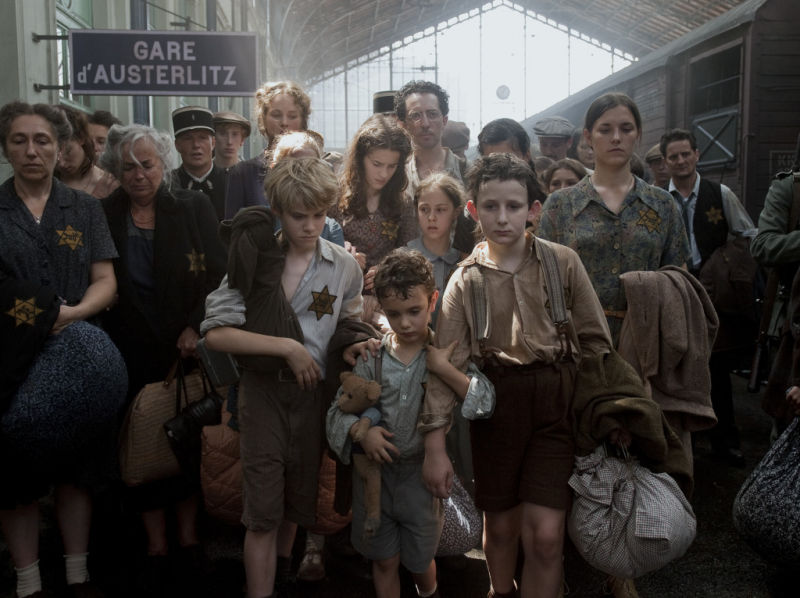
Review- The Round Up (La Rafle)

The Round Up (La Rafle) (Gaumont)

Any film that deals with World War II, more specifically the holocaust, fights an uphill battle. The film has to contend with not only the knowledge that we as a viewing public share but also with the inevitable outcome its story-lines share. These factors make any newly told tale, especially ones that may have been shared before, more daunting to tell than they have been in the past, however, what The Round Up (Le Rafle) does so well is tell a multi-faceted tale that most films that illustrate historic events tend to avoid. This film not only tells the tale of a single neighborhood, more specifically the Weismann and Zygler families, but also takes a look at the political sides of the equation (the ivory tower and backroom bargaining where lives were bartered and certain agreements were reached under a false sense of humanitarianism) which many films tend to avoid. Not only does that angle of the story get played but also as those rounded up start their unjustly imposed sojourn you also have the plight of the medical staff, illustrated by a nurse (Mélanie Laurent) and a Jewish doctor (Jean Reno) who have to try an keep the imprisoned alive as they are eventually transported to Poland. It is adding these layers to the story which makes this film different than other of the like at least on the surface.

The differentiation does not lie solely on the surface, however, while this film does not ever take place in an unoccupied France until its denouement it does start in a time where knowledge of what’s truly happening is scarce and children remain children as they are wont to do regardless of circumstance. You are shown very good illustrations of the sense that permeates the community of “It Can’t Happen to Us” and it’s tackled head on later as the eldest of the Weismann daughters tries to warn everyone a few times and wants to flee but calm is urged by her parents. Later at the first stop it is poignantly touched upon again. It’s one of the many times wherein the senselessness and unimaginable insanity of what the holocaust was is very well illustrated. Many of the characters in the film are in the dark willfully or honestly and it allows scenes we’ve viewed and facts we know to wash over us with newfound impact.

Some of these points are made with very cleverly written dialogue as well that is uttered by the right characters in the right moments and in the right context. Things being too on the head are a matter of context as much as anything else and the correct personages say the correct things to make points anew in a different way or ones that are often overlooked. The children, the nurse in her naïveté, Hitler amongst his inner circle and French heads of state all say things that were they assigned to other characters may strike you as too much commentary. Part of why auteur theory is not a popular notion in cinema anymore is that voice in a script as opposed to things like composition and genre can border preachiness but this one deals in the political and personal of a difficult subject matter makes its points about the absurdity of the situation in terse pieces of dialogue, visuals wherever possible but never to the detriment of the narrative, which helps it excel.

Conversely, when it speaks more loudly for the film not to say a word, when an honest question is better left unanswered, where a glare from an officer says more than words possibly could the film does so. The film visually puts pieces in place to set up the ending without dialogue, so as precise and purposeful as it is at some points it understands the necessity of silence also. There is also no fear in illustrating complexity in character without going overboard and simplicity in others without creating characters. The complexity is shown mostly with the families we know who start with different levels of understanding of circumstance and gradually though they don’t know exactly what lies ahead the gravity of the situation becomes exceedingly obvious, yet you also see them grasp for humanity whenever possible. The second part of that statement being most important because there isn’t an excessive myopia in this film as exhibited in something like Life is Beautiful. It creates moments where the human spirit can overcome but also illustrates the length to which human beings will go to be cruel and to be free.

As you can see by now this film us most definitely an ensemble work a few actors come to the fore as vital but it relies on many to convey its story as well as it does. In the family the patriarch and matriarch played by Gad Elmaleh and Sylvie Testud; the medical personnel played by the world renowned Jean Reno and Mélanie Laurent who many will know and love from Inglourious Basterds and The Beginners; the kids spearheaded by Hugo Leverdez in a most impressive debut, The Di Concerto twins as Nono and Adèle Exarchopoulos and lastly the political contingencies highlighted by Udo Schenk as Adolf Hitler each of these nuclei brings the film vividly to life and fully realizes their characters.

In the early stages the intercutting between these disparate worlds is at its apex but it stays rather persistent through the course of the narrative. There are great cuts aesthetically and with story in mind we never see more of the political discussions than we need to in them we are shown the steps than lead to the decisions ultimately made and clearly how things came about.

Where this film really gets to me is at its conclusion but it is effective throughout and evokes different emotions and remains compelling in spite of the aforementioned stumbling blocks the story has. It is a brilliant work that illustrates through its many facets the precipitous escalation of events in Occupied France and the lives it affected.

10/10