Bernardo Villela is like a mallrat except at the movies. He is a writer, director, editor and film enthusiast who seeks to continue to explore and learn about cinema, chronicle the journey and share his findings.
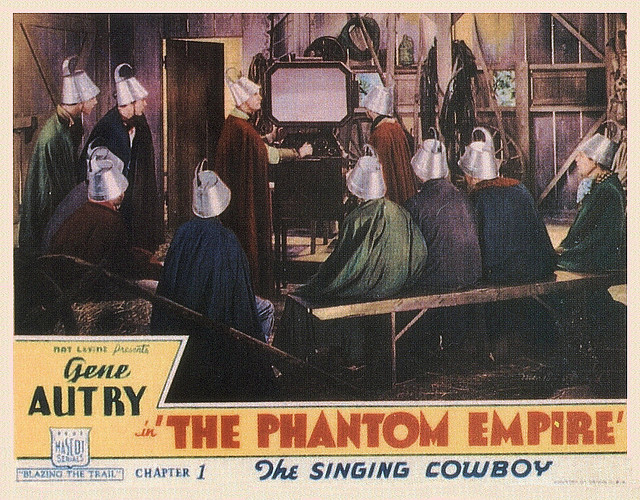
The Phantom Empire may be the most unique movie serial ever created. I was told of its existence by my favorite film professor in college and I was fortunate enough to have found it on VHS shortly thereafter. After having viewed it I was glad to have given it to him. Now I have since reacquired it on DVD. It stars Gene Autry in his usual singing cowboy persona but there’s also science fiction mixed in and quite a few other things along the way.
Through Poverty Row April I will likely watch a composite version of this film but I am glad to be able to present to you the serial version of the the film thanks to The Internet Archive. To view please visit the links below.
The Phantom Empire may be the most unique movie serial ever created. I was told of its existence by my favorite film professor in college and I was fortunate enough to have found it on VHS shortly thereafter. After having viewed it I was glad to have given it to him. Now I have since reacquired it on DVD. It stars Gene Autry in his usual singing cowboy persona but there’s also science fiction mixed in and quite a few other things along the way.
Through Poverty Row April I will likely watch a composite version of this film but I am glad to be able to present to you the serial version of the the film thanks to The Internet Archive. To view please visit the links below.
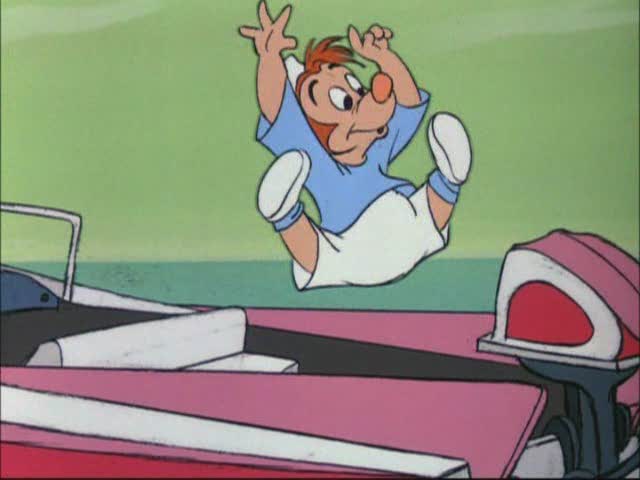
This Goofy short is notable for a few reasons. The least of which is that this was another chapter in the series of shorts that saw Goofy take up recreational activities or sports with predictably disastrous and hilarious consequences. More interestingly than that is that later in Goofy’s filmography he became increasingly more human, compared to his embryonic state he was positively urbane at this point, such that he became a suburban father later on, and this short features his son, Junior. Interestingly, when Goofy saw a revival in the 1990s in the film A Goofy Movie and the subsequent television series Goof Troop, Junior was supplanted by an older more modern rendition of his son named Max. Seeing as how much time has passed it’d be interesting to see Disney either reintroduce Junior parallel, along side or in place of Max. I think the first possibility could be the most interesting. Sophistication in audiences has taken another step forward and alternate realities, or plot-lines are easier to sell now. It’d be neat to see, as I perpetually dislike characters getting eschewed prematurely. Regardless, this short still stands and it’s quite funny.
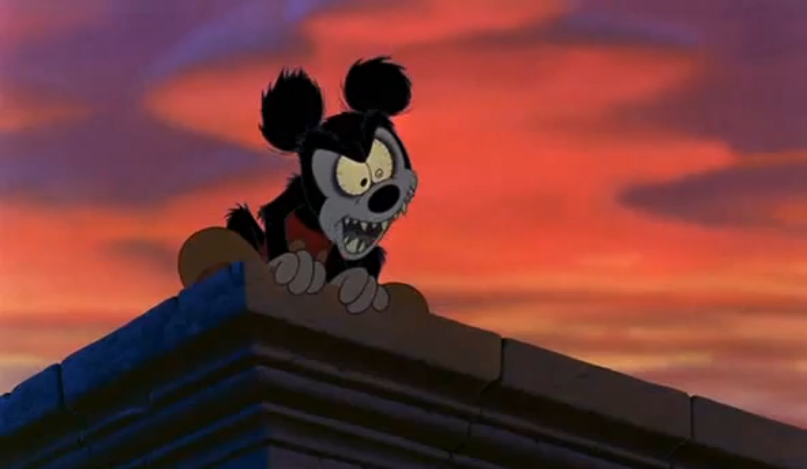
Since the YouTube clip I’m linking to features the introduction by Leonard Maltin, there’s not much else I really need to say except this is a great departure form the usual from Mickey, especially in a fairly modern piece. Please note: the clip does feature Spanish subtitles, do your best to ignore them should you not need them.
For a little more than 30 years, from the late 1920s to the early 1960s, you’d be hard pressed to find a year wherein the Academy didn’t nominate either Disney or Warner Brothers for Best Animated Short Film. Keeping that in mind, I decided instead to search out more latter-day Disney shorts that I may not yet have seen.
In this day and age the short film has to find new avenues to find audiences. Gone are the days of double-features and programs that were expected to include either and animated short or serial chapter and a newsreel. This short was included as a bonus feature on The Little Mermaid platinum edition DVD release, and is appropriately another Hans Christian Andersen tale.
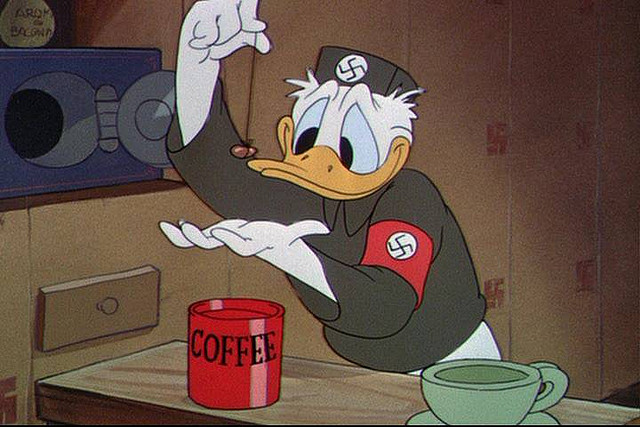
I saw this film plenty of times growing up. I think once upon a time Disney had a VHS collection of wartime shorts. This became one Disney would make sparse over years until the Disney Treasures line was launched and all the World War-Two era shorts were re-collected. Leonard Maltin typically not only did intros for the DVD collections, but also specific shorts that may have problematic content in a more politically correct age. Are the portraits of Hitler, Hirohito and Mussolini broad stereotypes? Yes. However, I’m not sure the availability was limited just due to that. The film is for the most part just a mockery of these three dictators, namely Hitler, and the disdain for him is fairly clear throughout. The main objection could be that the plot is Donald has a nightmare that he’s a Nazi. I realize that it’s risky to put an already iconic character like Donald Duck in Nazi paraphernalia, but this is a product of the war, this like many other wartime Disney fare can be classified both as being entertaining and propaganda. I doubt there’s a nation on Earth that’s been immune to propagandizing in cinema, much of it still consumed for aesthetic and historical purpose to this day.
The risk Disney took with Donald recognized and rewarded by the Academy with an Oscar. The nightmare aspect is a reveal, but one you can see this coming once the surreal sequence starts, and at the end he unabashedly exclaims his love for the US. I think the riskiness of the venture is lessened by the fact that Donald is still Donald. Namely, he’s ornery, accident prone and somewhat a non-conformist and not a “good Nazi” at all, even in a dream.
I’m glad that Disney did bring this one out of hiding with a disclaimer. If you feel something is inappropriate for mass consumption, you’re more than free to say so. However, I do think this falls within the realm of satire, and I’d hate to see that become further endangered just because on occasion it goes too far. Which is me speaking in generalities, most of the cultural insensitivity you may find in this piece is aimed at the dictators themselves. Anyway, without much further adieu, enjoy!
For this Sunday I had two niches to fill. It’s still within 31 Days of Oscar, but also March marks the beginning of a focus on Disney films. So here’s a short that’s by Disney and won and Oscar. Not only that it’s in the National Film Registry, and was actually one of the great successes of 1933. “Who’s Afraid of the Big Bad Wolf?” was a hit record and the short, at the time anyway, broke a record for most prints struck. It hit a nerve with Depression era audiences, adults namely, that it never did with kids. For at the time the threat of something big and bad coming to blow your house down was a rather real threat. This link isn’t only inferred. However, even if you strip away that context which, of course, I didn’t have when I was young, it’s still highly enjoyable.
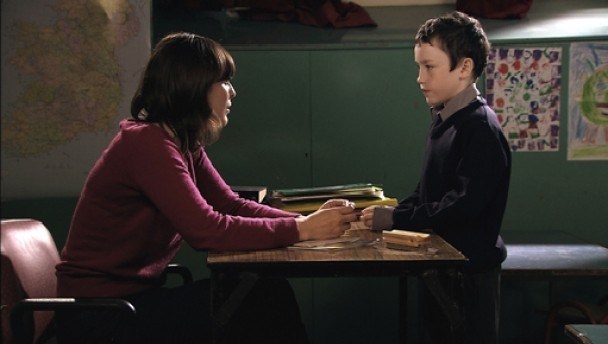
Seeing as how the Academy Awards are this weekend, I figured it’d be appropriate to feature an Oscar-nominated short. This is a very good and funny entry from Ireland. If I recall, my favorite this year was a more dramatic entry, but this is definitely a worthy nominee.
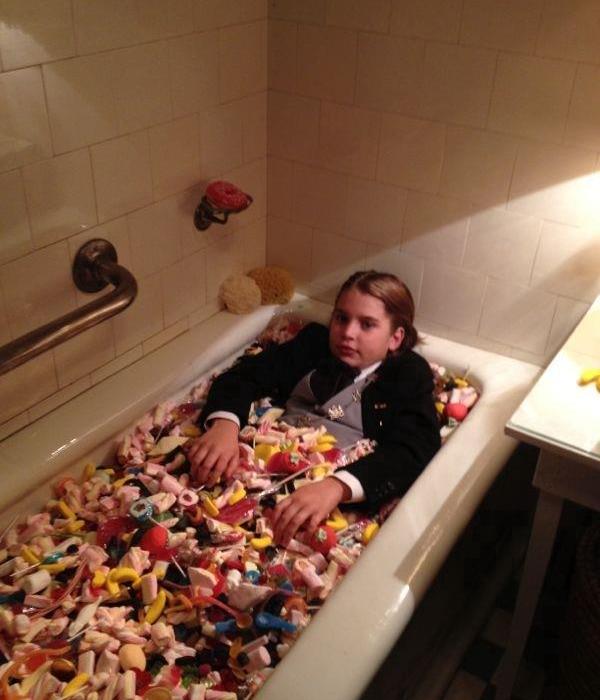
Roundabout early January, when the new year hasn’t really kicked in yet, and there’s nothing good coming out, I starting searching around for what many BAM nominees would be up to this year. Turns out Best Performance by a Young Actor in a Leading Role winner, Rick Lens, was in this film.
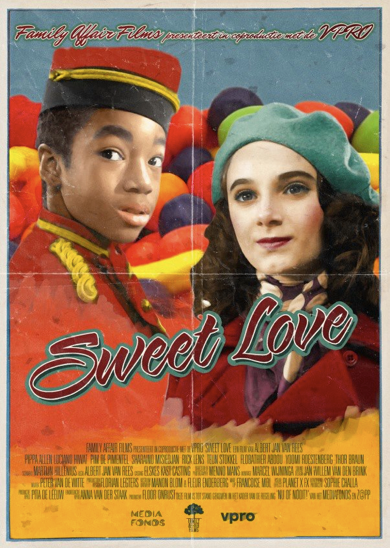
Sweet Love is a romantic comedy, told with an all kid cast, that is set in a fictional town where a bizarro version of Willy Wonka, the town’s Burgemeester (Read: burgomaster played by Lens), has everyone under his thumb. His girlfriend, Roos (Pippa Allen), falls for a doorman, Saba (Luciano Hiwat), but is with the Burgemeester, and the drama ensues from there.
What’s most interesting to note is not just the juvenile cast but the fact that this film is also a musical. Now as opposed to being a sung-thru musical (the only other thing of this length I’ve seen that’s a musical and live action would be the “Influenza” episode of Even Stevens) this film places a song strategically in each act at the right time. Another interesting aspect is that the IMDb listed this film as having aired on TV, which for a short is rare here save for specialty channels.
This is a very humorous, quirky and charming tale that’s masterfully produced with some really great cinematography throughout. It is certainly a film that already has me thinking about possibly breaking out special jury prizes at the end of the year.
I’ve not been able to locate this film online, but if/when it is available I’ll update this post.
I am a huge admirer of the works of H.P. Lovecraft. I have read nearly all of his works, some on multiple occasions, and the few I haven’t yet read I’ll soon get to. Lovecraft typically has been seen as someone who is for the most part un-filmable. This is usually due to the descriptive nature of his work, how ensconced in prose, inner monologue and an atmospheric sense of foreboding that the psychological play of the written word can achieve far easier than a moving image. Those are just some of the reasons.
One recent excellent adaptation of similar length is The Call of Cthulhu by the HP Lovecraft Historical Society, they have a feature due out at the end of the month.
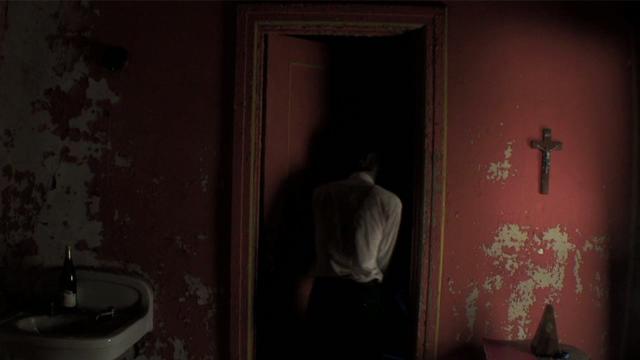
The Music of Erich Zann is a notable tale not only because of Lovecraft’s designating it as one of his favorites, but also because of the description of the eponymous music. This film is ambitious for tackling this story on that fact alone, and much of the time the music works it has a borderline-grating yet conversely captivating quality that Lovecraft alludes to in the text. The sound design of the film also works well in conjunction with it. There are great oblique angles thrown into the mix that build that sense of unease and hint of something outré.
The locations are really great and the film does well to play rather timelessly throughout. There are few hints of when this film was made, which allow it to be rather close to the Lovecraft’s text without being strictly period. The makeup work is rather good for the most part, but most of what makes this film click is that this film insists on the myopic world view of the mythos and that is most of why it works. The world beyond the walls of this decrepit apartment building is illusory and the reality of reality is being uncovered behind these walls.
This film is very true to the text based on what I recall of the story and builds atmosphere and dread and slowly builds to a huge wallop, that may impact the protagonist more than the spectator. I know from experience that an undertaking of a tale of this kind and size in a university production is quite an undertaking and the results are pretty impressive.
The Earth Rejects Him
Jared Skolnick has since made a new short film. This one is an original tale. What’s most intriguing is that most of it unfolds without the aid of discernible dialogue and it’s an elementary horrific tale insomuch as we see results and understand patterns, in short we witness results, and don’t necessarily discern the cause in a precise fashion, but understand it. This, of course, is by design. In a Lovecraftian way a curtain is pulled back here revealing a maniacal, terrifying underworld that we only understand enough to know we want no part of it, and in many ways that makes it more frightening.



 The Movie Rat