Bernardo Villela is like a mallrat except at the movies. He is a writer, director, editor and film enthusiast who seeks to continue to explore and learn about cinema, chronicle the journey and share his findings.
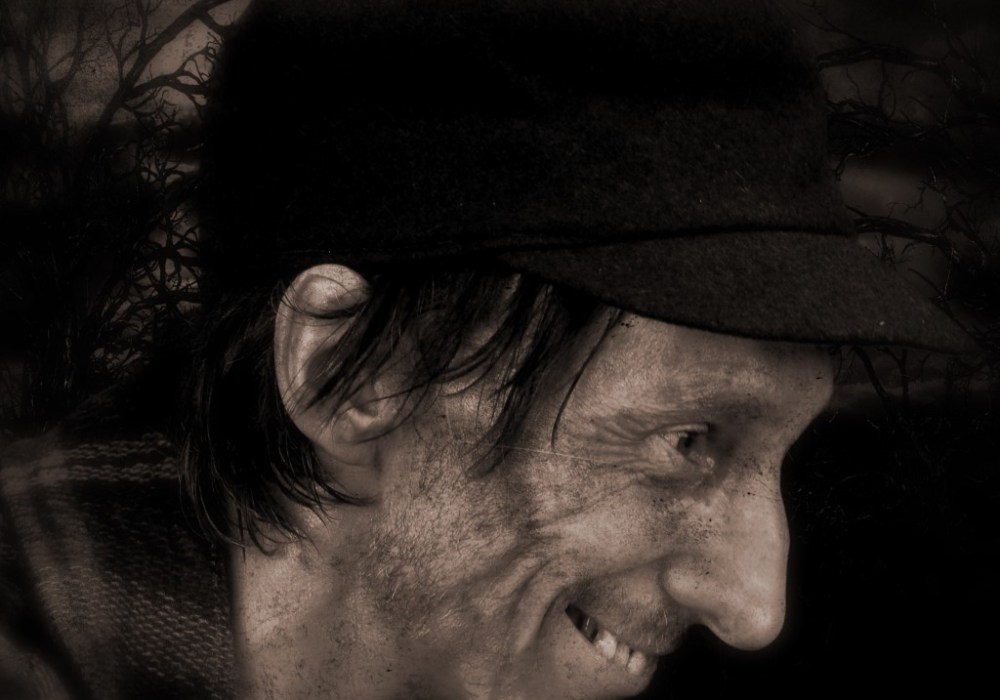
OK, I’ve missed more than I should have lately, but I’m back with a good one. This film employs a deceptively simple device to tell an intricate tale about an unsolved murder case. The device is a 3D journey through a photo to pick up clues. Spotting all of them and piecing them together is left to you. There is no dialogue and it’s very well done. Enjoy.
This is a film I first viewed a while and I intended to feature it on a Short Film Saturday and this is the most opportune time. This is an early animated short by Tim Burton that features voice over narration by Vincent Price. I think I hardly need say more to convince you to play it.
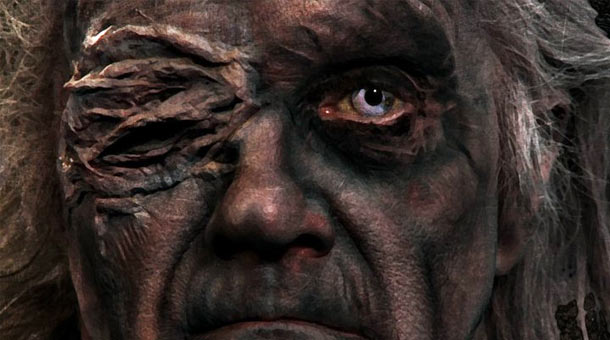
Last weekend was the first time in a while I missed one of these posts. I will attempt to make it up at some point. Essentially I didn’t have my horror shorts lined up yet.
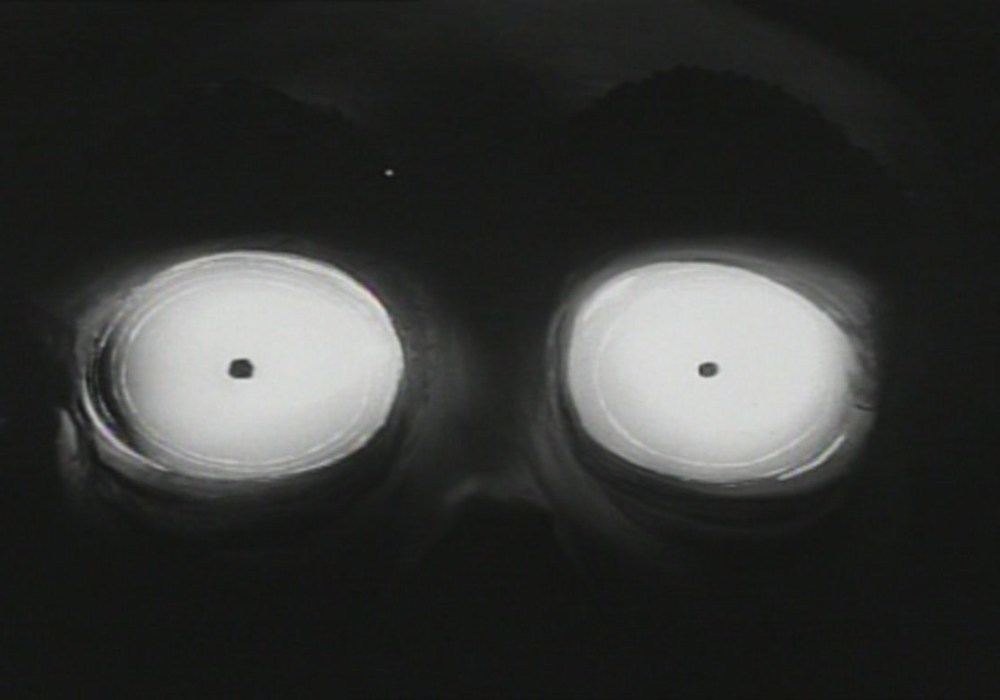
This one I found courtesy of Film School Rejects. It’s a rather apropos star because one of the earliest scares I remember was listening to The Tell-Tale Heart read aloud in grade school. This film offers quite a unique spin on the tale, rightfully citing it draws inspiration from it; as opposed to being a direct, literal adaptation. It’s a very visual tale with a unique style of animation employed to convey it. There is only one significant piece of dialogue in its 20-minute running time. A lot of the film is told in montage and flashback. If ever you needed proof that animation is a medium and not a genre, this should do the job quite well.
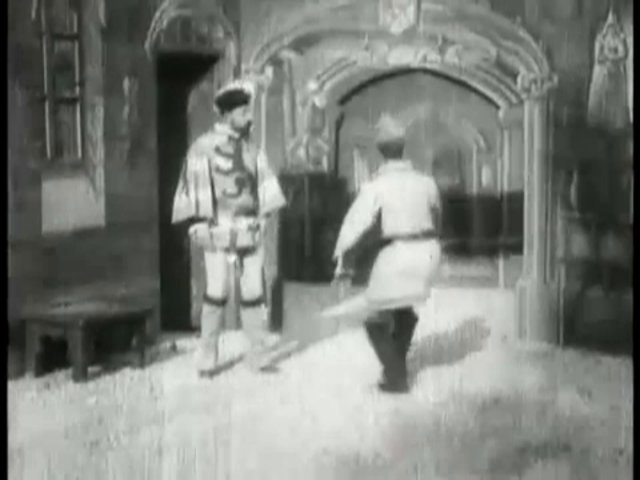
As I have been wont to do here on the site and in the Short Film Saturday theme, I love to feature the work of Georges Méliès. As it is also the time of year when the Movie Rat runs its 61 Days of Halloween theme, I figured I’d tie in the shorts in the horror milieu as well. I use the word milieu because this is a humorous take, but is still considered by many to be the first horror film. Horror, especially as many children experience through the Halloween holiday, has its whimsy and flights of fancy too; so enjoy!
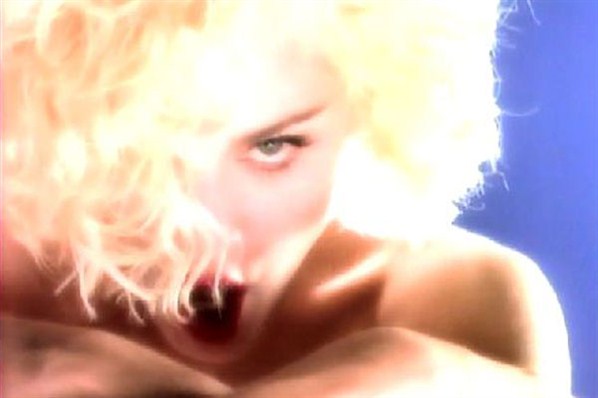
Lastly, and perhaps most obviously in a string of Madonna videos with musical touches, Madonna’s “Express Yourself” not only draws its inspiration from Metropolis but also is directed by David Fincher, who started in the music video trade before transitioning to feature films.
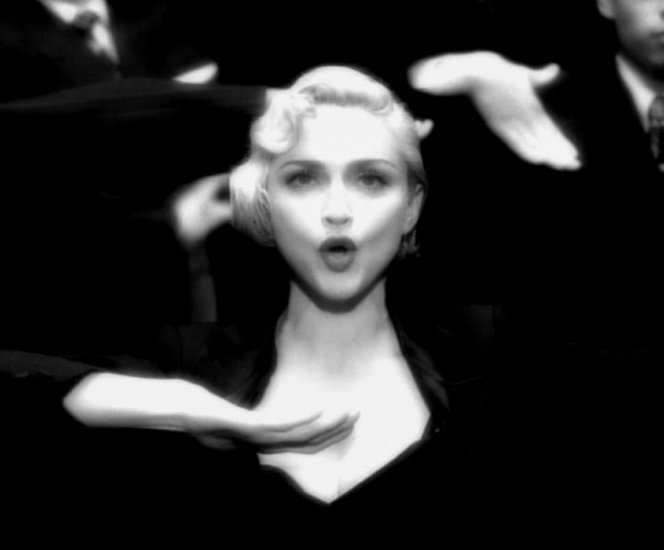
Here Madonna again (the theme started here) not only gets cinematic with many of the visuals emulating the halcyon days of Hollywood both on film and in promotionals stills but there are also references to many of the biggest stars of yesteryear in the lyrics.
More specifically with regards to the photos here’s what the Wikipedia article says about the images. To check the sources visit the actual page:
Filmed in black-and-white, the video recalls the look of films and photography from The Golden Age of Hollywood with the use of artwork by the Art Deco artist Tamara de Lempicka and an Art Deco set design. Many of the scenes are recreations of photographs taken by noted photographer Horst P. Horst, including his famous “Mainbocher Corset”, “Lisa with Turban” (1940), and “Carmen Face Massage” (1946). Horst was reportedly “displeased” with Madonna’s video because he never gave his permission for his photographs to be used and received no acknowledgement from Madonna.[29] Some of the close-up poses recreate noted portraits of such stars as Marilyn Monroe, Veronica Lake, Greta Garbo,[30] Marlene Dietrich, Katharine Hepburn, and Jean Harlow. (Additionally, several stars of this era were name-checked in the song’s lyrics.)[31] Several famous Hollywood portrait photographers whose style and works are referenced include George Hurrell,[32][33] Eugene Robert Richee,[34] Don English,[35] Whitey Schafer, Ernest Bachrach, Scotty Welbourne, Laszlo Willinger, and Clarence Sinclair Bull.[36]
This Madonna video also features a cribbed image from a well-known film but it is not as renowned as her borrowing liberally from Metropolis for “Express Yourself.” This video for “Oh Father” borrows images from Citizen Kane. Kudos to the Comet Over Hollywood for spotting it and inspiring this month-long focus on Madonna’s videos.
Citizen Kane (1941) was named the greatest film of all time by the American Film Institute in 1998.
But prior to this, Madonna used themes from the Orson Welles film in her 1989 music video “Oh Father,” according to writer E. Ann Kaplan.
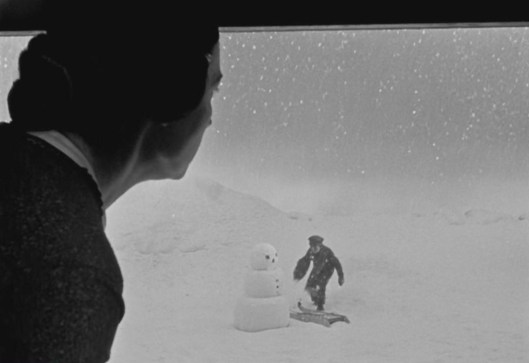
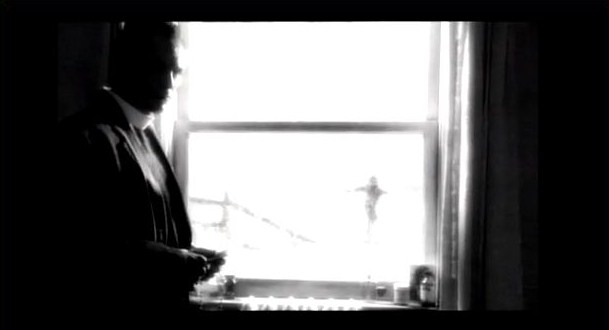
A scene similar to Citizen Kane in Madonna’s video “Oh Father”
The whole video is shot in black and white. At the beginning of the music video, a priest is looking out the window, watching a little girl spin and play in the snow. Inside, the little girl’s father is lying over her mother as she dies.
Madonna’s video was modeled after his scene of Agnes Morehead as Mary Kane watching young Charles Foster Kane playing outside.
The scene is similar to young Charles Foster Kane playing in the snow as his parents are inside, preparing to send him away with guardian to be raised in luxury. When Kane is taken away from his parents, he acts rebellious and is expelled from several universities.
The song and video were Madonna’s attempt to accept her mother’s death and her father remarrying.
“I had to deal with the loss of my mother and then had to deal with the guilt of her being gone and then I had to deal with the loss of my father when he married my stepmother. So I was just one angry abandoned girl. I’m still angry,” she is quoted as saying in a 2002 biography “Madonna: An Intimate Biography” by Randy Taraborelli.
Kane allusions aside it’s a fairly haunting video that I could scarcely watch when I was younger. On a musical note, there are perhaps no two more disparate back-tp-back tracks in her discography than this followed by “Dear Jessie” on Like a Prayer.
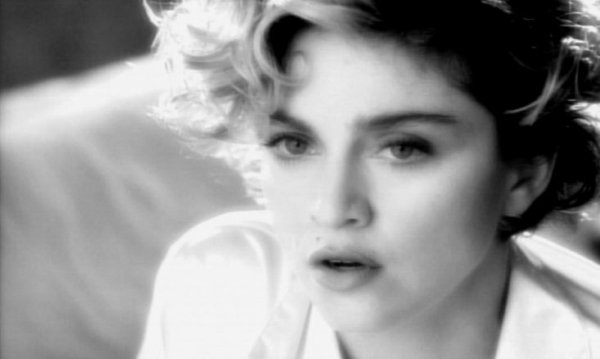
Continuing the Madonna theme this month, which began last week, we come to a video that is not only in black and white but has a bit of a story to it also “Cherish.”
Here’s some interesting info about the video gleaned from Wikipedia. Some of it pertains to the production and release and the last paragraph gets into interpretations of the motifs, which you are always advised to take with a grain of salt. If you want to look into what the sources are, you can visit the original article here.
“Cherish” was accompanied by a black-and-white music video that was directed by Herb Ritts and was filmed on July 22, 1989 at Paradise Cove Beach in Malibu, California. Its world-premiere took place on MTV on August 28, 1989.[47] Ritts was one of Madonna’s preferred photographers at that time and so she asked him to direct the “Cherish” video. Ritts reportedly tried to talk her out of it saying, “But I’m a still photographer. I don’t know anything about film.” Undaunted, Madonna replied simply, “Well you have a few weeks to learn.”[47] The video was conceptualized by Ritts, who wanted to portray Mermen in their natural habitat, but Madonna baulked at the idea since she wanted to be portrayed as herself, but keep the Mermen also.[47] Four male performers were signed for this, one of them being Tony Ward, who would become Madonna’s boyfriend later, with the other three being water polo players from nearby Pepperdine University.[47] There were four Merman tails created by Global Effects in North Hollywood, California, for the video.[47] Three full size tails for the mermen were cast in a solid highly flexible rubber, each weighing around 40 lbs. This was necessary to make them neutrally buoyant in water as lighter tails would have floated, causing the swimmers to be head down in the sea.[47] Once in these tails, the polo players needed to be carried to and from the water and once inside, they had tremendous swimming power and agility. This was partly due to a plastic spring like armature cast into the flipper of each tail.[47] One of the reasons that this video was shot in black and white was because the water was very cold, causing Madonna’s already pale complexion to look even whiter.[48]
Fouz deduced a relationship between the music and the images in the video for “Cherish”, saying that they complement each other; the author felt that this in turn encouraged the viewer to watch the video repeatedly.[49] Fouz talked about the balancing of height and depth occurring in the video. The visual depictions of the Mermen and the lighting used in the video was influenced by Ritts’ still photography known as “The Male Nude Bubble”, which showed nude male models inside a giant water tank, with a white cloth entwined around them. Many of the qualities in the photos, including the floating nature of the models, were used in the swimming and the posing of the Mermen.[49] Carol Vernallis, author of Experiencing Music Video, found homoerotic connotations between Madonna and the Mermen. The Mermen in the video exist in a self-contained world of their own, where they procreate with their own kind, both biologically and socially. The fact that the Mermen did not seem to possess genitalia led Vernallis to believe that it associated them with Ritts’ other works, homoerotic sculptural images without penis.[50] Their tails drew different meanings, including sexual ones and Christian symbolism. Since in contemporary art, the images of Mermen are rare and Mermaids are prominent, they are sometimes called fairies partly because it is not known how they came to be.[50] Vernallis believed that the mysteriousness and the elusiveness of the mermen in the video played a crucial role. They never address the camera directly and are often shown disappearing from view.[50] Vernallis believed that since invisibility is a central theme in the homosexual community, this actually portrayed oppression and also the desire to watch but never be seen.[50]
This August, on the 16th specifically, marks Madonna’s birthday. I’ve had occasion to discuss Music Videos and their cinematic tendencies on occasion here, but I never really focused on them during a Short Film Saturday. So during this month I will feature some of her more cinematic, or cinematically-inspired ventures.
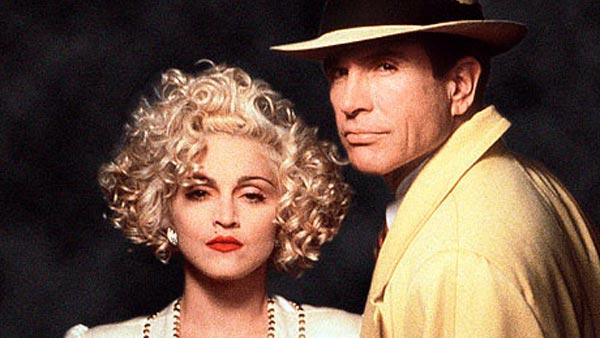
This first video for the song “Sooner or Later” plays both into the music and the film of the 1940s as it was produced to accompany the 1990 film Dick Tracy.
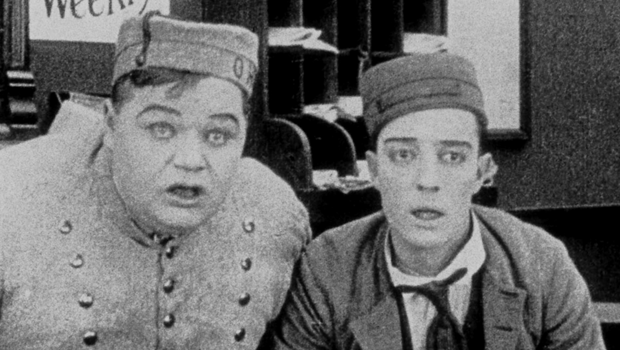
As I wandered through the list of rediscovered films on Wikipedia and got into the nineteen-teens there were far more titles viewable online than the prior decades. Four of the titles, three that you can view here, feature both Fatty Arbuckle and Buster Keaton.
These are obviously two of the bigger figures in silent comedy. I know I’ve had occasion to view a few Arbuckle Keystone titles when TCM has done Mack Sennett nights, but I never really focused on him as I should have. Especially considering the fact that his star-power and acclaim were perhaps unprecedented as was his decline.
As for Keaton, the only of his films I was sure I saw of before this was Limelight. Yes, I am a Chaplin aficionado by breeding but in spite of these titles being middling you can see what both could do in glimpses. Depending on your mood you may prefer the all-out chaos of His Wedding Night, the subdued reaction Fatty has to a fire at the beginning of The Rough House or the escalating zaniness of Back Stage. Regardless, enjoy!