Bernardo Villela is like a mallrat except at the movies. He is a writer, director, editor and film enthusiast who seeks to continue to explore and learn about cinema, chronicle the journey and share his findings.
Here is the third and second to last Short Film Saturday where I will give you a sampling of short works that were once thought to be lost, but were re-found at times in the most unlikely circumstances. These selections are films originally produced between 1910-1919.
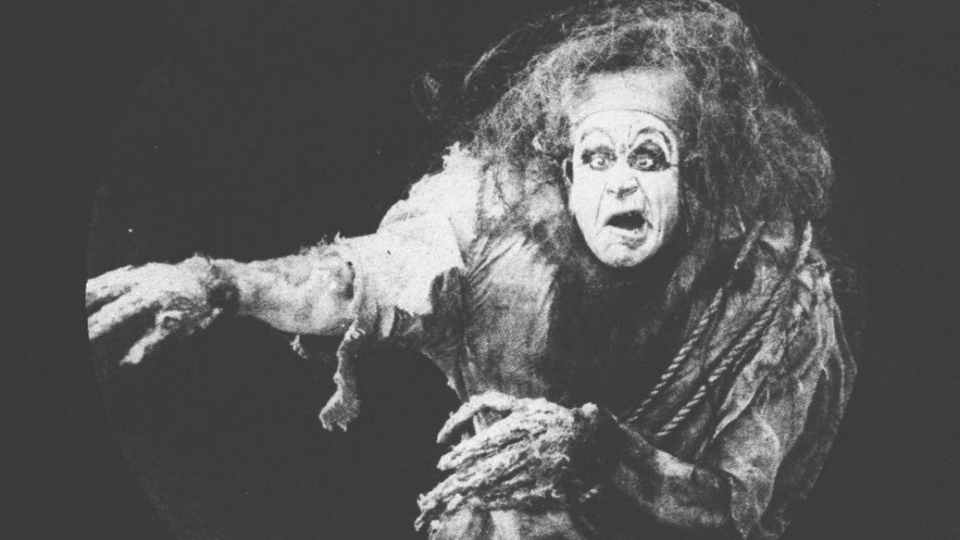
The first cinematic incarnation of Frankenstein was brought to us by Thomas Edison. I had seen this prior but didn’t realize it was missing.
Frankenstein (1910)
The second is another first time screen adaptation this time of Robert Louis Stevenson’s classic Dr. Jekyll and Mr. Hyde
If you saw last week’s post, you’ll see I’m running a theme on rediscovery. These will spin-off into a different kind of post when I start to run into features. As for now, while shorts were king, the films will appear here.
The Death of Poor Joe (1901)
Believed to be the first cinematic work based on Dickens.
Katsudō Shashin (1907)
Believed to be the first Japanese animation.
Running only 3 seconds. Discovered in Kyoto in July 31, 2005.
Sherlock Holmes Baffled (1900)
From Wikipedia:
Running only 30 seconds, this is the first recorded detective film and the first to feature Sherlock Holmes. A paper copy was identified in 1968 in the Library of Congress Paper Print archive by Michael Pointer, a historian of Sherlock Holmes films. It was transferred to 16 mm film in the Library of Congress collection.
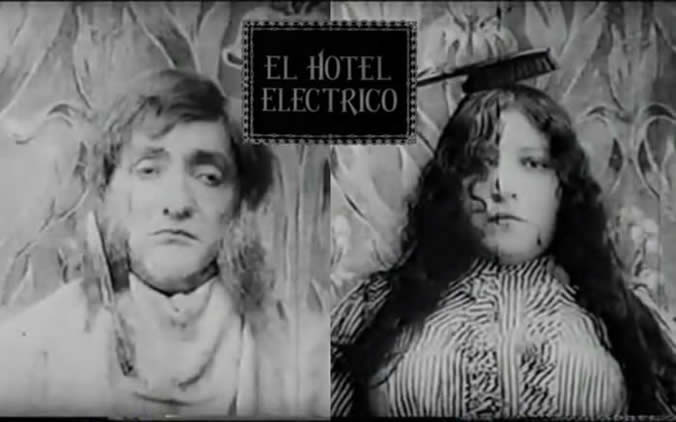
El hotel eletrico (1908)
Directed Segundo de Chomon a Spanish film pioneer.
Recently I was doing research on another topic entirely and came upon a Wikipedia list of rediscovered films. That is to say films believed to be lost and rediscovered much later. Many of these finds are quite remarkable and unlikely. The fact that many of these films are quite old and in the public domain made me start searching for them. I was thus able to create a few Short Film Saturday, and maybe a few other posts, featuring these films.
This first post contains the oldest: it’s a film from 1897 by George Albert Smith and is quite ingenious.
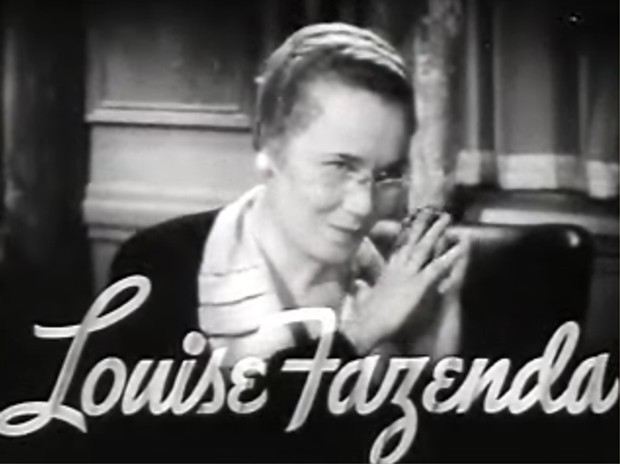
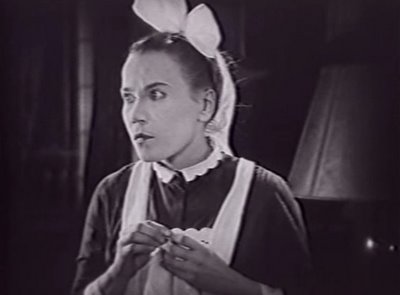
When I heard about Movies, Silently’s blogathon about funny women the first name that came to mind was Louise Fazenda’s, and that was almost instant. However, unlike in my recent Children in Film Blogathon post wherein I knew Jackie Searl’s works, but had just discovered a new side of his them; here I’d quite honestly never heard of Louise Fazenda until I read the wonderful book The Keystone Kid.
The Keystone Kid is part film history and part memoir. The recollections of Coy Watson, Jr. speak most fondly of Louise Fazenda, not only as she became a close family friend, but also of her talents as a comedienne.
My discovering Fazenda’s work, any of it really, is a testament to the importance of The Keystone Kid as a document of film history. As we move further and further in time from given eras in the artform, thumbnail sketches and one line synopses become what we take to be the truth about era, films and performers alike, while other instrumental figures can be forgotten entirely.
Examples of this would be that through Watson’s book I learned that Bobs, whose talent and fame for crying I knew and have been witness to, was the youngest of a large family; that Coy, Sr. was a pioneer in wire effects in Hollywood and that there was an actress named Louise Fazenda who was highly regarded. However, even in wanting to give her what was her due, and he did so citing her notoriety; and two stories (one on set and one off), I still knew nothing of her really, and I was very intrigued. This was not just because she was an unknown silent actress to me, but also because even her name, which means farm in Portuguese, fascinated me. It was a decidedly “un-American” surname yet remained unchanged.
Method
So this post has that element of excitement wherein I’m not coming of a position of having known a bit about, and having insights into, said performer, but instead was discovering her. And that’s great because part of why I don’t read books about film as voraciously as I could is that element of “I wanna see that, and that and that” for various reasons and being disappointed to find said titles are rare or hard-to-find.
My tactics in finding her, owing to the fact that I didn’t have too much time to get cracking, were to hit two internet resources one was YouTube, the other the Internet Archive. I didn’t scour compilations as it may have taken too long to uncover he appearances there.
The films I was able to see all or part of were as follows:
Your Show of Shows(1929) Wilful Ambrose (1915) Ambrose’s Fury (1915) When Ambrose Dared Walrus (1915) Ambrose’s Lofty Perch (1916) Ambrose’s Nasty Temper (1917) Once Over Lightly (1944) The Bat (1926) Her Fame and Shame (1917) Her Torpedoed Love (1917) A Versatile Villain (1915)
General Impressions
If I had only seen Once Overly Lightly, a 1944 moviereel style compilation of many silent films with a voice-over track full of insincere wistfulness and backhanded apologies for silent tropes; I still would’ve known little. Again she’s cited as one of the best but all that’s cut into the film is one very apt pratfall. This release being just five years after her last credit mind you.
Yes, Louise Fazenda survived into the sound era. As the first clip I watched showed (Her segement in Your Show of Shows), though she was playing the straight man, she remained quite funny, versatile and had a pleasant speaking voice. She had a good run in the transition to sound, at least in terms of years, it seemed apparent even in 1929 that writers didn’t know what to do with her talking though – a harbinger of the influx of stage influence in the craft of writing and acting perhaps.
So those first two bits only gave me small glimpses. As I sat down to write this I wondered, maybe the internet has some insights. I found on Golden Silents her bio from Who’s Who on Screen 1920:
“Louise Fazenda, famous Mack Sennett comedienne, was born in Lafayette, Indiana and educated in Los Angeles. After a short season in stock she secured an emergency engagement with Universal, going from there to Keystone and Mack Sennett. Miss Fazenda scored notable success in “The Kentucky Lady,” “Her First Mistake,” “Her Screen Idol,” “The Village Chestnut,” “The Village Smithy,” “The Foolish Age,” “Hearts and Flowers,” “Treating ‘Em Rough,” “Back to the Kitchen,” and “Down on the Farm.” She is five feet, five inches tall, and weighs a hundred and thirty-eight pounds. Her hair is light and her eyes are blue. In spite of her remarkable characterizations of homely girls, Miss Fazenda is one of the screen’s most beautiful actresses.”
At least, here you see some popular titles at the time. It can be worth looking into those down the line, but I’m fairly sure that time has been very unkind to many of her earlier works. Oddly enough through my viewing over this week, I didn’t see what was cited as her staple character:
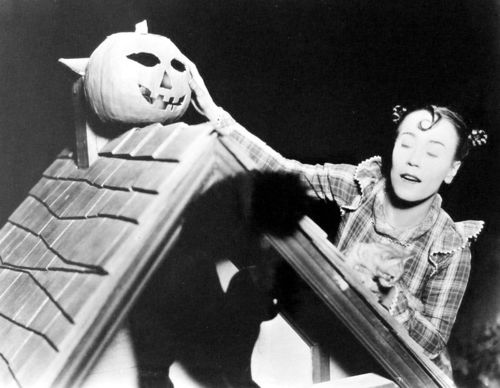
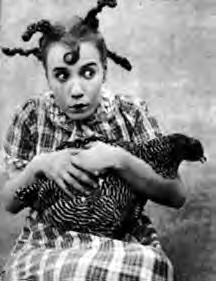
Her best known character was her country bumpkin — complete with spit curls, multiple pigtails, and calico dresses, a look that went on to inspire such later comics as Judy Canova and Minnie Pearl.
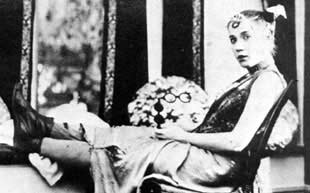
However, I did see her range one of the amazing things I picked up by watching Fazenda, even in the fleeting glimpses I saw, was that there is an elasticity, a chameleon-like quality to her appearance. In the teens she played lovestruck young ladies and matronly housewives. When you compare that to her appearance in Your Show of Shows, she looked more refined, mature (as she could look) but hardly like 14 years had passed.
Sure there was movie magic even back at the very beginning but ones facial structure and the quality of their features have to be perfectly conducive to such a seamless transformation. Fazenda did what needed doing to create her character and seemed to take it seriously even in entirely goofy films. That grounding in reality, even of just one element can be essential for comedic success. It’s not a wonder that legend has it that Mack Sennett would bring in Fazenda to try and quiet Mabel Normand’s comments on the caliber of films Keystone put out.
Fazenda seems to have a physicality that’s ahead of her time, possessing not only natural ability but the innate ability to seem natural on screen. Silents weren’t communicating with words so gestures, movements and looks had to be exaggerated such that those who could be big but also convey and get desired results with restraint are noteworthy. As cameras moved closer to actors broader was no longer better and those who could make subtle communicative gestures continued to work consistently. Fazenda proved early on she had that innate ability.
Her facial expression in Wilful Ambrose as she lines up a “bonk” in Wilful Ambrose is priceless. A husband being smashed on the head is a standard bit, but to make the anticipation funnier than the result is great and the mark of a good comedian. All of these traits, including a good singing voice, were on display in the sound era.
In The Bat you can see that she was the comic relief and brought that levity when needed but her fear always seemed very real. She instantly asserts her presence. Her character, for as superstitious as she is, is often correct to be fearful and it ends up being one of the charms of the film. While that film had its failings it is perhaps the best illustration of her persona that I was able to see: deft physical comedy and seriously grounded commitment.
Conclusion
Going back around to the beginning, it really is a wonder what The Keystone Kid, or any written work about film can do. You open the book with a vague interest in the subject matter and learn of very specific avenues to explore. They are entryways to new constellations in the universe of film. Due to this book I now have definitive thoughts on why Louise Fazenda is great. I no longer take that statement and remember it like a cinematic platitude such as film X is great and film Y is such-and-such’s best. I’ve now seen some of her work for myself.
If a piece of film writing leads you find one new artist of film it’s done a great service. If you find many it’s a debt that can never be repaid save to thanks again. I am now a fan Louise Fazenda’s thanks to Coy Watson, Jr.’s book, and I’m quite grateful I am.
Here is another selection in honor of LGBT pride month here in the US. This one is also a comedic, yet heartwarming take whose idea makes itself readily apparent quickly. A fairly funny animated tale with a great payoff.
Any film, feature or short, can be boiled down to a ‘what if’ question. This one humorously explores the notion of pinpointing the exact moment in time wherein the seeds of homophobia were first planted.
Viewer discretion is advised as it does contain adult language.
This week’s short film piggy-backs off last week’s train theme. When I read this fascinating blog post about how the silent film got so closely identified with a woman being tied to train tracks, and why that might not be so accurate, there was a link to one short that’s a famous example of it.
It’s a fairly humorous and straight forward tale. Though D.W. Griffith is most noted for making cross-cutting a staple of film technique, he was by no means the only one implementing early in the development of cinema and here Mack Sennett really does the technique justice and makes the short very compelling. Another interesting thing you’ll note is that this short film is bereft of score. I am fine with that. Very few silents have their proper score attached to them to this day – some never had a specified score and that was left to the discretion of the live accompanist. Chaplin’s work, as he was also a composer, is an exception; furthermore, the restoration of the original Metropolis score is a large part of what made that reconstruction so very brilliant. Anyway, this is quick, fairly humorous short full of silent tropes.
Here you will find two quick clips that show some early progress in film as a documenting tool.
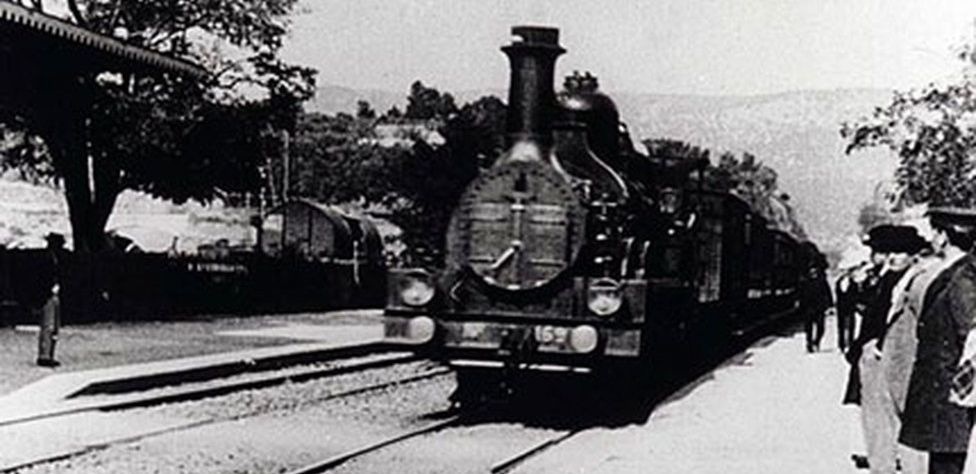
One of the first shorts ever in 1895 was of a train arriving at a station by the Lumière brothers.
Compare that to this shot 18 years later when a train collision was caught on film. In the meantime, storytelling developed but the journalistic possibilities were always apparent.
I believe the last time I posted a trailer it was in conjunction with another short just so it wouldn’t feel like such a cheat. Here, however, the trailer is for a short, and since the story is cool and the film looks to be of significance; I will make another exception.
This hit a number of websites the other day as it appears to be making a splash at the NYC Independent Film Festival. Quite simply, Yuck is a short documentary created by a 4th Grade student at P.S. 130 in New York about the poor state of public school lunches. Aside from the cleverness, courage and talent of this burgeoning filmmaker, the thing that is as impressive as it is scary about the film is the topic. I myself went through the New York City Public School system from grades 5 thru 12 and the most frightening thing is a lot of this food looks exactly the same, which is why I’m glad I brown-bagged it most of the time. It also makes forcing me and my classmates to sing “Food, Glorious, Food” at fifth grade graduation all the more hypocritical.
As for Yuck, you can learn more about the film on its official site.
UPDATE:The film has since hit Vimeo and been linked to me. The timing is coincidental due to the fact that I just recently saw A Place at the Table , which looks at hunger in America and discusses the budgetary constraints around school lunches.Yuck is very well done, funny and finds what I may have expected: false advertising, smoke and mirrors PR and redundant food stuffs all too often. It’s definitely worth a watch. Enjoy!
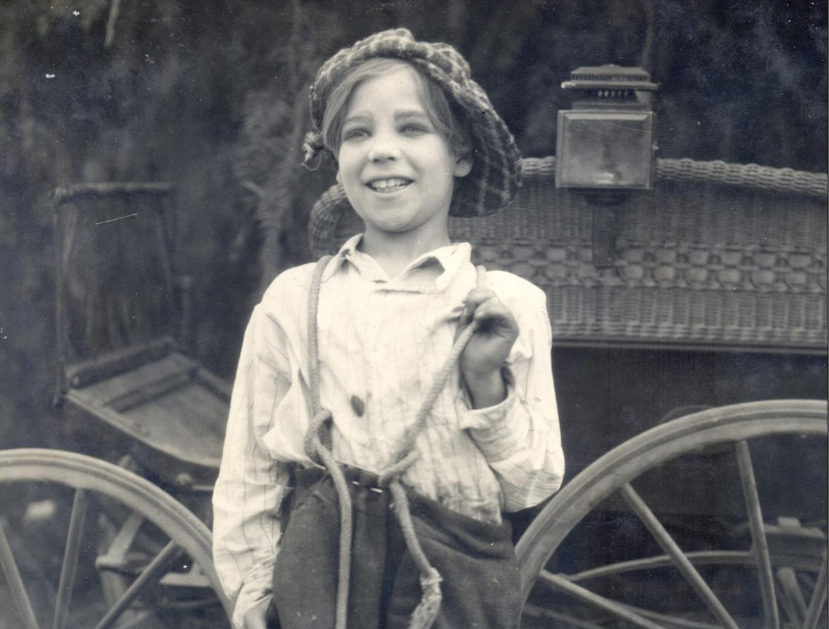
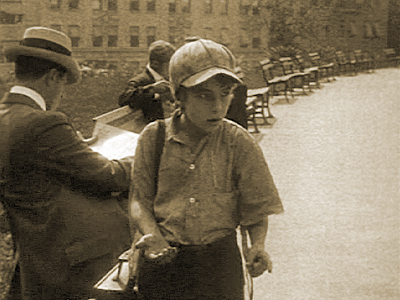
There are a few things to note here: the first is that this is the second Griffith title I watched for this weekend. The first I felt, though more interesting in its construction, is not as effective a narrative. Also, interesting to note, and I haven’t seen too much of this even in the silent era, but the title role of Billy, a boy, is played by Edna Foster, a girl. This is a practice more common on stage and in ballet than on film. In spite of that it is still an enjoyable film that gives you a sense of Griffith’s penchant for melodrama and social problem films.