Mini-Review: The Fab Five

Introduction

This is a post that is a repurposing of an old-school Mini-Review Round-Up post. As stated here I am essentially done with running multi-film review posts. Each film deserves its own review. Therefore I will repost, and at times add to, old reviews periodically. Enjoy!

The Fab Five

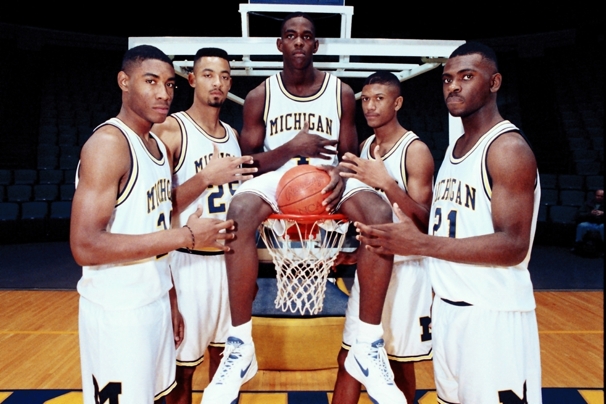
A feature-length documentary from ESPN Films that chronicles the five freshmen who changed the landscape of college basketball in the early ’90s.

This is a very compelling (as most of ESPN Film’s recent works have been) look at Michigan’s blue chip recruiting class and the cultural and athletic sensation they were and the aftermath of their years in the game. This film garnered a lot of attention due to the controversial comments by Jalen Rose, one of the players and a producer of the film, about Duke. However, the film is bigger and more important than those polarizing comments. Rose’s decision to honestly portray his sentiments at the time and include them in the film are bravura filmmaking. The only part of the film that falls a little short is that the controversy that swirled about the program as the players left was never really foreshadowed and that may have made it more effective.

8/10

Mini-Review: The Way Back

Introduction

This is a post that is a repurposing of an old-school Mini-Review Round-Up post. As stated here I am essentially done with running multi-film review posts. Each film deserves its own review. Therefore I will repost, and at times add to, old reviews periodically. Enjoy!

The Way Back

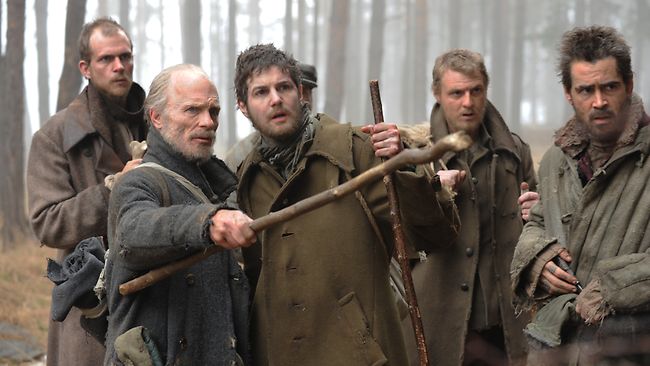
This is a tale about a courageous escape from a Gulag in Siberia during the second World War.

This is a film by acclaimed director Peter Weir, which is certainly not among his best but it is a very interesting and well-wrought tale. The only part that feels rushed is the ending but there’s a creative montage there. The acting is very strong in the film from the likes of Ed Harris, Jim Sturgess, Colin Farrell and Saoirse Ronan. It’s a very human tale that’s shot beautifully.

7/10

Cinematic Little League All-Star Team

In April I participated in a blogathon that was leading up to opening day of the Major League Baseball season. I had designs of a far more grandiose post featuring multiple line-ups. However, the time the first team took precluded me from doing so.

However, when I gave up on that notion I decided that there was a perfect time for a post about a second all-star team and today is the day. I typically have had a Little League related post on the eve (or day) of the World Series commencing, as I usually head out there. Since today is the parade in Williamsport and tomorrow the games begin I thought the timing was perfect.

A few things of note about the selection of this particular fictional squad…

Firstly, I tried to avoid having players from the same team/films selected. However, there aren’t too many Little League oriented films and in paying lip service to reality most leagues don’t have a tremendous number of teams from which to cull their all-stars.

Second, while I tried to adhere to Little League codes of conduct in selecting players but they’re not all choir boys. Regardless, on of Little League’s goals is to shape the young individual not reinforced ready-made upstanding teammates/athletes. I was tempted to go outside the parameters of baseball tales, but only did so when appropriate.

Third, as anyone who watches Little League regularly will tell you players have to be willing and able to play a number of positions. Furthermore, in film, to aid the audience they usually only play one position. In reality there is movement and many pitchers are needed, not just one. I tried to accommodate both the realities of Little League and the films.

Last, as with many films about adult baseball players, there is usually a bit of underdog nature and growth in the player. I picked players either for consistency or for the maximum of their ability.

Sponsor – Richie Rich (Macaulay Culkin)
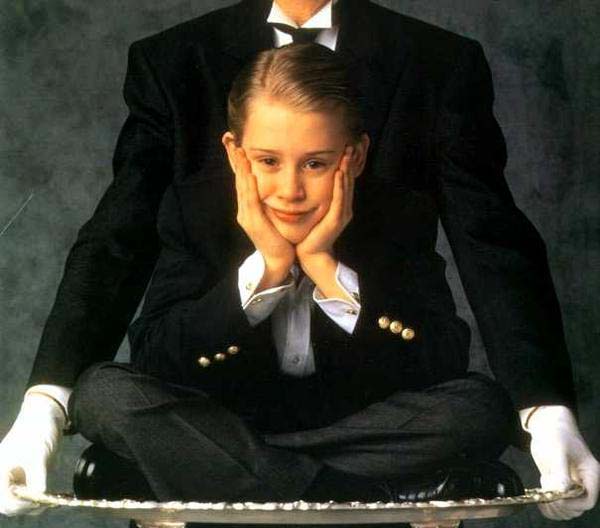
Richie Rich (1994, Warner Bros.)

Little League was built from the ground up with the help of sponsors. To this day companies sponsor local teams, leagues and the Little League in general. So why shouldn’t this team have one? And who would be more apt to sponsor a team than Richie Rich?

Manager- Billy Heywood (Luke Edwards) Little Big League
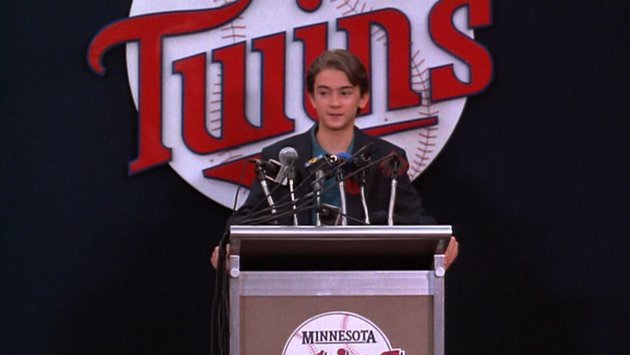
Little Big League (1994, Columbia Pictures)

Movies allow for this unique situation to occur. Clearly, a manager will be an adult in reality but I had some kids to choose from here and I think Billy brings the know-how and confidence to bring this rag-tag bunch together.

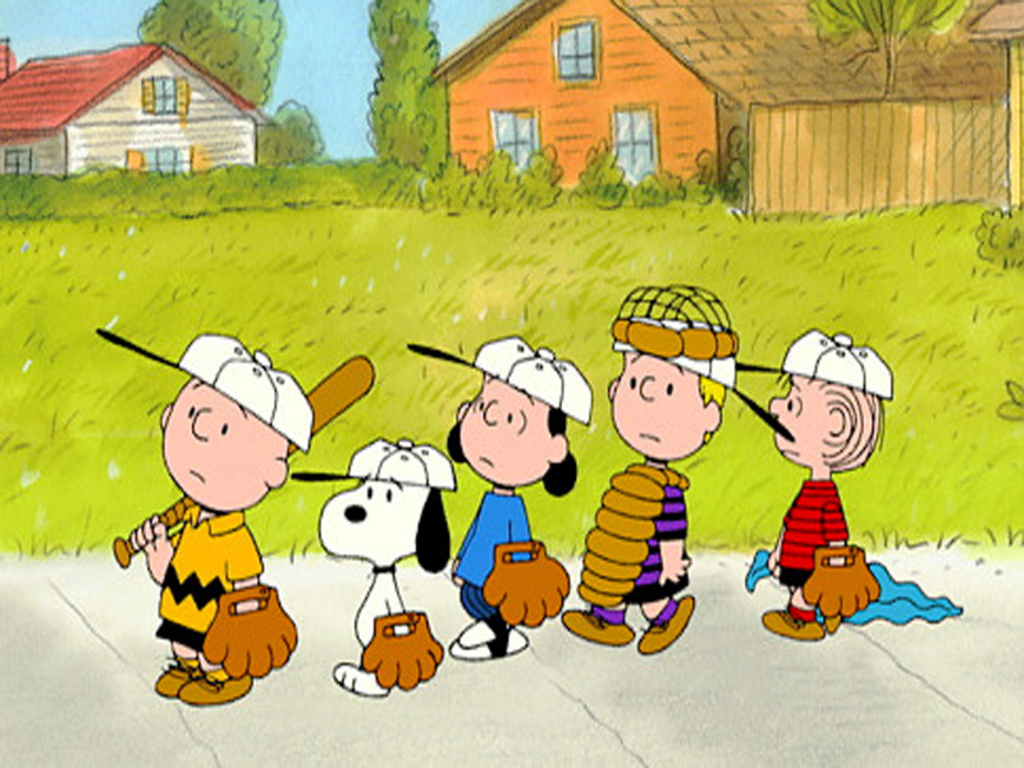
Catcher – Schroeder – Charlie Brown’s All Stars (a.k.a. Lucy Must Be Traded, Charlie Brown)
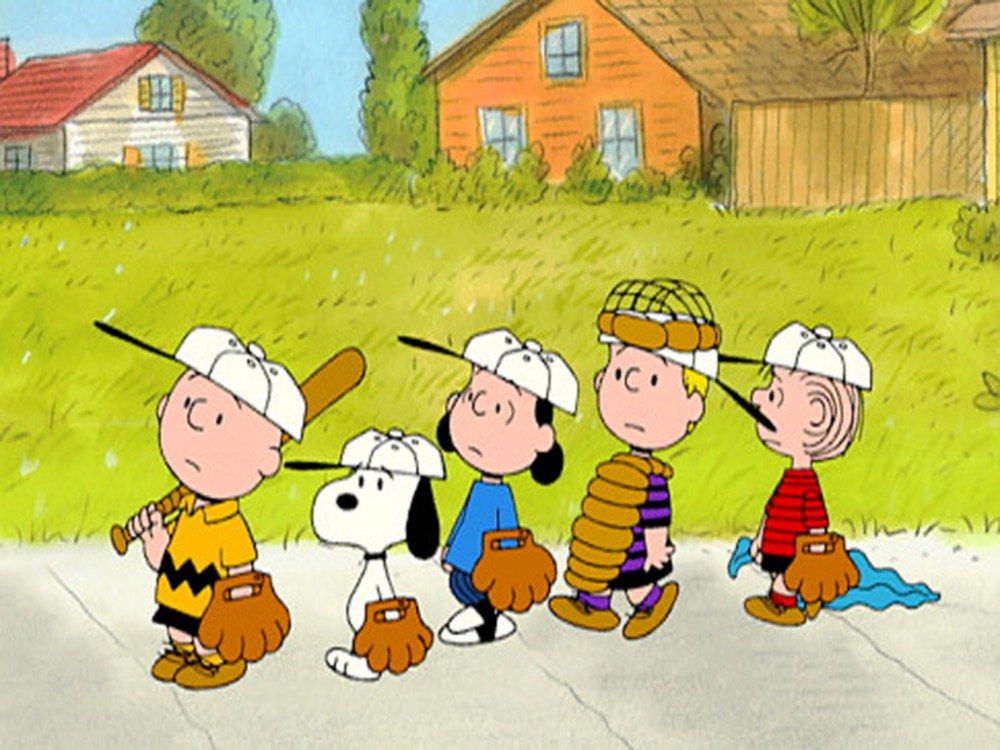
Peanuts

There is one baseball-centric Peanuts special at least. The comic strips encapsulate the fascination and essence of baseball to a child. The untimed endlessness of play and the omnipresence in summer. When I was young I fancied myself a catcher and I felt that Schroeder was the prototype of how the position should be played, how the game should be approached and how the pitcher should be worked with.

Pitcher – Henry Rowengartner (Thomas Ian Nicholas) – Rookie of the Year (1994)

Rookie of the Year (1993, 20th Century Fox)

I added a bench because it’s adhering to Little League convention and because pitchers no longer hurl every game. When I had to think of a go-to ace I did have to bend the rules a bit and find a who had the stuff, albeit for a short time and unusual circumstances, to play in the majors.

Shortstop – Tanner Boyle (Timmy Deters) The Bad News Bears (2005)
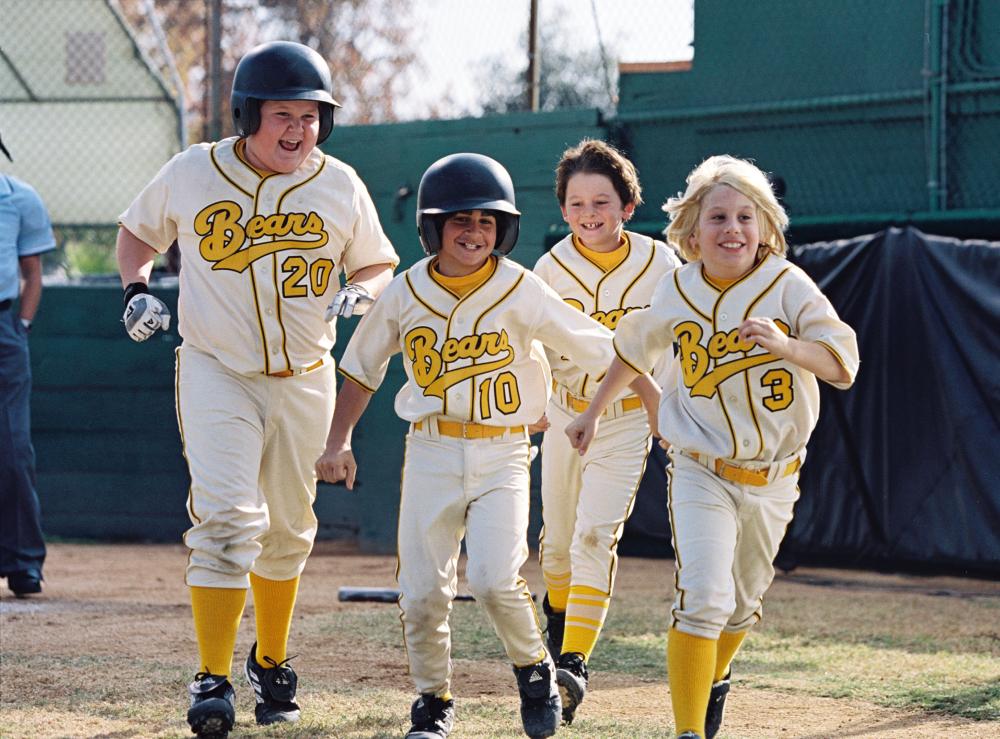
The Bad News Bears (2005, Paramount)

I think in the overall scheme of things there is a balance of different personalities on this team that evens it out such that a few combative firecrackers are fine. Tanner Boyle in the newer Bad News Bears though more foul-mouthed seems more a spark than a detriment and being a shortstop fills a key position on the diamond.

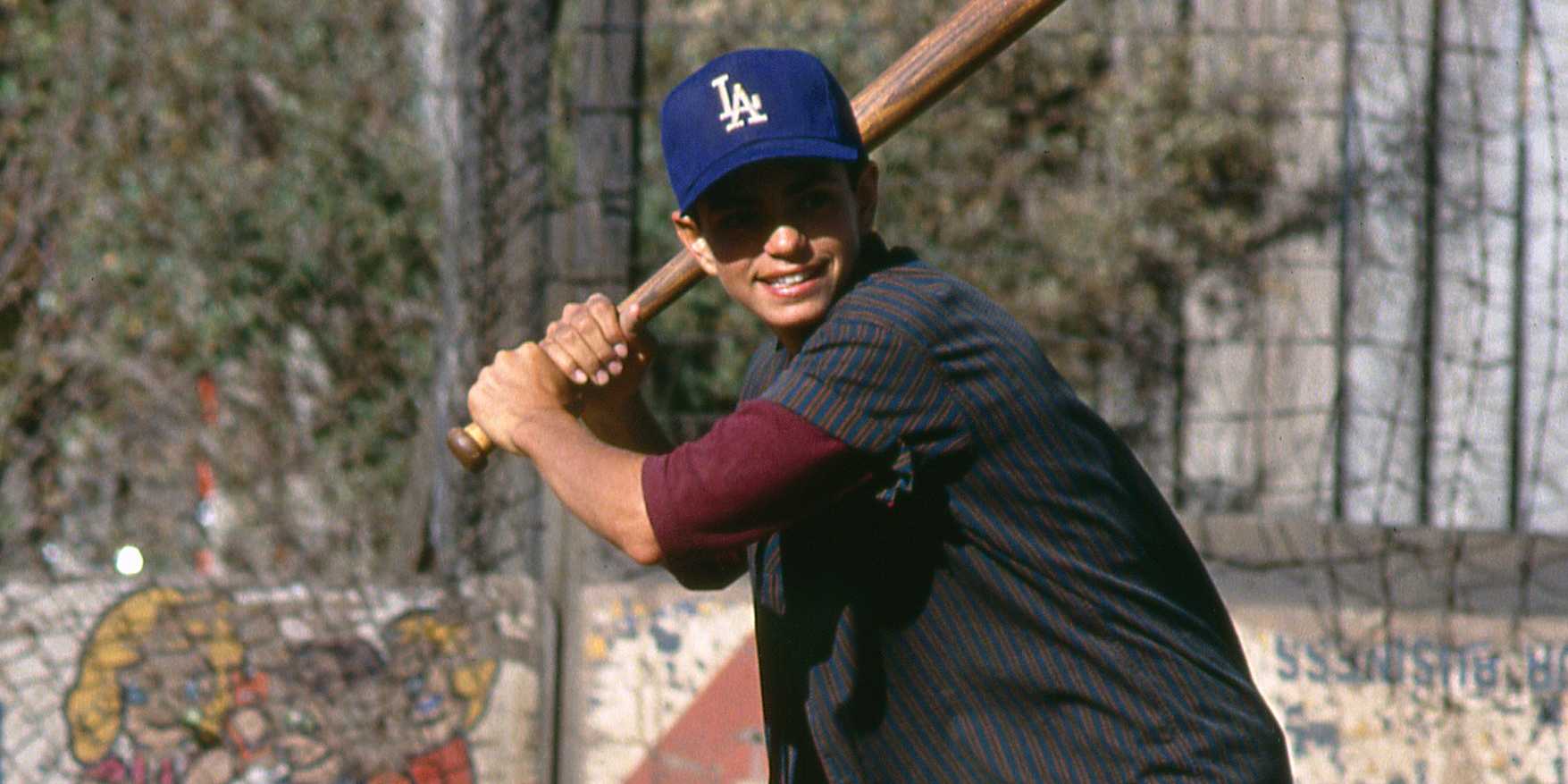
Third Base – Benny “The Jet” Rodriguez (Mike Vitar) The Sandlot (1993)
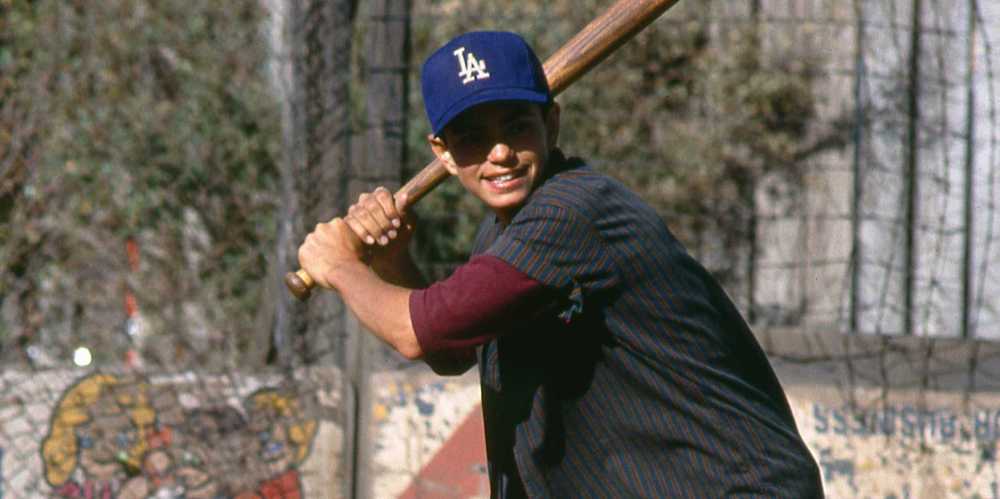
The Sandlot (1993, 20th Century Fox)

Usually the Little League axiom is to take you best athlete and have him play short, others would amend that to catcher considering how important being a backstop is in that game. However, if those positions are in capable hands it’s a bonus to have your best athlete elsewhere. Rodriguez just may be that and plays the hot corner, which is even more crucial on a 2/3 conventional size field.

Second Base – Garo Daragabrigadien (Jeffrey Tedmori) The Bad News Bears (2005)
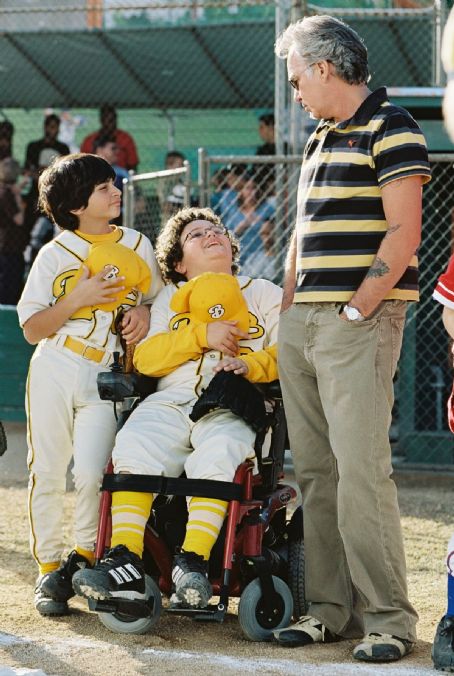
The Bad News Bears (2005, Paramount)

Garo is one of the original characters in the new version and aside from representing an ethnicity that reflects the present of this film he has one of the more impressive transformations in the film.

First Base – Timmy Timmons (Victor DiMattia) The Sandlot (1993)
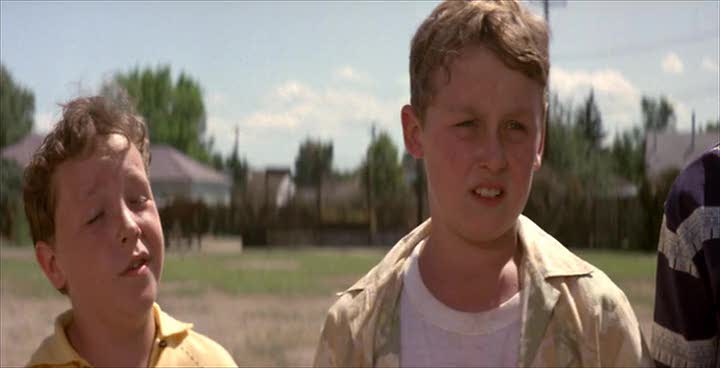
The Sandlot (1993, 20th Century Fox)

Not too many flashy stretch plays at first base in Little League movies. Typically much of the drama when the ball is put in play is catch/no catch and how the team manages to get the ball to first. Timmy can competently handle the position with this squad.


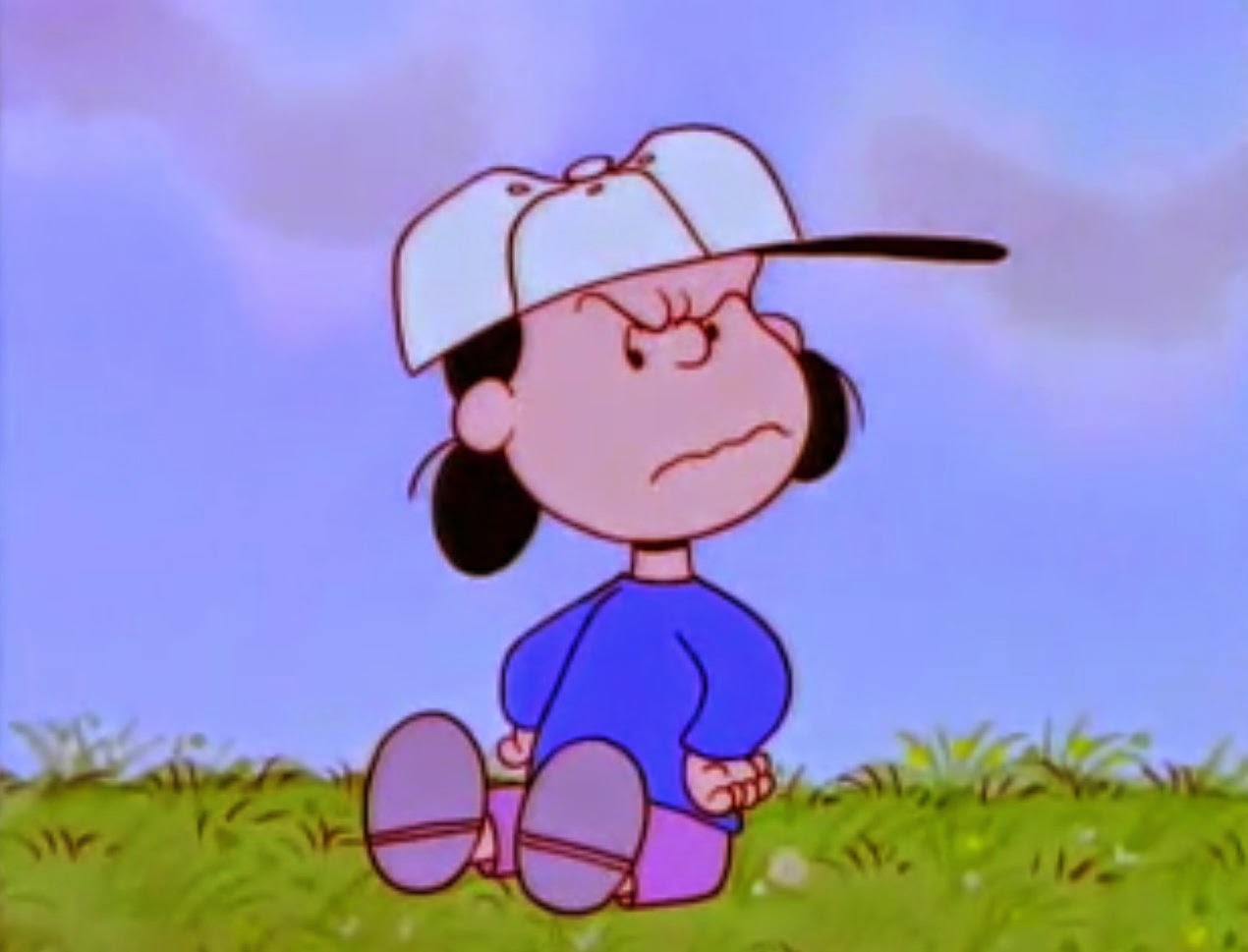
Rightfield – Lucy Charlie Brown’s All Stars (a.k.a. Lucy Must Be Traded, Charlie Brown)
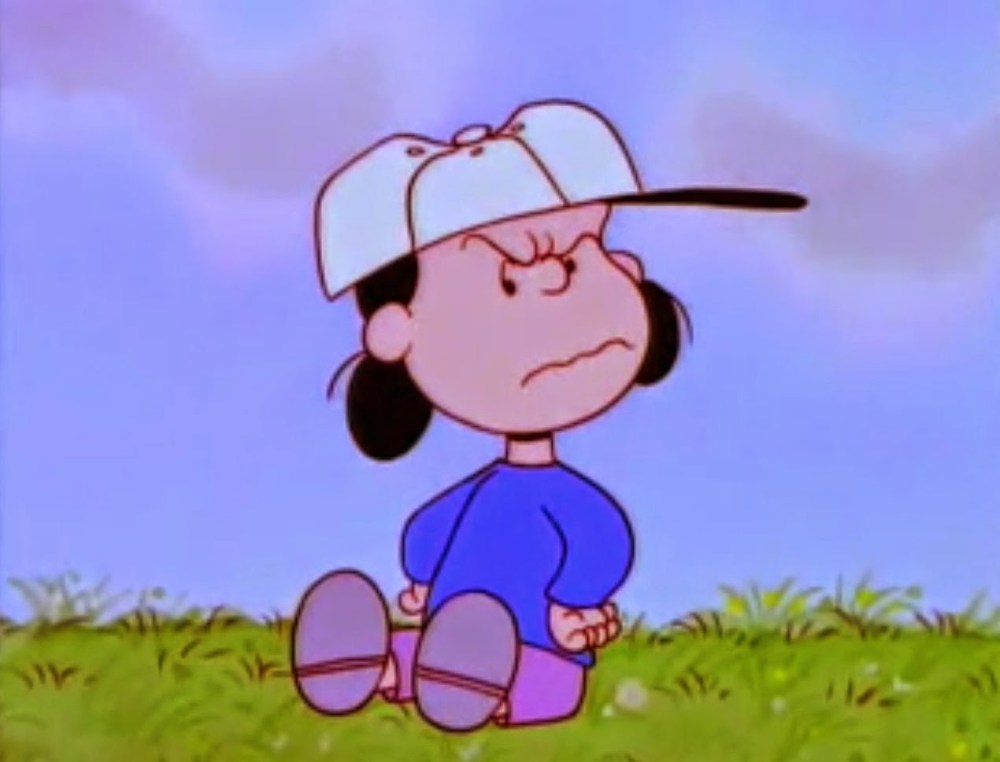
Peanuts (UFS)

Lucy may not be a great outfielder, but she’s a worse holder. With the pitchers on this team I’d expect groundballs and strikeouts rather than fly balls. However, traded or not, bonked or not, I feel she can be utilized.

Centerfield – Kelly Leak (Jackie Earle Haley) The Bad News Bears (1976)
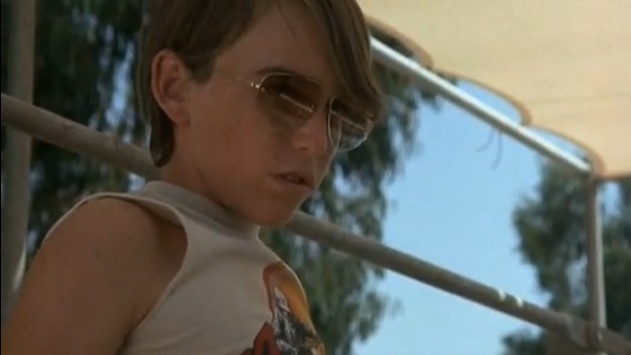
The Bad News Bears (1976, Paramount)

Smoking and motorcycle riding make him not the poster boy for the team, but his contributions to the team on the field are undeniable. The original rendition is more truly a badass and a star player. Though he moved around the outfield some he’ll play center and have freedom to move laterally to compensate for his flankers.

Leftfield – Kevin Buckman (Jasen Fisher) Parenthood (1989)

Parenthood (1989, Universal)

Little League and Kevin’s inability to catch the ball, and the team to win, is a subplot of this film. Second Base is his lowpoint but there is a triumphant moment back where he belongs and with different coaching and perhaps sports psychologist (Provided by Lucy for five cents) he can contribute. Even if he doesn’t the outfield are where the substitutions would happen.

No DH this ain’t the American League.

Bench

Here’s where some of the talented pitchers that can’t play every day can be found and will move around the diamond as substitutes as needed on off-days pitching-wise.

Amanda Whurlitzer (Tatum O’Neal) The Bad News Bears (1976)
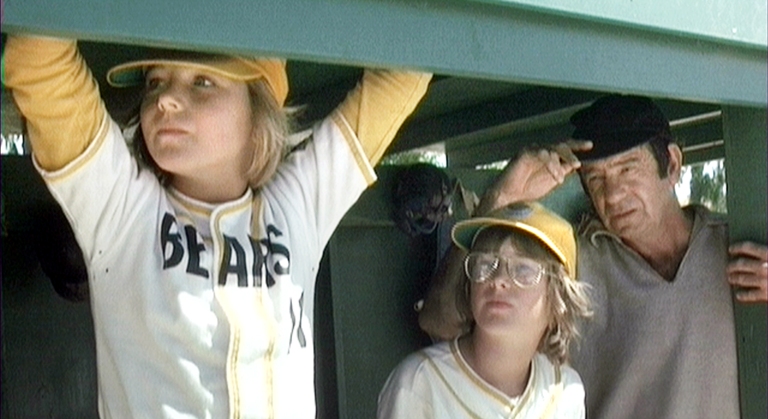
The Bad News bears (1976, Paramount)

You just can’t keep her off the team, and this version seems a whole lot more dominant than the newer incarnation, maybe the sequels have something to do with that.

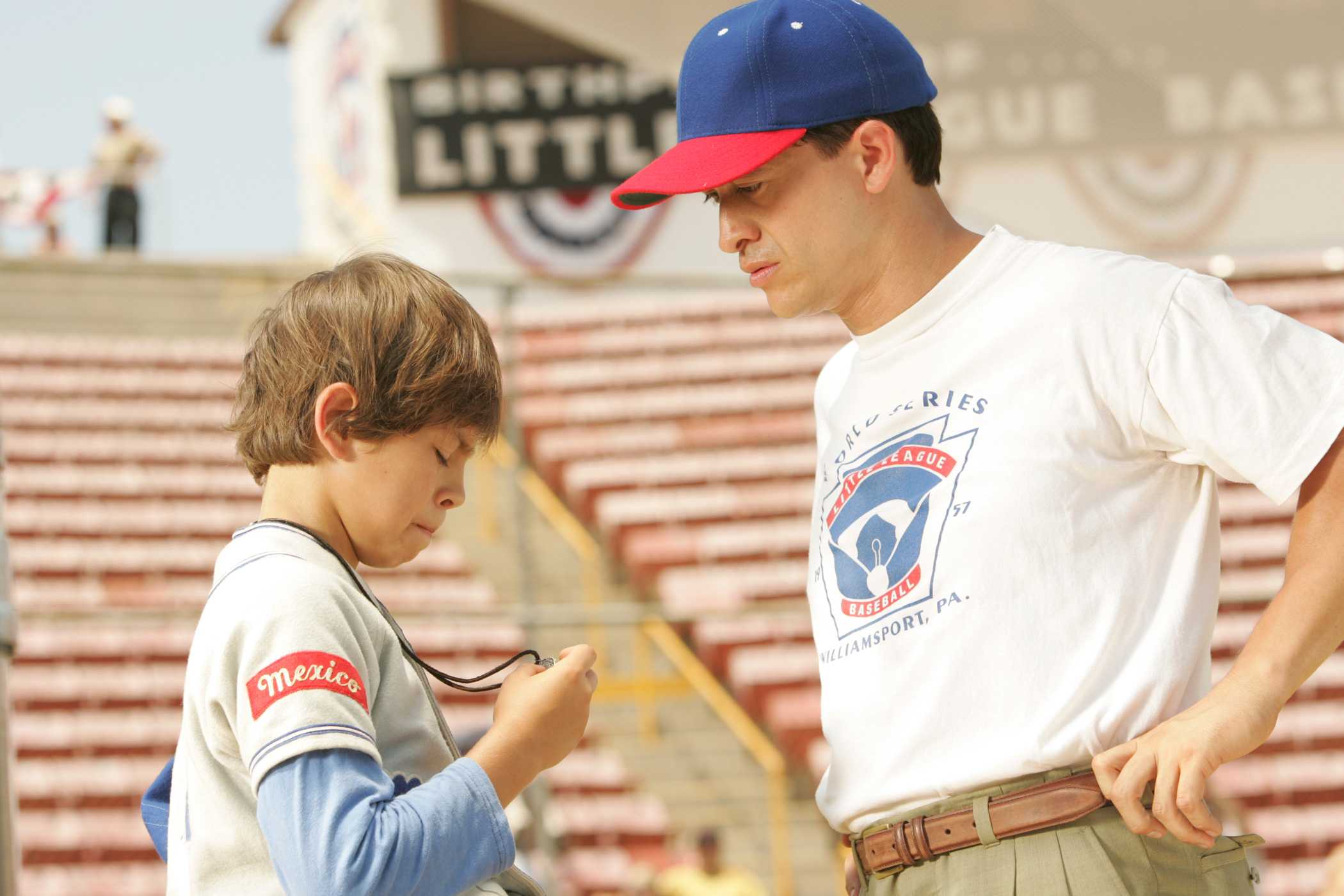
Ángel Macías (Jake T. Austin) The Perfect Game (2009)
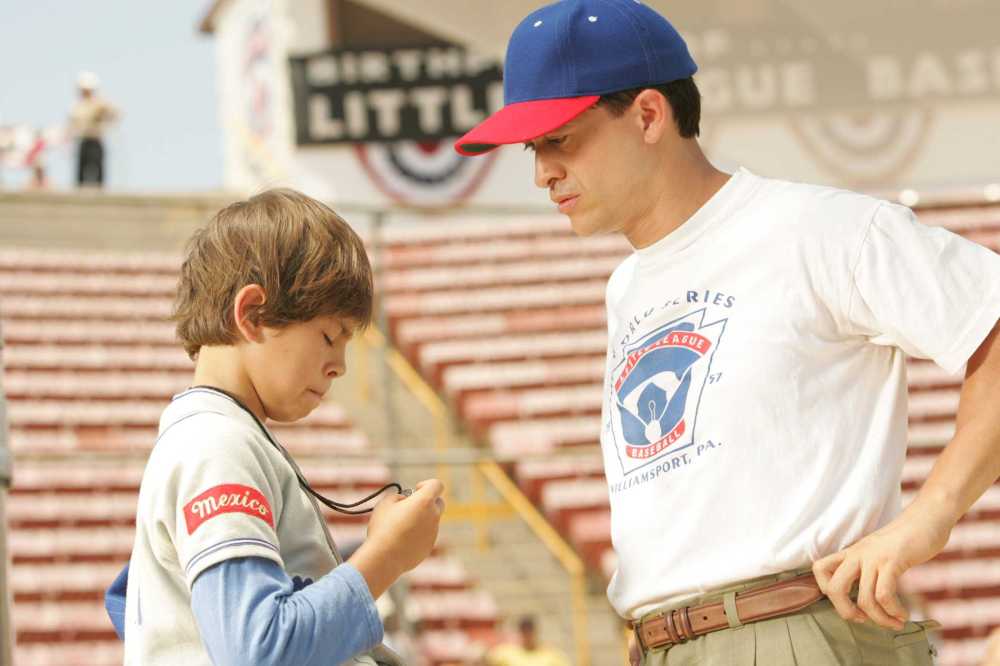
The Pefect Game (2009, Image Entertainment)

This is the first actual Little Leaguer I could think of that was represented on the big screen. The 1957 Monterrey, Mexico team was the first foreign team to win the LLWS. They had a great story. I wanted to include at least one representative from this team.

Enrique Suarez (Jansen Panetierre) The Perfect Game (2009)
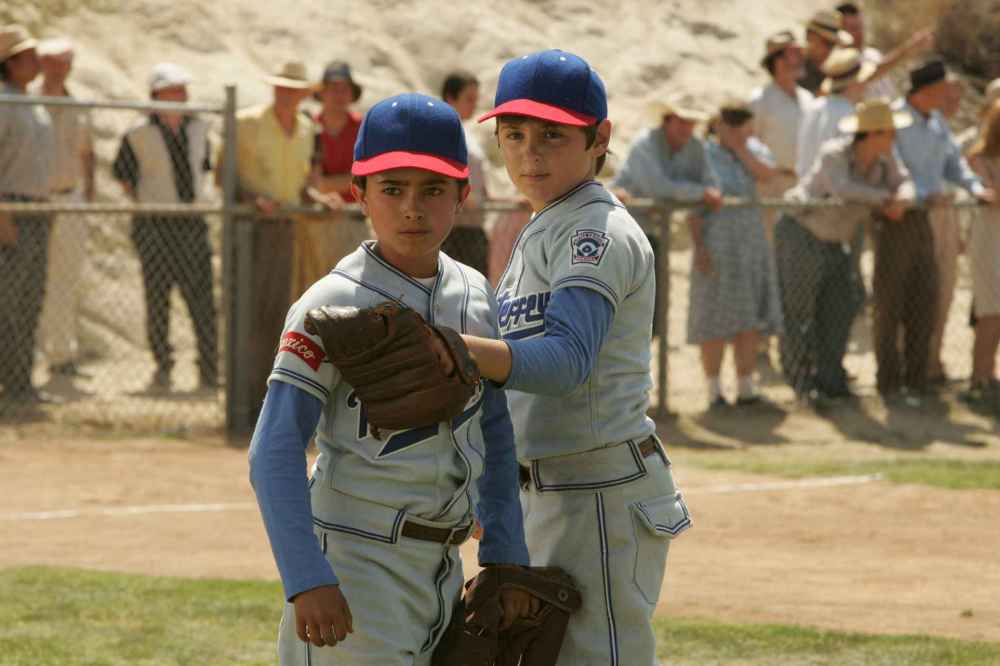
The Perfect Game (2009, Image Entertainment)

Ángel Macías was the ace and threw a perfect game, but he was not the only talented pitcher on the team. If there’s one thing the pitch count limits in Little League prove is that you can never have enough pitching.

Joey Turner (Carter Jenkins) The Bad News Bears (2005)
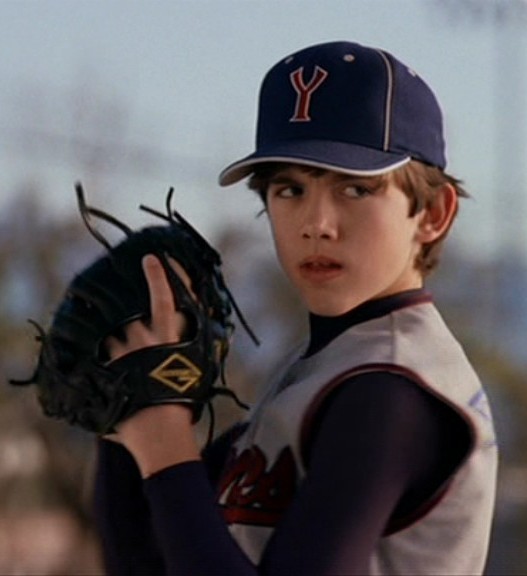
The Bad News Bears (2005, Paramount)

If there’s one trend I wanted to buck with this list it was that only players on the “good guy’s” team get picked. However, what the trope is that the rival team has a star player, he always wins and that’s part of why he’s a jerk, and usually he sees the error of his ways in light of his recent loss. In considering what would be best for this hypothetical team’s chemistry I went with the new version of this character as he seems to be a hair better at pitching and never really seems to be genuinely a bad guy, but rather is being who his father thinks he should be. Respect where its due Brandon Cruz is great in this part.

Michael ‘Squints’ Palledorous (Chauncey Leopardi) The Sandlot (1993)

The Sandlot (1993, 20th Century Fox)

Usually at this point with your last roster spot you’d want maybe another player capable of getting behind the plate. However, the pitching staff is really solid. The Achilles heel really is the outfield so we may as well find some more help there. I debated each of the outfielders on the Sandlot crew and this one seemed the best option defensively.

TruffautHitchcockVillela: Part 4

This article is a partially fictitious account wherein I imagine myself in conversation with two of the greatest minds in cinema: Truffaut and Hitchcock. This work was inspired by the series of interviews the two conducted which was later turned into a book. The quotes from the two are real though the context isn’t always. If you are interested in the book it can be purchased here. If this alternate history premise insults your sensitivities please move on.

This is part three of a series which started here.

I then sought to get a few pointers on my favorite aspect of filmmaking:

B.V.: The screenplay is your favorite part of the production. What thoughts do you have about screenwriting?

A.H.: For me the film is 90 percent finished with the screenplay. I’d prefer to not have to shoot it. You conceive a film you want and after that it goes to pieces. The actors you had in mind are not available, you can’t get the proper cast. I dream of an IBM machine in which I’d insert the screenplay on one end and film would emerge on the other end complete and in color (330-331). To me, one of the cardinal sins for a script-writer when he runs into some difficulty, is to say, “We can cover that with a line of dialogue.” Dialogue should simply be a sound amongst other sounds, just something that comes out of the mouths of people whose eyes tell the story in visual terms (222).

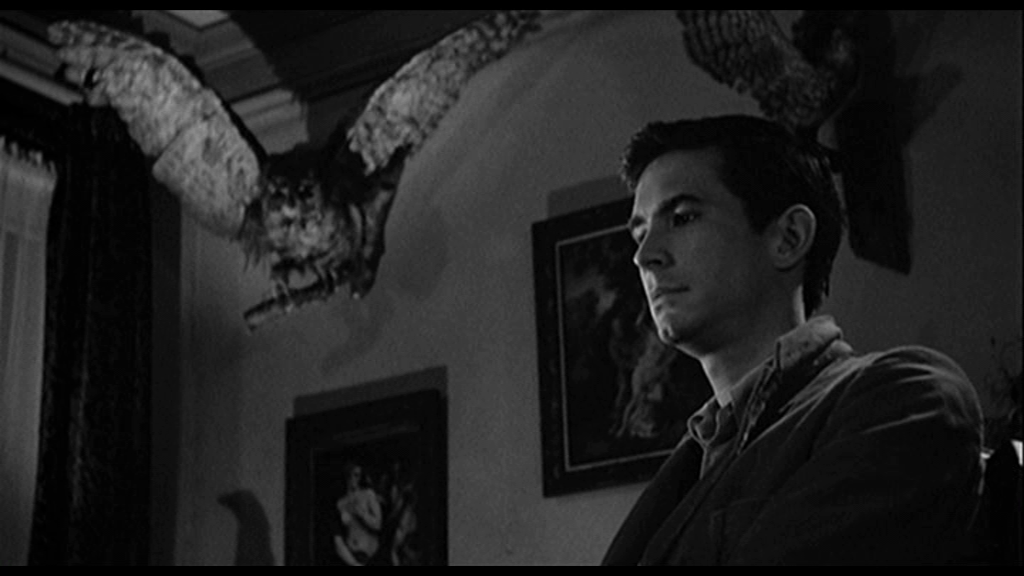
B.V.: I disagree, to the extent that I think you oversimplify. If dialogue was as irrelevant as that we’d still be making silent films. Many films have shown how essential dialogue can be such as Last Year at Marienbad, your very own film Psycho was greatly enhanced by the ironic use of dialogue especially in the scene where Janet Leigh is eating with Anthony Perkins.

Psycho (1960, Universal)

B.V.: I am trying to devise a system that ranks films based on how they stem from a type of dream. Being either daydreams or nocturnal; nightmares or fantasies. I believe all these playful delusions are the genesis of creation. This is why I think Spellbound is such an accomplishment because it makes dreams and the workings of the psyche tangible. You worked with Salvador Dalí yet avoided being too surrealistic which, is a trapping of dream-based films.

A.H: I was determined to break with the traditional handling of dream sequences through a blurred and hazy screen (163). Since psychoanalysis was involved there was a reluctance to fantasize; we tried to use a logical approach to the man’s adventure (165).

F.T: I hope you won’t be offended, but I found the picture something of a disappointment (167).

A.H.: Not at all. The whole thing’s too complicated, and I found the explanations toward the end very confusing.

Spellbound (1945, United Artists)

B.V: Not at all! Plus, I prefer some explanation rather than none as in The Birds.

F.T.: I’m glad you didn’t give a specific reason for the attacks. It’s clearly speculation, a fantasy (286).

B.V.: I found that Spellbound combined a whodunit aspect which you hate with one of your favorite themes of the innocent man wrongly accused and with great psychoanalytic deduction that Arthur Conan Doyle would’ve used had it been at his disposal. I also find it interesting that in Spellbound you killed a child, albeit in flashback, yet in that instance you don’t look at it as a mistake like it was in Sabotage, why is that?

A.H.: I don’t know. (167).

B.V: A remake is always a difficult and dangerous task to undertake. How then did you remake your own film?

A.H.: Despite the similarities, they’re really quite different from each other (228).

B.V.: So in essence you feel it was like making an entirely new film?

A.H.: Naturally (228).

The Man Who Knew Too Much (1934, Gaumont British picture Corporation)

B.V.: Charles Chaplin is perhaps one of the greatest minds in the history of cinema, he thought film was akin to ballet and was against the advent of sound. Yet in 1940 he wrote and performed the most moving speech in film history. What do you think of sound?

A.H.: Well, the silent pictures were the purest form of cinema; the only thing they lacked were the sound of people talking and noises (61). Many films now being made there is very little cinema: They are mostly what I call … Photographs of people talking.” In other words since all that was missing was simply natural sound, there was no need to completely abandon the technique of the pure motion picture, the way they did when sound came in (61).

F.T.: I agree. In the final era of silent movies, the great filmmakers […] in fact almost the whole of the production — had reached something of near perfection. The introduction of sound in a way jeopardized that perfection […] In this sense one might say that mediocrity came back into its own with the advent of sound (61).

A.H.: I agree absolutely (61).

Rope (1948, Warner Bros.)

B.V.: I disagree to an extent, I believe that as film has evolved; the lines between the arts has blurred. Film is now the most complete art-form. In your films you demonstrate this in Rope you capture some of the essence of theater, in a film like Fantasia music is the driving force, Le Chien andalou and Spellbound illustrates painting’s impact, any number of literary adaptations would show the impact of the written word. Statues coming to life have long been a popular motif in the arts and film is not immune; animation is a medium of its own in the realm of film. Even still photography has made its mark and while I hate the “freeze-frame ending” as a rule, the momentary freeze frame is wonderful as illustrated in Jules and Jim. What this all means is that the cinema is now the ultimate art-form and as such the quality of films suffers because there are too many incomplete artists and cannot handle all the disciplines film entails, having said that I believe this represents a paradigm shift, meaning that film is no longer “purely visual” but “primarily visual.”

A.H.: It seems unfortunate that with the arrival of sound in the motion picture, overnight, assumed a theatrical form (61).

B.V.: Film is the most theatrically contrived art-form. Nowhere else can the final product be so meticulously planned before hand. What occurred is that sound was used as a crutch for lazy and or less than competent visual artists. This conversation is rather moot since sound is dominant because the audience demanded sound. I don’t think they would’ve been satisfied with piecemeal sound, however, I agree that it is sad that many films were less visually interesting. Yet the slide continues. In the ’30s Hollywood made many dialogue-heavy films but the set design and cinematography were interesting so there was something to look at. The audience is dictating to studios who dictate the artist and when the audience will shell out money for subpar films money rules so quality won’t change. It’s a hard cycle to break. They say “We want sound! We want color! We want Cinemascope!” and they get that and story is thrown out the window.

End.

Mini-Review: 13 Assassins

Introduction

This is a post that is a repurposing of an old-school Mini-Review Round-Up post. As stated here I am essentially done with running multi-film review posts. Each film deserves its own review. Therefore I will repost, and at times add to, old reviews periodically. Enjoy!

13 Assassins

A group of assassins join forces to kill an evil lord in 19th century Japan.

There is a lot that is technically impressive about 13 Assassins. The cinematography for one, some of the acting is very strong a lot of the make-up work is good. Other things just fall terribly flat. There are a lot of characters introduced at the start such that the film even includes titles to tell you who they are and the overall plotting is slow to unfurl. It leaves you wanting and begging for the “heist scene” so you know what the endgame is. Then the battle just goes on practically forever, such that after a while I really was no longer interested in the outcome only that the movie would in fact, as rumors had it, end.

5/10

Review: The Way He Looks (2014)

This is a film that has some tremendous surprises in store and exudes a subtlety in revelation that is quite affecting and disarming. Throughout there is a tenderness, and a heartfelt sensitivity to the subject matter at hand that makes the film not only universally human, but one of surpassing beauty and brilliance.

The Way He Looks tells the tale of Leonardo (Ghilerme Lobo), a blind teenager who is struggling for his independence caught between and understandably protective mother (Lucia Romano) and his best friend/champion Giovana (Tess Amorim). When Gabriel (Fabio Audi) moves to town his life gets turned upside down. With the additional layers that inhibit the protagonist’s individuation this is a coming-of-age story that has an additional resonance that most can only dream of attaining.

Both the fact that Leonardo is blind and the fact that he is becoming attracted to Gabriel are handled very subtly upon first being revealed. After almost an entire scene we suddenly notice that Leonardo is just staring ahead blankly and not following movements with his eyes. Similar is the handling of the attraction. As the film develops these factors naturally come to the forefront and become powerful presences.

The Way He Looks (2014, Strand Releasing)

One of the most fascinating angles this film takes on is naturally the addition of an omnipresent burden or condition that makes the awakening of sexuality, and the self-realization of sexual identity, a bit more difficult. It’s also a quietly made statement about the fact that one’s sexual orientation is merely a part of a person’s identity. When examining the narrative progression in retrospect it’s clear some of his dissatisfaction and desire to find himself, perhaps abroad, has its roots in this as-of-yet unrealized facet of his personality.

The performances in this film are absolutely spot on. Interestingly the cast seems to have made this film at the last possible moment they could have. Any further delay in the production of this feature, following up a wildly successful short film, and the cast would’ve read as too old and playing any younger would’ve played awkwardly. Instead, it works as it should as a case of naturally arrested development, a development no doubt retarded by Leonardo’s disability. Ghilerme Lobo’s ability to emote mostly through his tone and inflection and less so with his facial expression is incredible. On the flipside Audi’s shyness and occasional subsumed reactions, despite the fact that they’re not being seen are great. The scene-stealer of the film would have to be Lucia Romano whose combative, protective scenes with her son are some of the strongest the film has to offer.

When all is said and done the statement The Way He Looks is never overt, but always clear. There are any number of ways you can extrude Leonardo’s blindness into a statement about love, but the film allows you to do that yourself and never says so in so many words. The delicacy of the handling of the story, the warmth it exudes throughout and the investment made in the characters that has you understanding their plight quite well is what makes the film’s conclusion so satisfactory and so well earned. This is without question one of the best films of the year to date and well worth looking out for when Stand Releasing brings it to the US.

10/10

Review: The Famous Five 3 (Fünf Freunde 3) (2014)

When you dig around through international releases long enough it becomes quite interesting to discover what films, books, shows, music, etc. register abroad that may not have quite such an impact in your home culture. Such is the case of The Famous Five series.

Prior to discovering this current incarnation of these cinematic adaptations I was unfamiliar with the series and author Enid Blyton both. As it turns out both this series and her works continue to be very popular both in her abroad and in her native England. Though she died in 1968 she was one of the top 10 selling authors in the UK during the first 10 years of the 21st century. Her film adaptations to date have been all overseas. The first two were serials in 1957 and 1964 in the UK. Then in 1969 and 1970 there were two adaptations in Denmark. The current German series is the most prolific and most profitable at the box office to date.

I went into part three blind to all these facts, as well as to the cinematic backstory that accompanied these films. Therefore, I backtracked to be better able to appraise these films on their own merits, including how this particular film worked in conjunction with the other two.

The Famous Five feature a familiar formula of smart kids who get embroiled in mysterious capers by chance or insistence and save the day. The fact that there are two boys, two girls and an extra-smart dog make the best of The Hardy Boys, Nancy Drew and Rin Tin Tin rolled into one.

The Famous Five 3 (2014, Beta Cinema)

In this particular installment the villainous foils that go up against our intrepid heroes are perhaps the least successful in the series to date Nick (Michael Kessler) and Cassi (Nora van Waldstätten) don’t successfully balance over-the-top humor and actual menace.

As is the case with these, and many other sequels in franchises the world over, the obligatory new character, Joe (Davina Weber), works here and the love interest plot is not so much of an issue as it can be. Also, the updating of the character from the books making her Thai rather than Romany, is an appropriate modernization.

An interesting thing about the progression of this series is that in each it has seemed to be the turn of one of the four leads to shine. Considering the first film was all the kids meeting George (Valeria Eisenbart) that was very much her breakout, in the second film circumstances pushed Dick (Justus Schlingensiepen) to the fore. In the third installment Julian (Quirin Oettl) emerges with the key, dramatic scenes and mostly acquits himself very well.

Ultimately, The Famous Five 3 is an agreeable third installment to the series that is fairly enjoyable. It doesn’t quite reach the level that the first two films did in terms of balancing peril, adventure and humor; however, it doesn’t completely derail the series. It also has some good reversals of fortune and could easily segue into another installment.

6/10

Review: The Amazing Catfish (2014)

Sometime the conventions of fiction can blind us to the fact that there are at least as many stories as there are people in the world. However, upon viewing them presented as fiction we can become obsessed with how realistic it seems. That’s not to say that The Amazing Catfish is the most unique tale in the world, but it does have its quirks.

The Amazing Catfish concerns itself with the lives of a young woman who had an appendectomy and a mother fighting AIDS intertwining. However, the film begins with following the life of Claudia (Ximena Ayala) for about the first ten minutes. We only meet Martha (Lisa Owen) and her family when in the hospital. After her procedure Martha, and her family offer Claudia a ride and a meal. She tries to conceal herself and tries to pry herself away but Martha’s clan persists in being in her life and she then seeks chances to be there as well away from her apartment, her job and reality as she had known it.

There is a subdued nature to the film that allows these events, as unorthodox as they may be, to flow naturally, eventually the language of the tale starts to seep in such that you begin to connect and speak it rather than it translating itself to you.

This subdued nature makes the flow of the tale an odd one as well but not a disagreeable or slow one just one that’s bit out of the ordinary. Perhaps it has a bit to do with the fact that Claudia is still sorting out her past, and Martha is dealing with her future (or rather her family’s) and both are ever-stuck in the present whether they like it or not. As such the flow is not unnatural but proper just and unusual one.

As circumstances make for the makeshift creation of a new family dynamic each of the members must deal with how they feel they fit in the new arrangement and assert themselves. This allows for each of the actors to have their moments. Sonia Franco, Wendy Guillén, Andrea Baeza and Alejandro Ramírez-Muñoz each work such that they all feel like real-life siblings and very naturally embody very different personalities and the roles they play in the family.

While this film doesn’t quite earn the ending it seems to seek it does work in structural, mechanical terms but just may not connect in the visceral way it may be seeking as the final act progresses.

7/10

Review: The Custody (2014)

The Custody, original title La Garde, is a film that proves that a straightforward simple premise that opens an avenue to examine characters in the tensest circumstances possible can be highly effective. It’s a low concept that’s high on drama, character studying and features two tremendous performances by Paul Doucet and Antoine L’Écuyer.

The premise is as follows: Luc (Doucet) is frustrated with the restrictions that have been placed on his custody rights. His disobeyed court orders about visitation have lead to restraining orders and the like. Risking jail time he has continued to follow his son and resolves to take him hunting so they can be closer whether Samuel (L’Écuyer) wants to go or not.

In seeing the trailer or reading the synopsis you know certain things are givens. However, the foreboding that’s built in through the edit and the low-angle shots and urban color palette of the early shots really carries the film until there is a shift both in the tone and setting.

However, with the more traditional thriller template somewhat out the window once the backdrop is sylvan there is a fascinating shift, as despite the high stakes circumstances that come to the fore the characters continue to prod one another and seek answers. In certain ways they are still duty-bound as father and son, but the estrangement and conflict continues to influence proceedings. There are no facile resolutions, no epiphanies where unrealistic understanding can be achieved.

With all the givens in place be they character- or narrative-driven there could be a great temptation to expand the world and cutaway, to raise the stakes and detract from the central focus of the narrative: the father/son conflict. This temptation is wisely resisted and the world stays small.

Much of the storytelling in this film is visual and that is appreciated. However, to reach the heights this film does it needs superlative performances. It gets those in spades. Doucet carries himself as a man who is clearly flawed but not cartoonishly evil, a man whose motivations can be clearly understood even if his actions can’t always be condoned. When he fills in those blanks with backstory the film, and his performance just becomes richer.

It’s so unique to find two performances by an actor at such different ages in development as a child performer being released in the same year. When I saw It’s Not Me, I Swear recently I saw that L’Écuyer had tremendous potential. With that film waiting so long to see American distribution I did not realize that I had seen him in a music video before. In this part he’s about four years older than he was when he showed such promise in It’s Not Me, I Swear. That promise is followed through with tremendous alacrity and poise. His presence on film, this one especially, is a forceful one indeed.

I’ve been quite careful to try and preserve much of the surprise in this tale. Rest assured that what you now know of this film is only the very beginning where things set-up. There are changes afoot throughout and it is a tremendously engaging drama that is worth seeking out.

8/10