TruffautHitchcockVillela: Part 3

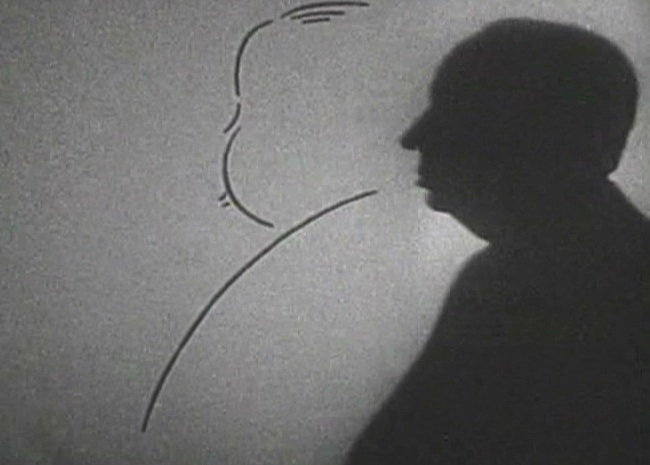
This article is a partially fictitious account wherein I imagine myself in conversation with two of the greatest minds in cinema: Truffaut and Hitchcock. This work was inspired by the series of interviews the two conducted which was later turned into a book. The quotes from the two are real though the context isn’t always. If you are interested in the book it can be purchased here. If this alternate history premise insults your sensitivities please move on.

This is part three of a series which started here.

When we began discussing Stage Fright Hitch asked:

A.H. Why is it we can’t tell a lie in a flashback? (189).
    
François had no answer, but I speculated.

B.V.: Well the nature of a flashback is slippery to begin with. When we’re taking an audience back in time it is implied that necessary information is going to be conveyed. Film is a continuous art-form as opposed to literature and television where there are breaks, so if we interrupt the forward progress of the story we must have good reason and we must also be truthful for then the audience will feel we have wasted their time even if for only 30 seconds.

B.V.: What did you think of the acting in Strangers on a Train?


A.H.: I wasn’t too pleased with Farley Granger; He’s a good actor but I would’ve liked to see William Holden in the part because he’s stronger (190).


B.V.: That’s a very good choice, Hitch.

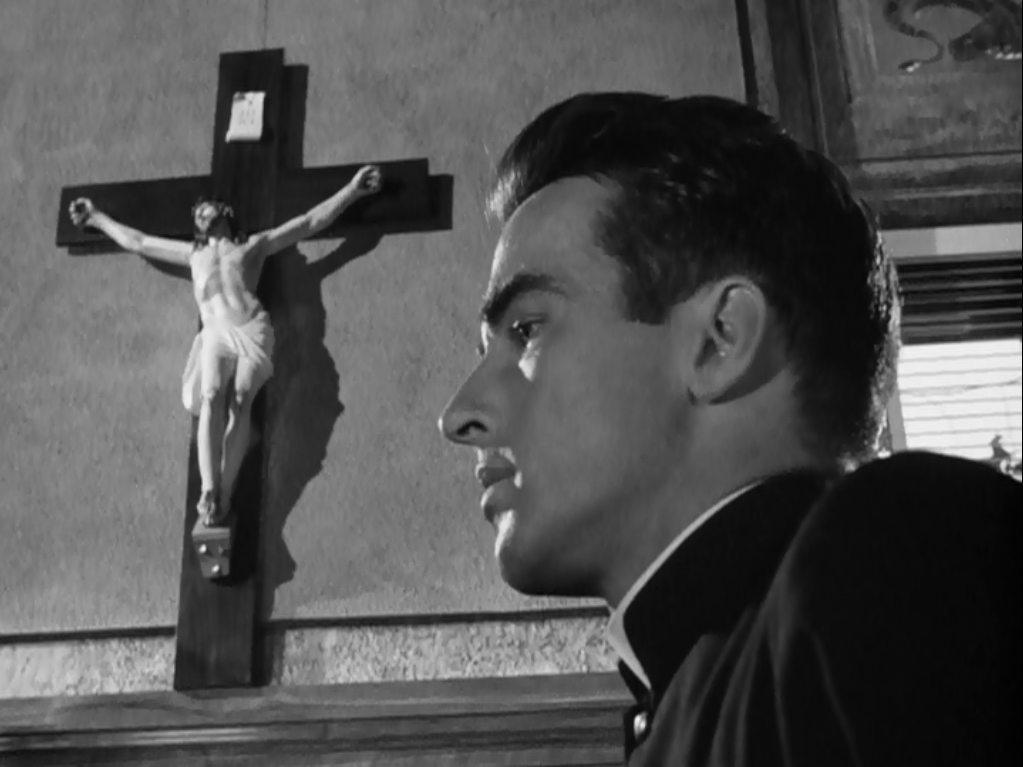
I Confess (1953, Warner Bros.)

B.V.: You’ve made reference in that past to the fact that French films and films in general seem to be moving away from plots. Yet you’ve always seemed more interested in situations than plots, is that correct?


A.H.: Yes, I’d prefer to build a film around a situation rather than a plot (203).


B.V.: You’ve had reservations about I Confess, especially the fact that priests are not to divulge what they are told in a confessional. Is the fact that this is not universal information the cause of your reservations?


A.H.: Putting a situation in a film simply because you yourself can vouch for its authenticity, either because you’ve experienced it or heard about it simply isn’t good enough (203). That’s the trouble with I Confess. We Catholics know that a priest cannot disclose the secrets of the confessional but the Protestants, the atheists and agnostics all say, “Ridiculous! No man would remain silent and sacrifice his life for such a thing”(204).


F.T.: Then would you say that the basic concept of the film is wrong? (204).

A.H.: That’s right; we shouldn’t have made the picture (204).


B.V.: I absolutely disagree with you. I don’t think the concept is wrong. If any of your concepts was flawed it was that of The Birds because of the niggling wonder I get about the birds and why they act the way they do, even knowing that nature is unpredictable hasn’t helped me embrace that film. I Confess, however, has a great scenario.

To Be Continued

Mini-Review: The Suite Life Movie (2011)

Introduction

This is a post that is a repurposing of an old-school Mini-Review Round-Up post. As stated here I am essentially done with running multi-film review posts. Each film deserves its own review. Therefore I will repost, and at times add to, old reviews periodically. Enjoy!

The Suite Life Movie(2011)

A funny and silly sci-fi tale wherein twin brothers face off against a mad scientist.

I believe in judging everything on what it is and what its goals are. Therefore, a DCOM (Disney Channel Original Movie for the uninitiated) cannot be judged against Citizen Kane. Each are doing very disparate things. Another caveat for those who will point out that this is a TV movie I’ve allowed them to be eligible before both for the good and the bad in my awards (Note: Only winners are linked to) therefore I should try and see a few each year or bar them and essentially the aesthetics are the same, the commercial break on streaming merely turns into a fade to black and then fade in.

Having said all that this film really works for what it’s trying to do and I was surprised that I enjoyed it quite a bit. Both Cole and Dylan Sprouse, who are no strangers to film acting, have far more naturalistic interpretations of their characters in this film than they do in a typical episode of the show. The film also manages to be rather self-contained and doesn’t require one to be overly-familiar with the show to enjoy and appreciate what’s going on. The mad scientist involvement is one not seen much these days but can definitely still be employed to great affect.

It’s funny, silly and even gets emotional with a point to be made. I’m not saying it’ll be in the year end fray but I was pleasantly surprised by it as it is one of the most enjoyable DCOMs I’ve seen in some time.

10/10

British Invaders Blogathon: Time Bandits (1981)

Introduction

When I had to decide on what to write about for the British Invaders blogathon the choice was a blissfully simple one. Time Bandits came to mind almost right away, and thankfully was available. It’s a film I’ve seen quite a few times, that I find quite funny and does not seem to be discussed often enough. It’s also, when thinking of British cinema one that comes instantly to my mind.

So, the what to write about selection was easy. How I chose to write about a film that quite easily fits the theme as it does deal with a band of invading time-traveling thieves was another question. Seeing as how the story flows in a series of vignettes that coalesce to have a centralized conflict, I think a more free-form examination of the film from a number of different angles would be highly appropriate.

Remake Haters

Time Bandits (1981, AVCO Embassy)

When you look at Gilliam’s filmography (one I’m not as familiar with as I should be) you see that Time Bandits kind of falls directorially towards the end of the Monty Python films and before Brazil, which may be why it’s at times under-discussed.

In fact, I had not seen much professed love for it until it was reported that it was being developed as a remake/reboot that would become a children’s fantasy/adventure film series.

I was kind of disappointed to hear that as well, but I have since then reached a sort of peace with remakes. I can dislike something conceptually, and grumble about its happening, but can judge the film on its own merits. Similarly, why is it in an ever-changing medium that stories cannot be revisited it seems? In theater there are remakes, but they are respected and referred to as revivals. All popular artforms are commercialized, conglomerated and globalized new packages on old ideas are nothing new.

However, in the ever unpredictable world of film development nothing has come of it as of yet, But it does have an In Development IMDb listing.

Up with Streaming and Film Preservation
Time Bandits (1981, AVCO Embassy)

It may have been misplaced (but that’s highly unlikely) but when I went to revisit this film I did not find the DVD of it on my shelves. But I had to see it again to be able to say anything meaningful. Sure enough it was available on Amazon Prime. With all the talk of what streaming or membership options there always seems to be a myopia. I take advantage of Prime as many ways as I can. I should do a study at some point to see what I’m getting out of my $99/year fee.

As I re-watched it struck me that the film wasn’t in the greatest shape. I’m unsure if its just degradation over time that could be restored or if a bad print was used like the original DVD of The Neverending Story. Regardless, it’s a film that I will nominate for enrollment in the National Film Registry this year.

The Vignettes and Time Travel
Time Bandits (1981, AVCO Embassy)

One thing that struck me as I rewatched this film is that it’s another case of time traveling and vignettes really working for me; including once in a play I wrote. It’s not the most commonly used trope, but it is one I’ve seen a few times and one I enjoy quite a bit. Another example that comes instantly to mind was The Annunciation, the first film adaptation of the classic Hungarian stageplay The Tragedy of Man. It came to mind because of that fact and some of the time periods visited are the same also.

The differences aside from language are the approaches to the tale, the comedy styles (there is some in both) and the order. The time bandits do not always go in the same order and Gilliam even fashions one non-historic time period.
Time Bandits (1981, AVCO Embassy)

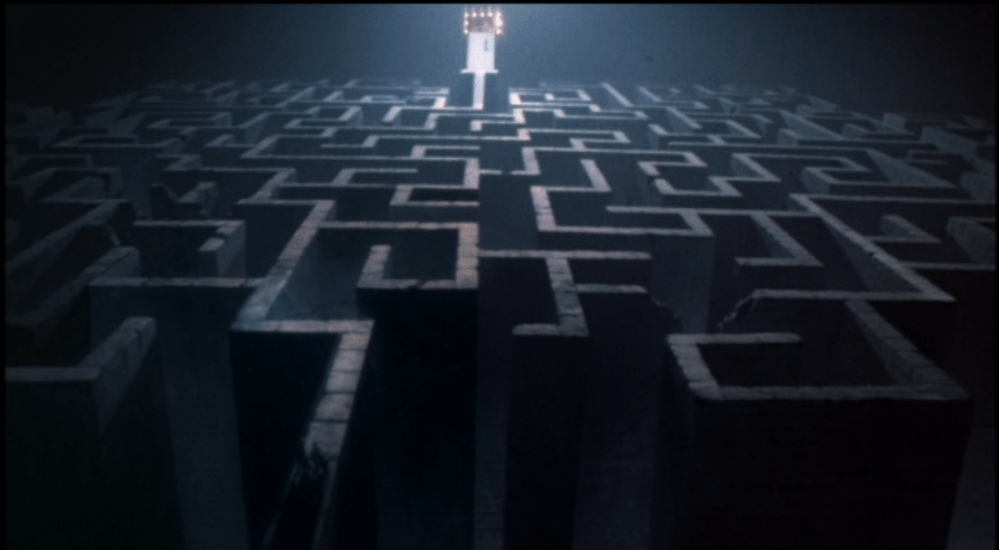
The precise order is: Napoleonic Wars, Middle Ages, Ancient Greece, Titanic, Time of Legends which leads into the climactic showdowns.

The Napoleon segment had me hearkening back to Love and Death, which is Woody Allen’s take on Napoleon’s invasion of Russia amongst other things.

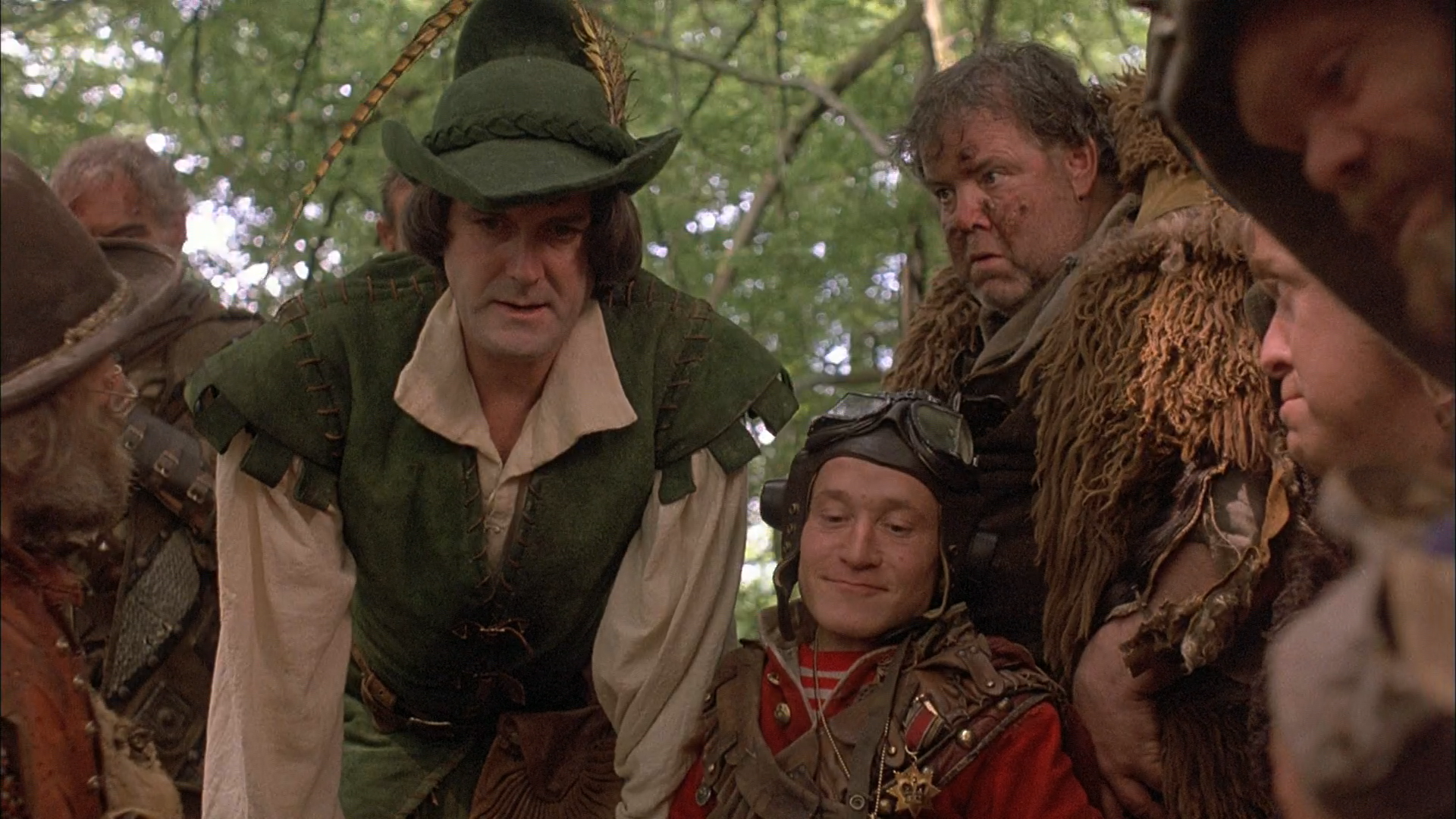
The Middle Ages section incorporates Robin Hood and his Merry Band of thieves in a way I never quite saw before. I love the story of Robin Hood but even I can’t help but laugh at a Robin who can say little else but “Jolly good.”

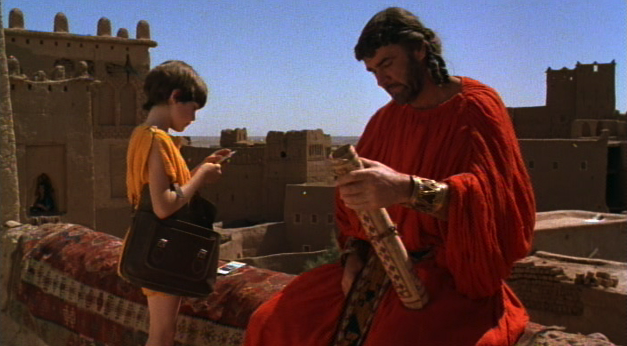
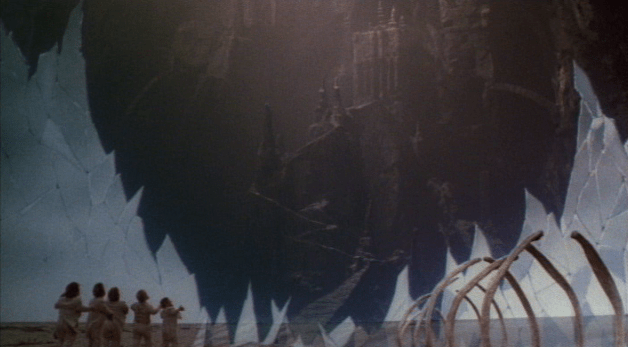
In Ancient Greece our young protagonist, Kevin (Craig Warnock), finds a new father figure in Agamemnon and some of the more dazzlingly surreal images come forth but there are quite a few.

Their brief stint on the ill-fated Titanic is a reappearance of the underrated Shelley Duvall, and it continues a gag of her character being referred to as Pansy. It’s also one of many instances where Kevin shows his knowledge of past events as the Bandits are clueless.

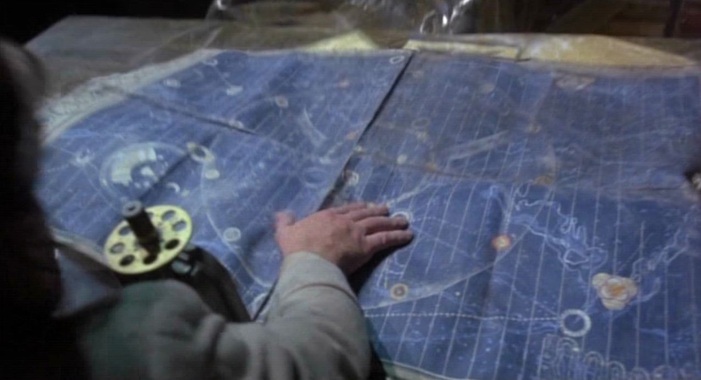
Due to the tone, narrative and structure of the film there is a natural ability to just forget about the notion of time-traveling paradoxes. There are any number of means to accomplish time travel in narrative devices from the most realistic, in theoretical terms, to fanciful. This film certainly comes out on the more fanciful end of things, which is fine by me because a map to the holes in the fabric of time is just really creative stuff.

Supreme Being and Evil
Time Bandits (1981, AVCO Embassy)

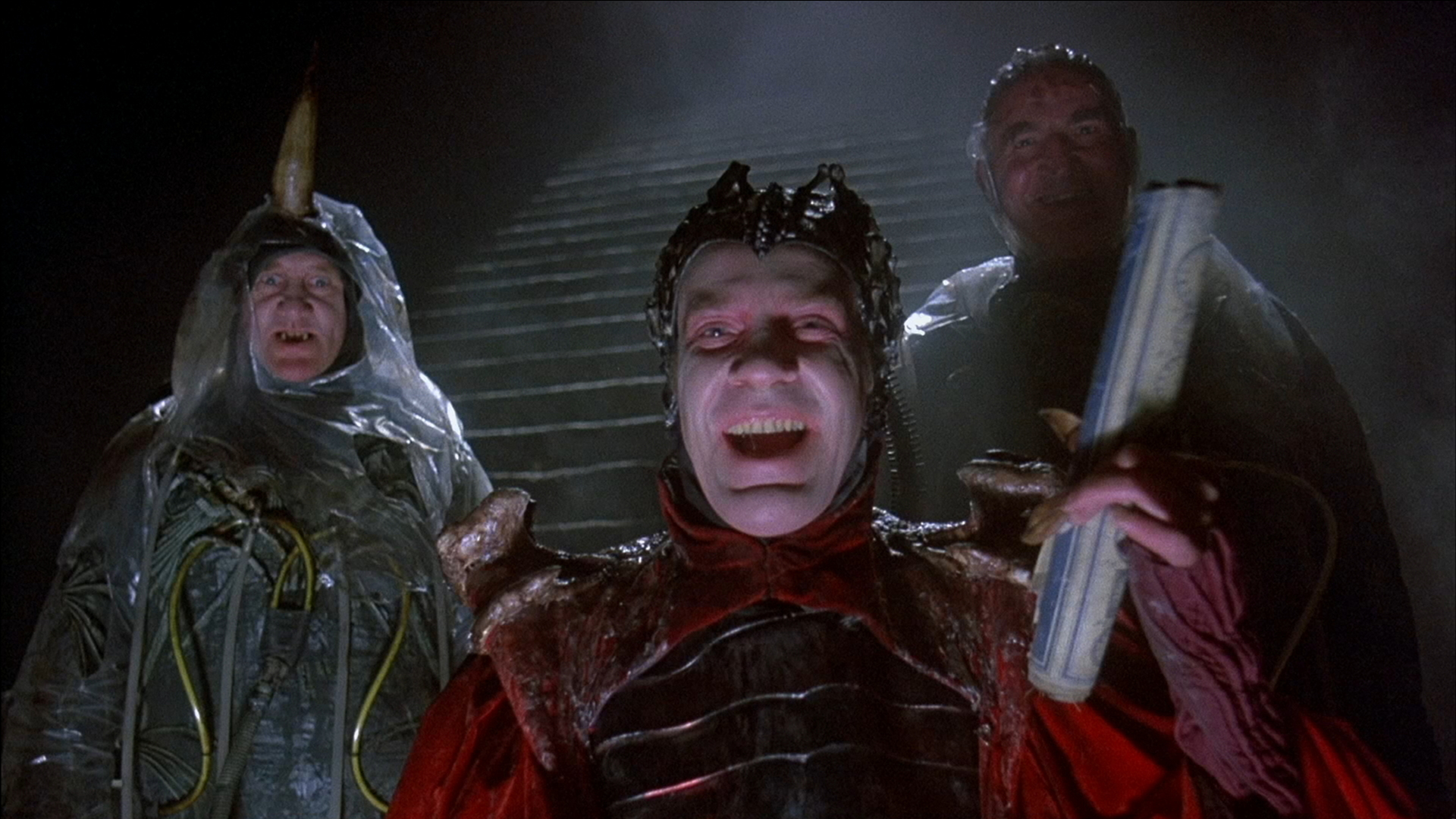
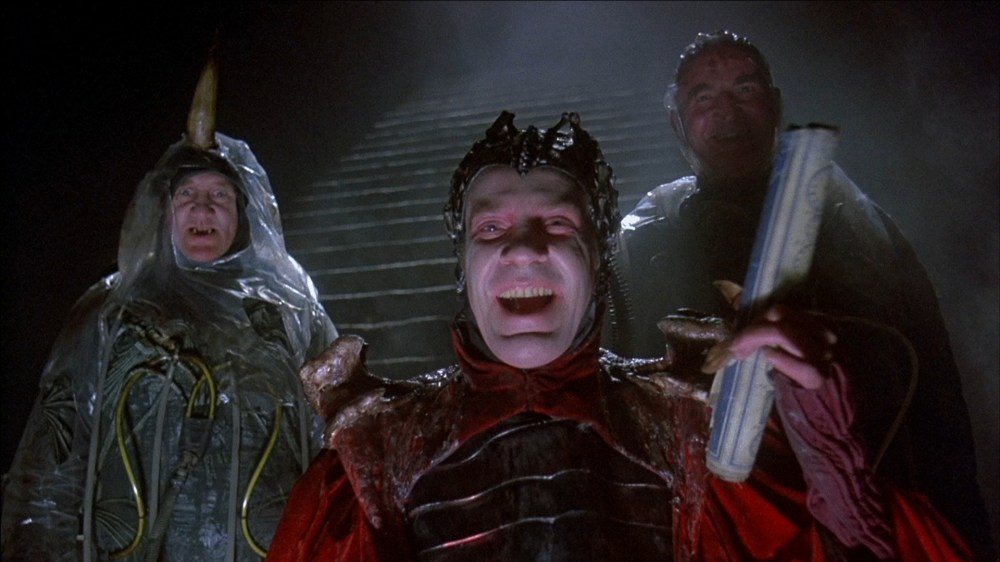
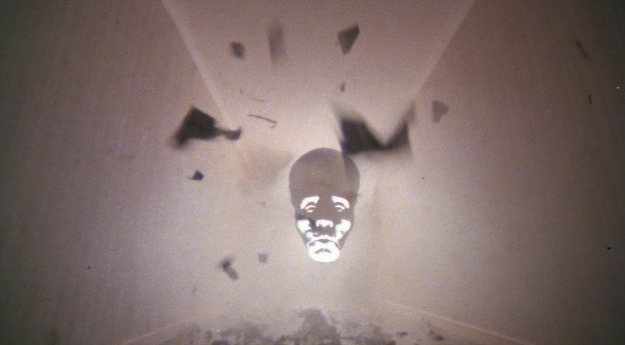
The aforementioned battle that comes to the fore is one between good and evil over possession of the map. In another interesting turn in this tale there is a God-versus-Satan battle that takes out denominational specifics and instead opts for more archetypal nomenclature and different approaches to visual representation of the two. The Supreme Being (i.e. God) is often seen as an Oz-like floating head and at the end appears as an old man in three-piece suit.

Evil (i.e. the Devil) is kind of a steampunk/Giger hybrid. And they fight over both the map, and Evil discusses mastering technologies, which at the time of this film’s making are the latest (and some of it is kind of prophetic), to get the upper hand.

Miscellanea

Time Bandits (1981, AVCO Embassy)

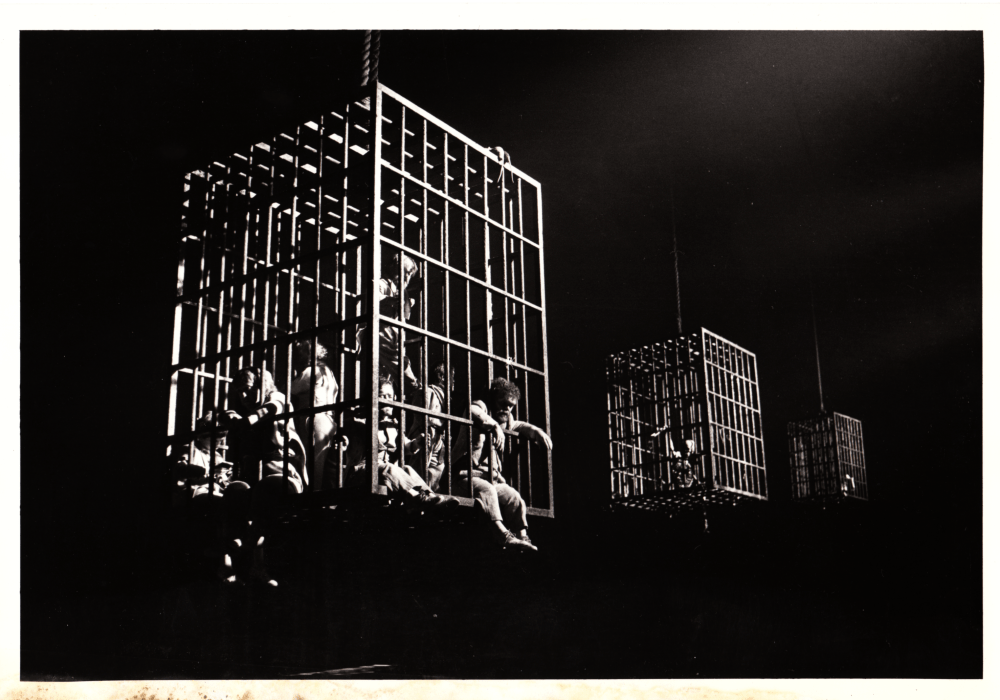
There can be quite a bit dedicated to miscellanea for this film: its one of several ’80s films to prominently feature many little people; there are many visual instances to drool over like the reversed negative images, or the negative fill (two motifs I love), or the giant underneath the boat; there are great lines like “Dear Benson, you are so mercifully free of the ravages of intelligence.”

Perhaps the two pieces of miscellanea that most demand some looking at are the Moderna Products that feature as a subplot, and the very ending. The Moderna Products are interesting because they play into commentary of consumerism and conglomeration that pervade not just the present day setting of the tale, but also play into the reveal of Evil when Kevin and the Bandits first run into him. There’s an omnipresence of these products on TV and even in Evil’s wheelhouse. It’s one of the pieces of the film that seems more apropos now than then.

As for the ending, this film has perhaps the most hilarious closing line in any film. It’s a quote I’ve used quite a bit in real life. The ending with the re-emergence of images and mementos (Polaroids and Connery in another part) also make the veracity of the daydream theory dubious and leaves events open to interpretation, and adds another layer to the comedy.

Conclusion
Time Bandits (1981, AVCO Embassy)

So in the five prior sections I looked at some different aspects of the film, and likely could’ve done more. Clearly, this a film that has stuck with me, though I didn’t discover it as early as I could have. This is also five aspects without examining the film in a traditional review mold. It is a film that finds an orderliness in its self-created chaos and keeps the levels of wonder, creativity and hilarity fairly consistent throughout, and paces itself well such that the two-hour running time doesn’t feel extraneous.

Whether or not the remake does happen I know we’d probably all prefer something new that’s all Gilliam. However, whether or not said remake does happen, the original is still here, stands the test of time and needs a bit more love in the ways described above.

Short Film Saturday: Duet (2014)

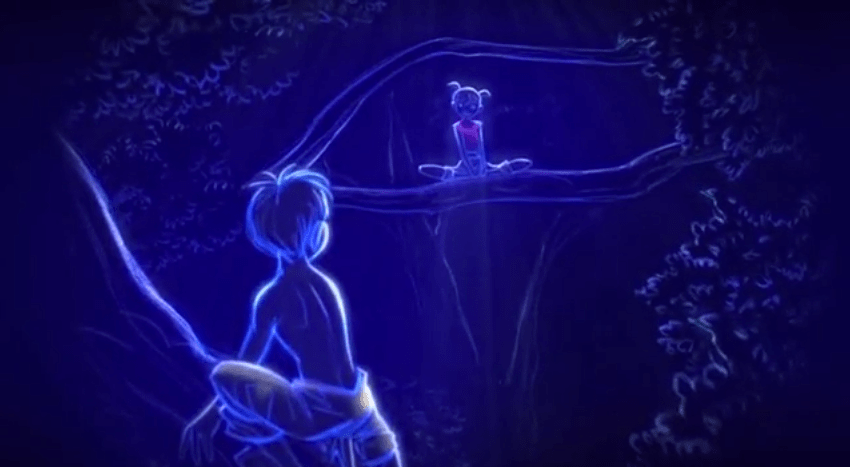
If this short is eligible for the Oscars this year it has the potential to blow the field out of the water. Less than four minutes in length and I was moved to tears. This is Glen Keane’s first project for Google/Motorola’s Advanced Technology and Projects Group, Keane has worked as a supervising animator on many Disney films – if you didn’t know that going in it would be evident as you watch the spacial freedom, the journey through time and the metamorphic traditional animation at play.

Short Film Saturday: Howl

There are quite a few reasons to include this short. First, James Franco reads this version of Ginsberg’s “Howl” in this film. As Entertainer of the Year last year things he’s involved with get y attention. However, there’s also the fact that a poem is being artistically rendered as an animated piece in several small sections. The other sections, this is merely part one, and more information on the film can be found here.

2014 BAM Award Considerations – July

I decided that with the plethora of BAM Awards-related post towards the end of 2013 and the start of this year it was best to wait to the end of this month before officially recommencing the process.

I will post these lists towards the end of the month to allow for minimal updates. By creating a new post monthly, and creating massive combo files offline, it should make the process easier for me and more user-friendly for you, the esteemed reader. Enjoy.

Eligible Titles

Earth to Echo
Deliver Us From Evil
The Myth of Garrincha
The Amazing Catfish
Tammy
The Famous Five 3
The Way He Looks
Dawn of the Planet of the Apes
Boyhood
Lucy
The Empty Hours
The Fluffy Movie
Son of Batman
Tormented
Bicycling with Molière
The Purge: Anarchy
White, Blue and White
Hercules
Wish I Was Here

Best Picture

The Way He Looks
Dawn of the Planet of the Apes
Boyhood
Bicycling with Molière
Wish I Was Here

Best Foreign Film

The Amazing Catfish
The Way He Looks
The Famous Five 3

Best Documentary

The Myth of Garrincha
White, Blue and White

Most Overlooked Film

As intimated in my Most Underrated announcement this year, I’ve decided to make a change here. Rather than get caught up in me vs. the world nonsense and what a film’s rating is on an aggregate site, the IMDb or anywhere else, I want to champion smaller, lesser-known films. In 2011 with the selection of Toast this move was really in the offing. The nominees from this past year echo that fact. So here, regardless of how well-received something is by those who’ve seen it, I’ll be championing indies and foreign films, and the occasional financial flop from a bigger entity.

Earth to Echo
The Way He Looks
The Famous Five 3
Bicycling with Molière

Best Director

Deliver Us From Evil
The Dawn of the Planet of the Apes
Boyhood
Bicycling with Molière

Best Actress

Lisa Owen The Amazing Catfish

Best Actor

Eric Bana Deliver Us From Evil
Ghilherme Lobo The Way He Looks
Fabrice Luchini Bicycling with Molière
Lambert Wilson Bicycling with Molière
Dwayne Johnson Hercules

Best Supporting Actress

Olivia Munn Deliver Us From Evil
Ximena Ayala The Amazing Catfish
Patricia Arquette Boyhood
Adriana Paz The Empty Hours
Maya Sansa Bicycling with Molière
Kate Hudson Wish I Was Here
Ingrid Bolsø Berdal Wish I Was Here

Best Supporting Actor

Edgar Ramirez Deliver Us From Evil
Fabio Audi The Way He Looks
Ethan Hawke Boyhood
Frank Grillo The Purge: Anarchy
Mandy Patinkin Wish I Was Here
John Hurt Hercules

Best Performance by a Young Actress in a Leading Role

Valeria Eisenbart The Famous Five 3
Joey King Wish I Was Here

Best Performance by a Young Actor in a Leading Role

Teo Halm Earth to Echo
Quirin Oettl The Famous Five 3
Ellar Coltrane Boyhood

Best Performance by a Young Actress in a Supporting Role

Lulu Wilson Deliver Us From Evil
Andrea Baeza The Amazing Catfish
Neele-Marie Nickel The Famous Five 3
Lorelei Linklater Boyhood

Best Performance by a Young Actor in a Supporting Role

Aidan Gemme Deliver Us From Evil
Brian ‘Astro’ Bradley Earth to Echo
Reese Hartwig Earth to Echo
Alejandro Ramirez-Munoz The Amazing Catfish
Kodi Smit-McPhee The Dawn of the Planet of the Apes
Justus Schlingensiepen The Famous Five 3
Peter DaCunha Tormented
Pierce Gagnon Wish I Was Here
Isaac Andrews Hercules

Best Cast

Earth to Echo
Deliver Us From Evil
The Amazing Catfish
The Way He Looks
The Dawn of the Planet of the Apes
Boyhood
Bicycling with Molière
Wish I Was Here

Best Youth Ensemble

Earth to Echo
The Famous Five 3
Boyhood
Wish I Was Here
Hercules

Best Original Screenplay

Earth to Echo
The Dawn of the Planet of the Apes
Boyhood
Bicycling with Molière
Wish I Was Here

Best Adapted Screenplay

Deliver Us From Evil
Son of Batman

Best Score

The Dawn of the Planet of the Apes
Bicycling with Molière

Best Editing

Deliver Us From Evil
The Dawn of the Planet of the Apes
The Way He Looks
Boyhood
Hercules

Best Sound Editing/Mixing

Earth to Echo
The Dawn of the Planet of the Apes
Boyhood
Lucy
Son of Batman
The Purge: Anarchy
Hercules

Best Cinematography

The Way He Looks
Boyhood
Lucy
The Empty Hours
Bicycling with Molière
Wish I Was Here

Best Art Direction

Deliver Us From Evil
Earth to Echo
Boyhood
Lucy
The Empty Hours
Bicycling with Molière
The Purge: Anarchy

Best Costume Design

The Famous Five 3
Boyhood
Lucy
Bicycling with Molière
Hercules

Best Makeup

The Way He Looks
The Purge: Anarchy

Best Visual Effects

Earth to Echo
The Dawn of the Planet of the Apes
Hercules

Best (Original) Song

The Way He Looks

Mini-Review: I Saw The Devil (2010)

Introduction

This is a post that is a repurposing of an old-school Mini-Review Round-Up post. As stated here I am essentially done with running multi-film review posts. Each film deserves its own review. Therefore I will repost, and at times add to, old reviews periodically. Enjoy!

I Saw the Devil

This is a tale of a man who seeks to avenge his girlfriend’s death at the hands of a ruthless serial killer.

There is a lot to this film that is done well in terms of cinematic technique and in terms of structure as well, however, there is a moment when my suspension of disbelief explodes and it turned my opinion on its ear. That happens about one hour in and there’s 90 minutes of film to follow and my sympathies don’t change they dissipate entirely and I’m left just watching the carnage and at the end I’m supposed to feel gutted but I don’t. Sorry.

5/10

TruffautHitchcockVillela: Part 2

This article is a partially fictitious account wherein I imagine myself in conversation with two of the greatest minds in cinema: Truffaut and Hitchcock. This work was inspired by the series of interviews the two conducted which was later turned into a book. The quotes from the two are real though the context isn’t always. If you are interested in the book it can be purchased here. If this alternate history premise insults your sensitivities please move on.

This is part two of a series which started here.

B.V.: Whether or not you were misquoted people believe you once said “Actors are cattle.” Can you tell me what you feel an actor’s role is?

A.H.: When a film is properly staged, it isn’t necessary to rely upon the player’s virtuosity or personality for tension and dramatic effects. […] He should be willing to be utilized and wholly integrated into the picture by the director and the camera (111).

Rope (1948, Warner Bros.)

I then inquired about one of my favorite Hitchcock films:

B.V.: In Rope you experiment with the unity of space and time. It sets up 105 minutes of suspense because you have the knowledge of the crime and the discovery of it as a constant threat. I feel it’s one of your best films what do you think?

A.H.: I undertook Rope as a stunt; that’s the only way I can describe it […] And I got this crazy idea to do it in a single. When I look back, I realize I was breaking with my own theories about the importance of cutting and montage for the visual narration of the story […] films must be cut (180).

The Kuleshov Experiment

B.V.: Yet, the lack of cutting is what makes it such a powerful situation. I think it is a testament to the power of setting and time in cinema and that there are more effective examples of the importance of editing, didn’t Pudvokin relate of some experiment?

A.H.: Yes, in one of his (Pudvokin’s) books on the art of montage he describes an experiment by his teacher, Kuleshov. You see a close up of the Russian actor Ivan Mosjoukine. This is immediately followed by a shot of a dead baby. Back to Mosjoukine again and you read compassion on his face. Then you take away the dead baby and you show a plate of soup, and now, when you go back to Mosjoukine, he looks hungry. Yet, in both cases they used the same shot of the actor; his face was exactly the same (214-216).

B.V.: That demonstrates how editing can displace acting and how a performance can be created in film through artificial means. You’ve discussed the importance of space as a physical entity, any thoughts about “space in the frame” as opposed to mise-en-scène?

A.H.: The size of the image is used for dramatic purposes only and not merely to establish the background (218). Space should not be wasted, because it can be used for dramatic effect (263). The placing of images on the screen, in terms of what you’re expressing, should never be dealt with in a factual manner. Never! You can get anything you want through proper use of cinematic techniques, which enable you to work out the image you need. The size of the image is very important to the emotion, particularly when you’re using that image to have the audience identify with it (290).

Hitchcock and Lehman working on a script (All Rights Reserved)

B.V.: One problem I’ve always had is that I always have various ideas vying for my attention which makes the decision of which idea to develop next quite a difficult one. Any thoughts on how you approach the development stage?

A.H.: Whenever you feel yourself entering an area of doubt or vagueness, whether it be in respect to the writer, the subject matter or whatever it is, you’ve got to run for cover. When you’re at a loss, you must go for the tried and true! (186). When you’re involved in a project and you see it isn’t going to work out, the wisest thing to do is to simply throw the whole thing away (248).

B.V.: Am I correct in assuming that this philosophy is part of why you have such a low shooting ratio? Preproduction had been the experiment so you knew what you wanted?

A.H.: Yes, I’ve always boasted that I never look at the script while I’m shooting. I know the whole film by heart. I’ve always been afraid of improvising on the set because, although one might have the time to get a new idea, there isn’t sufficient time in the studio to examine the value of such an idea (289). I used to shoot the film in such a way that no one else could put the pieces together properly; the only way they could be edited was to follow exactly what I had in mind in the shooting stages (195).

F.T.: It seems to me that once you get a cinematic idea, you never let go of it until you’re entirely satisfied — even if it takes several pictures to work it out successfully (314).

A.H.: I agree (314).

To Be Continued

Review: Bicycling with Molière

It’s interesting, on an ancillary note, to consider the English and French titles of this film. The English title is, of course, the above referenced Bicycling with Molière. The French title is Alceste à bicyclette, which translates literally to Alceste on Bicycle. What this speaks to the relativistic nature that Molière and The Misanthrope has to English-speaking cultures, as opposed to in his native France. In France a mere mention of the name Alceste is already an allusion to Molière, such is his influence in French literature. Here it’s better to merely mention Molière to have a better chance of and audience to know what this film’s driving at based on its title. An analogy would be that if a similar concept would be attempted here a Shakespearean character’s name would be more recognizable such that the Bard’s name need not be in the title.

Yet, even admitting to a bit of cultural myopia on our part this is a film that can connect with audiences regardless of their familiarity with Molière and The Misanthrope in general. Furthermore, you get to see quite a bit of it rehearsed in scenes such that it can definitely intrigue one and whet their appetite for more.

The set-up for the film is that now-famous TV actor Gauthier Valence (Lambert Wilson) travels to Île de Ré to recruit his friend, now-retired reclusive actor, Serge Tanneur (Fabrice Luchini) to be in a revival of The Misanthrope that he is producing.

Naturally this concept is one that is very conducive to playing with the line that divides theater and film. There isn’t anything very revolutionary done but there are subtle touches. One of which deals with the characters they read and how they mirror Gauthier and Serge in their interactions. While the concept of an alexandrine may be something new to the viewers of this film the way this dramatic/poetic device highlights personality differences between the two not only in their approach to their profession but their overall philosophy. The would-be unprecedented trick of having Serge and Gauthier alternate between Alceste and Philinte it allows even more aspects to be examined and more acting muscle to be flexed organically.

Bicycling with Molière (2013, Strand Releasing)

There is much muscle to be flexed indeed for the actors and both Wilson and Luchini are both fantastic. They have definitive approaches to the roles that have to tackle in reads, but also convey the complexity and humanity of their characters outside the framework of the play. Furthermore, with scenes of Valence’s medical drama on display Wilson shows a third acting style in just one film.

Yet with all that symbiosis and the tackling of a classical work it’s not merely an intellectual exercise. It is billed as a comedy and the humor does translate and comes from the characters and not out of knowledge requisite to follow it. Therefore, there’s a universal commonality that allows the audience comfort, and, should they be interested enough they can look into Molière and his works later.

Due to the fact that it’s the people and not the situations so much that make the film funny, on the flip side because you can understand the characters and they are well-defined the drama makes sense is appealing. This perhaps shows itself best as Francesca (Maya Sansa) is fleshed out. With the presumed performance coming it seems prudent for Gauthier to buy a getaway house. At first Francesca is a brusque, abrasive b-word. Then she opens herself up and connects to each of them on an individual basis and contributes well to the whole.

From the outside Bicycling with Molière may seem like and ivory tower dweller’s delight, but there is an approachability and relatability to the humor that make it a welcome treat for all. The theatrical tricks, TV Drama jokes and the like are just icing on the cake.

8/10

Mini-Review: The Human Resources Manager

Introduction

This is a post that is a repurposing of an old-school Mini-Review Round-Up post. As stated here I am essentially done with running multi-film review posts. Each film deserves its own review. Therefore I will repost, and at times add to, old reviews periodically. Enjoy!

The Human Resources Manager

This was a film I was fortunate enough to win from Film Movement in a Facebook contest. Film Movement is akin to a book-of-the-month club for films. They send you award-winning foreign/indies usually before they’re released and that you can’t find near you. If you want to get a sampling of their films they stream many of their titles. The discs include a short as well.

This is an Israeli film about an HR man who faces a bit of a firestorm after one of his employees has been killed in a car bombing and he through a bureaucratic mix-up was unaware of her employment status at the time. Much of the film deals with how he tries to make amends for it and then becomes a journey as he returns her to her native Romania and struggles to get her buried.

The story is rather well told and moves along at a good clip. There are some surprises in store. A lot of the acting is quite good, however, the character and performance of the journalist very annoying.

8/10