Tarzan Thursday: Tarzan and the Green Goddess (1938)

Introduction

In 2012 the character of Tarzan celebrated his 100th year in print. A serialized version of the story first appeared in 1912. A hardcover collection of Tarzan of the Apes first appeared in 1914. Being in the middle of the Tarzan centennial period it’s an opportune time to (re)visit many of the screen renditions of the character. Previous posts in this and other series can be found here.

Tarzan and the Green Goddess (1938)

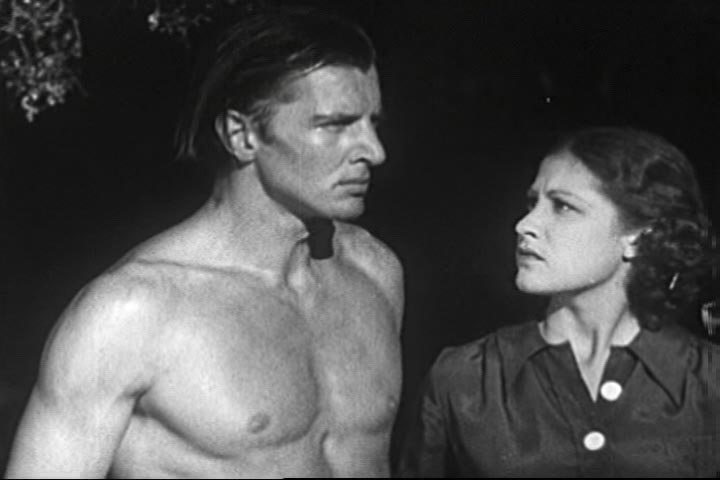
This is, not unlike many of these Tarzan films, is a composite serial. This is actually the first topic I wrote about on this blog, not a “blockbuster” topic to tackle but it was a buyer beware kind of tale. What happened was I got a serial I loved in a condensed version, which I didn’t want, but I also didn’t know such a thing existed.

Since then I’ve only gone into such ventures knowingly. This film is a shortened version of the 1935 serial The New Adventures of Tarzan. The opening voice over narration cuts through at least one chapter (15-20 minutes) of the serial story. This was apparent before the IMDb confirmed that this is composed of chapters 2-12. Cutting through the stasis straight into the thick of things makes identification and investment in these characters, and joining this world a chore.

This is a film, and its serial predecessor, was produced by Burroughs-Tarzan Enterprises. This was a Poverty Row outfit that was created to create a truer film version of Burroughs’ character.

There are some decisions to me that seem odd based on other versions, but it’s hard to tell how effective this would be in its serial form, which is an entirely different beast. This film with Herman Brix does feature a more literate and eloquent Tarzan than most, though perhaps not the most ever; it also features a far more in shape Tarzan than many of these films have at times. I could continue nitpicking things like the call, which is unmusical and amelodic here. What’s most curious is that the setting is cited as Guatemala and filmed near Tikal but the ecosystem, in zoological terms, is still quite African.

One of the more interesting techniques this film presents is that it employs sped-up film cleverly in a naturalistic fashion to aid the fight choreography. This and other composites lack the cliffhanger aspect that are the trademark of serials. This makes for fairly abominable pacing.

Ultimately, it’s hard to grade. The original serial exists and it may be interesting to visit.

3/10

Short Film Saturday: Helium

Far too often the Best Short Film nominees at the Oscars are all-too-quickly forgotten. Even here, when I see the films I write of them but rarely bring them back up on Saturdays. Here I wanted to rectify that. I loved Helium best in the Live Action block and it ended up winning. Here were my initial thoughts as posted on Oscar night:

So, so, so, so happy that Helium won. What a gorgeous film that made me cry in its 20 minute run time.

Here’s the film:

By Any Means Necessary: 3-D At Home

This is a follow-up to a recent post where I revived this idea and made it a theme.

I am not about to insist that this post is revolutionary. For the most part I have not been an early adopter of new technologies. As you may have seen from some recent posts I have recently revamped my home viewing set-up. It hasn’t been without hiccups, but it has been overall, an exciting embarkation on new avenues of film viewing. Or rather, new-to-me avenues of film viewing.

I am not one who is in adamantly anti-3-D nor am I mindlessly in favor of it. I hate when its lazily and thoughtlessly applied as a cashgrab. However, when its thoughtfully used and planned for it can prove to be a great enhancement.

In this most recent wave of 3-D popularity and the new technologies that have brought it to the fore anew, the best 3-D treatment a film has gotten in my estimation is that in Hugo. This is a film I have written about ad nauseum here on this site both about the content and the 3-D as well.

What was refreshing about the experience at home is that much of the effect I recall from theatrical viewings were still there. In most cases the experience was somewhat enhanced because at home seat positioning and distance from the screen didn’t seem to impact the effect as much as it does in a large auditorium with a much larger screen.

Sure, there will be the differences aside from the obvious like the message on the TV telling you a 3-D signal has been detected, and the glasses are yours and substantial and need to be turned on such that they are detected by your home system. However, it wall worked rather seamlessly and in my estimation breathed a little life into an aspect of the film world I had waning interest in.

2014 BAM Award Considerations – May

I decided that with the plethora of BAM Awards-related post towards the end of 2013 and the start of this year it was best to wait to the end of this month before officially recommencing the process.

I will post these lists towards the end of the month to allow for minimal updates. By creating a new post monthly, and creating massive combo files offline, it should make the process easier for me and more user-friendly for you, the esteemed reader. Enjoy.

Eligible Titles

The Jewish Cardinal
App
Moms’ Night Out
Barbosa: The Man Who Made Brasil Cry*
The Mysteries of the Rimet Trophy*
Fun in Boys Shorts
Maleficent
A Million Ways to Die in the West
Hide and Seek
X-Men: Days of Future Past
Chef
Neighbors
Ilo Ilo

*Only eligible for special and/certain awards

Best Picture

The Jewish Cardinal
Chef
Ilo Ilo

Best Foreign Film

App
The Jewish Cardinal
Hide and Seek
Ilo Ilo

Best Documentary

Barbosa: The Man Who Made Brazil Cry

Most Overlooked Film

As intimated in my Most Underrated announcement this year, I’ve decided to make a change here. Rather than get caught up in me vs. the world nonsense and what a film’s rating is on an aggregate site, the IMDb or anywhere else, I want to champion smaller, lesser-known films. In 2011 with the selection of Toast this move was really in the offing. The nominees from this past year echo that fact. So here, regardless of how well-received something is by those who’ve seen it, I’ll be championing indies and foreign films, and the occasional financial flop from a bigger entity.

The Jewish Cardinal
Hide and Seek
Chef

Best Director

The Jewish Cardinal
Chef
Ilo Ilo

Best Actress

Hannah Hoekstra App
Angelina Jolie Maleficent
Rose Byrne Neighbors
Angeli Bayani Ilo Ilo

Best Actor

Laurent Lucas The Jewish Cardinal
Heon-ju Son Hide and Seek
Jon Favreau Chef
Seth Rogen Neighbors

Best Supporting Actress

Audrey Dana The Jewish Cardinal
Elle Fanning Maleficent
Jung-Hee Moon Hide and Seek
Jennifer Lawrence X-Men: Days of Future Past
Sofia Vergara Chef
Yann Yann Yeo Ilo Ilo

Best Supporting Actor

Aurélien Recoing The Jewish Cardinal
James McAvoy X-Men: Days of Future Past
John Leguizamo Chef
Zac Efron Neighbors

Best Performance by a Young Actress in a Leading Role

Best Performance by a Young Actor in a Leading Role

Tainwen Chen Ilo Ilo

Best Performance by a Young Actress in a Supporting Role

Elle Fanning Maleficent
Isabelle Molloy Maleficent
Kim Soo-Ahn Hide and Seek
Kim Ji-Young Hide and Seek

Best Performance by a Young Actor in a Supporting Role

Michael Leone Moms’ Night Out
Michael Higgins Maleficent
Emjay Anthony Chef
Jung Joon-Won Hide and Seek

Best Cast

Hide and Seek
X-Men: Days of Future Past
Chef
Neighbors
Ilo Ilo

Best Youth Ensemble

Maleficent
Hide and Seek

Best Original Screenplay

The Jewish Cardinal
Maleficent
Hide and Seek
Chef
Neighbors

Best Adapted Screenplay

Maleficent
X-Men: Days of Future Past

Best Score

App
Maleficent
Hide and Seek
X-Men: Days of Future Past

Best Editing

App
Hide and Seek
X-Men: Days of Future Past
Chef

Best Sound Editing/Mixing

Maleficent
Hide and Seek
X-Men: Days of Future Past
Chef

Best Cinematography

The Jewish Cardinal
App
Hide and Seek

Best Art Direction

Maleficent
Hide and Seek
X-Men: Days of Future Past
Chef

Best Costume Design

Maleficent
A Million Ways to Die in the West
X-Men: Days of Future Past
Chef

Best Makeup

Maleficent
Hide and Seek
X-Men: Days of Future Past

Best Visual Effects

App
Maleficent
X-Men: Days of Future Past

Best (Original) Song

Fun in Boys Shorts
Maleficent
A Million Ways to Die in the West
Short Film Saturday: The Irrelevant Giant

If you follow this blog closely, you’ll know that I love ESPN’s 30 for 30 films. One aspect of these films I have not gotten into are the shorts, until now.

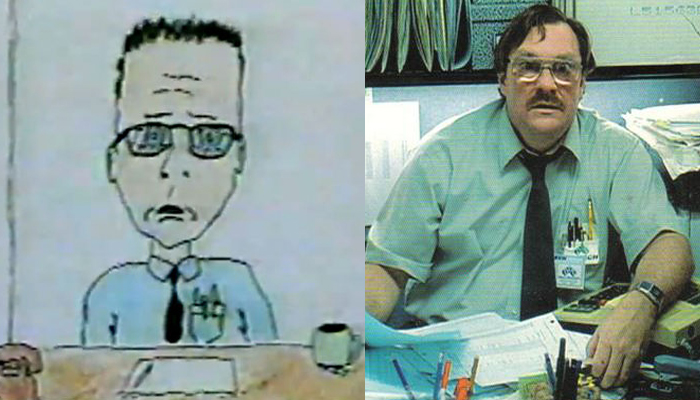
I saved the most emotionally wrenching of these shorts I saw until last. This is the story of John Tuggle. The last player drafted in 1983, the so-called “Mr. Irrelevant” who fought his way onto the Giants team and ultimately was one of the inspirations behind the Giants first Super Bowl run.

Review: Hide and Seek

Things really get going in Hide and Seek starts off with Sung-soo learns that his estranged brother Sung-chul has gone missing. This sends Sung-soo into memories about his past oft-concealed from those he loves and sends him in search of answers and a deepening mystery. When visiting the apartment complex his brother last lived to look over his effects and trying to get answers he spots odd symbols and meets a terrified neighbor Joo-hee. From there on out the film truly intensifies from its eerie start to its shocking finale.

Hide and Seek does an expert job at misdirecting its audience cleverly in ways that work (i.e. are not cheats) given the context and the rules of the world built. What also works greatly in this film’s favor is that the whodunit aspect which is implicit in the mystery set-up early on takes a backseat to the atmosphere of quiet terror that builds slowly. For surely enough there is an oddity looming throughout and and as the film progresses it moves up ever-slowly overtaking the tonality of the film as Sung-soo gets ever-closer to the truth.

Hide and Seek does have the bones of a classical thriller with many of the elements and tropes built in. There are confined segments there is a modernized rendition of Rear Window aspects with looking about ones apartment complex suspiciously. What makes it stand out are the cultural and auteurist adornments that make it different than the run-of-the-mill. Furthermore, its effectiveness is amplified by the fact that it does retain a certain amount of credibility throughout.

Perhaps the greatest testament to the effectiveness of Hide and Seek is that it does a few things in its climax and denouement that are old hat but very effective here. It’s climactic confrontation is rather protracted and has quite a few stages, but never becomes tiresome. This has a lot to do with how the characters are built and portrayed. Secondly, the last few jolts and twists are not by any means unique but are very well-earned due to execution and timing. Hide and Seek is not a front-loaded or fast-moving piece of bombastic horror but rather gets under your skin in a rather usurpatory way. A highly effective fill well worth seeking out.

This credibility is buoyed by the fact that the characters are allowed in this film room to have sufficient arcs. The film clocking in at 107 minutes allows for a few things: firstly, it allows large and small mysteries alike to build. Second, as we are being misdirected we believe we understand the characters but as revelations and clarifications are made things come into focus and characters show themselves and how they’ve changed.

9/10

Moviegoing in Days of Future Past

The temptation to make this a tirade that meanders for far too long, waxes poetic finds any and all tangents and beats them to death several times over is great. However, with a few days I have been able to ponder the impetus for sitting down and writing this in the first place to the reasoned, cautionary bit of friendly advice was meant to be in the first place. In other words, please don’t take this as get-off-my-lawn but rather a necessary suggestion on course correction as we proceed through time as moviegoers.

The impetus was, as has been the case in the past, something overheard while leaving a theater. This time it was rather innocuously, and I must admit rather enthusiastically, a parent saying, mere moments after the end of the new X-Men film “Now we have to wait two years for the next one; X-Men: Apocalypse.”

This little moment struck me in so many ways as a microcosm of the current state of moviegoing, and entertainment in general. It was mere seconds after the film had ended, the experience not yet fully absorbed, but already the next one was anticipated and longed for. Clearly, there’s a positive to that. However, there’s a certain lack of even “stopping to smell the roses” indicated when one cannot walk out of an auditorium and wait five minutes before pondering the follow-up.

Hugo (2011, Paramount)

Perhaps the acuity of this particular observation was amplified because it was a parent and a kid (or kids). I distinctly recall not knowing what was coming out far in advance as a child and the surprise seemed to add to the magic. I’m not saying I don’t anticipate things for a long time now, but I still very diligently try to preserve mini-surprises like trying to only see trailers at the movies. I also don’t play the whole teaser to a trailer game.

The impact of this particular moment was further amplified by the fact that I anticipated there’d be another X-Men film but I honestly had not read up on it and didn’t even know a title. I fully understand that we live in a day and age wherein untitled projects from studios getting a slot three years down the line is news, and press releases including initial synopses get ubiquitous coverage, but I don’t want to look forward to all things at all times, so X-Men fell through the cracks. Not that I’ve had a big issue with any X-Men film. Perhaps it’s due to a subconscious desire to have Sony and Fox fall asleep at the wheel, or strike a deal, to unify the cinematic Marvel universe that I don’t diligently follow their plans.

Another reason this moment jumped out to me was that in my blogging I try and strike balance in what I cover. I try and keep current but also not forget cinematic achievements and glories of films past. It seems that the old struggle (for lack of a better word) was to not ignore the past as a film enthusiast. Now with the evolution of Internet coverage it seems at times a struggle to give adequate focus to the present.

Is it possible that all this short-sightedness has unexpected positive side-effects, such as more films being “rediscovered” after being too quickly summarily dismissed and/or ignored? Sure, but I wouldn’t count on it.

Look, I get that there’s a glut of information out there, and I don’t want to sit here and preach that we should be ignoramuses. I am perfectly aware of my bad habits. For example, I hate casting rumors and prefer confirmations, but I read both. I think my best advice to dealing with an excess of information is that there is a time for everything. So if you love a series you will read about what’s next regardless, but save your thoughts and longings for further installments for an adequate time after seeing the latest. Give it a moratorium.

X-Men: First Class (2011, Paramount)

Going back to the specific example that was the catalyst for this piece: I loved First Class a lot. So much so it ended up very high on my year-end list. My watching Days of Future Past was a lock based on how much I liked it. I saw news tidbits and they slipped in-and-out of my consciousness, as it was a film I wanted to see regardless. The trailer enticed me. I liked it quite a bit. Only today five days after seeing it did I start to read up on the stinger that closes it out. Granted it was a longer moratorium than is needed, and it connects to this last film, but it does foreshadow.

Everything is cyclical and going against the current, or trying to change is single-handedly, is foolhardy. A certain amount of information has always been available to film lover. It’s just that, like with everything, the Internet has democratized it and moved it out of the sole purview of the trades. I have more frequently lately had to check Fandango to see “What’s out this weekend?” It’s something a while ago I may have been embarrassed to admit, but I’d rather check it to see what’s out this weekend than know what’s out this weekend so I can see what I have to look forward to two or three years from now.

Short Film Saturday: The Holy Grail

If you follow this blog closely, you’ll know that I love ESPN’s 30 for 30 films. One aspect of these films I have not gotten into are the shorts, until now.

One of the hobbyist phases I went through was collecting sports cards, especially baseball cards. The Honus Wagner card was one I knew of when I was younger. All the details regarding the most well-preserved of these rare cards, as well as the controversy about its condition, were news to me.

You can view the film here.

Cinematic Episodes: The Secrets of Barslet

Cinematic Episodes is another cross-medium post wherein the link between cinema and another medium is explored. I have written about adaptations, films in books, characters in comics and other arts hitting the big screen. However, I recently have started to consider some of the technical, and in some ways, narrative similarities film and television have always shared and are starting to share.

One of the recent changes to the landscape of television here in the US is that in the gradual shift from the immovable regimented season structure there has also come a redefining of what a season is. Sure, if you follow entertainment outlets you’ll note that the major networks have recently concluded seasons and have announced what has survived to return in the fall and what pilots will be picked up. There is still that traditional structure, however, there is a greater flexibility to it all now than there ever was. There are shows, mostly of the non-scripted variety that start up in the summer; other’s are slated as mid-season replacements. Whereas during the first Golden Age of television seasons would run in excess of 35 episodes; even the now more common 22-episode season is not necessarily the norm.

The flexible nature of the length of a season or even a series, as opposed to the old mini-series mold, allows for more cinematic storytelling. In some ways this is a trend that has been adopted by US networks, both premium and not, from foreign TV Markets. And, yes, clearly there is a financial incentive to making smaller commitments, but there is also an artistically liberating aspect to this all as well.

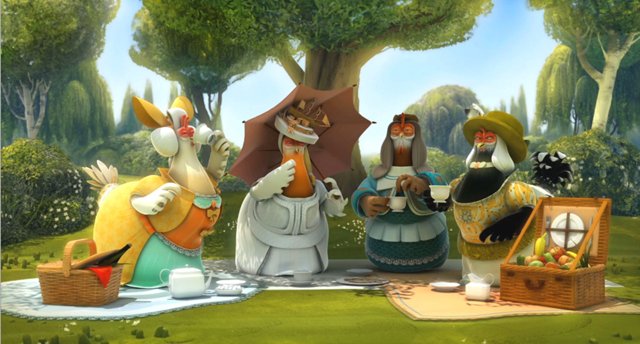
One of the best examples of the narrative benefits of a limited TV run can be seen on the Dutch-produced The Secrets of Barslet. This was a show that aired 2012 and was comprised of merely seven episodes. However, for the story being told that was precisely as long as it needed to go. One of the things people can hold against television is that the brass ring is renewal even at the cost of the quality of the product on screen. This and many other foreign series never run into that issue because there is an emphasis, it would seem, on engaging an audience for the run of a show and trying to bring them back for another, as opposed to trying to “squat” on their devotion even as the product they used to love descends into tedium.

The Secrets of Barslet is a story that unfolds over the course of seven episodes. Each episode tells the story from the perspective of one of the central characters in the tale. As each perspective is taken into account blanks are filled in and previously unexplained or misunderstood mysteries are brought into sharper focus.

There are inevitably through the course of this series incidents that are examined from various angles, both figuratively and literally. Such that the program develops its own shorthand to quickly re-include previously seen scenes so that their place in chronology and the impact to that particular character is instantly made clear.

This structure of seven episodes of roundabout an hour of content is not unlike what Bela Tarr did with Satantango, in strictly structural terms only. In that film the structure is not unlike the steps of a tango such that the story will backslide chronologically when dealing with a new character. Here there are backslides, multiple dovetails and then each episode (for the most part) pushes things forward. So that the number is similar, as well as the character-based approach to the narrative. In terms of the aesthetics of the frame and the edit there are obvious differences.

Oddly enough, Tarr’s long-take ballet of the camera is, even with a necessary intermission, at its seven-plus hour length is a cumulative, more cinema-friendly experience. When I first viewed it I had it on VHS and watched it on four consecutive nights. When I acquired it on DVD I watched in one day and the experience, though harder to schedule was more complete and moving. The Secrets of Barslet not just with its mysteries but with its addictive nature is perfectly realized as a television show. You finish a chapter and you immediately want to proceed and are forced to wait until you can see the next one.

Another similarity it has Satantango is that there are some small mysteries this show feels no need to explain furthermore its not interested in the banal histrionics of having everyone understand everything in the end. True to its format of limited omniscience it allows the viewer to see the whole truth while the characters remain fairly myopic. The Secrets of Barslet is the epitome of a modern cinematic television series not just because of its aesthetic, or the way it cuts but because of its narrative sophistication.