Americanization: How Le Grand Chemin Became Paradise- Paradise (Part 2 of 3)

Paradise

Directed by Mary Agnes Donoghue 
Touchstone Pictures   Jean Francois Lepetit

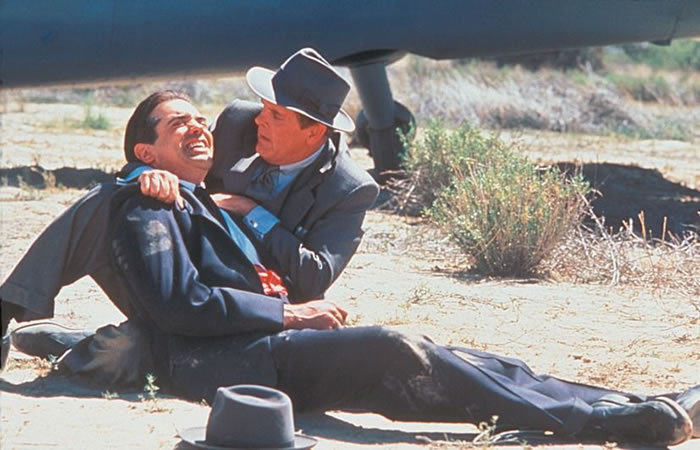
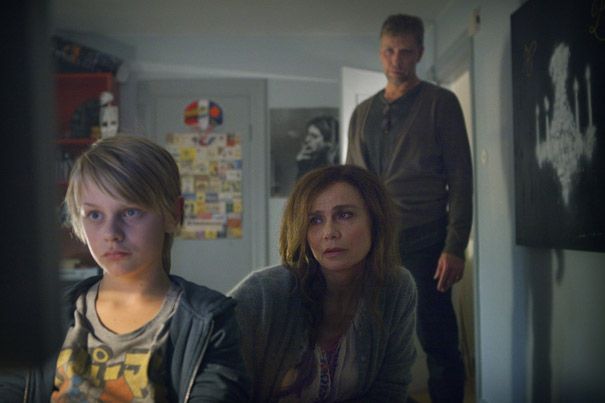
Paradise begins at a private school where Willard (Elijah Wood) meets Clay and they talk about where they’re going for the summer. Clay is going to his summer home in Colorado. Willard lies and says he’s going to Africa. We then follow Willard home and see a very conventional scene establishing him as unpopular and lonely when he passes a pick up baseball game and is harassed by bullies. This scene is so common in American cinema (i.e. sports as a proving ground of childhood acceptance) that it fails to achieve its goal: creating sympathy for the protagonist. 


We are introduced to Willard’s mother and instantly pass judgment on her. Willard comes home and she is on the phone. She closes the door in his face because she is talking about a private matter. Later, we find Willard is being sent off to the country to stay with her friends as she gives birth to a new baby and can’t take care of him. As we will find later, the American version of the film will become overly-obsessed with justifying why a mother would send her only child to stay with her friends for a few weeks. Ironically, this justification is needed because this version of the film takes place in the present where childbirth is less difficult, thus making it more implausible than in Le Grand chemin.


Willard pleads with his mother that his friend’s mother gave birth and he didn’t have to leave but to no avail. The absolute lack of subtlety, which is another problem many American films face because commercial appeal is so crucial, creates some of the worst lines in this film. When the bus arrives at their destination Willard’s mother says ‘We’re here?’ Willard says ‘Where?’ and the response is ‘Paradise.’ This is the reason so many people joke ‘That’s where they got the title from!’ with mock-enthusiasm. Le Grand chemin is not as heavy handed in revealing its title as it’s the bus driver who yells out the stop their making. 
 

Upon leaving the bus Elijah Wood uses quite a good facial expression to show his disappointment with his surroundings. Wood was one of the most talented child actors to ever grace the silver screen, he and Melanie Griffith’s talents were utterly wasted in this poorly directed adaptation, whether or not Wood’s adult career will be as spectacular is yet to be seen. He will be in the Lord of the Rings Trilogy and I found the first film overrated, which means in my opinion, his last great film was Black and White, an ensemble piece in 1999. [Clearly all of this is accurate as of this writing. Since the completion of the trilogy he has done little to live up the promise he showed as a youth, Maniac may change that.] 


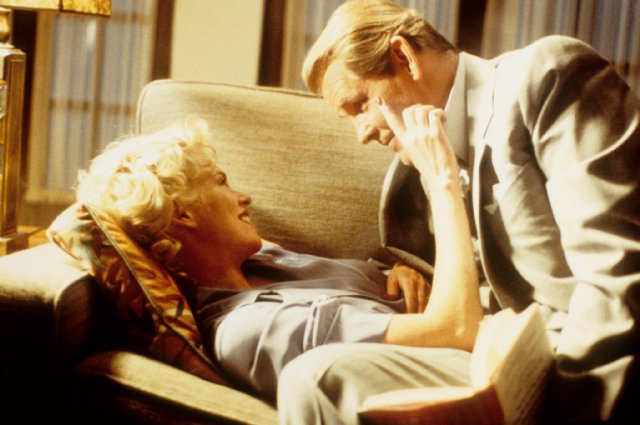
Willard then meets Ben, played by Don Johnson, who pretty much only knows two emotions (straight and angry) and can’t act in either of them. And we get the same game of deception as we did in the French version. Remaking a film is truly a catch-22. When scenes were simply translated from the French I wanted new material and where there were new wrinkles added I thought they were covering the wrong ground. A perfect example is when we are introduced to Sally Pike (Sheila McCarthy) who is a waitress in a local dinner who is talking to Lily (Melanie Griffith) about how she has decided to get married. Sally’s marriage proposition will be one of two flimsy, underdeveloped and unnecessary subplots that Donoghue thrusts upon this once simple and beautiful film.
 

At the Reed home, we see Lily chop the head off a dead chicken. This scene is a microcosm of the difficulty in remaking a film that was originally the product of another culture. In Le Grand chemin Marcelle (Anémone) skins a rabbit which shocks the young Louis. Here it’s a chicken getting its head chopped off, while animal rights activists might not allow for an animal to be skinned French audiences wouldn’t be as queasy as to disallow even a simulation of the event. The context in which the action occurs justifies it whether you agree with it or not. They live in the country, thus, don’t buy clean pre-prepared chicken. However, just that little change when having the original niggling at the back of your head makes it an annoying occurrence. It makes you realize this movie is French. It was told from a French perspective yet something about that experience made it universal, by transplanting and Americanizing it we are ruining what made it wonderful. While certain cinematic experiences are ‘indigenous,’ meaning they have a greater significance to the culture that created it (i.e. Central do Brasil [Central Station]) there is still something about the film that made it renowned worldwide. The formulizing and studiofication of Le Grand chemin is sadly not the worst English translation but the fact that it was made at all is bad enough. Why couldn’t the general public just go to see the original? It makes Americans seem not only elitist but ignorant that we can’t go en masse to hear a new language and read while at the theatre. Read in the movies? God forbid!
   

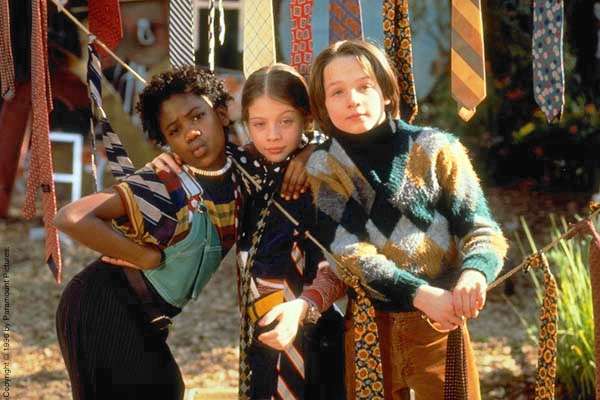
The lack of subtlety strikes again when Willard meets Billie Pike (Thora Birch). Her first line is ‘Have you ever seen a dead body?’ This is a blunt insertion of the theme of death that runs throughout this and the original, again Jean-Loup Hubert handled the subject with much more delicacy than did Donoghue. We also then get the introduction of love and sex as themes in an equally amateur way when Billie asks if Willard would like to see her sister with ‘her clothes… off’ (Emphasis from film). This line shows the director’s fault in so many ways. First, this is terrible acting on Birch’s part (She would go on to be decent in her later films such as Now and Then and American Beauty). Second, this is obviously in the director’s opinion the best take of the line which I don’t find in the least bit amusing. Thus, Donoghue is also at fault for having emphasis added in the script. It might have worked on paper but when she realized what she was dealing with the line should’ve been re-written. 

And lastly, this also tends to point out the glaring yet unexplainable phenomena that many American directors have such a difficult time getting quality performances out of child actors whereas we see many fine performances by youths from all around the world. I believe part of the problem is that we as Americans coddle the child actor and view them as inferior giving them stupid and/or annoying roles and the directors seldom have enough understanding of these performers to guide them when a role does require more out of them.
   

Rosemary (Eve Gordon) is talking to Lily on the stairs about how her husband has left her and she doesn’t know how to tell Willard. This is implied in the original and its insertion here further divides our attention away from what the two main storylines really are and they are the relationship between Lily and Ben and between Billie and Willard. We do then switch to them and hear another gem (For some reason most of the poor dialogue in the film, if not all, is reserved for Billie). They are up in the tree and she says ‘I come here when I’m mad which, is most of the time.’ This is such lazy writing we get two major pieces of information which can be conveyed, and is conveyed, through the action of the film at various points. We understand this very quickly in Le Grand chemin mostly because Vanessa Guedj’s performance is much better than Thora Birch’s; the casting director of the French version also deserves kudos for a wise decision.    
 

In this version of the film we also get Billie being somewhat more ignorant than Willard on matters of sex. This coming from the use of a modern setting combined with the switch in what kids from the country and city know depending on country and on time period. We then go to a somewhat of a bonding moment between Willard and Lily in which they are picking string beans and preparing them for dinner. When Ben comes home he utters dialogue that is transplanted and meaningless given the context and Johnson’s lack of talent. His being cast makes me start to wonder if the casting was a marketing gimmick pairing real life spouses at the time (Johnson & Griffith). Ironically, on screen they were as mismatched as in real life.

What we then get is perhaps the biggest fumble of this film which is the exposition of the Reed’s dead child. One of the problems that haunt this version is that in the American version we find this information out too early in the film. This comes from our cultural imperative that films must be about ‘something’ right away. While there’s nothing wrong with that in theory, in this instance we ruin the simplicity of the film and also create a paltry melodrama by making Lily go into the baby’s room to hold things and cry. This makes all the emotions we feel in this film absolutely manipulated and contrived. Whereas in the French version all we see is Pello going into the room after a fight to destroy it. This is our first exposure to the room and we instantly see that is a museum of sorts for their dead child. The emotions elicited by his actions are real because as soon as we see it: 1) We know why Marcelle kept it unchanged. 2) we see Pello trying to destroy it to hurt her. This is the fault of the American studio because they underestimated the audience’s intelligence, which is always a sinful act by a filmmaker which sadly is committed all too often.
 

Billie at one point insists on finding her father who it turns out works at a roller skating rink. She goes there and is rejected. Paradise also on a few occasions tries to make Billie’s mother, the waitress, a central character. These are two inventions of the American version of this film which water down and show weakness in their filmmaking. Not only are the makers of Paradise unwilling to tell a simple story but they cannot even be subtle and they throw in unnecessary scenes of expositions amongst newly created adult characters who have never existed in the framework of this story. Even when a child actor is given a large role in an American film here we still find reticence to let the weight of the film rest on his/her shoulders. Something the French are extremely adept at doing. 
   

Paradise is not a bad film. Considering it is a remake of a French film I saw prior, it’s decent. It is, however, nothing to write home about. It misses the elusive magic and perhaps indigenous uniqueness that Le Grand chemin had. And it was doomed to be inferior from the start taking that into account which makes me wonder why a remake was allowed to happen in the first place.

Americanization: How Le Grand Chemin Became Paradise- Introduction (Part 1 of 3)

In Godard’s latest film [as of this writing], Éloge de l’amour, there is a scene where an old couple is selling their life story, as it pertains to the French Resistance. A lawyer representing Steven Spielberg is stopped by their granddaughter while reading the contract. A debate ensues because he uses the word ‘America.’ The granddaughter asks “Which America?” to which the lawyer responds ‘The United States.’ Still combative, the granddaughter counters saying Brazil’s official name is ‘The United States of Brazil’ and the same goes for Mexico. Then the girl stops playing her game and says “Oh the States then, that America, the one that has no name or history such that they buy their stories from other countries.” This is a very telling scene of the culture that created one of the largest and most culturally significant film industries in the world. There are ‘histories’ in the United States for certain groups but fewer moments when there is a collective history. The narrative traditions of our country’s cinema have been decided by executives and not by a common culture.

When a foreign film is a big hit one of two things happens. One, it comes to the United States to play in some theatres or, two, in some cases the film will be remade, Americanized and jazzed up. This is just one of many issues that makes it difficult to transplant a film across cultures. I will be examining in this paper France’s Le Grand chemin and the United States’s version Paradise.
 
It wouldn’t surprise me at all if studio executives sit around debating the question “How do we make this American?” when they’ve acquired the rights to a foreign remake. It’s the asking of this question which usually leads most remakes awry. A French film is French, a Russian film is Russian and a Brazilian film is Brazilian. The films are a product of their society and are successful if they can strike some universal cord that reverberates around they world. “How do we make this American?” that’s like asking “How do we make a dog a cat?” You can’t do it. This is the hurdle the makers of Paradise faced in remaking Le Grand chemin.

Short Film Saturday: Cataplexy

Typically, in a short film one is looking for an idea that fits the form and tells a complete story. It’s hard to find a better example than this film. Not to mention that the film does allude to the possibility of a larger story, but for the fragment it decides to tackle it handles it fairly perfectly.

Follow the link below to view the film.

Cataplexy (2010)

A Journey from Narrative to Documentary with Werner Herzog

Werner Herzog is a very interesting figure with whom the typical film enthusiast may not be familiar. However, if you believe that all films are run-of-the-mill, and that documentaries cannot compare to narrative fiction films, allow Herzog to demonstrate the opposite. With these titles you can become familiar with him and if you enjoy them can move on to his more challenging, esoteric works.  

Narrative

The Enigma of Kaspar Hauser

This tale is the perfect introduction to Werner Herzog, as it is the simplest and most transparent of his tales. It is also the perfect segue from his narrative work to his documentaries because it concerns a true story. It tells the tale of a mysterious foundling, Hauser, who appears as if from nowhere on the streets of Nuremberg in 1828. He can hardly speak, walk or write. Rather than interviewing historians and having them dispute the facts and various uncertainties regarding this strange and unusual case, Herzog presents us with a fictionalized depiction of this man’s life, mostly due to the fact that both its beginning and end are shrouded in mystery.

The mysteries of Hauser’s life are echoed throughout with a brilliant use of fragmental imagery and stories. One story Hauser only knows the beginning of, another being a shot of what looks like the hills in the distance as a Mysterious Caped Man freed him, this image is inconsistent and flickering seeming to indicate his spotty memory of his past, lastly in a near-death experience we see an awe-inspiring image of people climbing a pebbly crag in a heavy fog where at the top, remaining unseen, Kaspar says he sees Death. Foreshadowing his demise but as in reality we remain uncertain of the culprit’s identity.

The cinematography in this film is always simple in its framing and even in its lighting except where it needs to be fantastical, keeping a very true-to-life feel no dramatic contrast, or shafts of light to detract from the reality of the tale being told. Some takes are also quite long so that we see how the simplest task is labored for Kaspar when he is in his cellar.

Lastly, this movie will really keep you hooked due to the incredibly layered performance of Bruno S., which is absolutely spellbinding. He creates a wonderfully intriguing and surprisingly complex character which belies his seeming simplicity.

Documentary

Lessons of Darkness

The next logical step in the progression from narrative film to documentary would be Lessons of Darkness. What is amazing about this film, in part, is the cinematography with long tacking helicopter shots of oil fires and the destruction which Kuwait was left in following the Gulf War. However, starting with a quote from the Book of Revelation, a common theme in Herzog’s docs, Lessons of Darkness is much more an allegorical statement about the destructiveness of war in general than a commentary on the Gulf War itself. In fact, it is never identified as Kuwait in the narration of the film and no soldier discussed is ever identified as American. Herzog rendering the chaos more anonymous makes it then much more profound. For about an hour we travel across the countryside amidst oil lakes, fires and smoke and watch as the destruction remains, increases and regenerates.  There is little if any narration at all in this film because the images and the title cards say it all, as does the title of the film itself. This is a land that has been demolished and left in squalor and a cloud of smoke and it needn’t be identified because it could be anywhere next, due to these factors Lessons of Darkness toes the line between documentary and narrative film and it is also the rare documentary that increases the scope of the subject it is covering rather than decreasing it.

Little Dieter Needs to Fly

The progression should continue with this step because it also concerns war but in a much more concrete and traditionally documentarian fashion. This film tells the tale of Dieter Dengler, who grew up in Germany after World War II. The theme of a country decimated (in more ways than one) by war returns. As a child he has a dream to fly but has no means to do so in his homeland. He decides to immigrate to the US and become a citizen and join the Air Force. He goes off to Vietnam where he ends up a POW.

At this point in the tale is where Herzog’s talents really come into play. He does use some stills but he decides to re-enact certain events in Vietnam with Dengler, many years later, and with local volunteers making the experience much more immediate to all involved, the audience, Dengler and the Vietnamese. Certain parts of the jungle are crucial to his escape are also revisited with several incredible tales such as the retrieval of his wedding ring, loss of his comrade, spotting of a bear and being alone facing death.


Grizzly Man

Anyone who ever heard of Timothy Treadwell during his lifetime and dismissed him as crazy should watch this film. Here Herzog tells the tale of a man many simply called ‘The Grizzly Man’ due to the fact that he’d sojourn to Kodiak Island, Alaska every summer to live amongst the Grizzly Bears and ultimately met his demise there. Every decision a person makes especially one of this magnitude, involving this much risk, is made for a reason. In this tale the reasons unravel themselves. An intimate and complex portrait of a gentle tortured soul is painted beautifully by masterful filmmaker.

The range of emotions you feel watching this film run the gamut and they hit you hard and in succession. You’ll be astounded by the purity of his intent, think him crazy for something he did, feel nostalgic sadness hearing his parents speak, laugh because of something he said, be on the verge of tears feeling his friends loss and be remorseful that things didn’t go differently.

Grizzly Man is a complete cinematic experience in every sense and the fact that the film is a documentary is irrelevant. The structure and pacing of events gives you chills at times.

Grizzly Man just might be the best documentary I’ve seen in my limited experience, (barring my having seen Encounters at the End of the World because the idea of meeting those who work in Antarctica has always fascinated me) in part because of some things a documentary professor would dislike. Herzog remains the eminent auteur putting his stamp and occasionally his opinion in the film, which is technically verboten but I didn’t mind – it’s human, it’s being an artist. It was a film as seemingly simple but utterly complex as the man himself and to paraphrase Herzog as any man’s human struggle. Treadwell’s footage couldn’t have found better, more caring hands.

So now that you have a road map showing you how to go from Narrative to documentary by the great Herzog you can find all of these films on Netflix.

Thankful for World Cinema 2012 Introduction

I’ve done this theme a few times. I started it on The Site That Must Not Be Named, but my focus was too narrow (The first year it was just Old World, tying it to the upcoming Thanksgiving holiday).

The idea as of last year is to take some days to focus specific on World Cinema. World meaning made outside the US, and as of this year not always necessarily in a language other than Enligh). Now, I write about and seek out foreign films often. I am a dual-citizen of the US and Brazil. I have grown and have found many different cinemas I connect with globally, as each nation does have its own voices aside from just genre cinema, but they also bring their own voice to genres.

In the forthcoming posts I seek not only to hopefully reveal under-viewed films to people, both through new posts and those already done, but also to find new titles myself.

Much like with the 61 Days of Halloween, this is a short focus on something that is usually a style of film that attracts me anyway. If you look at the BAM Awards’ Best Picture, Director, Actor, Actress, Supporting Actor, Supporting Actress and Screenplay awards have all been awarded to films made outside the US. It’s just a time to focus on and give special attention to these films here. Enjoy!

61 Days of Halloween: Friday the 13th Part 6

Most holidays worth their while encompass entire seasons, such as Christmas, for example. However, as you may have noticed there is a corporate push every year for us to think about the next holiday even sooner. While this has many negative side effects I figure I may as well embrace it.

Since Labor Day is really only good for college football and movie marathons cinematically it is as significant as Arbor Day, which means the next big day on the calendar is Halloween and we can start looking toward it starting now.

Daily I will be viewing films in the horror genre between now and then and sharing the wealth. Many, as is usually the case, will not be worth it so for every disappointment, I will try and suggest something worth while as well.

Friday the 13th Part 6

The deeper into a horror franchise you get the more your status as a die hard is tested. And while I will still testify that Friday the 13th stands second in the slasher trinity to Halloween, this film will likely solidify the fandom of many if the second film didn’t already.

While the auteur theory can sometimes backfire, meaning that having a writer/director is not always a good thing, this is a film that benefits from the concise vision that having one man in both of the most crucial positions on a motion picture.

The film begins without hesitation with a shocking, slightly startling musical strain. While the somewhat puzzling chronology, and odd trajectory of Tommy Jarvis’s character continues in this film; here he is suddenly hero and although there is reference to a mental facility, though he is no longer psychotic, which is a blank not filled in.

Regardless of that this film does many things that make it work. The first being that it addresses the unlikeliness that Jason is truly dead, and it has Tommy wanting to exhume the corpse and burn the body. If you can get past the Frankenstein-like resurrection, which I eventually did, you’ll enjoy this film a great deal.

There are many reasons why: Firstly, Tommy is recast, as long as there liberties being taken with chronology; why not? And it’s for the better. Second, this film has its sense of humor in the right place. For example, the gag about “some folks have a strange idea of entertainment,” with the lens being nearly spiked and someone referring to having seen enough horror movies to know they’re in trouble.

The list continues: the reference to Part 4, for backstory purposes, is audio not visual, so the reflexivity is strongest in jokes not in the narrative itself. The necessary annoying bit players are killed quickly, with impeccable timing and great comedic value.

Also, by having the Sheriff of the newly renamed Forest Green act as an alternate antagonist we can fully support Tommy and not feel quite so crass in taking some kind of perverse enjoyment in Jason’s successes, as it’s the sheriff’s fault his rampage has begun.

Perhaps the most effective part of the film is that the campers at the lake are young kids most no older than twelve, making them much more innocent than Jason’s usual potential victims who are fornicating eighteen-year-olds.

While the ending predictably enough opens the door for Part 7 at the very least they didn’t make the odds of survival or re-animation seemingly insurmountable like they did last time. Visually, narratively and structurally this is a much more accomplished piece of filmmaking than most of the other installments and is a good deal more enjoyable than many of the intervening titles since Jason’s introduction as villain.

Book Review: Stephen King Goes to the Movies

On occasion when I read a book that links either tenuously or directly to film I will review it here.

When Stephen King Goes to the Movies was initially set to be published the impression that it gave was of a book that would be as much a memoir/behind-the-scenes as it would be a regurgitation of some of his better known tales. After it was published it became clear that a great majority of its 600-plus pages were just the tales reprinted. It seems as if it was a book churned out to meet with some contractual obligation (i.e. more the publisher’s idea than King’s), which is not to dismiss it entirely, but a writer so prolific releasing an anthology of previously published works is not that common.

Of course, anyone unfamiliar with The Mangler, Hearts in Atlantis: Low Men in Yellow Coats, Rita Hayworth and the Shawshank Redemption, 1408 and Children of the Corn this volume will be well worth checking out. Those of you who have read those tales it is suggested you merely take the book out on loan from the public library and read the brief introductions that accompany each tale in the book.

Not to say that there isn’t some entertainment value in these introductions. King remains, as always, humorous, humble, and at times, self-deprecating. While you do get very good insights in small doses it is nowhere near the amount of detail he could’ve provided say if he had profiled his story Trucks and subsequently his directing of the cinematic adaptation of it, Maximum Overdrive.

Perhaps the epitome of the lack of detail in the book is that in the table of contents you see a page designation for Stephen’s Ten Favorite Adaptations of his work. When you turn to the aforementioned page literally all you get is the 10 titles listed and no commentary as to why these stand out, except for the rare case of coincidence where one story was included in this collection and thus got an introduction.

Again there are things to be gleaned from it. Just reading through it very quickly created four pages worth of notes based on the facts and opinions learned. It’s just not worth dropping eight bucks for the paperback when libraries are still free. Even if it is just a glorified “New Foreword by the Author” edition of many of these stories give it a read and knowing exactly what to expect your opinion may thus be enhanced, there is some gold in dem darn pages just not as much as there could be.

Mini-Review Round-Up: October 2012

I had quite a review drought to end 2011 so I think the remedy for this kind of post would be to have the post be cumulative monthly. Therefore, after each qualifying film a short write-up will be added to the monthly post. The mini-reviews will be used to discuss Netflix and other home video screenings. Theatrical releases will get full reviews, or another kind of write-up as per my recent shift in focus.

For a guide to what scores mean go here.

9.79*

ESPN’s 30 for 30 is back, and I’m glad. More than ever it seems like the landscape of sports fandom and coverage is more reactionary and instantaneous. We’ve almost devolved to the point where we’re immune to revisionism because there is less and less focus on the past, history and progression of certain sports. Not to sound overly dire or pessimistic, but sometimes perception is reality. However, what the ESPN Films documentary series is goes back and finds milestones, overlooked stories and traces the trajectory of the events, themes and trends involved.

Therefore, 9.79* about Ben Johnson’s disqualification after winning gold with a record-shattering time in 1988 Seoul Olympics starts by tracking each of the finalists (some more than others) following the events that lead to that fateful day and the fall out since. It’s not a story told in precise chronology, there are jumps and clearly new interview footage will reflect the past, but it tracks the phenomenon of doping rather well, exposes the testing issues of the time and leaves a lot of great tidbits dangling for your interpretation. One of the more astounding one is ones that gets hinted at early then dropped like a hot potato until very late in the film. In a way, it makes the capping of the story even more potent. There are quite a few players in the game here. My interpretation is that it’s all a moral quagmire when in this era doping was rampant, harder to prove and everyone is seemingly guilty of something. It makes the situation fascinating almost like a “sports noir” tale. No one’s angel, but you fall on one side of the issue or another, and maybe even side with one camp or another on certain claims.

Not only is it an event that I wanted to be more informed about (and now I am) but Daniel Gordon does great work reconstructing the narrative from an impartial place and bringing forth all the opinions and information known and presenting it in a compelling and dramatic way.

9/10

Girl vs. Monster

For a review of Girl vs. Monster please go here.

Excision

What is most successful about Excision is that it is a study in character from the inside out. Which is to say that the fantasy/daydream segments in this film may be too numerous, but the purpose they do serve is to show how the inner-monologue of a disturbed, delusional character come to the fore and affect her everyday life. There are a few dichotomous splits in character: a struggle between adoration and mutilation (both their own versions of body worship), a fight against authority, a struggle between a libertine attitude and a theistic construct. Perhaps, what’s most intriguing about Excision is watching the journey, granted I did figure where the journey would end at some point, but it seems like a basic virginity plot with a very socially awkward lead, but as it progresses you see so much more is going on here. Through all the serious and horrific observations you make there are also some laughs to be had, and many great performances notably AnnaLynne McCord, Traci Lords, Roger Bart, Ariel Winter and Jeremy Sumpter.

8/10

Magic Silver and Magic Silver 2

Without going into a full rehash of recent guest post that I did, what I will say on a wider scale with relation to the Magic Silver films is that it’s prime example of what’s great about Netflix. Here you have two recent and rather popular Norwegian films that I had heretofore not heard of. Physical home video distribution of these titles in North America is a riskier, more expensive proposition so the streaming solution is perfect and brings these films to a wider audience.

As for the films, what drew me to the films at first was the 1980s-like illustrated approach to the artwork. Sure enough, the first film does have that feel, with some 21st Century technique thrown in. The film excels in virtually every level of production and maximizes the values it can get for whatever the budget is.

It’s a fantastical tale about how gnomes can control the weather and their life in a mountain. The sets of the inside of the mountain in the first film are simply but beautifully done and gives everyone just enough room. In the sequel the expanded space is not maximized. Similar to the costuming which in the first film is simple but effective, but in the second gets a bit more intricate and somehow doesn’t work as well. However, the art direction in both is quite good.

The story, however, again more so in the first film than the second, introduces the rules of this world wisely, as we hear it being told to the children of the village. It’s a thin but effective veil on the exposition, and some of the rules are really fascinating dramatically as they have intriguing consequences.

Both films are quite good, but the difference being that the first film has much higher stakes. Not only is the protagonist, Bluerose, coming to grips with overcoming her own fears, she must also learn the consequences of her actions, learn to assume responsibility, deal with mortality and try to do what is best for all concerned; a test of true leadership. Making this an even more intriguing dynamic is the fact that her struggles as princess are mirrored by a child king in the other clan of gnomes. There’s an innocent, subtly played romantic interest, but they both in working together learn how they can face up to their newfound responsibilties.

In these films I expected good escapist fun, what caught me most off guard about the first film was the gravitas of it, how involved and moved I would be by the narrative, and how compelling the performances of the entire cast especially Ane Viola Semb and Johan Tinus Lindgren. The best fantasy tales go to a very real place emotionally, when they are character-driven. When plot-drives a bit too much it’s harder to reach that heightened level. So a film like the former can be fun (read the sequel) but is ultimately disposable. Whereas, the film that finds universal truths in its fantastic settings, and also connects across cultural boundaries is truly special.

One more note about the follow-up film, it is fun and intriguing for randomly deciding to have four musical numbers. The first caught me totally by surprise but the next three are better, and the last one is a great Christmas-themed song that also highlights the climate change subtext of the story.

Very fun and different movies both that lend themselves to consecutive viewings like I had.

10/10 and 6/10

There’s No Place Like Home

ESPN’s 30 for 30 continued last week with There’s No Place Like Home. Here’s another case whereupon seeing the synopsis of the film I was not so interested, but after having viewed the film it’s more effective than anticipated.

The film tells the tale of Josh Swade, a lifelong Kansas Jayhawk fanatic, who organized a grassroots effort to try and win the original rules of basketball as written by James Naismith. When reading the narrative the piece I was missing, either from ignorance or faulty memory, was that Naismith shortly posting these rules in a Massachusetts YCMA took the game to Kansas and started the Basketball program at Kansas. He was at the University for four plus decades after that. So, yes, Kansas has, and had, a very rightful claim to ownership that I was unaware of.

Another moment of enlightenment was the underscoring of the fact was that basketball, as opposed to other sports which became formalized after years of play, was very much created fairly spontaneously. I was always a rules nerd as a kid, and gaining access to rule books was a big deal, and writing down rules to created games was something I’d partake in. Therefore, the provenance of the document also interested me.

However, that’s all information gleaned, which is valuable but not the be all and end all. What’s truly most interesting in this film is that it takes perhaps the most interesting avenue in telling the film. It takes the perspective of a superfan who has the unmatched, undying passion for his team and has him be the mouthpiece, the spokesman for what he knows is something right but hasn’t the means to accomplish: acquisition of the rules. Through sheer will and determination he does get in contact with those who have the connections and the financial means, and it is impressive to see the seemingly spontaneous outpouring of similar emotions from members of the KU family.

There are some occurrences that would’ve been great to see on camera (like the apparent defeat faced), but other portions that seem rather extraneous do come back into play. The film does feel like it could’ve been tightened a bit, however, it builds the personal connection well and gets a lot of tension and drama out of the auction day even though the outcome is somewhat foreseeable.

All in all, it’s a very good dramatic rendering of the situation, and I always like to see the bump where the filmmakers discuss the process, their inspiration, etc. and this one is perhaps the best I’ve seen.

8/10

Sexual Chronicles of a French Family

I discovered that this film existed through Instant Watcher, more specifically their Twitter. It is a website that it perhaps the best source for what’s new to stream on Netflix. I was not surprised to see that this film is a popular streaming choice. The title is designed to intrigue and get people watching. Based on the fact that it’s a French film, and the totality of the synopsis, I expected more scenes like the one between the matriarch of the household and the grandfather. So, my expectation of more of a chamber drama was mislaid, OK. I won’t, and can’t, penalize it for that. What I can penalize it for is that for as short as it is, the insightful, charming, touching, intelligent scenes are few and far between. Instead, you get many love scenes which are protracted and only add minimally, sometimes not at all, to the story. The intention of the film is one I understand and respect, and it is successful in a few of its attempts, but ultimately it left me wanting and a bit bored.

5/10

The Monitor

I will freely admit that Noomi Rapace along with the fact that this film is a subdued Swedish horror film were both selling points. I saw The Girl with the Dragon Tattoo series in rapid succession and became quite an admirer of hers rather quickly. Sadly, elevating her global star status was just one of the many failings of Prometheus.

What is perhaps most surprising about The Monitor is not that it reveals twists, and character in wonderfully indirect, yet clear, ways; but that what would be the biggest twist in most films is one you become fairly certain of early on, and I was actively thinking and hoping that “There’s gotta be another one,” and sure enough there are plenty both big and small.

The Monitor is a very interestedly handled narrative that is a great character study not only of the protagonist but of her newfound friend Helge, played wonderfully by Kristoffer Joner.

I watched this on Amazon Prime, but any way you can watch this film would be good.

9/10

61 Days of Halloween: Friday the 13th Part IV: The Final Chapter

Most holidays worth their while encompass entire seasons, such as Christmas, for example. However, as you may have noticed there is a corporate push every year for us to think about the next holiday even sooner. While this has many negative side effects I figure I may as well embrace it.

Since Labor Day is really only good for college football and movie marathons cinematically it is as significant as Arbor Day, which means the next big day on the calendar is Halloween and we can start looking toward it starting now.

Daily I will be viewing films in the horror genre between now and then and sharing the wealth. Many, as is usually the case, will not be worth it so for every disappointment, I will try and suggest something worth while as well.

Friday the 13th, Part IV: The Final Chapter

As per usual, this installment started with scenes of the previous films spliced in, here, however, they finally get creative with it and have it be more montage style and less blatant exposition as it also shows several memorable kills right off the bat to get the audience’s appetite whetted for what’s to come.

The film also picks up immediately with the paramedics and police clearing the scene of the latest massacre. In a very nice touch, the film actually takes a breath once the camp is empty anew and lets us realize that this was just the scene of chaos and now it’s as if nothing happened, all we hear are the crickets. It’s perhaps the best of the few masterful strokes this film has. It’s a film that eventually trips itself but that was a great moment.

The dialogue throughout most of the film is nothing short of a train wreck. Couple that with much overacting and it’s difficult to have sympathy for many of the characters who Jason is about to slay.

There are too many characters in the equation in this film, especially considering how it ends. You meet the Jarvis family, then a group of teens going to a cabin in the woods (cue the score from Evil Dead: The Musical) and the twins they meet and then a Jason hunter. Now, I am well aware that this is a body count franchise but the time could’ve been alloted differently. Shorter teen & twins intro, shorter canoodling sequence, get them killed build the Jarvis family and the “Jason hunter” who will factor greatly in the film.

There are, in the end, too many balls in the air that don’t really have any bearing on the end of the film or the main thrust of the film. Again, these things can still happen but they were either too long or repetitive. There is some bad random 80s dancing, randomly found silent porn which is watched for too long, a lot of cattiness both of the male and the female variety that can all be avoided.

While the end with Jason being fooled by Tommy and Tommy’s turn are wonderful truly masterful strokes there is prior stupidity that undercuts its effectiveness. The main sticking point is this Trish is frantic when she finds out Jason’s loose and has to get home to protect Tommy. She returns home in a panic to confirm he’s fine. She is informed their mom is missing. Even though “The Hunter” insists she stays home while he finds her and Jason she insists on going…which leaves Tommy, who she was just so panicked about, alone again…come on man! It’s the simplest fix in the world and it wasn’t fixed and just took me out of the moment. Suspension of disbelief, gone.

The end does manage to be effective. If you like the series and are a completist definitely view it but it was hanging on by thread to liking it but that lapse in logic lost me.