Summer Olympic Movie Picks- Part One

I did a post like this for the Vancouver games a little more than two years ago and I shall unearth it again at some point at least on Letterboxd because that was certainly a lot more fun and in many cases weirder. However, the variety that is provided by the over-stuffed nature of the summer games is nothing to sneeze at. I think that these films that feature the sports of the warmer Olympiad will likely introduce you to something you want to check out. I know I found a few. These picks will be posted in three parts.

Archery

The very first sport alphabetically is one that will illustrate to you rather quickly that there are two ways you can see a sport portrayed in a film: direct (e.g. sports movies) or indirect (wherein the sport is a component of the film but not the focus). Archery is an ancient practical discipline, which is rather visually appealing. Thus, it makes cameos in myriad ways: whether the super-human precision of Hawkeye in The Avengers or the cold brutality of Kevin, as in the one who needs talking about.

Films about the sport itself are harder to come by but with all the Robin Hoods there should be something that tickles your fancy.

My official pick will by Walt Disney’s Robin Hood, though of course Disney/Pixar’s Brave also features a prominent competition, and Katniss Everdeen of The Hunger Games is quite skilled too.

Athletics

Another permutation of the sports movie you get is that of the biopic. This seems to be a particular purview of Athletics, specifically track and field events. Clearly, Chariots of Fire is the first title that comes to mind. Then there are the lesser known but still worth looking out for like Prefontaine and Saint Ralph.

Badminton

Here is the first of the challenging sports on this list. In looking into it I was reminded that badminton, like so many other things, has been included on The Simpsons. In film terms, I learned of two features that involve it, one I’d be interested in seeing and one not so much. The first is National Lampoon’s Golddigger, a newer and prior to this unknown to me installment of the series, and then an Indonesian biopic about Liem Swei King simply called King, which is clearly more appealing for the purist.

Basketball

Basketball is one of the sports that has most frequently made for popular or entertaining films. Now, the two that jump immediately to mind are Hoosiers and Blue Chips. Having said that, since there are so many basketball titles, such that you can specifically cite the Olympics in some; I’d choose HBO’s documentary :03 from Gold about the ’72 Gold Medal Game between the US and USSR.

Beach Volleyball

It was incredibly difficult to parse beach volleyball films from traditional volleyball ones. Beach ones are clearly more popular, but rather than being crass and to respect the differences between the two disciplines, they will each get their own films. The beach volleyball choice is Side Out, which I do believe I’ve actually seen Side Out (so help me God).

Boxing

Boxing is the sport where I’m sure you’ll find the most movies to choose from. Of course, a movie about Olympic boxing is disqualified since the scoring system instantly introduces plot holes and confusion, but you can pick among the classics here Rocky, Raging Bull or whatever your preference may be you’re spoiled for choice with this sport.

Canoeing


Any of the paddle sports will be rarely found on screen and usually as a background element. In the Social Network the Winklevoss twins were part of a crew legacy, which could qualify that as a rowing movie.

With regards to the canoeing/kayaking end of the spectrum that’s where you get to fudging it a little. The first thing that came to mind was White Water Summer, that was immediately followed by more Kevin Bacon in The River Wild, which is a rafting film but less all around odd and not at all ’80s. You could also turn to A River Runs Through It.

With regards to paddle sports it all depends on how ensconced you want to be. If you want just a hint of it you can certainly fudge a movie in in easily.

Cycling

With many of these films I’m discovering them and wanting to find them at some point, with some they are oddities that I have seen and want to recommend. When it came to cycling I’ve seen two of the bigger cycling movies Breaking Away and American Flyers thanks to a family member who is obsessed with the sport.

They have their moments but have also bred some inside jokes based on the fact that it’s a “shown movie,” as in a “You should see this” kind of thing. However, in fairness, they seem to be the go to choices for enthusiasts.

One of those sports that pops up at the Olympics that grabs my interest are the track cycling events, which are more intriguing to me that the other disciplines. The Flying Scotsman seems to be a popular choice for that particular modality.

Diving

Diving, whether it be platform or springboard, is usually an affectation wherein we witness the externalization of a protagonist’s fear and his overcoming it, and rarely the focus of a film.

Perhaps the most notable examples are Greg Louganis: Breaking the Surface, and now with the games in London, Tom Daley four years on from a debut at the age of 14, wherein he finished 7th and 8th in his two events; has a BBC documentary about him to his credit along with being a serious medal threat.

Equestrian

I’m not going to say I’m a horse whisperer or even any kind of an expert, but what invariably ends up bugging me in some horse movies is the whole nature of them participating in a sport. A notable example being The Black Stallion. The beginning, say the first 40 minutes is a gem, a perfect replica of a silent film. Then the horse becomes a racehorse and it’s kind of trite from there. I think that’s one of the greatest things about the handling of Secretariat, it makes it seem like the horse is more willful than his jockey.

When it comes to equestrian disciplines that’s less of a concern because I believe that typically it’s the rider facing more danger and if the horse doesn’t want to jump, he won’t jump; or whatever maneuver is intended. That and watching these maneuvers is rather hypnotic at times.

A recent film I saw that dealt well with equestrian if nothing else was Harley’s Hill. In reading a similar list I was enlightened towards International Velvet. If you can’t drop your reservations about equine sports, and are a member of the Disney Movie Club, you can look up The Littlest Outlaw wherein a boy frees a showhorse.

Fencing

Fencing is another sport wherein you can shoehorn many a film into your viewing to suit your taste. Any Zorro, Three Musketeers, Peter Pan will feature fencing-like swashbuckling. You can take your pick from those oft told tales or you can be a little more literal with something like By the Sword, a 1991 film featuring Mia Sara, Eric Roberts and F. Murray Abraham. Or perhaps The Fencing Master, there was one in 1915 and 1992, I suspect the latter would be easier to find.

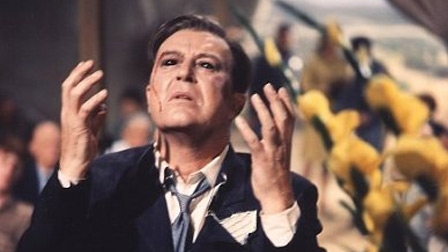
However, if you want to get creative I suggest Theatre of Blood. Not only does Vincent Price play a crazed, thought-to-be-dead Shakespearean actor seeking vengeance on a critics circle but he recites the Bard as he kills and once such scene is a fencing duel!

That’s all for now. Suggestions are more than welcome, and tomorrow’s films start with those about or involving football (aka soccer).

Madagascar 3 & Brave: Audience Expectations and Narrative Goals

Shortly after writing about the drive-in experience I made my first trip of the season. The drive-in I frequent does double-features and usually the fit of the bill and whether or not I’ve seen the movies ends up being the deciding factor.

This time in the family-friendly block there were two animated films being shown Madagascar 3: Europe’s Most Wanted and Brave. The fact that I had seen neither, really wanted to see Brave and they were both in the same medium, made it an easy pick for me.

What I found to be most interesting is in comparing and contrasting the two films, which I did merely because I viewed them back-to-back and because they had any inherent narrative or thematic similarities aside from being in the same medium; is that it was a tremendous study in audience expectation and narrative goals.

With regards to audience expectation: I expected next to nothing from Madagascar 3 except to hear the circus song again and laugh like some human version of Pavolv’s dog and I did, and I got some other chuckles out of it too, more than anticipated. Yes, there were things that were silly and overwrought but for fluff it was OK.

Whereas with Brave, just in the trappings of the story that I knew going in, the implications of those trappings and the potential it had based on that alone; set the bar was set very high.

Now, with regard to narrative goals what I mean is what the stories primary desire is. I believe, first and foremost, in judging a film on its own merits and with regard to what it is trying to accomplish. I won’t knock Austin Powers because it doesn’t stack up to Citizen Kane because it’s not trying to be that, it’s just trying to be funny. Granted with any genre film, yes, they want to successfully execute a story in the given genre and then if you get more out of it that’s icing on the cake, but the extras are not the main objective.

It’s trite but it’s probably easiest to think of it as setting a bar in the high jump, as I alluded to before. Madagascar didn’t set it so high but they cleared it, Brave set it really high and stumbled around a bit, in my estimation.

To be perfectly honest, I haven’t registered a grade on either film anywhere simply because I remember I saw them and found them both middling. Yet, as I alluded to before, that middling for Madagascar 3 is somewhat triumphant and for Brave was really disappointing based on what my perception of them was going in. In essence, I probably felt more frustrated after the better film. While there are still things that bothered me about how it was handled, Brave is still probably would be the one I’d pick if forced, and the one I’d be most likely to revisit.

I haven’t read a lot of press on Brave but I have a feeling that there were many who were talking about what they would’ve preferred happen. Without giving it away that’s not what I mean to say when I say it bothered me. I mean even with all the same givens and without reworking the circumstances there were elements there that could’ve been fine-tuned and much of what was likely to be good about it still was: the message, the struggle and the conflict.

Perhaps what’s most interesting is that I likely wouldn’t have drawn these parallels had I not seen them back-to-back but I did, and Brave was supposed to be the jewel in the crown. Yes, I hyped it a bit but having not read much in detail I did wonder what the complaints were about then the elements that didn’t connect as crisply as they could have came into the mix.

In the end, I thoughtthis a perfect opportunity to address those nuances in narrative evaluation that scores, regardless of you scale, can belie.

Hero Whipped: Why This Spider-Man Amazed Me

In this series of posts I tend to discuss comic book characters and my unique relationship with them since my fairly recent return to reading them again and I usually find a way to connect them back to movies somehow. However, since I decided that my posts may be a little different from hereon in, these posts may have a slightly different vibe to them.

Sure enough after that post The Amazing Spider-Man was one of the first things I saw. Now, in spite of my recent tendency to like superhero movies either a lot as the case is with say The Avengers and X-Men: First Class or somewhat as is the case with Thor or Green Lantern, the new Spider-Man hearkens me back to the original trilogy which were all released during my hiatus. Thus, this will be a heavily filmic post but it’s perhaps the most unique perspective I’ve yet had on a character.

It may be possible that I knew less about Spider-Man going into that first movie than I’ve known about almost any superhero before seeing their film. It was released at a time where I was typically attending films in a group so the selection process was fairly democratic. Going alone or with at least one other person, I could take it or leave it. To give you a sense of my lack of knowledge, after having seen it I was informed that in the books Peter created a web-shooter and it wasn’t a biological side-effect of the bite. So that frames it a bit.

However, I was a fairly blank slate. I didn’t have expectations I was just reacting to what I saw on the screen and what I saw there was something I didn’t care for much at all. In the post-film powwow I was the only dissenting opinion who chimed in “Well, I thought it really sucked.” I’ve never really had the urge to revisit it and the bad taste in my mouth kept me from seeing the other two.

I could identify easily enough with the elements of the story. Few and far between are the heroes whose archetypes that have a major variable. It was really a letdown in my eyes aesthetically, technically and viscerally. With regards to the viscera a lot of that boiled down to the casting of the leads. There is a certain alchemy in all of filmmaking but perhaps where it’s most present is in acting. Yes, there is a lot of technique and things that are good acting and bad acting just like in any aspect of filmmaking, however, an effective performer who doesn’t excite you in anyway is likely to be less engaging than a less technically skilled actor who is gripping, who has a presence. Tobey Maguire is not a bad actor and neither is Kirsten Dunst. I don’t find them interesting in any way, shape or form though. They bore me more often than not. It’s really a casting issue. Maguire is going to be seen in The Great Gatsby next. That’s great casting. He belongs in that film, here I didn’t care for it.

The casting and the actors get no help in the story department I remembered feeling it tepid and trite, nothing out of the ordinary, and getting back to the alchemy thing you have actors I felt were miscast, not particularly dynamic and then no chemistry too? Brilliant.

I was also not in the camp that ooh-ed and ahh-ed at the CG. Good effects work, truly good effects work is timeless. I doesn’t just stand up against contemporary expectations but stands the test of time too. I felt they were lacking in 2002, much less now. Whereas there are shots in Jurassic Park that are still astounding almost 20 years later.

It really seems in superhero cinema that much of it boils down to character, in the better ones performance, and spectacle. Very few are those films that will also make you legitimately, consistently, and even spontaneously, feel strong pangs of genuine emotion (Teaser: I got a lot of that in the new Batman and that’s the next in this series!).

Perhaps one of the most vivid memories I have of watching any movie ever was the first time I saw Batman. You know the 1989 one, back when Tim Burton was Tim Burton.

“Have you ever danced with the devil in the pale moonlight?” And thus, the crap was scared out of me and I was in love with that movie.

With Spider-Man you do have a basis for many emotions in the construction of his origin. As superhero films proliferate there will be more and more merit to the arguments about the viability of origin stories, however, in rebooting a series I have no problem with retelling. Similarity by itself is not cause enough for ridicule. Take the Psycho remake for instance (please?), if Van Sant had merely done the story over again: same place, same time, same characters, names; that probably would’ve been fine. However, he took it a step further into cinematic photocopying, which just felt flat.

I can stand a retelling, as I think I’ve stated before: I am fine with multiple versions of stories existing (and when I like the story I seek them out). I clearly wanted to be re-told this story based on my reaction to the first film. So, what was it in this new Spider-Man that worked for me? In short, practically everything.

However, as you may have guessed, it starts with Andrew Garfield and Emma Stone. Just by looking at Andrew Garfield you may not imagine he’s the dynamic performer, but if you watch him you soon find out. I first saw him in The Red Riding Trilogy and I was a fan. There are quite a few things that perturbed me about The Social Network, but he wasn’t one of them, at all. Robbed of an Oscar nomination, is what he was.

Then there’s Emma Stone. I think everybody loves Emma Stone at this point. If you don’t you probably aren’t watching that many movies.

There’s a certain quietness and introspection to this film that allows the emotion to be wrenched out of it. I spoke of spectacle above, spectacle is very external. In many of these films there is rarely introspection. This film manages to do that, build these characters but also steadily build the intrigue. The characters arc, you see what makes them tick, you see and understand their decisions and I felt for them.

Now, the dynamic was changed in this film by bringing Gwen Stacy into the mix rather than Mary Jane Watson. Now, in my return to comics I haven’t delved into Spider-Man really. I’ve only really gotten to know and like him from his teaming up with The Fantastic Four after The Human Torch’s temporary demise, so Gwen was new to me and I think involving her is a great story decision that just makes this film that much better and resonant.

On a technical level, not only do scenes tend to be intensified by occurring at night but the filmmakers figured out that the web-swinging looks better then. Another interesting aesthetic note to me was that the camera was very much controlled, not an over-abundance of motion. The shots look good and composed and it hearken back to earlier superhero films, but are made with newer toys.

All those proclivities aside here are the two true litmus tests for superhero movies as I see them: One, do I want to see the inevitable sequel? Two, does the film make me want to seek out the character in print? The answer to both those questions is a a resounding hell yes. And that is why this Spider-Man amazed me.

Why Goon Works

Not too long ago I was finally missing hockey enough that I decided I should watch Goon (For my rating, which will be omitted from this commentary, please go here). I had the conflicting emotions going in of having high hopes but also being somewhat guarded. As I have discussed with films set in Brazil, but made abroad, I have some trepidation when it comes to handling of subject matter is close to me. Hockey is one of those touchy subjects.

For example, when I was younger, I was obsessed with hockey (mostly with the New York Rangers) quite badly, such that I’ve had to temper that with conscious effort such that a win or loss doesn’t effect not only my day, but also the time that elapses in between. When I was younger I naturally would have had to rented Slapshot at some point. Now, the point of this piece is to discuss Goon, so suffice it to so say I was quite turned off, didn’t find it overly-amusing and didn’t think it got it. To paraphrase what Penelope Spheeris said about why she didn’t do This is Spinal Tap when offered “You’re making fun of these people,” and feeling a part of that scene she couldn’t see herself doing it. That’s how I feel Slapshot dealt with its subject matter, which is the polar opposite of how Goon does it.

I think Goon does understand, touch upon and convey so many nuances of the game that fans, and those involved in the game get that outsiders cannot and what it most amazing is that the film puts these notions in a great movie that’s accessible and enjoyable to the non-fan.

Clearly, Goon will deal mostly with fighting, as it chronicles the unlikely rise of a nobody into a minor celebrity at lower levels of the sport simply due to his prowess in fisticuffs.

While the film doesn’t get didactic about anything I feel it does thoroughly examine fighting as a part of the culture of a sport, the fabric of it really, and the mindset of said fighters. It shows the trade-offs you’re willing to make, what’s tolerated, what isn’t, momentum shifts a fight can cause; essentially the “necessity” of it.

While I, as a hockey fanatic, will grudgingly admit to the “necessity” of fighting I also cannot in good conscience leave it out of quotes and cannot just leave it at that. I think it also important to delineate that this is hockey we’re discussing and I compartmentalize. Just because I accept and understand a brutal, physical practice in a sport played by adults who agree to the risks they take on does not denote my feelings on nuclear proliferation, capital punishment or any other topic.

I think the film shows even while making spectacular out-of-this-world bouts that there are ramifications and consequences of many kinds in fighting. What bothers me most about the perception of fighting, which I hear all too frequently on debate shows when they deign to talk about hockey, is that it is allowed. It’s more accurate to say it’s an accepted practice, but it is not allowed. If it were allowed you’d have something akin to Blades of Steel, wherein only the loser was penalized, or what’s more no one was. If you fight you are assessed five minutes in the box. There can be a strategic purpose to it therefore it really is a more violent version of intentional fouls in basketball, or on rare occasions in soccer (aka football).

However, I can agree that hockey is likely the only sport wherein there are enforcers, whom you don’t expect goals or assists from, but whom you expect to protect said assets. The complaints are old, but some of the facts are new and Goon touches on the head injury issue.

With the growing animus in all sports to keep its participants safer never is the conversation more nebulous than around fighting in hockey. Many head injuries in hockey and football are typically the result of one player being either defenseless or unaware of the oncoming collision, in a hockey fight 99 times out 100, heck I’d wager 999 times out of 1000; you have both combatants know they’re about to deliver blows to one another’s head. It’s probably the clearest case of they know what they’re signing up for there is. Yet it’s the most vilified act in sports it seems, and I think what Goon does amazingly is humanizes these players, even ones that start out as caricatures. However, Doug Glatt, the lead played by Seann William Scott, is so well drawn. He’s a gentle giant, a consummate team player who will do whatever needs doing whether it be fighting or taking a puck to the face.

If the sport were to clamp down on fighting more would I still watch? Absolutely, and I think that those who argue attendance would drop don’t get it. It will only drop where there aren’t real fans of the game. With regard to player safety, I’m far more concerned about enforcement of blows to the head in the middle of a game at full speed than a fight, though I’m not going to act as if there are no cumulative ill effects health-wise there. It seems sports leagues are skewing towards legislating to avoid sudden cataclysmic injury rather than chronic ones.

Now, while I’ve been off on a tangent, what the film does is the polar opposite of what I have, which is what makes it so good. It avoids bombast and soapboxing of any kind. For example, Glatt’s rival Ross Rhea, played by Liev Schreiber, talks to him, seems like an OK guy and steals a comment he made in his speech when having his number retired, but that’s the end of that thread. They have something to settle on the ice and won’t be distracted by off the ice stuff.

The film has pretty effective action sequences and really good looking hockey plays, which go beyond your typical insert of a puck bulging the twine. The totality of the handling of the sport in the film is amazing aside from narrative, performances, aesthetic and other production choices. However, fighting, because it is called Goon after all, is at the center of it and within the sport and without it’s a hot button type of issue and perhaps what I’ve been driving at, aside from letting some things off my chest, is that it dealt with it without pretension, condescension, excuses or even glorification, it just is. It’s in the game and that’s it.

In film one of the terms you’ll hear all the time is “raise the stakes.” Put more at risk, go bigger, bolder or higher for more dramatic impact. So, yes, Glatt is a superhuman fighter, some of the impacts and injuries in the fights are extreme and he does stop a shot with his face, and several subsequent stuff-in attempts, but when the tone, details and spirit and scenarios are all right then the occasional extravagance needed in film is far easier to accept.

If you were to cull through all the video you could find to create a montage, as long or as short as you want, to illustrate why you think a sport is great it probably won’t connect. If you put it in the context of a story then you have a chance of even getting neophytes along. For example, I know very little about cricket but I’ve really enjoyed films about it because of the common themes I could relate to the passion, strategy, desire to play, hero worship and so one (aside from the fact that it’s aesthetically great on film). Now, if you take many elements that make a game great and combine it with a great story that anybody can sit and watch then you’ve got a real winner.

Goon‘s success is attributable to the fact that it cares deeply about its story, its protagonist and the game it’s portraying and that’s all. It’s not trying to make any other statement at all, yet, paradoxically that’s just how it makes one. Hockey is a beautiful game and if those who run the sport treat it as well as this film does then it’ll be in great shape.

Book Review- The Complete Greed

There isn’t too much I can personally say about The Complete Greed that hasn’t already been said by those cited on the back cover of the book, namely: The New Yorker, Fritz Lang, Take One, Sight & Sound, Maurice Bessy (at the time director of The Cannes Film Festival), Henri Langlois (at the time curator of the Cinémathèque Française), Peter Bogdanovich and Jean Renoir.

However, one unique perspective is that I, unlike all those cited on the back of the book, have yet to see the extant, eviscerated version of Greed. I remember my interest being piqued in film school but also accompanied by a built-in reticence to see something that was less than von Stroheim’s grandiose vision for it. That combined with the fact that it is currently only available via re-seller on VHS in the US has put it low on the priority list for me. However, when I was on Amazon one day and saw that a used, though in great shape, copy of this book was available for the staggeringly low price of $4 I had to jump on it.

After having read it I must say it is quite a feat indeed. Having never seen the film I now feel like I have and what’s more it conveyed both the wonder of the story as it exists and the agony of the seeing the version the world has been robbed of.

The more complete cuts of Greed are among the holiest of holy grails in the film world. I now have a sense as to why that is and add that to a growing list of cuts I wish to see unearthed.

Short Film Saturday- Doodlebug

With The Dark Knight Rises coming out next weekend I thought it appropriate to finally check out and post this short. In just three minutes you get a pre-cursor a glimpse of the brilliance of Chris Nolan. Its seemingly minimalist in story and set, but as per usual, his story is much bigger than its trappings. That’s about as much as I care to say, lest I come too close to giving something away.

Enjoy!

Make Your Own Film Festival: Bad Movies

Another way, perhaps the more interactive and most definitely the most enjoyable way, to have your own short film festival is to have a friend or two (or many) over to watch a series of movies all in a row, and all of which you know are likely to be bad – entertaining hopefully because of that, but all-in-all bad nonetheless. While there’s nothing quite like watching a great movie it is quite an individual, singular and spiritual event. A bad movie, or at least cheesy one, can bring you closer or at least allow you to commiserate in the universal sentiment of “What exactly is going on here?”

This system, of course, works best if you haven’t seen a film yet so you and your friends are all surprised by the cheese, production values (or lack thereof), acting and other elements. Anticipation and hype can ruin such a thing. Try and pick things you have heard of that may fall into this category. If you happen upon something that might fit into a night like this that you were completely unfamiliar with even better, in fact, that’s the best.

For better or worse, there’s nothing better than going into a film, good or bad, as a completely blank slate. I’ve seen many films on either side of the spectrum that way. And of course, you always try to give something a fair chance but the minute you learn about a project you start, at least subconsciously, to form an opinion of it. It’s just human nature. If you’re looking for bad, how do you find it? Everyone has their own tastes and knows their own inclinations. Genres likely to be low-budget are martial arts, other action permutations, sci-fi and of course horror. Aficionados of any genre can spot the straight-to-DVD and other hack-jobs, typically those genres attract the most sub-par products and even true fans will readily admit it.

So to create your own bad movie night you need at least three movies, patience and a lot of snacks. Four were brought to my last one and three were seen, one left un-screened.

Here’s a recap of what we saw. Your proclivities and results may vary. What you will find below is an example and my reactions to the films seen. There were three people in attendance, none of us felt that we had accidentally stumbled into a good movie. You may disagree, and that’s OK:


Shogun Assassin – A movie cited at the end of Kill Bill Vol. 2 where we heard the English-version opening voice-over monologue because Bibi is obsessed with the movie and watches it before bed. The voice over in Shogun Assassin does get to sound more and more like Barrett Oliver in The Neverending Story as it goes on which is odd, and while having a kid along with the assassin makes it somewhat different the story is just essentially a series of individual slow battles with the assassin on the run from the Shogun’s henchman. While it does have its moments; it is proof that the result of inspiration can be much better than the inspiration itself.


Master of the Flying Guillotine – The bottom line is that there is about a 40-minute fight tournament sequence which ends in the wrong man being killed by the enemy and you kind of see that coming, so it really wouldn’t even be a feature if only necessary scenes were included.


Cannibal Ferox
– Directed by famed Italian horror director Umberto Lenzi is another failed cannibal film, which follows a similar formula to others that didn’t work. An overly long set-up outside the jungle then a long time being stuck in the jungle to a very short amount of disturbing cannibalism for a film which promises gruesomeness. Now this kind of film is not for everyone, my problem is that I am typically bored out of my mind before the payoff.

The fourth film which was unwatched was also cannibal-themed was Cannibal Holocaust, which I do believe we saw later on. The genres or sub-genres can be more mixed or less mixed if you like more theme-based like these were. Pairings will be discussed more later with better films but bad movies can be just as much fun – if not more.

Don’t You Recognize Me: Chris Evans

Don’t You Recognize Me will be a sporadically posted theme wherein I briefly highlight an early role of a now well-known actor. Typically, it will be one where I didn’t immediately make the connection, hence the title.

Society has become a bit more instantaneous in the internet age, very preoccupied with what’s current and what’s next and not as much with what’s past. It’s a generalization but this does apply to the world of film a bit too. Therefore, career trajectories sometimes will sneak up on you. At times I’ll see a name in a casting announcement and only in the piece connect a name with a face. Evans’ case is not quite that, but it happens a lot.

The journey an actor takes from recognizable face to known name is still, in most cases, one that is many years in the making. As I hearkened back to Not Another Teen Movie I checked his IMDb and realized that I did see him since, even before his second more successful superhero incarnation, in Scott Pilgrim vs. the World and The Nanny Diaries but this is the one I always think about.

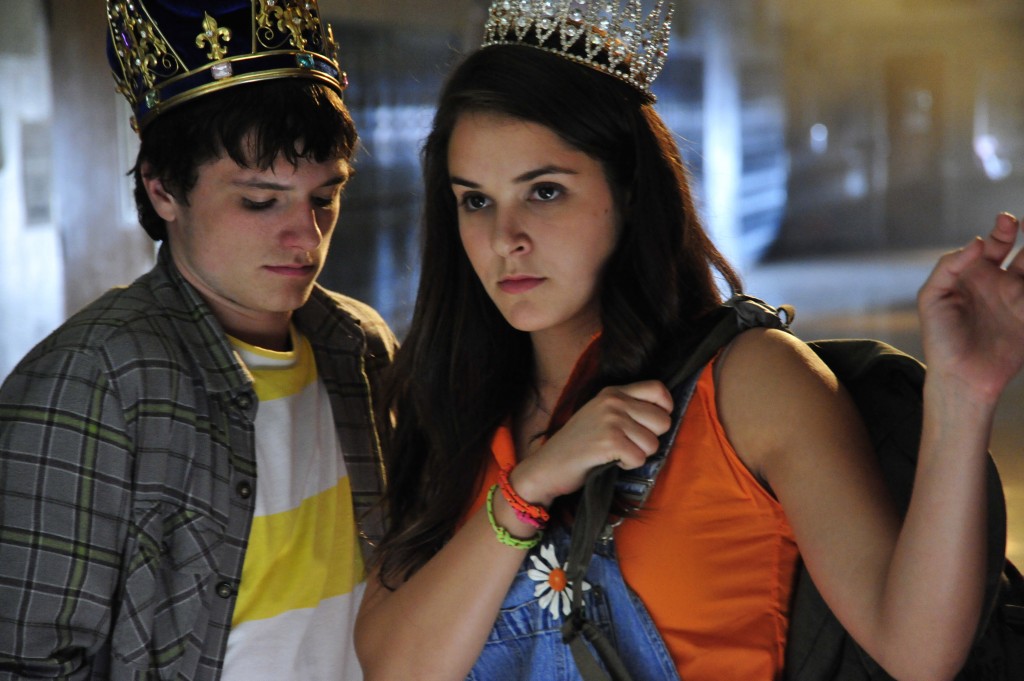
It’s a far cry from the kinds of roles that he’s playing now, but in a lot of ways Not Another Teen Movie is the last wholly successful parody I saw. Acting in a parody requires serious chops. You find yourself in the most ridiculous, outlandish and unrealistic situations placed on film and not only do you have to suspend your own disbelief as a performer and play scenes without commenting on them, but you have to sell the audience and make them suspend it too, at least to an extent. Evans is the love interest Jake Tyler, maybe the only highly-skilled high school back-up quarterback in the annals of teen filmdom (“Mr. Not First String Anymore is not first string anymore” as Austin, his rival, puts it). He’ll be the one who is at the epicenter of the broadcast, cheeky bet to turn the glasses-and-a-ponytail-paint-on-her-overalls Janie Briggs to be prom queen, and succeeds on every level.

Yet, as well as it works somehow this slipped my mind until after I saw Captain America and just before The Avengers. When it clicked it just made me smile and gave me a whole new level of respect both for what he did prior and with his latter roles. If you only know Evans now and like a good, ridiculous parody that is a bit raunchy at times check out Not Another Teen Movie. It has had high replay value for me.

Note: This film is Rated R by the MPAA for strong crude sexual content and humor, language and some drug content.

Spielberg Sunday: Laser Cats 7

It’s not exactly new, but any chance for an additional short should be taken. It’s also funny to note that not only does Spielberg appear in this Saturday Night Live skit as himself, in a rather Hitchockian way but it’s also one of the running gags. Not to mention that there are of course references to several of his films, perhaps the funniest being Close Encounters of the Third Kind because it’s a great gag and wonderful commentary from the man himself.

Enjoy!

Laser Cats 7 (2012)

Short Film Saturday- City of Gold

This past Sunday I detailed some films both that I had seen and not yet seen based on what their location was in honor of Canada Day. In that post I also detailed my difficulty in locating films for certain localities, most notably the Yukon. Well, sure enough one of my wonderful contributors @poced thought one up and linked me to a video shortly after the post went up.

City of Gold is not only an Oscar nominee for Best Documentary, Short Subject it has also been cited as an influence on the works of Ken Burns. How this is so should be fairly evident early on as this film is date 1957 and Burns was trying to convince people his techniques would work on a film about the Brooklyn Bridge in the late 70s and Early 80s.

Aside from the importance the film claims in the progression of documentary aesthetics, it is a great story about Dawson City, Yukon that is wonderfully executed. The script, which has to be strong for a film like this to work, is captivating; and the conjoining of archival photography and contemporary motion picture footage is compelling, and some of the images are magical.

City of Gold (1957)