Make Your Own Film Festival: Pick an Actor

Much in the way computers, be them Apple or PC, can liberate you from zone restrictions for a country-specific film festival the same can be true if you’re building a festival around an actor and they happen to be a foreign performer.

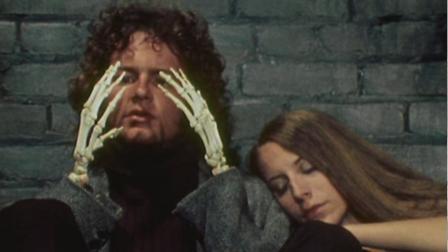
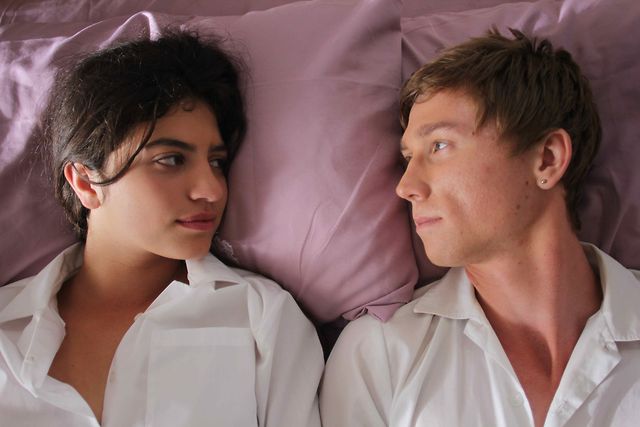
The focus of this film festival, which will serve as an example, is Robinson Stévenin. Acting, it would seem, has always been in Robinson’s blood. He is the son of the well-known French actor Jean-François Stévenin, who is perhaps best known for playing the role of François Truffaut’s Assistant Director in the film about filmmaking Day for Night.

His breakout role was in the film Bad Company (Mauvaises frequentations) where he played a young man who so enraptured his girlfriend she agreed to start an ad hoc prostitution ring with him. It’s a truly effective and great film that a one-line synopsis does not do justice to. For this role Robinson was nominated for a César Award (France’s Equivalent to the Oscar) as Most Promising Actor. He would go on to capture that award two years later for his role in Transfixed (Mauvais genres), which featured in this festival.

The Children’s Revolt

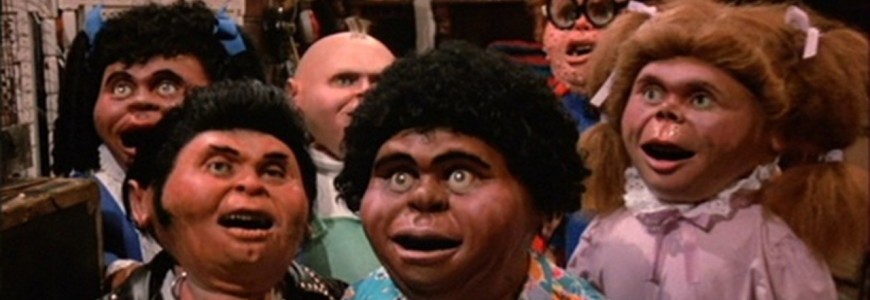
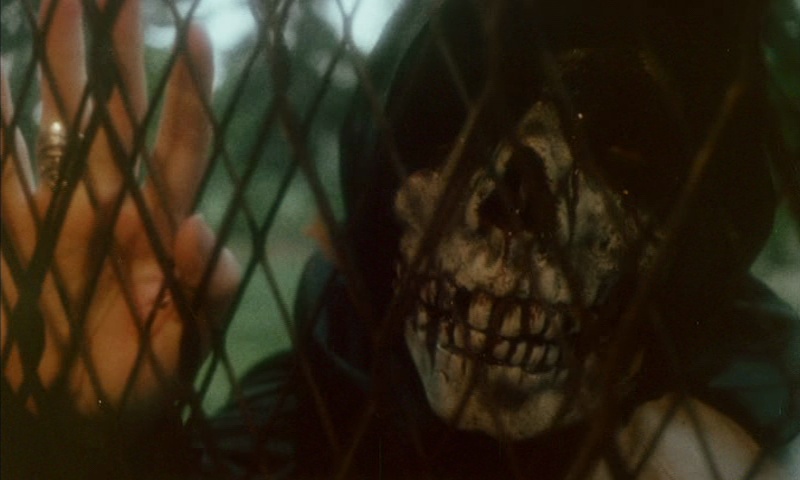
His first recognition came for his role in The Children’s Revolt a film about a rebellion in a children’s penal colony in the 19th century. Although he is by no means the lead in this film his performance, as the so-called Lil’ Shaver (Rase-Motte), he is such a standout as a precocious, funny, eloquent kid that he not only receives a favorable quote on the DVD cover but also captured Best Actor at the Paris Film Festival in 1992. What’s more impressive is that he seems to be playing a lot younger than he is in this part, and his scene with the Countess is most definitely one of the highlights of the film.

La Petit Lili

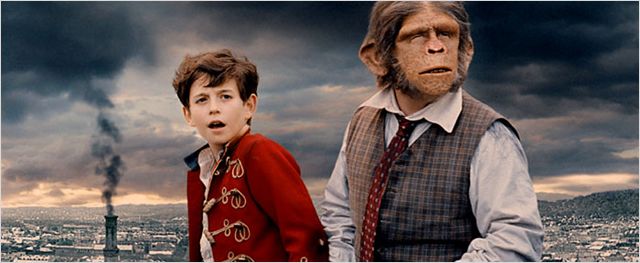
This is quite an interesting film and a great role for him. The film co-stars Ludivine Sagnier, known from Swimming Pool and Peter Pan, as his girlfriend and muse who stars in a short film he makes. He screens it for friends and family and it does not go as swimmingly as he hoped and in essence it starts snowballing in a way that will affect everyone. The characters retire to their separate quarters and start re-examining their lives. In this part he manages to portray the dichotomy of sensitive, brooding artist and also the malcontent who flies off the handle when hearing something he does not like. Yet his anger is justified at times and he handles intellectual dialogue with tremendous effect. He manages to turn the bitter petulant teenager into a character who is not reviled but can be an identifiable protagonist.

Transfixed 


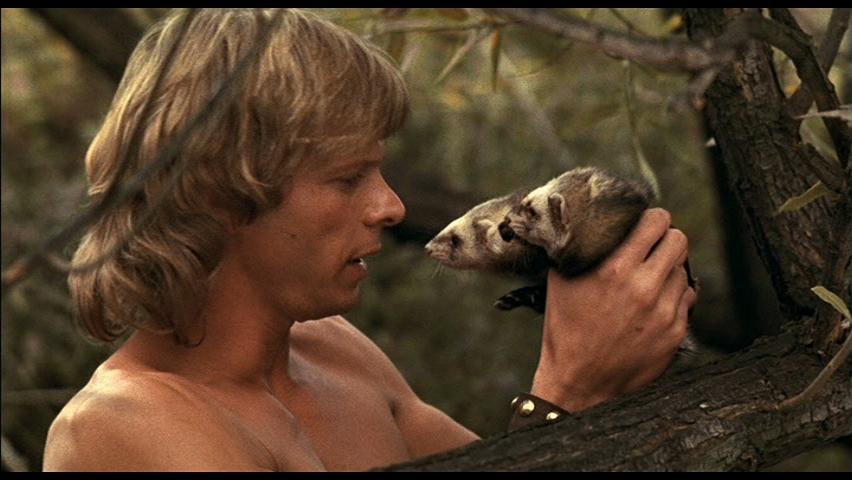
As mentioned above this is the role that won Robinson the César as Most Promising Actor. It is inordinately rare to see an actor completely and totally change his persona and not just his appearance. In this film Robinson plays a transsexual prostitute embroiled in the middle of a whodunit it in Brussels. He is completely and utterly transformed and plays the part to a tee. You are never truly left watching a performance but a character. For whatever is lacking in the plot the performance more than makes up for it.

Mon Colonel

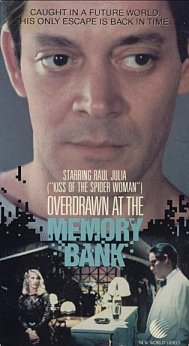
Yet another face of Stévenin – here he plays a soldier serving under a totalitarian Colonel in Algeria. Through his diary he reveals the details of his tour of duty and these pages are slowly delivered to the military assisting the police in the investigation of the Colonel’s murder many years later. Here Stévenin can be seen as a duty-bound man with a conscience who is still a bit of an idealist, but slowly loses some faith but struggles to do what is right and not always just follow orders. It is a tremendous piece of work, and the fact that it is shot in black and white shows the timelessness of his star-quality.

Film Thought: No List Is Ever Complete

I recall once that Roger Ebert tweeted a link and added to it something to the extent of “See this is why I don’t do lists.” I got his point. It was a completist’s one, meaning how can you legitimately make such and such a list claiming it’s ever or all-time when you haven’t, you couldn’t possibly, have seen every qualifying film. Fair enough.

However, it was only recently that I followed this line of thought out further when thinking of my own lists. If I say these are the 10 Best Examples of This I Ever saw, am I disingenuous? No, if I haven’t seen something or disagree, that film, performance or whatever else isn’t on the list. Surely, there are year-end best film lists made by people who saw less than every film released that year. How do those lists differ? They don’t.

Therefore, what I resolved is that if I make a list, barring year-end ones which are time sensitive, that for all intents and purposes it is perpetually a work in progress. Why should it not be? Do I anticipate never hearing another new voice actor (referring to an older not re-posted here list)? I’m preparing a Spielberg ranking, will it not automatically re-shift when Lincoln comes out? I will also no longer be married to round numbers. If something should demand 11 choices, there will be 11. Much in the way my best films of last year lists were assembled, I felt there were 25 films worthy of being cited. Clearly there were still only 10 in the top 10.

The important thing is to do these things in order to express oneself, create discussions and learn. I may be pointed towards a film I have not yet seen or heard of through a list or a post, and why shouldn’t I?

Similarly, I plan to continue to write on the new releases I see but in ways I find enriching, which will not always mean a standard review. I did as such for The Dictator and I think that Brave and Madagascar 3 should be treated in a unique fashion also.

These new precepts I feel will encourage me to re-post more, to write on films more quickly and to avoid procrastinating, and ultimately I believe they will make my content more interesting and dynamic. I hope you do too.

A Cinematic Trip Around Canada

As I knew Canada Day was coming up, I wanted to write a post wherein I took a trip cinematically around Canada; considering the fact that I know the geography of Canada better than most countries I have never lived in. As I started trying to pick films by province or territory, I quickly realized there were some complications afoot.

The first complication being British Columbia, specifically Vancouver. Vancouver and its vicinity are a host to myriad productions, but due to the areas diverse geography it’s usually doubling as another city. Then there are the maritime provinces and northern territories, which are less frequently featured. It very quickly became clear that this post would first highlight some of the Canadian cinema I have seen and enjoyed, but would also serve an exploratory purpose and cause me to seek out new titles. Therefore, in conjunction with this post I will also create a Letterboxd list.

Essentially, the ideal is to have the film both set in and produced in the Canadian province mentioned. Co-productions will be valid for this list, but ideally I will be seeking Canadian productions.

I can’t exactly pinpoint where my fascination with all things Canadian began. Yes, I’ve always been obsessed with hockey, but this burgeoning affection during my childhood also coincided with many of my entertainment staples being either vaguely or blatantly made in Canada such as You Can’t Do That on Television, The Kids in the Hall, Are You Afraid of the Dark? and to an extent SCTV. Regardless, the affinity has always been there and since thanks both to the internet and internationally distributed calendars I’ve come to learn of Canada Day, and decided to compile at least the beginnings of a list.

All-Around Canada

To start with, I’ll include some films that traverse much of the nation in order to attempt to compensate for some of the areas wherein I’ve had difficulty finding selections.

In the vaguest sense of the word the recent NBC Sports Net documentary Cold War on Ice is an all-encompassing Canadian tale inasmuch as it deals with the 1972 Summit Series that pitted Canada’s best NHL talent versus the Soviet team. If you scripted a 8-game series the way this one unfolded it’d be hard to believe, but it actually happened.

If you trust the IMDb’s filming location info, and you can’t always, Canadian Bacon doesn’t traipse through nearly as much of Canada as it could. However, I do recall this film being quite funny and underrated in my mind. It’s a great collection of many of Canada’s finest and funniest, that does a tremendous deal of US-themed satire also, as it’s directed by none other than Michael Moore.

Now, in compiling these suggestions I realized that many areas in the country were a bit underpopulated in terms of films I have already seen. Therefore, I turned to my Twitter friends north of the border and received many suggestions, which I’ll include throughout all sections of the post starting now:

One international production suggested to me by was The 49th Parallel, a film I’ve meant to see but have not yet, it chronicles a U-Boat stranded in northern Canada during World War II.

One Week was also suggested to me by quite a few people and it’s one that upon being reminded of it I realize that I was interested in it when it had just come out. The film is about a man seeking meaning in his life on a cross-country motorcycle trip.

Quebec

I go to Quebec next because, while Canada is a predominantly Anglophonic nation, it is also a Francophonic nation and due to that fact Canada has regularly submitted a Best Foreign Language Film nominee since 1971. In that time five Canadian films have been nominated: Jesus of Montreal, The Decline of the American Empire, The Barbarian Invasions (Won), Days of Darkness and Incendies.

The Quebecois cinema does have its own mark of originality as it can at times produce perfectly distilled hybrids of European and North American sensibilities, having at the same times an always unique voice on the world cinema stage.

Some other films from Quebec I’ve seen and enjoyed greatly are: The Red Violin, while this is a globe-trotting, time-traveling tale with a star-filled cast, the present day action does occur in Montreal. It’s writer-director is French-Canadian, Francois Giraud, and it’s a film I’ve seen many times over that I enjoy tremendously.

A completely French-Canadian film (were my revisionist BAM Awards still legitimate would’ve won many awards) called Leolo. It’s a poetic, bizarre and unique tale of a young boy’s adolescence in 1970s Montreal. Sadly, this was the last vision Jean-Claude Lauzon brought to fruition as he tragically died in a plane crash in 1997.

Sitting in my to be watched pile is the Criterion Collection edition of Mon Oncle Antoine. Films I was suggested for Quebec include: Ma vie en CinemaScope, C.R.A.Z.Y., Le Chat dans le Sac, L’eau Chaude L’Eau Frette, Gerry, Going the Distance (1979) and Bon Cop, Bad Cop.

British Columbia

British Columbia is one of the trickiest as mentioned above. For the time being, I’ll have to stick with suggestions kindly provided me by a friend. In the meantime, rest assured that if you’ve seen enough movies you’ve likely seen British Columbia in disguise and didn’t realize it.

The suggestions were The Grey Fox, about a gentleman bandit who heads north after years in jail to ply his trade in Canada and My American Cousin, which tells a tale of a mysterious visit from a family member and the intrigue it introduces to a Canadian family’s life.

And also a suggestion was Everything’s Gone Green about a man who’s tries to work a money laundering scheme while working at a lottery magazine.

Nova Scotia

This is perhaps the best and most rewarding part of this post to me. The reward is that again thanks to those who responded to my Twitter inquiries I now have more Nova Scotia-based tales to seek out Margaret’s Museum and New Waterford Girl.

It was, however, one of the places I had a ready suggestion for but just the one. Pit Pony is one of those properties that you come across by chance. I first became familiar with it due to the television series that expanded upon the story, which bounced around several different US broadcasters. It’s one of the few shows I’ve seen in their entirety on multiple occasions. It reaffirms my belief that, although rarely implemented, the half-hour drama, especially when shot single-camera, is the most effective TV format. You have in this series palpable drama, romance, all in a turn of the century mining town so there’s a Dickensian struggle to is also.

Eventually, the TV show lead me to seek out the novel upon which it was based, and also the feature film that kickstarted the series. The film is essentially very faithful to the book and the series picks up from there spinning out new tales. In some ways the film isn’t as cinematic as the show is at its best. However, the emotional truth is there owing mostly to the fact that is shares many of the same actors. The various incarnations of the story but mainly the series is why Nova Scotia is near the top of my list of places to go; those vistas need to be seen in person.

Newfoundland and Labrador

Here is another part of the country wherein I was very glad to have a helping hand. I’ve honestly not seen anything set or produced in this province as of yet. However, with The Shipping News, which was suggested by a few people, and Rowdyman that should be quickly remedied.

Ontario

Ontario, Toronto specifically is another city, which while not as renowned as Vancouver, is a chameleon. Yet there are some very clear examples of films made there where the setting is either clearly Ontario or is vague thus makes it somewhat Canadian in my mind all the same.

If you haven’t seen Pontypool remedy that. I do want to revisit it, and while I’m not currently crazy about the third act, it is truly effective stuff.

It’s likely a film I should’ve included on my Embarrassed to Say list but I saw Videodrome for the first time not too long ago and it wouldn’t be what it is if not made by Cronenberg and Cronenberg wouldn’t be Cronenberg without being Canadian. Both he and Atom Egoyan made many a film in Canada, though perhaps not specifically set there. However, Egoyan’s earlier works all seem to be and are well worth seeing.

I have said previously how underrated and amazing I think The Kids in The Hall: Brain Candy is. While it too falls into the vague category and does make a lot of commentary apropos of 90s America, it’s still The Kids in the Hall, in my head (where it’s 72 degrees all the time) this movie is in Canada.

Suggested to me: Nobody Waved Goodbye and Breakfast with Scot.

Northwest Territories and Nunavut

There are two reasons I had to combine these two territories: First, since Nunavut came into being in 1999 a boundary may have shifted moving a previously made film from the Northwest Territory to Nunavut. Second, specific information is hard to find on productions that shoot that far north so to play it safe I’ll discuss both rather than being incorrect.

One film that was suggested to me was Atanarjuat: Fast Runner, which I recall seeing during its initial US Theatrical release at the Angelika in New York I believe.

That film was the first installment of a loose trilogy, I have yet to see the middle film, but the third Before Tomorrow was one of my favorite films in 2009 and won a BAM for its cinematography. I believe the only location cited in the filming is northern Quebec and I don’t recall if it was supposed to be doubling for the even further north Nunavut isles or if it was supposed to be a literal setting.

From a film history perspective Nanook of the North is an early groundbreaking documentary even though the titles offer a clearly biased (at times racist), dated interpretation of the footage it’s still an interesting film, but an American one.

Manitoba

When I think of Manitoba cinematically one name jumps immediately to the fore: Guy Maddin. I was suggested The Saddest Music in the World but would submit My Winnipeg a wonderfully personal, bizarre and artful portrait of a man and his strange relationship with his hometown. The narration, which is plentiful and great has been published as a book and would make a great companion to the film if you can track it down on DVD.

Seeing as how two National Film Board animated shorts were nominated for the Oscars this year I spotlighted a great Canadian short in a Short Film Saturday post: The Cat Came Back is one of my single favorite animated shorts ever.

The Nature of Nicholas, which is a tremendously creative, well-crafted, surreal fable about a boy struggling with his feelings for his best friend.

Alberta

This proved to be a tough one for me to figure also. I know the Canadian rockies and plains have been used as substitutes but to find a film shot and set there was a challenge. I didn’t want to cheat here with something like King’s Ransom, the ESPN Films doc about the Wayne Gretzky trade. However, answers did find me…

The first was via a tremendous suggestion by one of those I asked for input and a response I got was Passchendaele, which is a tale of a veteran his girlfriend, a nurse and a naive child during World War I, which sounds like a film well worth seeking out.

Then I was reminded of my second favorite Oscar nominated animated short from this year: Wild Life. You can read my thoughts on it here.

Lastly, like a bolt of lightning it struck me to search out information on perhaps the most successful lampoon for the Mystery Science Theatre 3000 gang: The Final Sacrifice. Now, typically I will go on laughing jags in good MST3K episodes. However, never before in one of these episodes was I fighting against asphyxiation so hard, never did my face hurt so from laughing, nor did cry from laughing so hard; as when I first watched this film. Like a typical selection by the show, it’s not quality cinema but this is one of those bad movies that really goes for it, which makes it enjoyable in its own right. It’s not one of those limp, plotless trudges it gives them a lot to play off of. This film tries hard, it creates a mythology and perhaps the greatest character name ever, and I’d argue a decent anti-hero; Zap Rowsdower. So after struggling, I did find some Alberta product that is rather intriguing in one way or another.

Saskatchewan

Saskatchewan was another one I had a tough time with. When I first really started to watch and follow Canadian football I was drawn to the Saskatchewan Roughriders in part because that’s the professional team there. I subsequently learned a bit more about the region but I don’t believe I’ve seen a film made in and set in the province, I could be wrong but it’s not coming to mind at the moment.

Here is where a suggestion came in handy, again this one was Brendan Meyer’s: Why Shoot The Teacher? which tells the tale of a young man who just graduated college in the east and the only job offer he receives is in a one-room school house in the prairies. There’s a clear clash and fish-out-of-water element but eventually he does connect to the place and the people and they to him. It’s one of the more intriguing suggestions I received.

Yukon

I had to go and search the IMDb because my inquiries did not yield results for the Yukon, though there are some interesting ones at least in terms of locations.

The recent film The Big Year had scenes there though I suspect doubling. A recent horror film entitled Whisper used the Yukon to double for New England. Therefore, the most recent film that was both shot in and set in the Yukon, I believe, is the 1983 Disney film Never Cry Wolf.

Its an area with a fascinating history and great scenic locations, which could be utilized more.

Prince Edward Island

Part of what I really enjoy about expansive posts like this one is that I invariably learn things. Now, clearly I found many films worth pursuing but where I learned most was here. I got no suggestions for PEI and it nearly slipped my mind. However, the IMDb didn’t offer much in the way of film productions set there. I did discover that there is quite a bit of legacy on Prince Edward Island in the person of Lucy Maud Montgomery whose novels about Emily of New Moon and Anne of Green Gables that are renowned the world over. Television productions, be they series or TV movies of the books, were filmed there but apparently no feature film adaptation was shot there. It is quite impressive that two such well-known series not only came from the same author but round out this post nicely.

Conclusion

I already knew Canada offered diverse film selections but approaching it this way I came away with myriad titles to seek out and discover, along with some others I was aware of but didn’t include here. If you’re interested in assembling your own tour there are several resources you can check out, you’ll find two below:

The National Film Board

You can also visit and search via provincial or territorial film boards.

Canuxploitation

Mini-Review Round-Up June 2012

I had quite a review drought to end 2011 so I think the remedy for this kind of post would be to have the post be cumulative monthly. Therefore, after each qualifying film a short write-up will be added to the monthly post. The mini-reviews will be used to discuss Netflix and other home video screenings. Theatrical releases will get full reviews.

For a guide to what scores mean go here.

Piranha 3DD

A film like Piranha 3DD always prompts the question: “Well, what did you expect?” Whether this question is asked in sincerity or sarcastically it is a valid one, as I always strive to judge a film on what it’s trying to be and whether or not it succeeds in that aim. Due to this fact, I have no problem giving disparate films the same grade without ever questioning whether one is better than the other. After all, if you think on it Jurassic Park and Citizen Kane might be two films you like, but no one will ever confuse them with regards to their aims.

So what did I expect from Piranha 3DD? It may be easier to explain what I didn’t expect first. I did not expect anything remotely like Piranha (1978). I didn’t expect to need to have seen the new incarnation of this series to follow this. I expected the film to be silly and strive to land in the so bad it’s good realm based on its premise. I did expect a passable horror story regardless of said fact. Considering that John Gulager was attached, and that I did like Feast, I had some hopes to see this film achieve these aims.

What unfolds instead is a film that you laugh at not with. It’s a film that wants badly to fall into an exploitation mold but it more frequently is an uneasy mix of attempts at such, mainly sex and star exploitation. Both aspects are so poorly handled the film more closely resembles a softcore porn/vanity press hybrid. Yes, the silly, poorly-animated piranha take a backseat in this film to implants, David Hasselhoff and sorry, lazy comedy, which works all too infrequently, especially considering some of the people they wrangled into being in this thing.

Speaking of the people they got in this thing: Christopher Lloyd deserves a medal for being the only redeeming quality this sorry excuse for a film has. In all honesty they would’ve been better served turning the camera on him for 83 minutes and allowing him to improvise, with no rehearsals and no editing. Lloyd is a truly gifted actor and why he ends up in films of this ilk these days baffles me to no end.

What I was expecting, in all honesty, was not nearly as bad as I got. As silly and ill-conceived as the oh-so-thin plot is it also lacks focus. It contains no flair or verve that gives me any cause to forgive it its sins. The key to good exploitation is that the subject matter is the only thing being exploited. This film also exploits its audience, and I was actually very surprised and disappointed that it was the worst thing I’ve seen this year to date.

2/10

Beautiful Wave

I quipped, with a lack of anything of real significance to say, after having seen Beautiful Wave that it was “neither beautiful nor a wave” in my best Linda Richman voice. However, the Mike Myers character-inspired jab may have been the most succinct way to put it. This is a film which seems like an excuse for a surfing film. I haven’t seen every surfing film, but I honestly can’t remember it being almost incidental to the story, as it is here.

Sadly, the protagonist is also rather incidental. Very little of her conflict is externalized and ultimately the film feels like it’s about everyone around her rather than her. I’d critique the pace if there was any discernible pace to criticize. The film telegraphs its climax and denouement very early on making much of the film transient.

As you can tell the issues are mainly structural but there are a few decent to good scenes along the way. I can’t fault the performances of the three main players Aimee Teegarden, Patricia Richardson and Lance Henriksen. It’s just so inconsequential.

Why she’s jettisoned to California just occurs as this forced inciting incident, which really has no impetus aside from the narrative necessity placed upon it by the makers. Somewhere in its running time there’s a perfectly innocuous, enjoyable albeit nebulous short film, but it really ought not be a feature. This is essentially Soul Surfer almost entirely devoid of pathos.

3/10

I’m Not Jesus Mommy

Here’s another one of those movies you just happen upon and then you look into it and you realize that the idea is so outlandish, and could end up being either brilliant or a disaster, and based on its premise that you absolutely have to see it.

Perhaps what’s most unfortunate about the film is that both in its title and in its synopsis it divulges what is truly revealed in the third act, however, intimations to the fact in question are made well before the revelation.

Perhaps the most surprising thing about this film is despite a rather flat, blank performance by its lead actress and clearly video cinematography is that it has a strong first act. It mixes in some themes that I don’t necessarily expect to see touched upon at all and rather well. Then there’s a time jump, now this is where the excessive amount of restraint comes into the mix, where the plot really begins plodding. There’s some sort of plague about, the world is a really crazed place. However, vague allusions as to why are all that’s ever made. Similarly, visual motifs come into play that are also unclear, but the real issue is that the near cessation of incident.

Unlike some who have seen it, I have no issue with the fact that this film handles what is potentially such a polemic, sacrilegious premise with utmost seriousness of tone. The issue seems to stem from, at least in part, a bit of reticence to fully commit and it’s a shame.

The music, the lack of dialogue and the edit set the stage but there’s virtually no show upon it. I would see another work by Vaughan but what is most aggravating here is that it seems there was the courage and commitment to take a potentially ludicrous idea, treat it seriously and make it a film. However, the follow-through to make the film as shocking and effective as it could be doesn’t seem to be there. The film does become somewhat memorable for the previously alluded to fact but that’s rather dubious.

4/10

Playback

This is a film that has a formula shared by quite a few films in the horror genre: A town with a scarred past that comes back to haunt it anew. However, what this film attempts to is to double said formula. There is the now local-legend of a mass murder in a house but that fuses with a completely fictitious legend about the birth of cinema that borrows more than liberally from a few other films. I certainly cannot knock this film on the ambition front. However, where it does falter are in a few ways: first, the leads are very much in the dark about the famous case, which is an issue. We the audience don’t know the information and need it, but it seems unrealistic that most know nothing or care nothing about it. Second, I appreciate the attempted misdirection, however, the decisions about the paths the leads take also somewhat derails the story. Next, there’s a bit of inconsistency in the divulging of information. In certain cases it’s overly-expository and certain people know too much, yet in others certain aspects keep a little mystery. It’s a difficult balancing act, but it’s botched here I feel. Lastly, the ending does offer a resolution but it’s another one of those unsatisfactory shock cuts that puts a damper on the film when it had grown, just a bit in the last third.

The elements for Playback are all there for it to work in hindsight but they’re either mismatched or mishandled in some way such that the center doesn’t hold.

4/10

Found Memories

This film is a perfect example of a translated title that doesn’t quite do the film in question justice. If you were to translate the Brazilian title of Found Memories literally it would be Stories That Only Exist When Remembered. Granted that is more of a mouthful but it gives you a better sense of the kind of film you’re getting I feel, because as I watched the film I realized there was perhaps one of the more subtle Magical Realism tales I’d seen, one with with extreme emphasis on the the realism. Yes, there is a rather mundane, repetitious nature to certain scenes but the equation is skewed as the film progresses by a newcomer. The framing of many shots is wonderfully precise and as the story unfolds you are taken in both by the stories being told by the characters themselves as well as the ones being told about them by the film, which in many cases are parallel but not identical. Found Memories is a tremendously subtle, yet at times rapturous, look at small town life in a Brazilian town that should still be able to play anywhere and I highly recommend it.

9/10

Short Film Saturday- The Tragedy of Man & Sisyphus

OK, I will readily admit that this one is a cheat as it is not a short film per se but rather a trailer. However, oh what a trailer it is and on the heels of yesterday’s post regarding the general terribleness of the form I felt this was an appropriate antidote.

For below you will witness in about two-and-a-half minutes much of the tone, the concept behind Marcell Jankovics’ The Tragedy of Man and a lot of the story. However, what you don’t get in its entirety is the epic sweep of the 2 hour and 40 minute tale, the precise allusions and comparisons only intimations of what they are.

Here’s the article on Cartoon Brew that made me aware of it:

One of the most unique voices in animation, Marcell Jankovics, the Hungarian director of features like Fehérlófia and shorts like Sisyphus, has completed a new feature. And this is not any film, but a two-hour, forty-minute epic that was in production for nearly 25 years!

The film, Az ember tragédiája (The Tragedy of Man) was released in Hungary last December. It’s adapted from a famous Hungarian play of the same name written by Imre Madách. A film review by Vassilis Kroustallis suggests that it’s relentlessly bleak and somewhat repetitive, yet worth seeing:

Lucifer, the co-creator of the world (according to his statement) tests Adam and puts him to sleep to see his destiny through the ages. The trip is interesting, visually stimulating (but never pretty), and relentlessly repeating. Not a single note of happiness or laughter enters The Tragedy of Man, which proceeds from the Garden of Eden to Egypt and then to classical Greece, Rome, Christianity and beyond…The choice of the stories to tell is varied and remarkable. Along with the usual historical suspects (Danton and the French Revolution, Hitler and Stalin), the Miltiades story from Greece (a general who becomes a traitor), and the Tancred and Crusades segment—along with the battles on the Filioque—are a treat to watch in this context.

Jankovics’ work is always a unique visual experience, and one expects this to be no different. Aeon Flux creator Peter Chung described Jankovics’ style best when he wrote that Jankovics can “make the movement a primary aspect of the design. Every element—character & setting, foreground & background, color & shape, is integrated into a total composition in motion. It approaches the idea of animation as a visual equivalent to music, with analogs to melody, rhythm and harmony working in a non-literal evocation of ideas and feelings.

At last the trailer:

The Tragedy of Man (2011)

I know after having seen this I am going crazy with anticipation to get a chance to see this film. That’s just based on the trailer alone. You combine that with the fact that this is film is based on a play that spawned one of my favorite films, The Annunciation, and it’s a must-see in my book anyway.

Now, to make up for the above cheat, here’s an actual short of his entitled Sisyphus.

That Movie Sucked: Trailers That Give Too Much Away

I had a recent Twitter conversation with Larry Richman, after he had attended an advance screening of Someone Like Us, and he had some interesting thoughts on the film. I told him I was glad to hear some of them after having seen the trailer. When he watched the trailer he confirmed what I feared: The trailer essentially gives away the entire movie.

I am doing my best to forget the details of said trailer before seeing it and won’t link to it here, but it does raise the point about why trailers feel the need to be so spoiler-laden. Now, there are certain realities I know and acknowledge, such as: I believe (and correct me if I’m wrong) it’s mainly the marketing department (in a studio) in collaboration with the producers who select highlight type moments, good footage and shop them out to companies who specialize in cutting trailers together. They usually get two or three different versions and choose one. Essentially, it’s a sub-contractor relationship. However, this outsourcing of the job isn’t the only reason that over-sharing in trailers occurs, if you ask me. The first part is that some involved with the film select segments to supply the bidders. So the selection has to be a bit more guarded.

What is going to compel me to see a movie is not necessarily knowing the synopsis, not that synopses are innocent of giving away too much (far too often on the back of a film you are told not just the first act break but the second also). What will compel me is getting a sense of the tone of the film with some compelling images that make me wonder “What’s that about? I have to see that!”

Some notable examples of this for upcoming films are:

Les Miserables (Teaser)

The Road (2012)

Even way back when in the Golden Age and before when audiences were not as sophisticated in certain respects as they are now, trailers disseminated information through voice-over and text but not too much of the story was seen and heard through actual footage:

1930s

Dracula (1931)

When I went to YouTube I just typed in the very generic search of “1930s Trailer” and sure enough I got more or less what I expected. A presentational pitch with hyperbolic text, grandiose announcements and key images that intimate what the film is but give very little real information. A lot of times with older films you were allowed to see a piece (sometimes a large piece) of a scene play out but you had little context by which to understand it. It was all just supposed to be enticing.

1940s

Casablanca (1942)

Approximately a decade later the formula was still pretty much the same. The hard thing is watching trailers for films you’ve seen already, for some the edit seem to be giving away a lot of the story because you know it, but it’s really not. Think of the moments in Casablanca that became iconic and none of them are here the farewell, “Louis, this could be the start of a beautiful friendship…”, “…shocked to find that there’s gambling going on in this establishment”, “As Time Goes By,” etc. Yes, this trailer is selling the adventure and danger much more than it is the romance but it’s not shying away from it either. The ethos is still similar in these two examples compelling images, backdrop, genre, stars but not the whole film.

1950s

Invasion of the Body Snatchers (1956)

My favorite professor in film school, Max Simkovitch, was not only great at planning double and triple features but also at screening clips and trailers. Therefore, even if something didn’t quite make it on the syllabus, we were made aware of it and tempted to see it. His horror/Sci-Fi class was where I first got a glimpse of Suspiria and then I had to track it down. We also watched The Invasion of the Body Snatchers there and while I can’t argue that this is a brilliant trailer, it is fragmentary enough in the ethos of its time to succeed. There is the frame of panicked reaction. First, you assume insanity then as images compound you think there’s more to it. The best part is the impact of the film is far greater than the trailer and the trailer doesn’t show it all, or intimate it all either. The bad part is that it doesn’t show you just how very good this movie is.

1960s

Psycho (1960)

Now, I will grant you that there are many things that allow this trailer to be as unique as it is. Firstly, you’re dealing with Alfred Hitchcock one of the greatest directors to ever walk the face of the Earth. However, he was also by this point a TV personality too. So his pitching his own film in an extended trailer is not so odd. However, what’s really brilliant about this Psycho trailer is how it seems to be telling you everything but there is so much misdirection and trickery afoot.

1970s

The Exorcist (1973)

Now, this is absolutely brilliant. There is next to now visual information revealed. There is one high contrast shot of Regan, no clear indication of what many of the shots mean and you don’t see the face of the exorcist. That creates the reaction you want. It gives you the emotional tenor of the film and compels you to want to see it. The voice-over works in conjunction with the images and scenes as opposed to presenting them. This is a clear indicator of the evolution of movie trailers. However, this sophisticated near artistry will in the course of the next forty years of film history will lose its restraint and start to give away too much information.

1980s

The Empire Strikes Back (1980)

Granted here’s another case where you’ve got a lot going for you as you set about creating a trailer: this is the follow-up to the most successful box-office smash of all-time as of this trailer’s debut, you have John Williams’ score and incredible visuals. Yet the temptation could exist to overplay your hand but it’s laid back. You have an exciting kinetic montage, with no information of any kind divulged really and the voice-over only comes in at the very end for one line. Perfect.

1990s

Jurassic Park (1993)

I tried to get a Spielberg film on for the 80s, I couldn’t because I thought of E.T. but the trailer I found had an incessant narrator who wanted to delineate every emotional beat in the whole film. With this short, if not brilliant Jurassic Park trailer, I think I re-affirm my point. Spielberg’s images are always strong. Here the story does a lot of the selling anyway, so just briefly touch upon what the chaos in the park is and make it a short, quick sell.

2000s

Peter Pan (2003)

For quite a bit of time I thought of Peter Pan as a standard-bearer of shorts. It had been some time since I had seen the trailer but I remembered how it had set the expectations very high for me, and then I saw the film it lived up to or exceeded practically every one of them. However, it also is a great illustration of how treacherous a game the cutting of trailers is. For above, what you have is the second version of the trailer. Multiple versions of trailers existing is nothing new, but what struck me as most interesting is that the minutest of changes could have such a drastic impact. When I found the #2 trailer I knew pretty quickly it was the one I liked for it seemed a more fragmentary and tonal presentation of this vision of the story whereas the #1 (below) felt a lot like a demonstration “Here’s this part of Neverland and this part and that part.”

The Present

As for the newer crop the trailer fo Dark Shadows is bad, but does contain a similar tonal dissonance to the actual end product. The Girl with the Dragon Tattoo is an excellent trailer.

Dark Shadows (2012)

The Girl with the Dragon Tattoo (2011)

A recently compelling one, that convinced not only me, but many people to see the bad movie being hocked, was that of The Devil Inside.

It’s widely acknowledged that the marketing job done by Paramount to make this film a financial success while thudding with critics and audiences alike is astoundingly good. Another recent Paramount win was the viral marketing effort, the introduction of the “Demand It” concept prior to the release of the first Paranormal Activity film. However, regardless of whether you liked the film or not, the trailer is practically all the highlights of the film. Watch below…

Now, I will readily admit that I, as someone who frequents multiplexes and art houses alike and have a tendency to be quite early, such that I watch not only the trailer but the pre-show, will view these more times over than the average spectator. However, the success of the studios, the box-office both domestically and globally relies on everyone, and trailers are one of the best methods to repeat your business. You have a captive audience, a packed auditorium for the latest tentpole, all the big movies want to advertise in front of it. Whereas sometimes commercials work better because they can give less away, a trailer gives you anywhere from 90 to around 150 seconds to give your best pitch. So please try and tantalize not bore.

When a short film of mine Suffer the Little Children got into Shockerfest, we were afforded the opportunity to buy commercial time on local cable airwaves to advertise our screening. With only 30 seconds and my proclivity to tease rather than over inform, this is what I decided to do:

Here you’ve seen quite a few of the major plot points in the story, however, without knowing the Stephen King short story upon which the film is based you don’t necessarily know the context or the significance of the events. The shots come at you quickly, with juxtapositions that are apropos of nothing and little dialogue is heard. You are given the tone of the piece and some allusions as to what it’s about but you are not told everything. That’s as it should be I feel, even given more time to play around.

Far too often, after seeing a trailer, I will snidely say to myself “That movie sucked.” Now, of course, I’ve learned that the trailer is never a good indicator of what the film is. However, while I do want to be compelled to see the film by the trailer I don’t want to feel like I watched the movie. I felt John Carter, despite other marketing missteps at least attempted to compel with images first and not giveaway all the plot intricacies therein. The removal of the qualifier ‘of Mars’ from the title, the reticence to be upfront about the literary pedigree of the tale right off the bat likely had more to do with its failing, than a trailer that didn’t spoon-feed absolutely everything.

I think above there are plenty of examples of how to do it and how not to do it, and I hope that we get more good than bad in the future. However, in the meantime caveat emptor, buyer beware is definitely a motto to live by. Most recently I heard warnings to stay away from the trailer for Sinister. He is correct. The movie does look very good but there is much information in the trailers. So happy viewing but try and avoid spoilery trailers.

Ingmar Bergman’s Best

Here is another list that is inspired by an idea I first saw on @bobfreelander‘s blog. The first filmmaker I thought of picking was inevitably Ingmar Bergman. He is one of my biggest sources of inspiration and I have seen many of his films, as evidenced below.

The dangers in any list like this is the potential of denigrating the work of a great, which is part of why I wanted to start with someone whose talent and filmography is unimpeachable. I also qualify the list by saying listing his films was a decision ratified by the fact that the films I would say I love encompass about half the list, which proves how a ranking can be misleading.

I have also noted below what I haven’t seen and discuss some of his written works also.

32. The Seventh Seal (1957)

This may be one of the few controversial rankings of my piece. I’ll readily admit I saw this film for the first time at far too young an age, but while I appreciated it more when I revisited it I just do not connect with this film as I do with the rest of his works.

31. Smiles of a Summer Night (1955)

Herein commences the part of the list I’d mostly describe as “good but not great in general” but on a Bergmanesque curve they get downgraded a bit more. There’s nothing wrong with this film per see, again I just don’t feel it.

30. The Devil’s Eye (1960)

The quote on the opening title card is the most memorable portion.

29. The Magician (1958)

This is just a film I was left wanted a bit more from.

28. Sawdust and Tinsel (1953)

This is one I often associate to Smiles of a Summer night with regards to the visceral reaction I had to it, tepid in comparison to his best.

27. Torment (Written by) (1944)

Here’s one that I saw because of the great Criterion Eclipse set and due to that I will count it, though he did not direct it. While it does suffer some from not having him helm it his voice writing-wise is there.

26. Port of Call (1948)

Here’s one of the few I’ve actually managed to see on the big screen, at Lincoln Center I believe. It’s a fairly light neorealist romance that has its moments.

25. Faithless (Written by) (2000)

As I was editing this list I was reminded of this, and if I include one written by and not directed by I should include another. This film was one that came along when Bergman was sort of semi-retired. It debuted in Sweden three years before his swan song and was directed by Liv Ullmann, his frequent star. I can’t say I recall much about it save that I did like it more than many who saw it and more than Torment above. It is worth seeking out.

24 The Making of Fanny and Alexander (1986)

I debated whether or not to include this one but considering that he is credited as director and it does chronicle one of his most epic productions I allow it. It’s a fairly engaging chronicle of a production.

23. Summer with Monika (1953)

Here’s the part of the list where the list picks up quality-wise. This dramatic romance has its rough patches but it connects emotionally and has really good performances.

22. The Passion of Anna (1969)

This is a film that definitely needs revisiting that I have only seen once. Based on my first impression I liked it and some of the simulacrum but I wasn’t enamored by it.

21. The Serpent’s Egg (1977)

This could perhaps be the most severely underrated of his films, based on what I’d read I was not expecting much from this one at all, but I really did enjoy this a great deal and love the concept.

20. The Silence (1963)

I would also say I need to see The Silence again. I most definitely enjoyed it but not as much as I thought I would. It definitely fits the trilogy. I just felt slightly let down.

19. Shame (1968)

This is the kind of film that doesn’t really hit you immediately but works on you over time. I’ve been fortunate enough to both read it and view it.

18. Crisis (1946)

I’d have to see this again to give you a detailed impression of my thoughts on this, but I do remember thinking that it was middling in his canon when I saw it.

17. Thirst (1949)

Similar comments to be made here as above. This is really a delineation point in the list. The more ascendant films start now.

16. Face to Face (1976)

This is a film I happened to read before I saw. It only got released on US home video last year and I was very glad to see it at last and also see a greatly executed visual interpretation of the text.

15. The Magic Flute (1975)

I haven’t the complaints of this one that opera snobs have with regards to the language in which the performers sing or the performances themselves. I’m not familiar with many and was introduced to this tale through this film, which I think is great. I also love the opening montage.

14. Scenes from a Marriage (1973)

Here’s a case where ranking can seemingly slight a film. This may be perhaps the most well-acted film he ever did. However, there is an intangibility that the film is hinting at that keeps it from being just at the upper crust. That being said it is very watchable all the way through many times over.

13. Hour of the Wolf (1968)

Here’s one I revisited and took many a note on, I may look over them and post a review for 61 Days of Halloween. It truly is a horror tale a la Bergman, he does the genre as he would, which makes it fascinating.

12. Summer Interlude (1951)

I had to delay the making of this list to watch this film, which was recently released by the Criterion Collection for the first time. I thought this was such a sensitive, slight and moving love story that really is a great transitional Bergman film. It really serves as a thematic bridge from his earlier works to his later ones. With that in mind I expected to plop it down somewhere in the middle of this list. However, I got past the middle and was able to move it up just a little bit further than I expected. It’s definitely one I’d want to revisit, but I am comfortable placing it here.

11. Cries and Whispers (1972)

One of the first of his films I remember seeing. Amazing use of color and tremendous drama.

10. Saraband (2003)

This was the film that not only sealed that I’d name the life achievement award in my personal awards after him but also won a few BAMs itself.

9. Through a Glass Darkly (1961)

One of his most haunting dramas.

8. Fanny and Alexander (Theatrical) (1982)

This is a film I happened upon in part once, then bought on a whim to discover I’d seen part of it before. It was here I fell in love with Bergman after The Seventh Seal nearly short circuited that for me. I was still rather young, maybe 15, and I was so glad to have given him another shot. It’s a film that resonates with people of all ages I feel. For I’ve grown with it and its grown with me.

7. Fanny and Alexander (TV) (1982)

I try and treat different edits of films on a case-by-case basis because they may or may not differ in how the film is affected. When you consider that this version of the film is about two hours longer (about five total) and I watched it straight through, I’d say that makes it bit better than the already fantastic theatrical cut.

6. Autumn Sonata (1978)

One of the most intense viewing experiences of all his films and one I was able to see on the big screen also at The Film Forum.

5. To Joy (1950)

Without question the most incredible discovery of the Criterion Eclipse set. An astoundingly moving tear-jearker with an assist from Beethoven.

4. The Virgin Spring (1960)

Might be the kind of movie you only need to see once. Brutal and devastatingly brilliant.

3. Wild Strawberries

Death is one of my continual fears, I’ve reached peace with the notion from time to time, but it comes back as life is cyclical. Bergman dealt with death a lot (amongst other things) and I think that’s part of the kinship I feel to his work and no observation he made about life or death is perhaps as well-realized as this is.

2. Persona (1966)

The embodiment of his quote that he’d rather have his films understood emotionally rather than intellectually. A tremendous work that begs to be seen many times over.

1. Winter Light (1963)

Here’s where the list becomes truly personal. Many would likely list something like the above as their number one and I’d offer no argument. This was and is a film that personally affected me a great deal. It connected with where I was as a college student and feeling rather apocalyptic about life and the world. Yet, I also drew a lot of inspiration from it. In fact, a short I did (that I had to change for a number of reasons) owes its genesis to my thinking on this film.

Below you will find films of his I still need to see:

Need to See

The Touch
The Rite
All These Women
A Dream Play
Stormy Weather
Brink of Life
The Venetian
Dreams
Music in Darkness
A Ship Bound for India
It Rains on Our Love
After the Rehearsal

Bergman, however, is not only someone I’ve watched extensively. I’ve also read his work and about him.

Read

The Fifth Act

A collection of some shorter later works, which are all interesting. After the Rehearsal is perhaps the best.

A Project for the Theatre

A brilliant work, which I’d love to see realized on screen. Here Bergman creates a tale of progressive women through the ages that time travels from Ibsen’s A Doll’s House, Strindberg’s Miss Julie (this interpretation, I actually enjoyed more than the original) and a truncated treatment of Scenes from a Marriage.

Persona and Shame

When I saw this was being published I had to jump at it. I ended up reading Shame before I saw it.

Face to Face

I read this by chance well before I ever saw the film. I found a paperback and ran off a copy of it.

Autumn Sonata

Same story as above.

Scenes From a Marriage

Took it out from a library.

Sunday’s Children

A memoir-like novel by Bergman, which is a quick light read. I have yet to see the cinematic rendition.

The Films of Ingmar Bergman
(Kalin)

A great read. An essential for fans and neophytes alike.

Review- In the Family

It seems to me more often than not, whenever I see a good to great film that I wasn’t necessarily expecting to see there’s always at least a decent story to it. Somehow, in the barrage of year-end awards and best of lists, I missed noting the title In the Family, at the tail end of 2011. I guess I didn’t retain or read Slant’s list as carefully as I thought, either that or I hadn’t seen it anywhere near me so it was almost like it had yet to exist. However, that lack of availability kept it alive for this year’s BAMs. Now, oddly enough when I saw this month’s schedule at Theatre N, I saw it, it seemed like a likely view but it didn’t jump out not right away. Then the weekend it’s playing came, and thanks to an abysmal weekend of new summer releases it was the only game in town, so far as I was concerned. However, I was still under-informed. I read the synopsis, seemed good. However, I didn’t immediately note the running time.

In trying to schedule my day, I did. The film runs 2 hours and 49 minutes. I do not have hard and fast rules regarding running-times, as my commendations for Satantango and Berlin Alexanderplatz clearly indicate. Yes, I prefer comedies that run 90 minutes or less when speaking in generalities, that does not mean I’ve never liked one longer. The Avengers is only about 25 minutes shorter and I never heard anyone complain about how long it is. However, I do have to concede that it is a factor. So what I did was I started to read up on it, just a bit. Based on what I saw I wanted to give a go.

With this film, and my prior example, you have two instances that highlight the difference between running time and pace. Anyone can make a film this long, or longer, if they want to, and frequently early assemblies and cuts are. What matters is what you do with the running time you’ve allotted your story. I’ve seen films a third as long as this one that feel twice as long as it actually is. There are films that feel like they will never end and others you wish wouldn’t, and this one is much closer to the latter than the former.

The term deliberate pace is not, in my mind, a polite way of saying slow. There are scenes that don’t cut, but there are scenes that are rather quick, which add to the tone and help the film pace itself. It is by no means the test of endurance that The Turin Horse is, even though that film is shorter.

So preambles aside, the film works beautifully in large part due to the restraints is shows. The film tells the tale of of a custody battle following the death of one partner in a same sex relationship. That’s the film in its simplest terms, now the film could be handled differently and still work but then it would run the risk of pigeonholing itself as a gay film, or a racial film or a courtroom film, depending on how the plot unfolds. It could quickly become maudlin and melodramatic. However, in restraining its emotion, allowing it to build in its characters and its audience it creates a tremendously universal and human story that I’m sure many can relate to, whether it reflects anything in their life or not. One example of the restraint, and a litmus test of sorts for films with gay themes, is that the words “gay” or “homosexual,” or any pejorative variation thereof are not spoken. This is a clear choice it seems that underlines both the humanity of the story and the underlying hostilities and prejudices that exist.

Dave (Peter Hermann), Eileen (Kelly McAndrew), Jefferson (Eugene Brell), Joey (Patrick Wang), Paul (Brian Murray), Court Reporter (Marsha Waterbury) in In the Family (In the Family)

The drama in the film is always palpable because the film cloisters its characters. In certain scenes it just allows us to watch a few characters behave and interact, without dialogue but there is still much being said. There’s a lot of film theory banter about simply watching behavior, but like everything in this film it doesn’t push this aspect to the extreme either. There are small, delicate, wonderful scenes like this sprinkled throughout; a fantastic example is Chip (Sebastian Banes, credited in this film as Sebastian Brodziak) getting himself and Joey (Patrick Wang) a drink after the funeral.

Aside from having well-tempered scene lengths, the film also structures itself well and interestingly. There are three flashbacks, which all occur post-mortem. The film begins in medias res, after Cody’s (Trevor St. John) death is where we start to get to know him and miss him as Joey does. There are also I believe four segments of the film that begin in black with some audio coming in to precede the scene, bringing us slowly into the current moment and visually dividing the story (the first occurs at the very beginning with a gorgeously languid fade in).

Dave (Peter Hermann) and Eileen (Kelly McAndrew) in In the Family (In the Family)

The acting in this film is quite nearly impeccable. It can be said that a running time such as this gives the actors more time to develop their character, hone their performance but that would be ignoring the fact that the work still does have to be done. Wang particularly has a lot of heavy lifting to do in the third act, his physicality is a lot of what takes us along but at the end it’s just him, speaking to his family and speaking to us and it’s nothing less than monumental that this “unedited” deposition scene works. It keeps with the cloistered aspect of the film but brings things full circle and is riveting. However, Kelly McAndrew’s reaction shots during this scene are breathtaking also. The real find of the film, however, may be Sebastian Banes. Actors around his age, he plays a character who is six, with as much natural talent and charisma are rare. A few scenes in I was already comparing him favorably to Drew Barrymore.

In the Family
is a revelation in many ways, not only for my story of not really having heard about it and then having it fall into my lap but also for revealing the tremendous budding auteur that is Patrick Wang. It’s a crime how under-seen this film is and I cannot recommend it to you highly enough.

10/10

Review- Prometheus

I spent a good amount of time getting caught up on my reviewing. There’s no logical explanation as to why I get back-logged save for procrastination, but having said that I knew that I needed to have Prometheus last. Now, just the fact that I felt the need to stew on the film a bit longer is proof that there is a bit more to it than other films that just flat-out didn’t work at all. So in that regard, I do have to give it a grudging amount of respect, however, that was already there by the implication of its plot and the trappings. It’s not the aims of Prometheus that are so bothersome, but rather how it goes about trying to achieve said aims and fails.

As soon as you get aboard the Prometheus, the eponymous ship, you’re introduced to a rather different aim than in Alien, this is not strictly a cargo ship but a mission with a loftier goal, seeking the alien race that theoretically populated the earth. Essentially, seeking what we’ve come to call God. This is intimated visually with an archeological site, but we as an audience discover this when Elizabeth Shaw’s (Noomi Rapace) memory is read. Granted this gives us some insight into both David (Michael Fassbender) and her but it’s an extremely clumsy way to introduce her theological views, especially when she’s not necessarily shy about sharing them with any and all who ask.

If a film wants to be a precursor to another film, inhabit its universe but not really have any drastic ties that bind it to the original film chronologically, I have no problem with that. I have been, on multiple occasions been surprised by a prequel or a remake, even when I saw the original product first, however, what confounds me about Prometheus is that it sets some pretty different aims in the beginning and then seems to spend much of the first and into the second act of the film doing a pale, sterilized impersonation of Alien, which makes you think maybe the God plot is a MacGuffin and you’re really going to get a rehash. It’s not the fact that it’s misdirection that bothers me, clearly films need to misdirect audiences for certain payoffs but it’s the amount of time dedicated to and the certain lack of follow-through and dispelling the other track that really gets to me.

There are more than a few rehashed tropes from the initial series of films that really don’t add that much drama or significance to this film. One of the most annoying ones is the character of David and his nature. This was a pretty huge reveal in the first film to both audience and characters involved, yet here it’s played blatantly and everyone knows. Well, why does an earlier crew know something a later crew doesn’t? Is it the nature of the manifest or something else?

I recognize that certain mysteries and certain tricks are harder to pull on multiple occasions, but it does sort of make you wonder why certain elements are even being reintroduced. If you’re wiping the slate clean, wipe it all the way clean. This way all the plot twists have impact. Instead, there are multiple sequences in this film that are just utterly hollow because I can already tell where a particular plot is going and there’s no real drama in its outcome. One of the more effective prequels in recent memory was Rise of the Planet of the Apes, simply because they rewound so far back in the narrative there was really no telling how you’d get from point A to B to C.

So there’s a major portion of the film that’s really just Alien Lite or Alien for Dummies, if you prefer but then there’s the part where something new is trying to be accomplished and the focus completely drifts away from it for rather significant stretches and when the film’s focus drifts what hope do we as an audience have or caring?

Is there more to this story than I’m giving credit for? Yes. However, part of the impetus for me (or almost anyone) to plunder the deeper depths of the film for meaning is a willingness to dig. What makes one willing to dig? Having something to latch onto in the first place, and there’s nothing that really gives you a handhold here. I’ve seen some commentary and read some reviews around that were rather interesting. Once cited Contact as a good double feature. The seeking some sort of greater meaning in the far reaches of the universe theme is there, but despite the surprise ending, the through-line of Contact is rather clear and never clouded. Many people disliked it for what it was or because of what they considered to be a deus ex machina in the story-line, but I’ve never seen anyone cite that it was confused about what it wanted to be. Relating back to the digging deeper comment I made above, A.O. Scott makes a fascinating comparison between the David of this film and the David in Artificial Intelligence: A.I., even as seemingly perplexed as I was walking out of that film for the first time there was something there I knew I liked it a lot, I just couldn’t put my finger on what. I’ve read some things and come to realize some things about Prometheus since I’ve seen it but none of it has illuminated it in my mind. It’s not a sense of revelation like I had after I walked out of The Turin Horse, it’s kind of like finding the occasional diamond in a pile of garbage; sure you have a diamond but you still feel dirty. The revelations do nothing because they’re not big enough and granted some films can get too grandiose, especially when failure is the more likely outcome but after a certain point there’s just an emotional flatline in this film that could’ve been at least jostled slightly by something pertaining to the purported point of this endeavor that could’ve helped.

Those are the more technical, narrative aspects. On the visceral front those shortcomings proved to make this my most boring moviegoing experience since Cowboys and Aliens. Note, I did not and will not say it’s that bad. This film does have a lot more going for it than that did, which I’ll get too but it’s by no stretch of the imagination enjoyable.

The film is unquestionably beautiful to look at, the effects work is pretty bullet-proof and while 3D isn’t amongst the very best I’ve seen it’s quite good and doesn’t distract or interfere with the experience at all. For more detail on the 3D from someone who appreciated that aspect a lot more than I did I refer you to CinemaBlend.

Most of the actors do what they can with the limited, usually one note characters they are given to work with. I wish Charlize Theron was given more range to work with, as her coldness in this does get a bit trite and it seems like she and Rapace are fighting over who gets to squeeze into the Weaver mold next. The slight power struggle is a bit enjoyable, but also a bit repetitive. However, some of the performances do fall a bit flat also namely Logan Marshall-Green, Sean Harris and Rafe Spall.

Sadly, Prometheus is an unmitigated mess. Some messy films can end up being lovely regardless of that fact, but this film never really has that chance. It’s pulled in different directions and slapped together with glue and scotch tape, as refined and brilliant as some of the images are, the construction and handling of the narrative is equally inelegant.

3/10

Review- Moonrise Kingdom

I remember that long ago I was suggested by a friend of mine that I should watch Bottle Rocket. I was told that it would be something I would like. I valued the friend’s opinion who told me this so many years on I still recall the recommendation and I always thought that’s where I’d start watching Wes Anderson. Yet, I have yet to follow through on that recommendation. It’s hard to discern why specifically, but I can state equivocally that it was likely due in part to my still somewhat rebellious nature in film school. I’d overheard certain people and think “Oh, they like him too. Maybe not then.” Another reason that Moonrise Kingdom was my first film of his is Anderson seems to me a filmmaker you just have to watch. His tone, his voice, the worlds he crafts can’t easily be disseminated in 90 to 150 seconds. His sense of humor is a bit on the drier side and trailers are geared toward broadness. Mea culpas aside, which really wasn’t the point of this long intro, I didn’t come into Moonrise Kingdom with massive expectations that normally are placed upon one who has a fanbase or is the basis of auteur criticism. I was a relatively blank slate just there to see this film, not the new Wes Anderson, which is a different mindset.

The film is a pretty insular tale about Sam and Suzy, who are two outcasts in their own way who seem to be the only ones who understand one another, thus they conspire to run off together. The charm, heart and warm nature of the film are responsible for its soaring success through two acts. One of the few bits of information I went in knowing was that Anderson cited Truffaut’s Small Change as a major influence on this film and that shows in the tonality more than anything else but there is a bit of episodic narrative to it that does also, however, this is a bit more linear.

The story of both Sam and Suzy as they break free, find each other and how they first met and then became pen pals are the strength of the film. However, the chase and the externalization of their struggle to be together takes up much of the third act and is where the few stumbles the film does have occur. There are several chase sequences, the Hullaballoo escape, the field and all that occurs there. Some of it is just funny as it happens, some is minimally tonally necessary, but as a whole very little of it is vital. It’s a film that’s moving rather well with minimal encumbrances up to this point, and then it just gets a bit bogged down and the pace suffers a bit because of it. There’s a necessary resolution to all this waiting at the end of the rat race we know this, but all that intervenes just seems an inconvenience.

What the film does almost unerringly is create characters that are quirky and odd but they’re not reflexively so, and their obliviousness to the fact is what makes them ring true, not any one given action or tendency that they may have. The film, in good comedic tradition, does give many of the characters their own obsession that drives them to function as they do, and rounds out the supporting players like Scout Master Ward, Captain Sharp and Social Services. Similarly, the handling of the narrator, which for a time is a bit presentational, an aspect that removes danger and adds levity, also has a twist to it.

The comedy of the film is for the most part organic, which is very refreshing. All too often you find people delivering punch-lines and they know it, here it flows from the action and if it works it’s a bonus, if not no great loss.

Moonrise Kingdom, despite its somewhat slippery, treacherous conclusion, is a charming, delightful film, which will likely win over both Anderson devotees and new fans alike, speaking as someone who belongs to the former grouping.

7/10