Bernardo Villela is like a mallrat except at the movies. He is a writer, director, editor and film enthusiast who seeks to continue to explore and learn about cinema, chronicle the journey and share his findings.
I’ve debated starting this theme for a few weeks, and I ultimately decided I would as it would encourage me to looks for options that actually fit what I’m aiming for. If one pays too much attention to Top 40 type music you tend to see a dearth of creativity in the music video form. The music video is spawned from short films and can be as creative if not more so than their predecessor. Far too often it does just become singing heads. I want to try and buck that trend and find ones both new and old that do something somewhat outside the box, at the very least have some sort of visual narrative. Here we go.
Vahva by Elastinen (feat. Robin)
This is a video by Finnish rapper Elastinen featuring international Finnish pop sensation Robin. The video has some great lighting, uses all exteriors, features an interesting motif of still photos hanging from a line alluding to the past, and crosscuts from the singing to a narrative that reflects some of the somberness of the lyrics but also offers a ray of hope.
After your last departure, I thought I was tasting death
But those who knew better told me ‘that which doesn’t kill you makes you stronger’
Now I should be unbelievably strong
and my feet should stay firmly on the ground
even though every breath I take reminds me of you
The music plays alone
I don’t want to go and listen to it anymore
Now life is slipping away (from me)
And I can’t break the current
Every hour is eating away at it
Others you can separate from,
Some you just cling to
And then there are those
Who become a noose around your neck
But I believe that everyone eventually meets
Someone you star will lead you to
But what happens to those who lose their guide?
The music plays alone
I don’t want to go and listen to it anymore
Now life is slipping away (from me)
And I can’t break the current
Every hour is eating away at it
The music plays alone
I don’t want to go and listen to it anymore
Now life is slipping away (from me)
And I can’t break the current
The music plays alone
The empty room salutes with its echo
Now life is slipping away (from me)
And I can’t break the current
Every hour is eating away at it
This is a film that represented Jordan as an Academy Award nominee for Best Foreign Language film at the most recent ceremony. It’s a film which concerns a young boy named Theeb going on a transformative journey through the desert. It’s a story that plays like a transplanted western cum coming of age film. However, it always keeps its narrative structure in the forefront and does not make these allusions to western film styles overly-dominant such that the film is hampered in any way.
The film tells a simple tale, which relatively devoid of dialogue and nary is a word uttered that is unnecessary. It’s not a film that is visual by happenstance but by design as it revels in lush cinematography of the sandy, craggy Arabian landscapes the characters travel through.
It is set during the War to End All Wars but avoids the convolution of that barroom brawl of entanglements that came with that conflict, and tells an uncomplicated narrative fairly far-removed from the main battlefields though the threat of the Ottoman Empire does lurk beyond the borders of the frame.
Musically the indigenous scoring that works emotionally and in terms of placement is always far better than a homogenized score designed solely to create the illusion of Hollywood product. A stirring score and the use of vistas in fully-exploited widescreen frames make the comparison between this film and Laurence of Arabia understandable but it is a facile and overly-simplistic allusion. While the impetus for the journey is a British character, Edward’s (Jack Fox) need a guide, but it is indeed the boy, Theeb (Jacir Eid Al-Hwietat), whose name means wolf, who is the focus and whom goes on a journey wherein he fights not only for his survival not only for his identity as a Bedouin but for his human dignity and future.
What Naji Abu Nowar has constructed in Theeb takes two well-known constructs as a foundation yet still has the capacity to surprise and enrapture viewers from the world over. The universality is in the techniques employed while the story is one that could not possible move. It paints a portrait of a populous at a crossroads in time, which is independent of and complicated by the war in the world outside, when adding these turmoils and exterior antagonizations with fairly common to all difficulties brought to us in the dusk of childhood innocence and it creates a fully immersive, transportive experience.
Forrest Gump is a film that defies the conventions of filmmaking, and in that sense it is difficult to do a typical analysis of the film. It’s not so much that the film is overly complicated or that reality is always in question or any art house tricks of that kind; it’s just that Gump doesn’t really follow any rules.
We begin with the most obvious: the plot. This is a film that should have redefined the biopic. It is completely about the life and times of Forrest, the protagonist, in fact through it all that’s the only thing it’s consistently about. Other films that tell the story of a person’s life are usually focused on one section of a person’s life, even cradle-to-grave biopics usually hinge on some narrative fulcrum. This film, however, makes no pretensions of having a conventional plot, and in this regard it surpasses even Citizen Kane in the biopic subgenre. Whereas in Kane there is a pretense to find out about Charles Foster Kane, and the search for the meaning of Rosebud, in Gump all we get is Forrest telling us his life story. Story for story’s sake, it’s a beautiful thing. In this sense we also get filmmakers playing with time in an interesting way. For the first two hours of the film we are told what has happened in Forrest’s life up until this point. Then, suddenly, for the last part of the film (about 14 minutes) we see things as they happen from then. While the frame of the narrative is built on a flimsy premise it’s still a very interestingly constructed film.
In many ways Gump’s tale becomes that of America. We follow his adulthood from Vietnam to the Reagan years and the beginning of the AIDS epidemic, and through this time he stumbles from one historical moment to another. This is one of the problematic things about the film to some: Forrest is always able to make it through these hardships with his head held high. It also practically condemns all political assassinations and the Vietnam War and it can be seen as a very liberal film, and if someone wants to dislike it for that it’s a better argument than not being able to connect with it because of Forrest’s intellectual incapacity. The latter statement is something that is virtually countermanded throughout.
Characters
Forrest
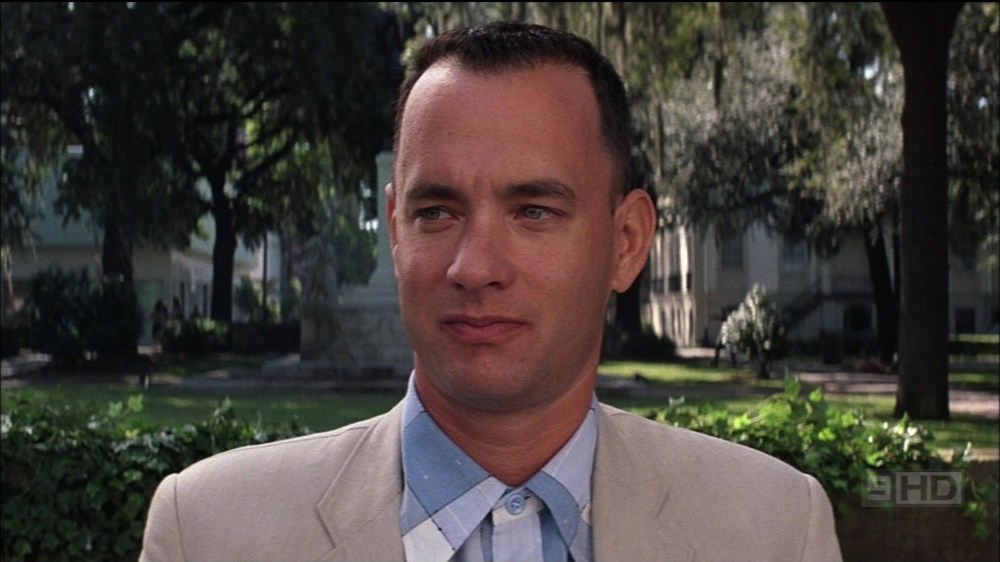
When looking at the characters in Forrest Gump one must first look at the film’s name sake. In listening to the DVD’s commentary track Robert Zebecks stated that Forrest is a man of less than average intelligence who “Never made a wrong decision as a man.” They made a point of showing this explicitly when his principal showed him that his IQ was only slightly below the acceptable level.
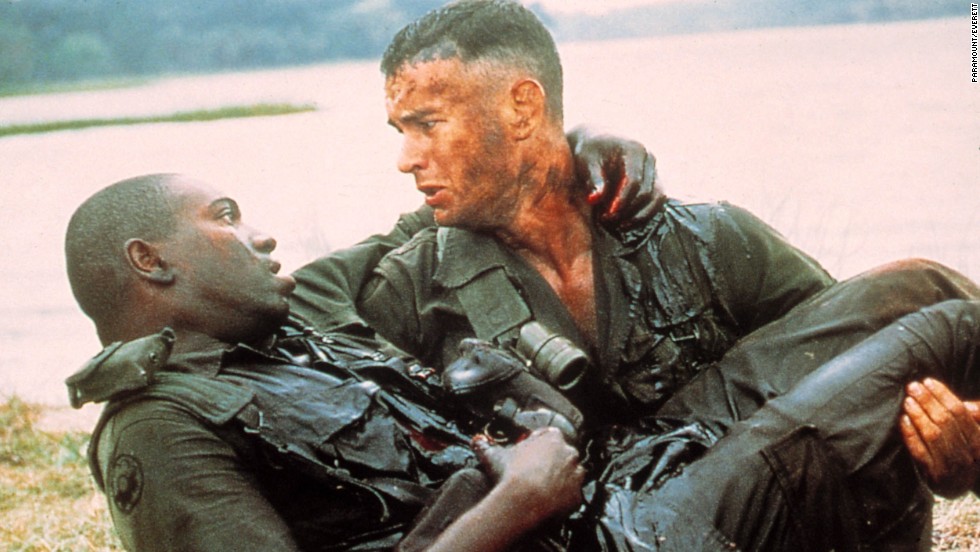
The catch-phrase “Stupid is as stupid does,” has been misinterpreted by many. This phrase defines Forrest in that he’s not stupid because he’s never really done anything wrong. Whether Jenny was being harassed as a nude guitarist or abused by her counterculture boyfriend, Wesley, Forrest was always there to protect her. Forrest picked up a notebook dropped by the first black student at the University of Alabama. In Vietnam he ran back and saved as many members of his platoon as he could from certain death never considering his own safety for a minute. Yet while showing noble qualities as a man Forrest still shows himself to be childlike in many ways he has always listened to mother’s advice (e.g. endorsing a ping pong paddle), feels shy and embarrassed when Jenny makes a romantic advance toward him, and has the same physical mannerisms as his son while watching TV and fishing. Another place in which Forrest’s character is used for commentary is when he says he fits in like “a round peg” in the military. Why is that? It’s because he’s a man who has never really thought for himself and always obeys orders. When Forrest meets Lieutenant Dan we see that he takes all questions seriously and doesn’t have the intelligence to be mean, cruel or condescending and in that sense he is an endearing figure. This quality of taking everything at face value is what allows him to moon President Johnson without a bit of malice. This quality of his character also provides the film with some of its best dialogue. Here’s an example:
LT. DAN
Have you found Jesus yet, Gump?
FORREST
I didn’t know I was supposed to be looking for him, Sir.
Forrest is also honest and a man of his word. His honesty leads him to be the whistleblower on the Watergate scandal. He also kept his promise to Bubba and compensates his mother with a huge check. Forrest’s one moment of defiance is when Jenny has come back to live with him and he confronts her about why she won’t be with him, and he delivers another wise and knowledgeable line. This one being: “I may not be a smart man…but I know what love is.” Forrest then needed time to think and to himself. After all the hectic moments in his life that is the reason he decided to run.
Jenny
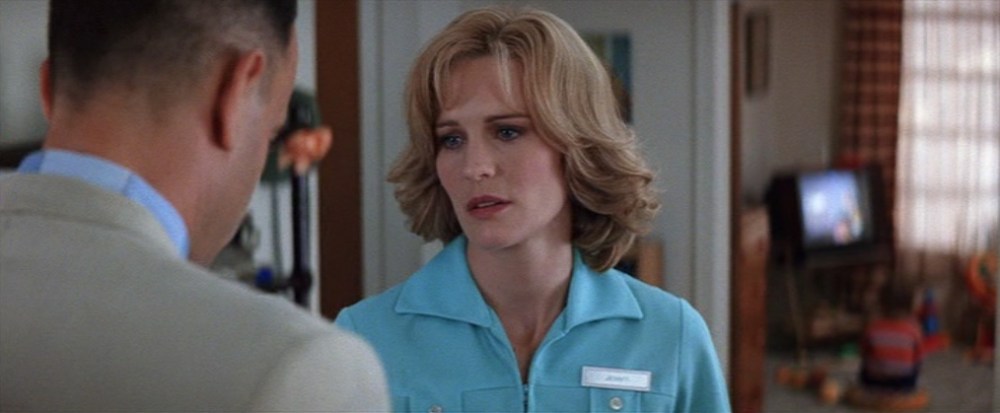
Jenny is a character plagued by her past. Her life has always been turbulent and she has always been turbulent and has always turned to Forrest when things got too crazy for her to be able to deal with. She left home and went to an all girls college. She was expelled and then became a hippie, then she reunited with Forrest in Washington. At this point she was with Wesley who palled around with the Black Panthers. Later she got into the Disco/drug scene. Jenny is a much tougher character for a general audience to figure out because we see her in flashes and hear things about her in dialogue and her motivations get clouded but they’re real. In the end, Jenny comes back home because she is tired. She has gone all over the country looking for an identity and she is able to come home because the problems she was running from wasn’t the little town she grew up in but what had happened there. These were the events in her life that lead her to spiral downwards and almost pushed her over the edge. Jenny had wanted to be a folk singer to connect to people but Forrest was the only person she could ever talk to whom would never judge her.
Lieutenant Dan
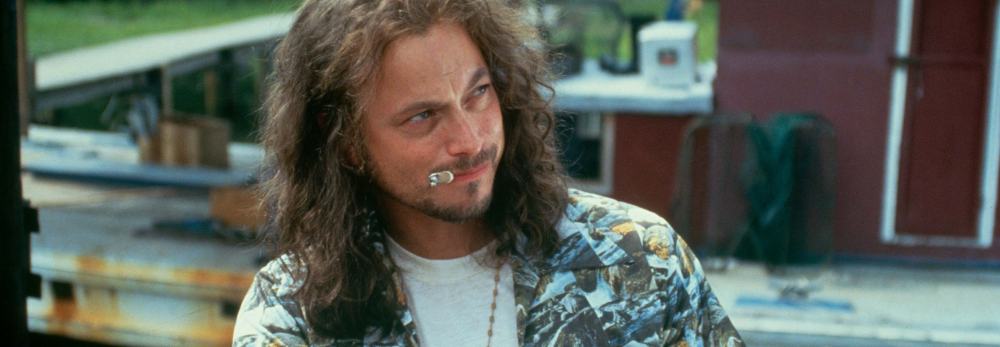
Lieutenant Dan carries us through most of the second half of the film alongside Forrest. There is a lot of turbulence in his life after Vietnam. We’re introduced to him in one of two brilliant “Generational Flashes” where we see his forefathers dying in major American wars. He feels this is his destiny and because Forrest took him away from that he dives into alcoholism and deep depression. Nonetheless he defends Forrest against the prostitutes who call him stupid and lives up to his promise to work with Forrest on a shrimp boat. Lieutenant Dan starts to feel about things after a violent storm where he is able to vent all his anger about what has been going on. After indirectly thanking Forrest he vanishes from the film until he returns with a Vietnamese wife and titanium-alloy legs.
Mama
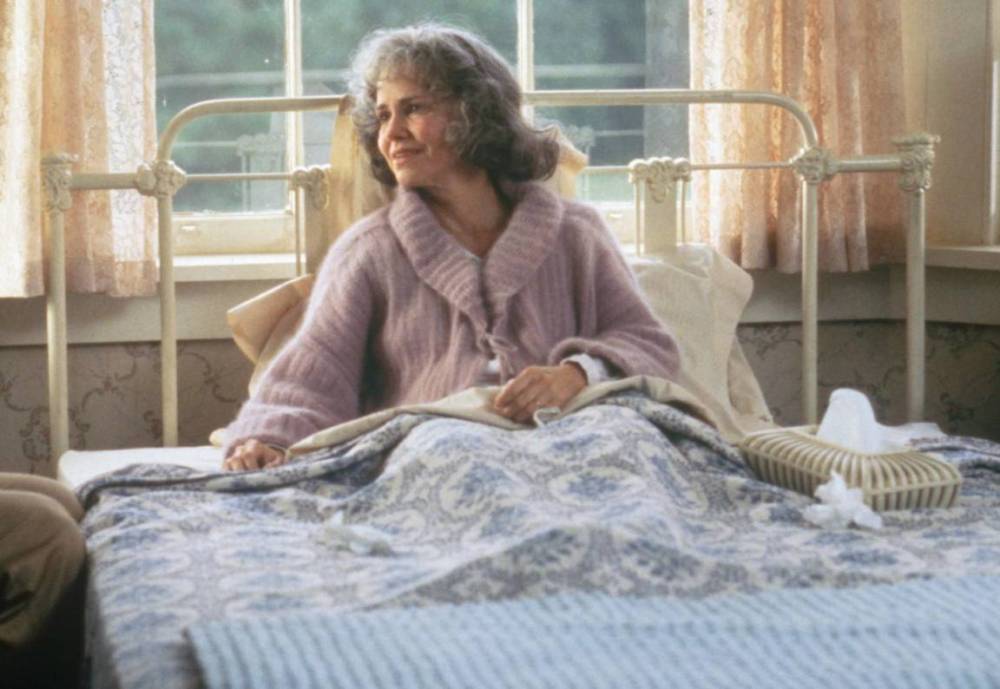
Mama is played by Sally Field. That says it all doesn’t it? She is given no proper name aside from being referred to as Missus Gump on occasion. If it wasn’t by design it should’ve been. That’s what she is: Forrest’s mother. No one has a perfect mother, but Forrest undoubtedly had the right one, like Forrest says “Mama, always had a way of explaining things so I can understand them.”
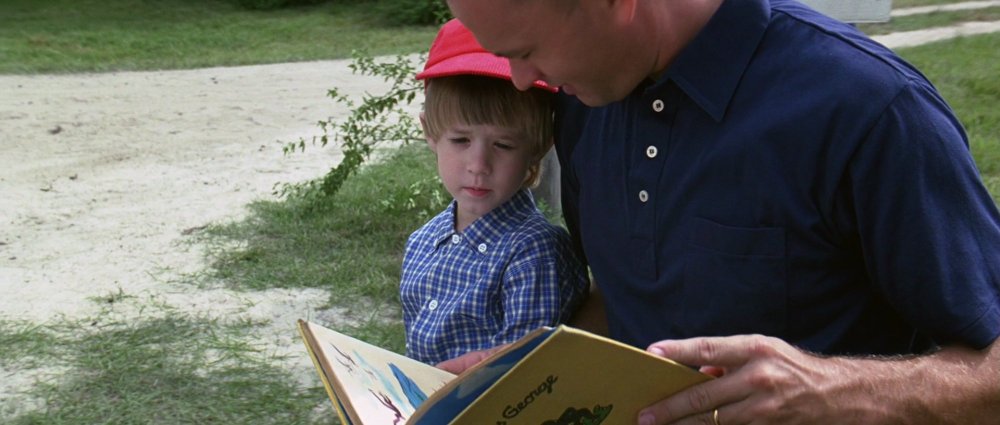
Little Forrest
Little Forrest is worth mentioning because with Hollywood being the way it is, I can just see producers counting down to the day when they can start shooting a sequel. Now, this wouldn’t be a bad idea initiated by Hollywood, but would just be followed through by them. After Forrest Gump’s astounding success, as it was in development almost since it was originally published in 1983, novelist Winston Groom published a sequel, Gump & Co. Like the original it is “plotless” but the major concerns are about Forrest and his son as he wanders through adolescence. I don’t know if Robert Zemeckis was joking but on the DVD he repeats the same comment twice: “In case we ever do a sequel Haley’s a big star now, so that’s good.” The book is often amusing but the relationship borders on combative and they should follow the lesson that the makers of The Evening Star learned, which is even when the book has a sequel you’ve got a tough act to follow.
Special Effects
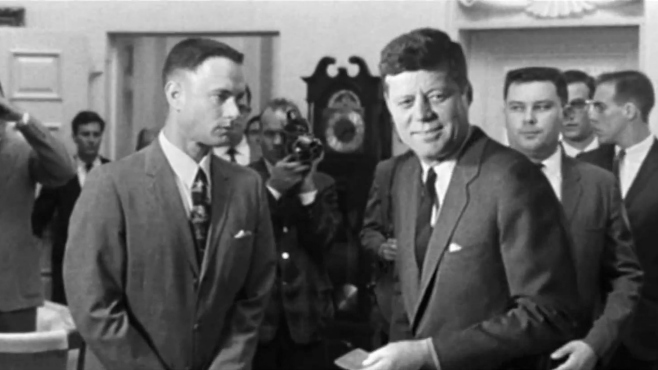
Forrest Gump was also groundbreaking for its use of special effects. It’s appreciated that the effects are used when there are many effects for something that is not an action or Sci-Fi film. Through the effects the filmmakers were able to make many historical figures into characters: Nathan Bedford Forrest, Civil War Lieutenant General and KKK member, a distant relative of Forrest’s who illustrates we needn’t be prisoners of our past. We also see Elvis, John Lennon, JFK, George Wallace, Lyndon Johnson, RFK, and Nixon, all in a somewhat exaggerated fashion but still reflecting the way the public perceives them. Thus, turning them into participants in this story and lending them to Forrest’s own simple interpretation of things, which ends up being oh so truthful. For everyone who was either killed or had an assassination attempt on them Forrest comments in passing “And for no particular reason at all someone shot him.” He made these comments in reference to JFK, RFK, George Wallace, and John Lennon. Yet in other instances news of an assassination attempt was used to indicate to the audience what the present date was without using an annoying insert. We see flashes of attempts on Ford and news of what Carter was saying while Forrest eating a bowl of cereal, and while Jenny was living with him Reagan was shot. At this time only in The Tin Drum had i seen more subtle passage of time, and it does wonders for not slowing the film down.We always have a general idea that something is happening but needn’t be told the exact date, time, and place.
Dialogue
The dialogue in Forrest Gump is often exemplary and I’ve already listed some examples. The first great line to come out of the movie is one that’s simple and really demonstrates what Forrest’s mother is all about “If God had intended us all to be the same, we’d all have braces on our legs.” Many of the great lines became great due to the editing of sound and film alike. An example of good film editing is when Forrest’s mother tells him that “You’re not different.” Then it cuts to the principal saying “The boy’s different, Mrs. Gump.” We get a lot of comedy out of Hanks’ voice-overs in which he often says something and then we see it happen in the scene. The best example came in Vietnam. It goes like this:
FORREST (V.O.)
…he’d always tell us to get down and shut up.
LT. DAN
Get down! Shut up!
FORREST (V.O.)
(whispering)
So we did.
The use of ironic voice over is a product of the editing because Zemeckis knew the amount of voice over work was risky. It was truly a hit-and-miss thing so it was one of the last things added to the film. It was basically placed where they knew the results would be favorable so it worked perfectly.
A unique thing about this film is that it doesn’t seem to have much conflict in it at all. When there is conflict there isn’t a whole lot of focus put on it. Yet is still ends up working better than a lot of films that focus too much on their conflict and never give the audience a breather.
Forrest Gump isn’t a film that can be duplicated. It stands alone as a modern-day classic of American cinema.
As opposed to last month’s film, which featured dramas that can be presumed and inferred but are not in the Gospels Son of God deals solely with stories from the Bible, most of which are very well known.
I knew that in liking Son of God in spite of some of its sketchiness, incessant gravitas and occasional bouts of television (This film was spliced from a TV Mini-Series called The Bible), I would be in a minority.
Its tonality and casting of leading roles are among its strengths, namely Diogo Morgado, despite his occasional accent lapses; Adrian Schiller as Caiaphas, whose scenes are a persistent highlight of the film; and Greg Hicks who does great things in the thankless role of the sinfully noncommittal Pilate.
The film does try to be a bit too inclusive in the narrative and that creates some issues, but in covering the life of Jesus in a cradle-to-grave format you’re bound to have a tug-of-war between being too sparse or too packed. It’s an unenviable task the film deals with well. As for the aforementioned gravitas, with a tale of this nature that’s the better side of the equation to err on, however, it’s only somewhat lessened by that fact rather than ruined by it like some films can be
Back in 2014, when it was released, I included it in my blog’s year-end awards. It earned a BAM nomination for Best Art Direction. Son of God is available to stream on Netflix or to own on physical and digital media.
I’ve debated starting this theme for a few weeks, and I ultimately decided I would as it would encourage me to looks for options that actually fit what I’m aiming for. If one pays too much attention to Top 40 type music you tend to see a dearth of creativity in the music video form. The music video is spawned from short films and can be as creative if not more so than their predecessor. Far too often it does just become singing heads. I want to try and buck that trend and find ones both new and old that do something somewhat outside the box, at the very least have some sort of visual narrative. Here we go.
Treat You Better – Shawn Mendes
In the afterword in Stephen King’s End of Watch he makes a note that the National Suicide Prevention hotline number he included in the story is real. Similarly, Shawn Mendes’ video Treat You Better which crosscuts between his plaintive lyrics and soaring vocals to an abusive relationships in all ways possible. It ends with a title card with a site and number for the National Domestic Abuse Hotline. Rhythmically and aesthetically its as sure-handed in its message as it is powerful.
This was one of my favorite papers in college. In it I had to compare and contrast three stage productions of Chekhov’s Uncle Vanya, and then I discussed my adaptation ideas. Naturally, I wrote of attempting a cinematic portrayal. Enjoy!
Visions of Vanya
When a director takes on the job of reviving a play he or she has the unenviable task of breathing new life into the piece. It would be quite easy to go on staging the same play in an identical manner as it was first performed. This practice is not unheard of but it is both boring and lacking in artistic vision.
When dealing with a play like Chekhov’s Uncle Vanya, which has many timeless and universal qualities, an adaptation of some kind is almost a necessity. This is so as Chekhov’s work has different meanings to various different cultures.
The first interpretation of Uncle Vanya that caught my attention was a 1997 version of the play performed at Stanford Summer Theatre. Jarek Truszcynski, who formerly worked at the Polish National Theatre, did any unusual thing in that he got both local and foreign actors with varying backgrounds in both theatre and film. This blending of styles and backgrounds, while no doubt unique, must’ve lead to some inconsistency from one performance to another. The most interesting thing about this adaptation is what was done with the stage.
Jarek Truszcynski
Drawing on Chekhov’s poignant humor and tragicomic vision, director Truszcynski designed an intriguing set based on a series of doors and windows to highlight the failed connections that inform the life of Chekhov’s wonderful, if troubled characters. In a similar vein, live piano (Schubert’s Fantasia in F minor, 4 hands) was woven into the action, underscoring the erotic desires and mismatches that fuel the play.
While I have no photographs of this set, one who looks upon it will undoubtedly know that the set was designed that way to say something about the play itself. This would be further underlined if the actors used these doors and windows to their advantage. The use of music is something that I have considered when reading this play and it is an effective way to communicate to the audience something that may be, in fact, contrary to the words spoken or, as a last resort, to emphasize the emotional impact of the scene.
The next version of Chekov’s play that I found interesting was directed by Libby Appel at the 1998 Oregon Shakespeare Festival. What Shakespeare and Chekhov have in common I’ll never know. The way the set was constructed in this play reflects the most negative possible interpretation of the text.
“The stifling set has a black backdrop, with four bare walls on both side [sic] and a maze of doors. There are plain chairs, a table, and a piano which emanates original music reminiscent of some of the more gloomy music of Rachmaninoff.”
Libby Appel
We see some similar elements between this and Truszcynski’s version of the play. Here have a dark backdrop and every possible place where color could be added it’s plain. We find a similarity in the amount of doors. The doors on the set may not mean as much in this version. This is a play with quite a few sets and instead of having the actors constantly exit the director may want to have the actors simply move to a different part of the stage. Yet the doors here do seem to imply that all these characters are connected in that they’re unhappy with the life they’ve had to lead. The amount of black coupled with that fact make this the darkest version of this play possible. Any comedic element the play may contain has been removed.
The last and probably most intriguing version is that of the Steppenwolf Theatre Company. This is a company founded by Gary Sinise, best known for his portrayal of Lieutenant Dan in Forrest Gump, and some of his friends formed just after he got out of high school. It is now a big company and many other renowned actors have performed plays with them.
It’s Steppenwolf it seems that comes closest to striking the delicate balance between tragedy and comedy in this play.
“Chekhov’s Uncle Vanya can be played with bitterness and despair, or it can be played with a reminder of hope. Steppenwolf’s production chooses the latter. In the end, a certain equilibrium is restored – moody, perhaps, but with the smallest promise of realization and real change. What we come away with is hope not so much for Vanya and company, but for ourselves.”
Staging and the way the actors interpret their roles has a lot to do with its tone. Music may be helpful but it is only a necessity if the actors are not doing their jobs properly.
“Austin Pendleton (Vanya) and Jeff Perry (Astrov) play well against one another as the dogged, summer-love-sick estate-manager and the active environmentally-minded doctor; they are fittingly matched as complementary forces, friends as well as rivals, different yet reciprocal natures. Pendleton brings to Vanya a contemporary, Woody Allen angst and some rather appealing lickerish looks, as well as the capacity for desperation that moves us as he comes face to face with the falseness of his idols and the sterility of his life, a long road of untaken opportunities. Jeff Perry as Astrov moves with facility between comic and compelling, presenting a magnetic , engaging, human portrayal of the doctor, equally vulnerable to the beauty of saplings and Yelena’s charms.”
If this is the kind of response actors are eliciting then they are most definitely doing an amazing job. In reading the text one can easily see how it can be taken to either extreme. It is better to try and achieve some sort of balance between comedy and tragedy and lean more towards one side.
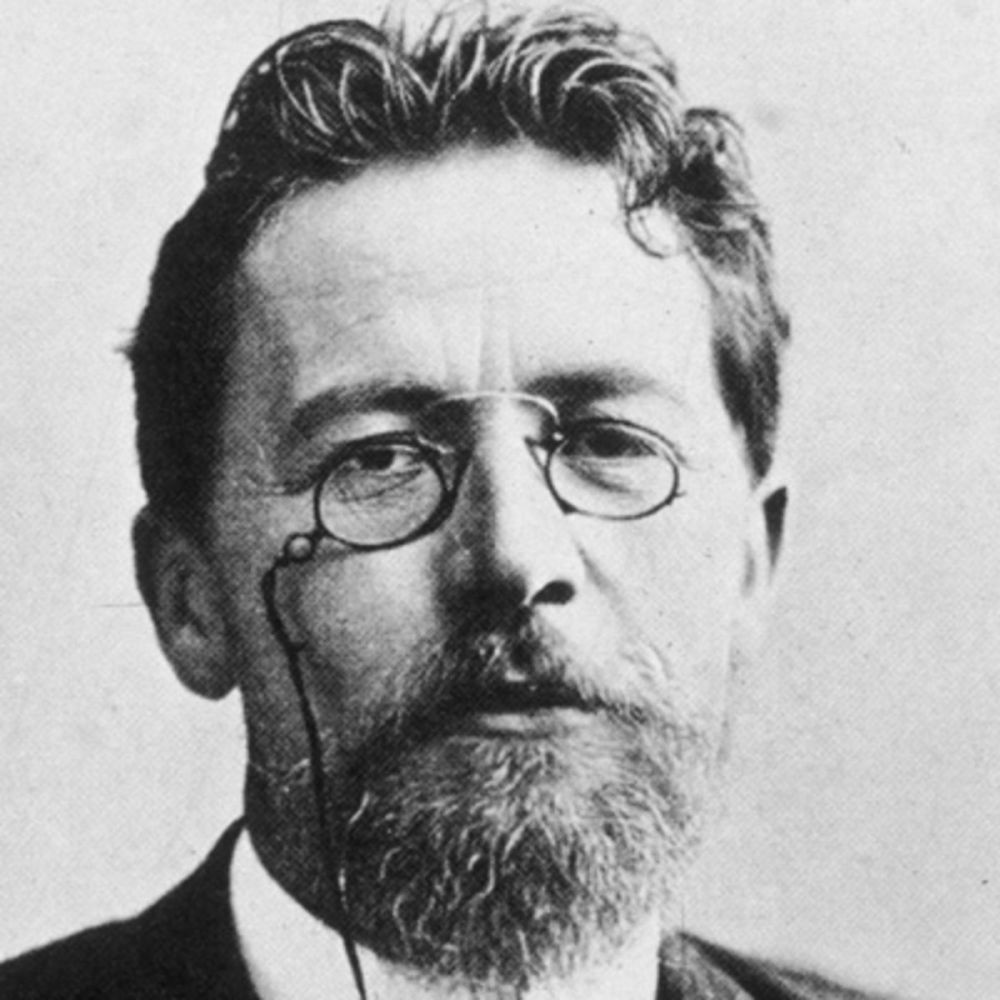
Anton Chekhov
Ultimately a play as well-written as Chekhov’s Uncle Vanya is one where the director has a lot of flexibility. Every decision that is made from lighting to set designate casting will influence the way the play is perceived and it is very interesting to see the ways in which, each of these directors have attempted to express their views of what this work is trying to say.
My Own Interpretation
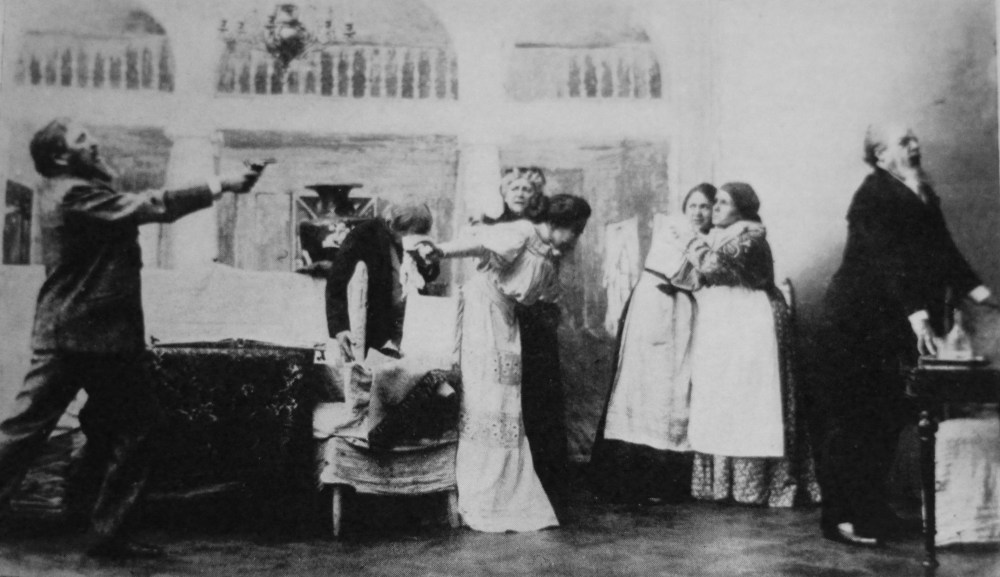
An 1899 production of Uncle Vanya in Moscow.
Uncle Vanya is a hard play to adapt regardless of the medium one plans on performing it in. The play is a chameleon because if you read it while you’re in a bad mood you’ll see it as another play that proclaims life isn’t all it’s cracked up to be. Yet in that same vein the ending packs a wallop and is an incredible surprise proclaiming that this play is one about hope. Someone who is content with their life may read this as sort of a screwball comedy with tragically flawed and depressed characters.
I admit I’ve had both views of this material. However, I think that to play these roles in an overly dramatic way would demean Chekhov’s intent and his dialogue. The director should seek to strike a balance. And here’s where I see there can be a compromise, when a character is discussing about what they believe about someone else such as the discussions of Professor Sereoryakov at the beginning, the actors should go for the most comedic impact he or she can find without turning the play into a farce. When they discuss their own problems, they should be serious and seek out honest and emotional interpretation without being hammy. Both things are asking a lot of the actors, but this is demanding material.
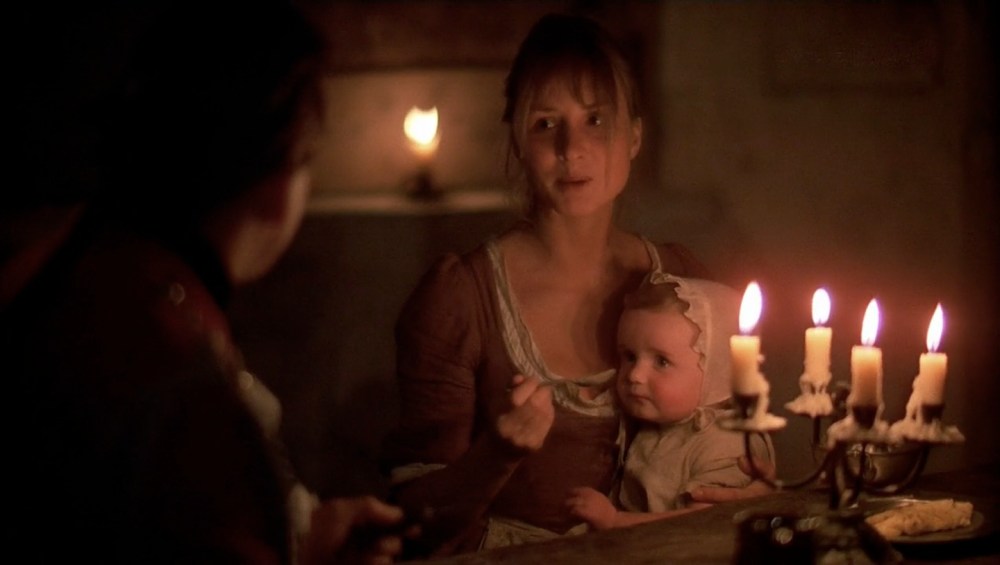
Before even considering adapting it into a screenplay, I believe the lighting scheme should be considered. When one is dealing with the medium of film they have an advantage over people in theatre because natural light can be used to light the scenes and would be considerably more effective than any means of artificial lighting. While the use of both candlelight and sunlight would be very difficult, it would lend a great amount of atmosphere that couldn’t be accomplished on stage. I believe candlelight would be most beneficial during the scene where Elena and Sonya make amends and discuss their desires.
If I were adapting this as a film, more sets would be required than are in the original play. Basically, what we have here, while well written, are characters who talk too much to make for interesting cinema. As a matter of fact, when Chekhov first premiered the play theater-goers of the day were surprised at how much the characters spoke. Talking heads syndrome is something that is avoided at all costs in film.
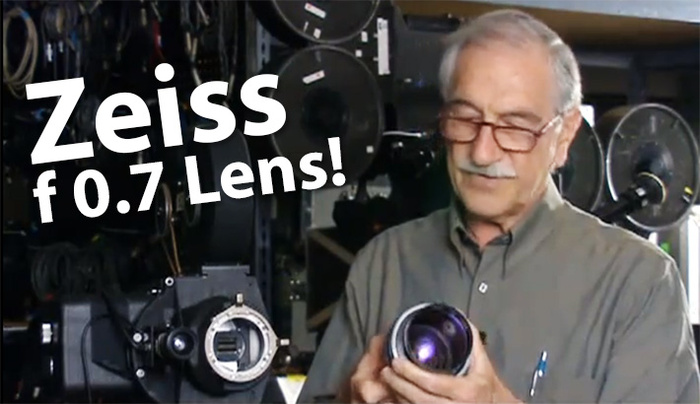
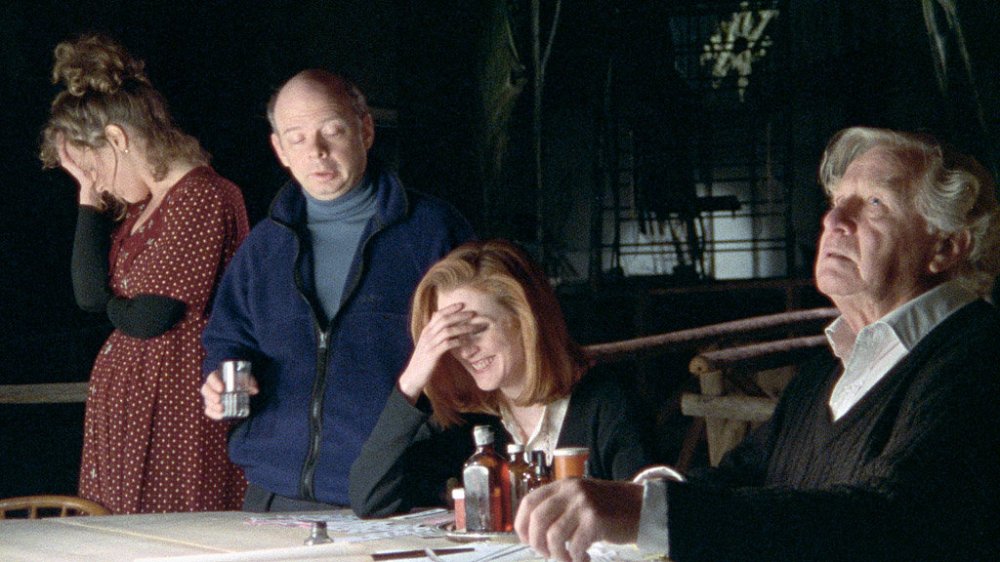
Barry Lyndon where Kubrick created new lenses to shoot by candlelight.
While it would take many readings to decide where to actually cut dialogue, merely looking over the text after one reading we can see places where images from outside the Serebryakov estate would be helpful in making this play more cinematic.
First, I believe the use of flashbacks accompanied by voice over narration would assist many scenes in this piece. It would also be helpful in breaking up the long periods of dialogue. This tactic would be most effective in the following scenes:
When Dr. Astrov discusses the patient he lost.
Marina talking about the professor’s daily activities.
Sonya pontificating about people in foreign climates.
Vanya reminiscing about a girl he knew.
At the very end when Sonya is consoling Vanya some sort of imagery would be necessary.
While the closing speech is riveting it would be easy for an actor to go overboard with these lines.
The lens that would be needed to shoot the candlelit scenes.
I also feel that the strategic insertion of cutaways during breaks in dialogue or just after something is said would be beneficial and break up a play with a lot of talking. I believe this technique can be most helpful following the following pieces of dialogue:
Astrov’s comment about his mustache.
When Vanya says he’s haunted at night.
Vanya’s comments on an autumn rose
What might be going through Astrov’s mind while he’s making a pass at Elena
Serebryakov’s comments about the house being a labyrinth.
Vanya waking after comments about a waking life.
All of the prior images would almost mirror what was said in dialogue previously but some images would also be needed to demonstrate meaning such as:
When Vanya discusses the work of the professor not living.
A single page burning.
When Astrov complains about provincial life we move outside the estate momentarily.
When Elena makes the cynical comments about her real behavior she may look out the window and see fictitious characters demonstrating the very qualities she finds unrealistic yet longs to see.
Vanya on 42nd Street (1994)
In film the camera can also be used to heighten emotion and through the creative use of angles we may add some insight into the character’s emotions. On page 177 Vanya goes on a rant about the professor and I feel a gradual procession of tightening shots as his fury increases would definitely help drive home that the professor’s lifestyle is resented by these people. When Elena says there are demons in all of them I believe the best approach would be a medium shot in which Elena is in the center of the image with the back of the protagonists in the foreground. This is so the comment does not come off as judgmental or like preaching to the viewers. At the top of page 195 when Vanya speaks of illusions I feel it would best to see Vanya speaking from the lower right-hand corner of the screen. This show reflects the cinematic Russian tradition that states placing a character in the lower right-hand portion makes them appear weak. I also feel that alternating between single and wide angle shots during the shootout would be beneficial. It would be helpful to show both the entire room and how others are reacting to the situation and also to demonstrate Serebryakov’s fear and Vanya’s anger.
In the review of the Steppenwolf Theater Company production it states that their performance of the play was two-and-a-half hours long. This would be quite a long film and not many people would be willing to go for a film of this type that’s that long anymore. However, I feel that if one were to continue in this melange of styles and techniques both old and new it would become a more visually involving piece than many would expect.
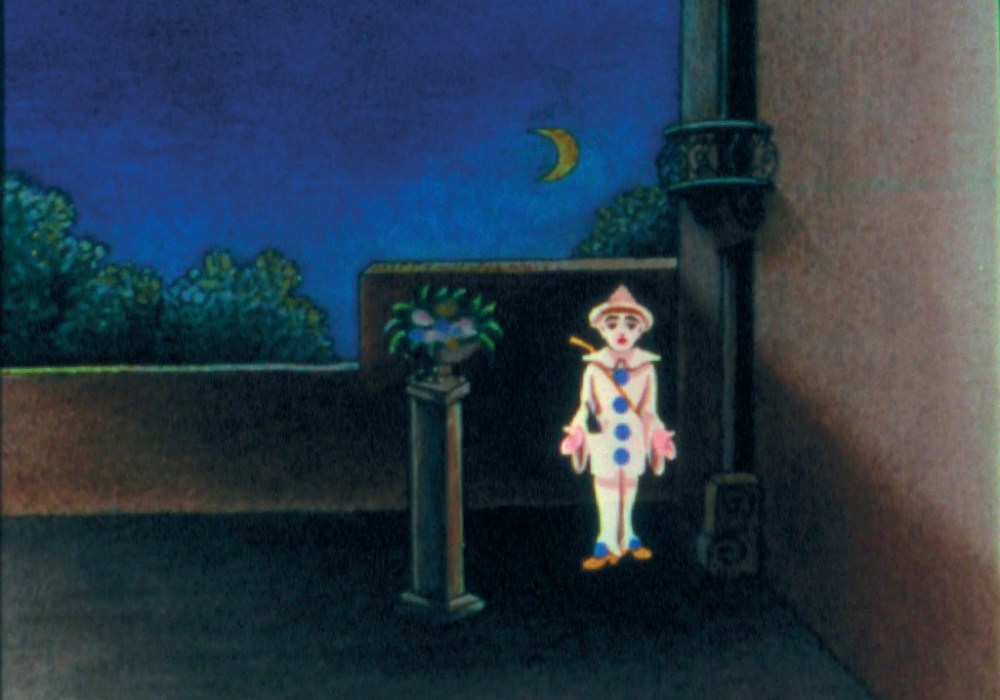
Somewhere along the way I do believe I’ve seen this before. This is another one I can thank Open Culture for, as they’ve linked to this beautiful restoration/recreation. It’s a short with a simple idea that is hilariously done.
Roger Ebert gave this film 3.5/4 stars. He provided great pull-quote material but not without a caveat:
“The Spiderwick Chronicles is a terrific entertainment for the whole family, except those below a certain age, who are likely to be scared out of their wits. What is that age? I dunno; they’re your kids.”
Clearly that sentiment was truncated for the DVD release. He is correct in that it is likely a more 1980s PG than a 2008 PG. However, it is quite good and has an 80% on Rotten Tomatoes, which is rather high for a family fantasy.
In 2008 this film was nominated for 10 BAM Awards (tied for the most) in large part due to its technical prowess of it, but it was also in my top 10 and thus a Best Picture nominee for that year. It won the award for Best Sound Editing.
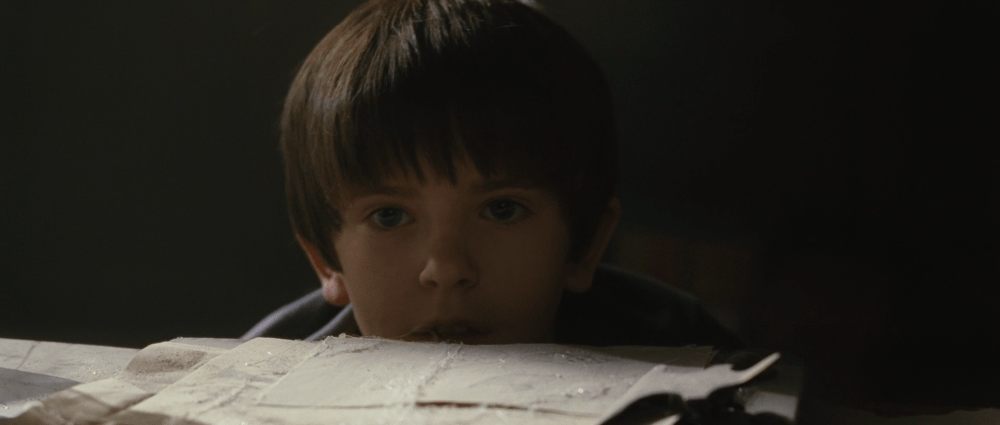
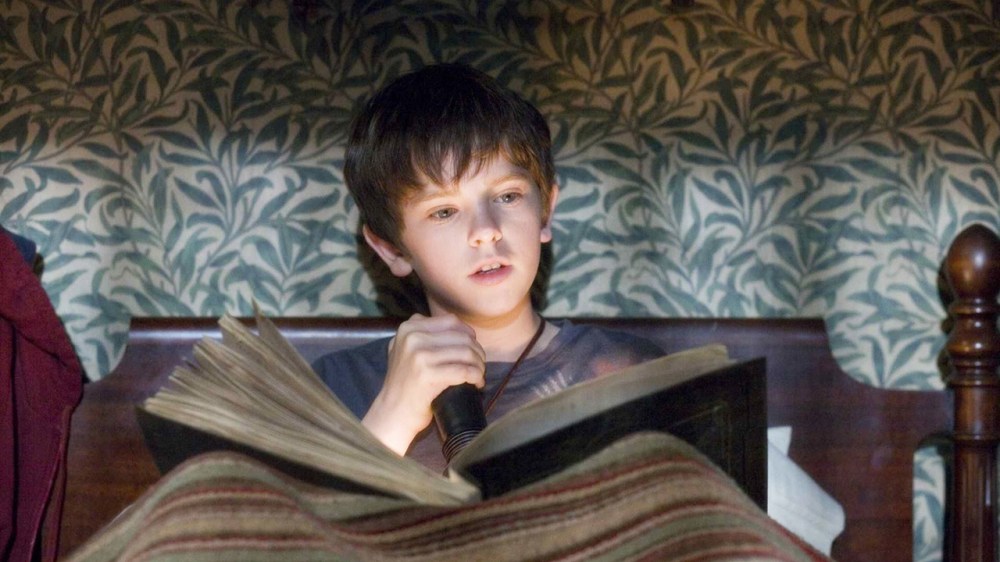
The lead actor, Freddie Highmore of the dual roles, was nominated for Best Performance by a Child Actor as it was called then, and likely would have won were it not for Will Poulter’s stunning debut which did not require the affectation of dual roles. Highmore won the year before in a comparatively stronger performance in August Rush.
The Team
The film is an amalgamated adaptation of a number of books in the series. The team in front of and behind the camera is impressive. Director Mark Waters, just coming off his remake of Freaky Friday, which was a big hit in every sense; but the names behind the scenes of The Spiderwick Chronicles get bigger. James Horner provided the scoring, Michael Kahn, whom usually cuts Spielberg’s films was editor, and Caleb Deschanel, the noted multi-Oscar nominee, was the cinematographer. So the team was in place to deliver this story as well as possible.
Flanking Highmore was Sarah Bolger, Mary-Louise Parker as his mother, Joan Plowright as Aunt Lucinda, David Strathairn as Arthur Spiderwick, and Nick Nolte as Mulgarath. Freddie Highmore
Highmore has become better known in his early adulthood as Norman Bates on Bates Motel, which will have upcoming its 5th and final season. However, his transition from young actor to adult actor has been, albeit not well-publicized, fairly smooth and persistent.
in 2010, at age 18, he appeared in Toast, which earned a bit of notice on my site and at the BAM Awards. In 2011 he was in the lackluster The Art of Getting By and in 2013 Bates started up. This year he featured in a BBC mini-series called Close to the Enemy an indie called The Journey, and his most outstanding work on Bates Motelto date.
Even becoming a working actor after being one of the biggest young stars of your day is quite a feat.
As for The Spiderwick Chronicles, dual roles is not something that young actors normally do for pragmatic reasons first and foremost. Young actors, due to union and legal regulations, work fewer hours on set. Minors also have schooling requirements if they’re not working a summer shoot. To put a young actor in two major roles is a logistical hardship more so than merely having a young lead or ensemble, which is the reason why you see so many “high school” shows populated by actors in their 20s and even 30s.
So there’s a tribute to Highmore in that they found him capable of playing these twins, rather than finding twins to play the roles, and also in making scheduling a bit more of a headache as a trade-off for a better end product.
If you then consider that this is was Highmore working with his non-regional American dialect for a 3rd film and this time while playing two characters, it’s even more impressive. Clearly, when playing two characters, even when one if far more involved in the plot than the other, it’s still twice as much work and the actor has to work two characters through their arc while also differentiating their mannerisms, physicality, and demeanor.
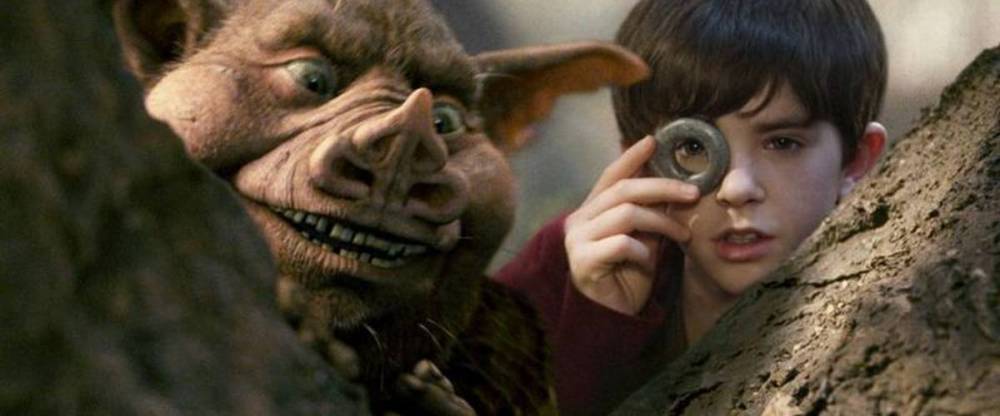
This is established almost right away. Jared, the character who carries most of the action in this film, gets into a spat with his older sister Mallory (Sarah Bolger). Highmore is intense and angry and seeking to engage her physically. Wanting help from his twin, Jared says:
“Simon, get her!”
“I’m a pacifist.”
The response is a throwaway wherein Highmore makes no eye contact with his alter ego. This instantly makes an impression about how to set the twins apart. They are not the dress alike, inseparable brand. Jared is more the everyman, who is angrier about the move, and in general; Simon is more studious and uptight.
Jared is the doubter at first of anything magical going on, but is also more adventurous and finds the book, uses the dumbwaiter. His character is not only introduced in a fit or anger but it is intimated he had anger management issues in the past.
Simon doubts Jared’s story´at first. When he’s taken by ogres Jared’s on a journey whether he wants to be or not having started the ball rolling by reading the book and taking it outside of the protective circle around their house.
Among the other challenges present to Highmore in this film is that he has to interact with a CG counterpart on more than a few occasions. There is also a scene wherein Jared and Simon are fighting each other which required Highmore to play both sides of the fight opposite stand-ins and doubles, it’s a demanding piece of physicality that cuts well.
After Jared brings Simon back to safety, literally dragging him, his leg injury (prosthetic make-up time added to logistics to consider – time in the make-up chair is time on the clock for a young actor) makes him most useful at the house. This allows for fewer scenes where Highmore would have to shoot two sides if he went with them to try and fight Aunt Lucinda.
While we’re far removed from the silent film days where there were Hollywood legends of directors literally willing to traumatize young actors to get them to produce real tears on film, crying scenes are still very demanding on an actor of any age. Highmore as a youth had these scenes as one of his calling cards and in this film there is a point where each of his characters is pushed to tears. For Jared it’s when he learns the truth his father won’t tell him about their parents separation that their dad has been too chicken to say to him himself.
Toward the end there are scenes where the two characters collaborate such as when Jared summons the Griffin and Simon settles him down. Simon is teary in the cage when captured and also toward the end I believe. Here is the former scene for an example of Highmore as his own scene partner:
Below is another example of his work, this time in a climactic scene. Please do not watch it if you’ve not yet seen the movie. Scroll past.
There was less fanfare for this film than say The Parent Trap, as that was Lohan’s breakout and a remake, but this film is not too well remembered, and it should be in part because Highmore shines throughout.





 !
!








 The Movie Rat