
Foreign Language Film Issues 2013: Hollywood Rules (Part 4 of 5)

As has been the case in years past I will here look at some of the issues plaguing the Best Foreign Language Film nomination process at the Oscars. Since this year I am touching on a large array of interrelated topics I thought it best to post my thoughts in a series. To read the introductory post of the series go here.

This text picks up immediately where the last part left off.

Hollywood Rules
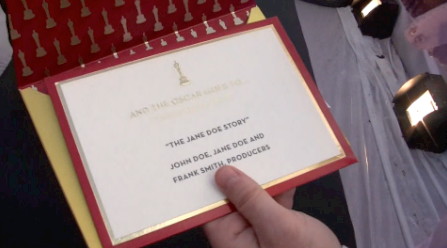
Oscar Envelope

It has been suggested that the Academy, or an offshoot thereof, should select the foreign films eligible. My newest suggestion will feature a compromise on that notion.

However, it is worthy of consideration of the fact that, no matter what amount of importance or disdain you view the Academy with, this is their awards. There was a time when the cinematic revolutions worldwide filled independently-owned movie theaters and had the college set watching and artsy-er breed of cinema, but times have changed. Therefore, taking a hard look at what the Academy is short-listing, and ultimately nominating and why, is something we and national committees should be doing. If the films being chosen with the Academy in mind is this just not cutting out the middle man? I’m not a fan of playing Devil’s advocate, which is what I was doing there, but I can’t find a lot of room to argue against it; save for the fact that I don’t care for it much and have an alternate idea, which will be presented in the final installment.

The Golden Globes, really?

Golden Globe Statue

If you follow critics and movie geeks on Twitter, or even if you just Google The Golden Globes and find some brutal op-eds on them you’ll see how dubious their nominating process is. This is excluding the fact that the membership is so small. Yet, even this much-maligned body accepts multiple nominations from nations, but the Oscars can’t?

Release

how_oscar_dvds_helpand_hurt

The Academy this year disqualified Blue is the Warmest Color, which is a Palme d’Or winner and one of the most talked about foreign arthouse releases of the year solely on the basis of the fact that its release date IN FRANCE was too late.

One recent argument that has emerged is that a US release date should be a requirement. That has its pros and cons, but surely if a film has seen European festival dates and has already seen a US release that qualifies it, how can you disqualify it because of its domestic release date. It’s beyond counter-intuitive.

Eligibility for Oscars in Other Categories and Snubs
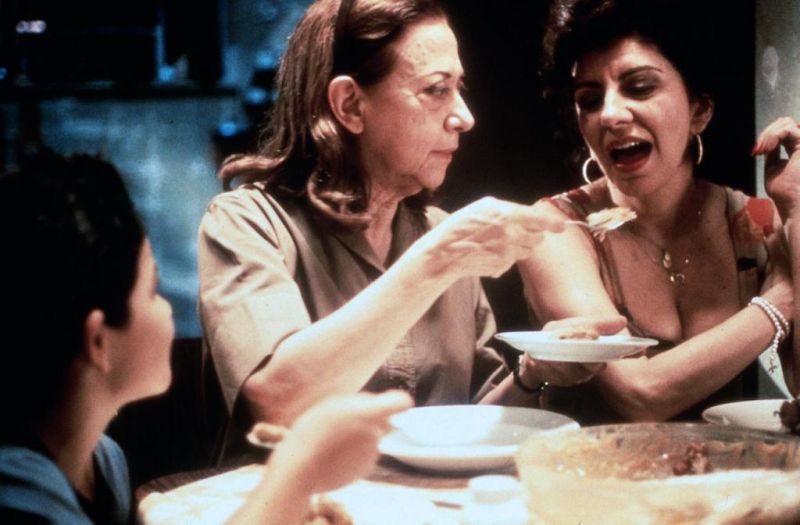
Central Station (1998, Sony Pictures Classics)

While on the topic of snubs that brings related topics this year. I’ve not yet seen the film, but have seen fairly universal raves and lauds for Lea Seydoux and Adèle Exarchopoulos in the aforementioned Blue is the Warmest Color. Due to the fact that the Academy has ruled said film ineligible for Best Foreign Language Film it is also ineligible for other categories.

Yes, there have been instances of foreign films being nominated for multiple awards: three instances jumping quickly to mind would be Amour (5), Central Station (2) and Fanny and Alexander (6) in all those cases those films were submitted as the foreign language selection for their respective nation, therefore, eligible in additional categories. Any snub this year can also write off any chance at nominations in ancillary categories.

Committee Submissions

O Palhaço (2011, Bananeia/Globo Filmes)

With all the case-studies discussed prior, and with most countries I’m sure; it’s a small body making the decision of which film to select. Whenever you’re dealing with a small body I get the feeling, even though I was offered no proof of it, that undue influences could affect outcomes. I’m not saying they haven’t; it’s possible. I think most people who watch film and know the mechanics understand that the “best” isn’t always sought out. Sometimes it’s the most commercial, sometimes the most “Oscar-friendly”, sometimes other factors can be seen as coming into play.

This series will conclude tomorrow with part 5.
Review- The Round Up (La Rafle)

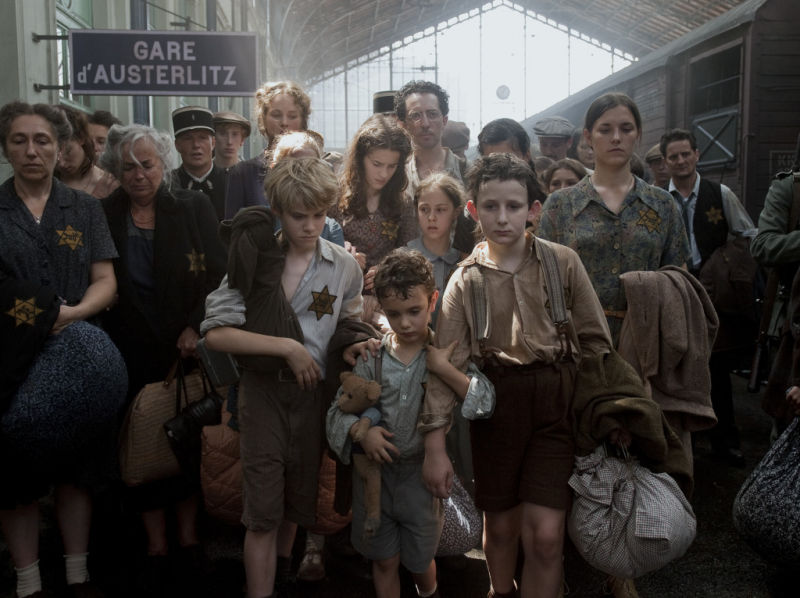
The Round Up (La Rafle) (Gaumont)

Any film that deals with World War II, more specifically the holocaust, fights an uphill battle. The film has to contend with not only the knowledge that we as a viewing public share but also with the inevitable outcome its story-lines share. These factors make any newly told tale, especially ones that may have been shared before, more daunting to tell than they have been in the past, however, what The Round Up (Le Rafle) does so well is tell a multi-faceted tale that most films that illustrate historic events tend to avoid. This film not only tells the tale of a single neighborhood, more specifically the Weismann and Zygler families, but also takes a look at the political sides of the equation (the ivory tower and backroom bargaining where lives were bartered and certain agreements were reached under a false sense of humanitarianism) which many films tend to avoid. Not only does that angle of the story get played but also as those rounded up start their unjustly imposed sojourn you also have the plight of the medical staff, illustrated by a nurse (Mélanie Laurent) and a Jewish doctor (Jean Reno) who have to try an keep the imprisoned alive as they are eventually transported to Poland. It is adding these layers to the story which makes this film different than other of the like at least on the surface.

The differentiation does not lie solely on the surface, however, while this film does not ever take place in an unoccupied France until its denouement it does start in a time where knowledge of what’s truly happening is scarce and children remain children as they are wont to do regardless of circumstance. You are shown very good illustrations of the sense that permeates the community of “It Can’t Happen to Us” and it’s tackled head on later as the eldest of the Weismann daughters tries to warn everyone a few times and wants to flee but calm is urged by her parents. Later at the first stop it is poignantly touched upon again. It’s one of the many times wherein the senselessness and unimaginable insanity of what the holocaust was is very well illustrated. Many of the characters in the film are in the dark willfully or honestly and it allows scenes we’ve viewed and facts we know to wash over us with newfound impact.

Some of these points are made with very cleverly written dialogue as well that is uttered by the right characters in the right moments and in the right context. Things being too on the head are a matter of context as much as anything else and the correct personages say the correct things to make points anew in a different way or ones that are often overlooked. The children, the nurse in her naïveté, Hitler amongst his inner circle and French heads of state all say things that were they assigned to other characters may strike you as too much commentary. Part of why auteur theory is not a popular notion in cinema anymore is that voice in a script as opposed to things like composition and genre can border preachiness but this one deals in the political and personal of a difficult subject matter makes its points about the absurdity of the situation in terse pieces of dialogue, visuals wherever possible but never to the detriment of the narrative, which helps it excel.

Conversely, when it speaks more loudly for the film not to say a word, when an honest question is better left unanswered, where a glare from an officer says more than words possibly could the film does so. The film visually puts pieces in place to set up the ending without dialogue, so as precise and purposeful as it is at some points it understands the necessity of silence also. There is also no fear in illustrating complexity in character without going overboard and simplicity in others without creating characters. The complexity is shown mostly with the families we know who start with different levels of understanding of circumstance and gradually though they don’t know exactly what lies ahead the gravity of the situation becomes exceedingly obvious, yet you also see them grasp for humanity whenever possible. The second part of that statement being most important because there isn’t an excessive myopia in this film as exhibited in something like Life is Beautiful. It creates moments where the human spirit can overcome but also illustrates the length to which human beings will go to be cruel and to be free.

As you can see by now this film us most definitely an ensemble work a few actors come to the fore as vital but it relies on many to convey its story as well as it does. In the family the patriarch and matriarch played by Gad Elmaleh and Sylvie Testud; the medical personnel played by the world renowned Jean Reno and Mélanie Laurent who many will know and love from Inglourious Basterds and The Beginners; the kids spearheaded by Hugo Leverdez in a most impressive debut, The Di Concerto twins as Nono and Adèle Exarchopoulos and lastly the political contingencies highlighted by Udo Schenk as Adolf Hitler each of these nuclei brings the film vividly to life and fully realizes their characters.

In the early stages the intercutting between these disparate worlds is at its apex but it stays rather persistent through the course of the narrative. There are great cuts aesthetically and with story in mind we never see more of the political discussions than we need to in them we are shown the steps than lead to the decisions ultimately made and clearly how things came about.

Where this film really gets to me is at its conclusion but it is effective throughout and evokes different emotions and remains compelling in spite of the aforementioned stumbling blocks the story has. It is a brilliant work that illustrates through its many facets the precipitous escalation of events in Occupied France and the lives it affected.

10/10